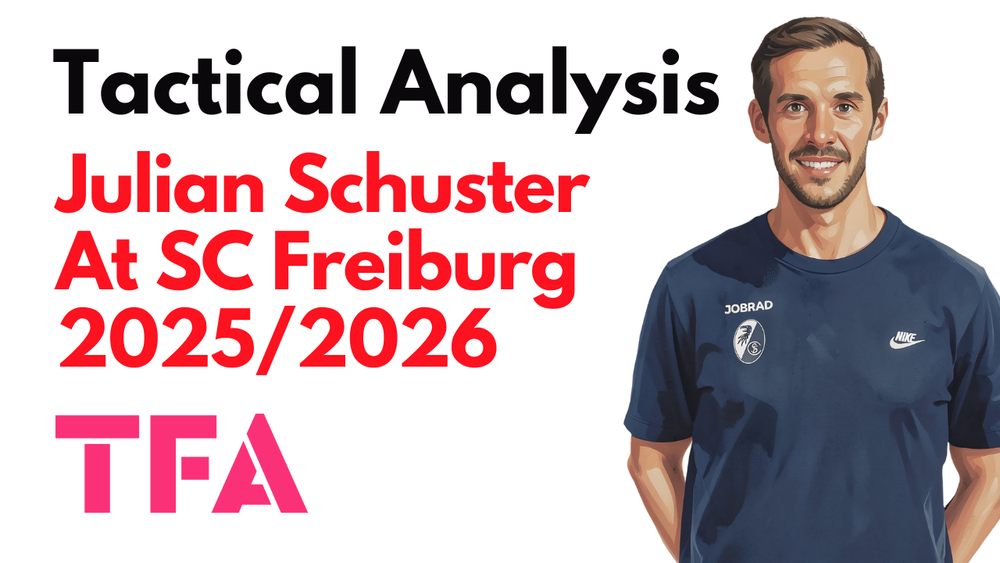
Julian Schuster Tactics At SC Freiburg 2025/2026: Continuity As A Competitive Advantage – Tactical Analysis

The reaching of a major European final is often the result of a radical departure from the past, a sudden injection of outside capital, or a generational star who defies the tactical gravity of his surroundings.
However, for SC Freiburg, the path to the 2026 UEFA Europa League Final in Istanbul has been defined by a stubborn, beautiful continuity.
In his second year as head coach, Julian Schuster has not just stepped into the shoes of the legendary Christian Streich; he has reinforced the soles and polished the leather.
By securing a date with Aston Villa following a dramatic semi-final comeback against SC Braga, the former club captain has proved that stability is the most potent tactical innovation in modern football.
Freiburg’s journey to the final has been a masterclass in structural discipline and institutional trust.
Schuster has managed to navigate the gruelling Thursday-Sunday schedule without compromising the core principles that have made the Breisgau club a model of efficiency.
This is a team that thrives on the collective, where the system is designed to protect the individual and where the academy remains the primary source of competitive energy.
This tactical analysis will dissect the three pillars of Schuster’s European success: the implementation of a compact, low-risk defensive shell, the seamless integration of academy graduates into the first-team rotation, and the ruthless exploitation of dead-ball situations and wide-area deliveries.
Julian Schuster Style Of Play & Formation
We are witnessing the maturation of a project that refuses to change its soul, even as its ambitions reach a continental peak.
The achievement is particularly poignant given the scepticism that naturally followed Streich’s departure.
Replacing a figure of such cultural and tactical magnitude often leads to a period of regression or an identity crisis as the new incumbent attempts to put their own stamp on the squad.
Schuster, however, understood that the strength of Freiburg lies in its rejection of the ego.
He has maintained the 4-4-2 and 4-2-3-1 hybrid structures that the players know intimately, focusing his energy on refining the micro-details of defensive spacing and transition speed.
The result is a side that plays with an almost telepathic understanding, a group of players who move in unison to close gaps and funnel opponents into the tactical traps set by their young coach.
Istanbul beckons not because Freiburg tried to become something new, but because Freiburg perfected what it already was.
Structural Solidity: The Disciplined Defensive Shell
The bedrock of Schuster’s European campaign has been an unwavering commitment to defensive compactness.
While many modern coaches gravitate toward high-octane pressing that leaves the backline exposed, Schuster has favoured a more calculated mid-to-low block that prioritises the denial of central space.
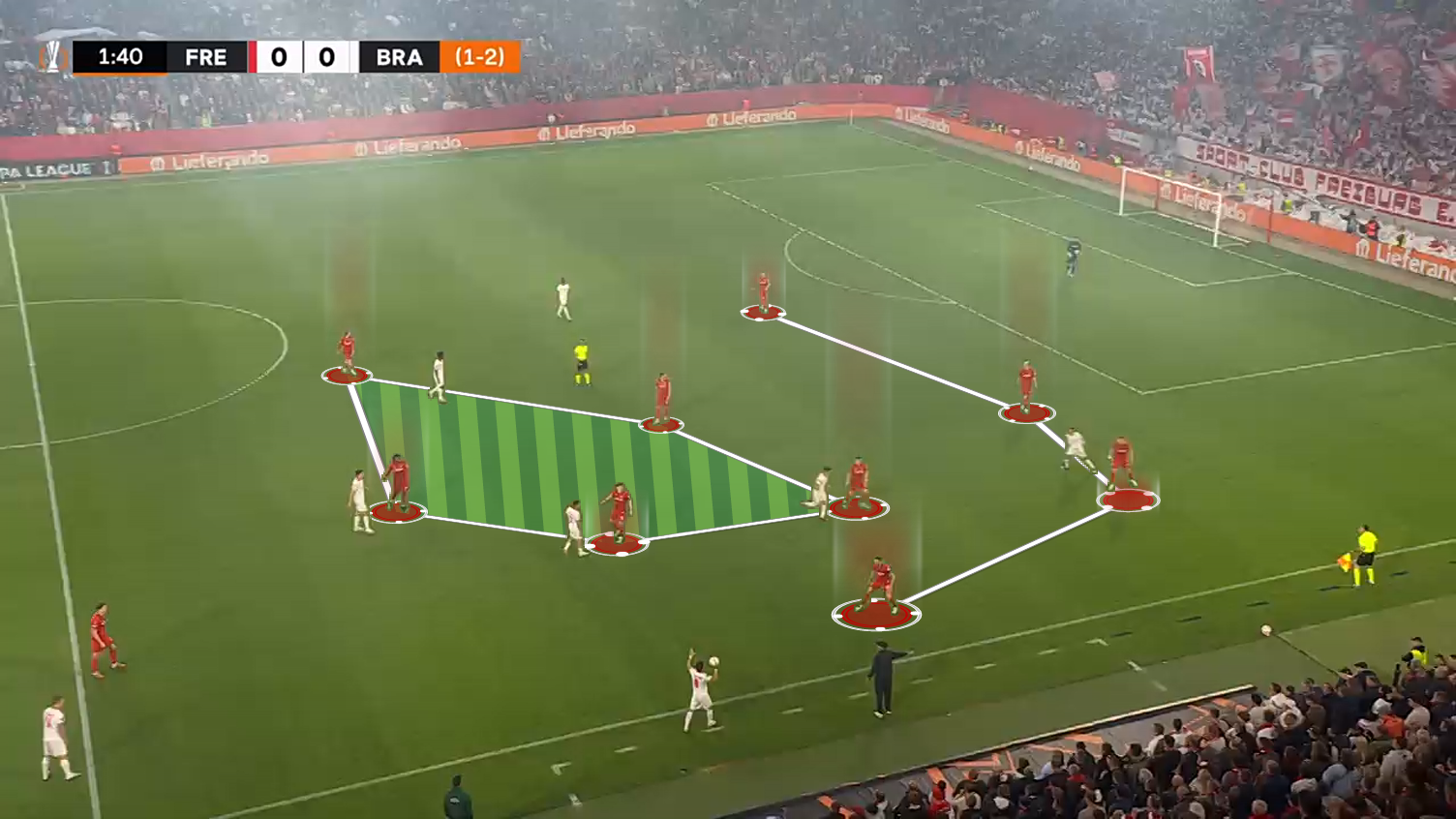
In their route to Istanbul, Freiburg have consistently frustrated technically superior opponents by maintaining a narrow defensive shape that forces the play into low-probability wide zones.
This is not a passive approach but rather a selective one, in which the triggers for engagement are clearly defined, and the recovery runs are non-negotiable.
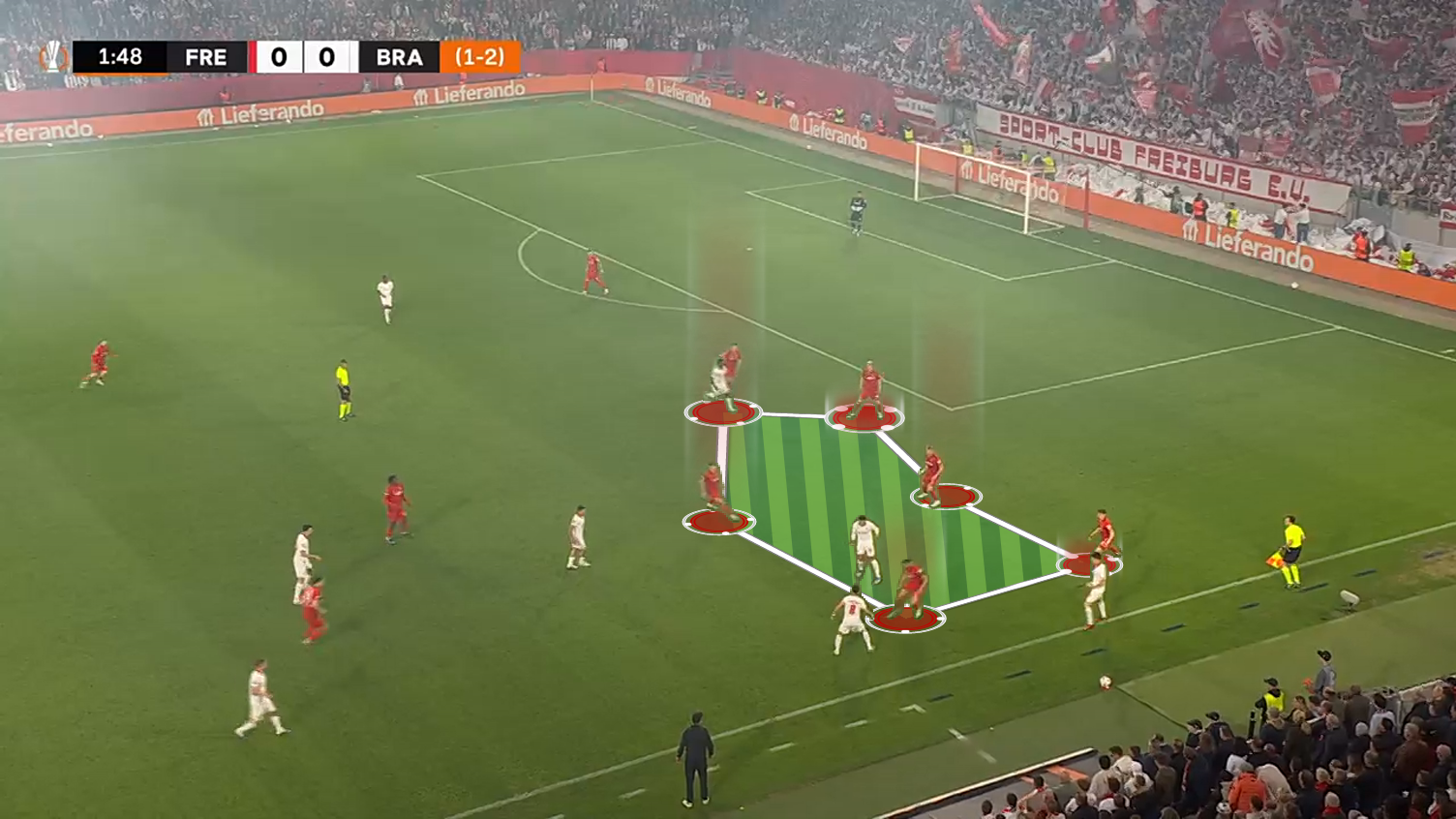
Schuster has refined the back-four or back-five transition that was a hallmark of the Streich era, ensuring that the distances between the defensive lines are nearly impenetrable.
By keeping the midfield trio in close proximity to the centre-backs, Freiburg effectively eliminate the pocket of space where playmakers thrive.
This structural rigidity was particularly evident in the quarter-final against Celta Vigo, where the Spanish side dominated possession but failed to record a single shot from inside the central six-yard box.
Schuster’s defence operates with a hive-mind mentality, in which every movement is coordinated, and a secondary layer of protection covers every error.