How Smart Teams Turn Pressing Triggers Into Build-Up Advantages - Tactical Theory

Pressing systems are designed to force predictable decisions during build-up play, but aggressive pressure also creates vulnerabilities that intelligent teams can exploit.
In this tactical analysis, we examine build-up play and explain how opposition-pressing triggers can be exploited to overcome the press.
We will analyse the most common pressing triggers and their influence on available space and passing lanes, showing how teams can use coordinated movements, positioning, and timing to break pressure and progress the ball effectively.
Cover-Shadow Exploitation
In order to find solutions to overcome the opposition press, one needs to examine the consequences of pressing triggers on the available space and passing options.
On an individual level, an advantage that appears due to pressing triggers is the shrinkage of the cover-shadow of pressing players.
In the following, we explain the reasons for the decrease of space covered by the cover-shadow during the press.
The idea behind the concept of the cover-shadow is simple.
A defending or pressing player always covers a certain area of the pitch, as he could intercept a pass into that particular area.
In terms of this covered space, it is necessary to differentiate between a moving player and a player holding his position.
Whereas it is easier to intercept a pass from a static position, it is harder when moving.
A pressing player will move towards the ball carrier and, therefore, will not have both feet on the ground.
This makes it harder to change directions.
As a consequence, less space will be covered behind the pressing player.


This turns players that were initially positioned within the cover-shadow into possible passing options.
Overplaying The Press Through Open Space
Pressing always opens up space in other areas of the pitch.
Space-oriented defences will shift towards the ball to remain in a compact shape.
This opens up space behind.
However, if the opposition tactics include man-oriented pressing, this will increase the area of empty space between the players.
A famous, if not the most famous, pressing trigger is a pass towards the full-back.
This means that the ball is on one side of the pitch.
Sides using a space-oriented pressing approach will then neglect the space on the far side to keep a compact shape around the ball.

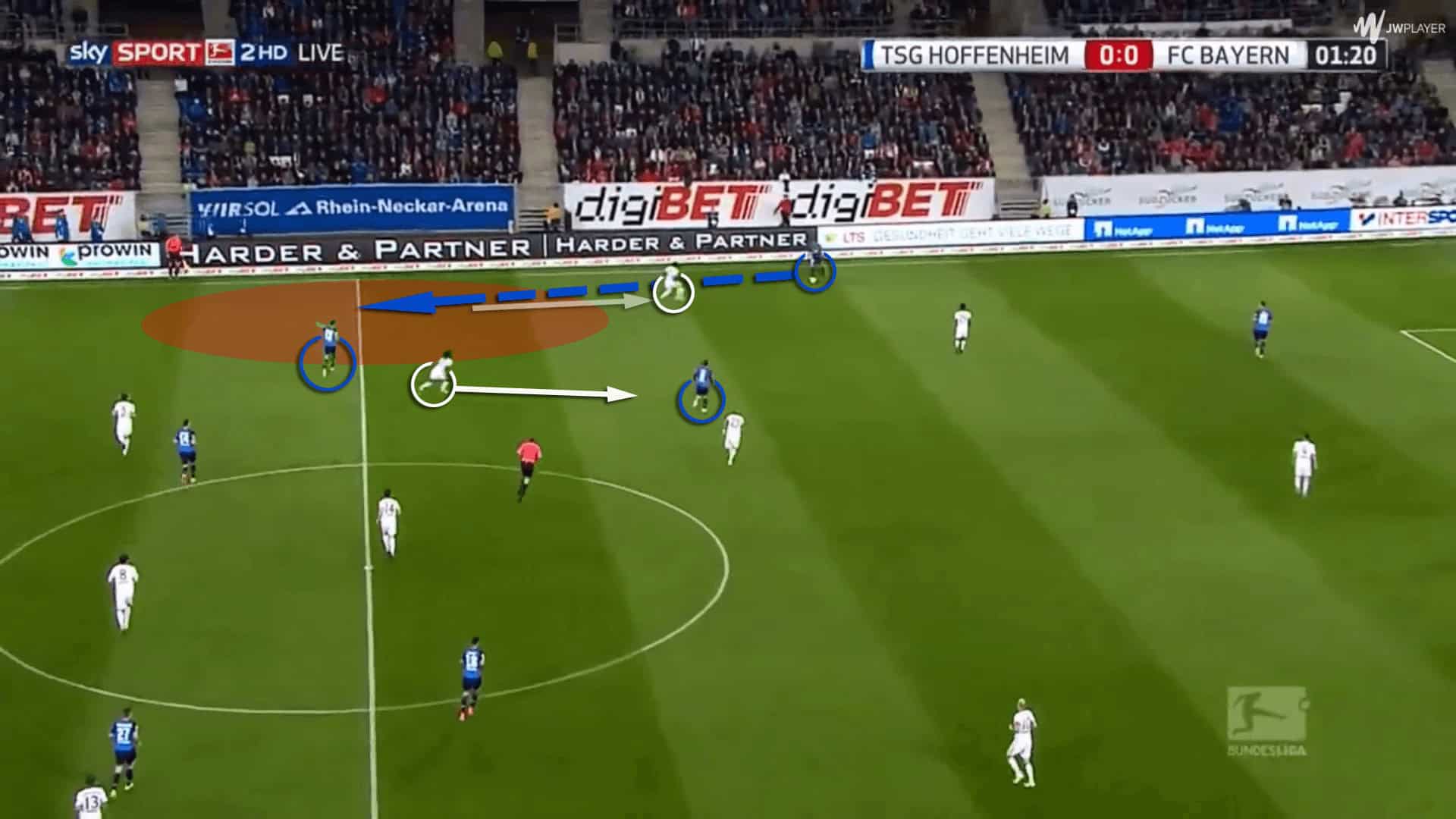
This offers the opportunity to switch sides either through a long diagonal ball or through short pass combination play.
Alternatively, a spare man can sometimes be found on the ball near the side.
If the opposition presses in a man-oriented manner but fails with this approach, the build-up side will have to find this open player to overcome the press.
Below, one can see Hoffenheim, under previous coach Julian Nagelsmann, outplaying Bayern Munich's press exactly that way.
Since there is only a short window of time for the pressing side to apply pressure on the ball and shut down all options, it is possible that they commit a mistake during this procedure.
Sharp and precise passes during build-up play can help decrease the opponent's time and, thus, force them into mistakes.
Furthermore, square passes between centre-backs, like in the image below, are often seen as a promising opportunity to press.

However, as the pressing team will have to shift both forward and sideways, it allows for diagonal passes or a dribble into midfield.
Ideally, they can even dribble over the first line of the press with their first touch, depending on the length of the run the pressing player has to cover.

In addition, the shifting movement of the opposition also moves the gaps between two defending players within the same line.
If players between the lines either keep their position or move differently than the opponents, they can create passing lanes even if they were initially taken out of the game and positioned behind opposing players, as displayed below.


Overplaying The Press Vertically With A Dynamic Advantage
Back passes, for instance, are a popular pressing trigger for many sides as well.
When the build-up team play the ball backwards, they will move higher up the pitch and press.
This pressing trigger often enables your team to press players who then receive the next pass with poor pre-orientation from the blind side.
However, at the same time, it allows the build-up team to exploit the forward movement of the pressing side and to create a dynamic advantage.
At the moment of moving forward, it is more difficult to defend the space behind for every single player.
A way of exploiting this is up-back combinations.

To use back passes to attract pressure and, at the same time, stretch the opposition vertically is a common feature in Maurizio Sarri's teams.
Whether at Napoli, where his style of play became well known as "vertical tiki-taka", or at Chelsea, the Italian manager utilised these back passes to lure the opposition into a press which they can then quickly overplay through short pass combinations.
If there is no space between the lines offered, a long ball can exploit the space behind the opposition's back line.
Below, we can see an example of Spain building up play against Germany.
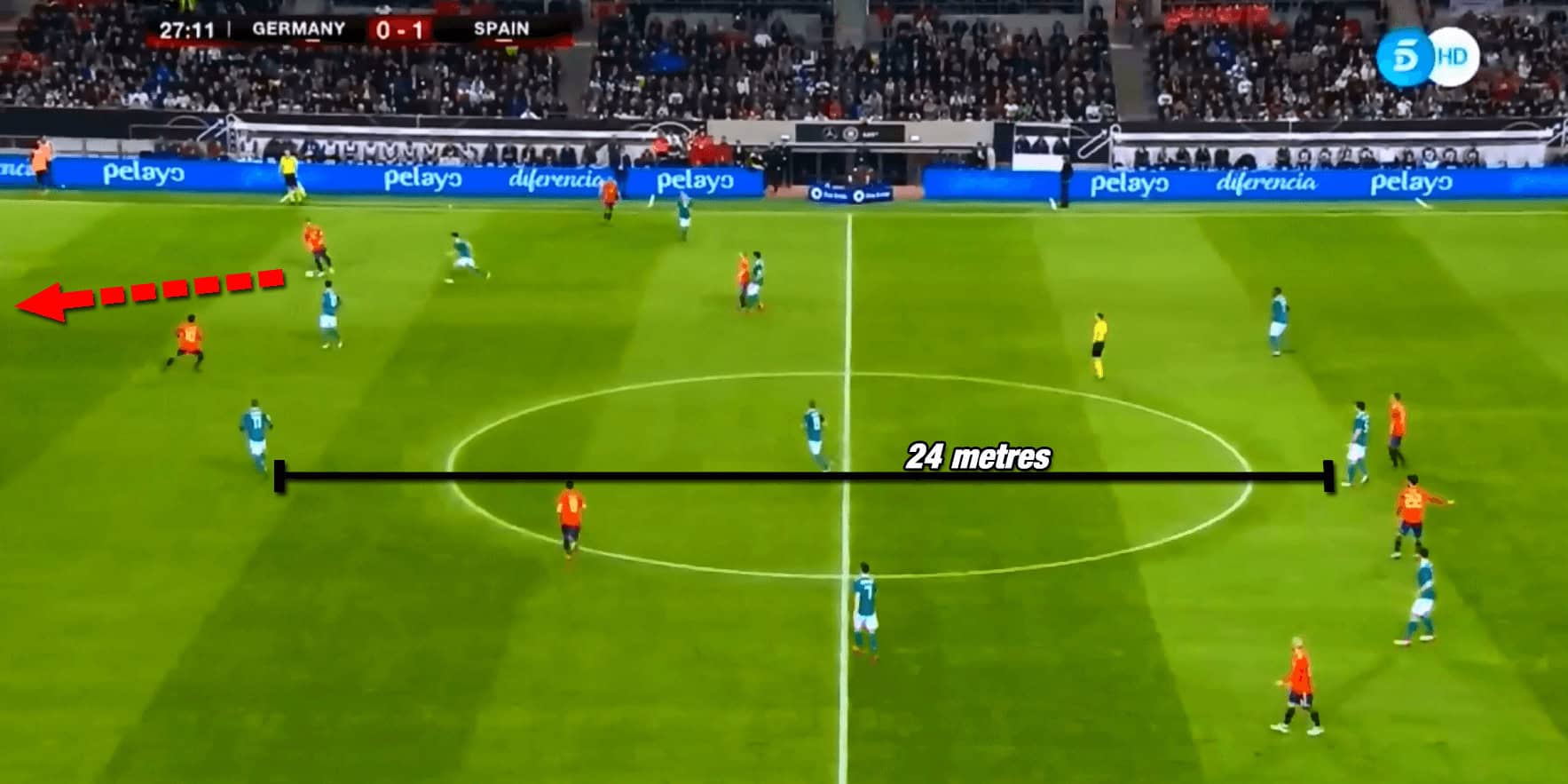
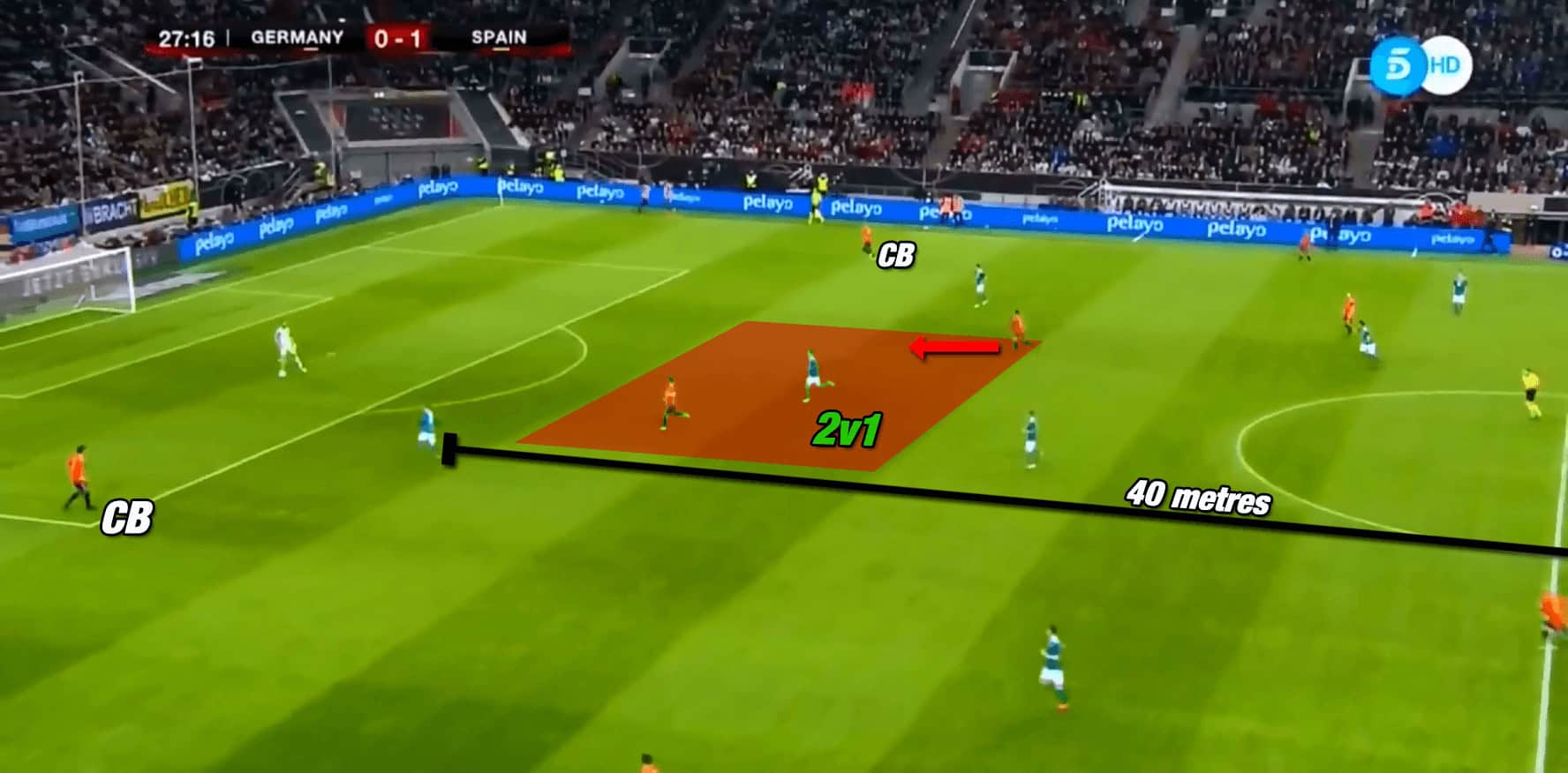
With a back pass, they stretch the shape of the opposition.
That way, they can even create a 2v1 in the pivot space, which enables them to successfully play out from the back.
Overplaying The Press Through An Individual Advantage
When the opposition attempts to press in central areas, they will often use a pass into a midfielder with a closed body shape as a pressing trigger.
That way, they try to take advantage of a lack of orientation and passing options due to the body shape
However, if the receiving midfielder is aware of the press, a good first touch can exploit this pressing movement.
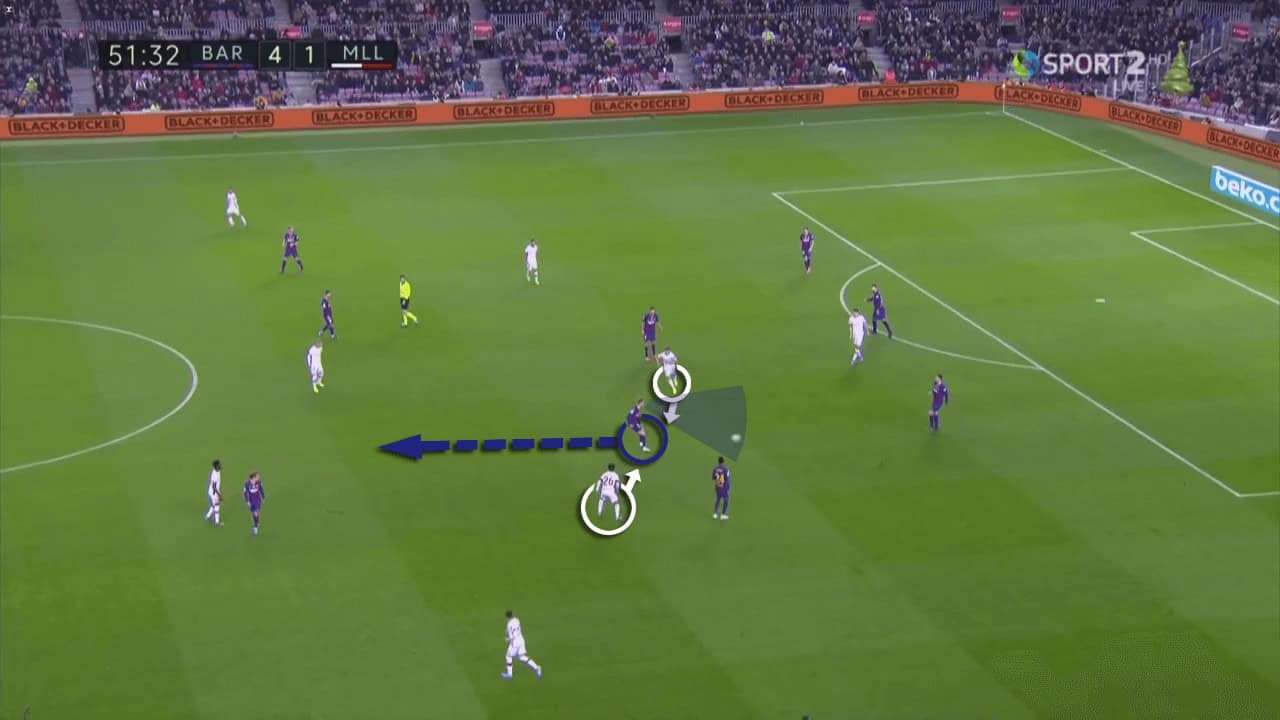
Players such as Munich's and Liverpool's previous pivot, Thiago Alcântara, or Barcelona midfielder Frenkie de Jong are true weapons when it comes to beating the press through dribbling.
They even benefit from opposition midfielders moving forward to press them, as this allows them to outplay their opponent using body feints or other deceptive actions.
Again, they will have a dynamic advantage over the opposition, which is moving in another direction.