Bernardo Silva Scout Report At Manchester City 2025/2026: Where Does Pep Guardiola’s Midfield Controller Fit Next? – Player Analysis
Bernardo Silva joined Manchester City in the summer of 2017 from AS Monaco for a €50m fee; it’s safe to say he’s lived up to that price tag.

Bernardo Silva joined Manchester City in the summer of 2017 from AS Monaco for a €50m fee; it’s safe to say he’s lived up to that price tag.
Although he was never a player tasked with scoring many goals or providing many assists, he plays a deeply important role for Pep Guardiola’s side by controlling the ball, helping with the build-up, and getting involved in the final third to break the lines.
His contract expires at the end of the 2025/2026 season, and in this Bernardo Silva scout report and player analysis, we are going to take a look at the role Silva's been tasked with this season and which clubs could best suit him if he seeks a transfer.
Bernardo Silva Build-Up Play
Bernardo Silva Manchester City profile is really interesting, and that’s why Pep Guardiola is such a fan.
In Manchester City’s build-up play, he can change from the ‘8’ to the ‘6’ and vice versa.
Usually, you’ll see him drop into a double-pivot role, look to receive the ball and support in the build-up play.
That would be either by playing quickly into the full-back or by dribbling forward.
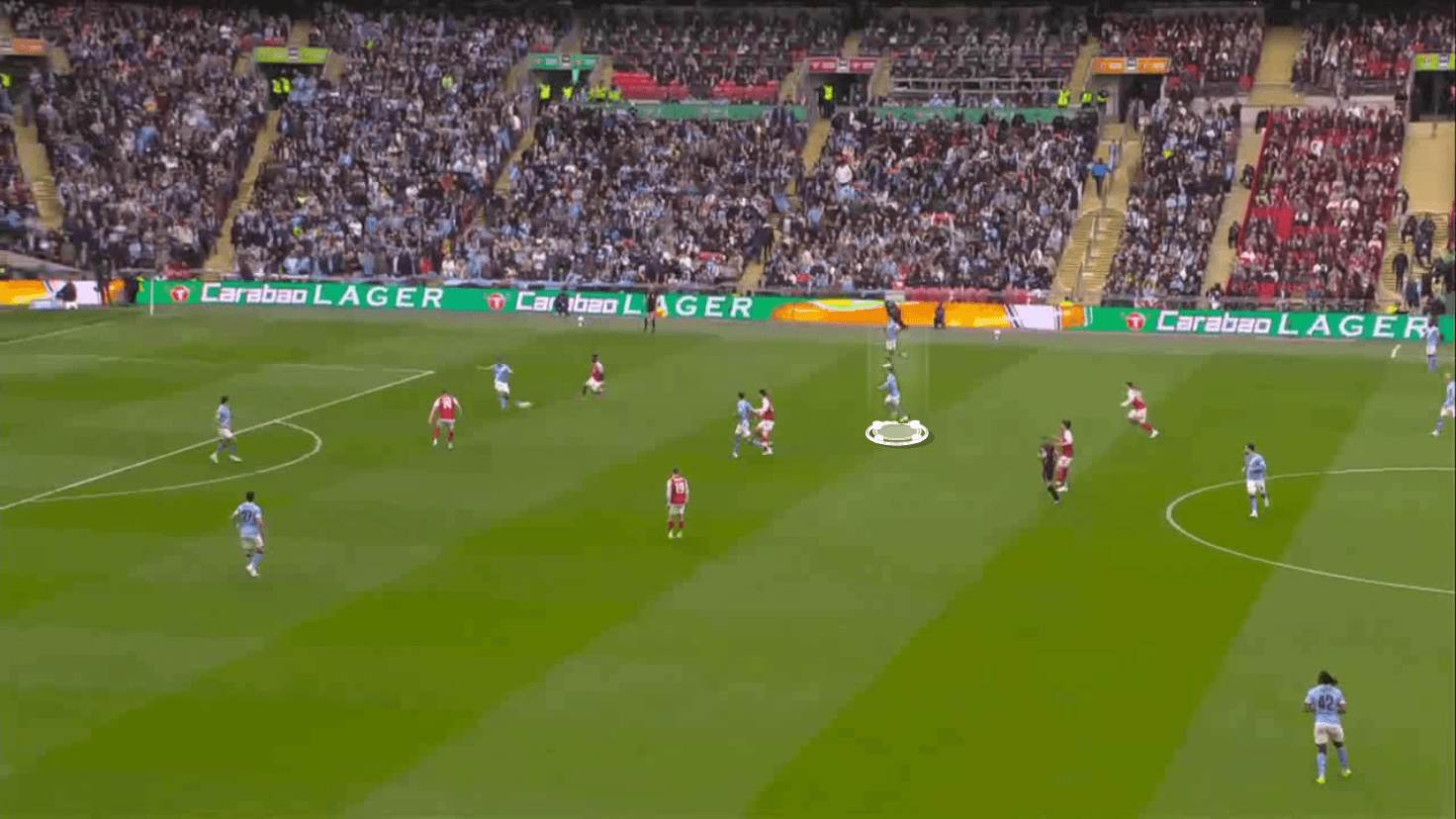
The other scenario is you can see Silva dropping between the two centre-backs and playing as the sole ‘6’.
Not the most likely place you’ll find him.
When Manchester City face an injury crisis, you can see him take up this role, but even in regular squad conditions, he drops in and out of those spaces and can take control of the build-up on his own.
Bernardo Silva Midfield Transition
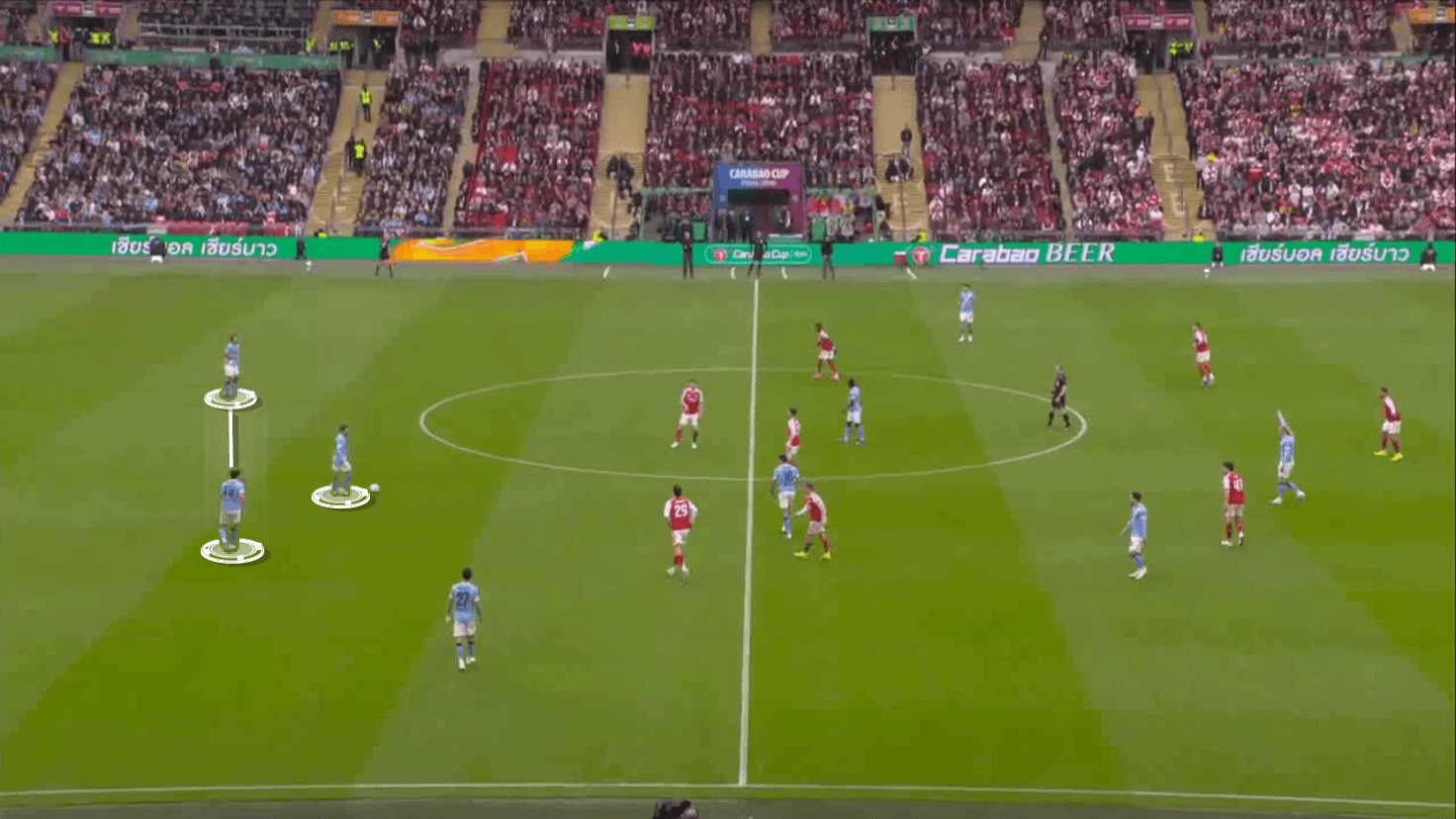
In transition, Bernardo Silva is world-class in terms of intelligence and positioning himself in midfield.
When he gets the ball in the build-up here, he’s looking for a quick transition into midfield.
He’s left with many options to play into.
A lot of the time, you would see him play that simple pass, but Bernardo Silva is a world-class ball carrier as well, and when he sees the opportunity to drive forward, it adds another layer to Manchester City’s midfield transition.
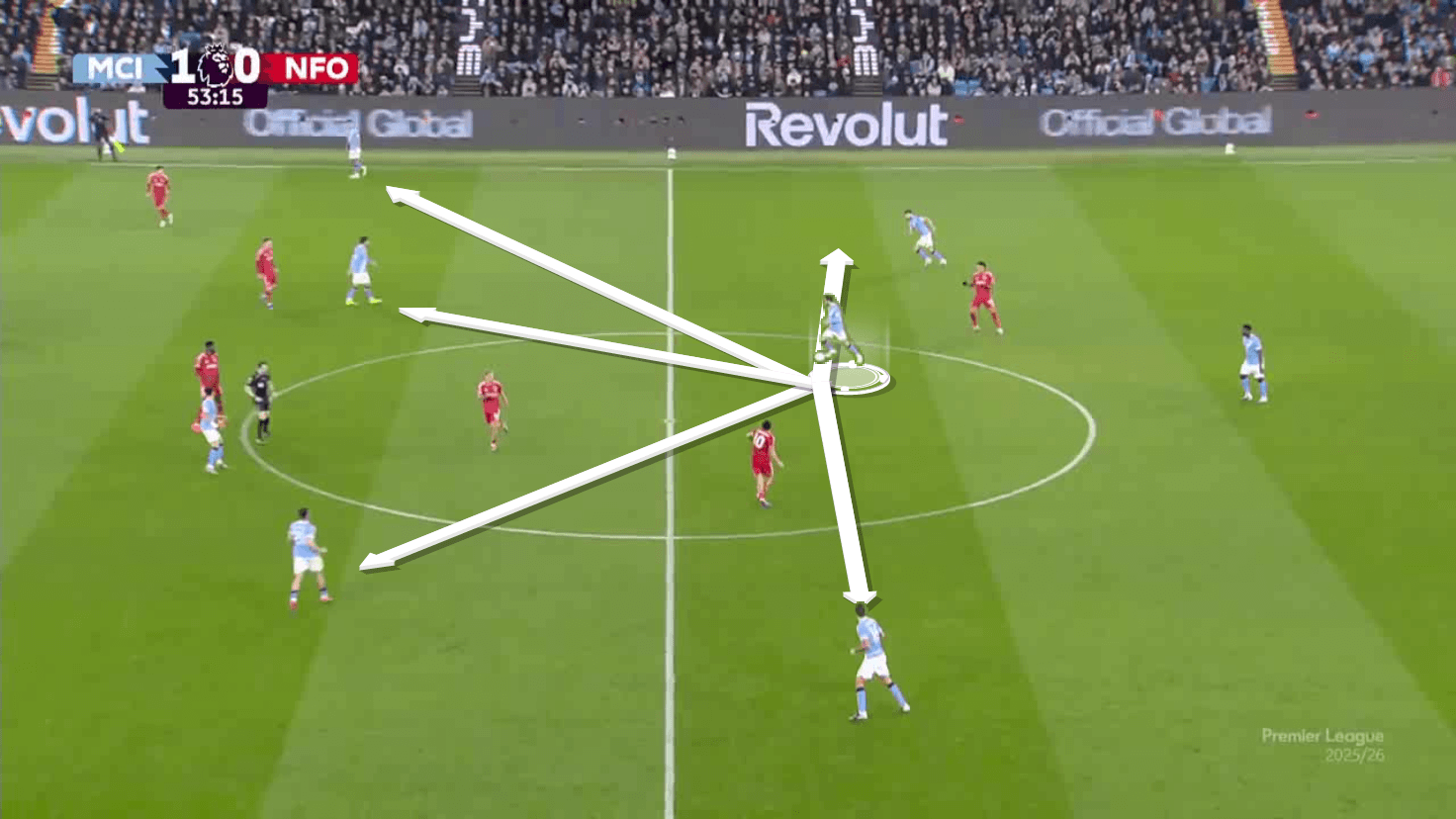
When he takes the opportunity every now and then to drive forward through midfield, it changes the dynamic, and Man City’s dangerous attack kicks off right away.
Players are making runs in behind; the opponent’s defensive structure is broken as they try to stop those runs while also shutting down Bernardo Silva.
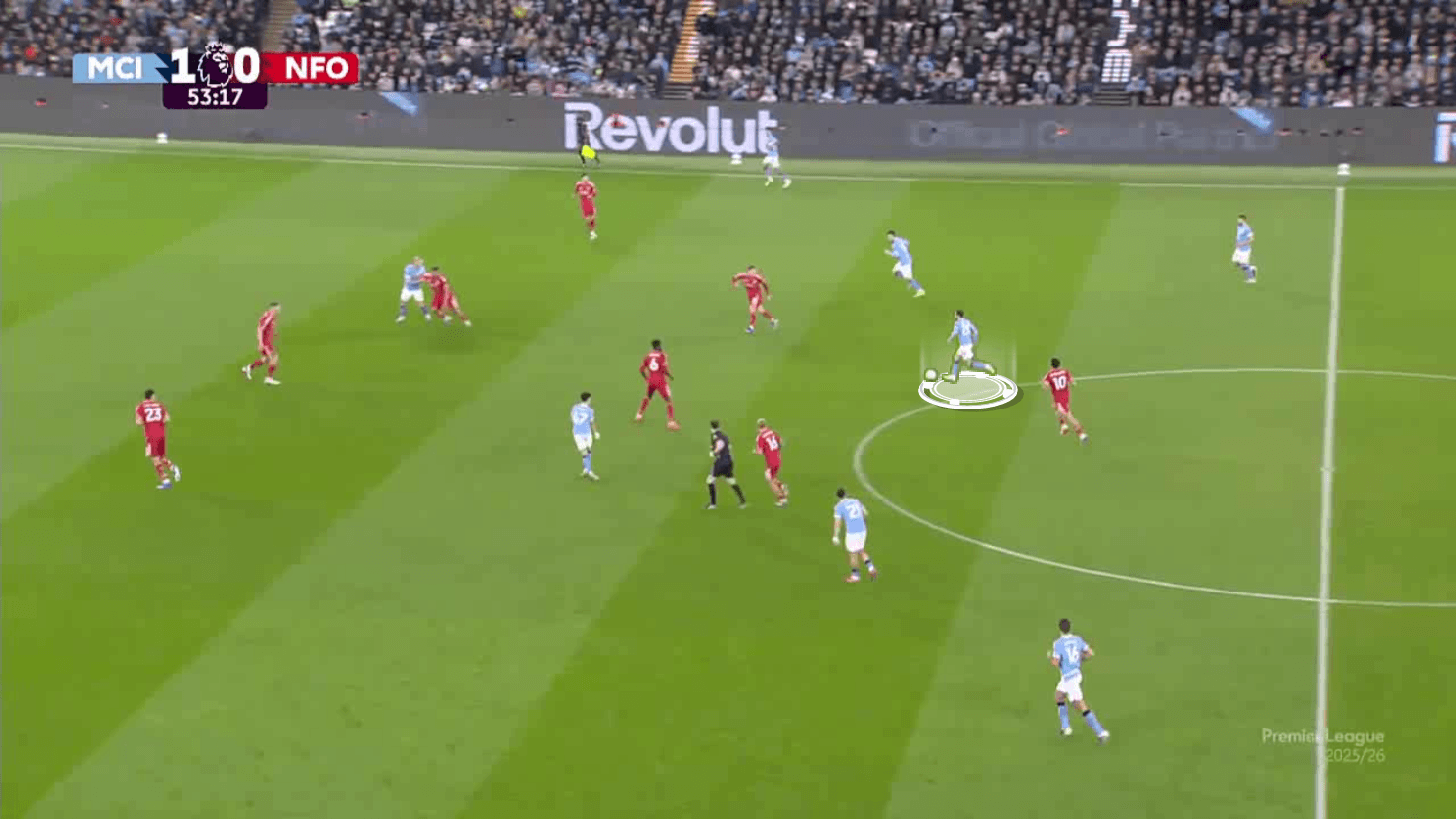
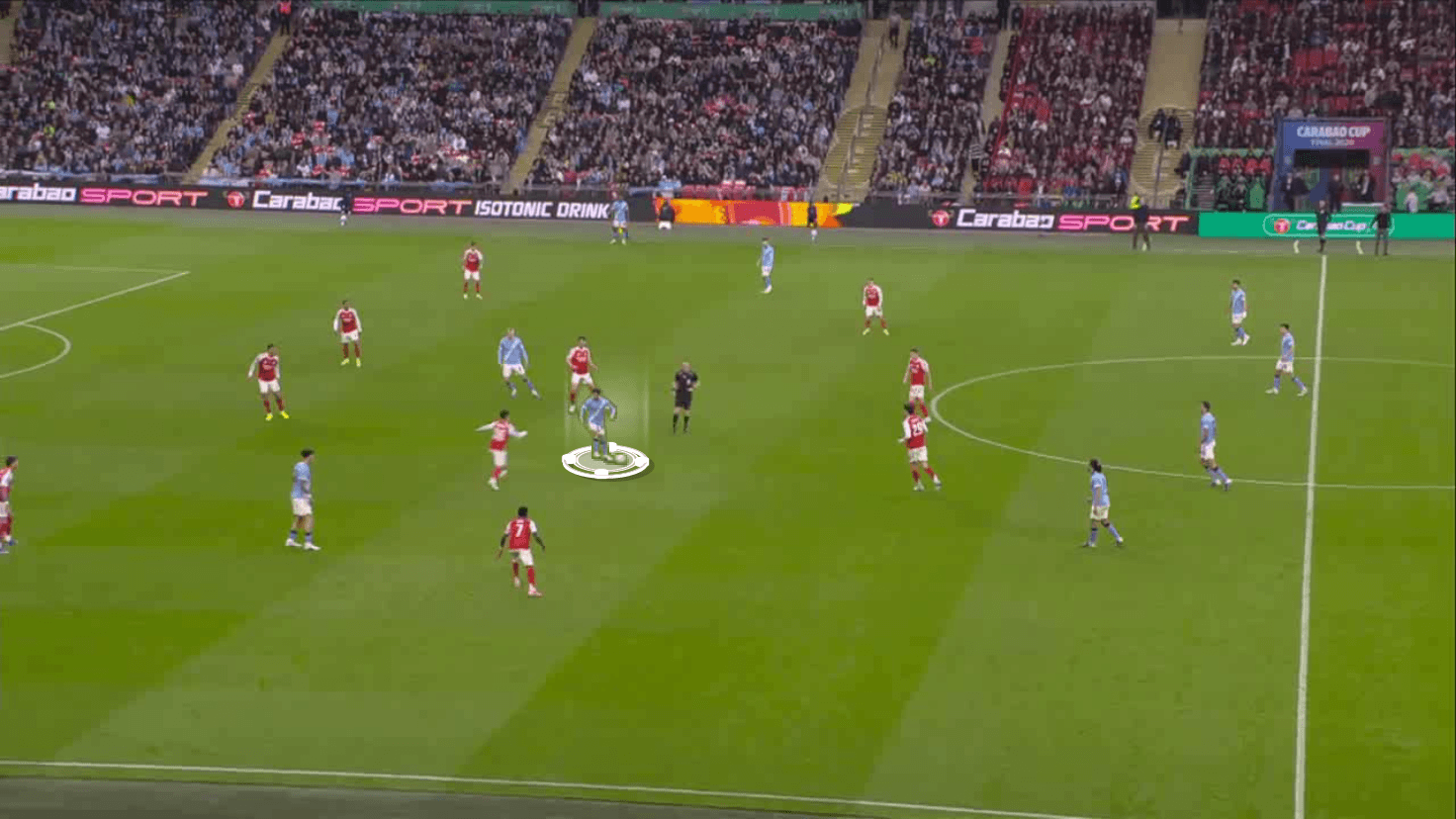
The examples we looked at before are Bernardo Silva near the ‘6’ or in a deep-lying playmaker role, but as an ‘8’, you find a similar style: keeping it very simple and looking to receive in the half-space: if there’s no option to play it forward, play it backwards and reset again.
Overall, Bernardo Silva is a cautious player; it isn’t every game that you would expect him to try to make a turn and beat the opponent into space; that’s left to the wingers on the team.
Bernardo Silva Final Third
There are two places you will mostly find Bernardo Silva in the final third, and it’s usually not centrally.
It’s more on the side of the pitch in a slight right-wing role.
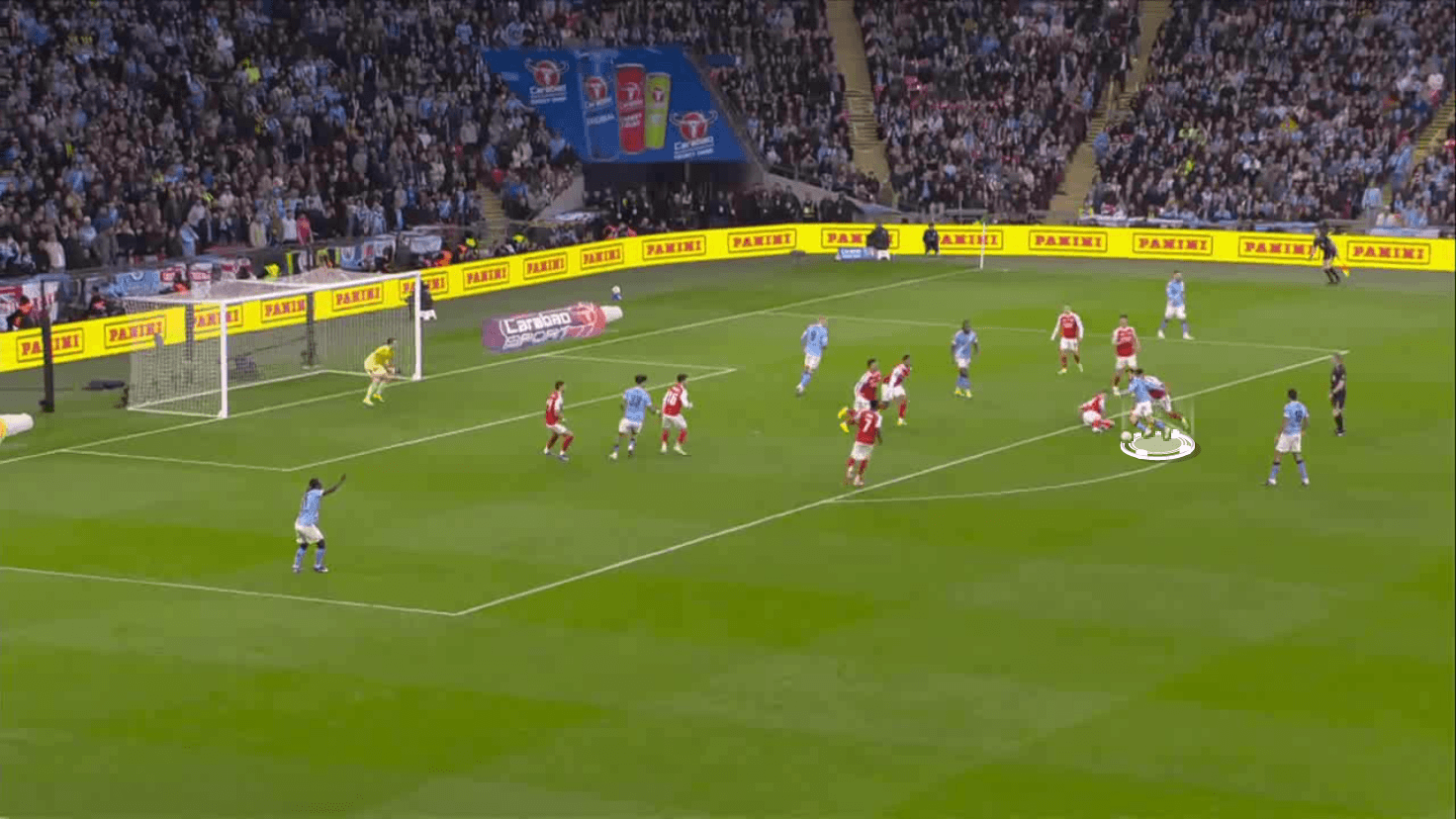
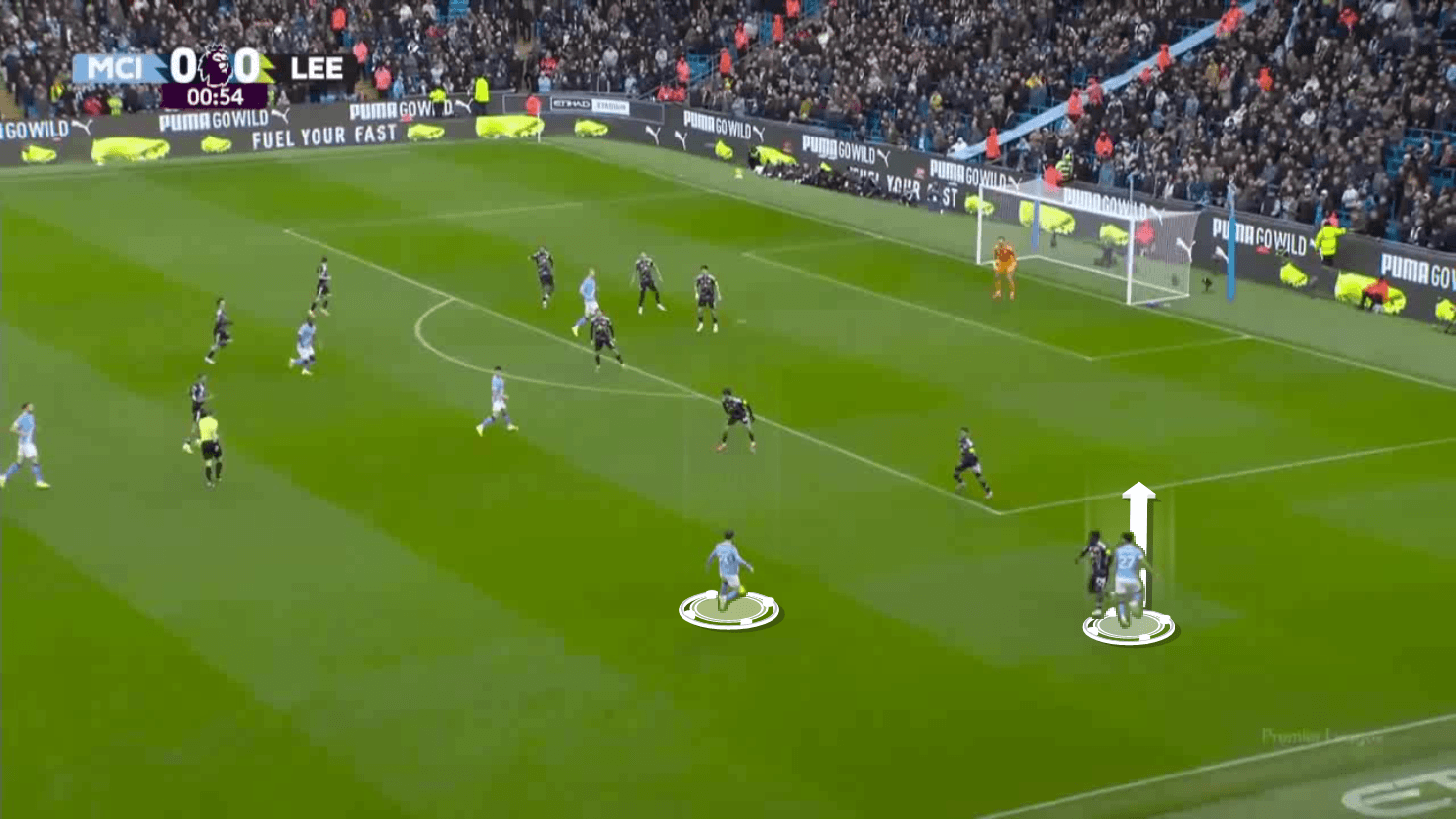
Below is Exhibit A, coming at the penalty box from an angle, looking to play into his teammate making the run behind.
If no opportunity arises when he makes this run at the box, he will turn around and play it backwards, and the team will have another chance at it again.
He averages 2.2 carries into the final third per 90, with far fewer into the penalty box, suggesting most of his carries occur in transition rather than penetrating the box himself.
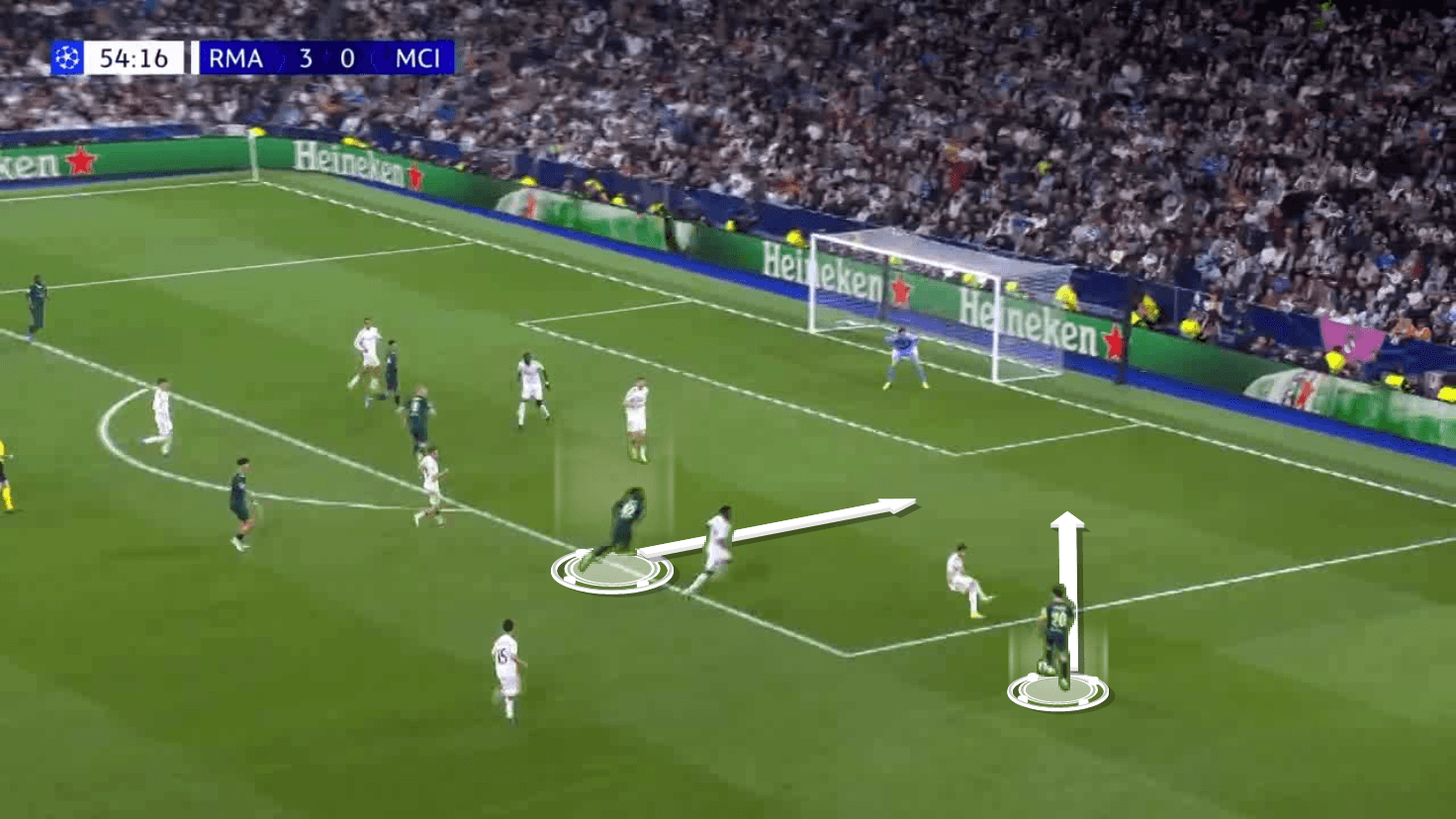
The other spot you will find him in the final third is more inverted, allowing the full-back to make runs out wide, where he can then play into space.
This is why he is one of Pep Guardiola’s favourites, the versatility he can bring.
He’s not bound to being only the player out wide when entering the final third; he can shift inwards and allow someone else to take that role, but he won’t lose any of his talent or efficiency.
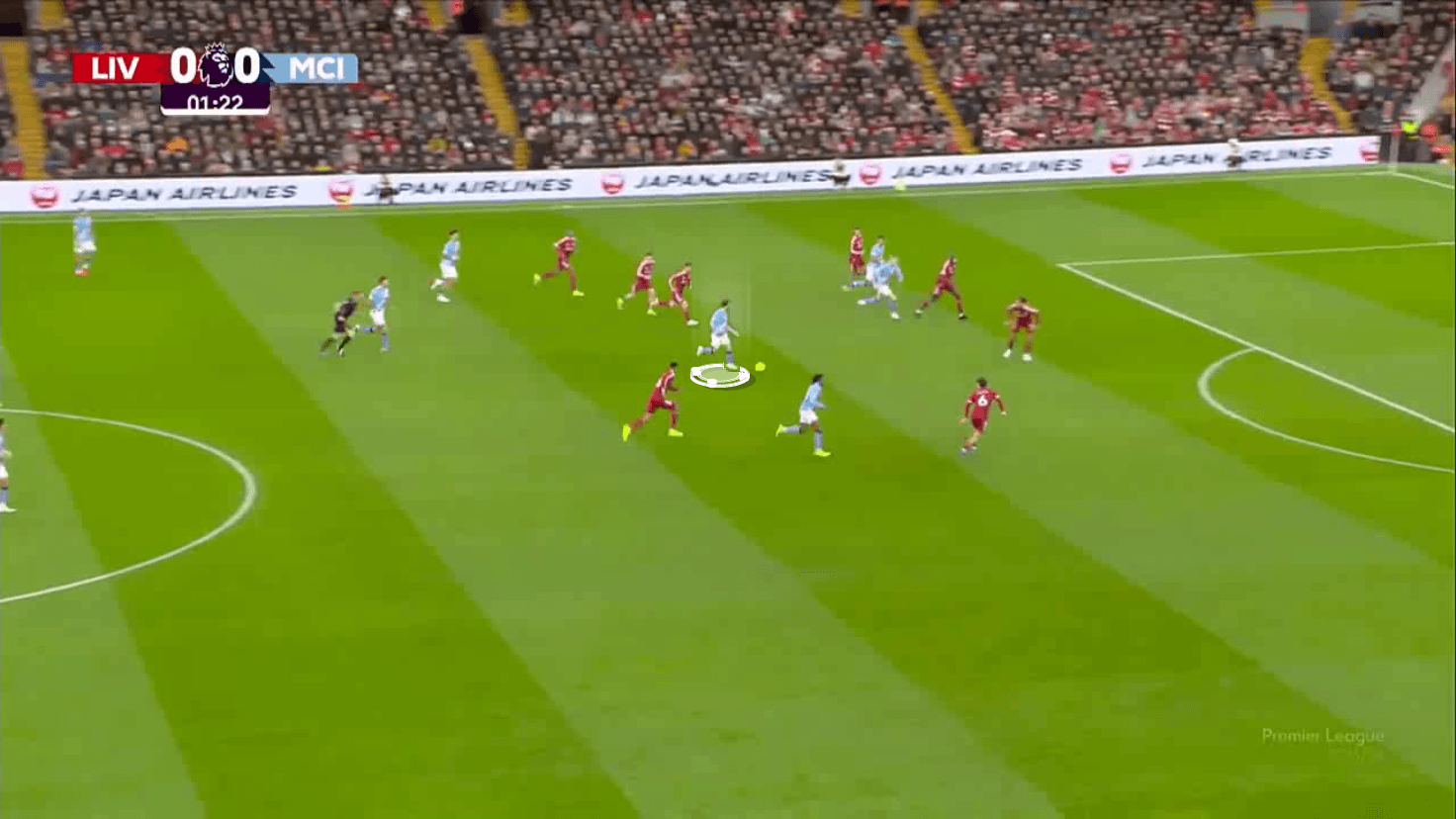
When he’s carrying the ball centrally, in the final third, he often freezes up.
There’s a slight hesitation, and it often ruins the attack.
This is one of the downsides to his game.
There are many cases where he’s too cautious with the ball, which is a symptom of what Guardiola wants, as his team loves possession and doesn’t want to waste chances to have the ball, but at times, there is better risk-reward in releasing than overcarrying it.
In instances like these, he freezes up and carries the dribble, and when opponents close down, the ball is more likely to be forced into a turnover.
Bernardo Silva Dribbling & Carrying
There’s no doubt how world-class Bernardo Silva is on the ball.
He isn’t a flashy dribbler who is looking to do many tricks, but rather an efficient player who is looking to outmanoeuvre you.
Because of his height, his centre of gravity allows him to twist and turn much more easily and leave opponents in the dust, as we see below.
It’s why he’s been called a mini Lionel Messi at times.