How To Coach Finishing Through Combination Play, Cutbacks And Attacking Box Movements - Tactical Theory
This Tactical Theory explains how coaches can build finishing practices around combination play, blindside movements and cutbacks, using examples from Celtic and Barcelona to create realistic shooting drills linked directly to a team’s game model and attacking structure.

The Importance Of Finishing Practice
Shooting practice is clearly a vital component of a weekly or even daily training cycle and can be one of the more enjoyable topics to coach and participate in.
Finishing exercises can vary drastically, from simple, individual-oriented shooting drills to more intricate ones incorporating combination play.
Individual or small group practices can provide an opportunity for many repetitions of specific movements and types of finishes, with combination drills added to relate more to a particular team's game model and tactics.
This tactical analysis will also provide analysis from former UEFA Champions League matches to show how each drill relates to an actual, in-game situation.
This tactical theory will analyse Celtic's cutbacks and Barcelona's box setup, including drills designed to allow coaches to replicate these setups.
Combination Play Training Drills
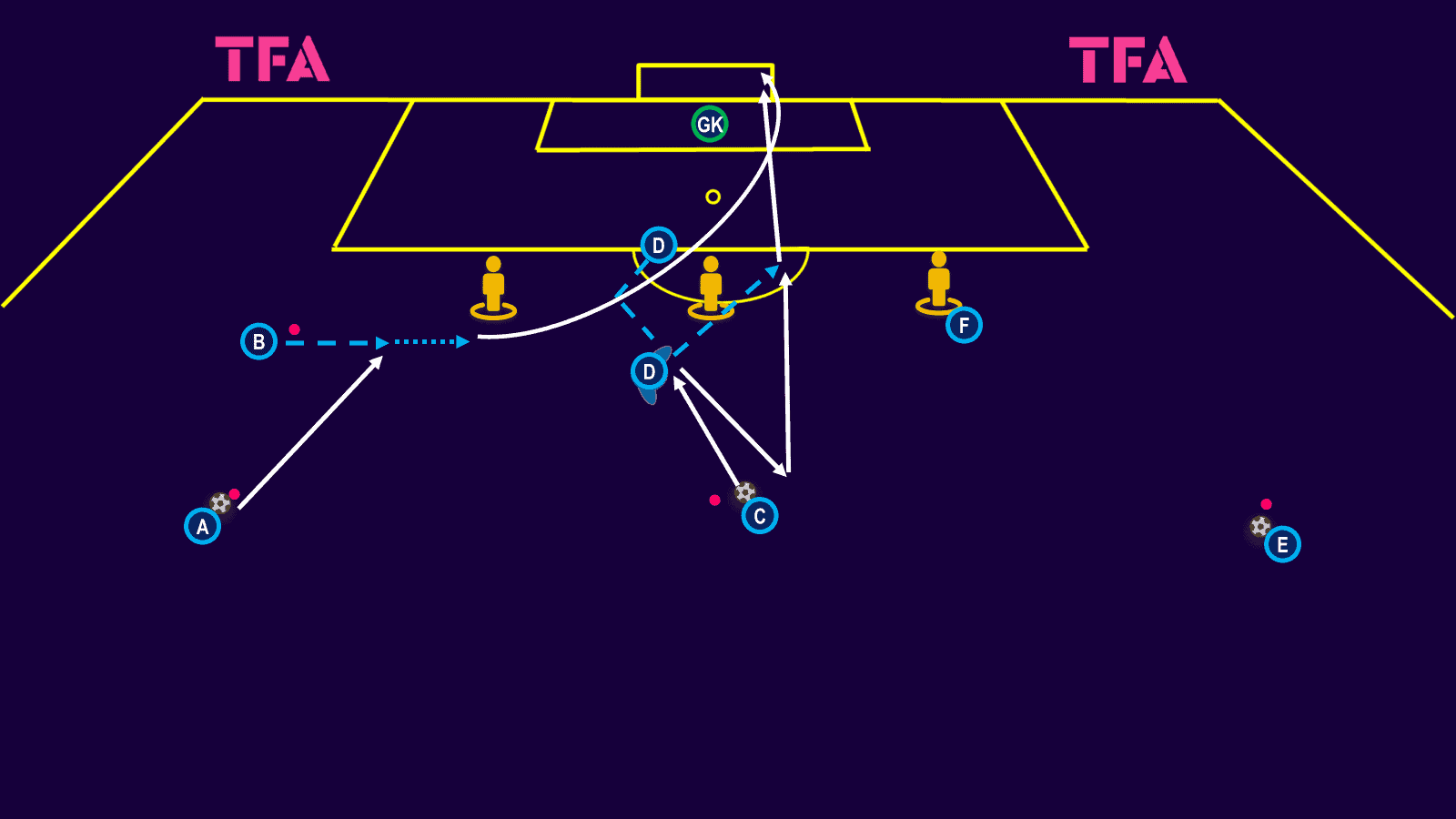
This finishing exercise incorporates three shots at goal per repetition and has elements of individual practice and combination play.
The movements begin with simple passes and shots before progressing to a more complex pattern of play.
The first shot at goal sees player ‘B’ receiving an angled pass that is aimed at the first mannequin, who represents a full-back or centre-back.
The pass, played directly at the defender, is designed to freeze the defender in place.
The attacker's first touch can take them past the first defender.
Similar to Nicolas Kühn’s former goal for Celtic in the Champions League, the forward, with their second touch, should aim a bending shot towards the far post.
Depending on the level of the player working with, player ‘D’ or an additional mannequin can be used to give the shooting player an additional target to aim around.
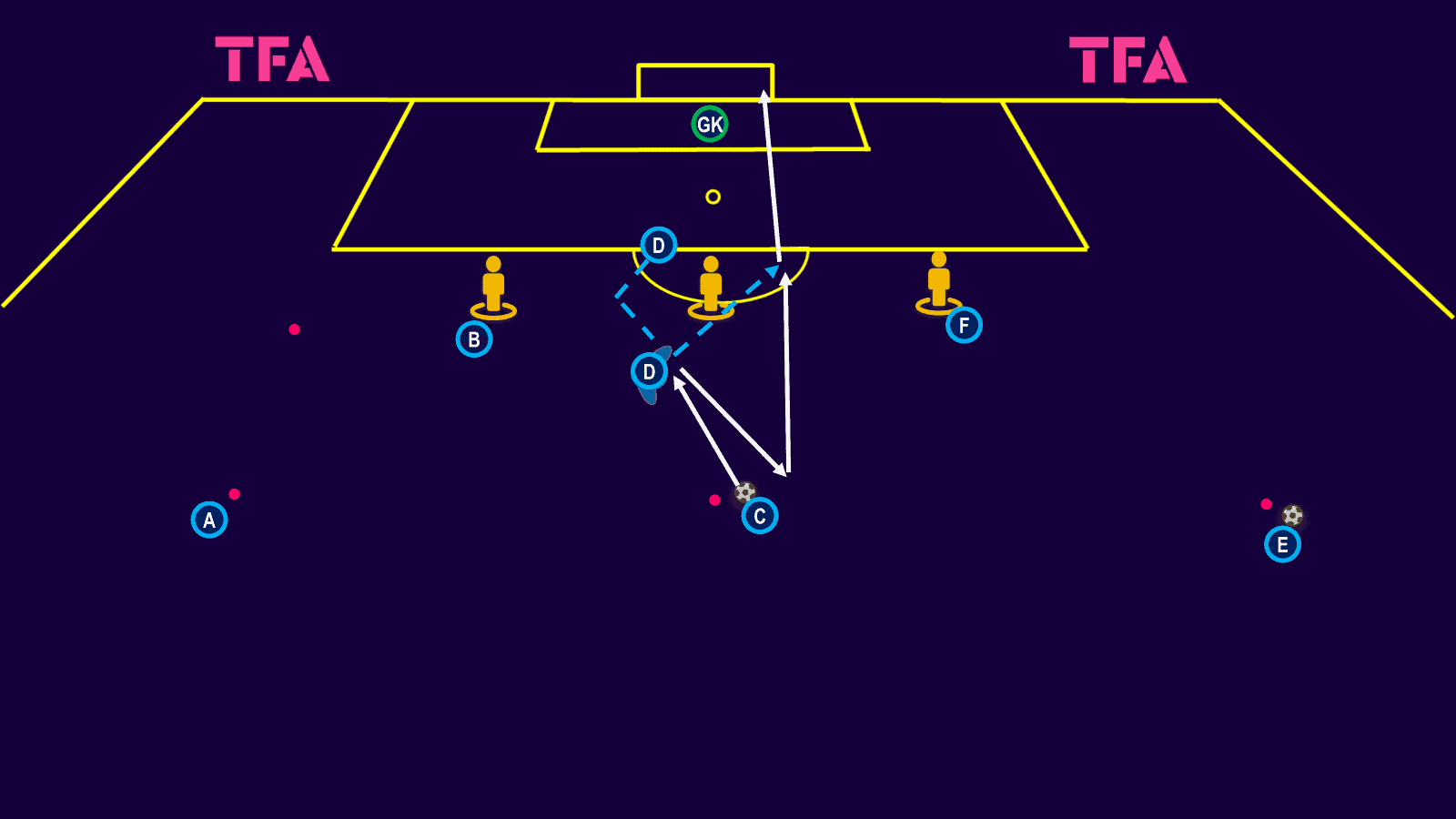
For the second shot, player ‘D’ starts in an “offside” position behind the central mannequin, which represents a centre-back.
The striker should make an initially slow movement before bursting at pace to create an angle to the side of the mannequin.
This sharp movement from the blindside of the defender is designed to make the forward hard to pick up.
Player ‘A’ then receives a soft pass, with the intention of drawing the centre back towards the ball, before bouncing it the first time with their back foot.
This backfoot pass allows the player to play the ball with the inside of their foot and quickly change direction.
The movement should be made across the face of the centre-back to block the defender and prevent them from stealing the ball.
The striker receives the ball behind the defensive line and is encouraged to shoot early with a first-time finish.
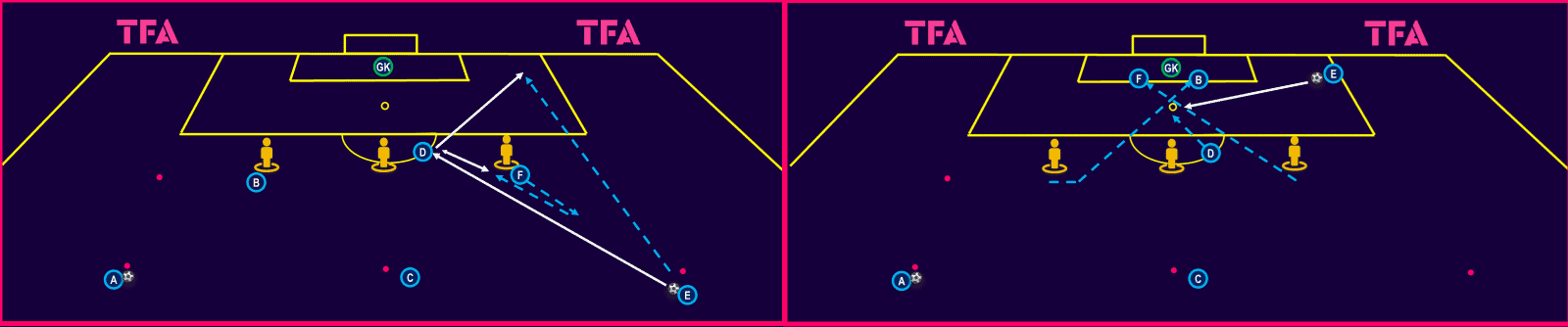
The third shot introduces additional combinations before a cutback is delivered from just inside the width of the box.
Player ‘F’ triggers the rotation by making a sharp movement towards player ‘E’.
Player ‘E’ misses out ‘F’ and finds ‘D’, who reacts immediately after having taken their shot at goal.
‘D’ bounces the ball first time to ‘F’, who has turned whilst looking at the ball.
‘F’ gives the ball straight back to ‘D’, who plays the ball deep into the box for the player who played the original pass to run onto.
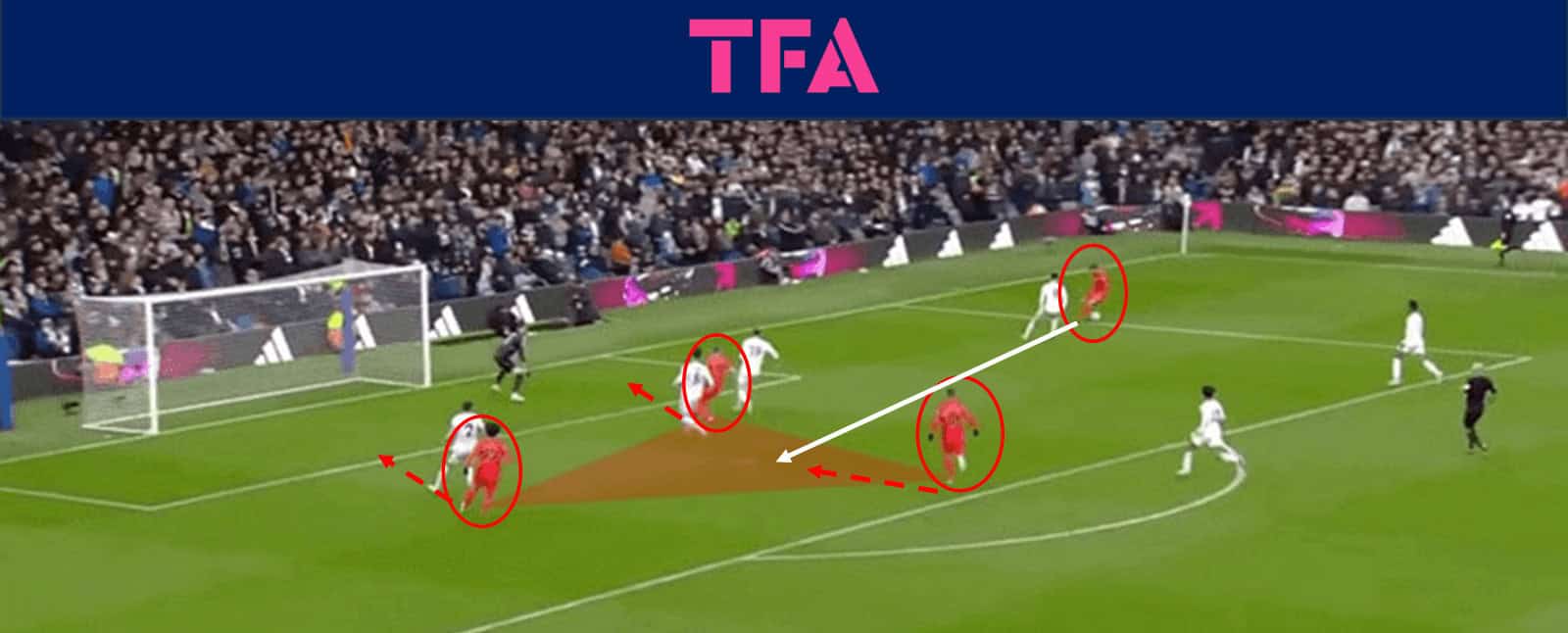
The ball being played into the box is the trigger for ‘B’, who hits the first shot to run across their hypothetical defender towards the front post.
As soon as ‘F’ plays the bounce pass, they make a diagonal run, crossing over with player ‘B’ towards the back-post.
The above image of Brighton attacking the box during a previous Premier League match shows the illustrated movements being made.
The three players form a triangle.
Two of the three players (‘B’ and ‘F’) make runs that push the opposition's defensive line back towards their own goal.
This creates space around the penalty spot for the third player, player ‘D’ in the drill, to receive the cutback alone.
Celtic Cutback Training Drills
The following exercise can be tagged onto the end of the previous three-shot drill.
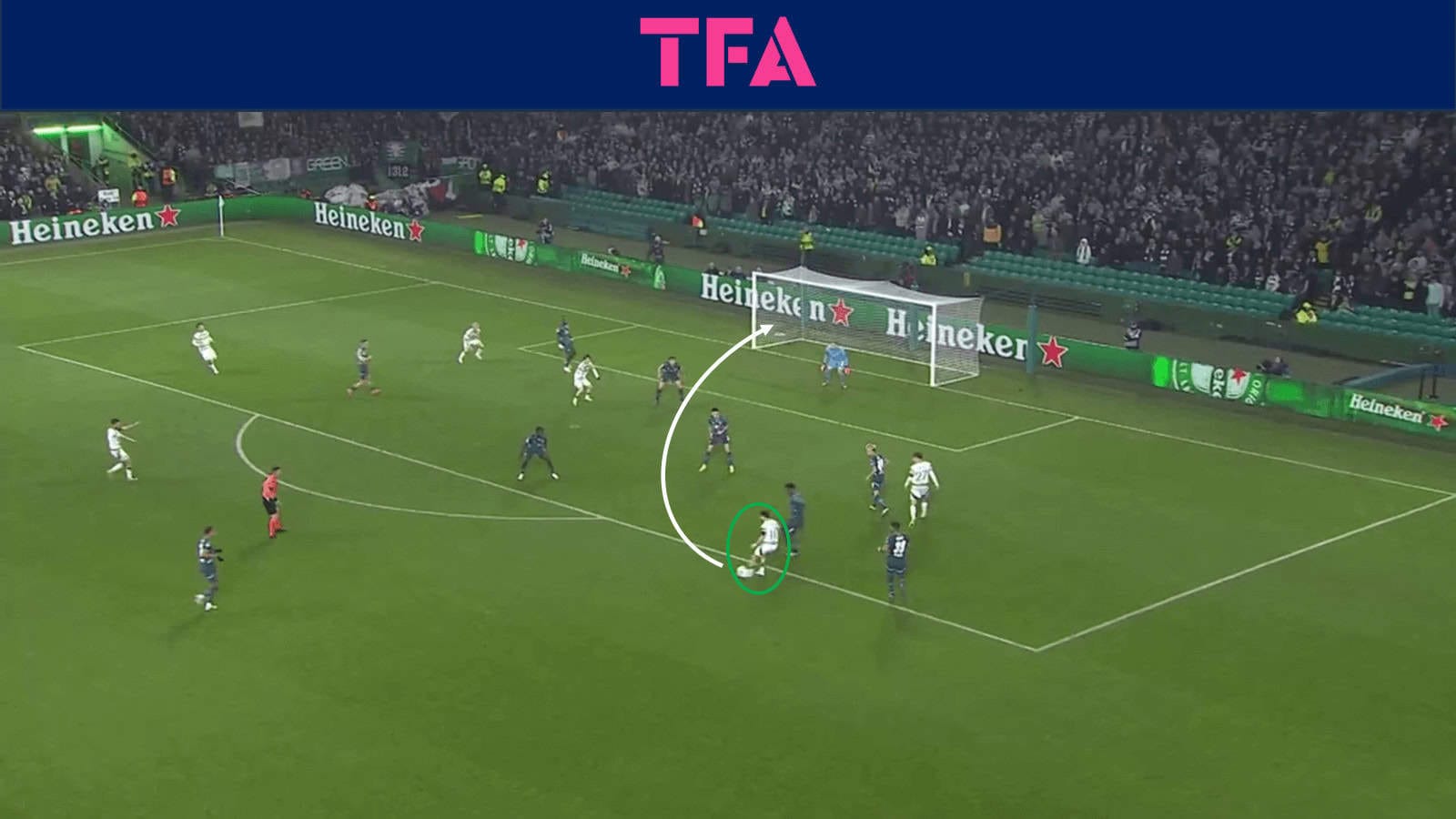
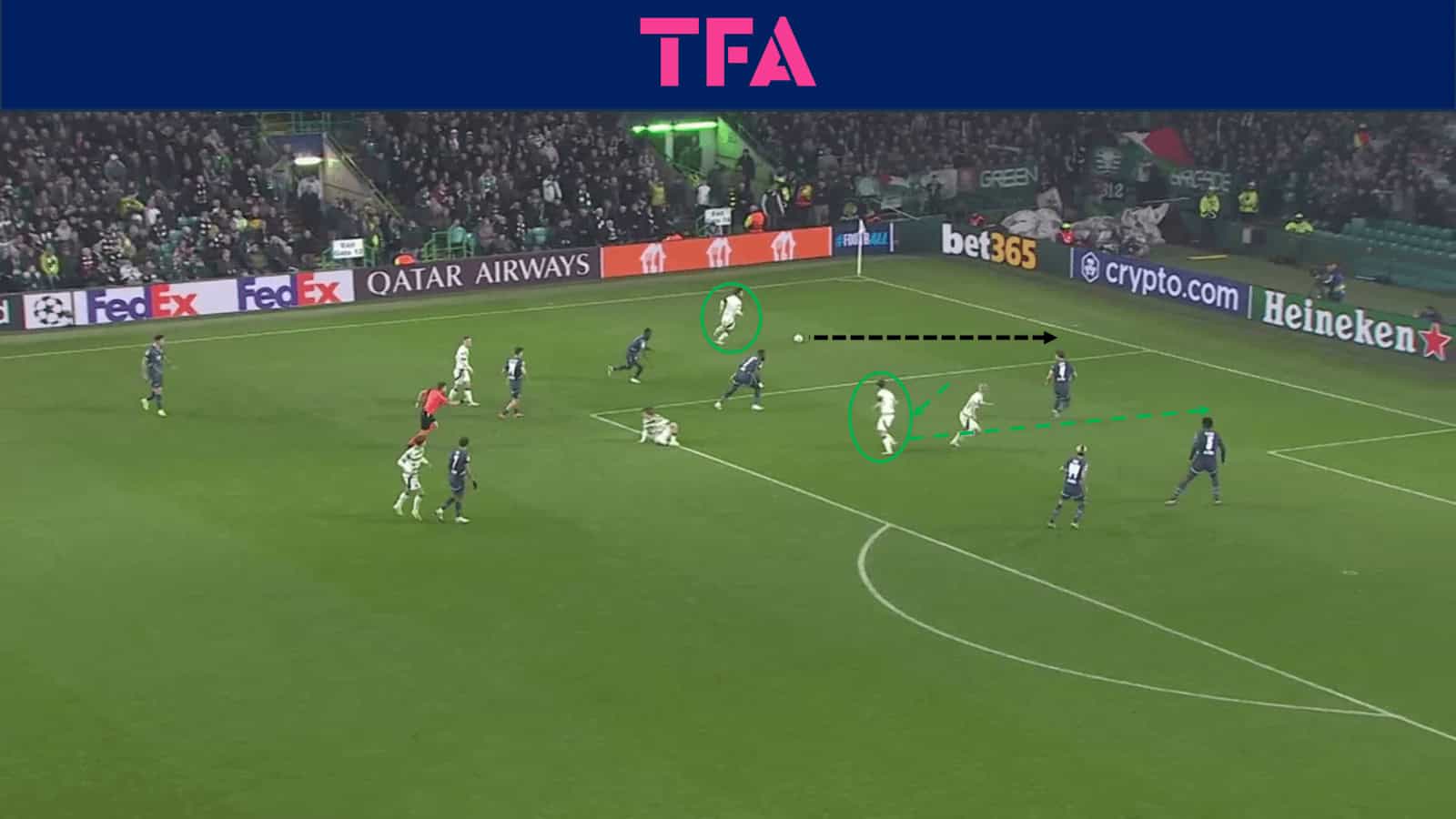
The 4th shot at goal and the accompanying movements are designed to replicate the scenario Celic found themselves in during the build-up to a previous goal against Bundesliga side RB Leipzig.
As the ball was won by Celtic high in the wide area, left-back Greg Taylor, circled just inside the box, made a run to receive in behind Leipzig's backline.
When Taylor did not receive the ball in the first phase of the attack, he moved out of the space to allow Hatate, circled wide left, to drive towards the touchline.
Taylor then reversed his run as Hatate began to dribble.
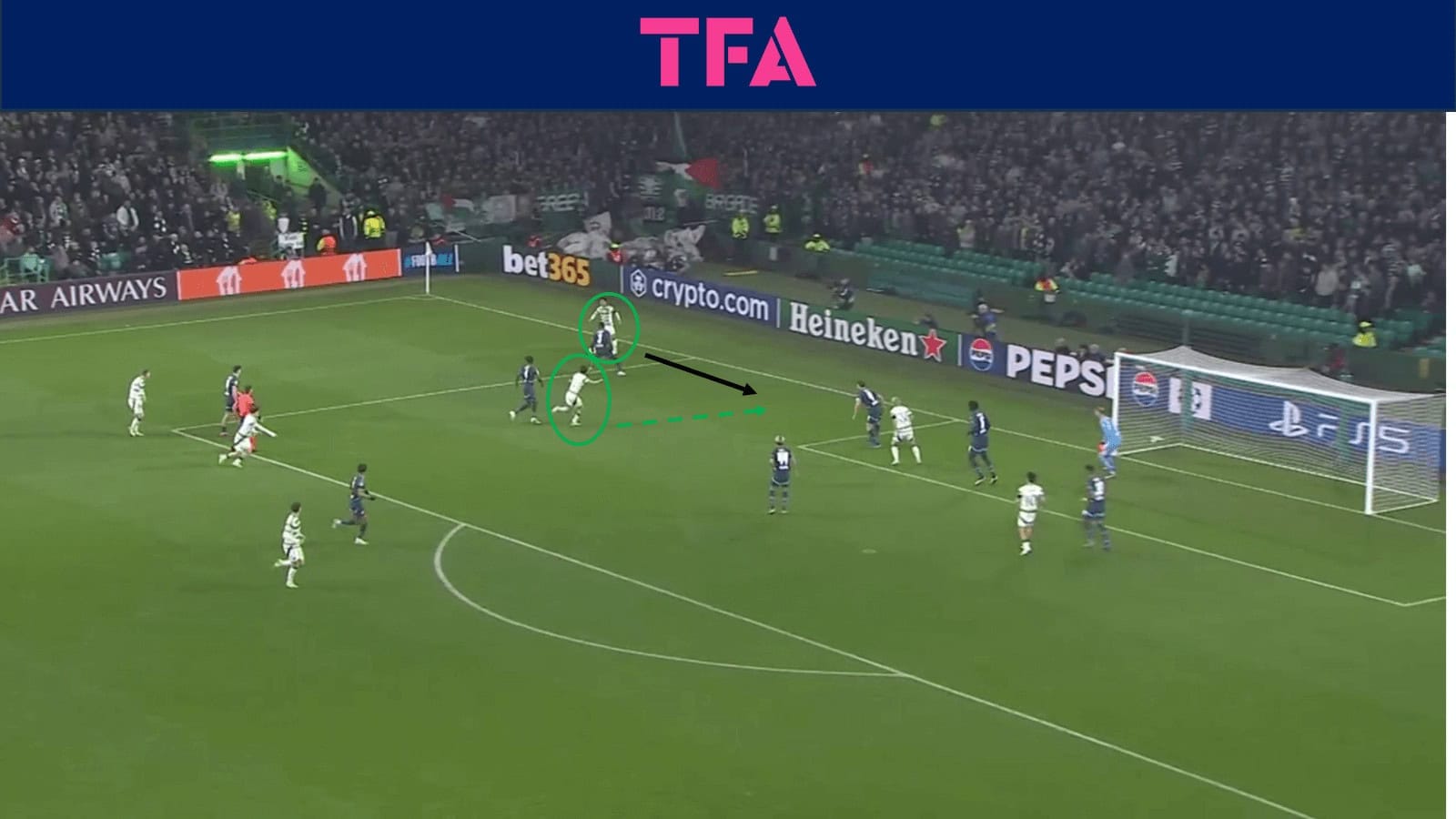
Instead of playing a hopeful cross to one of his outnumbered forwards, Reo Hatate pauses, draws in a defender, and slips in Taylor.
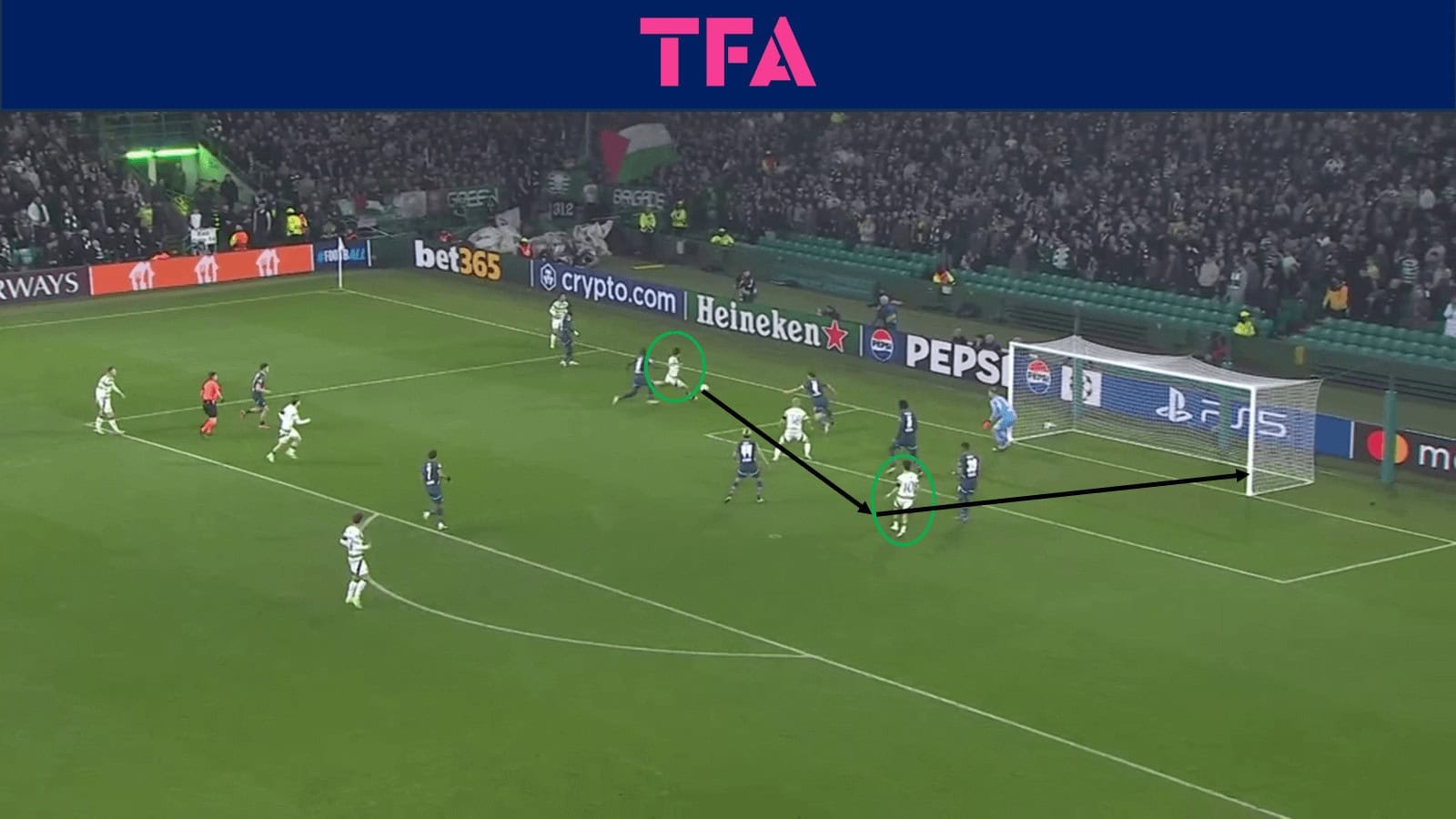
Taylor then received just outside the six-yard box and, from a much more dangerous position, provided the cutback that allowed Nicolas Kühn to score.
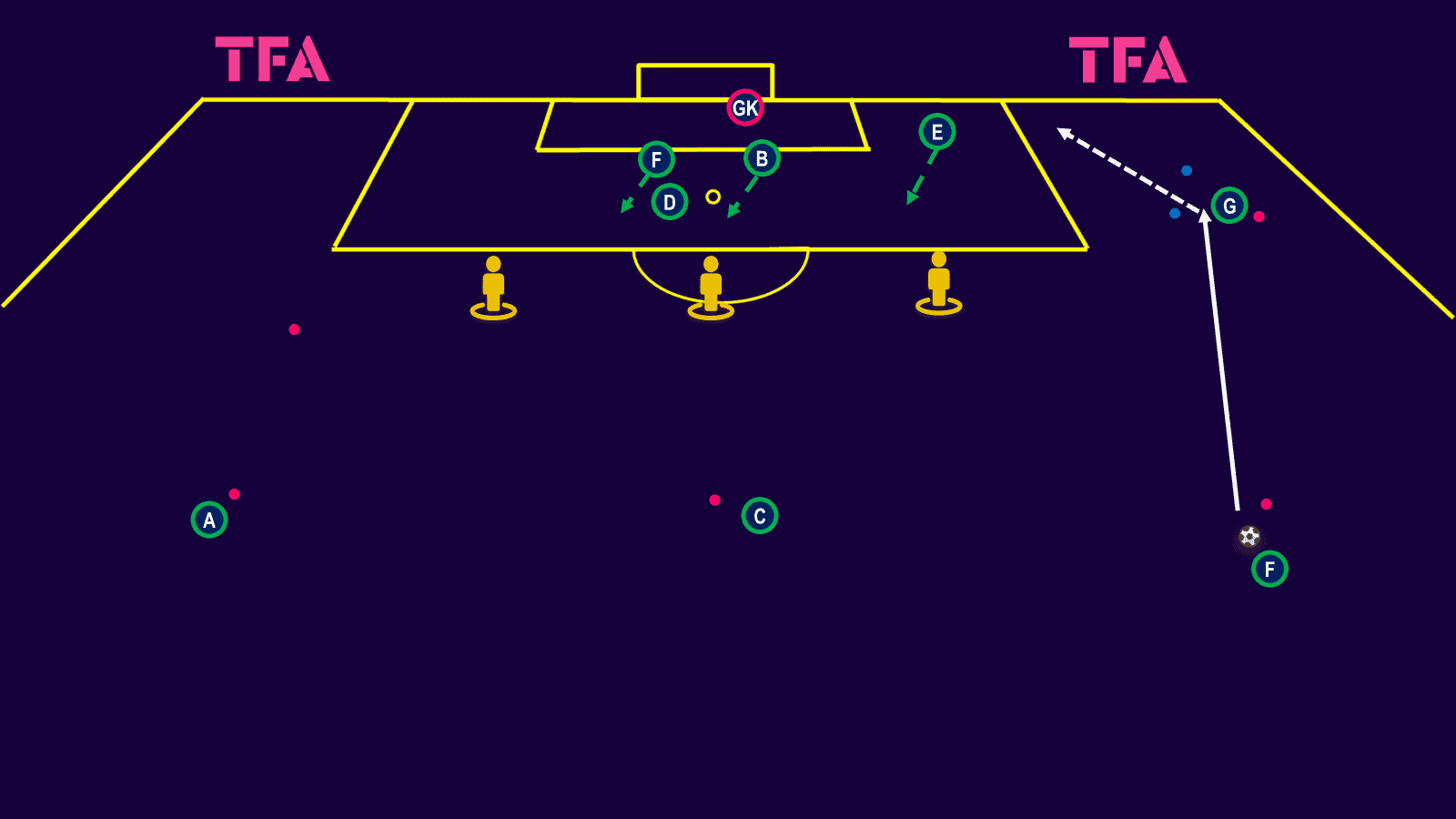
This phase of the exercise begins with player ‘F’ playing a pass into the feet of ‘G’, who is playing the role of Hatate.
As the ball travels, the three players deepest inside the opposition's box make their way onto onside positions, with ‘E’ clearing the space for ‘G’ to run into.
The players in the middle of the box should make slight movements away from the ball as they move back onside so that they are on the blindside of their markers.
‘G’ takes their first touch through the blue gate and aggressively drives to a position beyond the six-yard line.
Depending on the coaches' preferences, they may wish for the ball to be delivered directly into the box from this area.
In this example, ‘E’, playing the role of Taylor, sharply changes course to allow them to receive a slipped pass from ‘G’.
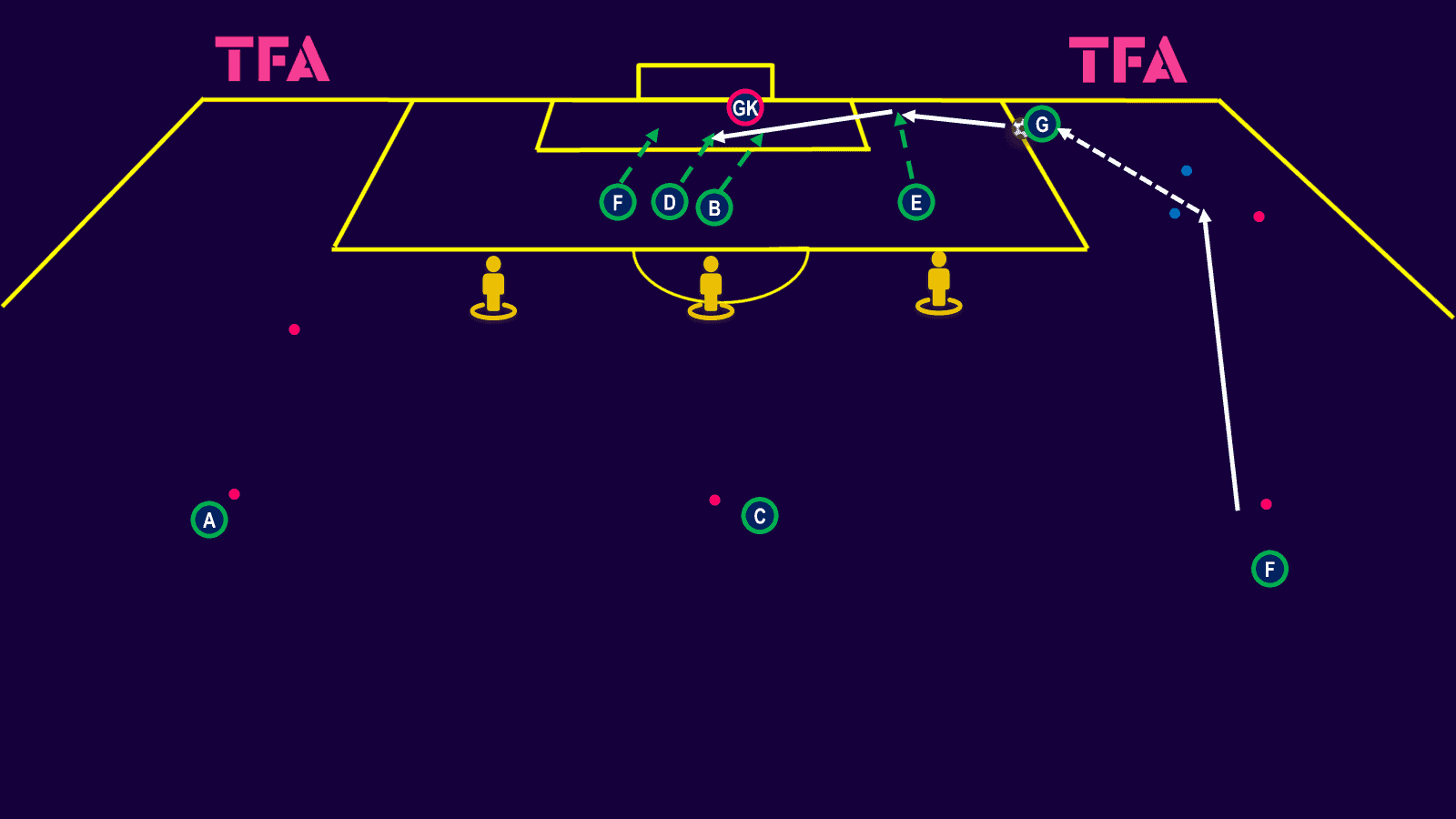
Due to the ball's proximity to the goal, the coach may opt for the three players in the box to attack the goal area rather than simply staggering their movements.
To provide the best chance of scoring, the ball should be played diagonally backwards with pace and along the ground.
FC Barcelona’s Box Training Drills
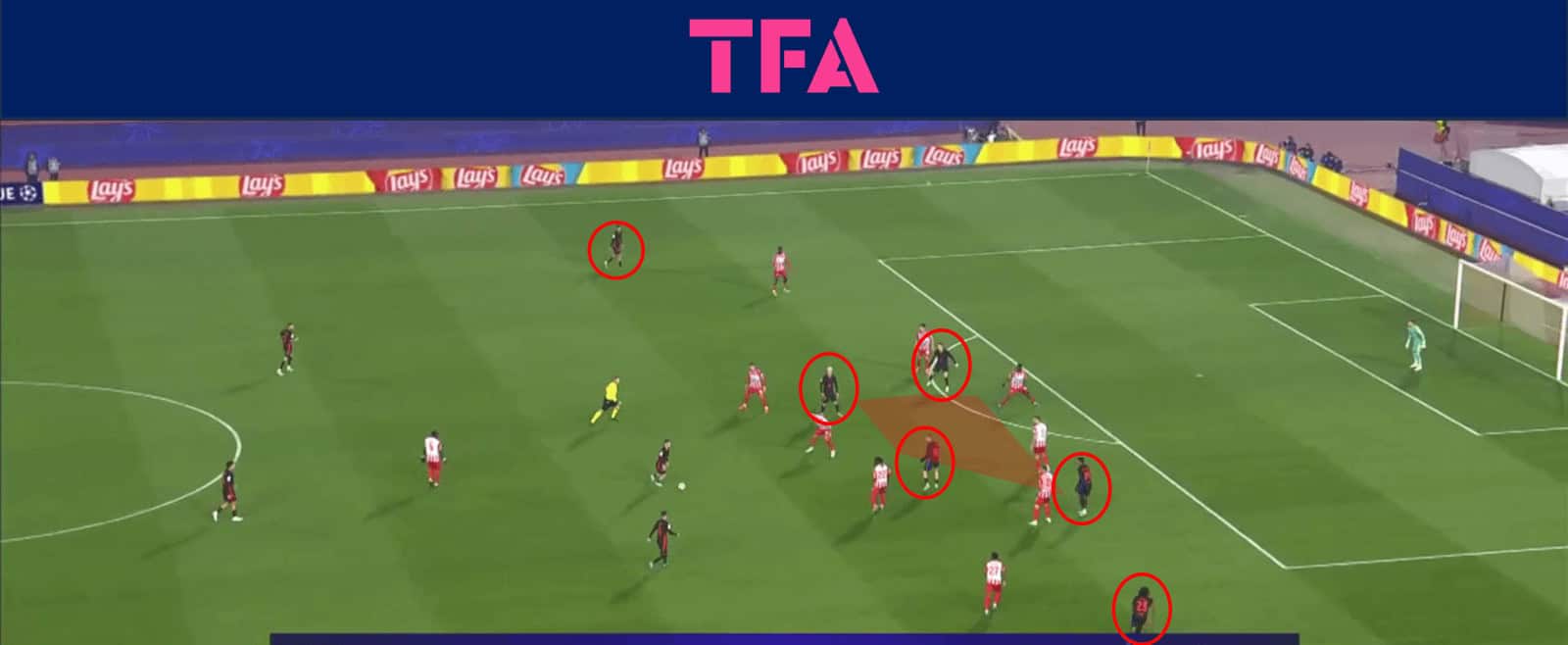
This next exercise is designed to replicate the positions and movements FC Barcelona make when inside the attacking third of the pitch.
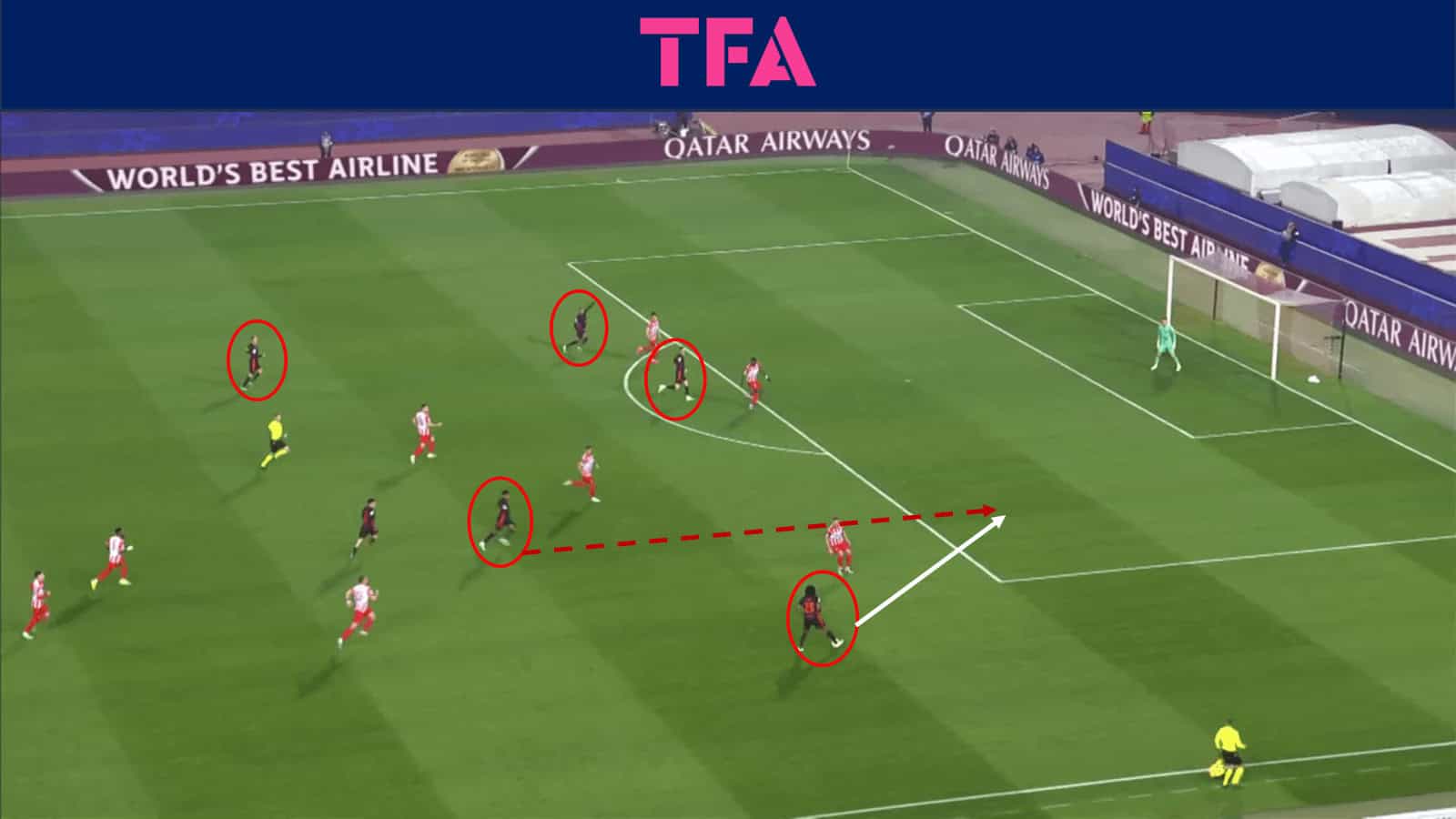
The above image, from Barcelona's former victory over Crvena Zvezda, shows Barcelona creating a ‘box’ on the edge of the opposition's box, with two players on either side providing width.
This shape allows for various combinations to be made to create goalscoring opportunities.
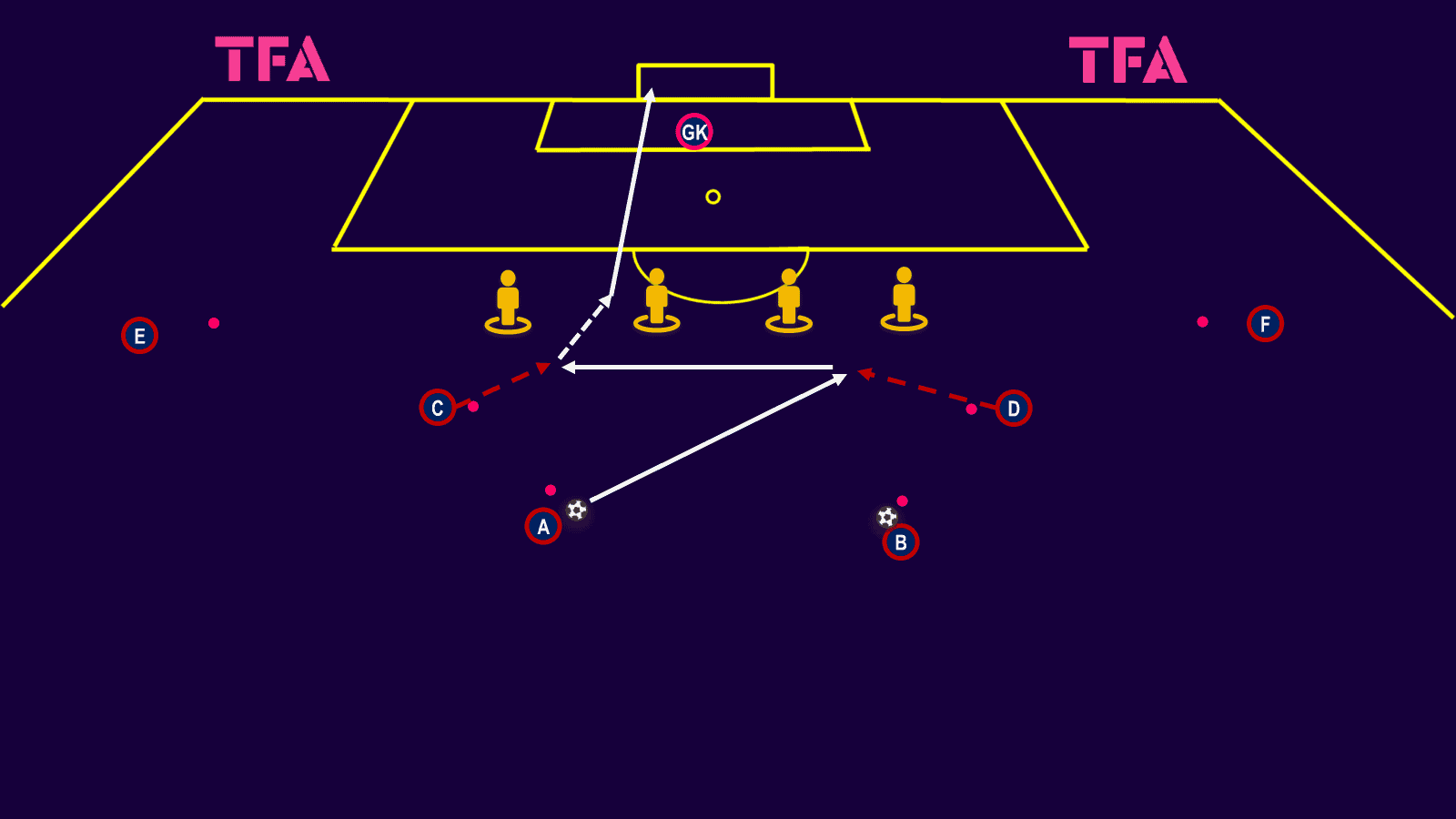
The drill begins with six players taking up similar positions to those shown in the Barcelona example.
Players ‘C’ and ‘D’ are the two working players who will both take a shot each before attacking a cross and/or cutback.
The play begins with a diagonal pass from ‘A’ to ‘D’, who has made a diagonal run to receive the firm, on-the-ground pass.
‘D’ then plays the ball first time with their right (in this example) foot into ‘C’, who has also made a diagonal run.
‘C’ then pokes the ball through the gap in the defensive line before shooting with their next touch.
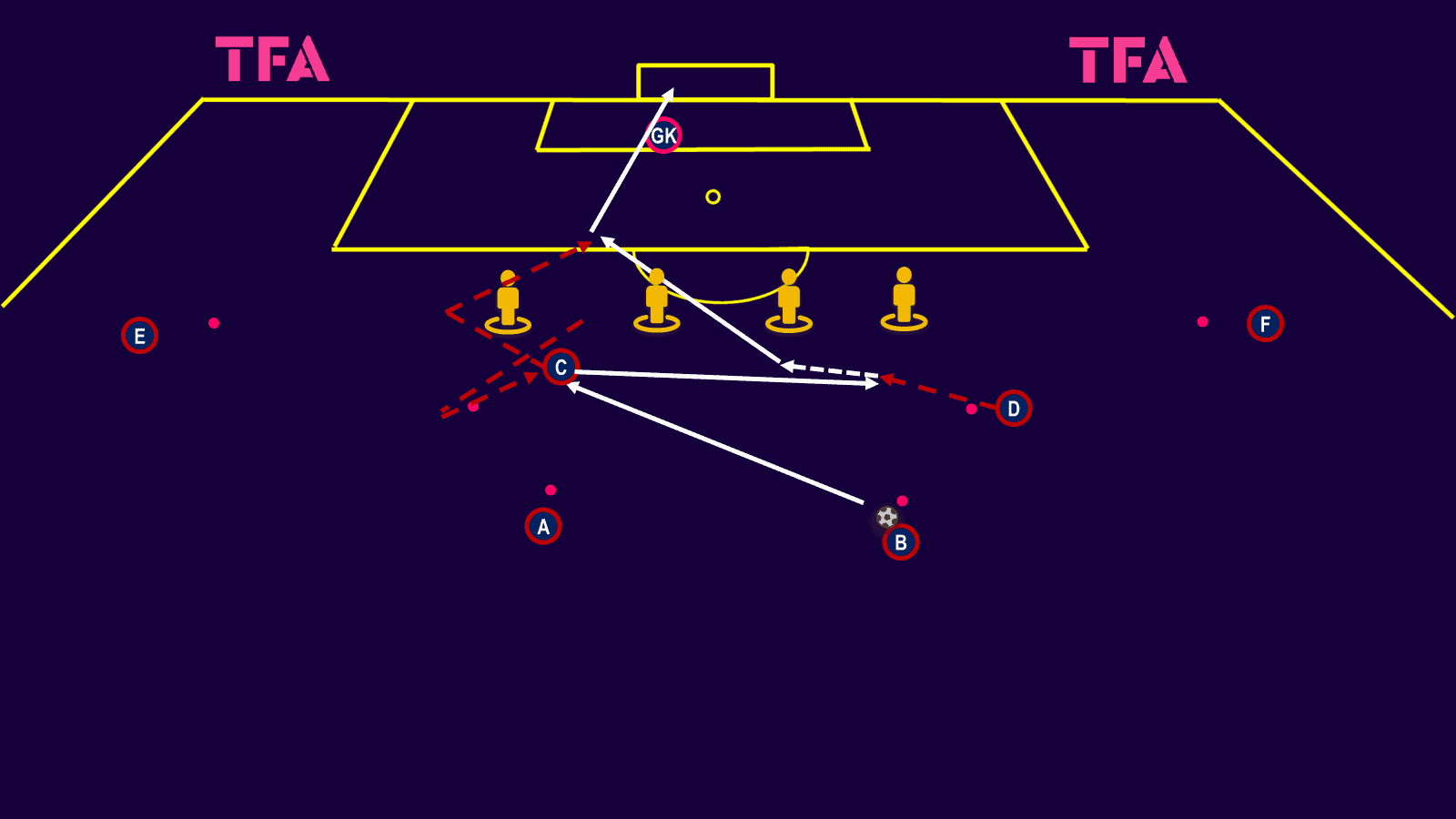
After shooting, ‘C’ then makes their way back onside quickly to their original starting position.
‘C’ then receives the first pass from ‘B’, repeating the same movements.
To add an element of complexity and decision-making, as shown above, if the second forward to receive the ball takes a touch, this should trigger the first forward to adjust their run.
The first forward should back-track before running diagonally onto a pass punched in between defenders.
The next phase of the exercise is designed to generate the conditions for runs in behind from the half-spaces to provide cutbacks.
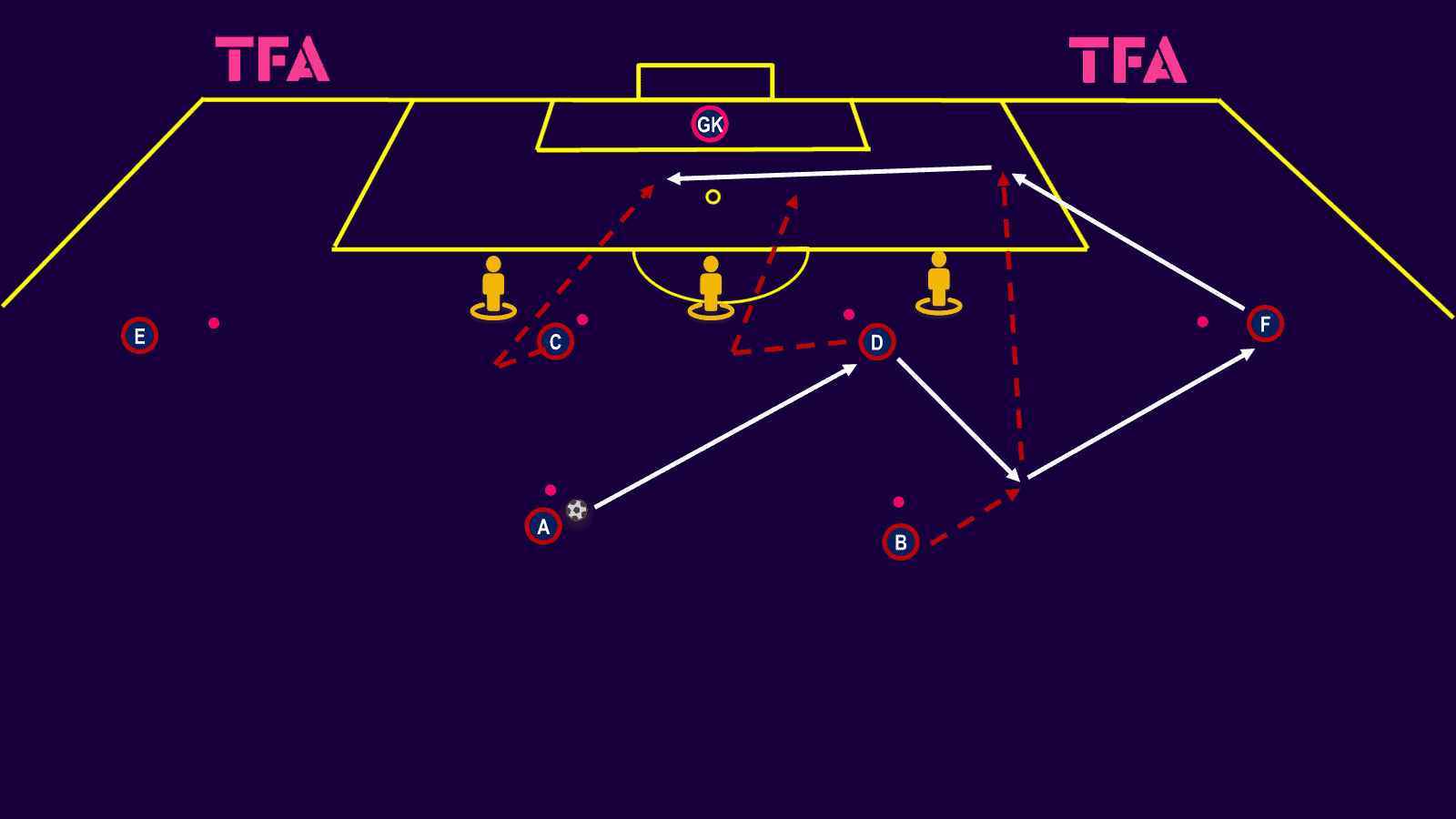
The play again begins with a diagonal ball to the forward, who bounces it into the path of the ball-near midfielder (‘B’).
The midfielder then plays it first time to ‘F’ outside the wide of the box.
After playing the pass ‘B’ continues their forward momentum and makes a driving run in between ‘D’ and ‘F’.
‘F’ then slips the ball into the path of ‘B’, who provides an early reverse pass across the second six-yard box.
When the pass was played into the wide area, the two forwards made slight movements away from the ball.
This helps them get on the blindside of their marks and gives them a more efficient angle to attack the cross.
Both players should be encouraged to make their runs between the width of the posts, which would significantly increase their chances of scoring should they receive the ball.
To complete the exercise, the same movements can be made from the opposite side.