The Lost Art Of Two-Striker Partnerships: How To Coach Them And When To Use Them - Tactical Theory

The days of the classic "big and small" striker duo or the "act 1 and act 2" partnerships were once a staple of football, especially in English leagues.
These partnerships combined different strengths, like power, skill, flair, and goal-scoring ability, to great effect.
Think of the iconic pairings that defined eras, such as Alan Shearer and Chris Sutton, Thierry Henry and Dennis Bergkamp, or Andy Cole and Dwight Yorke.
These duos delivered goals but also captured the tactical simplicity of football in that era, where roles were defined, and chemistry was king.
However, as football evolved into the modern era, the rise of the lone striker, fluid attacking trios, and the false nine reshaped the way teams approached attacking play.
The two-man strike partnership largely faded from view.
Today, most Premier League and Championship teams prioritise midfield superiority, wide attacking threats, and pressing systems that make the traditional strike partnership seem outdated.
The two-striker partnership is not entirely extinct.
Teams like Atlético Madrid and Inter Milan have shown that a two-striker system can still produce amazing results.
These teams have found ways to adapt the partnership to modern football, combining it with tactical tweaks to make its relevance and application useful in the current tactical landscape.
This tactical theory piece will explore the history of two-man strike partnerships, focusing specifically on their use in the English Premier League and Championship.
It will also explain how two strikers can function, the roles within a partnership, and why it is unlikely to see a widespread resurgence in today’s game.
Lastly, it will include a session plan designed to help coaches and players utilise the partnership, focusing on both on-ball interplay and the structural support required to make it work.
Two-Man Strike Partnerships In Premier League & Championship: 1990s
The two-man strike partnership has played its part in shaping the tactical identity of football in England.
This system has evolved from the traditional direct and physical styles of the 1990s to the more refined and fluid styles creeping into the early 2000s.
This section will examine how the two-striker system emerged, succeeded, and eventually declined by analysing the tactical nuances, historical context, and specific examples of partnerships.
It will also address tactical shifts, their implications on the modern game, and how remnants of the system continue today.
In the 1990s, English football was all about physicality, directness, and simplicity.
It consisted of exploiting 2v2 matchups between strikers and defenders, relying on long balls, channel runs, bypassing the midfield and second-ball recoveries.
This environment allowed two-man strike partnerships to flourish and be built around complementary attributes such as strength and pace, which can be referred to as the "brute and nippy" combination.
Key Partnerships In The Premier League
One of the most memorable partnerships was Alan Shearer and Chris Sutton at Blackburn Rovers, a duo that fit the brute-and-nippy archetype.
As the archetypal target man, Shearer was brilliant in aerial duels, hold-up play, and providing a physical presence in the box.
On the other hand, Sutton offered mobility, a good work rate, and the ability to stretch defences with his movement.
Blackburn revolved around direct passes into the strikers, with wide players delivering crosses and the midfield focusing on second-ball recoveries.
The duo’s success was instrumental in Blackburn’s Premier League title-winning campaign in 1994/95, where Shearer and Sutton combined for 49 league goals.
This partnership exploited the man-marking systems prevalent in the era, forcing defenders into physical battles while Sutton’s movement created space for Shearer to operate.
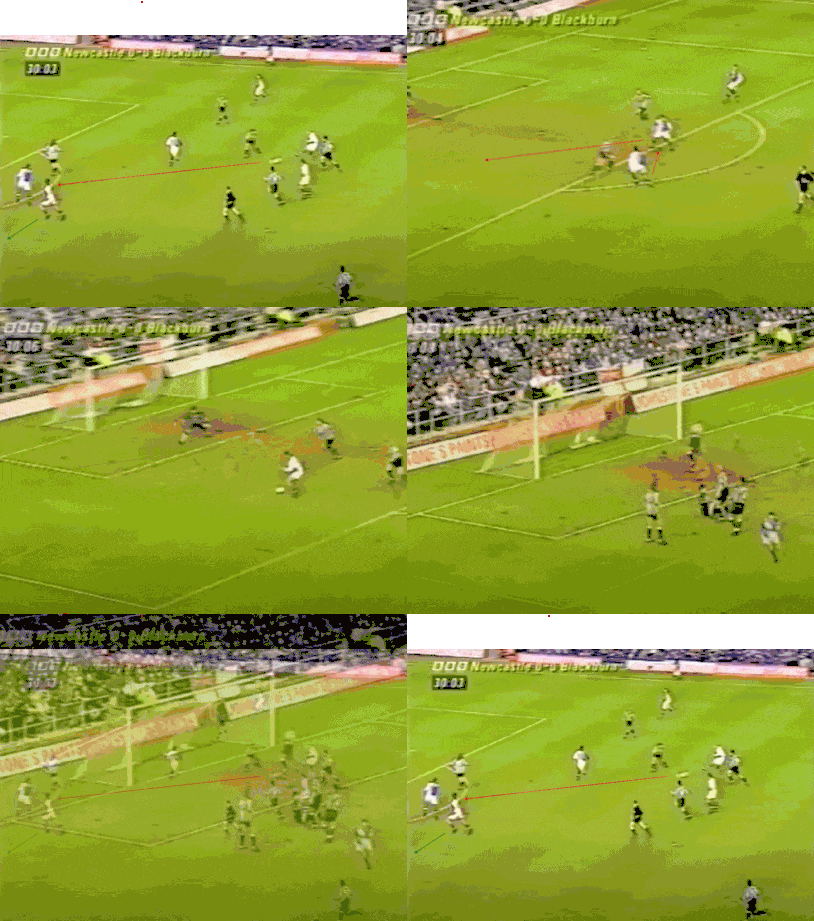
Alan Shearer and Chris Sutton show the danger of a two-man strike partnership, using quick one-twos to drag Newcastle United’s centre-backs out of position.
Shearer’s clever pass forced hesitation, creating space for Sutton to exploit and finish clinically.
A good example of movement, utilising short combinations, which leads to a goal in this FA Cup tie at St. James' Park.
A more underrated partnership during this period was Teddy Sheringham and Jürgen Klinsmann at Tottenham Hotspur.
Sheringham was more of a deep-lying forward, dropping into midfield to link play and create space, while Klinsmann utilised his pace and intelligence to exploit gaps.
Tottenham’s system relied on Sheringham’s technical ability and vision to feed Klinsmann, resulting in a partnership that scored 42 goals in all competitions during the 1994/95 season.
This pairing showed an evolution within the two-striker system, incorporating more technical and cerebral elements alongside traditional directness.
Key Partnerships In The Championship
In the Championship (then known as the First Division), Kevin Phillips and Niall Quinn at Sunderland provided one of the clearest examples of the brute-and-nippy model.
Quinn, a towering target man, dominated aerial duels and flicked the ball into dangerous areas, while Phillips, a sharp and clinical finisher, fed on these knockdowns.
Their partnership was instrumental in Sunderland’s promotion to the Premier League in 1999, with Phillips scoring 23 league goals in the promotion campaign.
Sunderland’s tactical approach under Peter Reid was straightforward: long balls to Quinn, supported by aggressive second-ball recoveries and Phillips’ movement into space.
Yorke & Cole: The Pinnacle Of Chemistry & Fluidity
One of the most celebrated two-man strike partnerships in Premier League history is Dwight Yorke and Andy Cole, whose success at Manchester United during the late 1990s epitomised the technical and tactical evolution of the two-striker system.
Their partnership was fundamental to Manchester United’s historic treble-winning season in 1998/99, during which they combined for 53 goals across all competitions, including important goals in the UEFA Champions League.
What set Yorke and Cole apart was their unparalleled chemistry and telepathic understanding.
Unlike the brute-and-nippy archetype, their partnership relied on fluidity, movement, and intelligent play.
Both players were technically gifted, capable of dropping deep, running into channels, or playing on the shoulder of the last defender.
This unpredictability made it difficult for defenders to anticipate their movements.
Yorke and Cole were not confined to rigid roles.
Both could act as a target player or drop deep to link play.
The distinction between the "first" and "second" strikers was blurred, making their movements difficult to track.
They were able to combine with each other in tight spaces.
A famous example is their intricate one-touch passing move against Barcelona in the Champions League group stage in 1998, which led to one of Yorke’s best goals.
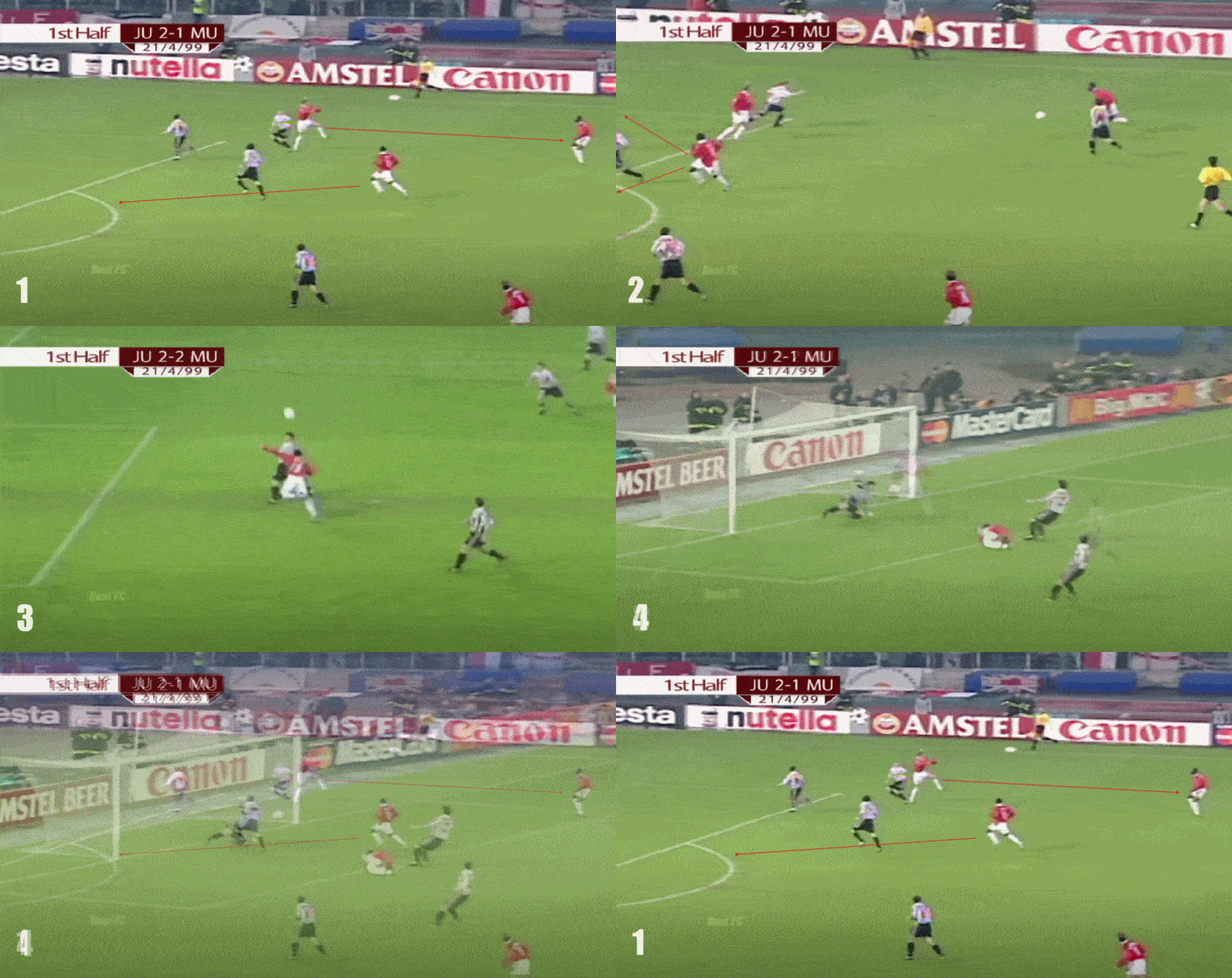
In a Champions League semi-final against Carlo Ancelotti’s Juventus in 1999, David Beckham heads the ball back into Andy Cole’s path.
As soon as the ball reaches Cole’s feet, Dwight Yorke immediately recognises that he has to exploit the situation.
Yorke’s awareness and off-the-ball intelligence allow him to anticipate the sequence before it unfolds.
Instead of running into the space ahead of Ciro Ferrara, Yorke makes a well-timed blindside run behind him, taking advantage of Ferrara's inability to track his movement without turning their head.
Yorke’s decision-making is based on his understanding of Cole’s tendencies in possession.
He knows that when Cole takes a moment to set himself before delivering the pass, it allows him to adjust his run accordingly.
Yorke positions himself in such a way that he remains onside while also creating separation from his marker.
His movement is calculated, designed to attack the central area of the box where Cole is likely to deliver the ball.
This sequence shows a high-level understanding of spatial awareness, timing, and chemistry between the strikers.
It’s a perfect example of exploiting transitional moments and creating advantages through synchronised movement and technical execution within a partnership.
From an analytical perspective, this passage highlights various tactical and technical concepts.
- Trigger Recognition: Yorke recognises the trigger of Cole receiving the ball with time and space, prompting him to immediately adjust his positioning to exploit the vulnerabilities between the opposition centre-back pairing.
- Blindside Movement: Yorke’s run on the defender's blindside is an example of how attackers can exploit a defender’s field of vision.
- Anticipation and Chemistry: Yorke’s ability to anticipate Cole’s actions results from their established partnership and understanding of each other’s tendencies.
2000s: The Shift Towards Refinement & Tactical Evolution
The early 2000s was a transitional period for English football, as the brute-and-nippy model began to give way to more refined and technical styles.
The increasing influence of foreign managers and players introduced new tactical ideas, such as possession, ground-based play, and movement.
While the two-striker system remained prevalent in the early part of the decade, its role began to diminish with the rise of the 4-3-3 and lone striker systems.
One of the standout partnerships of the early 2000s was Yakubu and Mark Viduka at Middlesbrough.
In the 2005/06 season, the duo combined for 30 goals in all competitions, playing a big role in Middlesbrough’s UEFA Cup run.
Viduka was a technically gifted forward who used his hold-up play and vision to bring Yakubu into the game. Yakubu, with his pace and power, provided a direct threat.
This partnership interpreted the two-striker system more nuancedly, incorporating elements of ground-based link-up play alongside traditional physicality.
Despite the success of partnerships like Yakubu and Viduka, the two-striker system faced increasing challenges.
The arrival of José Mourinho at Chelsea in 2004 marked a tactical shift.
Mourinho’s implementation of the 4-3-3 formation, with Didier Drogba as a lone striker supported by wide forwards, highlighted the advantages of midfield superiority and defensive solidity.
Drogba’s ability to hold up the ball, link play, and operate as a complete forward rendered the need for a second striker unnecessary, as his role covered many traditionally split functions between two players.
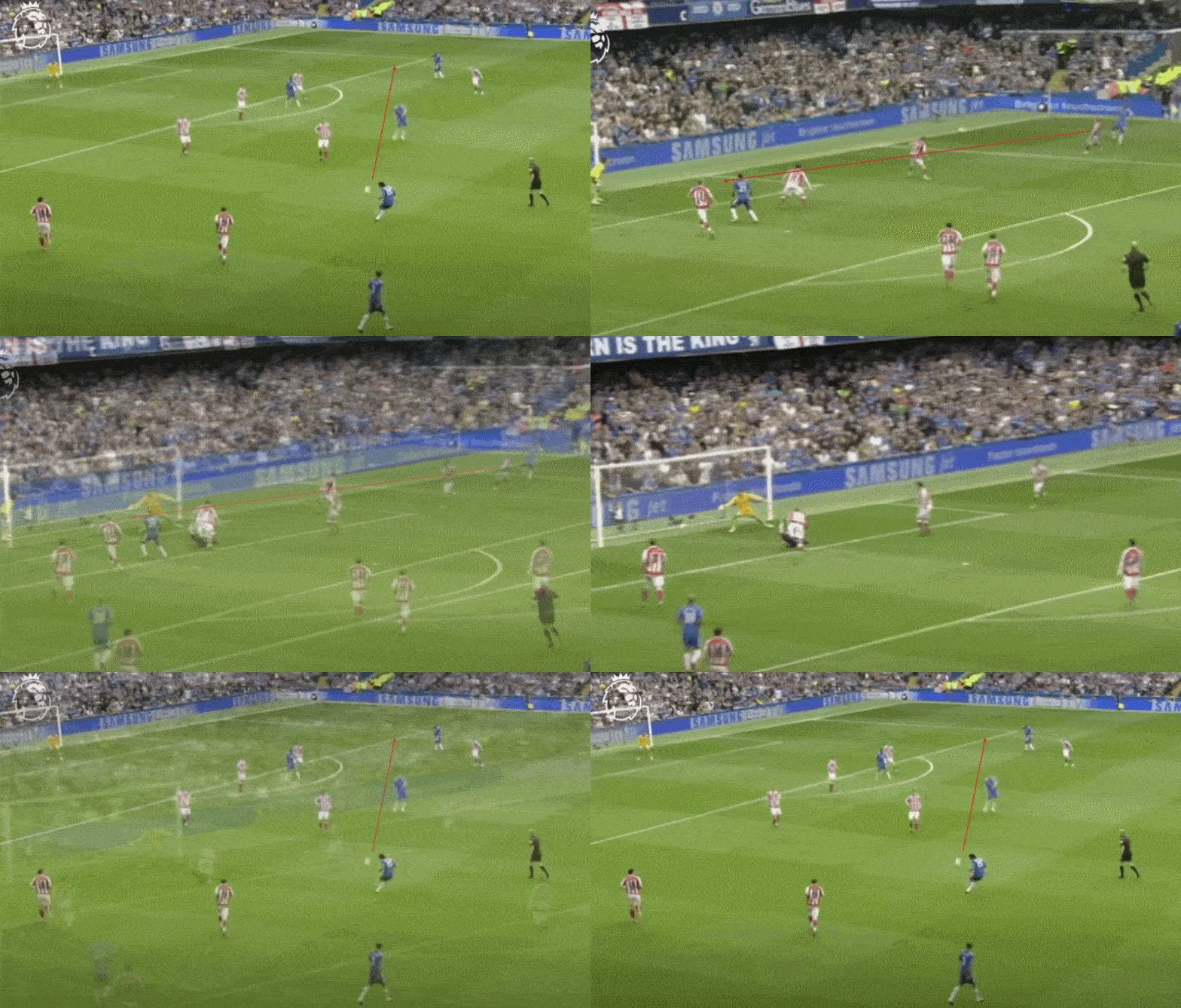
As shown in the GIF below, Drogba's creative side is evident.
He can receive the ball and place a perfectly weighted pass into Solomon Kalou.
This role would have been the responsibility of the wide midfielder; however, there is now an increased expectation for strikers to be involved in build-up play.
Modern Relevance: Adaptations Of The Two-Striker System
While the traditional two-striker system has largely disappeared from modern football, elements of its functionality persist in certain tactical setups.
For example, Leicester City’s 2015/16 Premier League-winning season featured a modified two-striker system with Jamie Vardy and Shinji Okazaki.
Vardy’s pace and directness complemented Okazaki’s work rate and ability to drop into midfield, creating space for Vardy to exploit.
This approach mirrored the brute-and-nippy model but with modern refinements, such as counter-pressing and a transitional focus.
The 4-4-2 has also evolved into solely an out-of-possession shape, as it values compactness and the ability to limit passing lanes.
For instance, Burnley under Sean Dyche utilised a rigid 4-4-2 structure, with disciplined pressing and counter-attacking as an offensive tool.
While paired, the strikers played a more defensive role, pressing opposition centre-backs and preventing easy ball circulation.
Several tactical and technical evolutions in the game drove the decline of the two-striker system, making the traditional partnership less effective.
Midfield Control
The rise of the 4-3-3 provided teams with greater midfield superiority, allowing them to dominate possession and dictate the tempo of games.
By adding an extra midfielder, teams could build play and be in control of their own destinies.
Most importantly, teams were able to overload central areas against a two-man midfield.
This structural advantage meant fewer long balls and aerial duels, shifting the focus to ground-based, intricate passing sequences.
Wide Forwards
The increasing emphasis on wide forwards who could stretch the pitch laterally also contributed to the decline of the two-striker system.
In systems like the 4-3-3, wide players were often dual threats - capable of cutting inside to score or staying wide to create width.
This tactical shift reduced the need for two central strikers, as a single forward could engage the defensive line while wide forwards provided supplementary attacking outlets.
For example, Arsène Wenger’s Arsenal transitioned away from a traditional two-striker system to a more fluid 4-4-1-1, with Thierry Henry operating as a lone forward.
Henry’s ability to drift wide, drop deep, and run in behind allowed Arsenal to function without a second striker.
His movement created space for attacking midfielders or wingers to exploit, effectively eliminating the need for a second forward.
Wide players in modern football have only grown, with Pep Guardiola’s Manchester City employing wingers who act as both creators and finishers, diminishing the importance of central striker partnerships.
The Role Of The False 9: Why Two Strikers Are No Longer Necessary
The emergence of the false 9 as a tactical innovation has further diminished the need for traditional two-striker systems.
The false 9 is a forward who drops into midfield zones rather than staying high and occupying the centre-backs.
This role creates numerical superiority in midfield, gives the centre-back a decision to either engage or stay put, and encourages attacking rotations.
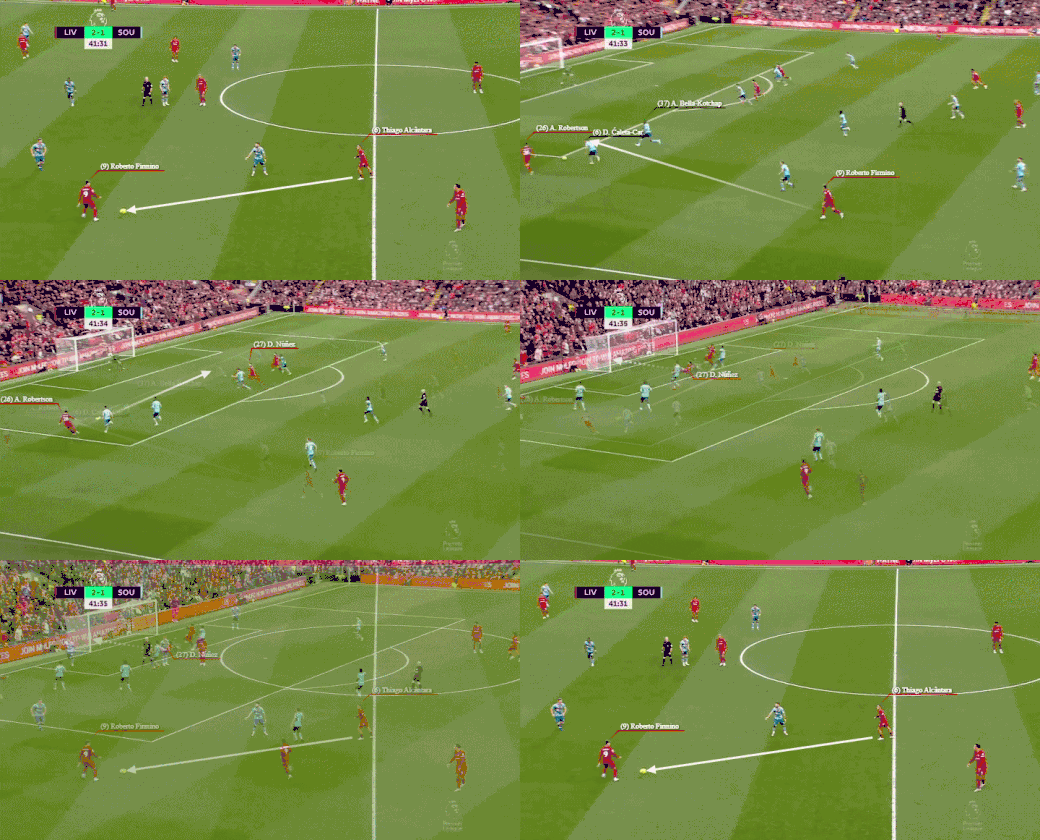
Roberto Firmino At Liverpool
Under Jürgen Klopp, Roberto Firmino was one of the best false 9s in the world.
Firmino’s role was not to act as a traditional goal-scoring striker but as a facilitator for Liverpool’s wide forwards - Sadio Mané and Mohamed Salah.
Firmino’s tactical and technical contributions show why a false 9 can eliminate the need for a second striker:
- Dropping into Midfield: Firmino often vacates his central position to drop into deeper areas, creating a 4-3-1-2 in certain phases of play; this movement draws central defenders out of position, opening space for Salah and Mané to exploit with diagonal runs.
- Link-Up Play: Firmino’s technical ability and vision allow him to act as a link between midfield and attack; his one-touch passing, lay-offs, and ability to shield the ball under pressure are crucial for Liverpool’s build-up play—this contrasts with traditional two-striker systems, where one forward often acted as a target man while the other focused on runs in behind.
- Pressing: Firmino was central to Liverpool’s high-pressing system, initiating pressure on opposition defenders and cutting off passing lanes to regain possession higher up the pitch.
- Wide Threats: The false 9 role allows Liverpool’s wide forwards to act as pseudo-strikers.
Why The Two-Player Strike Partnership Is Unlikely To Return
This section will explore why such partnerships are rarely utilised consistently, focusing on their incompatibility with positional play, the challenges due to their need for verticality, and the tactical nuances required when facing defensive low blocks.
The Incompatibility With Positional Play
Elite teams that adopt a heavily positional structure prioritise maintaining compactness and control over the pitch.
Positional play (often called "juego de posición") is predicated on maintaining numerical superiority in key zones, creating overloads, and optimal spacing to control transitions.
A two-man strike partnership, by its nature, disrupts the balance of this structure for several reasons:
- Disruption of Zone Occupation: In positional play, players are assigned to specific zones to maintain fluid passing lanes and compactness; adding a second striker tends to overload the central attacking zones, which can lead to the underutilisation of other areas, such as the wide spaces or the half spaces.
- Loss of a Midfield Link: A two-man striking system often necessitates sacrificing a midfielder to accommodate the additional forward—in a game dominated by midfield control, this reduces the team's ability to create overloads in the middle third, weakening their ability to keep possession and dominate transitions.
The Demands Of Verticality
Verticality refers to the directness of play, often characterised by quick ball progression up the pitch, usually through longer passes or transitional moments.
Verticality can coexist with a positional structure; its overemphasis (such as that required by a two-striker system) creates issues for elite teams.
- Verticality Requires Space: For verticality to be effective, there must be space behind the opposition's defensive line to exploit. Elite teams, however, consistently face low blocks, where the opposition sits deep and minimises the space available. In these scenarios, the emphasis shifts from direct play to patient build-up, making verticality redundant.
- Two Strikers Demand Verticality: A two-striker system inherently asks for frequent vertical progression, as it relies on quick combinations, through balls, or direct service to the forwards; this conflicts with the patient, methodical build-up required to break down compact structures.
- Positional Play and Verticality Conflict: Positional play can include moments of verticality, but its primary focus is on horizontal movement and creating overloads—the constant focus on verticality disrupts the rhythm of positional play, as it prioritises speed over control.
Challenges Against Low Blocks
Focusing more on the low block issue, it has been established that breaking down a low block requires patience, creativity, and precise movement.
This is compromised in a two-striker system:
- Overcrowded Central Spaces: Low blocks are designed to congest central areas, forcing the attacking team to play through wide areas or rely on short, quick passing—a two-striker partnership exacerbates this congestion.
- Lack of Numerical Advantage in Wider Areas: Positional play emphasises creating numerical superiority in wide areas and creating crossing or cutback opportunities. A two-striker system inherently reduces wide presence, as it commits more players centrally, making it harder to exploit these areas.
The decline of two-man strike partnerships in elite football results from their incompatibility with modern tactical demands.
In a heavily positional team, the need for spacing, numerical superiority, and controlled transitions outweighs the benefits of a second striker.
Functional Practice: Coaching A Striker Pairing (9 and 11)
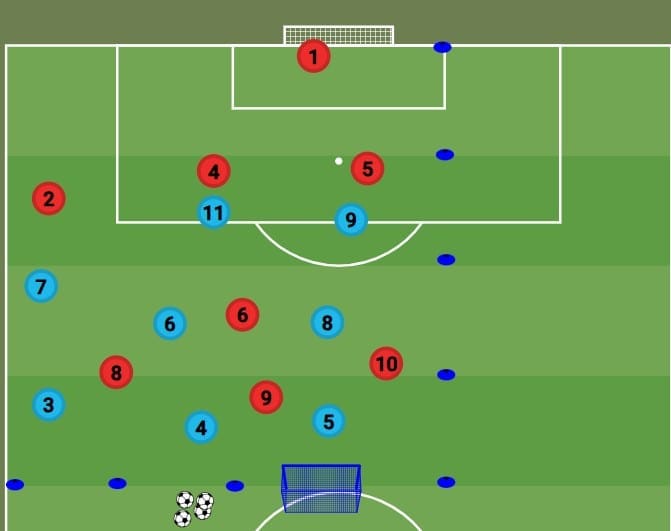
This functional practice focuses on the striker pairing in a 4-4-2 formation (blue team), working on their ability to combine, drag centre-backs apart, and exploit space.
The session will also involve the wide midfielder (blue 7) as a secondary player to support attacking movements.
The red team (4-3-3) will act as the defending team, aiming to disrupt the attacking patterns and counterattack.
Setup/Rules
- Area: Use half the pitch, cutting off the other side—the blue team attacks the red goal, and the session begins with the ball always starting from the blue team.
- Blue Team (4-4-2): Focus players: 9 and 11 (strikers), Secondary player: 7 (wide midfielder).
- Red Team (4-3-3): Defenders: two centre-backs (4 and 5), one full-back (2), and one goalkeeper (1). Midfielders: 6, 10, and 8 to provide defensive cover and midfield pressure.
- Play always starts with the blue team from the bottom of the pitch.
- Blue strikers (9 and 11) must work together to create scoring opportunities, combining with the wide midfielder (7) and central players.
- The red team defends and looks to counterattack if possession is won.
Coaching Points
- Timing of the drop and run: Make sure the striker dropping deep does so at the right moment to drag a centre-back.
- Communication: Strikers should coordinate their movements to avoid occupying the same space.
- Positioning: Maintain a staggered position to avoid being marked by the same defender.
- Pinning Centre-Backs: Use body to shield the ball or block the defender's movement for lay-offs and turns.
Coaching the What-If Scenarios
- What if the centre-backs don’t follow the striker dropping deep? Encourage the striker who dropped deep (e.g., 9) to turn and drive forward with the ball, taking advantage of the space between the lines. Midfielders (blue 8 or 6) must push forward to support and create a numerical advantage in central areas. Quick diagonal passes are used to exploit the movement of the other striker (11) running behind.
- What if the defence stays compact and doesn’t allow space in behind? Strikers should focus on quick, short combinations (e.g., one-twos) to create gaps in the opposition backline. Utilise wide players like blue 7 to stretch the defence horizontally; deliver low cutbacks or driven crosses into the penalty area. Encourage midfielders (8 or 10) to make late runs into the box.
- What if the defence overcommits to the wide areas? Strikers should occupy different zones in the box; this staggered positioning stresses the backline and makes it harder for them to recover centrally. Use quick switches of play to exploit the space left on the opposite side.
The practice addresses "what if" scenarios, providing solutions to challenges such as compact defences, unresponsive centre-backs, and overcommitment to wide areas.