How To Coach Overlapping And Underlapping Runs To Create Numerical Advantages - Tactical Theory

In this tactical theory piece, we unveil the advantages and disadvantages of a certain attacking strategy on a group tactical level.
As many sides attempt to force the opposition out wide when defending, any team will face the challenge of finding a way to either break through on the wing or to play back into the centre when possessing the ball on either flank.
Wing-play allows several concepts and strategies to break the opposition defence and create goal-scoring opportunities.
Underlap and overlap runs are common and effective concepts when attacking through wide areas.
While the overlapping run is way more popular, underlapping runs hold some advantages that the overlap does not provide.
In our tactical analysis, we examine the anatomy of these runs and explain their effects on teammates and opposition players in detail.
This will allow you to understand all the pros and cons of overlap and underlap.
What Are Overlapping & Underlapping Runs?
To begin with, we have to define the meaning of overlapping or underlapping runs.
In general, either of the two strategies can be described as a player's forward run from a more defensive position past the ball-carrier into the space behind the opposition defence.
Overlapping and underlapping runs are amongst the most vertical group tactical concepts during the attacking phase.
They are closely connected with the progression up the pitch and final third actions.
As a result, they are also connected with chance creation.
Nevertheless, as these runs require space (since the over- or underlapping player needs a free lane for his run) and time (because the over- or underlapping player has to run past the ball carrier), they are rather executed in wide areas than in the crowded centre of the pitch.
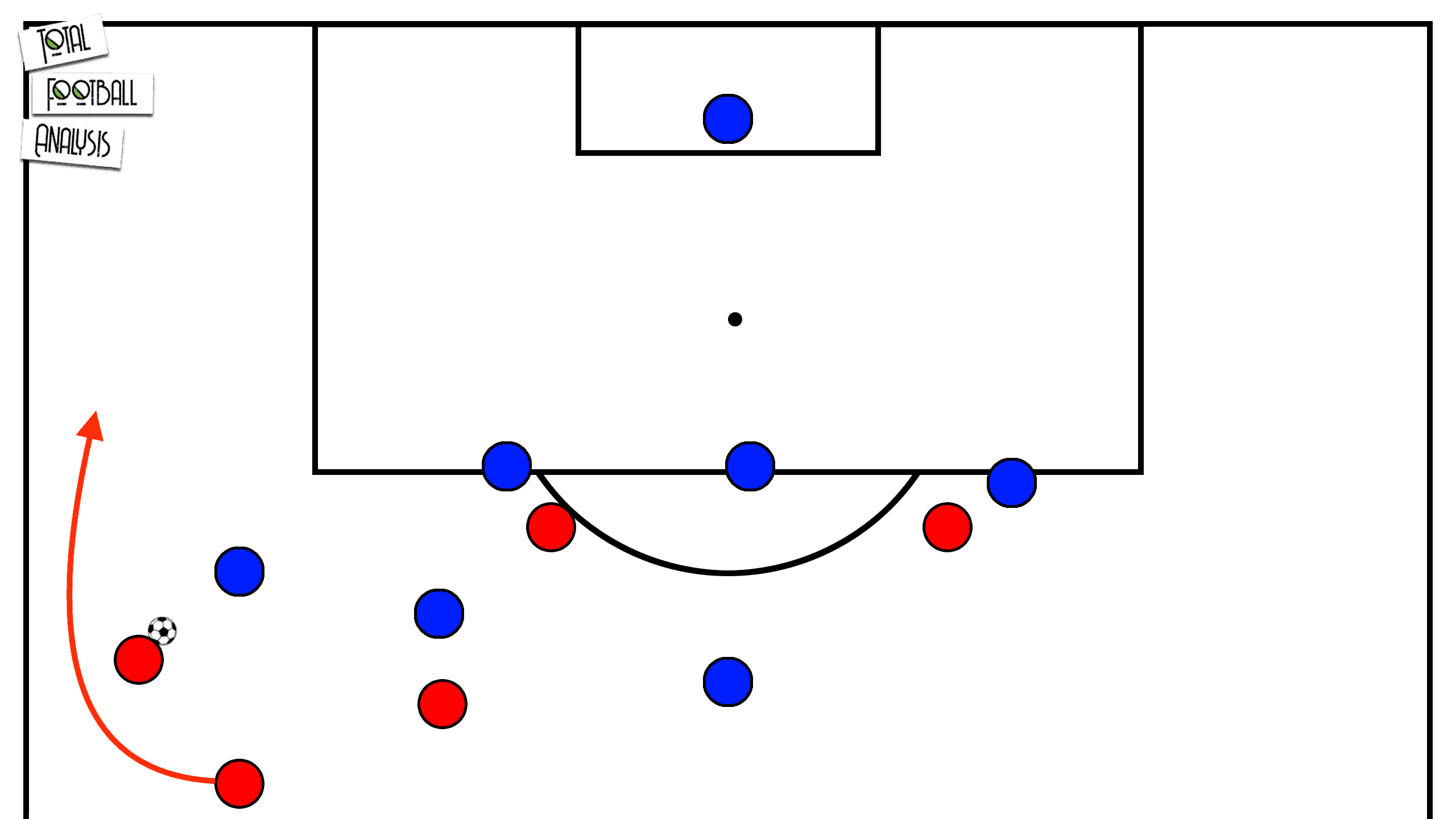
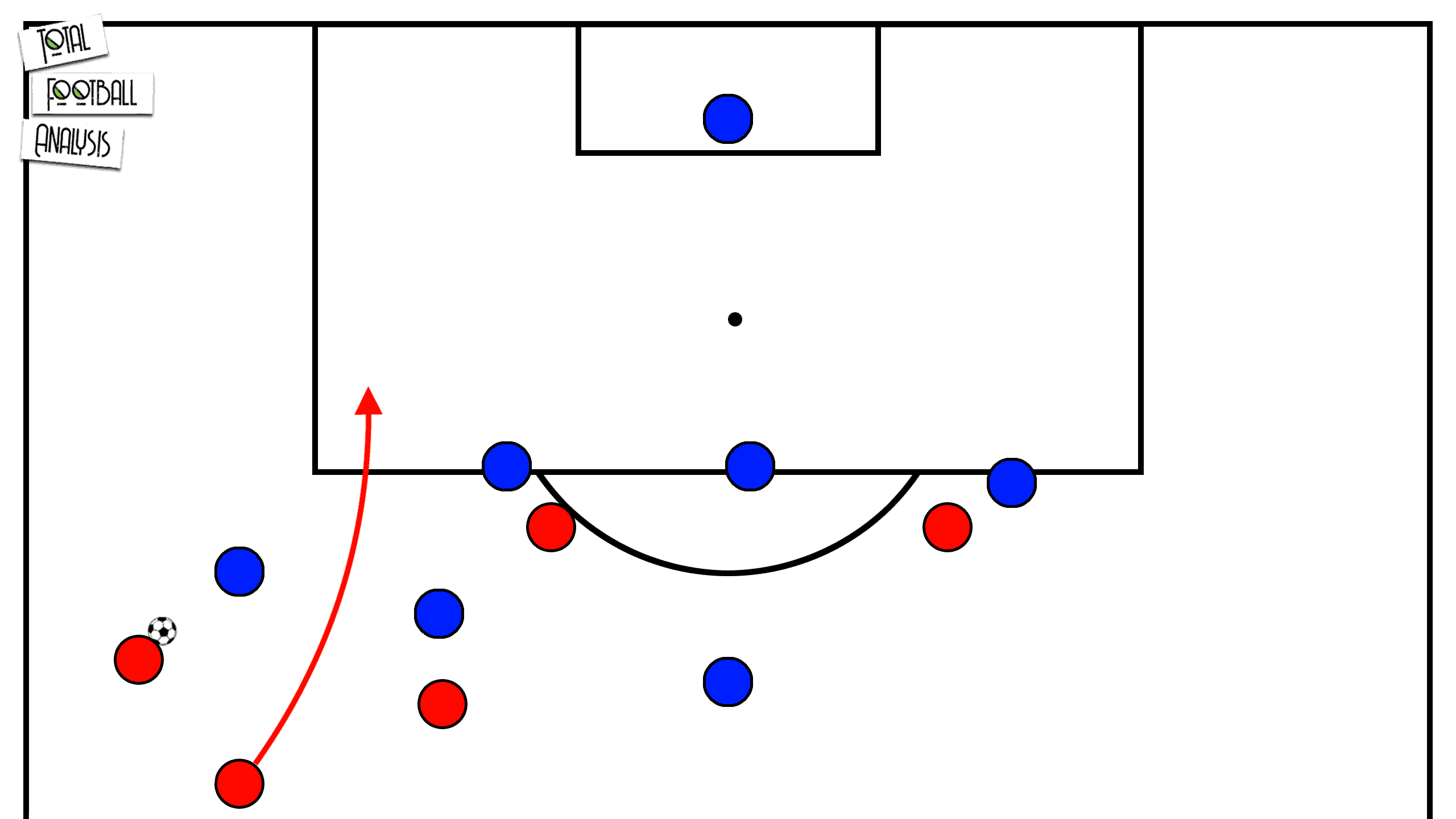
The difference between the overlap and the underlap lies in the path of the run in relation to the ball-carrier.
An overlapping player commits his run on the outside of the ball-carrier and thereby in a wide area.
An underlapping player commits the run on the inside of the ball-carrier and therewith in a more central area.
The overall goal of overlaps and underlaps is to achieve one of two things.
Either the runs enable getting behind the opposition's defence, or they open up space in central areas to play into the half-space or the central channel.
From there, the team has more attacking options than on the wing, where the passing options are naturally restricted through the touchline.
The group tactical aim behind overlaps and underlaps is to create a numerical advantage.
Overlapping and underlapping runs are simple yet effective tools for creating numerical advantages and overloading the opposition full-back.
In addition to that, they offer dynamism and, therefore, require quick defensive reactions from the opposition.
Dynamic actions decrease the time for the opposition's reaction and make the defenders' decision about their next defensive move more complex.
Also, through the deep run, the space behind the opposition defence can be threatened, which often forces the opposition backwards, allowing the progression up the pitch.
On an individual level, both the overlap and the underlap affect the positioning and movement of the opposition defender.
Therefore, the run can solely serve as a manipulation instrument, enabling the ball carrier to outplay the defender on the other side.
However, if the opposition defender does not adjust his positioning, the runner becomes a valuable option to overplay the defender.
When To Overlap Or Underlap?
As we have already defined the overlap and the underlap, we will provide you with a question.
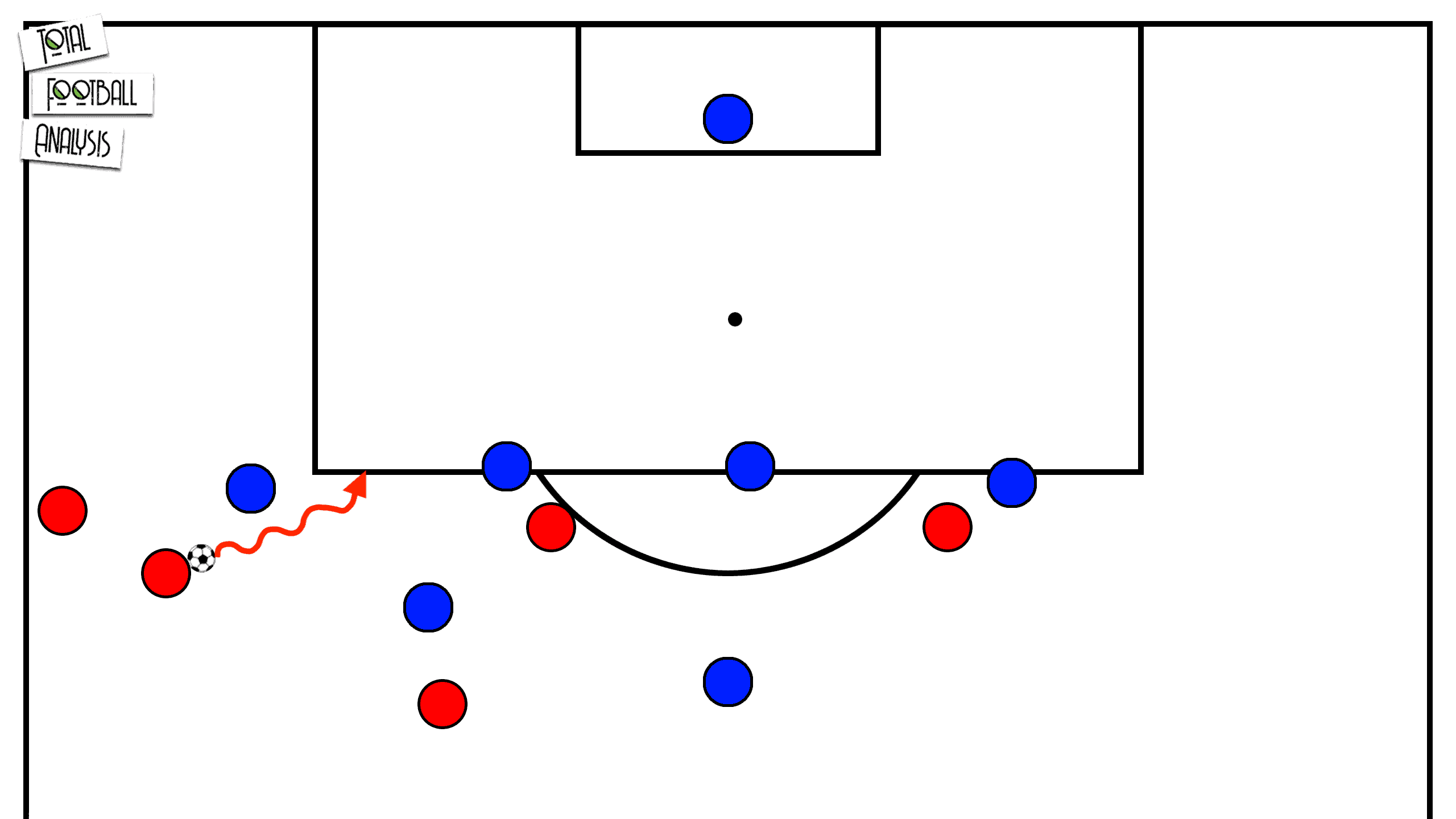
What would you do in the displayed scenario as the full-back of the red team: overlap or underlap?
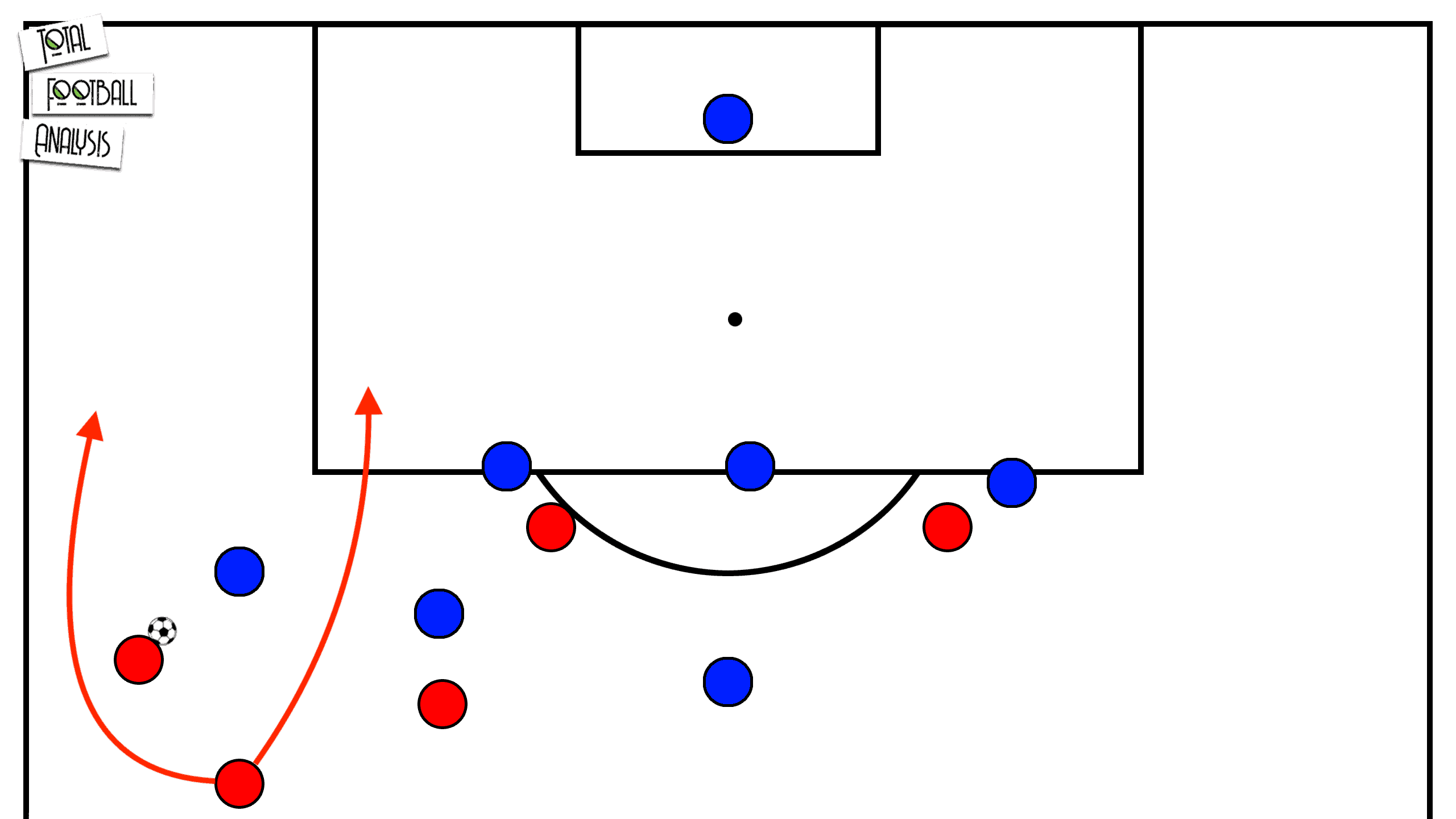
In the following paragraphs, we will discuss several aspects of overlapping and underlapping runs to give you starting points on which to build your decision.
Strategies Facilitating Overlapping And Underlapping Runs
Overlaps and underlaps are often seen when sides deploy systems with two wide players on each side.
This is because these systems already provide the required personnel out wide.
The most common scenario is a team playing with wingers receiving the ball out wide.
Then, the full-back would move up to overlap or underlap.
But sides that play with wing-backs as the only wide players and a rather centrally focused attacking approach can also move an additional player out wide once the ball is on the wing to create an overlap or underlap.
To sum up, overlaps and underlaps are independent of the system.
The system, however, can affect how these runs are executed.
Most of the time, full-backs commit overlapping runs due to their positioning on the pitch.
But it does not necessarily have to be a full-back who overlaps.
Sheffield United and Atalanta, for instance, used overlapping centre-backs.
And central midfielders can obviously also move to the wing to overlap, although this happens less often.
As underlapping runs are committed in a more central area, often either central midfielders or full-backs will make them.
The latter will most often underlap if they stay in the half-space to cover the attack right before the team switches sides or if they play as inverted full-backs.
The runs are extremely threatening in connection with the concept of “overloading to isolate”.
When overloading one side before switching play to the other side, where they isolate the winger against the opposition full-back, an over- or underlapping run can create a 2v1 situation with a lot of space.
If executed well, the opposition full-back can then be outplayed.
In addition, overlapping and underlapping runs have proven especially useful in combination with the use of inverted wingers.
That is because it facilitates cutting inside when playing with a right-footed left winger or vice versa.
Therefore, the aim of getting into a central area can be achieved.
Advantages And Disadvantages Of Overlap Runs
As for any tactical concept, the overlap comes with advantages and disadvantages.
One of the most obvious advantages is that the overlapping player has a good pre-orientation, as all goal-near players are within his field of view.
That can be helpful if teams intend to put in crosses with their overlapping players.
That way, they can already get a clear picture of the available crossing options, leading to improved decision-making as the time for perception is increased.
Another advantage is that there is more room in the half-space, as the overlapping player does not block any passing lanes within or into the half-space.
That makes connecting to the wide players easier for the central midfielders.
However, executing an overlapping run also means the runner attracts an opposition wide player in most scenarios.
As a result, the opposition central midfielders can keep their position and shut down the passing lanes into the centre.
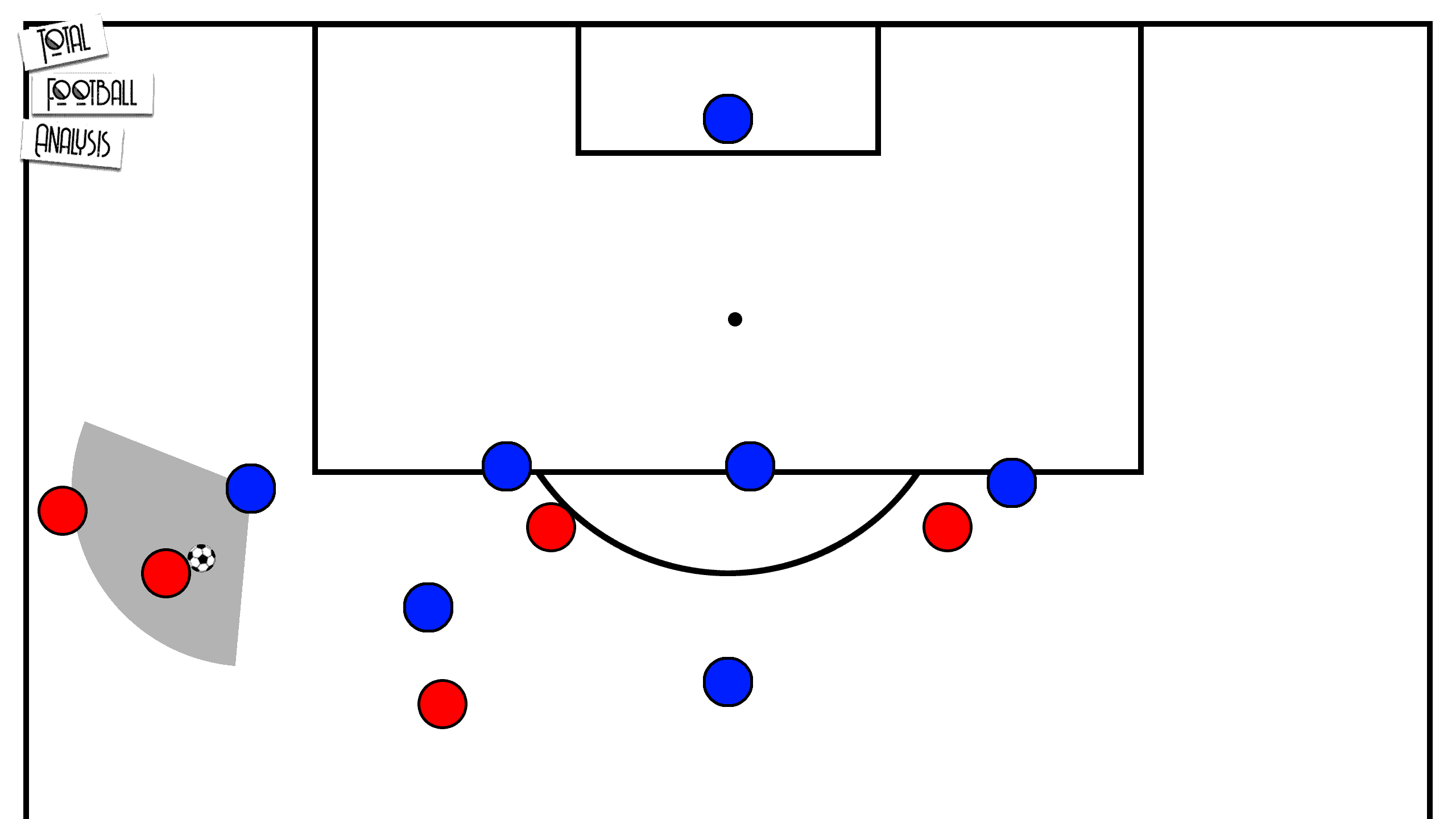
A further negative aspect of the overlap is that the overlapping player is not within the field of view of the ball-carrier while being on full display for the opposition defender.
This facilitates defending and simultaneously complicates finding the right timing for a possible pass.
Advantages And Disadvantages Of Underlap Runs
The pros and cons of the underlap are a bit more complex.
That is because it is executed within the own attacking shape and the defending shape of the opposition.
Instead of running "around" like in the case of the overlap, underlapping players will run through the formations, creating more complex interactions with teammates and opposition players.
Compared to the overlap, the underlapping player is closer to the goal (often in the half-space) and, therefore, takes up a more threatening position.
Consequently, it is more urgent for the opposition to defend the underlapping player.
This increases the probability of successfully taking an opponent out of play.
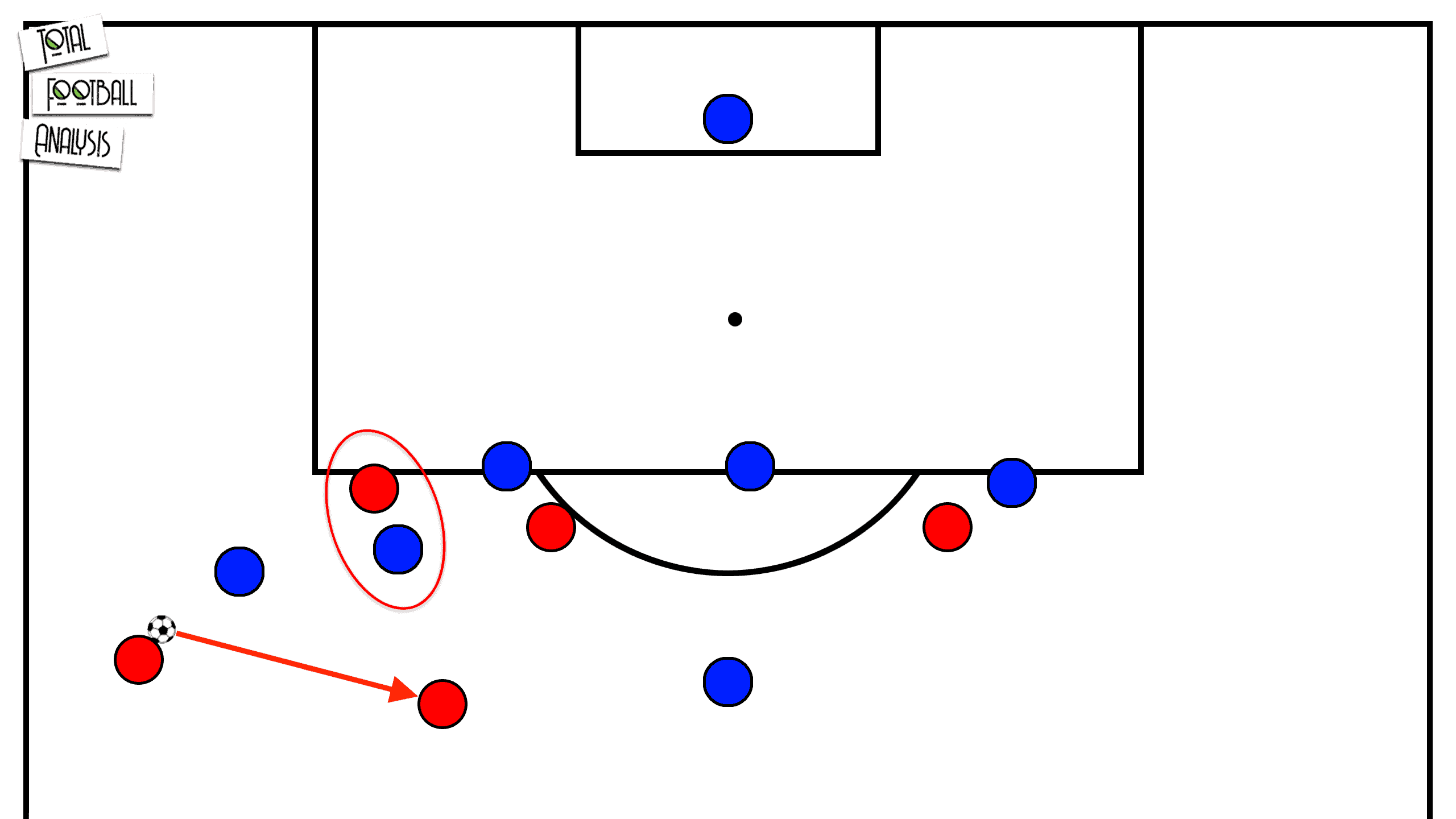
Moreover, in contrast to the overlap, which mainly affects the opposition wide players, an underlapping run drags an opposition central player out of position.
This possibly opens up a passing lane into the half-space, centre, or space to dribble or pass into, as shown below.
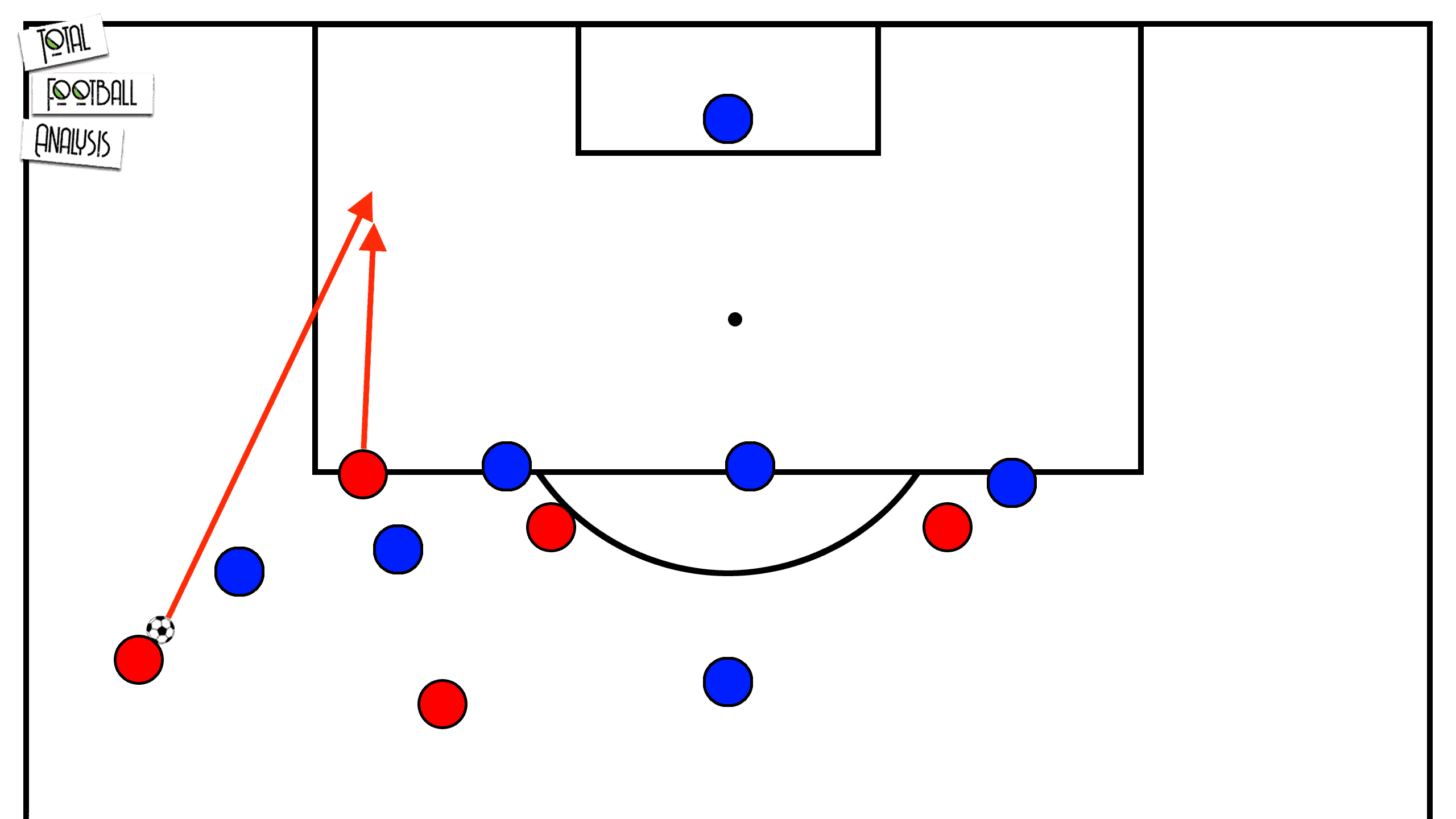
Also, as displayed below, playing the ball to the underlapping player will result in a diagonal pass.
Diagonal passes hold several advantages in football.
In this particular case, it requires the opposition to defend in another channel (the half-space), which occupies not only the wide players but also their centre-backs and central midfielders.
A strong advantage of the underlap compared to the overlap is that the underlapping run is out of the defenders’ field of view.
As a consequence, the defender can only guess the runner's current positioning, making it nearly impossible to always cut off the passing lane.
Also, it enables the ball-carrier to feint passes due to the disadvantage of the defender not knowing where the underlapping player is currently positioned.
At the same time, the ball carrier can always see the position of the underlapping player, enabling him to play a pass with good timing.
Field of view is also advantageous when dragging an opposition defender out of the position with an underlapping run.
The direct opponent of the ball-carrier confides in his teammate, supporting him.
With an underlap, one can drag this teammate out of position without the defender recognising it.
Consequently, the direct opponent does not change his body shape, and an initial ideal positioning can quickly become disadvantageous.
This then enables the ball carrier to exploit the body shape and positioning to dribble into the created space.
But as for any concept, there will also be disadvantages when there are advantages.
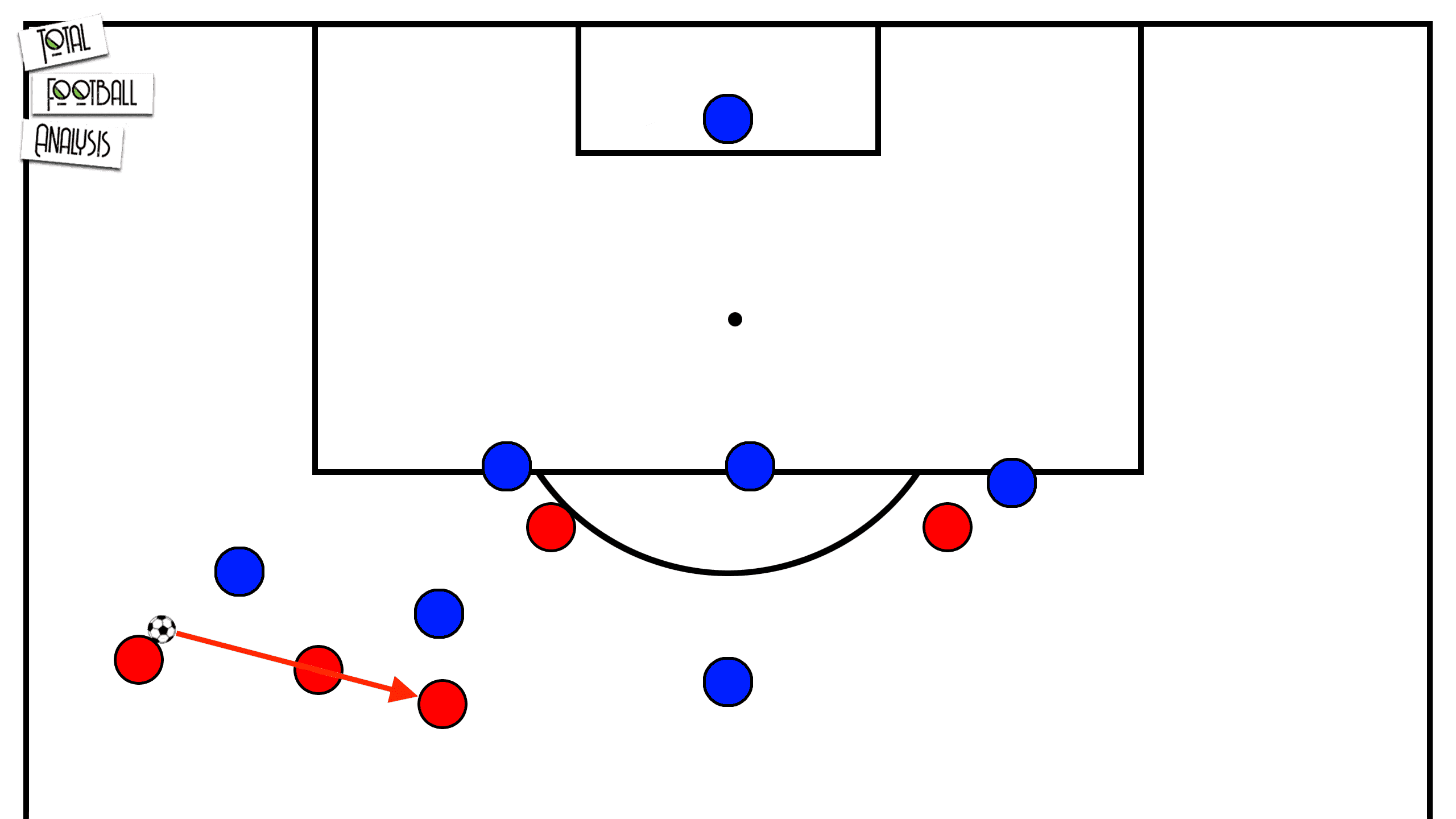
One of those is that the underlapping player intermediately blocks the path into the centre.
This can be seen in the image below.
Even if a central midfielder is free, the runner will cross the passing lane, which poses the risk that the ball collides with the underlapping player if a pass should be played into the centre.
Another negative side effect of the underlap-path is that the underlapping player has a worse pre-orientation when receiving.
He can't possibly focus on both the ball and the situation within the box simultaneously.
However, players with good awareness might be able to compensate for this.
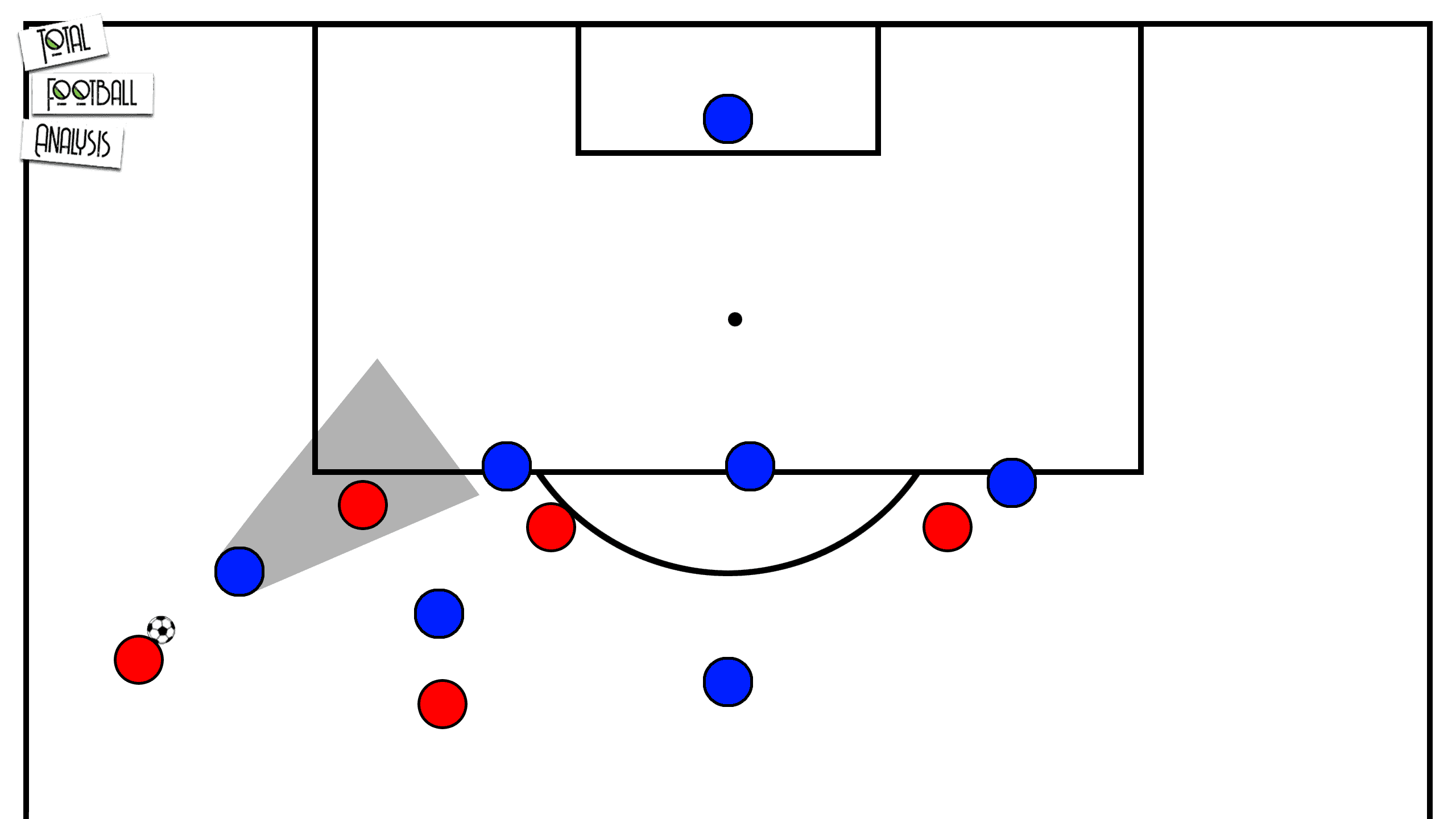
Furthermore, the runner will be in the cover-shadow of the defender.
Nevertheless, since the underlap is a dynamic action, the period of time within the cover-shadow is comparably short.
While the overlap is also useful in tight spaces and when the opposition could outnumber the ball carrier, the underlap is more sensible in situations with available space for the ball carrier in 1v1 situations.
The reason for that is the described intermediate restrictions the underlap has on the attacking options, with the underlapping player blocking passing lanes and being in the cover shadow.
If the ball carrier is under pressure and needs an immediate option, the underlap is not as helpful as the overlap.
Decision-Making: Overlap Or underlap?
After having examined the advantages and disadvantages of the overlap and the underlap in detail, we can return to the initial question of our tactical theory piece.
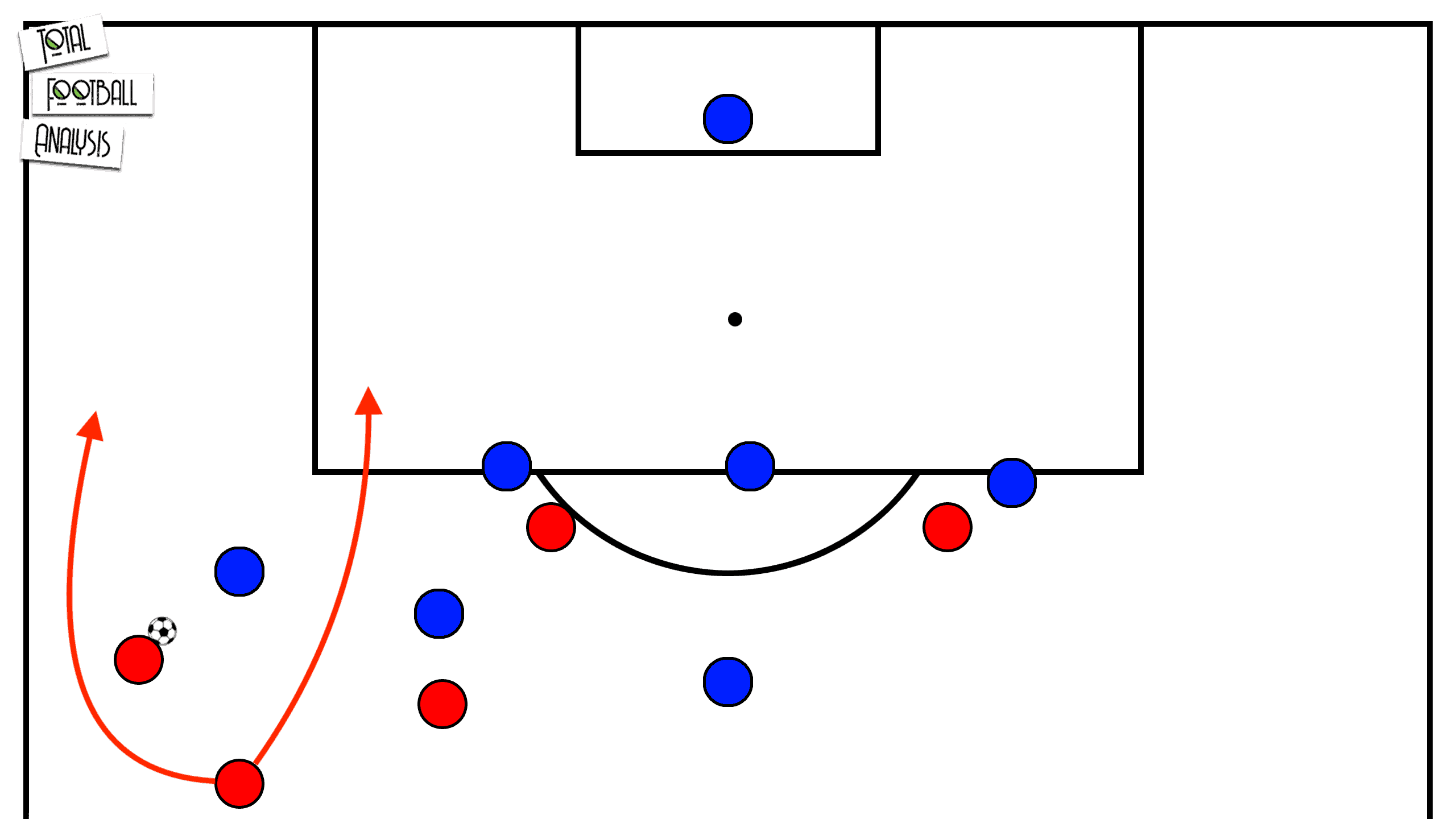
Whether it is better to overlap or to underlap in the displayed scenario depends on several factors that are unknown to us:
- Is the ball-carrier left-footed or right-footed?
- Is the ball-carrier comfortable on the ball?
- Does the ball-carrier usually prefer to stay on the outside or to cut inside?
- Where exactly is the opposition winger (not in the image yet)?
- Does the attacking team prefer crosses or through passes?
The decision on when to overlap and when to underlap is too complex to provide a wholesale answer.
As we mentioned in the course of our analysis, overlaps and underlaps are dynamic actions.
They cannot be depicted in a still image.
The given scenario still explains why either an overlapping or an underlapping run is useful.
With an overlap, the opposition full-back would be overloaded and needed to drop closer to the goal.
With the right timing, one could get behind the defence on the flank.
Depending on the opposition, there would probably also be the opportunity for the ball-carrier to cut inside.
With an underlap, on the other hand, there would occur moments when the ball carrier is isolated in a 1v1 instead of a possible 2v1, as the underlapping player would be in the defender's cover shadow or block the passing lane into the centre.
But the underlapping player would probably drag the opposition central midfielder out of his position, opening up space for a pass into the centre.
An underlap might increase the chance of penetrating the opposition defence in the half-space instead of on the flank.
Follow-Up Actions
They are highly connected to the above-mentioned advantages and disadvantages of overlapping and underlapping runs and offer several sensible follow-up actions.
At first, we take a closer look at the actions achieving the aim of getting behind the defence.
The simplest pattern would be a pass into the run of the overlapping player, who can then send in a cross.
This can be a sensible attacking option for teams that score from crosses.
Depending on the position, different crosses can threaten the opposition's goal.
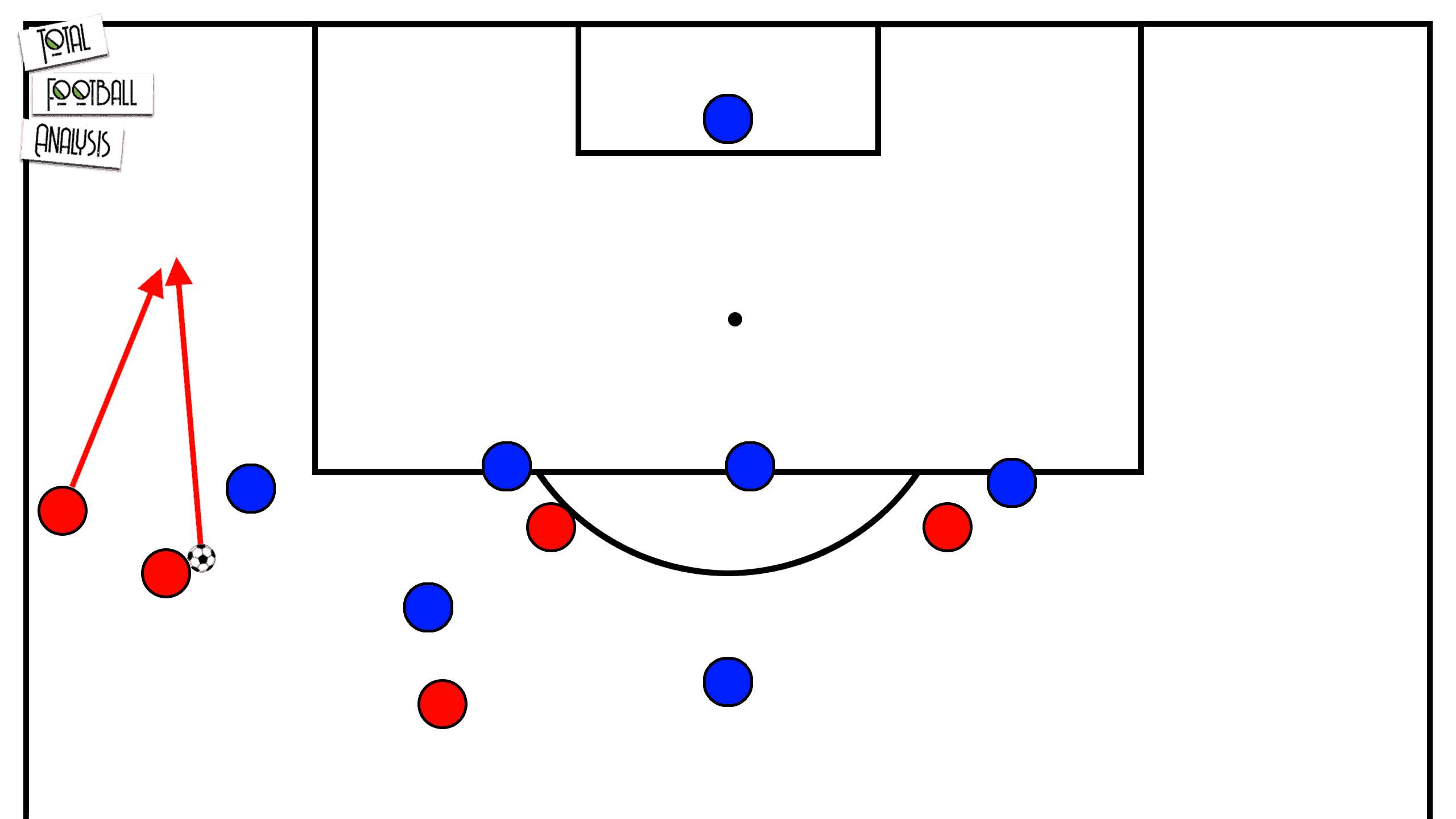
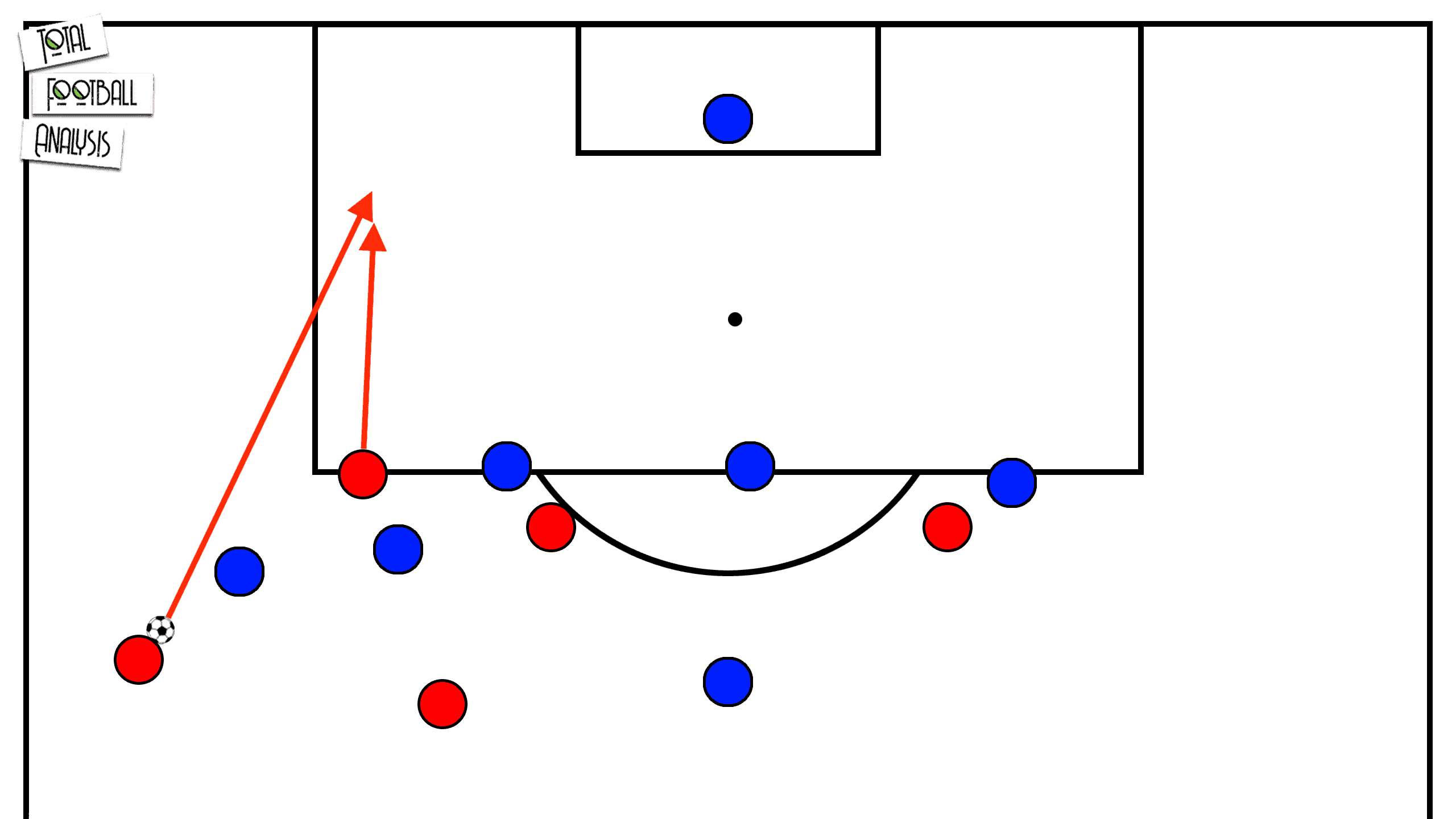
The second option to get directly behind the opposition's backline is to pass to an underlapping player.
Due to the different position (closer to the goal), different ways of crossing compared to the overlap are sensible here.
From the half-space, cut-back crosses can be extremely dangerous as they do not travel as long as a high cross and allow for more precision when finishing the attack.
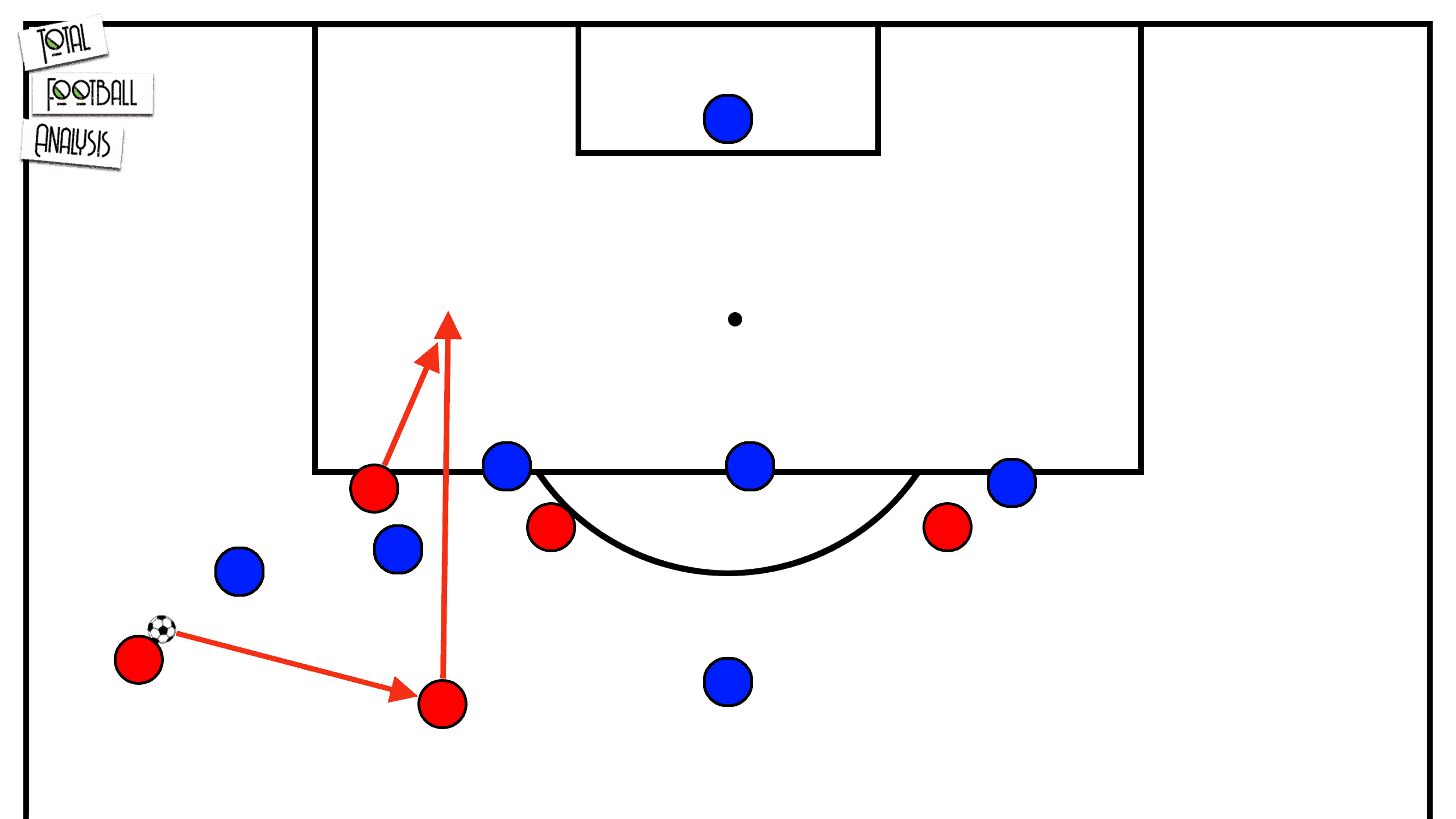
The second aim is to escape from the wing and return to the central channels, which offer a greater variety of attacking options.
In some situations, the ball carrier can pass into a central channel (followed by a switch of play or a penetrating through pass).
Especially, the underlap often opens up a passing lane into the centre because the runner attracts the central midfielder.
That creates space in a central channel, which can then be exploited.
The overlap will probably not drag the central midfielder out of position.
Instead, the opposition might shift heavily towards the wing, opening up space on the other side, which can be exploited after a switch of play.
Last but not least, a very popular scenario is that the ball carrier cuts inside with a dribble to either finish, play a through pass, or send in a cross into the space behind the defence.
This is useful when attacking with inverted wingers like Liverpool.
Their full-backs constantly overlap or underlap.
This manipulates the defenders' positioning, enabling their wingers to carry the ball inside.
Obviously, there are thousands of different follow-up actions.
Since this piece is not supposed to cover all the different types of crosses, we did not go into too much detail.