Historically a side synonymous with rugged pragmatism and deep-sitting low blocks, the Balearic club has undergone a radical transformation in the opening four fixtures of this mid-season appointment.
Demichelis, bringing with him the structural influences of his time at River Plate and the theoretical rigour of the Bayern Munich school, has introduced a brand of proactive, possession-oriented football that has startled the established hierarchies of La Liga.
This is no longer a team content to survive on the periphery of the game; this is a side intent on dictating its geometric terms from the centre of the pitch.
In these initial four matches, we have witnessed the deconstruction of the rigid five-at-the-back systems of the previous era, replaced by a sophisticated 4-4-2 diamond that prioritises central density and vertical progression.
The early results have been as aesthetically pleasing as they have been tactically intriguing, especially considering that Demichelis took over the reins only a few weeks ago without the luxury of a full pre-season to drill his concepts.
He has managed to harmonise a high-intensity pressing regime with a methodical build-up phase that utilises the full width of the pitch only to penetrate the central corridors.
The atmosphere around the club has shifted from one of anxious containment to one of calculated aggression.
This tactical analysis will dissect the three pillars of the Demichelis revolution: the implementation of the midfield diamond to exert central control, the sophisticated pressing triggers embedded in their defensive transitions, and the tactical evolution of Vedat Muriqi from a lonely target man into the focal point of a multi-dimensional attacking unit.
We are observing a masterclass in how to modernise a traditional squad in real time.
The Central Monopoly: Implementation Of The Midfield Diamond
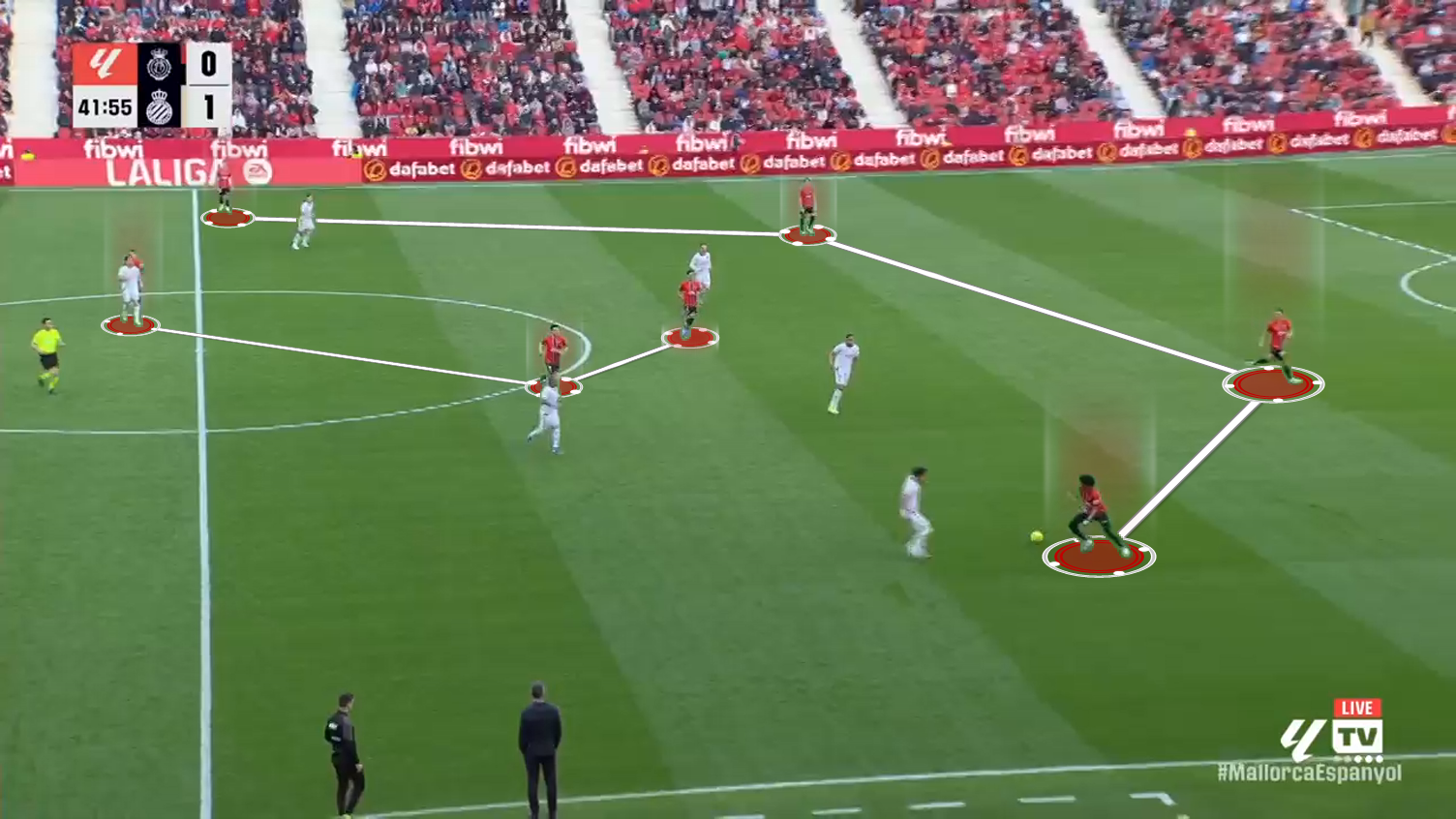
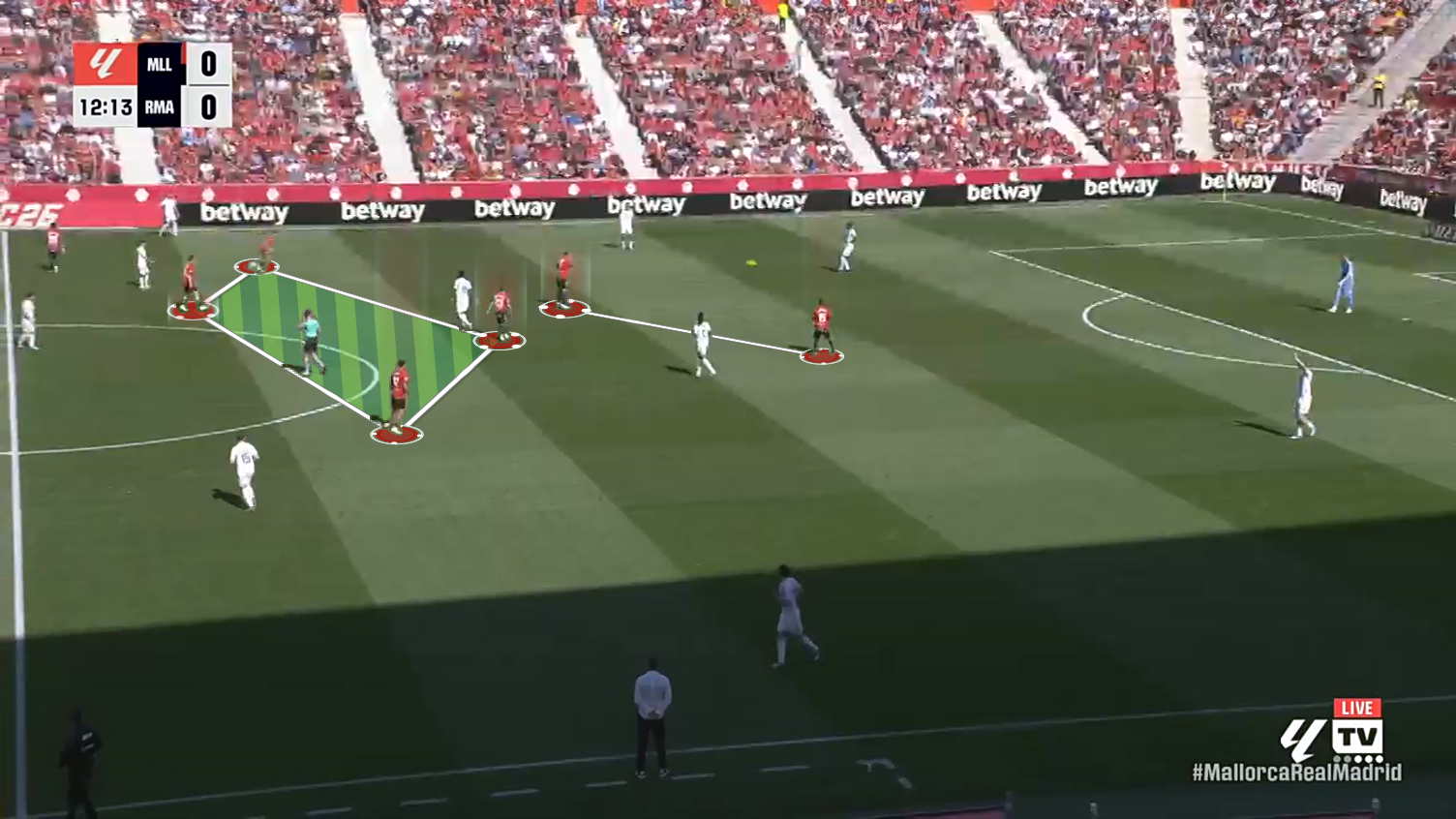
The most radical departure from the Mallorca of old is Demichelis' unwavering commitment to the 4-4-2 diamond.
In a league increasingly dominated by wide 4-3-3 or 4-2-3-1 structures, Mallorca’s narrow midfield has created a series of numerical overloads that opponents have struggled to overcome since the managerial change.
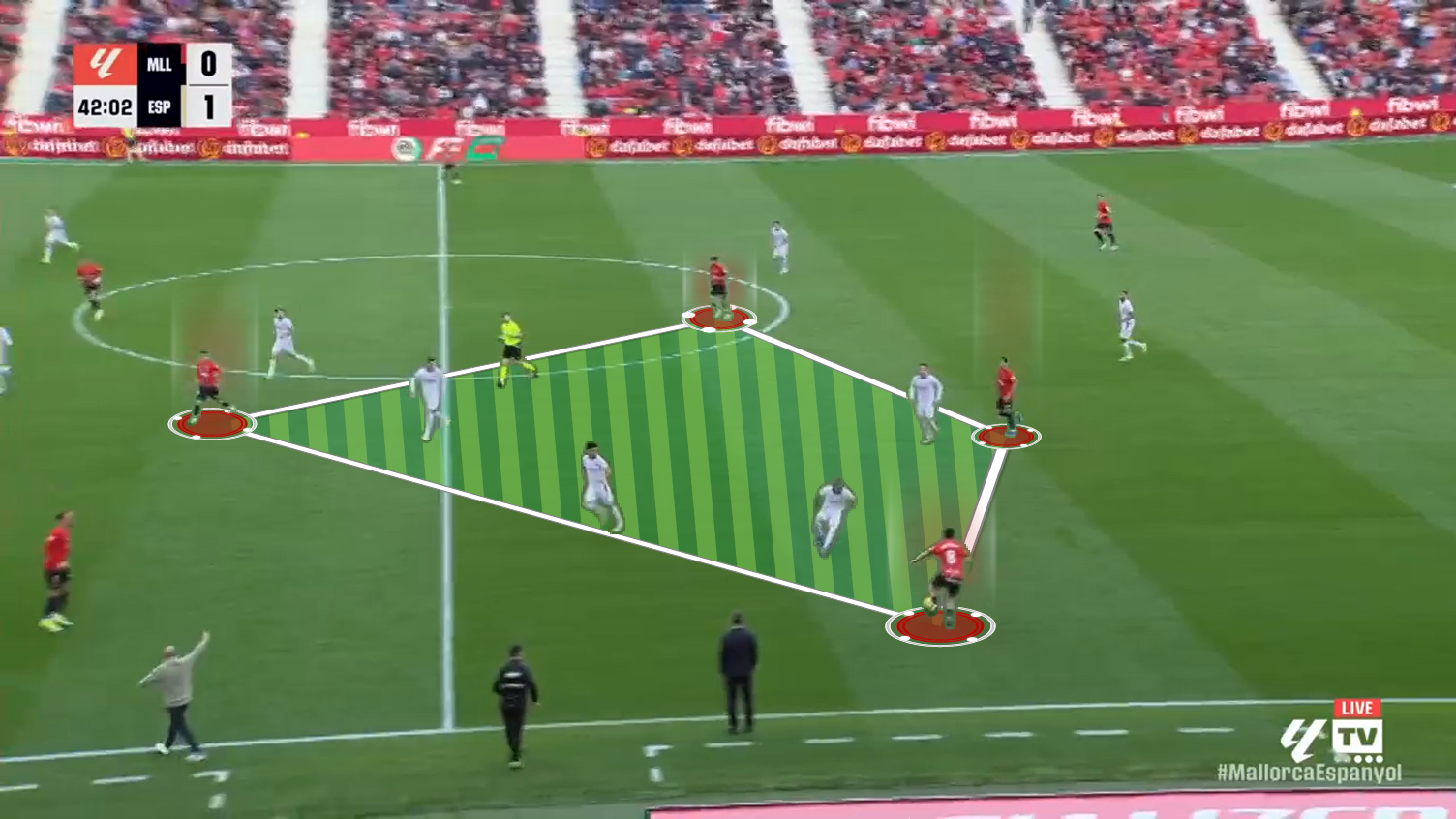
By placing four technically proficient players in a central quartet, Demichelis ensures that Mallorca consistently have a 4v3 or 4v2 advantage in the middle third of the pitch.
The base of this diamond acts as the primary distributor, dropping between the centre-backs to create a back three during the initial build-up phase.
This allows the full-backs to push high and wide, providing the only source of width in a system that is otherwise obsessively central.
The two shuttlers or interiors in this diamond are tasked with immense physical and technical responsibilities.
They must provide the lateral coverage to support the full-backs while simultaneously making vertical runs to support the tip of the diamond.
This diamond structure creates a series of passing triangles that allow Mallorca to play through even the most aggressive mid-blocks.
The internal passing lanes are constantly shifting, making it difficult for opposition pivots to track runners.
When the ball is central, the opposition is forced to narrow their defensive shape, which subsequently opens up the half-spaces.
Demichelis does not use width for the sake of crossing; he uses width to stretch the opponent horizontally so the team can eventually punch passes through the vacated central seams.
This is a game of positional chess where the diamond serves as the queen, the most versatile piece on the board.
Statistically, the shift in control is undeniable despite the lack of a pre-season.
In the first four games, Mallorca’s average share of possession in the central third has increased by nearly 22%.
The goal is to suffocate the game at its heart.
By dominating the centre, Mallorca denies the opponent the ability to build any rhythm.
If you control the middle, you control the tempo.
Demichelis has also introduced the concept of the staggered midfield, where no two players in the diamond are on the same horizontal line.
This ensures that every pass has a diagonal option, which is significantly harder to intercept than a flat lateral ball.
The diamond is not a static formation but a rotating carousel of movement.
As the 'No. 10' drops deep to receive, one of the interiors pushes high, maintaining the vertical stretch and ensuring the opponent’s centre-backs are never truly comfortable.
This central monopoly is the foundation upon which every other tactical phase is built.
It is a bold statement of intent for a team that previously lived on the counter.
The speed with which the players have internalised these geometric patterns is a testament to the clarity of the coaching instructions provided over the last few weeks of intensive training sessions at the Son Bibiloni.
High Intensity Transitions: Pressing Triggers & Build-Up Disruption
A hallmark of the Demichelis philosophy is the belief that defending begins the moment possession is lost.
Mallorca’s new pressing regime is a far cry from the passive rest defence of previous seasons.
Demichelis has implemented a system based on specific triggers in the opposition’s build-up play, designed to force turnovers in high-value areas.
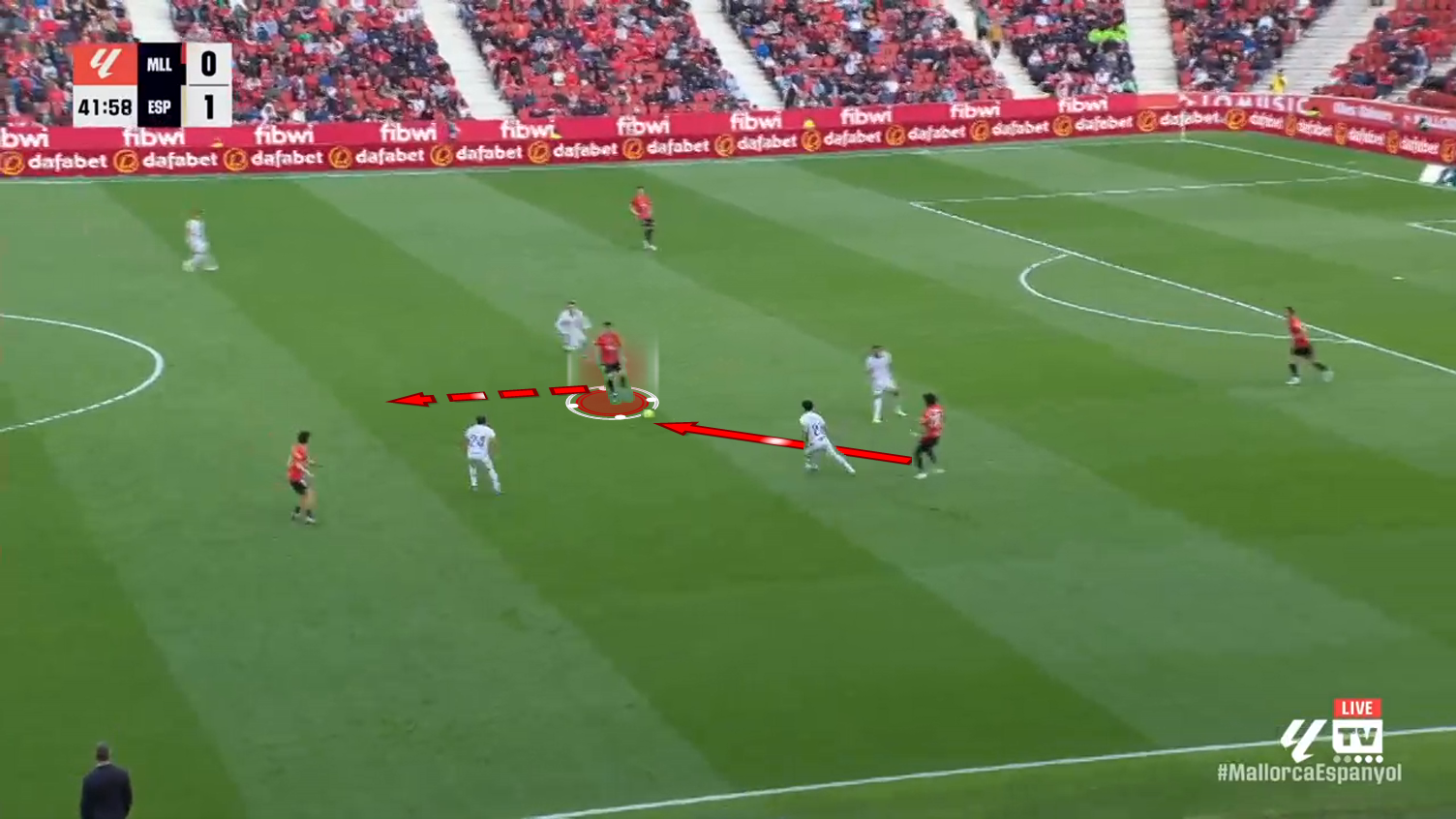
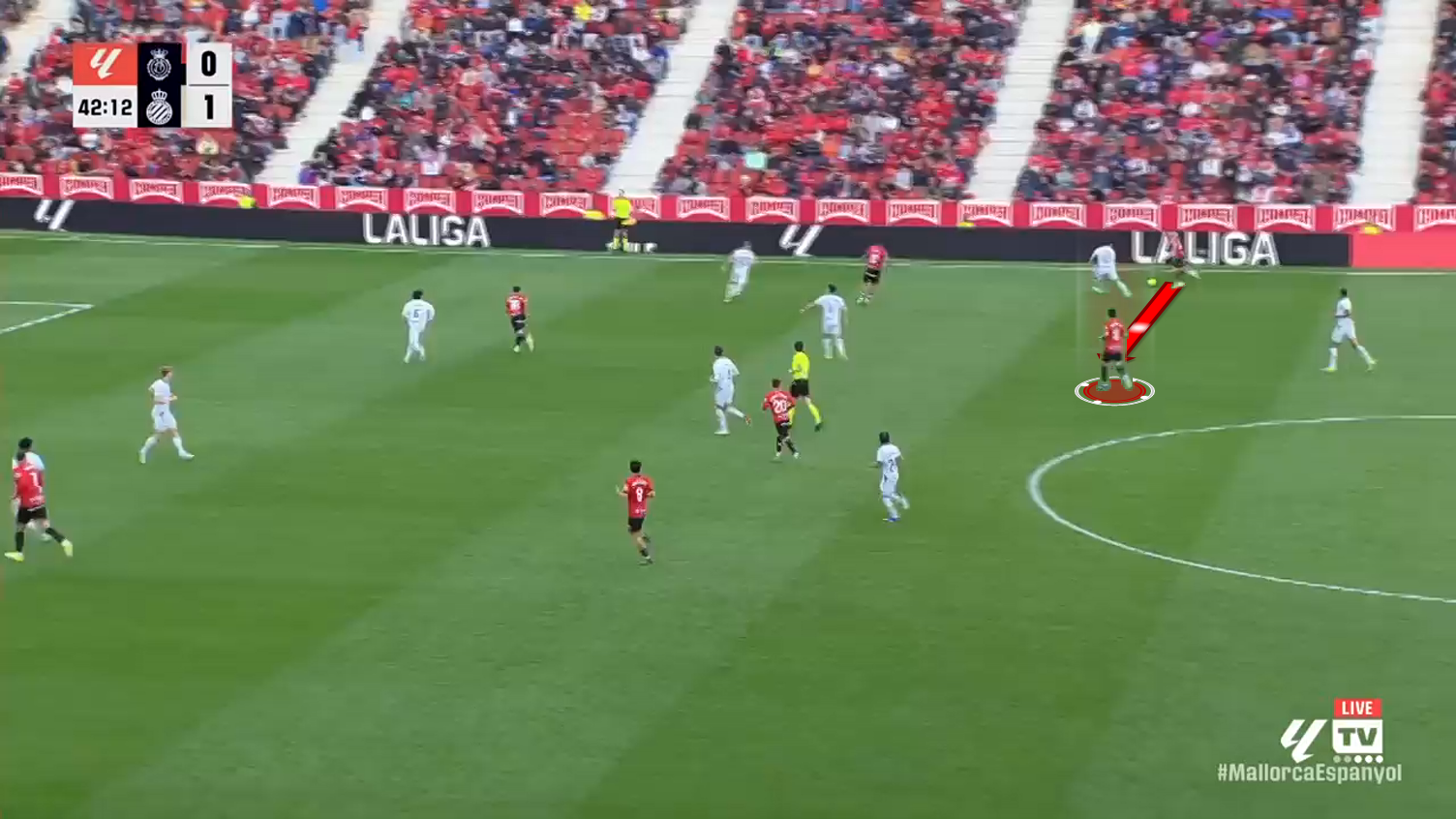
The press is led by the two strikers, who split wide to draw the opposition full-backs out.
The moment the ball travels toward the touchline, the trap is sprung.




![FC Porto Vs Nottingham Forest [1–1] – UEFA Europa League 2025/2026: Porto Dominate, Forest Stay Alive – Tactical Analysis](https://cdn.mymidnight.blog/77f959f119f4fb2321e9ce801e2f5163/size/w600/2026/04/FC-Porto-VS-Nttm-Forest-20252026.png)
![Barcelona Vs Atlético Madrid [0–2] – Champions League 2025/2026: Atlético’s Defensive Control & Clinical Edge – Tactical Analysis](https://cdn.mymidnight.blog/77f959f119f4fb2321e9ce801e2f5163/size/w600/2026/04/Barcelona-vs-Atletico.png)

![PSG Vs Liverpool [2–0] – Champions League 2025/2026: Luis Enrique Rotations Dismantle Liverpool – Tactical Analysis](https://cdn.mymidnight.blog/77f959f119f4fb2321e9ce801e2f5163/size/w600/2026/04/PSG.-VS-LIVERPOOL.png)


