How Elite Teams Manipulate Defenders With Forward Rotations To Create Space In Behind - Tactical Theory
Learn how Arsenal and Chelsea use coordinated forward rotations to pull defenders out of position, attack the space created and turn the same principles into practical coaching exercises.

What Are Forward Rotations In Football?
The best forward players in the game have the intelligence and guile to perform movements that draw defenders into positions where they don’t want to be before exploiting the space created.
Some coaches prefer to focus on how their midfield can gain superiority by moving the opposition’s midfield players, and therefore leaving the opposition’s backline exposed.
Other coaches like to emphasise how centre-backs and full-backs can be lured out of position, moving towards the ball, then proceeding to play the ball behind them.
This tactical theory analyses how the forward players of teams playing in the Premier League move defenders to create goalscoring opportunities.
Arsenal‘s fluid forward rotations that pull defenders all over the place and Chelsea’s João Pedro’s striker movement to send his wingers through on goal are both analysed.
Also included in the tactical analysis is how coaches can implement these movements with their own teams through training exercises and a small-sided game that works on forwards’ ability to pull defenders out of position in both wide and central areas.
Arsenal’s Rotations – How Do Top Teams Disrupt Backlines?
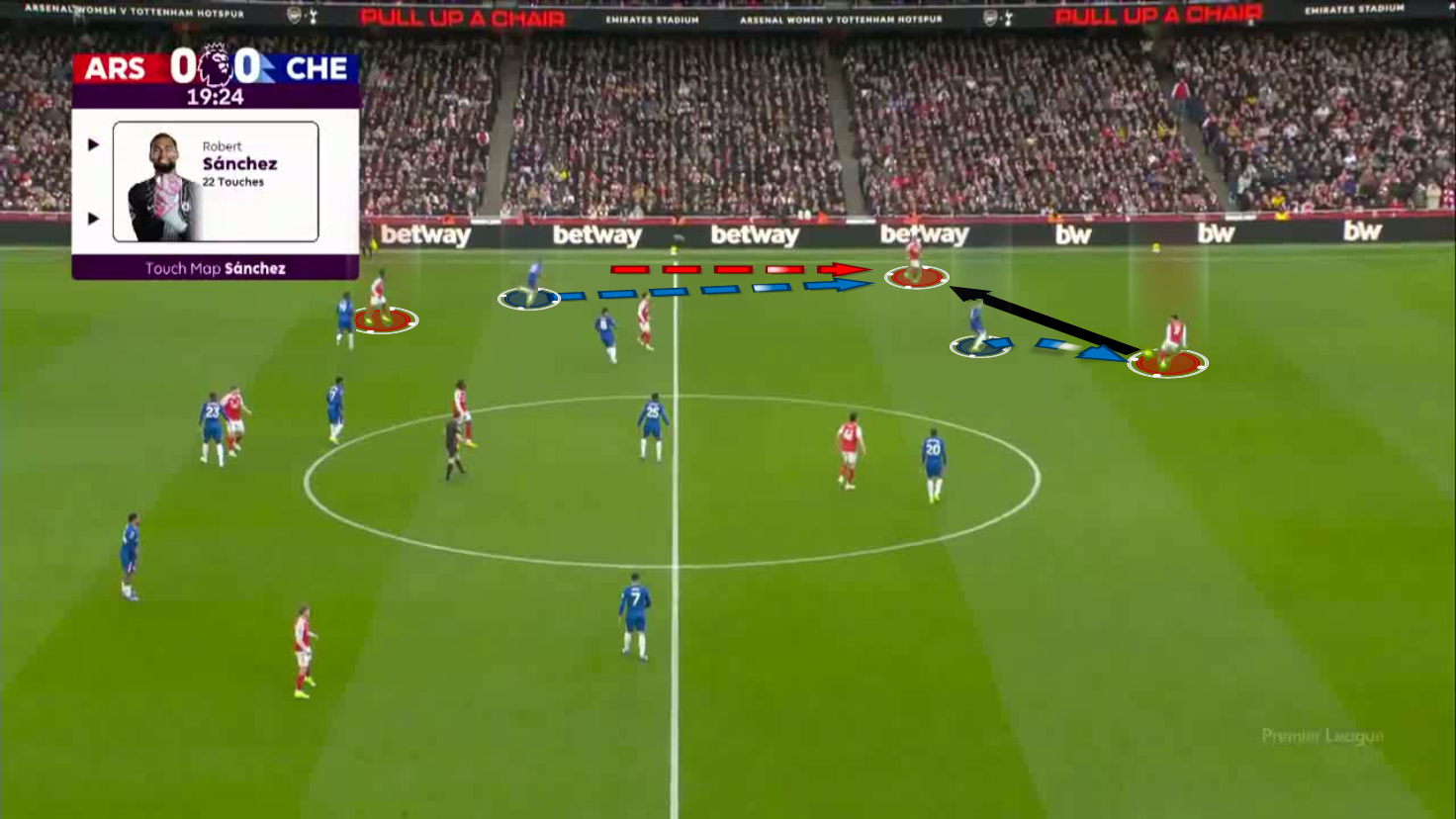
The above image, from Arsenal’s 2-1 victory over Chelsea last season at the Emirates, shows Arsenal at the start of a positional attack, with their right centre-back on the ball.
During these phases, Arsenal pose a constant threat to the opposition’s backline, with multiple players making runs in behind.
Every time an Arsenal player receives the ball facing forward, a forward or midfielder makes a run that stretches the opposition.
This makes it easier for other players to be found in pockets of space in front of the backline and, as we will see, allows them to disrupt the backline and pull defenders into different areas of the pitch.
Here, the ball is being played from right centre-back to right-back Jurrien Timber.
With Cole Palmer pressing from the outside in, in an attempt to cut off the right back, Timber drops deep, almost in line with his centre-back, to receive the ball.
This not only allows him to receive the ball more easily, but also means the opposition left-back has far more ground to cover when pressing the receiving player, leaving a big gap for Arsenal to exploit in the wide area.
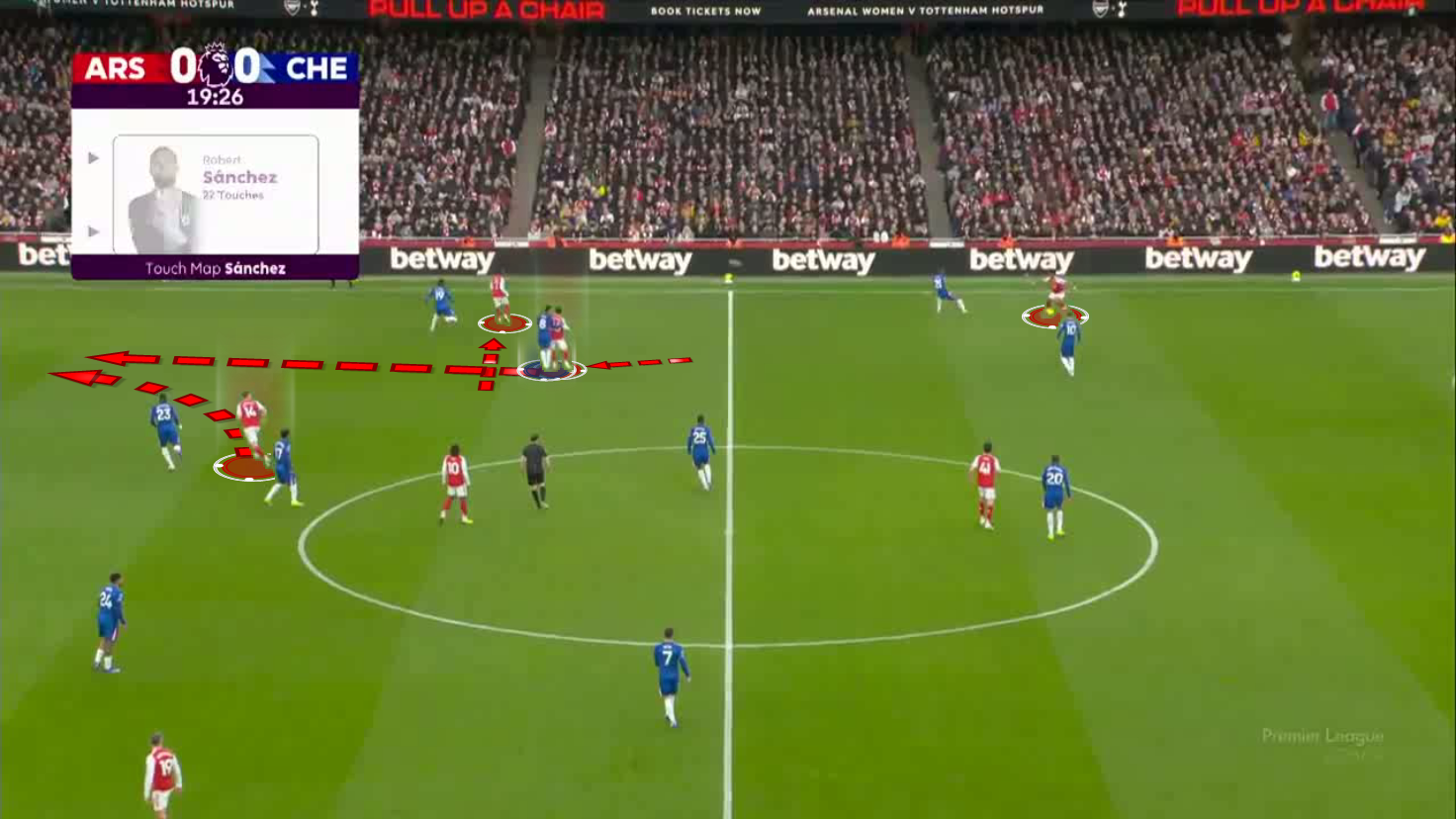
As the ball was being played to his right-back, Bukayo Saka made a movement inside the pitch.
This movement engaged Chelsea’s left centre-back (of a back four).
When Timber received the ball, Saka peeled off back into the wide area, bringing the centre-back with him.
This left Chelsea with their left-back and left centre-back both on the sidelines, leaving a big gap between their two centre-backs.
Both Arsenal’s striker, who made a diagonal run across the ball-far centre-back, and a midfielder attempted to make runs into this space.
Arsenal’s midfield runner was cleverly physically blocked by a Chelsea central midfielder.
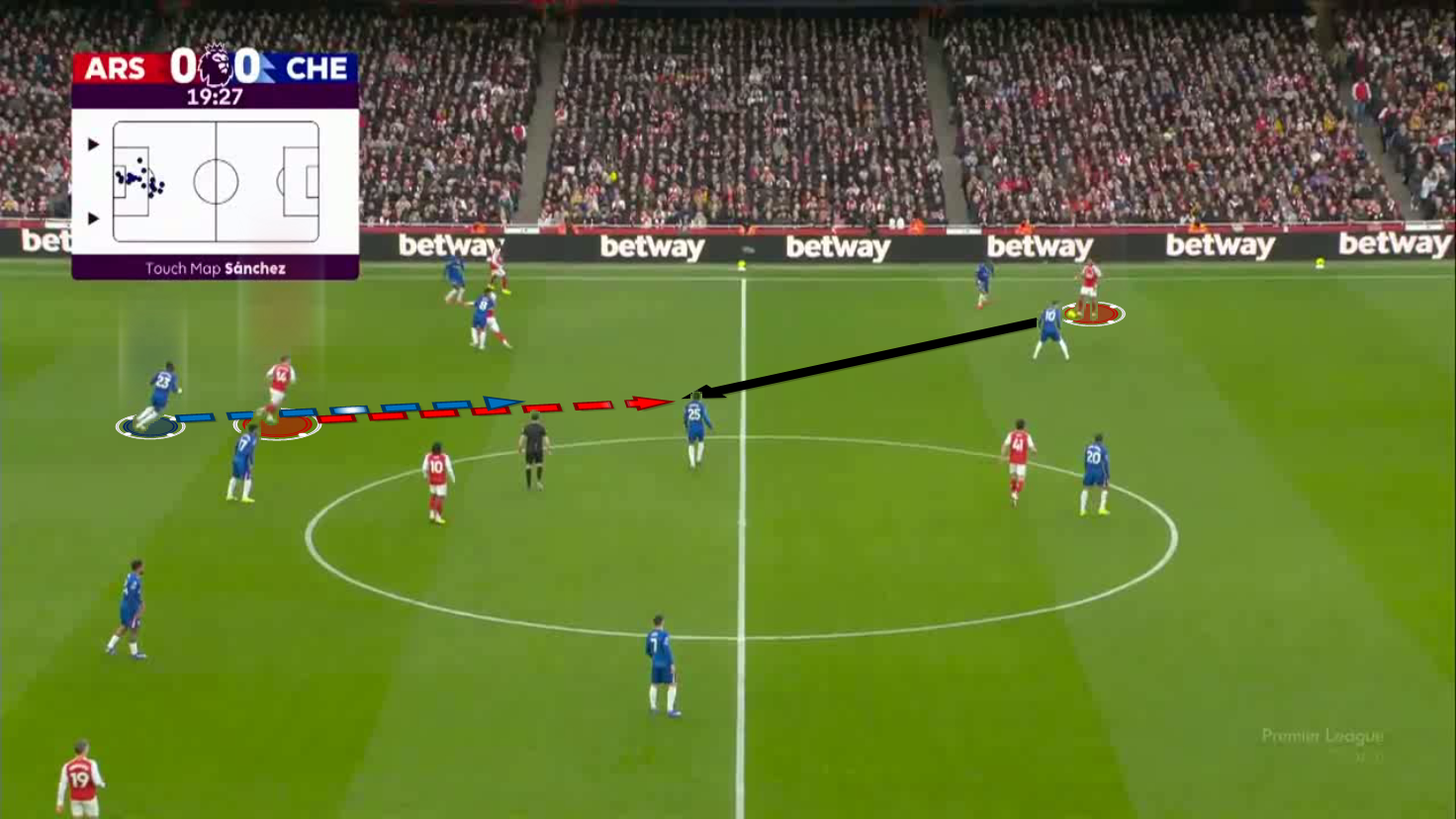
With Timber unable to find a teammate on his second touch, he travels inside with the ball.
This acts as a trigger for Arsenal forward Viktor Gyökeres to readjust his run, moving towards the ball.
Again, his proximity to a centre-back drags the defender towards the ball and disrupts the backline.
Gyökeres receives and bounces the ball into the wide area for Saka.
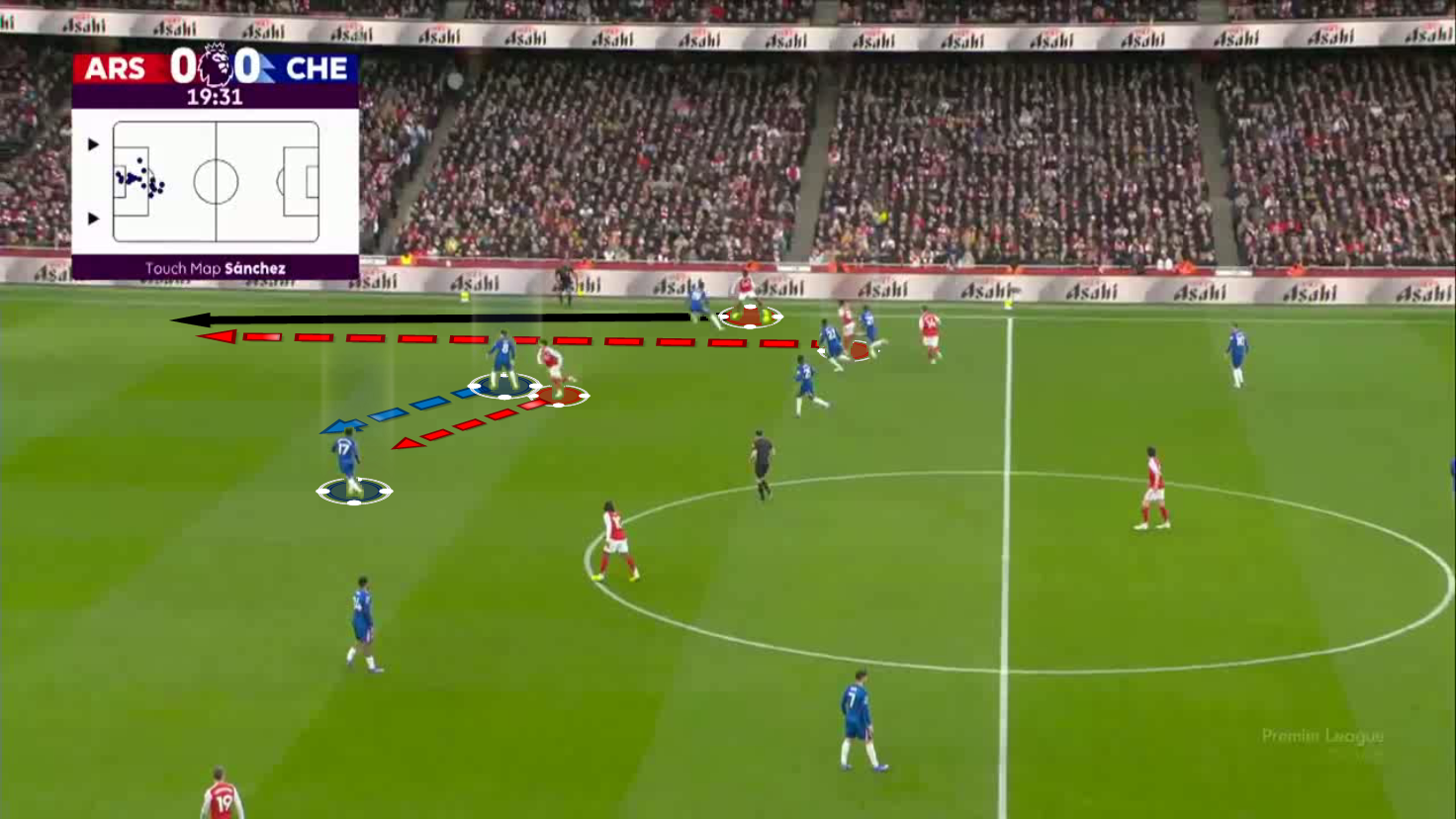
When Saka receives the ball, three of Chelsea’s back four are in their left wide area.
The two players highlighted in centre-back positions are their midfielders, who have been forced to drop in as cover for their wandering teammates.
As highlighted with arrows on the image, midfielder Martín Zubimendi makes yet another run, now to move the temporary centre-back marking him.
By dragging his marker centrally, Zubimendi creates another gap that his right-back, Timber, sprints into to get onto the end of a Saka pass.
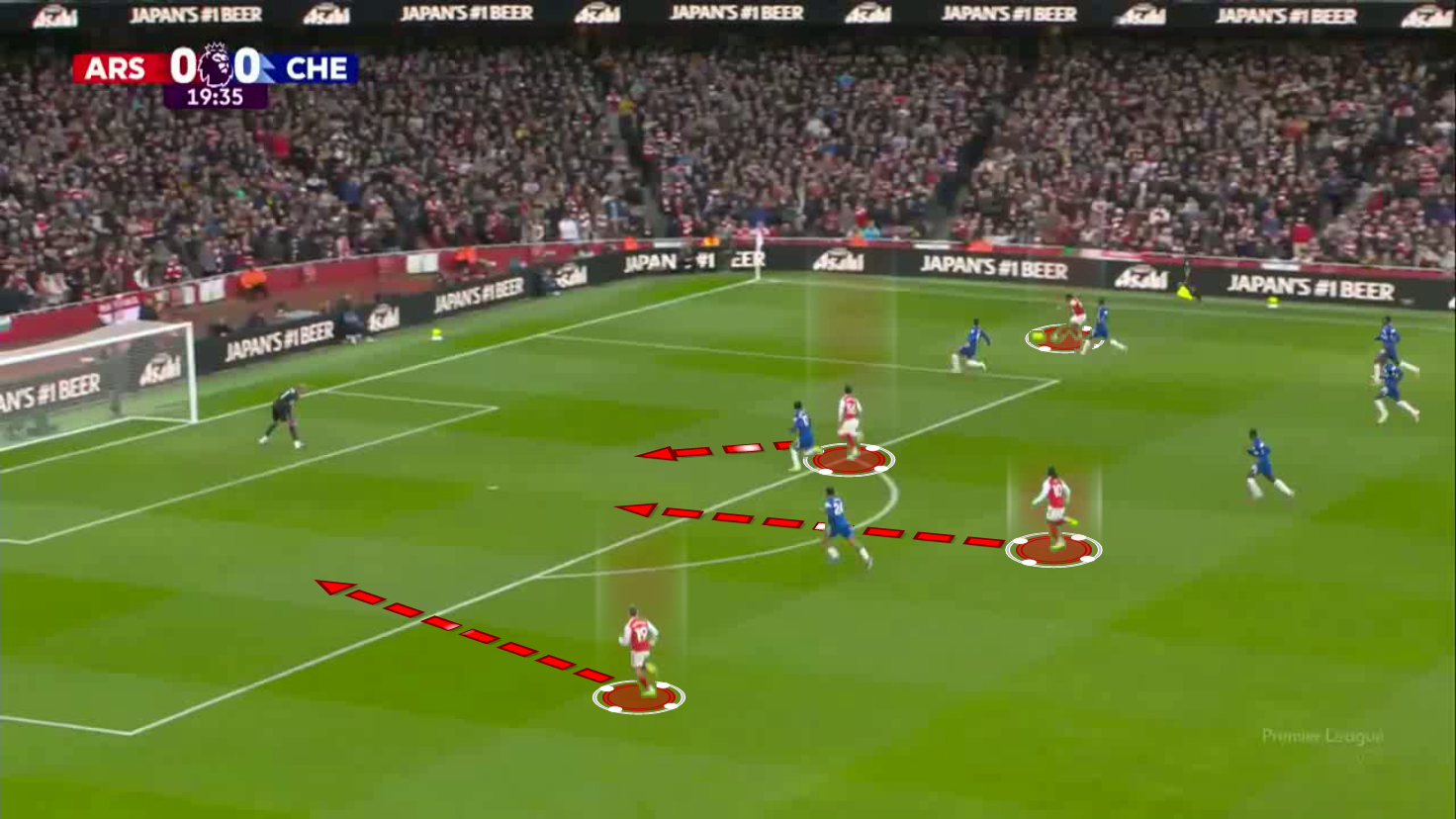
Timber is then able to deliver a cross towards three players attacking the box.
Chelsea, due to the fluidity of Arsenal’s movements and players dragging defenders into areas where they do not want to be, has just right-back Reece James as the only defender covering the goal area.
How Do Top Teams Get Behind Full-Backs?
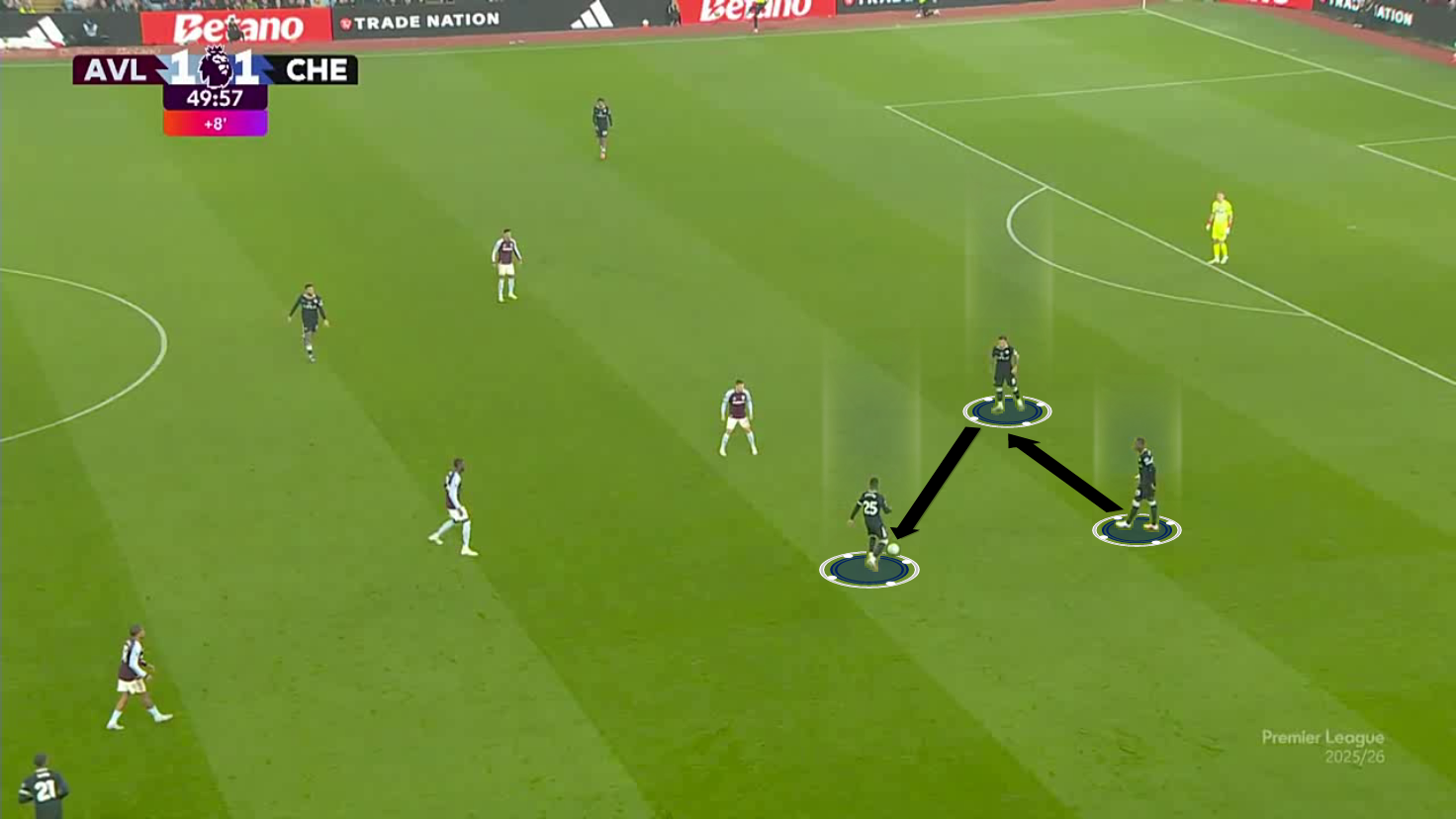
In this example from Chelsea’s 4-1 victory over Aston Villa, it is the movement of striker Pedro that creates the space for winger Alejandro Garnacho to receive behind Villa’s backline.
Moments before Garnacho is played deep into Villa’s half to set up Chelsea’s second goal of the match, the Blues are casually keeping possession near their own defensive third.
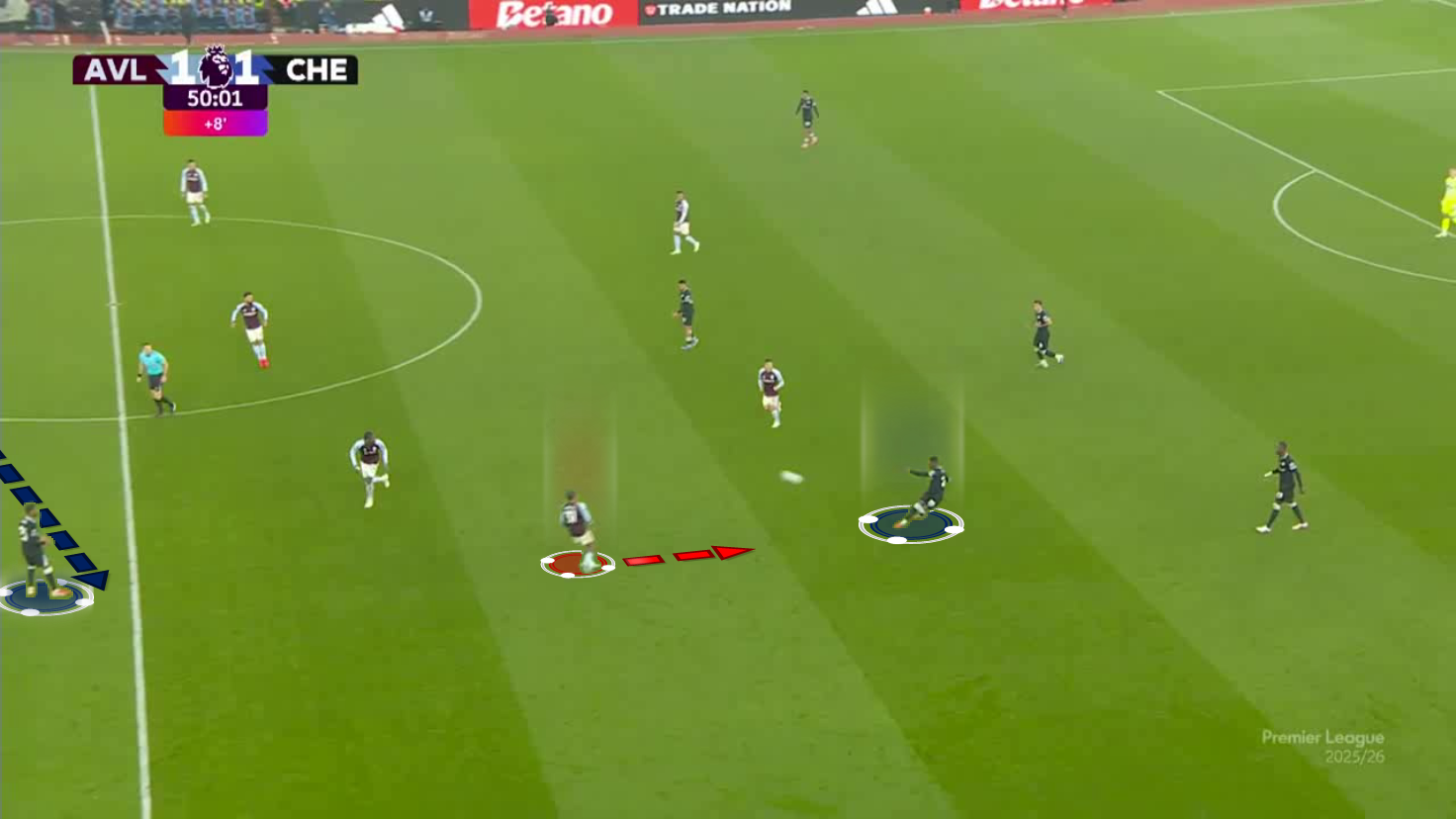
Suddenly, Moisés Caicedo turns and looks forward.
This is the trigger for Villa’s winger to put pressure on the ball.
At the very moment Caicedo has his head up facing forward, Pedro slips into the pocket of space behind the pressing player and in front of Villa’s right-back.
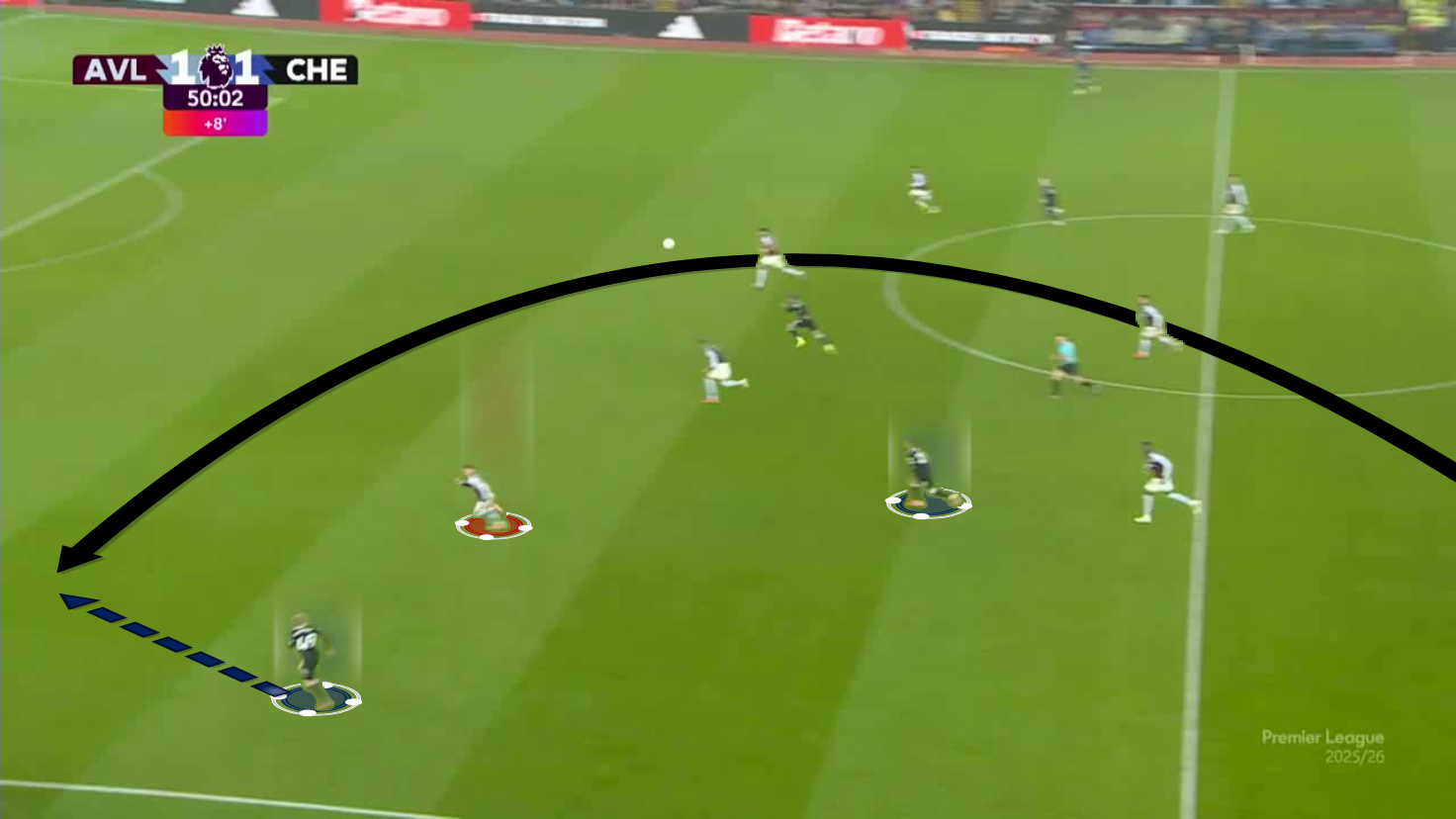
This causes the Villa right-back to react in anticipation of Pedro getting the ball, only for it to be played behind him for Garnacho to run onto.
The split-second hesitation caused by Pedro’s movement is what allows Garnacho to receive the ball.
The brilliance of this movement is the timing, waiting until Caicedo has cocked his kicking leg back to play the pass, he gives the right-back only a split second to make his decision.
Forward Fluidity Exercise
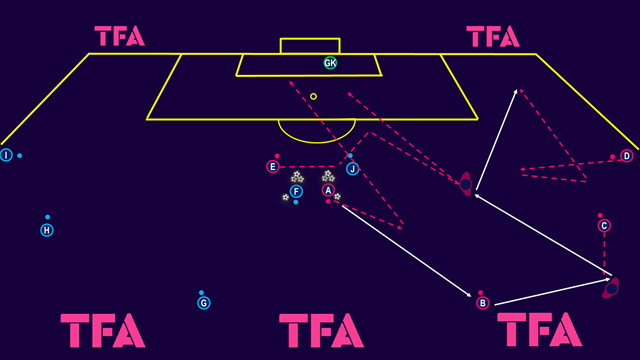
This drill-like exercise allows coaches to embed specific movements that can be used to create space behind the opposition’s backline.
The play starts in the central midfield area, with player ‘A’ passing out to either their full-back or centre-back, before forward players begin making their pre-determined movements.
The first option, shown above, involves movements similar to those analysed for Arsenal and is designed to get wide players in behind the opposition’s full-back.
Player ‘A’ begins by playing a backwards pass to their centre-back ‘B’.
The full-back, mimicking the same press (from outside to in) that Arsenal faced, drops deep to receive almost a flat pass, just as Timber did.
As this is developing, the striker, ‘E’, makes a run across the defence and then, just as their centre-back receives the ball, darts in behind to stretch the opposition.
When the full-back receives the ball facing forward, the striker runs towards their teammate, drawing the (imaginary) ball-far centre-back towards the ball.
The winger, who initially moves inside to get close to the ball-near centre-back, then recycles their run by backtracking as the ball is played into the striker.
This movement, timed as the ball is travelling, is designed so that the ball-near centre-back follows the winger, therefore dragging the defender further from the goal.
The striker, receiving side-on, plays the ball first time with their right foot for the winger to run onto.
The midfielder who started the play, having originally dropped to support the ball, sprints into the gap created by their striker and attacks the cross delivered by the winger.
The same pattern is then repeated on the opposite side of the pitch.
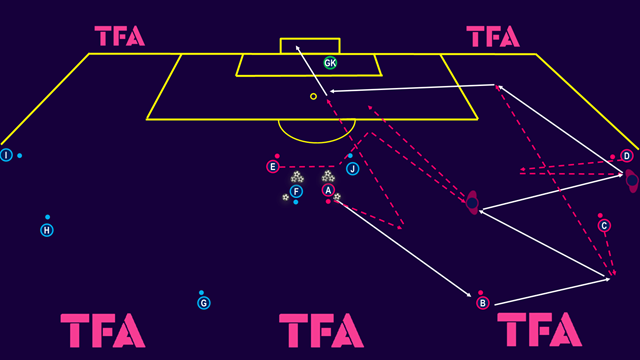
This next phase again recreates the phase of play Arsenal performed and, just as the Gunners did, involves an overlapping full-back receiving a through ball before delivering a cross.
The phase involves the same movements of the players and the ball until the striker receives it.
This time, taking a big, negative touch, back towards where the ball has come from to draw the centre-back even further from goal, the striker then plays the winger’s feet.
The winger then puts the right-back in behind in an area from which they can deliver a cross into the box.
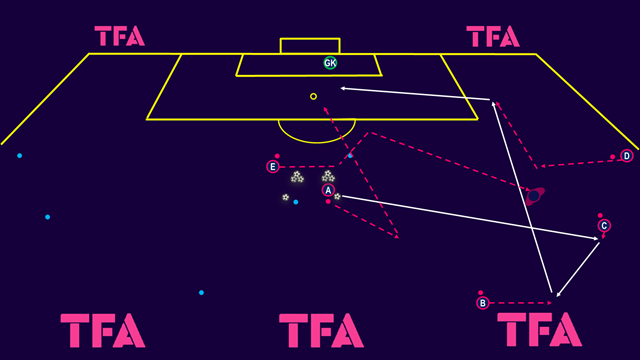
In this third rotation, the central midfielder misses out on the centre-back and plays straight into the right back, who, on this occasion, receives slightly higher.
As the ball travels from the right-back to the centre-back, the striker makes a similar movement as before, showing towards the ball, but this time closer to the wide area, in front of the opposition’s full-back.
This movement is done simultaneously with the winger moving inside.
This is designed to replicate the movements analysed of Chelsea, where the striker distracted Villa’s full-back, only for the winger to receive in behind.
The right-back sets the ball back to their centre-back, who has shifted across to support underneath the wide player.
The setback is played at a pace that allows the centre-back to play the ball over the striker’s head for the winger to run onto.
Both the striker and midfielder then rush to support the winger by getting into the box for a cross.
A second option for this phase is for the striker to receive from the centre-back and drop the ball back first time to the central midfielder who makes a run underneath him.
It is the midfielder who then plays the ball into the winger’s path.
Three Zone Game
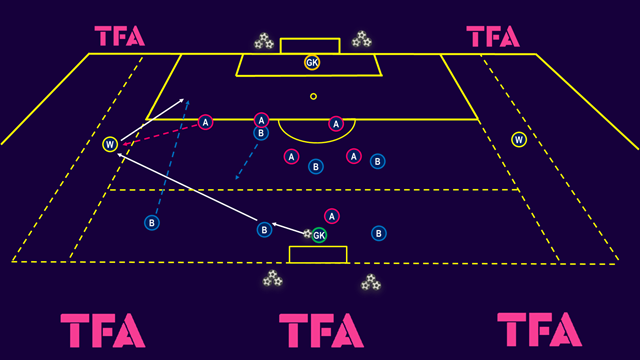
This three-zone small-sided attacking game allows coaches to develop their teams’ forward movements in a competitive setting.
The game consists of six outfield players on each team, with two ‘neutral’ players as wingers who play with whichever team has the ball.
The in-possession team sets up with three defenders in the defensive zone, two midfielders in the middle, and a striker who starts high on the line that divides the middle and final third.
Defensively, the three defenders represent one full-back and two centre-backs.
When the ball is in the wide area, the closest defender becomes a full-back, and the remaining two defenders become centre-backs.
As shown above, the front three should start as high as possible and make movements similar to those worked on in the drill-like practice.
To enter the final zone, the ball must be played into the zone first, for either one of the front three or midfielders to run onto.