
![Bayern Munich Vs Paris Saint-Germain [1-1] – Champions League Semi-Final Second Leg 2025/2026 – Tactical Analysis](https://cdn.mymidnight.blog/77f959f119f4fb2321e9ce801e2f5163/size/w1000/2026/05/FC-Bayern--Vs-PSG-20252026.png)
Bayern Munich Vs Paris Saint-Germain [1-1] – Champions League Semi-Final Second Leg 2025/2026 – Tactical Analysis

Bayern Munich hosted Paris Saint-Germain at the Allianz Arena for a much-awaited UEFA Champions League semi-final second leg.
The contest ended in a 1-1 draw, which meant PSG went through with an aggregate score of 6-5.
Ousmane Dembélé scored early to give Les Parisiens the edge, with Bayern having to chase for the rest of the game; they finally pulled one back through Harry Kane during the additional time, which proved to be too late for them to get another to force extra-time.
The second leg was significantly different from the first; PSG chose a more pragmatic approach, which helped them keep their opponents out for the most part.
Through this tactical analysis, we aim to discuss Bayern Munich’s strengths, weaknesses, and the adjustments Paris Saint-Germain made to deal with FC Bayern’s attacking threat.
Bayern Munich Vs Paris Saint-Germain Lineups & Formations
Let's look at how Vincent Kompany and Luis Enrique fielded their squads.
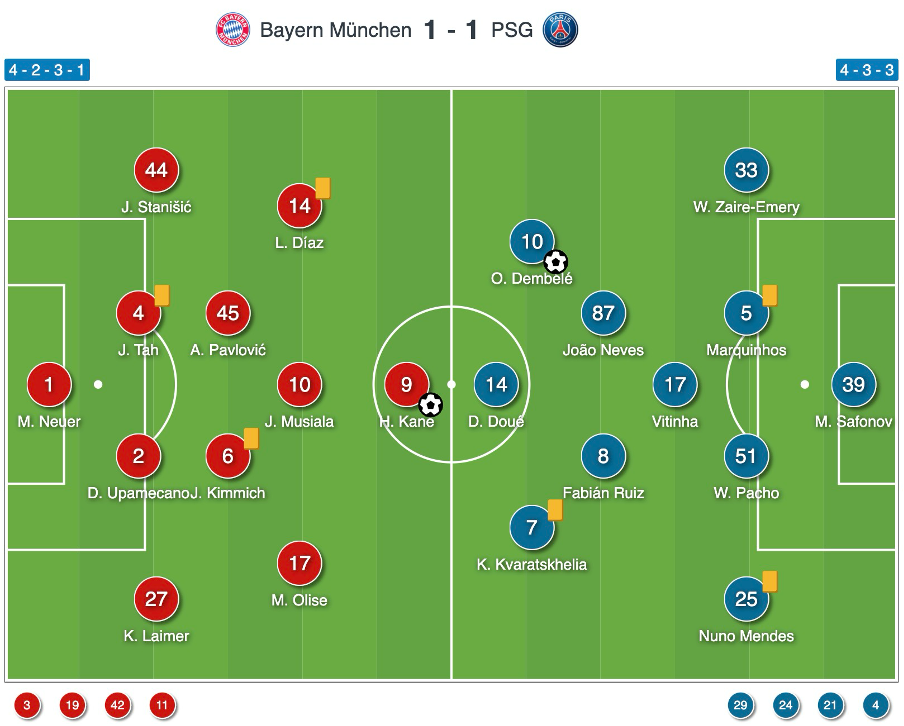
Bayern played in a 4-2-3-1 formation.
Skipper Manuel Neuer started in goal.
The back four were Konrad Laimer (right-back), Dayot Upamecano (right centre-back), Jonathan Tah (left centre-back), and Josip Stanišić (left-back).
Upamecano, Tah, and Stanišić were replaced by Lennart Karl (85’), Kim Min-jae (68’), and Alphonso Davies (67’), respectively.
Joshua Kimmich and Aleksandar Pavlović played as the double pivot.
Michael Olise (right) and Luis Díaz (left) were the two wingers, with Jamal Musiala as the attacking midfielder.
Nicolas Jackson replaced the latter after 79 minutes.
Harry Kane played as the striker.
PSG played in a 4-3-3 formation.
Matvey Safonov started between the sticks.
The back four were Warren Zaïre-Emery (right-back), skipper Marquinhos (right centre-back), Willian Pacho (left centre-back), and Nuno Mendes (left-back).
The latter made way for Senny Mayulu at the 85th minute.
Vitinha, João Neves, and Fabián Ruiz were the midfield three.
Ruiz was replaced by Lucas Beraldo (76’).
The front three were Désiré Doué (right-winger), Ousmane Dembélé (striker), and Khvicha Kvaratskhelia (left-winger).
Doué and Dembélé made way for Lucas Hernández (76’) and Bradley Barcola (65’), respectively.
Paris Saint-Germain Strengths
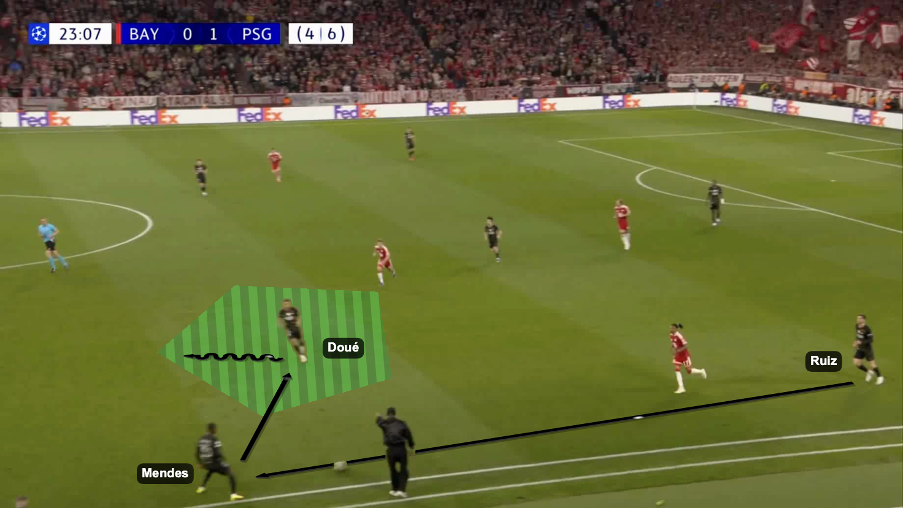
Right off the bat, PSG started pressing high up the pitch, forcing Bayern to play long.
Their target was to keep the hosts from controlling the tempo for as long as possible.
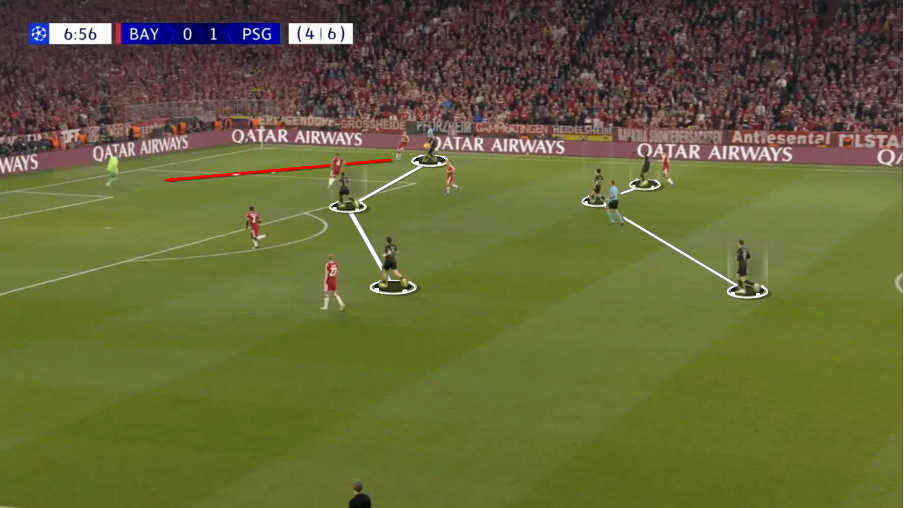
Even when Bayern regained the ball and attempted to play out from the back, the Parisians pressed them, all the way up to the goalkeeper.
This forced Neuer into numerous long balls.
During the first half, in situations where Bayern managed to play through the first line of press, PSG made sure to force them back or sideways with their man orientations.
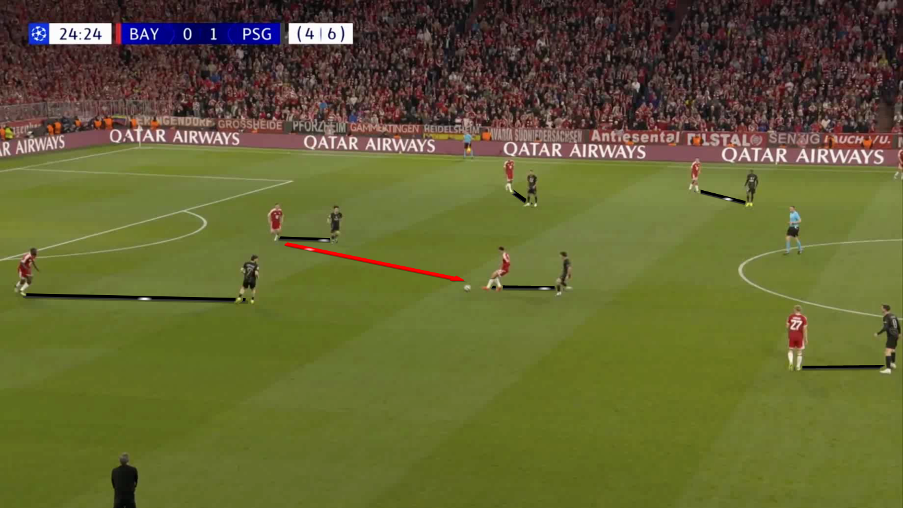
Kimmich finds Musiala, but the latter is closely followed by a PSG midfielder.
The visitors match Bayern’s numbers in the build-up to go man-to-man.
Musiala has no nearby options to connect with; he ends up getting dispossessed.
Enrique’s side posed a constant threat with their pressing, as they have been rapid with their execution in positive transition.
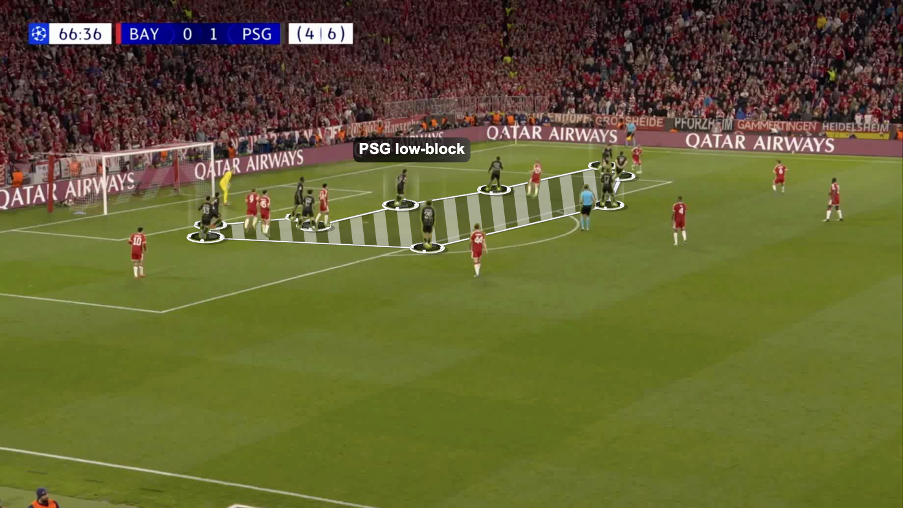
As for defending in their own half, they were seen in a compact low-block once Bayern started dictating the tempo.
The early goal helped them; as a result, Bayern were chasing a minimum of two goals to take the game to extra time.
With all players behind the ball, they could allocate more players to defend the wide channel.
Bayern’s two obvious threats in Olise and Díaz were double-teamed to force them away from the goal.
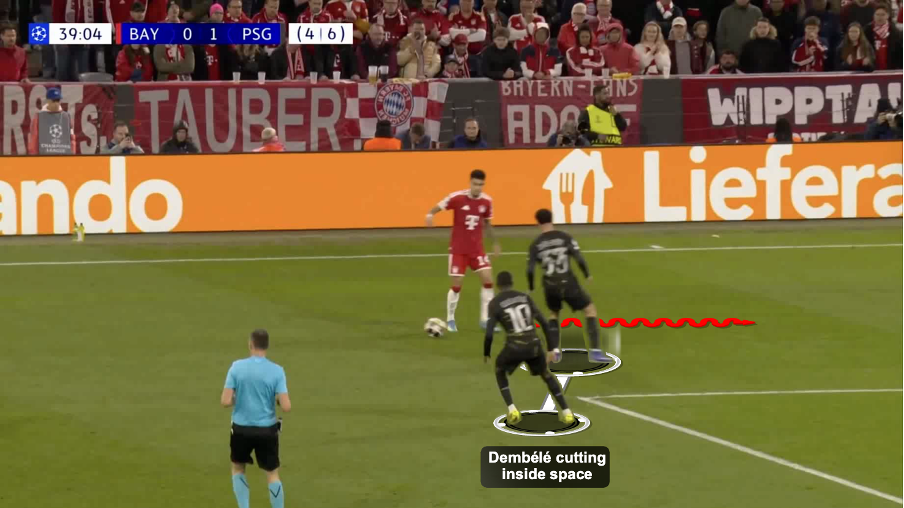
Zaïre-Emery, who filled in for Hakimi at right-back, was provided support from his teammates when defending against Díaz.
Dembélé drops as a covering defender, cutting the inside space.
This forces the Colombian to either play it sideways to recycle or go down the line.
Olise’s side was no different.
The Frenchman, who completed a total of eight dribbles in the first leg, was closely marked by multiple PSG players, which essentially cut the space down.
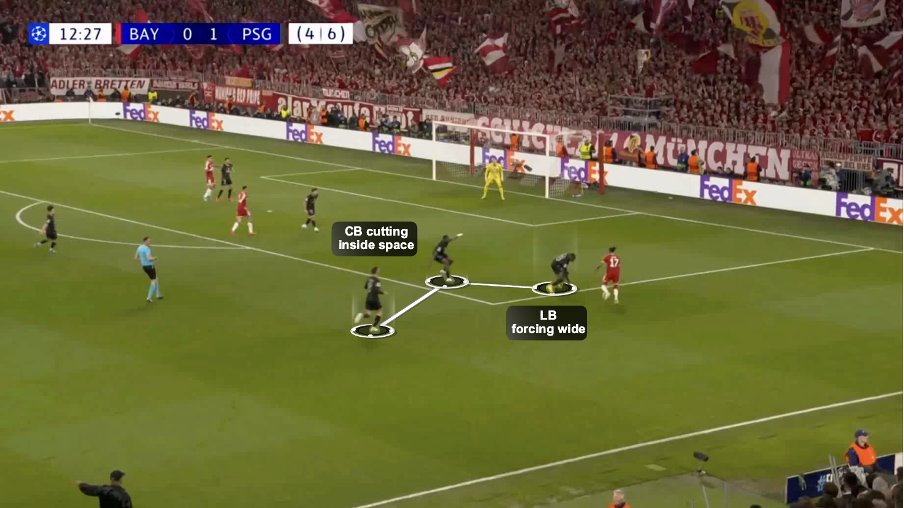
Whenever Olise dribbled at Mendes, Pacho stepped in beside him, providing cover on the inside, to force Olise down the line.
In several situations, Ruiz was also seen cutting the inside space.
This was essential because in a situation where Olise beat Mendes on the inside, the covering defender would immediately step in to prevent a shot.
The Frenchman has a tendency to drop deeper to pick the ball up.
Which is why Mendes made sure to follow him into the mid-third.
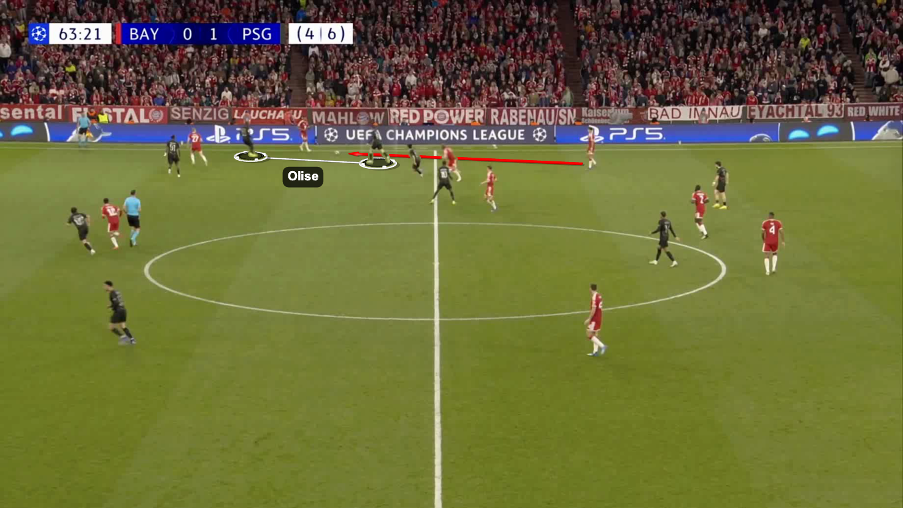
Because of this action from the Portuguese, Olise struggled to turn when receiving with his back to goal.
On many occasions, a midfielder pressed him from the inside, cutting the option in the half-space.
This either forced the Frenchman to play backwards or led him to lose the ball.
When PSG were on the attack, Zaïre-Emery pushed high up the pitch, similar to how Hakimi did in the first leg.
Díaz looked to exploit the same on the counter.
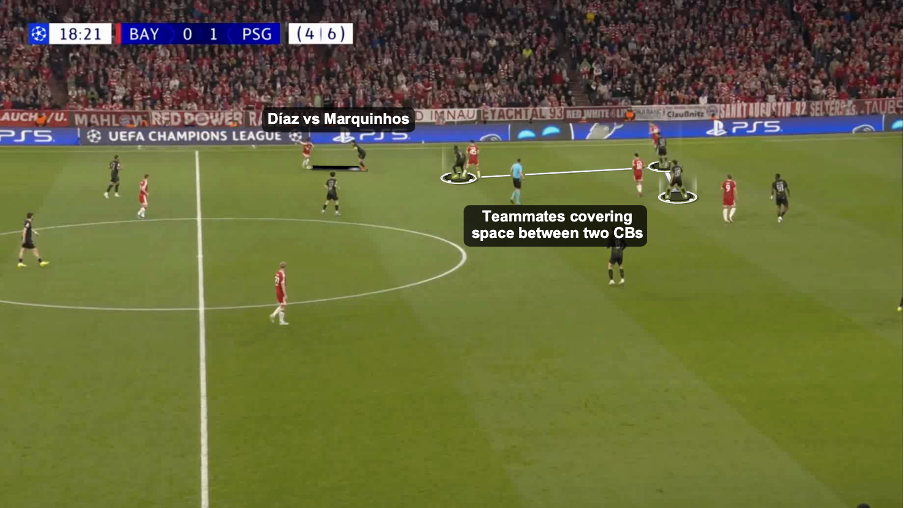
However, Marquinhos was proactive in stepping out to delay the attack.
In case the Colombian went past the Brazilian, the other PSG players tracked back in time to provide enough cover.
In this example, three PSG players have dropped into the space between the two centre-backs.
With this adjustment, Pacho does not have to shift across and leave space on his side.
Bayern did not press with as much vigour as the Parisians; this gave them enough time to play out from the back.
![Olympique De Marseille Vs PSG [1-2] Ligue 1 2026/2027: How Bruno Génésio Transitions Troubled PSG - Tactical Analysis](https://cdn.mymidnight.blog/77f959f119f4fb2321e9ce801e2f5163/size/w600/2026/09/Marseille-Vs-PSG-2026_2027---Tactical-Analysis.png)
![Fulham Vs Manchester United [1-1] Premier League 2026/2027: How Álvaro Arbeloa Tactics Exposed The Red Devils' Problems - Tactical Analysis](https://cdn.mymidnight.blog/77f959f119f4fb2321e9ce801e2f5163/size/w600/2026/09/Fulham-FC-Vs-Man-United-2026_2027---Tactical-Analysis.png)
![AS Roma Vs Inter Milan [2-2] Serie A 2026/2027: When Undefeated Giallorossi Attack Met Nerazzurri Comeback Resilience - Tactical Analysis](https://cdn.mymidnight.blog/77f959f119f4fb2321e9ce801e2f5163/size/w600/2026/09/AS-Roma-Vs-Inter-Milan-2026_2027---Tactical-Analysis.png)
![Real Sociedad Vs Bournemouth [1-2] Europa League 2026/2027: How Do Marco Rose Pressing Tactics Work? - Tactical Analysis](https://cdn.mymidnight.blog/77f959f119f4fb2321e9ce801e2f5163/size/w600/2026/09/Real-Sociedad-Vs-Bournemouth-20262027---Tactical-Analysis-1.png)
![AC Milan Vs Benfica [0-2] Europa League 2026/2027: How Marco Silva Tactics Exposed Rúben Amorim Defensive Problems - Tactical Analysis](https://cdn.mymidnight.blog/77f959f119f4fb2321e9ce801e2f5163/size/w600/2026/09/AC-Milan-Vs-Benfica-20262027---Tactical-Analysis.png)
![Sunderland Vs AZ Alkmaar [1-0] Europa League 2026/2027: Why The Black Cats Make Better Underdogs - Tactical Analysis](https://cdn.mymidnight.blog/77f959f119f4fb2321e9ce801e2f5163/size/w600/2026/09/Sunderland-Vs-AZ-Alkmaar-20262027---Tactical-Analysis.png)
![Leeds United Vs Newcastle United [4-1] Premier League 2026/2027: Why Did Daniel Farke Tactics Dominate The Magpies? - Tactical Analysis](https://cdn.mymidnight.blog/77f959f119f4fb2321e9ce801e2f5163/size/w600/2026/09/Leeds-United-Vs-Newcastle-2026_2027---Tactical-Analysis.png)
![Real Sociedad Vs Atlético Madrid [0-3] La Liga 2026/2027: How Diego Simeone Tactical Precision Rescued A Late Victory - Tactical Analysis](https://cdn.mymidnight.blog/77f959f119f4fb2321e9ce801e2f5163/size/w600/2026/09/Real-Sociedad-Vs-Atl--tico-Madrid-20262027---Tactical-Analysis-1.png)