Thomas Tuchel Tactics At England 2026: Building A World Cup-Ready System – Tactical Analysis

Update May 23, 2026: The full England lineup has been released.
The 2026 FIFA World Cup is only three short months away, and England are looking to finally bring football home.
It’s been a tough decade for the England national team, with so many close calls, losing in the last two Euro finals, and bowing out of the 2022 FIFA World Cup to France in the quarter-finals.
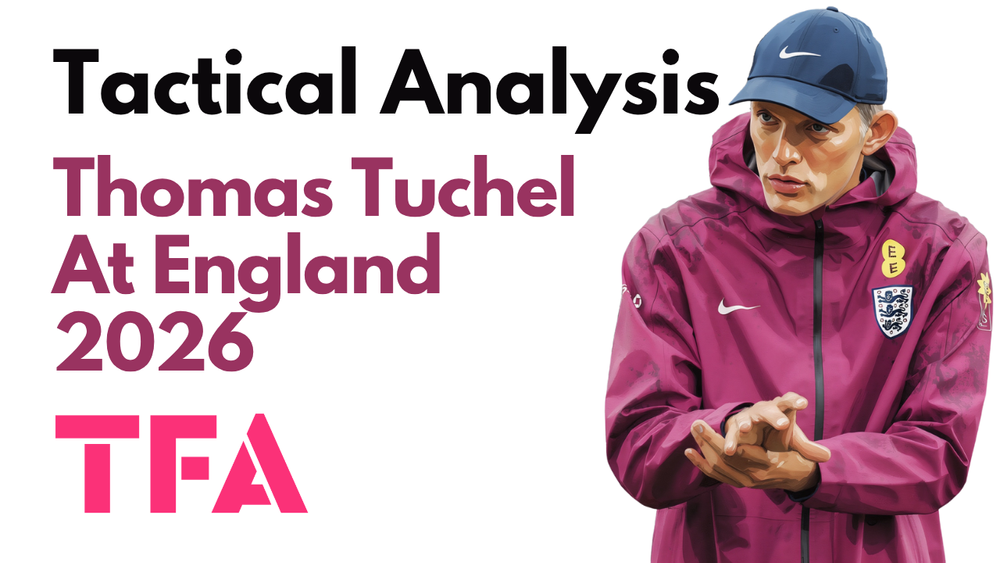
Gareth Southgate‘s long tenure is over, and England have turned to one of the best knockout-stage football managers in the world, Thomas Tuchel.
Being the manager of the English National Team is one of the most heavily scrutinised positions in all of sports because fans have been waiting far too long for a trophy.
The last time England lifted a major international trophy was the 1966 FIFA World Cup.
They are one of the favourites in North America this summer to finally end the drought, and, in my opinion, they have the most talented team in the world.
What they’ve needed for a long time is a manager who can take them to the next level, and after their qualifying campaign, it seems that Thomas Tuchel is the man to do it.
In this England tactical analysis, we will look at some of Thomas Tuchel tactics used throughout England qualifying matches, possible Thomas Tuchel England formations, and how Thomas Tuchel compares to Gareth Southgate tactics.
Thomas Tuchel Tactics
The biggest criticism of Southgate for a very long time was that he was too conservative.
He favoured a possession-dominant style, maintaining a high level of control, and avoiding England being opened up in transition.
Even when he took the team to back-to-back UEFA European Championship Finals, the fans still wanted more.
They wanted England tactics to be more aggressive and dominate teams.
Thomas Tuchel style of play is a very different type of manager and is less conservative than Southgate.
For a team that has been so heavily criticised in the past, with the media looking for any excuse to tell everyone the sky is falling, England were perfect in World Cup qualifying.
They won all eight of their qualifying matches against Albania, Latvia, Andorra, and Serbia, conceding no goals.
Of course, the competition will be stiffer at the World Cup, but Thomas Tuchel showed a few different tactical traits with England that have clearly improved them.
The clear thing that Thomas Tuchel tactics continued with England is their level of control.
In all eight of their qualifying matches, they did not hold less than 70% possession in any of them.
It really comes down to how Tuchel would set his team up, not only to break down low blocks but also to make sure England didn’t get hit quickly on the counter.
Early on in their first two matches, you saw Tuchel having his England formation build up in a 3-2-5, with Myles Lewis-Skelly inverted into the midfield and the rest of the forwards aggressively pushing up to the last line of defence.
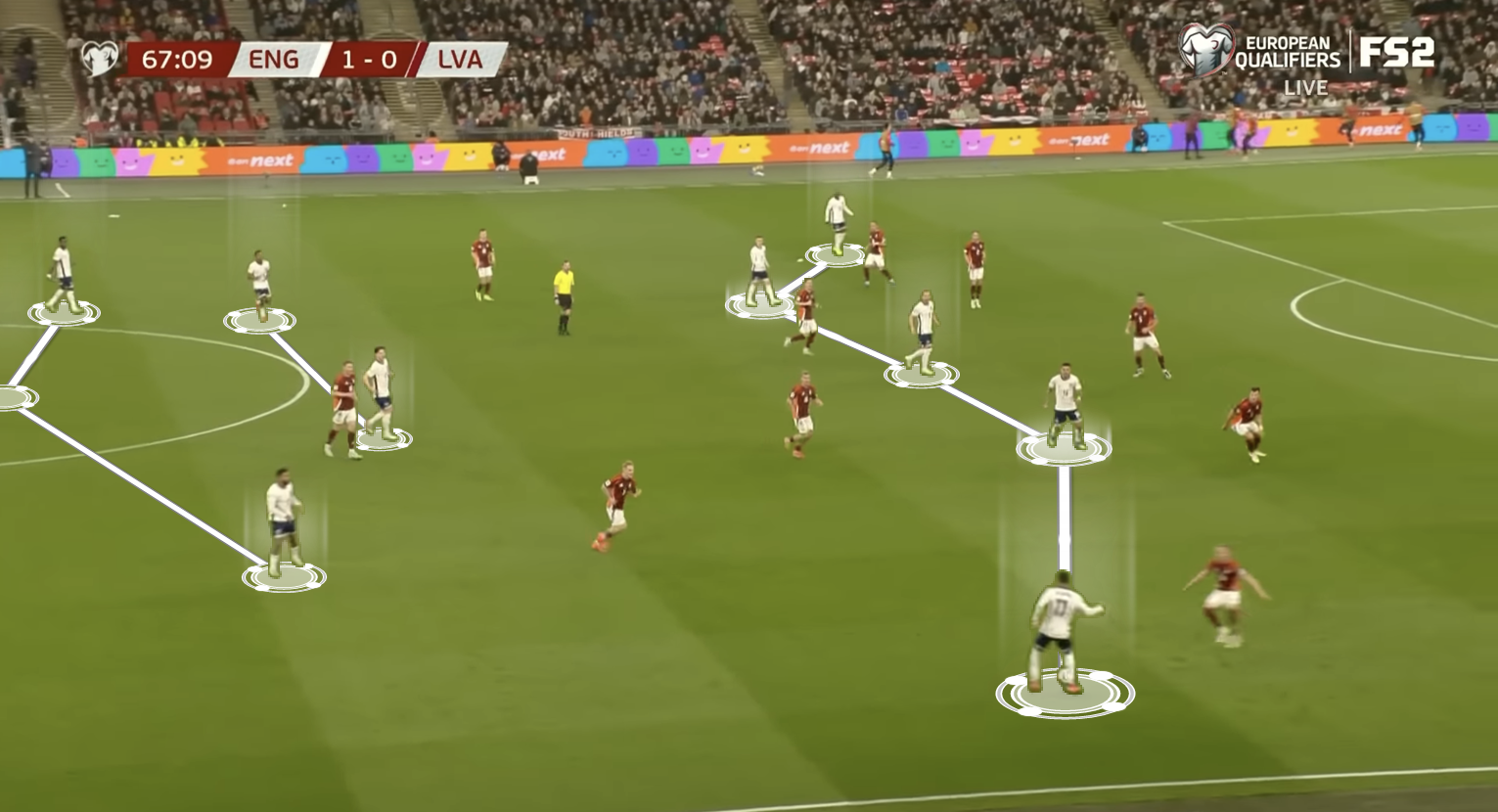
This allows a push-pull system where one forward can drop deep into the space, while the other makes a run into the space created if the centre-back follows.
In deeper build-up, Tuchel is a big fan of the box midfield, and now that England have found a number ‘6’ in Elliott Anderson, Declan Rice can push up into the left half-space in the ‘8’/’10’ role that makes him so good for Arsenal.
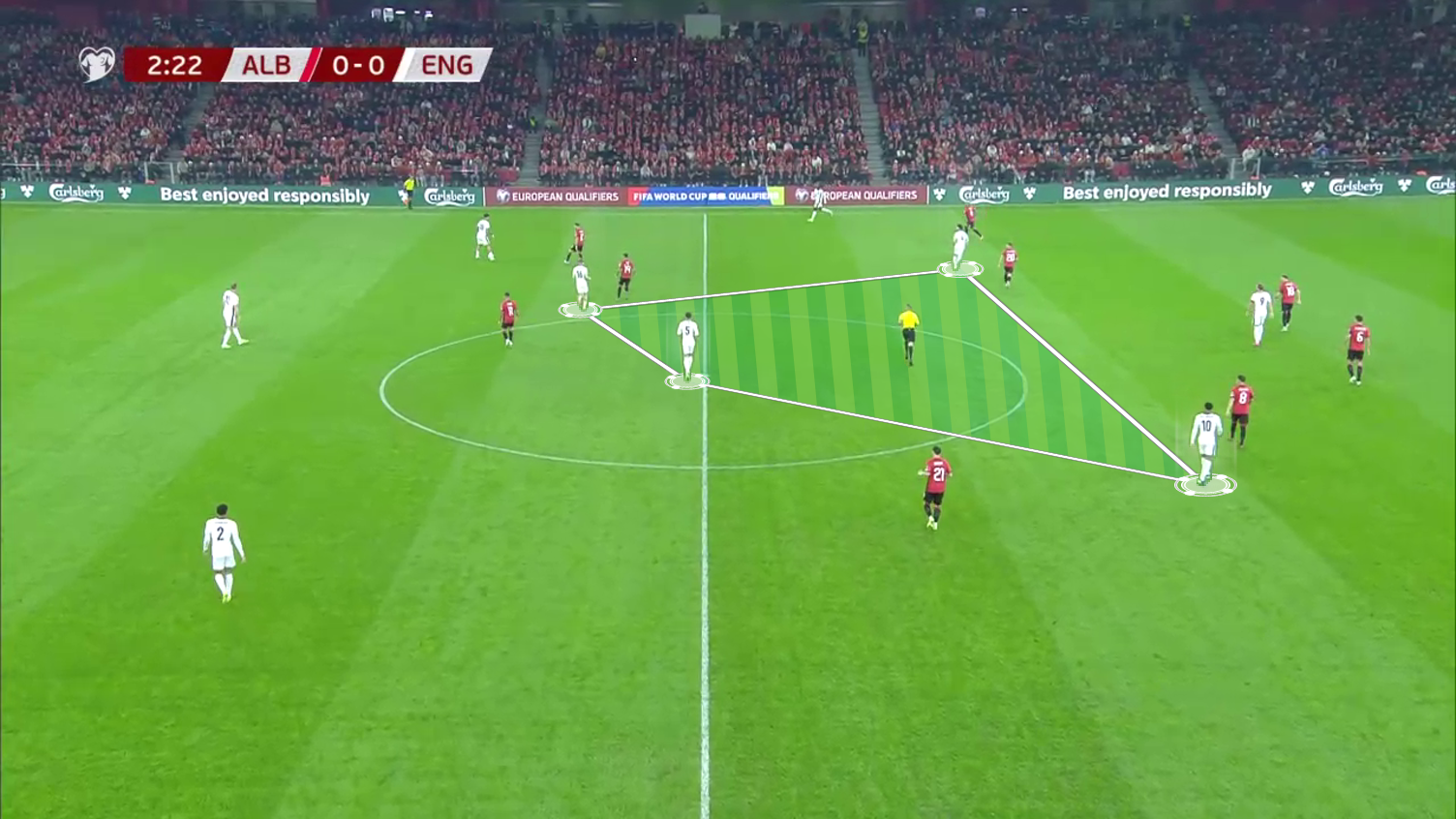
This system, with England’s press-resistant ability on the ball and the versatility of all the players they have on the pitch, creates a big problem for the opposition.
One of the main problems for the opposition is what I think Tuchel has done brilliantly with Harry Kane.
We’ve seen Kane’s ability to drop deep and get on the ball for Bayern Munich, which has created loads of space for Michael Olise and Luis Díaz to run into, and it’s why they are probably the best front three in world football right now.
With England, Kane was consistently playing as a standard number nine, but was playing around guys like Phil Foden, Jude Bellingham, and Cole Palmer, who all wanted to drop deep into these pockets of space as well.
With Kane’s ability to drop deep, he can create that space by pulling a centre-back with him, but if nobody is going to make a run into the space created, then what’s the point?
Because of that, he was isolated quite a bit under Southgate, and opposing teams were able to double him easily to neutralise him, which is why he’s only scored a total of five goals over the last two major international tournaments.
Two examples from qualifying of why it’s so great to have him be able to drop deep into these pockets of space.
The first one is really subtle, but important.
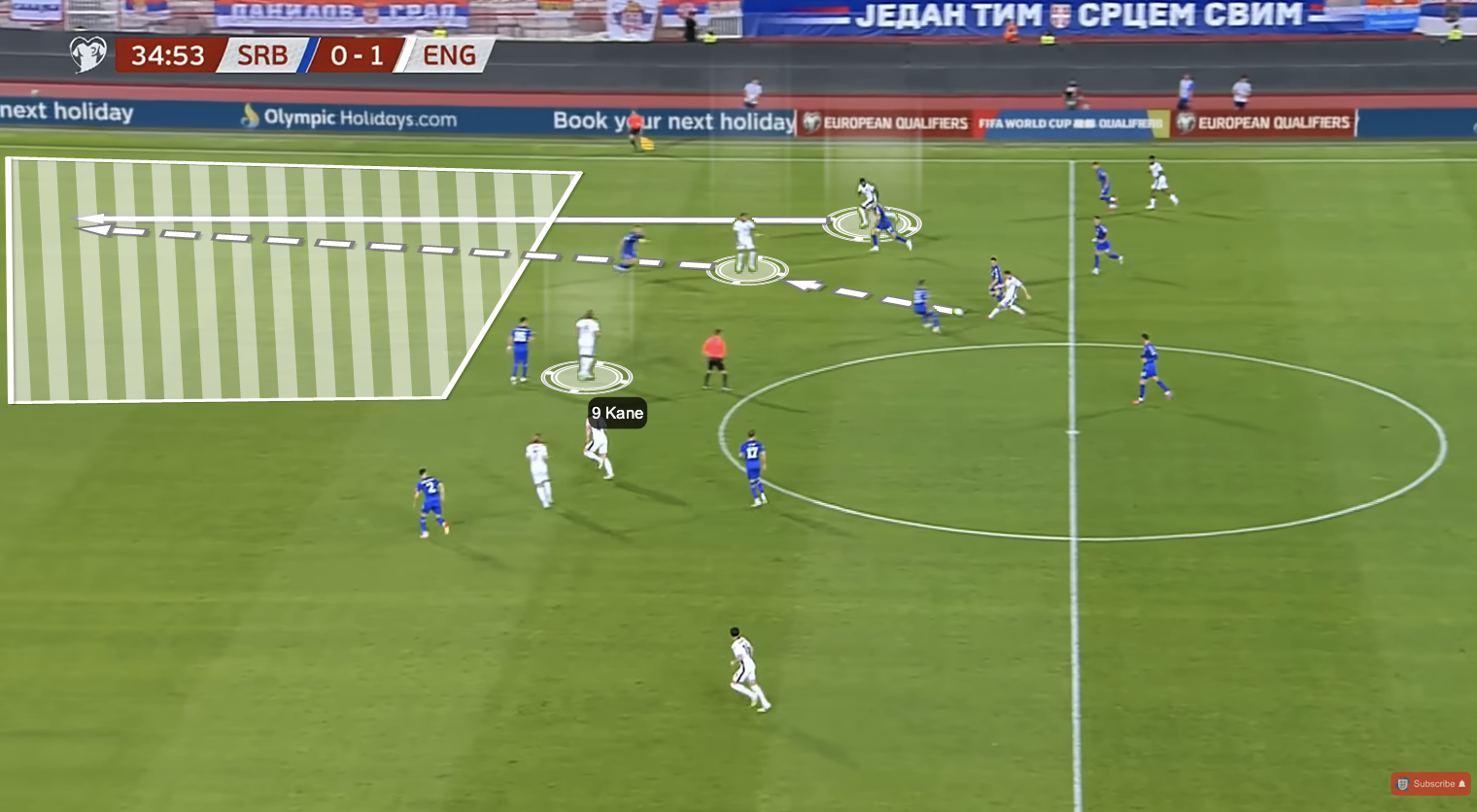
Here, Noni Madueke is going to make a run into the space not only created by Morgan Rogers dropping in, but also by Kane making one slight move towards Rogers, which opens up acres of space for Madueke to make a more central run and eventually score.
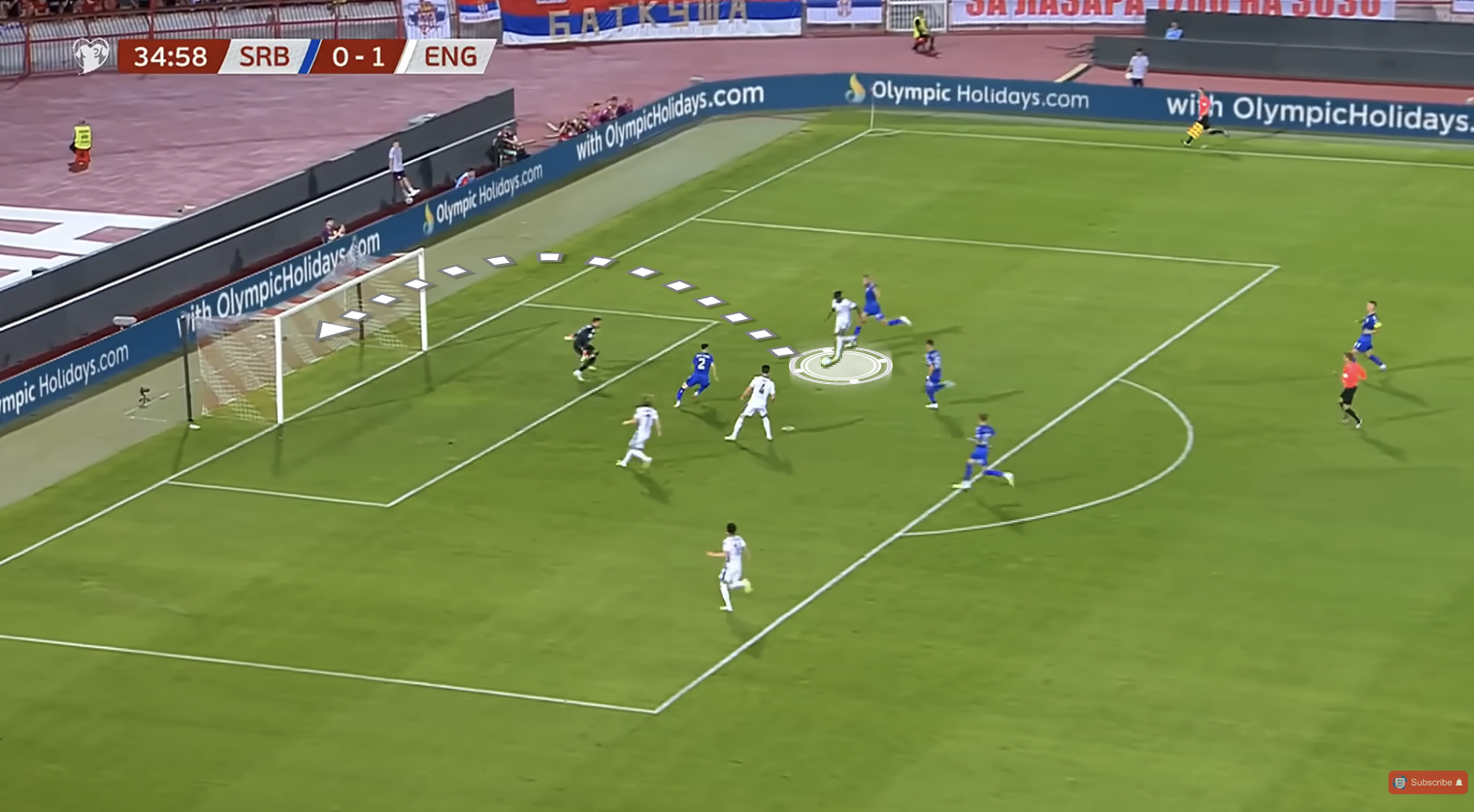
The second example here is Kane dropping way into England’s own third of the pitch and setting up a pass out wide.
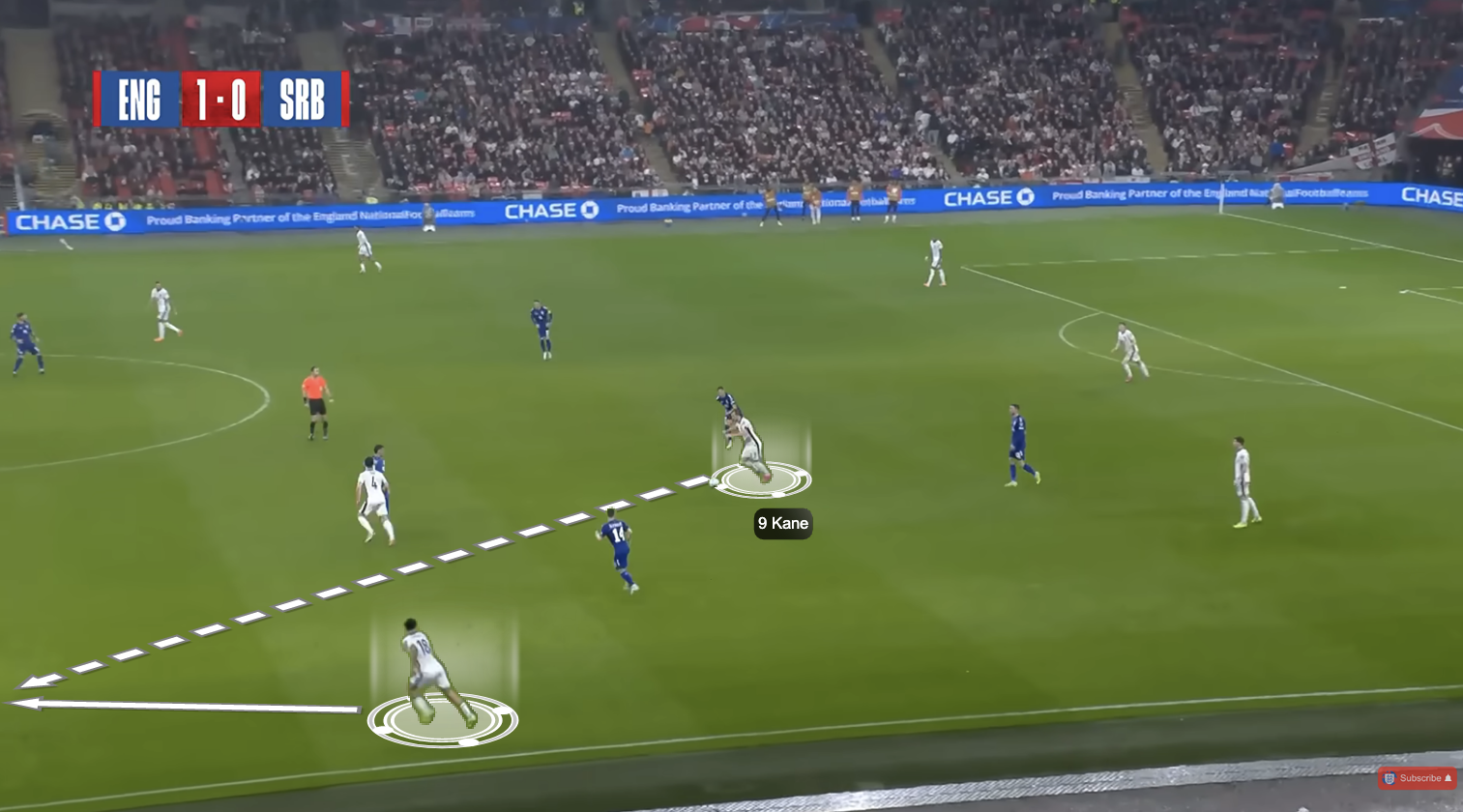
When he drops deep, he can make these late runs into the box and can be much more difficult to mark.
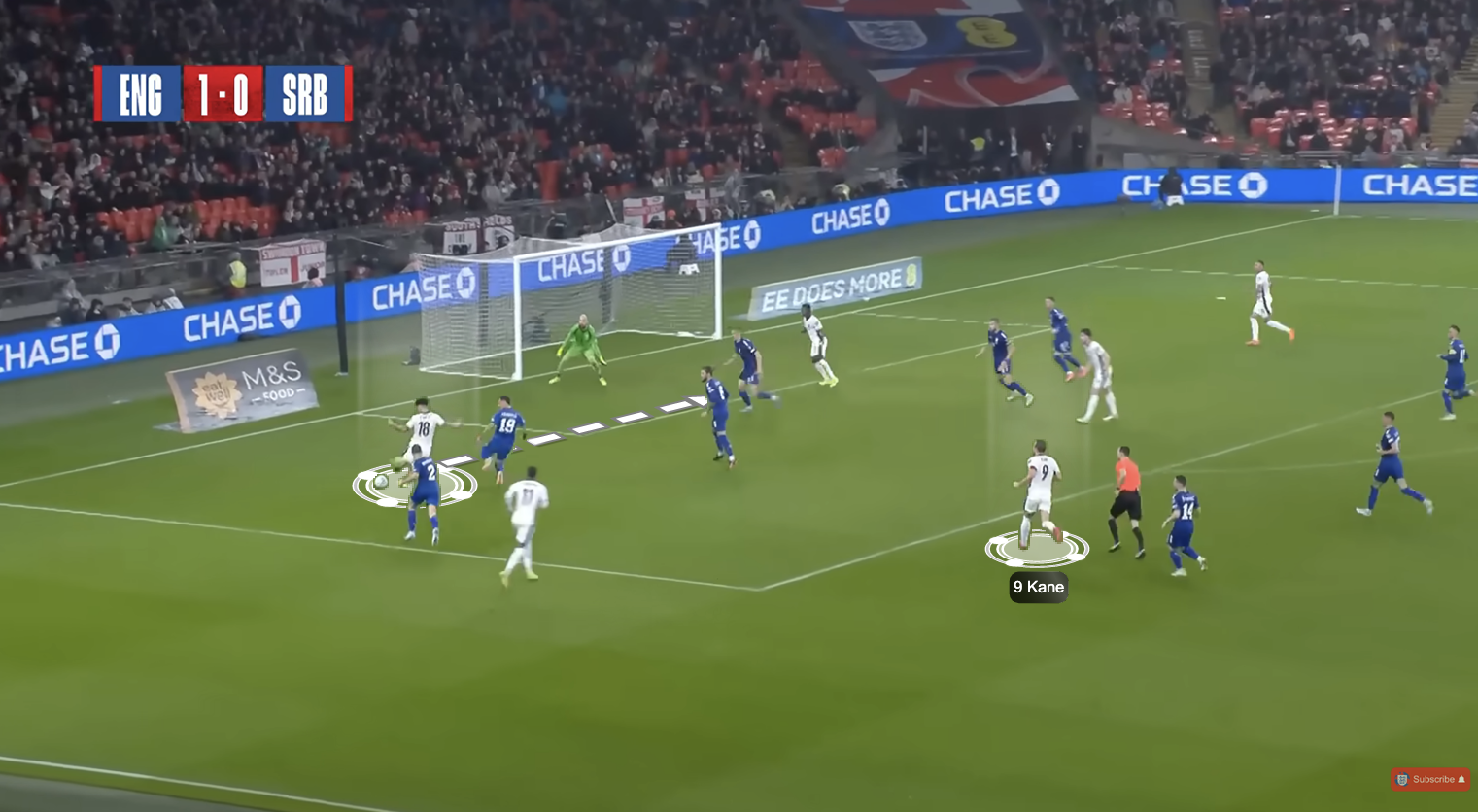
He doesn’t get the ball here, but you can see that he has nobody on him, and if the ball was hung up for a second less, he probably could have tapped in a cutback.
There is so much more that Tuchel has done tactically with England, but he is one of the most versatile managers at setting up his team in ways that suit them best against a given opponent, rather than following a rigid tactical system.
That is why he’s been one of the best knockout football managers for some time.
England Lineup Selection
It may be up for debate whether England formation lines up in a 4-3-3 or 4-2-3-1, since Tuchel has used both throughout qualifying, but I think five places are set in stone right now.
Against Serbia, they staggered their positions, with Anderson trying to get on the ball to allow Rice to push up further, similar to the benefit Rice has when Jordan Pickford is going to be in goal for England, like he has for a very long time.
He is also riding a bit of good form, as with Everton this season, he leads the Premier League with a +6.0 post-shot xG.
If he’s healthy, Reece James is going to start at right-back because of his ability not only to invert into the midfield in possession, but also because he’s comfortable in a back three as the right centre-back when England are building up, so Tuchel is going to want to have that versatility.
Rice is likely to start in midfield, more than likely as the ‘8’, or, in certain instances, as the ‘6’.
Bukayo Saka is going to start on the right, as he has for a long time, and of course, Kane is going to start up top as striker.
Outside of those five, everything is up for grabs, and given the way Tuchel tends to manage it, it may depend on the opponent they are facing.
![Scotland Vs Switzerland [0-3] UEFA Nations League 2026/2027: How Aggressive Pressing Backfired & Murat Yakin Took Advantage - Tactical Analysis](https://cdn.mymidnight.blog/77f959f119f4fb2321e9ce801e2f5163/size/w600/2026/10/Scotland-Vs-Switzerland-20262027---Tactical-Analysis.png)