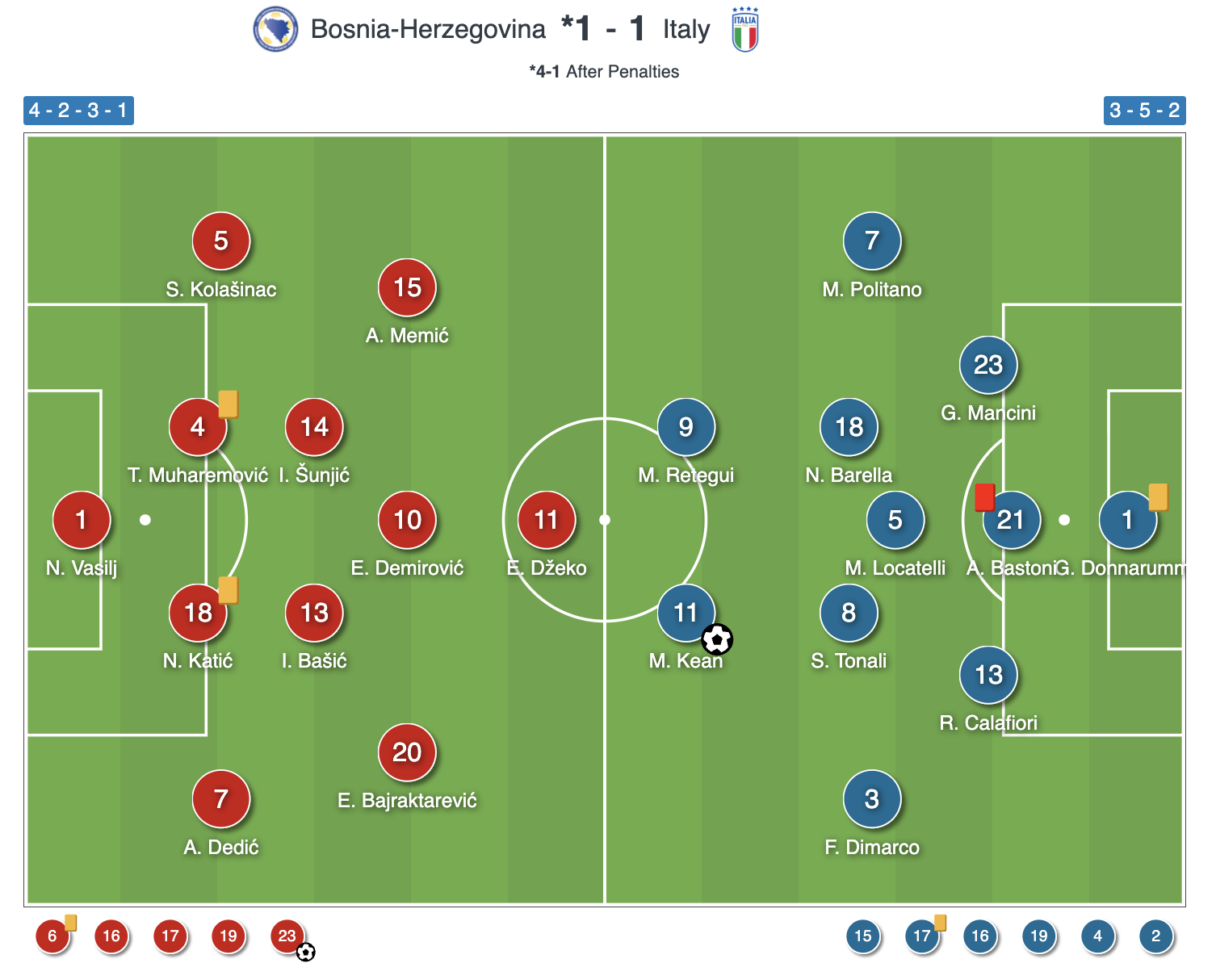
Bosnia-Herzegovina and Italy went toe-to-toe in a one-off game that would determine which nation would go into Group B of this summer’s 2026 FIFA World Cup, with the Bosnians winning on penalties.
They played out a 1-1 draw through 120 minutes of football, and two missed penalties cost the Azzurri in the shoot-out.
This was an emotionally charged fixture.
It felt like the weight of the world was on Italy’s shoulders, looking to avoid missing out on a third consecutive World Cup.
They were last seen on football’s biggest stage in 2014, in the game famous for Giorgio Chiellini feeling Luis Suárez trying to take a chunk out of his shoulder.
Manager Gennaro Gattuso had seen off Northern Ireland 2-0 last week, while Bosnia-Herzegovina went the distance in Cardiff, drawing 1-1 and winning on penalties; sound familiar?
Italy started off well in Zenica, but even before Alessandro Bastoni’s red card in the 41st minute, they struggled with the intensity of the fixture.
On the other hand, Bosnia were high-intensity and front-footed, as they secured a second World Cup appearance in their history.
This tactical analysis focuses on how Bosnia took the game to Italy through early crosses, how Italy might be left to rue missed chances, and on breaking down the fixture’s major events.
These sorts of high-stakes games tend to be a slow burn, with both teams trying to feel each other out in the early exchanges.
The game in Zenica was the complete opposite.
Rather than trying to slow it down and keep possession, or, as many expected, Bosnia setting up in a deep block and Italy applying sustained pressure, we saw both sides go extremely direct from the start.
Per FotMob, there were 41 long balls in the first half.
For context, Italy’s game against Northern Ireland had just 28 in the same period, and Bosnia’s game in Wales had just nine.
While both were playing direct football, they did so in very different ways.
Bosnia were looking to get in behind Italy, sending the ball over the centre-backs and into the channels.
Italy, on the other hand, were looking to get the ball directly into Moise Kean’s feet.
Both teams felt they were succeeding with it, and in the 15th minute, Italy got the breakthrough.
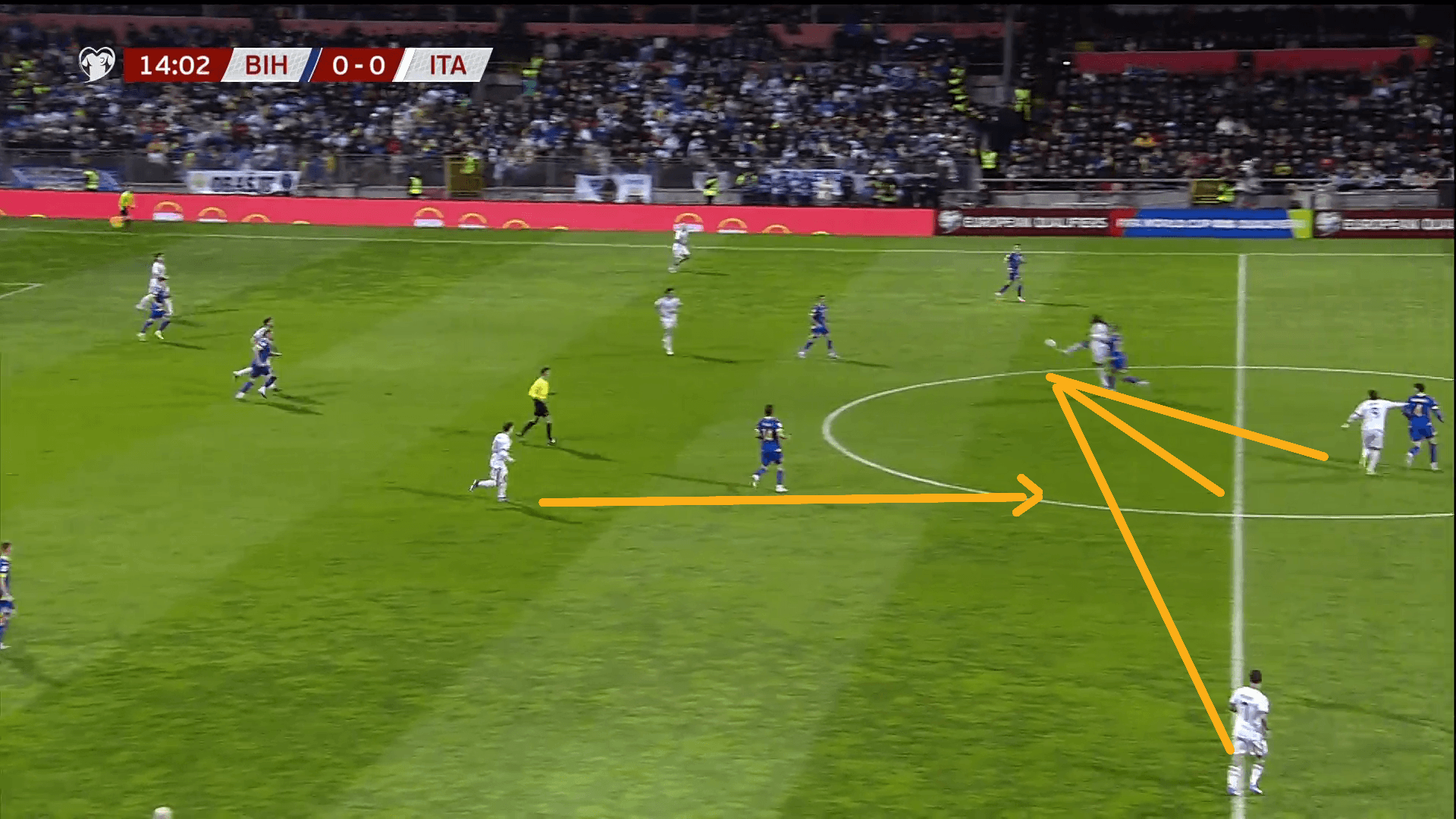
While the goal stemmed from an error by Bosnia’s goalkeeper, Nikola Vasilj, the move began with a long pass to Kean.
Gianluigi Donnarumma was forced into playing the ball into the sort of areas we can see Kean in all night, which we’ll see again when looking at the red card.
He’d look for Kean to either attempt to hold the ball up or lay it off.
His layoff in this move fails, as he expects Barella (shown by the arrow) to move into the area where the ball ends up, creating a numerical advantage for his side.
Ultimately, Barella’s pressure forces the ball to the goalkeeper, who plays it right back to Barella’s feet, who finds Kean for an excellent first-time finish.
Bosnia-Herzegovina Dominance Vs Italy
After Italy’s goal, the game settled into a pattern.
There were moments of Italian control disrupted by Bosnian pressure and chaos.
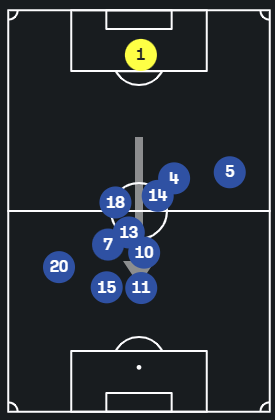
If we look at Bosnia’s average position or substitutions (the first of which occurred at half-time), we can see their game plan.
Flood the central areas before breaking the ball out wide to Bajrakterević, who would whip the ball into the box at pace.
It’s not a bad plan when your attackers are Džeko and Demirović.
By the end of the half, Bosnia had outshot Italy 13 to two, forcing Donnarumma into four saves.
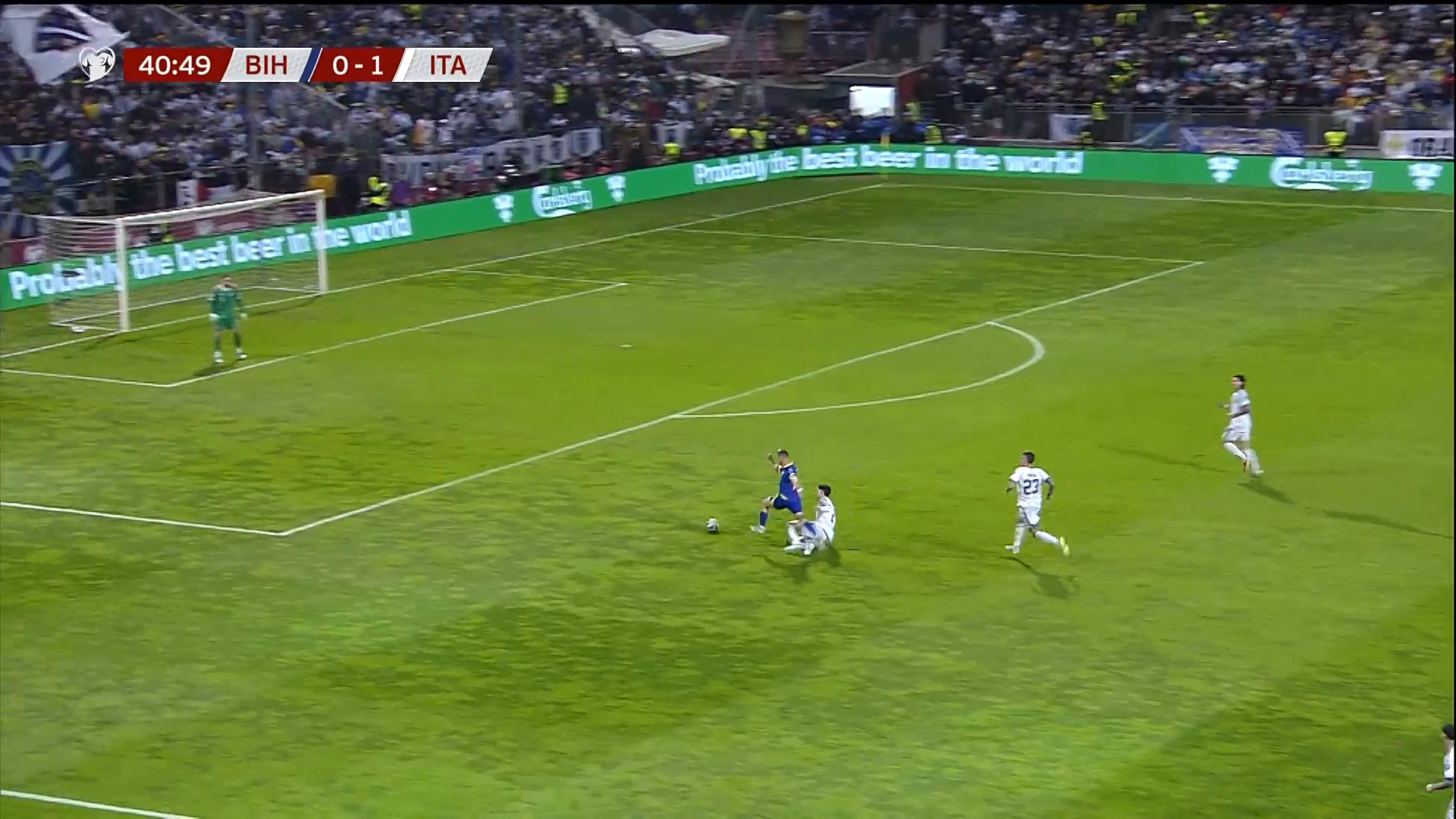
There wasn’t a clear-cut chance, but it felt like Italy were suffering (something Gattuso said would happen pre-match); in the 41st minute, they really did.
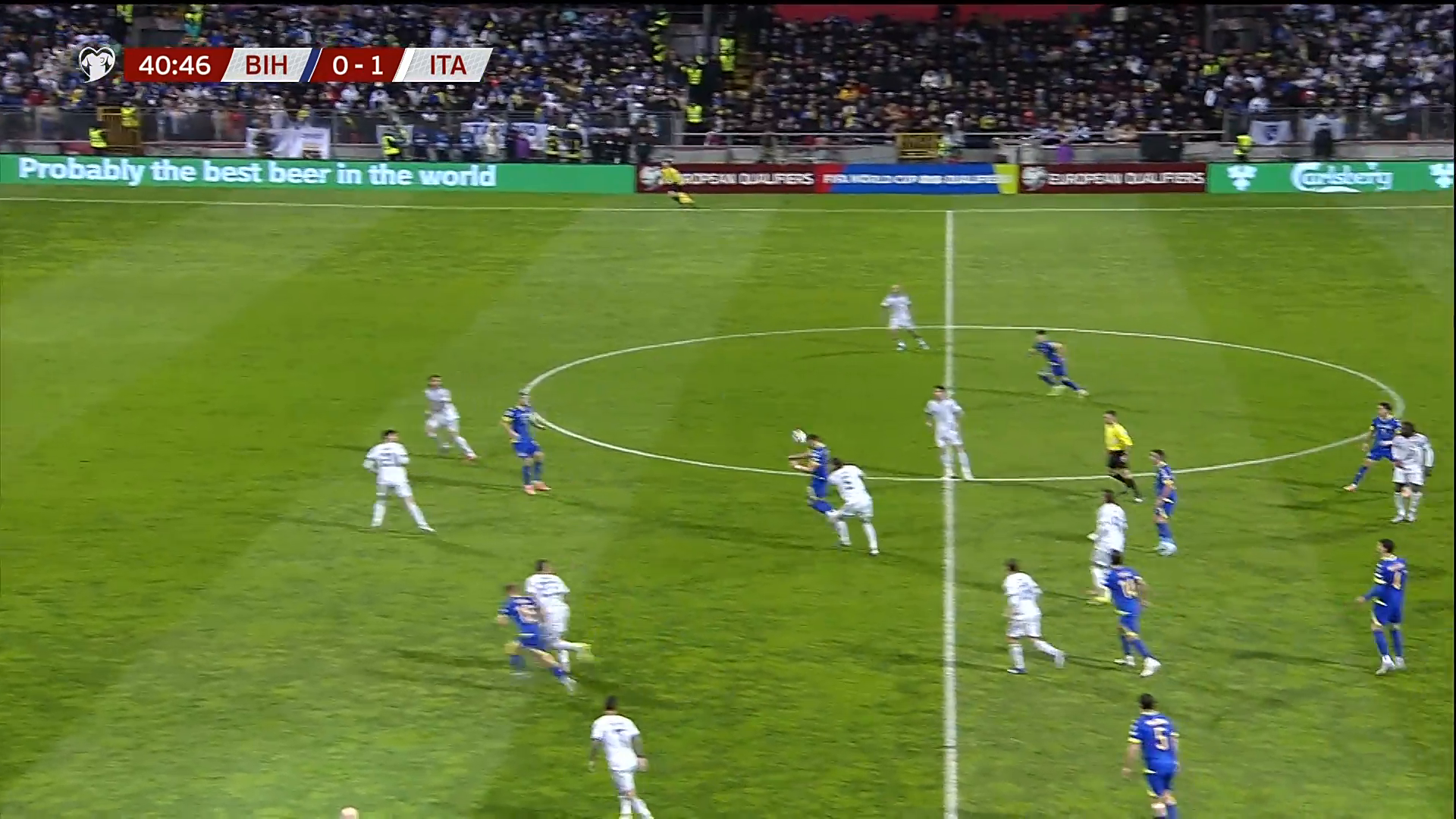
The above was from what can only be described as a golf chip of a goal kick from Donnarumma.
His under-hit saw an unchallenged Bosnian header, and seconds later, this was the scene:
One simple ball had broken Italy’s defence, Bastoni wipes out Demirović, and the referee has no choice but to send off the Inter Milan defender.
Memories of Sweden in 2018 and North Macedonia in 2022 flashed before every Italian’s eyes.
Italy Chances & Bosnia-Herzegovina Equaliser
The second half followed much of what you’d expect to happen in 11v10 situations.
Bosnia dominated possession (76% in the second half).
They continued to get the ball into the box as early as possible to cause chaos, using their man-mountain attackers and runners from midfield.
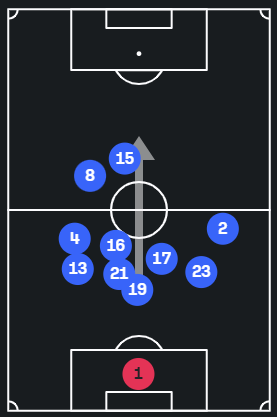
Italy made defensive changes and looked to sit in and hit their opposition on the break.
Above, we can see the average Italy positions post-substitutions.

![Bosnia And Herzegovina Vs Italy [1-1 (4-1)] – 2026 FIFA World Cup Qualification Playoff Final – Tactical Analysis](https://cdn.mymidnight.blog/77f959f119f4fb2321e9ce801e2f5163/2026/04/Tonal-1.png)


![FC Porto Vs Nottingham Forest [1–1] – UEFA Europa League 2025/2026: Porto Dominate, Forest Stay Alive – Tactical Analysis](https://cdn.mymidnight.blog/77f959f119f4fb2321e9ce801e2f5163/size/w600/2026/04/FC-Porto-VS-Nttm-Forest-20252026.png)
![Barcelona Vs Atlético Madrid [0–2] – Champions League 2025/2026: Atlético’s Defensive Control & Clinical Edge – Tactical Analysis](https://cdn.mymidnight.blog/77f959f119f4fb2321e9ce801e2f5163/size/w600/2026/04/Barcelona-vs-Atletico.png)
![PSG Vs Liverpool [2–0] – Champions League 2025/2026: Luis Enrique Rotations Dismantle Liverpool – Tactical Analysis](https://cdn.mymidnight.blog/77f959f119f4fb2321e9ce801e2f5163/size/w600/2026/04/PSG.-VS-LIVERPOOL.png)


