With 16 assists and eight goals in just 1,537 Premier League minutes so far this season, Bruno Fernandes is currently averaging a goal contribution nearly every single game for Manchester United.
At 31 years of age, the Portuguese captain is undergoing a tactical renaissance that has seen him move from chaotic ‘hero-ball’ to a refined, high-output ‘hybrid creator.’
Bruno Fernandes is currently the undisputed king of creativity in England.
His 16 assists place him at the top of the league charts, double Manchester City midfielder Rayan Cherki, who sits in second place with eight.
This gap highlights a player operating on a different plane of existence within new Manchester United manager Michael Carrick's fluid tactical system.
In this Bruno Fernandes scouting report, we will examine Fernandes's pivotal role in Michael Carrick tactics.
Bruno Fernandes Stats
Our 2025/2026 data for Bruno Fernandes includes a comprehensive heat map alongside percentile ranks based on the metrics.
The data portrays Bruno Fernandes as a statistical monolith within the current Premier League landscape.
When benchmarked against all other attacking midfielders and “eights” in the division, he currently posts perfect scores for assists, key passes, and recoveries in the final third.
While his passing accuracy of 82.7% is significantly higher than his historical average, it remains lower than that of metronomic midfielders such as Rodri.
However, in the context of a high-volume, high-risk creator, this represents an elite efficiency rating.
The data indicate that Bruno Fernandes has transitioned away from speculative, low-percentage ‘hail mary’ passes toward high-value ‘killer balls’ that directly create big chances.
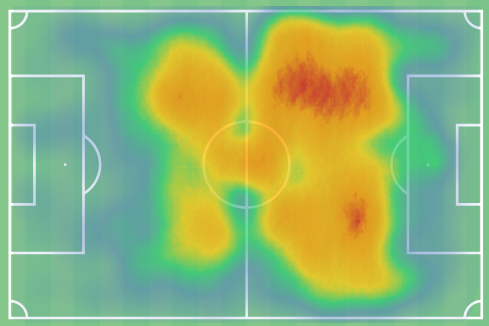
Bruno Fernandes Heat Map 2025/2026
Bruno Fernandes heat map highlights a player with a distinct right-sided inclination.
While nominally starting as a central #10, Bruno Fernandes has established the right half-space and the adjacent flank as his primary office under Michael Carrick.
From these zones, he is perfectly angled to either deliver signature inswinging crosses or slide through passes for overlapping runners.
Furthermore, the significant density of actions within his own half, specifically in the right-central channel, confirms his evolved role in the initial build-up phase.
This visual evidence supports the tactical observation that Bruno Fernandes frequently drops deep to aid progression, providing a reliable vertical outlet when opponents employ a high-intensity press against the Manchester United defensive line.
Bruno Fernandes Tactical Role & Movement Patterns As A Hybrid Creator
The most significant change in Bruno Fernandes style of play this season is his transition into a hybrid creator.
He no longer occupies a fixed position between the lines.
Instead, he operates across three distinct tactical heights to influence every stage of the game.
When Manchester United struggles to progress the ball from the back, Bruno Fernandes is often seen dropping deep alongside Kobbie Mainoo.
By doing so, he acts as a “plus-one” in the initial build-up phase.
Unlike in previous seasons, when he might look for a 50-yard pass immediately, he is now more patient.
He plays short to attract pressure before releasing the ball to a teammate who is free from markers.
In the middle third, Bruno Fernandes gravitates towards the right half-space.
This movement is crucial to Man United’s 2025/2026 tactics, creating a constant positional advantage.
By occupying this zone, he forces the opposition’s left-back into a dilemma.
They must choose to press the captain and leave space behind for Matheus Cunha, or stay deep and allow Bruno time to pick a pass.
Once the ball reaches the final third, the Portuguese midfielder moves into zone 14, the area just outside the penalty box.
Here, his vision is peerless in the current competition.
He leads the Premier League in successful passes into the penalty area with 75 this season, placing him well ahead of Martin Ødegaard.
His ability to find Benjamin Šeško with no-look or flicked passes has become the team’s primary route to goal.
One of the clearer characteristics of Bruno Fernandes’ game is a calculated willingness to take risks.
In the internal "Difficult Pass" metric, he ranks in the 99th percentile.
Bruno Fernandes leads the league in key passes with 35, significantly higher than Arsenal's Bukayo Sakaat 28.
This volume is sustained by a relentless intent to play vertical, line-breaking balls.
This ensures that Manchester United remain a constant threat during offensive transition phases.
Bruno Fernandes Through-Passing Analysis: The Anatomy Of A Killer Pass
Bruno Fernandes plays with a clear intent to execute dangerous through passes into space for runners who, if they receive the pass, will have a high-value goalscoring opportunity.
This is evidenced by his ranking in the 99th percentile for through balls and his league-high 75 successful passes into the penalty area.
Fernandes receives in a central position, scanning for runners behind the opposition’s high defensive line.
As the lane opens, Bruno Fernandes prepares to execute.
Note his body orientation, which keeps the defenders guessing until the moment of impact.
The result of the sequence is that the pass bypasses the entire defensive unit, delivering the ball into the ‘Golden Zone’ for a high-value shot.
In the sequence shown, we see the anatomy of his vision.
In the first instance, Bruno Fernandes occupies the central channel, scanning the defensive line to identify a gap.
As the move progresses, his body orientation remains open, allowing him to disguise the direction of the pass until the final millisecond.
The weight of the pass is the defining factor here.
As seen in the final frame of the sequence, the ball bypasses four Liverpool defenders, landing perfectly in the path of the attacker.
This ability to ‘coach’ the runner with the ball is what allows Manchester United to dismantle even the most disciplined defensive blocks.
Bruno Fernandes Defensive Transitions & Counterattacking Output
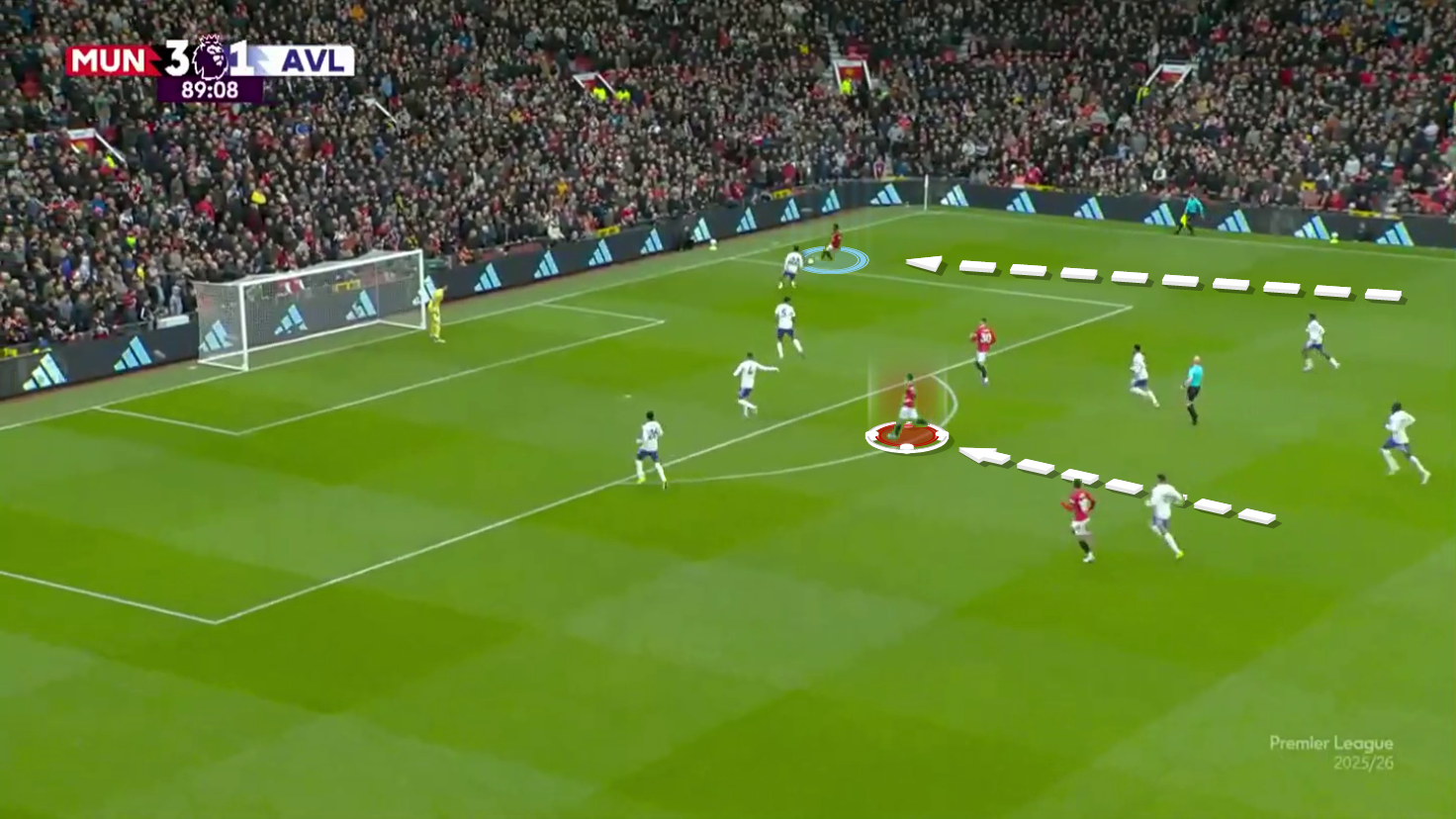
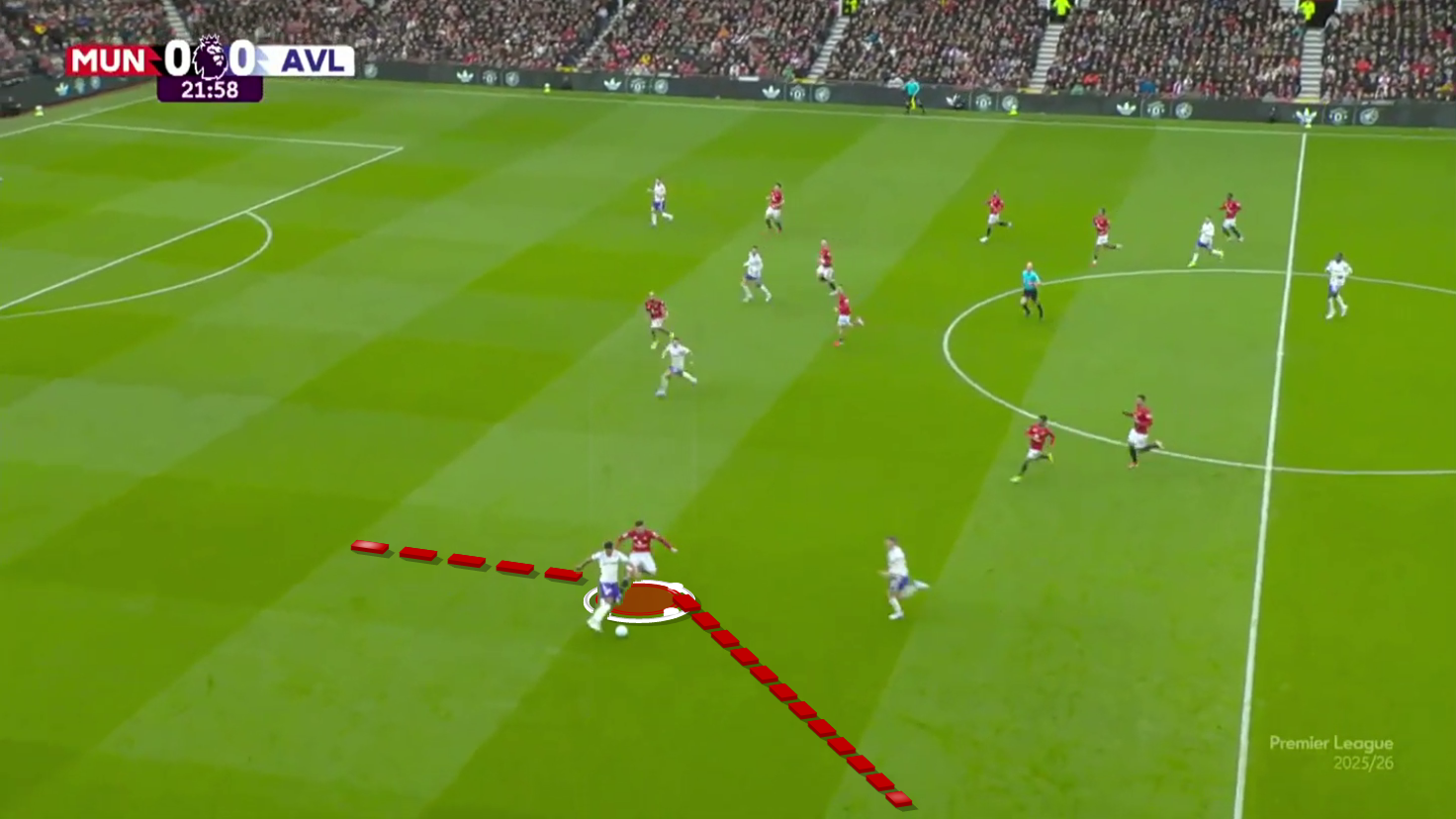
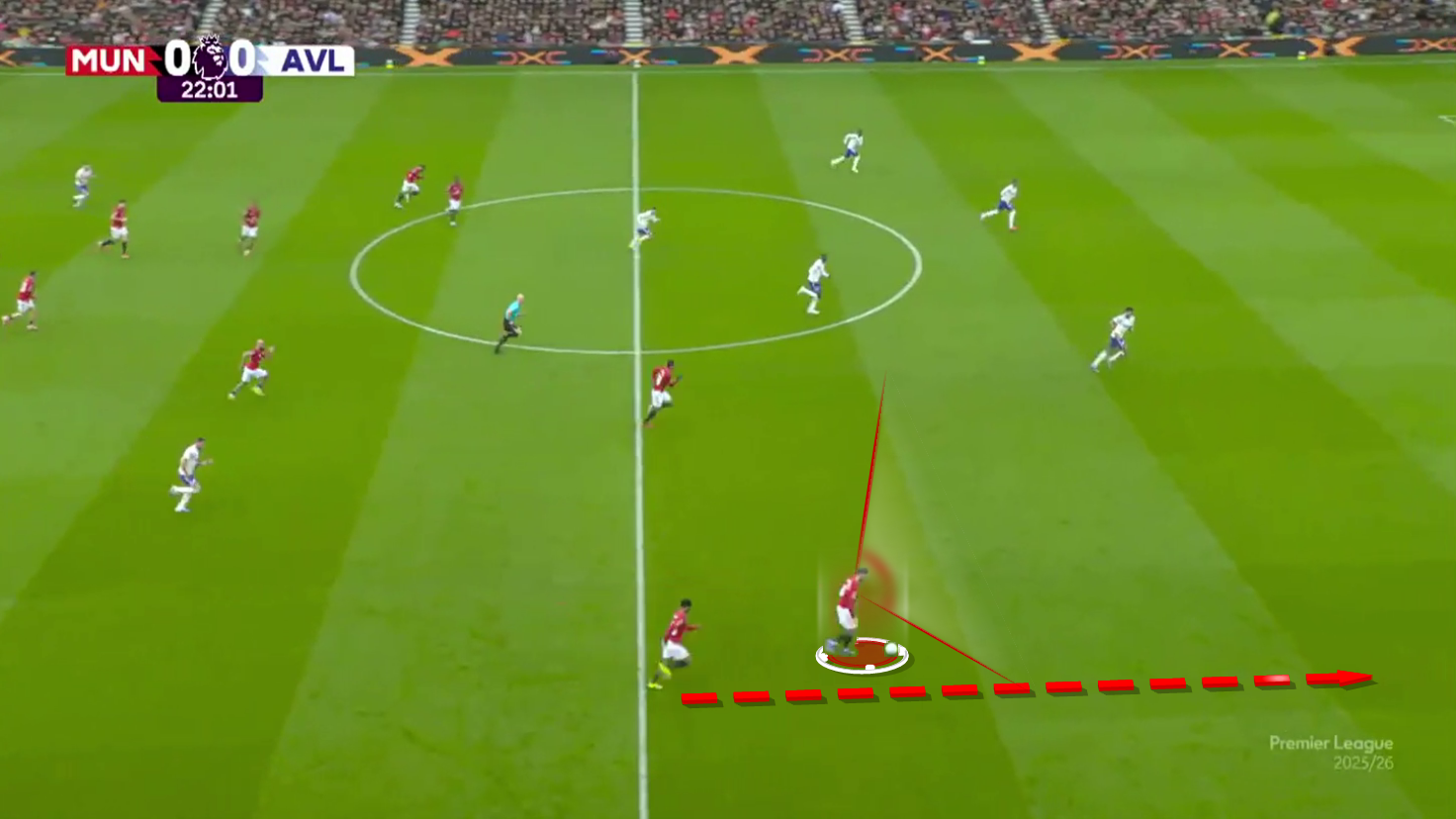
Beyond his settled possession play, Bruno Fernandes acts as the primary trigger for Manchester United’s counterpress.
His defensive work rate is not merely about ball recovery, but about creating immediate offensive transitions.
His “defensive playmaker” profile allows him to anticipate opposition errors and transform a regain into a scoring chance within seconds.
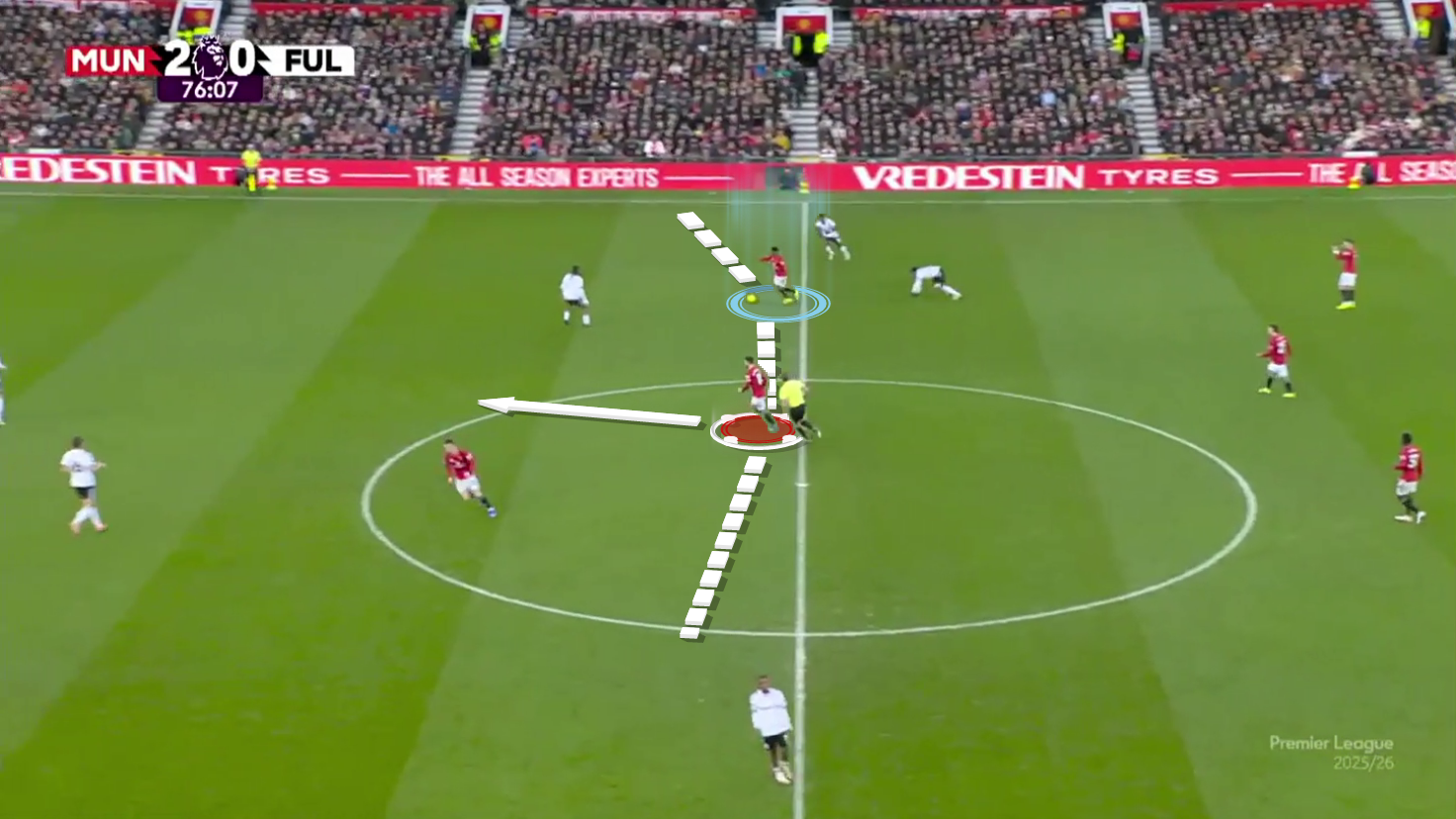
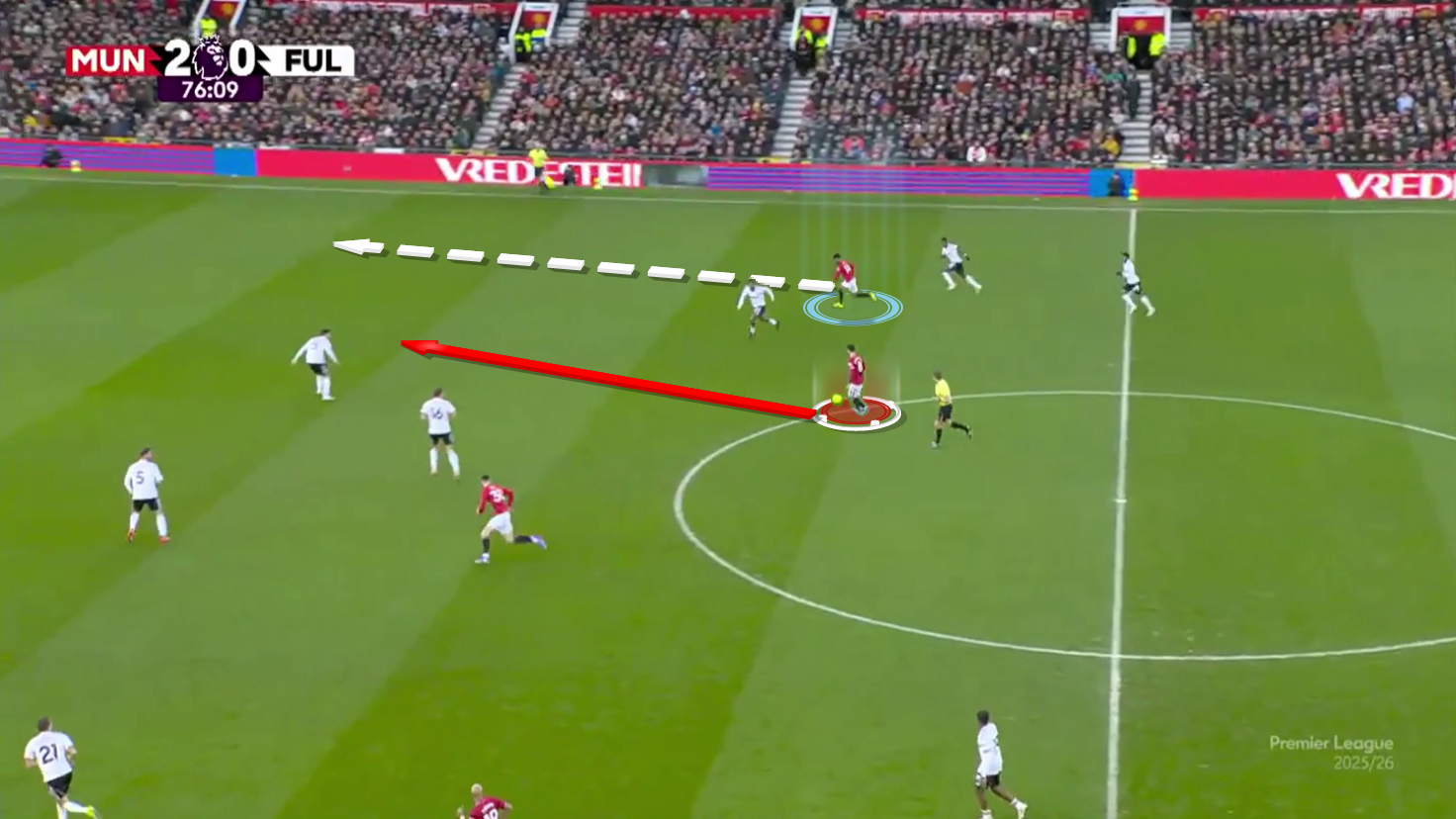
Following the regain, the captain immediately changes gear.
Rather than playing a safe lateral or backward pass, he exploits his natural tendency to drift into the right channel to attack vertical space.
This change of pace is fundamental to punishing the opposition’s disorganisation during the transition phase.
Upon winning possession, the player drives into the right channel to exploit the vacated space.




![FC Porto Vs Nottingham Forest [1–1] – UEFA Europa League 2025/2026: Porto Dominate, Forest Stay Alive – Tactical Analysis](https://cdn.mymidnight.blog/77f959f119f4fb2321e9ce801e2f5163/size/w600/2026/04/FC-Porto-VS-Nttm-Forest-20252026.png)
![Barcelona Vs Atlético Madrid [0–2] – Champions League 2025/2026: Atlético’s Defensive Control & Clinical Edge – Tactical Analysis](https://cdn.mymidnight.blog/77f959f119f4fb2321e9ce801e2f5163/size/w600/2026/04/Barcelona-vs-Atletico.png)
![PSG Vs Liverpool [2–0] – Champions League 2025/2026: Luis Enrique Rotations Dismantle Liverpool – Tactical Analysis](https://cdn.mymidnight.blog/77f959f119f4fb2321e9ce801e2f5163/size/w600/2026/04/PSG.-VS-LIVERPOOL.png)


