

Inter Milan Vs Como [2-0] Serie A 2026/2027: Cristian Chivu Pressing & Wide Overloads - Tactical Analysis
Inter Milan beat Como 2-0 with an impressive tactical display. This analysis examines Inter’s build-up against Como’s press, wide overloads, man-oriented pressing and how those principles created two quick goals.
Inter Milan extended their winning streak against Como, winning 2-0 with two quick goals from Francesco Pio Esposito and Marcus Thuram.
Although Como were coming off a historic 1-9 thrashing of RC Lens in the Champions League, the team led by Cesc Fàbregas failed to pose any real threat to the Italian champions.
This tactical analysis examines why that was the case, focusing on Inter's pressing and wide overloads.
Inter Milan Vs Como Lineups & Formations
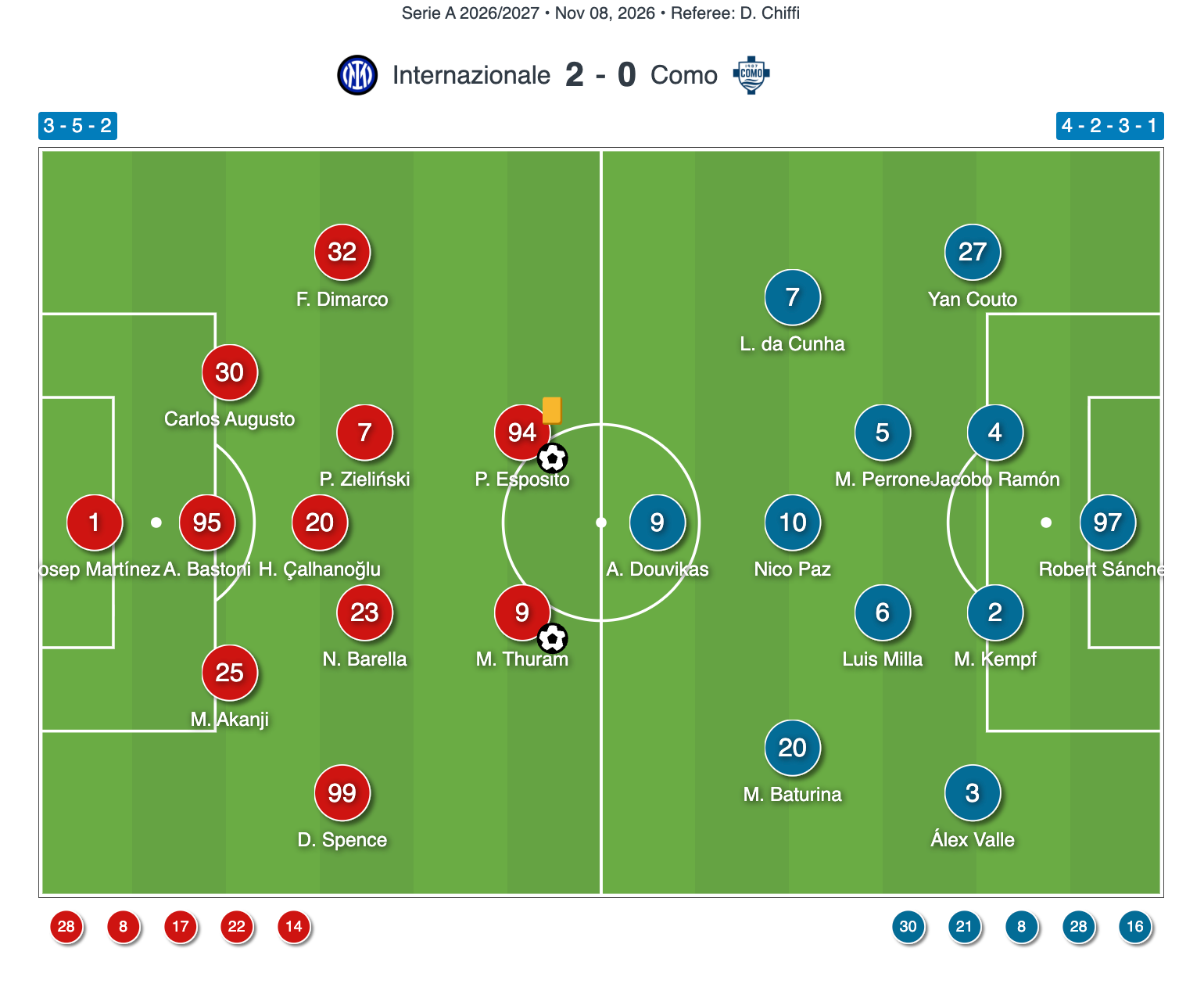
Inter Milan Lineup Vs Como
Inter started the game in their typical 3-5-2 formation, with no significant surprises in the lineup.
Josep Martínez started in goal.
The back three consisted of Manuel Akanji on the right, Alessandro Bastoni in the centre, and Carlos Augusto as the left wide centre-back.
Djed Spence played as the right wing-back, while Federico Dimarco occupied the left wing-back position.
Cristian Chivu relied on his usual midfield trio: Nicolò Barella on the right, Hakan Çalhanoğlu in the centre, and Piotr Zieliński on the left.
In the absence of Lautaro Martínez, Inter started with Marcus Thuram and Pio Esposito up front.
Como Lineup Vs Inter Milan
Cesc Fàbregas opted for a 4-2-3-1 formation.
Robert Sánchez started in goal, with Marc Kempf and Jacobo Ramón forming the centre-back duo.
Álex Valle played left-back, while Yan Couto took on the right-back role, completing the defence.
In midfield, Como began with Luis Milla and Máximo Perrone as the double pivot. Nico Paz was positioned in front of them as the attacking midfielder.
Martin Baturina played left wing, with Lucas Da Cunha occupying the right wing spot.
Anastasios Douvikas was the lone striker in the lineup.
Inter Milan Build-Up Play Vs Como Pressing
The game began with both teams sharing a similar philosophy.
Each manager aimed for their team to control possession, press the opposition aggressively, and limit their opponents' freedom on the ball.
In the early minutes, Inter executed this plan more effectively.
Taking advantage of being the home team, they looked more energetic and handled their opponent's high press better.
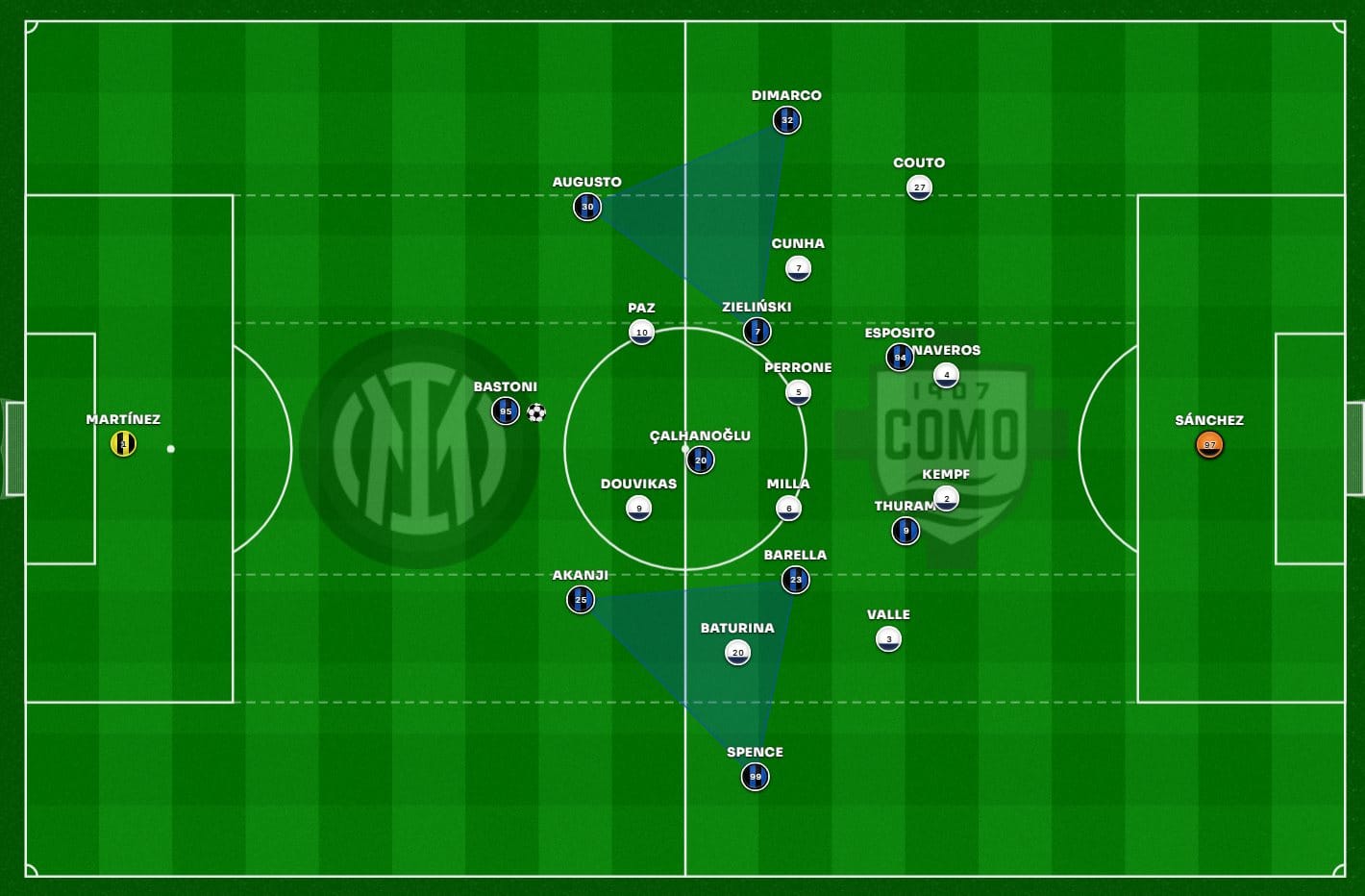
In possession, Inter were building play using their typical 3-5-2 formation.
This setup emphasises their trust in their centre-backs' ability to retain possession safely.
Alessandro Bastoni, the central centre-back, plays a crucial role as the most secure option on the ball.
His long passing accuracy is essential when Inter seek to exploit the spaces left by their opponents’ aggressive press.
The two wide centre-backs are generally free to advance further up the pitch along the flanks, especially when someone from the midfield trio drops back to assist.
The responsibility of maintaining width falls to the wing-backs, who are the only wide options in the team on paper.
With Çalhanoğlu serving as the more traditional pivot, he is often the first option on the ball after the centre-backs and frequently drops deeper to facilitate ball progression.
Meanwhile, Barella and Zieliński primarily occupy the half-spaces, supporting the wing-backs on the flanks while occasionally dropping back to help.
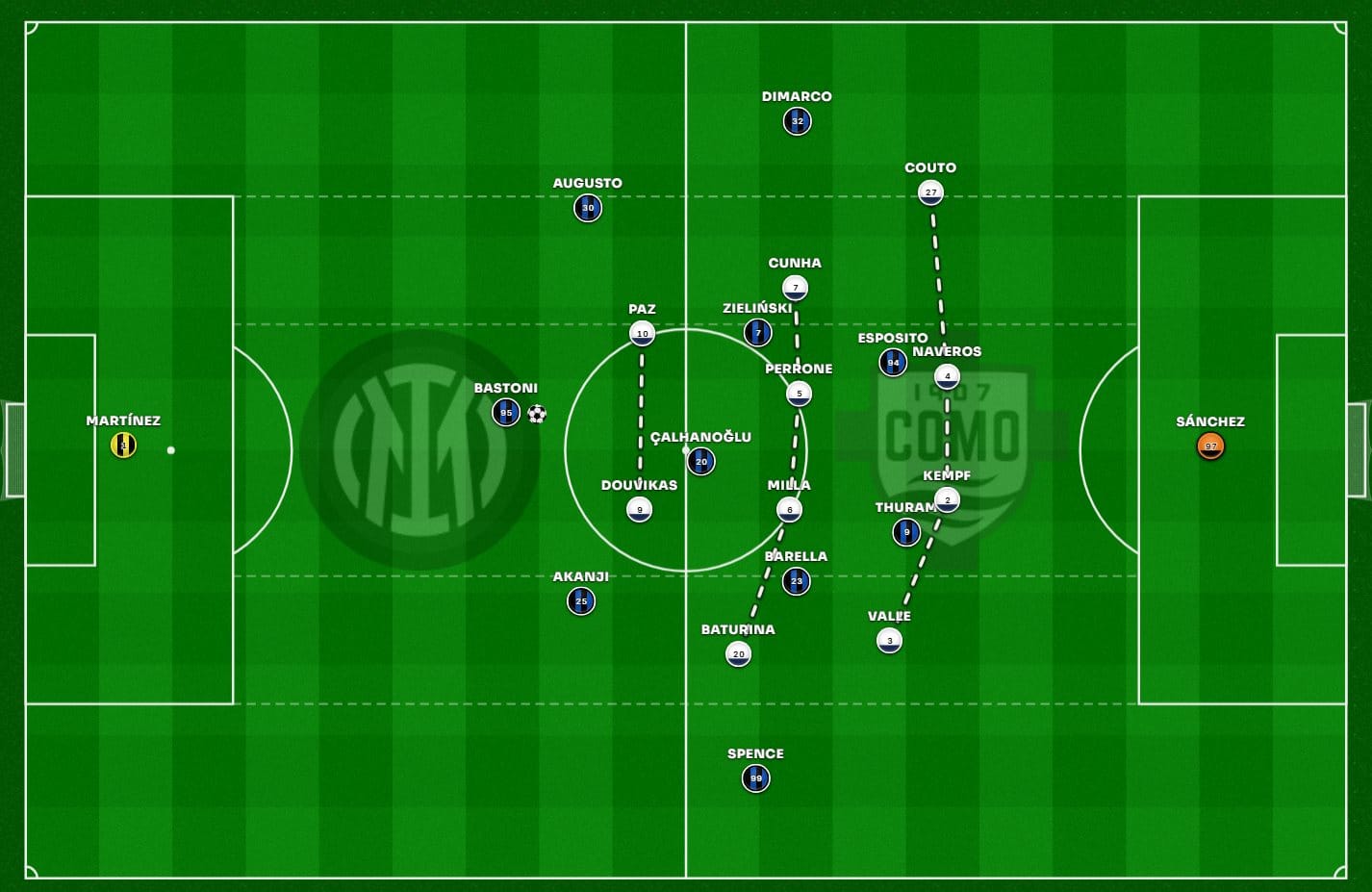
Como employed a 4-4-2 mid-block formation to prevent Inter from advancing the ball.
In this setup, Nico Paz moves forward alongside Anastasios Douvikas, giving Como two forwards in their initial pressing line.
The double pivot aggressively pressed the Inter players dropping back, while the two wingers and full-backs focused on protecting the wide areas.
Specifically, Da Cunha was primarily responsible for marking Zieliński.
At the same time, Baturina could either press the third centre-back or stay back to help guard the opponent's wing-back and drifting midfielder.
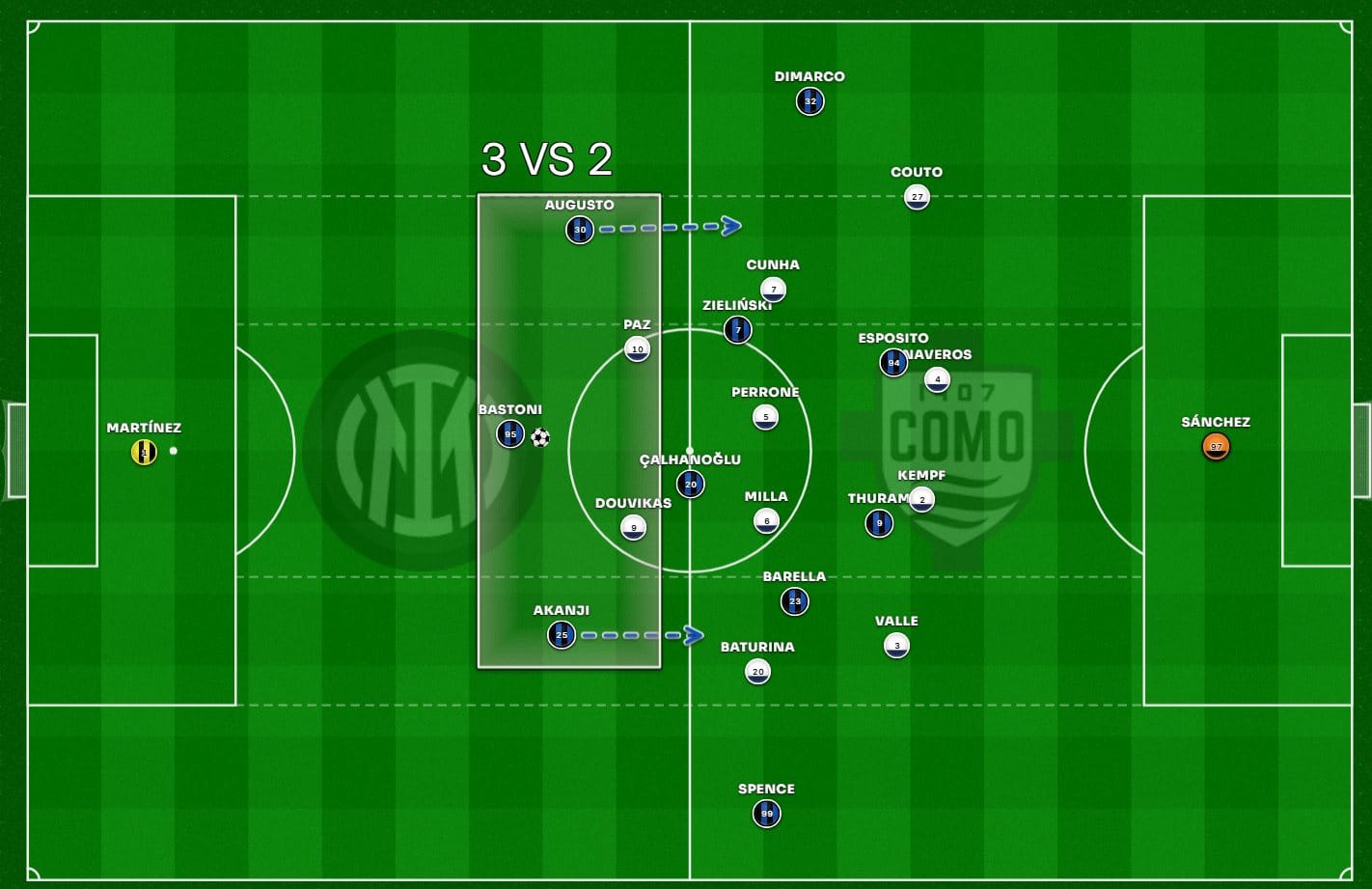
Inter maintained a numerical advantage at the back while progressing the ball, with three defenders against two forwards from Como pressing them.
Additionally, their confidence in the centre-backs' technical skills allowed one of the wide centre-backs to receive the ball freely and quickly advance up the pitch.
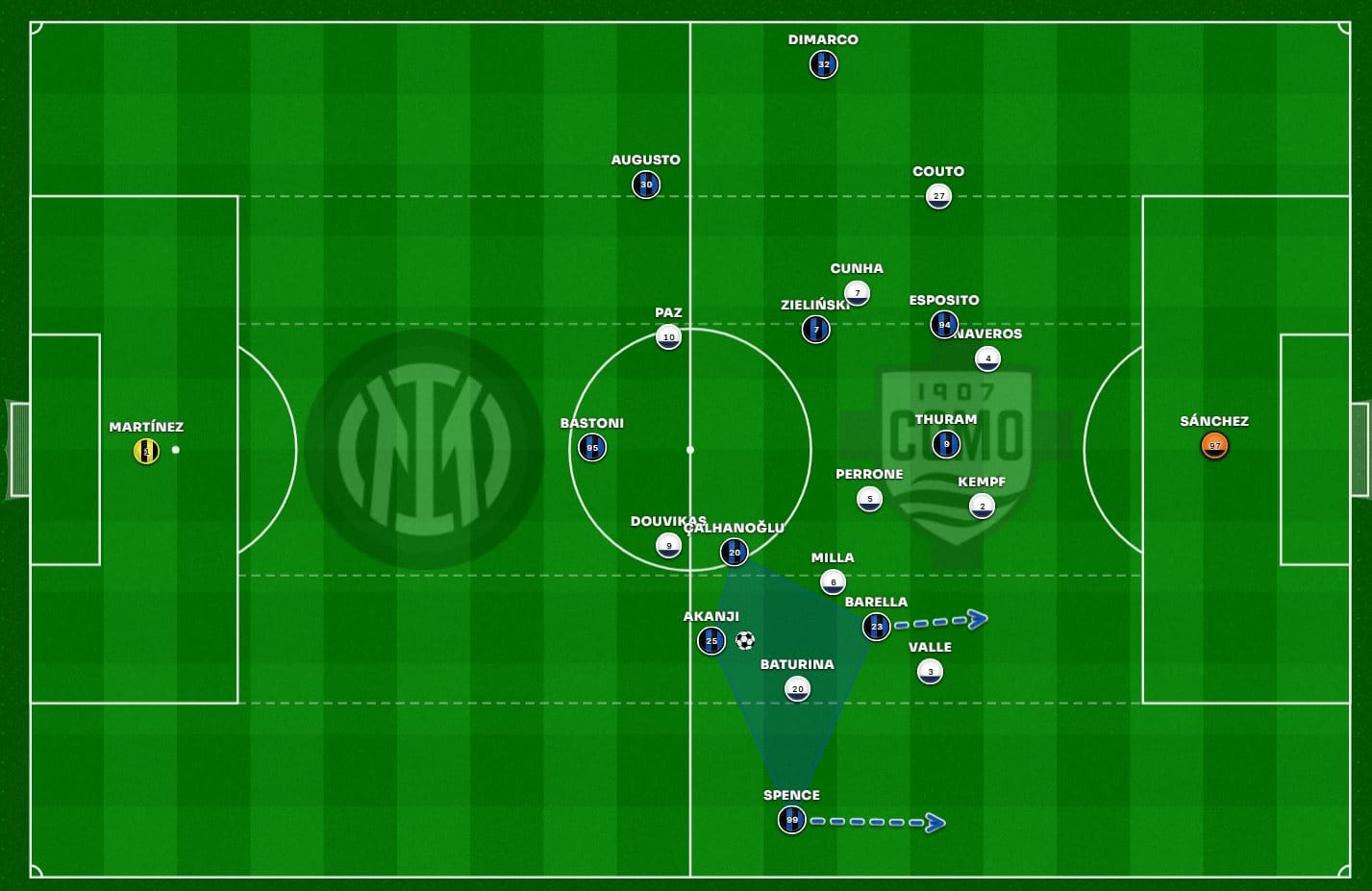
When that happened, Inter became very dangerous from the flanks, as they could easily create wide overloads or quick combinations between the wing-back and the drifting midfielder, both of whom had more space to attack.
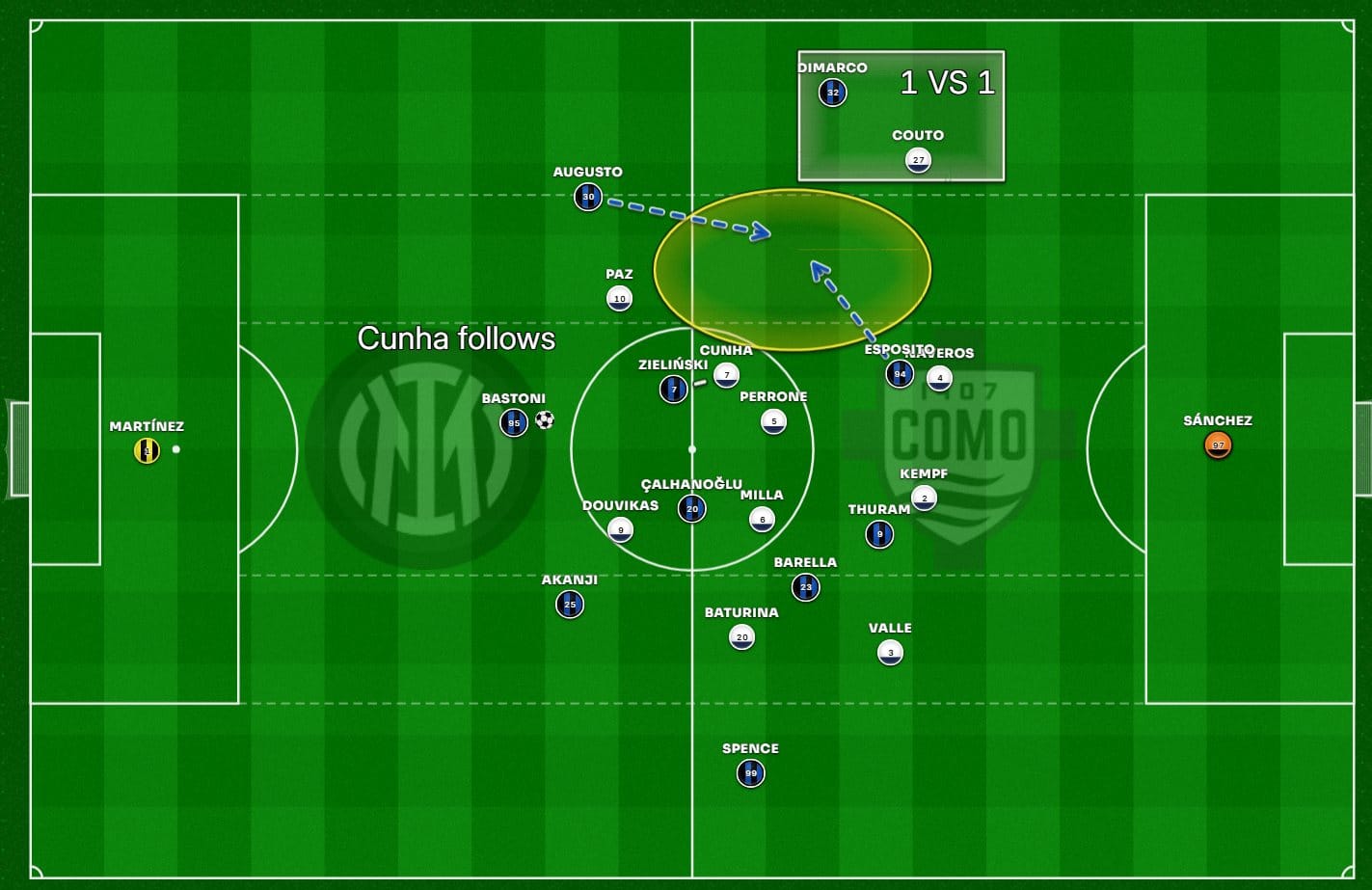
How Did Inter Milan Dominate The Wide Areas Vs Como?
To take advantage of Lucas Da Cunha's tight marking on Zieliński, Inter often dropped Zieliński closer to the centre.
This tactic forced Como to follow him, creating space in the left half-space.
This open area allowed Inter's left-sided centre-back to advance or gave the left-sided forward an opportunity to drop into that space.
This situation also left Couto isolated against Dimarco, who is a significant threat for Inter.
An alternative effective method for creating wide overloads was through Thuram's movements.
The French striker was keen to drift wider, especially when his team wanted to counterattack quickly.
These movements caused problems for the opponent’s defence, as the centre-back occasionally hesitated to follow him all the way, and the left-back lacked confidence in leaving him space to close down on Spence fully.
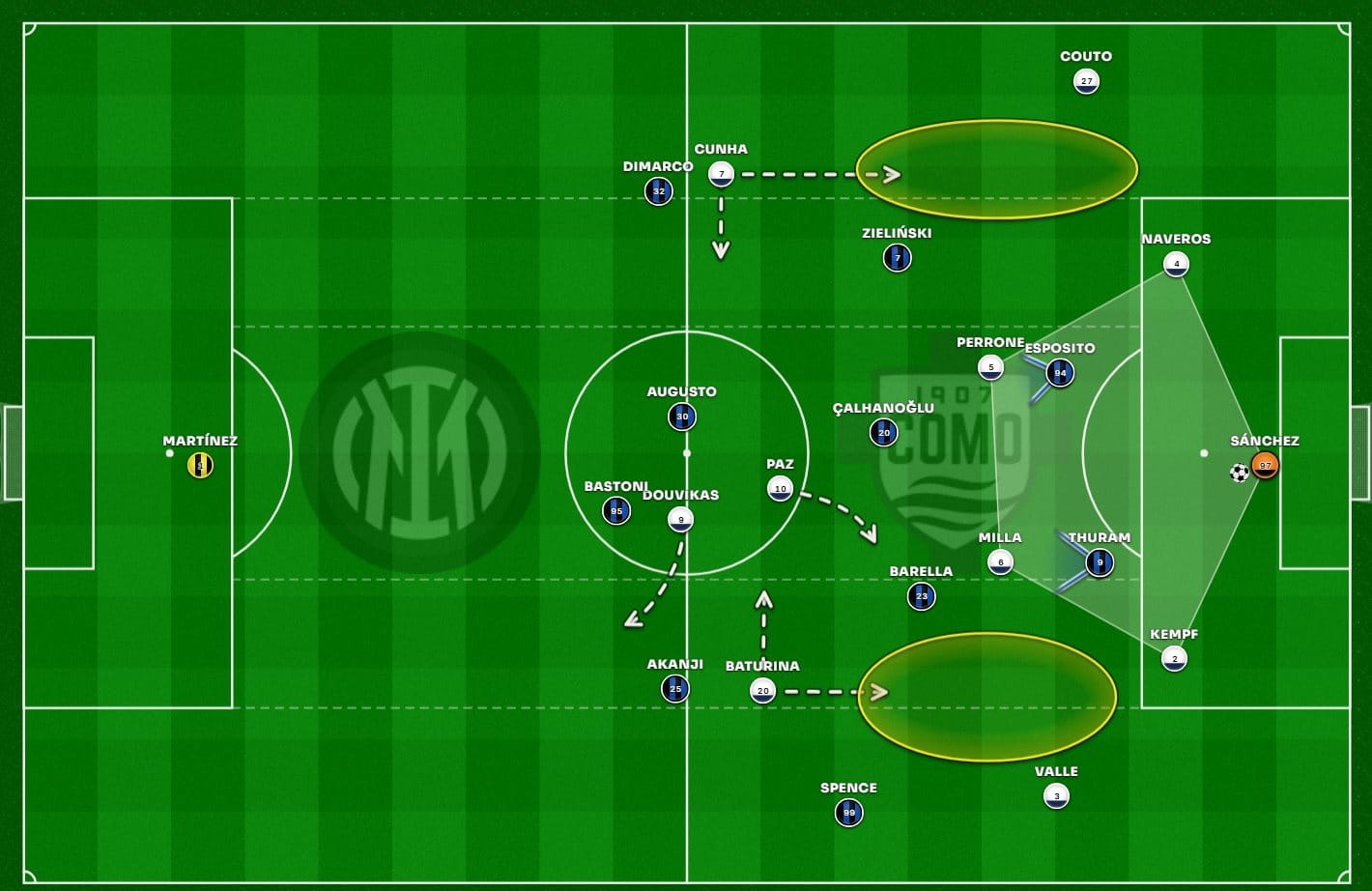
How Did Inter Milan Pressing Create Two Quick Goals?
When Como attempted to build from a goal kick, they utilised a standard 4-2-3-1 formation.
Their full-backs stayed on the touchline, while the two pivots stayed deep to create a box-like structure alongside the centre-backs and goalkeeper.
The pivots were also willing to drift wider to find space when the full-backs advanced.
Nico Paz positioned himself just in front of Douvikas, ready to drop deeper when necessary, while the wingers maintained their width and were prepared to come back when the ball was on their side.
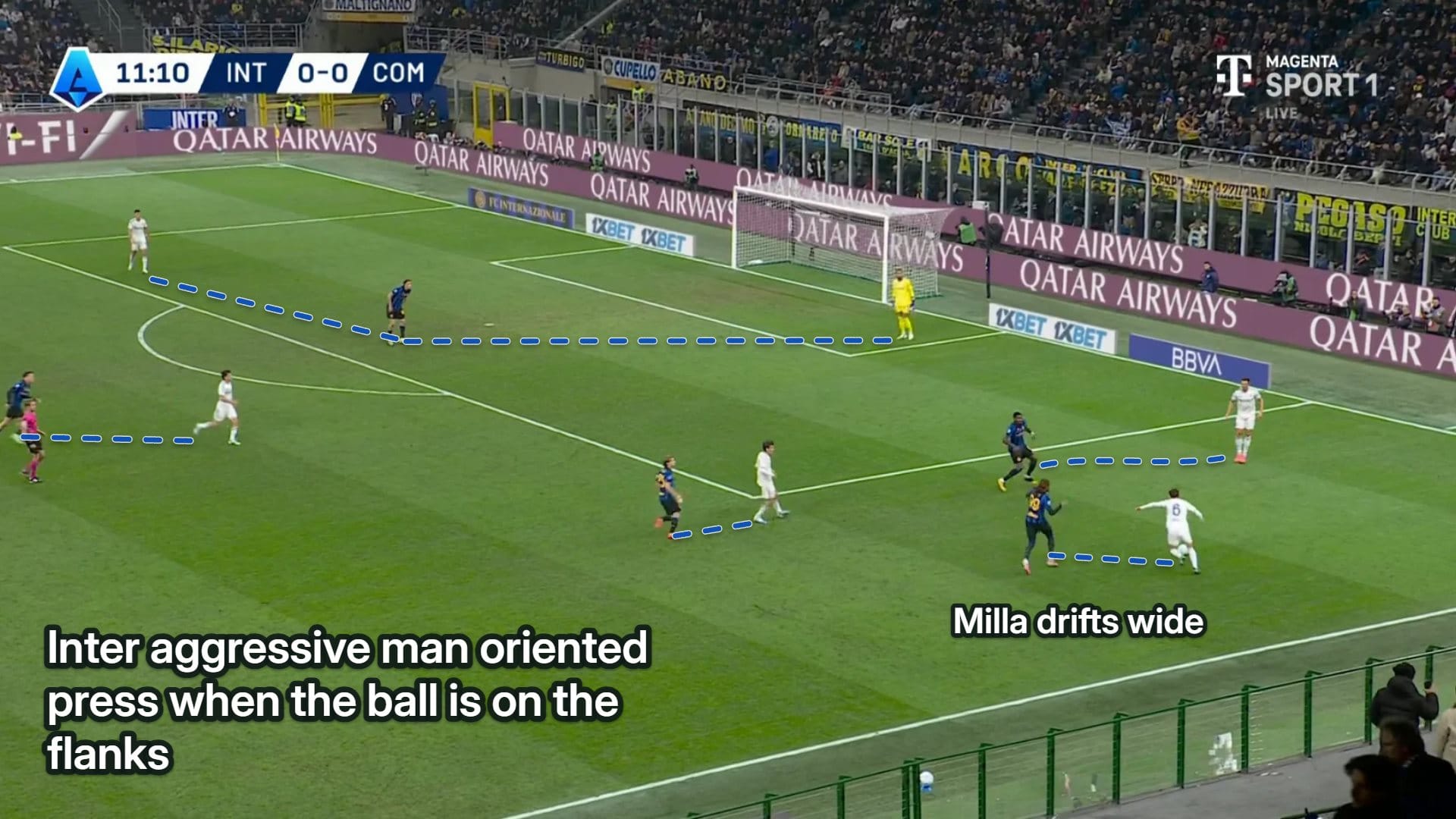
Inter used a man-oriented pressing style to disrupt their opponents' build-up play from the goal kick.
As shown in the previous tactical picture, the two strikers initially aimed to cut off supply to the pivots while also marking the centre-backs.
When Como passed the ball to the flanks, it served as a pressing trigger for Inter.
The team adopted a more aggressive approach, aiming to limit their options and drive them toward the sidelines.
Throughout the game, they seemed physically sharper than their rivals, which helped them secure a clean sheet with relative ease.
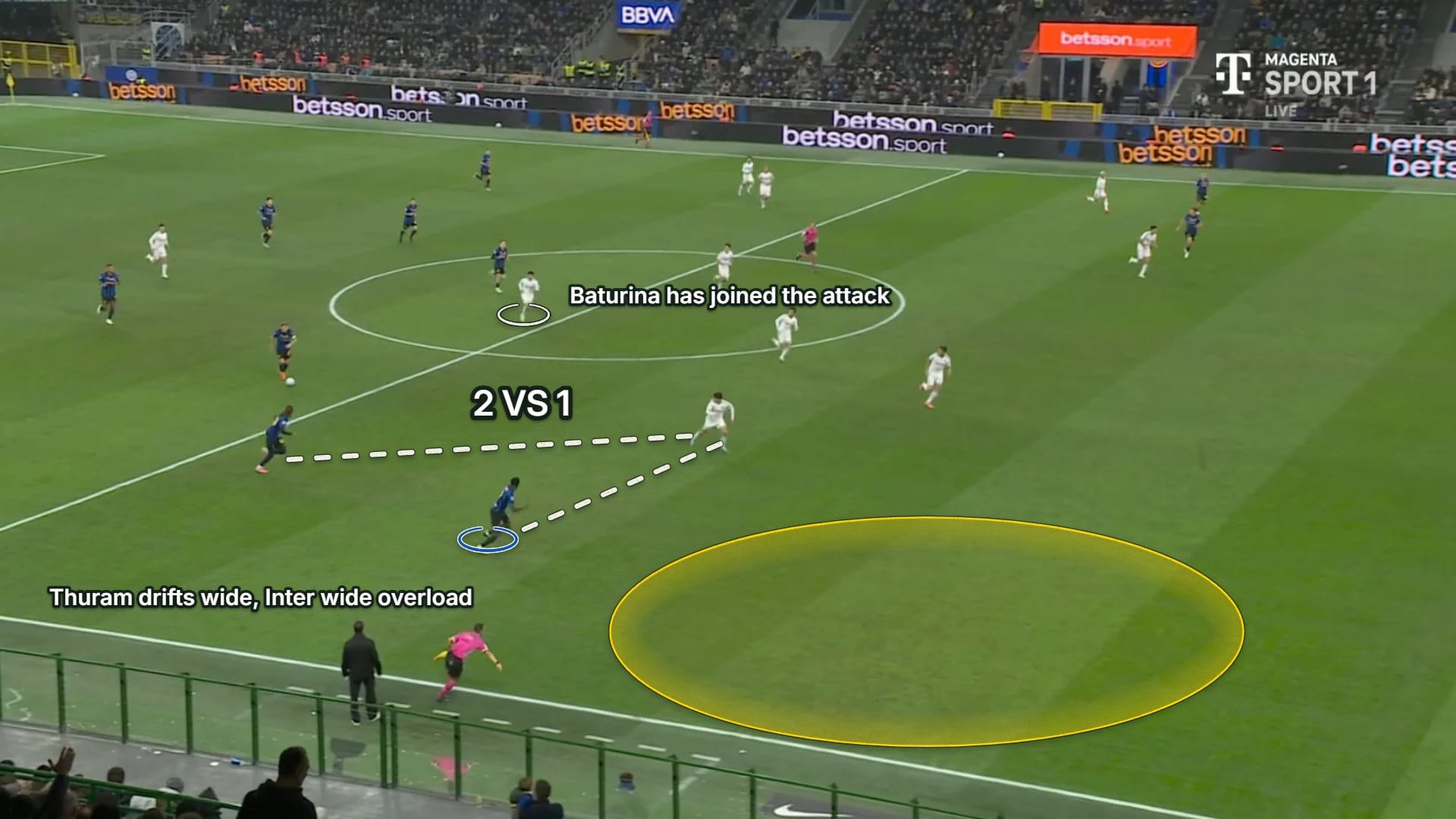
Inter's man-oriented pressing, combined with Thuram's movement, led to the opening goal for I Nerazzurri.
Although Como managed to break the aggressive press by playing a long ball to Paz, the attacking midfielder rushed his pass to the side, and Dimarco intercepted it.
As Baturina joined the attack through the centre to provide support, he created space behind him on the left flank for Thuram to drift into and for Spence to advance.
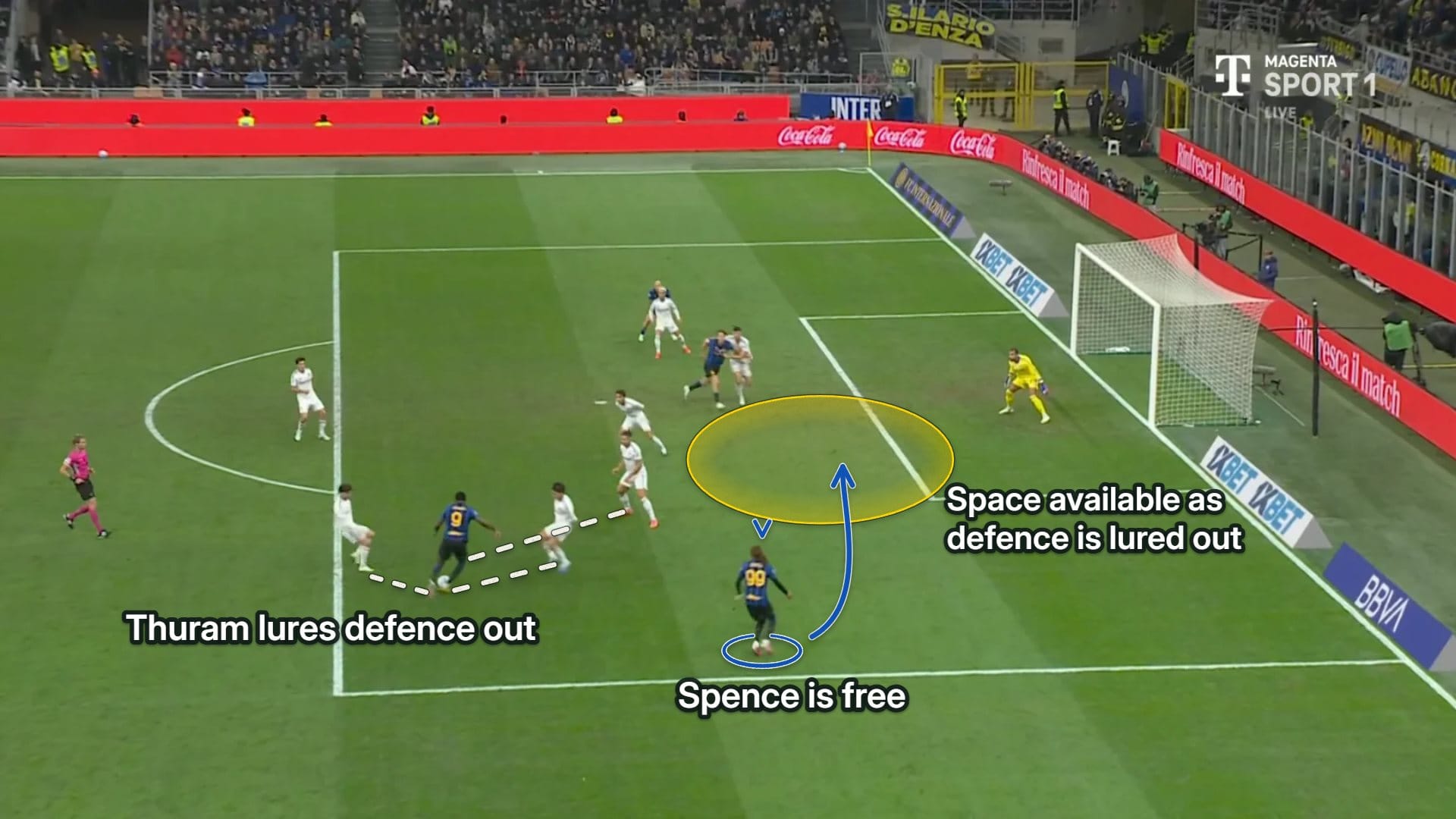
Inter launched a counterattack with a wide overload.
The French striker received the ball and drew the entire left side of the defence toward him.
Baturina couldn't cover quickly enough, allowing Spence to overlap behind Thuram and receive the ball unmarked.
Spence then found Esposito in the space created by the pulled-out defence, and the Italian scored the opening goal.
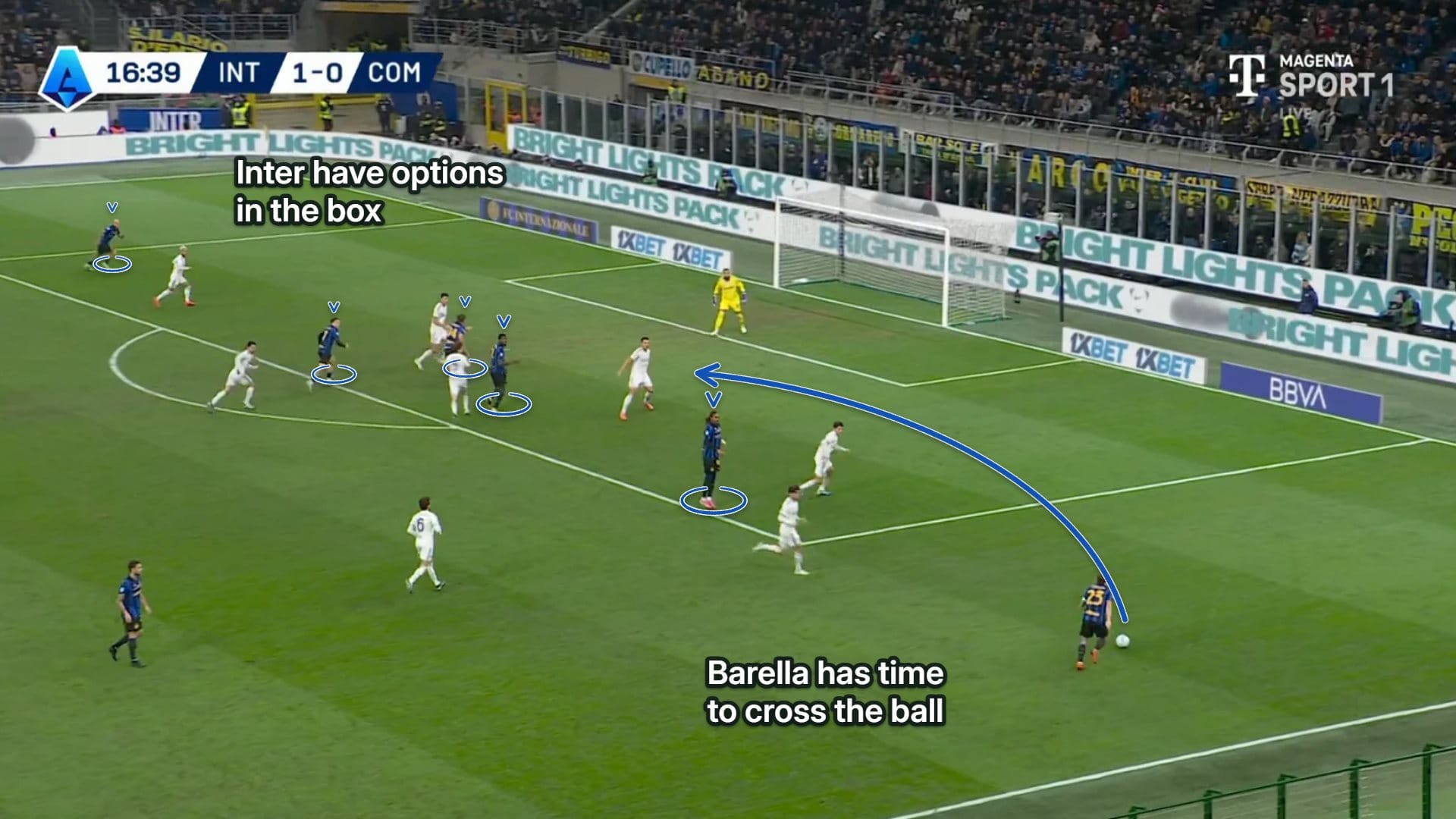
Scoring the opening goal was not enough to make I Nerazzurri passive; they maintained their tempo in pursuit of a second, primarily attacking down the flanks.
In addition to the wide overloads that created problems for the opposition, the home team frequently committed several players to the box whenever a cross was available.
Their two forwards are formidable in the air, and a midfielder, along with the opposite wing-back, joined the attack in the box whenever a cross was prepared.
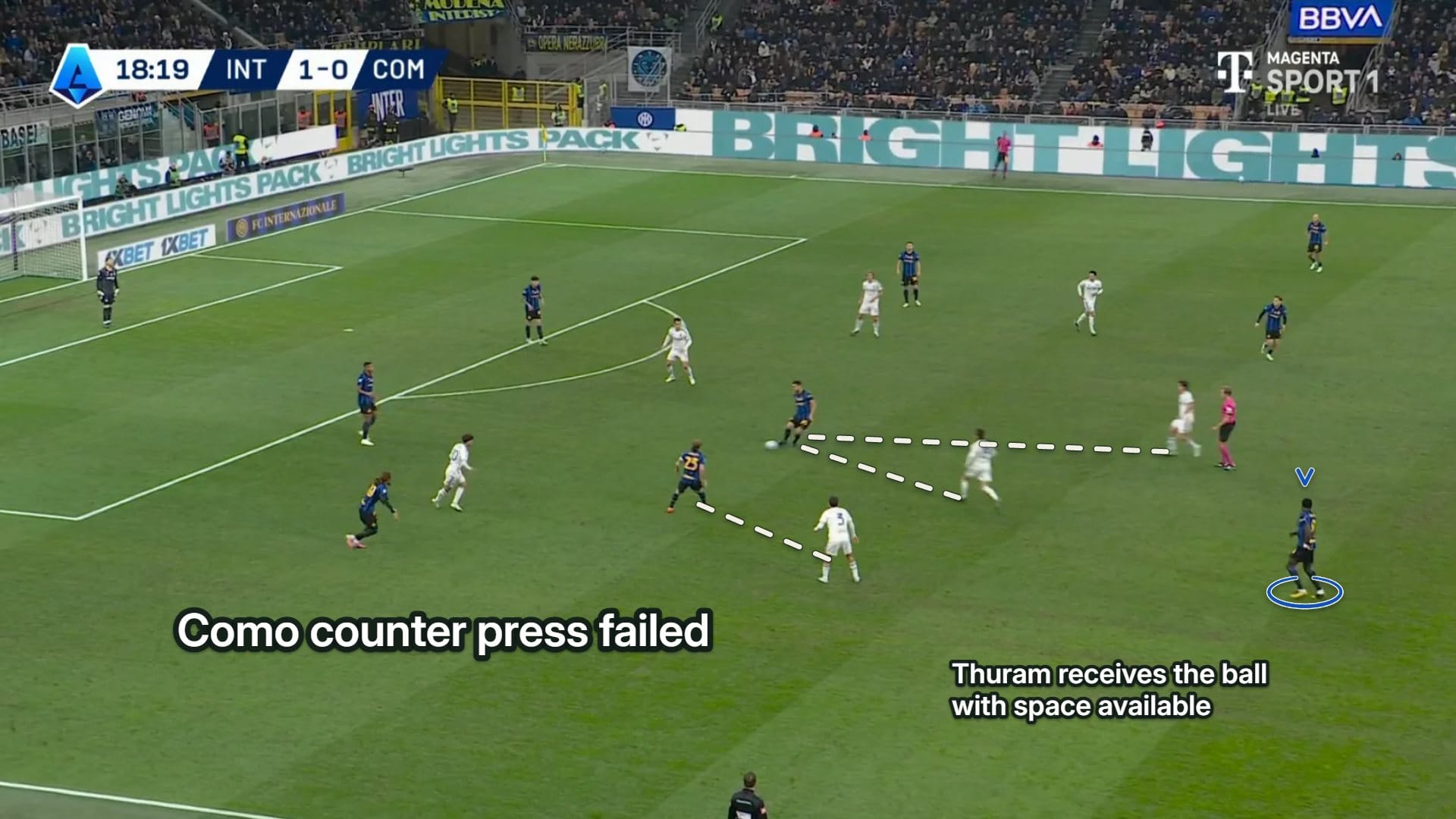
The second goal arrived just a few minutes later, following a steal in the centre of the pitch.
The visitors’ midfielders attempted to regain possession through a counterpress but were unsuccessful.
This allowed for a more open counterattack, with the ball reaching Dimarco.
After a cross into the box that was not cleared properly, Thuram capitalised on the rebound and scored.
After the second goal, Inter adopted a more passive approach, allowing Como more possession.
However, they still chose specific moments to press more aggressively.
The visitors began to play in line with their usual style, focusing on retaining possession.
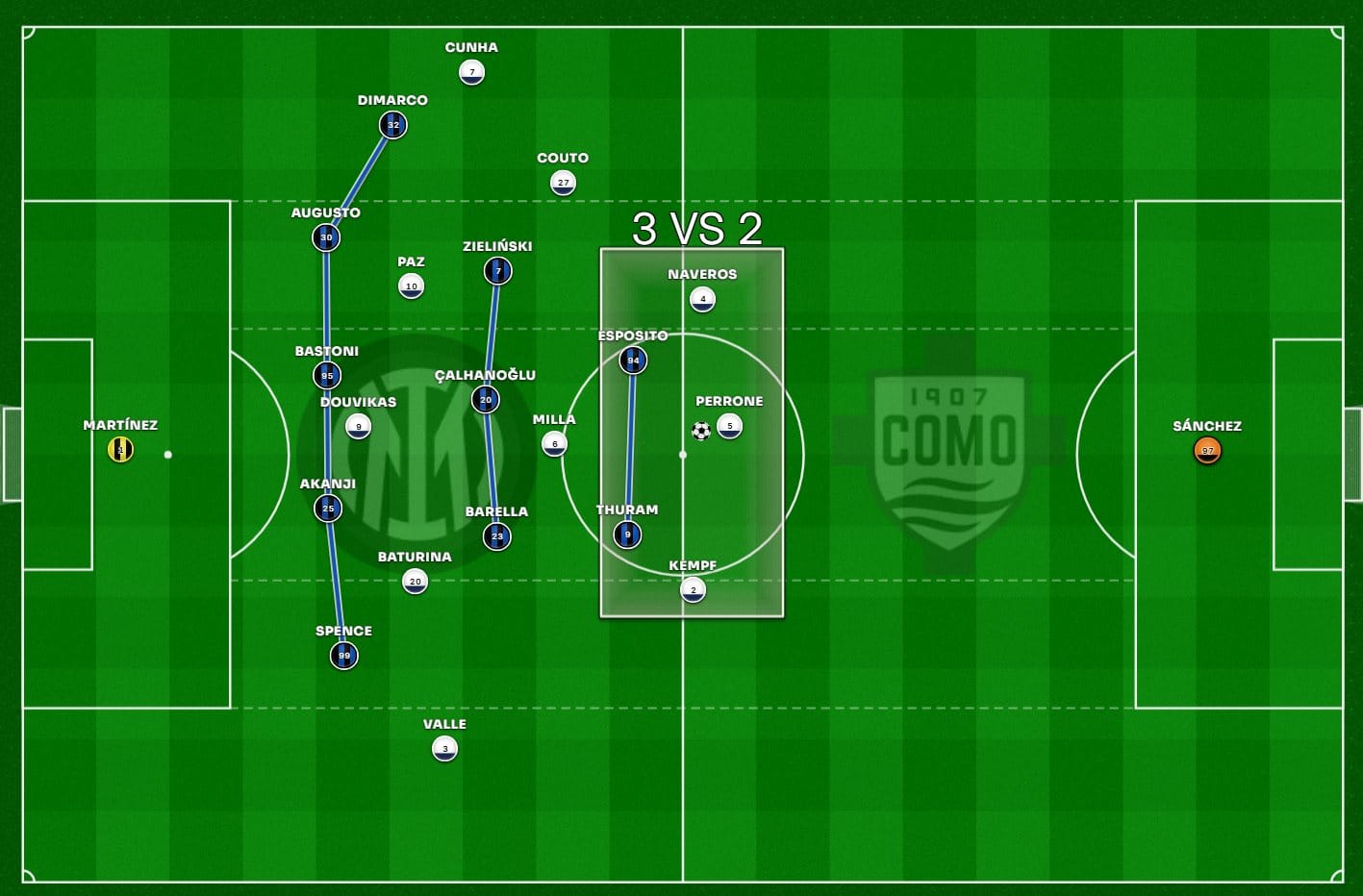
To achieve this, Como utilised a 3-1-6 formation when they had possession in attacking zones.
To create three players at the back, one of the pivots, primarily Perrone, would drop between the centre-backs.
With the home team defending in a 5-3-2 mid-block, this three-player backline ensured numerical superiority, similar to Inter's approach.
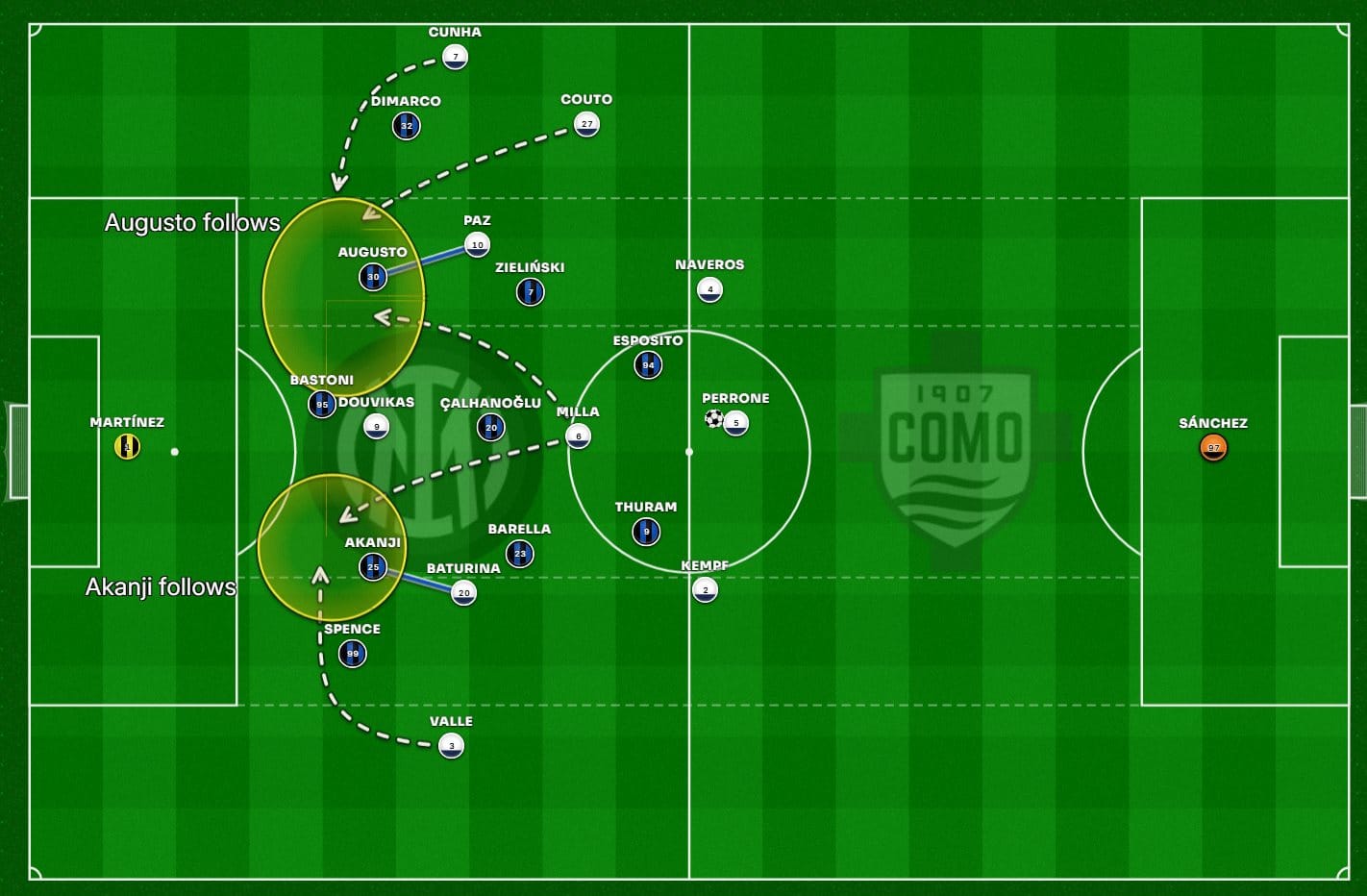
At times, they intended to position one or both of Paz and Baturina behind Inter's midfield trio.
This strategy aimed to draw their assigned wide centre-back away, creating space for another player to run into that area.
If the wide centre-backs choose not to follow the movement, the two players can position themselves between the midfield trio to receive the ball in the half-spaces.
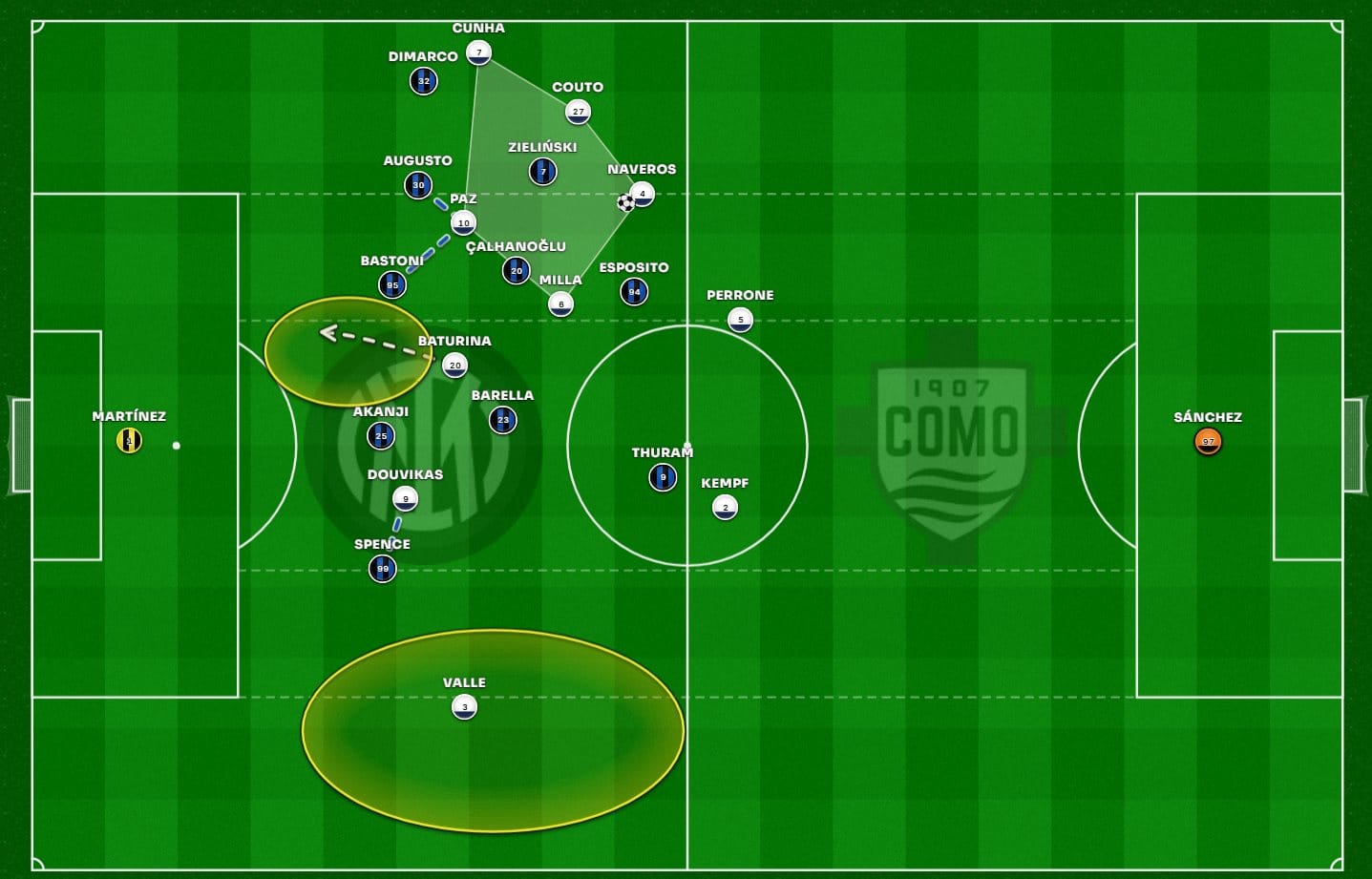
Como consistently attempted to attack down their right side, committing numerous players to that area to create an overload.
As with Inter, the initial 3v2 situation allowed Jacobo Ramón to receive the ball and advance further along the right flank.
Milla also moved closer to the right to help create this overload, while Paz dropped into the right half-space.
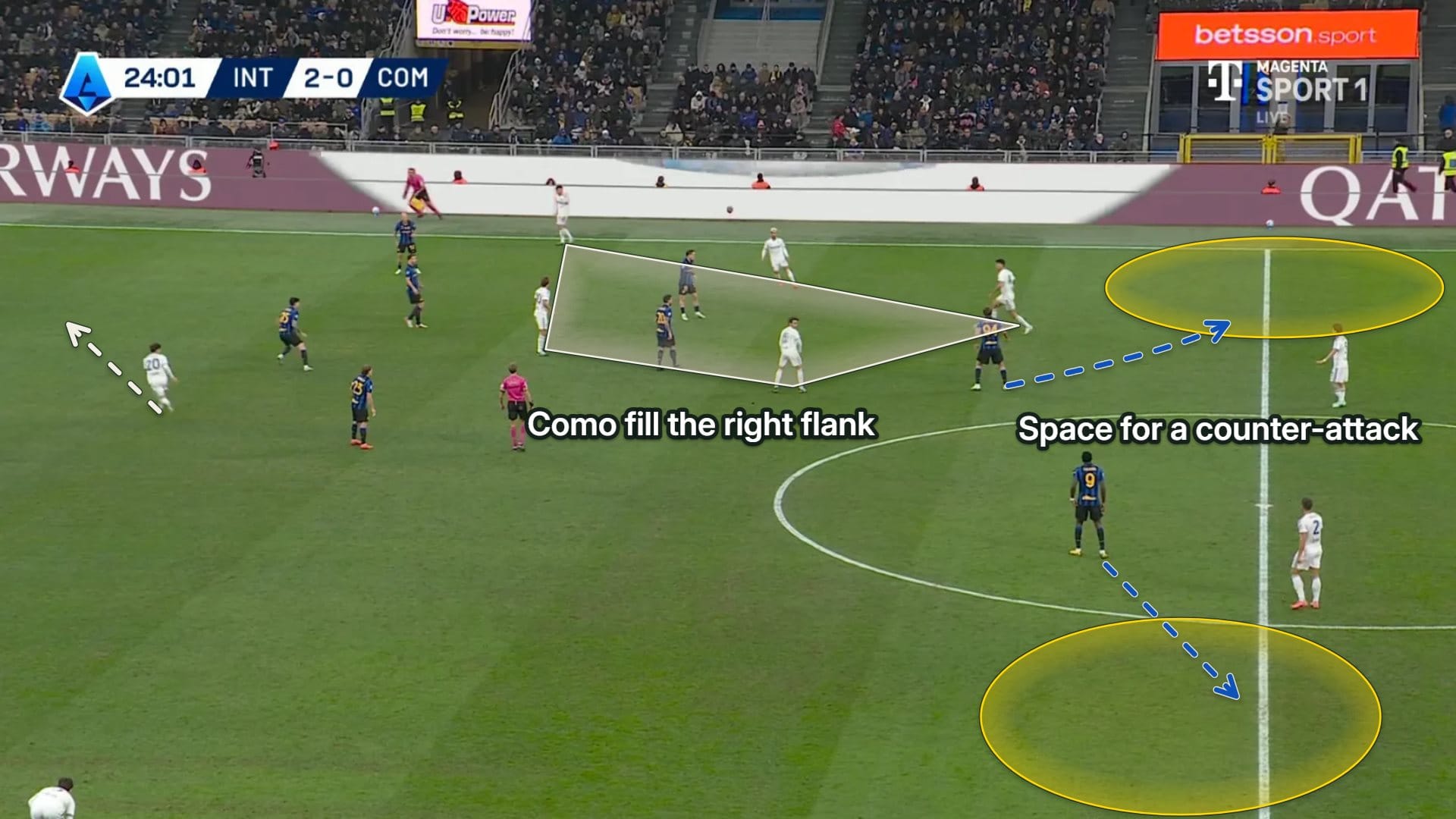
While the entire team focused on the right flank, the left full-back, or Baturina when the left back moved into midfield, maintained width on the opposite side and was able to receive the ball in space.
Additionally, as Bastoni was drawn out to assist with defence on the right, a midfielder, in this case Baturina, could exploit the space behind him to make an attacking run.
Although counterpressing can be more effective when attacking like this, losing the ball in this manner can be risky.
If the counterpress fails to regain possession, the two opposing strikers may find significant space to launch a counterattack.
Despite Como attempting to create more chances in the last minutes of the first half, they didn't manage to really threaten the home defence.
At the same time, Inter continued to break into counterattacks, primarily through the wide areas.
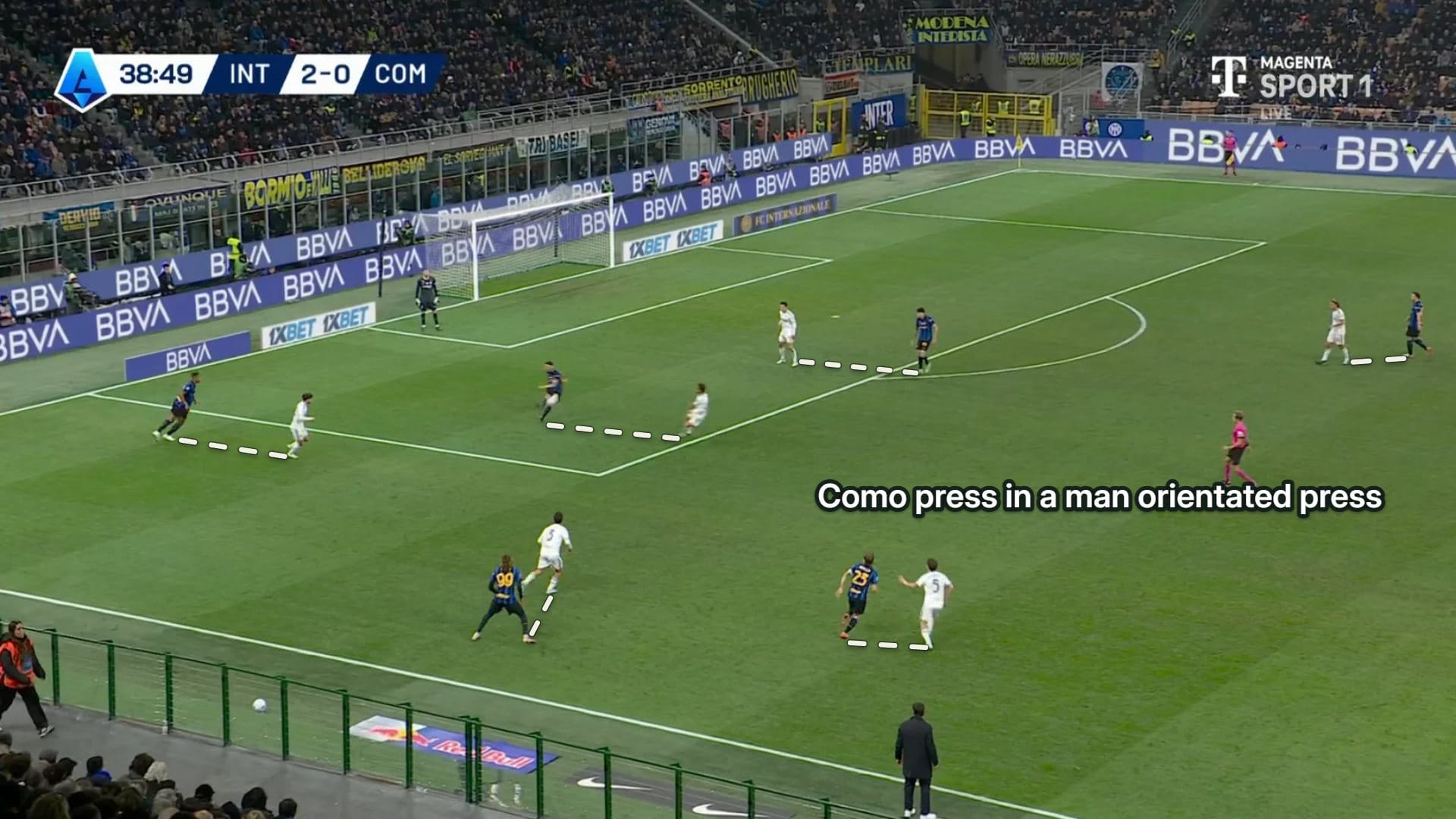
Como employed a man-oriented pressing strategy when their opponents built up play from deep, aiming to regain possession quickly.
As their pressing intensified, I Nerazzurri opted to send long balls to their strikers, confident in their ability to win aerial duels.