
John Stones Scout Report At Inter Milan 2026/2027: Cristian Chivu's New Libero? – Player Analysis
John Stones joins Inter Milan with the versatility to operate as a centre-back, libero or defensive midfielder. This tactical analysis assesses his defensive strengths, playmaking value, possible role under Cristian Chivu and competition with Manuel Akanji.

Why John Stones Chose Inter Milan
John Stones has joined Inter Milan on a free transfer, signing a two-year contract with the Italian club after having spent 10 seasons at Manchester City.
Both Arsenal and Chelsea were said to have been interested in signing the English defender/midfielder, too, but he preferred to opt for the Inter Milan project.
He did so mainly because he believed that his playing time and contribution to the Serie A side's project would be more certain.
In fact, Inter Milan were in urgent need of an experienced and talented defender who knows how to contribute well enough in the playmaking while being powerful enough in the defensive phase too.
Therefore, Stones represents a very fitting profile for the team’s plans.
That’s not really the case for Arsenal and Chelsea, who both have confirmed starting defenders within their teams with whom Stones would have had to battle in order to get consistent playing time.
At Inter Milan, the defensive options became limited, especially following the departure of both Francesco Acerbi and Matteo Darmian.
This paves the way for Stones to become reliable and central to Cristian Chivu’s defence, with only Alessandro Bastoni, Yann Bisseck, Manuel Akanji, and Benjamin Pavard (when converted as a right centre-back in a back-three defence) representing the choices available to Chivu at the back.
This means that Stones has a strong chance of starting games for Inter Milan when fit.
But the questions are: what would make Chivu opt for Stones in his lineup? What roles can Stones master? And is he better than Akanji?
That’s what we are going to discover in this John Stones scout report and player analysis.
John Stones Roles & Positions At Inter Milan
Stones was converted into a defensive midfielder during the 2022/2023 season and succeeded in attracting a lot of attention and receiving a lot of praise for his performances in that role.
His performances as a defensive midfielder made him even more valuable for Pep Guardiola’s system as he succeeded in being very useful in that position.
What made him very successful as a defensive midfielder was mainly his continuous remarkable defensive contribution, as it made him become like a third advanced centre-back, helping a lot with anticipation, marking, and interception of passes.
Moreover, being 1.88m tall also helped him have the advantage in that area.
In addition to those defensive roles, Stones' role in the build-up from the back and in playmaking was extremely useful to Manchester City.
He was capable of providing key long passes and creative through passes that often broke opposing lines of defence and created dangerous attacking situations for his team.
Stones confirmed that he has a remarkable vision and some outstanding key passing skills that allow him to perform in the best possible way when used as a defensive midfielder.
And that’s an aspect that makes him different to regular centre-backs.
In fact, even if Chivu does not plan to use him as a defensive midfielder, Stones’ passing qualities suggest that he can be better-suited to play as a central centre-back (libero) within Inter Milan’s back three.
Indeed, he was mostly used as a right centre-back during his career, but he was also used as a central centre-back at times and will not find issues when interpreting that role.
As per the positional map, Stones can play in any defensive position.
John Stones Positional Map
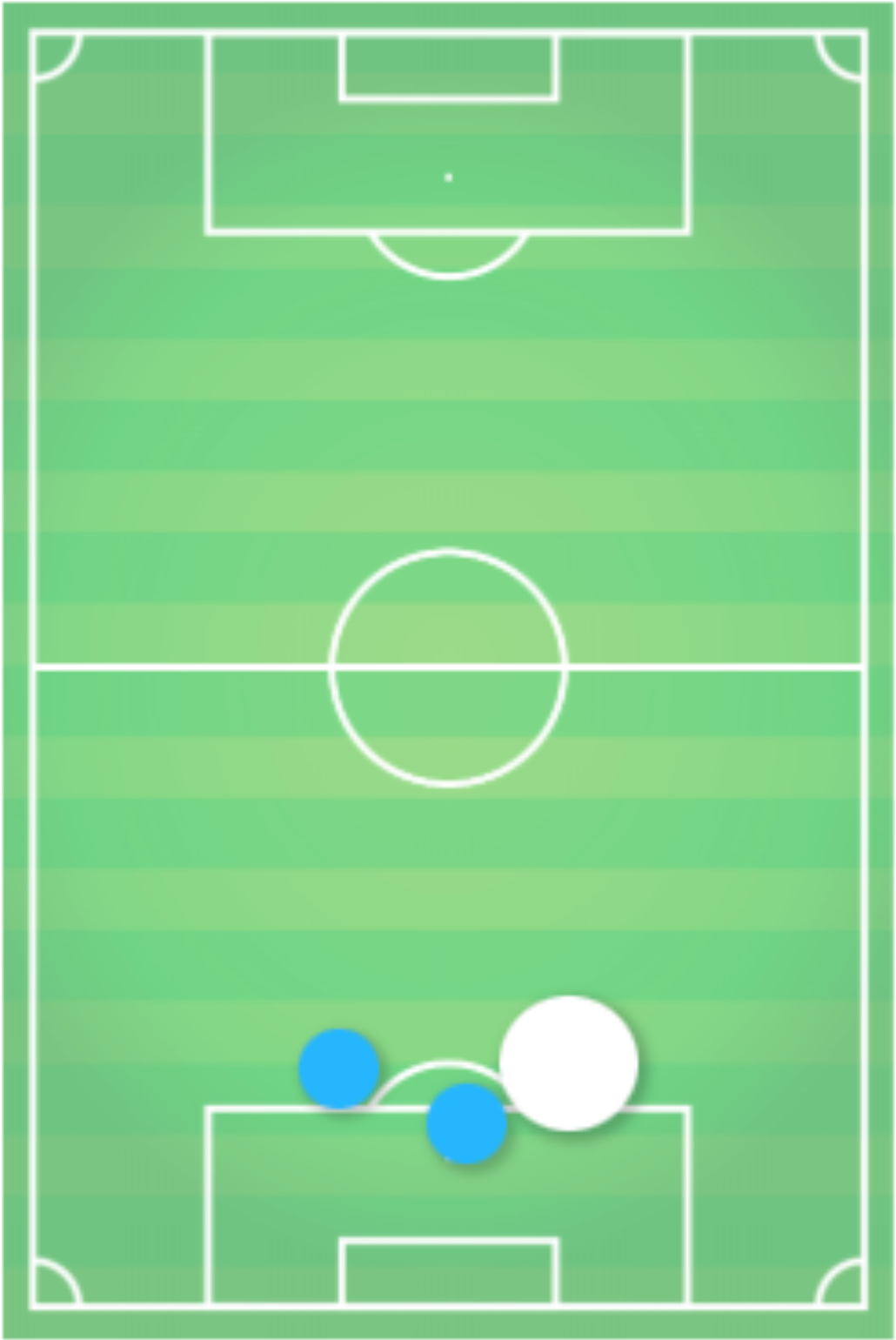
As mentioned above, Stones will represent a very useful defensive addition to Inter Milan, and he will most likely be used mainly as a libero, with Bastoni on his left and Bisseck on his right.
He will more likely be competing with Akanji for that position, as he was the one who played more than the others as a central centre-back.
In terms of roles, Stones will obviously need to adapt quickly to the Italian Serie A style of play after having spent all of his career in the Premier League.
This huge shift comes at a late but suitable time for Stones mainly because he has become mature and experienced enough to know how to cope with such changes.
Furthermore, knowing that the EPL requires a lot more physicality and athletic readiness than Serie A, Stones will more likely find no issues in keeping up with Serie A forwards.
The only two challenges that he will have to pay attention to and try to fix as soon as possible are: quickly adapting to the tactical complexities of Serie A and to the marking system that can become a bit complicated during set-pieces, as well as keeping an eye on injuries to ensure consistency and avoid getting sidelined frequently.
Injuries have represented a serious issue for Stones throughout his career, and avoiding them as best he can during his spell at Inter Milan would help him start the season well and remain consistent.
As for the tactical differences, it will be crucial for Stones to adapt to the different head coach instructions, especially in terms of collective defensive movements (like in offside traps, high-line/mid-line organisation).
Furthermore, building chemistry with the midfielder and attacking players will be necessary for Stones to keep his passes useful.
Training on specific key passes and attempting them in training with Inter Milan’s attacking players will make Stones’ passing ideas easier to understand and therefore help the attacking players to anticipate his key passing intentions and trajectories.
Furthermore, Stones’ role will also be to find passing solutions in the build-up phase, as he will be more likely the first to receive the ball, knowing that Chivu’s system relies a lot on building up from the back using short passes when possible, and Inter Milan were usually good at doing so even when put under pressure.
Another important role that Stones will be asked to contribute to at Inter Milan will be ensuring his presence in set-pieces to benefit from his aerial abilities and try to score headers as he has done on numerous occasions throughout his career.
John Stones Defensive Traits
Stones averages 4.1 interceptions per match, wins 67.7% of aerial duels and wins 66.8% of his defensive duels.
These numbers are excellent for the Premier League and very promising for succeeding in Serie A too.
Stones uses his physical strength very well to battle against powerful strikers, while also relying on anticipation when needed.
Having the needed defensive vision and knowing how to position himself when marking strikers is also something that makes him extremely useful in the defensive phase.
Keeping a short distance between him and strikers also allows him to intercept potential passes towards these strikers.
The following example highlights his tendency to remain close to strikers (like Erling Haaland in this case) while keeping an eye on the ball and knowing when exactly to time his interceptions and anticipation of passes.