Marc Bernal Scout Report At Barcelona 2025/2026: Barça’s Next Positional Pivot – Player Analysis

In a system historically based on control, tempo, and numerical superiority in midfield, the true holding midfielder doesn’t emerge easily; rather, he is gradually “made” within the tactical context.
Marc Bernal is one of the most prominent rising stars in La Liga, reflecting this transformation at FC Barcelona.
Despite his young age and relatively limited experience, Bernal has established himself as a reliable option over 27 matches across various competitions, alternating between starting and substitute roles while maintaining consistent performance and identity.
What distinguishes Marc Bernal style of play is not just his tactical commitment but his ability to understand the demands of his position within a team that relies on meticulous positioning and decision-making.
This type of player is often unobtrusive at first glance, but crucial to the overall picture of the match.
This Marc Bernal scout report and player analysis analyses Marc Bernal's roles from a comprehensive tactical perspective, starting with his role within Hansi Flick tactics, his behaviour in building and positioning, his offensive contributions, his defensive roles, and finally, the development points that may shape his development path in the coming years.
Marc Bernal Tactical Role
Marc Bernal embodies the modern defensive midfielder in FC Barcelona’s 4-3-3 system.
His role within Hansi Flick tactics extends beyond simply positioning himself in front of the defence; he is the primary pivot, orchestrating play and controlling the match’s tempo.
In most of his matches, he plays as a single pivot, providing the team with stability in build-up play.
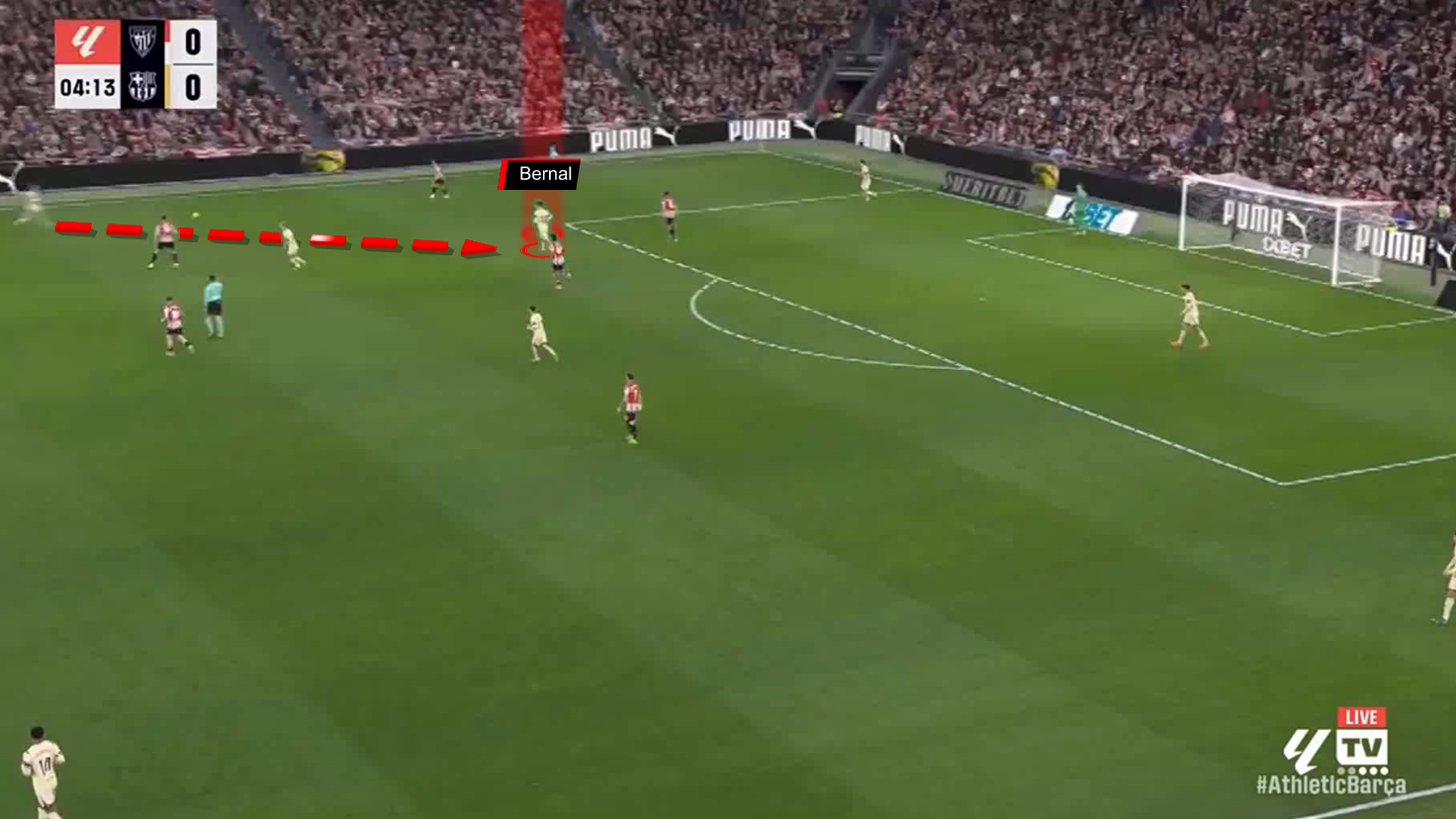
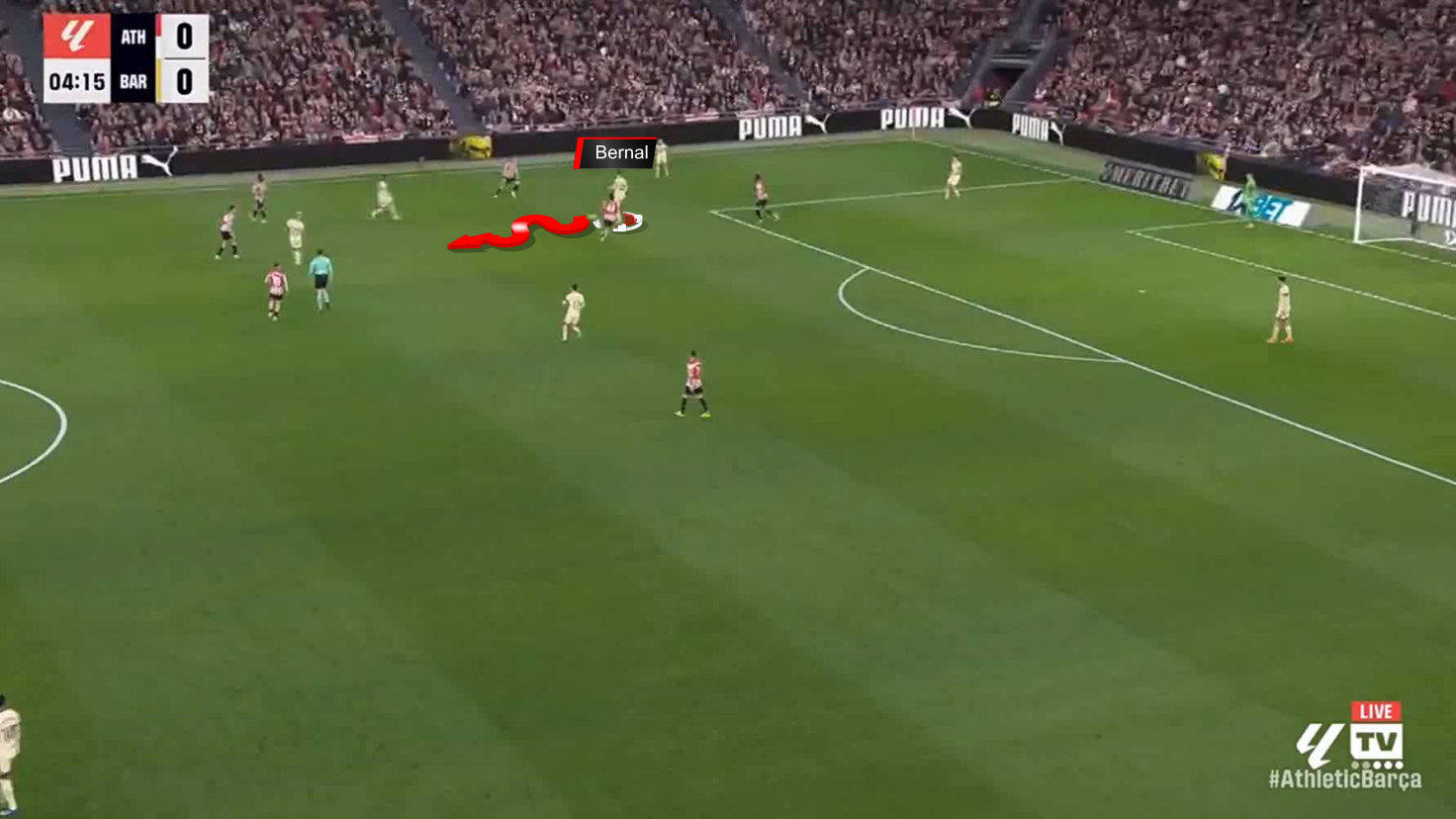
Here, playing against high pressure, he approaches the ball carrier, opening up a passing angle to escape the pressure.
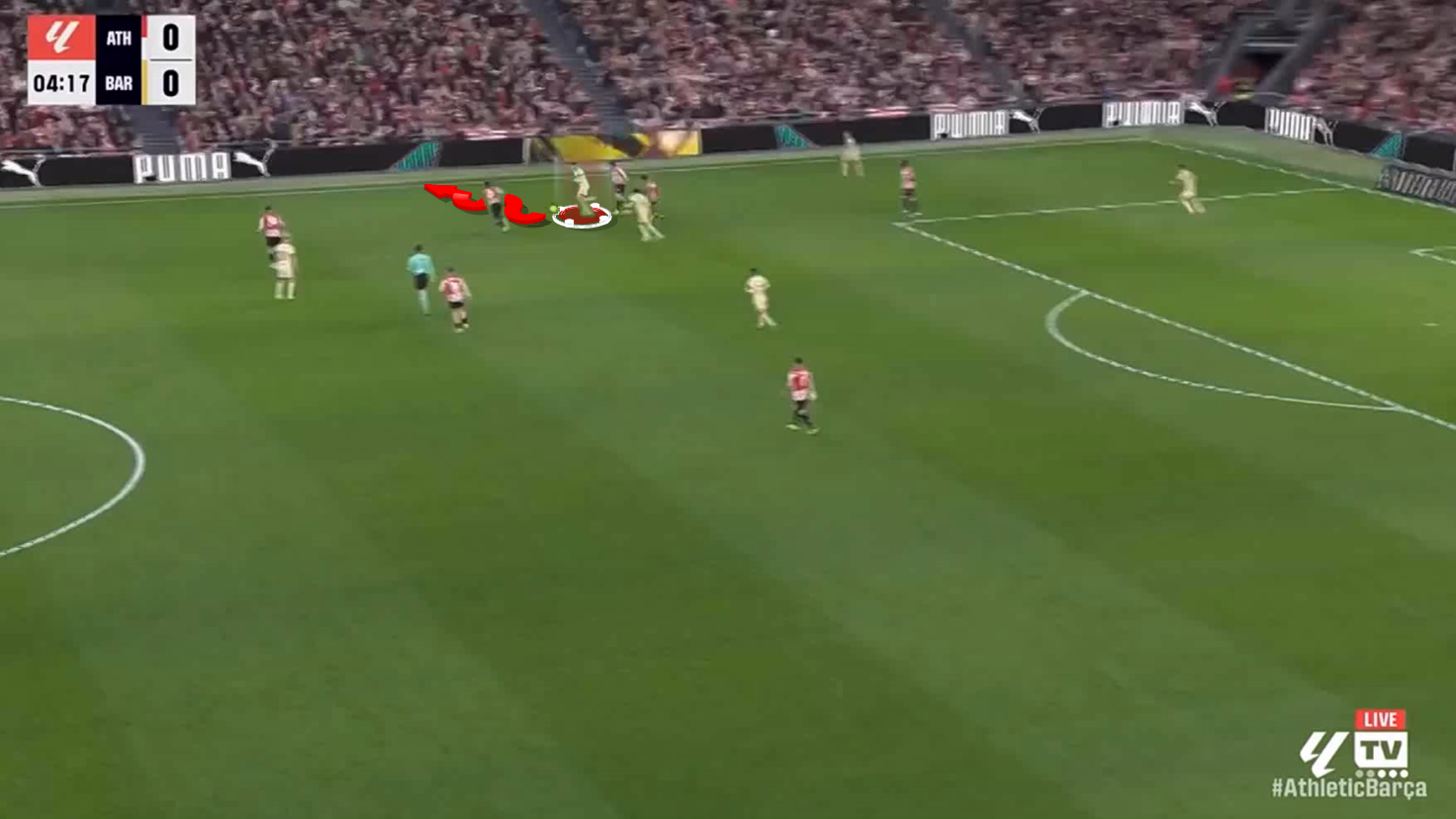
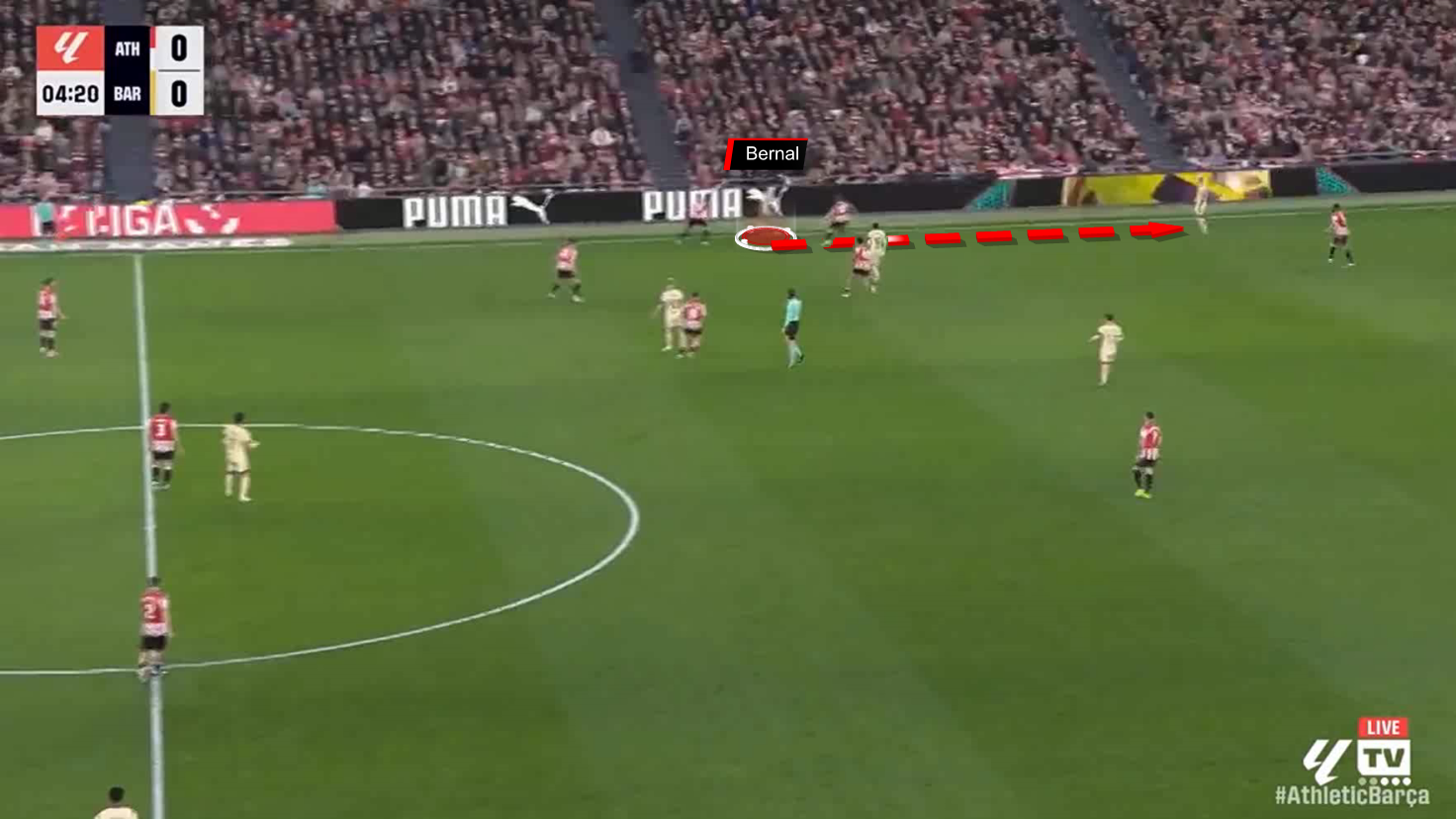
He dribbled past the Athletic Club duo, relieved the pressure, and then moved back to go to the other empty side.
However, in certain situations, particularly against high-pressing teams, he becomes part of a double pivot to secure the ball out of the back.
Marc Bernal demonstrates a keen understanding of timing, avoiding impulsive forward runs and maintaining his position behind the ball to ensure a constant flow of play.
The most important aspect of his role is his ability to link the three lines of defence, midfield, and attack, as he constantly moves to provide passing angles, either horizontally to widen the field or vertically to support the advance.
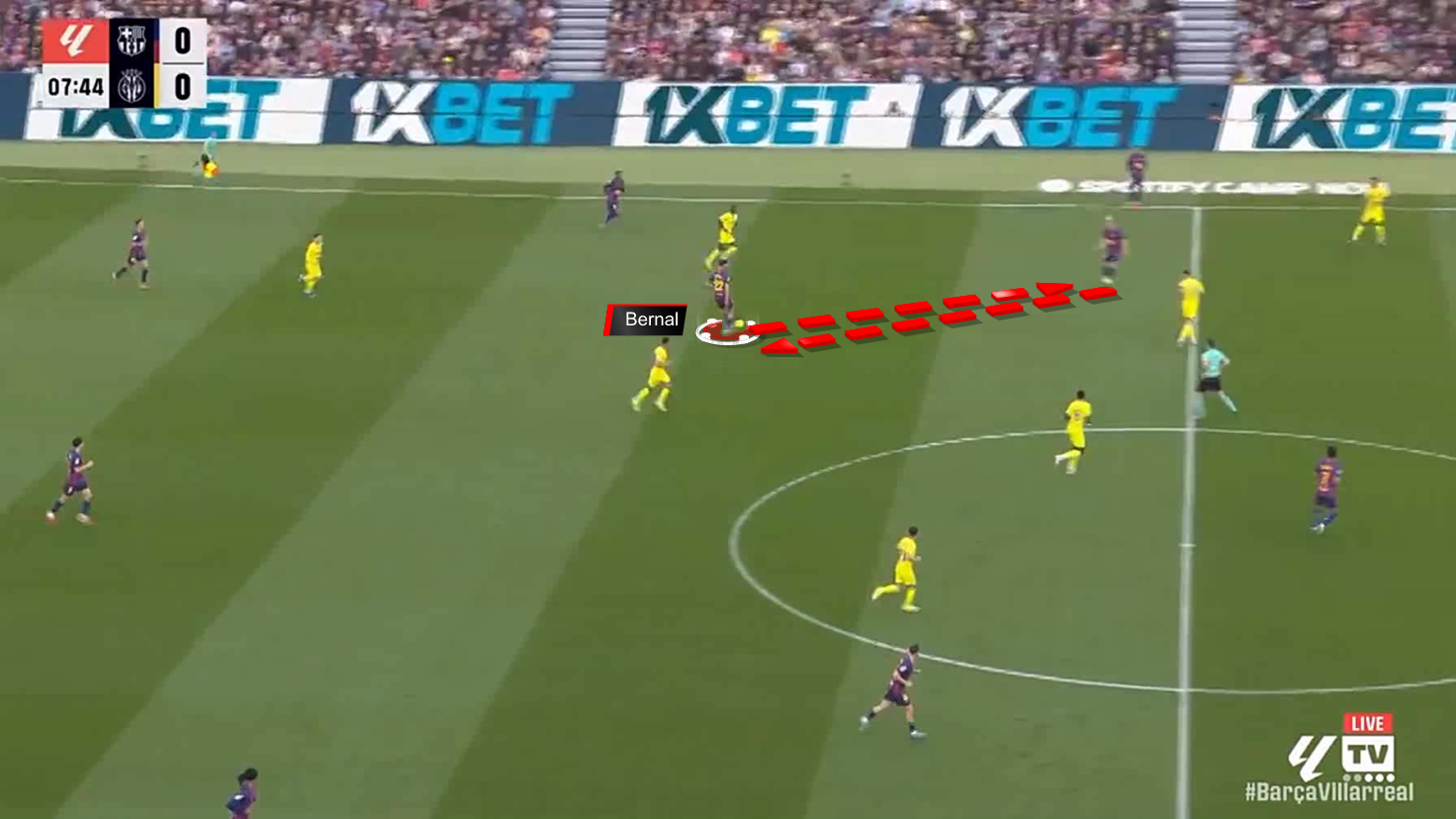
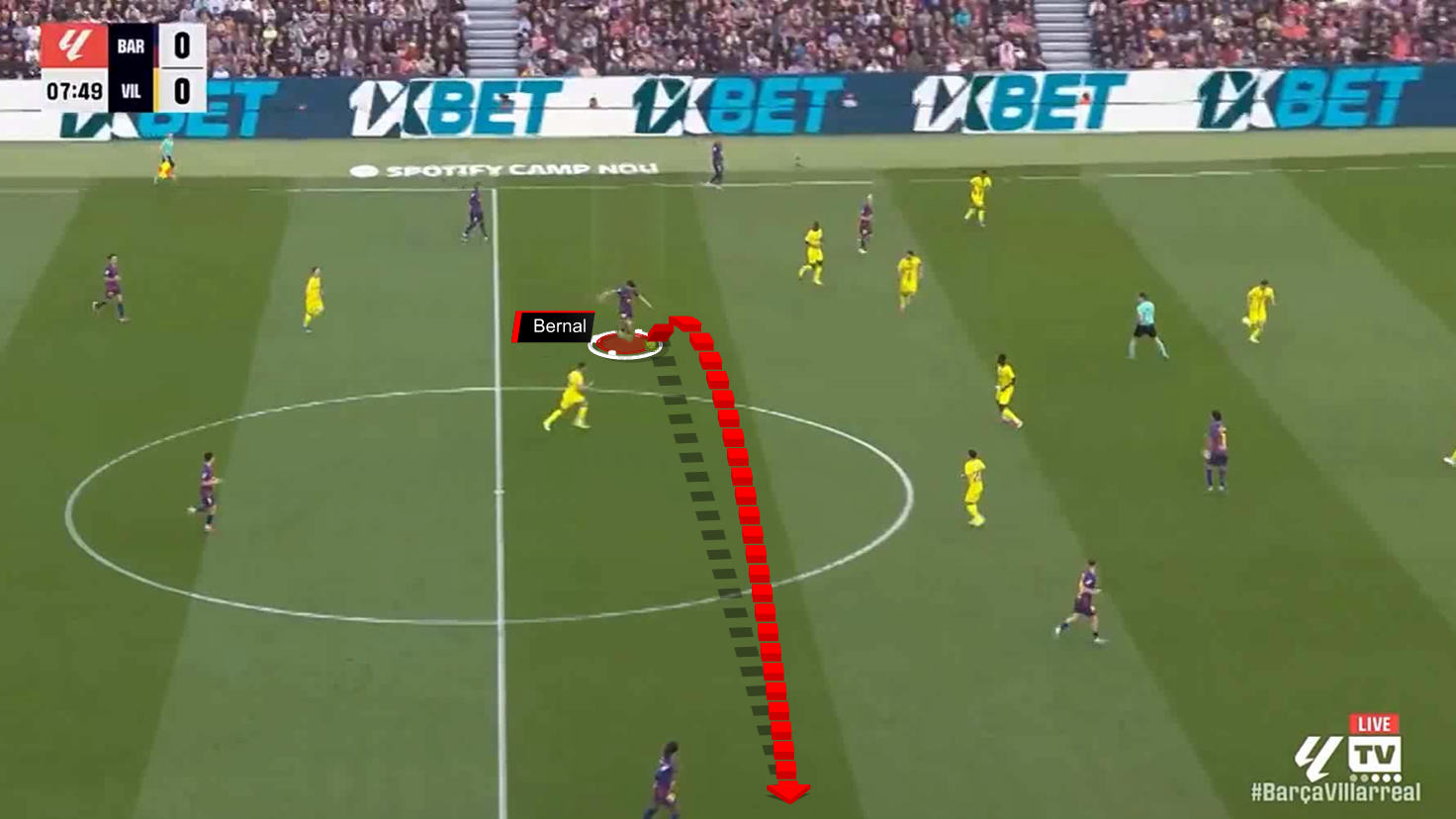
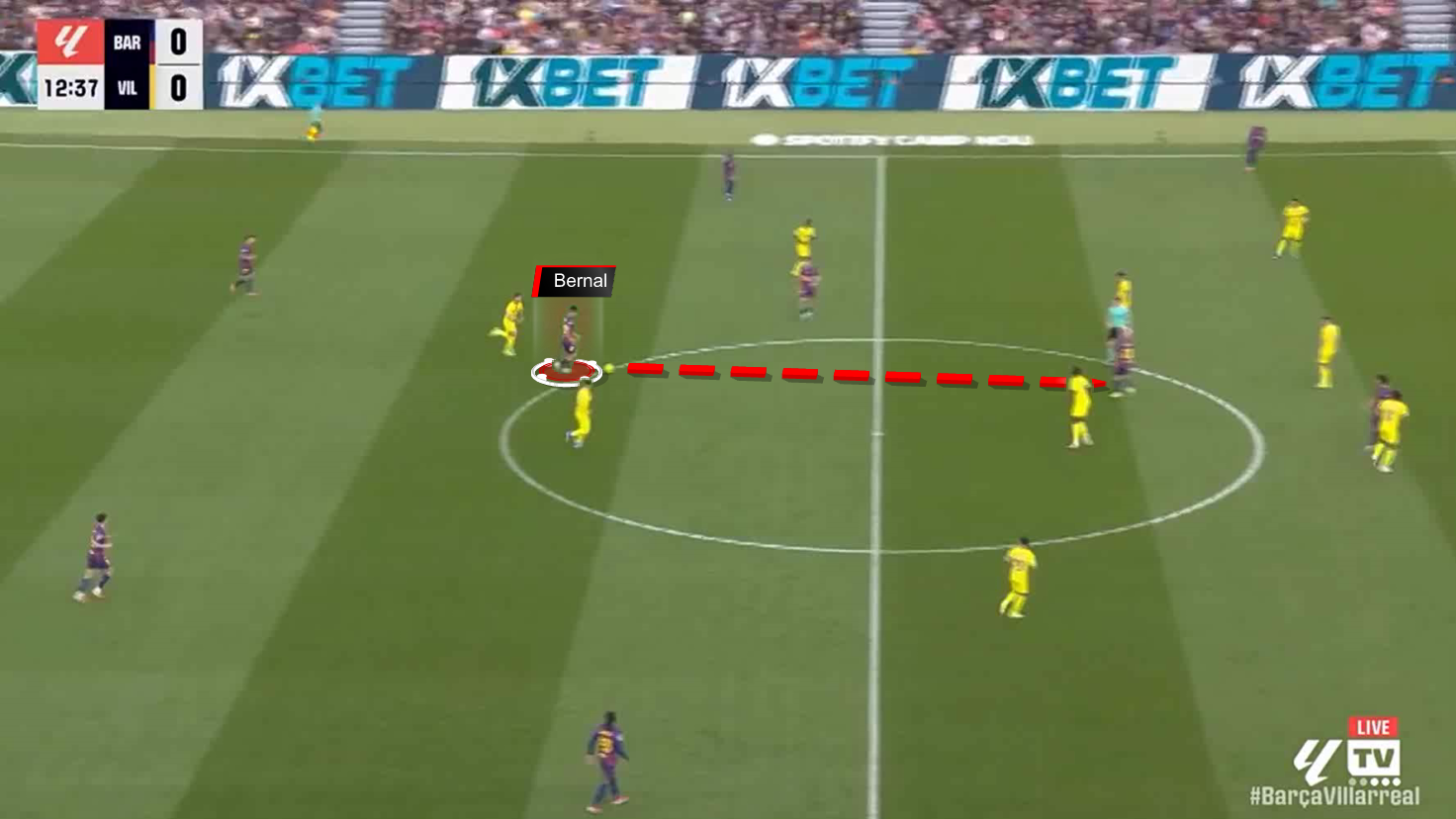
Here, Bernal makes the first pass on the left flank, then receives it again, where the pressure is concentrated on one side, before switching the play to the other side towards Villarreal's left flank.
This behaviour makes it easier for the team to break the initial pressure, especially when isolated by the opponent, as it possesses the composure to make the right decision under pressure.
Marc Bernal Build-Up & Progression
During the build-up phase, Marc Bernal demonstrates tactical maturity, skillfully choosing his position based on the opponent’s pressing style.
In some instances, he drops between the two centre-backs to form a three-man defence, giving the team a numerical advantage in the build-up.
In contrast, in others, he positions himself directly in front of them to create a quick vertical passing lane towards the centre or the flanks.
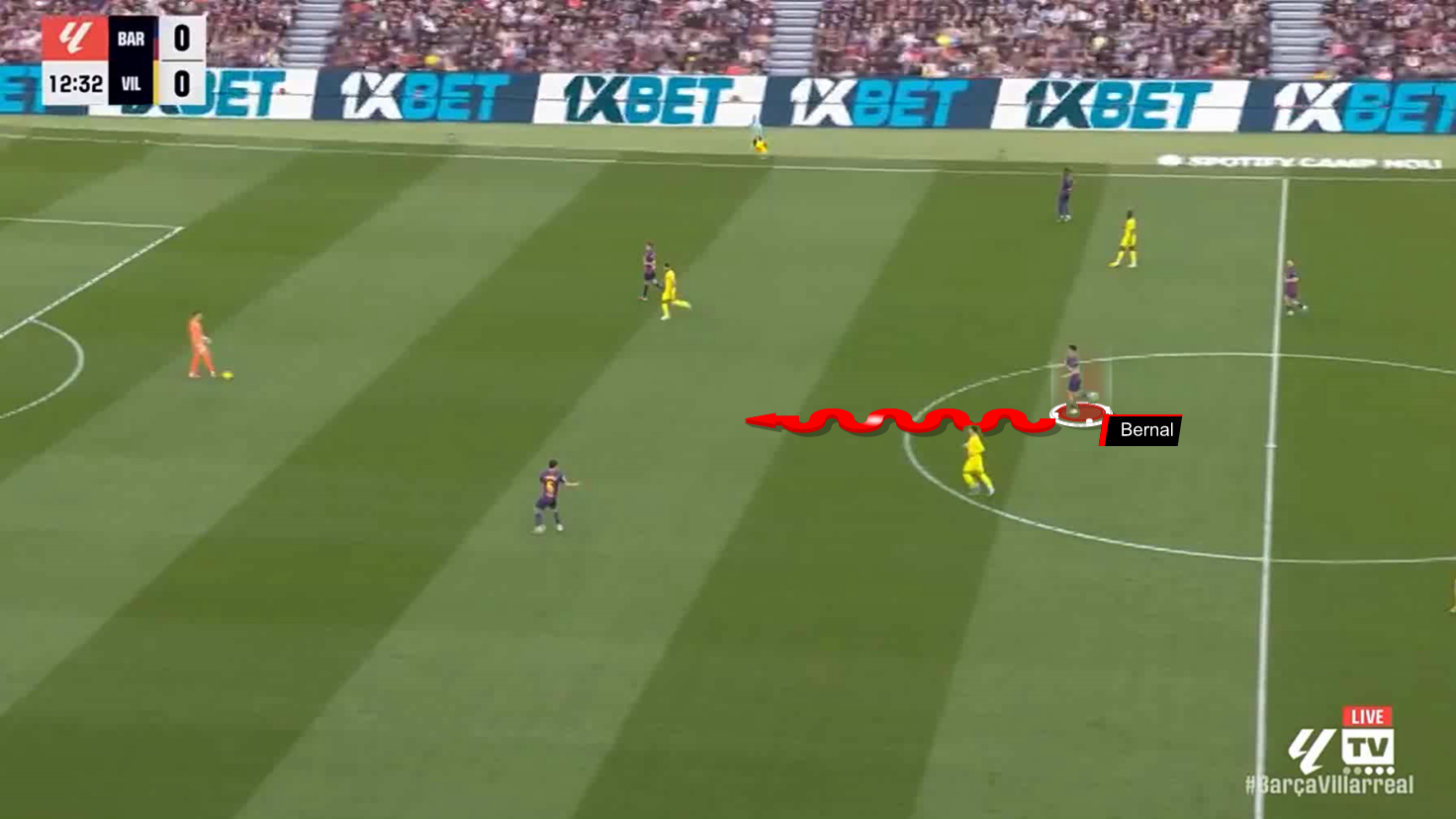
Here, he drops back between the two centre-backs, receives the ball with a turn, and passes vertically, giving Barcelona easier solutions to relieve the pressure.
This diversity in positioning makes it a pivotal element in the team’s tactical flexibility.
One of its most prominent features is its ability to read pressure angles, which gives it a time advantage and room to manoeuvre around press resistance, as it moves before receiving the ball rather than after.
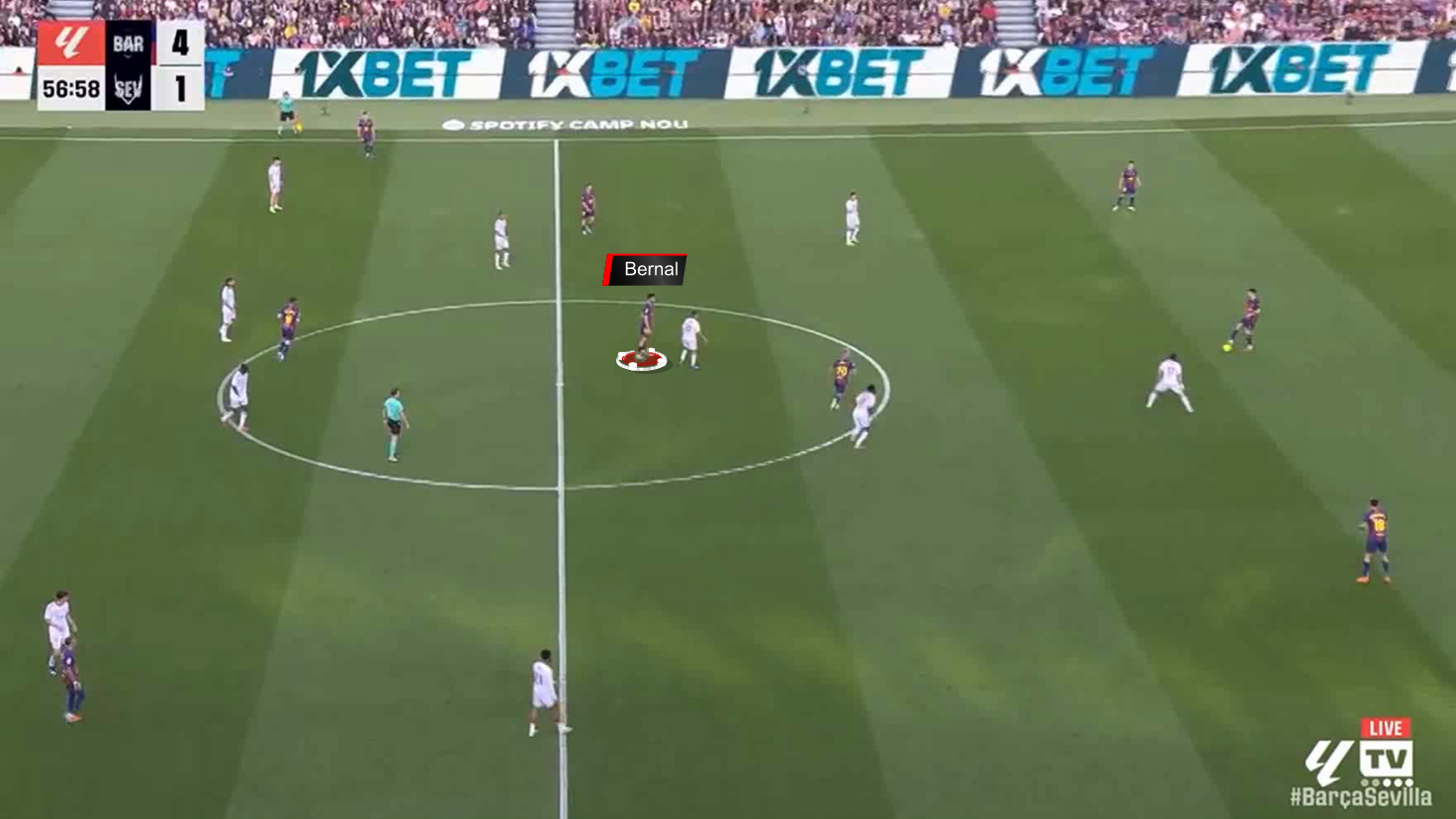
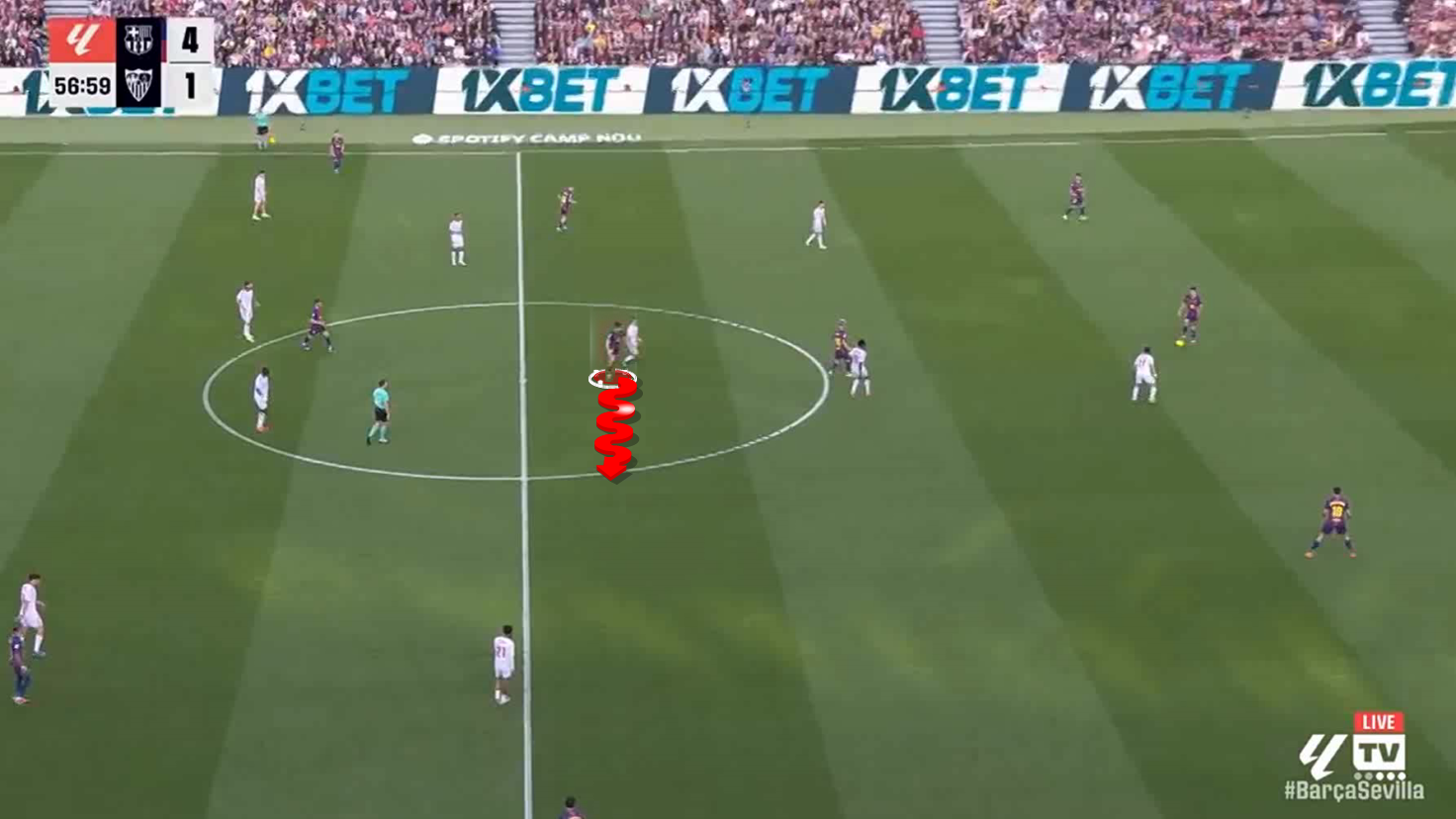
Now, he goes horizontally to open a lane of pass.
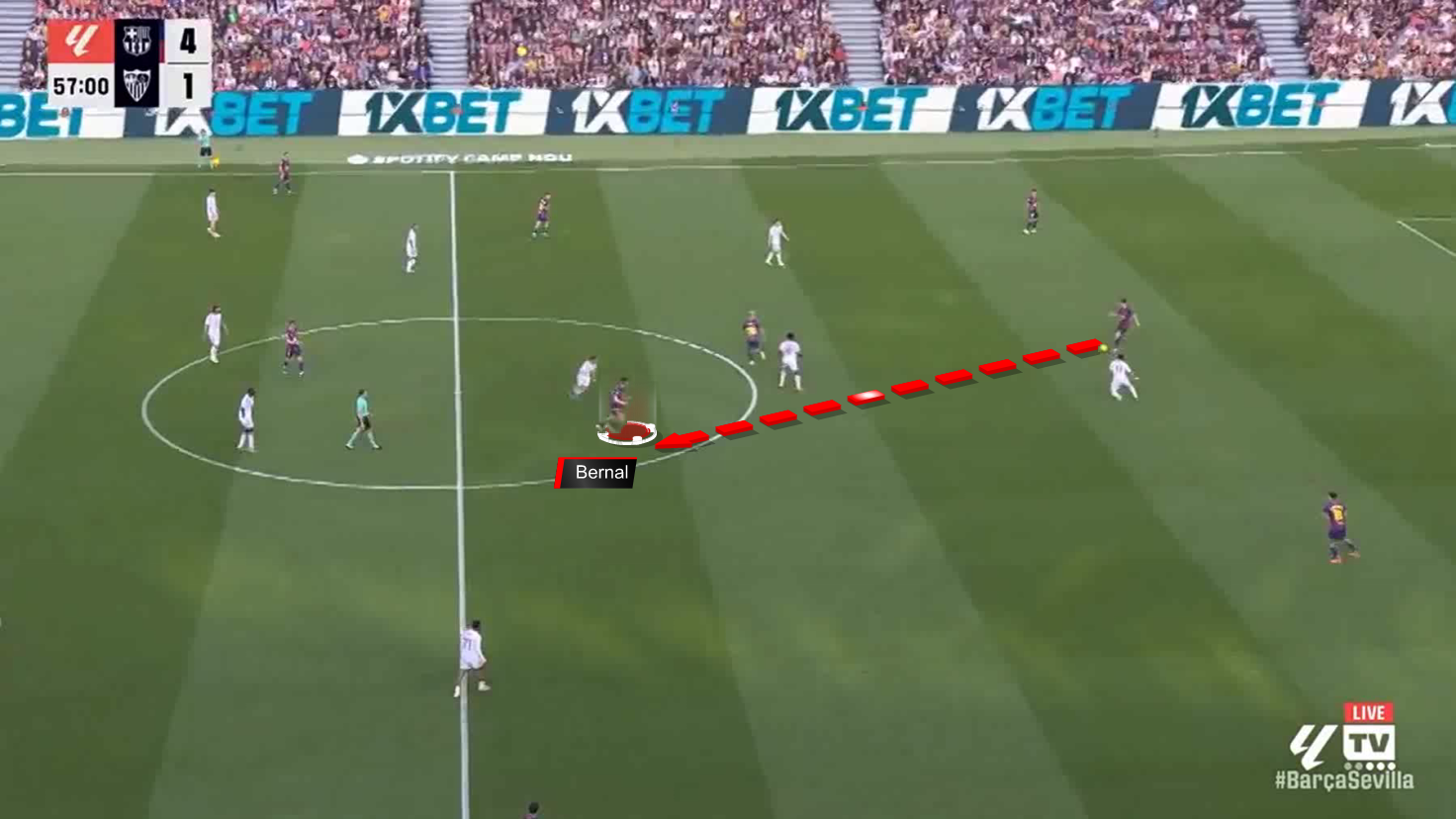
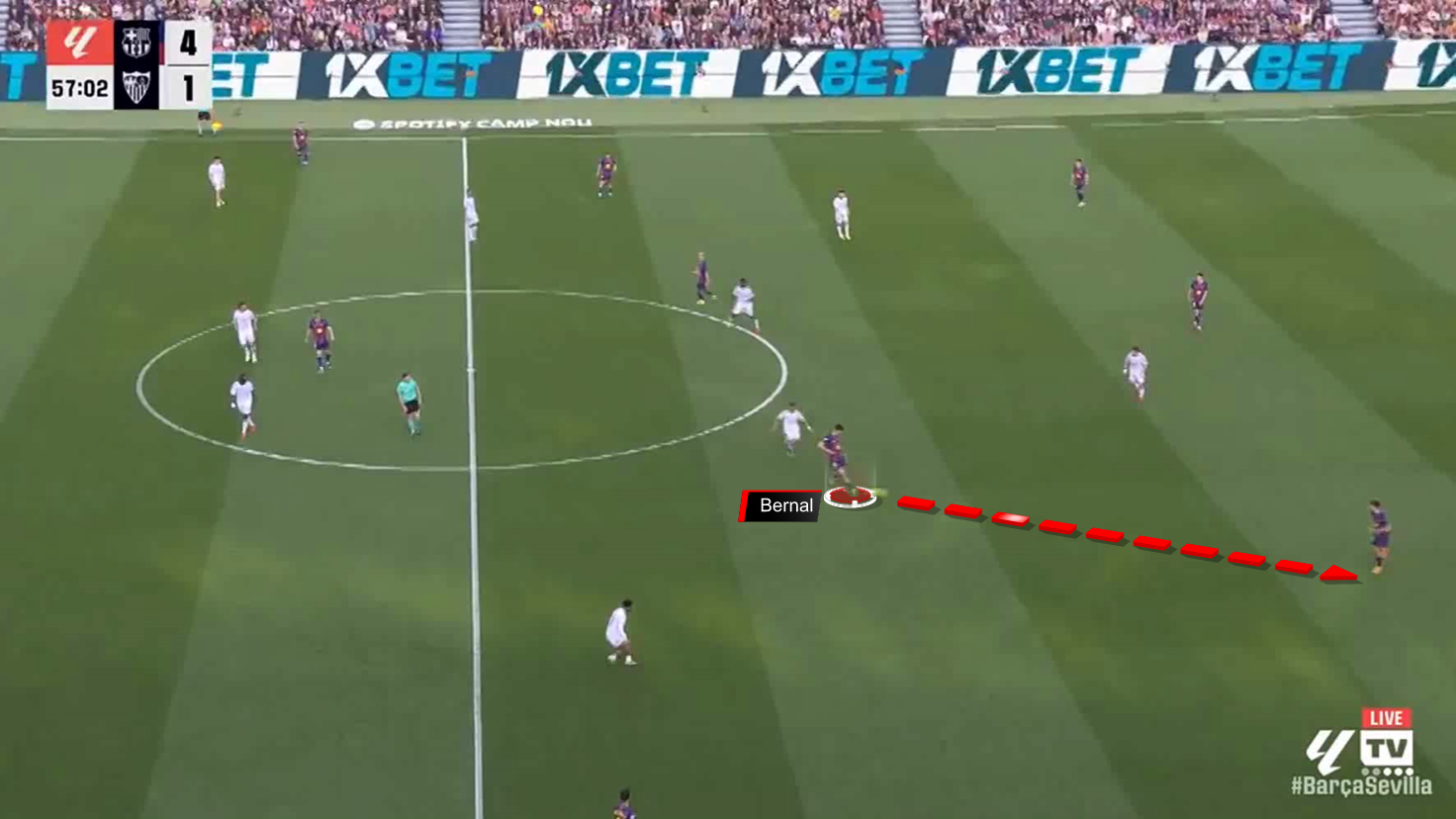
Here, against Sevilla, we can see his horizontal movement, opening up a path for a pass from the first player to the second, receiving the ball deep in the field to circulate it.
His maturity is also evident in his ability to choose the right moment to drop deep between the lines or advance slightly to create numerical overload in midfield.
This balance between stability and dynamism gives him the advantage of maintaining possession without risking losing the ball in dangerous areas.
Marc Bernal Attacking Contribution
Although his primary role is organisational, Marc Bernal has begun to show remarkable improvement in his attacking contributions, particularly in his support for the final third.
He doesn’t rely on individual runs, but rather prefers intelligent passes that break the lines, whether through ground passes between the lines or diagonal passes towards the flanks.
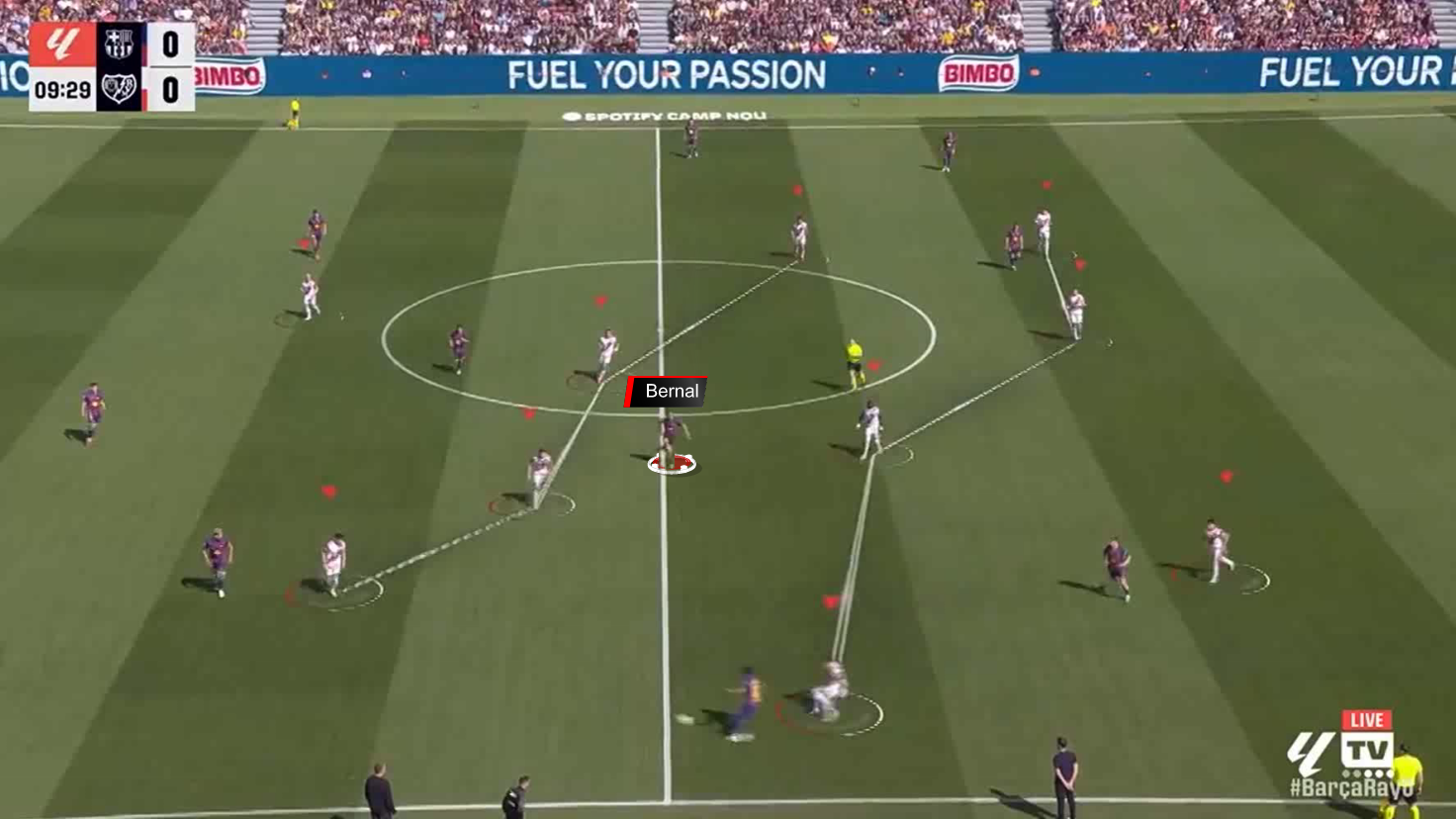
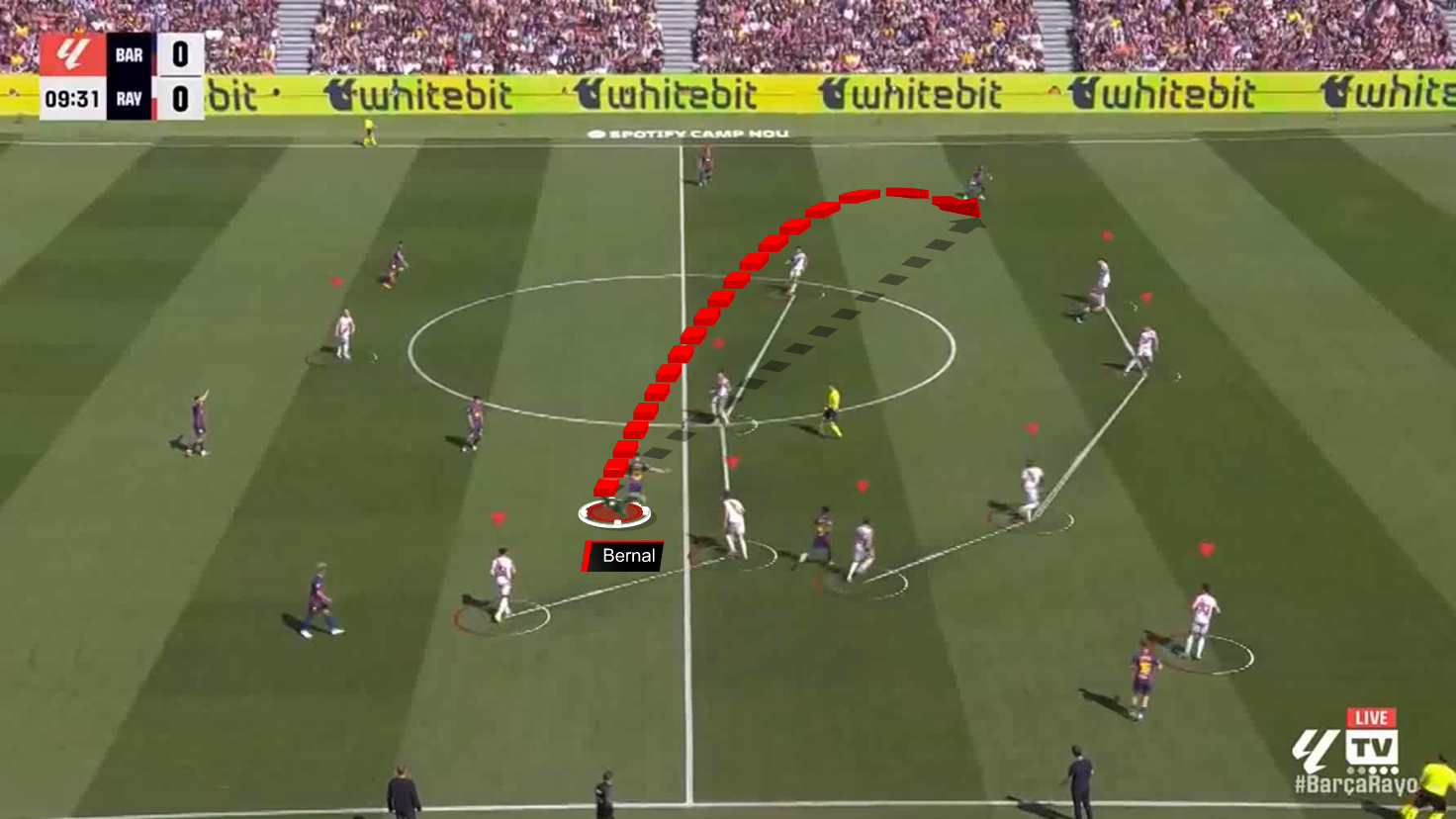
Here we see his ability to scan the field and then change direction, putting his teammate in a 1v1 situation.
This is a highly sought-after skill at the highest level, capable of breaking lines in a single play.
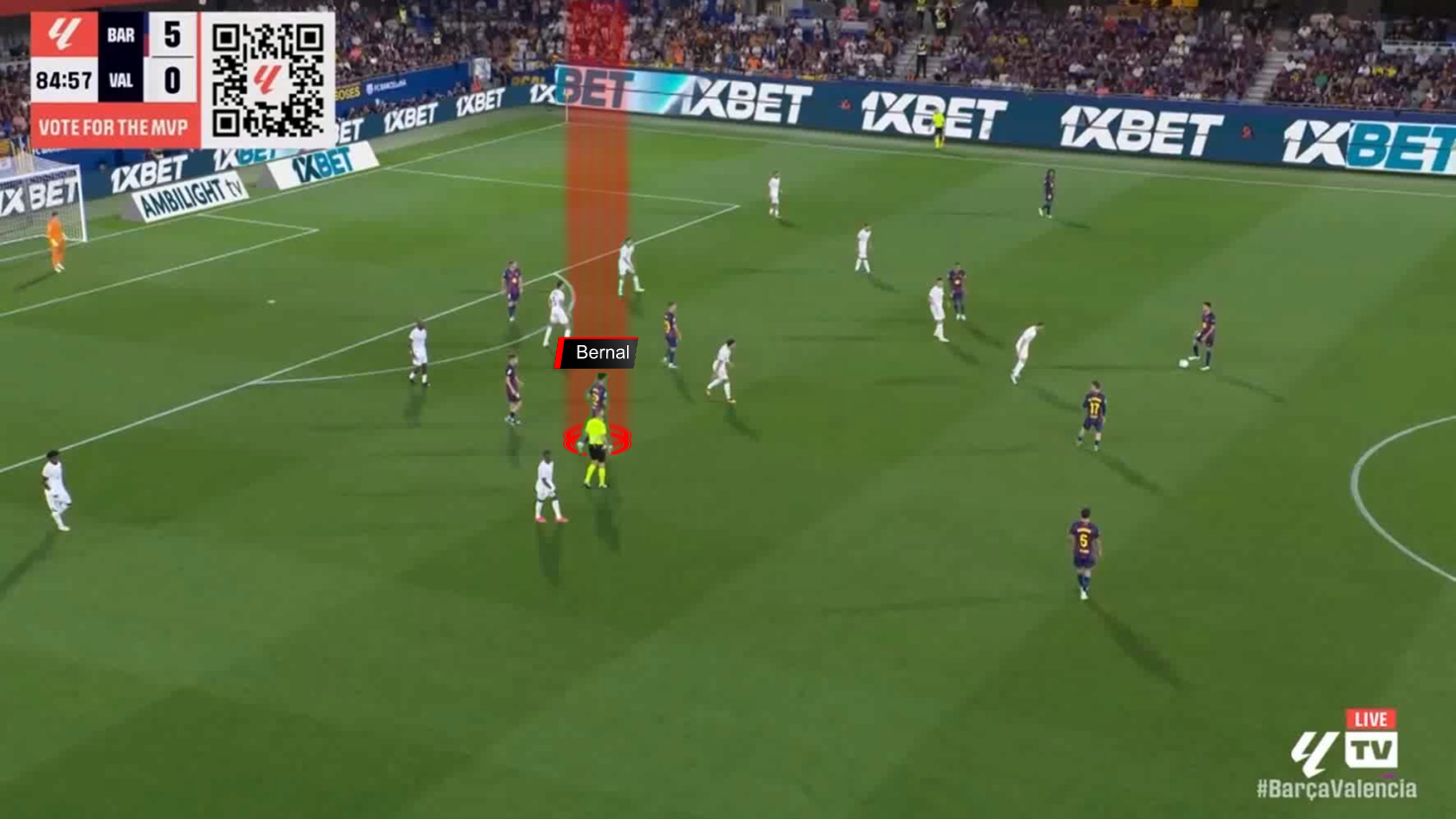
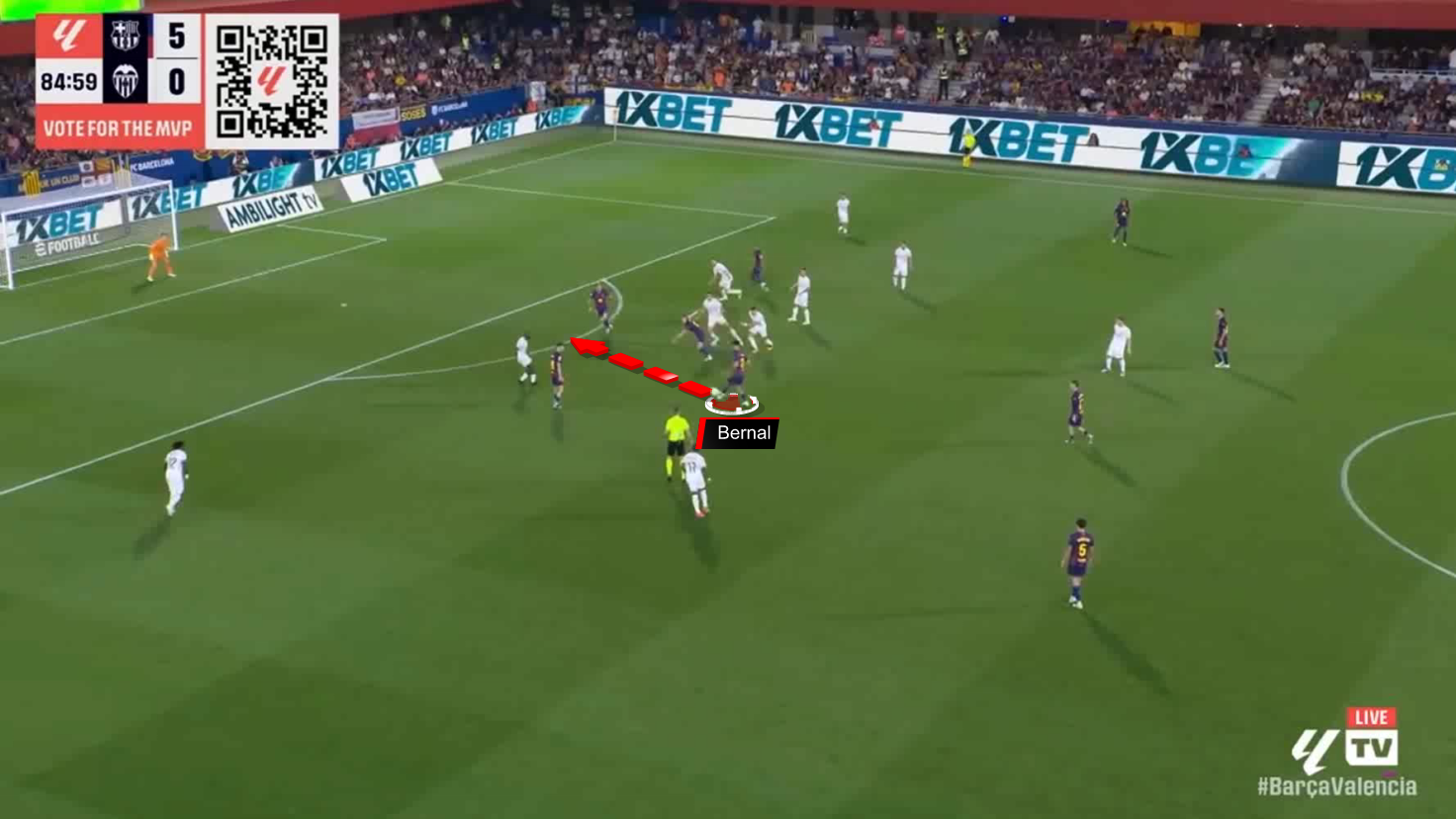
Here, against Valencia, he glanced up and decided to play a through ball behind the defence, resulting in a goal.
Finding the gap and making the pass is one of Marc Bernal’s strengths.
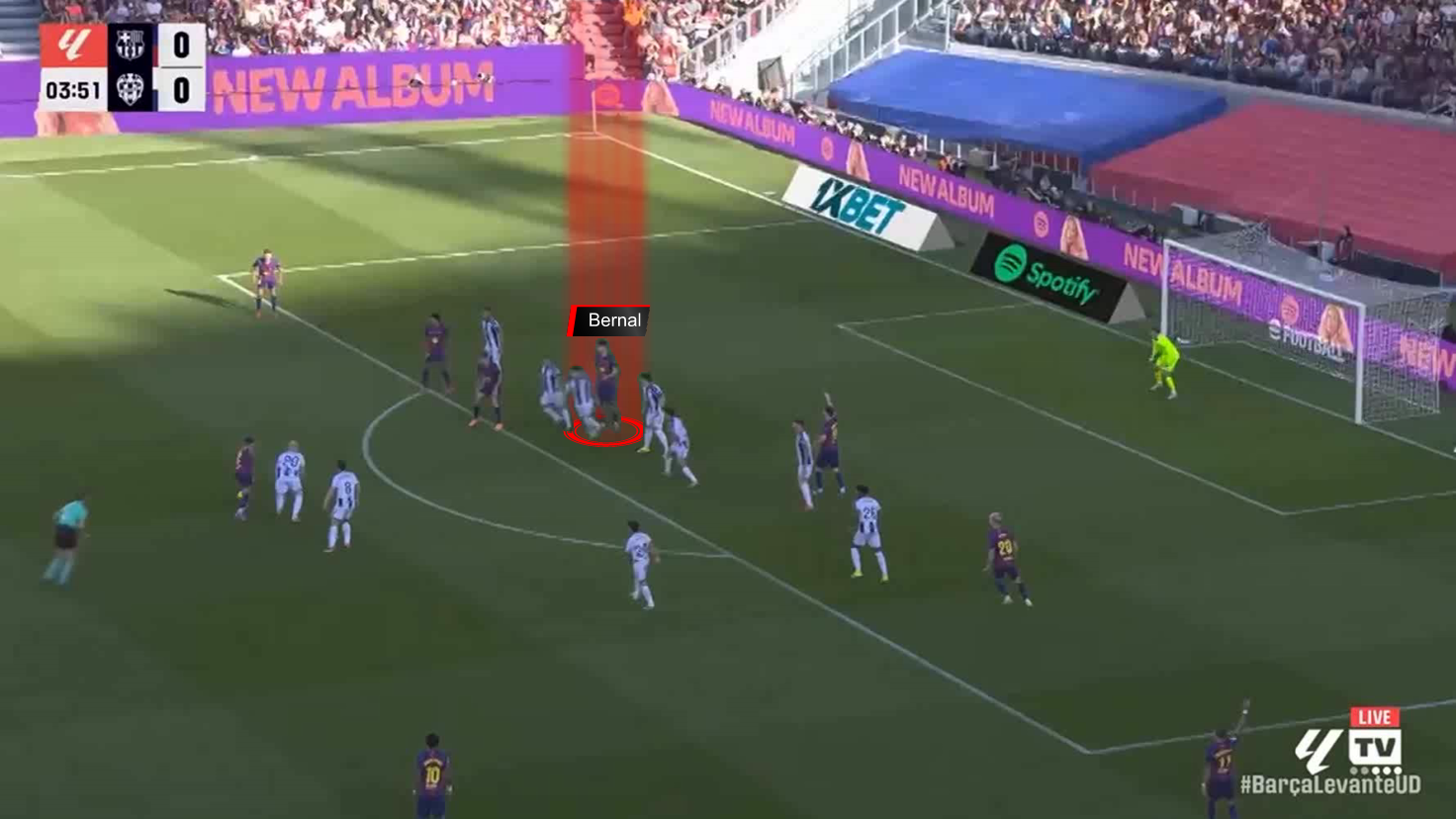
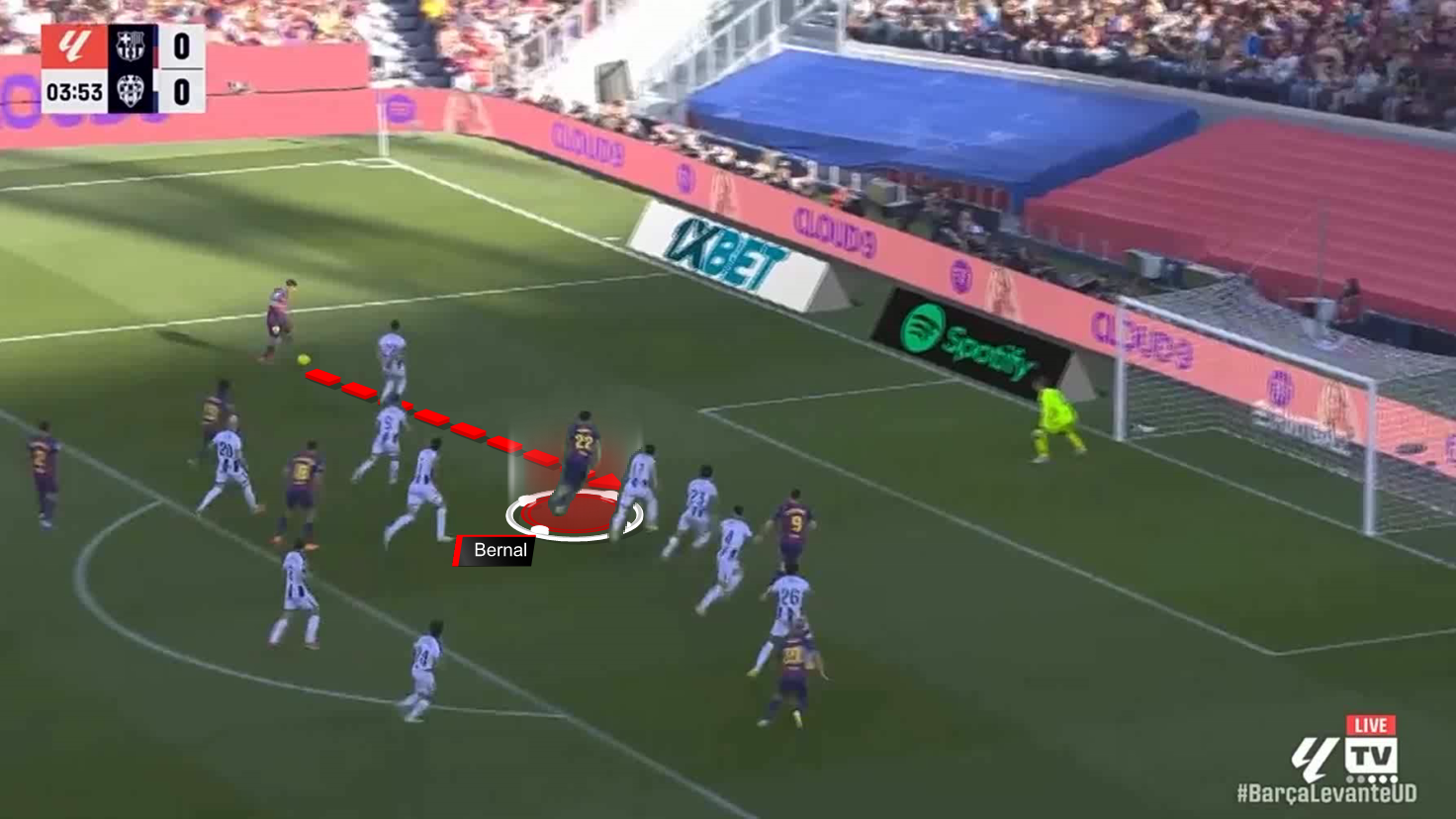
After a short corner kick, he straightens his body, watches the ball move from the right side to the left, and then a cross, which he follows up into the goal.
His horizontal movement gives him an advantage over opposing midfielders and defenders, as he faces the goal and makes quick decisions thanks to his visual scanning.
Marc Bernal Defensive Positioning & Transitions
Defensively, Marc Bernal relies primarily on intelligent positioning and reading the game rather than direct tackles.
He positions himself in the vital spaces in front of the defensive line.
He excels at intercepting passes intended for deep runs, forcing the opposition to play out wide in less dangerous areas.
This type of “preventive” defence is crucial for possession-based teams, as it reduces the likelihood of counterattacks.
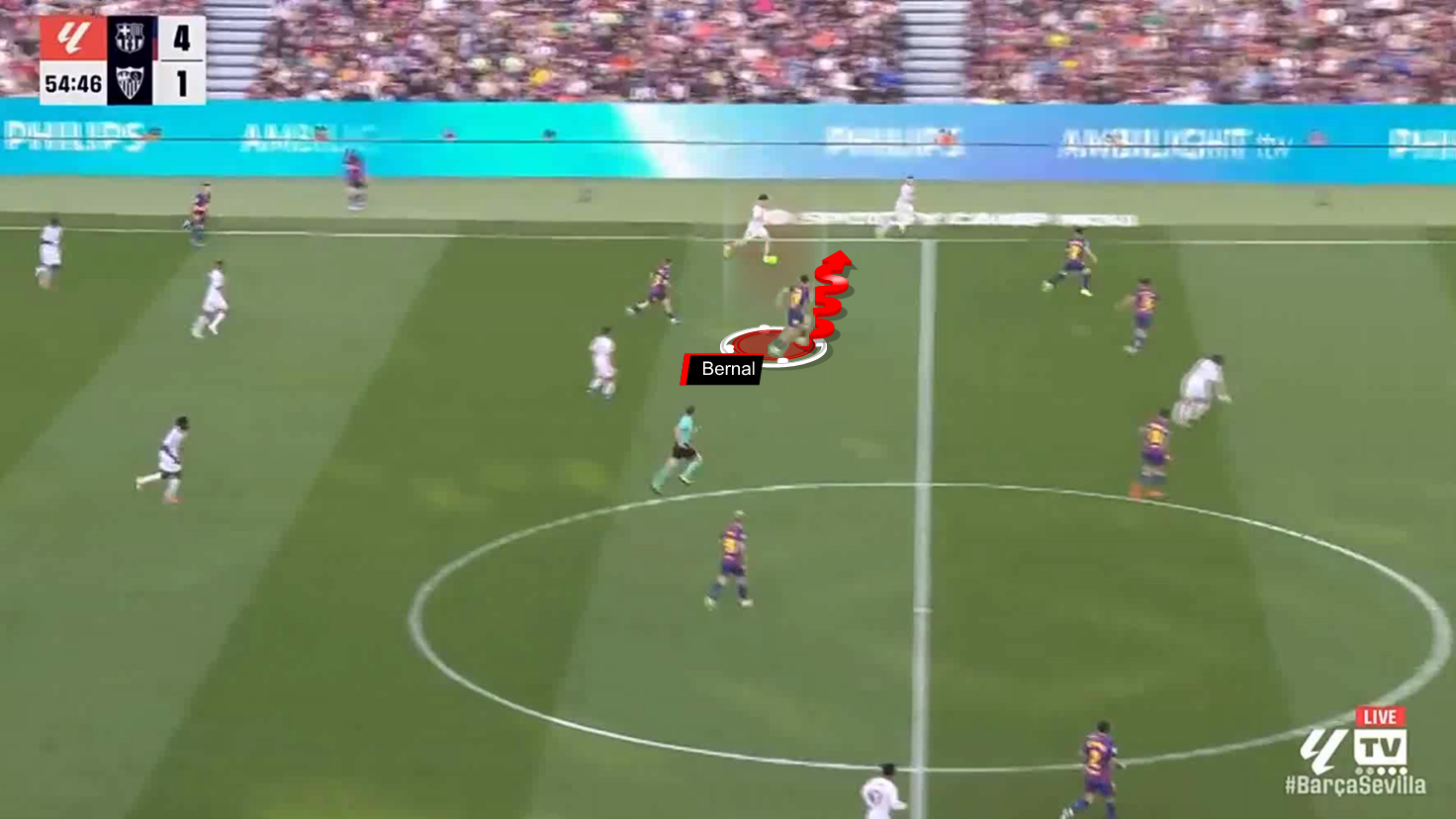
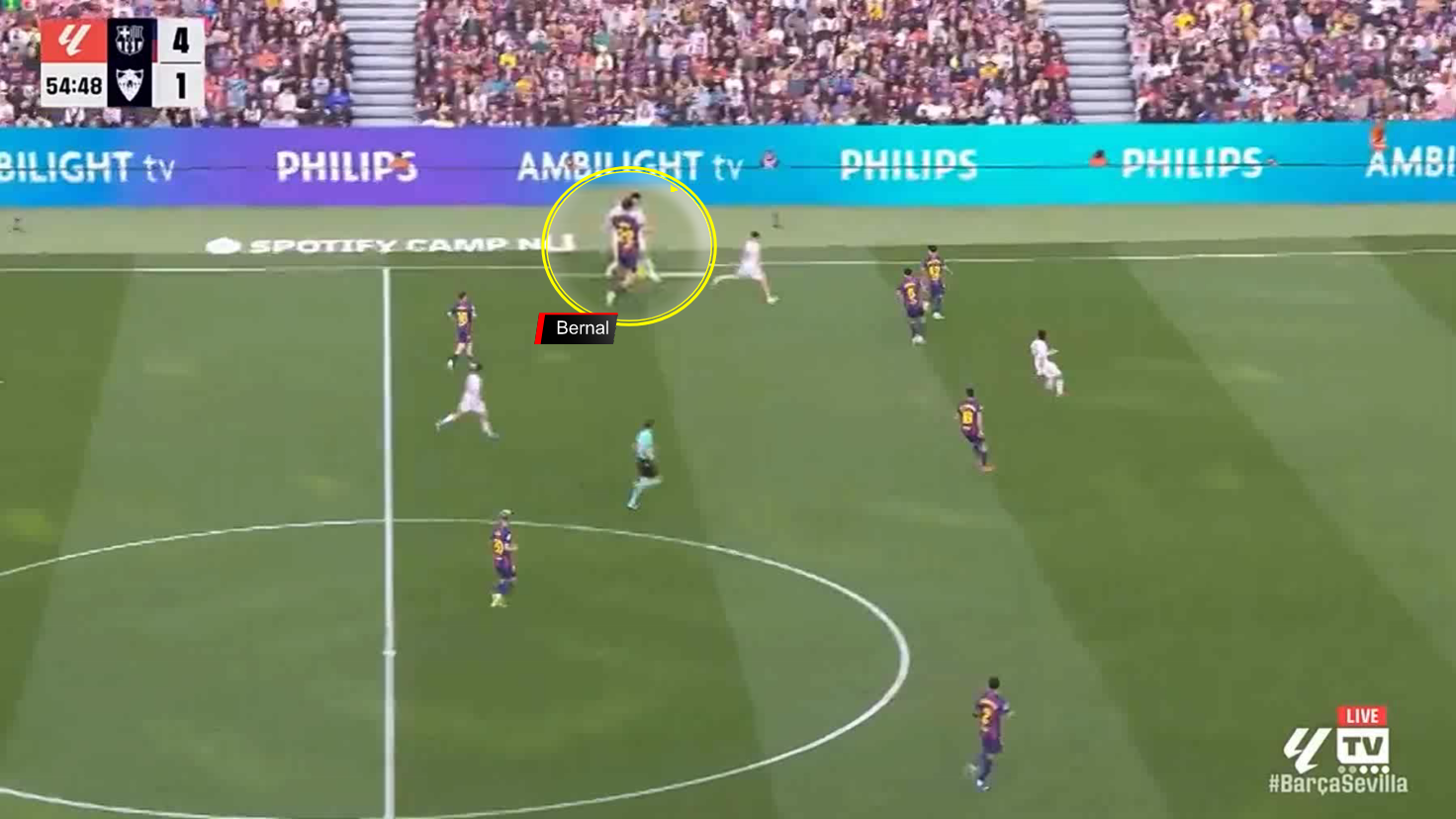
He follows the ball’s trajectory as it moves horizontally from the centre of the field to the wing while looking for the expected pass, then intercepts the ball and maintains possession.
In defensive transitions, he demonstrates quick reactions when possession is lost, either by counterpressing or by immediately dropping back to secure space in front of the defence.
He also shows a good understanding of timing when retreating.
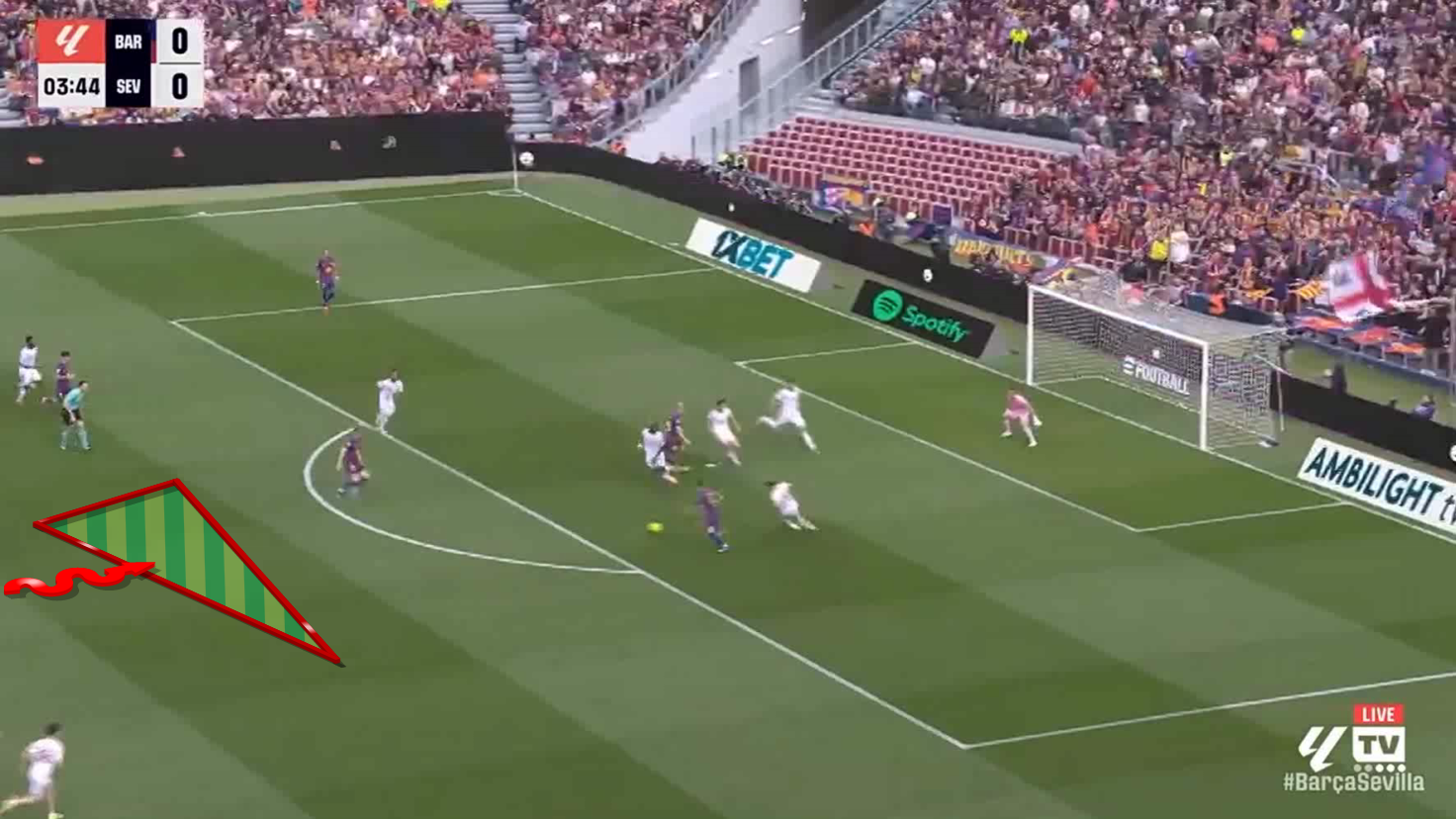
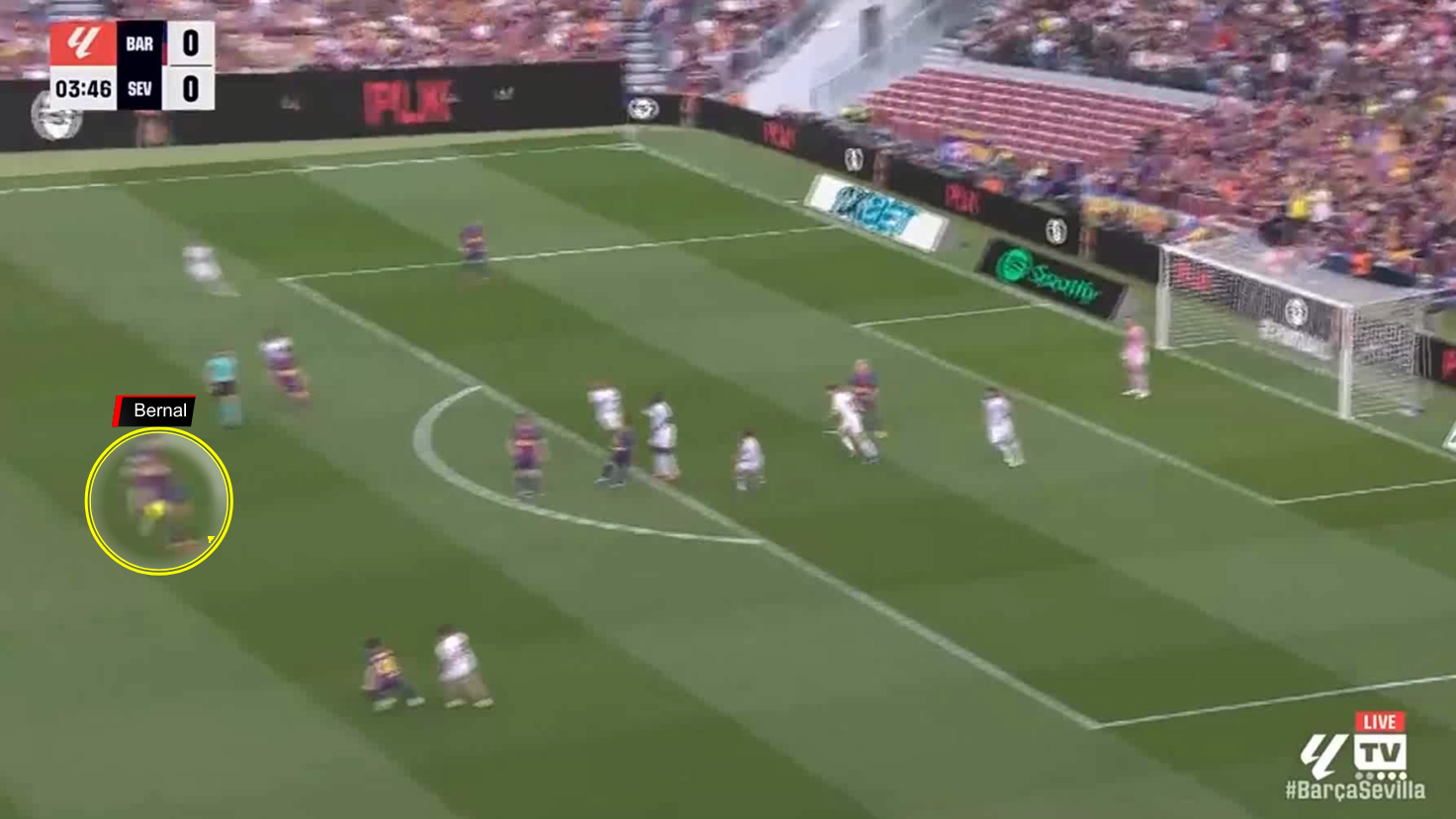
Here we see his positioning when the team loses possession to prevent an attacking transition, and we also see him commit a tactical error.