
![Bournemouth Vs Manchester City [1–1] – Premier League 2025/2026: How The Cherries Secured European Football – Tactical Analysis](https://cdn.mymidnight.blog/77f959f119f4fb2321e9ce801e2f5163/size/w1000/2026/05/Bournemouth--Vs-Man-City-20252026.png)
Bournemouth Vs Manchester City [1–1] – Premier League 2025/2026: How The Cherries Secured European Football – Tactical Analysis

Gameweek 37 in the Premier League produced one of the most decisive matches of the 2025/2026 title race, as AFC Bournemouth held Manchester City to a 1-1 draw at the Vitality Stadium.
The result confirmed Arsenal as English Premier League champions for the first time in 22 years and secured European football for Bournemouth for the first time in their history.
Man City arrived on the south coast knowing that only a win would keep the title race alive until the final day.
Pep Guardiola’s side had lifted the FA Cup just three days earlier, but this was a very different challenge.
Bournemouth, under Andoni Iraola tactics, were well-rested, tactically prepared and playing with the intensity of a team still fighting for the highest possible European finish.
The match ended with late drama, as Erling Haaland equalised in the fifth minute of stoppage time after Rodri had struck the post.
However, City could not find the second goal they needed.
Eli Junior Kroupi’s excellent first-half finish had already given Bournemouth the platform to control the emotional and tactical rhythm of the contest.
In this tactical analysis, we look at how Bournemouth disrupted Manchester City’s possession structure, how Iraola’s side attacked the spaces behind City’s advanced players, and why Guardiola’s attacking changes increased City’s threat but also made the game more open.
Bournemouth Vs Manchester City Lineups & Formations
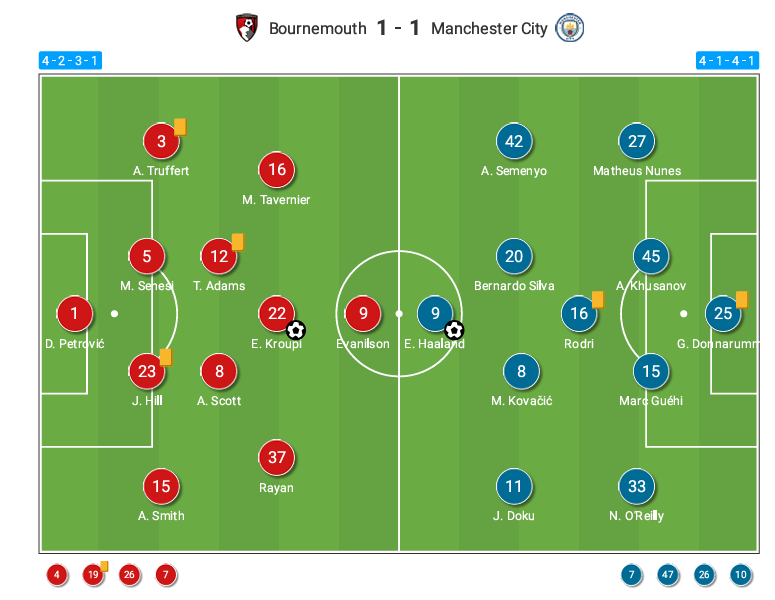
Bournemouth Lineup Vs Manchester City
Bournemouth started in a 4-2-3-1 formation, with Djordje Petrović in goal.
Adam Smith, James Hill, Marcos Senesi and Adrien Truffert formed the back four.
Tyler Adams and Alex Scott played as the double pivot, with Rayan on the right, Kroupi as the attacking midfielder and Marcus Tavernier starting from the left.
Evanilson led the line as the centre-forward.
Manchester City Lineup Vs Bournemouth
Manchester City started in a 4-1-4-1 structure.
Gianluigi Donnarumma was in goal, with Matheus Nunes at right-back, Abdukodir Khusanov and Marc Guéhi as the centre-backs, and Nico O’Reilly at left-back.
Rodri played as the single pivot, with Bernardo Silva and Mateo Kovačić ahead of him.
Antoine Semenyo started from the right, Jérémy Doku from the left, and Erling Haaland was the centre-forward.
On paper, City had enough technical quality to dominate the ball and control the match.
However, the reality was much more complicated.
Bournemouth’s out-of-possession structure often became a compact 4-4-2 or 4-4-1-1, with Kroupi jumping close to Evanilson to screen central access into Rodri.
Rather than pressing constantly with maximum height, Bournemouth were selective.
They allowed City to circulate in certain areas, but they were aggressive whenever the ball travelled wide, backwards, or into a player receiving the ball under pressure.
This allowed Iraola’s team to defend with energy without becoming stretched too early.
City’s structure also became more flexible in possession.
Rodri remained the central reference, while Bernardo and Kovačić moved ahead of him to receive between the lines.
Nunes and O’Reilly provided width from full-back positions, and Doku and Semenyo tried to stretch Bournemouth’s backline from the outside.
However, Bournemouth’s first line made it difficult for Rodri to receive cleanly and dictate the tempo.
As a result, City had more possession but did not always have control.
Bournemouth Pressing Strategy Vs Manchester City Build-Up
One of the most important aspects of Bournemouth’s performance was the way they managed their pressing intensity.
Iraola’s side did not simply run after City’s centre-backs.
Instead, their pressing was based on timing, access and the protection of central spaces.
Evanilson and Kroupi were the first defensive reference points.
Their task was not only to pressure Guéhi and Khusanov, but also to block the passing lane into Rodri.
This was crucial because Rodri is usually the player who gives City rhythm, security and direction in possession.
If he can receive facing forward, City can connect their first line to the attacking midfielders with control.
Bournemouth wanted to prevent that.
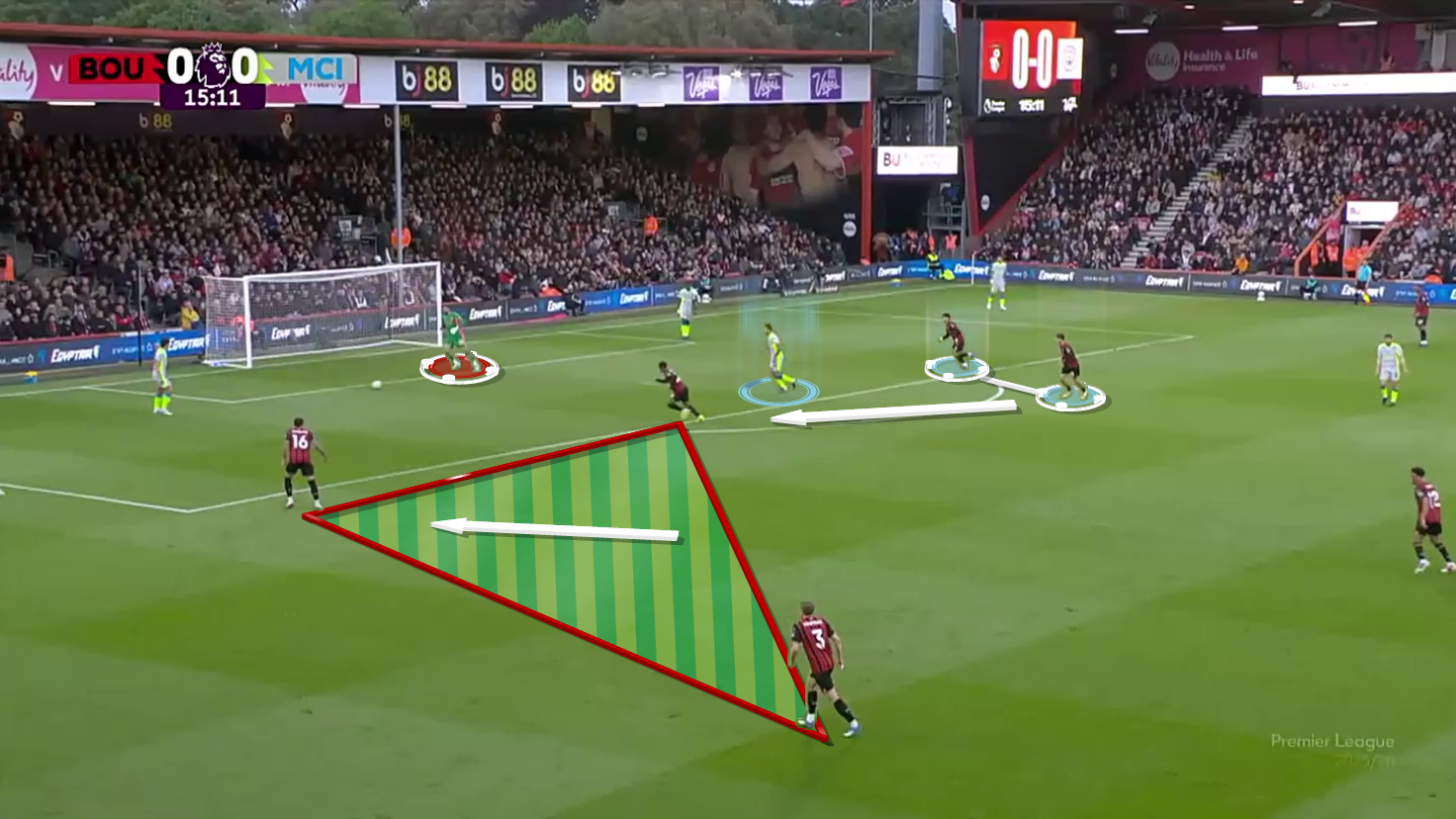
Bournemouth’s first pressing line narrowed the central passing options, with Evanilson and Junior Kroupi helping to screen access into midfield while the rest of Iraola’s block stayed compact.
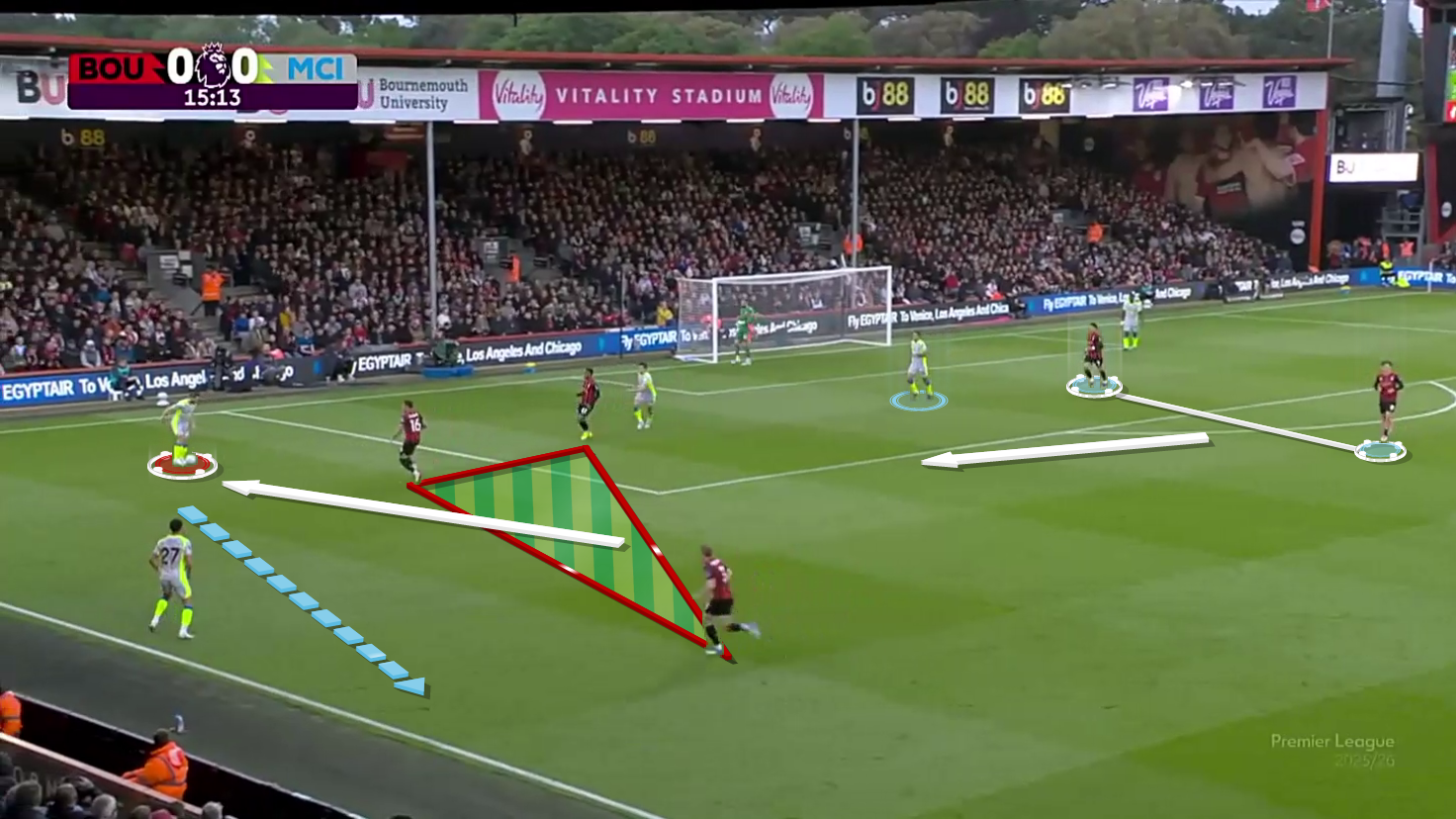
As Manchester City moved the ball wide, Bournemouth’s structure shifted across the pitch, allowing the near-side players to jump while the central spaces remained protected.
When the ball moved to one side, Bournemouth’s near-side winger jumped aggressively.
On the right, Rayan could press O’Reilly or the left-sided City player receiving near the touchline.
On the opposite side, Tavernier narrowed his position before jumping towards Nunes.
Behind them, Adams and Scott shifted across to protect the half-space and prevent City from using the inside pass to escape pressure.
This gave Bournemouth a strong pressing trap.
City were often invited to play out wide, but once the pass went there, the receiver found himself under pressure from several angles.
The winger pressed from the outside, the full-back stepped up, and one of the midfielders closed the passing option inside.
The key detail was that Bournemouth’s press was connected to their block.
They did not press with their front players, leaving large gaps behind.
Adams and Scott were disciplined in their movements, and the back four stayed compact enough to defend direct passes into Haaland.
This allowed Bournemouth to compete for second balls and immediately attack if they recovered possession.
City still reached the final third several times, but many of their attacks were forced into wide areas.
This suited Bournemouth because their defensive plan was built around protecting the centre first and then defending the box with numbers.
Manchester City Possession Problems
Manchester City had spells of possession, but their possession was often more territorial than disruptive.
They could move the ball across the pitch, but Bournemouth’s compactness made it difficult for them to create the kind of central combinations that usually define Guardiola’s best attacking performances.
The main issue was the connection between City’s midfield and Haaland.
Rodri was not always able to receive freely, while Kovačić and Bernardo often had to drop or move wide to find the ball.
This reduced the number of players receiving between Bournemouth’s midfield and defensive lines.
When City moved the ball wide to Doku or Semenyo, Bournemouth were prepared.
Doku threatened early and forced Petrović into a good save, but he was rarely left isolated against only one defender.
Smith had support from Rayan and Adams, while Senesi was ready to defend the box if Doku managed to cross.
On the opposite side, Semenyo’s direct running also gave City a threat, but Bournemouth were able to protect the inside channel and force many actions towards the outside.
This was one of the central tactical themes of the match.
City had width, but they did not always have access to the most dangerous spaces.
Bournemouth were willing to concede some wide receptions because they trusted their ability to shift across, double up and defend the cut-back lane.
That meant City’s attacks often became slower than Guardiola would have wanted.
Instead of manipulating Bournemouth’s block through quick central rotations, City were pushed into repeated wide attacks, crosses, rebounds and second-ball situations.
This gave Bournemouth more time to recover their defensive shape.
City were not passive, but they were not sharp enough to create repeated high-quality chances either.
Bournemouth, by contrast, looked more direct and dangerous whenever they broke through City’s first counterpress.
Bournemouth Left-Sided Attacks & Kroupi Goal
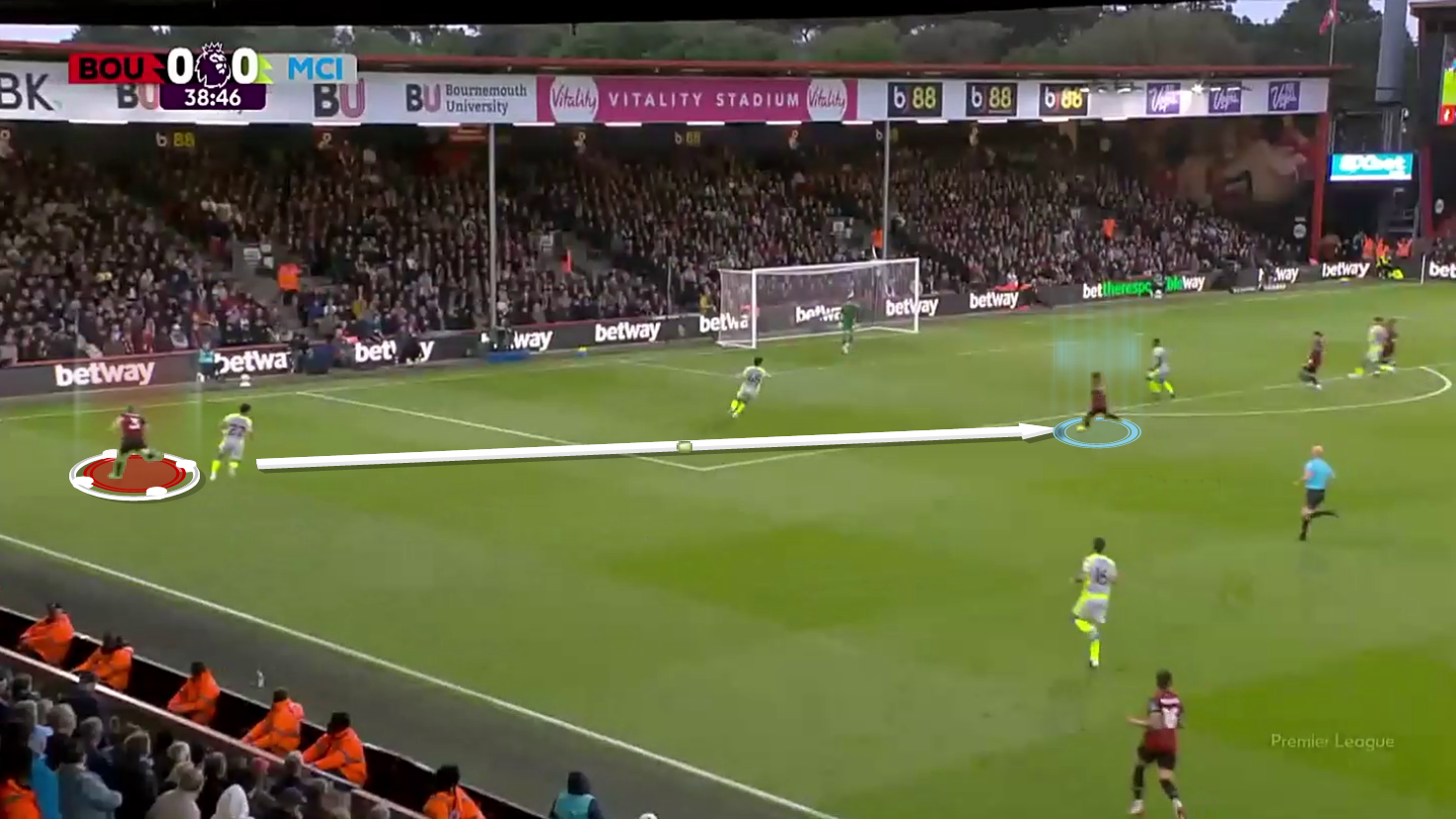
Bournemouth’s goal after 39 minutes was the clearest example of their attacking plan.
It came through the left side, where Truffert was one of the most influential players of the match.
The move began with Bournemouth escaping City pressure and attacking quickly before the visitors could reorganise.
Truffert advanced down the left and delivered a cut-back towards Kroupi, who received on the left side of the box and curled a superb finish into the far corner.
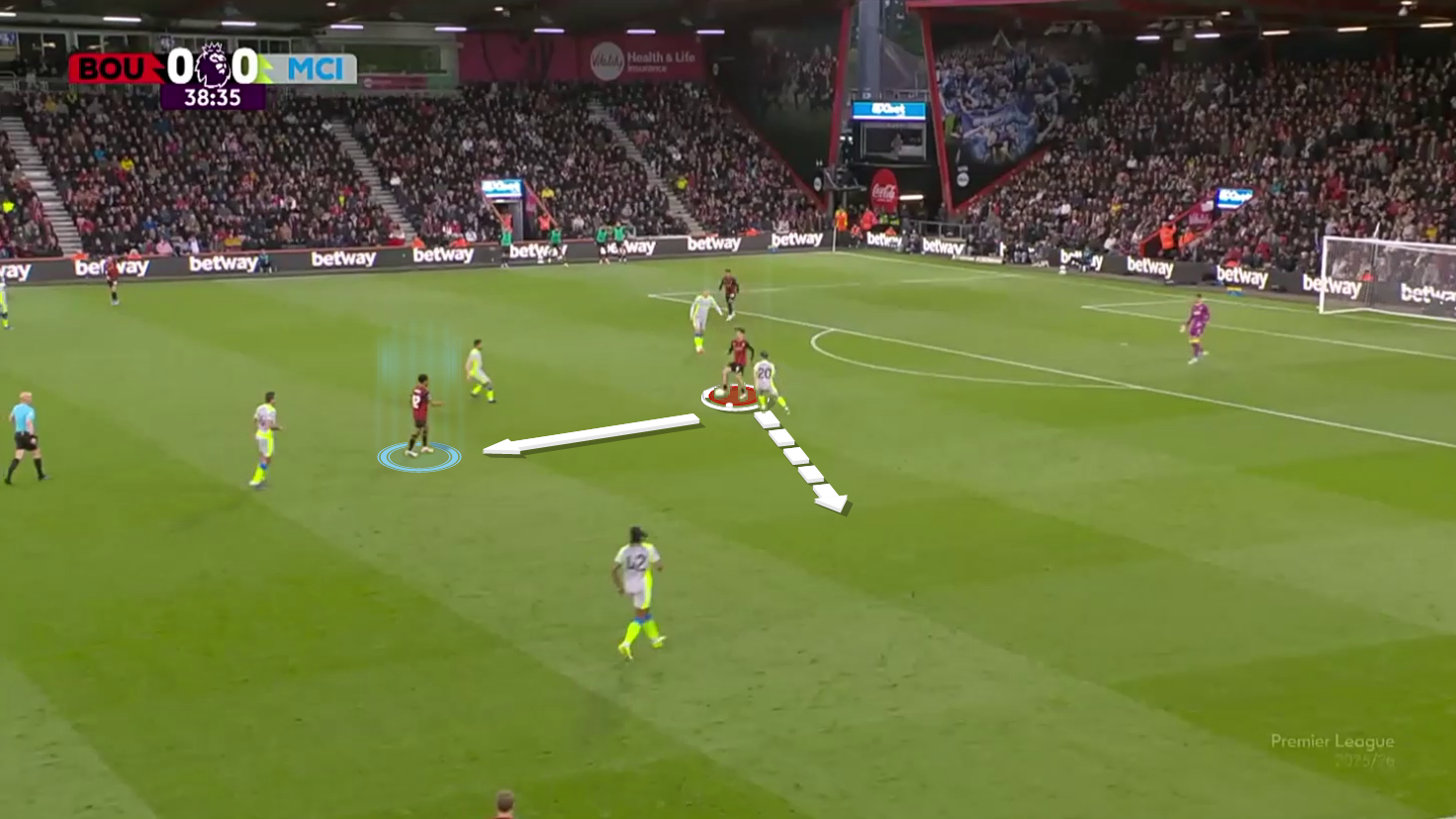
Bournemouth first found the free player between Manchester City’s pressure, allowing them to escape the central area and prepare the attack towards the left side.
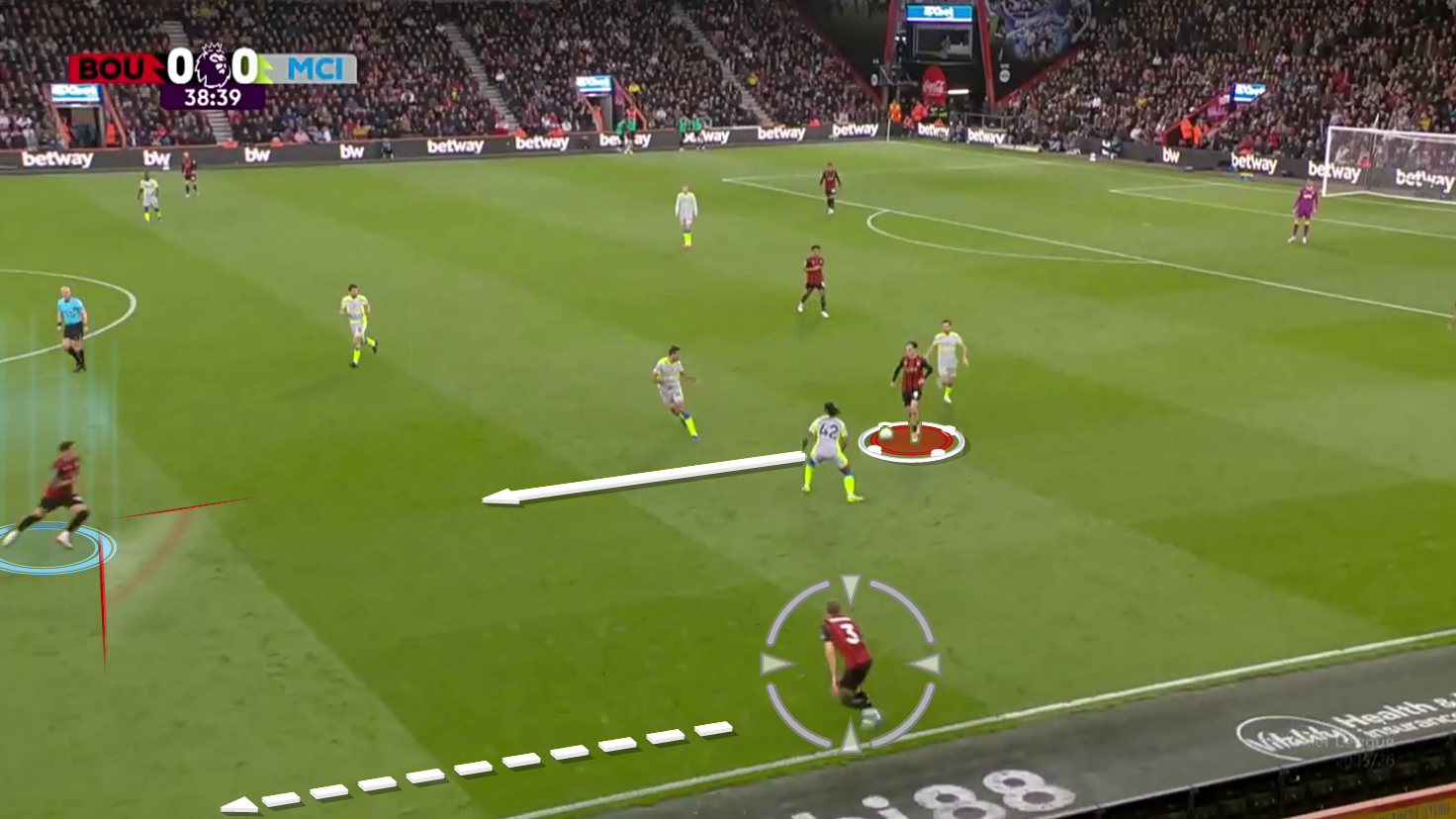
As the move developed, Truffert provided the wide outlet on the left, giving Bournemouth a clear route forward before City could fully shift across.
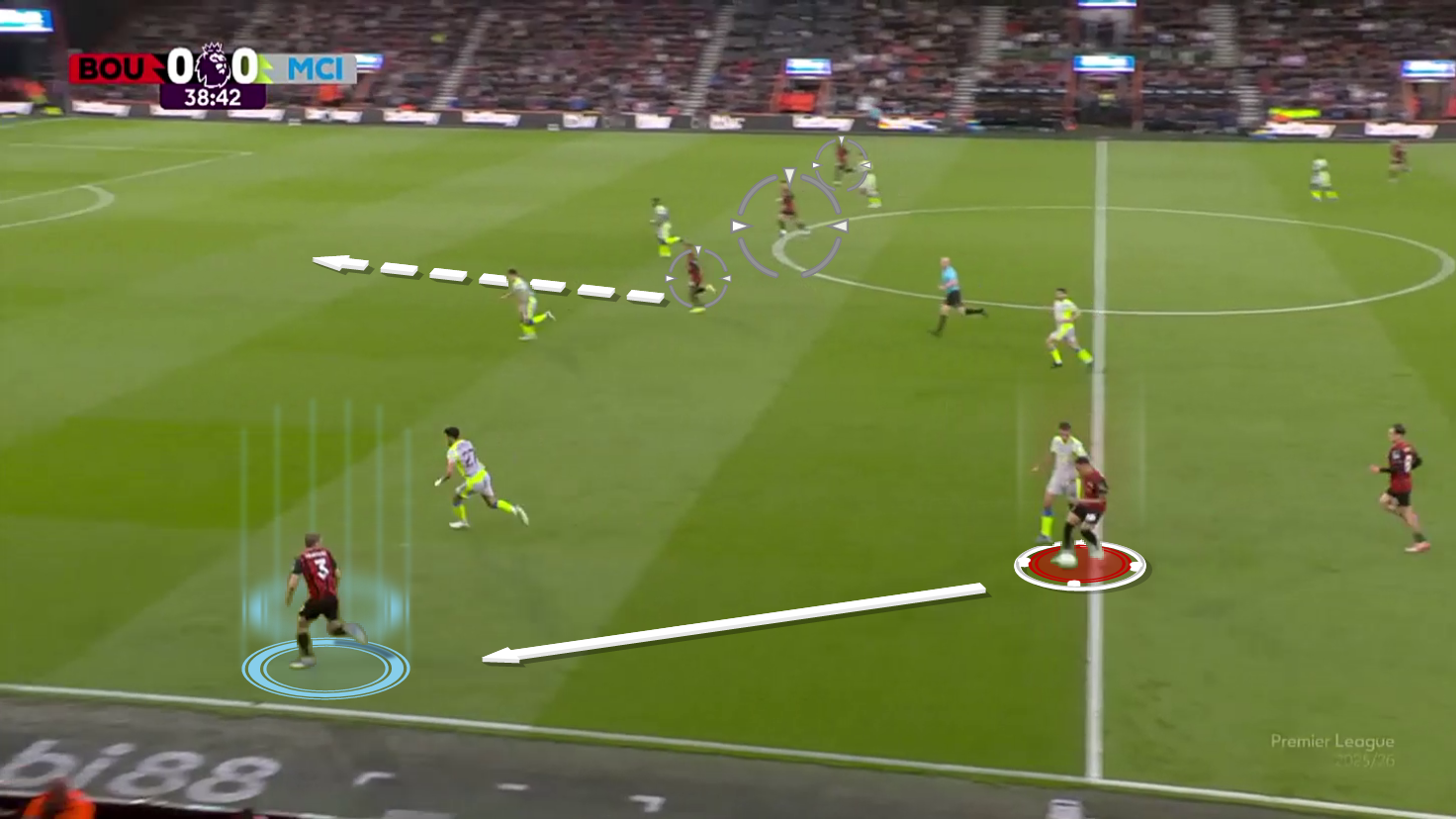
Truffert’s forward run turned Bournemouth’s possession into a transition attack, with City’s defenders forced to retreat towards their own goal.
![Croatia Vs Spain [1-2] UEFA Nations League 2026/2027: How Slaven Bilić High Pressing Tactics Troubled Spain - Tactical Analysis](https://cdn.mymidnight.blog/77f959f119f4fb2321e9ce801e2f5163/size/w600/2026/10/Croatia-Vs-Spain--1-2--UEFA-Nations-League-20262027---Tactical-Analysis.png)

![Scotland Vs Switzerland [0-3] UEFA Nations League 2026/2027: How Aggressive Pressing Backfired & Murat Yakin Took Advantage - Tactical Analysis](https://cdn.mymidnight.blog/77f959f119f4fb2321e9ce801e2f5163/size/w600/2026/10/Scotland-Vs-Switzerland-20262027---Tactical-Analysis.png)
![Olympique De Marseille Vs PSG [1-2] Ligue 1 2026/2027: How Bruno Génésio Transitions Troubled PSG - Tactical Analysis](https://cdn.mymidnight.blog/77f959f119f4fb2321e9ce801e2f5163/size/w600/2026/09/Marseille-Vs-PSG-2026_2027---Tactical-Analysis.png)
![Fulham Vs Manchester United [1-1] Premier League 2026/2027: How Álvaro Arbeloa Tactics Exposed The Red Devils' Problems - Tactical Analysis](https://cdn.mymidnight.blog/77f959f119f4fb2321e9ce801e2f5163/size/w600/2026/09/Fulham-FC-Vs-Man-United-2026_2027---Tactical-Analysis.png)
![AS Roma Vs Inter Milan [2-2] Serie A 2026/2027: When Undefeated Giallorossi Attack Met Nerazzurri Comeback Resilience - Tactical Analysis](https://cdn.mymidnight.blog/77f959f119f4fb2321e9ce801e2f5163/size/w600/2026/09/AS-Roma-Vs-Inter-Milan-2026_2027---Tactical-Analysis.png)
![Real Sociedad Vs Bournemouth [1-2] Europa League 2026/2027: How Do Marco Rose Pressing Tactics Work? - Tactical Analysis](https://cdn.mymidnight.blog/77f959f119f4fb2321e9ce801e2f5163/size/w600/2026/09/Real-Sociedad-Vs-Bournemouth-20262027---Tactical-Analysis-1.png)
![AC Milan Vs Benfica [0-2] Europa League 2026/2027: How Marco Silva Tactics Exposed Rúben Amorim Defensive Problems - Tactical Analysis](https://cdn.mymidnight.blog/77f959f119f4fb2321e9ce801e2f5163/size/w600/2026/09/AC-Milan-Vs-Benfica-20262027---Tactical-Analysis.png)