Martin Mark Tactics At Newcastle United 2025/2026: Elite Set-Piece Mechanics In A Difficult Season – Tactical Analysis

Newcastle United have struggled this season in the Premier League.
They are currently 13th, after finishing fifth last season.
They have, however, been one of the league's most threatening sides from set-pieces.
From a league-high 18.77 xG from set-pieces so far, they've scored 15 league goals.
They have scored around 31% of their goals from set plays so far, highlighting the importance of set-pieces for them.
Even more impressive is that they have also generated the second-highest xG from set-pieces (6.34) in the Champions League.
They sit just slightly behind Bayern Munich (6.94) in that metric despite having been eliminated far earlier.
This set-piece analysis explains their tactics in attacking corners, whether direct crosses or short corners.
Newcastle United Corner Tactics
Generally, Newcastle United tactics always target the six-yard box.
Sometimes, they ask an edge-of-the-box player to start inside the box, drag a man marker away, then run back to the edge of the box.
We will see that having traffic inside the six-yard box overloads the targeted area, and that framing the goal and the cross trajectory increases their probability of scoring.
The result is a dangerous chance, even if the first touch is saved, because of the intentional chaos due to this traffic in the targeted area and around the goalkeeper, which may even lead directly to a goal without any touch.
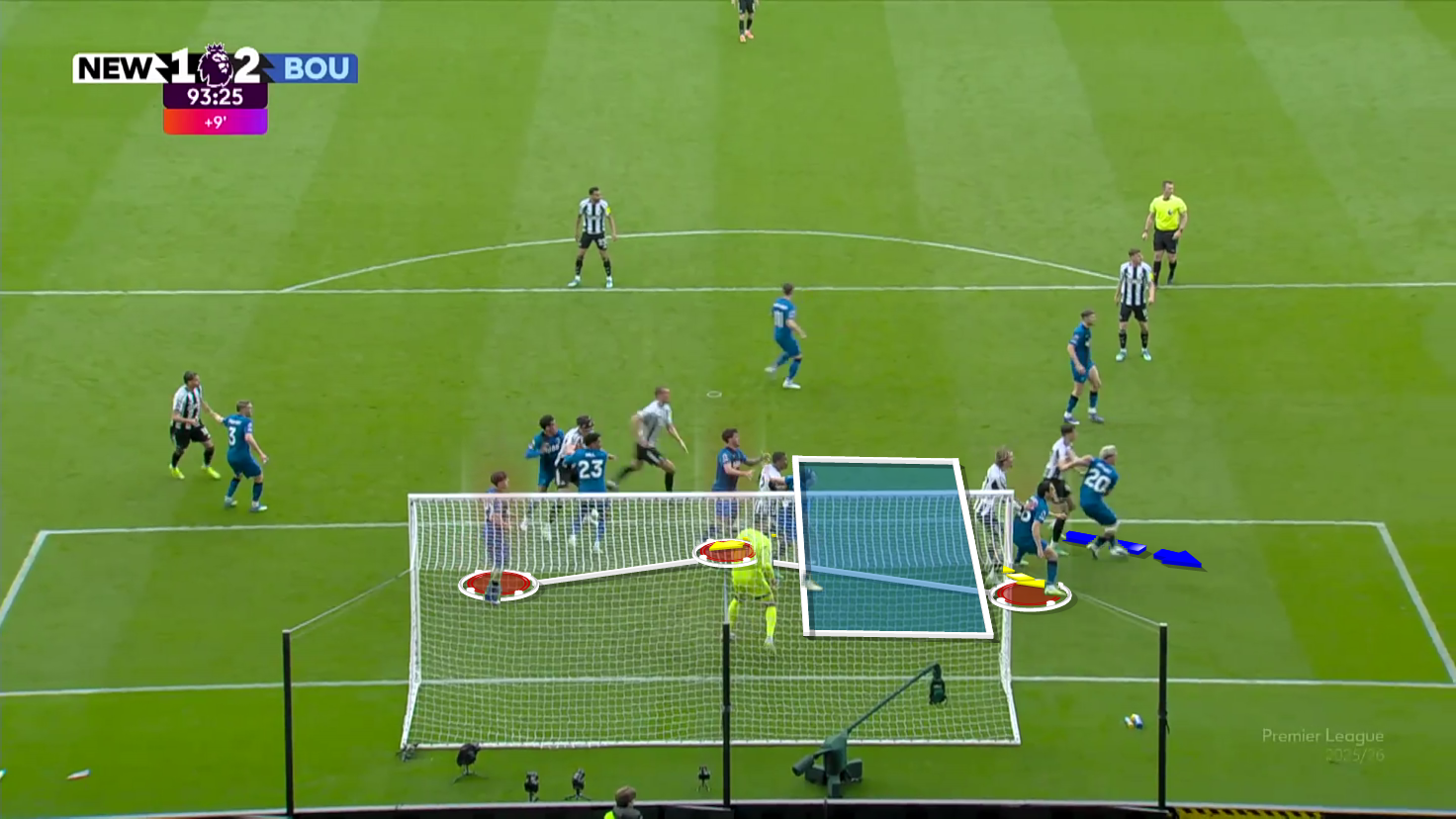
As shown below in Figure 1, AFC Bournemouth defend with three zonal defenders (red), one player on the edge of the box (green), and the rest are man-markers.
You can see that Dan Burn (white) is the target player, attacking the area between the first two zonal defenders on the near post, while five players start beyond the far post.
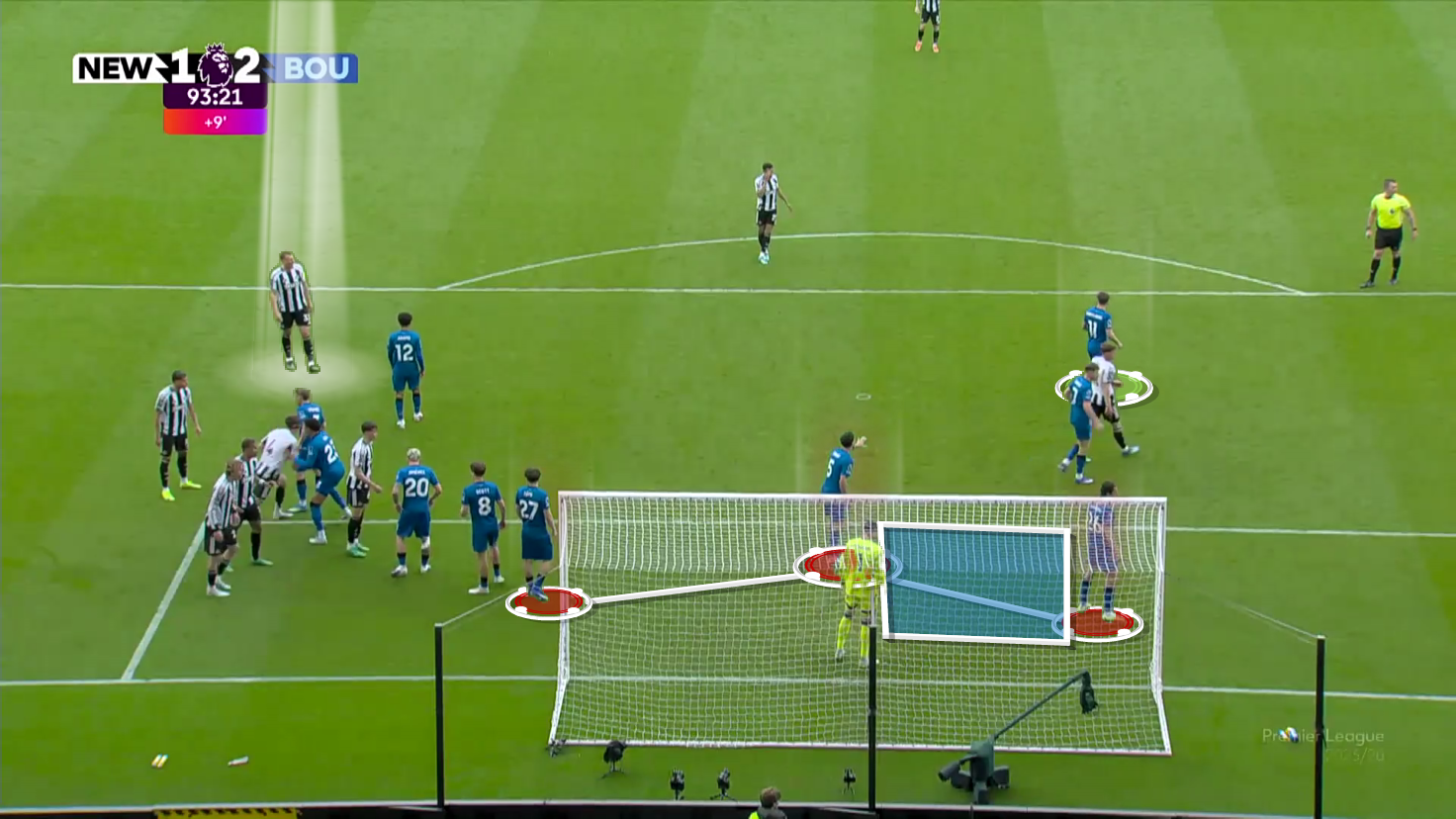
These starting positions make it difficult for defenders to see the ball and the attacker they should mark at the same time; this is called an orientation problem.
It is also difficult for zonal defenders to see the incoming attackers who arrive suddenly while tracking the ball in the air.
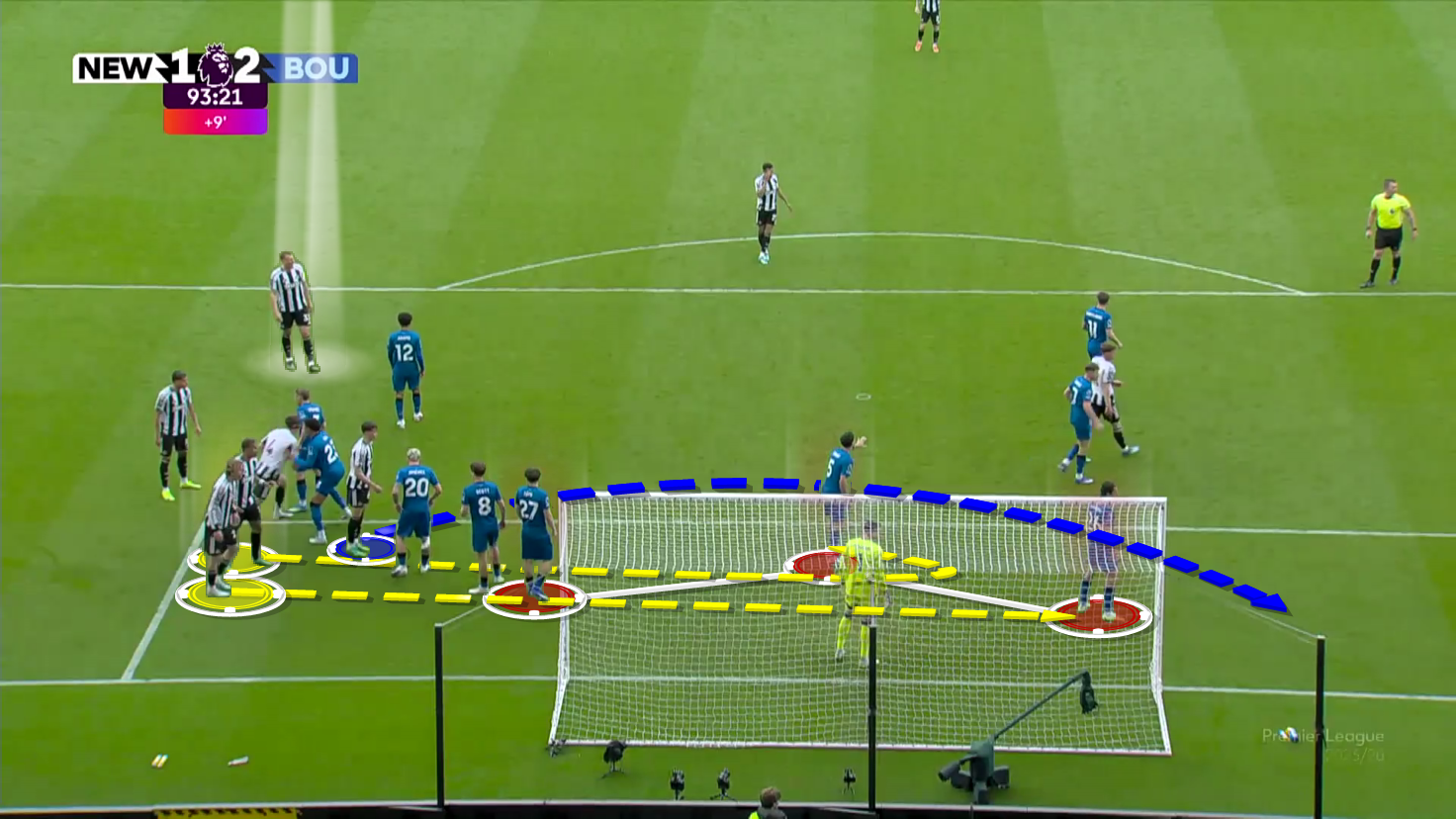
As in Figure 2 below, two players (yellow) block the first two zonal defenders from their blind sides.
A player (blue) runs in front of the first zonal defender to drag him out of his position to enlarge the target area or flick the ball if the cross is underhit.
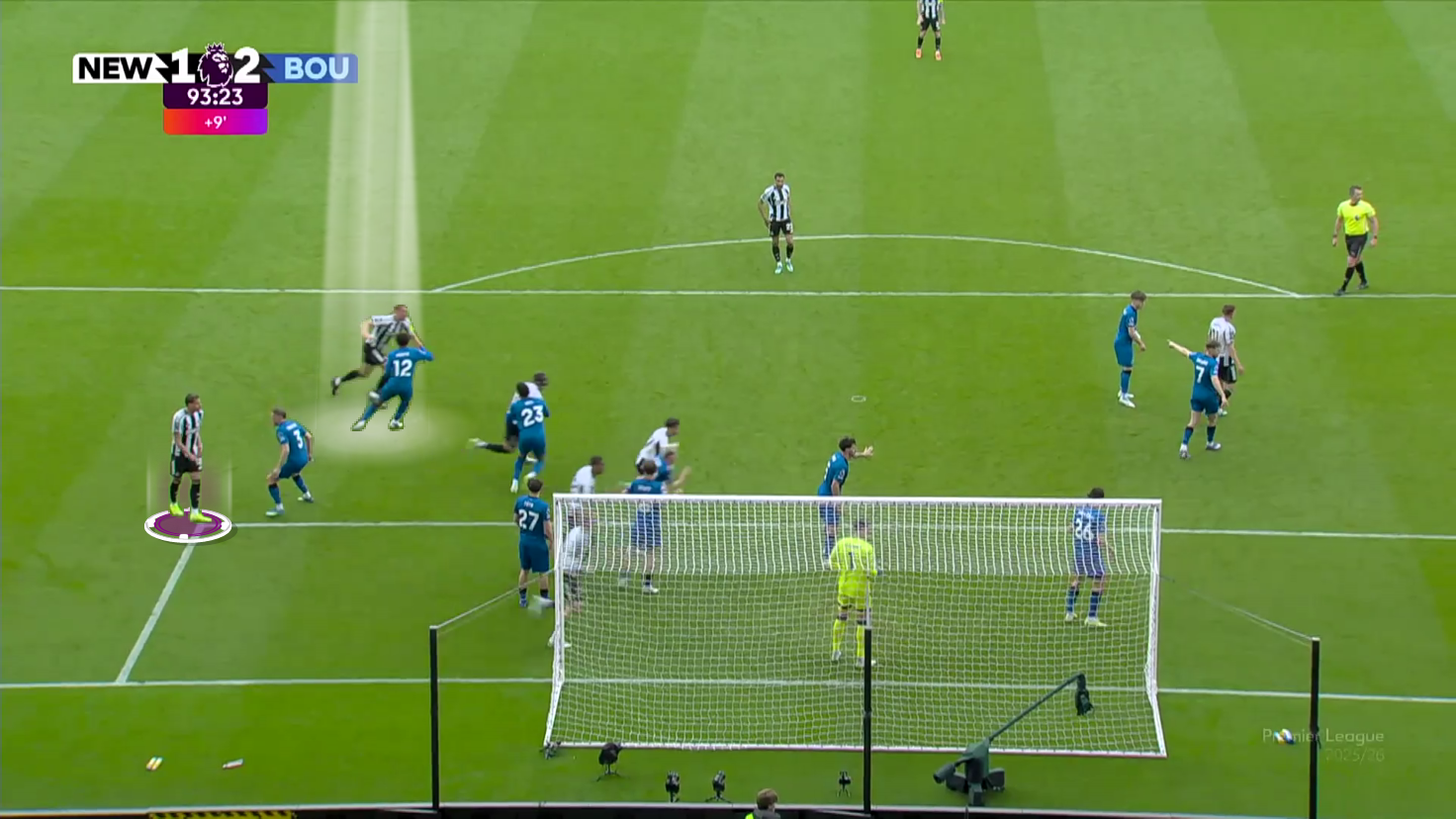
Going to the targeted player in Figure 3 below, it is clear that the man marker can't track him and the ball at the same time.
A player (purple) keeps standing beyond the far post to frame the cross trajectory.
In Figure 4, the man marker turns to look at the ball.
Then, Dan Burn feints to escape and separate from him.
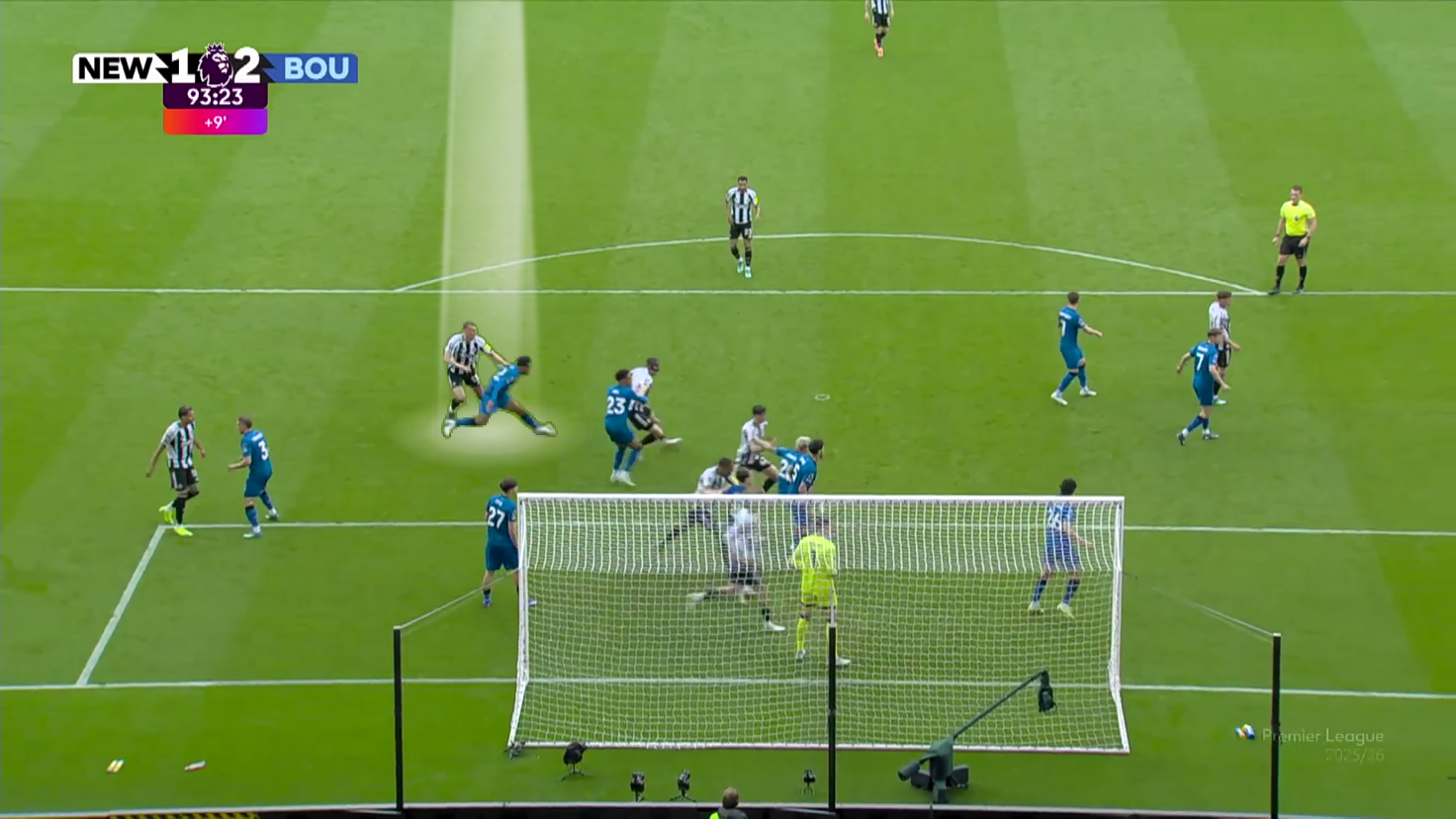
The full separation happens after that in Figure 5 below.
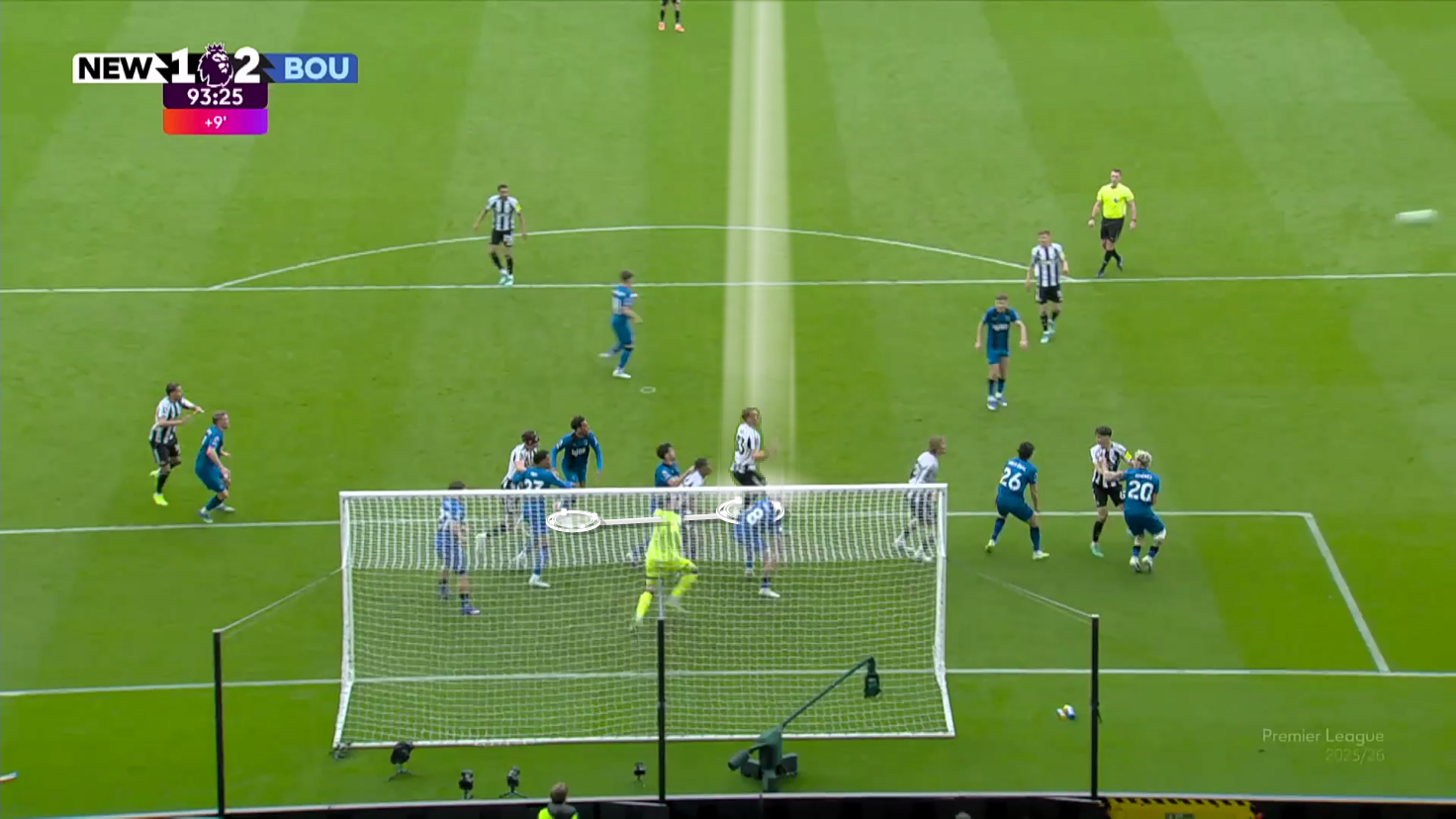
The final shape is clear in Figure 6, where two players (yellow) block the first zonal defenders, one from the back of the first one pushes him forward while he is busy with the blue run.
The other blocker stands in front of the second zonal defender, preventing him from filling this gap.
In Figure 6, you can see that the plan works because Dan Burn gets the cross while the other five players (yellow) frame the goal and the cross trajectory.
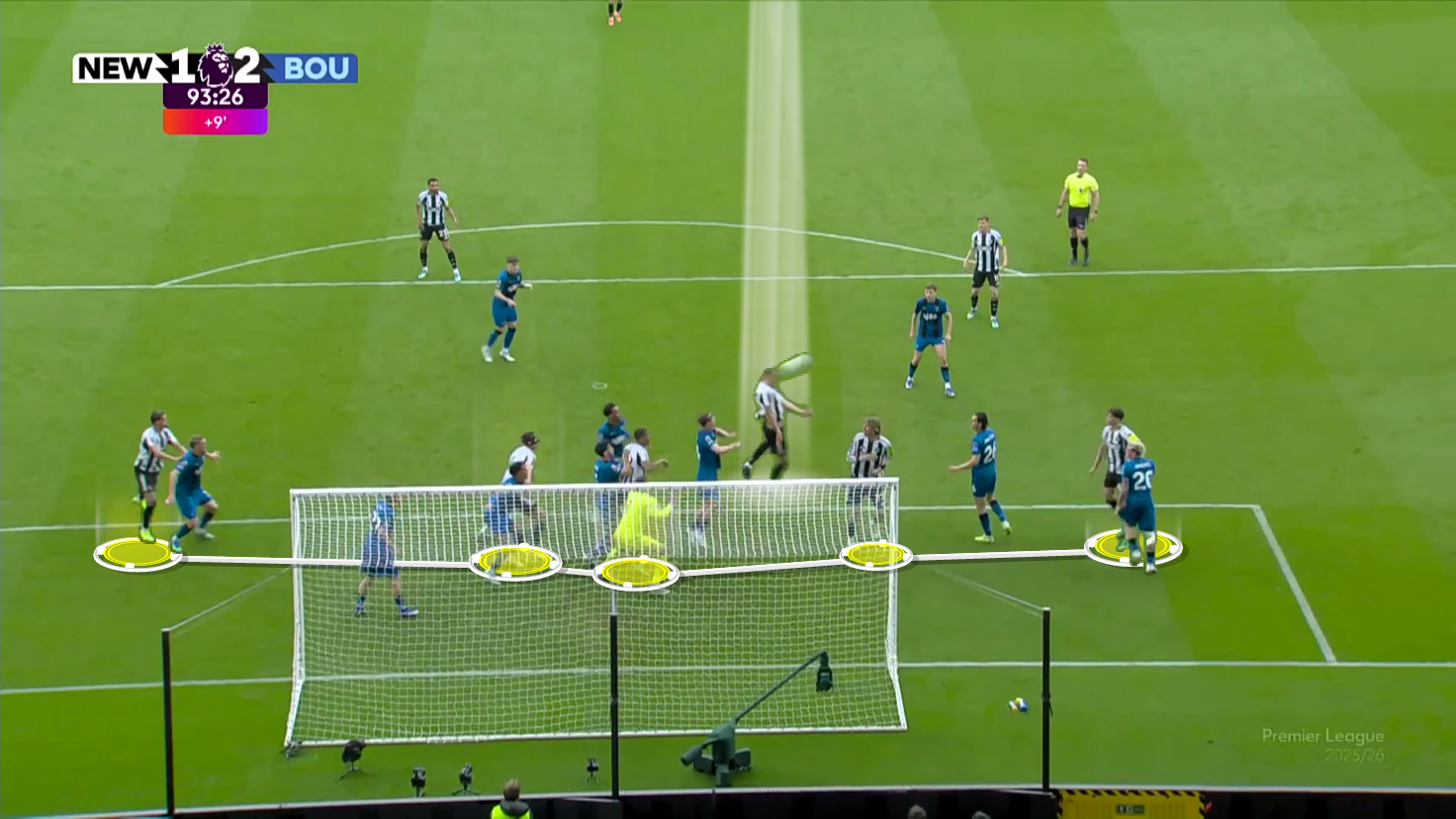
Their principles of overloading, coming from the blind side and framing the goal increase their probability of following the ball many times inside the six-yard box.
This create intended chaos, which makes it difficult for the defending team and their goalkeeper to clear the ball.
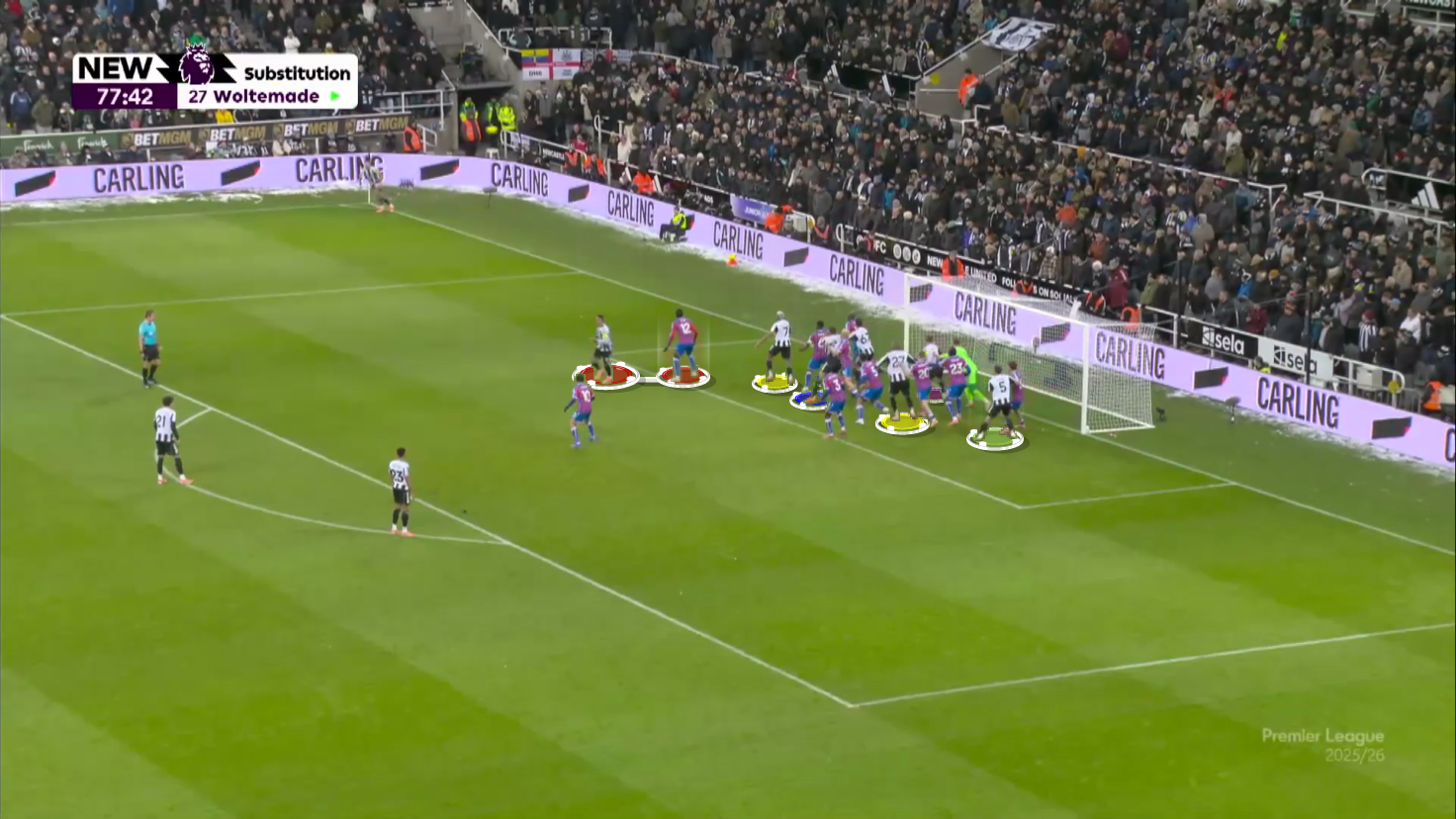
In Figure 8 below, Crystal Palace defend with five zonal defenders (red), a player on the edge of the box (green), and the remaining four are man-markers beyond the far post.
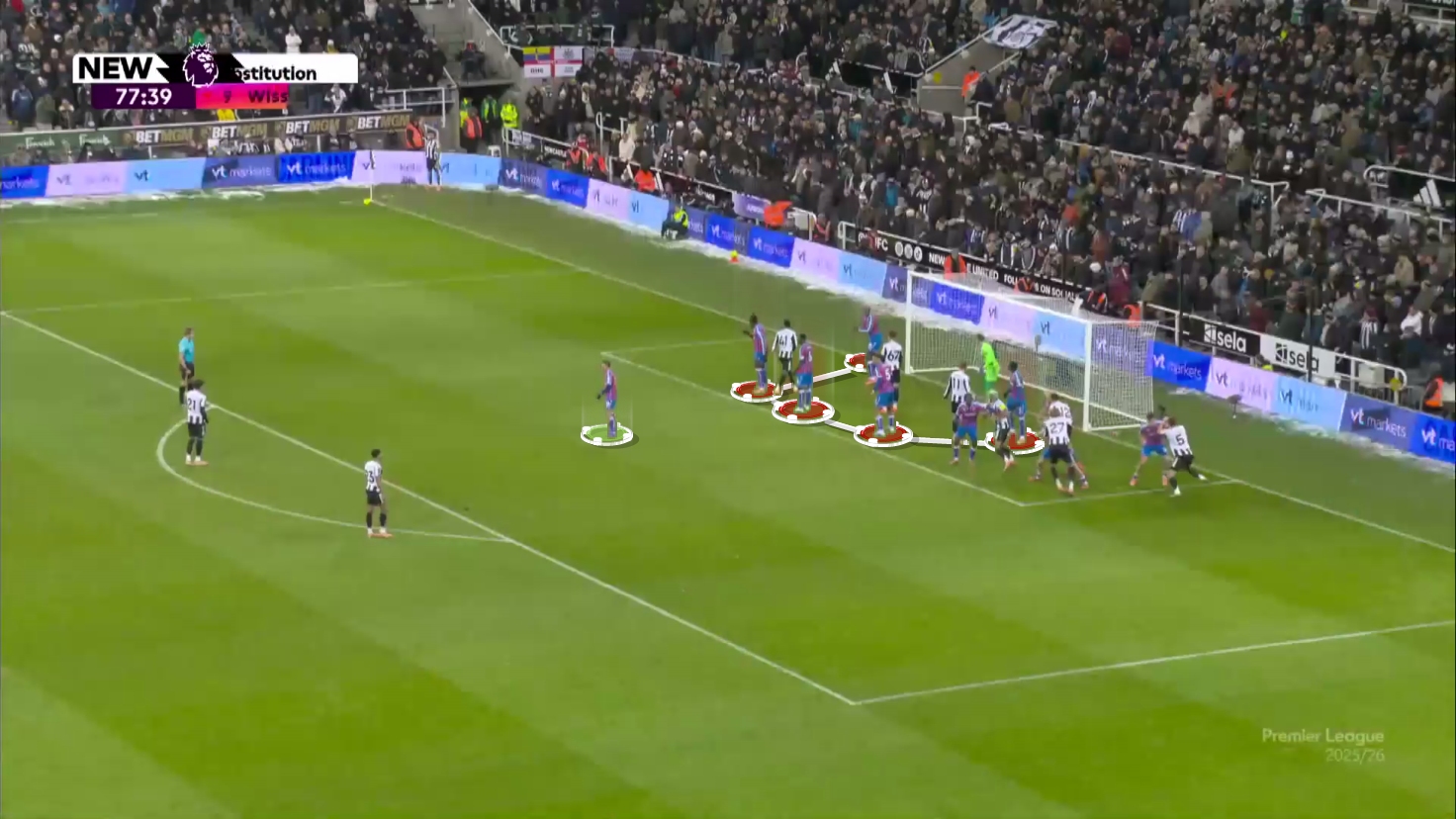
In Figure 9, the first runner (green) goes back for the rebound after feinting a run to get the cross, which drags the first zonal defender out of position, leaving this area empty.
Two players (yellow) block the remaining first two zonal defenders on the near post from their backs.
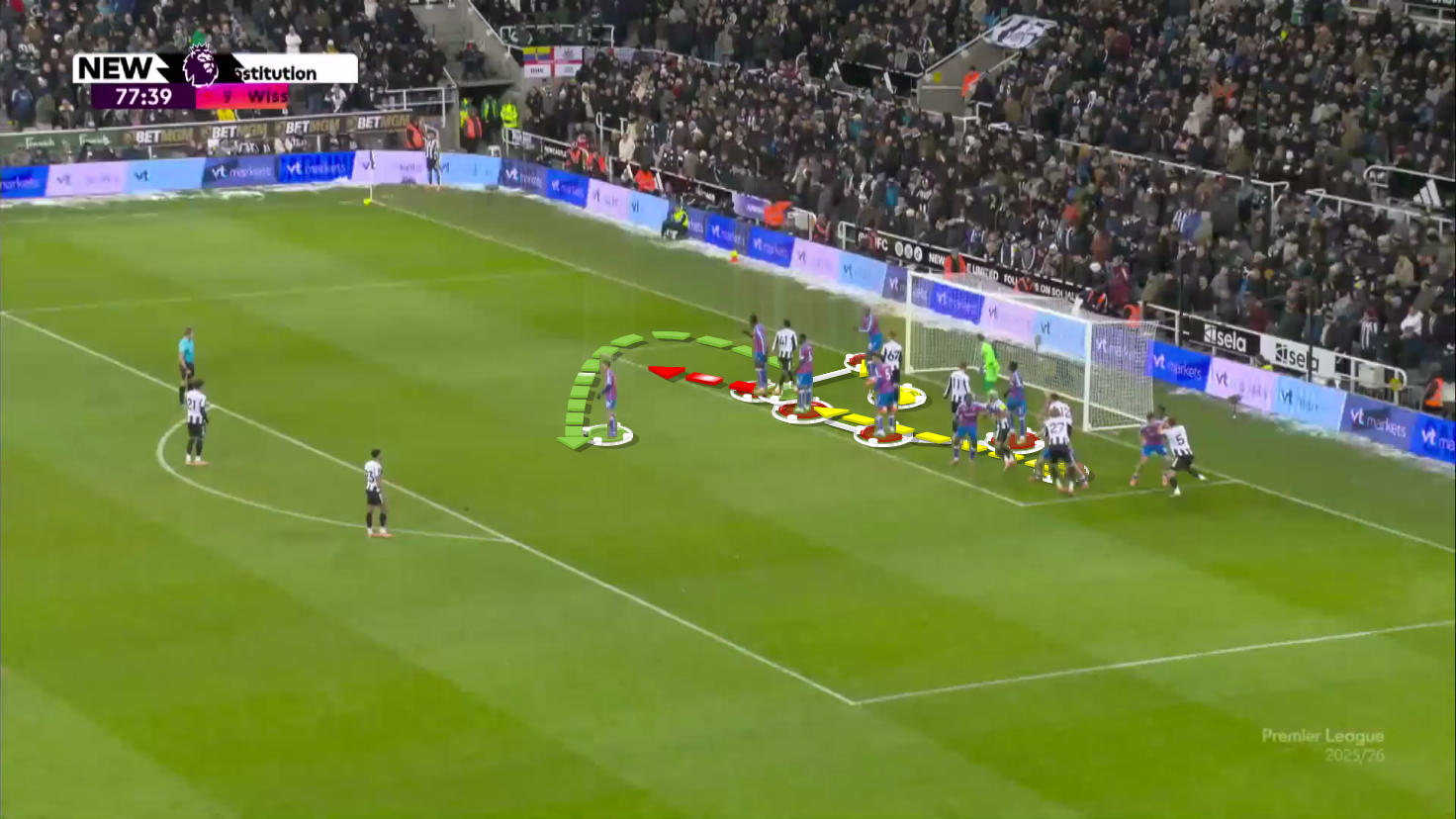
In Figure 10, two runners (yellow) run to get the ball, one in front of the two blocked zonal defenders and one in the middle behind the zonal line to frame the cross trajectory.
A green player will attack the far post to completely frame the goalmouth.
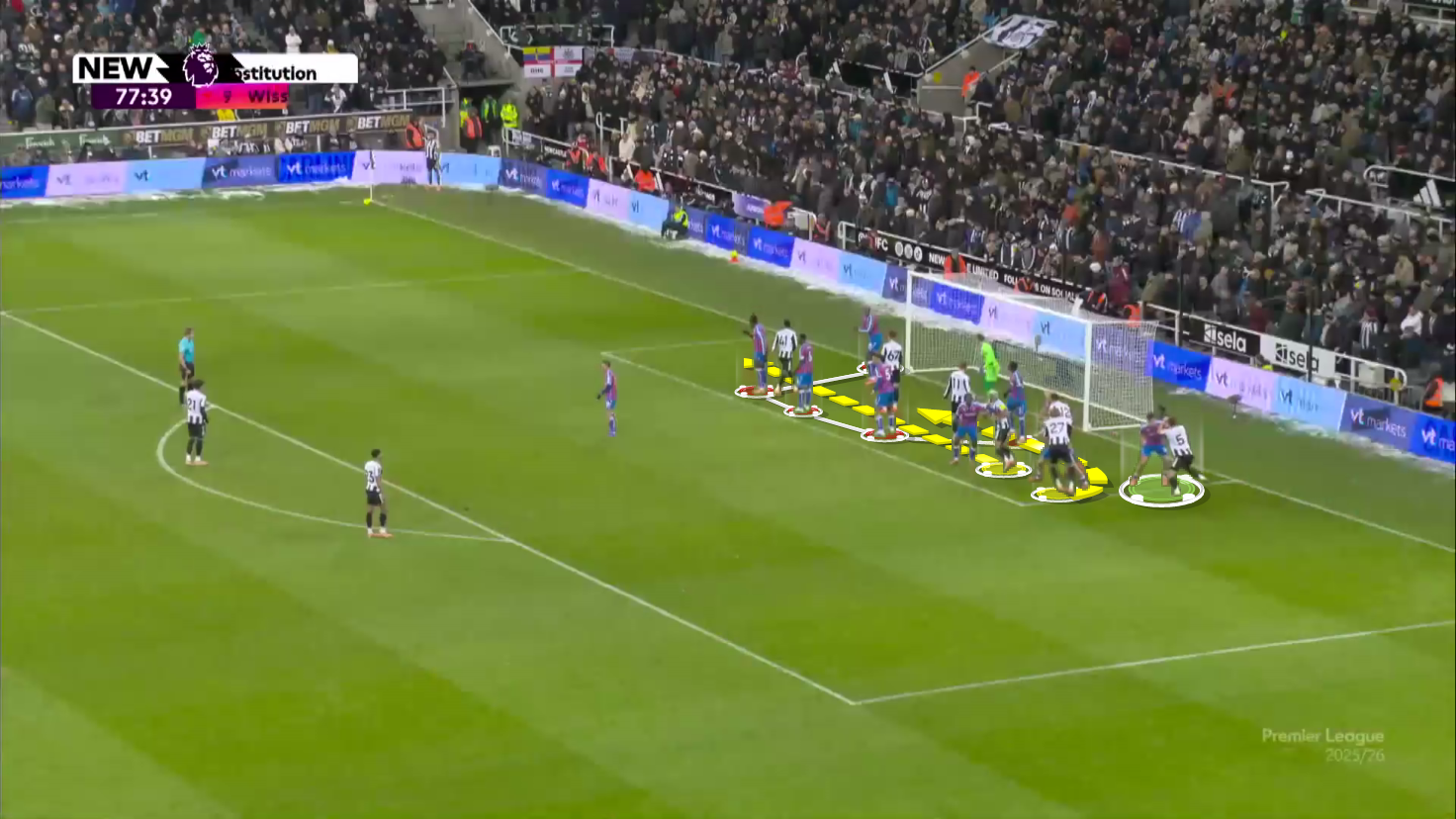
The final shape is clear in Figure 11 below, where two yellow players attack the ball (one before the zonal defenders and one in their back).
What helped a lot were the decoy run (red), the two blocks on the near post (blue), and the player who blocks the goalkeeper from the front.
The green players stand on the far post to frame the goal just in case it is flicked to the far post or the cross is overhit.