
Nicolas Jover Tactics At Arsenal 2025/2026: The Tactical Logic Behind Their Short-Corner Approach – Set-Piece Analysis

Arsenal ended the Premier League Gameweek 34 with positive news.
Although their position at the top may still be temporary, the victory over Newcastle United moved the Gunners back into sole first place, with Manchester City three points behind and still with a game in hand.
The significance of the match at the Emirates Stadium was not only the result but also the manner in which Arsenal secured the three points.
Scoring from set-pieces or corners is nothing new for Arsenal.
However, this goal carried added importance, as it marked their first set-piece goal in nine matches, signalling a return to one of their key strengths.
This moment also brought record-breaking achievements.
Arsenal became the first team in Premier League history to score 17 goals from corners in a single season.
In addition, they set another record by going 1-0 up from a corner 10 times in one campaign.
What made the goal even more distinctive was that it came from a short corner, a method Arsenal have rarely used this season.
Before this Newcastle game, Arsenal had played only six short corners in the Premier League this season.
Notably, two of these came against Newcastle in the reverse fixture in September 2025.
This means Arsenal played just four short corners across 32 league matches, compared to six across two games against Newcastle.
This contrast raises an important question: why do Arsenal favour short corners against Newcastle?
To explore this, it is necessary to first examine Newcastle’s defensive structure against short corners.
This provides insight into what Nicolas Jover identified and why Arsenal opted for this approach.
Understanding Newcastle’s defensive organisation requires analysing how they respond to different attacking short corner routines.
Newcastle Short Corner Defending System
Against A One-Starter Short Option
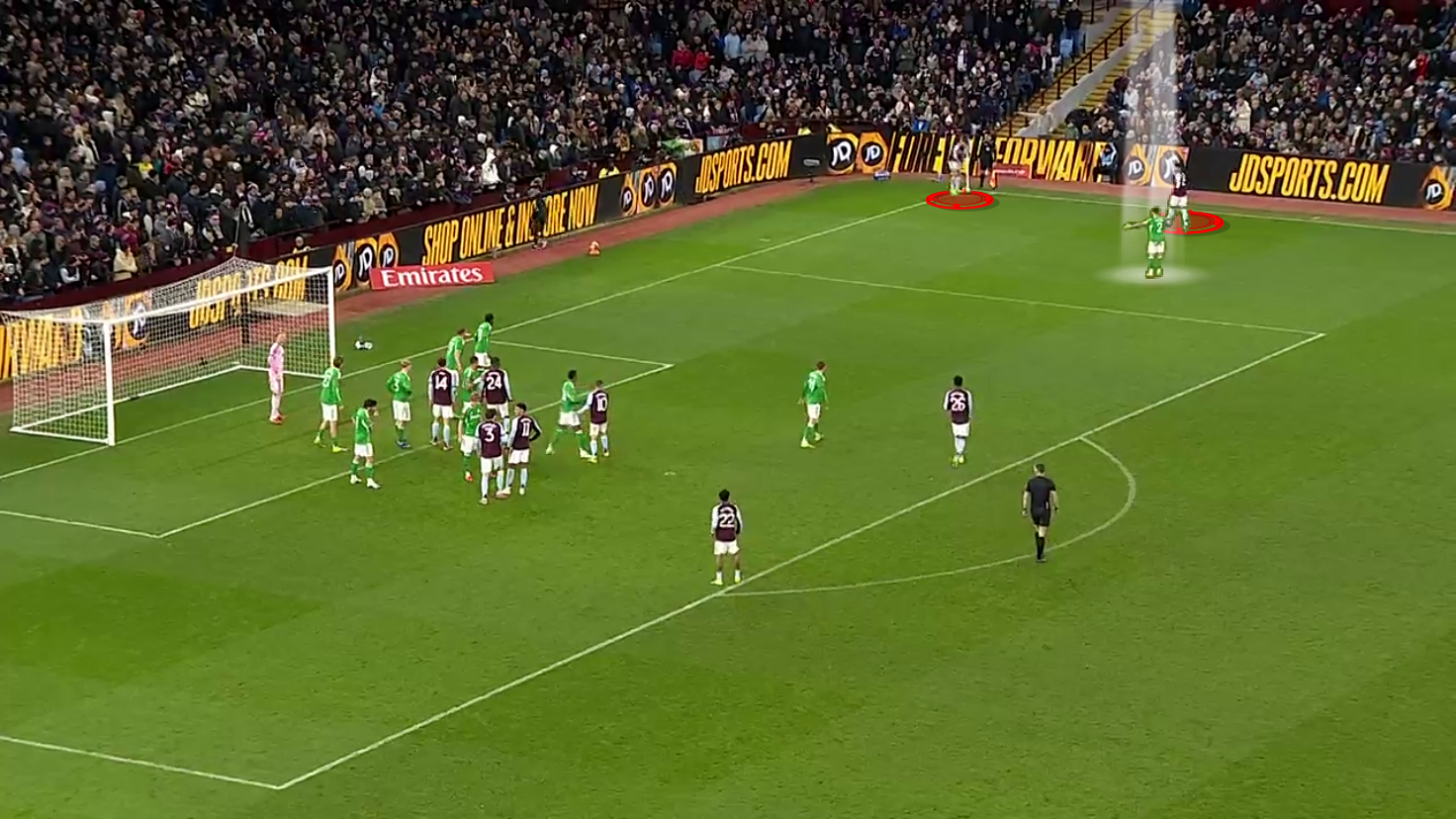
Against Aston Villa, Newcastle show that when the attacking team positions a short corner option near the corner from the start, they immediately assign a defender to go out.
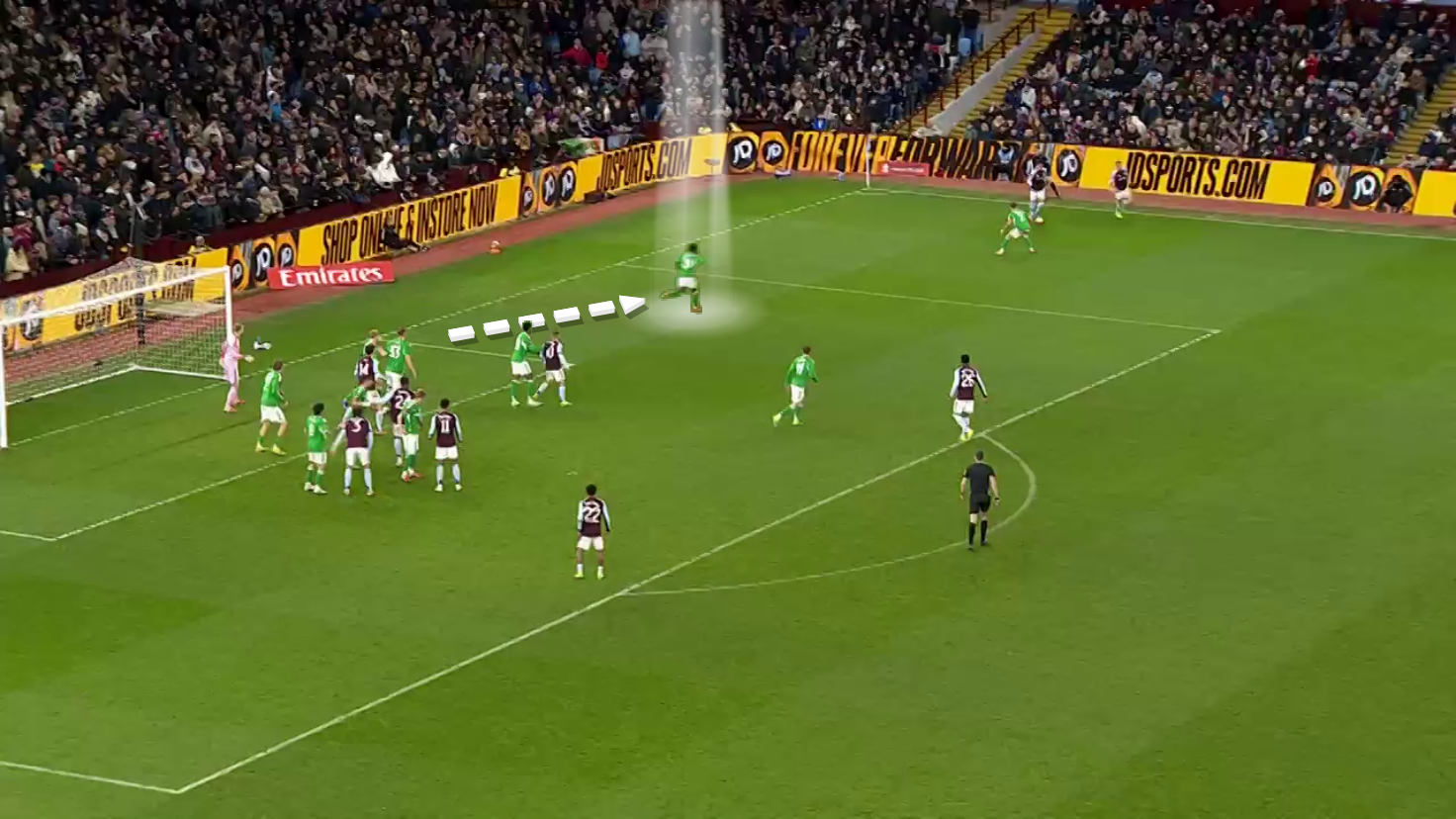
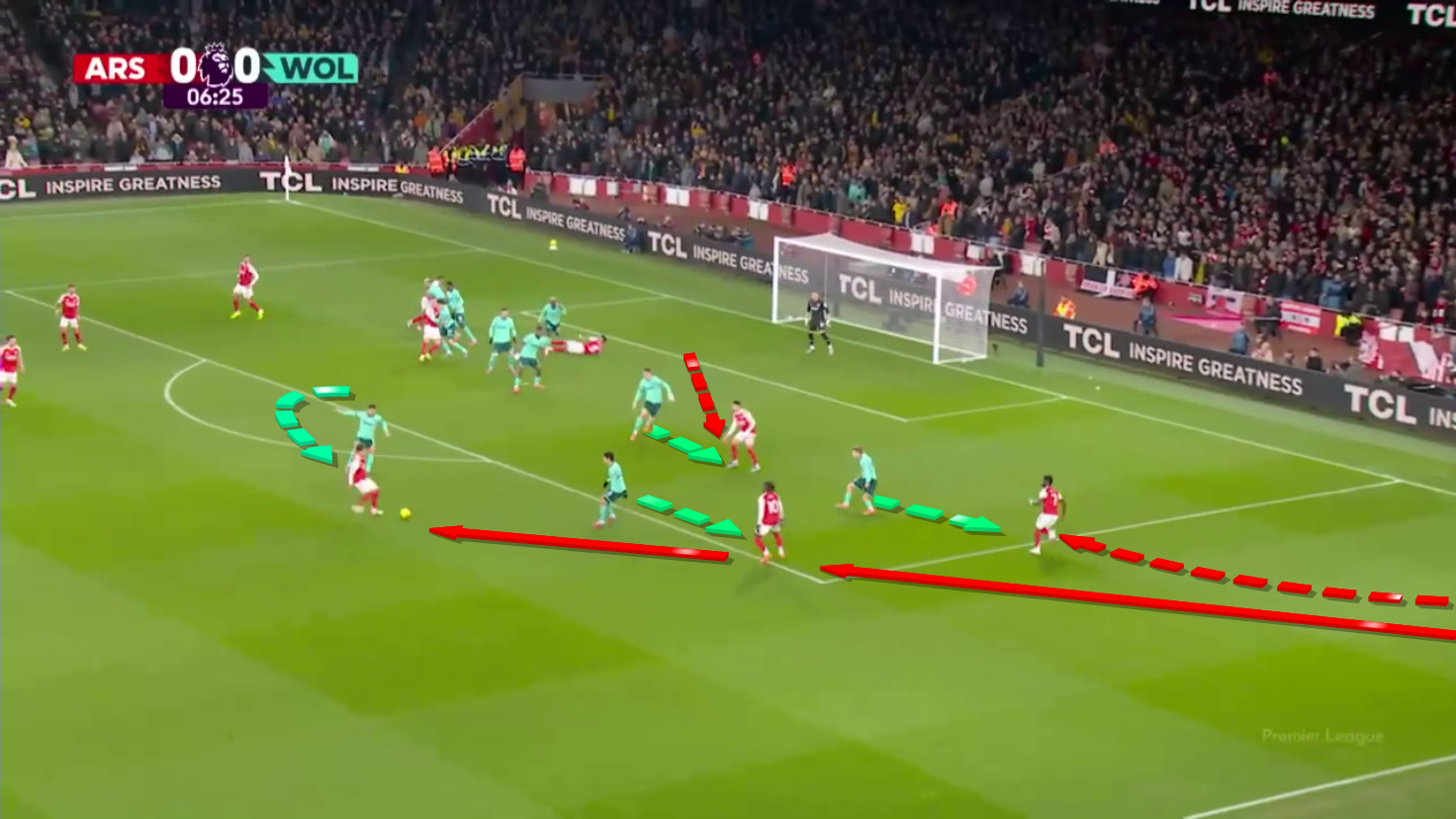
As shown in Figure 2, when the attacking team plays the corner short, Newcastle send a second defender from inside the six-yard box, typically one of the zonal markers, to support the press.
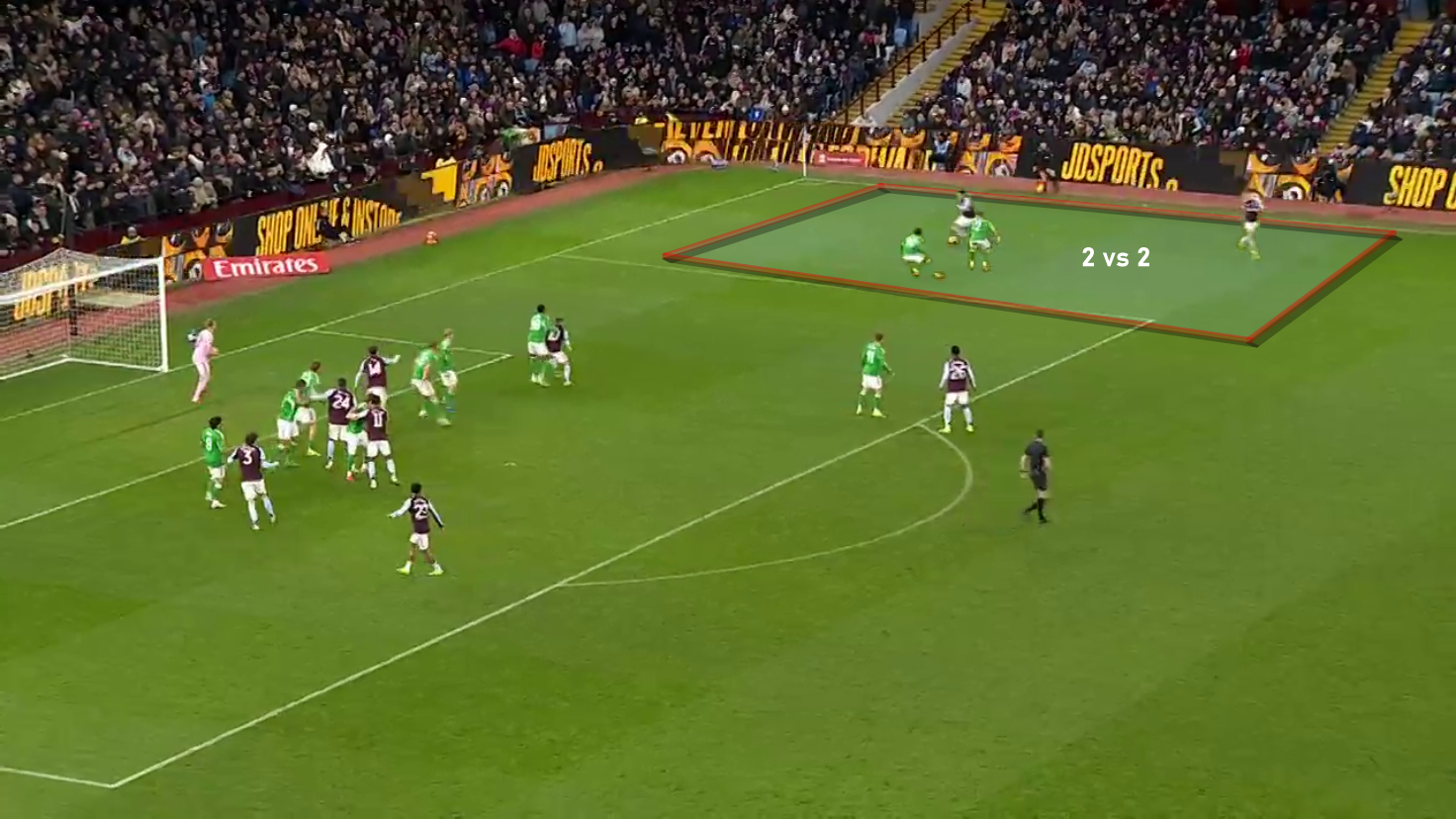
The purpose of sending the second defender is to create a 2v2 situation against the attackers, as illustrated in Figure 3.
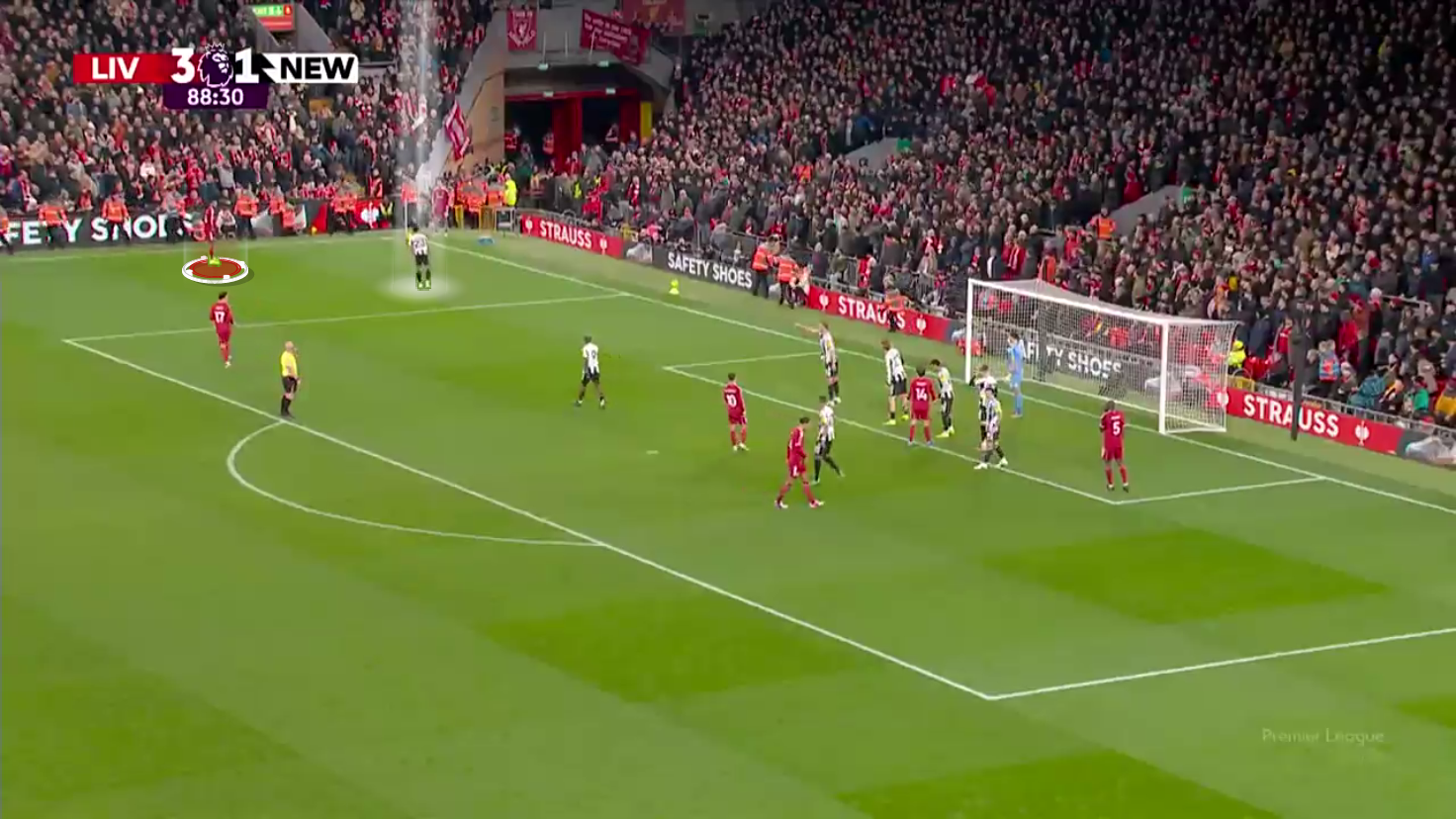
In another example against Liverpool, Newcastle again assign a defender near the ball because the attacking team positions a short corner option close to the corner.
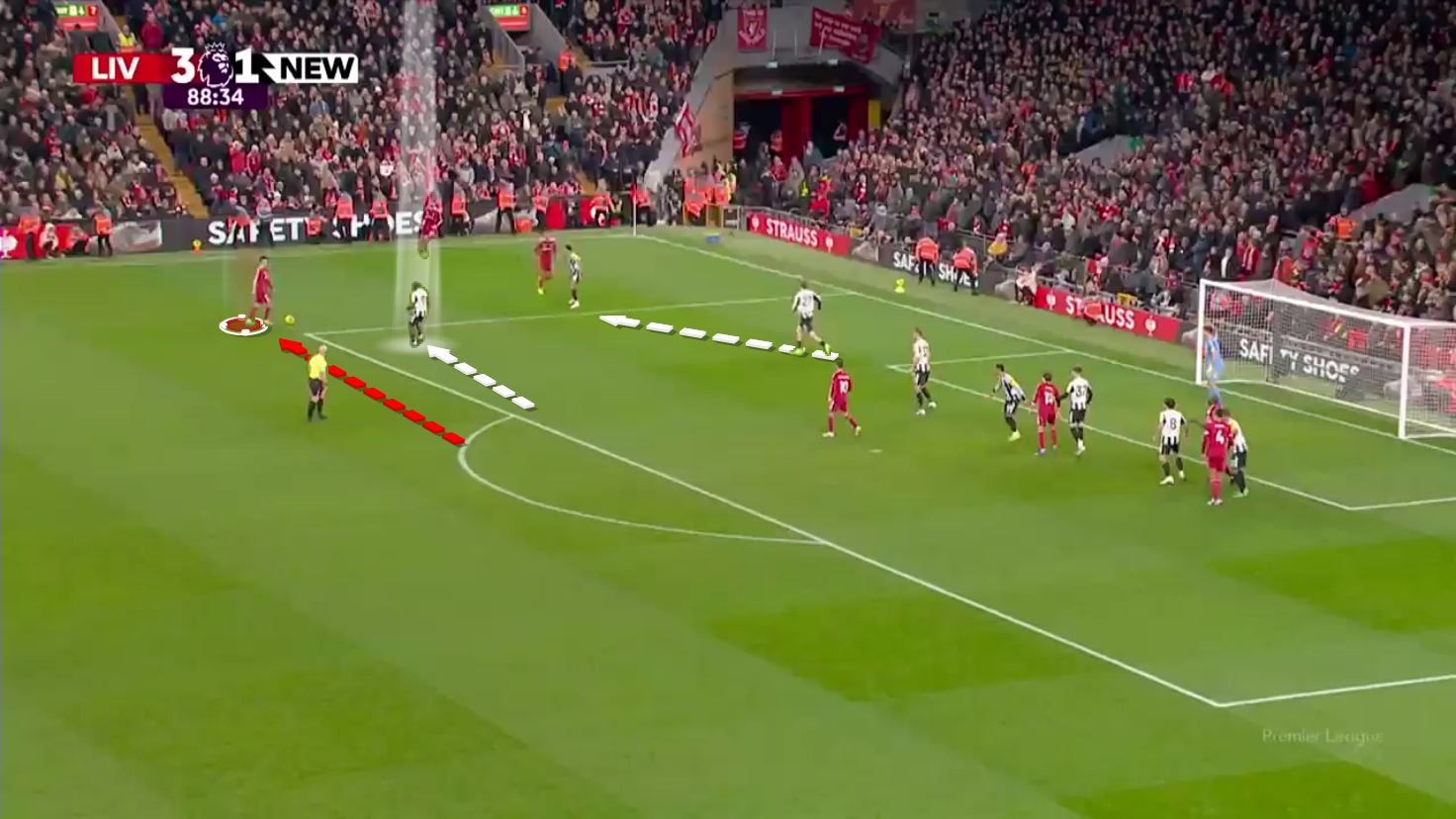
In this situation, while the second short corner defender moves out from the six-yard box to match numbers, an additional detail becomes clear: the edge of the box.
When the box attacker becomes involved, the responsibility shifts to the second-ball defender, who steps out to close him down.
Against An Edge Of The Box Option Who Becomes A Short Option
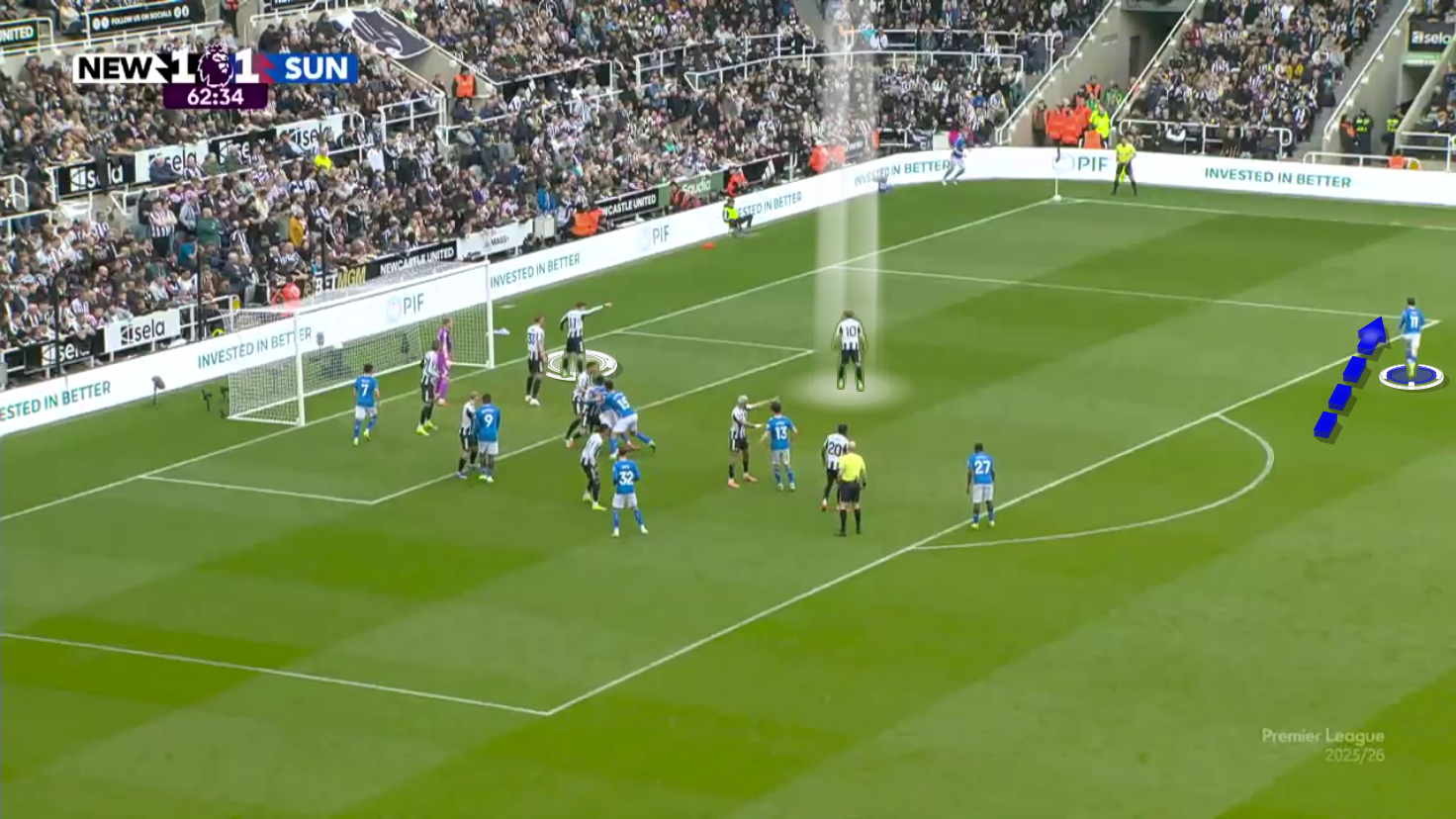
In this example, the attacking team does not initially position a short option near the corner, so Newcastle do not assign a defender there.
However, once the edge-of-the-box attacker moves to receive the short pass, the nearest second-ball defender follows him and becomes the first short defender.
The zonal defender signals this to his teammate.
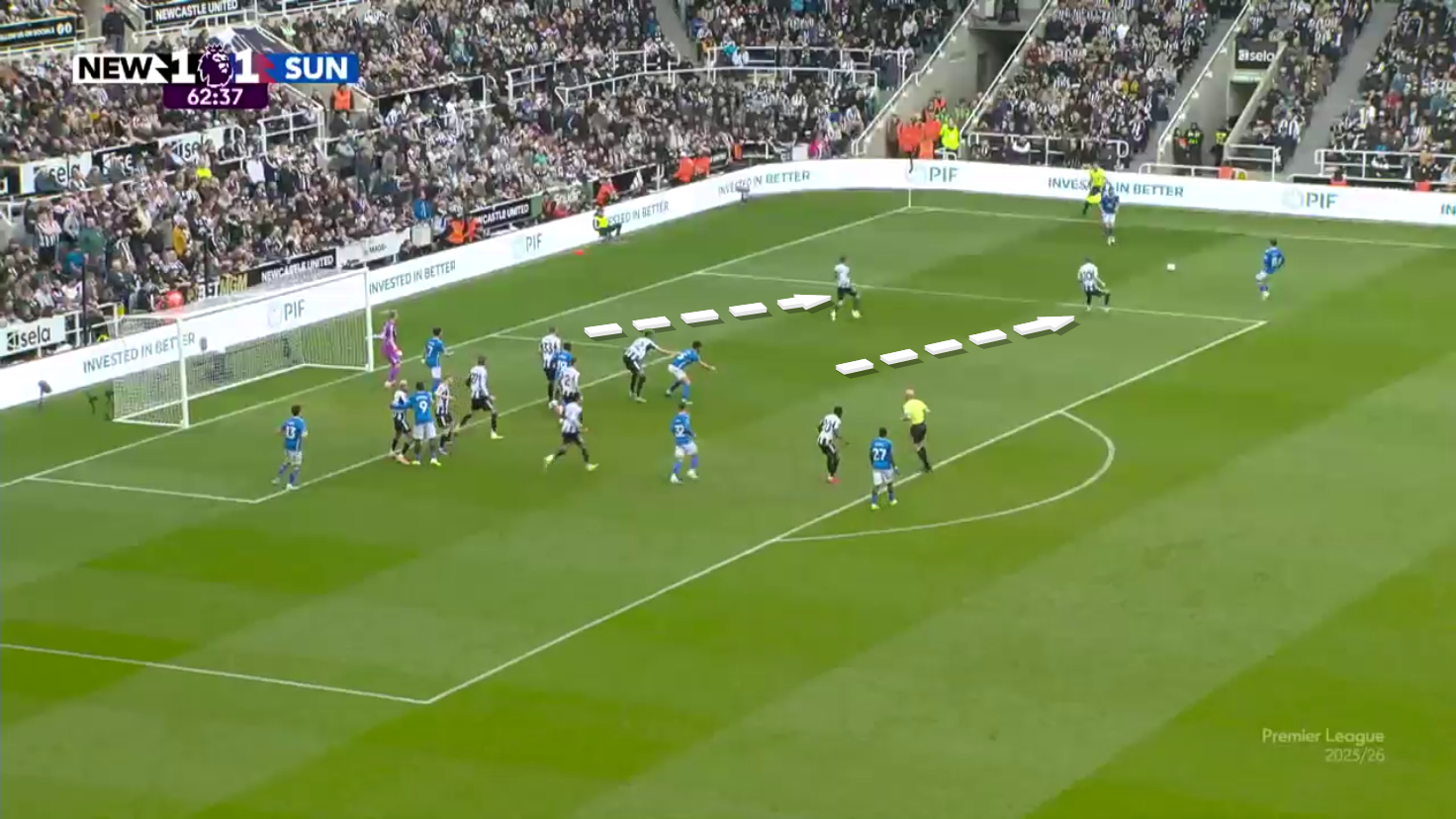
This example further clarifies Newcastle’s defensive structure, as the zonal defender leaves the six-yard box to become the second short defender, ensuring numerical equality and forming a two-versus-two situation outside the box.
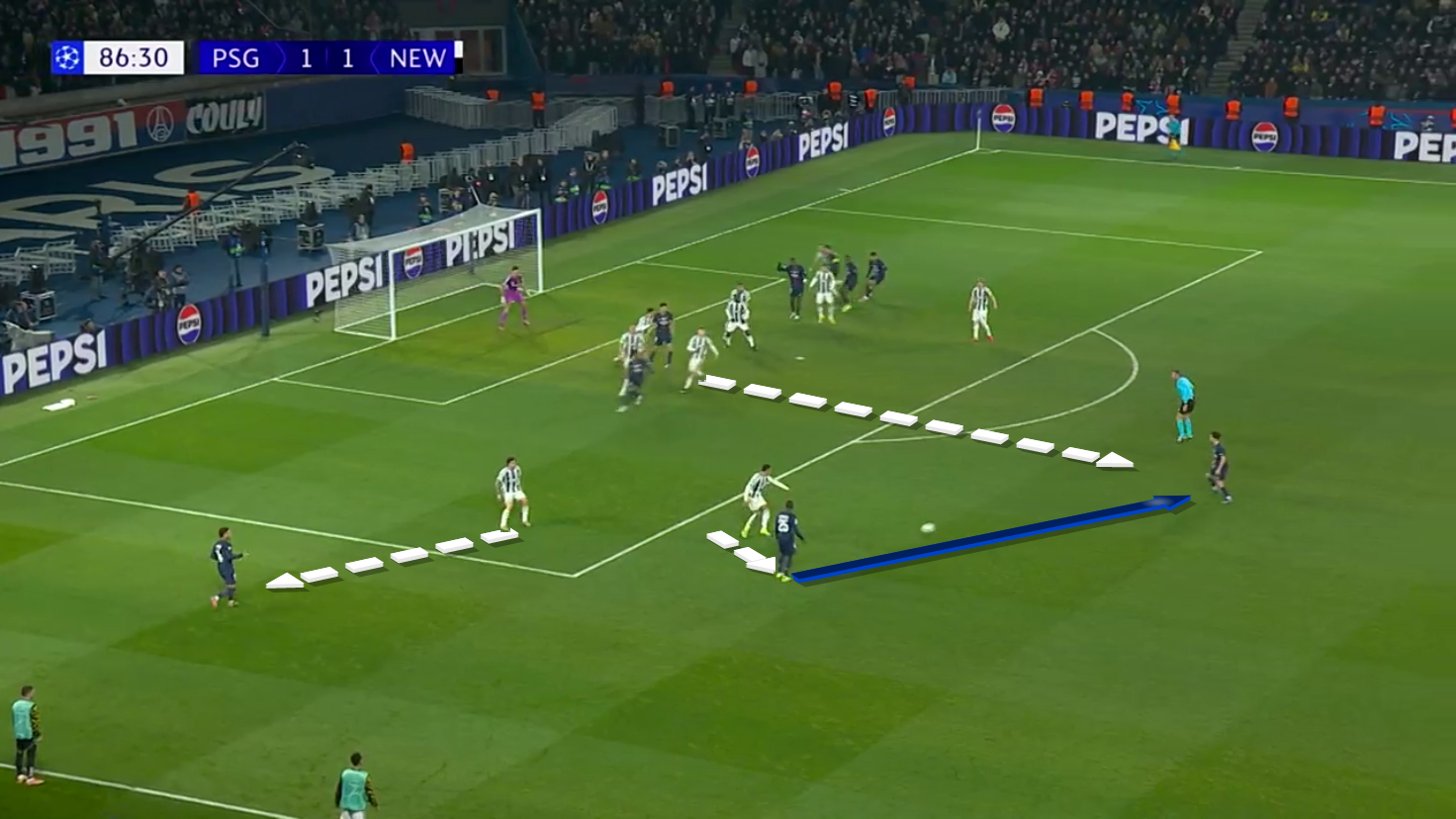
A similar situation occurs against Paris Saint-Germain, where the pass is played to the edge of the box to the attacker, drawing out the second-ball defender, while the zonal defender steps forward again.
However, if the attacker manages to switch play to the nearest edge of the box, the defender responsible for that zone may still be deep inside the box and arrive late, allowing a shooting opportunity.
We will get to this later.
Against A Short Option Who Comes From Inside The Box
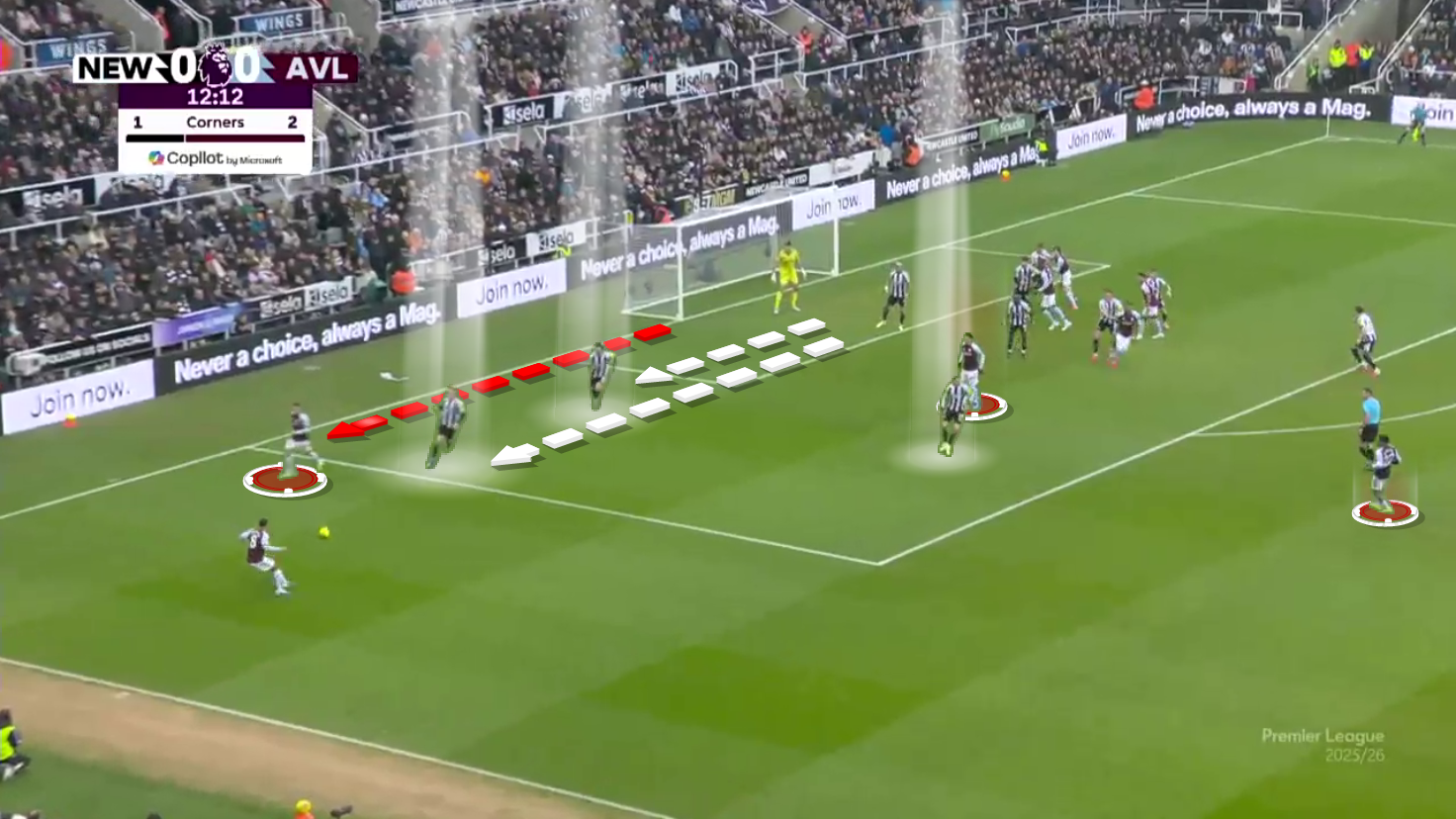
Another variation occurs when the attacking team uses the box as the starting position for the short-option player.
In this example, Aston Villa have a player run from inside the box to receive the short corner.
Newcastle respond by sending two defenders to match numbers outside the box, maintaining the 2v2 structure.
However, the second ball defender becomes distracted by an attacker positioned behind him, a detail that will be explored further later, too.
At this stage, Newcastle’s responses to different short corner setups, particularly regarding starting positions, become clear.
This provides a foundation to compare with Arsenal’s approach to attacking short corners.
Arsenal Attacking Short Corners