Régis Le Bris Tactics At Sunderland 2026/2027: How Did The Black Cats Lose Their Way & How Can They Find It Again? - Tactical Analysis

There is an old saying in coaching that a team that tries to become something else ends up being nothing at all.
You don't have to stretch it far to describe Sunderland in the autumn of 2026.
About 12 months ago, Régis Le Bris had the most talked-about promoted side in the country.
They finished seventh, got into Europe and were only six points off the Champions League places.
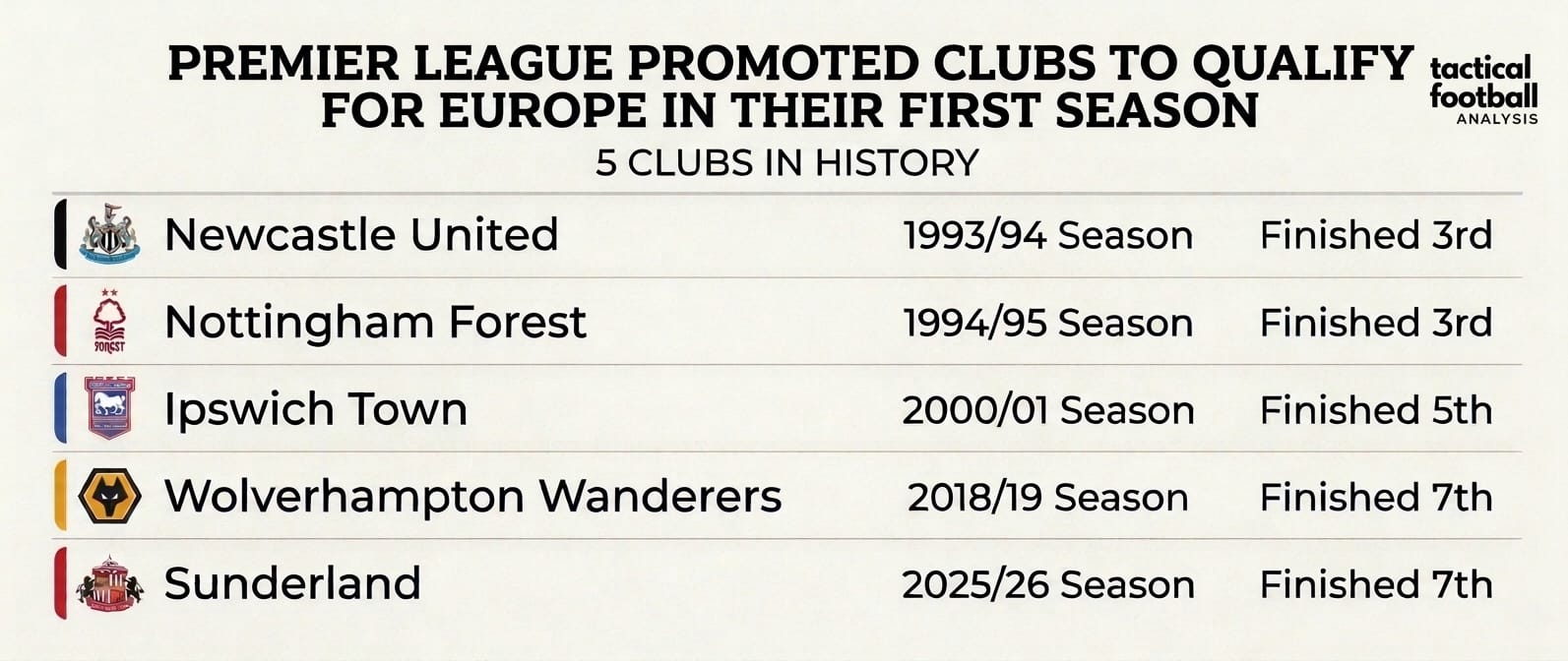
Sunderland have joined an exclusive club, becoming just the fifth promoted side in history to secure European qualification in their first season back in the Premier League.
Premier League Promoted Clubs To Qualify For Europe In Their First Season
Now, 10 games into the new campaign, they had one league win before the weekend, 17 goals conceded in nine matches.
Granit Xhaka questioned the team's courage and Nordi Mukiele called it arrogance, but Robin Roefs probably put it best:
"Last season, we were nasty, we were direct; we're too imbalanced and give away easy goals."
This Sunderland tactical analysis explores the on-pitch issues behind Sunderland’s recent slump, their juggling of European football, and a potential glimmer of hope after their win against Chelsea.
The Sunderland Model That Worked
Le Bris has never split attacking and defending into separate phases.
When they had the ball, the shape was already set up to lose it.
When they played long, the whole block pushed up behind the ball to shrink the gaps, so that any second ball could be attacked straight away.
As shown against Liverpool, as soon as Roefs launches the ball, Sunderland commit numbers forward.
Almost every player is positioned in Liverpool’s half and ready to compete for the second ball.
The aim is to win the knockdown and build attacks from there, while also having enough bodies around the drop zone to contest any loose balls if they lose the initial aerial duel.
For the goal, there are surrounding players, so when Wilson Isidor wins the header, there are enough players to keep the ball alive.