Riccardo Calafiori Scout Report At Arsenal 2026/2027: Have Mikel Arteta Tactics Unlocked His Full Potential? – Player Analysis

Arsenal came close to achieving a rare domestic and European double, narrowly missing out on both the Premier League and UEFA Champions League titles after a historic campaign that nonetheless marked their first league triumph in 22 years.
Riccardo Calafiori, signed from FC Bologna 1909 in 2024, has been a steady and dependable presence throughout this period of progress.
He has adapted well to the demands of the Premier League and contributed consistently within Arsenal’s evolving tactical framework.
However, despite his clear ability and versatility, there remains a sense that his full potential is yet to be fully unlocked.
Recent rumours linking him with a potential departure from the Emirates only intensify that perception, raising questions about whether Arsenal are maximising a player whose ceiling still appears significantly higher.
In this Riccardo Calafiori scout report and player analysis, we analyse Calafiori with special insight into his individual abilities, strengths, weaknesses, and stats from the 2025/2026 season.
Riccardo Calafiori Style Of Play
Calafiori possesses an imposing physical profile.
Standing at 1.88 metres tall, he combines his height with long legs and an athletic stride that allows him to cover ground efficiently.
His mobility is reflected in UEFA Champions League data, where he averaged 10.8 kilometres covered per game and reached a top speed of 30.3 kilometres per hour.
During the 2025/2026 Premier League season, he made 26 appearances, starting 22 matches and accumulating 1,707 minutes.
Averaging 66 minutes per game, he demonstrated the stamina and physical resilience required to operate at a high intensity for extended periods and regularly complete full matches when required.
In possession, Calafiori displays a calm and controlled approach.
He typically receives the ball using the inside of his boot, allowing him to maintain balance and prepare his next action quickly.
His passing game is largely focused on short and secure combinations rather than ambitious or high-risk distribution.
This conservative approach is likely influenced by Arsenal's positional structure and the instructions of Mikel Arteta, who places significant emphasis on ball retention and controlled progression.
Consequently, Calafiori rarely attempts long balls and instead prioritises maintaining possession and circulating the ball efficiently.
One of his standout qualities is his ability to carry the ball forward.
Calafiori is comfortable dribbling through pressure and uses the inside of his stronger left foot to keep close control while advancing.
What makes this particularly effective is his capacity to maintain speed while carrying the ball, enabling him to progress play without sacrificing momentum.
His ball carrying often helps Arsenal break opposition lines and move into more advanced areas of the pitch.
Equally impressive is his movement without possession.
Calafiori consistently makes intelligent off-the-ball runs that create space for teammates and facilitate Arsenal's positional rotations.
These movements often draw opponents out of position, opening passing lanes and supporting the fluid attacking patterns that are central to Arteta's system.
Defensively, Calafiori's game is built upon awareness and anticipation.
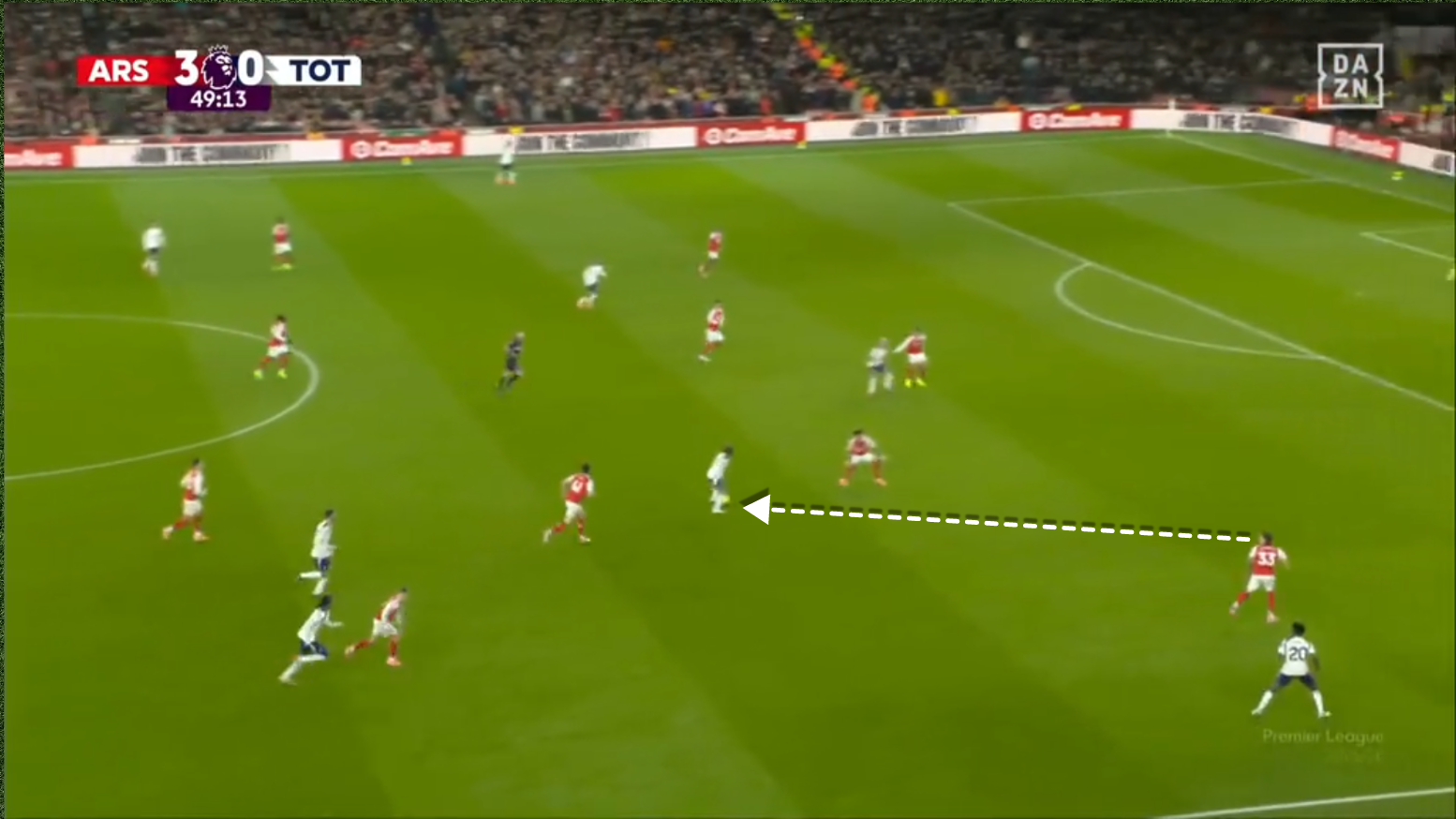
He is constantly scanning the pitch to assess the balance of play and ensure his positioning remains correct, as shown in Figure 1.
His ability to process information before receiving or defending allows him to react quickly to changing situations and maintain defensive structure.
His one-versus-one defending demonstrates a high level of tactical understanding.
In a notable duel against Sporting CP's Francisco Trincão, Calafiori adopted a stance with his weaker right foot forward and his stronger left foot behind, as seen in Figure 2.
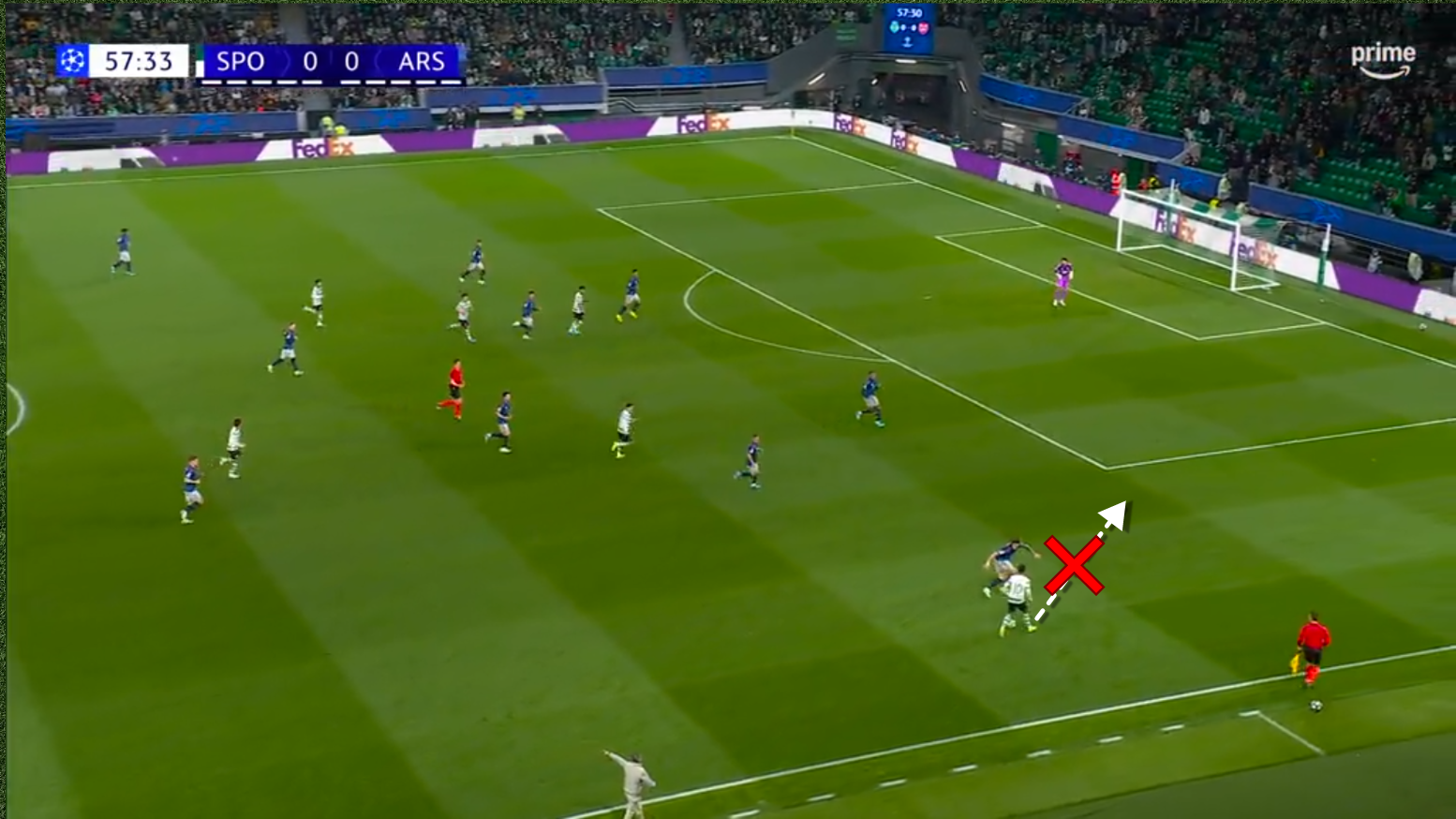
This positioning was designed to prevent Trincão from shifting the ball onto his right foot.
Should the attacker attempt to move in that direction, Calafiori would be in an ideal position to challenge using his stronger left foot.
When faced with the possibility of a two-versus-one situation, Calafiori adjusts accordingly.
Rather than remaining side on to a single opponent, he opens his body shape to improve his field of vision and monitor multiple threats simultaneously.
This enables him to track passing options while remaining prepared to engage the ball carrier if necessary.
His concentration levels are also evident in defensive phases.
In one sequence against Tottenham Hotspur, Calafiori was observed scanning over his shoulder six times while waiting for a cross from the opposite flank.
This constant checking of his surroundings ensured he maintained awareness of both the ball and his direct opponent, reducing the risk of losing his marker inside the penalty area.
Aerially, Calafiori benefits from both his height and timing.
His reach during aerial duels is particularly effective, allowing him to compete strongly in both defensive and attacking situations.
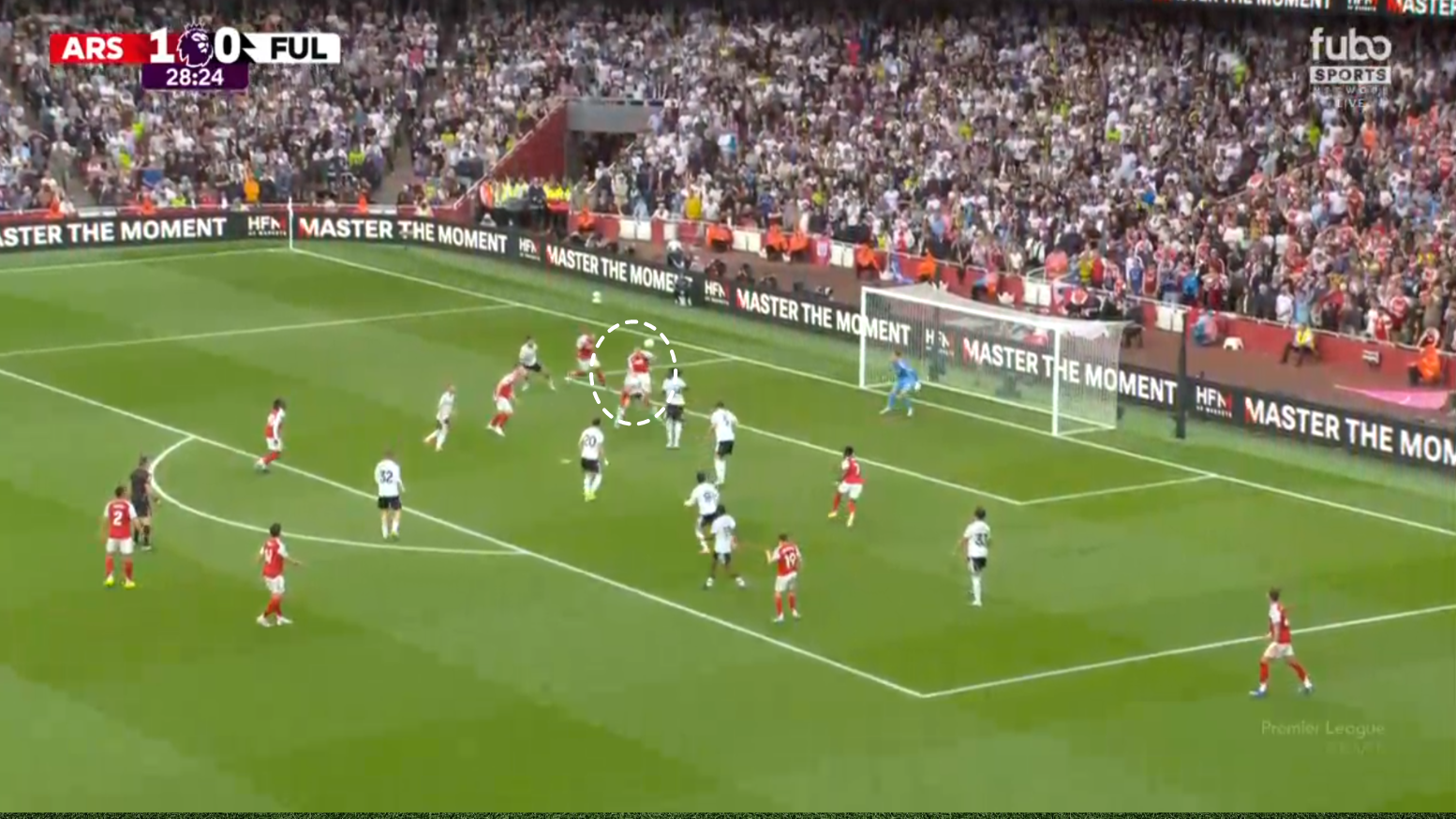
This was demonstrated against Fulham when he rose above defenders to score with a powerful header.
However, the goal was ultimately ruled out because of an offside infringement earlier in the move, as seen in Figure 3.
Beyond his technical and physical attributes, Calafiori also contributes through communication.
He is a vocal presence on the pitch, frequently directing teammates with hand signals and verbal instructions.
By guiding the player in possession towards available passing options, he helps maintain Arsenal's structure and facilitates smoother ball progression as seen in Figure 4.
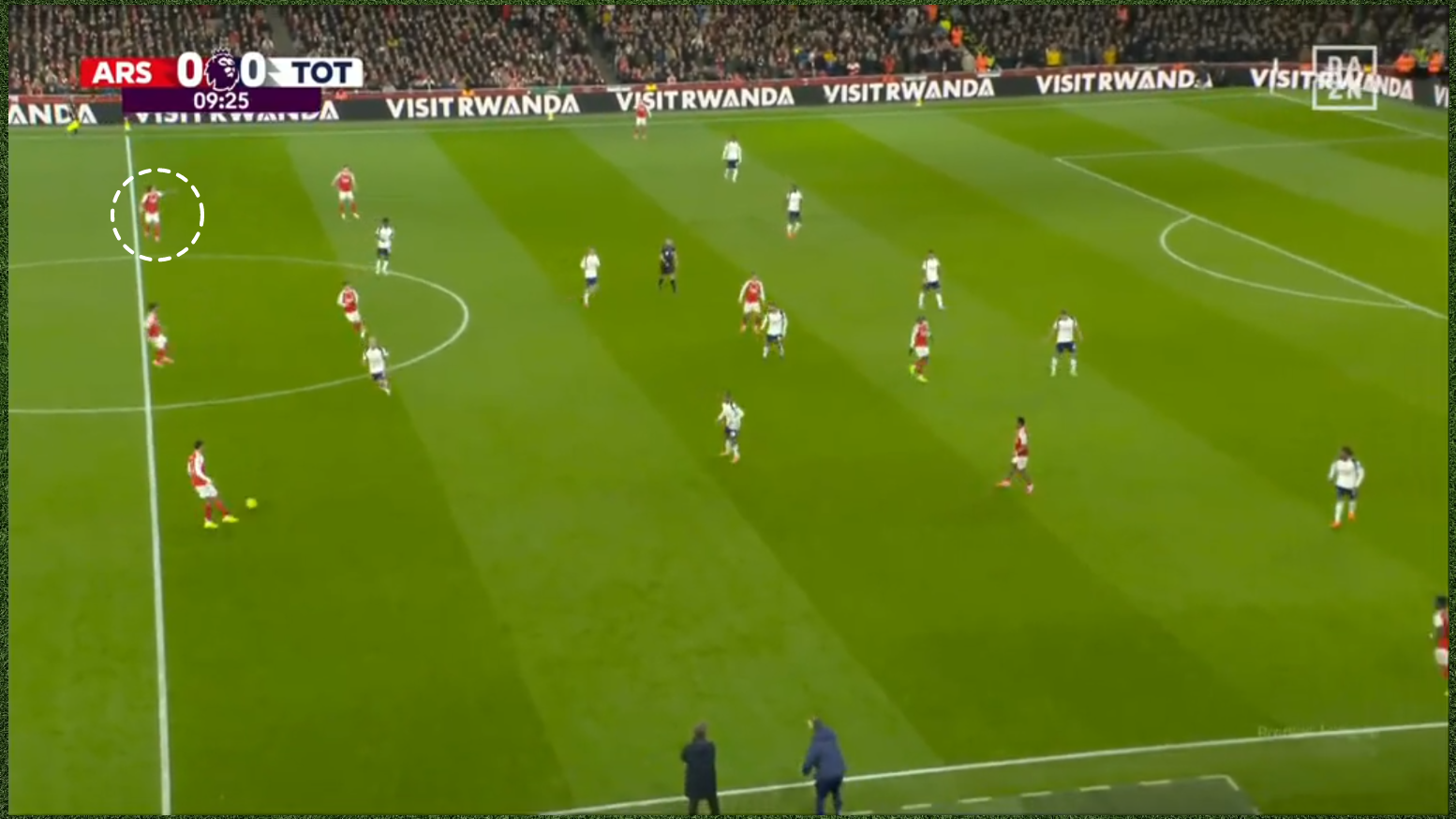
This willingness to organise and communicate highlights leadership qualities that add further value to his overall profile.
Another notable aspect of Calafiori's defensive game is his effective use of physicality.
When defending opponents, he frequently utilises his upper body strength to apply subtle contact and disrupt an attacker's balance without committing a foul.
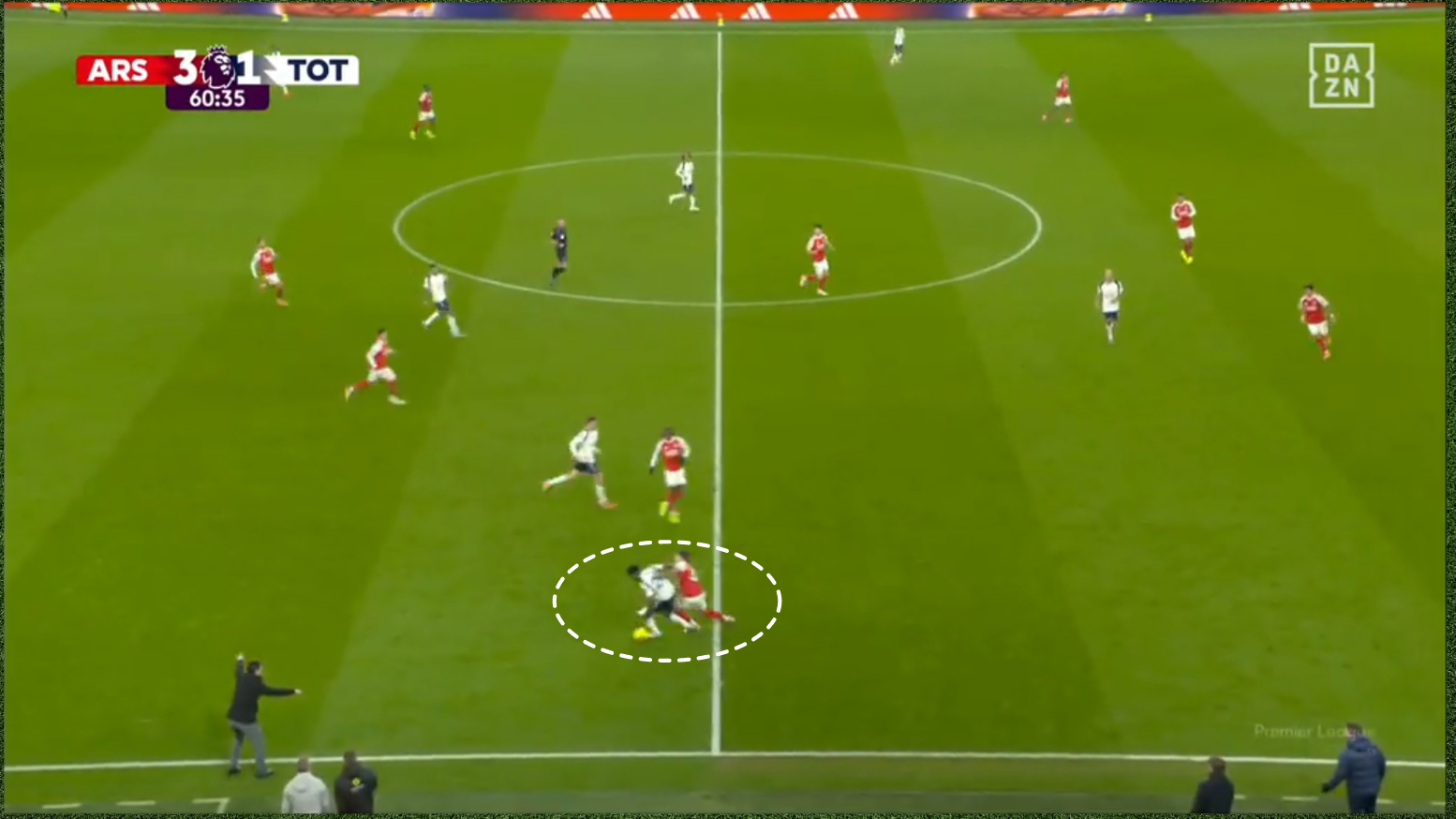
This allows him to win defensive battles while maintaining positional discipline, as seen in Figure 5.