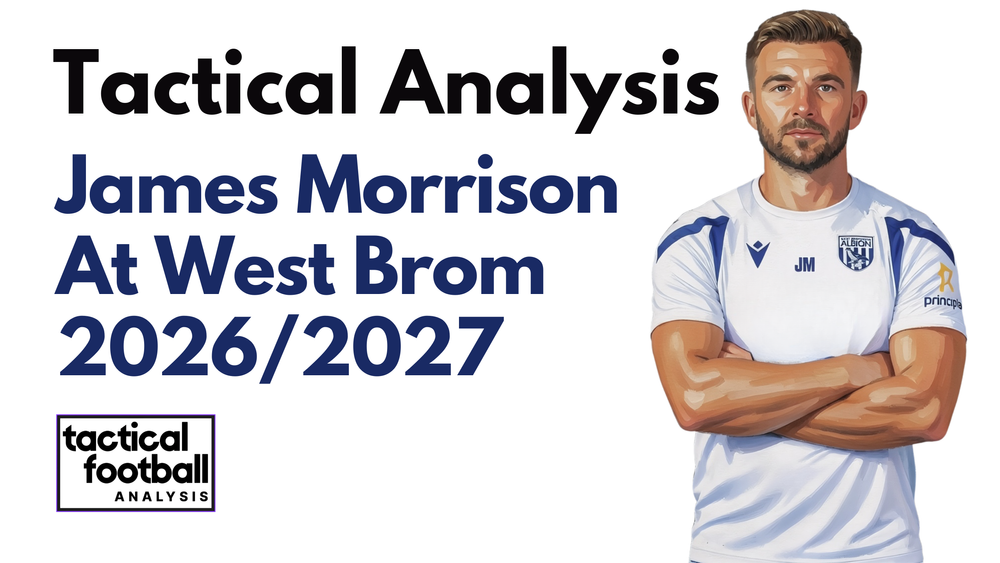
James Morrison Tactics At West Brom 2026/2027: Can He Guide The Baggies To The Premier League? - Tactical Analysis
James Morrison has turned West Brom into promotion contenders. This tactical analysis examines their flexible 4-4-2, 3+2 build-up, central overloads, third-man combinations, adaptable pressing and impressive underlying numbers.

James Morrison has turned heads at West Bromwich Albion this season.
Having played 309 games and scored 34 goals in over 12 years at the club, Morrison was a household name among Baggies fans from his playing days.
Appointed caretaker manager in February, replacing Eric Ramsay, Morisson impressed the management enough to be given the West Brom job on a permanent basis in April 2026.
West Brom sit in fifth place, with only one point off league leaders Birmingham City, and Morisson could deliver a dream promotion for the Baggies this season if he can maintain the level of performances they have delivered so far.
In this West Brom tactical analysis, we look at the mechanisms employed by Morrison in and out of possession, as well as the team's key stats.
West Brom Key Players & Formation Used
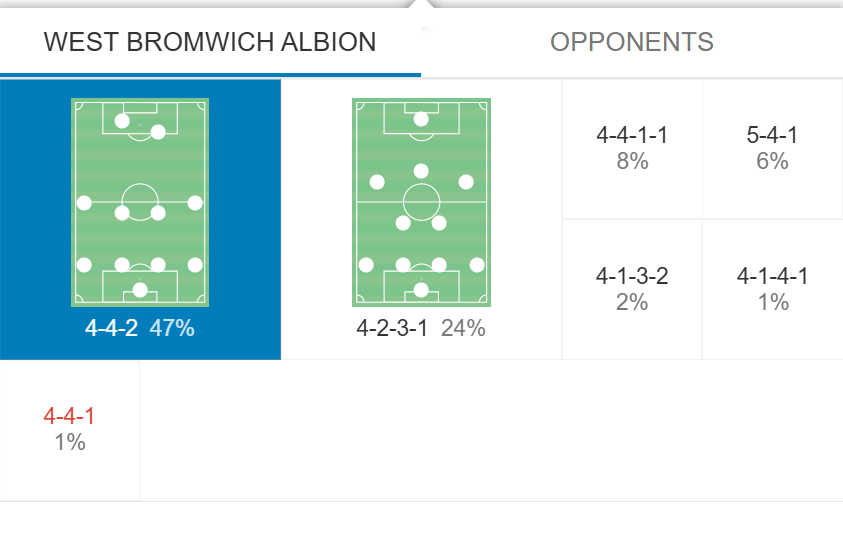
Since his appointment, Morrison has favoured the 4-4-2 formation.
The formation gives Morrison flexibility to cover the whole pitch while using the double pivot to protect the centre of the pitch and counterattacks.
The 4-4-2 gives West Brom the necessary balance as well.
Callum Styles, Jimmy-Jay Morgan, Isaac Price and Ousmane Diakité have been the backbone of Morrison's side this season, making 17 appearances across all competitions.
Price is the top scorer for West Brom this season at the time of writing with eight goals, while Morgan follows with six.
Goalkeeper Max O'Leary, midfielder Jayson Molumby and midfielder Rabby Nzingoula have also been crucial this season, with 16 appearances each.
West Brom Build-Up Play
When building out from the back, West Brom use a standard 3+2 build-up structure.
The shape has different iterations: three defenders and two midfielders could form the 3+2, or the goalkeeper could act as the third centre-back, allowing the two full-backs to push and overload the opposition’s high press with an extra man.
Morrison has given considerable freedom to his midfielders to rotate position when West Brom look to build out from the back.
While one of the double pivot will drop back into midfield, the other midfielder could stay up in a one-up-one-down system, with the two in the 3+2 fulfilled by the attacking midfielder behind the striker.
Or the two in the 3+2 could be simply both players of the double pivot dropping down and the attacking midfielder staying up to stretch their opponents vertically.
Another aspect of Morrison's in-possession idea is the inversion of left-back Styles into midfield.
If the opponent, for example Wrexham, uses a three-man midfield, it could outnumber West Brom and prevent them from creating central overloads.
This is why Styles inverts inside, as seen in Figure 1, particularly during the build-up, when only the right central midfielder drops, creating room in the left half-space for the 3+2 build-up that West Brom like to create.
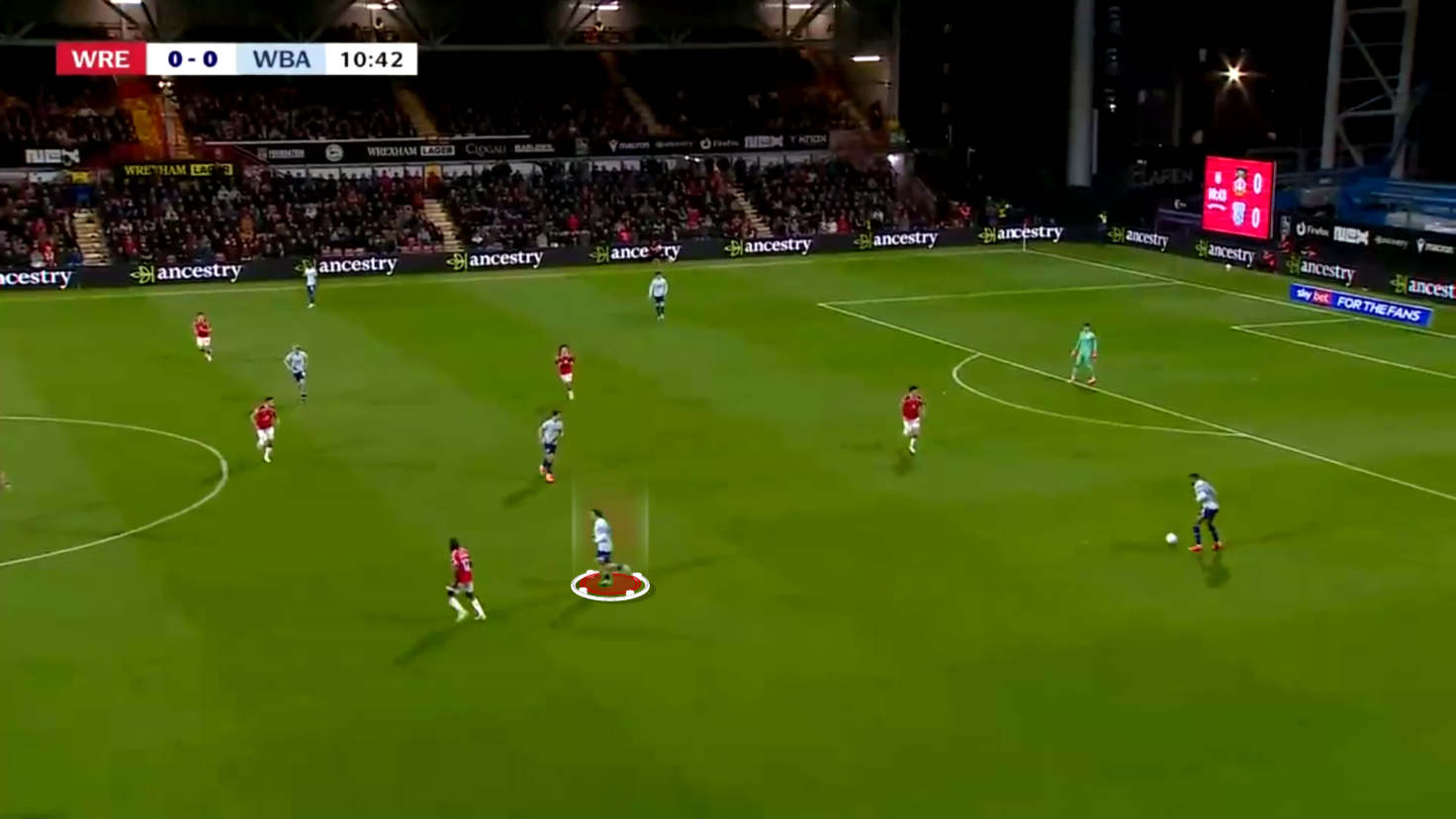
While Styles stays wide, winger Price stays wide to maintain width and prevent the opposition full-back from staying inside, which would allow the West Brom overload.
West Brom Ball Progression
West Brom have several methods to progress the ball from their defensive third to the final third.
One such method is counter-movement between different players.
There can be counter-movements between the double pivot players or between one of the midfielders and the full-backs.
These movements often drag away opponents, open up passing lanes, and ensure that the player receiving the ball can receive it safely.
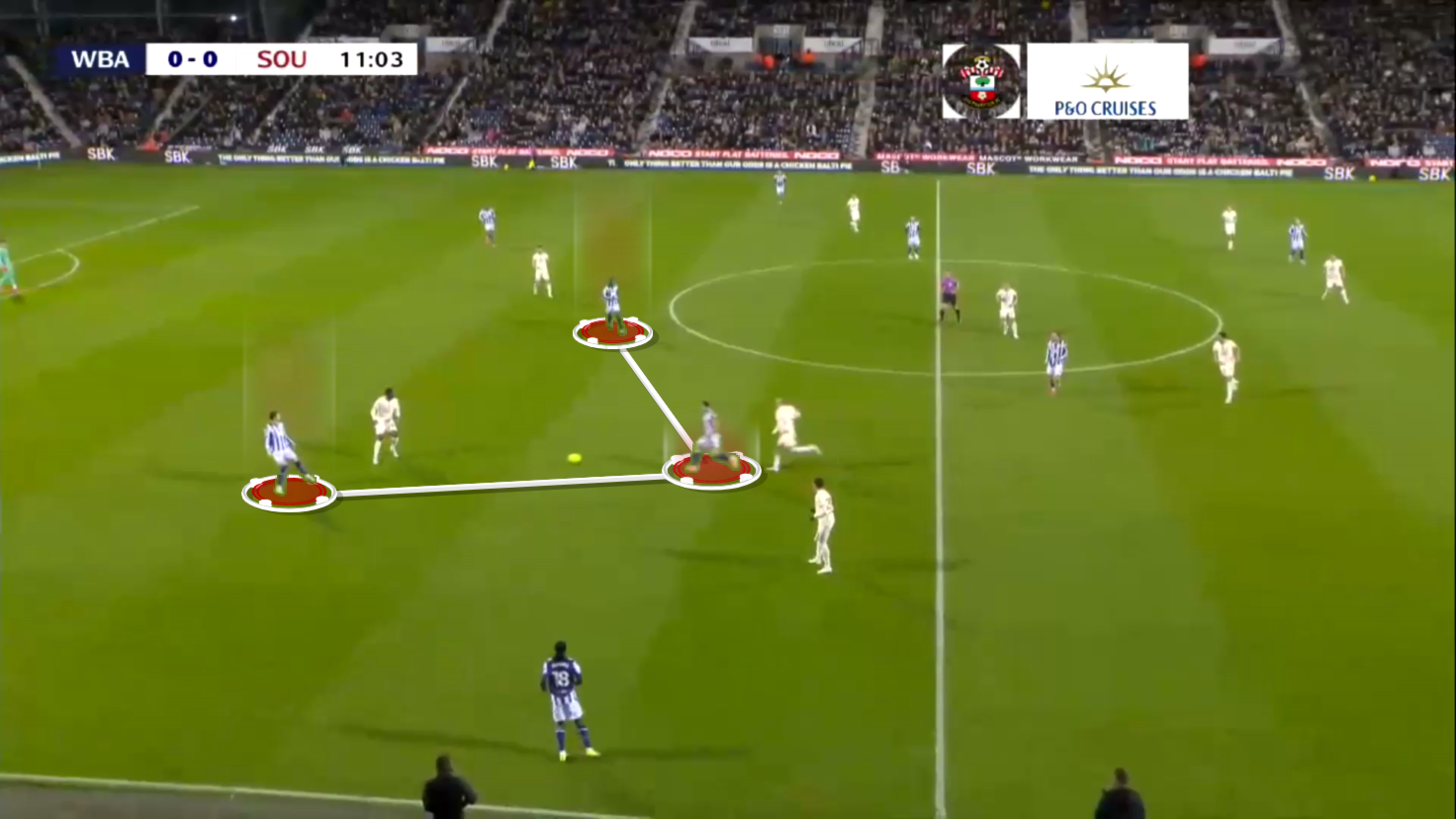
Another method to progress the ball is the use of third man combinations.
While building out from the back, West Brom players look to keep the distance between players very short so quick one-touch passes are possible.
It is often formed between one of the centre-backs, a double pivot player supporting the build-up play and the other midfielder who plays further forward.
The pivot player's ability to receive passes square and flick them either side draws defenders and creates space for the third man to run into, as seen in Figure 2.
Once the ball has moved from West Brom’s half into the opposition half, Morrison instructs the team to form a central overload, as seen in Figure 3, with close to five or six players in the central channel.
In comparison, two players stay wide, hugging the touchline to stretch the opposition.
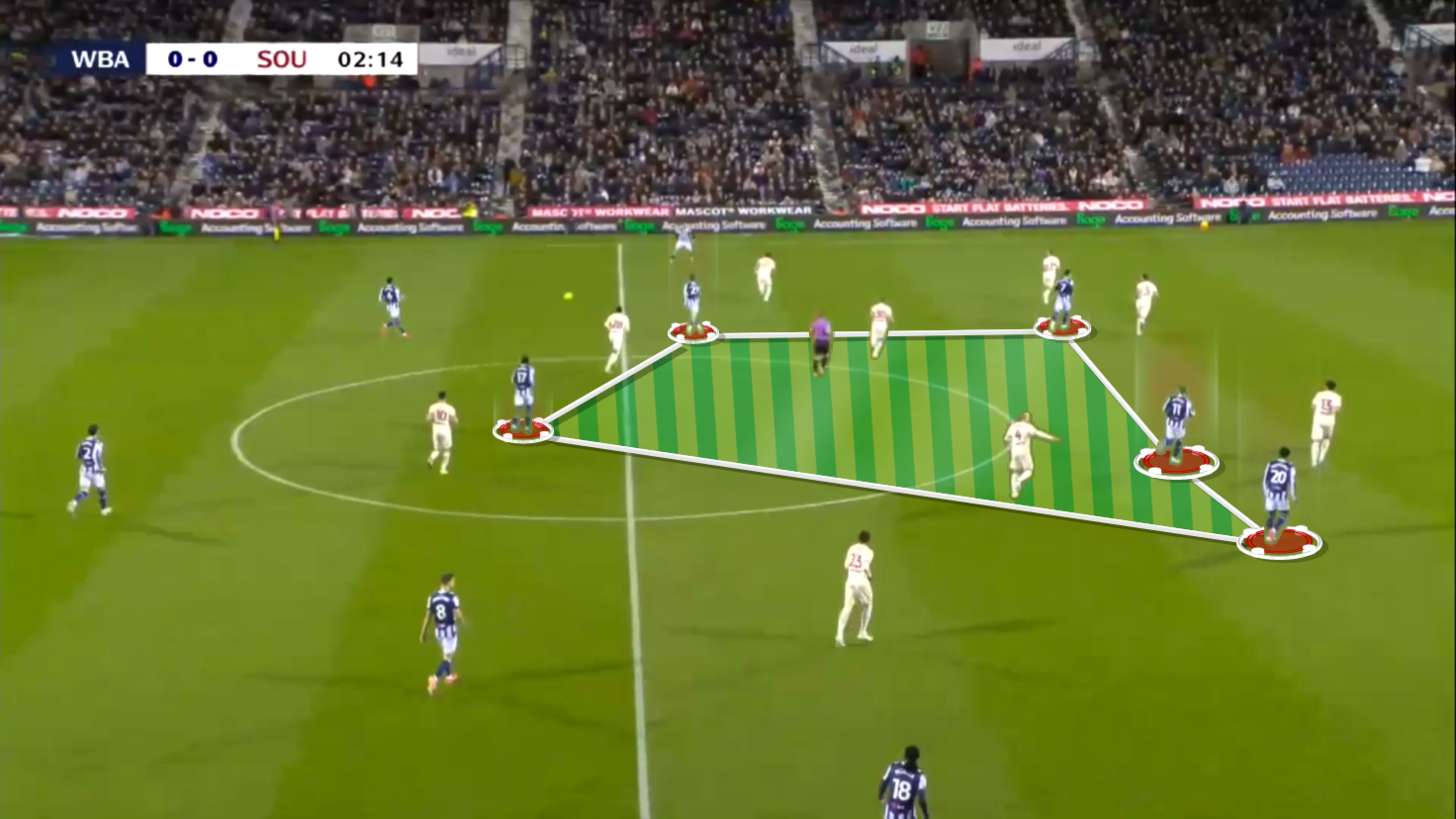
This creates a dilemma for the opposition as to whether they should try to outnumber the central overload or deal with the threat out wide.
West Brom Chance Creation
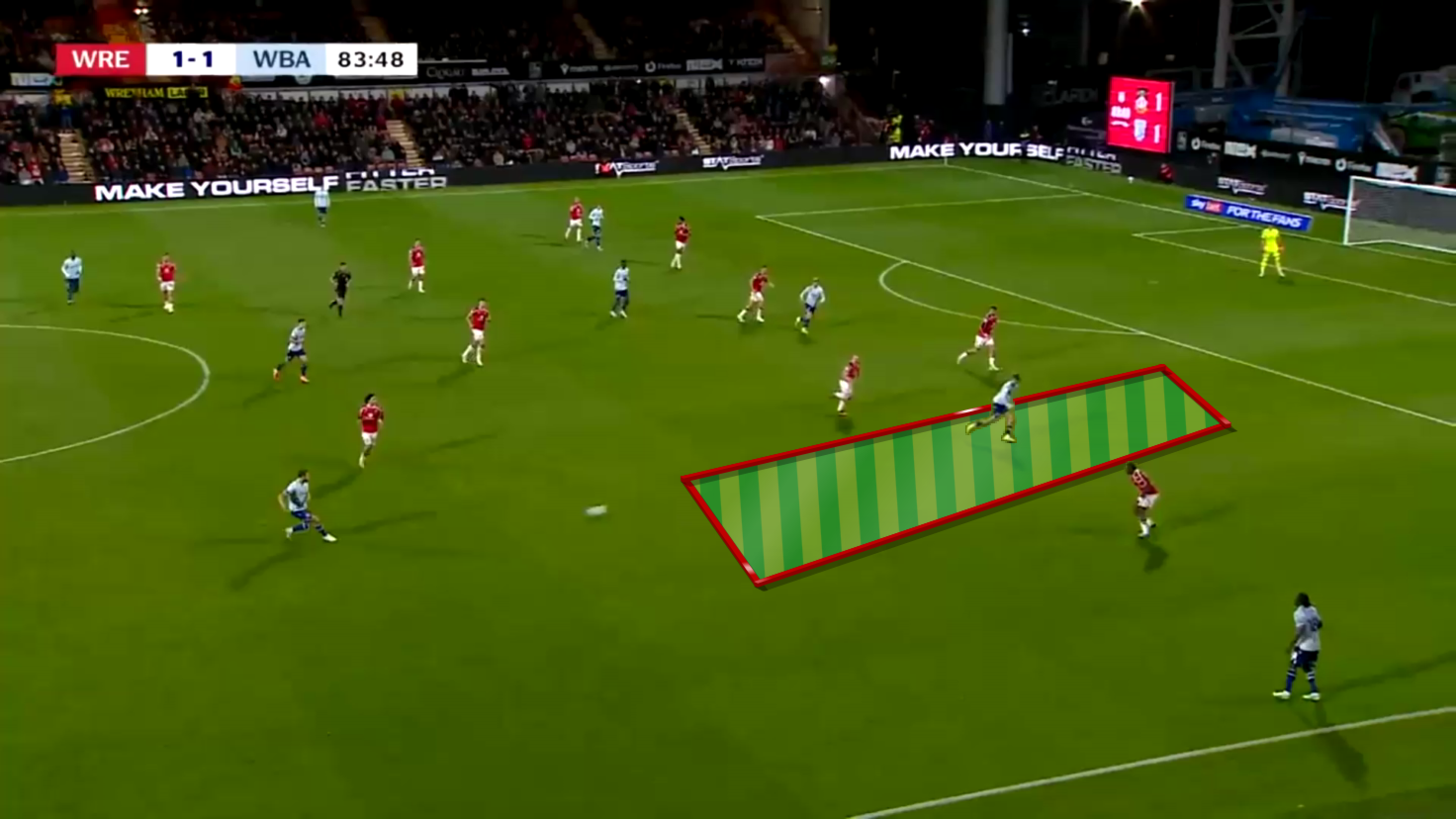
These overloads help West Brom gain access to the right half-space, which they often look to exploit.
With one player positioned wide, a full back gets drawn out, creating a space between the opposition centre back and full back.
If a midfielder plugs this gap, West Brom will either have their midfielders engage the opposition player or have the striker drop down and engage the midfielders.
Their goal against Wrexham came when they exploited this particular channel where a pass was made to Price ,who accessed the space, and his cutback was tapped in by Aune Heggebø, as seen in Figure 4.
West Brom also look to create a ball-side overload by having four to five players on the ball.
This is done deliberately to suck the opposition into the press on one flank and then use the centre back to switch play to another flank.
With two players kept wide by Morrison, crossing is a vital part of West Brom's chance creation setup.
When a wide player gets into position to cross, multiple players tend to overload the box to receive the cross, creating multiple targets.
With West Brom employing a high press, which we will see in the later section, it creates chances to counterattack quickly.
Turnovers often create disorganisation in the opposition's defensive shape, and West Brom look to capitalise on disorganisation with verticality.
West Brom Out-Of-Possession Tactics
Morrison positions his team to capitalise on the ball high up the pitch by using an aggressive pressing style and disrupting their build-up.
However, their pressing shape depends on the build-up shape adopted by the opposition.
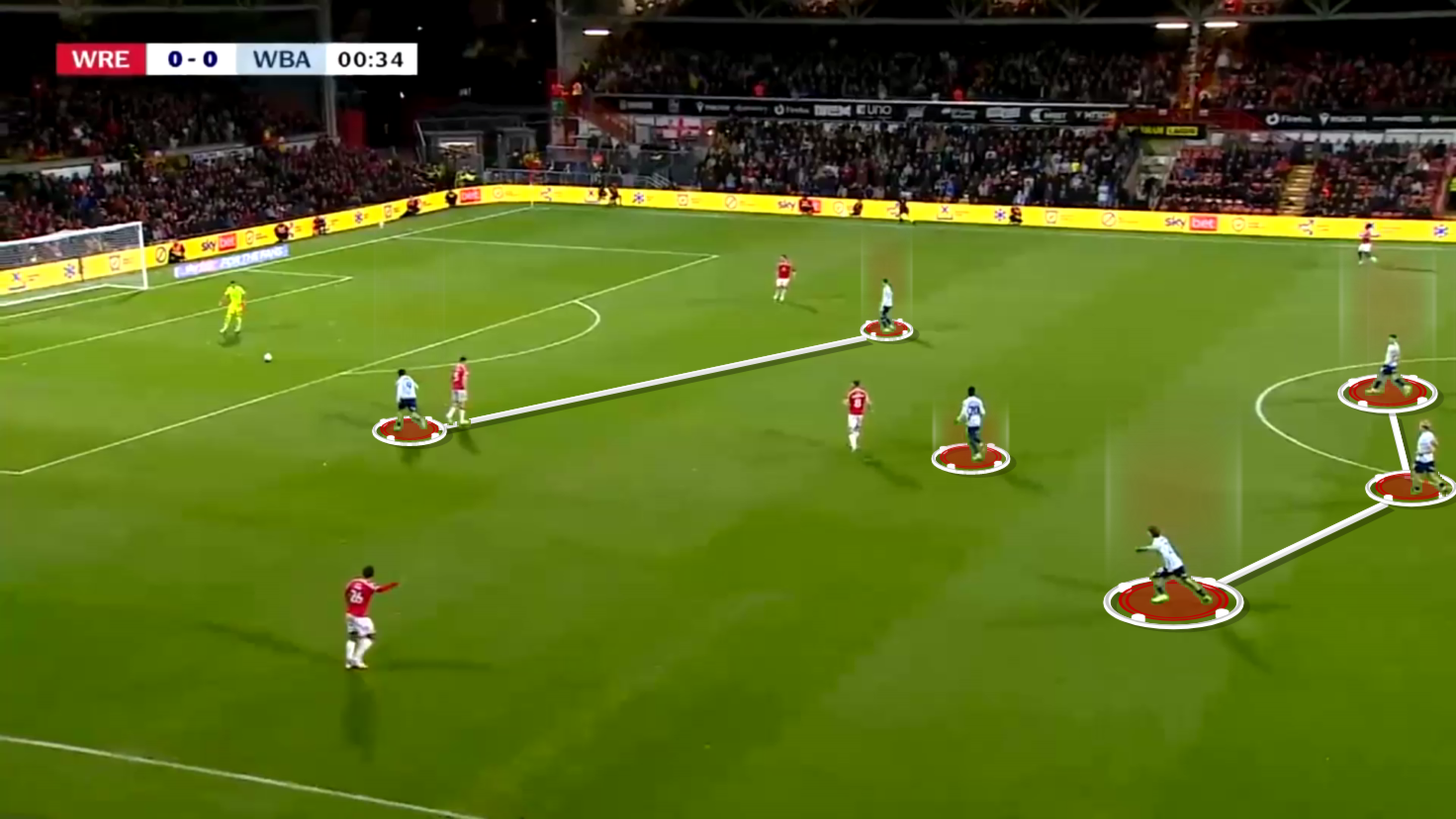
For example, West Brom used a 4-3-1-2 structure, as seen in Figure 5, against Wrexham because they looked to build out using a single pivot.
However, against Southampton, West Brom adopted a 4-4-2 given how Southampton used a double pivot while building out from the back.
This shows that Morrison shaped his off-the-ball tactics depending on the opponent's strengths.
But principles such as their style of pressing remained the same.
West Brom used a man-oriented pressing style, with each player given a man-marking assignment.
Triggers were used extensively to move from a man-marking style to ball-oriented pressing.
One such trigger was a back pass from an advanced full-back to a centre-back.
If the opposition manages to bypass the initial press, West Brom will retreat into a 4-4-2 mid-block, shifting from man-oriented pressing to a zonal defending style.
Morrison likes his teams to be narrow and compact whenever they are defending.
They adopt a zonal style in the deeper zones of the pitch to protect the central area and make it difficult to progress the ball through the centre.
If the opposition look to attack through the flanks, West Brom would look to press horizontally, again staying very narrow, overloading the pitch, and using the touchline as an extra man.
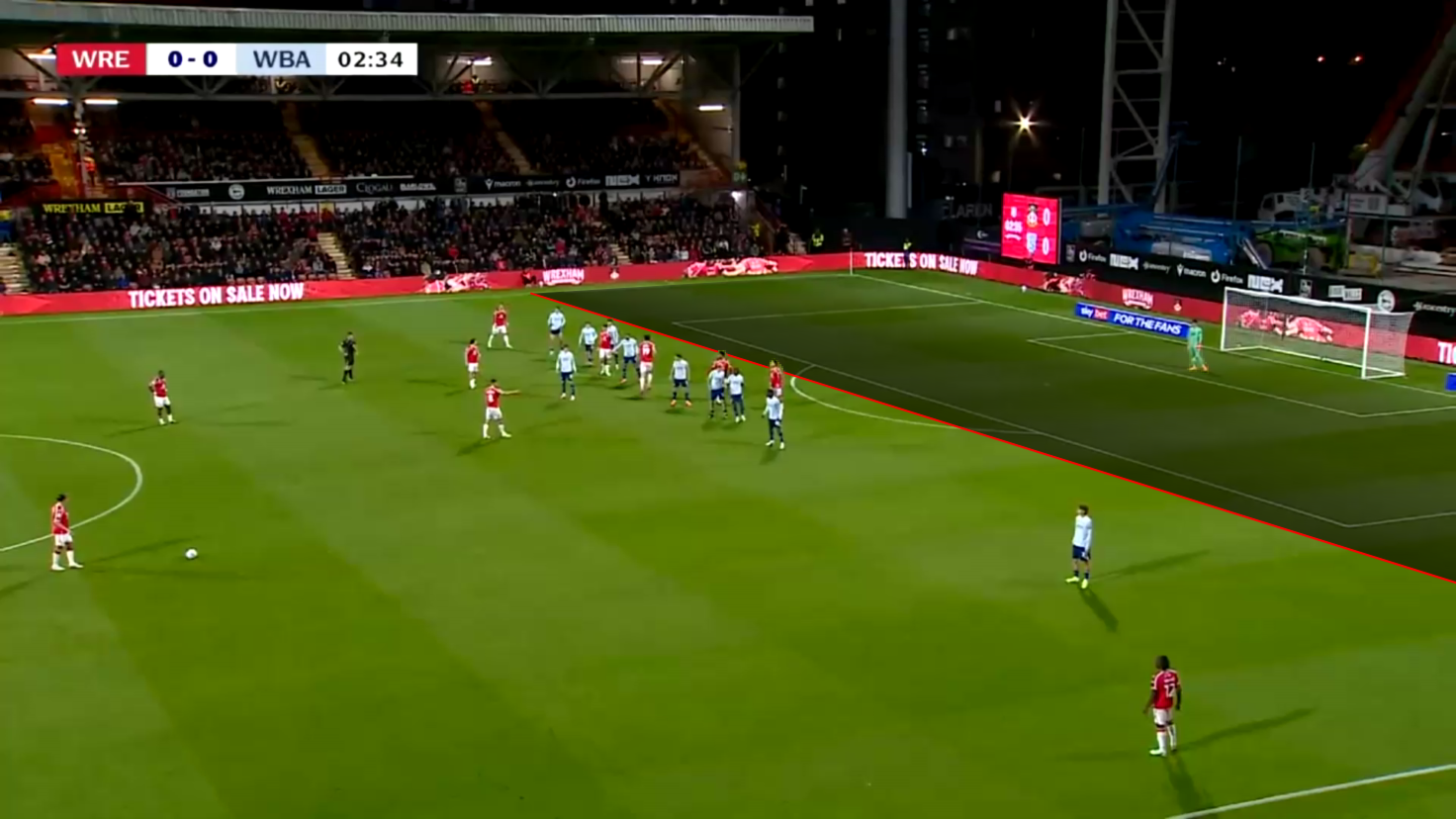
While defending set-pieces, West Brom also tend to maintain a high line; this allows O’Leary to come and claim the ball or trap opposition players offside, as seen in Figure 6.
West Brom Stats
West Brom are a team that enjoys a lion's share of possession, and this is reflected in their average possession of 54.94% maintained over the season.