
Press Resistance In Football: How Do Top Midfielders Turn Pressure Into Progression? - Tactical Theory
What makes a midfielder truly press-resistant? This tactical theory examines scanning, body orientation, first touch, movement and progressive passing, using Bernardo Silva, Vitinha, Mac Allister and Pedri as examples.

In modern football, we assess the midfield player not just by passing accuracy or touches, but by how he turns the game.
As the high press evolves and teams close central passing lanes vertically and horizontally, receiving in tight spaces and carrying the ball into the forward third becomes one of a midfielder's most important attributes, directly affecting his team's progression.
This is where the concept of "press resistance" comes in: a player's ability to handle pressure without losing the ball.
It goes beyond simply making safe passes; it involves executing progressive passes.
In this tactical theory, we will examine how this benefits a possession phase.
Before Receiving The Ball
When we evaluate a midfielder, we almost always focus on how they perform in possession (that is, what they do after receiving the ball) to gauge their technical ability; in doing so, we overlook everything that happened before they even received it.
When a centre-back is in possession, a midfielder may move closer to receive the ball.
In this scenario, there are two possibilities: the midfielder might approach with a "closed" body position, leaving them unable to scan the field, select a progressive pass, or even maintain possession.
Or the midfielder might approach at an angle, turning their shoulders.
This enables them to make the right decision, as exemplified by Bernardo Silva.
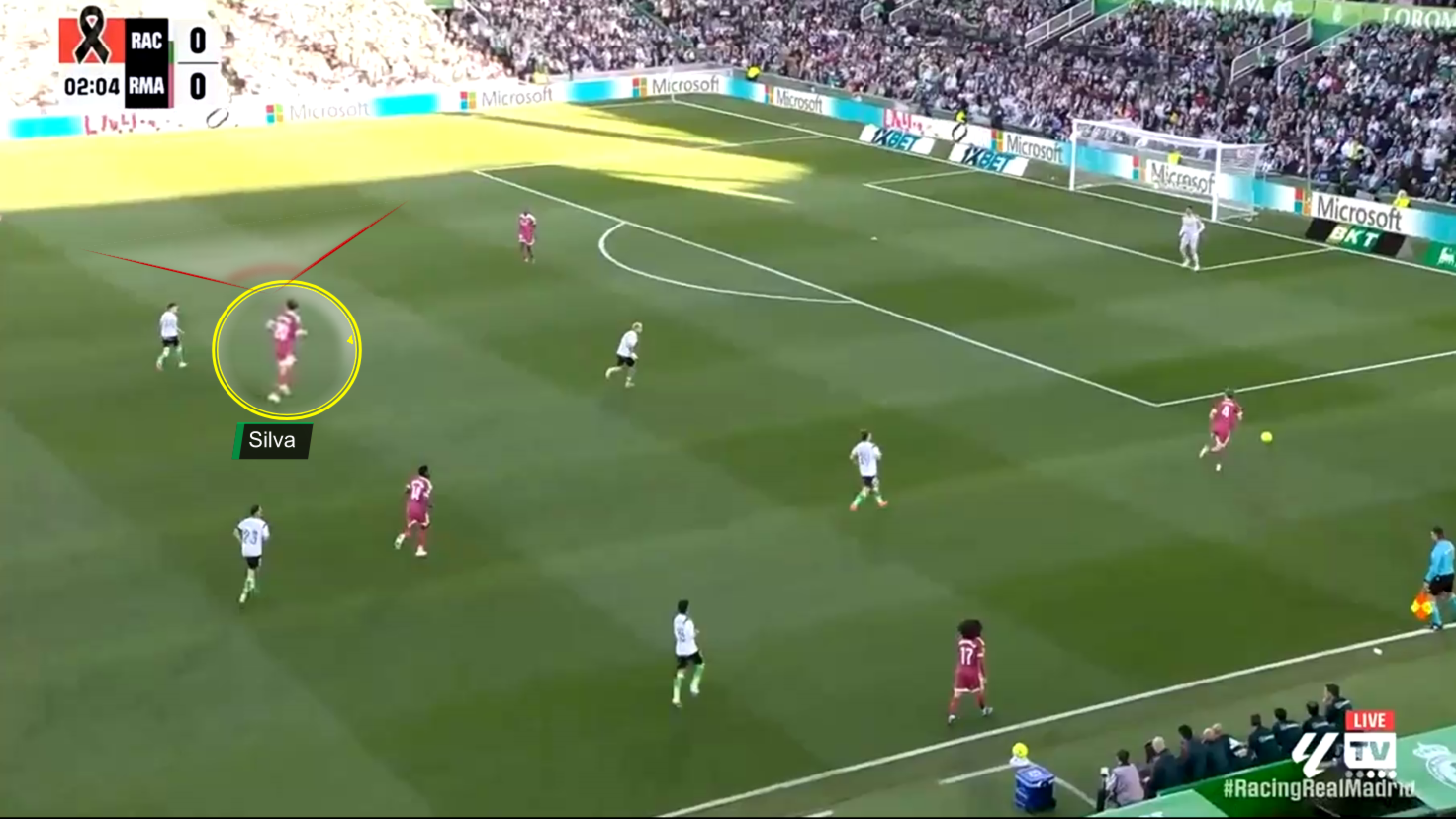
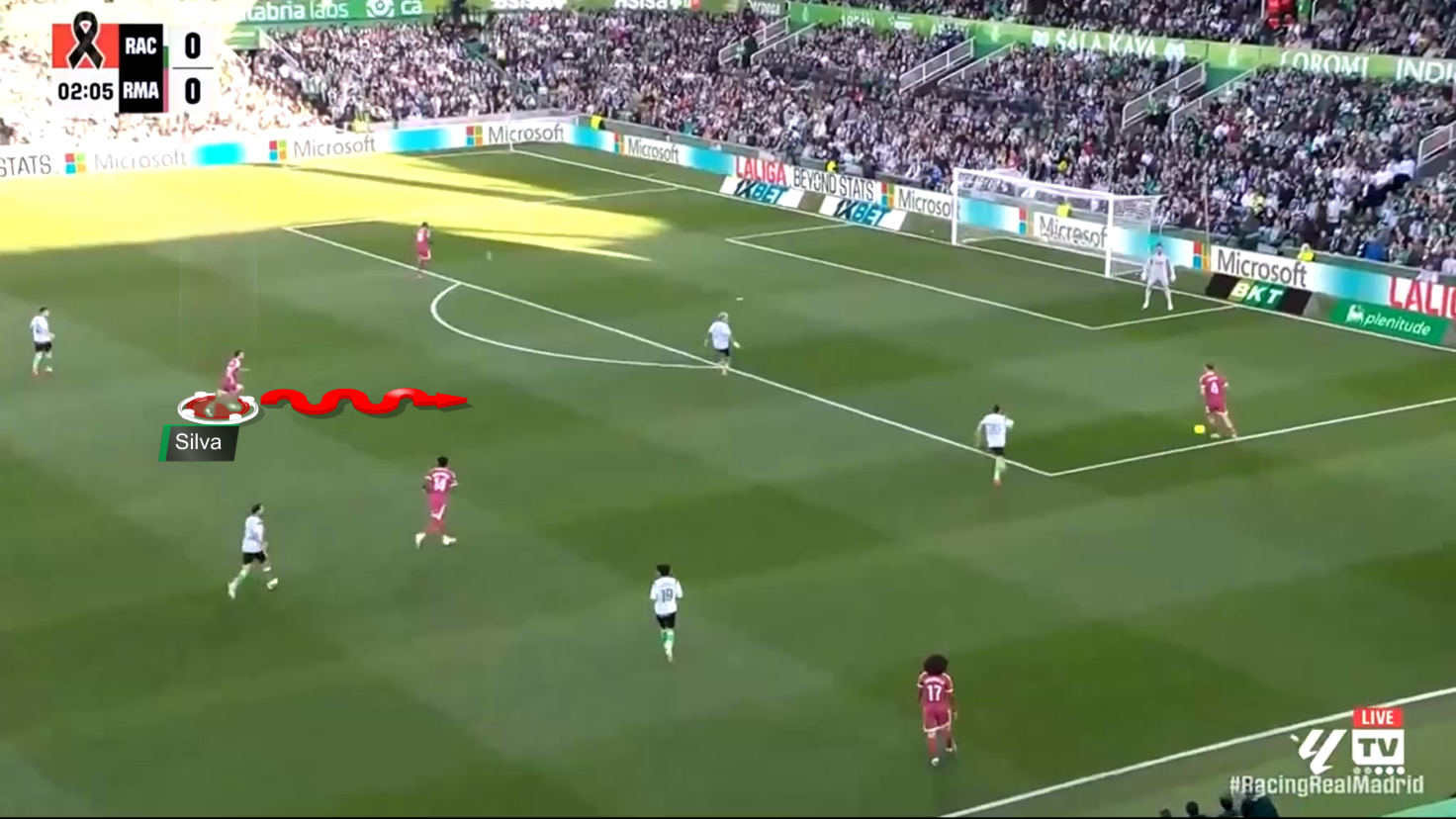
With a quick visual scan, Bernardo moved away from the press, opening a horizontal passing lane to Dean Huijsen.
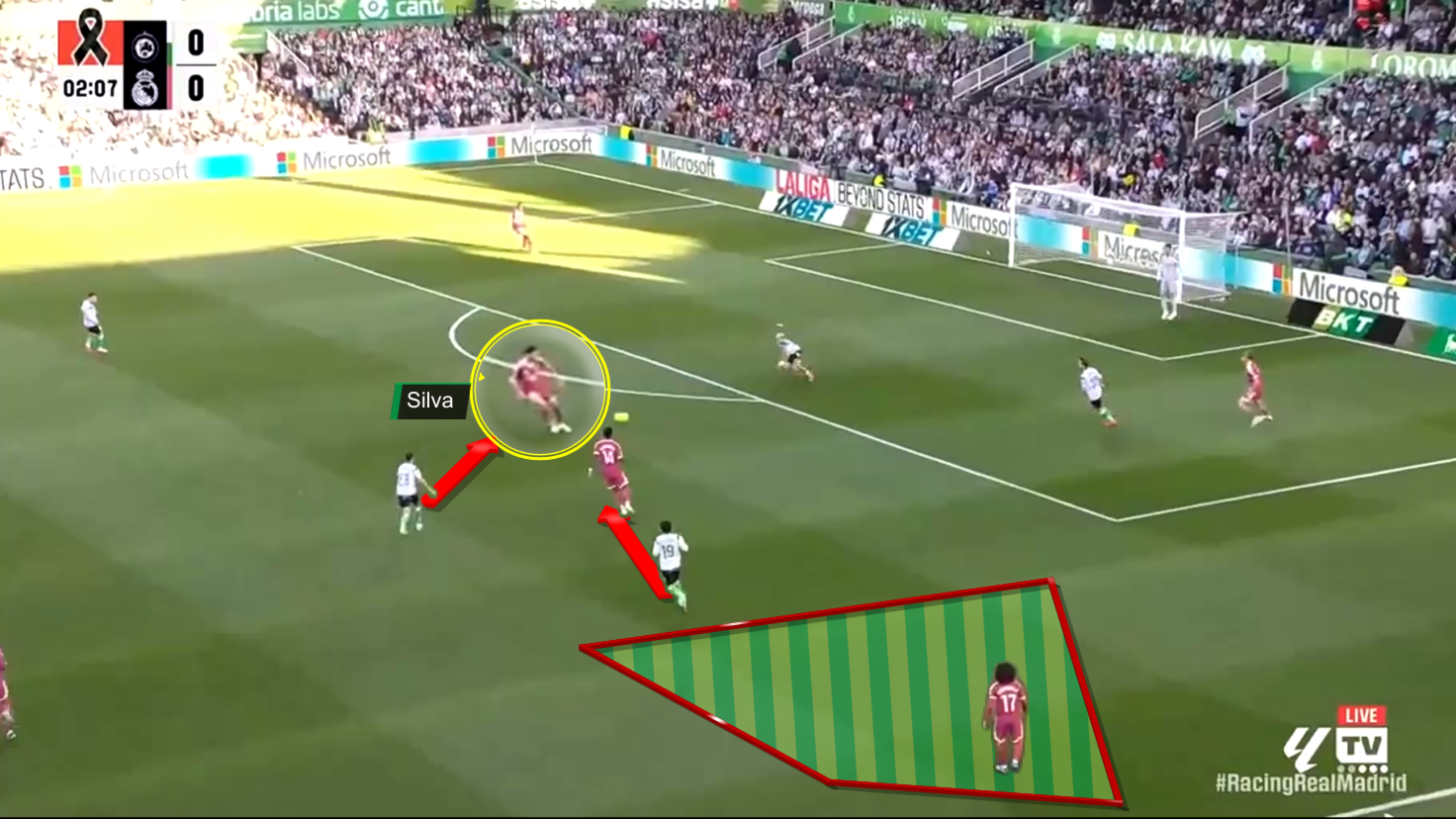
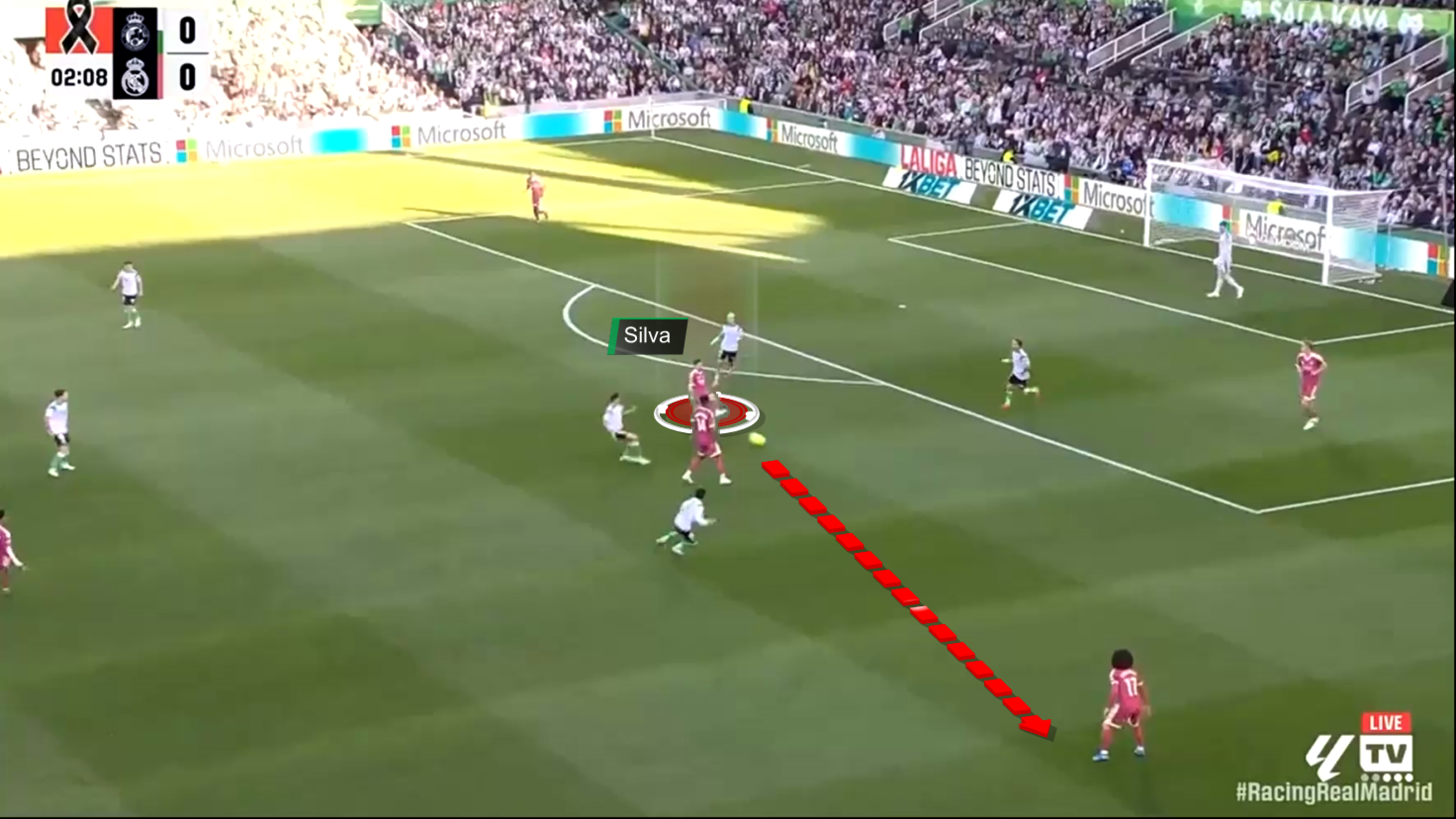
On receipt, he moves players from Racing Santander to the press and opens the flank for Marc Cucurella.
Moving the ball towards the space after scanning.