
Xavi Espart Scout Report At Barcelona 2026/2027: How The Inverted Full-Back Adds A New Dimension To Hansi Flick Tactics - Player Analysis

In Barcelona, La Masia continues to produce players who defy easy categorisation into traditional positions.
Xavi Espart is a recent example: a player who began his development as a midfielder before gradually transitioning to full-back, now finds himself part of Barcelona's first team at left-back, despite being right-footed.
This journey alone makes his assessment unique, as Espart's contributions in his current position are based not only on the skills he acquired as a defender but also on the tactical foundation he built during his years playing in midfield.
At the start of the 2026/2027 campaign, Hansi Flick has shown clear faith in the player, with Espart starting Barcelona's first four La Liga matches at left-back, playing the full 360 minutes and registering two assists.
However, the numbers aren't the most interesting part of his story.
What makes Espart a player to watch is how he approaches the full-back position; he doesn't act like a traditional full-back whose primary task is to stay back and push forward.
Instead, he has the ability to invert into midfield and participate in the build-up play.
In this Xavi Espart scout report and player analysis, we examine his tactical flexibility with the Hansi Flick system.
Xavi Espart Tactical Role At Barcelona
To understand Xavi Espart, one must go back to his beginnings as a midfielder.
He developed at various stages within La Masia as a player capable of playing both as a pivot and an inside forward, before transitioning to the backline.
This is crucial, as many of his current characteristics as a full-back can be explained by that background.
Using Espart on the left flank, despite him being right-footed, clearly reflects Flick's desire to utilise his ability to move into attack rather than confining him to the right wing.
When starting an attack from the full-back position, Espart can initially maintain his width, forcing the opposing winger to decide whether to press him or stay with the Barcelona player positioned inside.
Once the pressing situation changes, he can move into the half-space or the central area, becoming an additional passing option behind the opponent's first line of pressure.
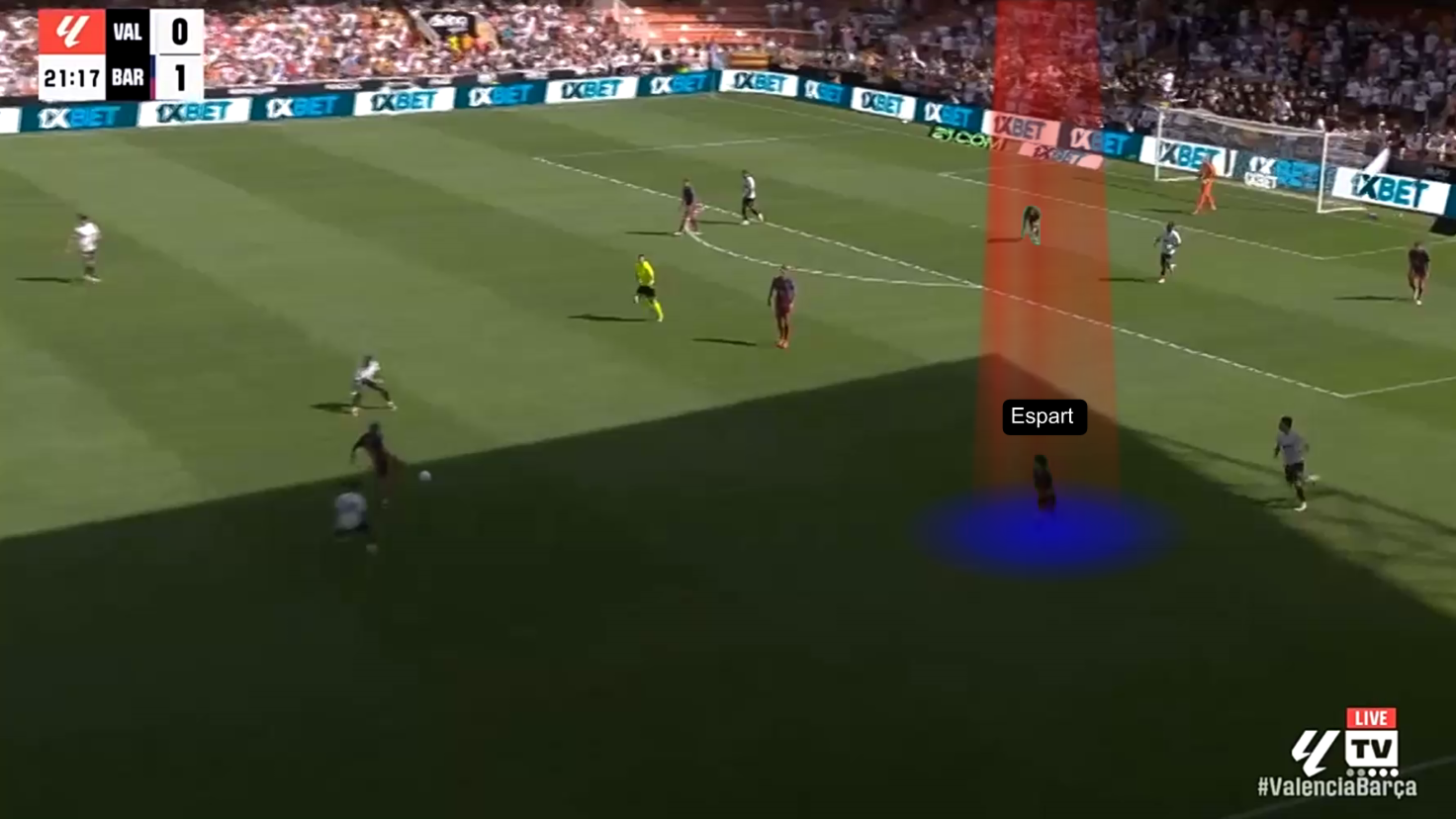
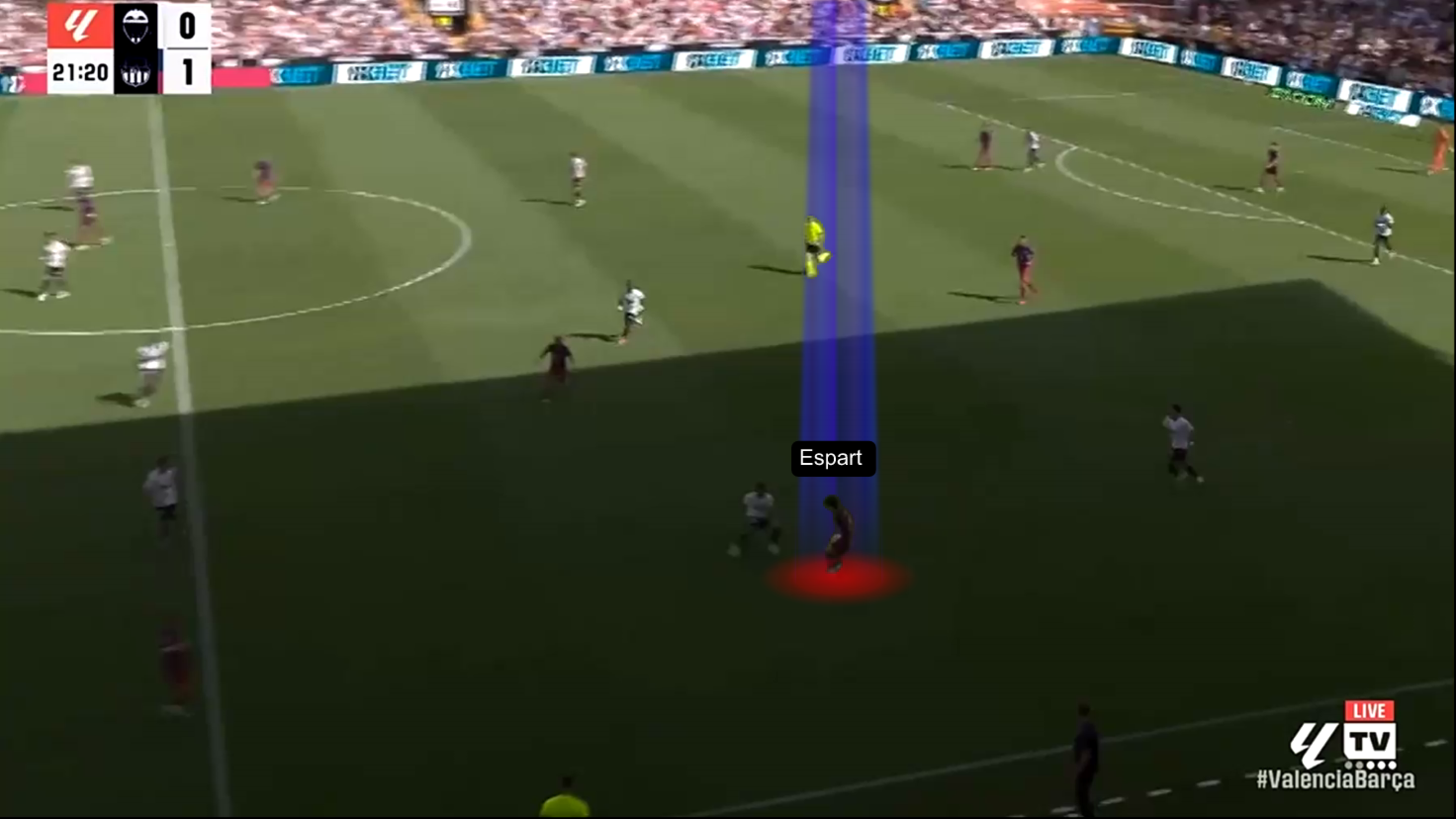
Here, after exiting the first line of pressure, he tries to move vertically and support Pedri on the wing.
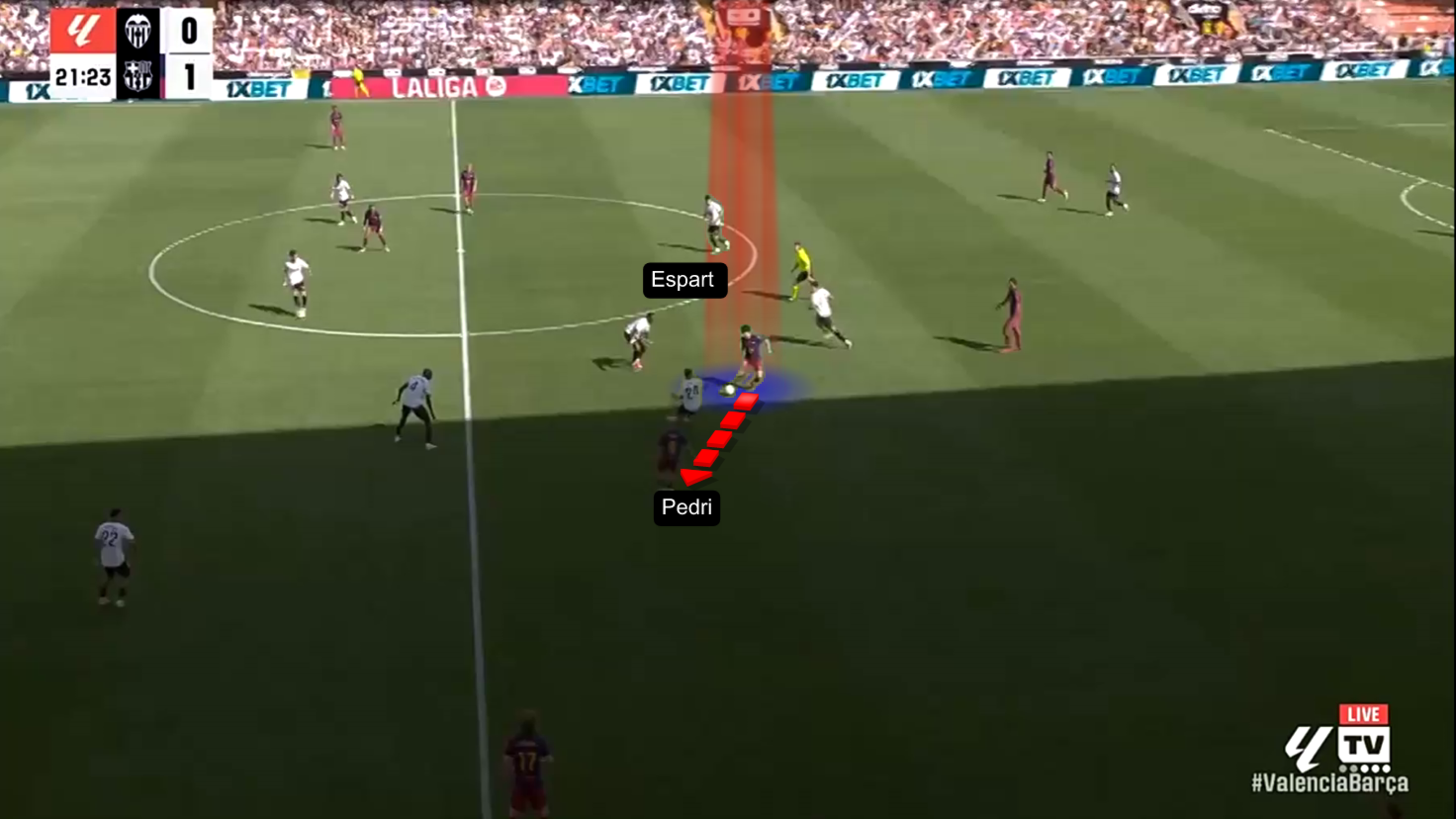
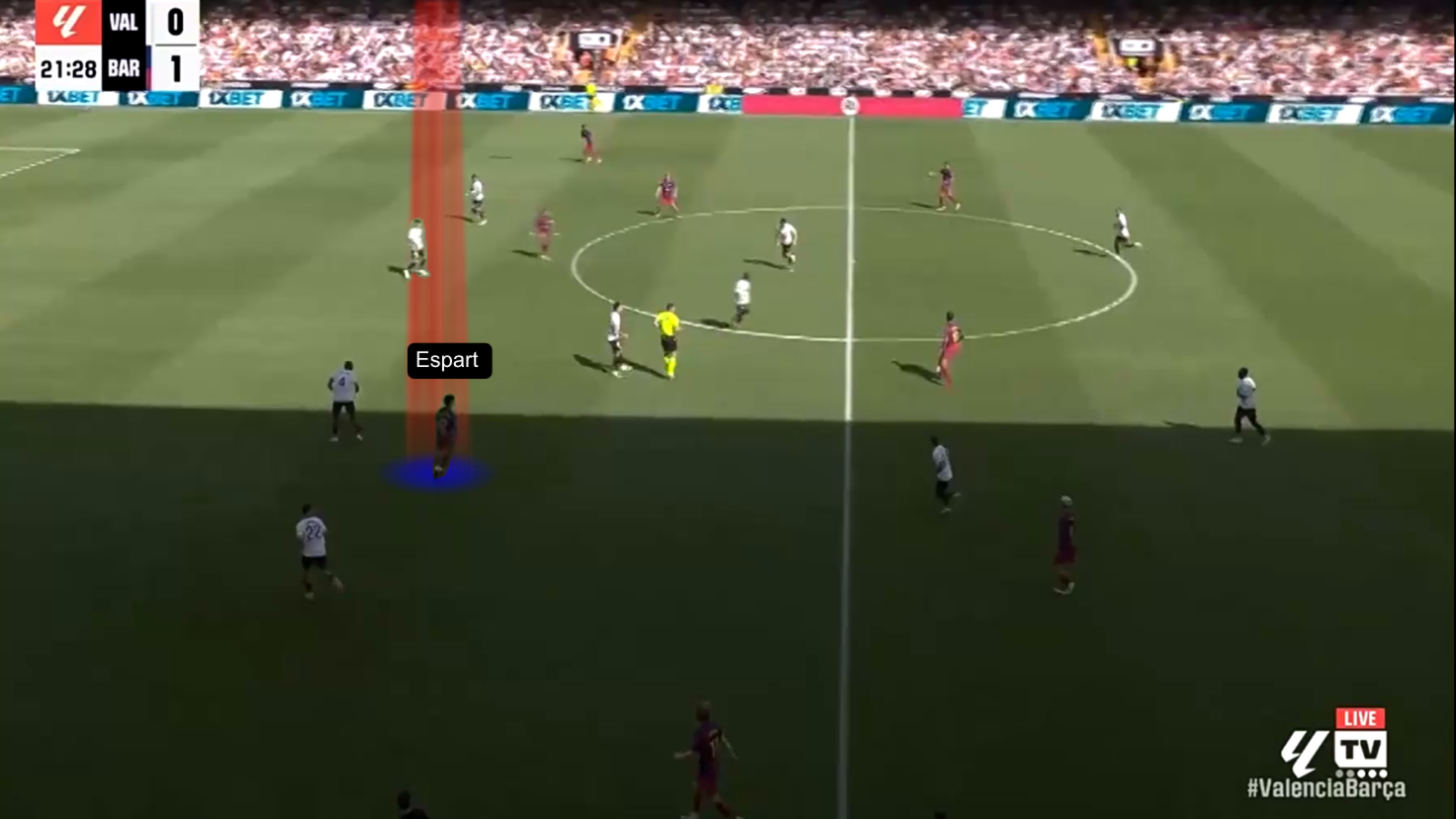
Then, being in the left inner lane, he becomes a solution for passing between the lines.
This movement changes Barcelona's shape in possession.
Instead of two defenders at the back and two midfielders ahead of them, Espart can drop into midfield while another player moves forward.
This allows Barcelona to create numerical superiority in the central area without constantly changing player positions.
This flexibility is particularly important against teams that press man-to-man, because the full-back's movement forces an opponent to make a decision: Do they follow him inside and leave the wing-back free, or do they stay in position and leave Espart free to receive the ball?
On the other hand, when the winger occupies a wider space, Espart can move behind him or inside, and vice versa.
Therefore, his movements are not separate from those of the winger, but rather dependent on them.
If the winger remains wide, Espart can advance into the inside space or execute an underlap; if the winger moves inside, Espart can provide width on the touchline.