Enzo Maresca Tactics At Manchester City 2026/2027: Life After Pep Guardiola – Tactical Analysis

Pep Guardiola’s imminent departure from Manchester City points to one major speculation: his successor.
Former Chelsea manager Enzo Maresca is heavily linked with the Man City new manager position at the time of writing.
The Italian earned quite a reputation during his time at Chelsea, as they showcased some attractive football under his management, famously winning the FIFA Club World Cup in 2025 by beating the mighty Paris Saint-Germain 3-0 in the final.
Although his coaching borrows influence from Guardiola’s, it would be fair to expect him to bring his football identity if he signs for Man City.
In this tactical analysis, we will evaluate how Manchester City could operate under Enzo Maresca tactics by studying Chelsea’s patterns of play and highlighting similarities between the two clubs.
Chelsea Style Of Play Under Enzo Maresca Tactics
Chelsea Attacking Phase
Under Maresca coaching style, Chelsea had a noticeable habit of creating overloads across the pitch; the Italian manager likes to have control, which was evident from the first phase of possession.
They attempted to create numerical superiority in the build-up by including the goalkeeper as an additional centre-back, in which case, one of the centre-backs shifted to the wide channel.
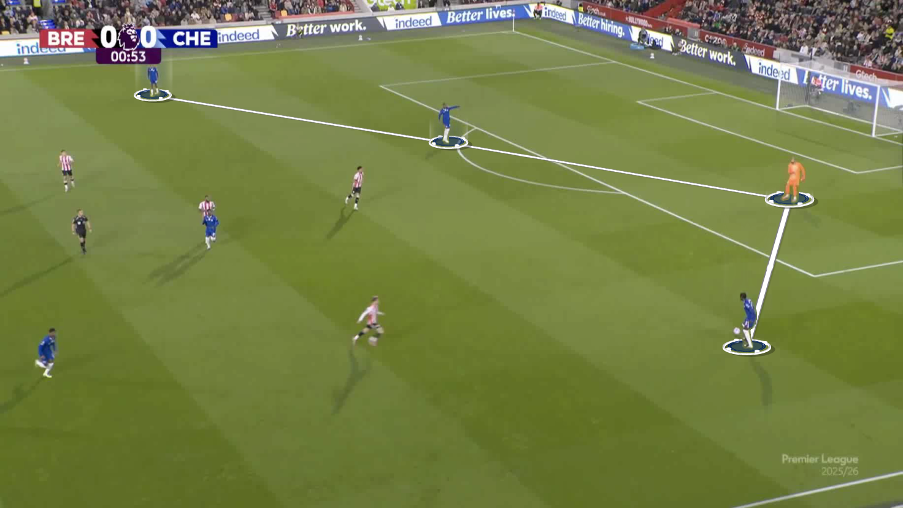
Robert Sánchez moves out of the goal to operate as an auxiliary centre-back.
In this situation, the left-back has moved up, allowing the left centre-back to push wide; a back four shape is visible.
This allows the midfielders to stay inside the structure, offering progressive options.
In other cases, the pivot dropped between the centre-backs.
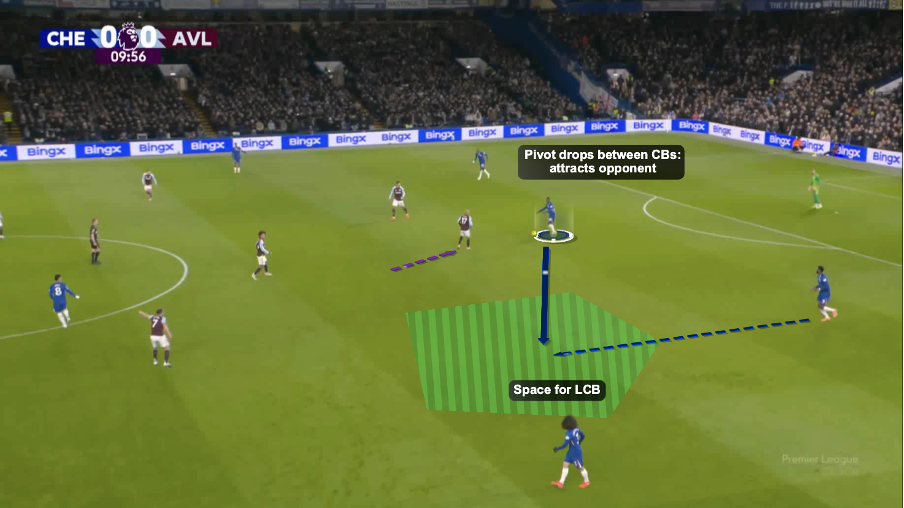
The pivot drops between the centre-backs, attracting the opposition striker and opening space for the left centre-back to receive the ball in a higher position in the half-space.
The vertical pass to break the first line of press is important; if the distance of the pass is long, the players receiving it inside the opposition structure face a challenge.
However, with a centre-back driving up the pitch to find a vertical pass, the job gets easier.
A key trait in possession for Maresca’s side was inverted full-backs.
He had multiple players on both flanks who could operate as inverted full-backs; this brought variation to the players’ positioning, which made them tedious for the opponents to track.
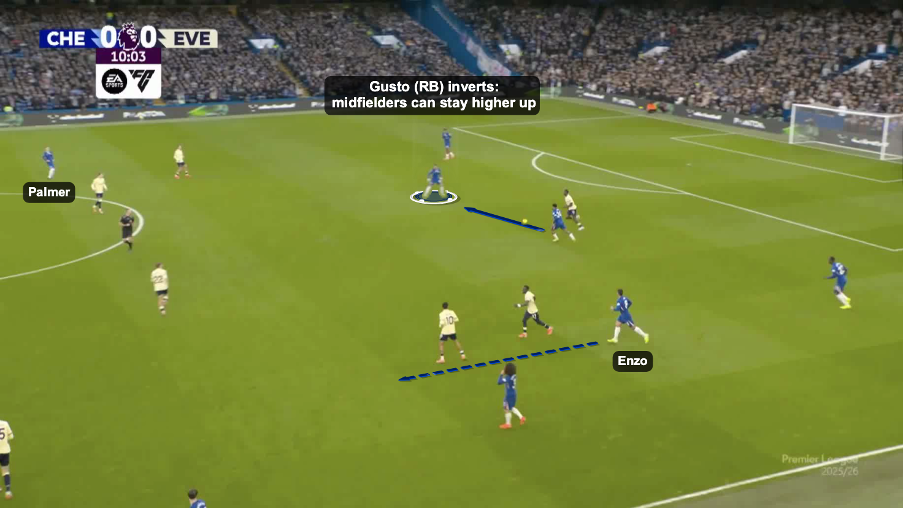
Malo Gusto, playing as a right-back, inverts to receive the ball in the central channel.
His presence allows the other midfielders to push higher up the pitch; Cole Palmer and Enzo Fernández are seen moving up the pitch, as they are not responsible for progression in deep areas.
It was common to see either full-back inverted into half-spaces to form a diamond in the middle third.
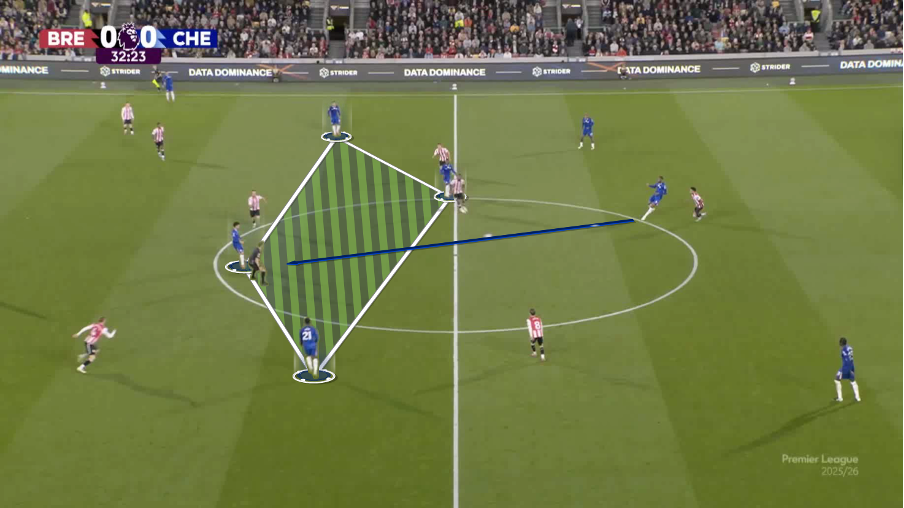
The pivot stays at the base, with the left-back and Enzo Fernández on the sides, and the attacking midfielder at the top, receiving the vertical pass.
Man City have done something similar over the years.
Overloading the midfield with different nuances has been part of Guardiola’s game plan.
One of the most notable examples is the 2022/2023 season, when they played with a box midfield, with a centre-back moving into the midfield.
They have also played with inverted full-backs in the past.
After a point, when Premier League opponents realised the numerical superiority in the central channel, they began adapting.
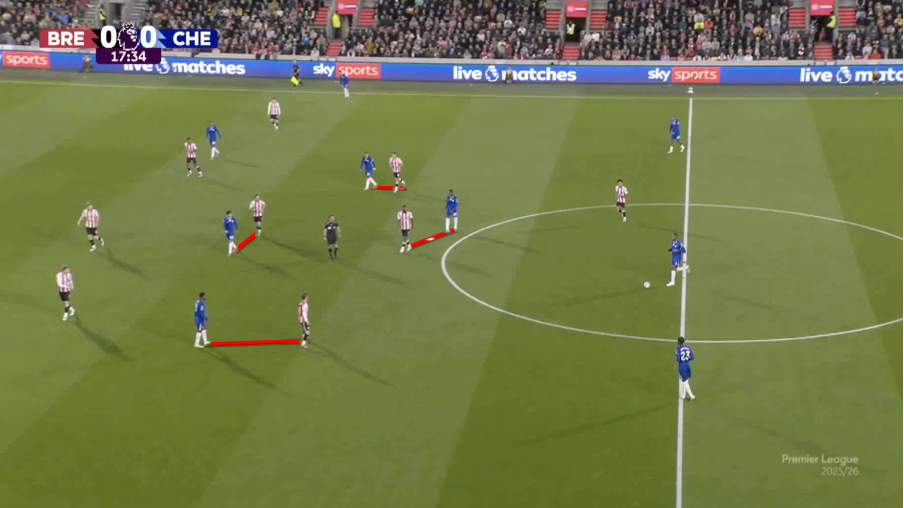
Chelsea faced situations in every game where all four midfielders were man-marked in the central channel.
A solution for this was to stretch out the diamond shape.
Palmer and Fernández were the players usually making this adjustment.
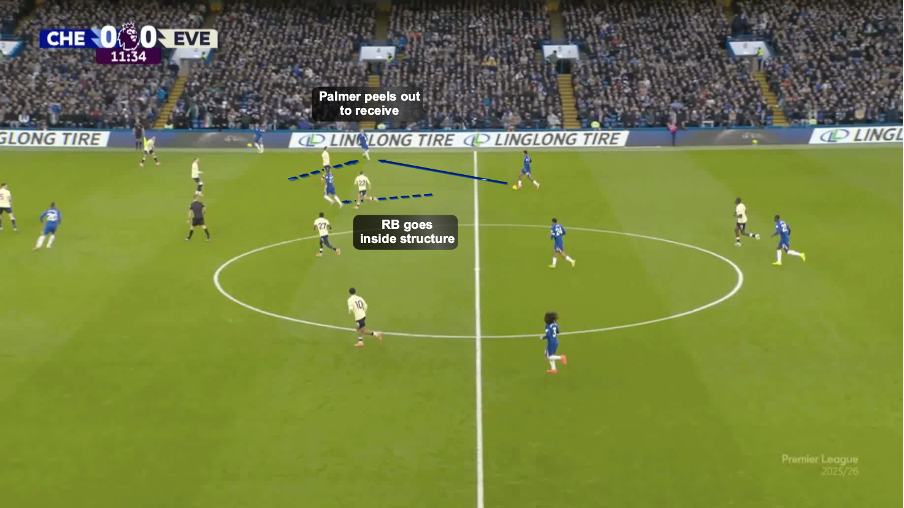
Gusto moves inside the structure; simultaneously, Palmer peels out to receive.
This adjustment is usually a simple way for midfielders to get on the ball more.
However, it also sometimes makes way for seamless rotations, which help create space in the attacking half.
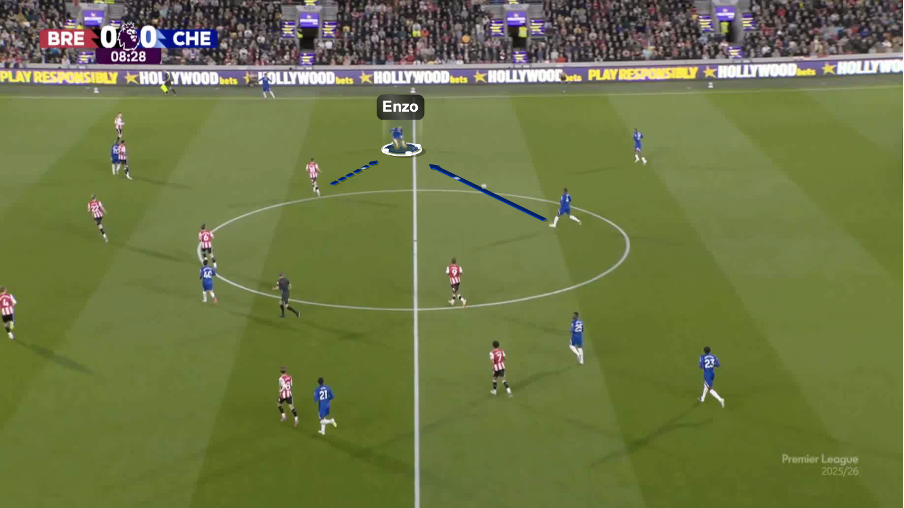
Enzo Fernández peels away into the half-space to receive from his centre-back.
This was a common action for the Argentinian under Maresca; so much so that it was often useful in dragging defenders out.
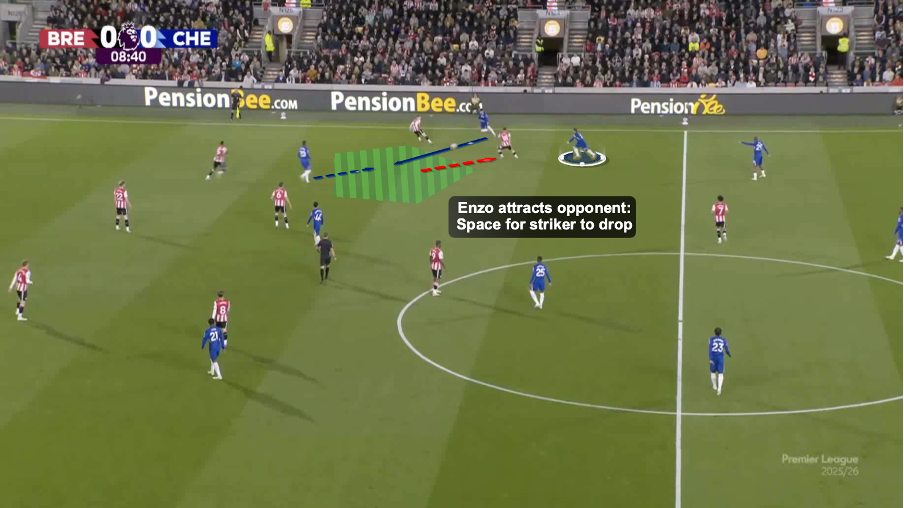
Here, Fernández peeling outside the structure drags a defender, which opens a gap inside the structure.
The striker recognises this and drops into the half-space to receive an inside pass.
At Man City, Erling Haaland is not used to these actions.
However, it could be useful during a spell of slow possession; with the amount of pull the Norwegian has, he could attract defenders and help release wingers and midfield runners in-behind.
João Pedro often drops into the half-spaces to get involved in play, which drags defenders and opens up space in behind for runners.
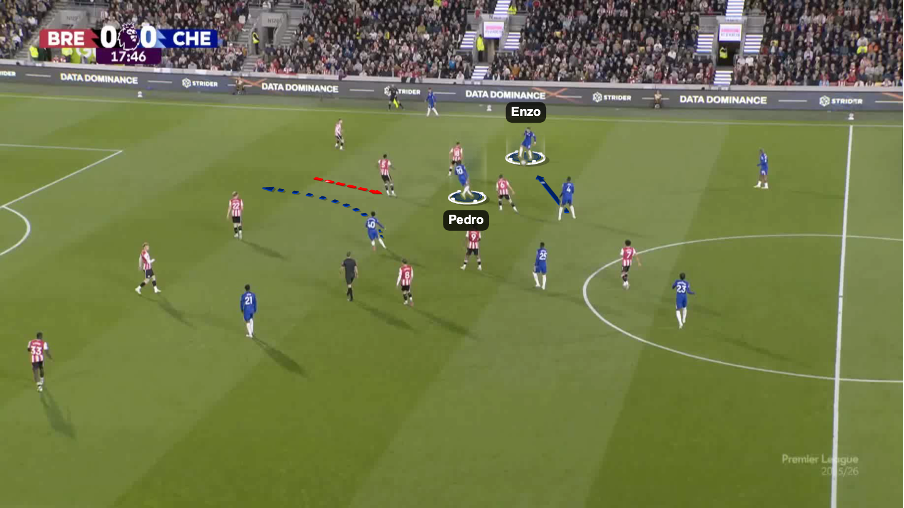
Here is an example of a small chain of dragging opponents.
Fernández peels outside the structure to receive, which pulls an opposition midfielder.
This action opens space for Pedro to drop into, which engages a centre-back as he steps to stay tight to the Brazilian.
These combined actions open enough of a gap in the half-space for a third-man run behind the opposition backline.
Pedro’s positioning sometimes opens passing lanes inside the structure.
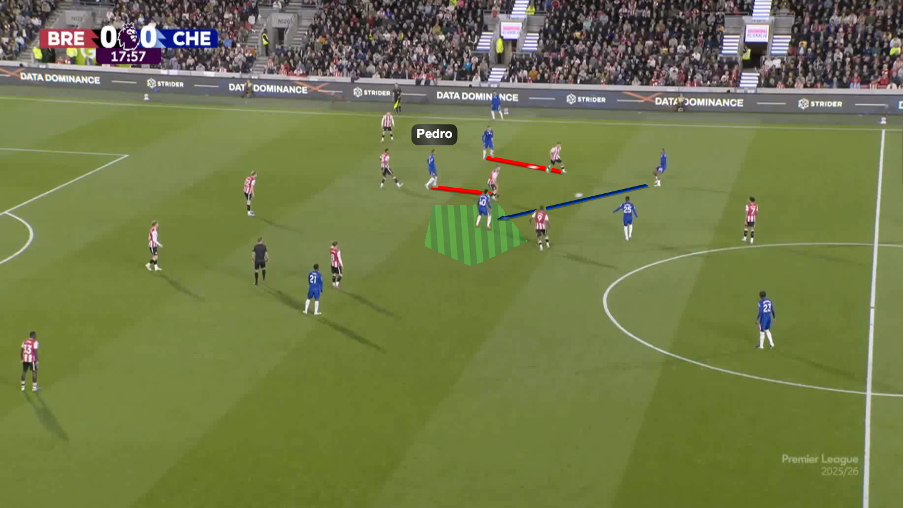
Chelsea have two players in the half-space, including João Pedro, who pins an opponent.
The opponent shifts across to block the passing lane to the Chelsea striker, which opens a passing lane to an attacking midfielder in the central channel.
It is essentially a midfield overload, and the opponents cannot keep up with the number of open passing angles.
Guardiola’s Man City have been similar in this regard as well; with players like Rayan Cherki, Phil Foden, and Tijjani Reijnders operating within the structure, they have maintained their strategy of overloading the central channel over aim.
It is evident through the way Chelsea played under Maresca that the Italian prefers central penetration.
However, with overloads down the middle, the central channel can sometimes get overcrowded.
To deal with this, positional interchanges come into play.
The striker dropping usually pulls an opposition centre-back into midfield.
So, to create space, a midfielder must move away from said area to open space.
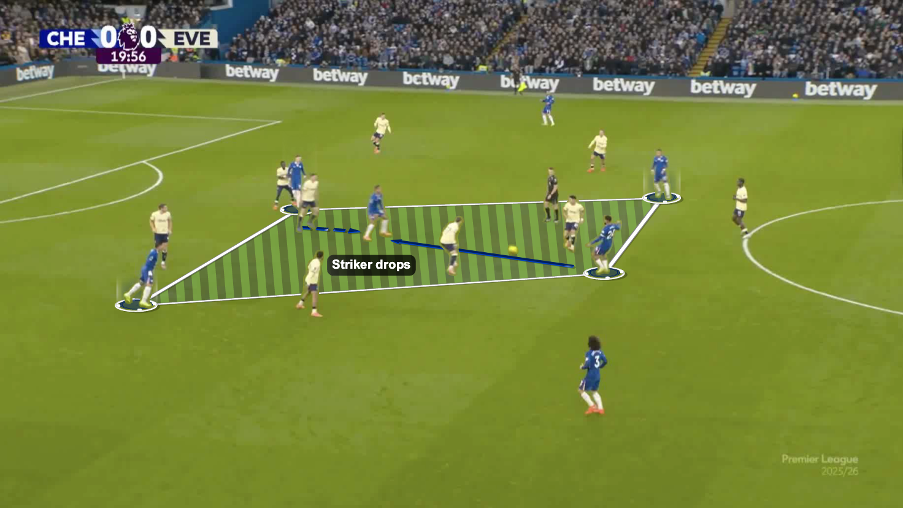
Chelsea’s midfield diamond is visible.
However, Palmer has moved higher up, dragging an opponent with him.
This clears enough space for the striker to drop into the central channel to receive a vertical pass.
Chelsea frequently executed such smoothly coordinated actions, which helped them move the ball across the pitch with ease.
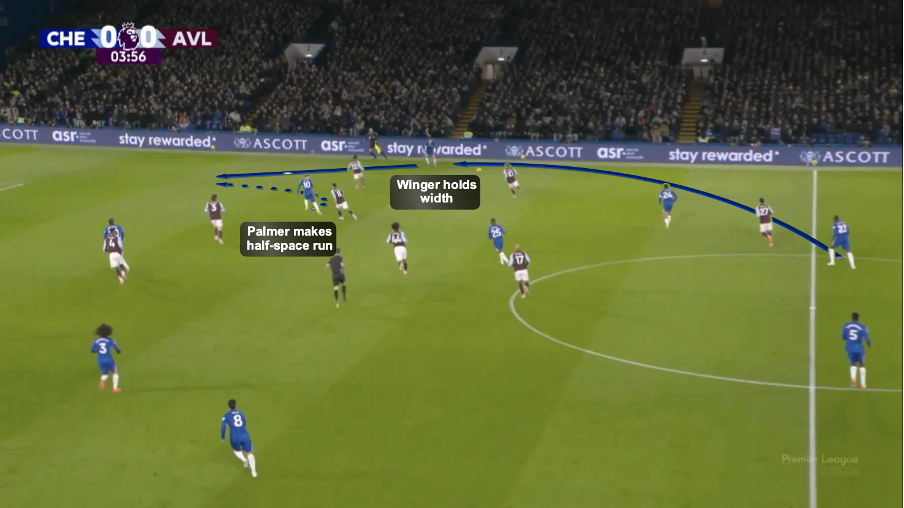
The way Chelsea’s front three operated in the attacking phase, it created optimal situations for runs in-behind.
While the full-backs inverted and played in the half-spaces for much of the game, the wingers hugged the touchline.
This forced the opposition to stretch their back line.
The opponents' full-backs/wing-backs had to close down the Chelsea wingers to prevent crosses.
However, in doing so, the gap in the half-spaces grew bigger.
Since the striker usually pinned the near-side centre-back, there were moments of hesitation in the centre-backs sliding to cover their full-backs.
Players like Palmer exploited this well.