Jarrod Bowen Scout Report At West Ham United 2026/2027: Liverpool's Ideal Summer Signing? – Player Analysis

West Ham United’s turbulent season, culminating in relegation from the Premier League, could make several previously unavailable players more attainable in the transfer market.
Among them is club captain Jarrod Bowen, a long-standing fixture in West Ham’s starting XI over the past six years and one of their most consistently productive performers.
The 29-year-old left-footed right-winger recorded nine goals and 11 assists in the Premier League this season, underlining his continued attacking value.
Despite narrowly missing out on a place in England’s World Cup squad this summer, many argued that Bowen had done enough to merit inclusion.
This Jarrod Bowen scout report and player analysis examines Jarrod Bowen’s qualities, his style of play, and the clubs that should consider targeting him during the summer transfer window.
Jarrod Bowen In Possession
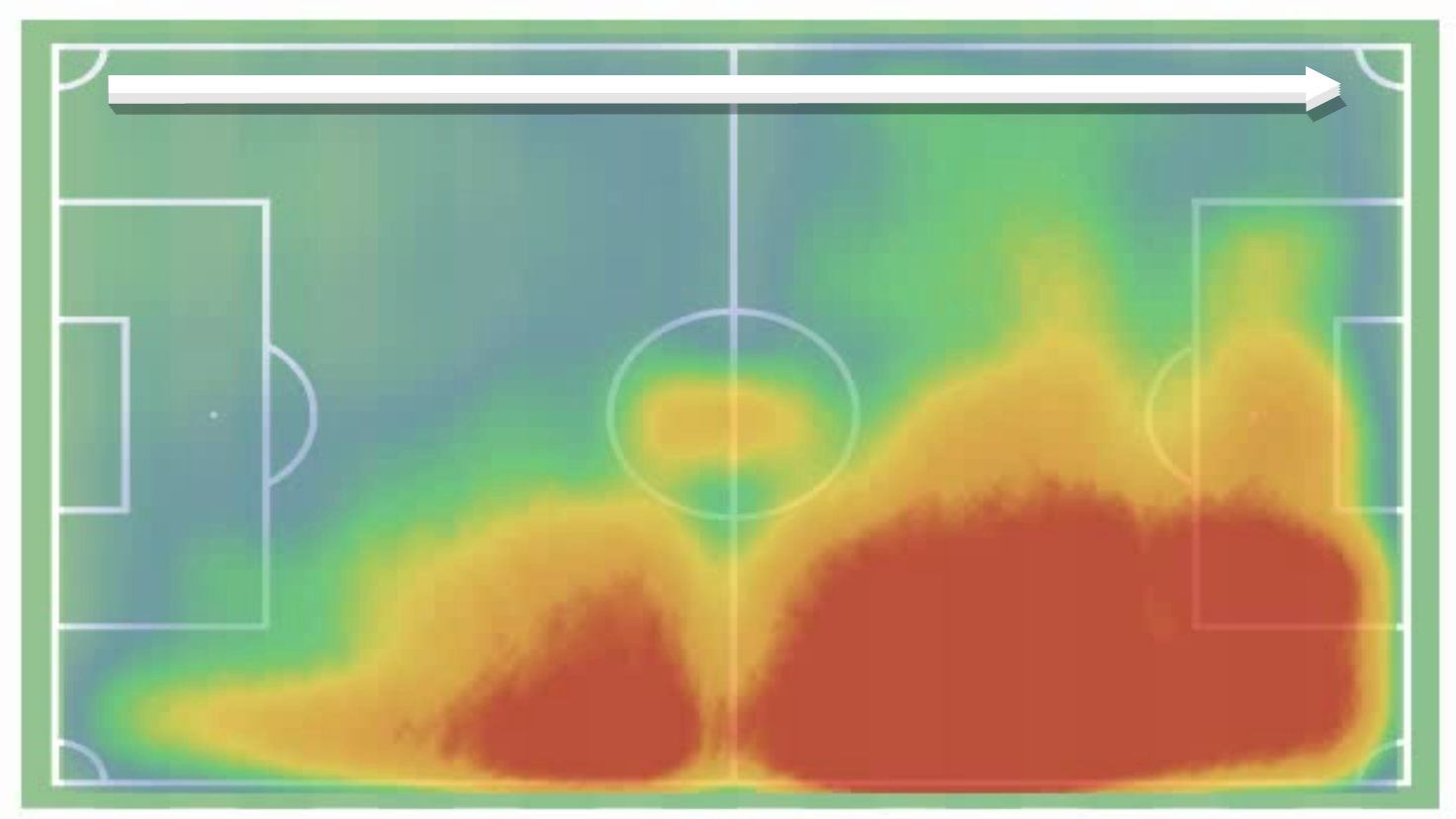
As shown in Figure 1, Bowen’s heat map reflects his established right-sided role, with frequent involvement in wide areas and the right half-space.
Jarrod Bowen Heat Map 2025/2026
Jarrod Bowen’s in-possession value is built on efficiency, directness and reliable final-third output.
He is not defined by excessive flair, but by his ability to turn possession into meaningful attacking actions.
He attacks space, creates separation, and consistently finds ways to shoot, cross, or combine in dangerous areas.
His clearest technical strengths are his left-footed ball-striking and delivery.
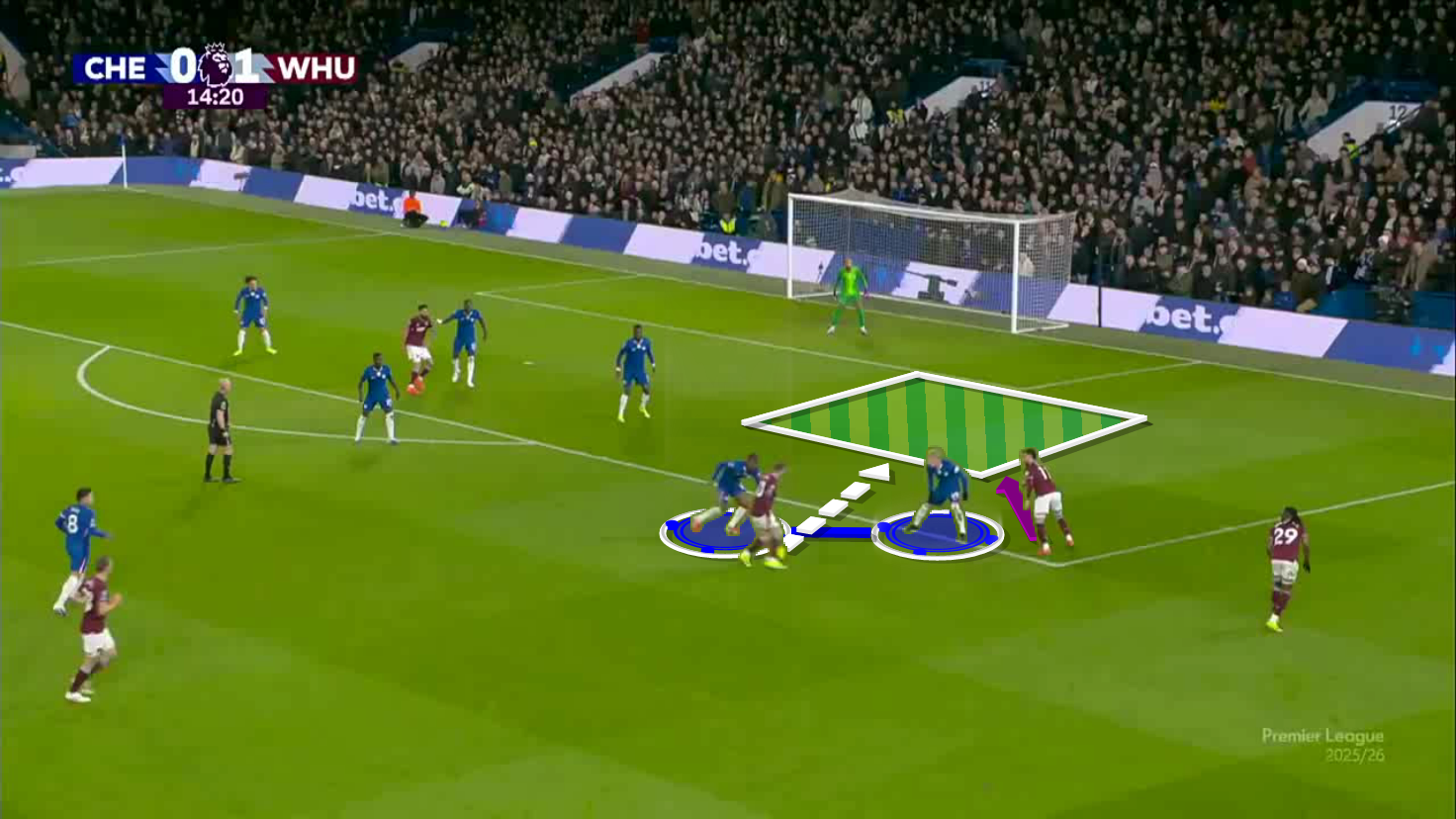
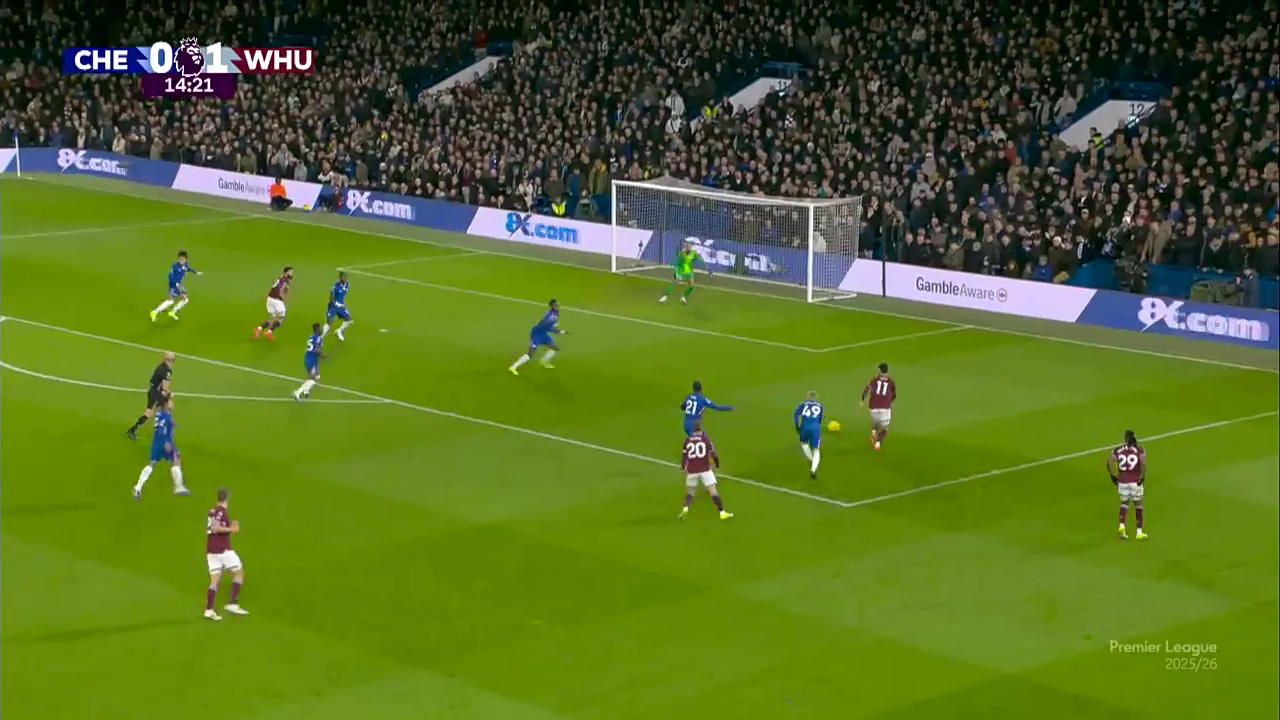
The sequence below highlights how Bowen can open his body and adjust the ball just enough to create a shooting or crossing lane, without needing to fully beat his defender.
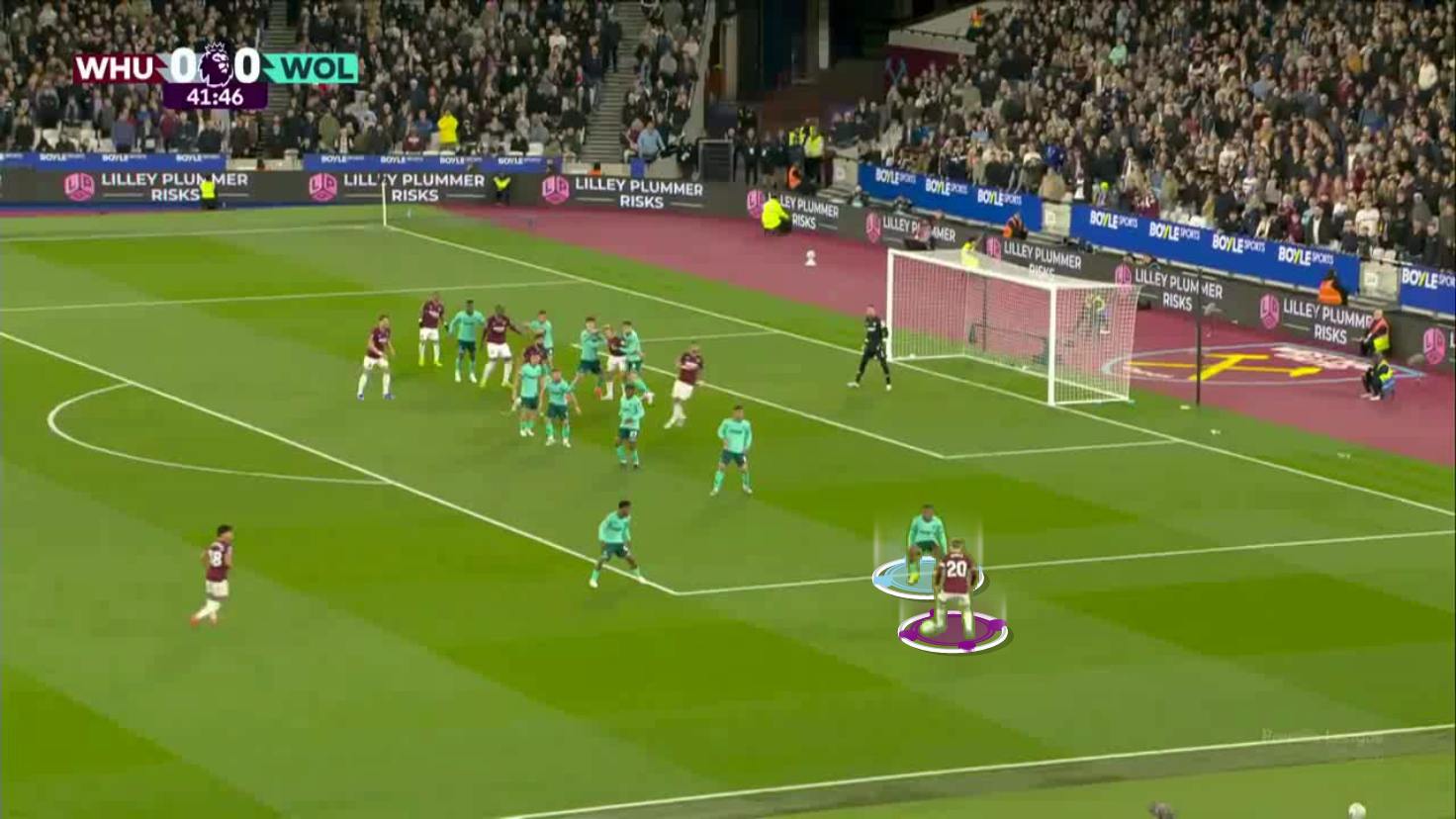
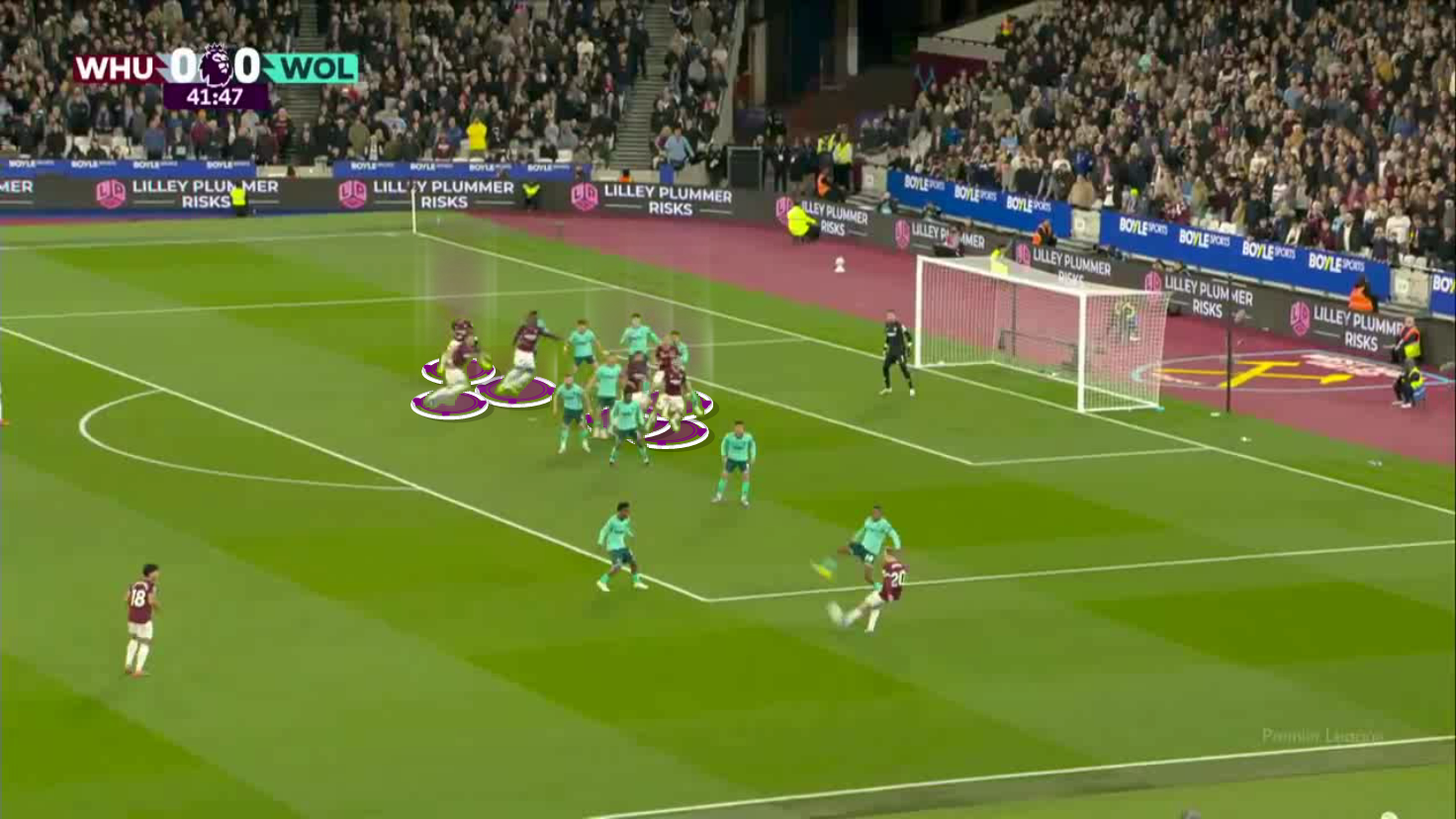
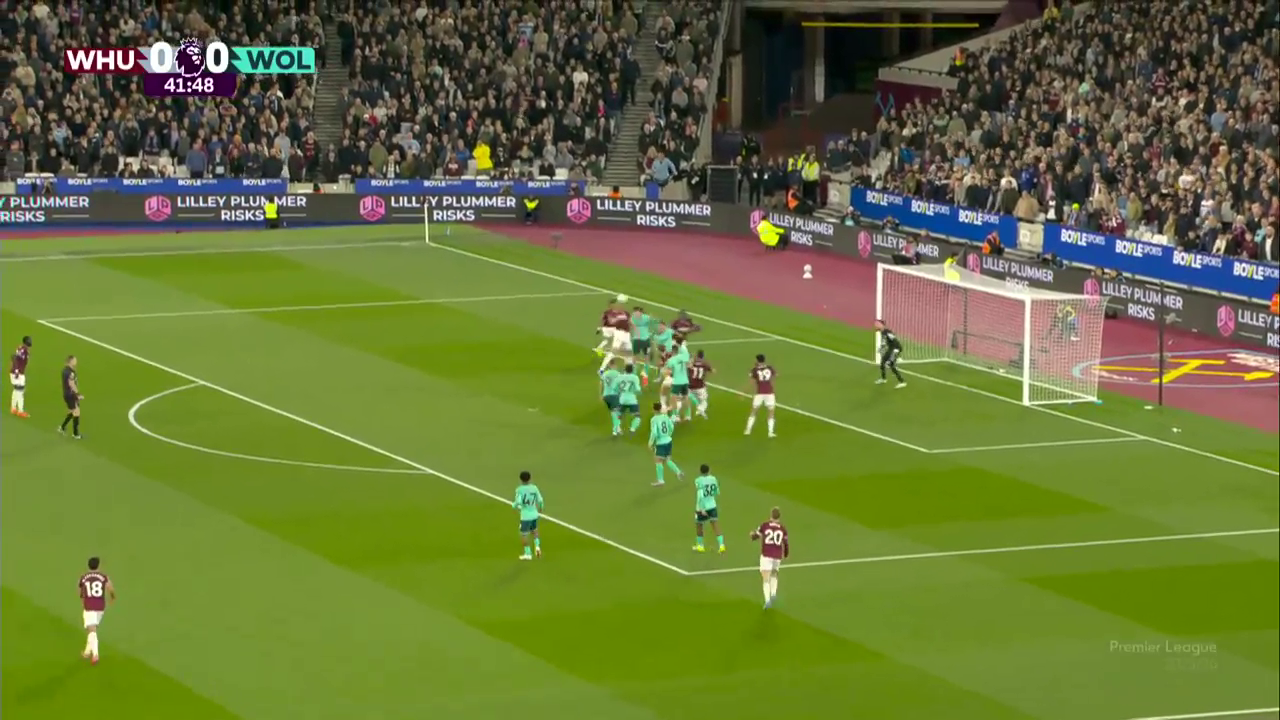
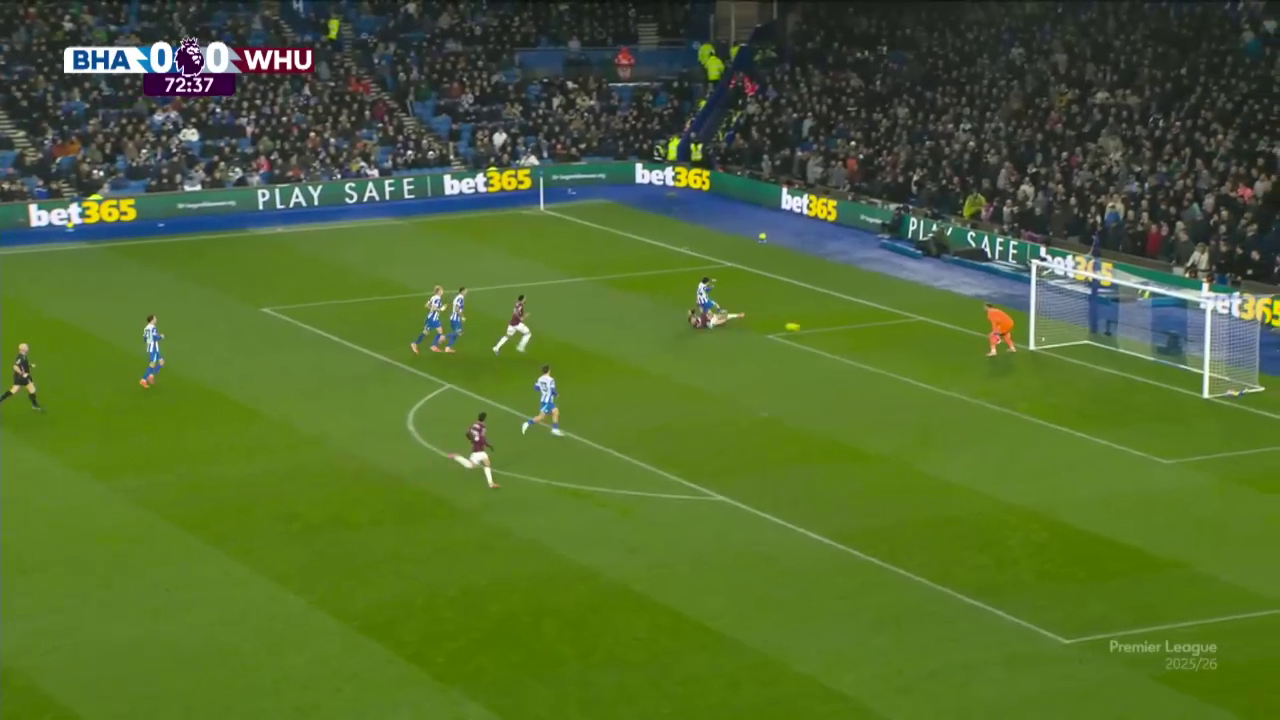
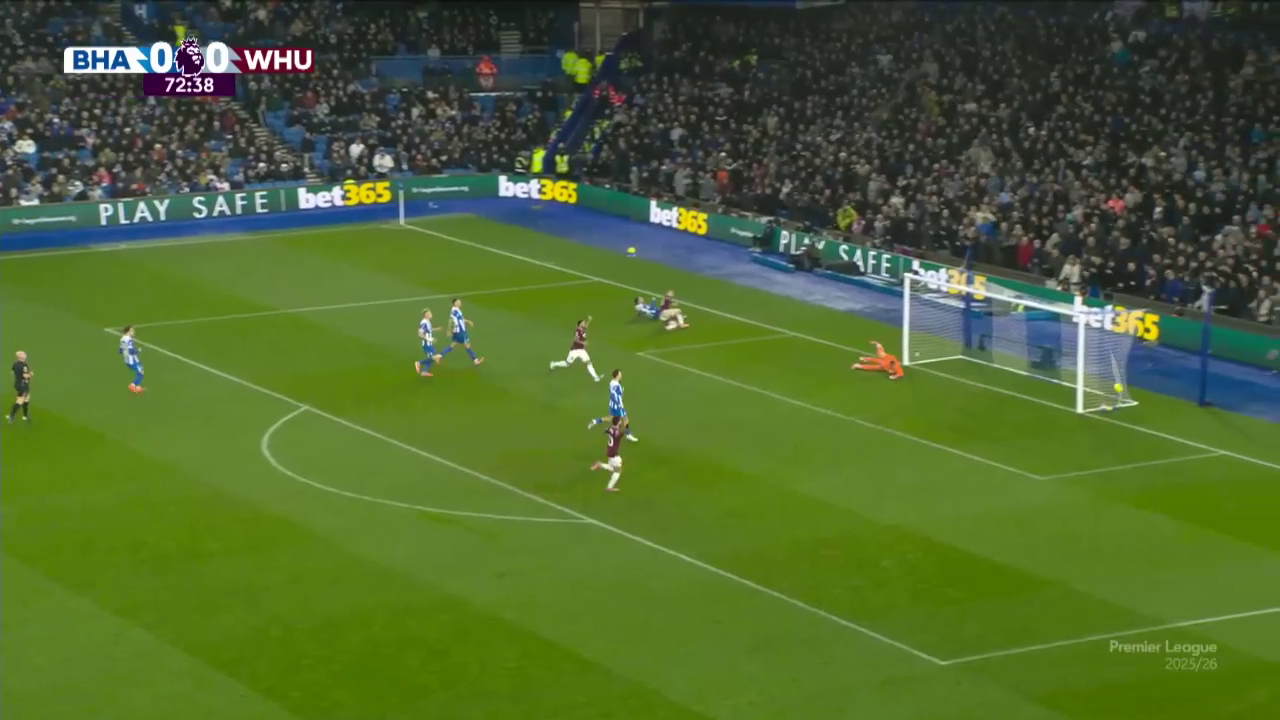
Bowen’s finishing is similarly natural.
As shown below, he can convert low-xG chances from tight angles, unorthodox body positions, and off-balance situations, reflecting the balance, technique, and instinct to finish when chances are not cleanly set up.
Bowen’s crossing is one of his strongest traits.
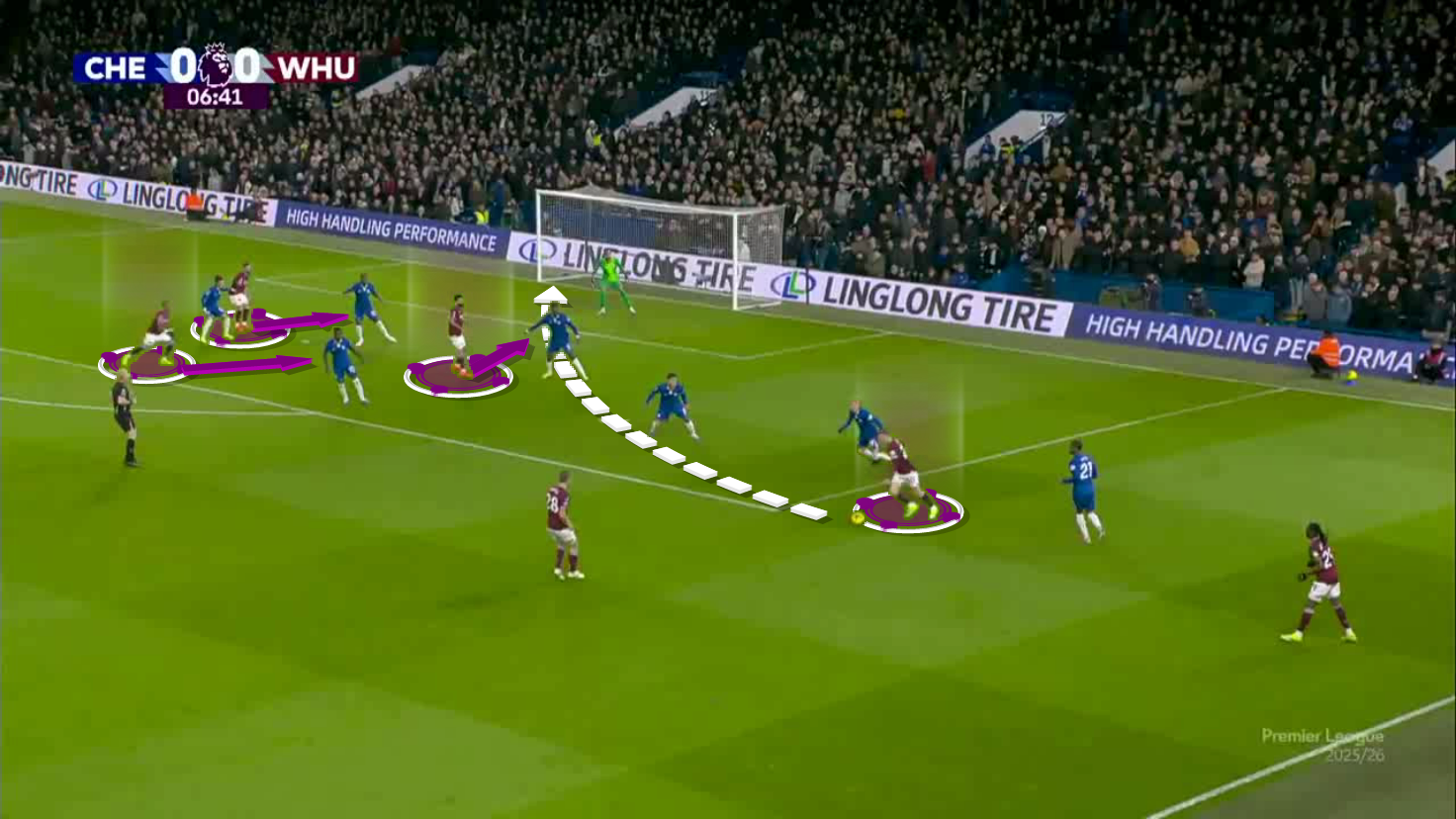
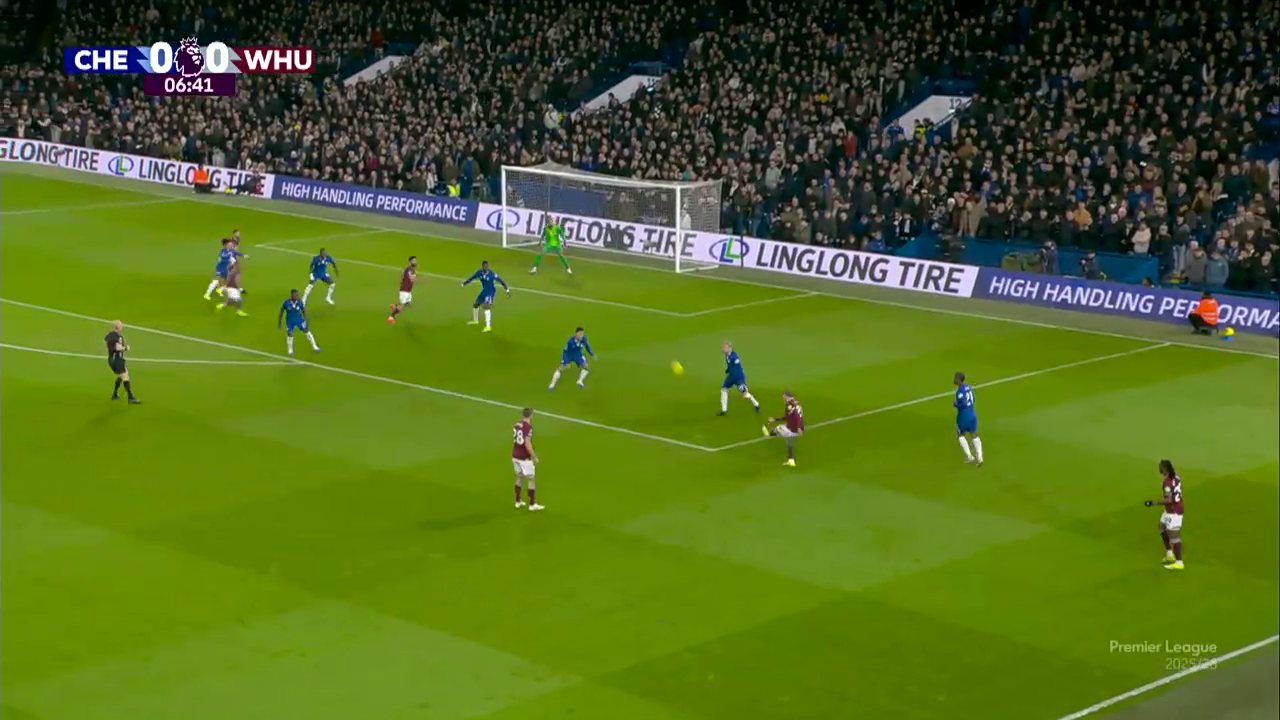
He regularly manufactures delivery opportunities from the byline, wider touchline positions and slightly deeper half-space zones.
The sequence below captures his ability to bend crosses towards the back post.
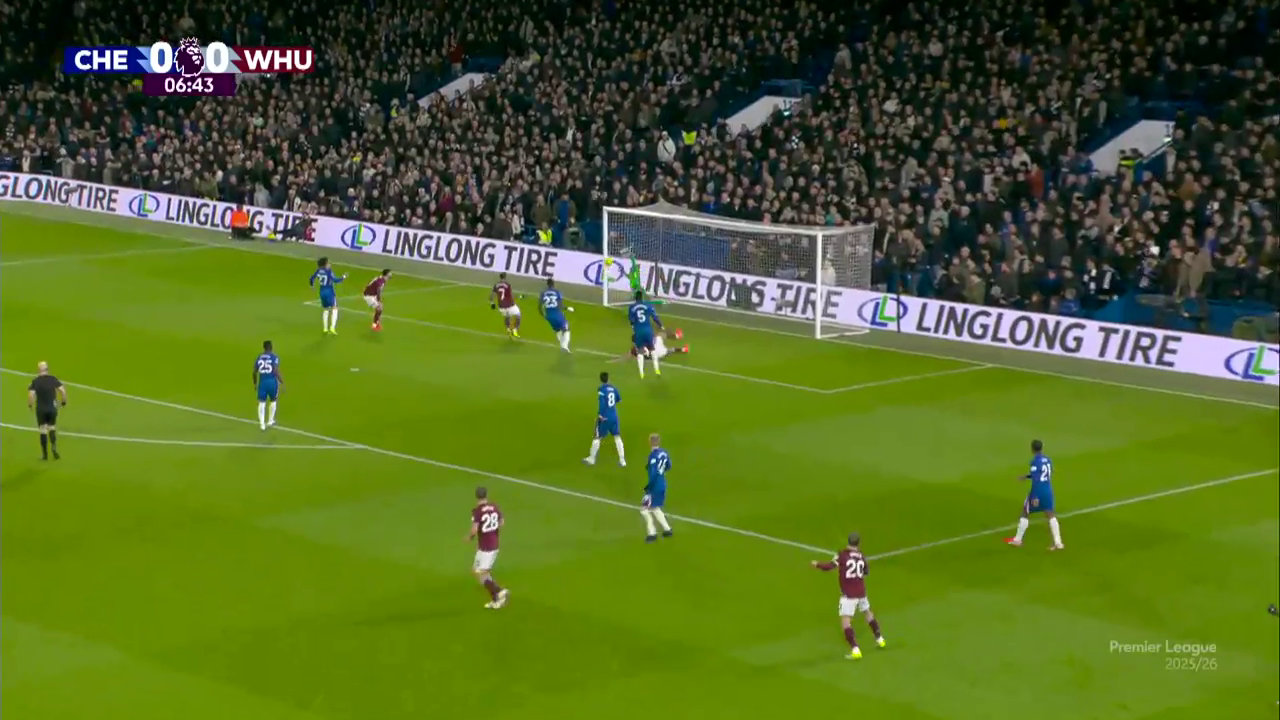
This next sequence shows he can also beat his defender towards the byline and deliver accurately with his right foot.
This variety would suit teams that crowd the box, commit runners aggressively and have forwards capable of attacking deliveries.
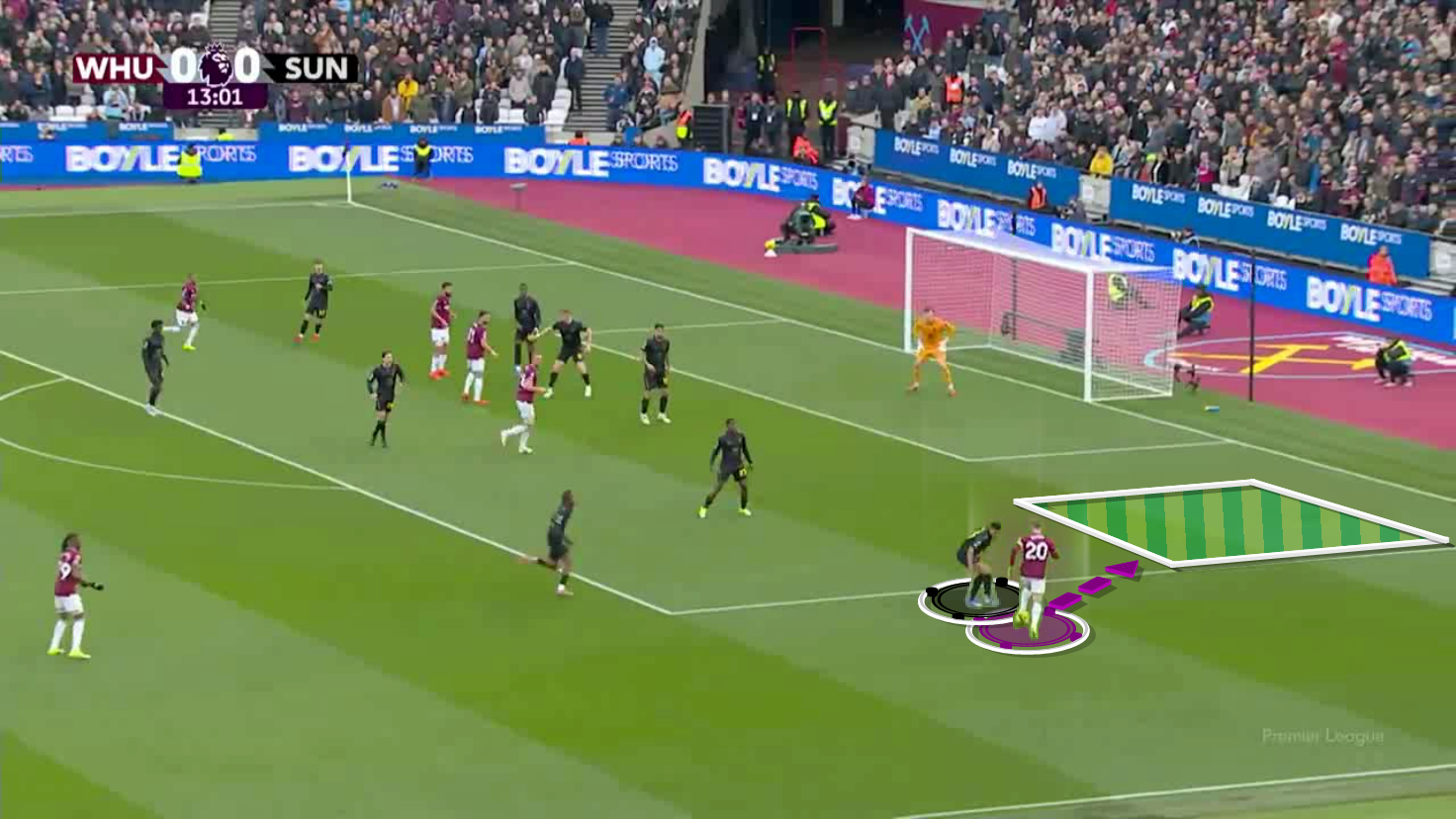
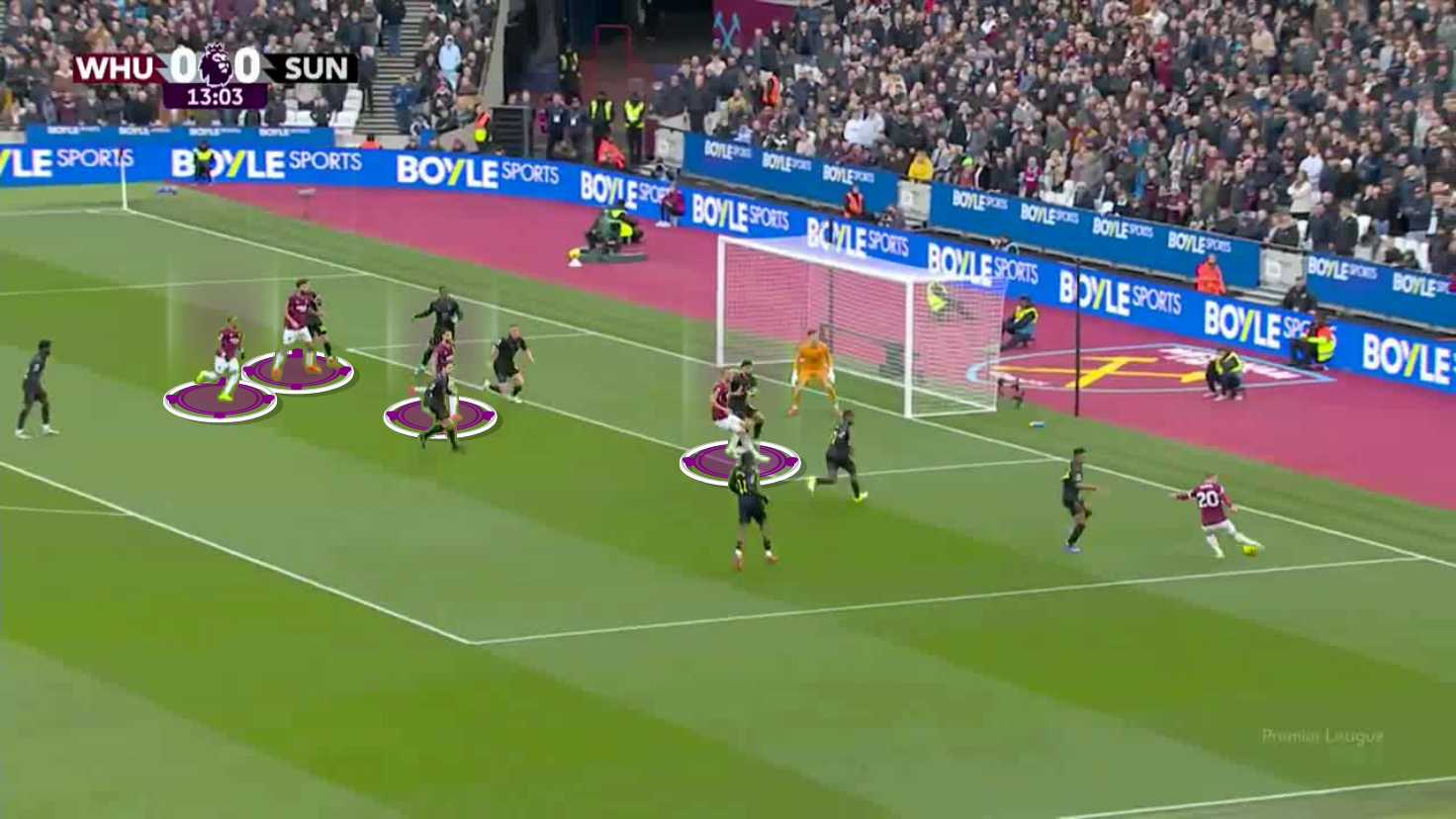
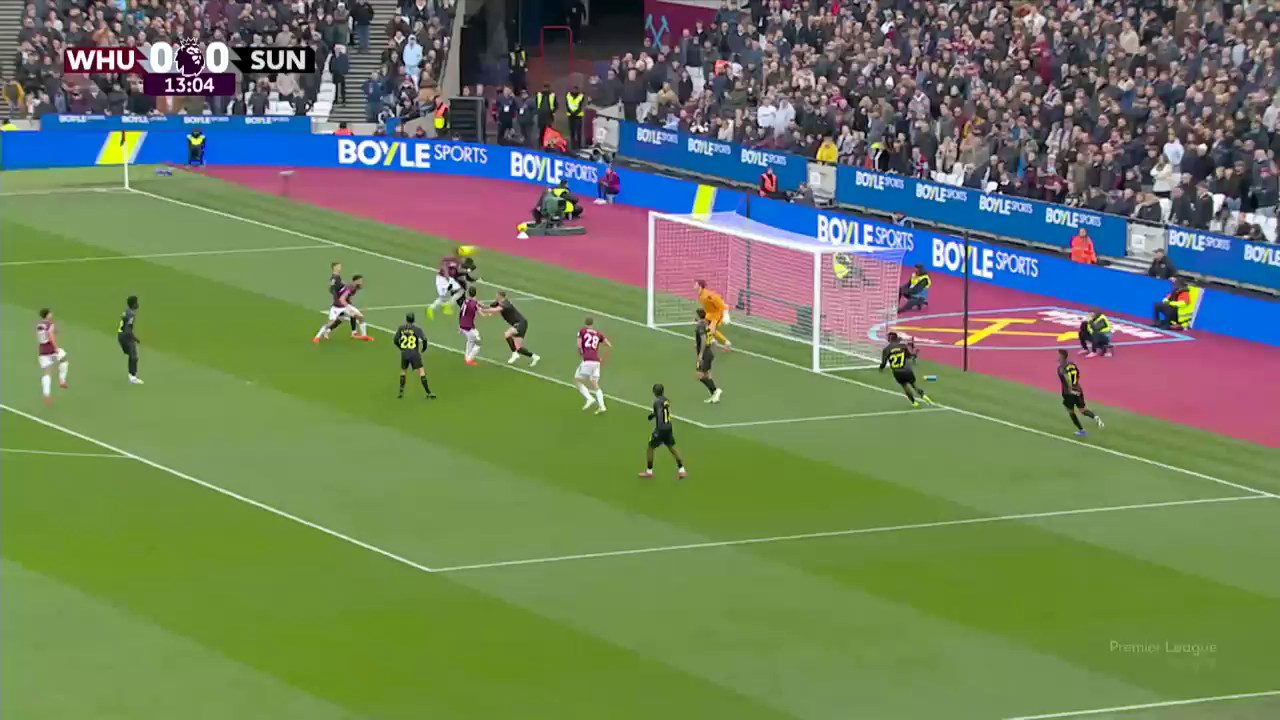
Bowen’s set-piece delivery adds another layer to his attacking value.
His free-kick and corner deliveries pose a consistent threat, making him useful not only in open play but also in structured attacking moments, where elite clubs often look for marginal gains.
His movement also strengthens his goal threat.
Bowen makes penetrative runs in behind the last line, stretches defences and provides an alternative option beyond playing into feet.
He can also finish headed chances well when arriving onto the ball, guiding efforts effectively despite not being dominant in aerial duels.
His 30.6% aerial duel success rate reinforces that this is not a major strength in general play, even if he remains capable of converting headed opportunities when the timing and delivery are right.
Positionally, Bowen is comfortable as both a touchline winger and a right half-space attacker.
Out wide, he can isolate defenders and create crossing or shooting angles.
Inside, he can receive between the lines, combine with teammates and attack the box from more central positions.
He also combines well in close proximity while moving forward at pace, helping attacks retain momentum.
His passing profile is more mixed.
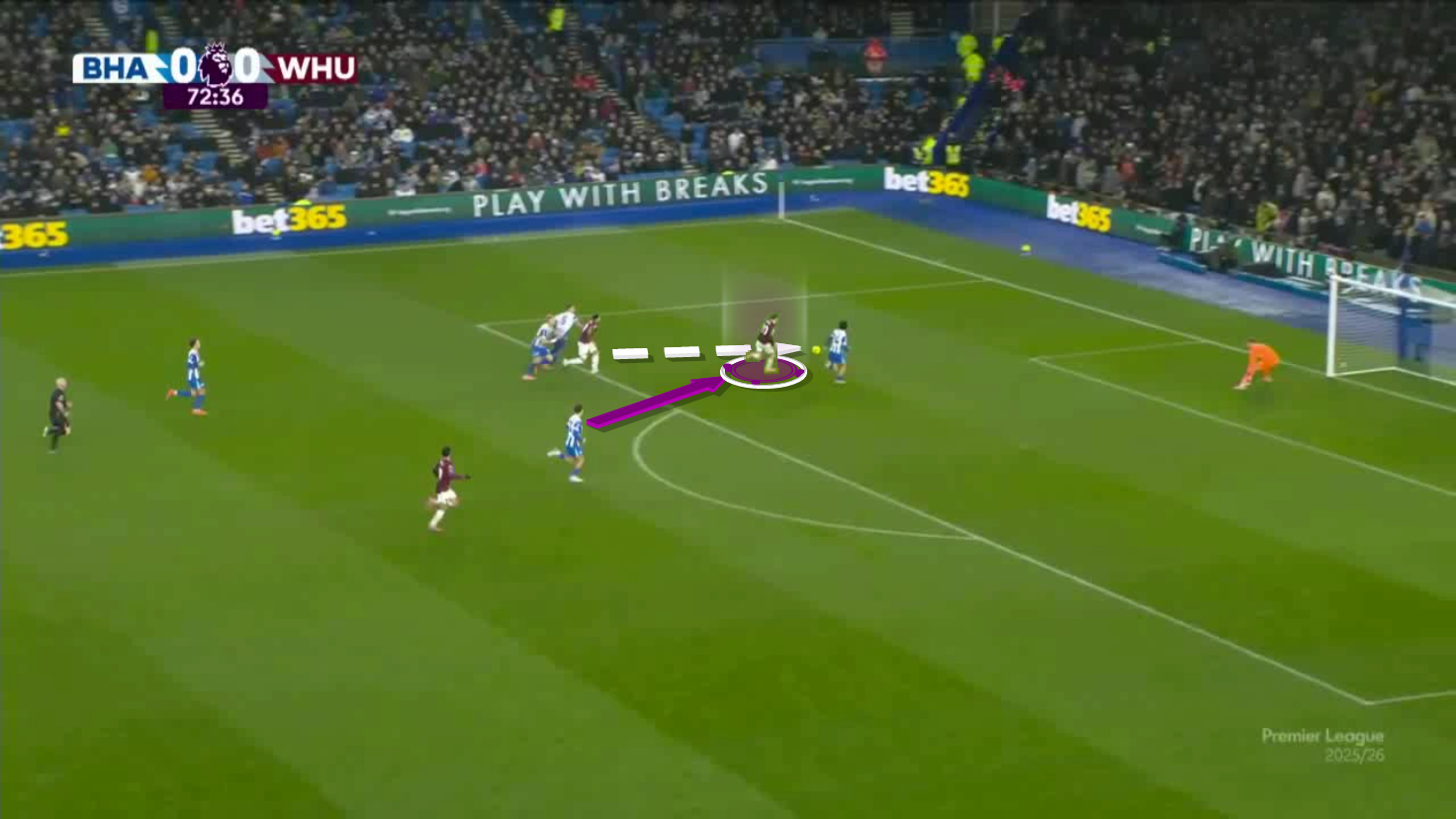
Below, we see Bowen threading a pass between two defenders into a teammate attacking the space in behind, highlighting his ability to create decisive final-third actions.
However, his general passing can lack precision, with some passes failing to arrive cleanly into a teammate’s path or onto the correct foot.
His lower pass success rates should be understood in context, as many of his actions occur in the final third, where riskier passes are more common.
In transition, Bowen is effective, but there is nuance to it.
He is powerful and difficult to dispossess when defenders engage him physically, with his compact frame helping him ride pressure, hold the ball and act as an outlet.
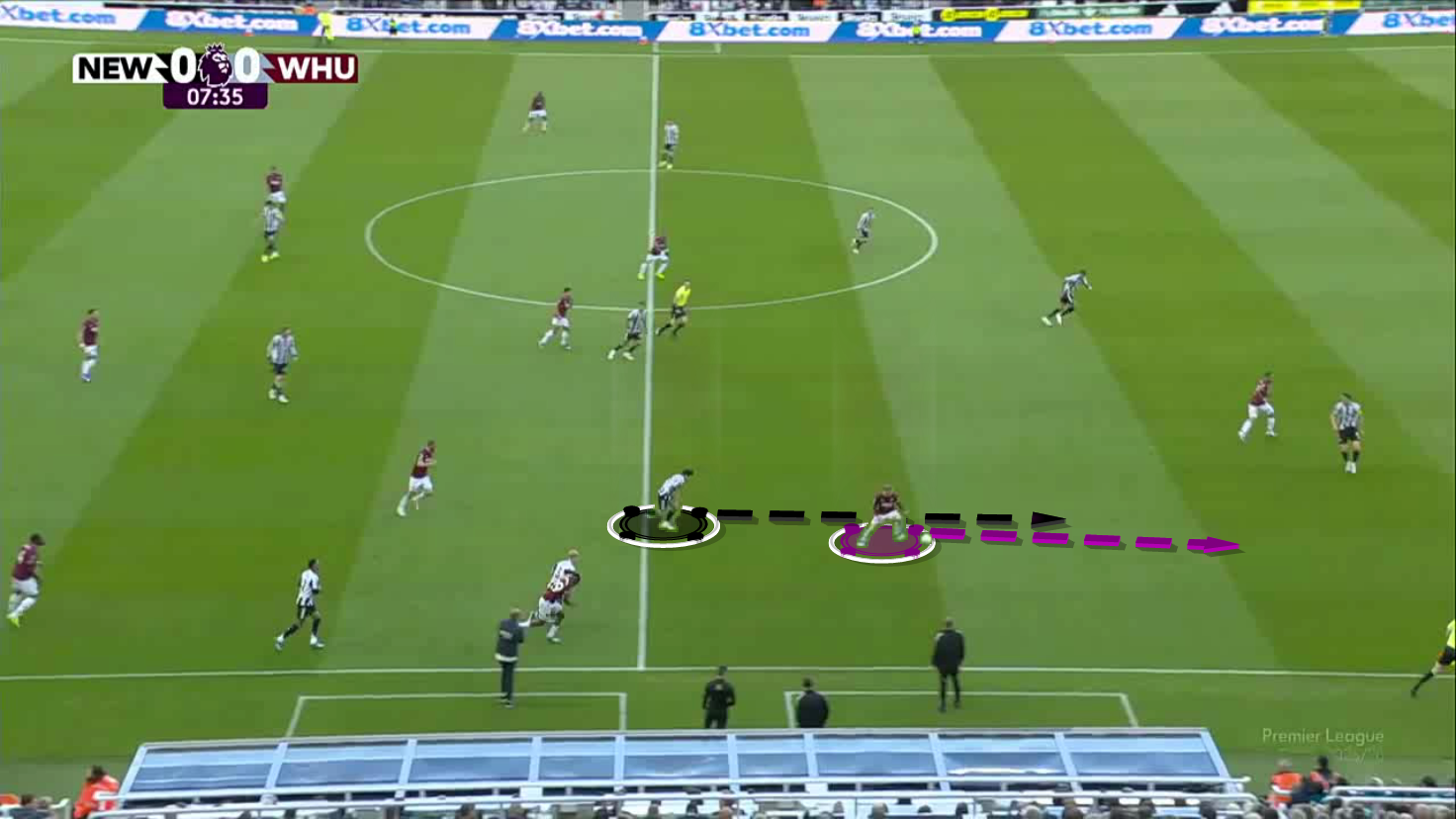
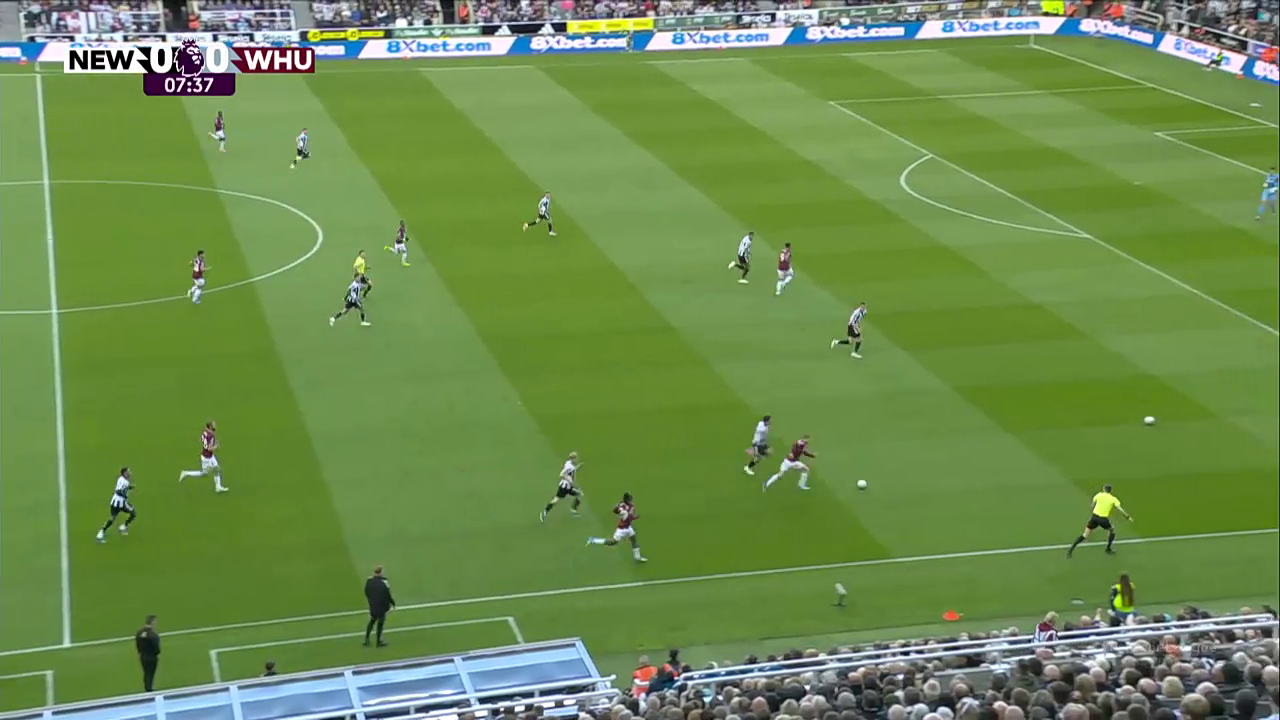
However, Figure 7 shows the risk when he carries over longer distances, as quicker defenders can recover from behind, making him more vulnerable when pressure arrives on his blind side.
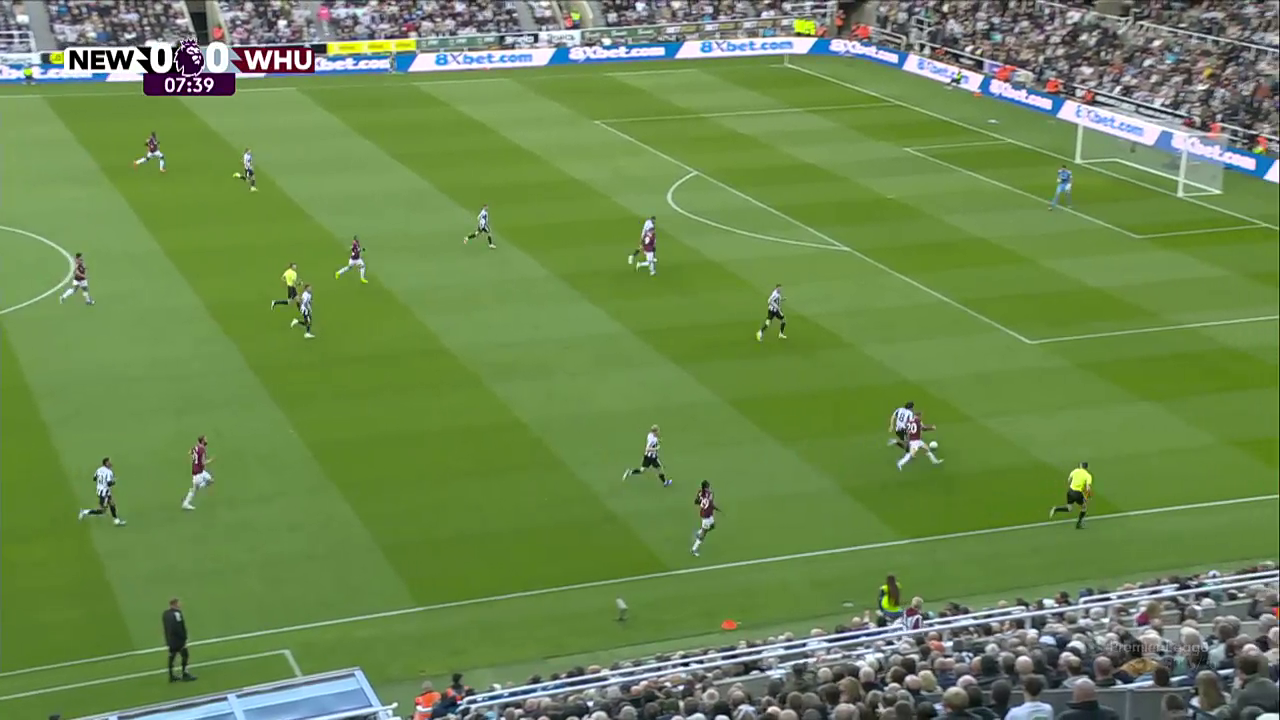
There are also moments when Bowen holds the ball slightly too long, allowing defenders to recover and challenge.
This links to his wider duel profile: his 42.5% ground duel success rate and 30.6% aerial duel success rate suggest improvement is needed, particularly for top clubs that prioritise duel dominance and retention under pressure.
Bowen is heavily left-footed, which can make some actions more predictable.
This is not a major issue for a winger, particularly because he can still strike, cross and release the ball with his right foot when required.
He is also not especially clean as a tight-space dribbler.
Bowen prioritises efficiency, creativity and directness over intricate skill, and is at his best when attacking open spaces or receiving wide with room to shape his next action.
This is not a weakness in itself, but it matters when projecting him to a top club, where opponents often defend compactly, reduce transition opportunities and crowd the final third.
Bowen Out Of Possession
Out of possession, Bowen offers exceptional work rate, intensity and tactical discipline.