Julian Schuster Tactics At SC Freiburg 2025/2026: Europe’s Most Effective Corners? – Set-Piece Analysis

SC Freiburg have finished seventh in the Bundesliga, 12 points behind the UEFA Europa League qualification spot held by Bayer Leverkusen.
This marks a slight departure from their recent success in the Bundesliga, having finished in the top six in three of their previous four seasons.
However, Julian Schuster has successfully guided Freiburg to the semi-finals of the DFB-Pokal and the Europa League Final against Aston Villa.
This congested schedule may be partially to blame for their underperformance in the league, but Freiburg’s elite performance in attacking corners has been paramount in their season thus far.
Freiburg are arguably the best team in Europe’s top-five leagues this season from attacking corners.
Therefore, this set-piece analysis article uses a combination of tactical analysis and data analysis to contextualise Freiburg’s dominance from corners, establishing why they have been such a potent weapon for them this term.
The Data Behind SC Freiburg’s Success
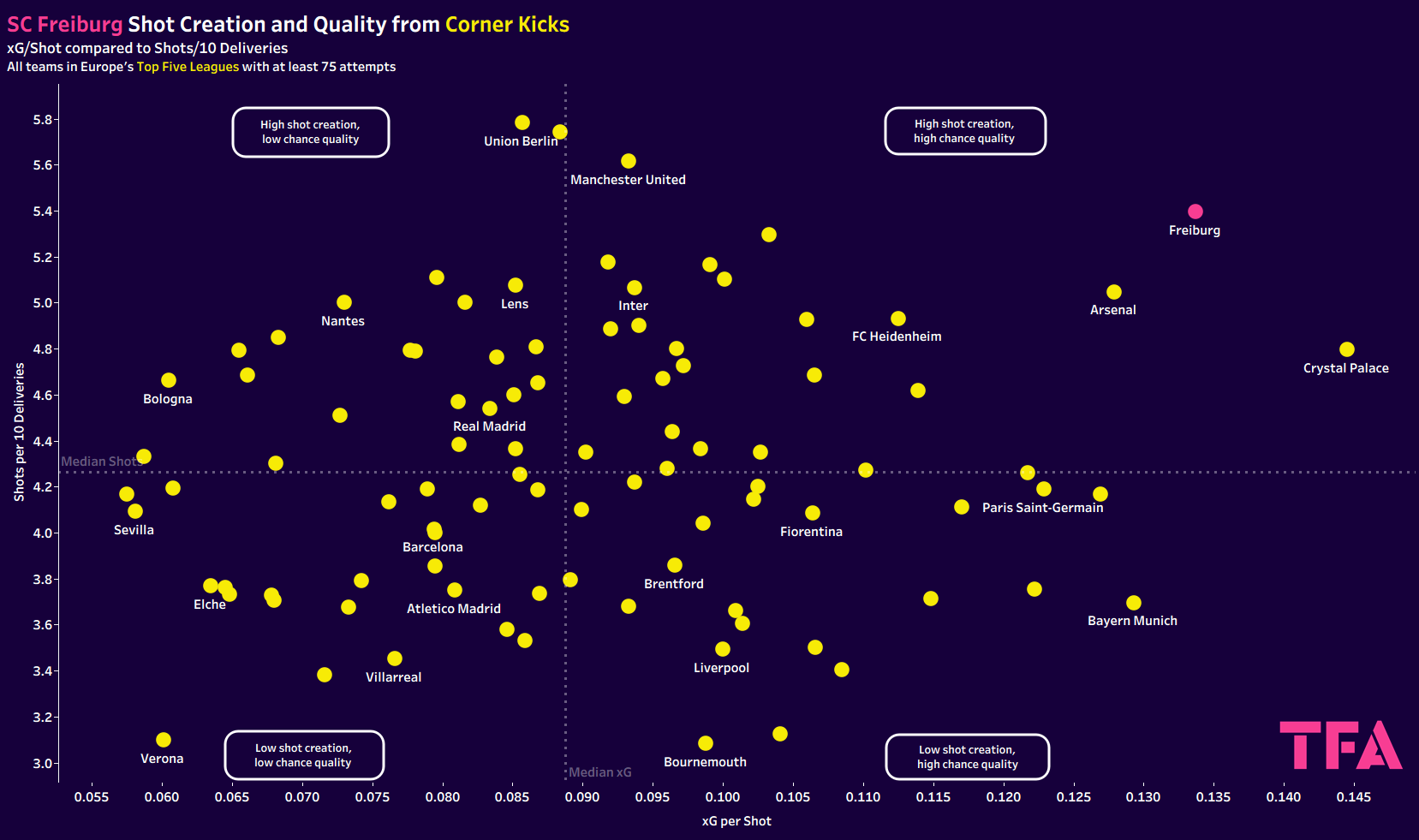
Julian Schuster’s Freiburg are the most efficient corner-kick takers of this season, with 0.72 xG per 10 deliveries, leading Europe’s top-five leagues.
While dominant clubs that generate more corners will have higher xG totals, Freiburg are significantly more efficient with their chances than Europe’s second-best Crystal Palace who generate 0.63 xG per 10 deliveries.
Freiburg produce the fourth-most shots per 10 deliveries and boast the second-highest xG per shot in the top five leagues.
Many teams generate xG from corners through low-risk routines that produce a high volume of low-quality chances (upper-left), or through high-risk routines that produce few high-quality shots (lower-right), but Freiburg are elite in both respects.
Freiburg’s success from corners is especially impressive when you consider their relatively unexceptional squad.
However, their squad construction allows them to optimise their corner kicks, unlike many midtable continental clubs.
Julian Schuster enjoys multiple quality options for corner takers, both left and right-footed, which enables Freiburg to develop steadfast routines from corners.
Because they typically have a quality left and right footed corner taker on the pitch, Freiburg are able to make dangerous inswinging deliveries into dangerous areas from both sides of the pitch.
84% of their corner deliveries are inswingers, the highest rate in the Bundesliga by about 7%.
Vincenzo Grifo takes the majority of their left-sided corners, while Christian Günter and Jan-Niklas Beste cover the right.
The majority of Freiburg’s corners are sent into the six-yard box, particularly targeting the near post and goalmouth.
Targeting the near side of the goal allows Freiburg to attack deliveries with speed, an approach that will be covered in depth later in the article.
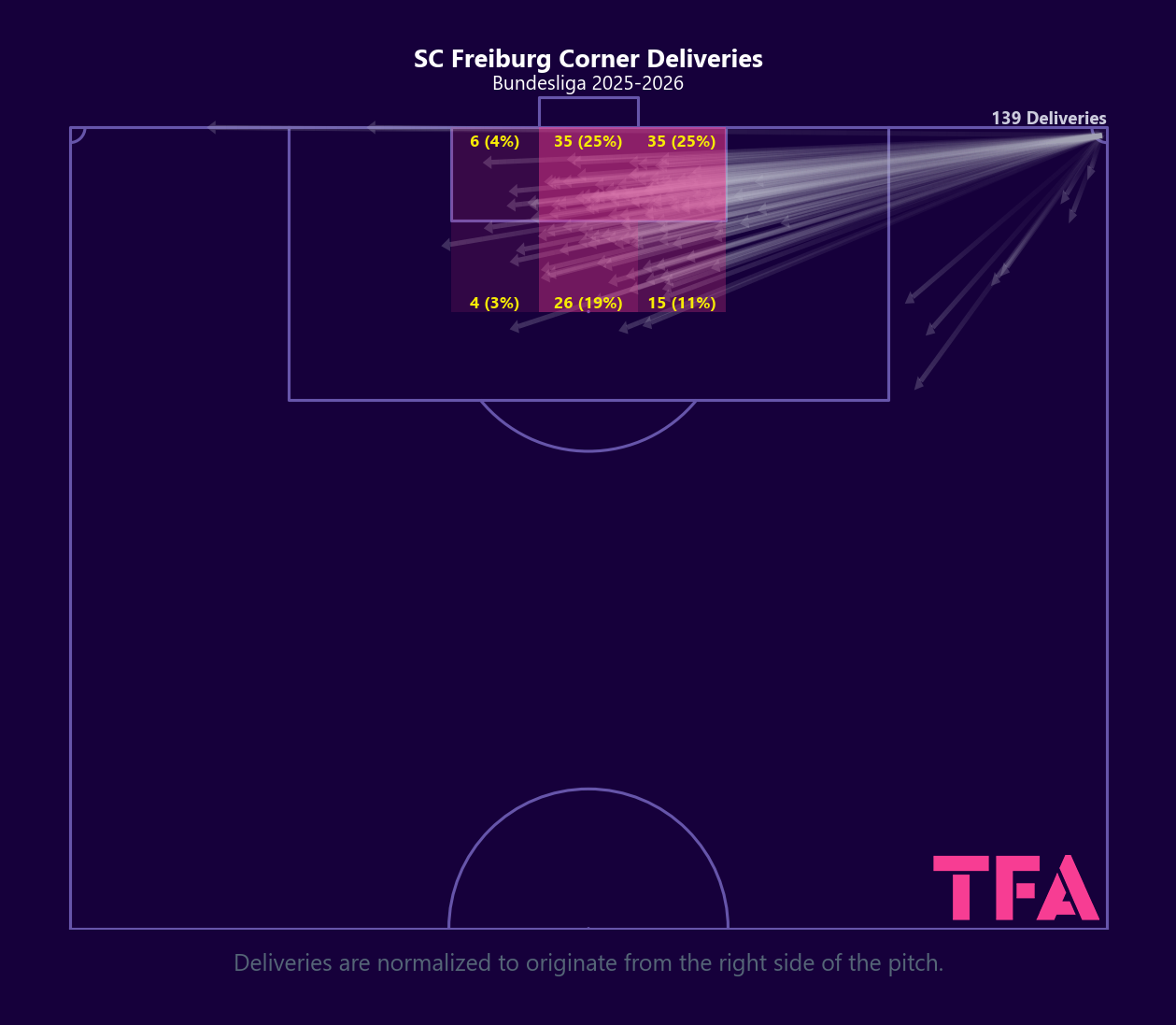
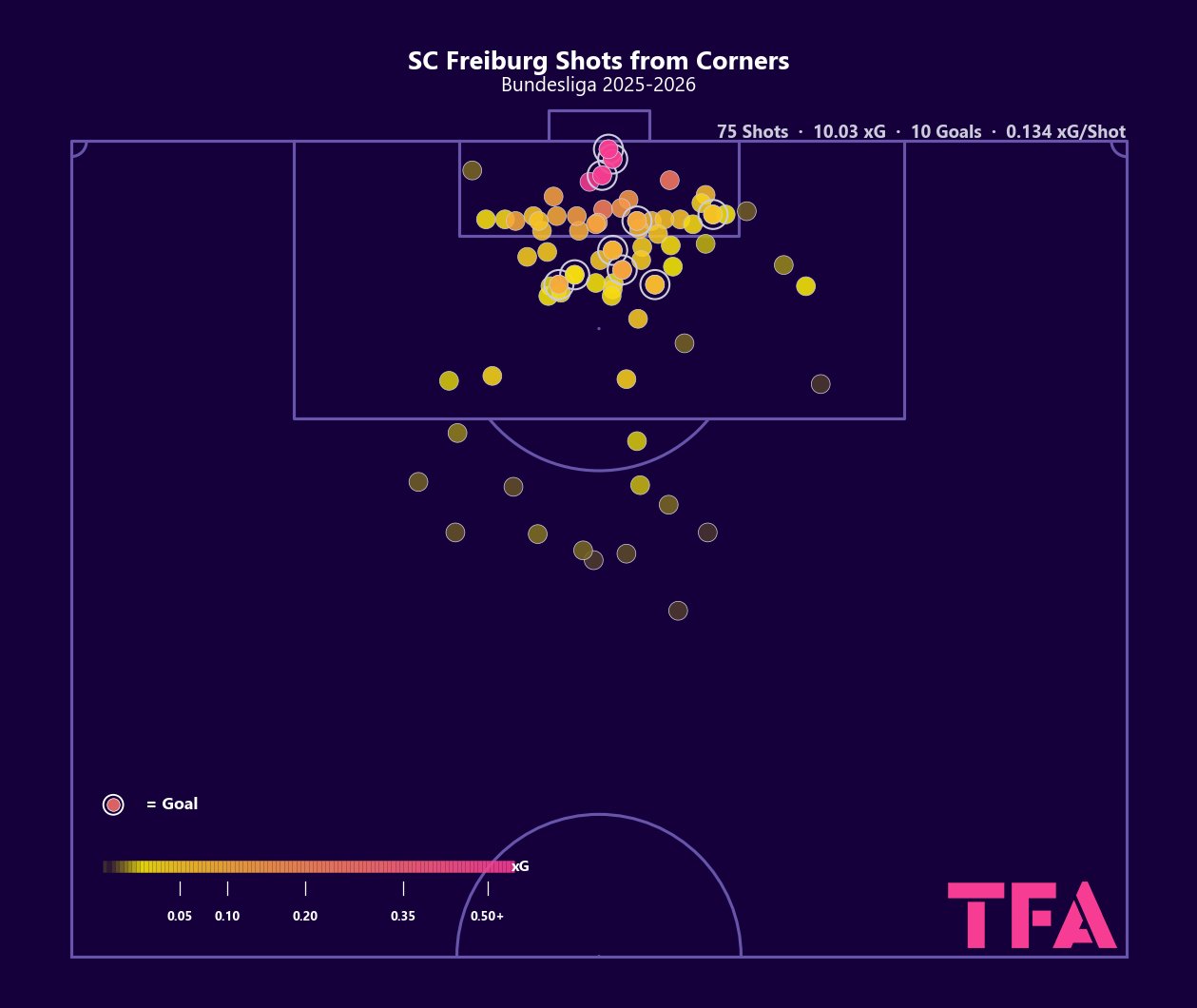
From these deliveries, Schuster’s men generate chances broadly across the six-yard box, with some especially high-quality chances in central areas.
Despite their strong focus on front-post deliveries, many of their shots come from the far post, as a result of their creative use of flicks and strength in the second phase.
Freiburg Corner Offence Tactics
While Freiburg will occasionally employ unique high-risk routines, Schuster’s tactics can be quite formulaic, with each routine based around the same underlying movements.
These movements are designed to repeatedly disorganise hybrid defences by drawing man markers out of the target area and forcing zonal defenders into unfavourable scenarios.
Freiburg’s attacking movements often shift defenders away from the goalmouth to create space for the attackers in front of goal.
The use of blind-side runs towards the near post also leverages the inherent advantages of attacking set-pieces, since defenders can only react to attackers movements, and can only watch the delivery or the attacker.
Additionally, attackers build momentum with their runs, which helps them outpace and outjump the often static defenders.
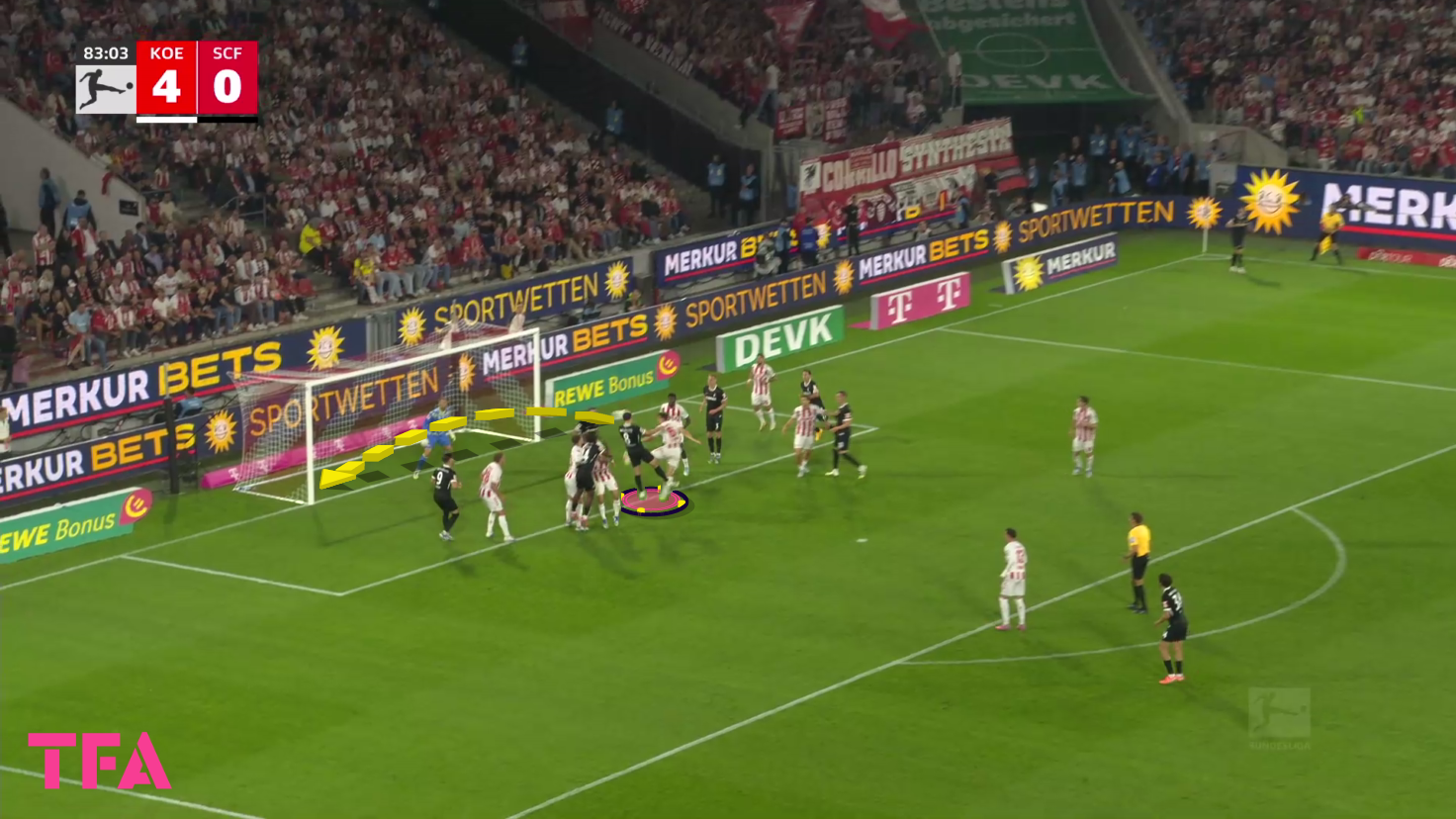
The below routine versus Köln is especially typical of Freiburg.
Against a hybrid defence, three attackers make decoy runs toward the corner taker.
By starting the attacking runs behind the defensive unit, they create challenges for the defenders trying to track the attackers and maintain their structure.
The decoy runs draw the defenders out of position, which leaves space in the goalmouth for the deeper runners to attack the static zonal defenders in space.
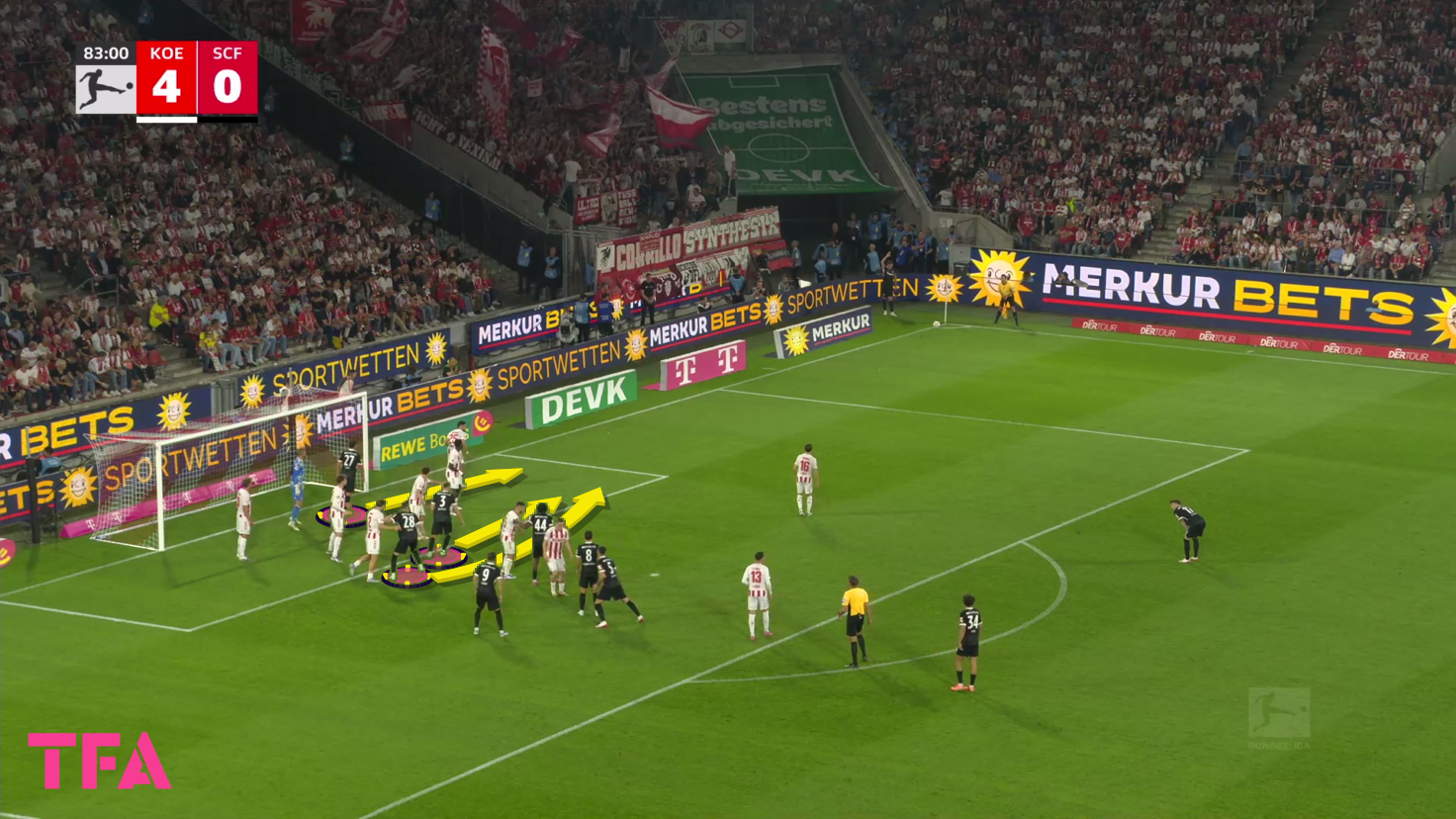
Three attackers positioned outside the six-yard box make direct runs towards the goalmouth, forcing the zonal defenders to step up to the six-yard line and intercept the attackers.
This leaves the goal more vulnerable, only protected by the goalkeeper.
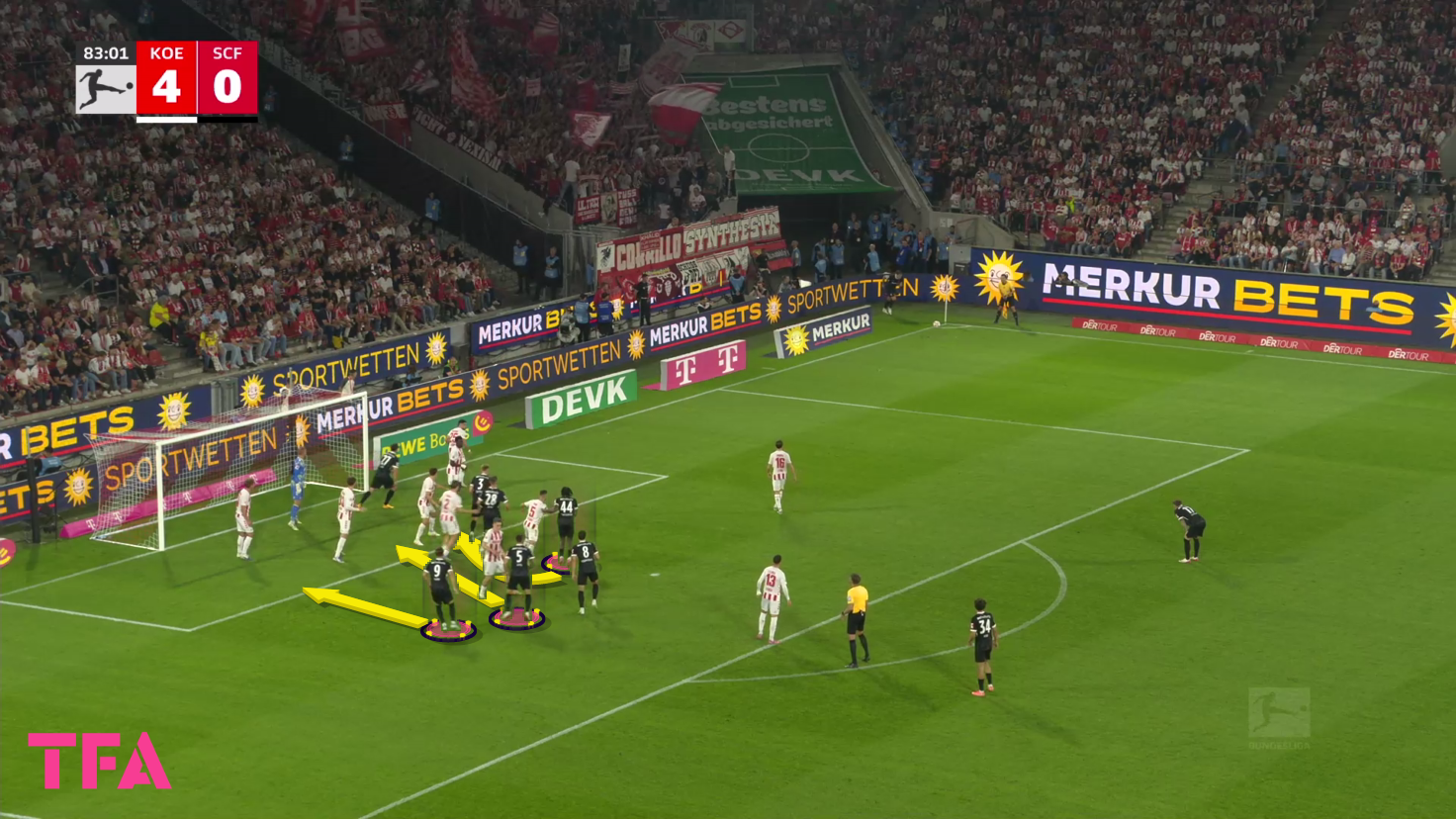
Maximilian Eggestein makes a late run, trailing behind the previous runners, taking advantage of the chaos in the box to carefully time his run to the delivery as the second cohort of runners anchor themselves to the defenders.
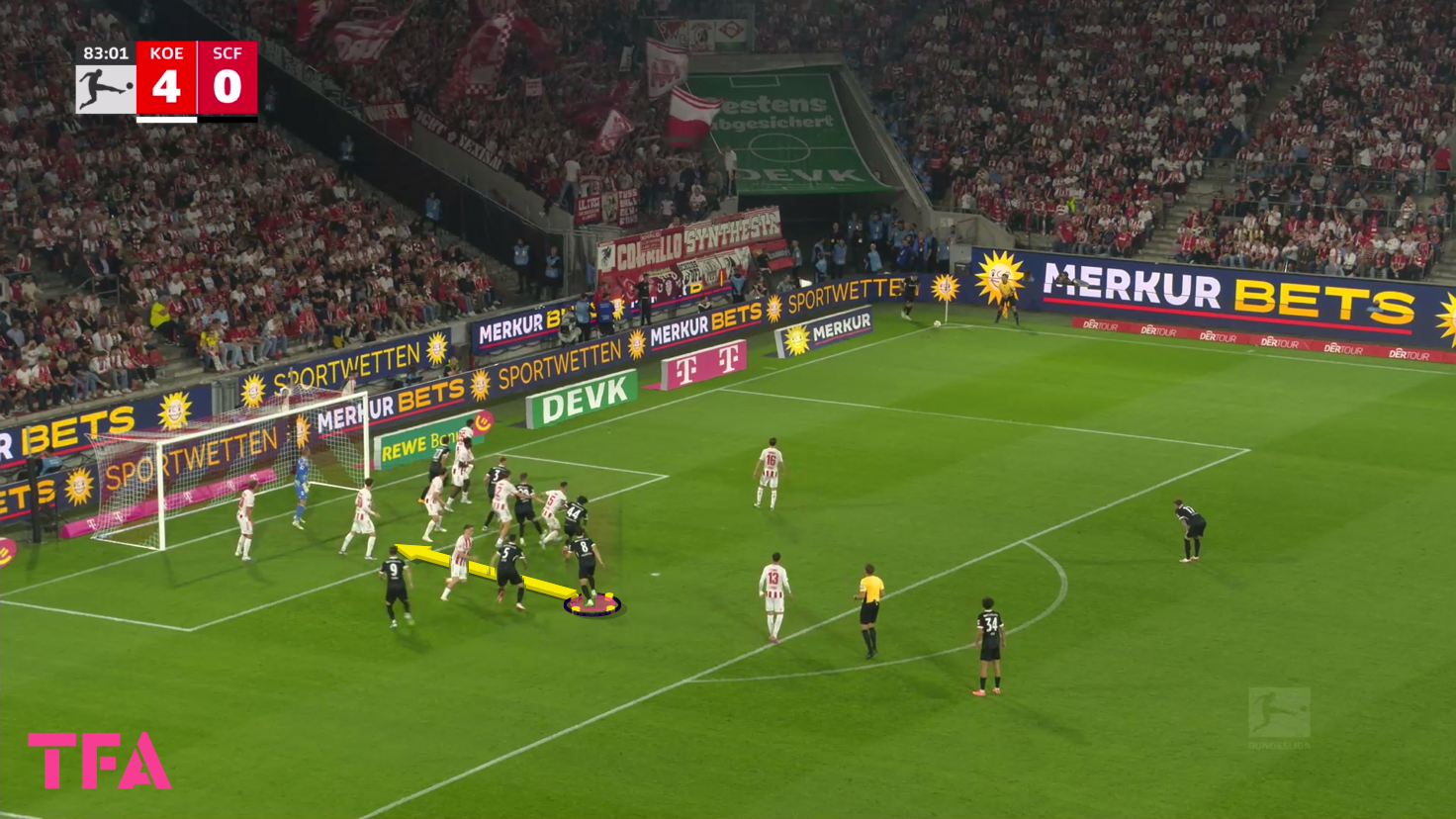
With the space made by the first attacking cohort, followed by the blocks of the second, Eggestein can attack Günter’s delivery with speed.
This dynamic advantage helped Eggestein win the aerial duel for a header worth 0.15 xG and a goal.