René Wagner Tactics At FC Köln 2025/2026: The Tactical Reset Securing Bundesliga Survival – Tactical Analysis

The structural inertia that had begun to plague 1. FC Köln during the latter months of Lukas Kwasniok’s tenure has been abruptly shattered by the arrival of René Wagner tactics.
In just two fixtures since the mid-season managerial shift, a gritty 2-2 draw at Eintracht Frankfurt and a commanding 3-1 victory over SV Werder Bremen, the Effzeh have undergone a tactical metamorphosis that is as sophisticated as it is unexpected.
Wagner, a figure deeply rooted in the analytical frameworks of the Steffen Baumgart era but possessing a distinct pragmatic edge, has moved away from the chaotic high-pressing identity of his predecessor.
Instead, he has implemented a system defined by its chameleonic defensive geometry and a ruthless, central-focused transition game.
What we are witnessing is a deconstruction of the traditional 4-2-3-1 that had become predictable at the Müngersdorfer Stadion.
Wagner has introduced a level of tactical fluidity that demands immense cognitive flexibility from his squad, prioritising the exploitation of central verticality over the wide-oriented build-up of previous years.
The result is a team that no longer relies on the sheer volume of crosses but rather on the clinical precision of their counter-movements.
This tactical analysis and head coach analysis will dissect the three primary pillars of the Wagnerian doctrine: the asymmetrical defensive transition between back-five and back-four structures, the rotational volatility of the Ragnar Ache-Jakub Kamiński-Said El Mala strike partnership, and the calculated abandonment of wing play in favour of central counterattacking corridors.
1. FC Köln have found their voice again, not through a shout, but through a surgical tactical whisper that has left the Bundesliga guessing.
Geometric Asymmetry: The Right-Sided Hybridisation Of Sebastian Sebulonsen & Jan Thielmann
The most visually striking innovation of the Wagner era is the defensive elasticity on the right flank, facilitated by the symbiotic relationship between Sebastian Sebulonsen and Jan Thielmann.
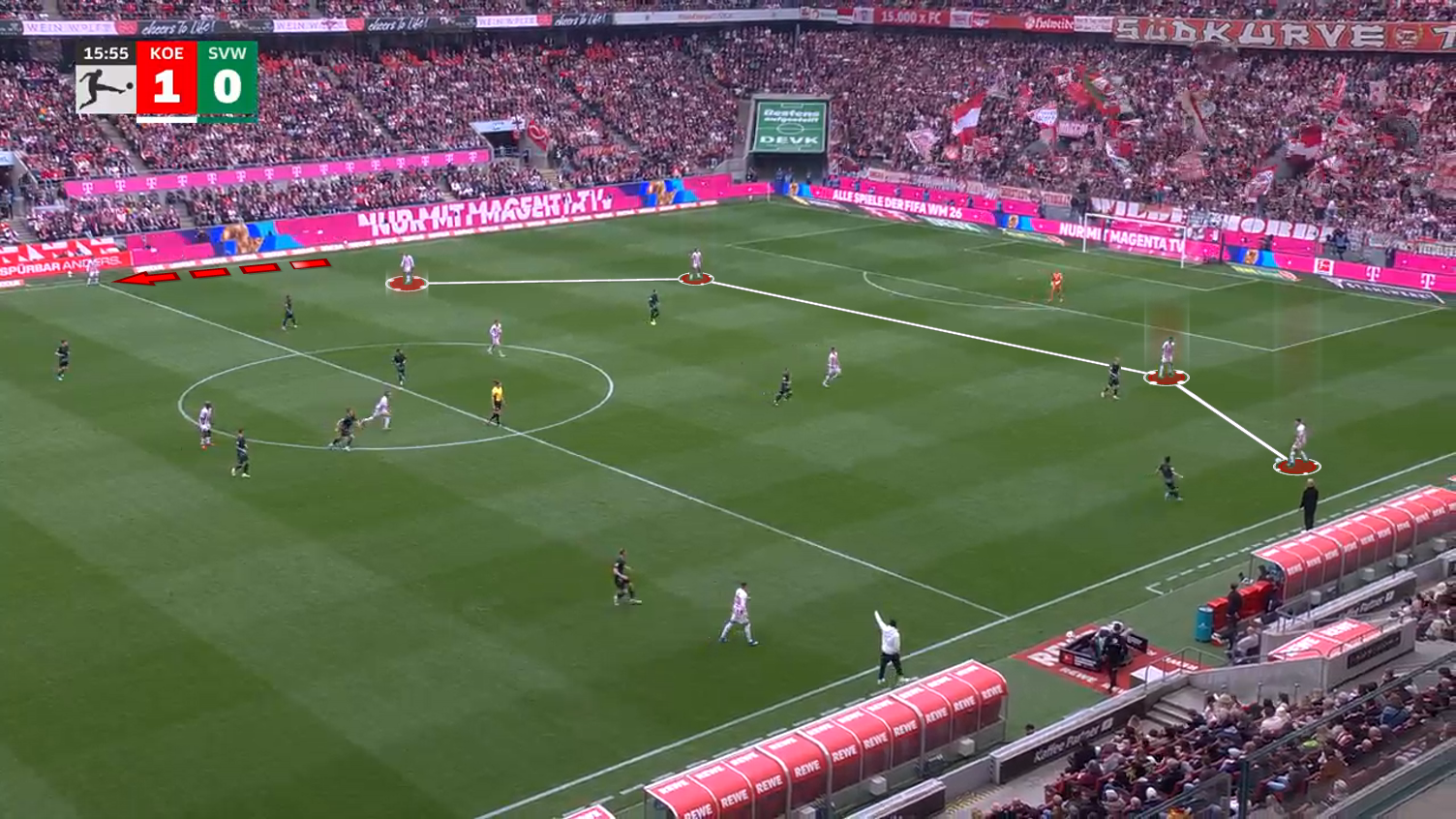
In the opening two games, Köln have operated in a defensive shape that defies static classification.
When out of possession against a high-building opponent like Frankfurt, the team settled into a rigid 5-3-2 low-block.
In this phase, Sebulonsen acted as the traditional right-back, while Jan Thielmann dropped from a nominal midfield position to become a third centre-back or an auxiliary wing-back, depending on the height of the opposition’s left winger.
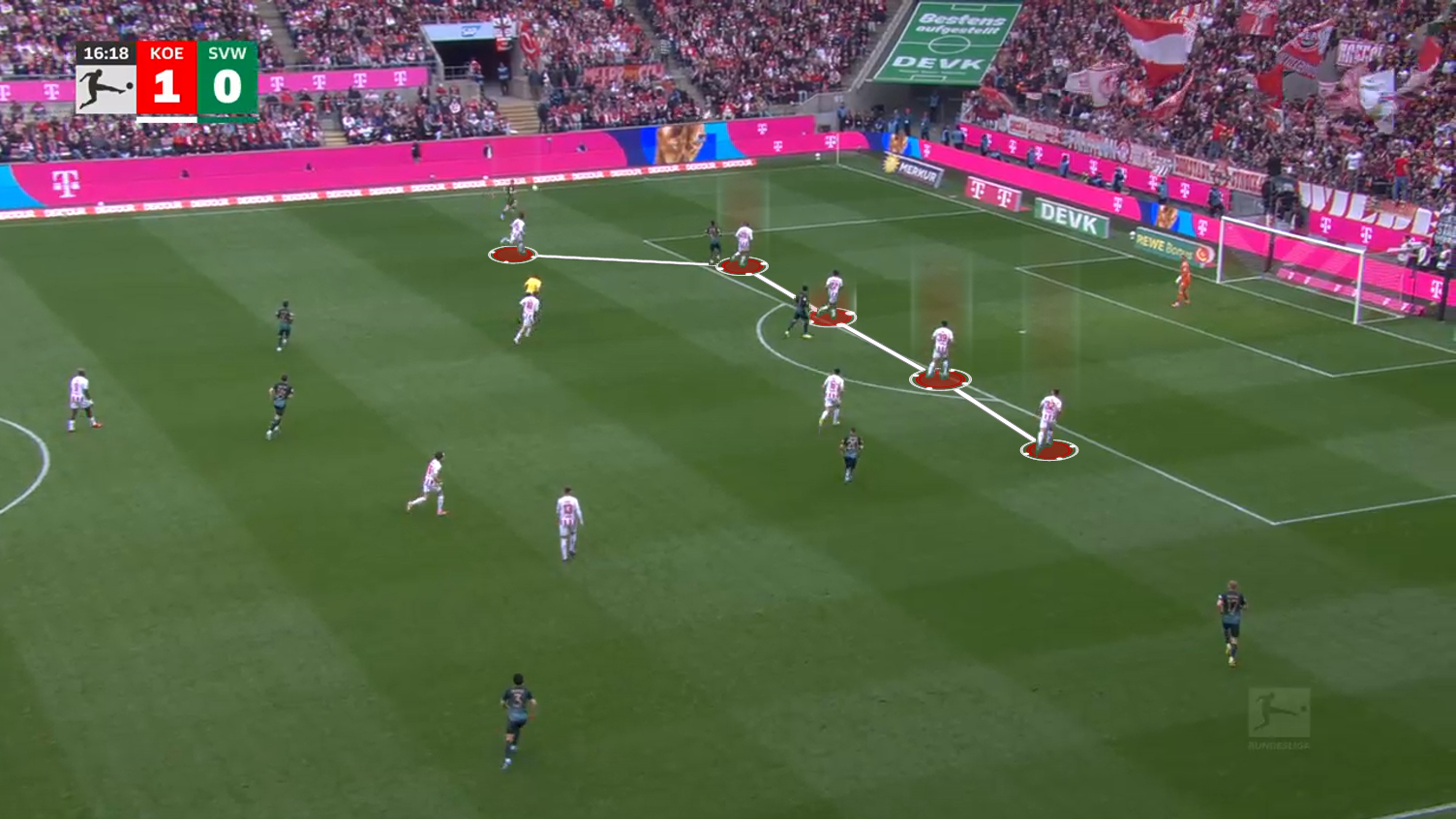
This allowed Köln to maintain numerical superiority in the box, neutralising the crossing threat that had previously been their Achilles' heel.
However, the genius of Wagner’s design lies in the transition to a back-four during the offensive phase.
As soon as possession is regained, Thielmann, a player whose tactical intelligence is increasingly becoming his primary asset, is released from his defensive duties to push into a high-midfield role.
This movement triggers Sebulonsen to tuck inside slightly, forming a temporary back-three with the central defenders, which in turn allows the left-back to push high.
This creates a staggered 4-2-3-1 or 3-4-3 offensive shell that is incredibly difficult to track.
By utilising Thielmann as the tactical hinge on the right side, Wagner ensures that Köln are never caught in a suboptimal defensive transition.
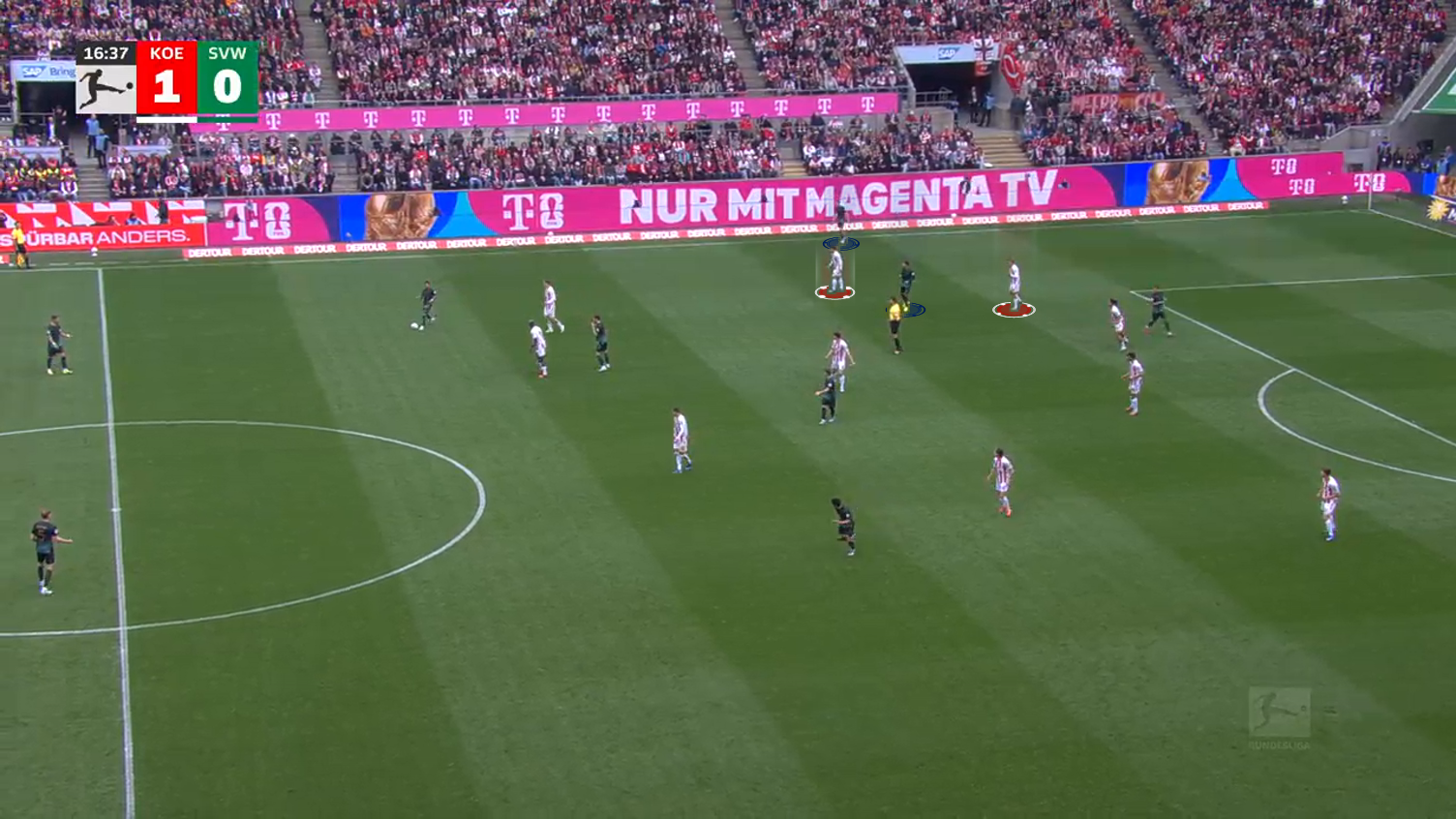
Sebulonsen provides the physical robustness and 1v1 defensive security, while Thielmann provides the explosive recovery pace to close down the channels if the ball is lost.
This asymmetrical hybridisation has effectively solved Köln’s long-standing defensive instability on the right, providing a platform for the rest of the team to take offensive risks.
The statistical impact of this shift is already evident.
Against Bremen, Sebulonsen recorded a season-high 88% defensive duel success rate, largely because Thielmann’s presence as an auxiliary defender prevented him from being isolated in 2v1 situations.
Furthermore, Thielmann’s movement from the defensive line into the midfield vacuum created an immediate passing outlet that bypassed the opposition’s first line of pressure.
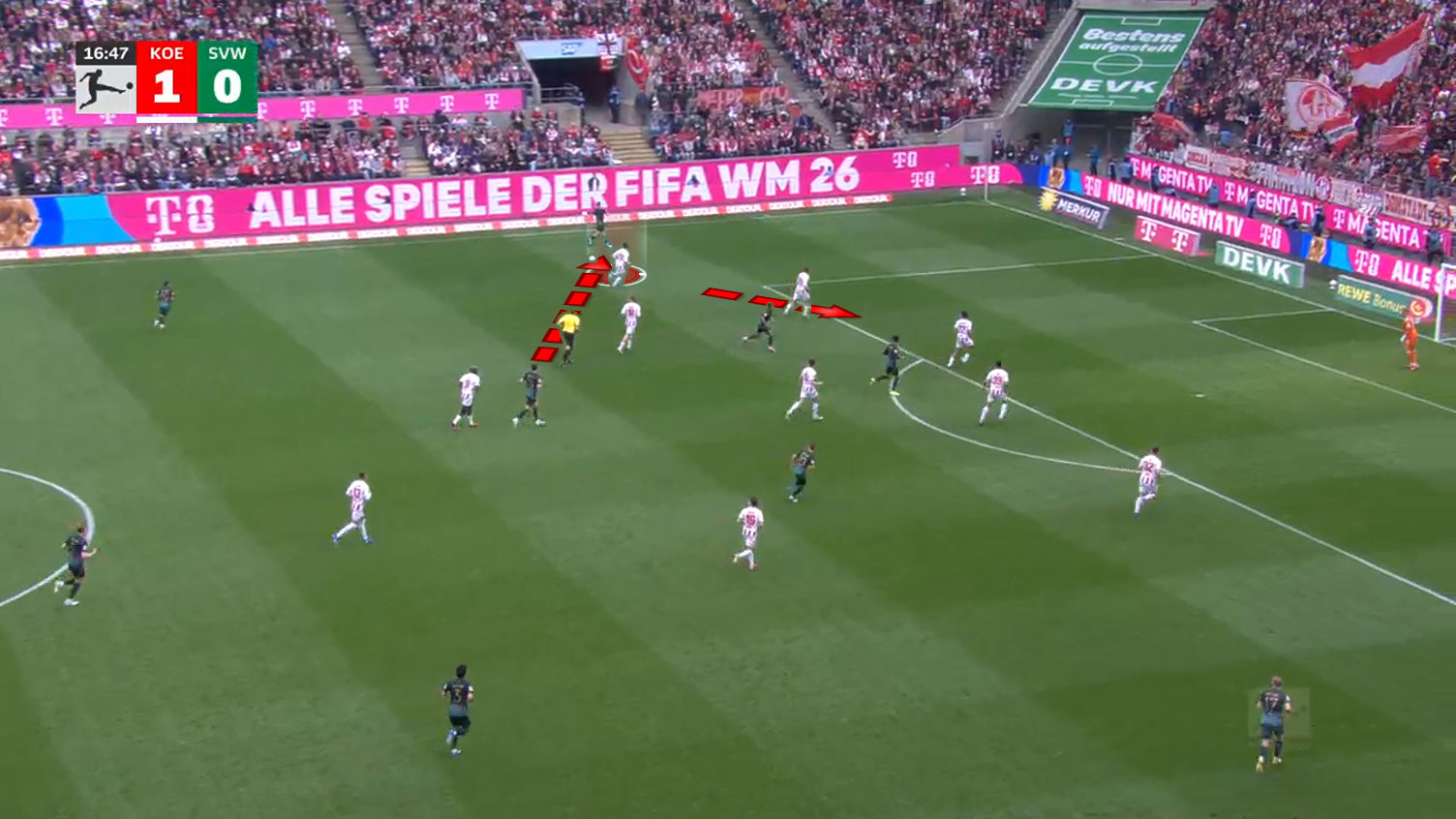
This is not merely a defensive adjustment; it is a structural revolution.
By having a player of Thielmann’s engine and versatility play in this hybrid role, Wagner has created a defensive unit that can expand and contract like a bellows.
It is a masterclass in modern positional flexibility, proving that a team does not need five defenders at all times to have a five-man defence when it matters most.
The Sebulonsen-Thielmann axis is the heartbeat of this new solidity, providing the geometric foundation upon which Wagner is building his Rhenish reformation.
Rotational Volatility: The Ragnar Ache-Jakub Kamiński-Said El Mala Forward Axis
Further up the pitch, Wagner has dismantled the concept of static positions in the final third.
The introduction of Ragnar Ache as the focal point of a two-man strike partnership has given Köln the physical gravity it sorely lacks.
Ache acts as the structural anchor, a player who can occupy two centre-backs through sheer physical presence and aerial dominance.