
How To Coach Better Box Defending: Lessons From Bayern Munich, Boca Juniors & Auckland City - Tactical Theory

The “art of defending” is something pundits like to claim has been lost in recent years.
Whilst some “street-wise” elements may have left the game, along with changes in how games are managed by referees, defending now is arguably far more intricate than ever before.
In addition to being expected to play out from the back when under pressure, defenders have to deal with well-developed phases of play and teams that use in-depth analysis to identify and exploit their weaknesses.
This tactical theory will analyse how modern defenders defend their box from the wide area, prepare themselves to handle crosses, and react to the ball in central areas.
The analysis will use examples from the 2025 FIFA Club World Cup, including clubs like Bayern Munich, Boca Juniors, and Auckland City, to show how players position their body shape to give themselves the best chance of seeing, predicting, and dealing with danger.
Defending Attacks From Wide
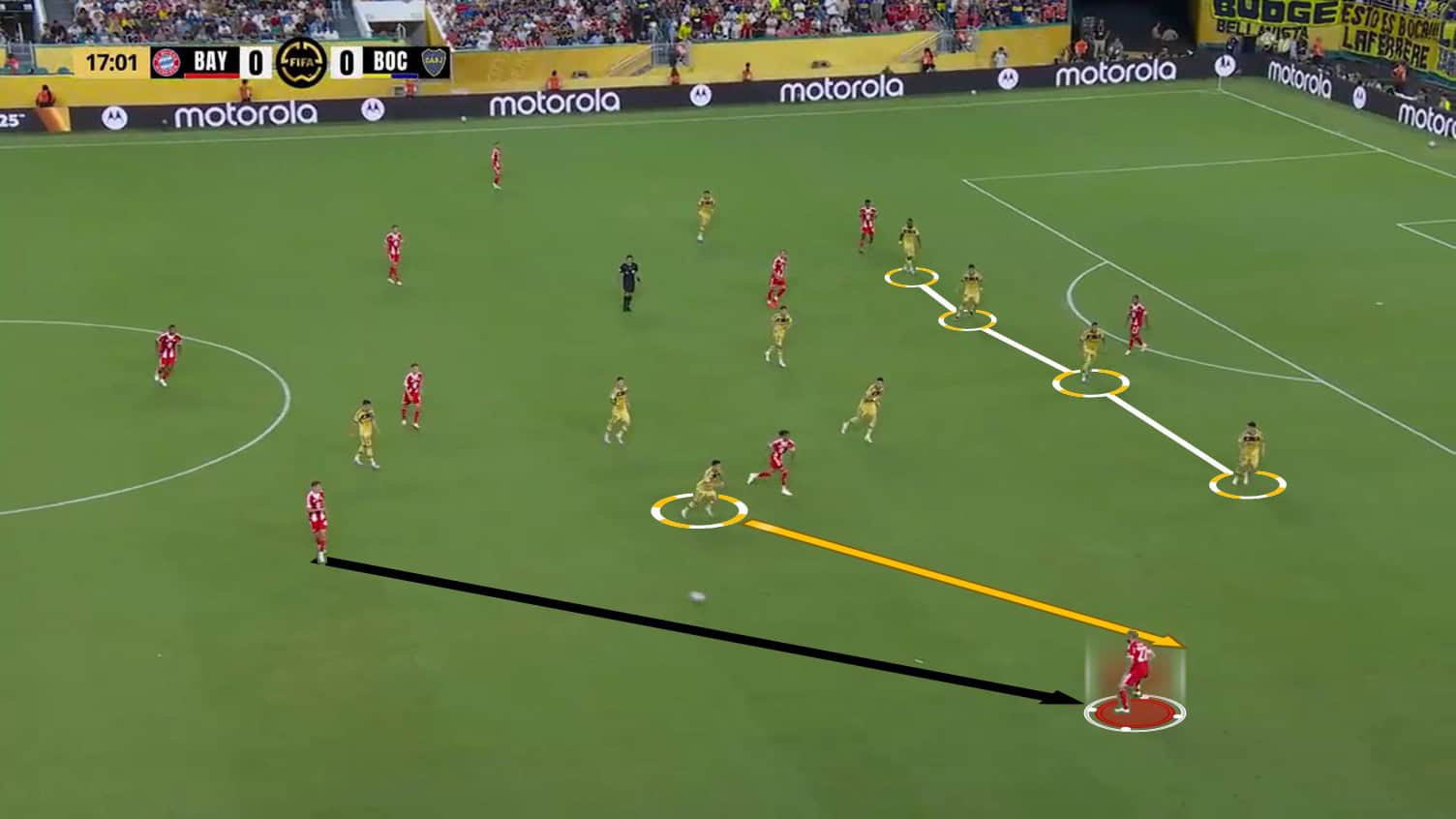
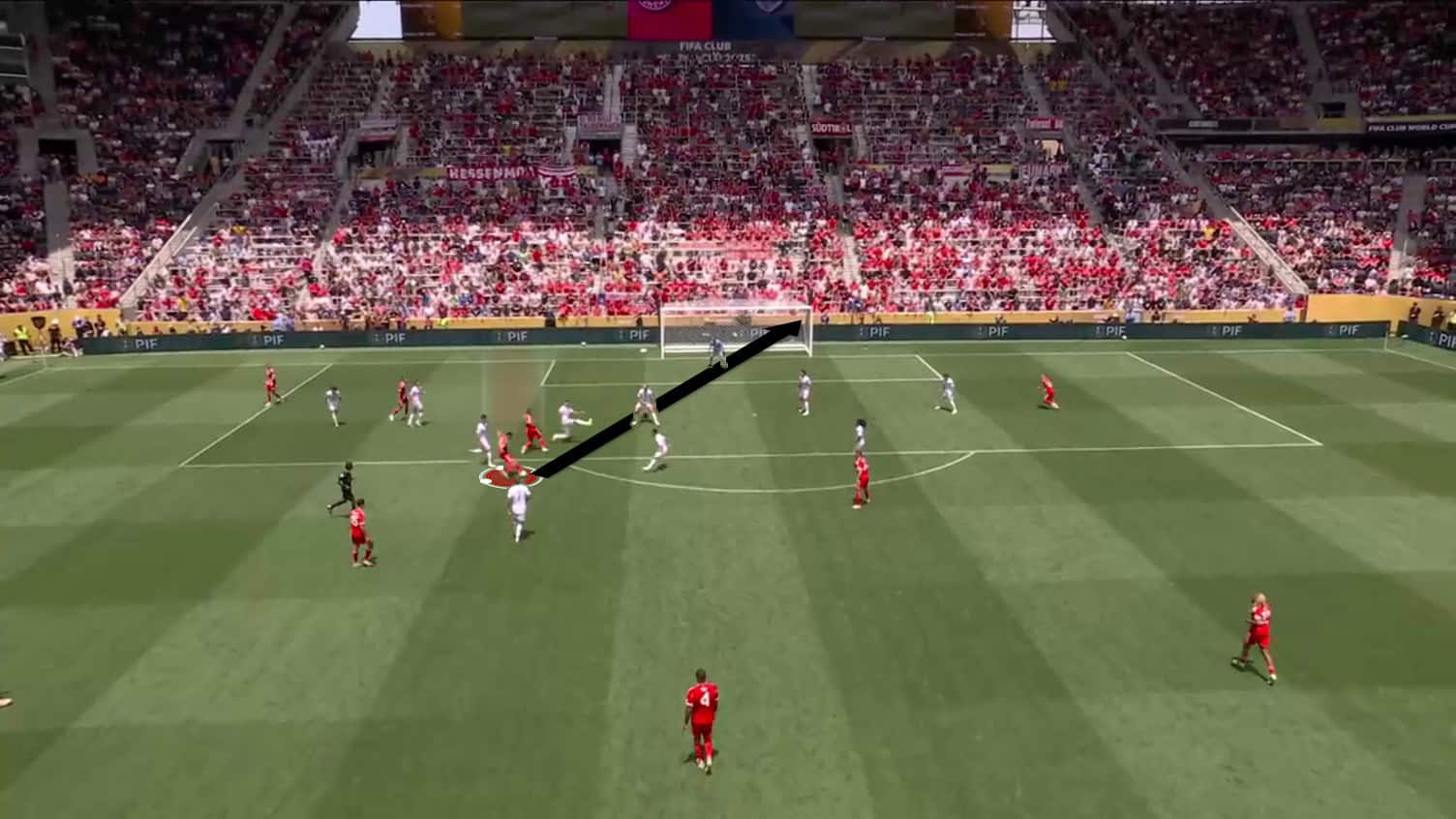
The image above, from a Bayern Munich attack against Boca Juniors in the Club World Cup, shows a scenario where the backline is defending just outside their box with the ball travelling to the wide area.
Much conventional wisdom suggests that the back line should face forward, with the shoulders open as much as possible, when the ball is on one side of the pitch.
The advantage of this is that it allows players to see both the ball and any opposition threat from the ball's far side.
However, should they be square to the goal, any opposition runs made between defenders would be difficult to pick up.
A defending player would have to turn 180° before turning and sprinting after their mark, a technique very difficult to pull off at speed and while remaining balanced.
Being side-on also helps when the defensive unit has to step up should the ball be played backwards.
The only player in Boca's back four whose shoulders are facing forward is the right back, Luis Advincula.
This is because the right-back needs to be able to view the movements of any wide player on the outside of them.
Advincula and the subsequent defenders closer to the ball can use their voices to warn the player ahead of any movements from the opposition.
For example, the right-back can tell the ball-far centre-back if a player is running behind him, the ball-far centre-back can warn the ball-near centre-back, and so on.
This allows them to be aware of their surroundings and have an optimal body shape when defending against the cross or any through balls.
Also important here is the defensive run of Boca’s widest left midfield player to get on the goal side of and close down the ball.
This allows the back four to remain intact without the left-back having to step out.
Defending Crosses From Wide
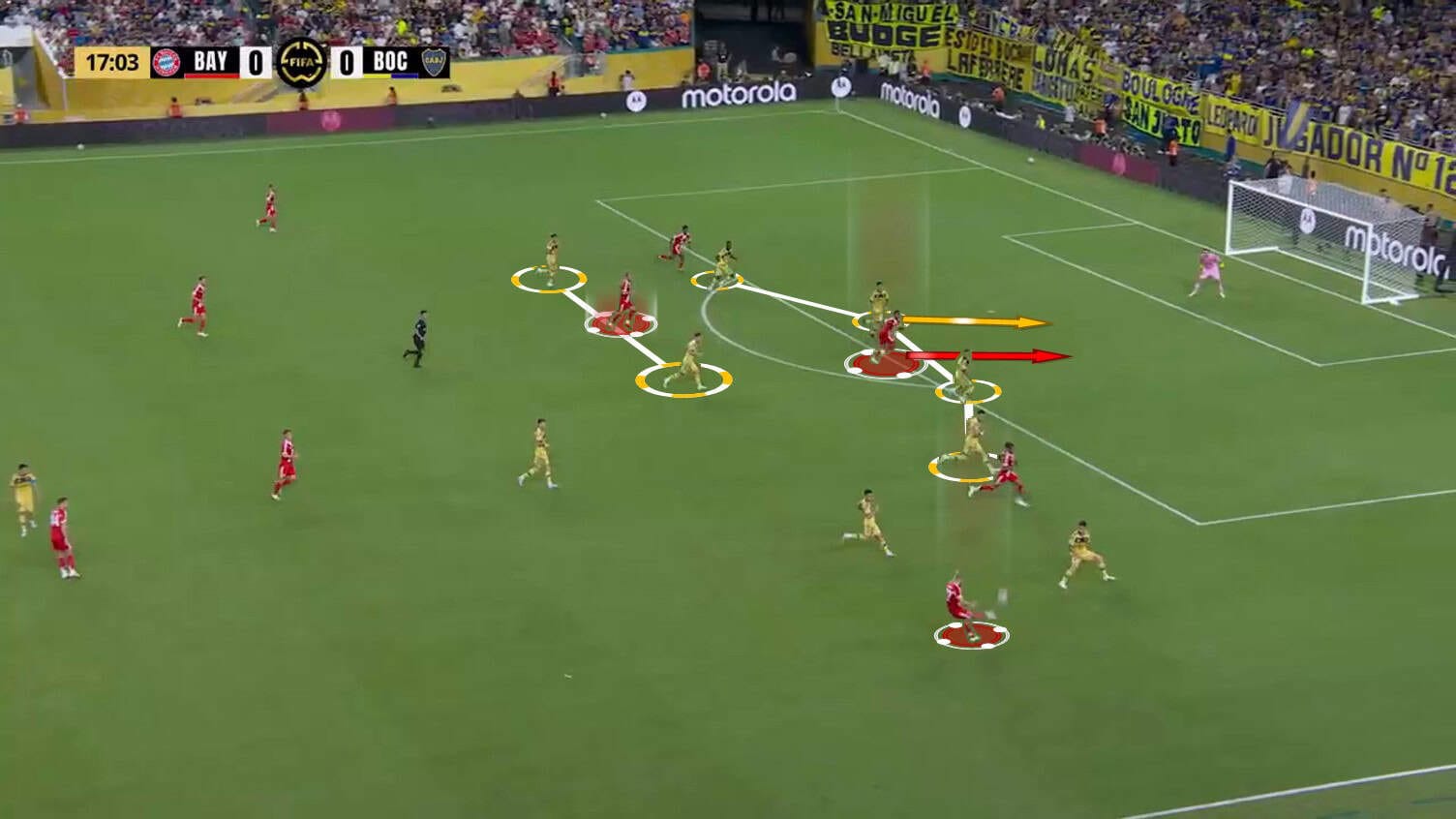
This image shows the moment the ball is crossed into the box.
The back-four's body shape has allowed them to track any runs and attack the ball should it be in their vicinity.
In this instance, the right back does well to get first contact on the ball and clear it (albeit not far enough) outside the box.
What lets Boca down here is when the back four drops off into the box, the midfielders positioned on the edge of the box (highlighted) do not drop off with their defenders.
This allowed the ball to fall to England striker Harry Kane just outside the box, and he smashed it into the net.
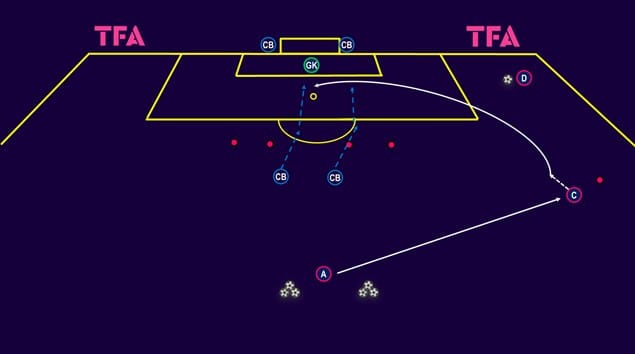
Centre-backs consider this their bread and butter, and it should make the opposition think twice before sending the ball into their box.
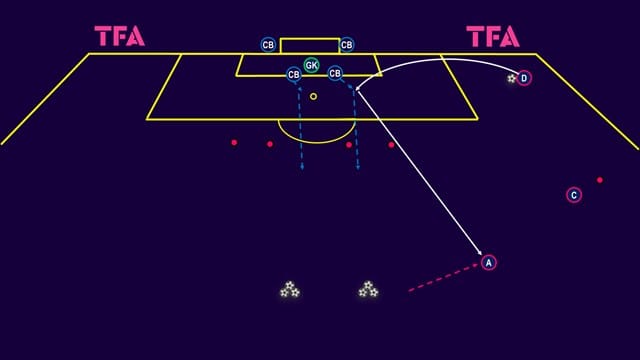
This exercise enables defenders, particularly centre-backs, to practice defending two types of crosses and defending a ball being fed down the side of them in one drill.
A progression can also be added to facilitate working on cutting out through balls arriving from a central area, a skill analysed in the next section.
The drill begins with the ball being played from a central to a wide position.
First, the defenders must take up an appropriate defensive line relative to the position of the ball.
They then hold their line before dropping ot attack it just as the ball is hit.
As shown in the analysis, to be able to drop quickly enough to win the ball, they must adopt a side-on body orientation.
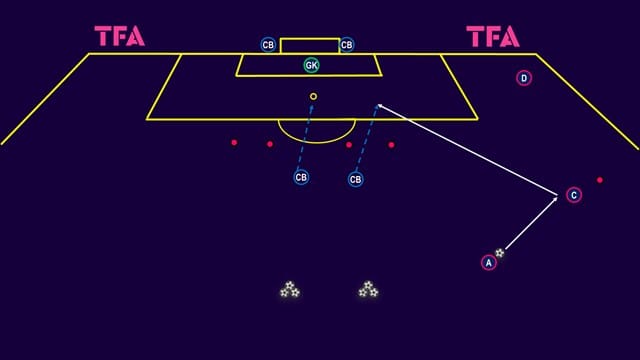
After clearing the first ball, a second ball is delivered from a deeper position.
The centre-backs should aim to get goal-side of the ball so they can step forward to clear it.
Once the ball is cleared, ideally with height and distance, the defenders should push up, not stopping until the ball has stopped.
Once the defenders have emptied their box, a third ball is fed, powerfully on the ground, down the side.
Again, by focusing on their side-on body position, the defenders should be able to quickly react and change direction, aiming to cut out the pass before it reaches the goalkeeper.
After defending three balls, the next two defenders switch in.
After one rotation each, the play is repeated on the opposite side.
Initially, the crosses are delivered without a forward to attack the ball.
The drill can be progressed to include a striker to add realism and a competitive nature to the exercise.
How To Defend The Box From Central Areas
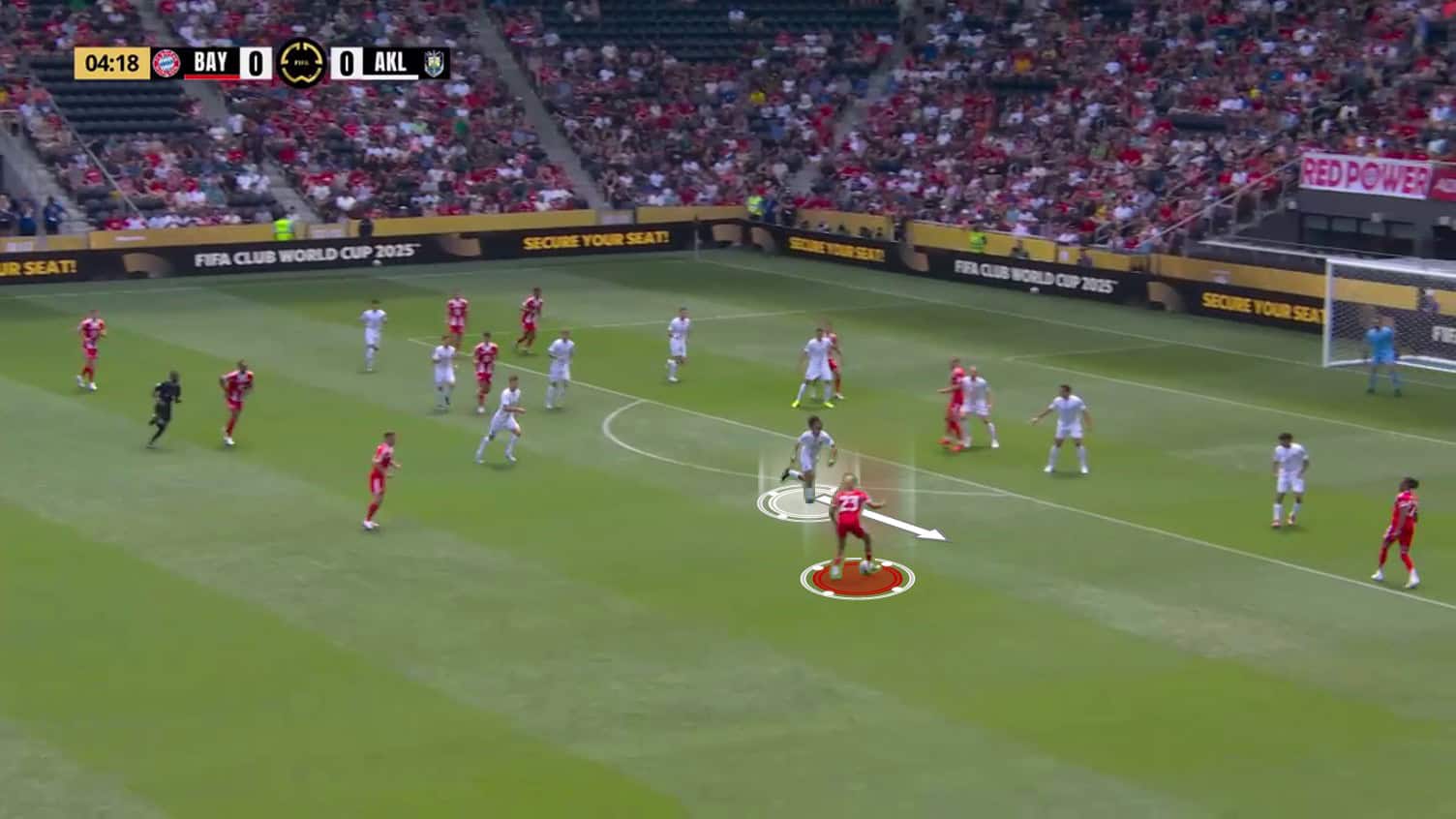
When the ball is in a central area, as shown in the image above with Bayern Munich against Auckland, again, from last summer's Club World Cup, the backline should narrow, prioritising preventing passes between defenders.
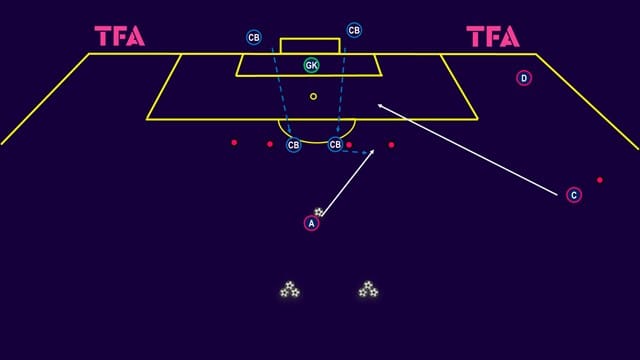
Another adaptation can be added at the beginning of the previously described exercise to work on cutting out these key passes.
As players enter the field to begin their rotation, the first pass they defend against is aimed between either of the two pink gates.
The ball-near defender has to react quickly enough to block the pass, then recover their position to defend against the first crossed ball.
Should Defenders Press Or Hold Their Ground?
In these scenarios, defenders need to make and get right a decision about whether to jump to put pressure on the ball or stay put and at least keep some sort of barrier between the ball and the goal.
Sometimes the temptation can get the better of defenders, and they pounce at the ball without really being able to affect it.
Jumping to the ball, especially if it is mistimed, can create a gap in the backline.
Very technical players will then be able to combine and feed the ball into the box for a clear shot at goal.
However, as we have pointed out the dangers of jumping, there is also a risk involved in remaining on the edge of the box.
Sometimes being aggressive is the best option here.
This is especially true if playing at a level where any space and time given to attackers will be exploited with a clinical shot at goal.
An example of this can be seen in Jamal Musiala’s goal for Bayern Munich against Auckland City.
Given just a yard of space from inside 25 yards was all it took for Musiala to wrap the ball into the top corner of Conor Tracey’s net.
How To Improve Decision Making On When To Jump
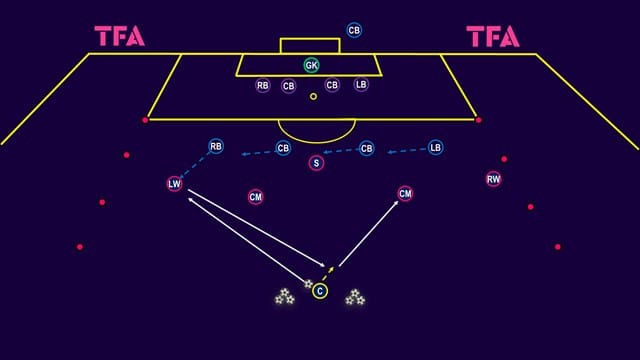
The above practice, designed to mimic the situation Auckland found themselves in, time after time, against the Bavarian giants, allows for defenders to practice as a unit, shifting side to side and their decision making of when to press.
This defending exercise, which can use nine or 13 outfield players with the additional option of a goalkeeper, is designed to work not only on the decision-making and tactics involved when deciding whether or not to press, but also the angles at which players should do this.
The five attackers, shown as pink, consist of two attacking midfielders, two narrow wingers and a striker.
The player playing as the central forward can remain the forward for all three rotations, always playing with the attacking team, with the other 12 players rotating.
Play begins with a coach passing the ball into one of the attacking team's front five.
If close enough to apply pressure, the nearest defender should press, arriving from a more central position (i.e. facing the outside of the pitch), and their teammates should shuffle across quickly behind them.
When appropriately pressed, the ball should be bounced back to the coach, who then quickly plays to another attacker.
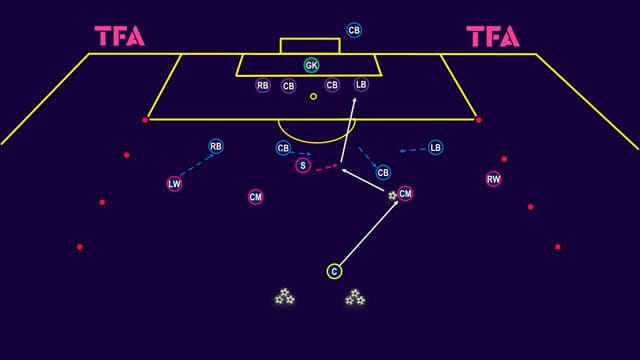
As shown above, the striker's role is to make themselves available to play off one of the receiving players.
If the striker receives the ball, they should attempt to find one of the four players spread across the six-yard line
To make the distances realistic, it is important that the five attacking players are positioned centrally, within the width of the 18-yard box—you would not want full-backs pressing in the wide area, creating separation in the backline at this sort of distance.
The attacking midfielders and wingers should assume positions that give the defenders a decision to make about whether to press or sit.