
Vincent Kompany Tactics At Bayern Munich 2025/2026: Europe’s Most Dangerous Free-Kicks? – Set-Piece Analysis

Bayern Munich have just ended a strong season, winning the Bundesliga with a 16-point lead over second-placed Borussia Dortmund.
In the UEFA Champions League, they performed well but were knocked out by Paris Saint-Germain in the semi-final, after strong showings from both teams.
They will also play the DFB-Pokal final against VfB Stuttgart on the 23rd of May, hoping to get the double.
Set-pieces were an important part of their success under Vincent Kompany tactics and assistant manager Aaron Danks.
In the UEFA Champions League, Vincent Kompany's side boasts the highest set-piece xG (7.02), ahead of Newcastle United and Arsenal (6.34 and 6.11), while in the Bundesliga, they have the most set-piece goals (22).
This set-piece analysis examines FC Bayern's tactics at set-pieces this season.
In this tactical analysis, we will explain their Bayern Munich tactics for attacking set-pieces, especially their offensive free-kicks.
Offside Players & Far Runners
We will start with their main ideas at free-kicks in general, which is having offside players standing a step or more behind the defensive line.
They come from the defenders' blind side, give them a push to be onside, and suddenly appear in front of them, with positional superiority to be targeted as players or blockers for a coming runner.
To make sure they won't be offside, they need an early decoy run from an attacker who pushes the first defender, trying to get him to break the offside line.
Let's show that in an example!
As shown in Figure 1 below, Michael Olise is on this wide free-kick while Joshua Kimmich (red) runs towards him to drag the opponent's rebound player to make sure that he won't disturb the far runner, the targeted player, Dayot Upamecano.
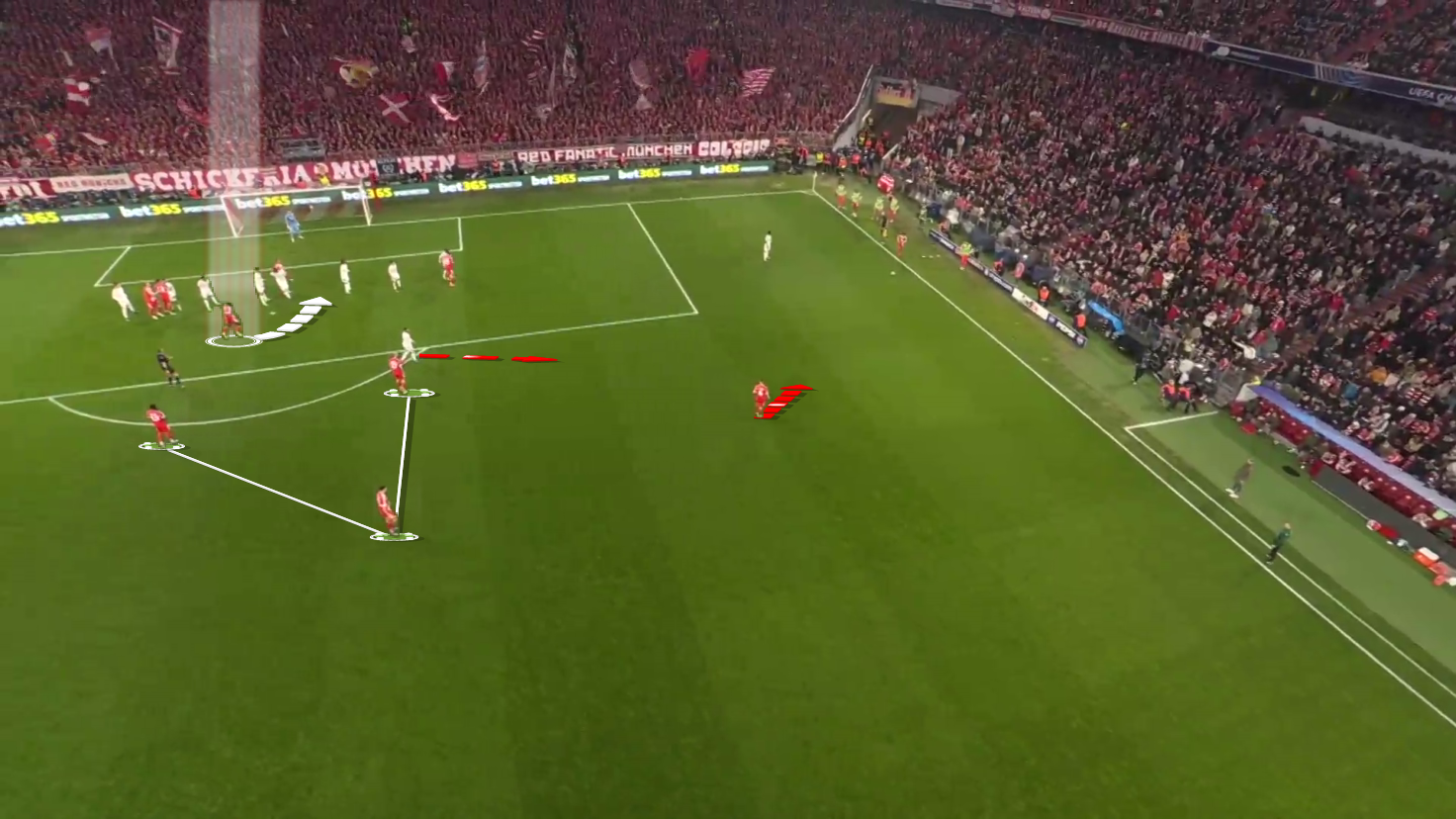
We have seen the first targeted player, who comes unmarked, face the defensive line from movement, creating a dynamic mismatch against the stationary zonal defenders on the line.
Now it's time to see the offside player in Figure 2 below, highlighted in yellow.
He walks behind the line, with no defender knowing who will be the victim, and suddenly comes from a defender's blind side, standing in front of him and controlling the situation.
This movement is a little bit risky because the offside player may still be offside after all of that, so they need bait.
The first attacker (blue) tries to push the first defender to break the offside line to make sure that his teammate is onside.
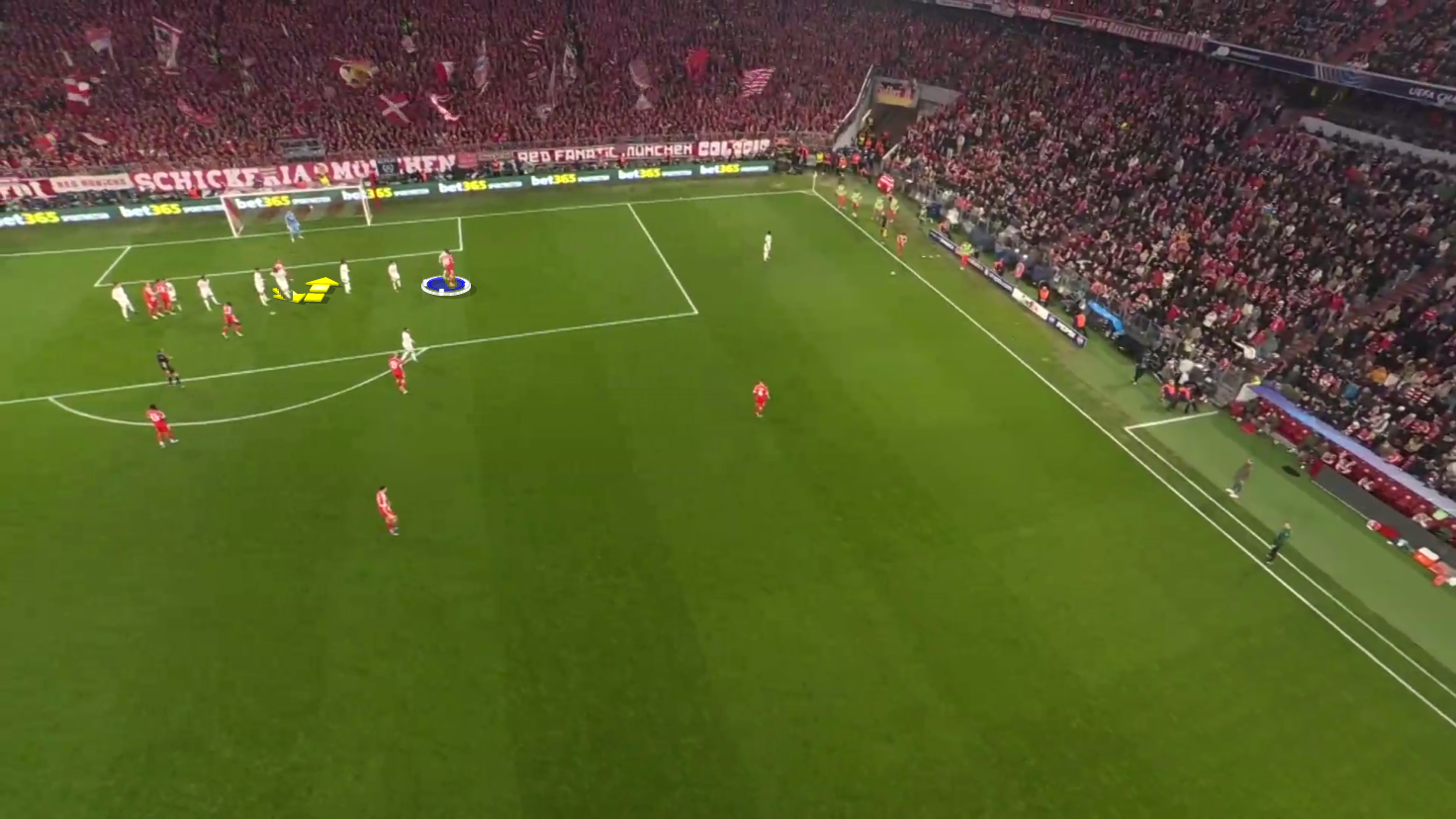
This push is clear in Figure 3 below (blue), while the offside player is Jonathan Tah (yellow), coming from Antonio Rüdiger's blind side, who is busy with the oncoming runner and the far-post movement.
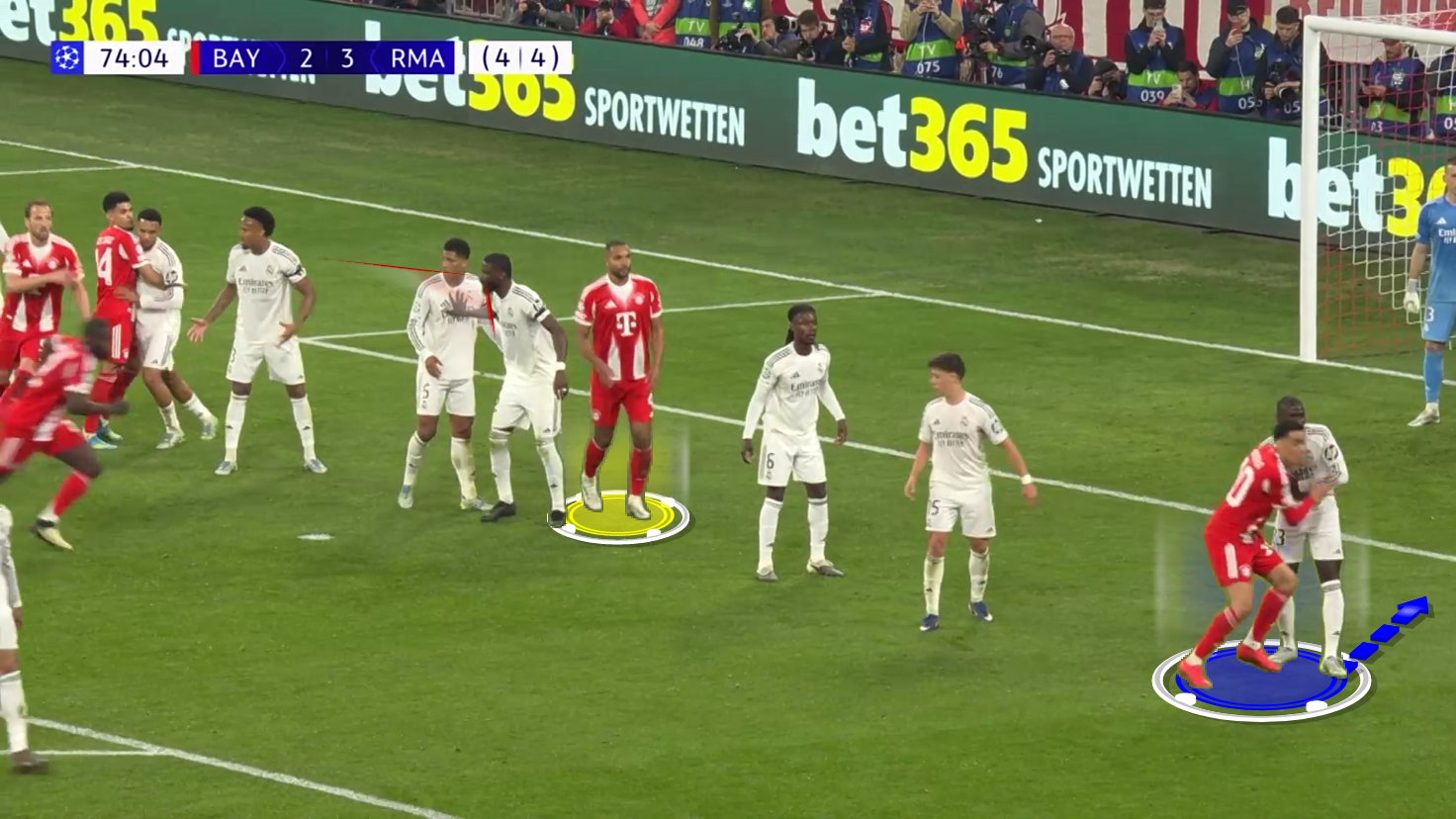
As shown in Figure 4 below, all is set now.
Tah has positional superiority over Rüdiger, while Jamal Musiala (blue) tries to make sure his teammate is onside.
Hence, Tah acts as a potential target, but he also serves as a barrier to prevent Rüdiger from closing Upamecano's channel.
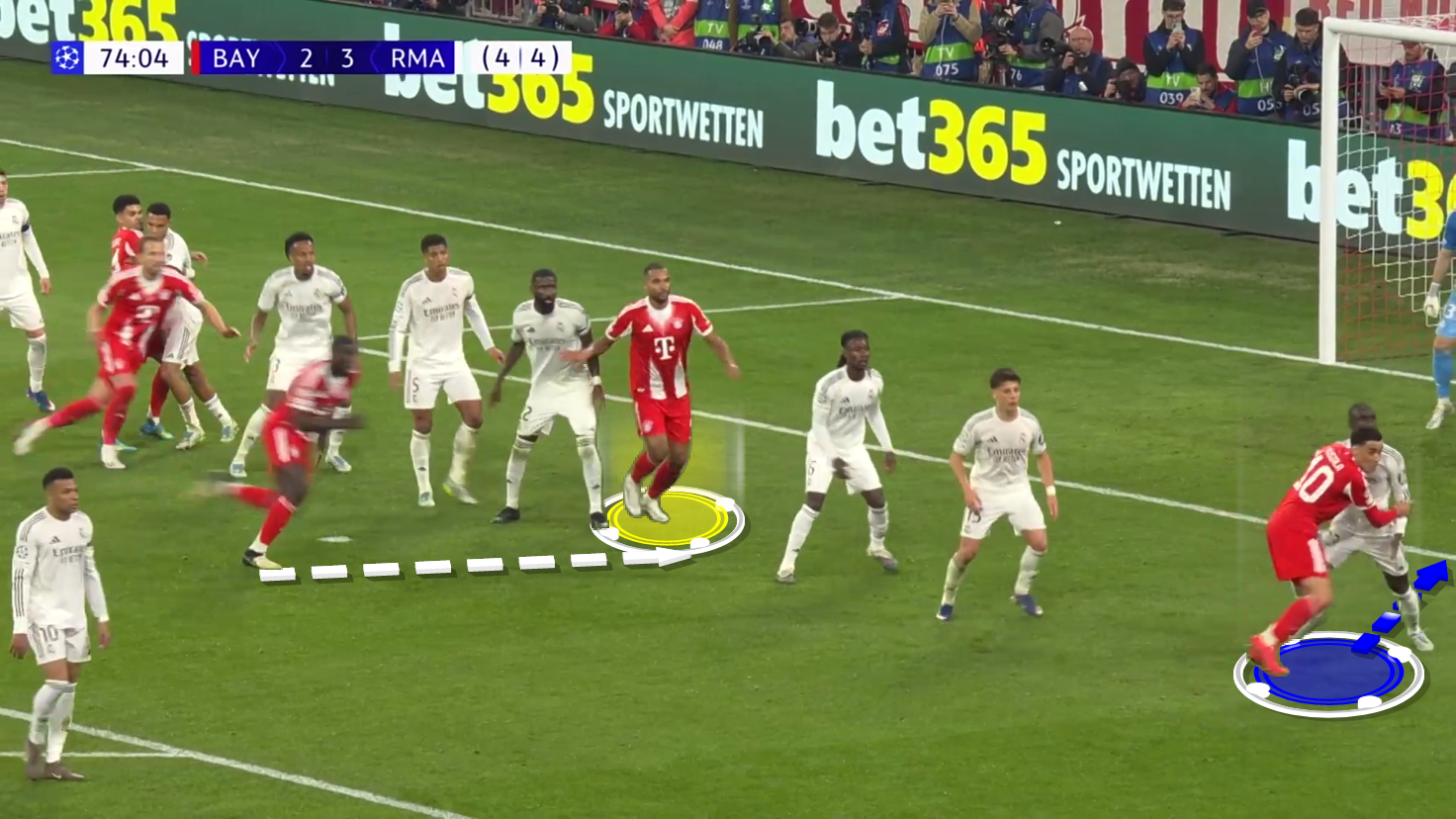
Coming to the far-post movement, Harry Kane stands behind Luis Díaz, sticks to him, and suddenly turns around him, attacking the far post to frame the goal, as shown in Figure 5 below.
This movement allows him to separate from any defender who wants to contact or annoy him, so he comes freely to the targeted area from the blind side of the defender who stands there.
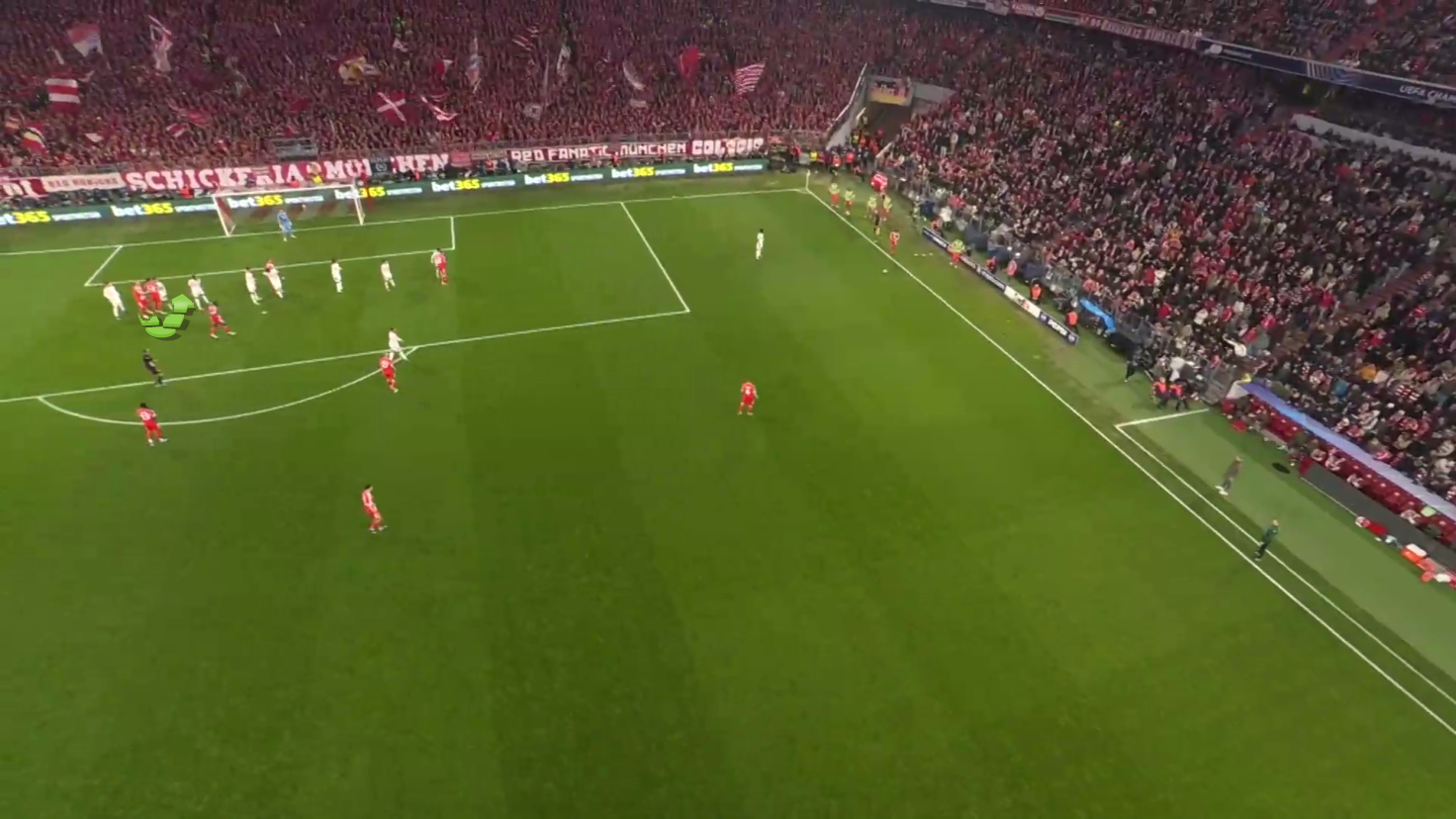
Figure 6 below shows the entire final scene, in which the first defender is pushed to ensure that the offside attacker is onside.
The offside attacker (yellow) stands in front of the defender to make the path free for the runner (white), while Kane goes to the far post (green).
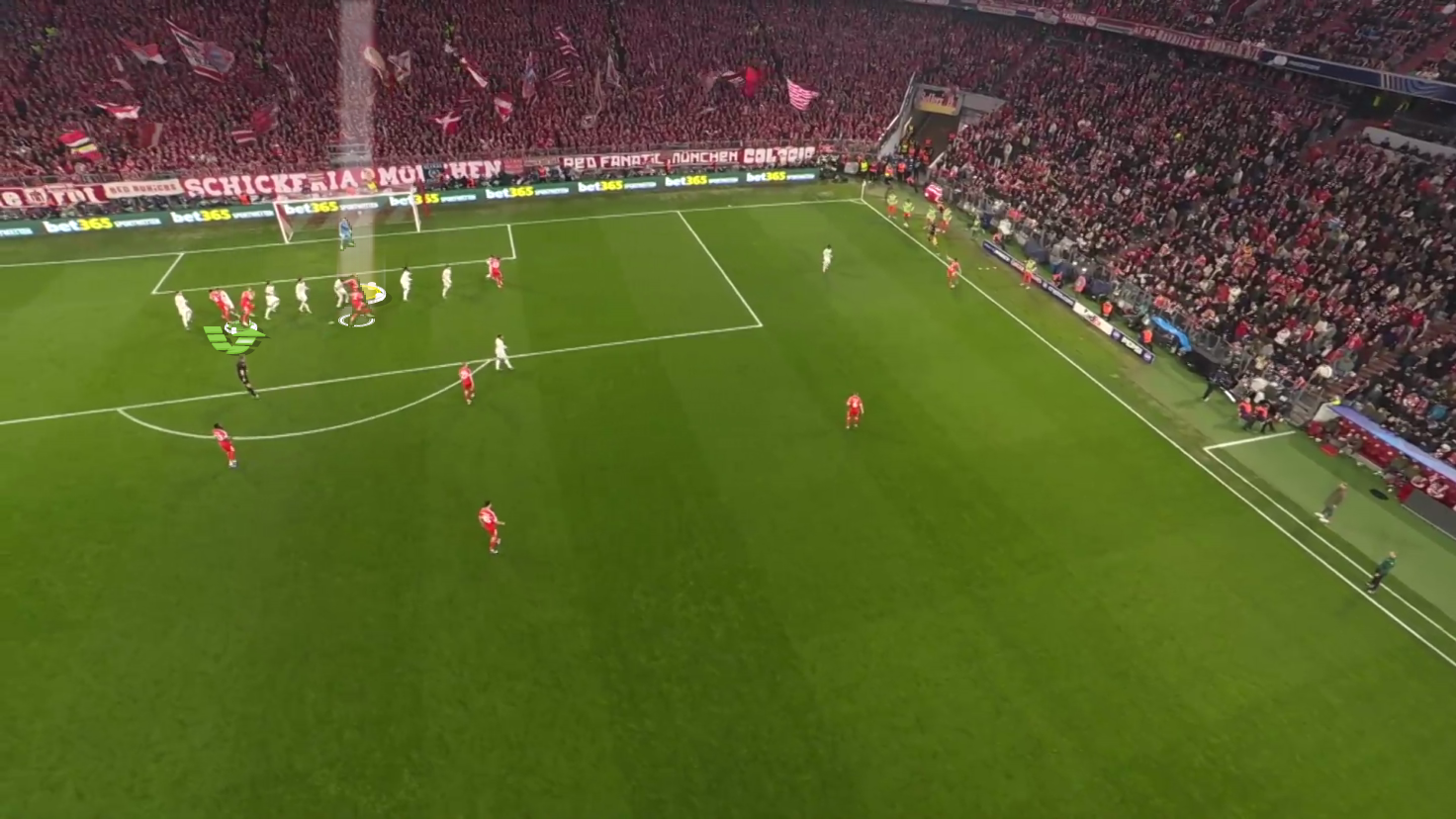
As shown in Figure 7 below, the plan works, which leads to a dangerous risk.
The good thing about this tactic is that the yellow player has a dual role that can vary depending on the situation: he can act as a blocker to help the white runner, and he can also attack the ball if the cross passes the first attacker.
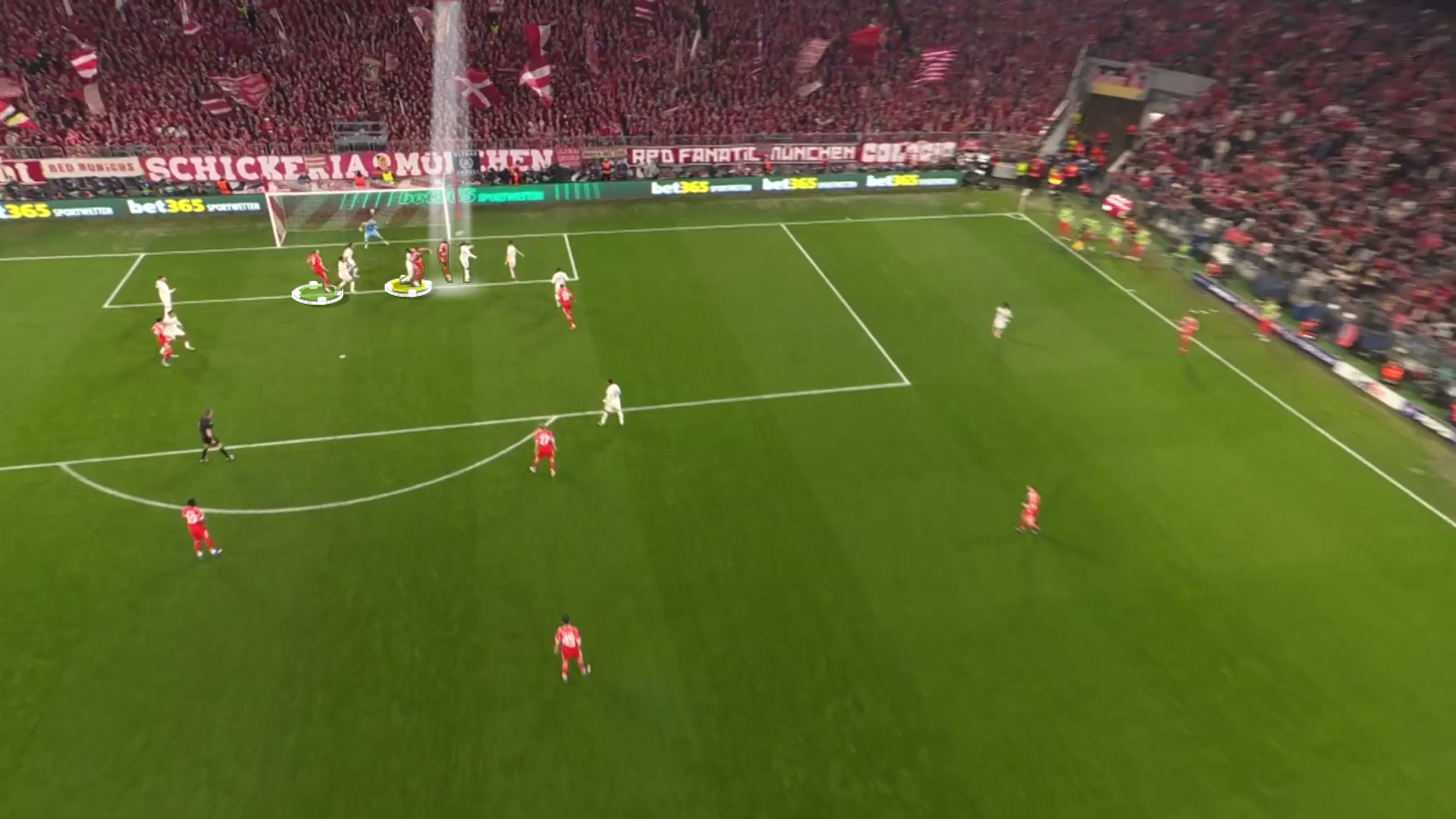
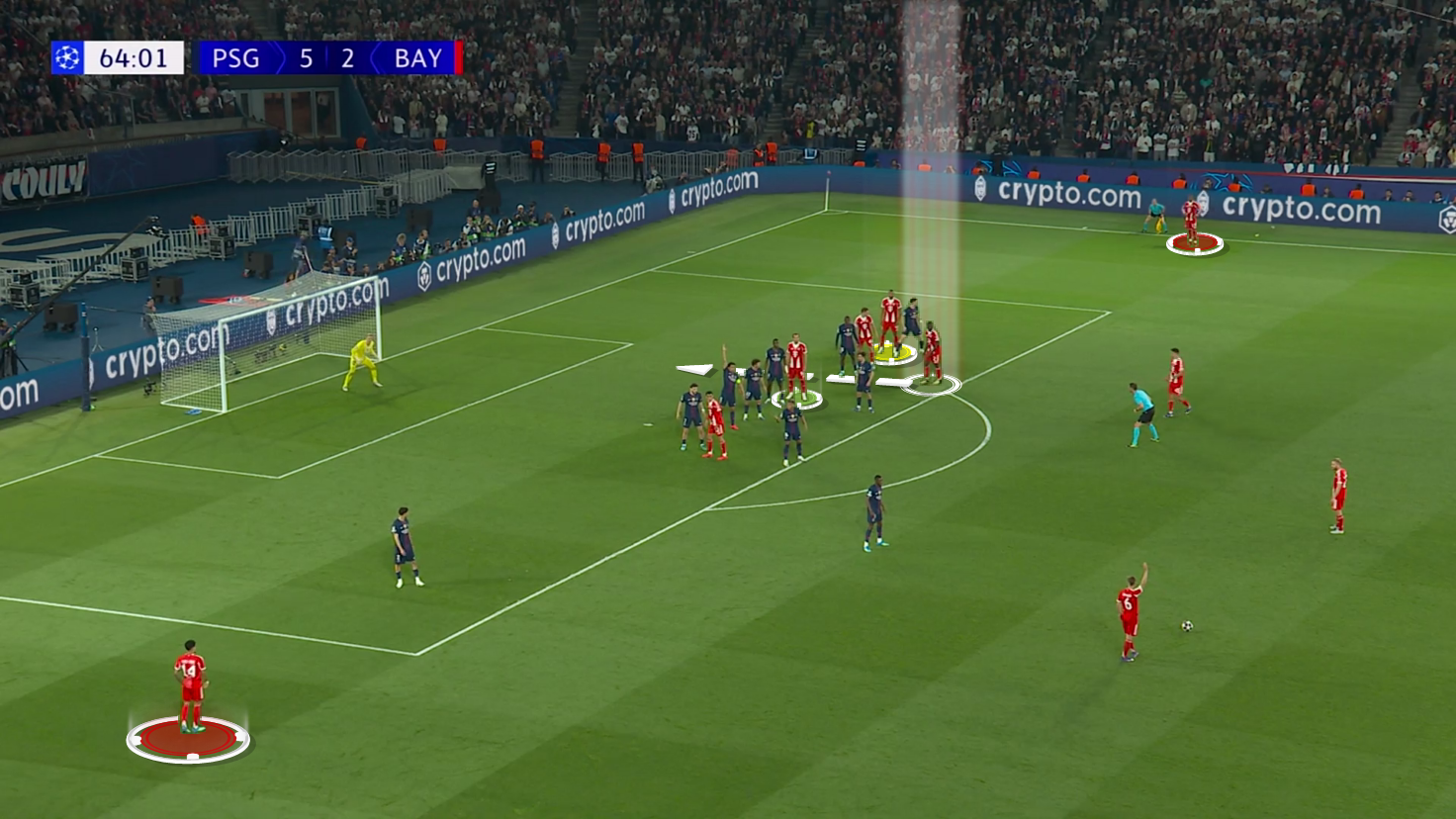
The next example in Figure 8 shows a similar idea from a central position, which leads to their third goal against Paris Saint-Germain.
First of all, they stretch the width with two players (red), who draw more defenders outside, like the one on the far left of the photo, or at least distract the attention of the last defender, as happened with the defender on the far right of the photo.
They sometimes pass the ball to these players on the flanks to make it a one-on-one situation, as we will show later.
The same far runner (white) is ready to attack with his momentum, especially against teams that don't have an early man marker to slow him down.
You can notice that PSG have two players on the edge of the box, but they just stay for the rebound and are ready to push up to press if it is played short.
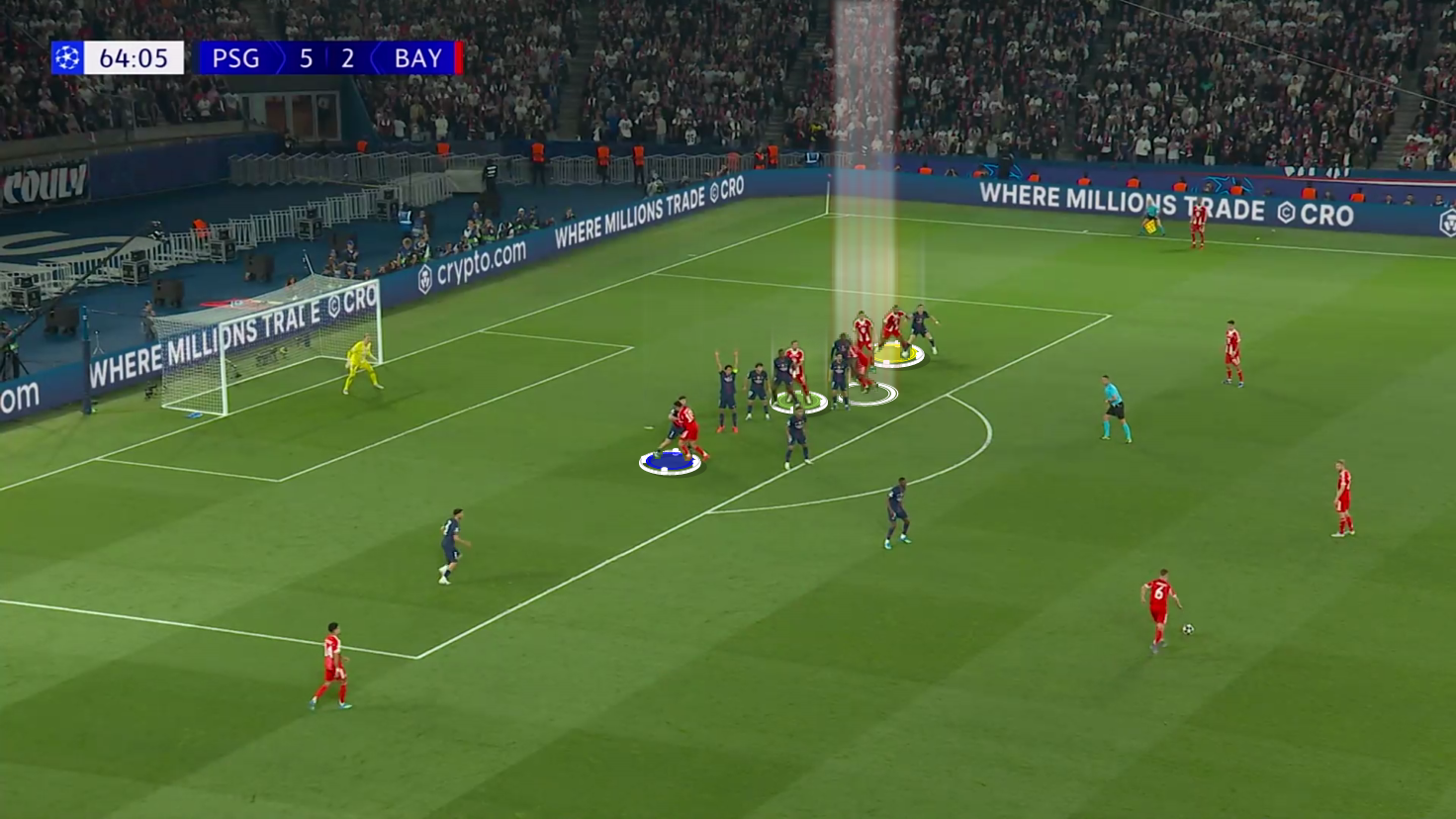
As in Figure 9 below, Kane (green) pushes the defender from his back to widen the path of Upamecano (white).
The yellow offside player (Tah) pushes the last defender offside, then attacks the ball, exploiting the fact that he was also busy with the attacker who stretched the pitch.
The same push is clear in blue.
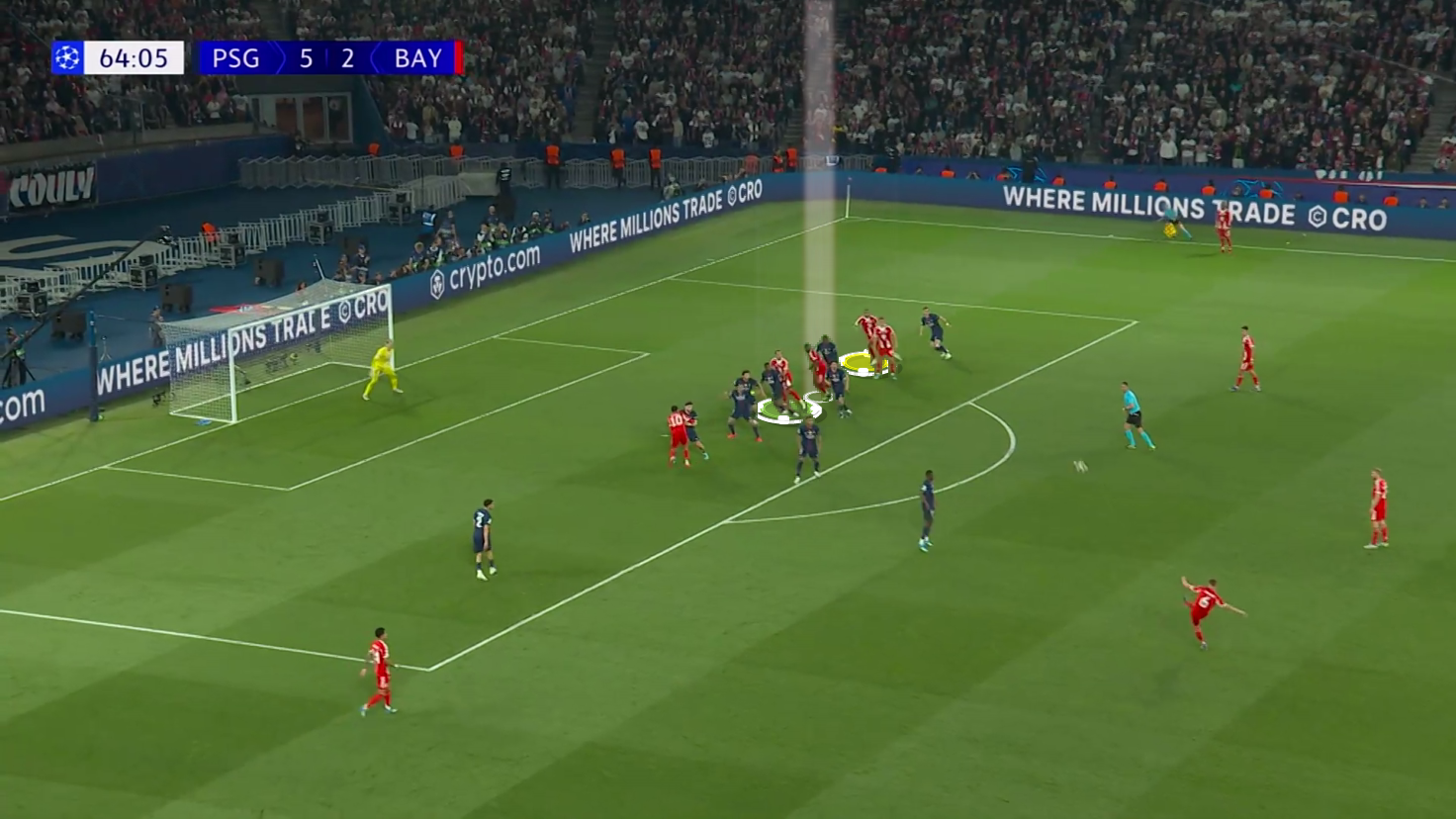
In Figure 10 below, Upamecano is totally free (white), and the result is a goal.
St. Pauli have dealt well defensively with this attacking style, so that we may use their defensive approach as a counter to it.
First of all, they have two defenders (green) in front of the line, and one of them acts as a man marker to slow down any runner, as shown in Figure 11 below.
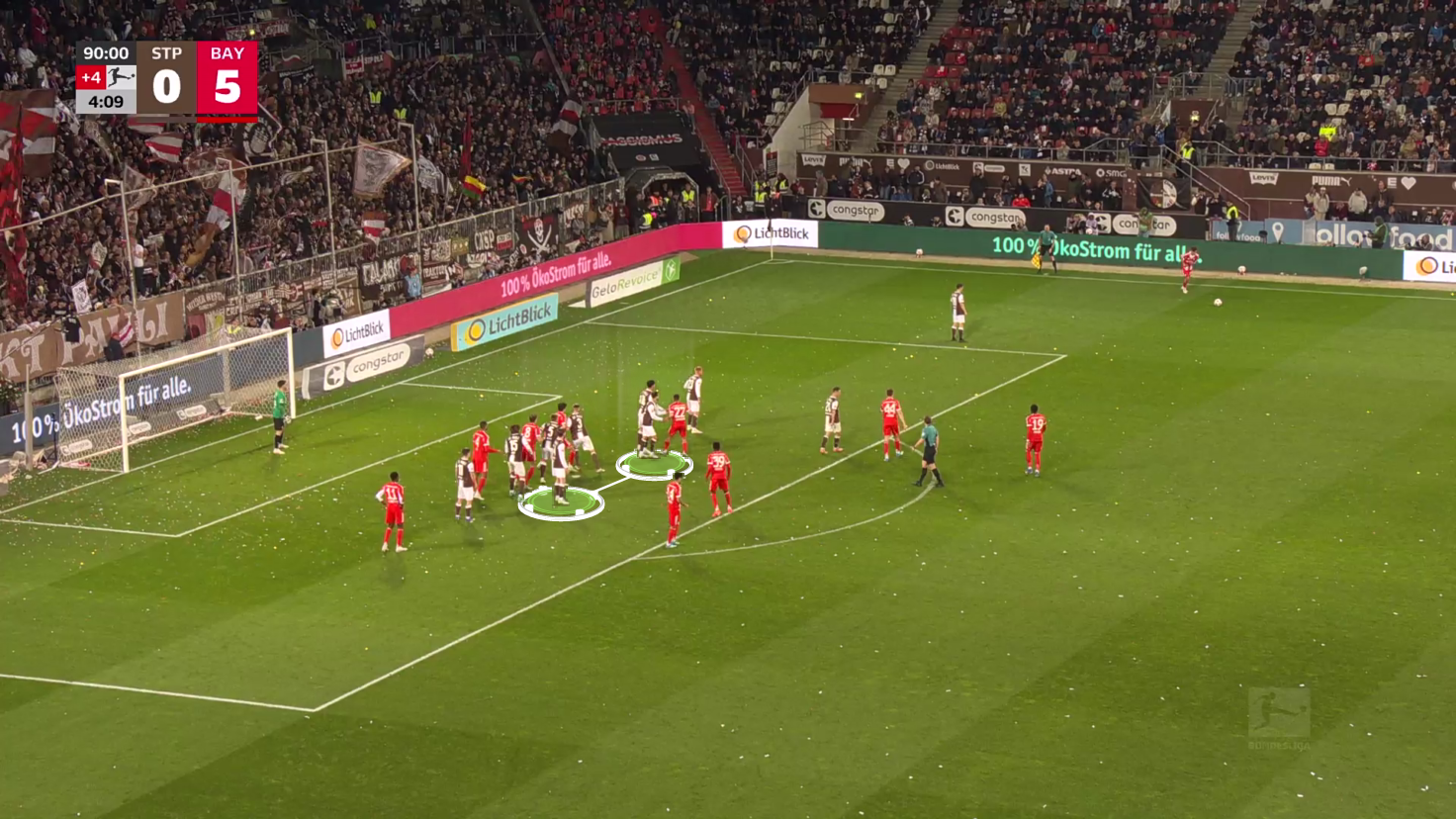
In Figure 12 below, the defender of the line (white) is aware that an attacker will come from his blind side, so he is ready.
He still stands in the line, but he pushes any attacker who comes from the offside to make him stay offside.
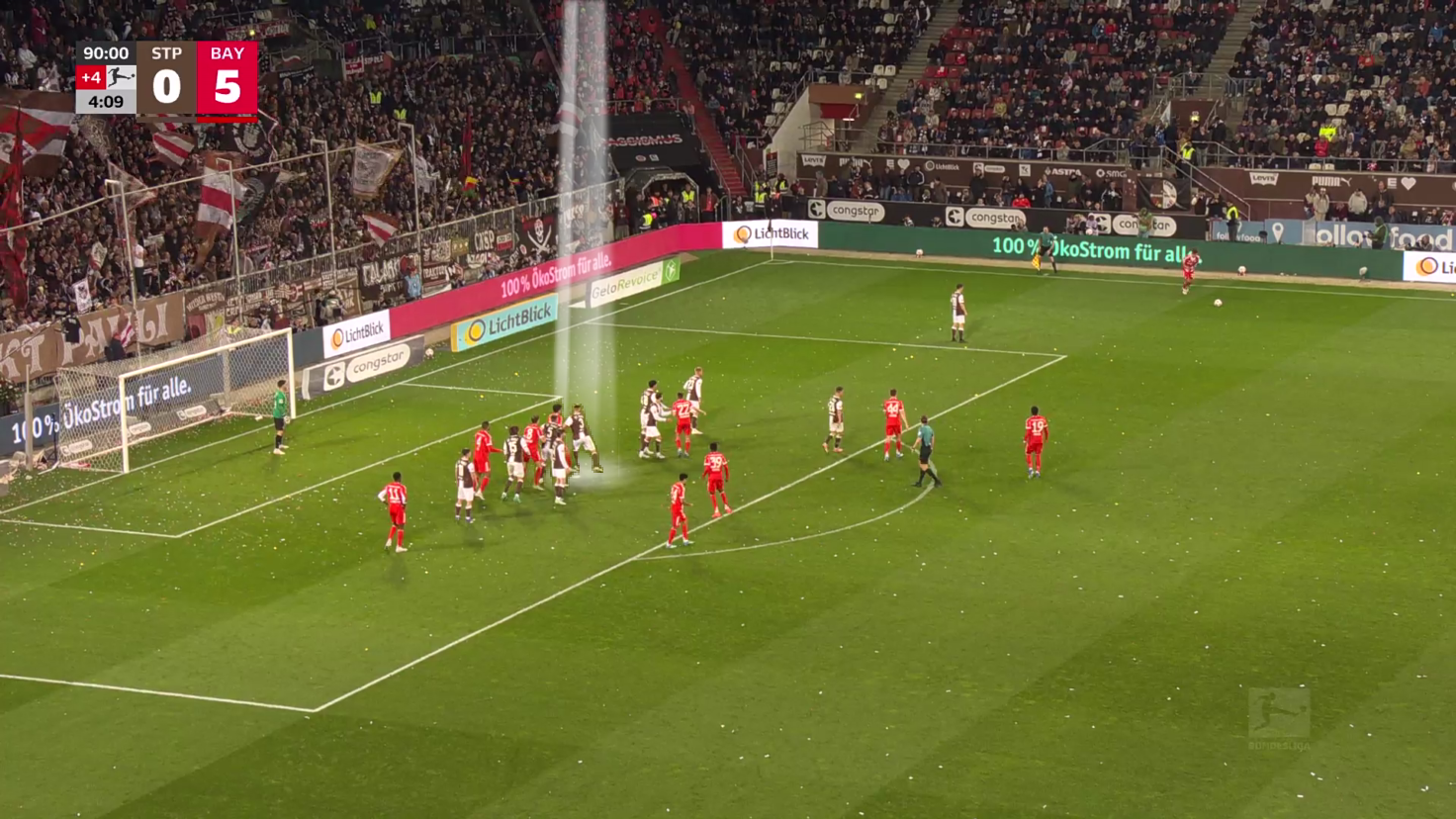
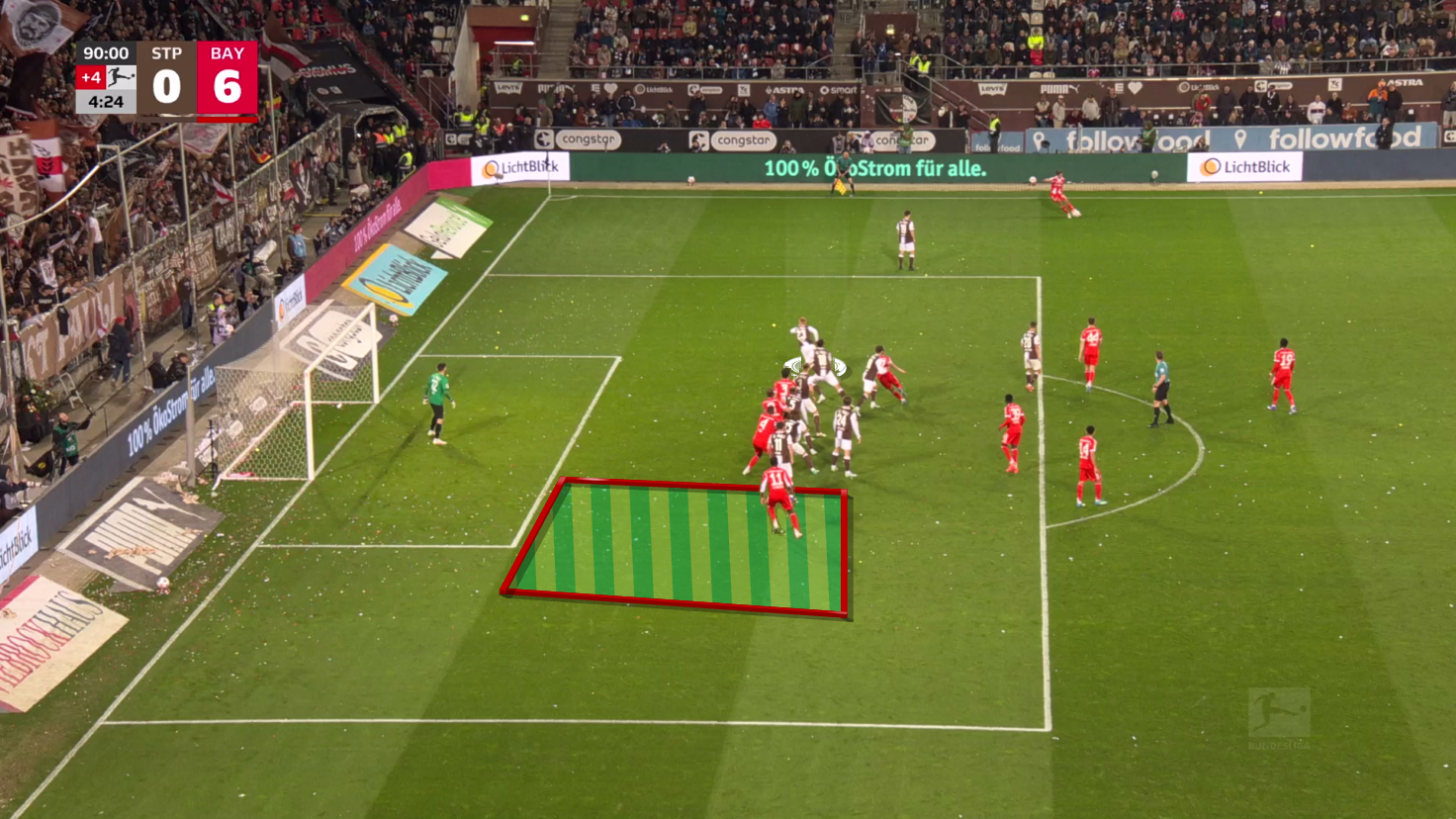
Figure 13 below shows that the line drops only after the ball is touched, to ensure that the attackers are still offside.
It also shows that they leave the area beyond the far post empty because Bayern Munich usually don't put the best players there.
The ball goes into the net, but the VAR rules it offside.
The problem is that this defensive idea is risky because the entire line should drop late together, and you can see that the first defender (white) is about to drop a moment before the line, which could have made it onside.