How To Coach Positional Rotations Like Thomas Tuchel & England At The 2026 FIFA World Cup – Tactical Theory
Positional rotation has become one of the most frequently used concepts in modern football, but also one of the most misunderstood. Many believe that rotation means freedom or a change of players, while the reality is quite different.

What Are Positional Rotations In Football?
Positional rotation has become one of the most frequently used concepts in modern football, but also one of the most misunderstood.
Many believe that rotation means freedom or a change of players, while the reality is quite different.
Every movement within the team system must clearly demonstrate a tactical objective, whether it's creating a free player, drawing a defender out of position, opening up new space, or encouraging the ball to advance to a more advanced position.
The England national team at the 2026 FIFA World Cup provides numerous examples of this type of movement, in which players haven't changed positions for the sake of it, but rather as a structured way to disrupt the opponent's defensive organisation without disrupting the team's balance.
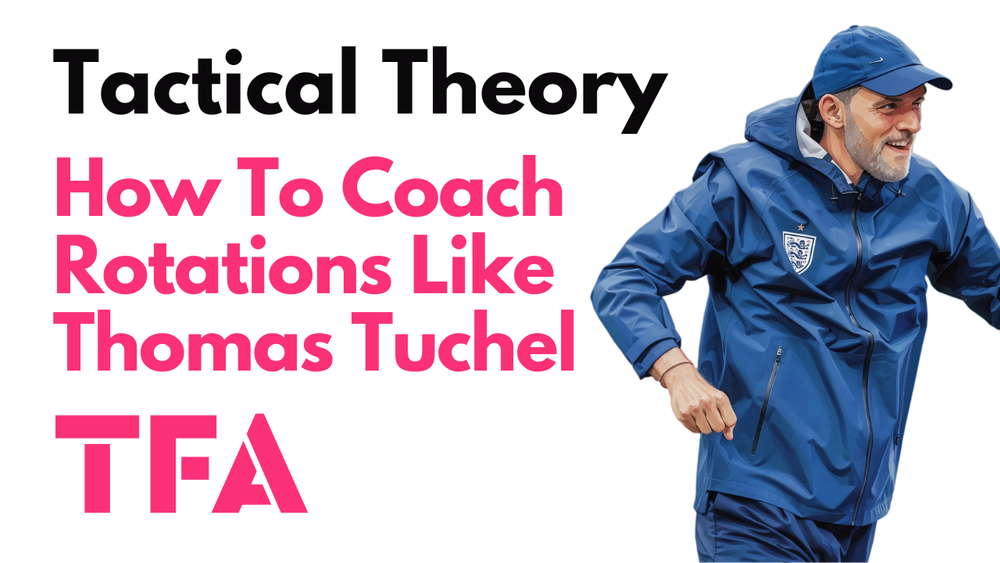
In this tactical theory and World Cup tactical analysis, we examine Thomas Tuchel tactics of positional rotation.
Why & ًWhen To Use Positional Rotations
Is the player moving to receive the ball or to create space for a teammate?
One of the most common mistakes coaches make when training attacking movements is associating movement solely with the player in possession.
In reality, many of the most important movements in football aren't aimed at receiving the ball but rather at influencing defenders' positioning.
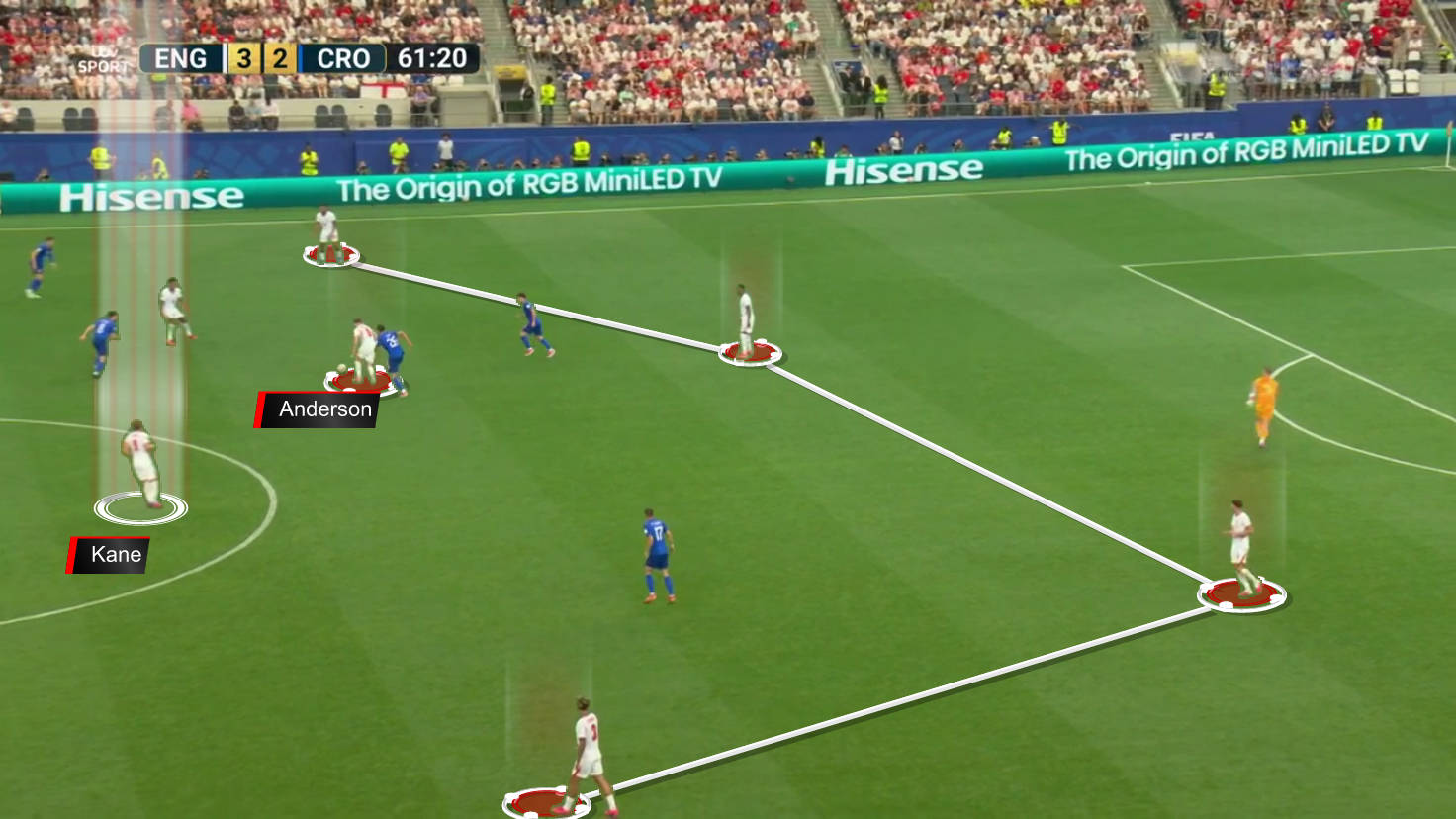
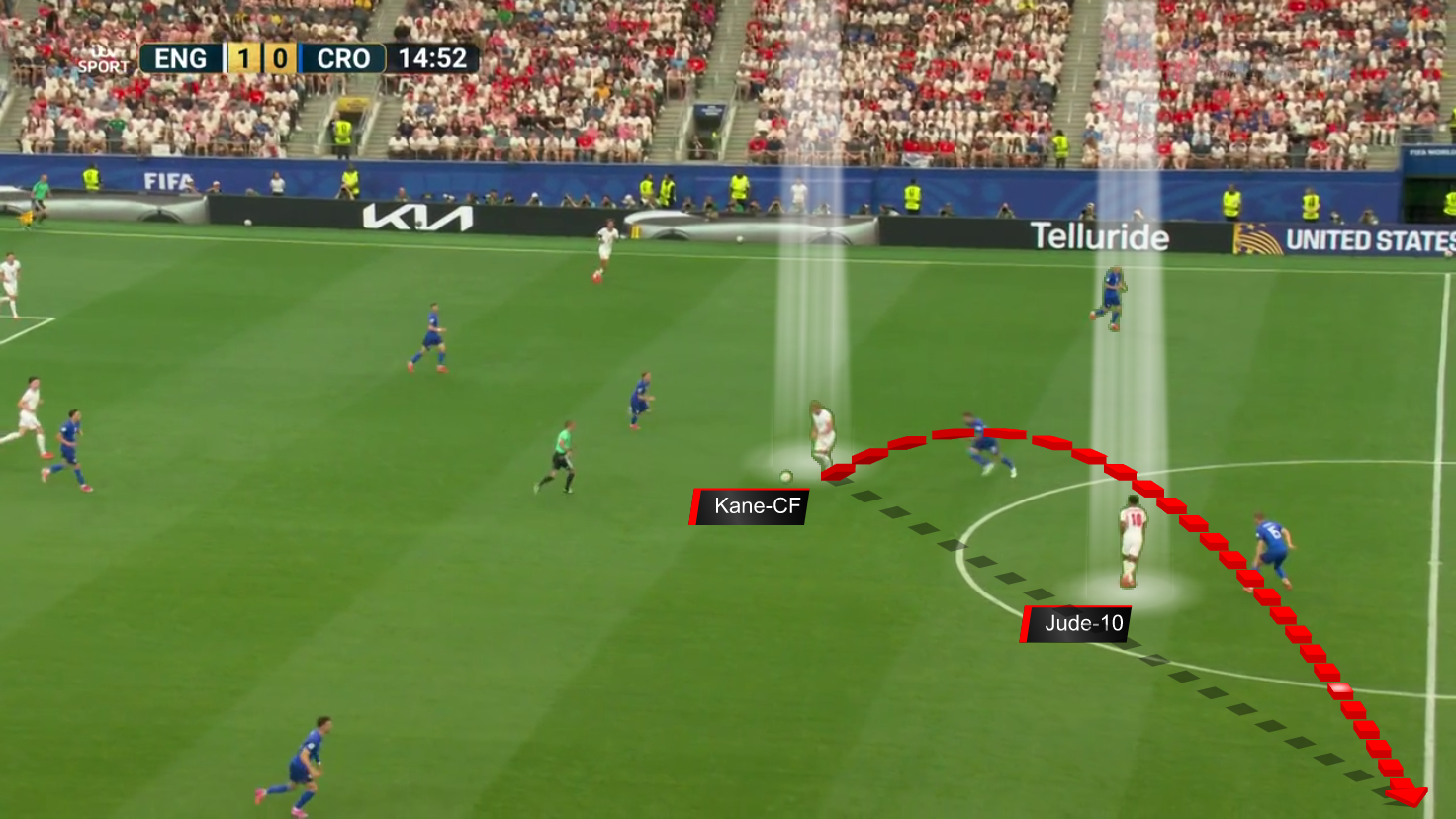
These two images perfectly illustrate one of England's key principles under Tuchel: positional rotation.
This rotation is crucial for maintaining the quality of their build-up play and creating space between the opposition's lines.
In this instance, Elliot Anderson drops back to receive the ball between or alongside the centre-backs, while Harry Kane moves back towards the left half of the pitch instead of remaining a static striker.
As Kane drops into midfield to receive the ball between the lines, Jude Bellingham moves directly in the opposite direction, making a run behind the defensive line.
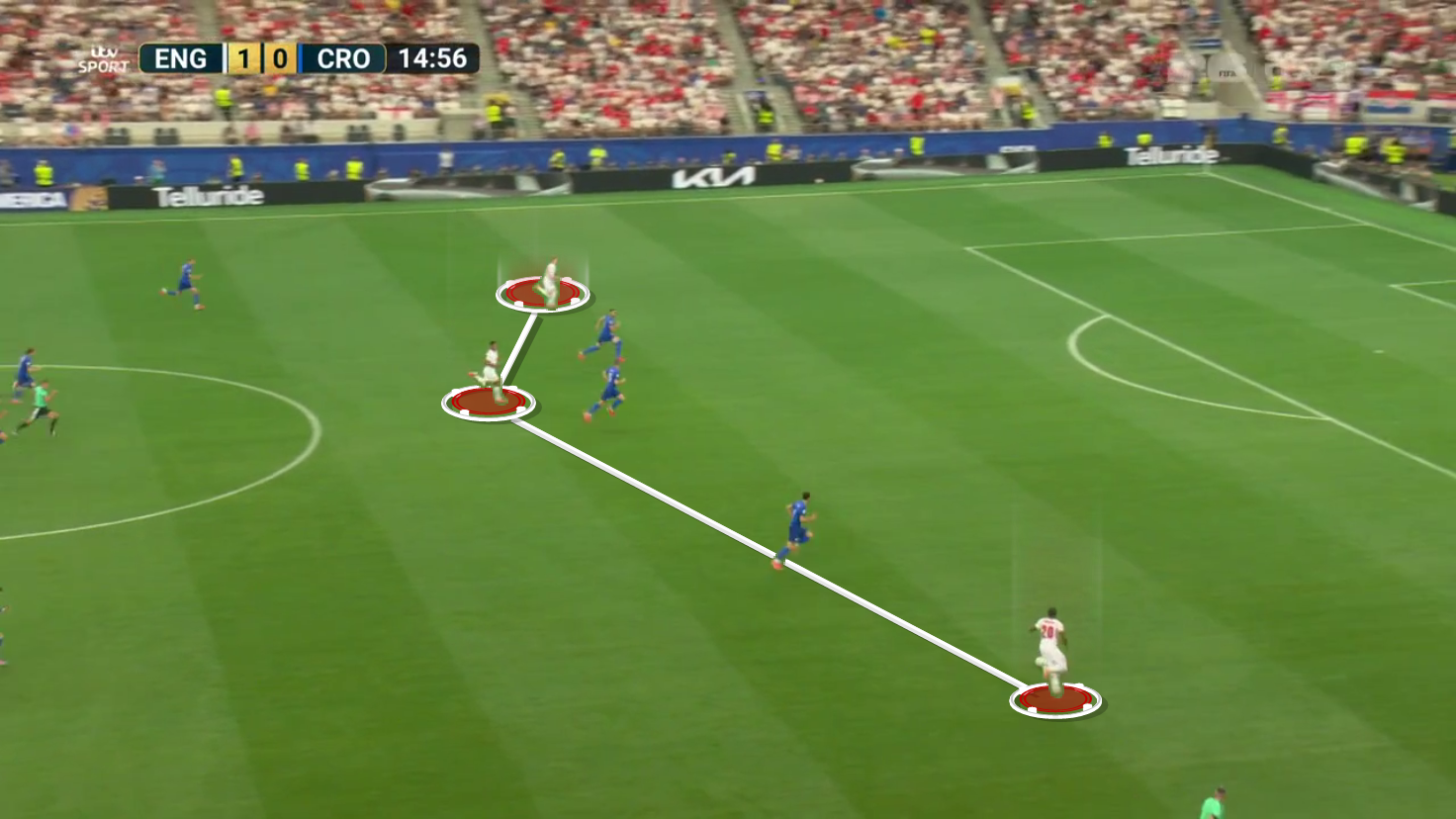
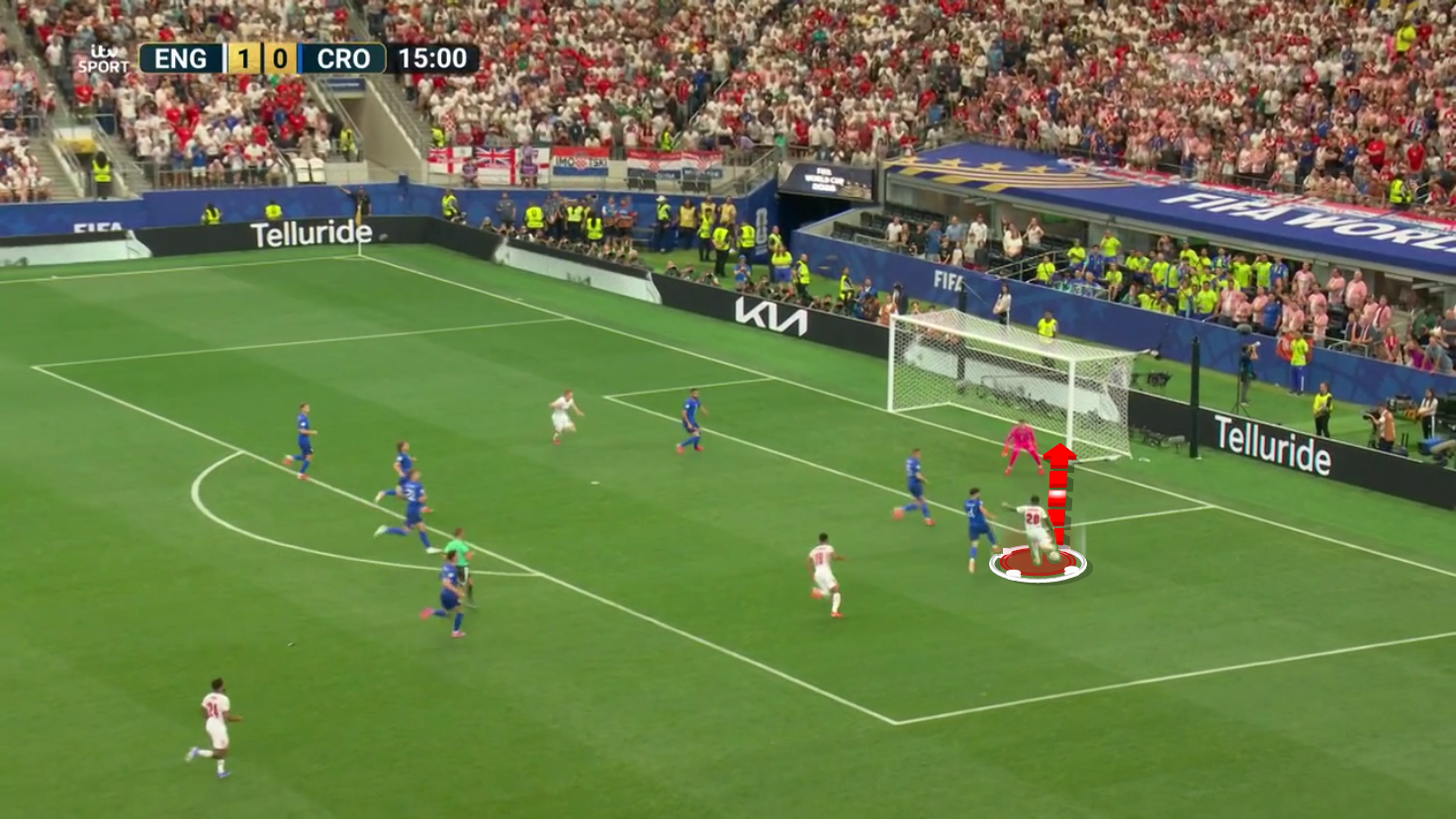
The sequence begins with Harry Kane dropping deep to receive the ball, forcing a Croatian defender to leave his defensive line to mark him.
As Jude Bellingham surged forward to exploit the space left by Kane, the right winger maintained his width near the touchline, forcing the Croatian full-back to stay in position and preventing him from covering for Kane's marker.
Kane's movement draws a centre-back or holding midfielder towards him, widening the opponent's defensive depth.
At the same moment, Bellingham exploits the space left by Kane with a vertical run, becoming the player threatening the goal instead of the traditional striker.
When a player leaves his position, a defender is often forced to make a decision: should he follow him and maintain his marking, or stay in his position and protect the space?
In either case, the attacking team has created a new situation that can be exploited.