Dribbling In Modern Football: How AC Milan, Bayern Munich & PSG Unlock Individual Brilliance – Tactical Theory

Dribbling has long been one of football’s most eye-catching actions, a burst of creativity capable of shifting momentum in an instant.
This tactical analysis examines how dribbling serves as a strategic mechanism within various systems and styles of play, focusing on the roles of Rafael Leão at AC Milan, Jamal Musiala at Bayern Munich, Ousmane Dembélé at Paris Saint-Germain, and the collective tactics employed by Simone Inzaghi's Inter Milan.
From Leão and Theo Hernández combining down Milan’s left to create isolation, to Musiala’s gliding ball carries through central pressure, or Dembélé’s one-on-one explosiveness in the final third, dribbling emerges as a tool shaped by timing, spacing, and structure.
Even systems that avoid it, like Inter’s, which prioritises third-man runs and positional rotations, reveal its tactical weight by contrast.
This tactical theory article breaks down how dribbling contributes to creating numerical, positional, qualitative, and dynamic superiority while still determining matches in the proper context.
The Four Types Of Superiority In Football Tactics
Within the tactical vocabulary of the modern game, coaches and analysts often refer to four fundamental forms of superiority that a team can seek in possession: numerical, qualitative, positional, and dynamic.
Numerical Superiority: Creating Overloads
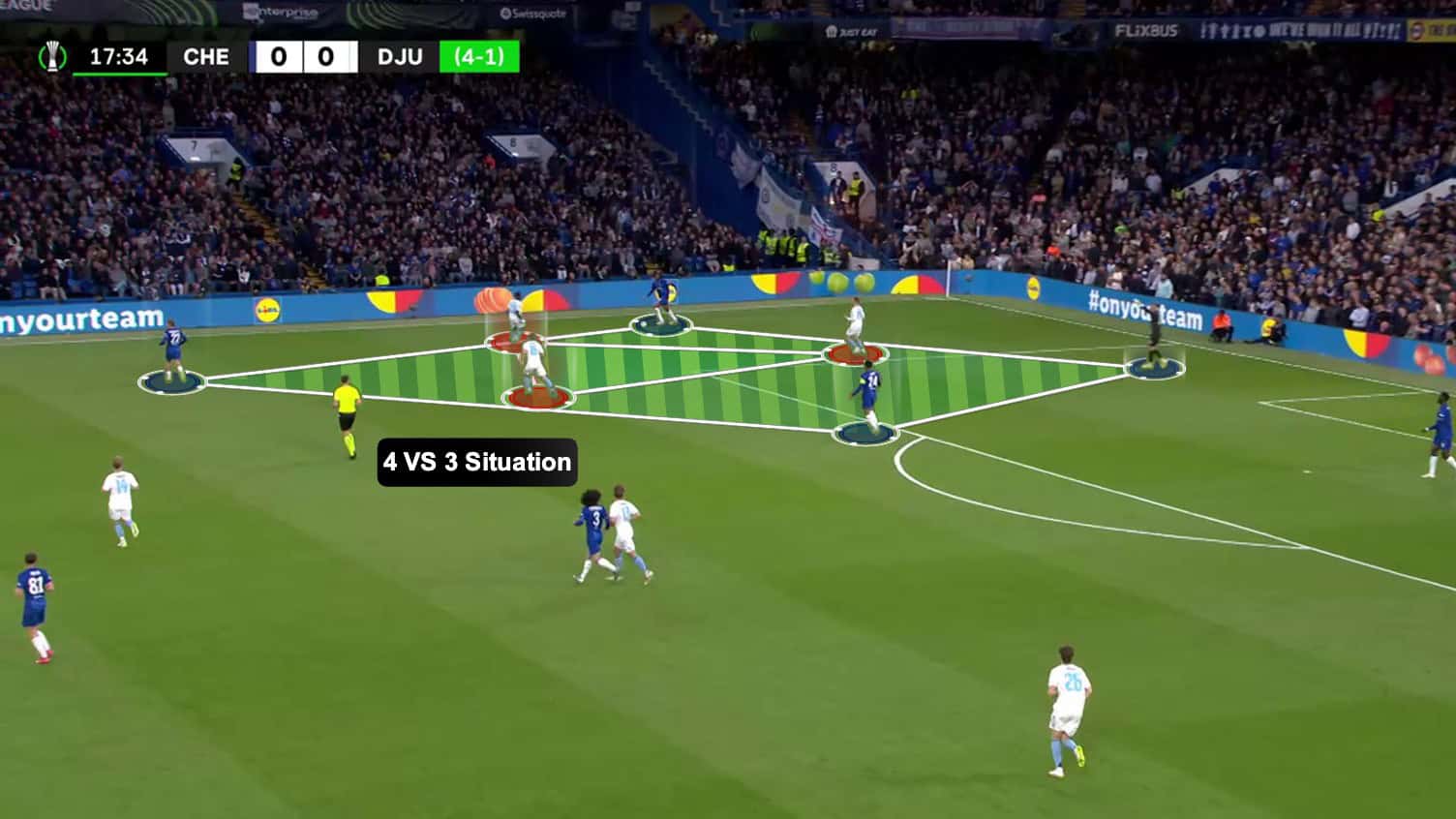
Numerical superiority refers to situations in which a team has more players than the opponent in a specific zone of the pitch, creating overloads to progress play.
This is the most intuitive form of advantage: a 3v2 in build-up, a 4v3 in midfield, or a 2v1 on the flank can allow for clean progression, drawing out defenders and opening new spaces.
It is often a product of smart positioning, coordinated movements, and intentional rotations aimed at manipulating the opposition's structure.
The goal is not merely to have more players, but to position them in ways that force decisions and generate free men.
Qualitative Superiority: Isolating Key Players
Qualitative superiority involves isolating a technically or physically superior player against a weaker opponent, increasing the chances of success in direct duels.
Coaches often create this scenario intentionally, for instance, switching play to leave a dynamic winger in a one-on-one against a less agile right-back.
It’s a structural setup designed to leverage individual talent within a collective plan.
The underlying principle is simple: if a player is significantly better than his direct marker, giving him space and time can become a tactical weapon.
Positional Superiority: Occupying Strategic Spaces
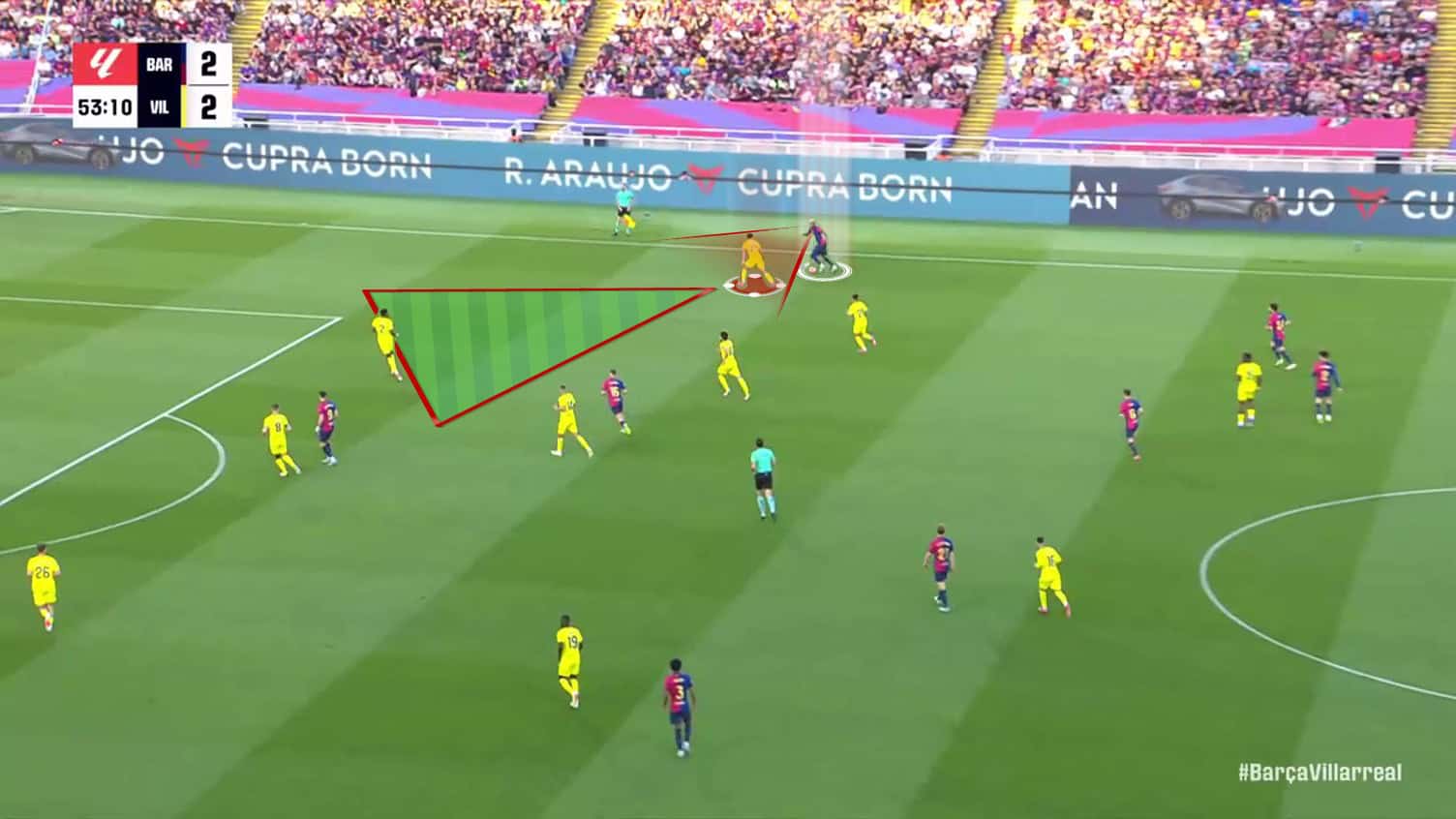
Positional superiority is achieved by occupying strategically advantageous spaces between the lines, in blind zones, or outside the opponent's field of vision.
It often manifests when players position themselves behind the midfield line or in pockets of space, forcing defenders to make uncomfortable decisions.
The value lies in the timing and location of occupation; players must read the flow of the game, arrive at the right moment, and stretch the opposition’s shape horizontally or vertically.
It’s not only about finding the space, but about positioning in a way that provokes disorganisation or forces defensive shifts.
Dynamic Superiority: Timing & Momentum
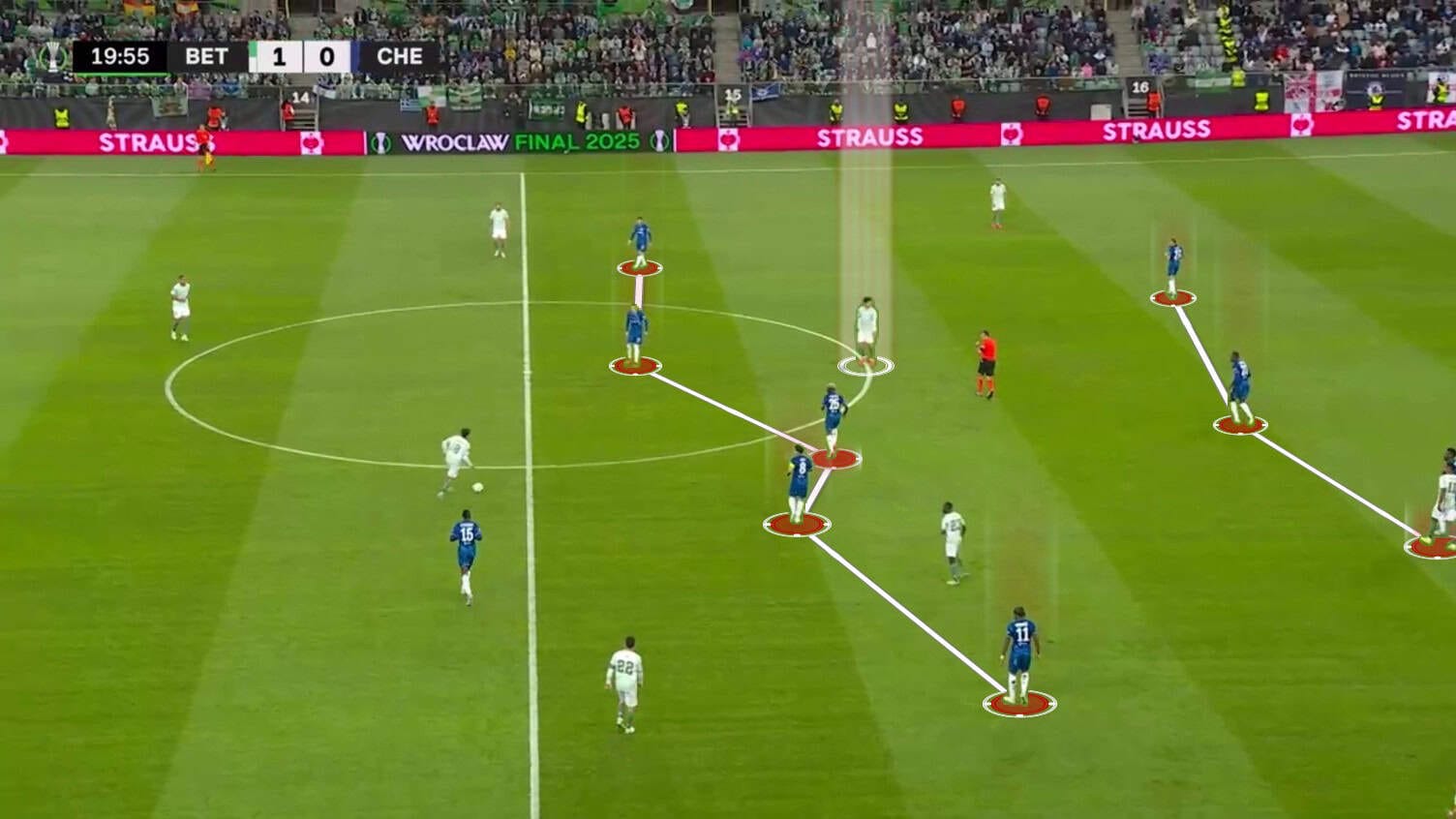
Dynamic superiority relates to timing, momentum, and coordinated movement.
It is when a player arrives in a space, not simply stands in it, with greater speed and timing than the opponent can react to.
A perfectly timed run behind the backline, a third-man run from midfield, or a sudden acceleration in a one-on-one are all examples of how movement alone can generate an advantage.
It is not about where you are, but how and when you get there.
Dynamic superiority often decides matches at the highest level, especially against well-organised, positionally disciplined defences.
How Dribbling Activates Multiple Forms Of Superiority
Dribbling is one of the few actions capable of activating all these forms of superiority in a single moment.
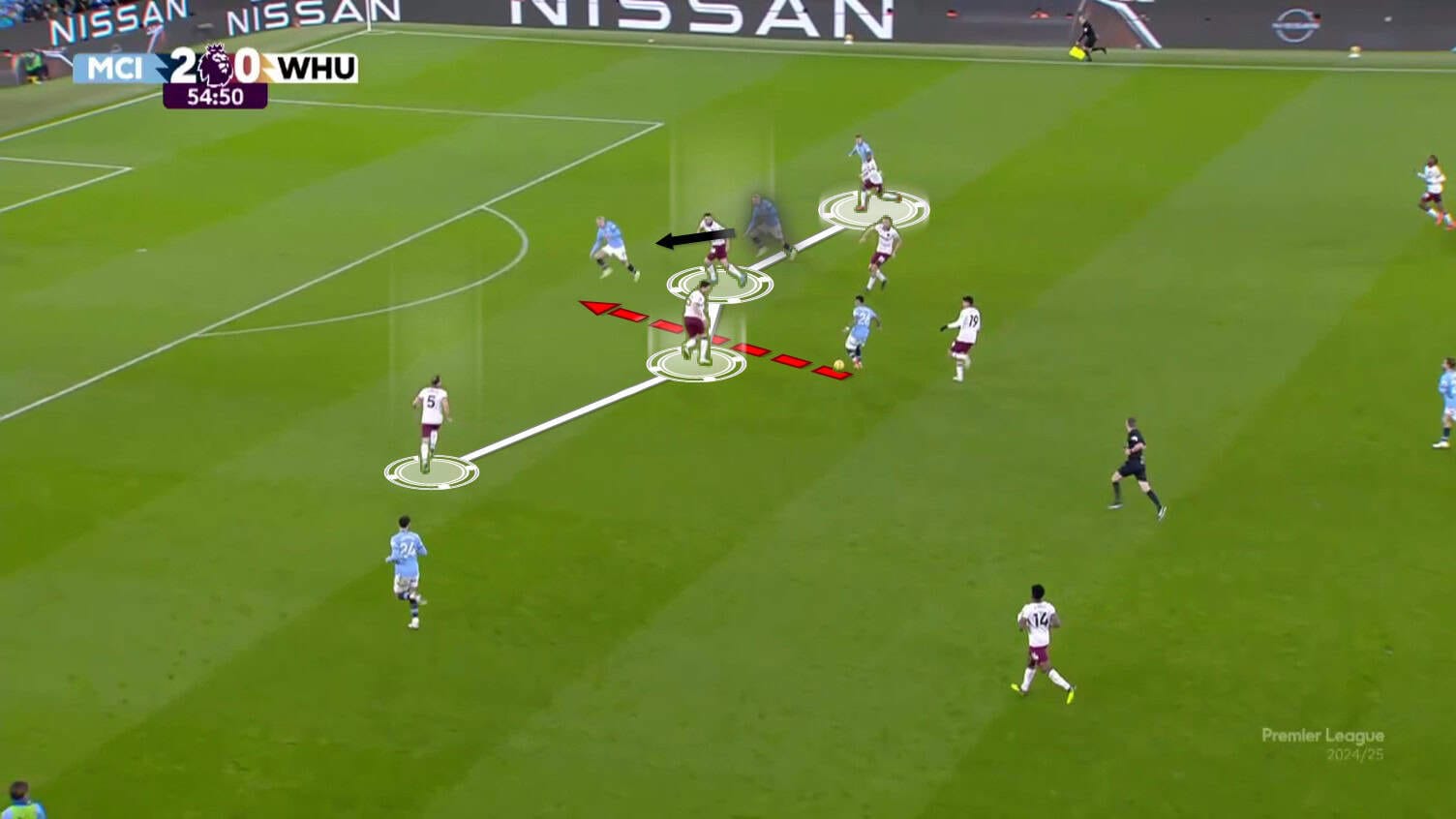
Beating a defender directly removes a marker, instantly converting an even duel into a numerical advantage; a one-on-one becomes a two-on-one or a three-on-two.
At the same time, that duel is rarely accidental: it is often the result of a deliberate attempt to exploit a favourable mismatch, rooted in qualitative superiority.
Moreover, when a player breaks a defensive line with a sudden acceleration on the ball, the opponent is forced to abandon its structure, shifting or collapsing in reaction.
This destabilisation produces both positional openings and dynamic imbalances—the exact spaces modern teams are trained to exploit.
The Role Of Team Structure In Enabling Dribbling
Effective dribbling does not emerge from spontaneous individualism but from structured, team-created situations.
One of the clearest examples is the principle of “overload to isolate”: overloading one side of the pitch to attract defensive attention, before quickly switching play to isolate a player in a one-on-one on the opposite flank.
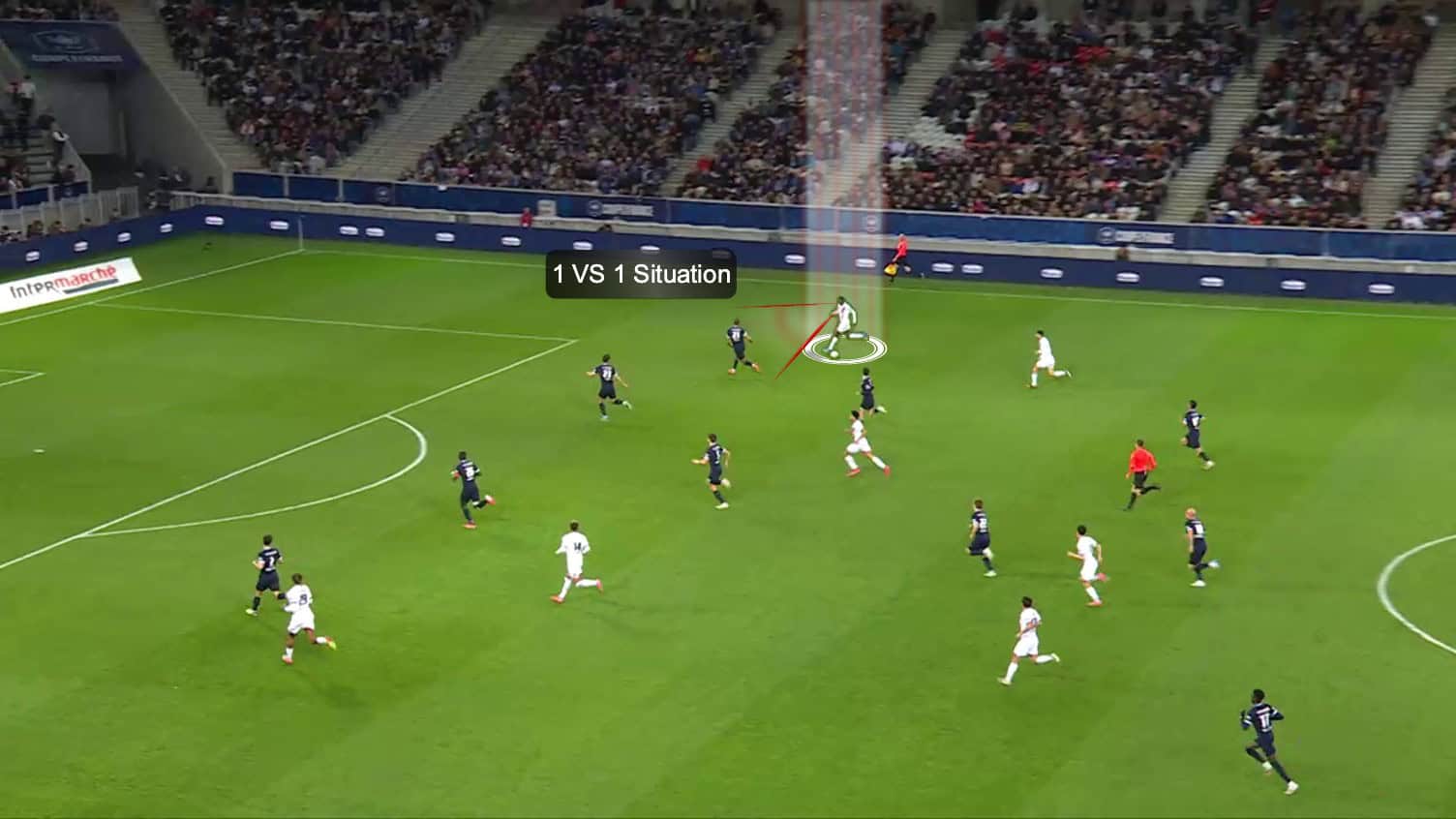
This frame captures a textbook example of qualitative superiority.
After a quick switch of play, Dembélé finds himself in a pure one-on-one against the right-back, with ample space to attack.
The isolation is not coincidental; it’s the product of prior overloads on the opposite flank, designed to stretch the defensive block and free up Dembélé’s corridor.
His ability to eliminate his direct opponent in these situations forces defensive rotations and opens gaps across the back line, turning a simple duel into a structural disruption.
Lateral chains also play a key role.
The left-back’s run in behind can pull defenders away to free the left-winger, while a central third man can enable quick combinations to isolate a dribbler.
In all these scenarios, the dribble is not improvised; it is the final act of a collective creation.
Rafael Leão And Theo Hernández At Inter Milan: Creating Isolation Through Movement
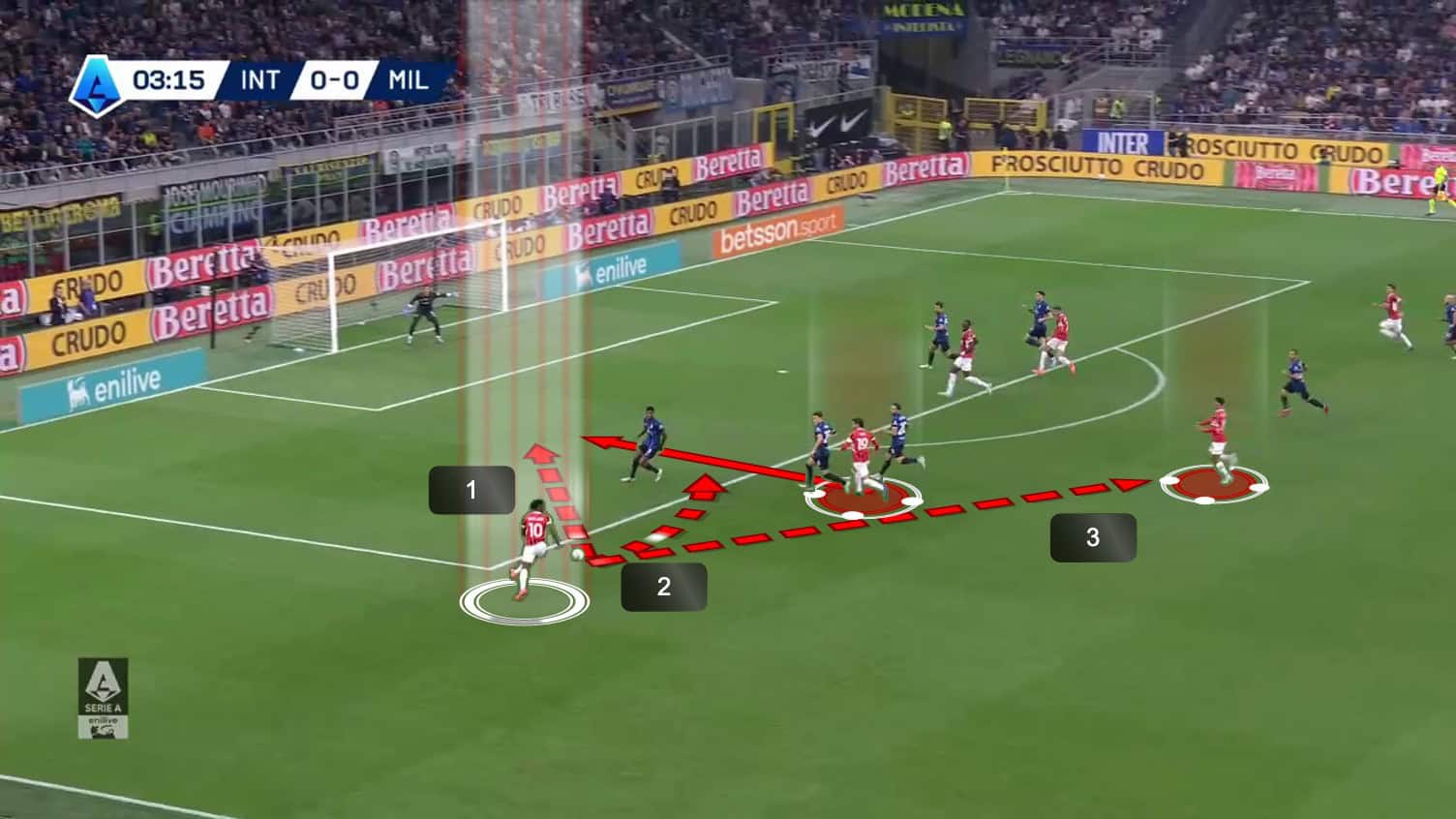
A perfect illustration of this concept can be found on I Rossoneri's left flank, where Leão and Hernández exemplify how coordinated movements pave the way for decisive individual actions.
In this sequence against Inter Milan, Hernández executes an inverted run into the half-space, dragging his direct marker with him and disrupting the defensive line.
This movement doesn’t just create space on the outside; it opens a central corridor for Leão to attack with the ball at his feet.
As Leão receives facing forward, the action structure offers him three distinct options: a through ball in-depth for Hernández, who continues his run; a direct dribble into the box, exploiting the gap generated centrally; or a pass to Tijjani Reijnders, who arrives in support at the top of the area.
Each scenario is rooted in prior synchronisation, not chance.
Leão’s ability to beat his man is empowered by the surrounding geometry, which isolates him, disorients the defenders, and multiplies his impact.
Here, dribbling becomes the final expression of a collective mechanism designed to rupture defensive balance through layered decision-making.
Dribbling In Positional Play: Jamal Musiala As A Tactical Reference
In positional play systems, the logic is similar, albeit in more central zones.
Breaking a line of pressure is often the trigger that unlocks the attacking phase.
While vertical passing traditionally serves this purpose, ball-carrying through the midfield has become an equally potent alternative.
When a central player drives past the first wave of pressing, it forces the second line to respond: defenders step out, cover angles shift, and space emerges where structure once stood.
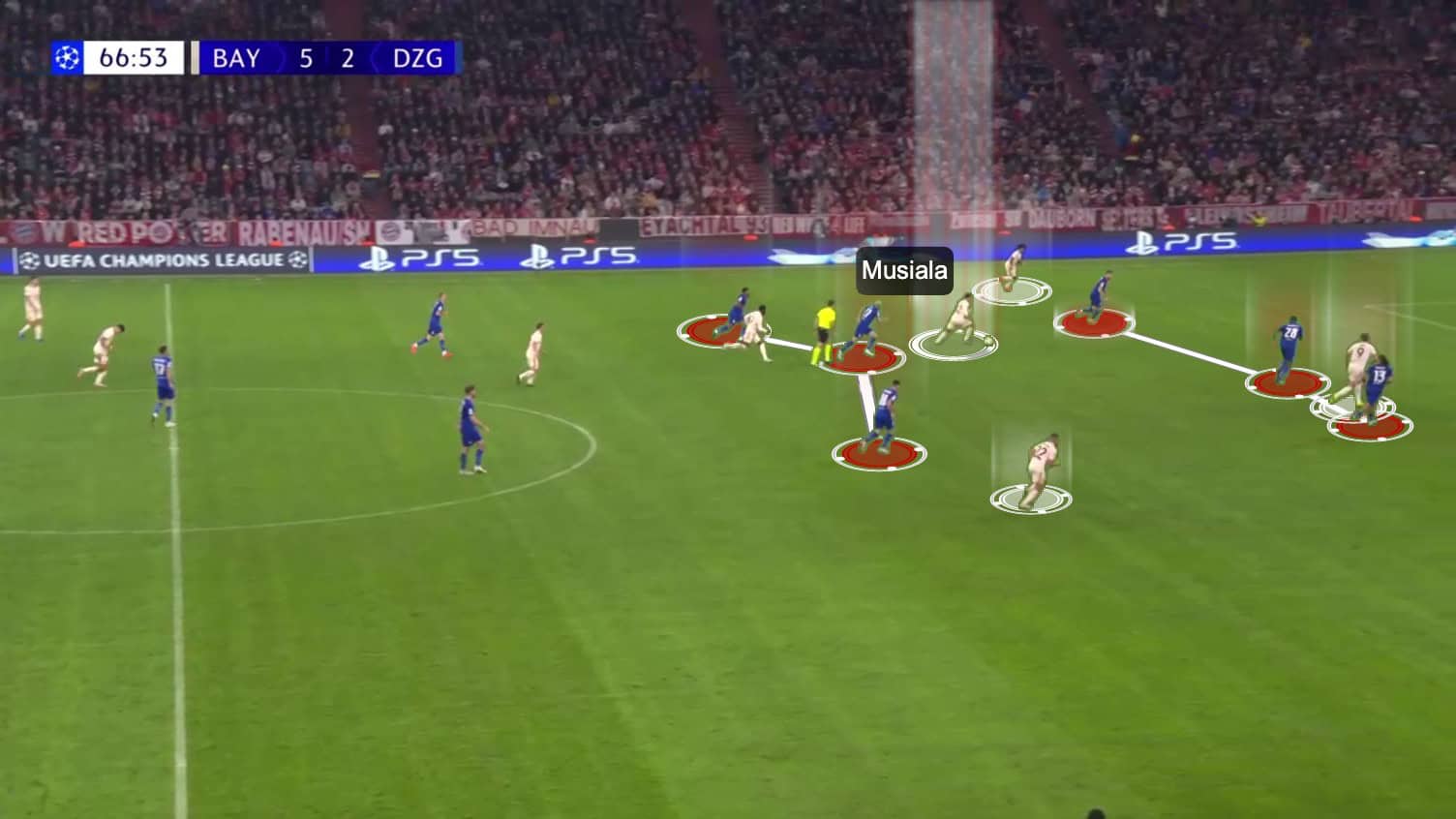
Jamal Musiala embodies this approach with extraordinary clarity.
His gliding dribbles through congested central corridors force defenders into uncomfortable decisions: to step out and leave a gap or stay and allow progression.
Each carries functions like a delayed vertical pass, but with greater control over timing, rhythm, and direction.
In positional systems, where spacing and occupation are carefully managed, these moments of calculated disruption provide the unpredictability that pure passing sometimes lacks.
Why Inter Milan Avoids Dribbling & Still Create Superiority
Not every team builds superiority through dribbling.
Some sides, like Inzaghi’s Nerazzurri in the 2024/2025 season, generate offensive threats through collective mechanisms rather than individual take-ons.
This Inter Milan side rarely relies on flashy one-on-ones, yet consistently produces high-quality chances.
Their superiority emerges from precision, timing, and structured movement.
Through constant use of third-man runs, clever positional rotations, and calculated overloads, Inter Milan manipulates the opponent’s shape without relying on individual flair.
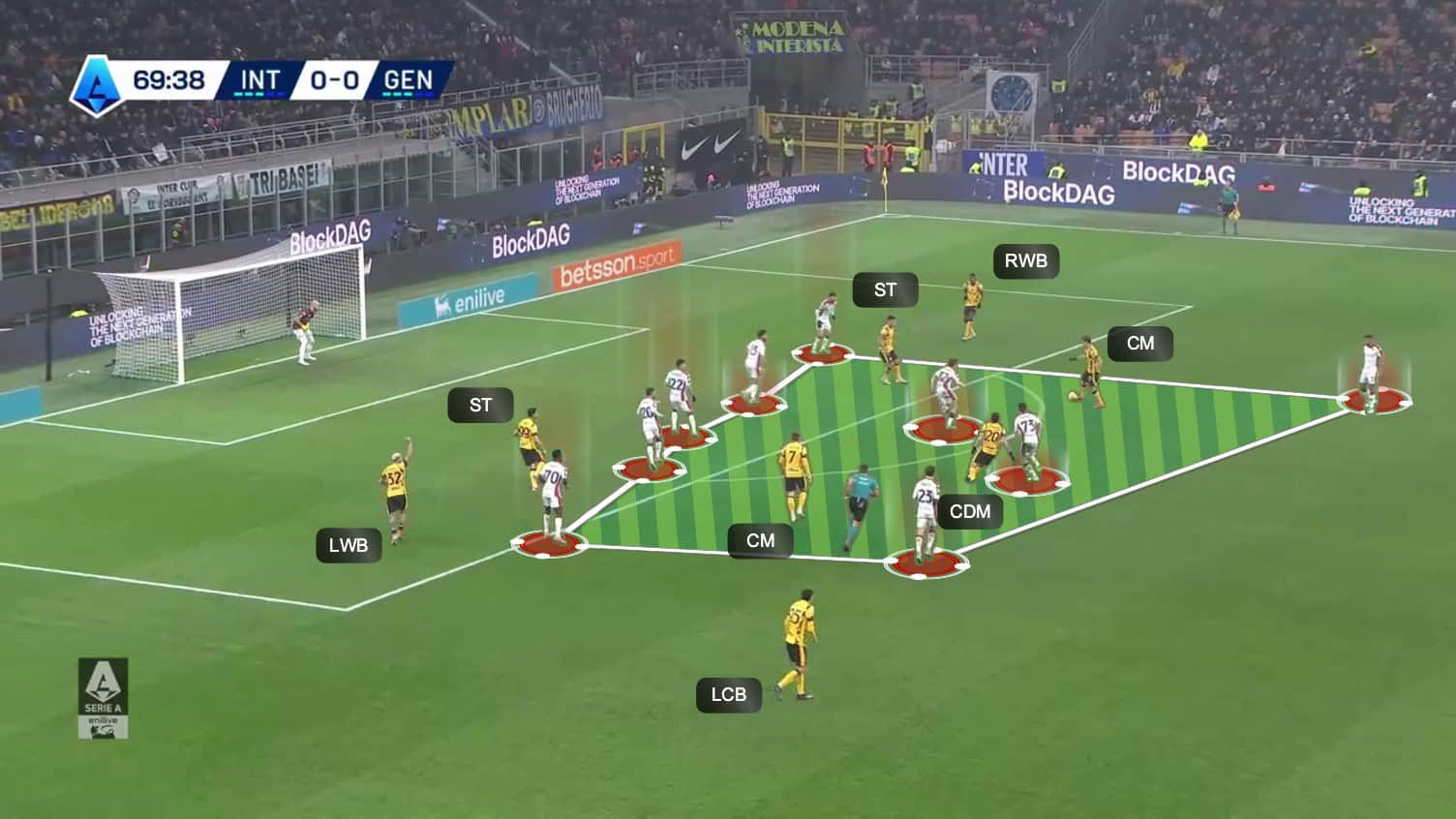
Midfielders like Nicolò Barella or Hakan Çalhanoglu don’t beat defenders on the dribble but instead, exploit pockets of space through coordinated off-ball runs and quick combinations.
Wide overloads, central occupation, and fluid movement between lines allow Inter Milan to stretch opponents horizontally and vertically.