How To Coach Rest Defence Tactics Like Didier Deschamps' France At The 2026 FIFA World Cup – Tactical Theory

"The more you attack, the more vulnerable you become to counterattacks."
This statement might seem logical, but it's no longer entirely true in modern football.
While most coaches focus on creating numerical superiority in the final third or improving the quality of their chances, the world's best teams are working on another equally important issue: how to maintain defensive stability while attacking.
Attacking is not limited to moving the ball and creating chances; it now requires a defensive organisation that ensures the team is prepared to deal with any sudden loss of possession.
This is why the concept of rest defence has emerged, becoming one of the most widespread tactical concepts among elite clubs and national teams in recent years.
In this tactical theory and World Cup tactical analysis, we examine Didier Deschamps' rest-defence tactics with France and detail how to coach similar tactics.
Defensive Organisation Starts With Possession
Does the defence begin when your team loses possession or before?
Many coaches believe that defence begins as soon as possession is lost to the opponent, but top teams prepare for this moment even before it happens.
During the build-up and attacking phases, not all players move forward simultaneously; instead, the team always maintains several players in positions that allow them to control a potential transition.
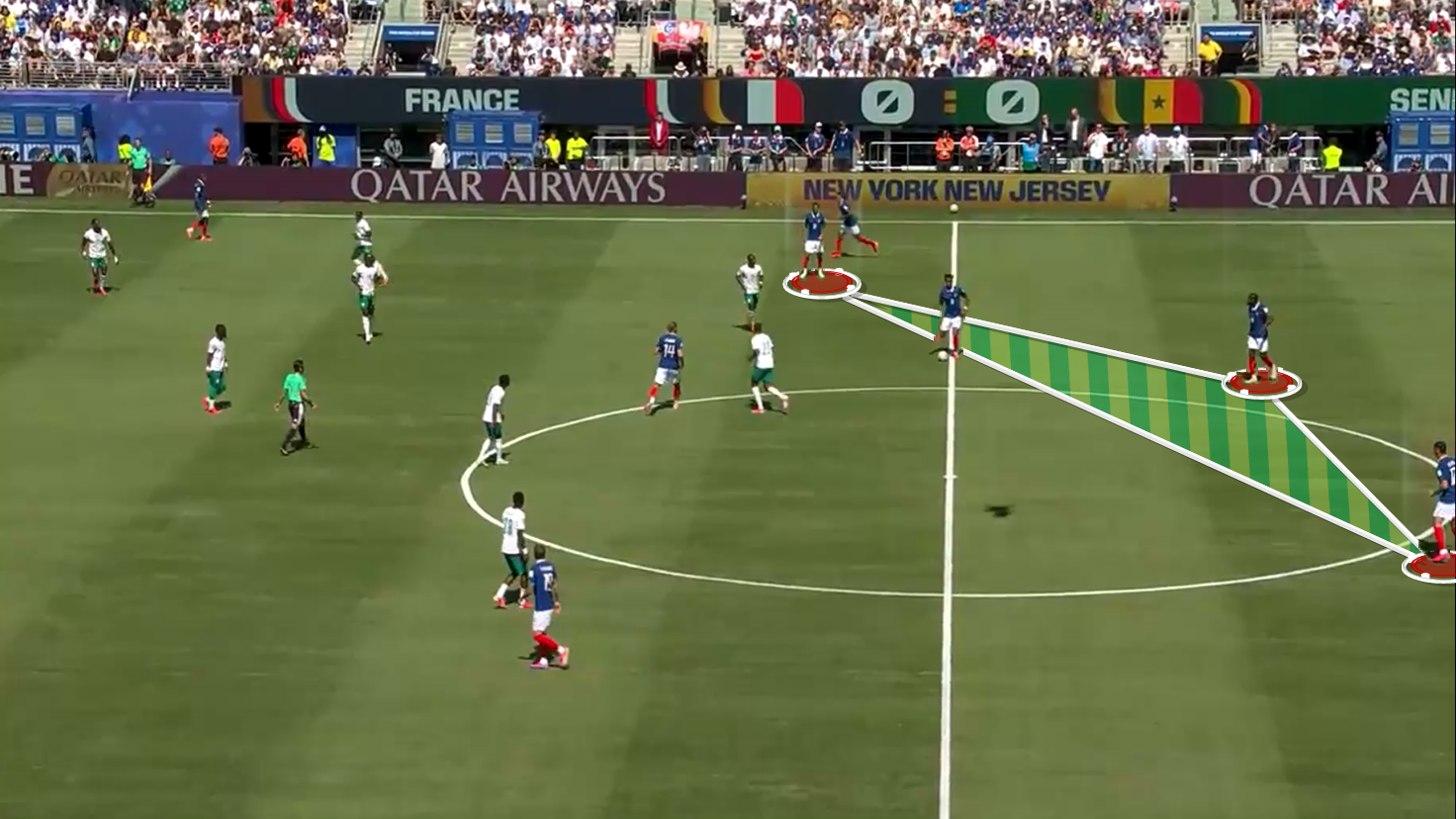
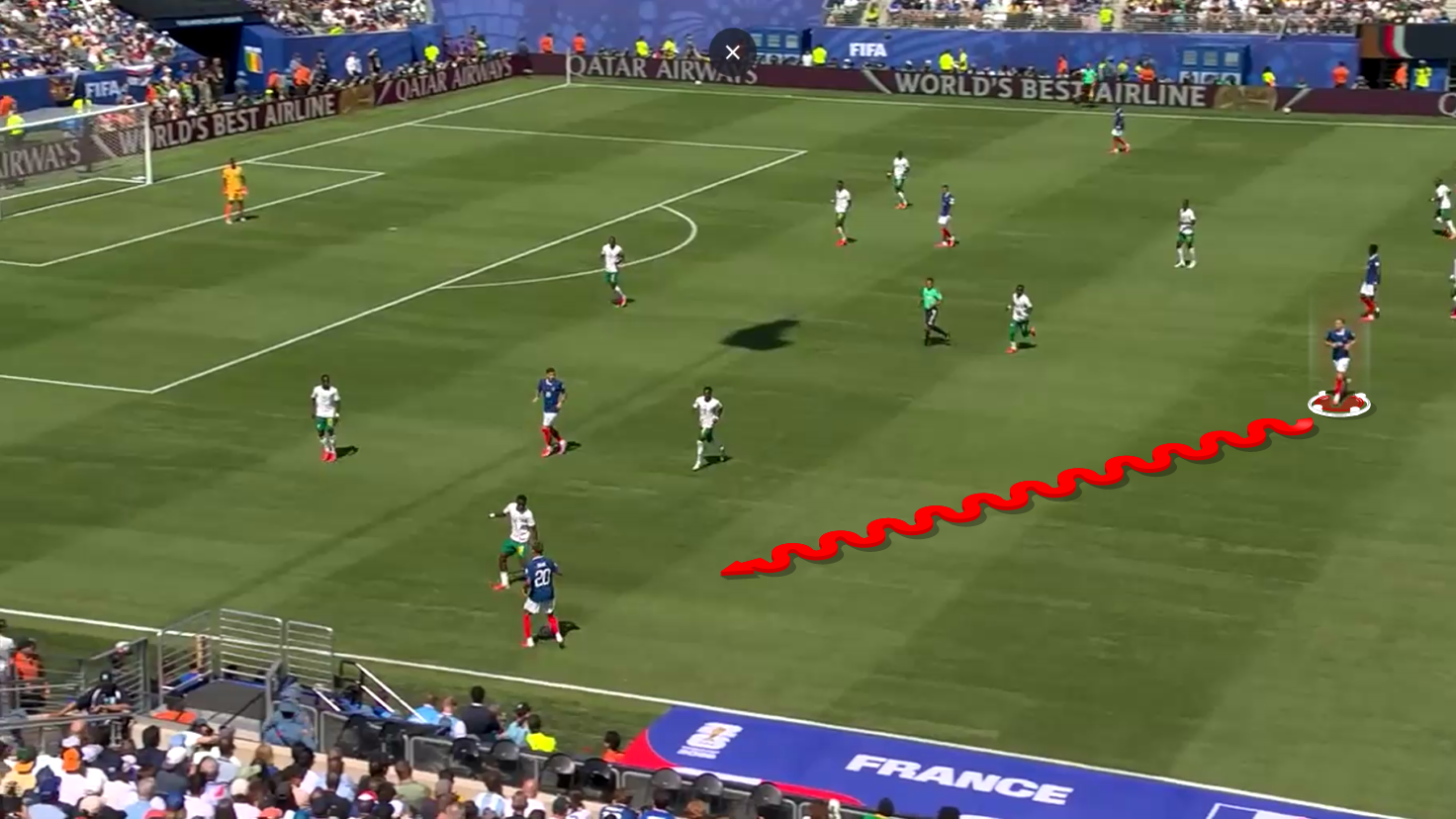
Here we can observe a three-man formation positioned below the ball line, whether the ball is deep or on the wing.
This isn't simply about teammates surrounding the player in possession, but rather a specific arrangement that facilitates the movement of the ball from one third of the field to another.
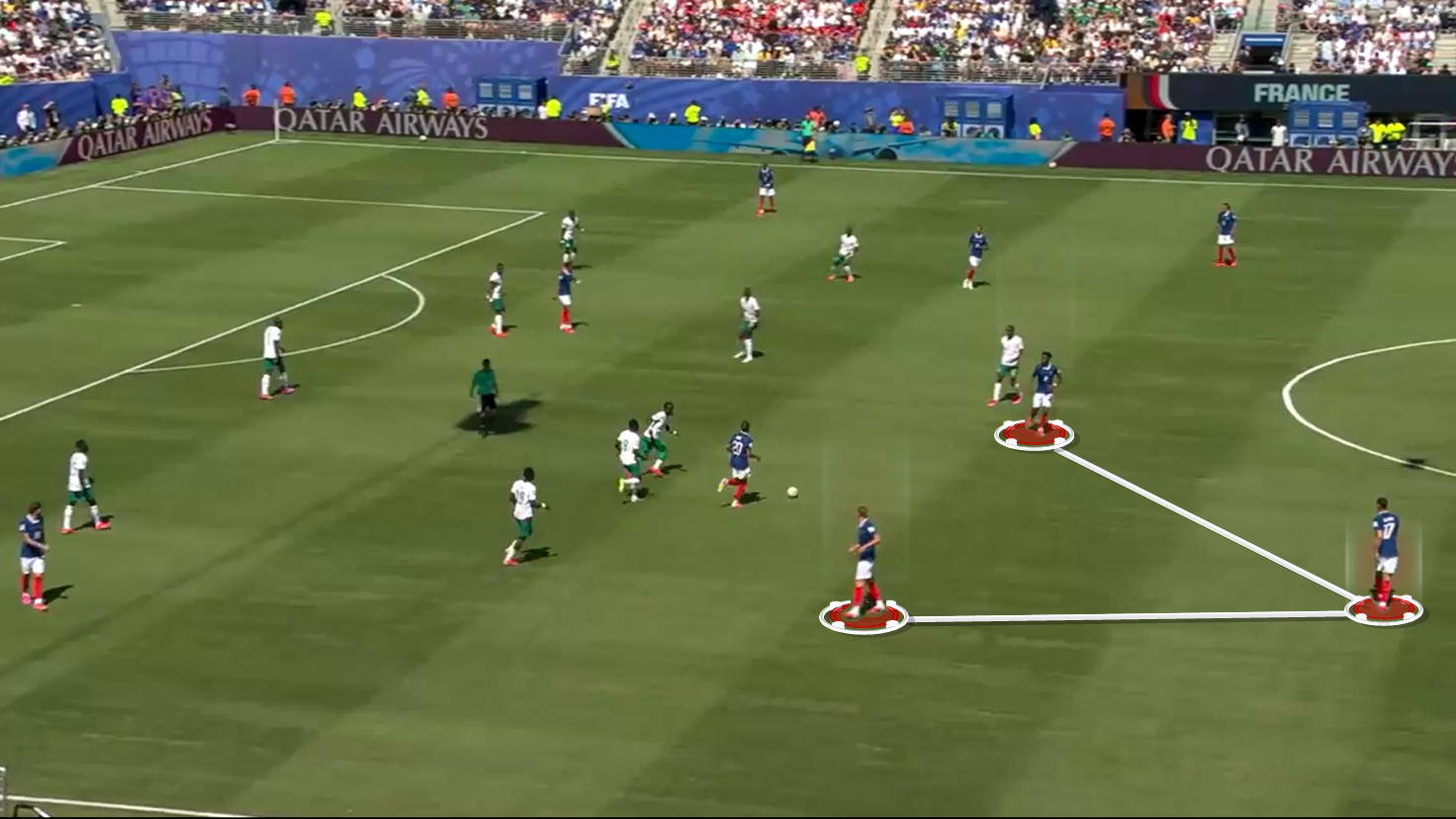
Above, Désiré Doué enters from the left, while the trio of Aurélien Tchouaméni, Adrien Rabiot, and William Saliba are positioned around him.
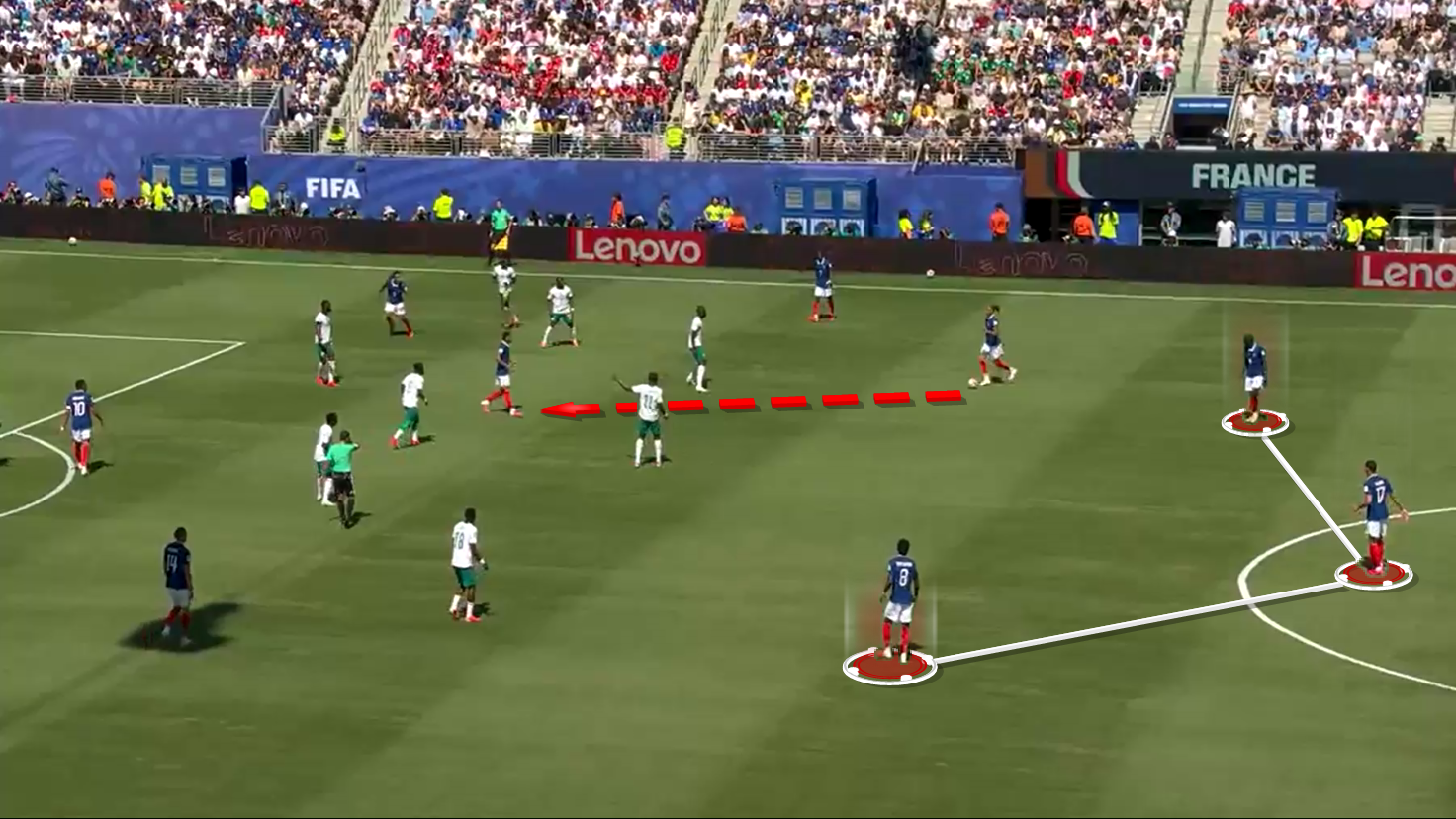
In the next example, the ball is with Michael Olise, and Doué has moved between the lines, with a three-man defence behind him, creating a passing opportunity.
Once a team gains possession, the coach's focus shifts to creating numerical superiority, improving positioning between the lines, and finding space in the final third.
However, at the highest level, the players' defensive responsibilities don't end with possession; a new phase of organisation begins, aimed at preparing for the moment when possession might be lost.