
Facundo Bernal Scout Report At Real Betis 2026/2027: A Charrúa Midfielder Who Models His Game On Tottenham Hotspur's Rodrigo Bentancur - Player Analysis
Facundo Bernal has quickly emerged as the midfield stabiliser Manuel Pellegrini’s Real Betis need. This scout report analyses the Uruguayan’s defensive timing, positional intelligence, efficient ball circulation and ability to provide balance within a team packed with attacking talent.

Manuel Pellegrini's footballing ecosystem at Real Betis has historically been characterised by a non-negotiable commitment to technical sensitivity and the accumulation of creative profiles.
At the Benito Villamarín, play flows through technically refined footballers, attacking midfielders seeking to link up in interior corridors, and structures that prioritise associative fluidity over strict positional rigour.
However, in contemporary elite football, an abundance of attacking talent demands an essential counterpart to avoid imbalance during transition phases: systemic equilibrium.
In his first experience in European football, young Uruguayan central midfielder Facundo Bernal has burst into the Betis midfield by synthesising the demands of the Chilean manager into an axiom of apparent simplicity but immense executive complexity: "break up play and keep it simple".
Far from feeling the vertigo of the leap across continents, Bernal has revived the figure of the classic charrúa central midfielder in a modernised version, perfectly adapted to the tempo of La Liga.
Without demanding the spotlight or inventing non-existent passing lanes, he has established himself as the ideal 'compensator' within a squad filled with playmakers.
This Facundo Bernal scout report and player analysis explores the tactical dimensions explaining the immediate impact of the Uruguayan midfielder who has claimed to model his game on that of compatriot Rodrigo Bentancur, breaking down his behaviour across different phases of play and his ability to provide structural sustainability to the Betis system.
Reading, Timing & Proactive Aggression
Facundo Bernal's greatest value to Pellegrini’s structure lies in his ability to provide containment and order without diminishing the team’s attacking output.
In a team that typically pushes its full-backs forward and accumulates players ahead of the ball, the Uruguayan holding midfielder acts as a true spatial thermostat, mastering both open-pitch scenarios and the protection of his own penalty arc.
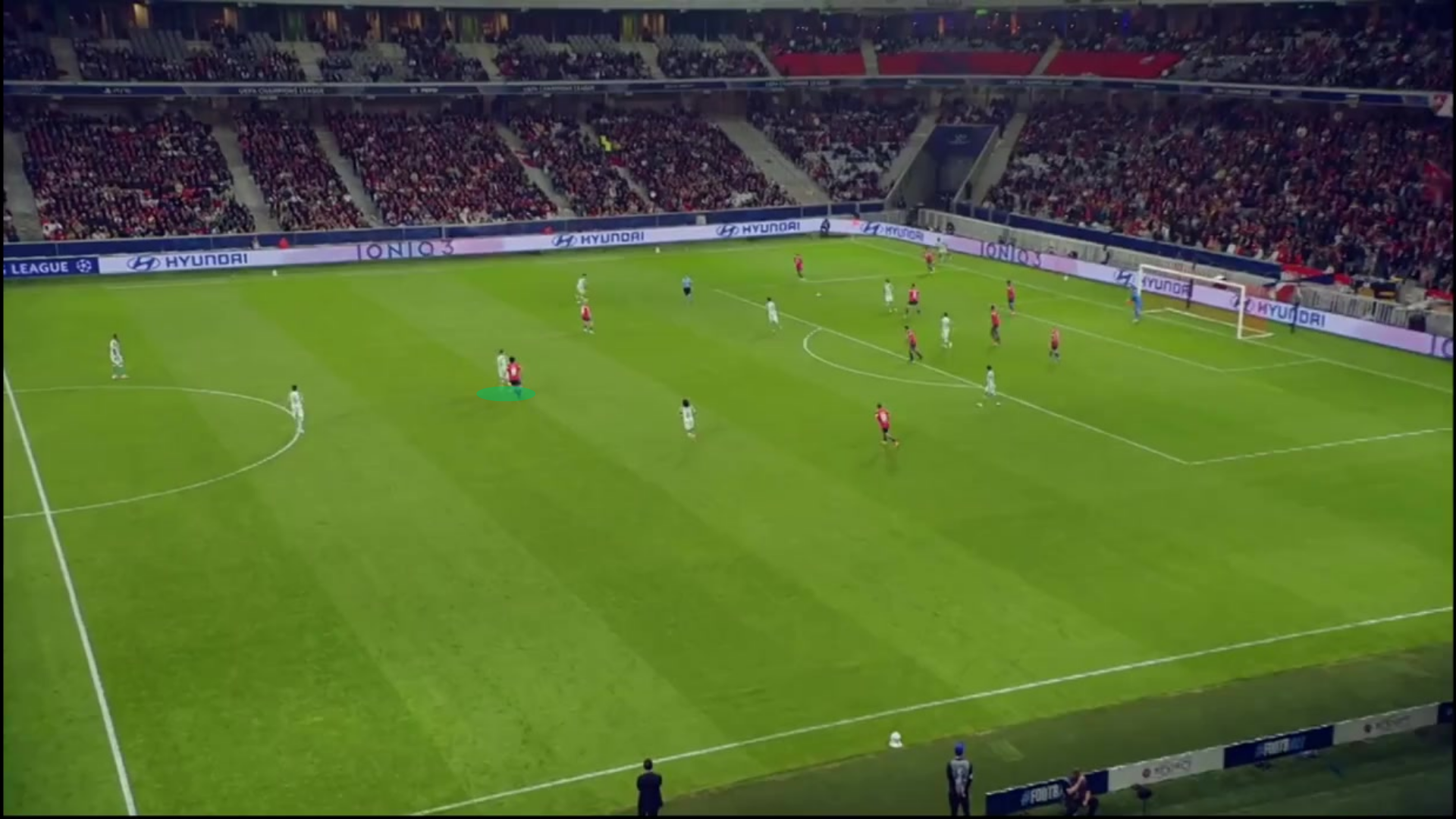
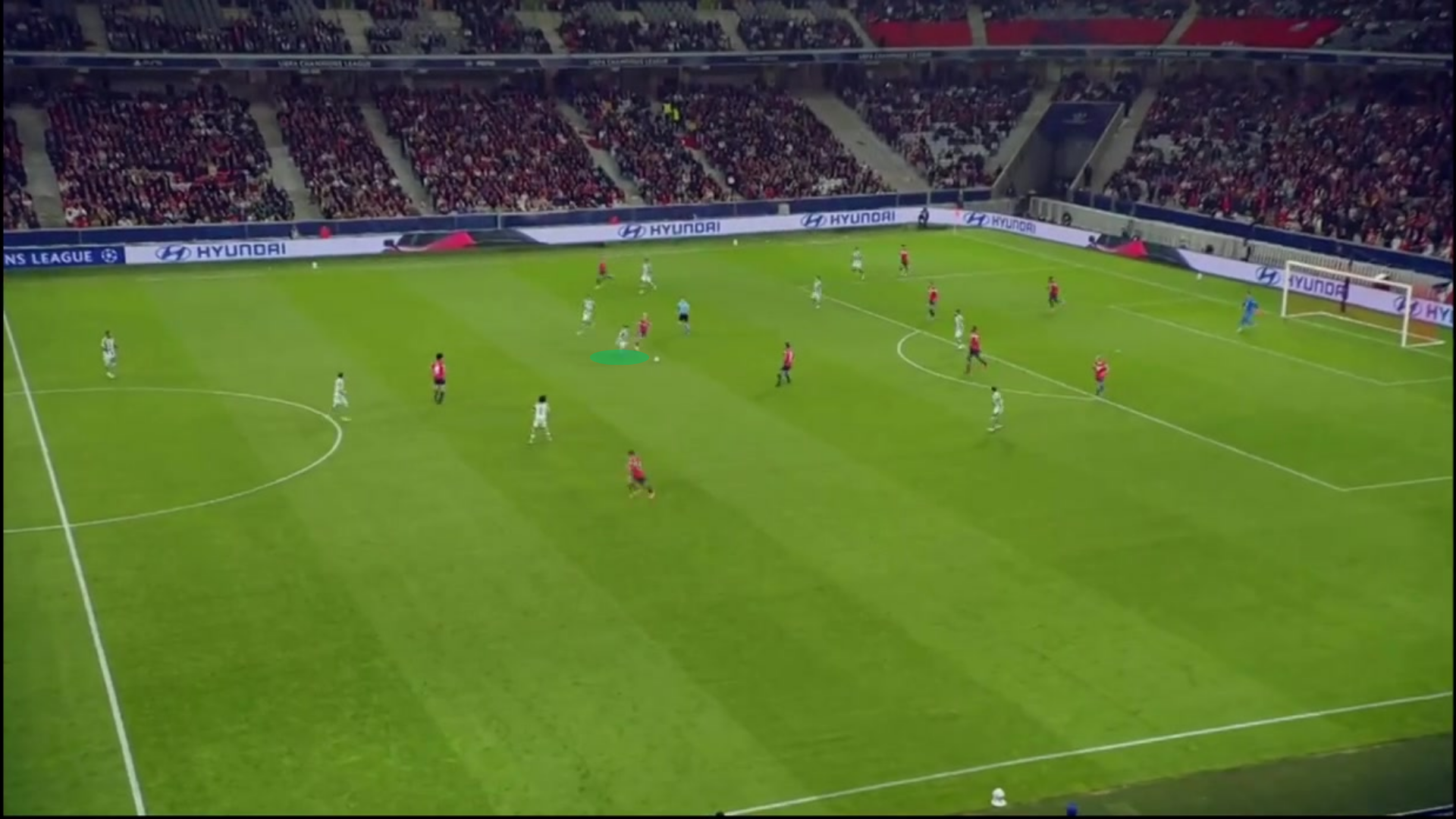
One of the most delicate moments for Real Betis occurs immediately after losing possession in the opposition half.
With the defender exposed and the central midfielders advanced, Bernal demonstrates a maturity beyond his years in managing time and distance:
- Surgical timing in stepping up: Instead of automatically dropping deep or stepping up prematurely, the Uruguayan instantly evaluates the opponent’s body shape upon receiving.
If the adversary receives with their back turned or with a poor directional touch, Bernal triggers proactive forward pressure, seeking to anticipate before the receiver can turn and direct the attack. - Use of body and clean tackling: True to the tradition of the charrúa holding midfielder, he displays remarkable physical strength in contact.
However, he stands out for his ability to regain possession cleanly, putting his foot in aggressively while timing the point of impact to avoid unnecessary fouls that would allow the opponent to breathe. - Deterrent effect: Even when he does not achieve a direct interception, his ability to close down the opposition receiver forces the counterattack to slow down, granting precious seconds for the Betis block to recover and restructure its rest defence.
Pitch Coverage & Managing Width
Bernal’s physical work rate is not a mere exercise in chaotic enthusiasm, but an intelligent management of spaces across the pitch:
The Uruguayan excels at chaining continuous lateral movements without losing biomechanical posture.
Aware that Betis suffers when the opponent directs play out wide, he acts as a sweeper who covers the wide channels whenever the full-backs are caught out of position.
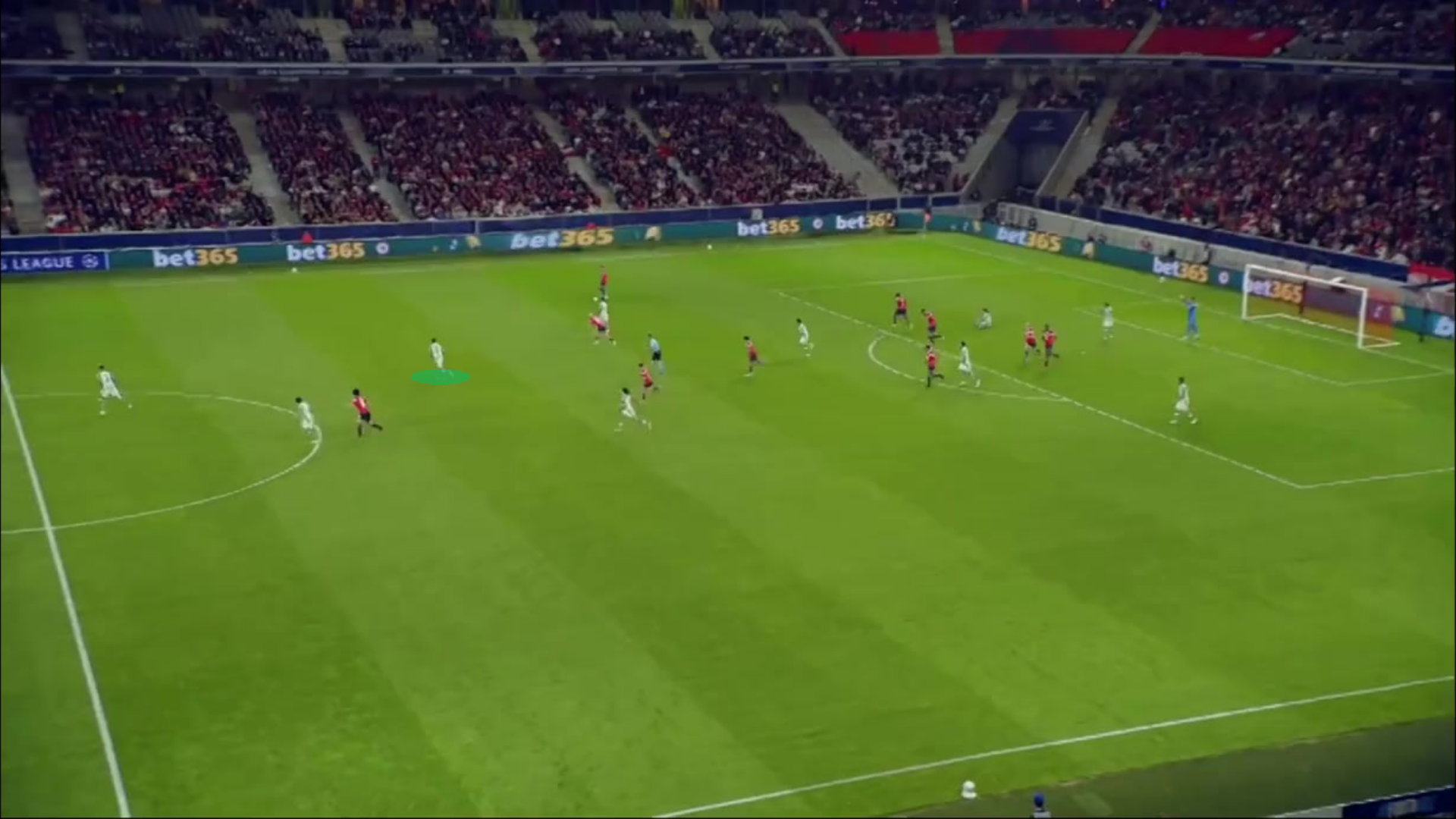
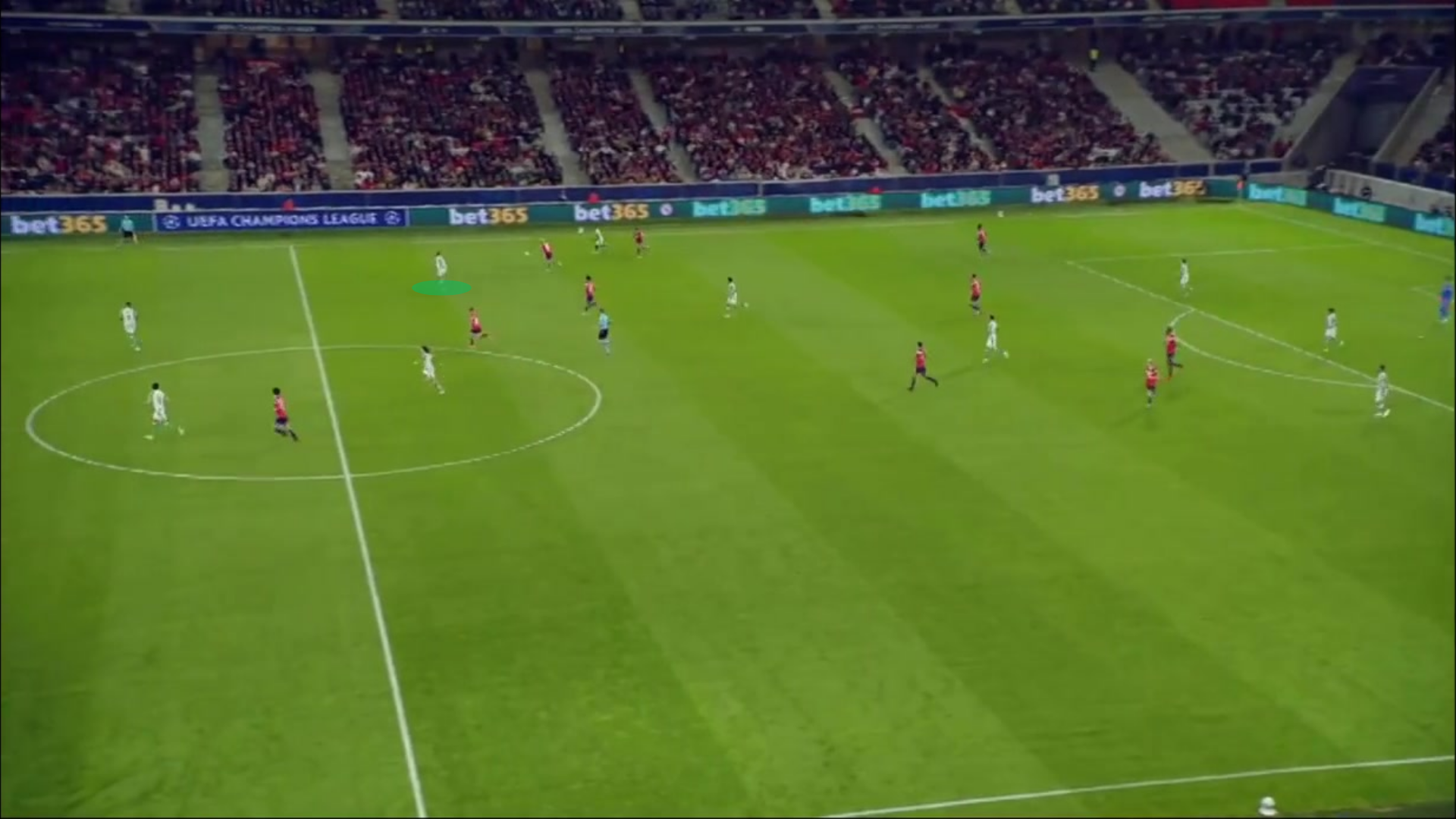
Bernal understands when to leave the central lane to press on the flank and when to prioritise clogging the central funnel.
His positioning deters deep diagonal passes, forcing the opponent into peripheral and predictable circulation.
He possesses an innate radar for identifying where structural gaps emerge.
If a centre-back steps out to challenge out of position, Bernal automatically drops into the backline to fill the vacancy, preventing the defensive line from becoming disorganised.
Protecting The Penalty Arc & Low-Block Density
When the match demands that Betis retreat into a low block, the innate traits of the Uruguayan footballer emerge strongly, combining fight with tactical discipline.
In the vicinity of his own box, space management changes in nature: it is no longer about covering ground, but about denying passing angles.