
Nicolás Azambuja Scout Report At Danubio 2025/2026: Uruguay’s Next Edinson Cavani? – Player Analysis

In a league like Liga AUF Uruguaya, which has been characterised by the export of defenders and midfielders in recent times, the emergence of a youth centre-forward has caused growing expectation.
Nicolás Azambuja, who recently came of age, has caused a sensation in this Torneo Apertura as the leader of Danubio’s attack.
After debuting at the age of 16 at the end of the 2024 season, gaining minutes last season, and starting as the main striker for the Uruguayan National Team in the South American U17 Championship, he seems to have found his full ascension into the first team this season.
He has played every match of this Torneo Apertura so far, with 12 appearances and 10 starts, establishing himself as one of the key players for the Franja side.
The fact that he has only scored one goal so far makes his contribution both with and without the ball even more valuable, featuring, as we will see, a precious repetition of off-the-ball efforts and defensive contribution, alongside an interesting and still-to-be-discovered link-up play outside the box, where he has reached a notable three assists.
Hailed as the spiritual successor to Edinson Cavani due to his similar collective-focused style of play, physical resemblance, and shared club of origin, Azambuja is already being closely monitored by several European clubs, including Red Bull Salzburg.
In this Nicolás Azambuja player analysis and scout report, we will attempt to break down aspects that have already made him stand out to scouts in Europe and excited Uruguayan fans.
Nicolás Azambuja Movement In Possession
Despite the preconceptions that often surround young players in physical and competitive leagues, Nicolás Azambuja has emerged as a tangible reality in the management of individual duels.
His maturity is measured not only by the effectiveness of the contact but by the intelligence with which he interprets his role within an ecosystem that demands constant tactical resilience.
In a collective game model characterised by transition periods, in which the team usually drops deep before bursting forward, the striker is often forced to manage the ball under numerical and spatial inferiority.
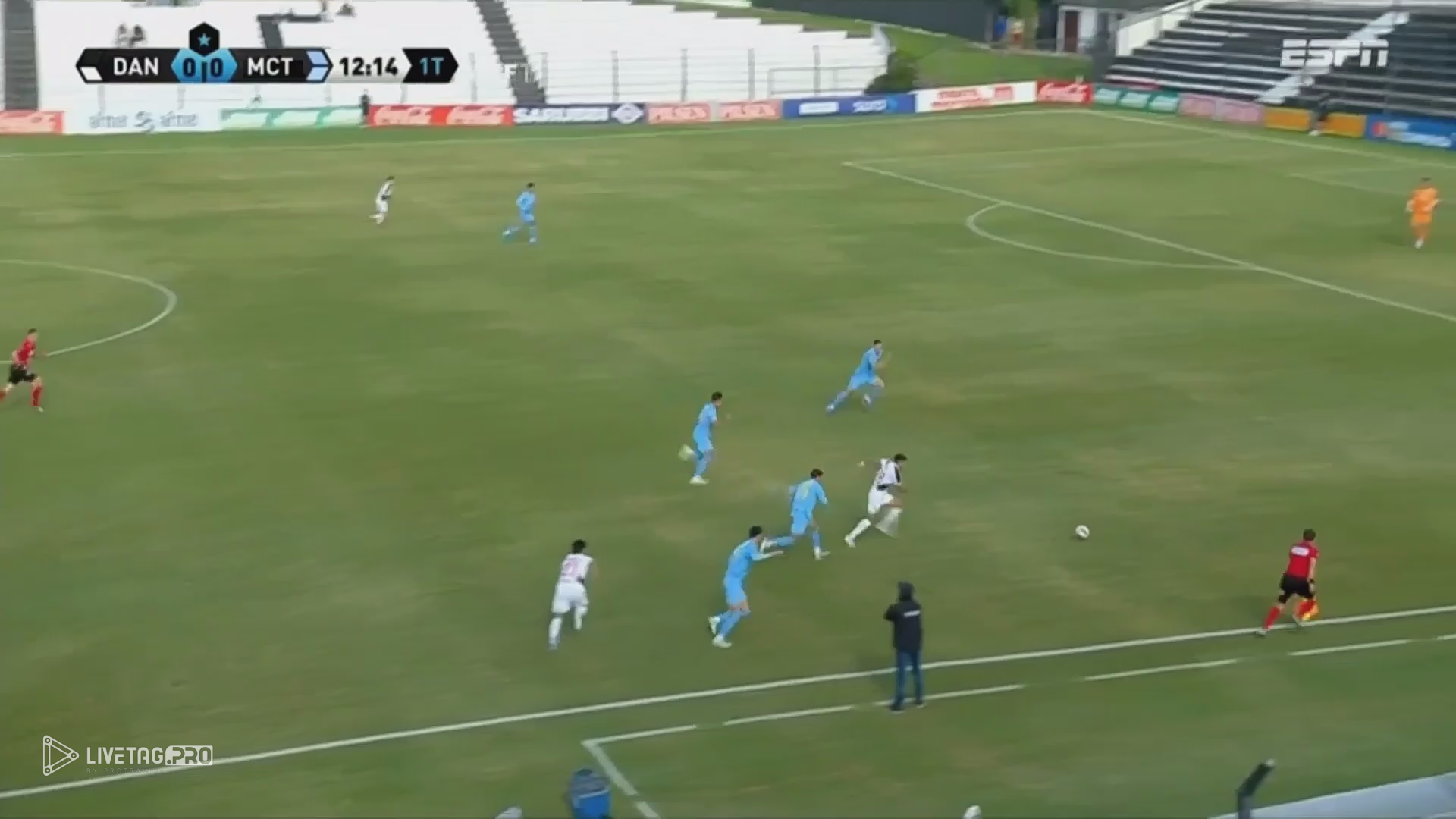
Here, Azambuja acts as a 'time generator'.
His primary purpose is not just individual progression, but allowing the low block to breathe and gain ground.
Technically, his notable management of contact from the defender on his upper body stands out.
Azambuja possesses the sensitivity to identify where the load is coming from and uses his arms as a tool to separate himself from his marker.
This ability is complemented by a low centre of gravity and firm support on his lower body, which gives him a stability uncommon for his age during the initial contact.
This base allows him to withstand the load and, through efficient pivoting, turn on one of his two profiles to redistribute play to the flanks or lay the ball off to a teammate, deactivating the centre-back’s immediate pressure.
However, his game is not exclusively about physical clashes.
Azambuja understands that the best duel is the one avoided through positioning.
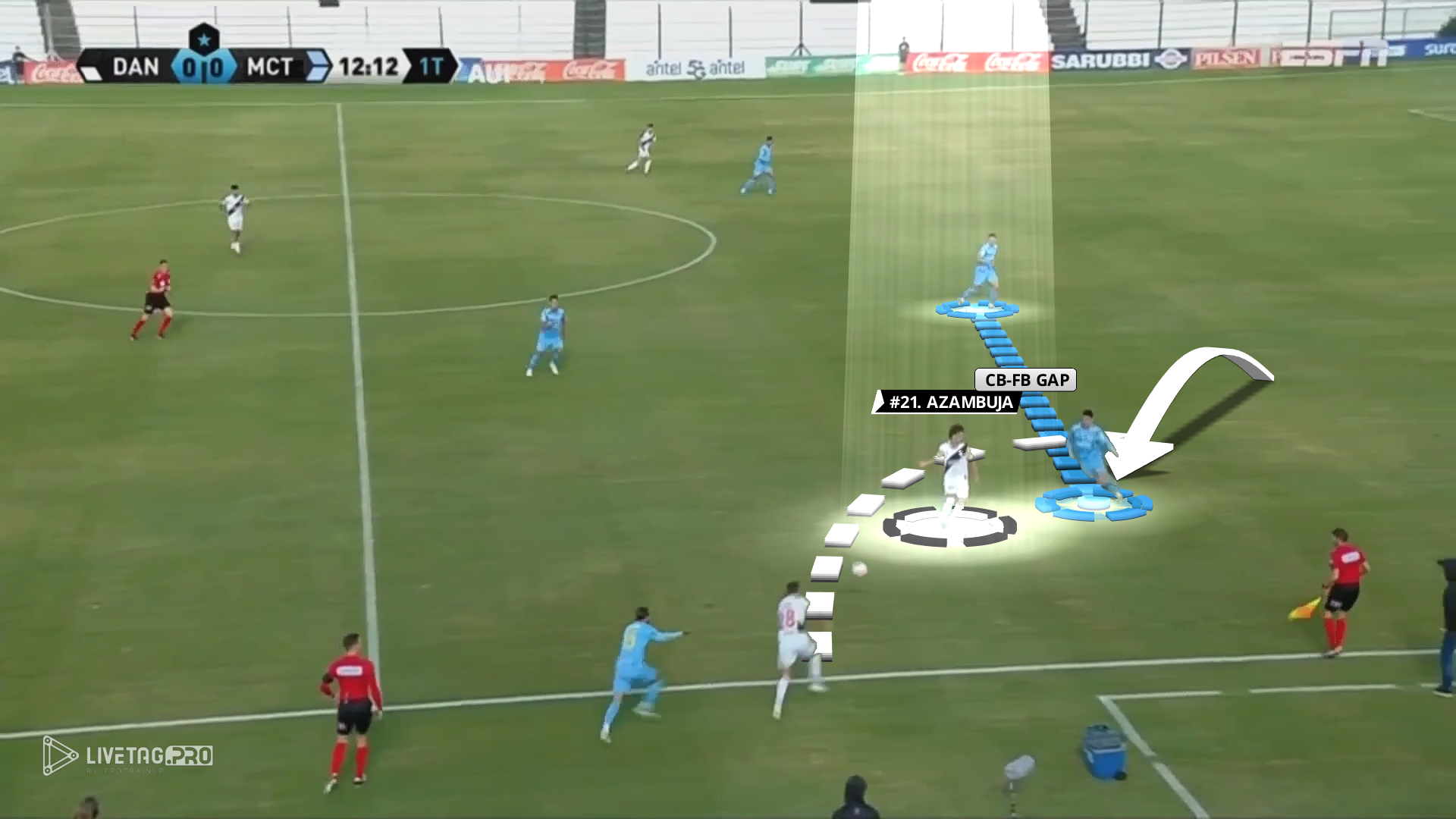
He usually manages a high-level timing of prior separation: just before the ball carrier executes the pass, the youngster detects the exact moment to drop between the lines.
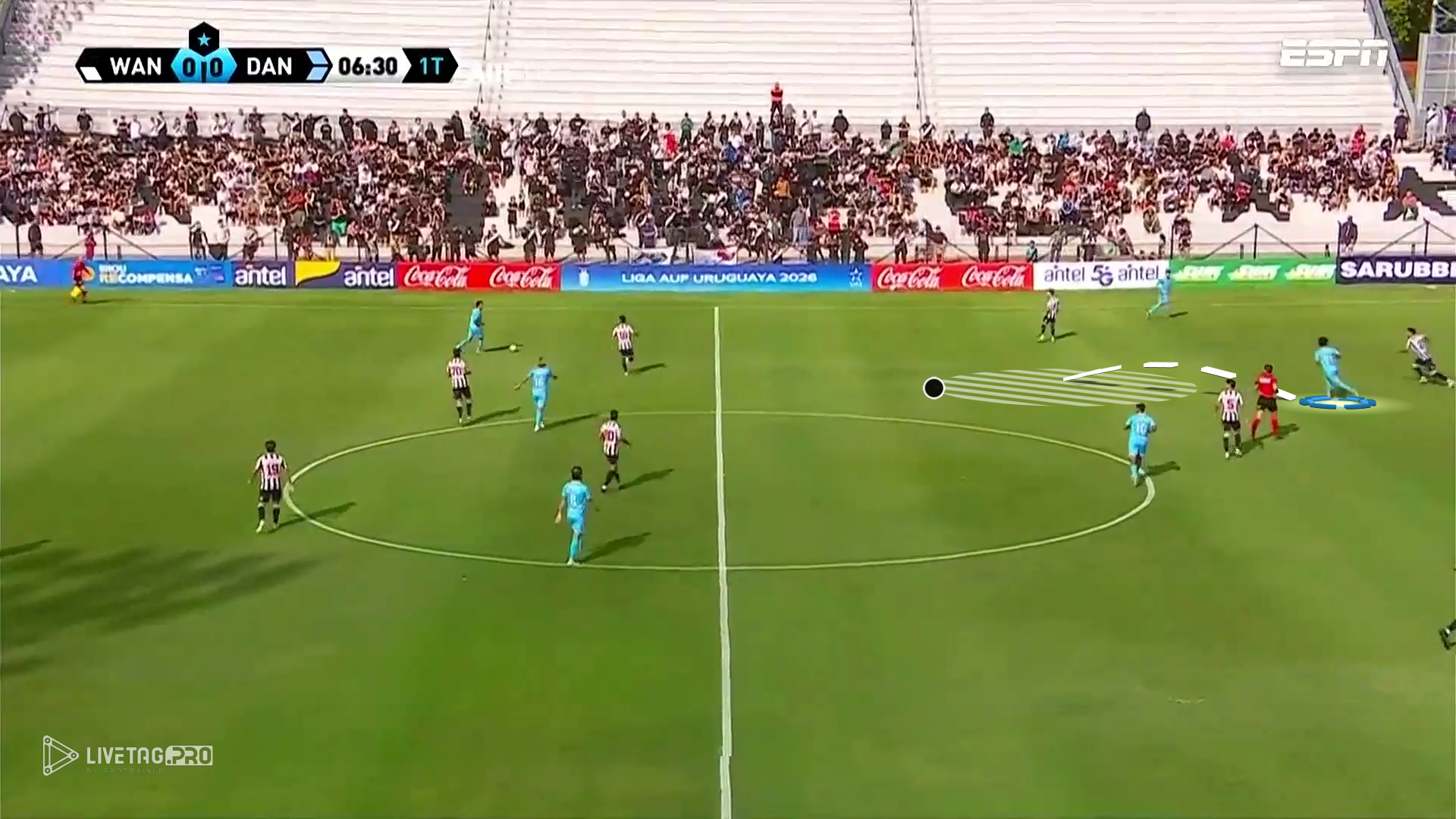
This 'accordion' movement pulls the centre-backs out of their comfort zone and allows them to come into contact with the ball with an extra margin of time.
By receiving unmarked, he favours a cleaner redistribution, connecting with midfielders or wingers attacking the space generated behind him.
Under these scenarios, conditioned by his team's verticality, it is no anomaly that he is one of the three forwards facing the most offensive duels in the league, averaging up to 13 individual duels per match.
Nevertheless, limiting his contribution to back-to-goal work would be an incomplete analysis.
In addition to his contributions in distribution and hold-up play, the physical wear he takes on defenders is noteworthy.
Azambuja is not a static striker; he exerts a remarkable repetition of efforts in terms of penetrative runs and movements along the last line that stretch the
opposition block.
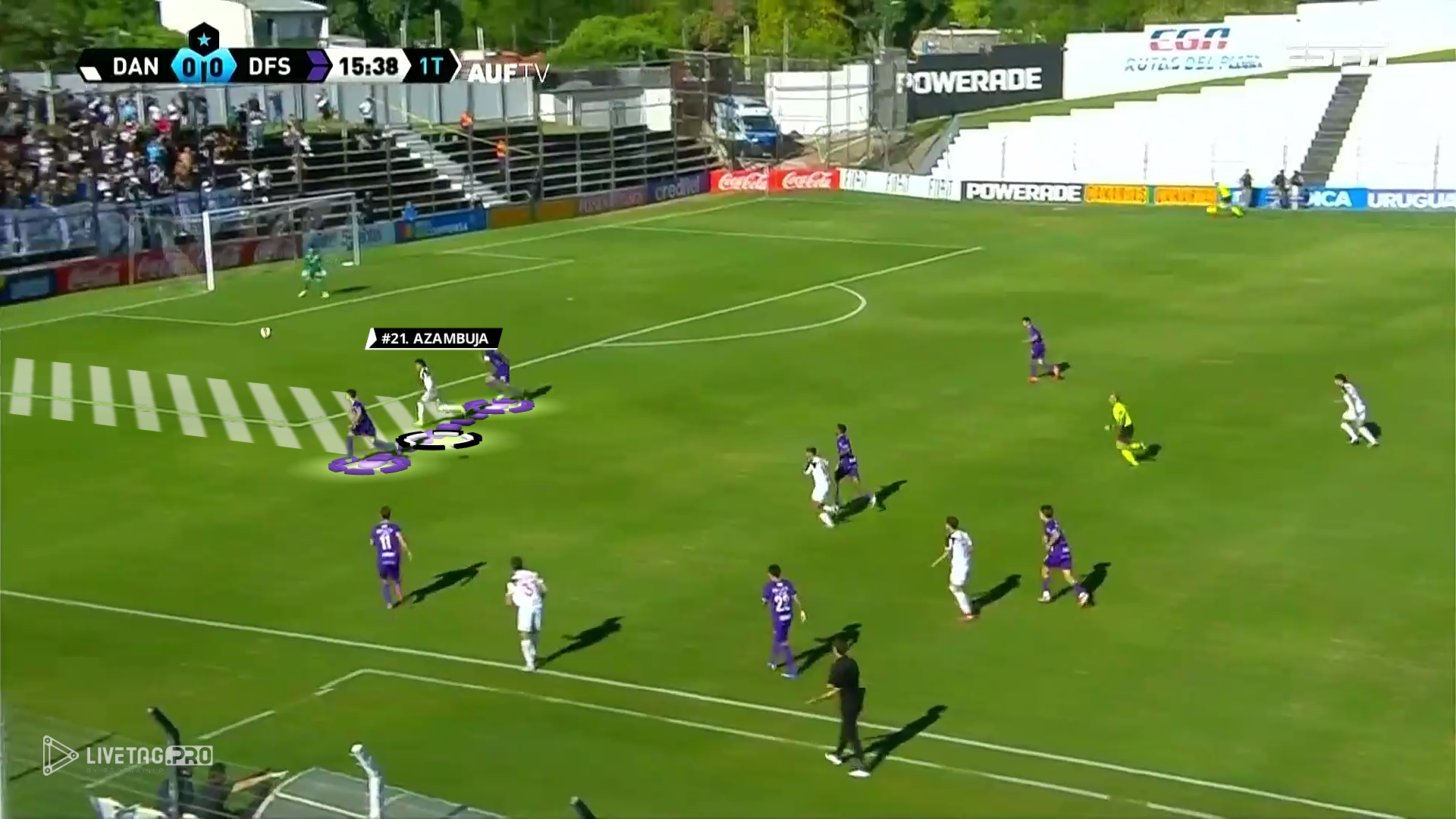
This repetition of efforts frequently leads him to drift into wide areas.
These lateral movements serve a dual tactical function:
- Dragging markers: By moving to the outer channel, he forces a centre-back to abandon the central corridor, creating cracks in the defensive structure that second-line players can exploit.
- Comfortable receiving environments: In situations where the midfield is congested, Azambuja seeks the "weak side" or the periphery to come into contact with the ball, without the suffocating harassment of the finishing zone.
Nicolás Azambuja Out Of Possession Work
If his impact in the offensive phase stems from resilience in duels and constant mobility, his labour in the defensive phase is a reflection of that same physical commitment, but through the lens of tactical discipline.
Azambuja does not just accompany the press; he leads it, serving as the activator or trigger that determines the block's behaviour after a loss or during opponents' restarts.
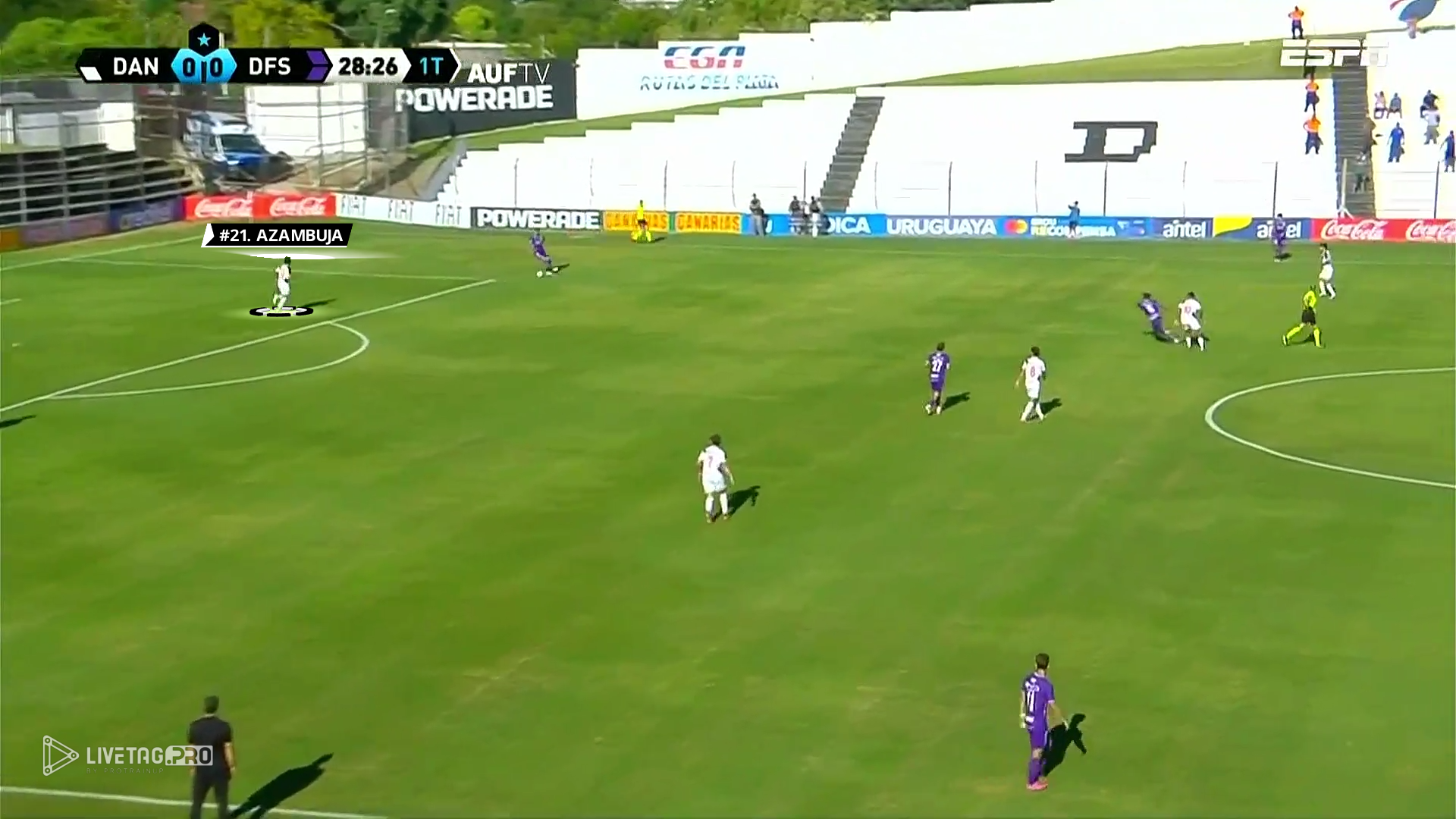
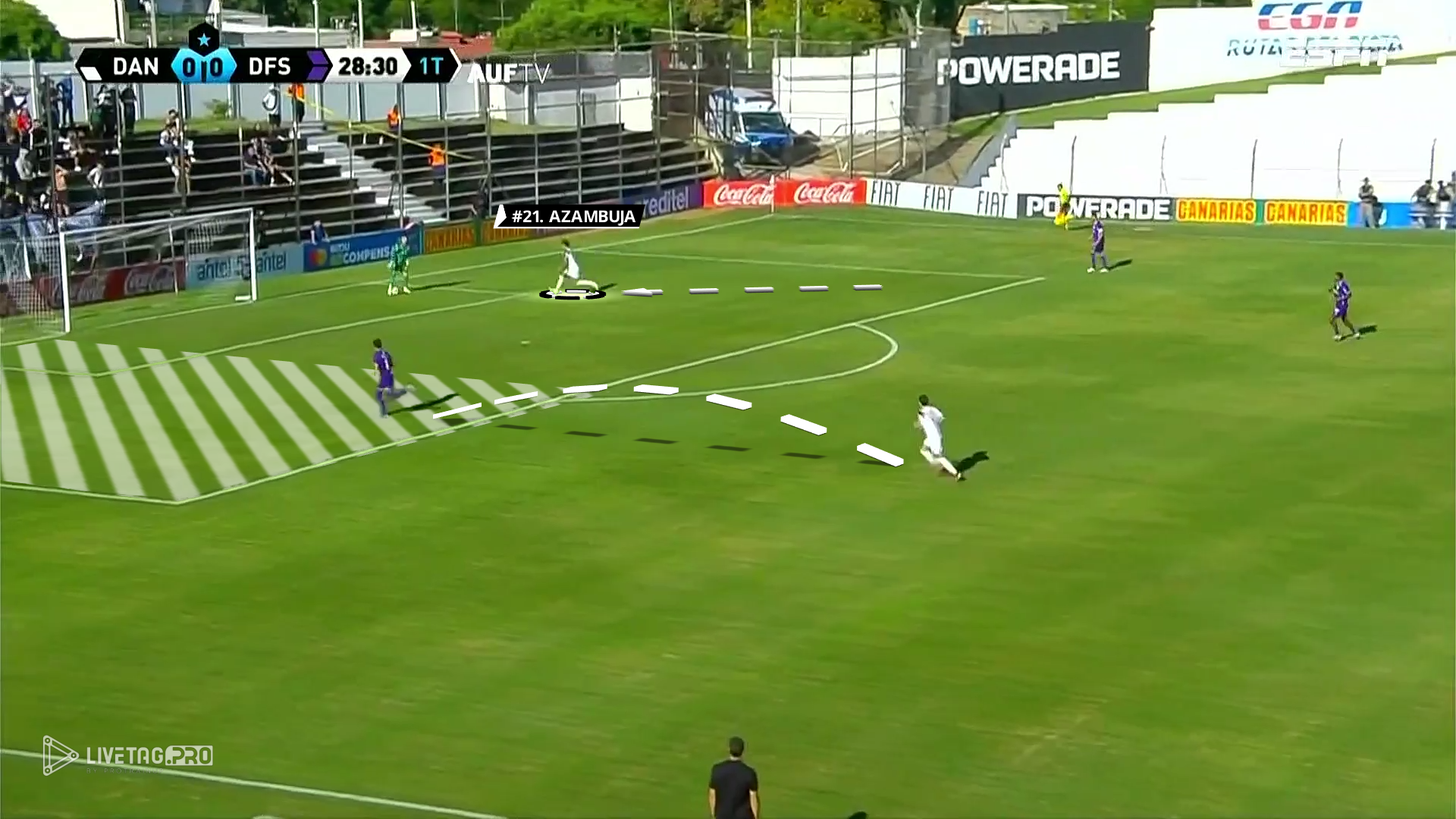
The youngster stands out for his ability to trace curved pressing trajectories.
His movement usually originates from the outside in, closing the passing lane to the full-back to orient play toward the central channel or, preferably, toward the goalkeeper.
By engaging in this 'oriented harassment', he forces the possessor into rushed decisions, prompting a reset of play or, in most cases, a direct clearance, with his teammates on the defensive line starting from a positional advantage.
Beyond the initial effort, Azambuja shows a predisposition for defensive readjustment.