
How To Coach Deep Runs From Midfield To Break Defensive Lines And Create Goalscoring Chances - Tactical Theory
This Tactical Theory examines how Napoli and Brazil’s women’s team used runs from deep to disrupt defensive lines, create chances and maintain defensive security, before presenting three training practices for coaching the movement.

The Role Of Deep Runs
Much has been written about the benefits of making runs in behind the last line of defence, with most of this directed at attackers or players on the last line of defence.
This is a perpetual action for these players, and regardless of whether or not they always receive the ball, they should continue making these actions.
When it comes to runs from players in deeper positions of the field, the same cannot necessarily be said, as these players play significant roles regarding the defensive stability of the side in counterattacking situations.
Nevertheless, when executed at the right times, runs from players in deeper areas of the pitch have many benefits, such as these players remaining unmarked because they are coming from deeper positions.
This tactical theory piece will look to provide an analysis of the tactics teams, such as previous Napoli sides, as well as Brazil's former women's team, look to utilise runs from players and some of the general factors that the players making runs from deep consider before executing this action.
How teams incorporate deep runs in their unique game models will also be evident.
Therefore, the drills and training methods mentioned in this piece should not be used in a session without considering the profiles of certain squad members and the team's style of play.
As a result, readers should feel free to modify any of the proposed practices to suit the needs of their players and teams.
What Makes Deep Runs So Effective?
When designing practices, one of the first questions that should be asked is what makes particular concepts in the game compelling.
The best way to answer this question is through experience coaching these concepts and analysing teams that could execute these actions consistently (it is also wise to analyse groups that do not).
Effectiveness in this regard may be creating shooting opportunities or crossing opportunities directly for the player making the run or the other players around them.
In the case of making deep runs in attack, as mentioned earlier, one of the main factors that should be considered is how players can make these runs without leaving the side susceptible to counterattacks.
Because of this, players making these runs need to consider factors such as when they should make their runs.
Within this are a host of other sub-factors that play a part, such as which players should look to make runs, which area of the pitch the ball should be in when making their runs, and how they time their runs.
An exciting team to have watched in this regard was Maurizio Sarri's Napoli, especially throughout the 2016/17 Serie A season.
Sarri's Napoli looked to rotate and move to create vertical passing opportunities and provide support options for players receiving vertical passes.
As a result, the side regularly made use of the third-man principle in possession but would also, at times, incorporate runs from deeper positions within this.
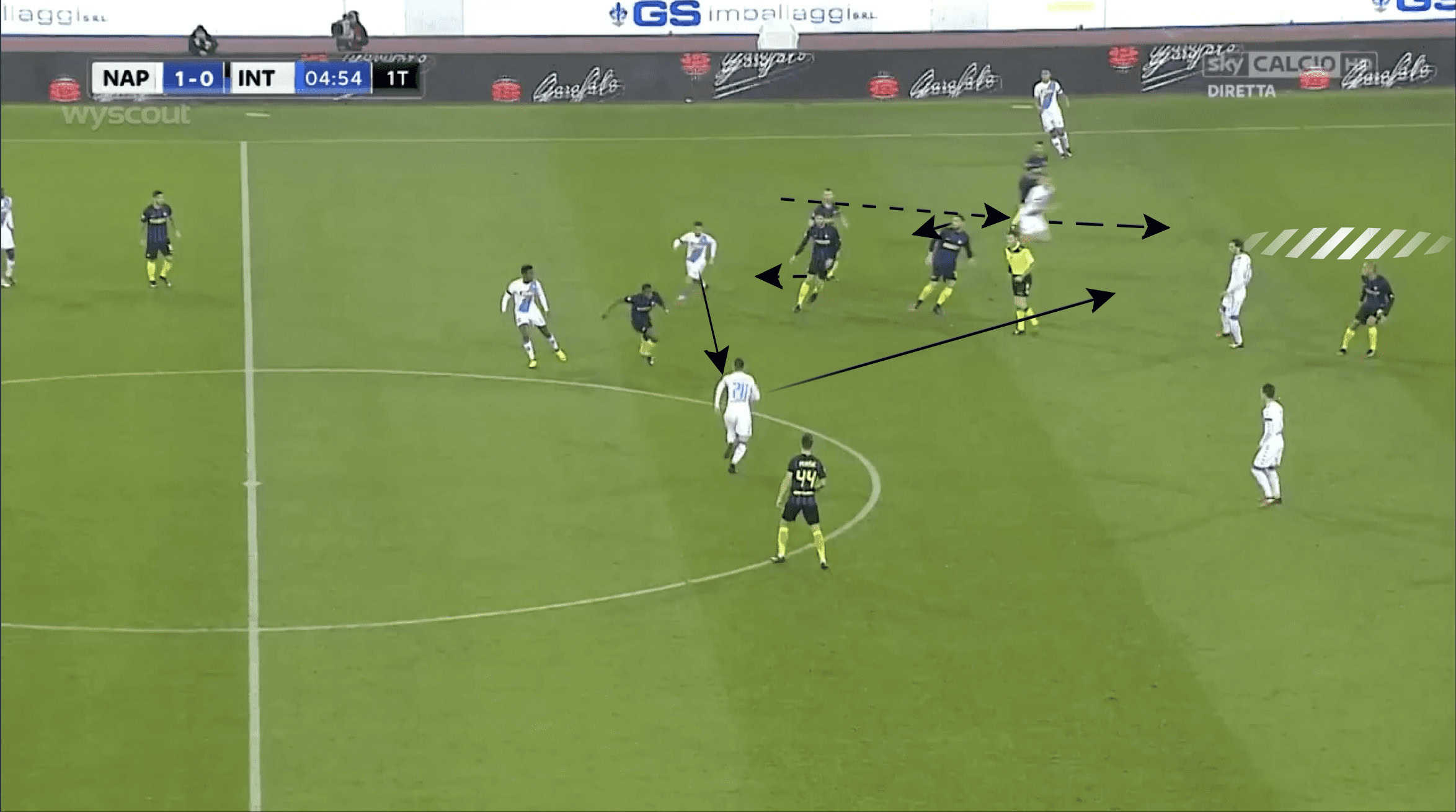
The image below shows an example of one of the positional rotations that would occur regularly in the side.
In this case, the image shows former Napoli star, Marek Hamšík, deliberately drifting towards the wide area in order to drag the opposition midfielder out of position to create a passing lane that would give Kalidou Koulibaly access to Lorenzo Insigne, who moves from the wide areas into a deeper and central area.
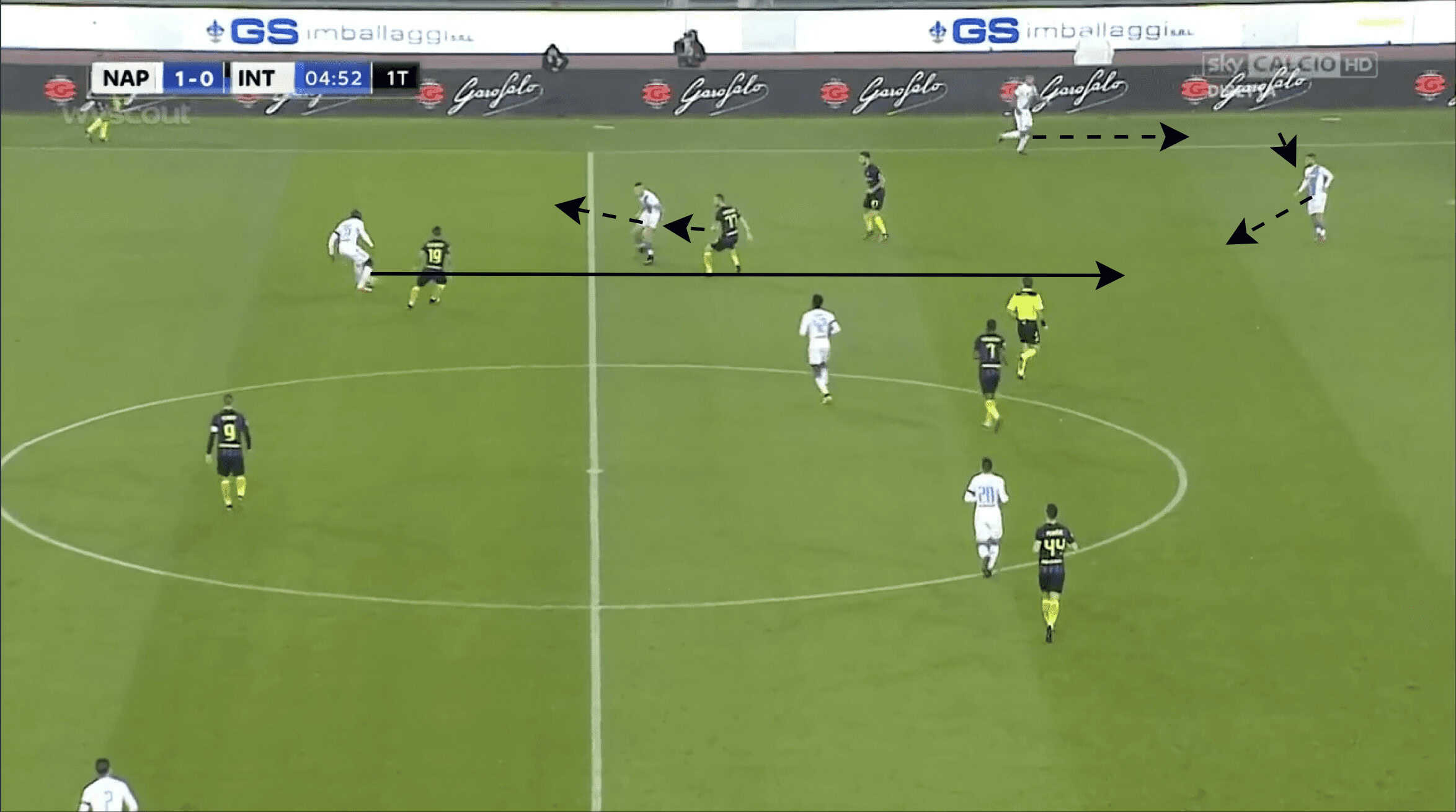
Insigne then receives the ball and plays it to Piotr Zieliński.
Before Insigne played the pass, Hamšík would begin to advance forward, initially to support Insigne.
However, after Insigne played the pass to Zieliński, this pass into the central area triggered Hamšík to continue his run and attack the last line.
Many factors are at play for Hamšík's decision-making in this particular scenario.
Firstly, as stated previously, Napoli looked to play vertical passes in central areas of the pitch, with their wingers drifting inwards and dropping deeper in order to provide these vertical passing options.
Due to this, the wingers would often receive the ball between the midfield and the defensive line, which led to defenders stepping out of the back line in order to cover Napoli's wingers, thus reducing cover in the back line.
Passes further into the central areas would trigger Hamšík to run from deep, attacking the last line of defence.
As can be seen in the example below, with a pass further into the centre, the focus of the opposition defence is directed towards the recipient of the pass, allowing for Hamšík to exploit the blind side of the defenders and ghost into the space in the backline.
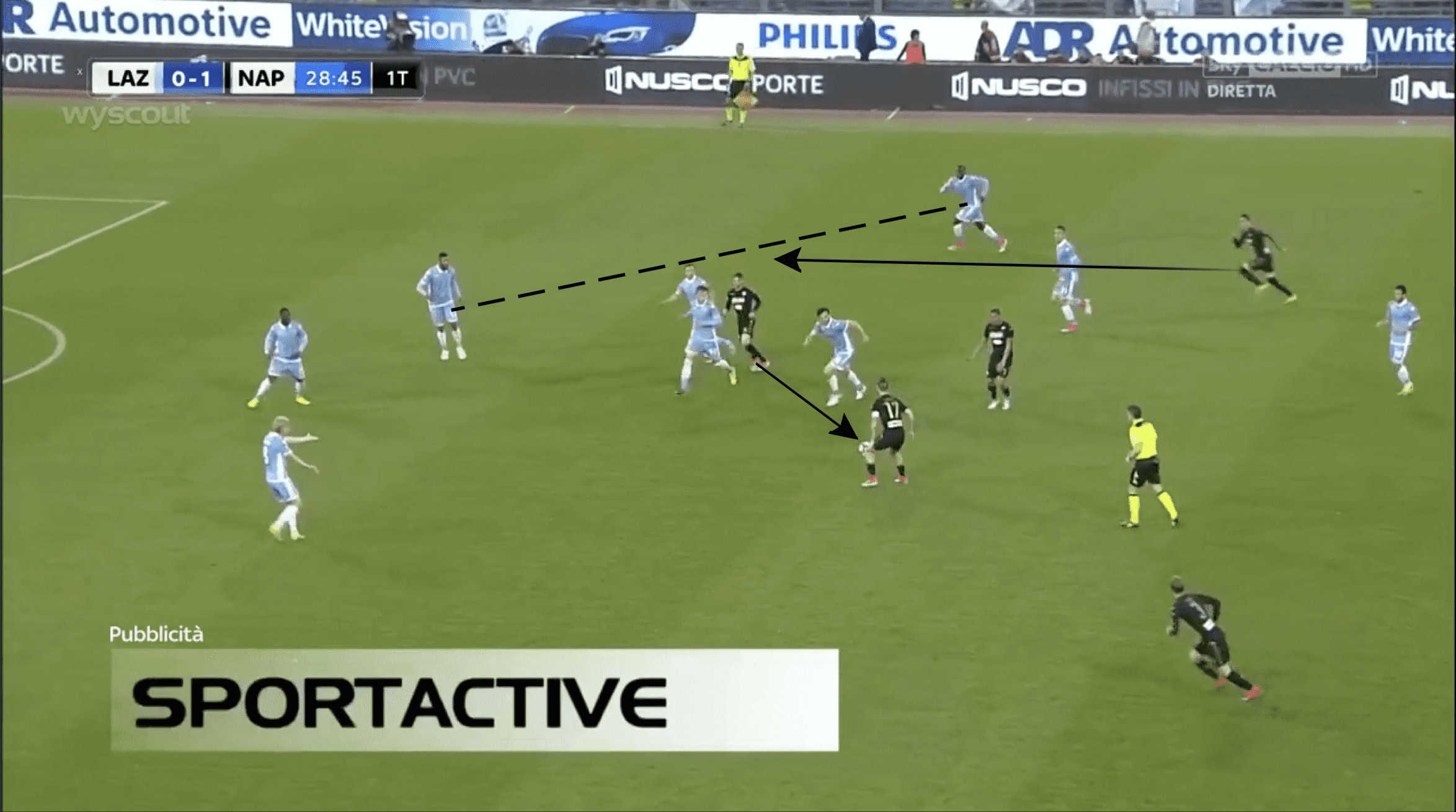
The example below shows another scenario of the previously discussed elements of Napoli's former game model, with two of the three central midfielders rotating into the attacking positions and the wingers moving into the midfield positions.
After Dries Mertens receives the ball, he then plays a pass further into the central area to Hamšík.
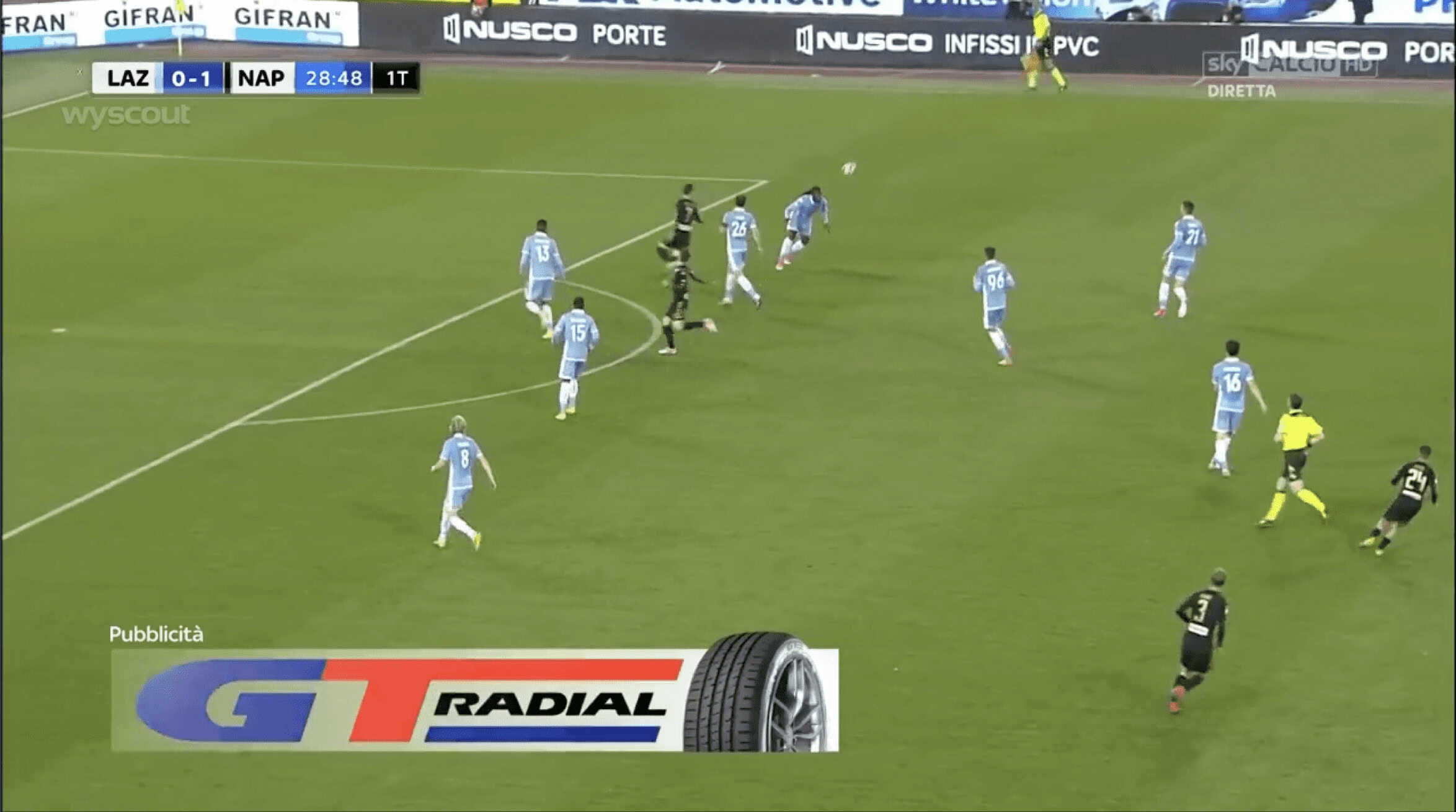
José Callejón then proceeds to make a run similar to the one in the last example, taking advantage of the reduced cover in the back line due to one of the centre-backs orienting their position to Mertens, as well as the defending team's focus being directed towards the ball.
However, unlike Hamšík's run in the previous example, Callejón starts his run late and, as a result, gives the opposition right wing-back enough time to react and recover.
This shows the significance of the timing of the run in order for it to yield the most returns.
The use of these runs not only creates shooting options for the players making these runs.
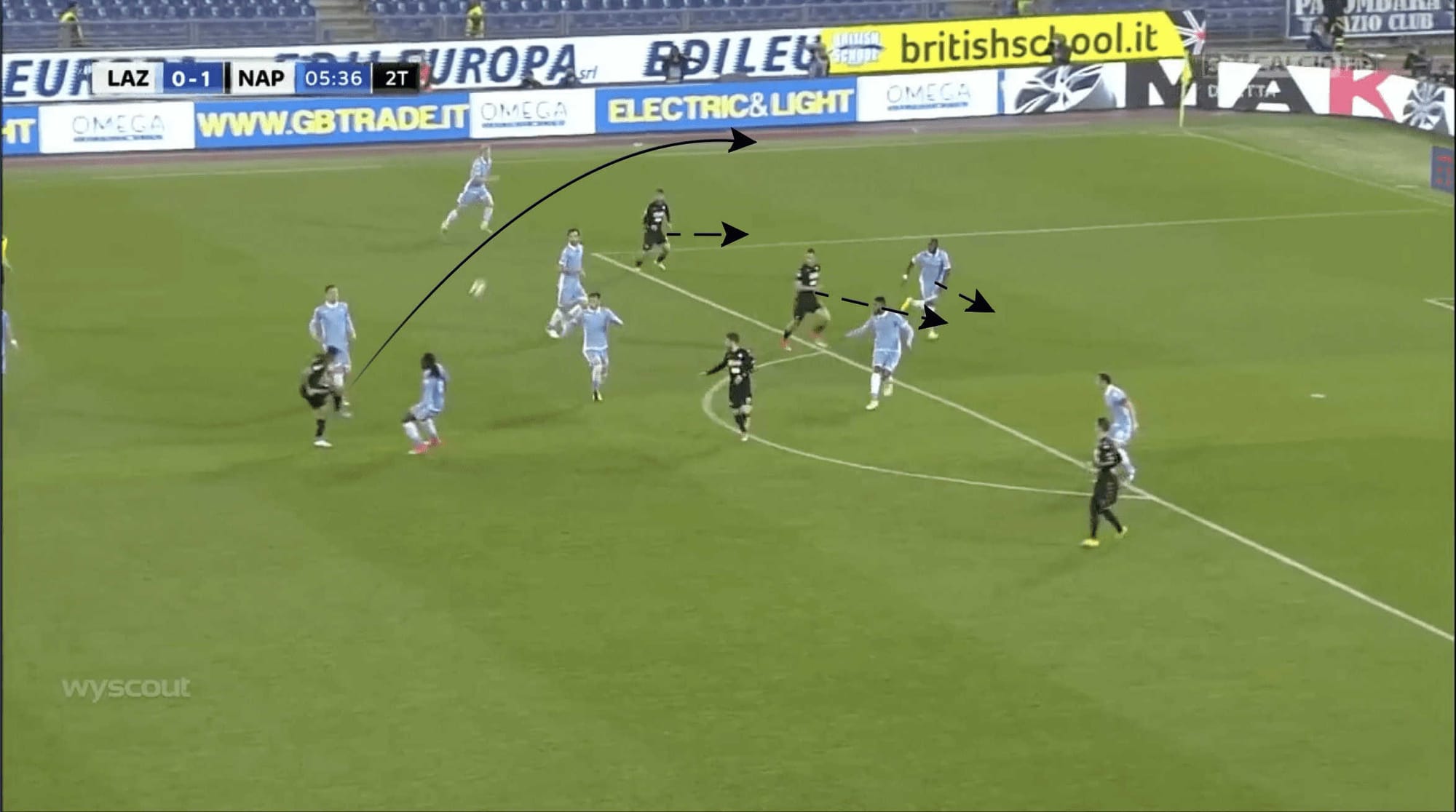
As stated previously, the image below provides an example of many of the triggers and movements, with Hamšík playing the ball into the central area before running to exploit the space in the backline.
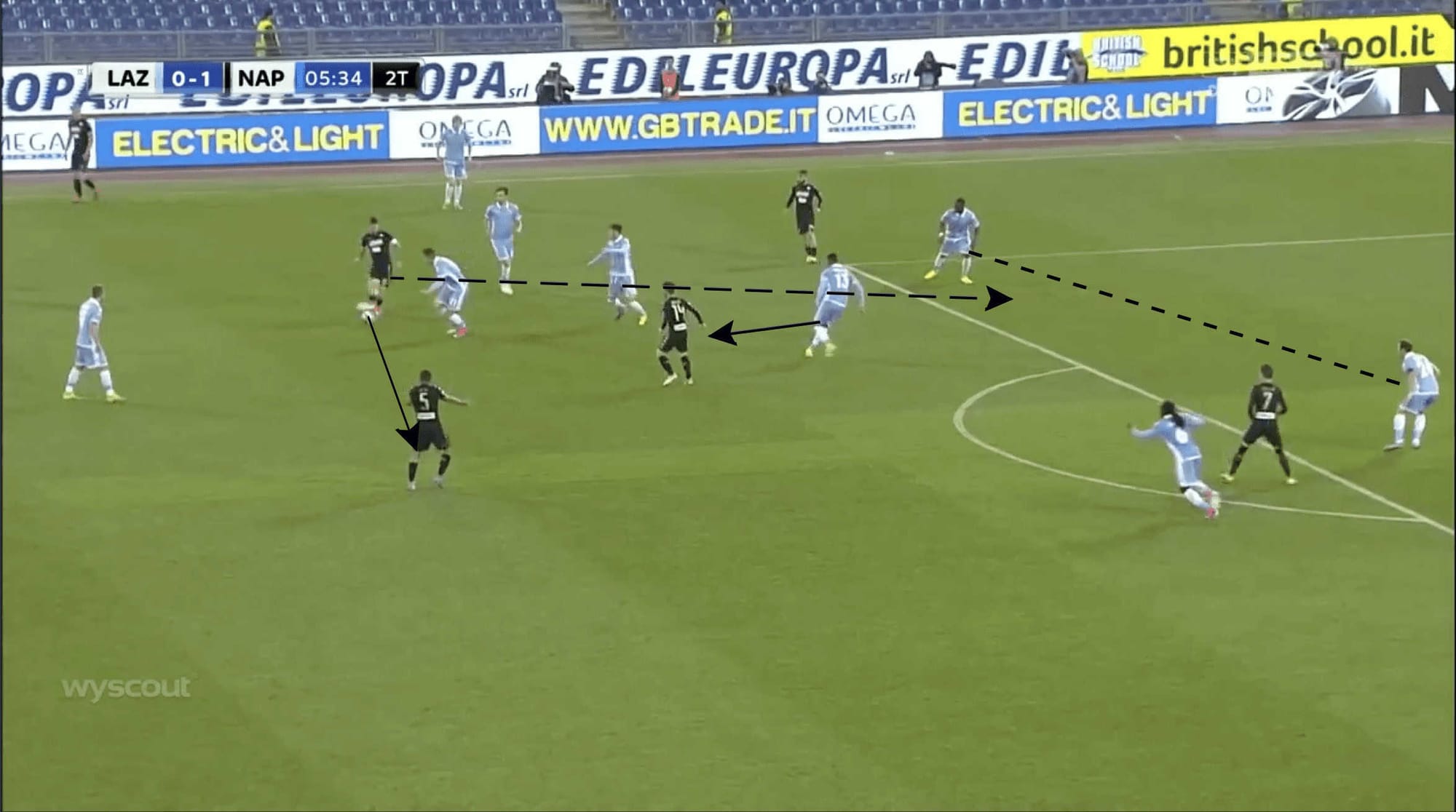
Due to his movement, he draws the attention of the opposition's right centre-back, who adjusts his position to cover the forward, creating space for Insigne to receive the ball and shoot.
It is important to note that only one player at a time looks to run from deep to attack the last line of opposition defence.
Due to this and the fact that Napoli's full-backs were rarely in very advanced attacking positions, the side could maintain a 4-2/ 3-2 structure to defend potential opposition counterattacks.
Brazil's women's team looked to utilise deep runs in a much different manner, with the side progressing the ball primarily through the wide areas.
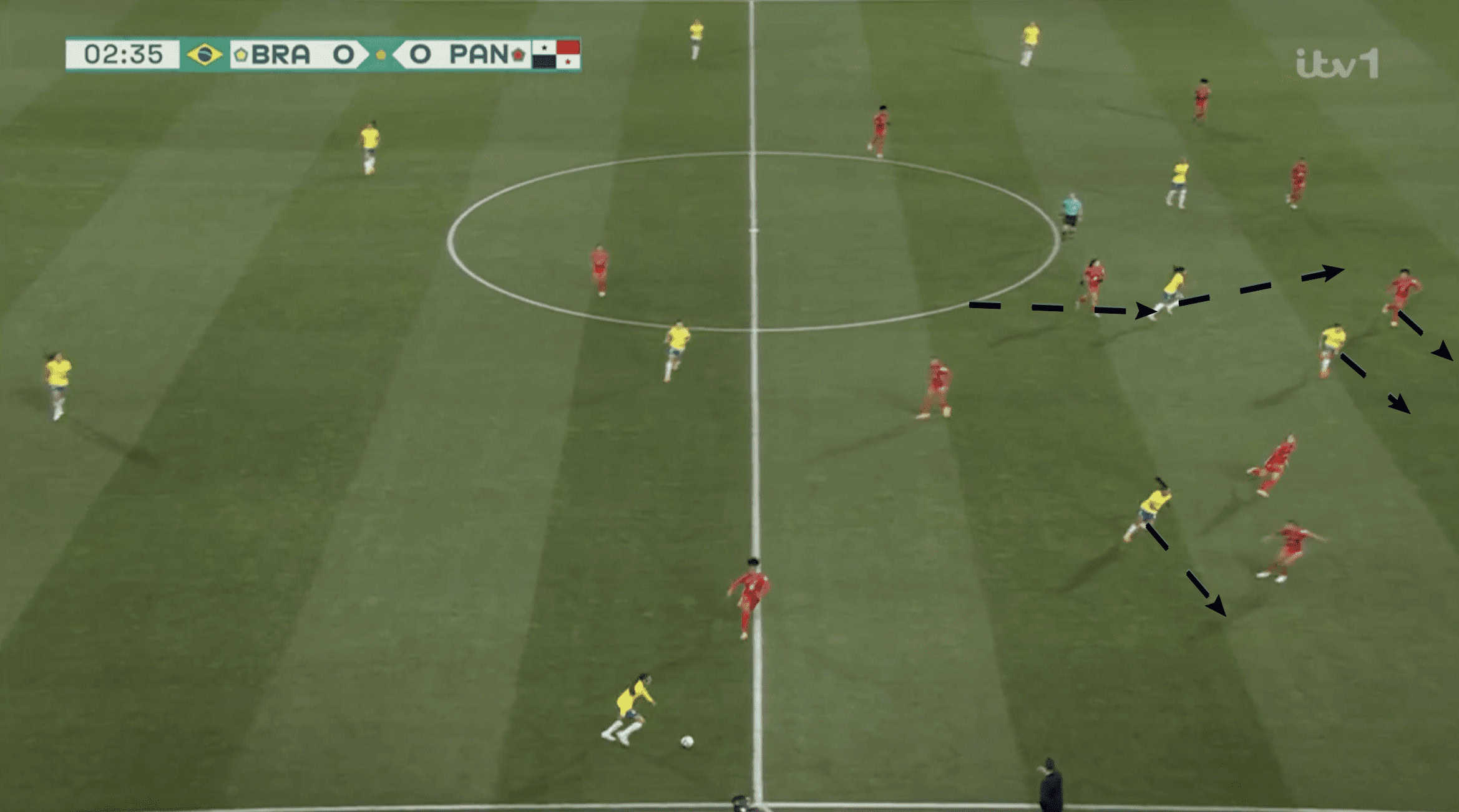
The image below shows an example from their game against Panama, where Kerolin Nicoli, one of the midfielders from that team, advances forward after the ball is played to the right-back Antônia Ronnycleide.
As can be seen, the movement of the striker Debinha towards the wide areas, as well as the positioning of the winger Ary Borges, results in the opposition defenders moving towards the wide areas in order to cover these players.
As a result, cover is reduced in the opposition's last line of defence, with Kerolin looking to exploit this.
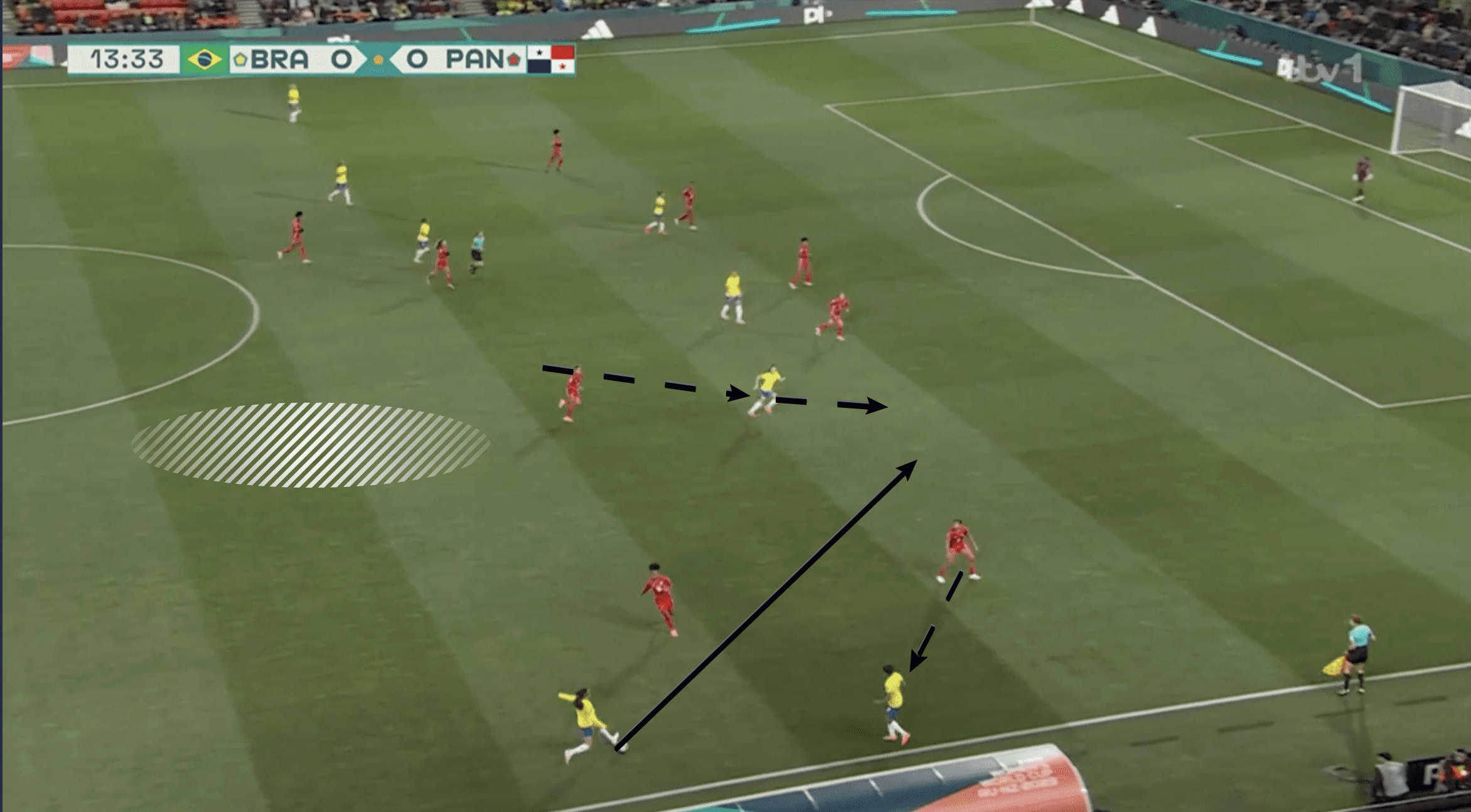
The example below shows a similar scenario to the previous one.
However, this time the other midfielder in the side, Luana Bertolucci, looks to make a run from deep, attacking the space in the last line.
However, in doing so, the space behind the midfielder is vacated, leading to the side being more vulnerable in transition.
However, it must be stated that Brazil did not look to play these midfielders, making runs from deep often.
This may be because this is an element of Brazil's game that they do not initially look to utilise, and may just be seen as providing them with an additional component of the attack.
However, in the case of Kerolin in the first example, the distance between her and Antônia makes the pass more difficult to play, with the pass from the right-back needing to be perfect to play her in.
With the risk attached to midfielders making attacking runs from deep unless there are acres of space for a player to attack, it would be wise to execute these runs when the distance between the passer and the runner is smaller.
Possible Training Practices
When training this concept, because this is a relatively small element of a larger system, it is essential to design drills that do not constrain other aspects of a side's attacking play but still encourage specific actions and behaviours.
Additionally, it is imperative to incorporate the defensive principles of a side in a session with TFA, covering this aspect in numerous analyses.
5V4 End-To-End Game
Size: 25x25m
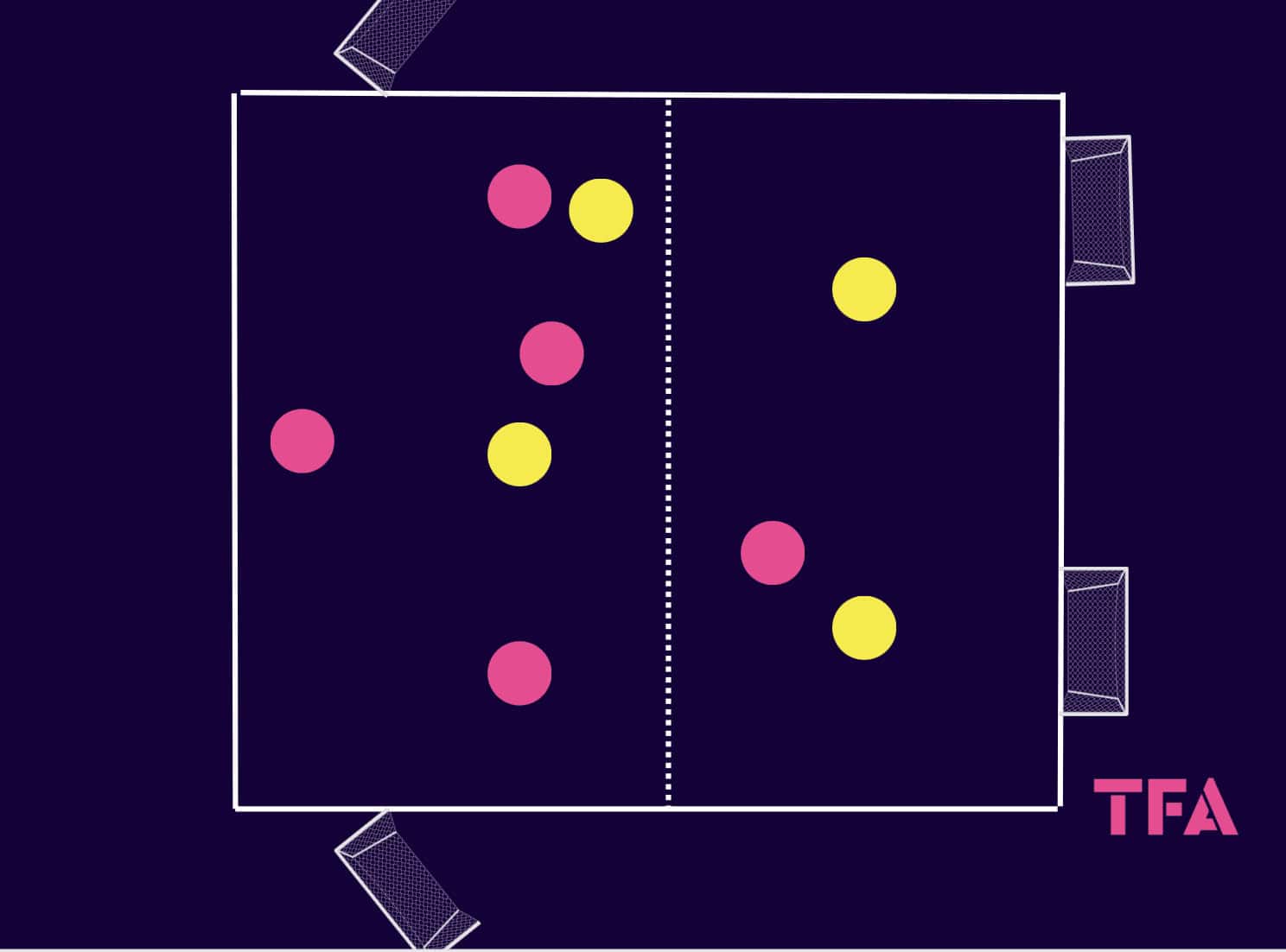
The rules of this game are relatively simple, with the team with the numerical advantage looking to score in the mini goals at the end of the "box".
If players make runs from behind the white line that divides the playing area and then go on to score or assist, the goal is worth two goals.
However, the team in purple cannot have all of their players in one half; this is to highlight the attackers' role in keeping the opposition's backline occupied.
If the yellow team wins the ball, they look to counterattack and score in the pitch's mini goals to the left and right.
The coaching points centre around making runs from deeper positions, with the purpose of the white line providing an incentive for players in deeper parts to make runs forward.
If there is no apparent gap in the defensive line to exploit, then the players in deeper positions should refrain from making runs forward, as it may leave the purple team vulnerable on the counterattack.
In addition to this, players should look to time their runs so that the player on the ball or receiving it is in a position to play a through pass.
Players need to take into account the timing and weight of their pass as well as whether to play it on the ground or loft it.
The most effective passes are ones that are close to matching the stride of the player.
7v7 3 Zone Game
Size: 40x40
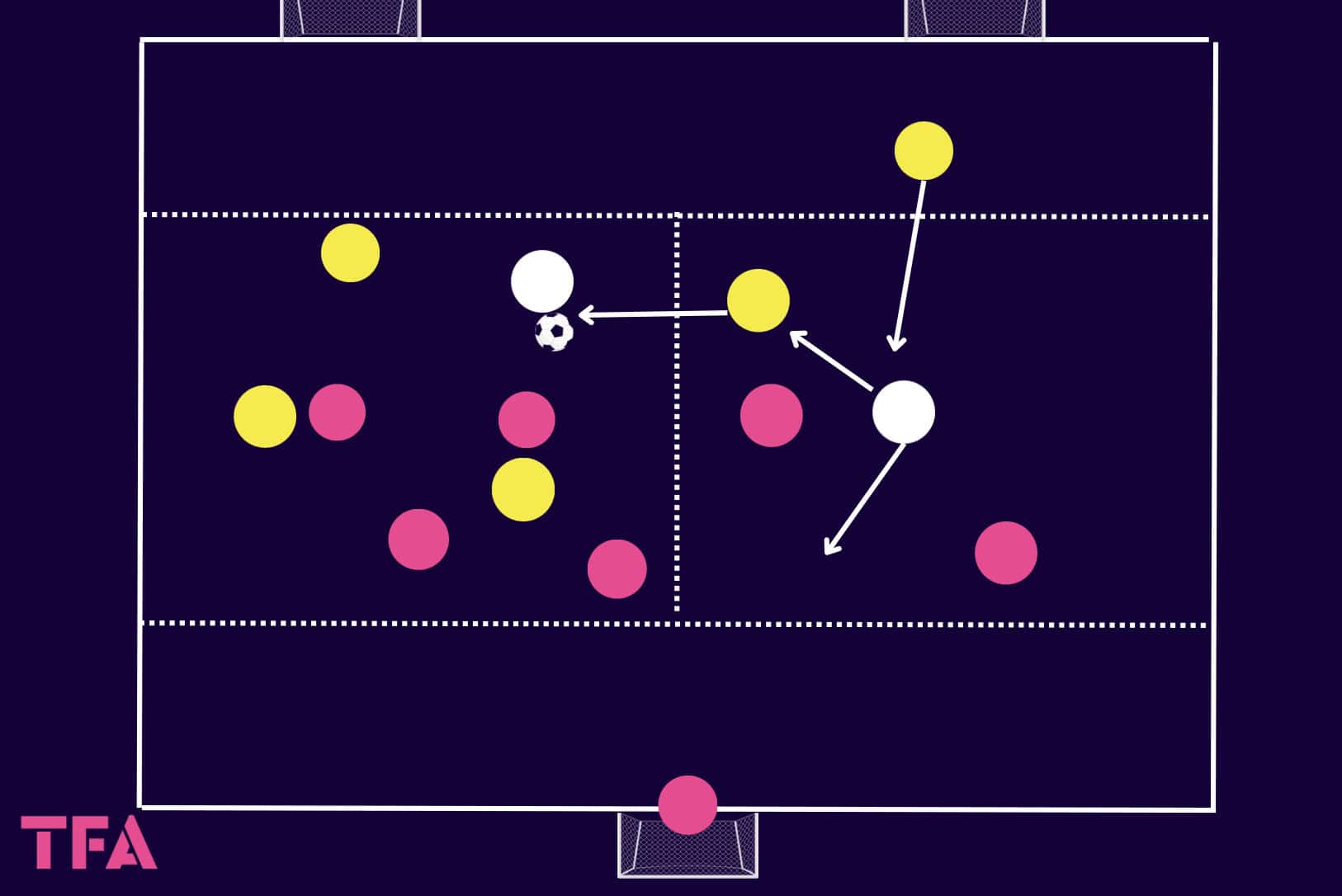
This practice is more of an in-game scenario, with one team defending and the other attacking.
The team in possession looks to switch play from one half to the other, with this switch in play acting as a trigger for the player in white(midfielder) on the opposite side to make attacking runs forward.
In this case, the coaching points mentioned earlier apply.
However, explaining to players why they should look to make runs after the switch is essential.
Drawing inspiration from Napoli, the switch in sides looks to draw the defending team's attention, allowing the player on the opposite side to make runs on the blind side of the defence.
The awarding of bonus goals for scoring actions created by the players in white should also apply in this instance.
The defending team, in this instance, looks to win the ball back and counterattack