
Pat Noonan Tactics At FC Cincinnati Using 3-5-2 Build-Up - Tactical Theory

What Is The 3-5-2 Formation?
The 3-5-2 formation can enable efficient possession-based build-up play while offering effective long-ball solutions.
Having three centre-backs can make switching the point of attack easier and allow the centre-backs to escape and break the first line of opposition pressure.
Especially when playing against a back four, having two centre-forwards can cause the opposition centre-backs difficulties.
The two can be used to keep both opposition centre-backs constantly occupied and under pressure by always playing up against them — something many defenders in modern football are neither used to nor comfortable with.
Pat Noonan's FC Cincinnati, a team that featured a one-time Premier League player with Newcastle United and Tottenham, DeAndre Yedlin, often uses a 3-5-2 formation.
This tactical theory will offer an analysis of FC Cincinnati’s 3-5-2 set-up and build-up play tactics.
A major focus of this tactical analysis will be how Cincinnati’s double pivot creates space for their ‘10’ and strikers' movement, creating goalscoring opportunities.
Low Double Pivot
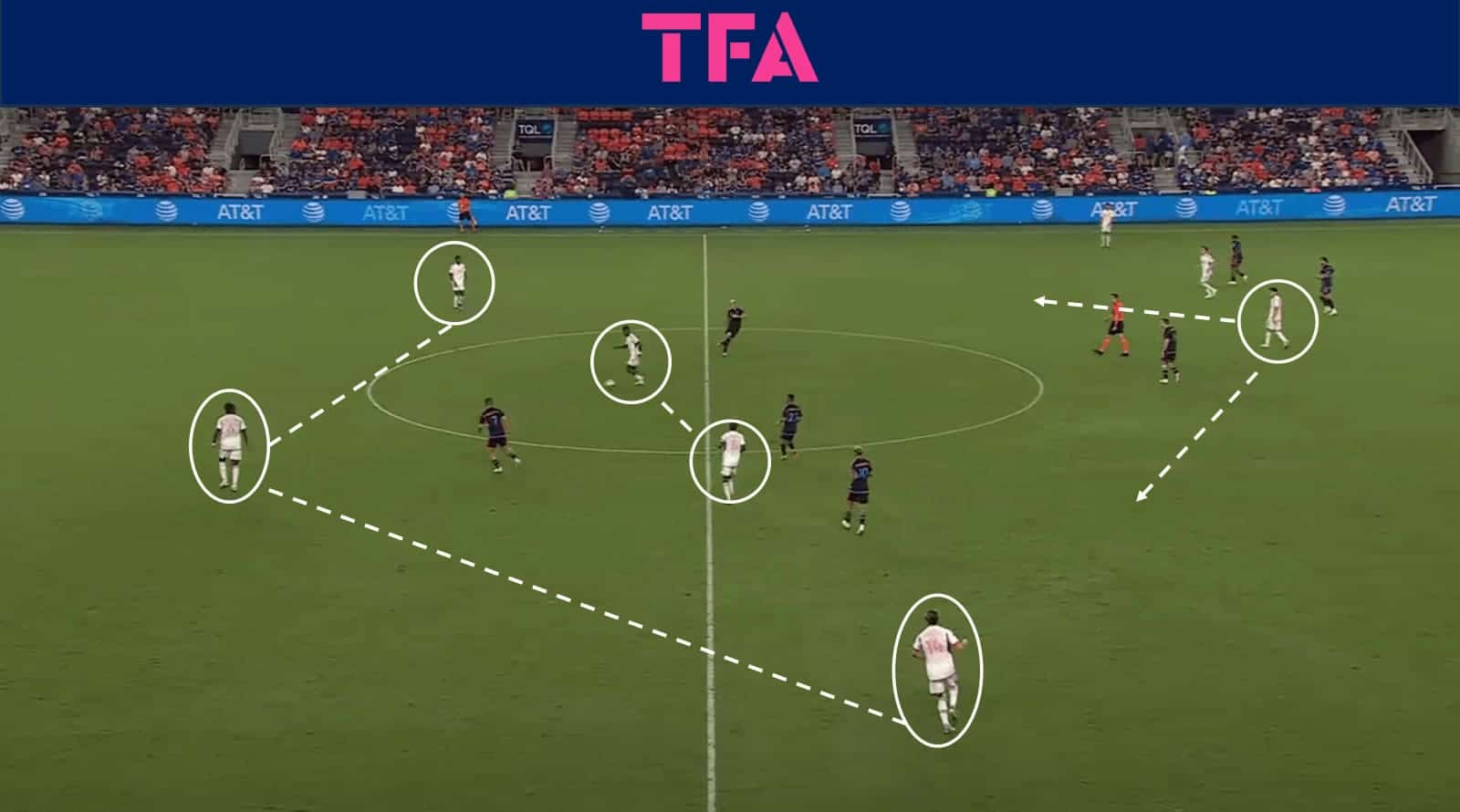
When the three Cincinnati centre-backs are in possession, they generally occupy the central area and half-spaces.
Their defensive midfielders, playing in a double pivot, take up a low position relative to the ball.
The two play low, flat, and close together, tempting the opposition's midfielders to do the same.
This helps create space in the wide area and, as this section will focus on, opens a gap between the opposition's midfield and defence, helping Cincinnati’s attacking midfielder get on the ball.
Cincinnati’s ‘10’ movement and positioning, almost against the centre-backs, also help widen this gap by making the opposition ‘6’ play very deep.
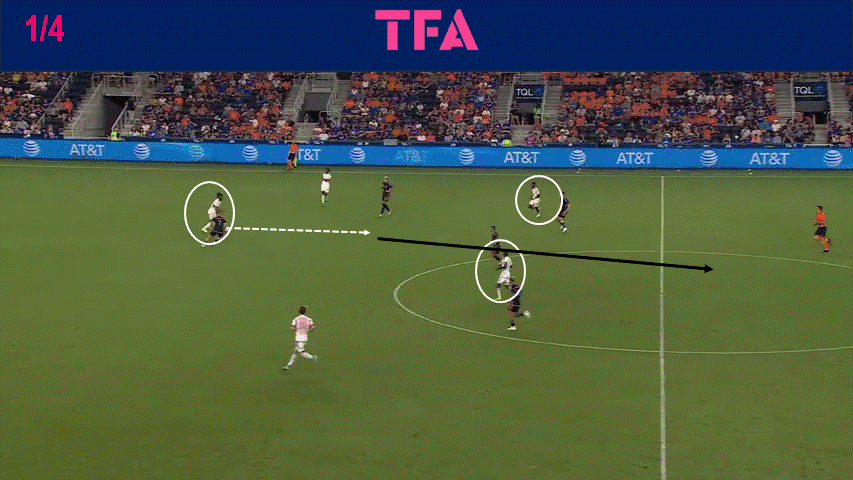
The above example shows Cincinnati creating a goalscoring opportunity from the previously described setup.
The first phase shows the central centre-back after receiving the ball from his side centre-back and immediately carrying it forward.
An essential element of playing with a back three, as on show here, is the centre-back's willingness to attack space and beat the first line of pressure by dribbling.
This makes them very hard to press, as if you prioritise cutting off one centre-back to try and stop the switch of play, as the striker did here, the defender can easily bypass the press entirely by dribbling.
This is not as risky as when playing with a back four, as there is the added security of an additional centre-back behind the ball carrier.
In this example, as the centre-back began to progress with the ball, this was the trigger for his ‘10’ to make a late movement, down the side of the opposition ‘6’, to get on the ball.
The centre-back played a straight ball into the ‘10’, who had a closed-off body shape, which encouraged the ‘6’ to press him.
As he was about to receive the ball, he opened his body up, giving his back to the ‘6’, before taking a forward first touch with his back foot.
The attacking midfielder, facing forward and positioned between the opposition's midfield and defensive line, now acts as the trigger for the front players, now four, to immediately run in behind and force the opposition back towards their own goal.
On this occasion, the Cincinnati right wing-back receives the ‘10’s pass just inside the box.
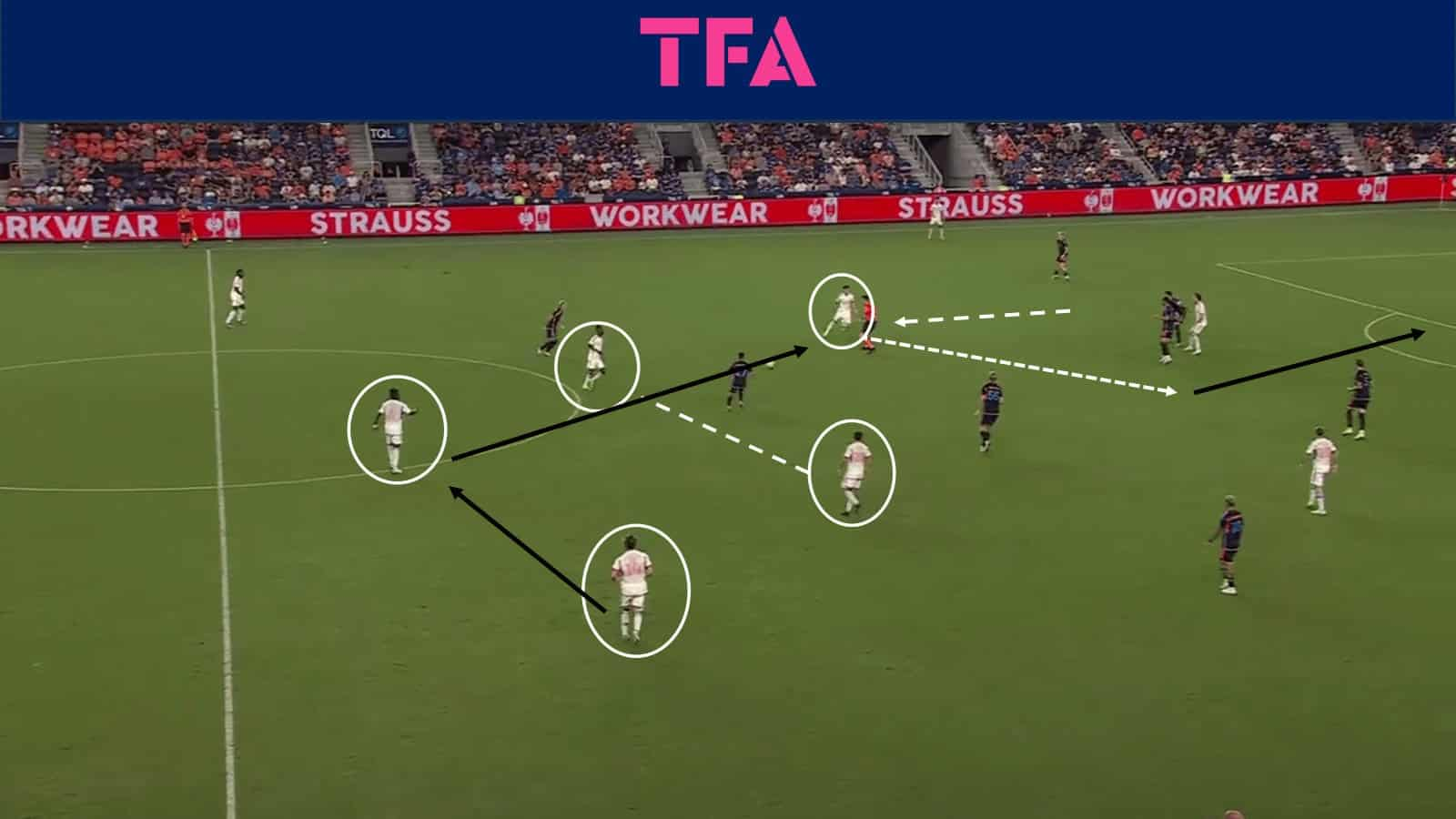
The above image shows the same principles being used by the midfield three, but this time, it comes after a switch of play from a throw-in deep inside the opposition's half.
The attacking midfielder again stays high, closer to the opposition's backline than midfield, and remains on the ball-far half of the pitch.
This means that when the ball is switched across the backline and his defensive midfielders drop towards it, the attacking midfielder can make a quick movement on the opposition's blind side.
This allows him to receive alone.
Again, he controls the ball facing side-on, allowing his first touch to take him towards goal before unleashing a shot from just outside the box.
Creating Passing Lanes Into Forwards
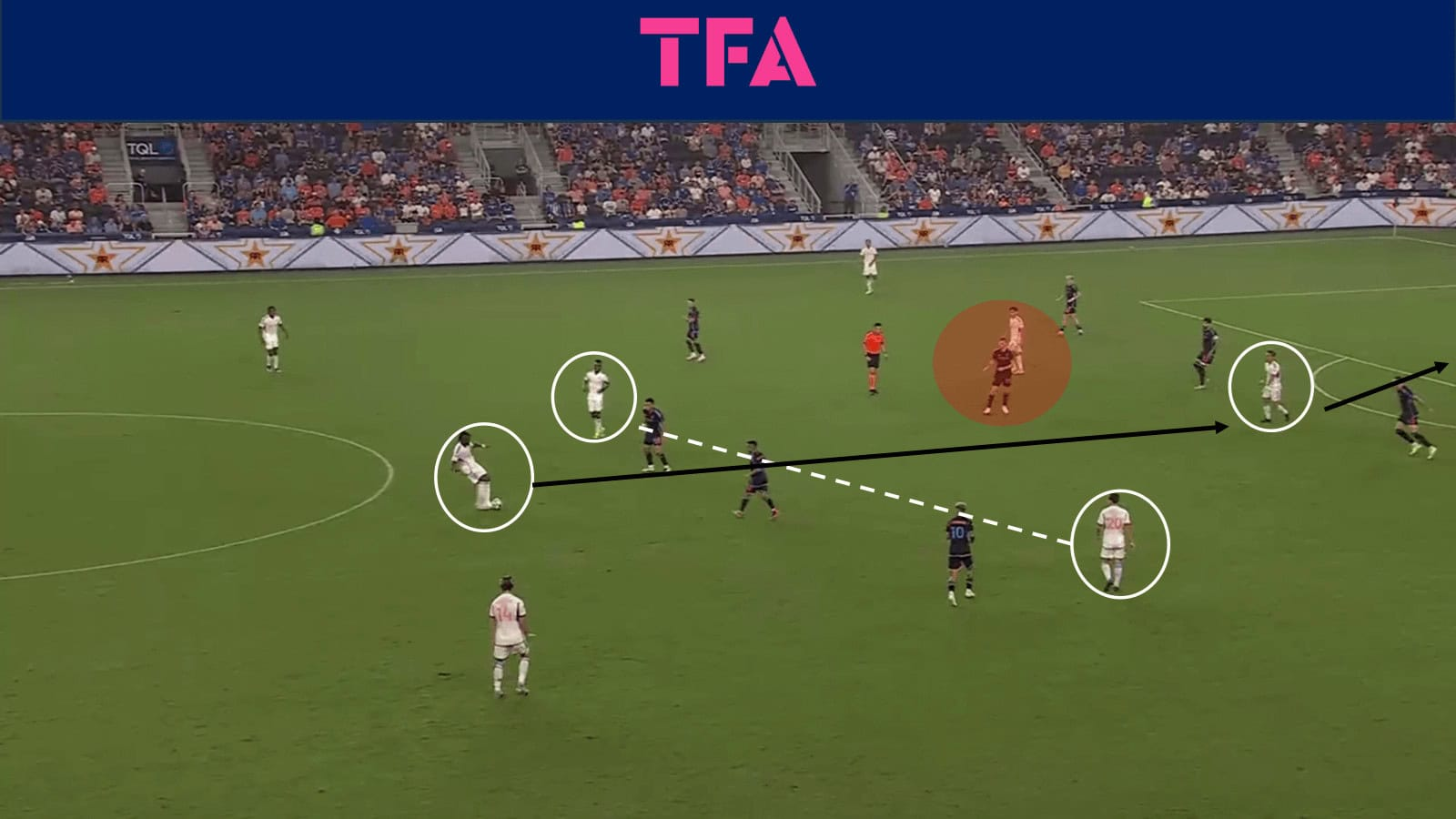
Once the opposition has sensed the danger, the three midfielders' movements can be used to create space for others.
With the midfield three in their previously described positions and the opposing ‘6’ prioritising screening the attacking midfielder, a passing lane into the strikers’ feet is created.
The centre-back fired a firm, line-breaking pass into the striker, who stepped towards the ball before turning side-on and sliding between centre-backs.
The striker's first touch, with his back foot, set him to shoot (and score) with his second touch.
Cincinnati managed to move the ball from their centre-backs to the goal within the blink of an eye, all down to the methodical positioning of their midfield.
Playing Long
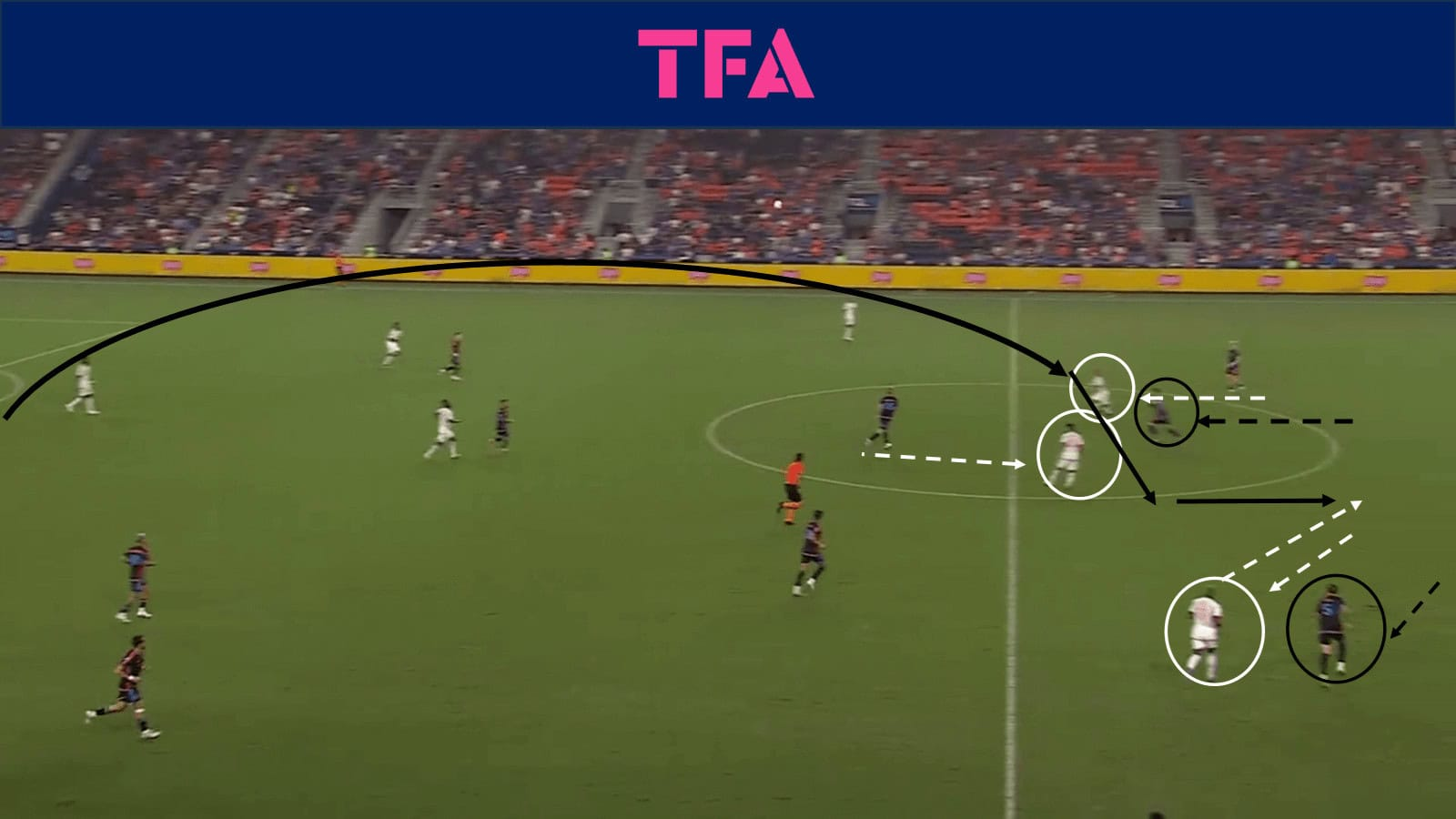
Whilst playing long can often be viewed as an easy option deployed by unsophisticated teams, the truth is that there are intricacies involved in making it successful.
This example from Cincinnati shows the right centre-back playing long from a deep position, with the opponent desperate to get back in the game they are now losing, pressing aggressively.
As the centre-back took his first touch wide, his ball-near forward, being marked tightly by the ball-near centre-back, ran wide to show for the ball.
The opposition centre-back was forced to track him rather than pass him on, as Cincinnati’s right-wing-back dropped from a high position towards the ball, taking the opposition left-back with him.
As the long ball was played to the far forward, the target man moved towards the ball whilst being tracked, creating even more separation between the two centre-backs.
Simultaneously, as the ball was launched towards the target forward, the attacking midfielder ran into the gap between the centre-backs to pick up the second ball before assisting his striker.
The synchronisation of these movements, coupled with the opponent's desperation to get the ball back, meant that with one kick, Cincinnati had carved their opposition open right through the middle of the pitch.
Attacking Wing-Backs
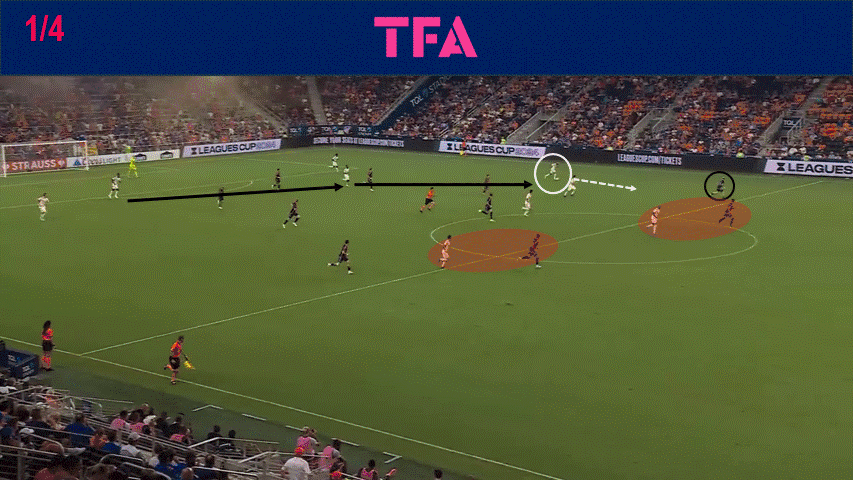
As in the previous section, Cincinnati's wing-backs often play high before dropping towards the ball and bringing the opposition full-back with them.
This creates a two-on-two for their forwards, who can either exploit the space created in the wide area by receiving balls played into the channel or, as previously shown, split the centre-backs and play centrally.
The image above shows the positioning of the left wing-back who has just received the ball after a switch of play.
The positioning before receiving 15 yards or so from the right-back creates a conundrum for the defender: whether to jump to the wing-back or stay home and help protect the centre-backs, who, again, are in a two-on-two situation.
In the above image, the New York City right-back decided to stay close to his centre-back and allow the wing-back to receive alone, deep in his own half.
Although probably the correct decision, with no one to close down the speedy winger, he was able to travel almost unopposed before scoring from the edge of the box.
Because City’s back four was already stretched, with their left-back pressing Cincinnati’s right-winger prior to the switch and the centre-backs moving with the forwards, City’s right-back had to remain tucked in and hope his midfielders could recover in time.
Although it relies heavily on the wing-back's speed and skill, this goal encompasses many of the benefits of the 3-5-2 system.
The back three were able to switch the ball efficiently.
The two forwards occupied the centre-backs, pinning the full-back and leaving no one free to press the ball, while the wing-back was able to pick up the ball in an awkward, in-between position.
3-5-2 Passing Sequence
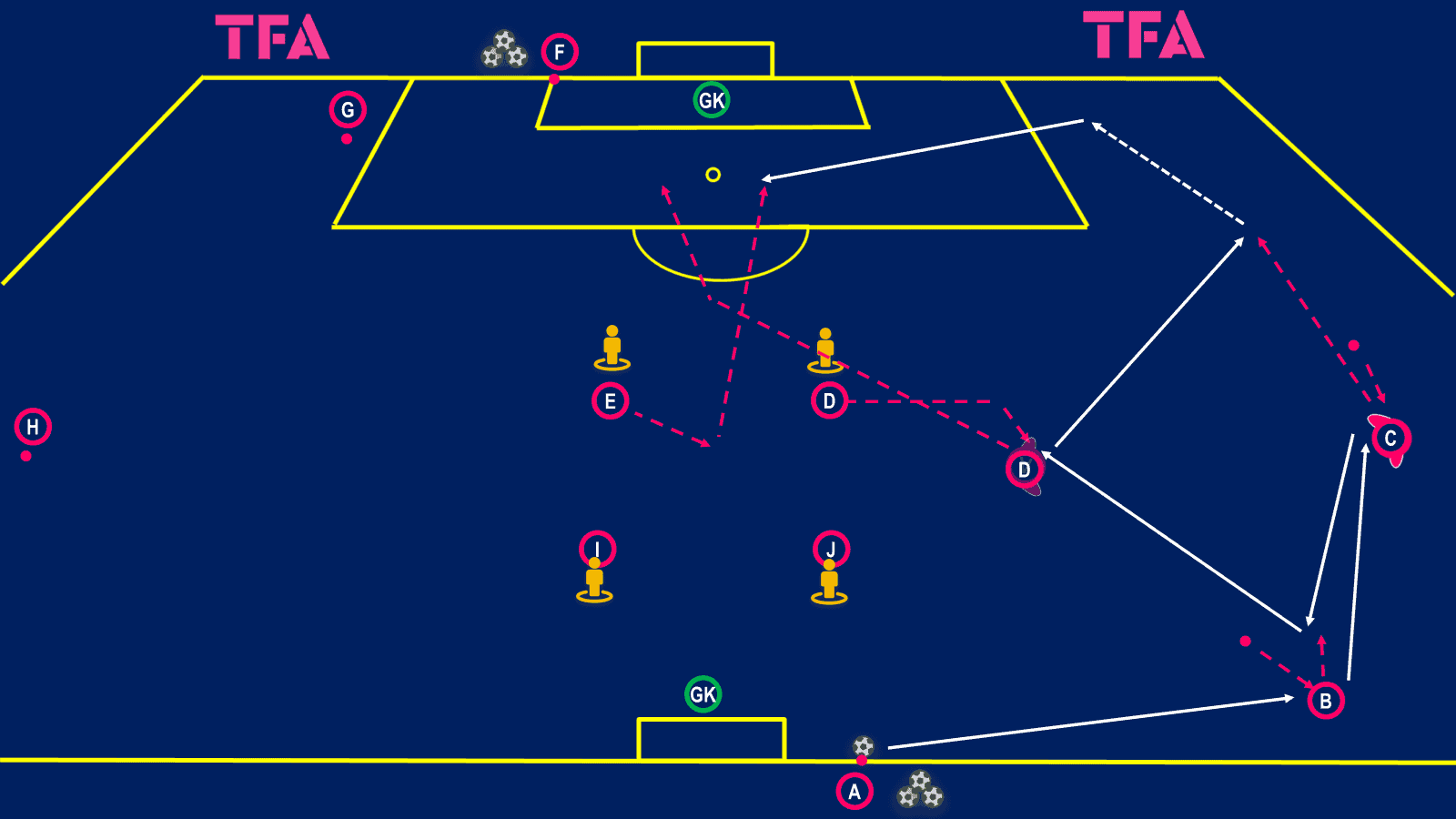
This passing sequence is designed for teams that build up in a 3-5-2 and provides options to attack via the wide area and centrally, ending with a shot at goal.
The above example shows player ‘A’ starting an attack by playing the ball across the back line to ‘B’, who represents a right centre-back.