
![AC Milan Vs Juventus [0–0] – Serie A 2025/2026: When Luciano Spalletti Abandoned His Identity – Tactical Analysis](https://cdn.mymidnight.blog/77f959f119f4fb2321e9ce801e2f5163/size/w1000/2026/04/AC-Milan--Vs-Juventus-20252026.png)
AC Milan Vs Juventus [0–0] – Serie A 2025/2026: When Luciano Spalletti Abandoned His Identity – Tactical Analysis

AC Milan and Juventus is a clash between two of Italy's big three clubs, and probably the friendliest of the ties (Milan and Juventus both consider Inter Milan as much more of a rival).
Yet, this one had a lot at stake.
Cesc Fàbregas' Como and Gian Piero Gasperini's AS Roma had both won earlier in the day, meaning Milan and Juve were five and two points, respectively, inside the Champions League places before kick-off.
Max Allegri's Milan side had come into the game on the back of some stuttering form.
Having once been city rivals Inter's biggest threat for the Scudetto, they had lost three of their last five.
There were defeats to Napoli, Lazio and Udinese with unconvincing wins against mid-table Torino and Serie B-bound Hellas Verona.
This left them in a good position but needing to avoid defeat at home to a resurgent Bianconeri.
Luciano Spalletti's side hadn't tasted defeat since the 21st of February against Como, and had leapfrogged the Lakeside club into the final Champions League qualifying place.
They had also received praise for an exciting style of football under the Italian, full of free-flowing attacking football spearheaded by wonderkid Kenan Yıldız.
This was a game between two teams who didn't want to lose.
Juventus abandoned a lot of the fast, transitional game they'd been developing in the name of solidity, and Milan relied on Allegri's principles: defensive structure and counterattacking football.
The entire 90 minutes saw just 18 shots, and a combined expected goals of 1.12.
It wasn't a game of many chances or thrills, and it's a result that favoured I Rossoneri, giving them a six-point cushion with four games left to play.
This tactical analysis focuses on how Juventus altered their game plan to try and nullify Milan's threat, and how Milan were able to create the best chance of the game through an attacking move that didn't fit into the mould of the rest of this tie.
AC Milan Vs Juventus Lineups & Formations
AC Milan Lineup Vs Juventus
Allegri opted to make just one change from the side that beat Verona seven days earlier.
Milan lined up in their familiar 3-5-2, with Mike Maignan and the defensive trio of Fikayo Tomori, Matteo Gabbia and Strahinja Pavlović remaining in place.
The midfield saw Alexis Saelemaekers come in for Zachary Athekame on the right, with Davide Bartesaghi on the left.
The central midfield was the tried-and-tested combination of 40-year-old Luka Modrić, Youssouf Fofana and former Juventus man Adrien Rabiot.
Rafael Leão and Christian Pulisic started as an unorthodox front two, as they had done the week before.
Allegri was forced into a change at half-time, with Pervis Estupiñán coming on for the yellow-carded Bartesaghi, who was being given the run around by Francisco Conceição.
He then tried to bring more of a focal point to the attack with Niclas Füllkrug replacing Pulisic around the hour mark.
Further like-for-like changes were made with Samuele Ricci replacing Fofana on 66', and Ardon Jashari and Christopher Nkunku replacing Modrić (who was forced off after a nasty head collision) and Leão with 10 minutes to go.
Juventus Lineup Vs AC Milan
Spalletti also made just one change from the victory over Bologna previously.
Michele Di Gregorio kept his place in goals, with Pierre Kalulu, Gleison Bremer and Lloyd Kelly remaining in defence.
Weston McKennie started on the right of midfield after starting centrally against Bologna, replacing Emil Holm.
Khéphren Thuram was the only player to come into the side, starting centrally alongside Manuel Locatelli, with Andrea Cambiaso starting on the left.
Jeremie Boga and Conceição were on either side of an attack spearheaded by Jonathan David.
Spalletti kept his cards in the deck until the 71st minute, when he brought Holm and Teun Koopmeiners on for Cambiaso and Thuram, shifting McKennie out to the left and putting Holm on his natural right-hand side.
Kenan Yıldız and Edon Zhegrova were then brought on to freshen up the attack with ten to go, replacing Boga and Conceição.
Dušan Vlahović then made his return from injury with two minutes to go as Juventus chased a winner, replacing David.
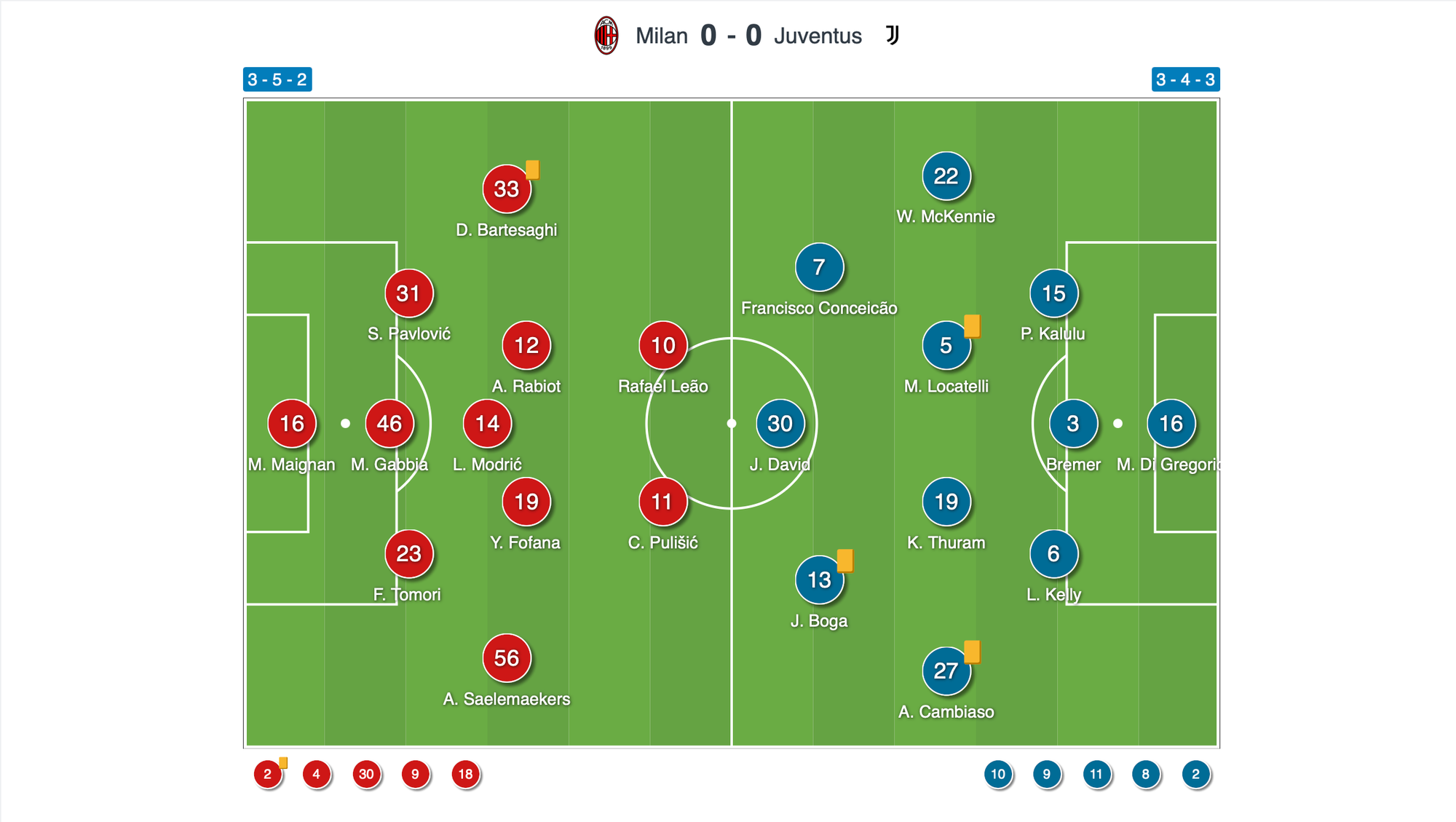
AC Milan Vs Juventus: Matching Up In Shape
With Champions League football crucial to the immediate and long-term future of both clubs, there was a caginess to this game that maybe should have been expected.
How this game was going to play out became evident within the opening exchanges of the game.
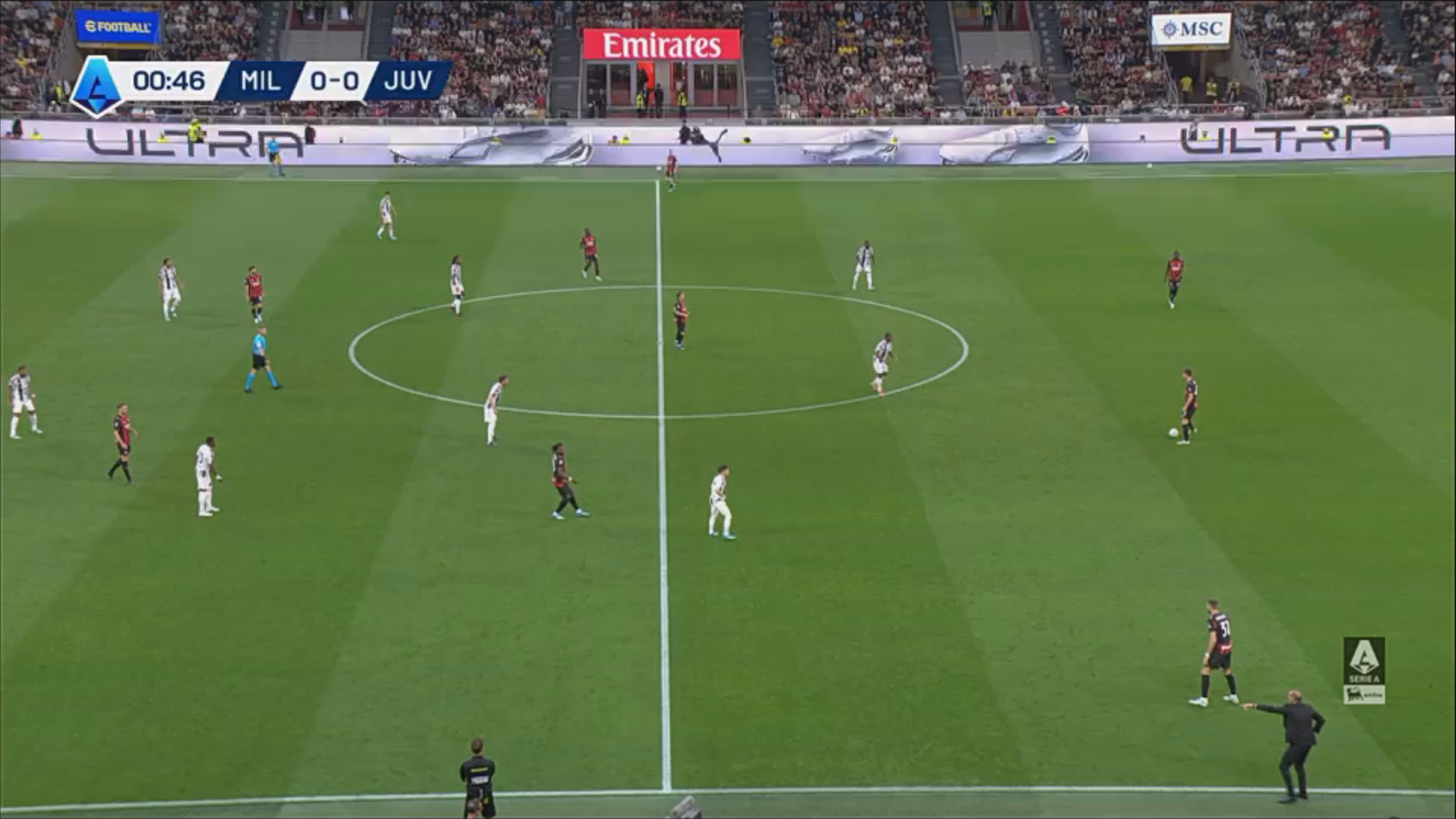
Juventus have been extremely front-footed under Spalletti, playing the sort of aggressive, attacking football that has made him adored by players like Mohamed Salah and in cities where football is everything, like Naples.
The Old Lady put 12.21 pressed sequences per game (according to Opta), the third highest in the league, behind Roma and Inter.
Yet, with less than one minute on the clock, it was clear that they were under instruction not to press Milan's backline, opting to condense the space in defence and midfield.
Juventus Position Map Vs AC Milan
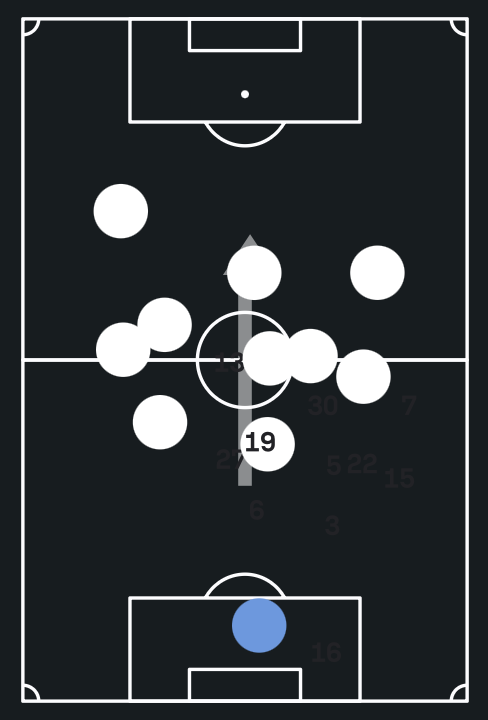
As we can see from Sofascore's average position map, Juventus kept a really compact midfield, with the wing-backs of Cambiaso and McKennie tucking in.
AC Milan Position Map Vs Juventus
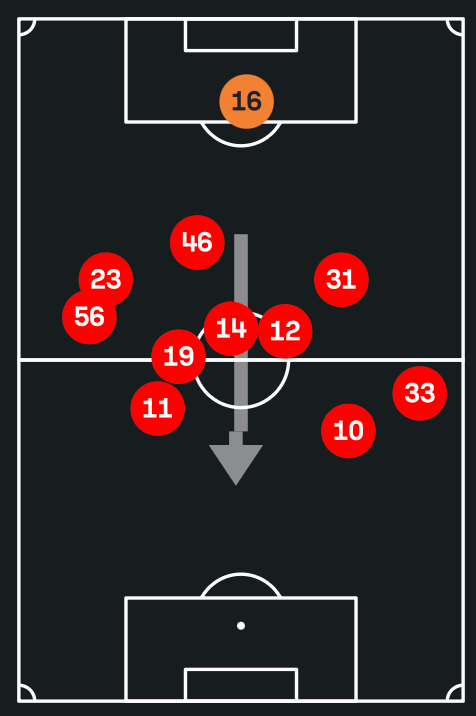
This matched up to Milan's shape.
Spalletti's game plan was to limit the amount of time and space that Modrić could get on the ball.
Locatelli, a former Milan academy graduate, was flying into challenges as soon as players like Rabiot or Leão got a touch of the ball (and should have been booked early in the first half).
McKennie was also instructed to stay close to Leão, limiting the time the Portuguese international had on the ball.
AC Milan Vs Juventus: Getting The Ball To Francisco Conceição
Juventus' game plan was to match up to Milan, and that didn't mean just out of possession.
Spalletti's side felt slower and more laboured in their play, much more in the style of Igor Tudor at the start of the season, or even Allegri's version of the Turin side over the last few years.
With Yıldız not fit enough to start, Conceição picked up the attacking burden.
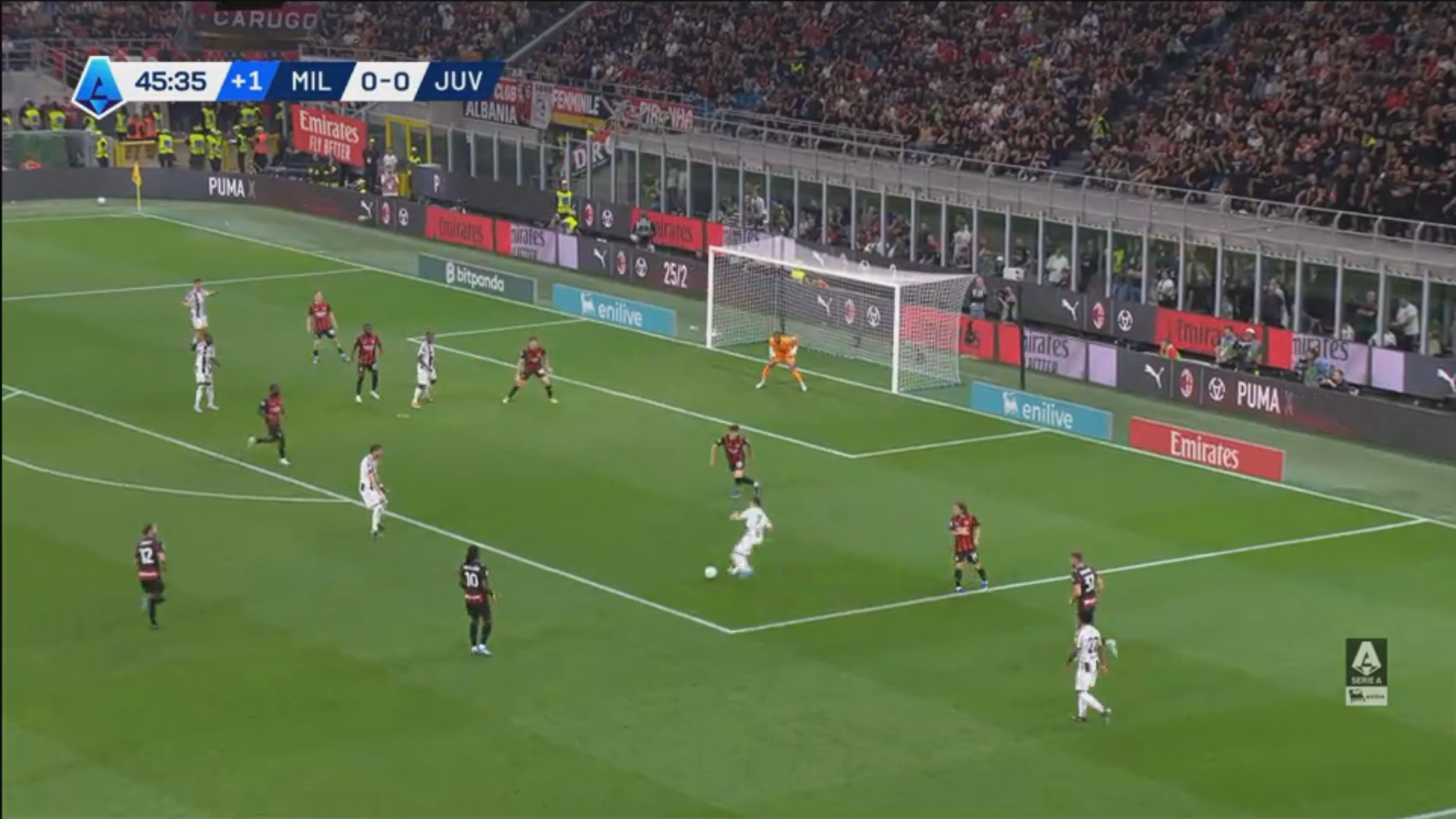
He had 54 touches in the game, registered the most shots (four) and completed 31 out of his 32 passes.
He also set up the only time the ball hit the back of the net in this game, when Thuram put the ball in from his cross, but had gone too early and was offside.
![Real Sociedad Vs Bournemouth [1-2] Europa League 2026/2027: How Do Marco Rose Pressing Tactics Work? - Tactical Analysis](https://cdn.mymidnight.blog/77f959f119f4fb2321e9ce801e2f5163/size/w600/2026/09/Real-Sociedad-Vs-Bournemouth-20262027---Tactical-Analysis-1.png)
![AC Milan Vs Benfica [0-2] Europa League 2026/2027: How Marco Silva Tactics Exposed Rúben Amorim Defensive Problems - Tactical Analysis](https://cdn.mymidnight.blog/77f959f119f4fb2321e9ce801e2f5163/size/w600/2026/09/AC-Milan-Vs-Benfica-20262027---Tactical-Analysis.png)
![Sunderland Vs AZ Alkmaar [1-0] Europa League 2026/2027: Why The Black Cats Make Better Underdogs - Tactical Analysis](https://cdn.mymidnight.blog/77f959f119f4fb2321e9ce801e2f5163/size/w600/2026/09/Sunderland-Vs-AZ-Alkmaar-20262027---Tactical-Analysis.png)
![Leeds United Vs Newcastle United [4-1] Premier League 2026/2027: Why Did Daniel Farke Tactics Dominate The Magpies? - Tactical Analysis](https://cdn.mymidnight.blog/77f959f119f4fb2321e9ce801e2f5163/size/w600/2026/09/Leeds-United-Vs-Newcastle-2026_2027---Tactical-Analysis.png)
![Real Sociedad Vs Atlético Madrid [0-3] La Liga 2026/2027: How Diego Simeone Tactical Precision Rescued A Late Victory - Tactical Analysis](https://cdn.mymidnight.blog/77f959f119f4fb2321e9ce801e2f5163/size/w600/2026/09/Real-Sociedad-Vs-Atl--tico-Madrid-20262027---Tactical-Analysis-1.png)
![Manchester United Vs Manchester City [0-1] Premier League 2026/2027: How Enzo Maresca Tactics Secured Victory With 10 Men - Tactical Analysis](https://cdn.mymidnight.blog/77f959f119f4fb2321e9ce801e2f5163/size/w600/2026/09/Manchester-United-Vs-Manchester-City--20262027---Tactical-Analysis.png)
![Tottenham Hotspur Vs Everton [0-0] Premier League 2026/2027: Why Can't Spurs Score? - Tactical Analysis](https://cdn.mymidnight.blog/77f959f119f4fb2321e9ce801e2f5163/size/w600/2026/09/Tottenham---Vs-Everton-20262027---Tactical-Analysis.png)
![West Ham United Vs Wrexham [6-0] EFL Championship 2026/2027: The Cost Of Passive Defending Against Smart Movement - Tactical Analysis](https://cdn.mymidnight.blog/77f959f119f4fb2321e9ce801e2f5163/size/w600/2026/09/West-Ham-United-Vs-Wrexham-2026_2027---Tactical-Analysis.png)