The Value of Direct Goalkeeper Distribution – Tactical Theory

With teams often electing to press high in the opposition's defensive third, having a goalkeeper with long distribution who can put the ball accurately behind the opposition's backline can cause all sorts of problems for opposing teams.
With clever positioning and complementary movements by forward players, long kicks from the goalkeeper can be an important weapon in any team's arsenal, regardless of their style of play.
By bypassing the midfield in one fell swoop, long distribution denies the opposition the opportunity to drop back behind the ball and into a low block as the ball is gradually progressing up the pitch.
Not only is long distribution a good attacking option, but it can also help nullify the threat of a high opposition press.
Although some coaches may be intolerant of kicking long, viewing it as a needless risk of turning over possession, when the ball is lost, it is much further from their own goal.
Already this season, in multiple leagues and competitions at all levels of the game, we have witnessed numerous goals scored by teams turning the ball over in their own defensive third.
This begs the question: Should direct kicks from the goalkeeper be used more?
Or is there little use in “hoofing” the ball up the pitch?
This tactical theory will provide a tactical analysis of Keith Andrews’ Brentford and Arne Slot's Liverpool, and how they have used long goalkeeper distribution to profound effect.
This analysis will include examples from this season's Premier League games of long kicks from the goalkeeper resulting in goals.
This tactical theory also includes examples of how teams have been caught out and conceded by trying to play short in similar situations.
Playing Long When Pressed High
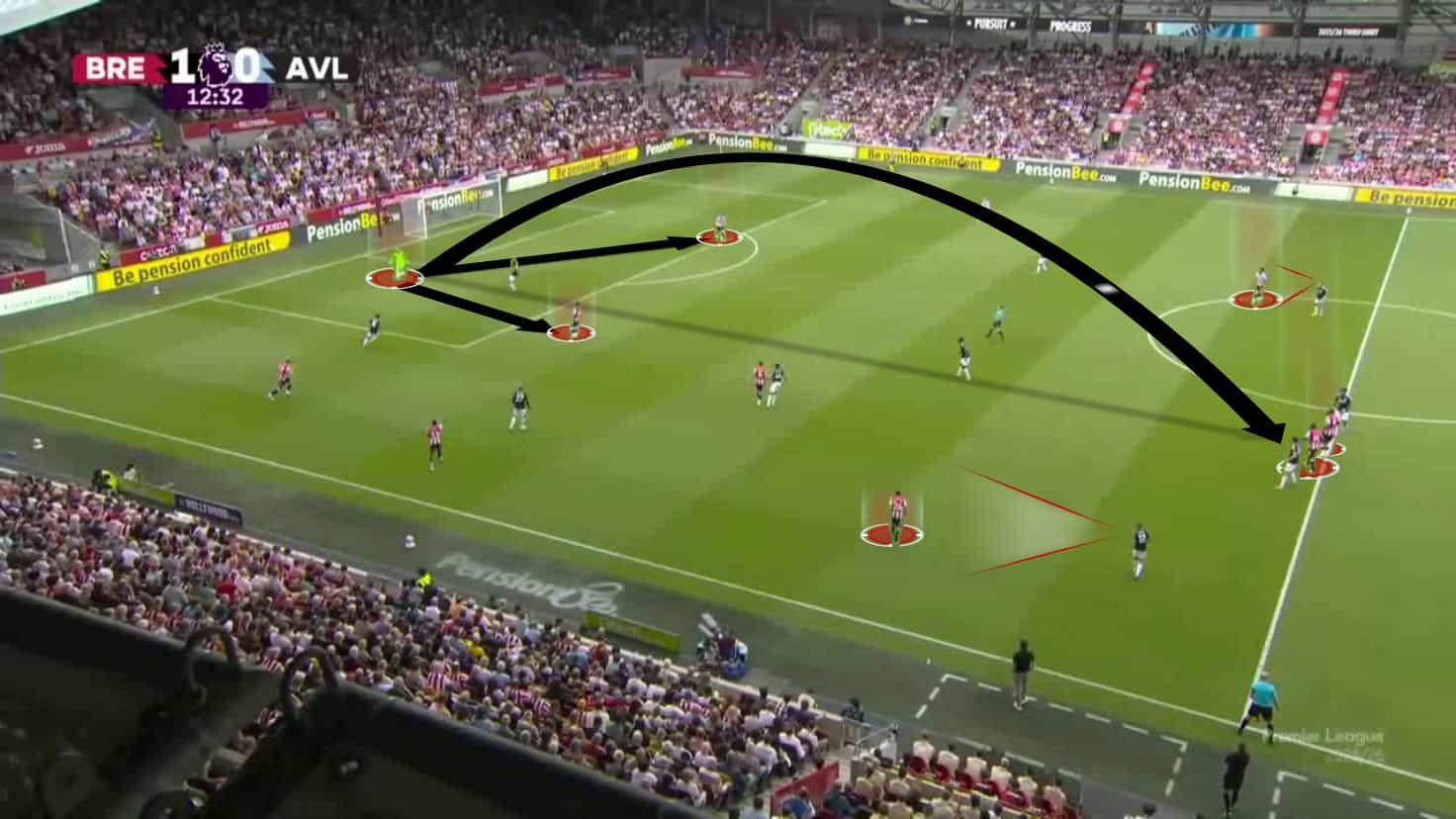
The above image shows the build-up to the Bees' opening and winning goal against Aston Villa in the second game of this Premier League season.
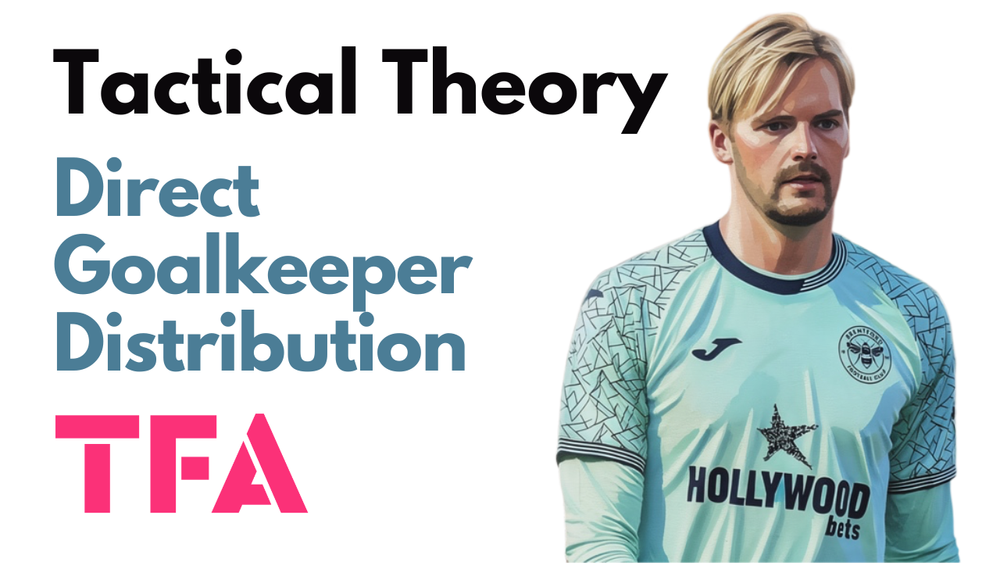
The image shows Brentford goalkeeper Caoimhín Kelleher, a summer signing from Liverpool, receiving under close pressure from two Villa forwards.
At the top level of club football, it would not be surprising to see the Ireland international stopper attempt to feed a pass between the pressing forwards into his defensive midfielder, or for him to find his left centre-back.
Instead, Kelleher plays long to his forwards, setting up a goal with a well-devised but straightforward play.
The highlighted players on the right of the image are Brentford’s winger Dango Ouattara (who was making his debut for the club) and forward Igor Thiago.
The positioning of the two attacking players, narrow and in between centre-backs, forces Unai Emery’s centre-backs to play close to one another, therefore covering less of the pitch.
With their full-backs both occupied, the centre-backs are effectively left two against two with half a pitch behind them.
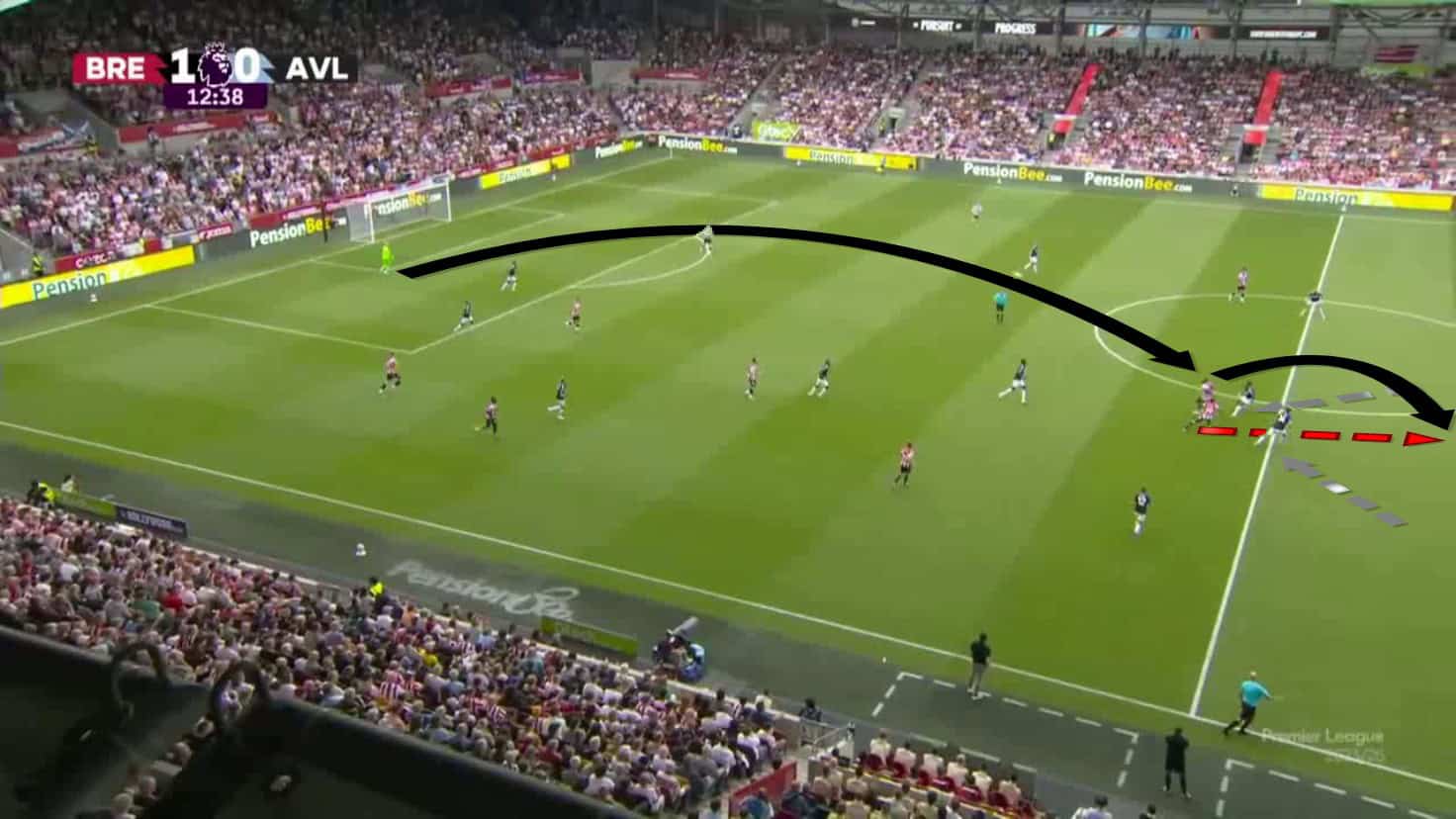
Initially, the two attacking players of Brentford moved towards the high ball as it left their goalkeeper’s foot.
This encouraged both centre-backs to move forward, anticipating that they would have to compete for the ball in the air, rather than at least one of the defenders dropping off to defend the space behind.
This action brings them closer together, increasing the distance between the central defenders and the full-backs.
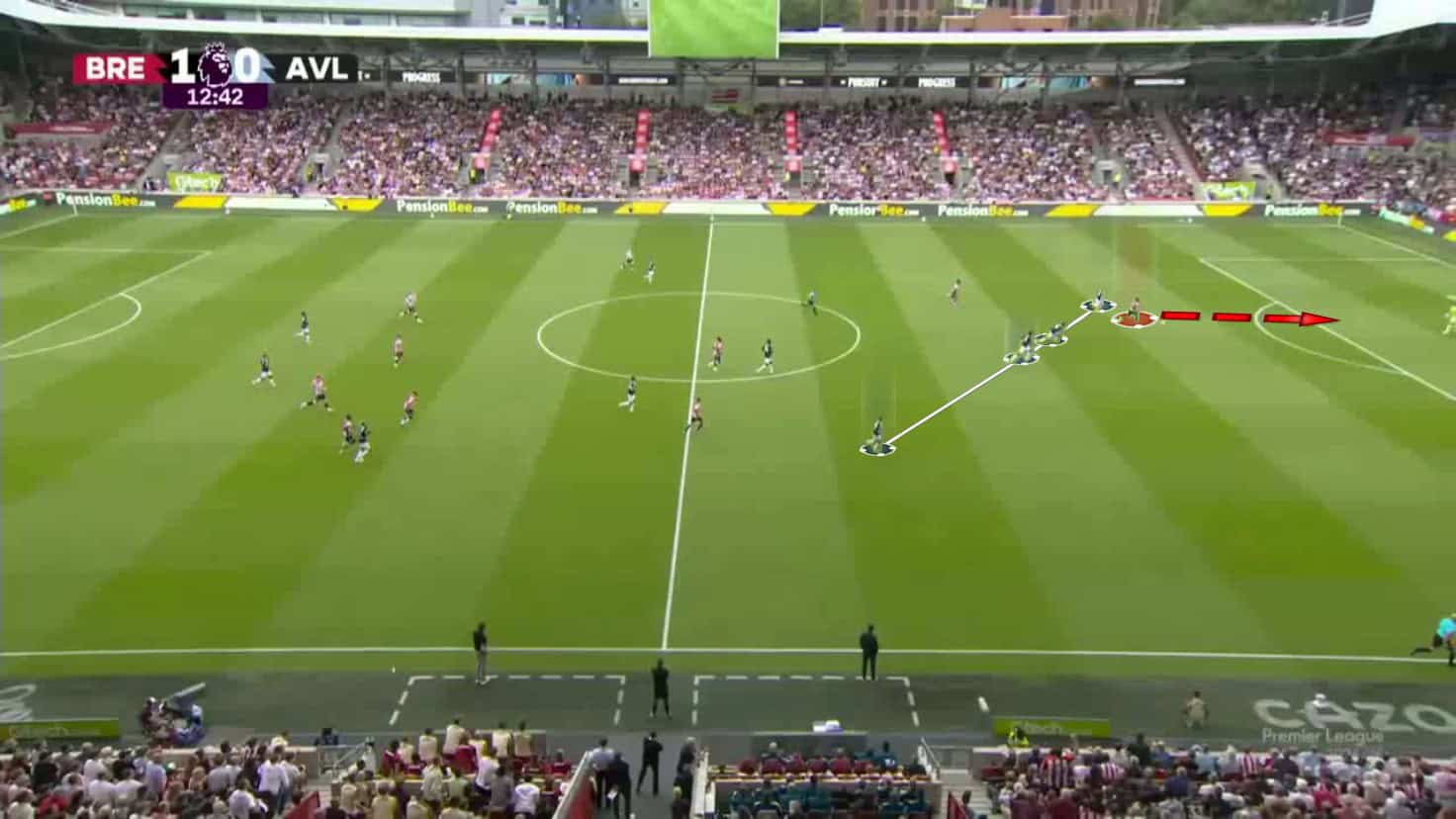
This means when Thiago flicks the ball on for his teammate, it is too late for the centre-backs to protect the space behind them and/or recover quickly enough to cover this ground.
The distance for the full-backs, particularly the right-back, who reads the situation and makes a valiant effort, is also too big for them to make up.
As soon as the ball is flicked on, Ouattara, using his blistering speed, bursts away from the scrambling defenders.
Even though the winger's initial shot is saved, the distance he has created between himself and the centre-backs means he has an extra free shot at goal to score from the goalkeeper's rebound.
From a risky position, with Kelleher being pressed hard in his own 18-yard box, within two touches of the ball and just a matter of seconds, Brentford were bearing down on Villa's goal with a clear chance to score.
Is Playing Long A Better Option For Goalkeepers?
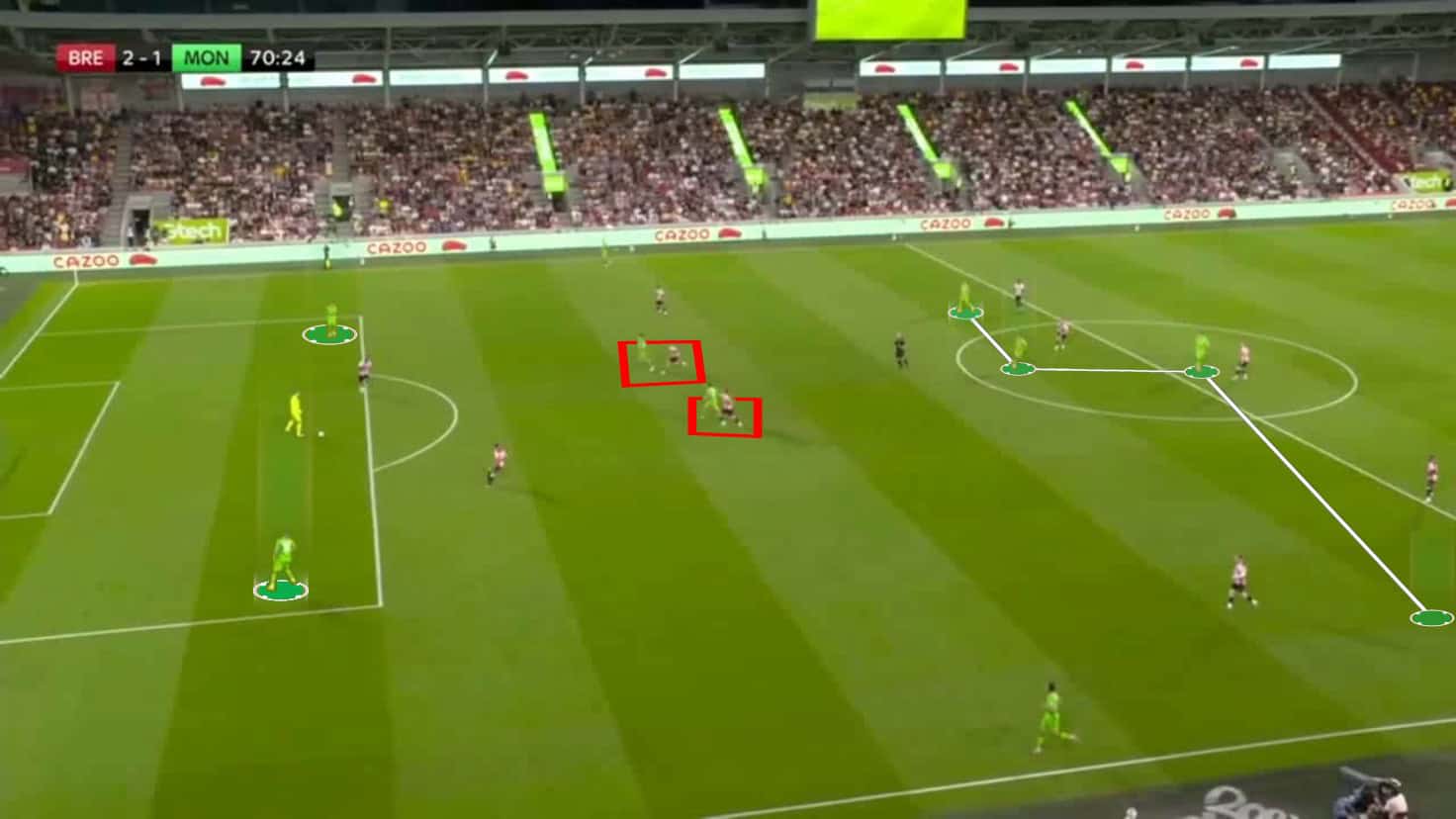
This image is from Brentford’s pre-season friendly against Bundesliga side Borussia Mönchengladbach (in lime green) and depicts an almost identical scenario as occurred in the Aston Villa match, only on this occasion, Brentford are the pressing team.
The different approach taken here, in this example, is a great illustration of a team playing out of trouble in a situation with a lot of risk without too much of an apparent reward.
As the ball is passed to the opposition goalkeeper, Brentford find themselves four on four at the back (Gladbach’s right winger is just out of shot by the touchline).
One of Gladbach’s centre-backs is cut off by the pressing forwards, and the other, the right-centre-back, would receive immediate pressure from the opposition.
Both of Gladbach’s central midfield players are being tightly man-marked and are bringing their opposite numbers towards the ball.
This leaves the goalkeeper with no clear, secure short pass to play.
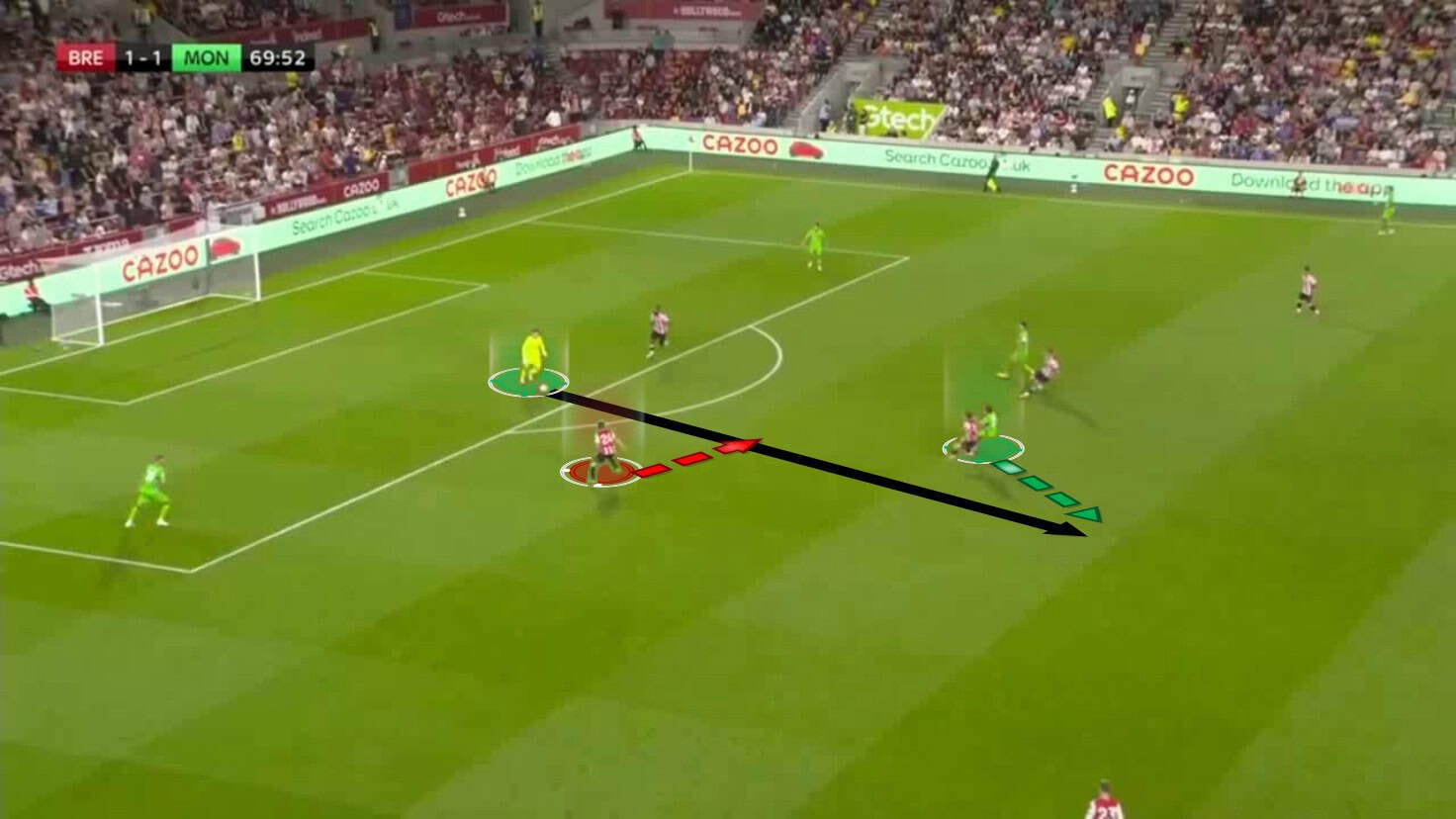
In stark contrast to the distribution from Kelleher in Brentford’s goal analysed previously, Gladbach decided to play short by threading a pass into one of their tightly tracked central midfielders.
If it had worked out, the pass would have put Gladbach in a good position with a four-on-four plus the ball carrier.
However, they would have still been in their own half, far enough from the opposition goal that Brentford could delay the attack and get more numbers behind the ball.
By playing this pass, not only (even with a positive outcome) is it arguably not as dangerous as playing directly up to or in behind their forwards, but it is also incredibly risky.
With the centre-backs split so wide, Gladbach is in a perilous position should the Bundesliga side lose the ball to any of the four Brentford players nearby.
As it happens, one of the pressing players, Mikkel Damsgaard, intercepts the goalkeeper's pass and has a clear path to goal.
From having the opportunity to put the opposition's backline under severe pressure, by capitalising on the four against four high up the pitch, Gladbach have effectively created an opportunity for their opponents to score.
An opportunity that Brentford did not create for themselves and would otherwise not have existed.
Damsgaard won the ball back and, far too easily, drove a few yards towards the goal before slotting it past the goalkeeper.
Alisson Long Distribution
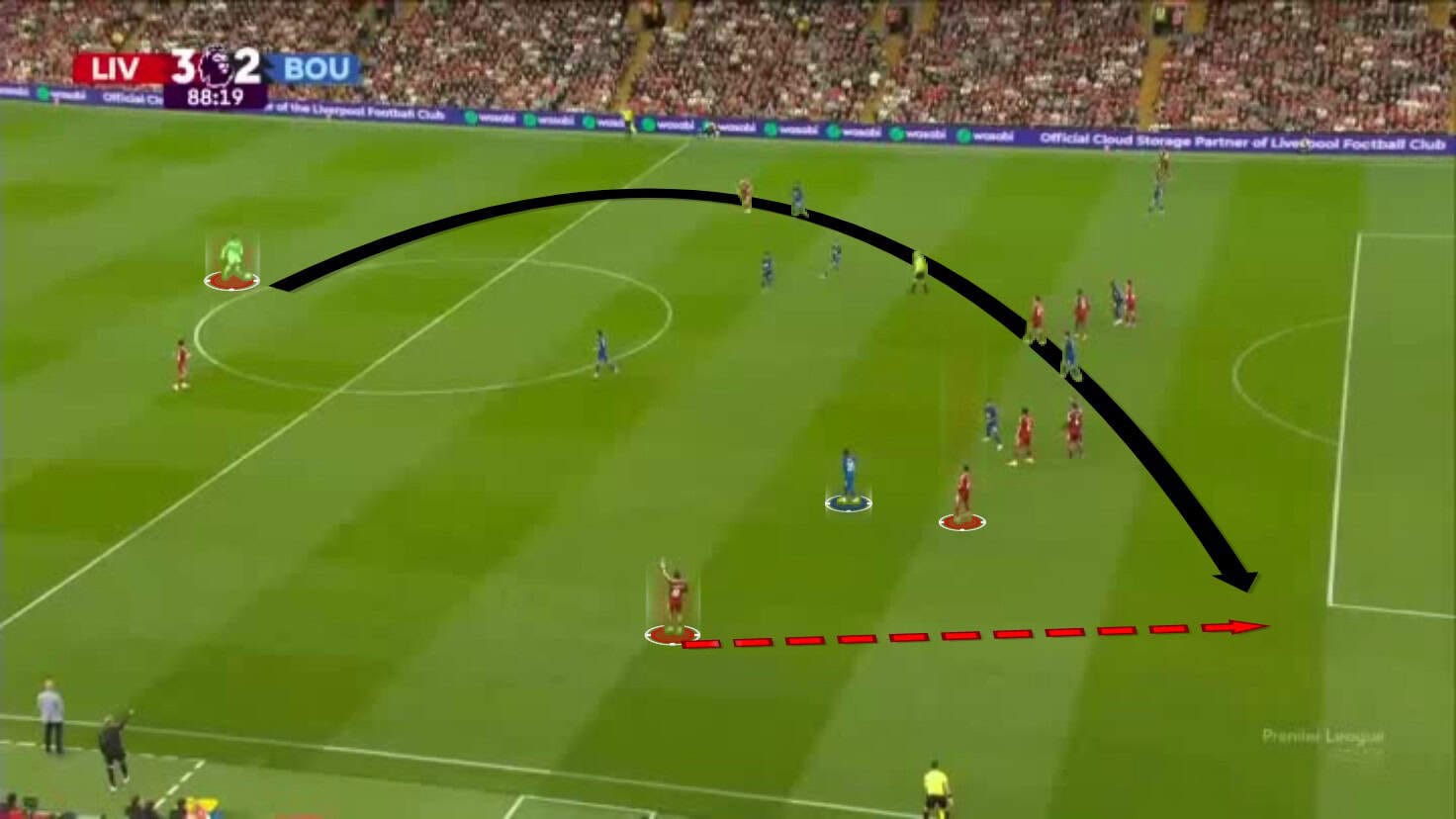
In the above image, Liverpool are chasing a winning goal in the dying moments of their match against Andoni Iraola’s Bournemouth.
Unlike the previous two examples, where the goalkeepers were being pressed aggressively inside their own penalty box, here, Liverpool stopper Alisson Becker is receiving a pass back, played from well inside the opposition's half, relatively unopposed in the centre circle.
Slot's side are effectively playing their goalkeeper as an additional centre-back as they complete wave after wave of attacks against Bournemouth, who are camped just outside their own box, desperately trying to hold on to a point at Anfield.
Rather than playing short and sideways to the nearest outfield player, which would allow Iraola’s side the time to drop deeper and shift across the pitch in their shape, Alisson plays direct with a long diagonal to Dominik Szoboszlai.
This long pass allows Liverpool to take advantage of Bournemouth being slightly disbalanced as they attempt to make their way up the pitch.
It also represents Liverpool's easiest opportunity to put the ball in behind the Cherries.
Additionally, by putting the ball to the side of the box, Liverpool’s midfielders do not have to drop back to try to combine.
This allows them to put pressure on the backline and flood the box as soon as a crossing opportunity arises.
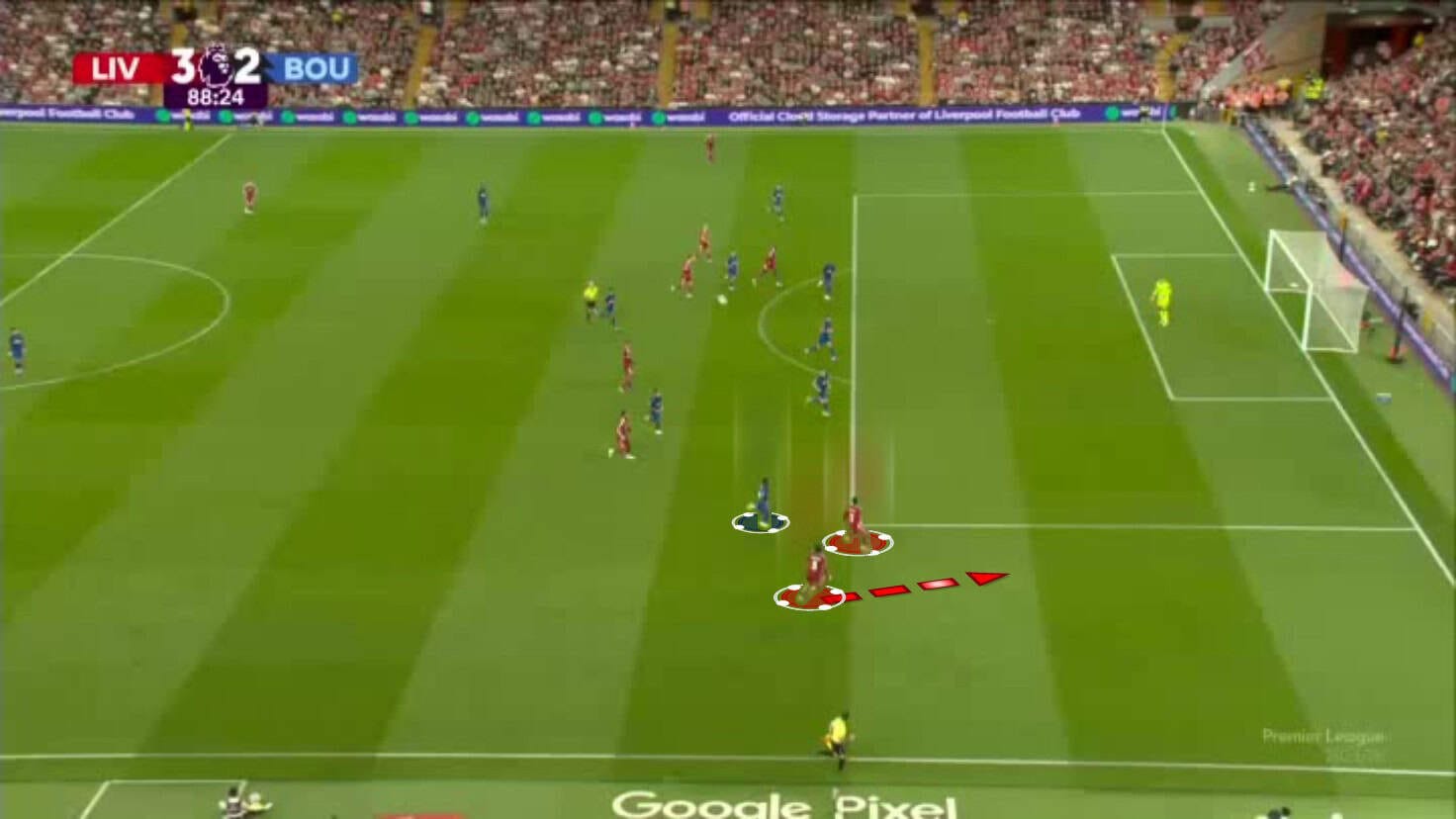
Szoboszlai receives the long diagonal behind Bournemouth's widest player, slightly helped by his teammate, Mohamed Salah.
He performs a screen that prevents the opposition player from running directly to the ball.
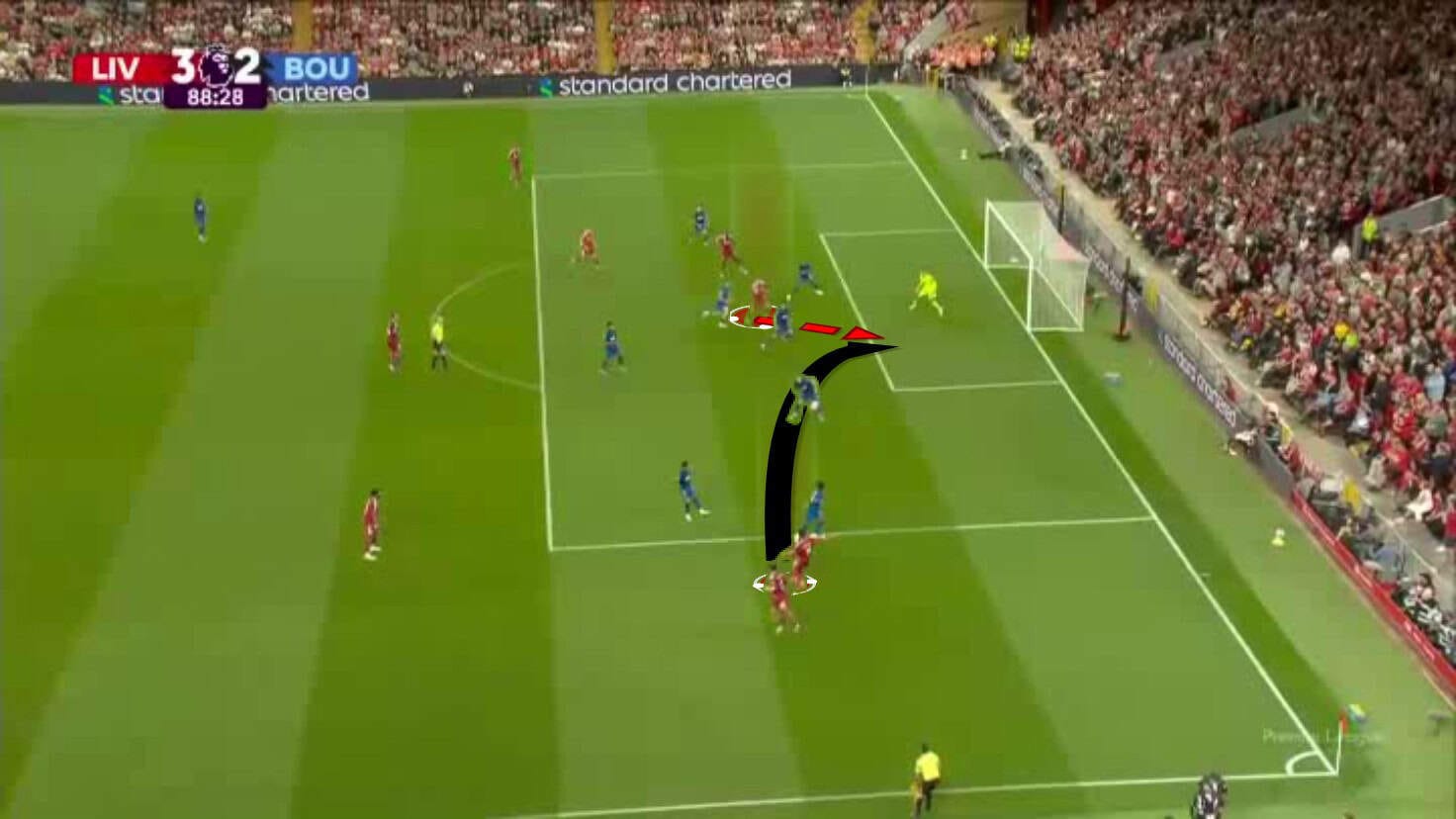
The ball is then set back to Salah by Szoboszlai, with the Egyptian winger whipping the ball into the box before Bournemouth can react and send a second player out to defend the cross.