Coaching Full-Backs In The Attacking Third: Roles, Movement, & Training Solutions – Tactical Theory
Explore how modern full-backs influence attacks through inverted runs, overlaps, cut-backs, crosses and counterpressing, with examples from the Premier League and La Liga alongside practical training exercises designed to improve their movement, technique and decision-making in the final third.

The Attacking Role Of Full-Backs In The Final Third
The role of full-backs playing in a back four can be one of, if not the most, tactically fluid positions on the pitch.
Even within the same football formation, across any league on any given matchday, you will see full-backs being asked to take up various positions on the field and add different dynamics to their sides' attacking phases.
Depending on the coaches' preferences, full-backs will provide diverse attacking options for their team, including delivering crosses from deep positions, attacking the box to provide cut-backs, and making overlapping runs.
This is in addition to their defensive duties, which increasingly include an essential role in counterpressing high in the opposition's final third.
This tactical theory, using examples from previous Premier League and La Liga goals, analyses the role of an attacking full-back in the final third.
Different tactical options available to full-backs will be analysed to show how they can most affect their team's chances of scoring goals.
This tactical analysis also includes football training exercises and small-sided rondo games to develop full-backs' technical ability and tactical understanding in specific attacking situations.
Inverted Full-Backs Attacking The Box
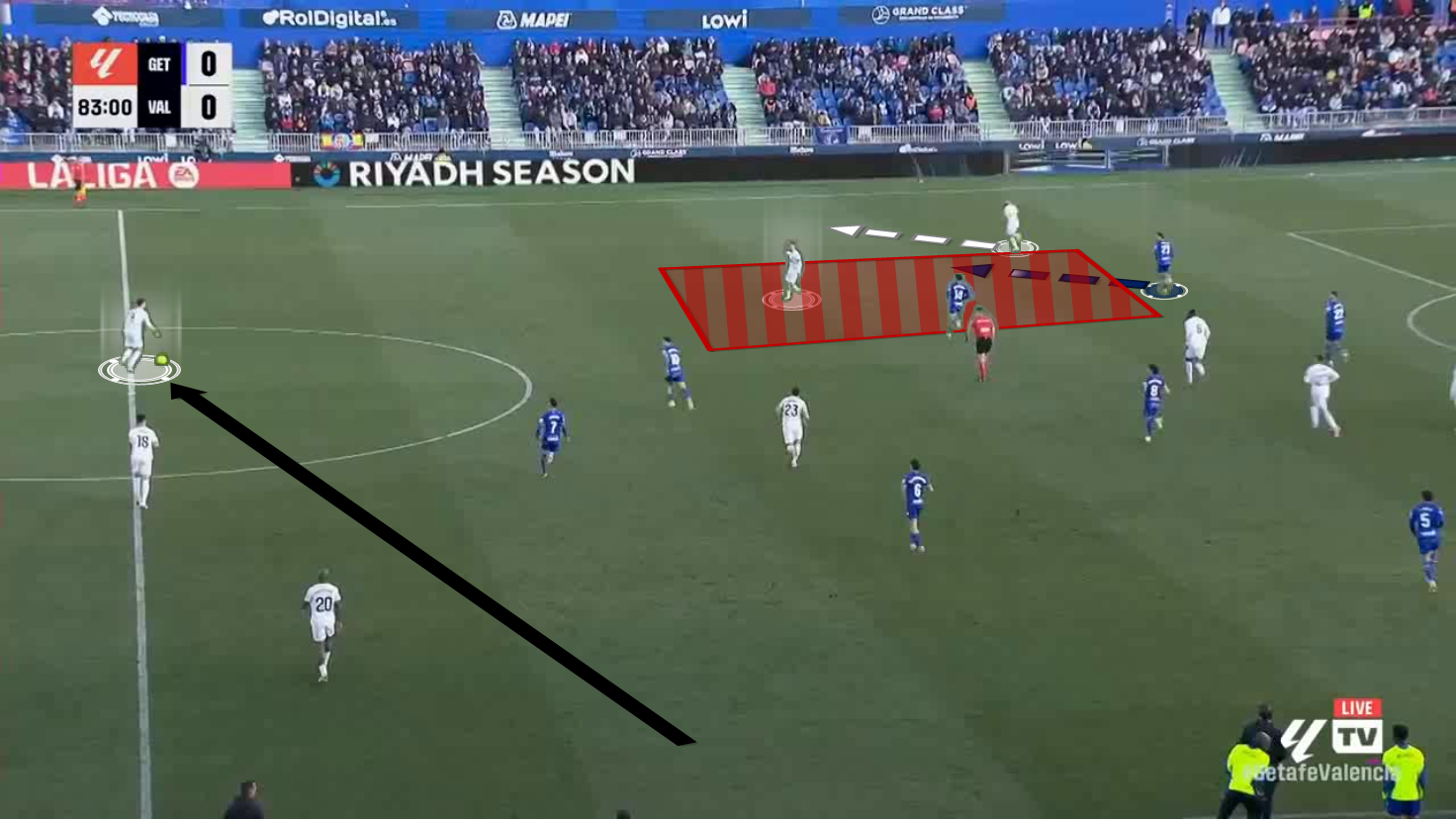
The above image, taken from the build-up to Valencia's opening and winning goal away to Getafe, is a textbook example of how a full-back can attack the box from an inverted position to devastating effect.
Left-back, #14 José Gayà, moved into an inverted position, inside his left winger, when the ball was on the opposite side of the pitch.
As the ball was being switched, the Spain international remained in this half-space position as his winger pulled out wide to receive the ball from his left centre-back.
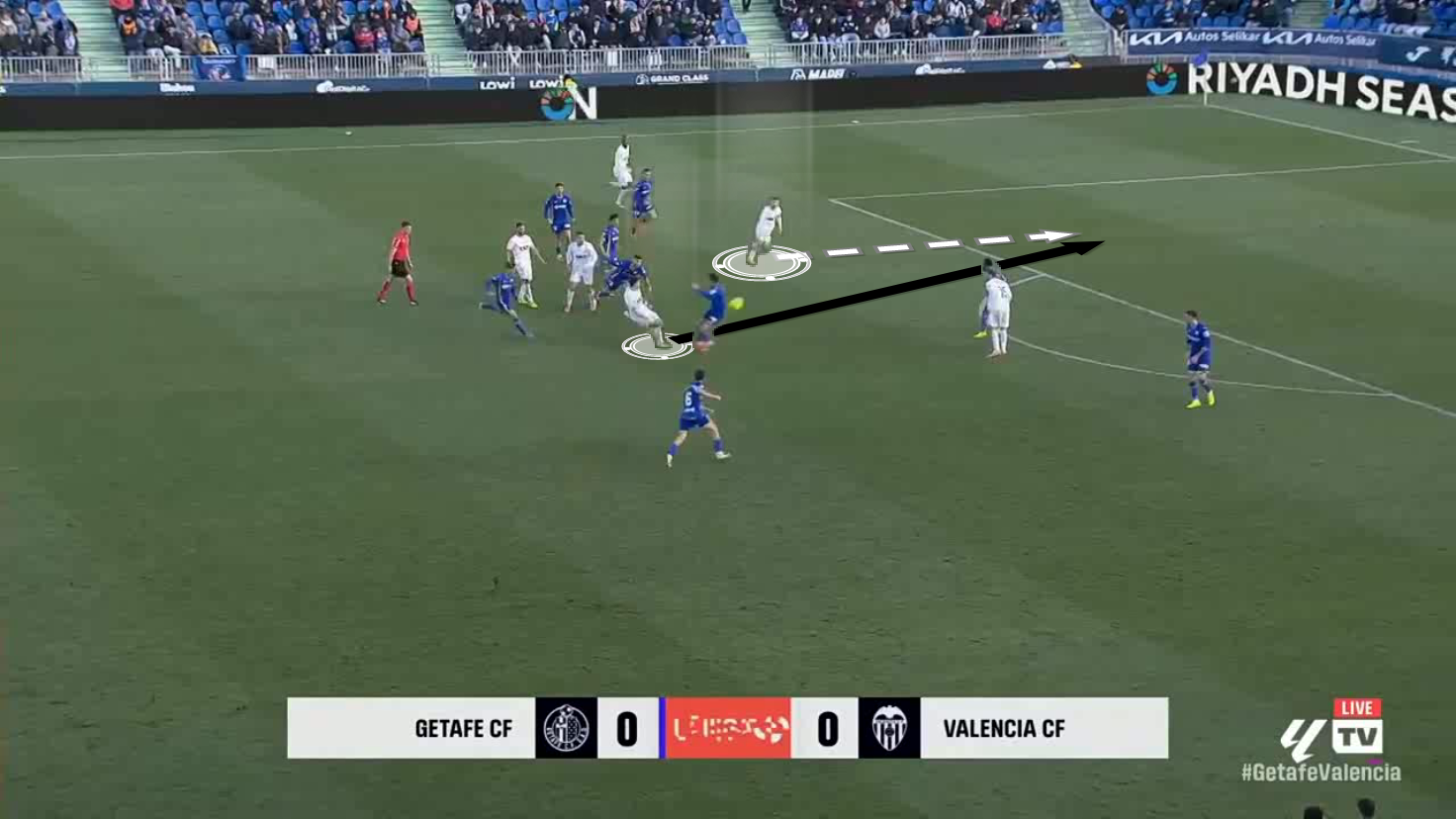
As the ball reached his winger, and the opposition shifted towards the wide area, the left back advanced slightly and found himself in the half-space, between the opposition's stretched right-back and centre-back, and in a very difficult position to be picked up.
When the ball was then played centrally, and with the help of his striker pinning the near-sided centre-back, the Blanquinegros captain was left wide open.
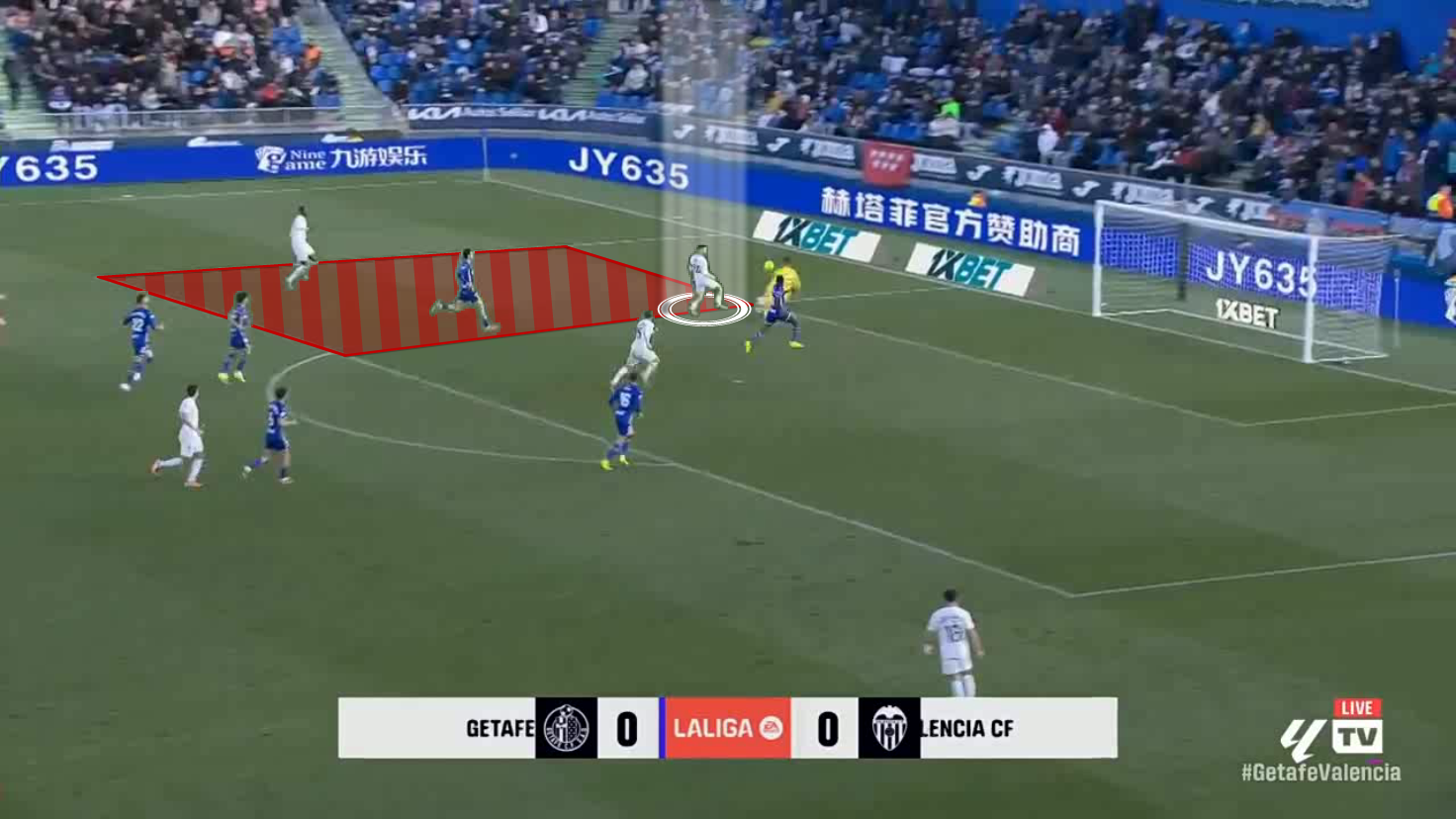
This ‘assist’ zone, the area between the 6-yard box and the side of the box, highlighted in red in the above image, is an area attacking full-backs increasingly find themselves in.
In this instance, Gayà, who was played into the box by his central midfielder Filip Ugrinić, was able to score himself by coolly chipping the outrushing goalkeeper.
More common, however, is for full-backs to burst into this zone to provide cut-back assists to their teammates.
Cut-Back Assists
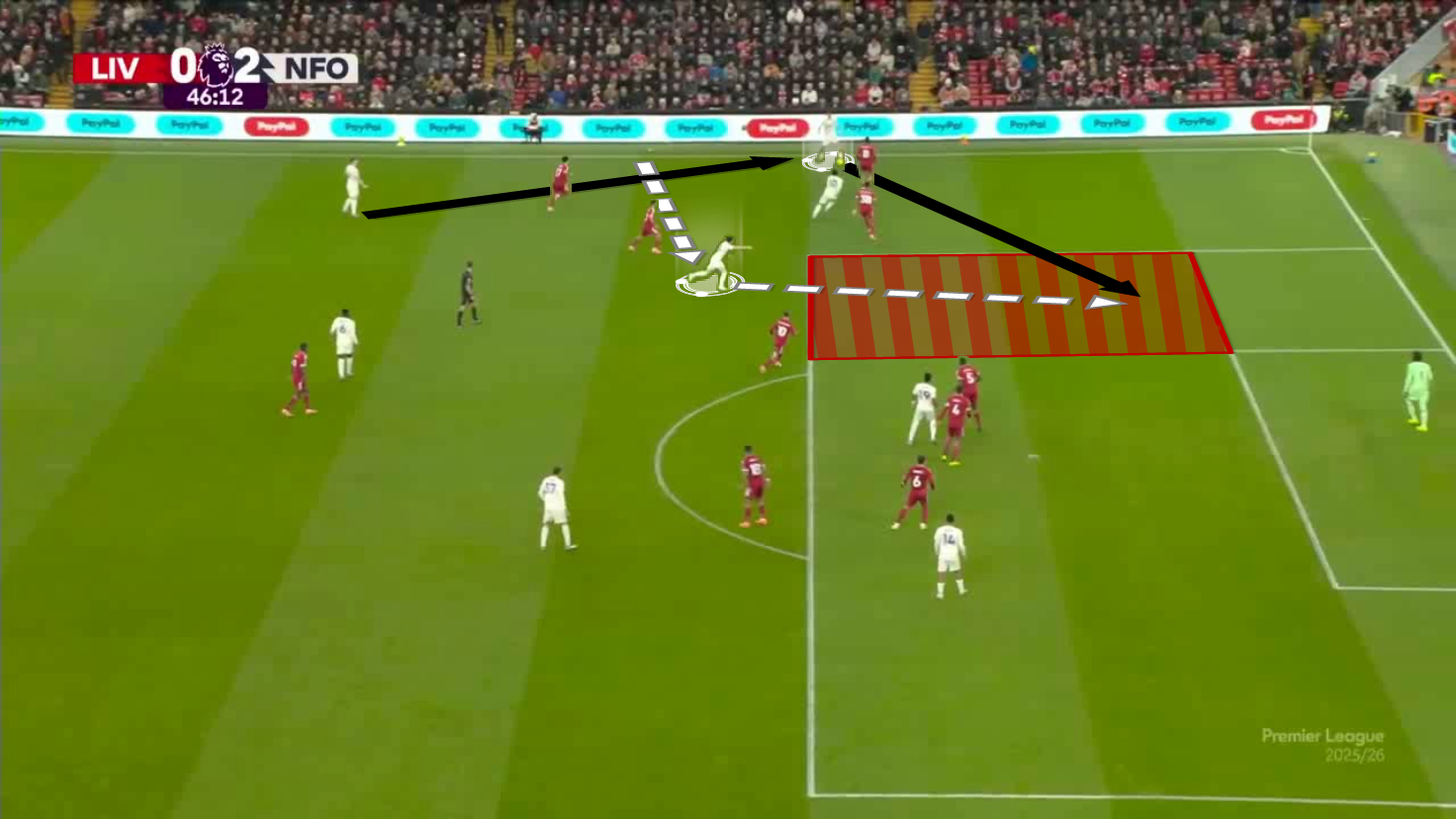
This move, leading to Nottingham Forest's second goal at Anfield in their 3-0 trouncing of Liverpool in November, is a good example of how full-back assists from this area occur.
A key difference in this attack from the Valencia example is the initial positioning of Forest’s left-back Neco Williams (highlighted).
Instead of being positioned and remaining in the half-space, the Wales international stayed pinned to the touchline.
Williams initially had the ball at his feet in the wide area before playing it backwards to his centre-back.
As his centre-back played the ball to his winger, Williams spun into the half-space before demanding the ball behind Liverpool's backline.
The timing of this run, as all nearby defenders' eyes followed the ball into the wide area, and its speed, made it difficult for the opponent to react in time.
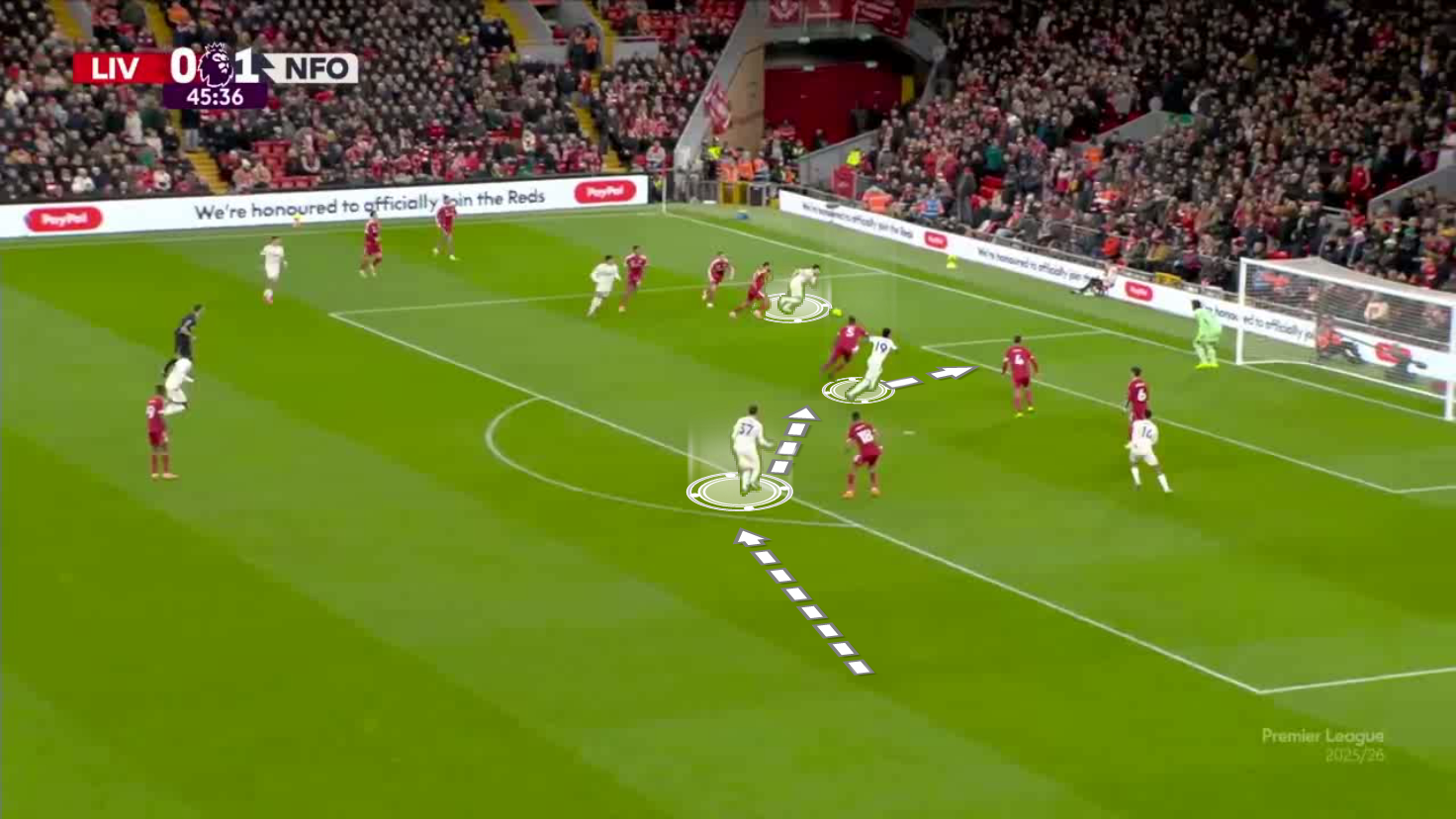
Whilst Liverpool's nearest midfielder, Alexis Mac Allister, sensed the danger, he was too far to be able to affect Williams’ run in time.
The left-back was able to receive in the previously mentioned ‘assist zone’ before cutting the ball back to the scorer Nicolò Savona.
The run of the striker, #19 Igor Jesusi, is vital in clearing the path for the cut-back.
Right-back Savona remained high during the attacking phase as the ball was switched to the opposite side of the pitch, into an area at the edge of the box on the ball-far side that full-backs increasingly occupy.
This area, which is discussed in more detail later, is important for teams when counterpressing.
It is also, as this goal proves, a dangerous area to occupy in order to complete attacks.
How To Perform An Overlap In The Final Third
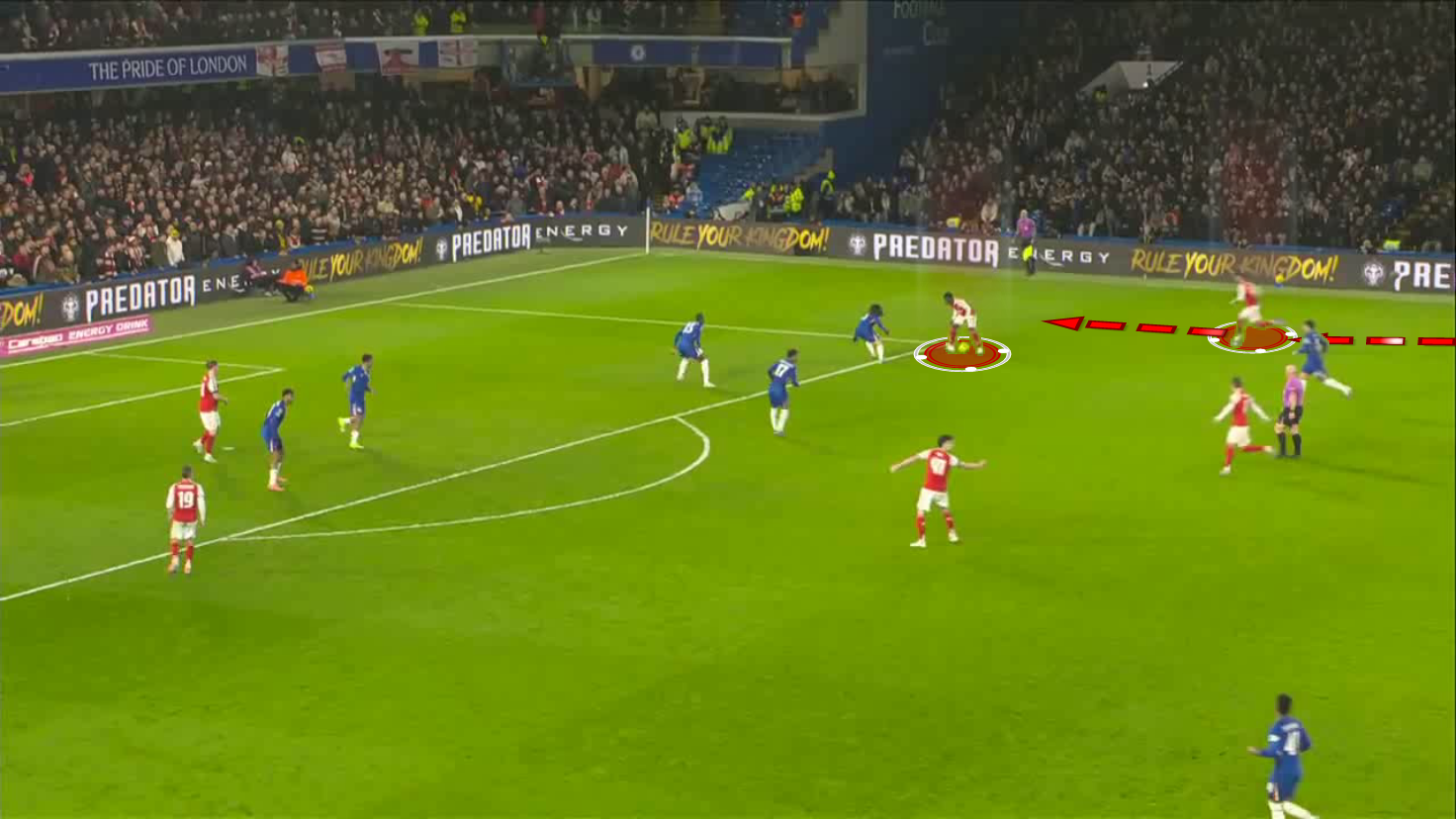
A more traditional element of full-back play, still widely practised, is the classic overlap.
The above counterattack, which led to Arsenal's second goal in their 3-2 first-leg victory over Chelsea in the League Cup semi-final, came from a Ben White overlap and cut-back.
This image shows winger Bukayo Saka slowing down the attack, coming to a complete halt to allow White the time to perform the supporting overlapping run.
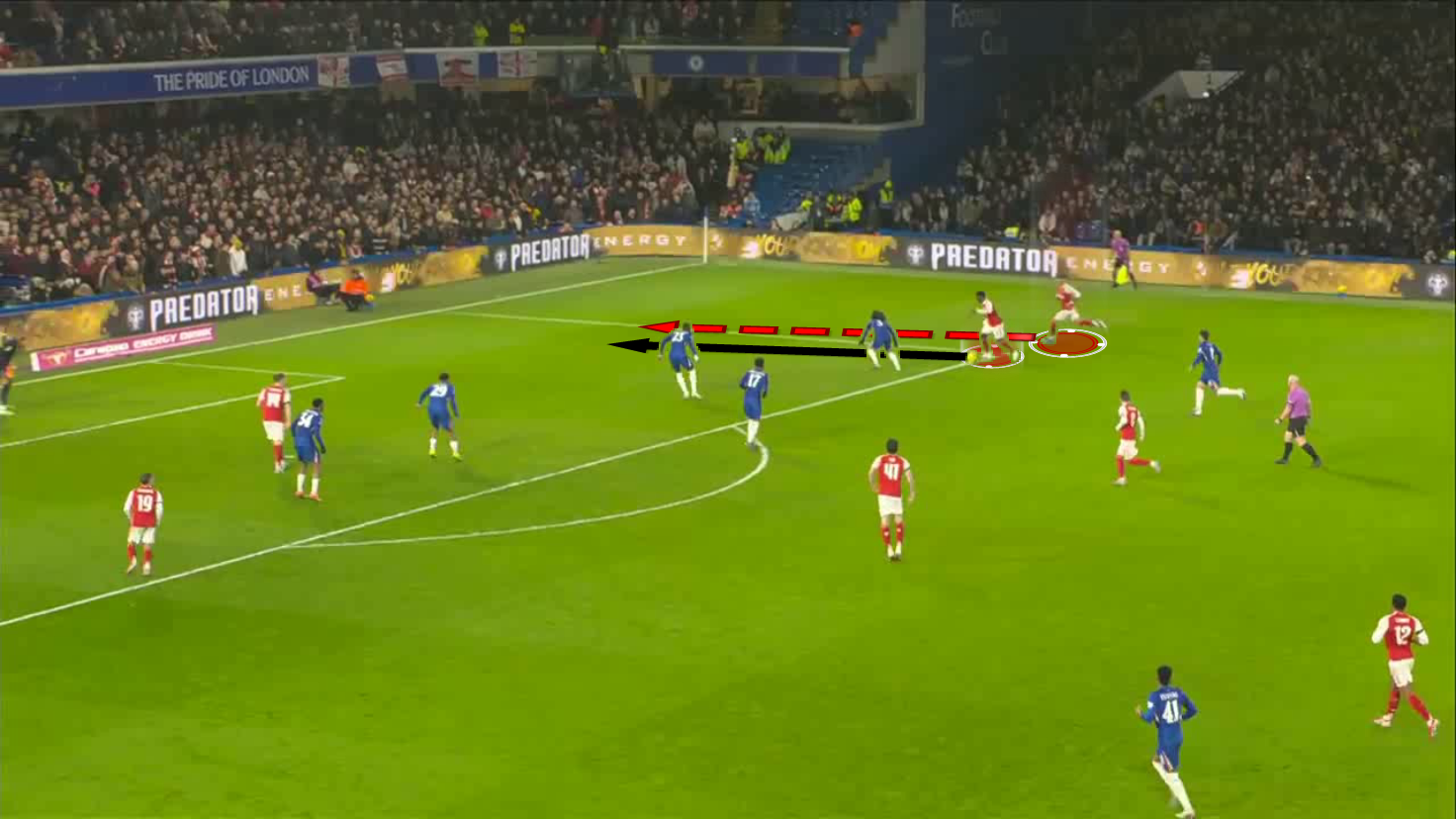
As White approaches, Saka runs at his direct opponent.
This pins the opposition full-back in place, preventing the defender from shifting over to cover the Arsenal right-back's run.
In this instance, the defending player is more concerned with preventing Saka from cutting inside and unleashing a left-footed shot, so he uses his body to block the winger's path.
Anyone who saw the England stars finish against Wales early this season would understand this decision.
White’s run is diagonal, towards the box, and very close to Saka.
This is an important detail as it is the proximity that reduces the amount of time the nearest defender has to adjust, shift, and block the upcoming cut-back from White.
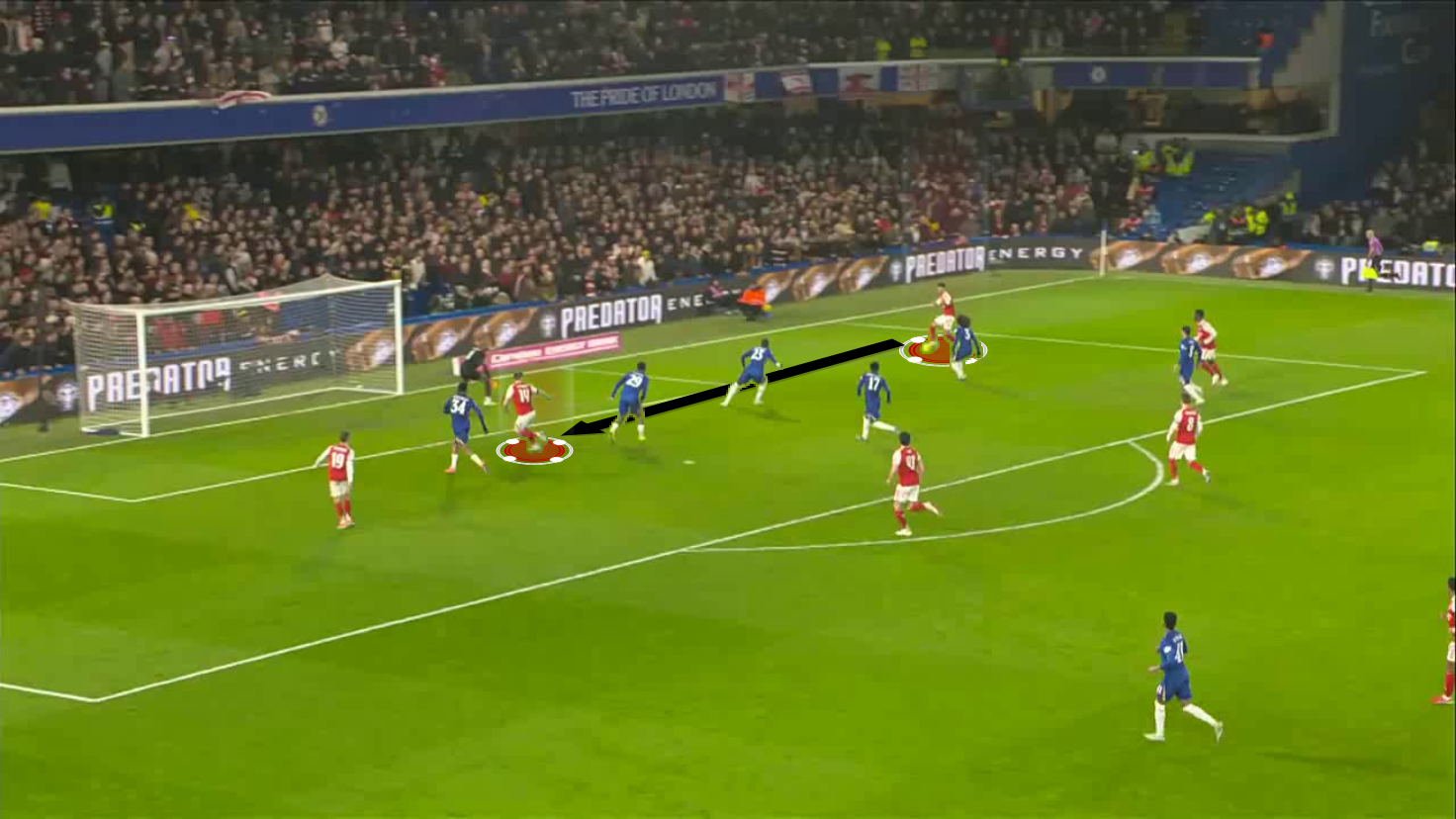
White, with his first touch, ran onto and crossed the ball across the goal for his striker, Viktor Gyökeres, to tap it home.
The dangers of full-backs receiving in these zones are clear to see.
Counterpressing
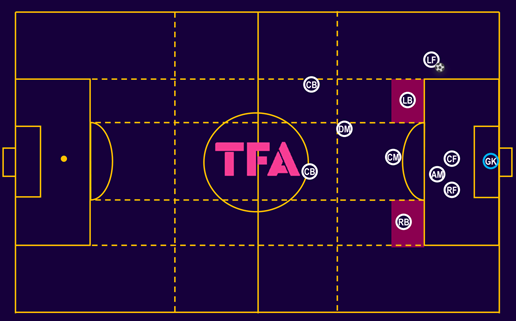
As previously mentioned, another major benefit of having full-backs join in attacks is the ability it gives them to counterpress from these areas.
Highlighted on the tactical diagram above are positions that either or both the ball-near and ball-far full-backs can frequently be seen occupying during their team's attacks.
By being positioned high and in an area where the ball could likely fall, full-backs can help trap and pin back their opponents should the ball be turned over.
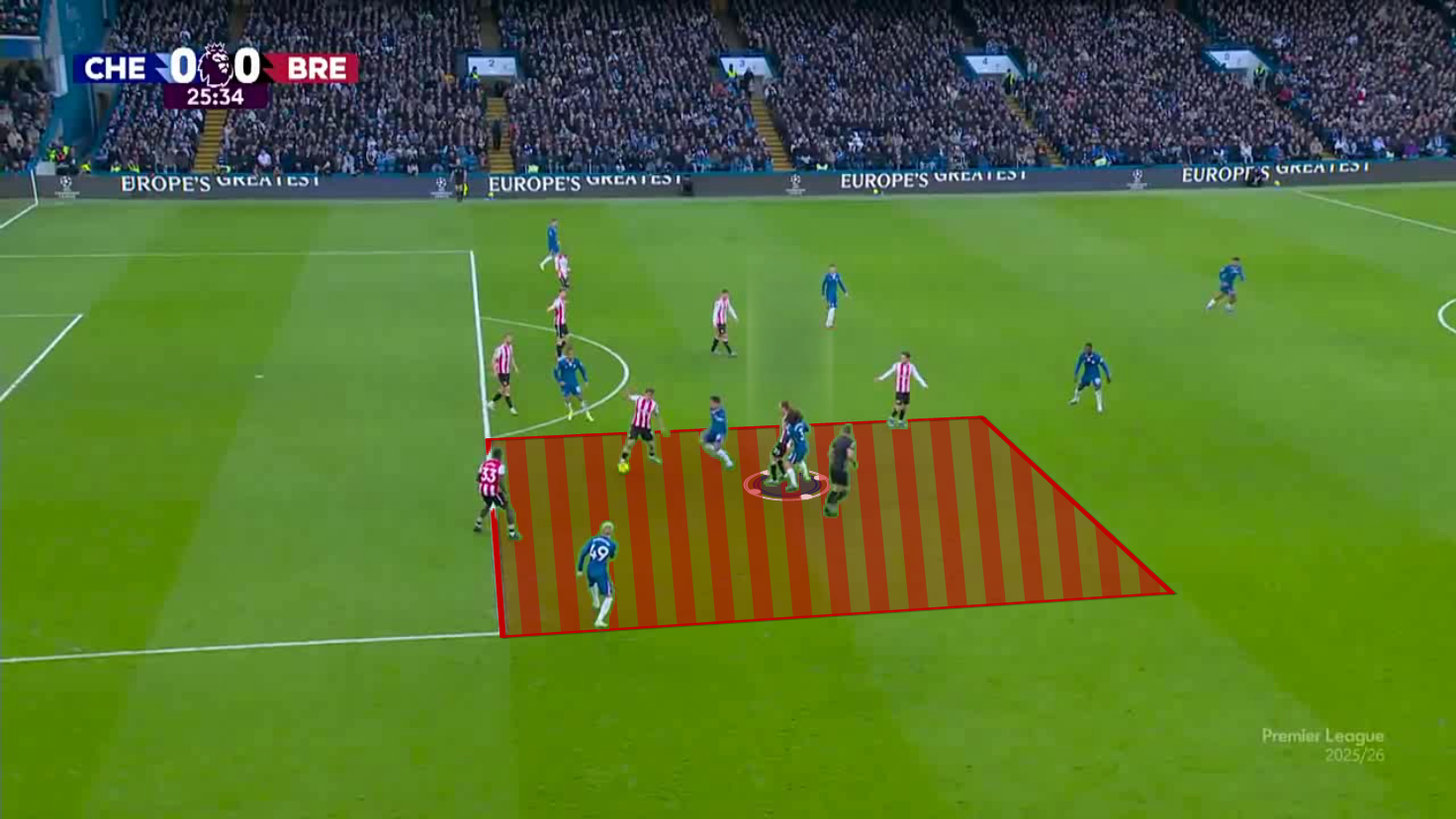
The benefits of this positioning were on show in Chelsea’s 2-0 win over Brentford at Stamford Bridge.
Left-back Marc Cucurella, highlighted, stood in this area during his side's attacking phase.
When the ball was turned over, Cucurella, without even touching the ball, was able to affect the play by blocking Brentford's escape.
Brentford were forced to play the first pass backwards, with the second being blocked, and the ball falling to forward João Pedro, who smashed the ball into the net.
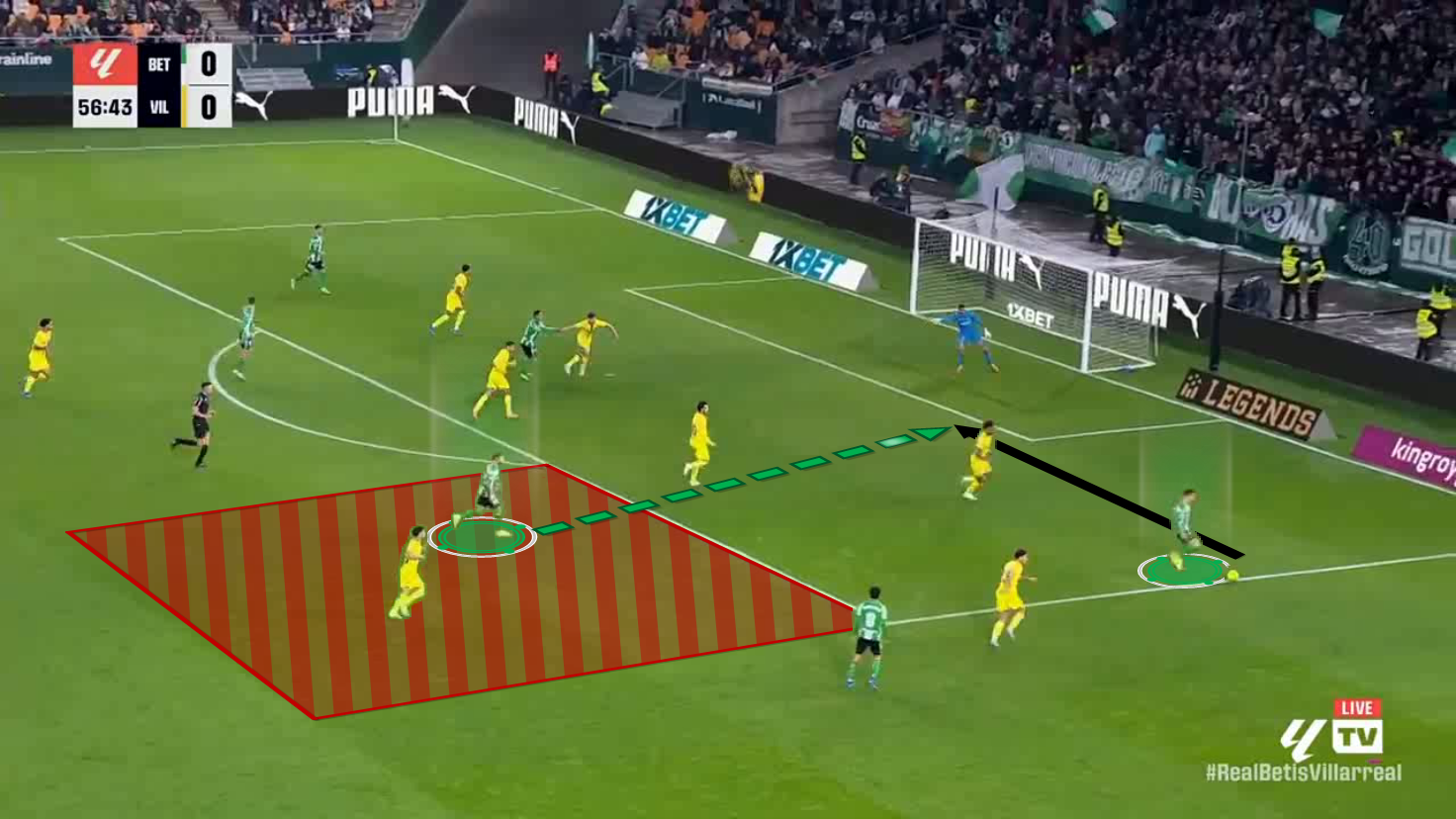
In this example, from Real Betis’ victory over Villarreal, right-back Aitor Ruibal is similarly positioned to Cucurella.
Ruibal, by occupying this area, has positioned himself well for any cross or cut-back that gets cut out and cleared at the front area.
However, as the play develops, the full-back spots an opportunity to make an attacking play.
With the Villarreal defender responsible for picking up Ruibal, having switched off and being too focused on the ball, Ruibal makes a last-second run behind him to get on the end of his teammates' cut-back.
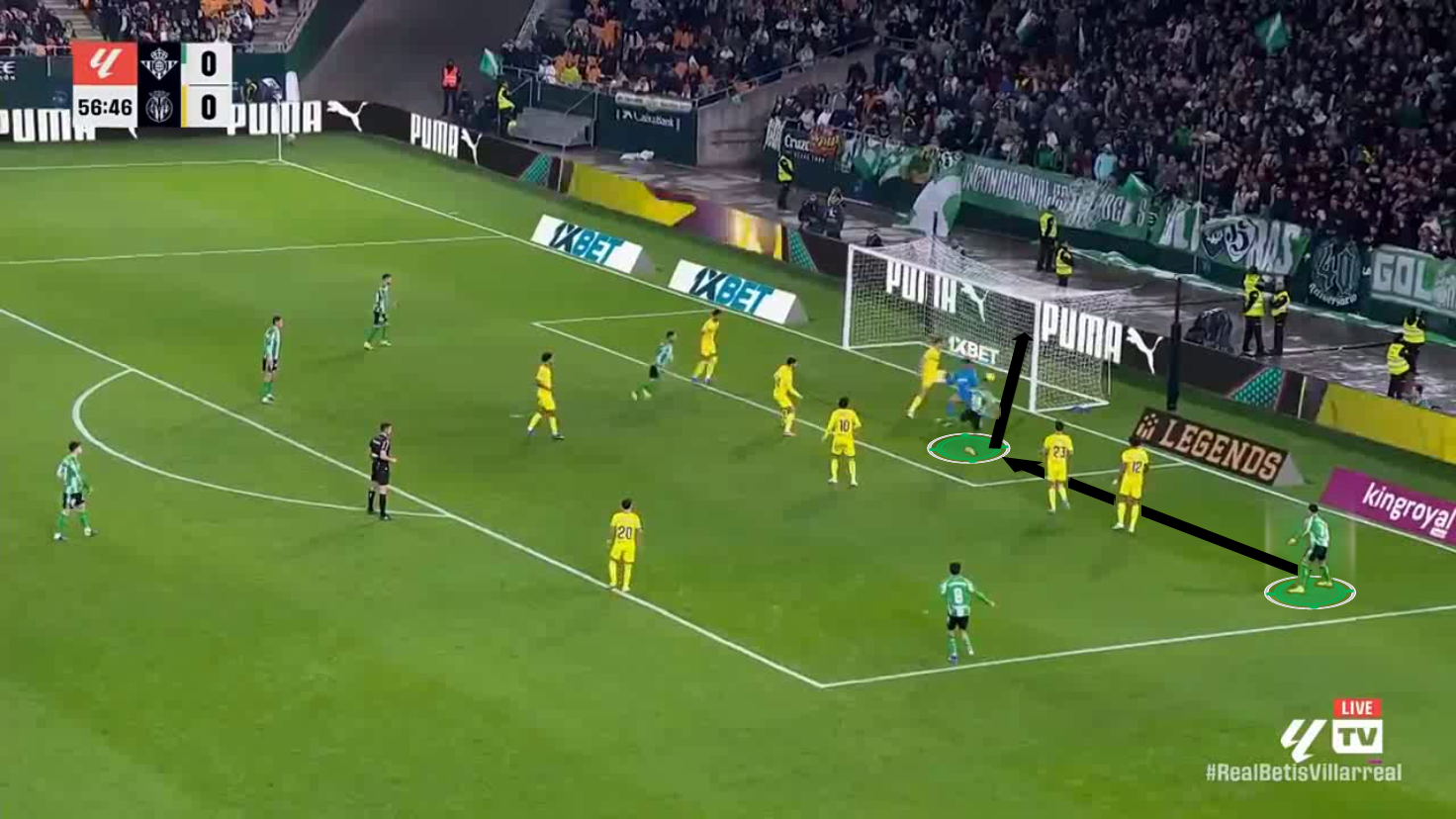
Once again, when receiving in the ‘assist zone’, a full-back is able to fully capitalise on the opportunity himself and put the ball in the net.
Full-Backs Crossing & Finishing Exercise
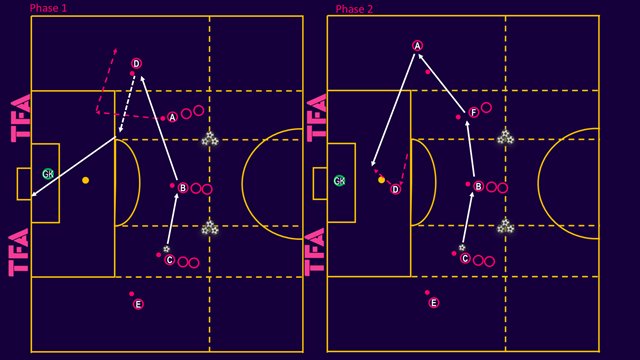
This multi-phase crossing and finishing exercise is designed to work on the runs, crosses, and cut-backs, analysed above, to improve full-back performance.
The first stage involves a decoy run, with the full-back positioned high up the pitch in an inverted position, making a run into the box to facilitate their winger cutting inside for a shot.
The second phase begins immediately after the winger gets his shot away.
Player ‘C’ again begins the play with the ball being passed from ‘C’ to ‘B’ to ‘F’ and finally to ‘A’ in the wide area.
This ball movement replicates when a side has the opposition pinned deep in their own defensive third and is quickly moving the ball from one side to the other.
When the ball reaches ‘A’, now in the wide area, a firm, outswinging cross is delivered to ‘D’, who is now attacking the second six-yard box.
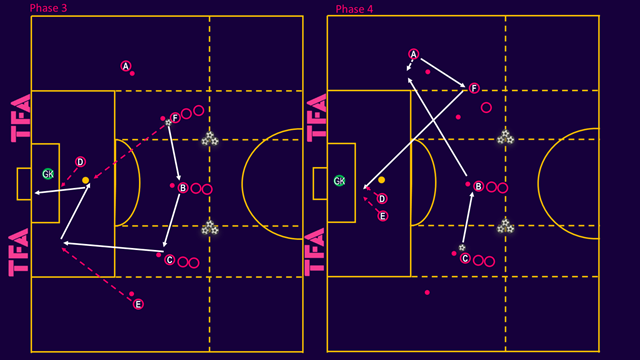
Player ‘F’ now starts with a third ball moving in the opposite direction.
When the ball reaches ‘C’, ‘C’s first touch is the trigger for ‘E’ to run in behind.
The pass represents either an overlapping full-back running into the ‘assist zone’ or a full-back playing in their winger.
‘D’ makes a run designed to push the defenders back towards their own goal to allow ‘F’ to attack the cut-back, as Savona has done for Nottingham Forest.
The fourth and final phase again begins with ‘C’ passing to ‘B’ with the ball then being quickly played out wide to ‘A’.
‘A’ drives forward slightly to recreate pinning an opposition full-back before laying the ball to ‘F’ to cross.
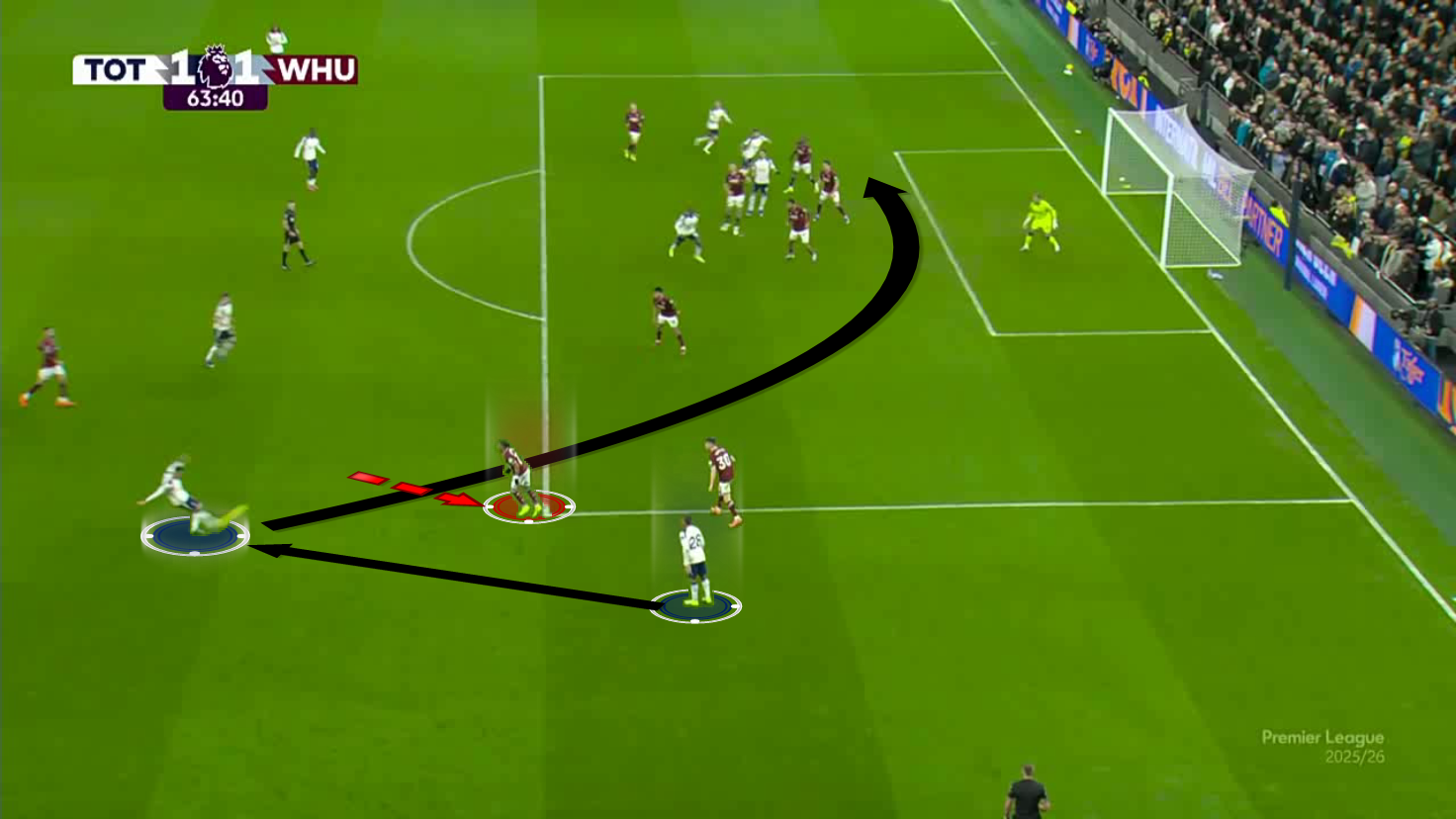
This last cross is designed to mimic the above scenario that led to Tottenham's goal in their 2-1 defeat to West Ham.
Here, the opposition's widest midfielder has doubled up with his full-back to prevent a 1-v-1 situation and make it more difficult for the Spurs winger to cut inside.
However, the midfielder dropping so deep has opened up the right flank for Spurs’ supporting right-back, Pedro Porro, to receive the ball.
Porro received the laid-back pass and was able to whip the ball into the second six-yard box for Cristian Romero to head into the net.