Using Goalkeepers In Build-Up Like Bayern Munich & Manchester City - Tactical Theory

This tactical theory will analyse trends concerning how goalkeepers are utilised.
Long gone are the days when goalkeepers were simply considered the last line of defence.
They are now instrumental in implementing the tactical philosophy of the game's elite coaches.
Two trends on the rise are goalkeepers increasingly being used to change their team's shape during the build-up phase and, perhaps somewhat contradictory, certain goalkeepers electing to play long more often.
Changing the team's formation includes, for example, a goalkeeper playing between their two centre-backs to create a back three.
This involves playing high, often well outside their penalty area, while being pressed by opposition forwards.
The vulnerabilities in this approach are self-evident.
Playing long is commonly viewed as the risk-averse solution; however, as this analysis will show, it has its pitfalls.
This tactical analysis weighs the risks and rewards of each approach and provides examples of how these tactics have been implemented in recent matches.
Goalkeepers Creating Numerical Superiority
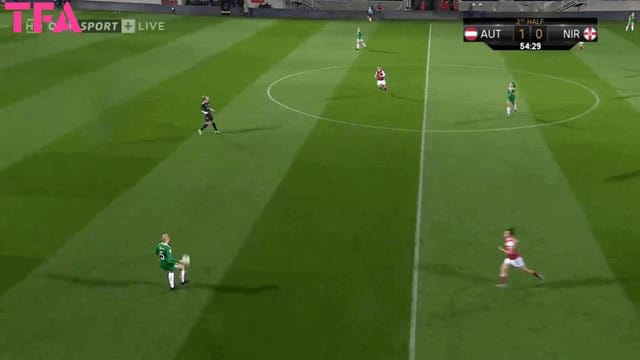
Former Northern Ireland Women’s National Team manager Kenny Shiels was one of the first to use this strategy on the international stage during qualifying for Euro 2022.
As the above image shows, when playing against a low or mid-block, Northern Ireland's goalkeeper would position herself between her centre-backs, only yards inside her own half.
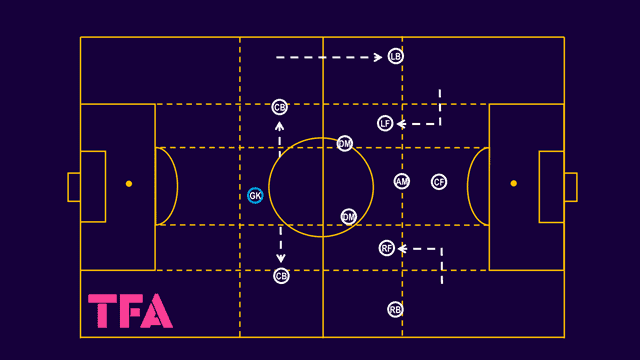
This tactic allowed Northern Ireland's full-backs, playing in a traditional 4-3-3, to push higher and create a 3-5-3 formation using all 11 players.
The above tactical diagram shows how teams can change their shape by utilising all 11 players.
The centre-backs can split wider, with the goalkeeper between them, and the full-backs can play higher, allowing their wingers to move inside.
This allows the wingers to create an overload in the middle of the pitch.
In Northern Ireland's case, it provided numerical superiority and allowed Northern Ireland to dominate possession for spells, but it had clear risks.
In the aforementioned game against Austria in the qualifying phase, a single misplaced pass to their goalkeeper led to a goal and, ultimately, defeat.
Atlanta United 3-4-1-3 Formation
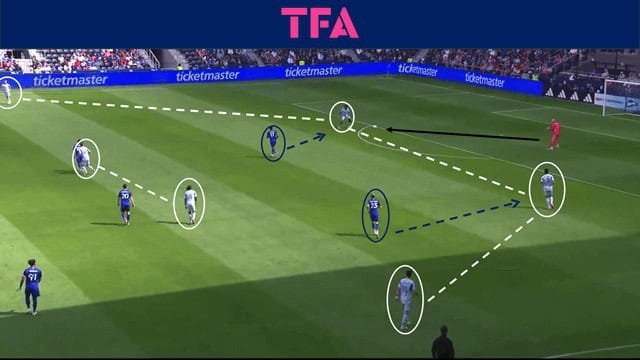
Atlanta United are another team that use their goalkeeper as part of their backline in the build-up, albeit from a far deeper position.
The above image shows Atlanta in their light blue away kit building up in their MLS meeting with Cincinnati last season.
Cincinnati are pressing in a 4-4-2 with their front two, pressing Atlanta’s centre-backs, who are playing with a back four in a 4-2-3-1.
As Atlanta’s centre-back receives the ball from his goalkeeper, Brad Guzan, the front two of Cincinnati can simultaneously block off passes into Atlanta’s double-pivot and take care of each centre-back.
Should Atlanta remain in this shape and switch the ball between centre-backs, Cincinnati could feel comfortable in cutting off half the pitch and forcing Atlanta down one side.
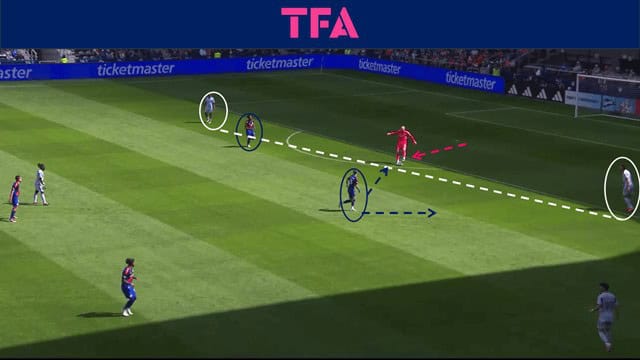
To counter this press, Guzan stepped forward, outside of his box, allowing his centre-backs to split wider and create a back-three.
By offering himself as a spare man, Atlanta has created a three against two.
This has also changed their shape to a 3-4-4, allowing them to have more players higher on the pitch as well as having an overload in their defensive third.
In the above scenario, the opposition's right centre-forward has to decide whether to protect his midfield or prioritise the centre-back's inability to receive in space.
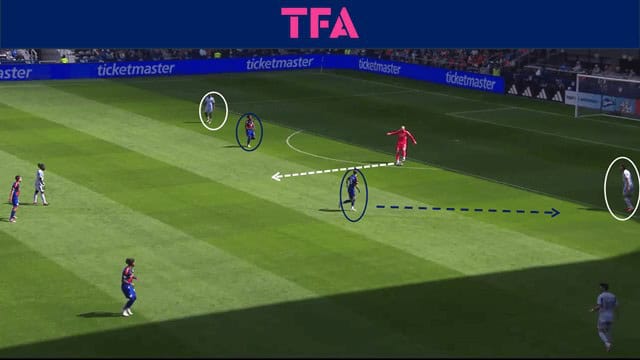
A clear trait in Atlanta’s build-up is baiting the strikers into jumping to the centre-backs when in this shape.
When opposition forwards jumped too early to press the centre-backs, Guzan took a touch forward between the strikers.
This allows Guzan, now beyond the first line of pressure and relatively unopposed, to get his head up and play long from a higher and central position to one of his forwards.
This appears to be a clear strategy to make use of the goalkeeper's superb long ball from a position where he can be far more deadly.
This tactic led to a Guzan assist in Atlanta's most recent match against New York City.
Atlanta was able to push an extra player high, so Guzan played long to his striker, who had been left one-on-one with the opposition centre-back marking him.
Bayern Munich’s Backline
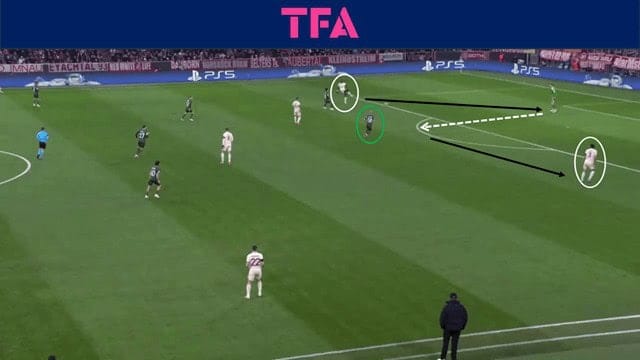
Bayern Munich, seen here in Champions League action in their 1-1 draw with Celtic last season, used Manuel Neuer in a far more fluid approach.
He moves, changing the team’s shape based on what he sees ahead of him.
As in the image above, Neuer typically remains deep behind his centre-backs and moves side to side with the ball to create angles for a pass.
What is different here, though, is that Neuer will take an aggressive touch forward and drive at one of the pressing forwards.
This action pins the pressing player, giving more space to Neuer's centre-backs.
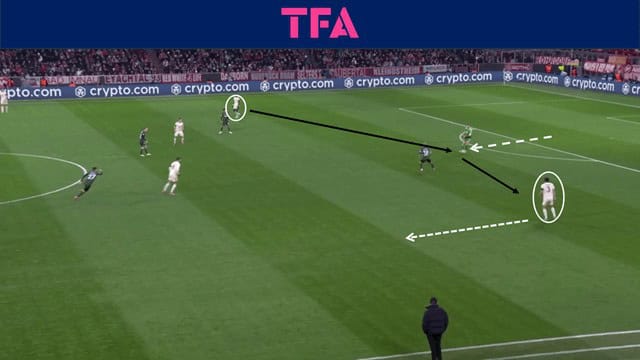
Neuer, showing his comfort levels in receiving the ball, similar to those of the best playmaking midfielders, will also step up to receive in line with his centre-backs, creating a makeshift back three.
This achieves two things.
It allows the ball to reach him quicker, giving the pressing attackers less time to react.
Secondly, Bayern's centre-backs can split even wider, giving the opposition's forwards more ground to cover and, as it happened here, more time for his teammates to receive and drive past the press.
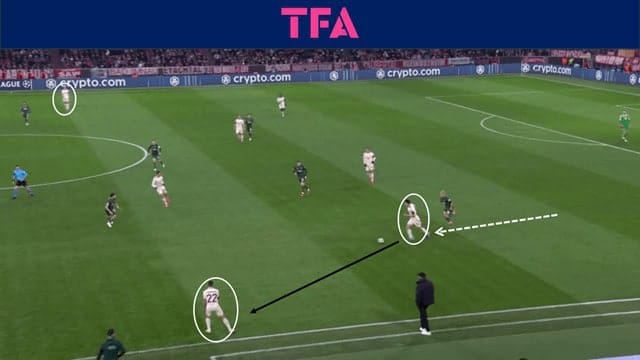
In response to the widening of their centre-backs, the full-backs have pushed higher, with their ‘number 6’ dropping between centre-backs to replace Neuer.
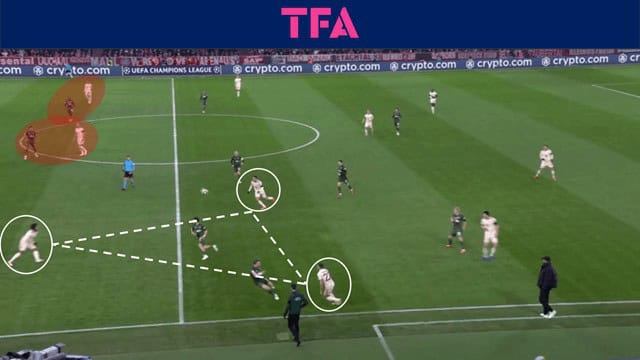
The reward for the bravery of their goalkeepers' positioning is shown here.
Now Bayern have a triangle in the wide area and a three-on-three on Celtic's backline.
Playing Long To Assist
As mentioned in Brad Guzan's analysis, goalkeepers are not being asked just to play long for territory but rather to assist goals.
As The Athletic covered earlier this year, long kicks from goalkeepers are on the rise, with specific players usually targeted to put through on goal.
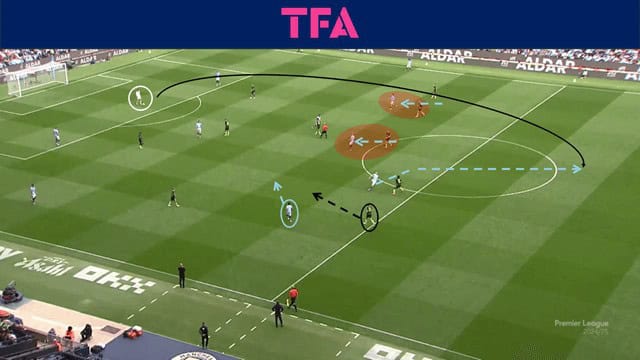
The above image shows such a scenario with Manchester City’s Ederson setting up striker Erling Haaland.
Of course, there is more involved in this assist than simply a good, long punt up the pitch from Ederson.
Coordinated movements to isolate Haaland City’s forwards are required.
Just as Ederson raises his head, having received a pass from his centre-back, three of City’s front players make movements towards the ball.
The timing of these runs is vital.
The defenders instinctively track their marks to prevent them from receiving the ball in the pocket.
Within an instant, the ball is flying over their heads into the space they have vacated for Haaland to sprint onto.
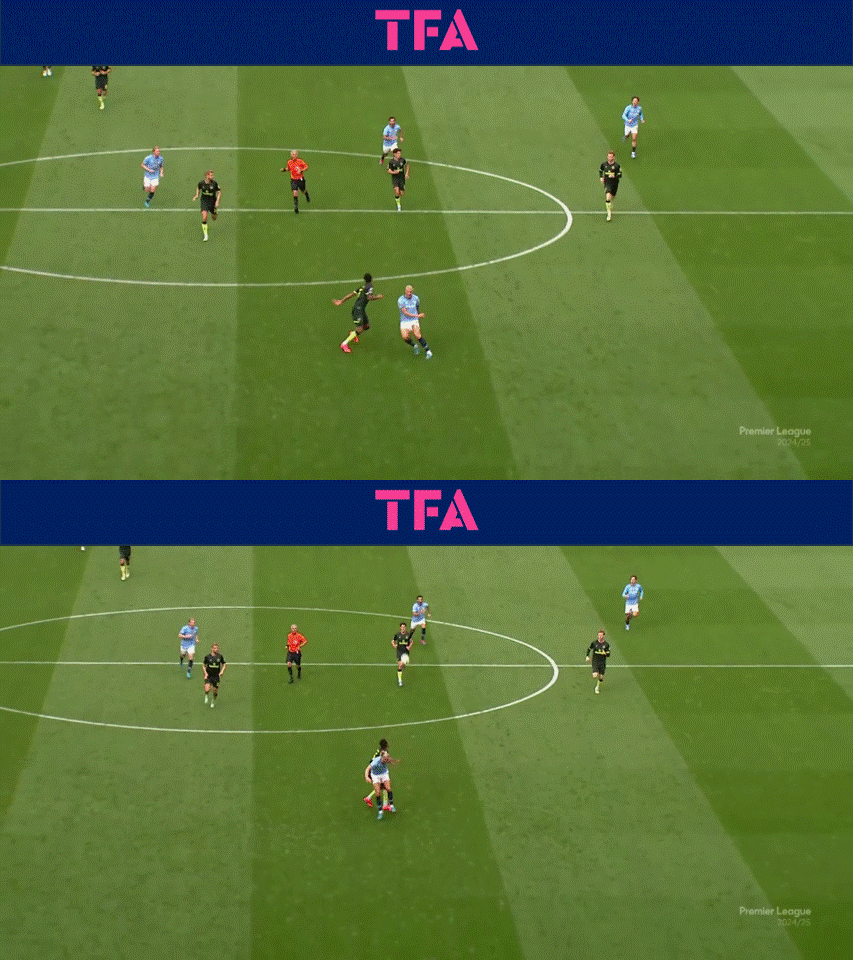
Once one-on-one with the defender, with the ball in the air, there is still much to do for Haaland.
With his direct opponent focused on the ball and attempting to win it in the air, Haaland finds himself goalside of the defender.
The big striker then gives the centre-back the signature ‘Haaland bump’ just as the defender is about to jump for the ball.
This prevents his opponent from making contact with the ball and places Haaland in the most advantageous position to run onto the ball.
In this example, Haaland sprinted onto the ball as the defender was trying to regain his balance and slotted past the goalkeeper
Playing Safe
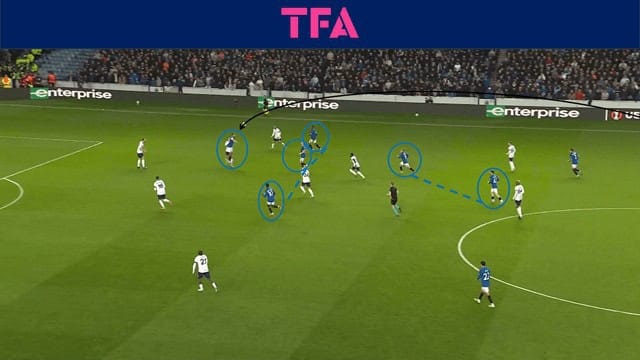
Other teams play long for more pragmatic reasons.
Others play long simply because they feel the risks of playing short out of the back are too high, rather than attempting to set up a goal with a specific, planned phase of play.
An example of this was Rangers' Europa League Round of 16 tie against Jose Mourinho’s Fenerbahçe last season.
Whilst former England international Jack Butland's long balls played deep into the opposition's half certainly showed attacking intent, the main aim appeared to be to keep the ball as far from his goal as possible.
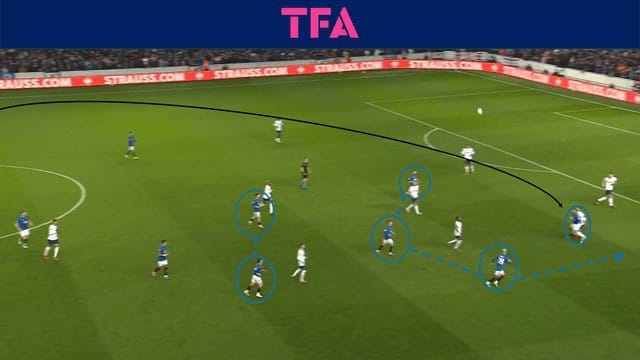
Rangers’ tactics were to play long to their ‘9’ Cyriel Dessers and get players underneath the ball.
Barry Ferguson's men ‘ring-fenced’ Dessers with three players, including Václav Černý.
When the ball looked like it was going to be won, it was flicked on by the Rangers forward, one of the ring-fencing players.
Usually, Černý would run behind.
Throughout the match at Ibrox, this usually resulted in Rangers picking up the second ball and gaining possession inside Fenerbahçe’s half.
Even on the occasions when Butland's long ball was underhit, Rangers were still able to either retain possession by winning the second ball or, at least, delay any attack going the other way.
This also gave Rangers the opportunity to pick up fouls in areas where the ball could be delivered to the box.
This was done by target man Dessers being willing to take hits from defenders trying to win the ball in the air.
Rangers’ game plan, on the whole, worked.
They created many chances through this tactic whilst not risking losing the ball in and around their own box.
They also encouraged many fouls, which helped dampen some of Fenerbahçe’s momentum.
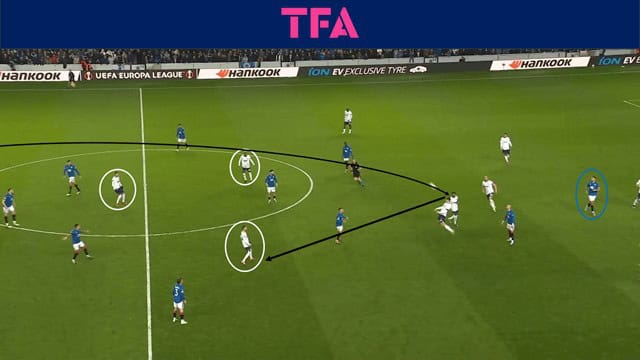
However, there were moments when this approach backfired.
Rangers looked exposed when the long ball did not reach its intended target, and the opposition was afforded a free header.
In the above typical example, the headed clearance bypassed the ring-fencing midfielders and reached an opposition player directly in front of the Rangers’ backline.
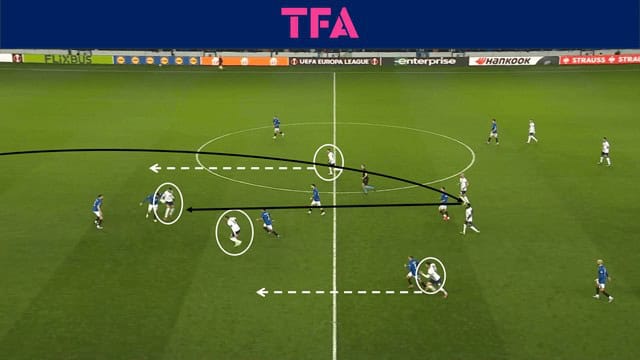
This image comes from another under-hit ball.