
How To Coach Different Pressing Tactics In 4-3-3 Formation - Tactical Theory

Nowadays, a 4-3-3 formation is one of the most commonly used formations for possession-based teams with technical midfielders.
However, to press the opposition, there are many different 4-3-3 pressing strategies for football coaches to use.
Whereas some sides remain in their initial 4-3-3 shape to press, other sides change their setup with a clear intention.
This tactical analysis examines the different varieties of pressing when playing in a 4-3-3 formation.
We will give you an overview of the various shapes, including their advantages and disadvantages and their consequences on the press itself.
4-3-3 With A Focus On Central Areas
A common way of pressing in a 4-3-3 is the way Liverpool used to press under Jürgen Klopp.
Klopp’s side attempted to guide the opposition build-up into central areas of the pitch in order to regain possession with their midfield three.
Therefore, the wide forwards are supposed to defend high up the pitch.
Since this creates space on the wing, the full-backs must be ready to move up the line to press as well.
Ideally, though, the wingers use their cover-shadow to prevent any passes into wide areas from being played.
The striker, meanwhile, presses the central defender as well, thereby leaving only a central passing lane to the central midfielder open.
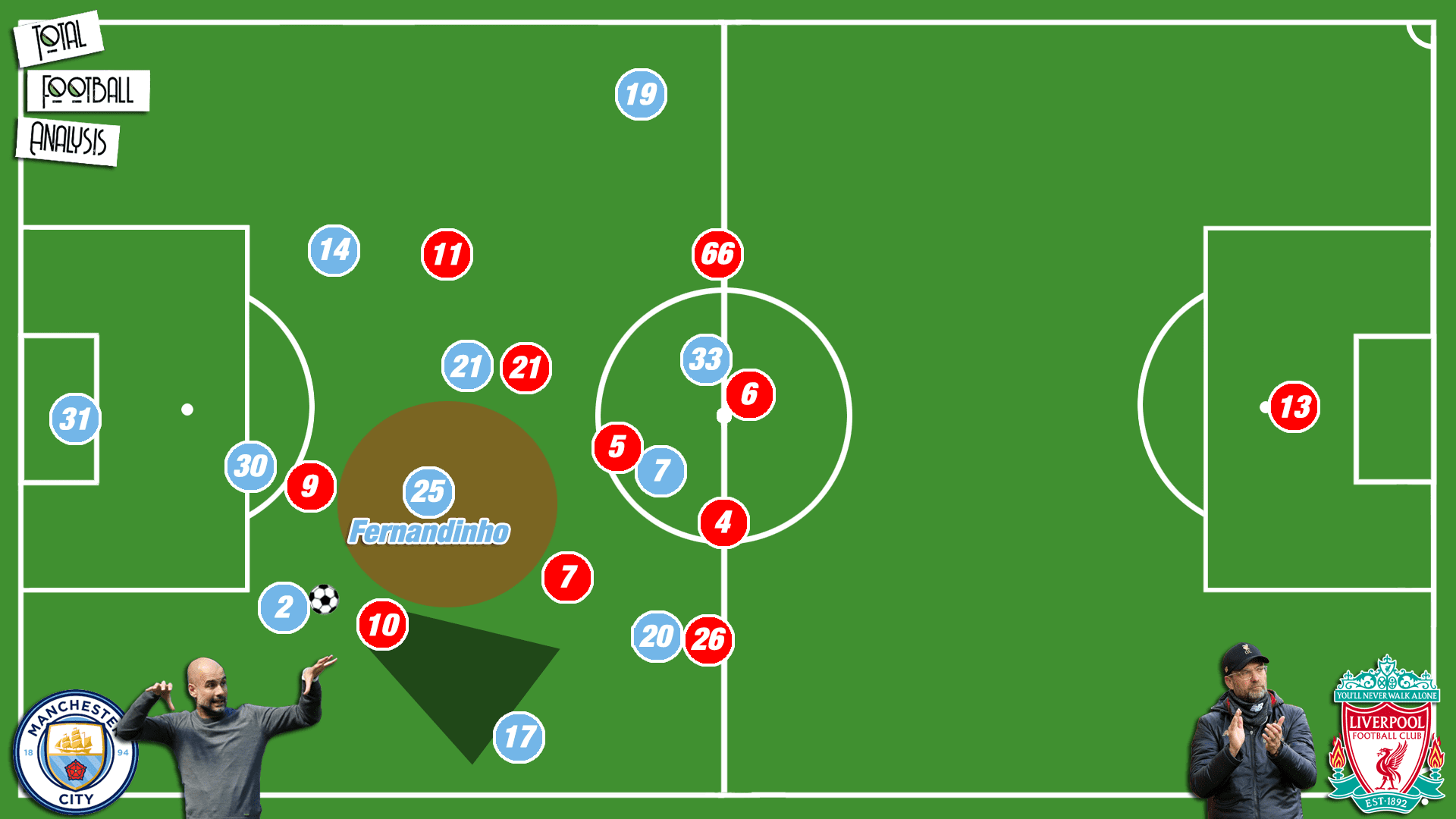
Once the opposition plays into the centre, the midfield three start to press and attempt to regain possession.
One advantage of pressing the opposition's central midfielders is that one can press from the blind side.
Whereas wide players only need to perceive what is happening in an area 180 degrees around them, central players have a radius of 360 degrees full of options and therewith also possible pressing directions.
Only a few players worldwide have great pressing resistance in the centre.
And if pressed well, even they struggle to keep possession.
Slightly different, the striker can also drop in to prevent a pass towards the opposition pivot and, therewith, force a square pass or back pass to be played.
In the latter case, the space would resemble that of a 4-3-1-2.
RB Leipzig, for instance, utilised this press several times under manager Ralf Rangnick, as displayed below.
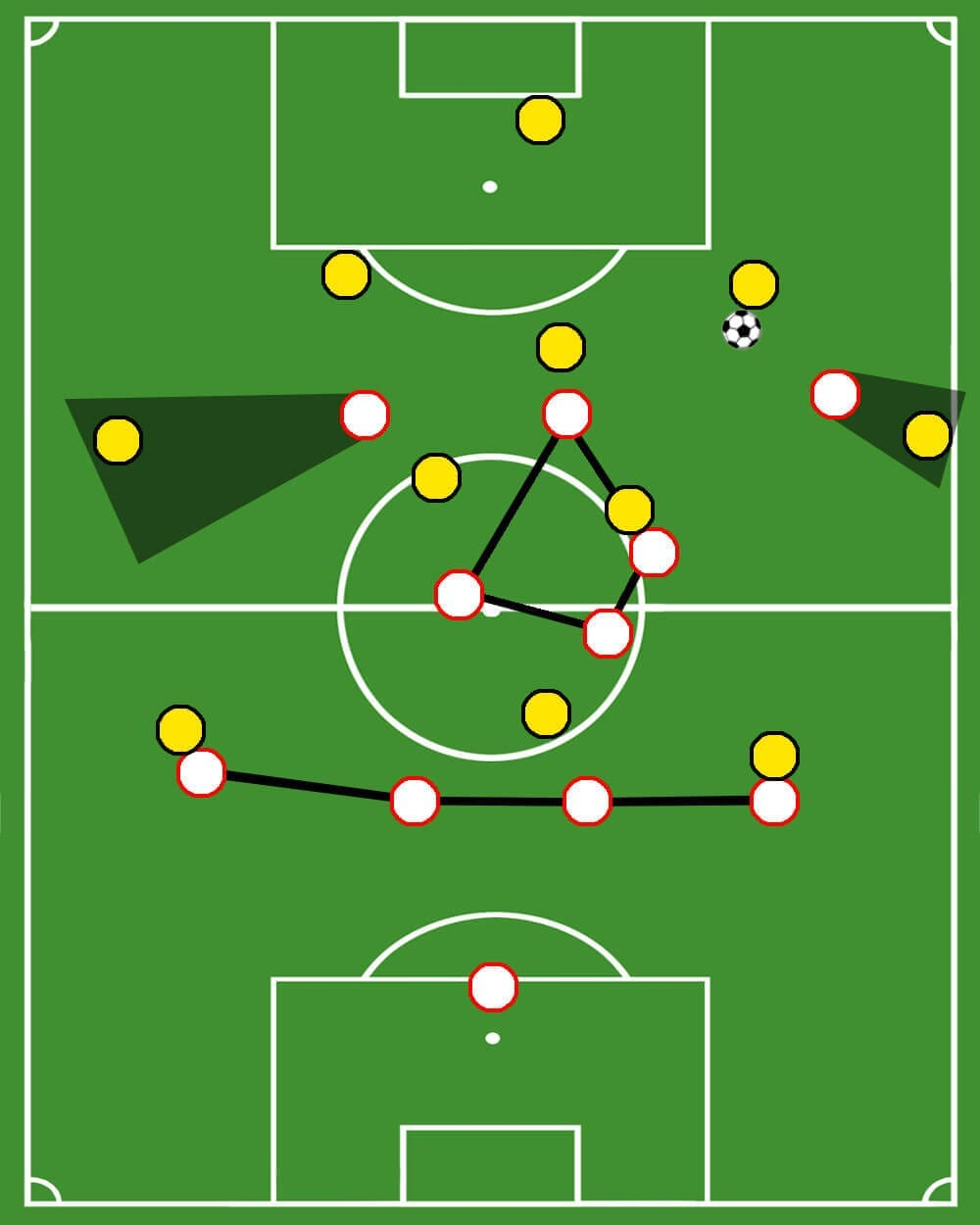
Since the opposition is offered no short passing option, this press often leads to long balls.
Another important feature of this press is the back press.
Whenever the first line of the press is overplayed, the attackers need to press backwards in order to reduce time and space for the ball-carrier.
4-1-3-2 Formation
Another popular use of the 4-3-3 structure is to switch to a 4-1-3-2 formation when pressing.
This is often used when the 4-3-3 is played with a holding midfielder behind two advanced midfielders.
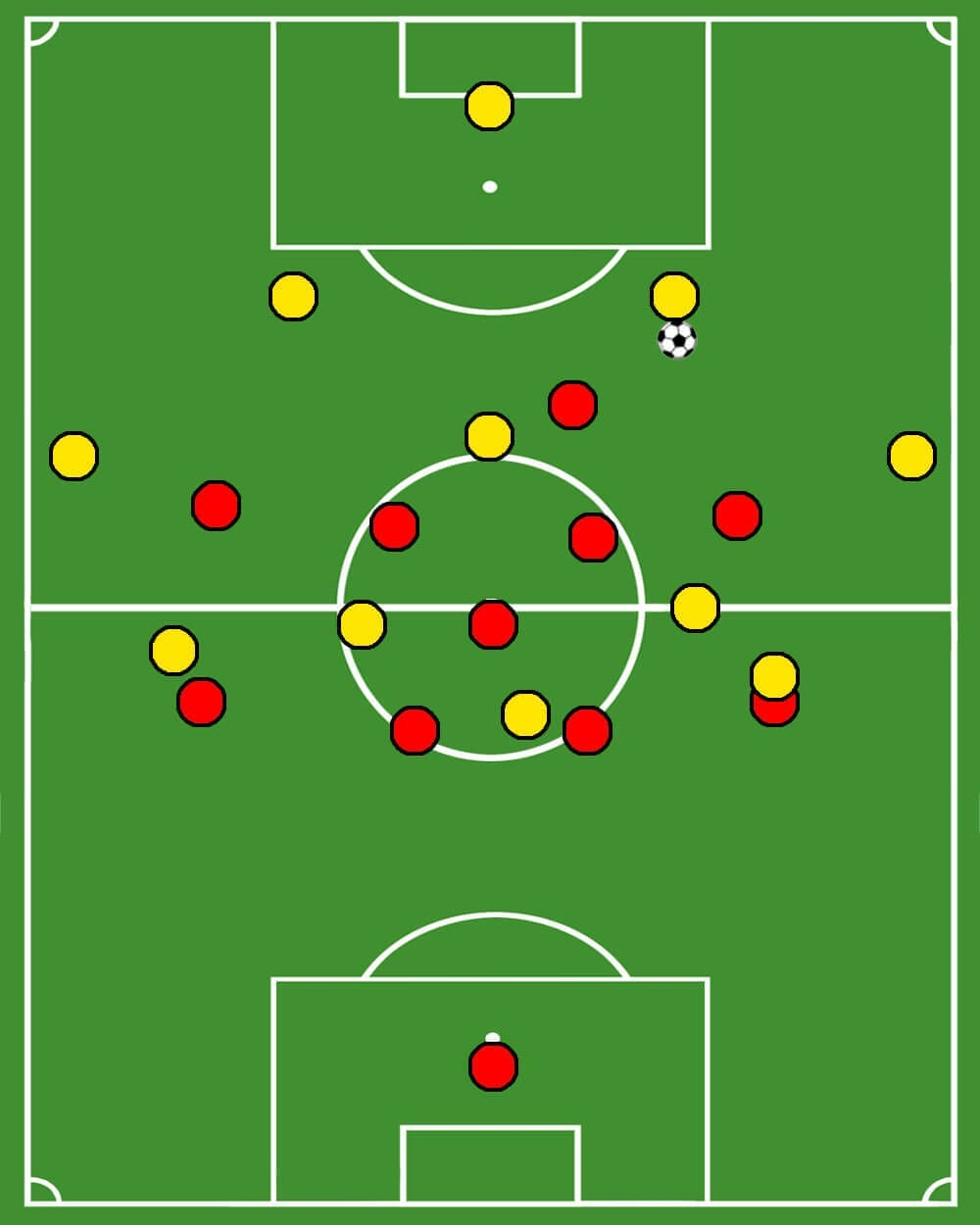
The advanced midfielders support the attacking department when pressing, while the holding midfielder covers in front of the backline.
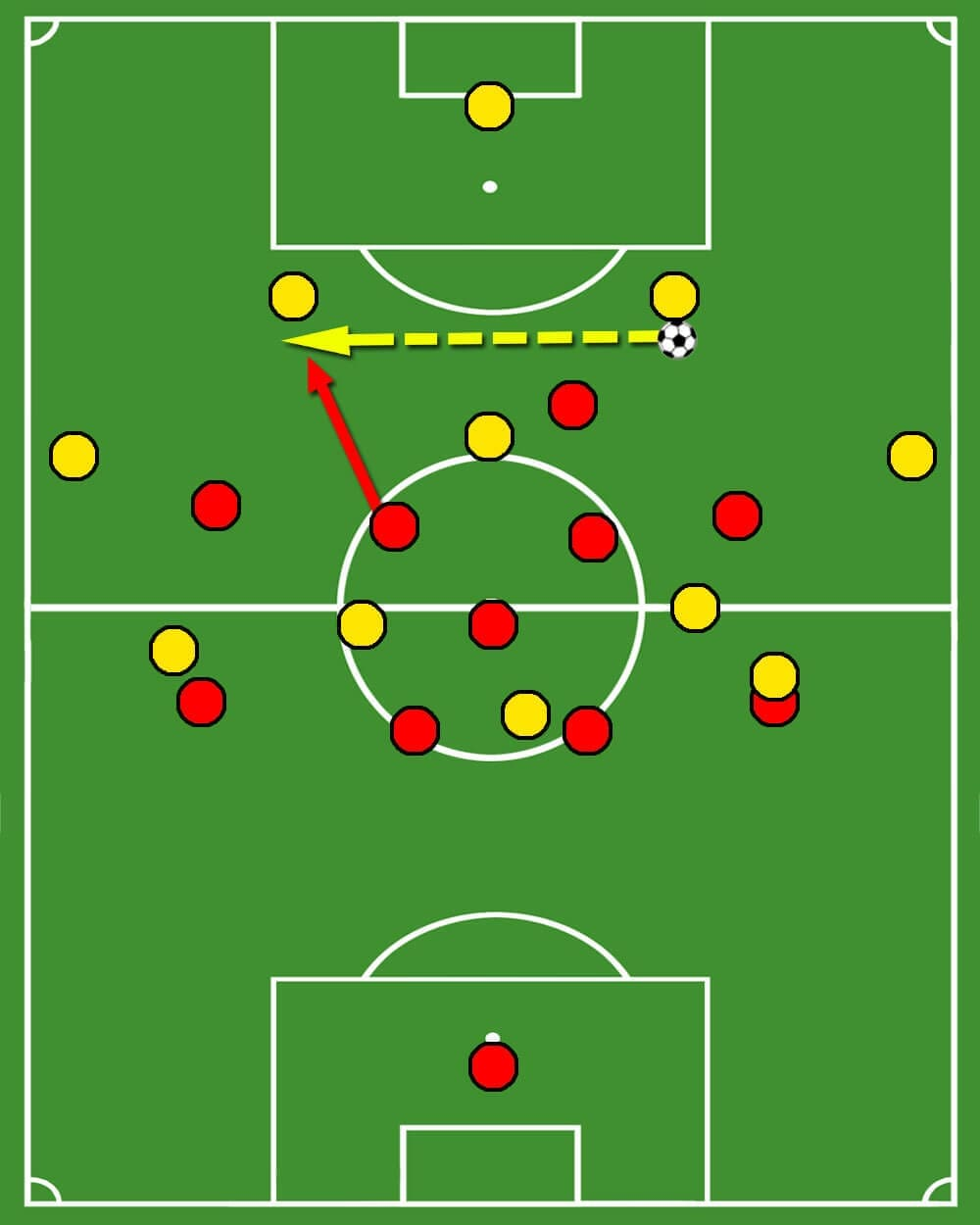
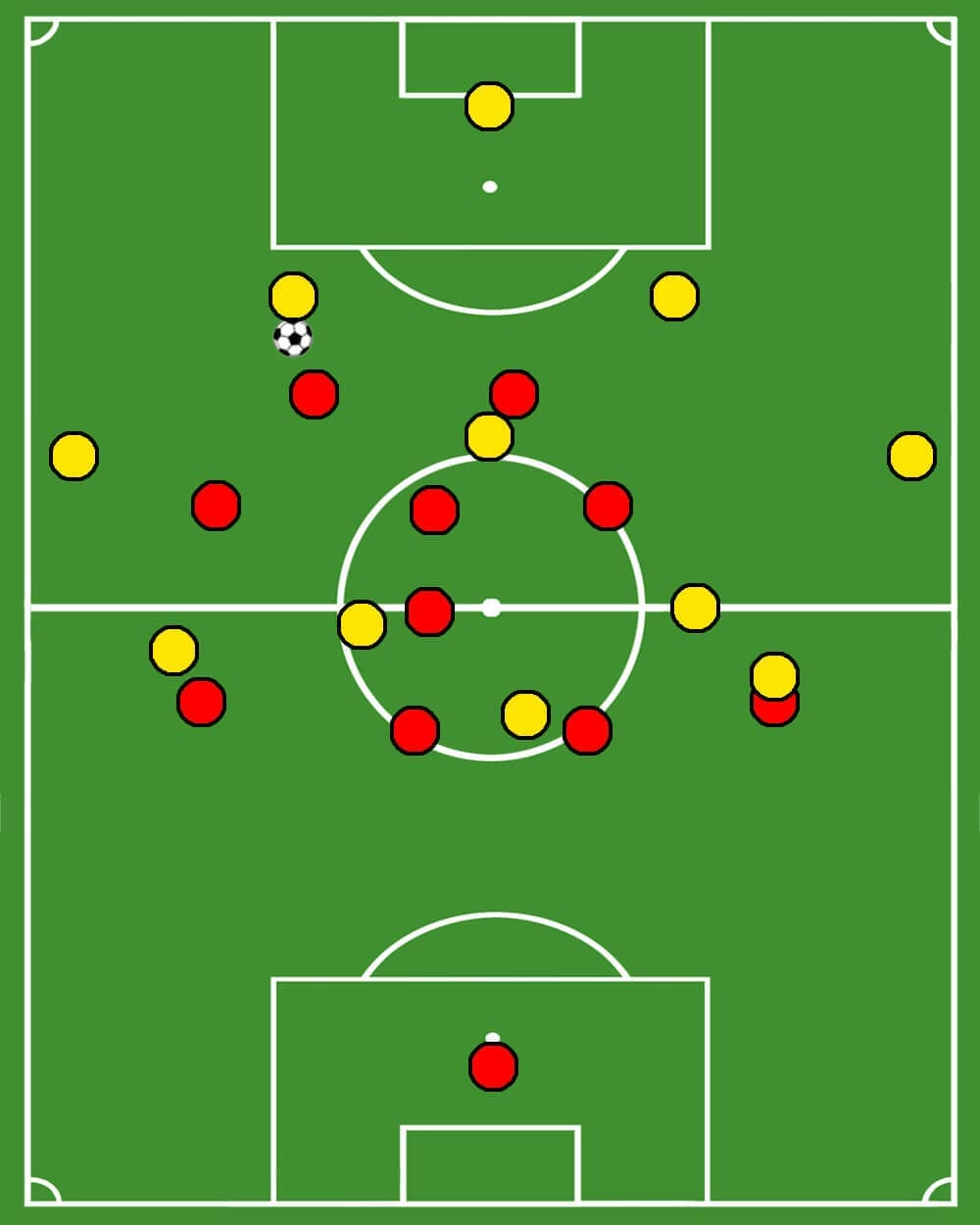
This creates two departments within the squad.
A 4-1 to cover the press in the back and a 3-2 to press the opposition.
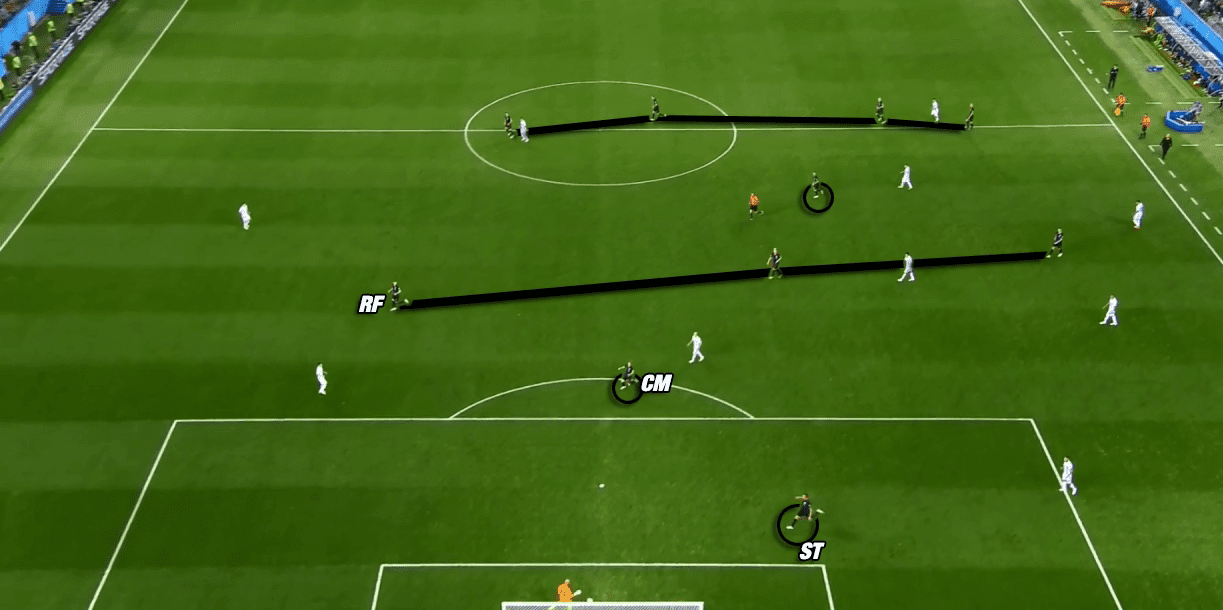
Especially the 3-2 staggered formation of the attacking department is useful for applying pressure to opposition defenders while controlling the centre and guiding the opposition build-up towards the sideline.
Croatia used this setup during the 2022 World Cup under Zlatko Dalic, like in the picture below.
4-4-2 Formation
Sides that use deep wingers to support the full-backs in the defensive phase sometimes adopt a 4-4-2 formation when pressing.
In this case, a central advanced midfielder supports the attacker when pressing.
Unlike the 4-1-3-2, there is no single holding midfielder in front of the backline.
Instead, the other two central midfielders form a double pivot.
This enables the wingers to stay in wider areas, as it creates a line of four rather than the midfield three in a 4-1-3-2.
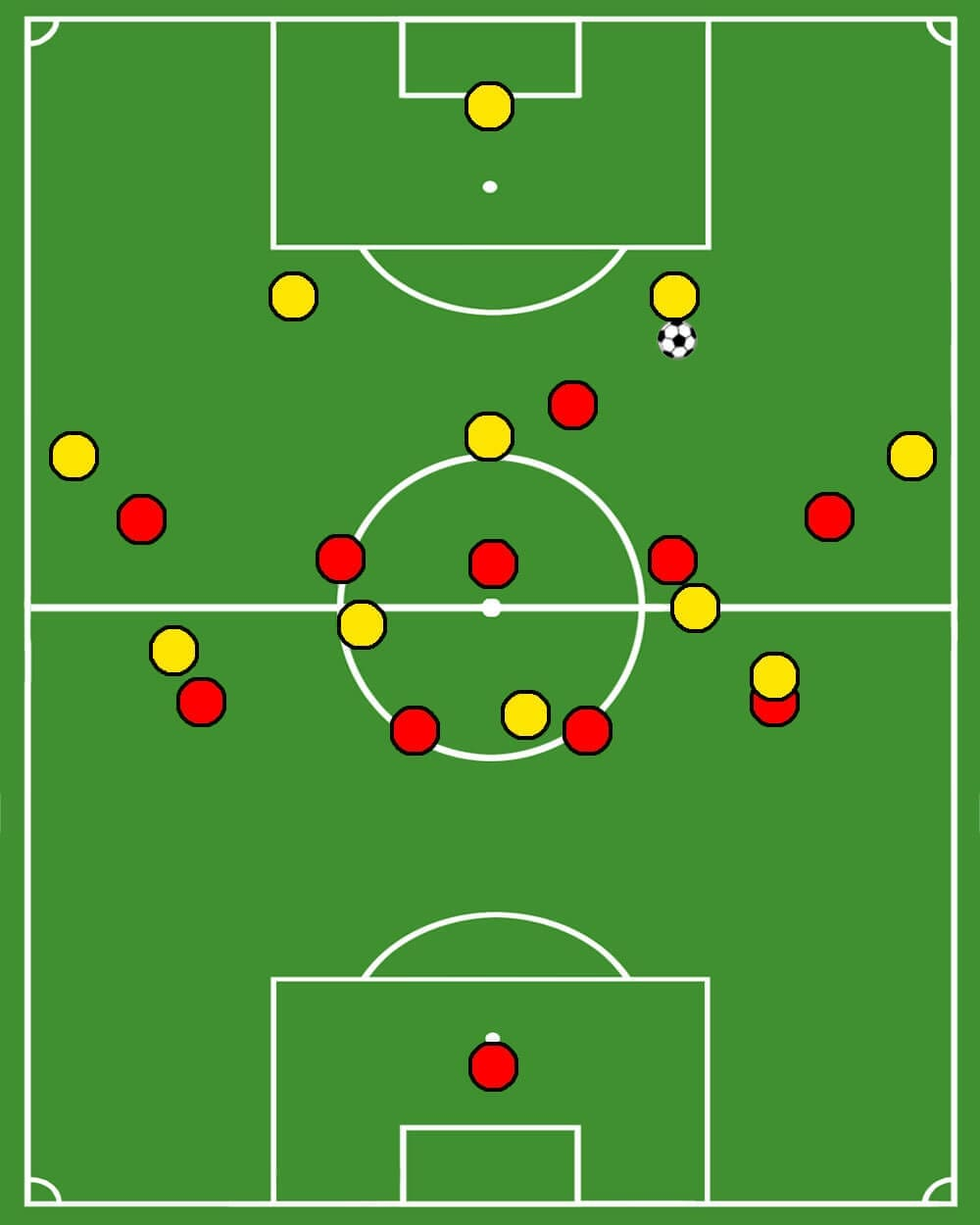
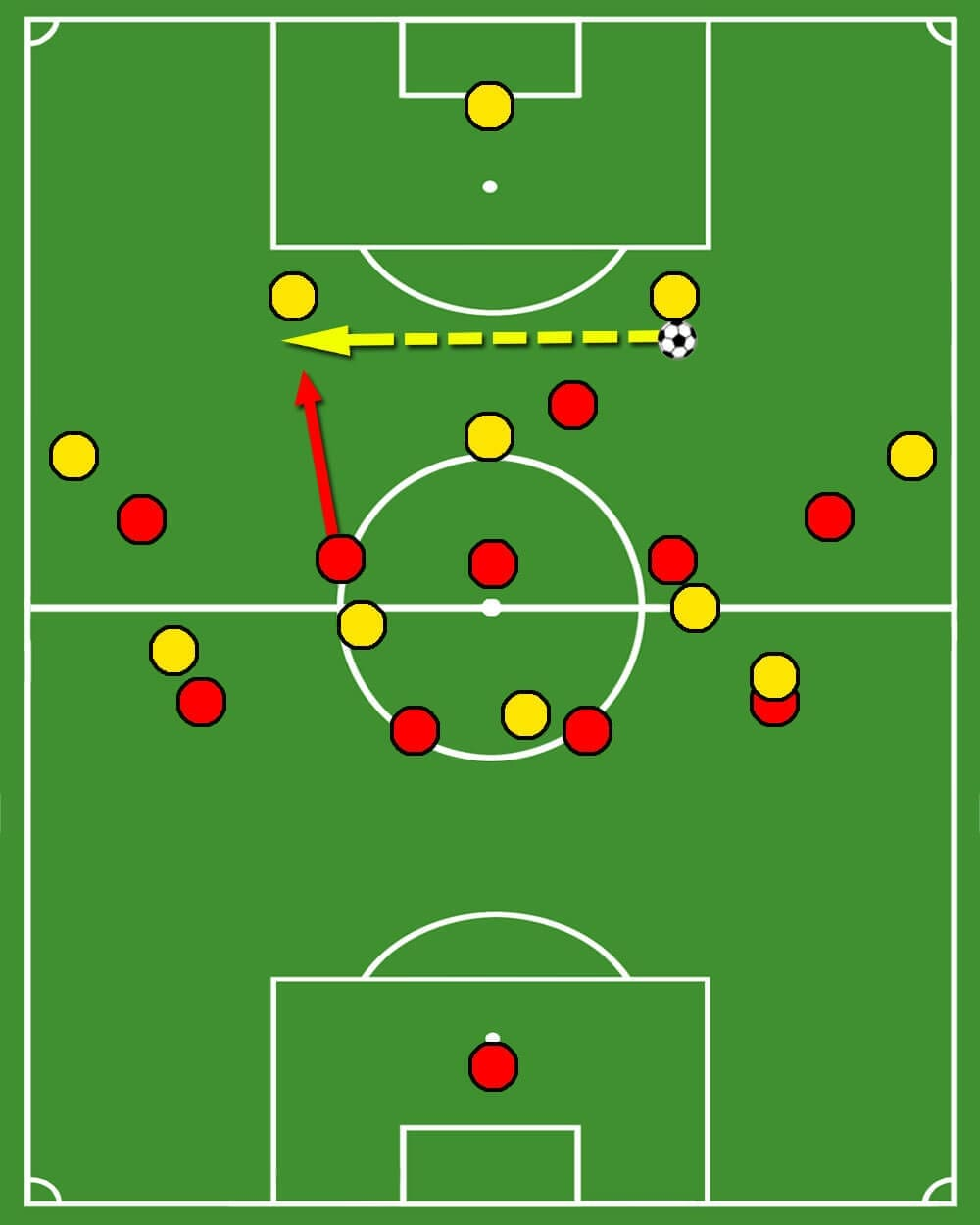
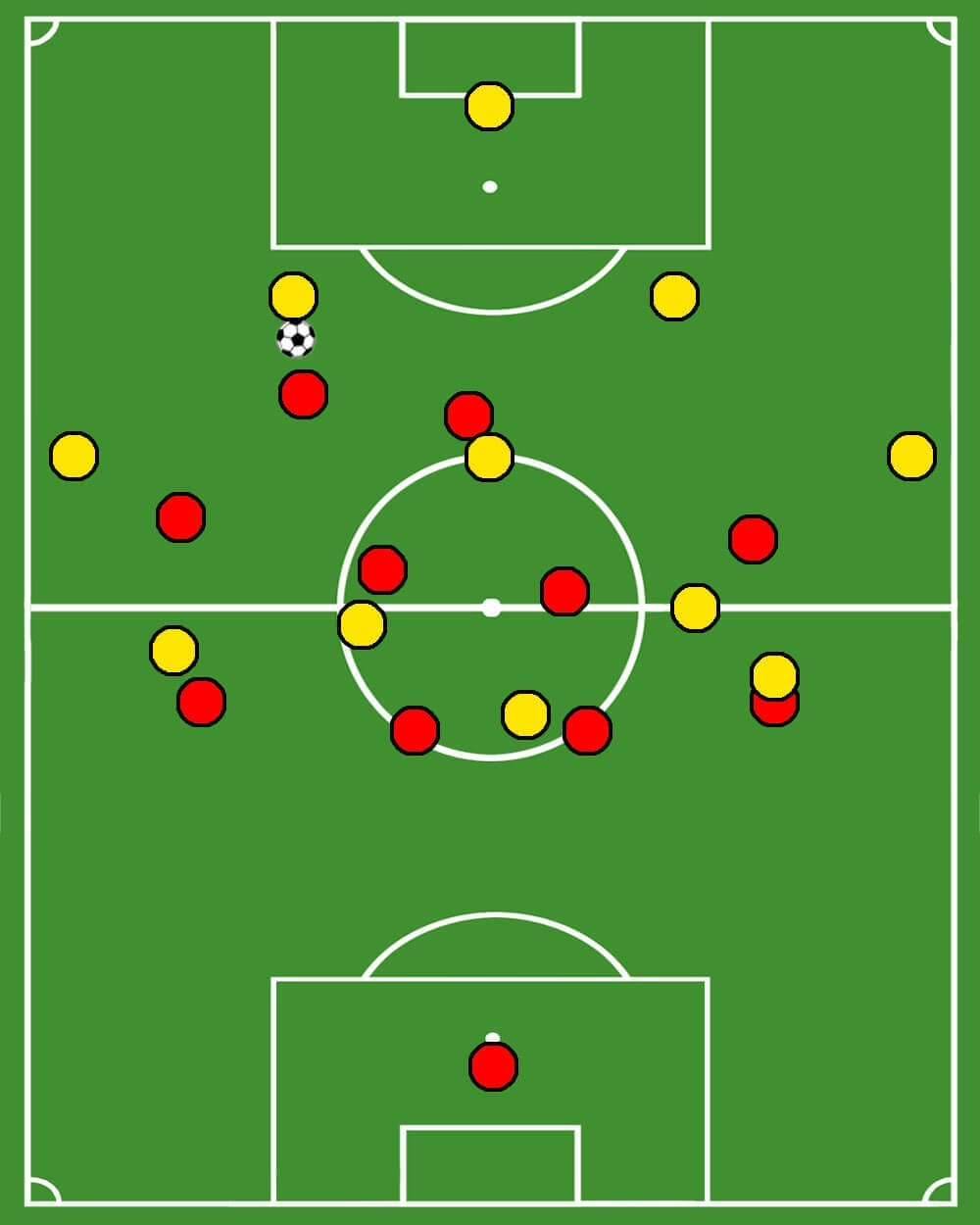
However, in this setup, it is important that both central midfielders have a good stagger when pressing high up the pitch, as there are only three lines and therefore less depth to defend.
4-3-2-1 Formation
Opposite to the mentioned 4-3-3 tactics with guiding the opposition into the centre, the 4-3-2-1 prevents the opposition from playing into central areas.
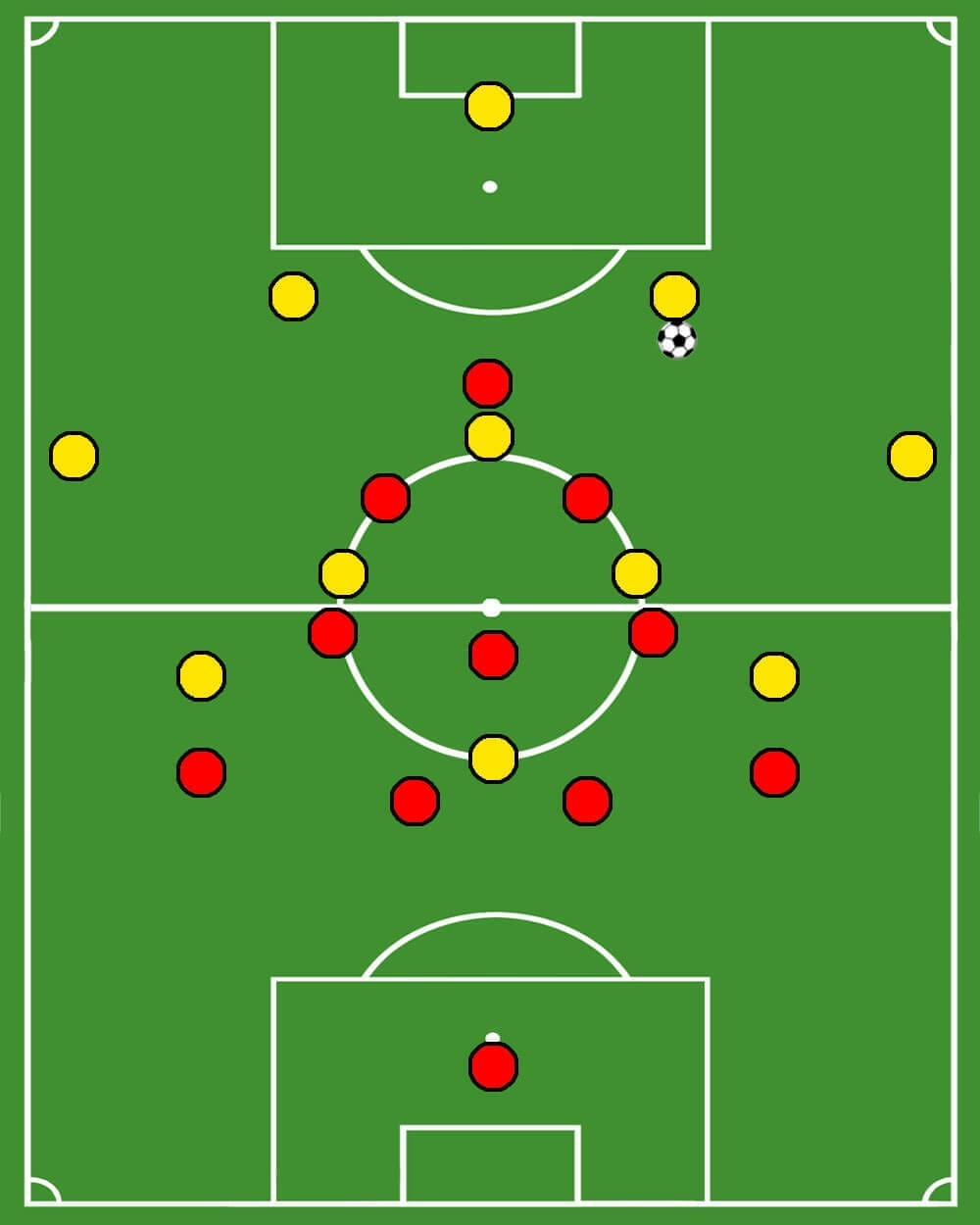
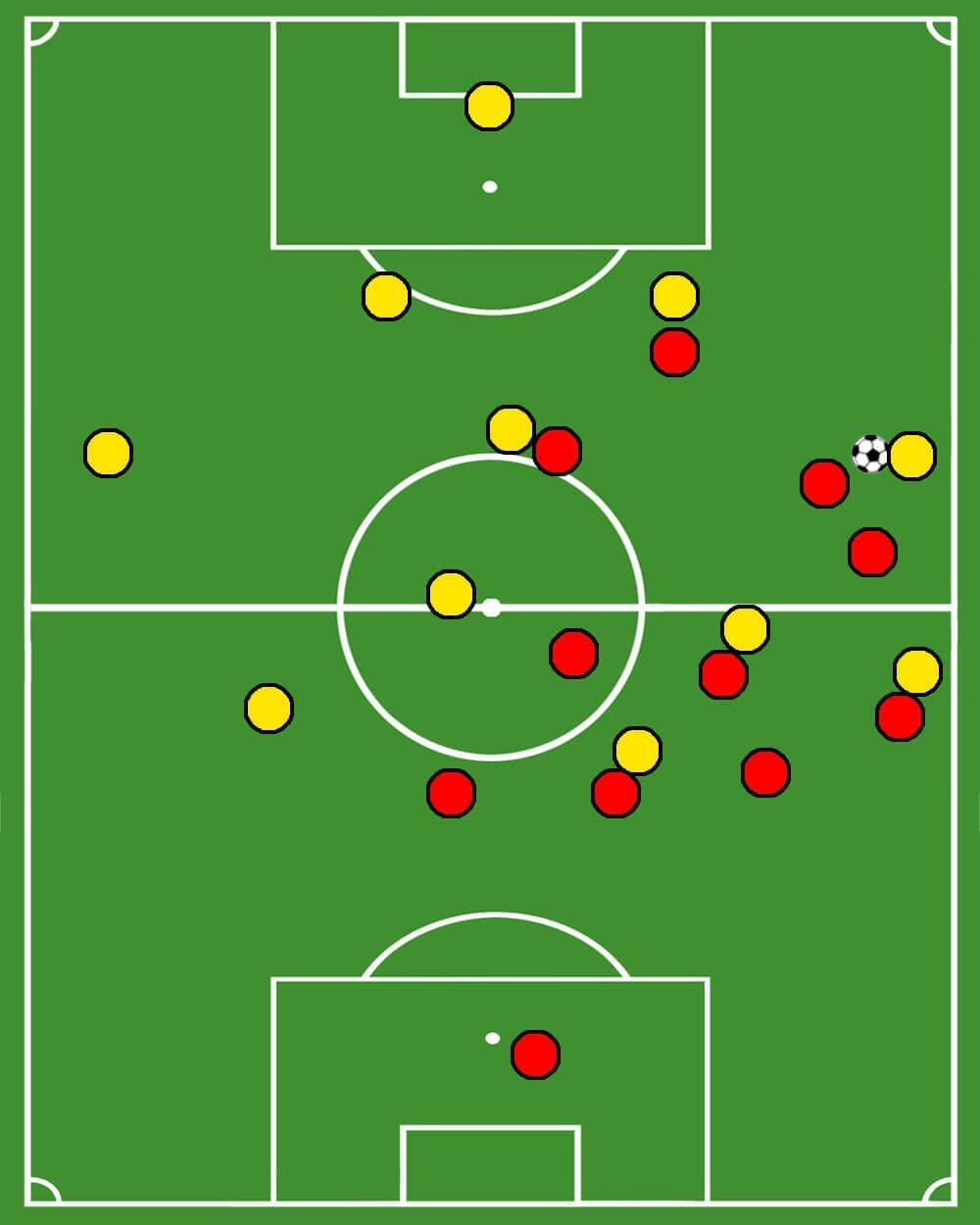
To form a 4-3-2-1, the wingers tuck inside and defend the half-spaces behind the single forward.