
Full-Back Overlap & Underlap Principles: How Wide Runs Unlock Defences With Arsenal, Fulham, Napoli, & Atalanta – Tactical Theory

There are many highly effective principles for attacking opposing defences in the final third; two of these principles are the overlap and underlap.
These two principles are among the most important weapons used by full-backs or, occasionally, centre-backs.
Teams aim to exploit the width of the pitch to attack their opponents, either through the free spaces on the flanks directly, or through the central areas as a result of the opponent's full-back being pulled to the side.
In this tactical theory, we will delve into the tactical details behind the overlap and underlap, and how full-backs like Antonee Robinson, Ben White, Sead Kolašinac, and Giovanni Di Lorenzo execute their overlaps or underlaps, with some differences due to the characteristics and coaches' ideas.
Left-Back Overlap And Underlap: Antonee Robinson
Let's start with the left-back's overlapping runs, as I have chosen Robinson as an example, since the Fulham player is one of the most prominent full-backs in the Premier League at making those runs under the coach, Marco Silva.
Robinson is fast, so he was more involved in making long overlaps.
In the long overlap, the player gains high acceleration as a result of running a long distance.
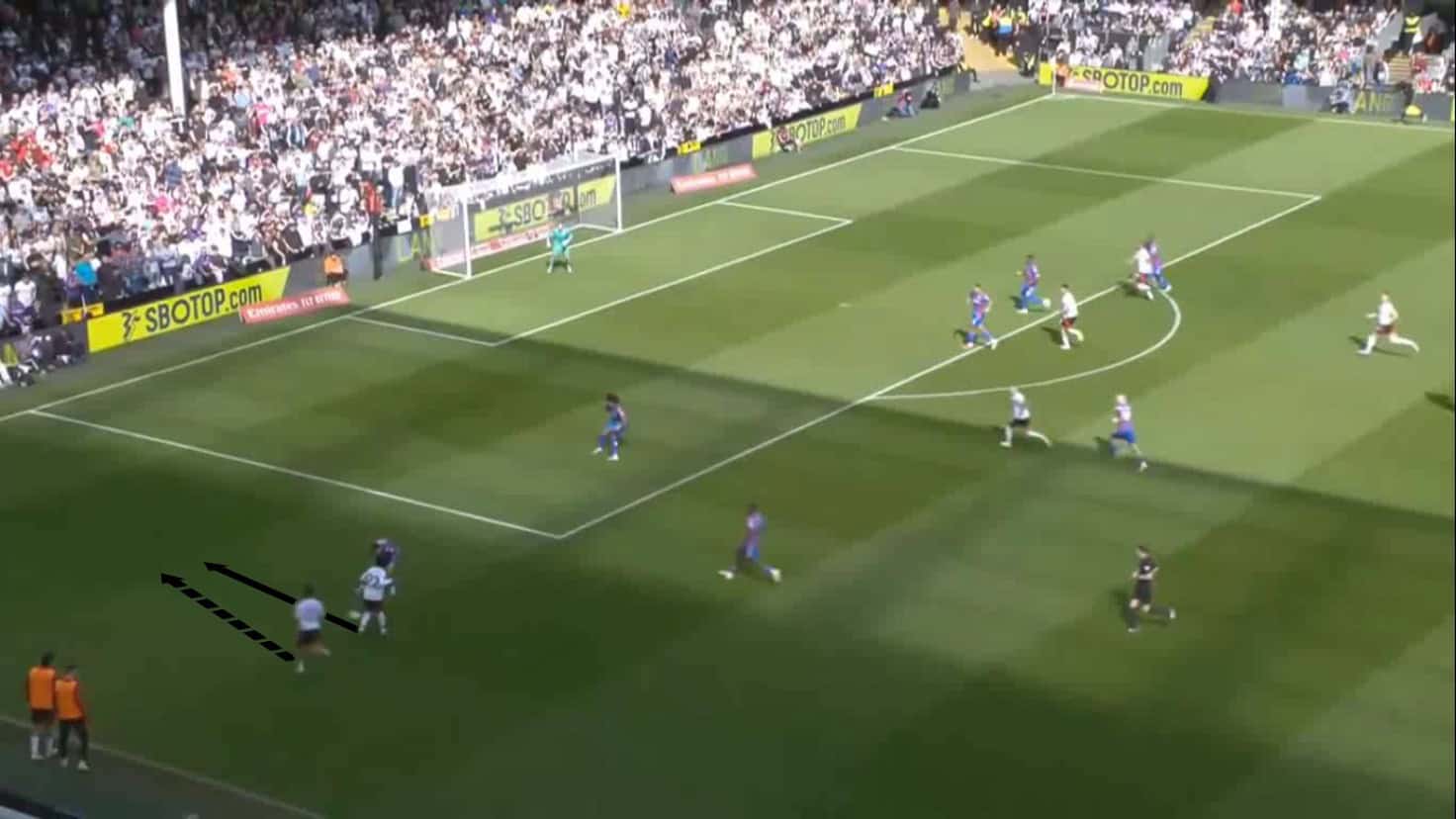
In the following image, we can see a long overlap, which means that he starts his run at a distance from the ball carrier.

Robinson keeps running to gain more acceleration and moves behind his teammate, who drives the ball inside to make free space for Robinson.

After driving the ball inside from the ball carrier, he plays the ball quickly to Robinson, which makes it difficult for the opposing right-back to get back with him.
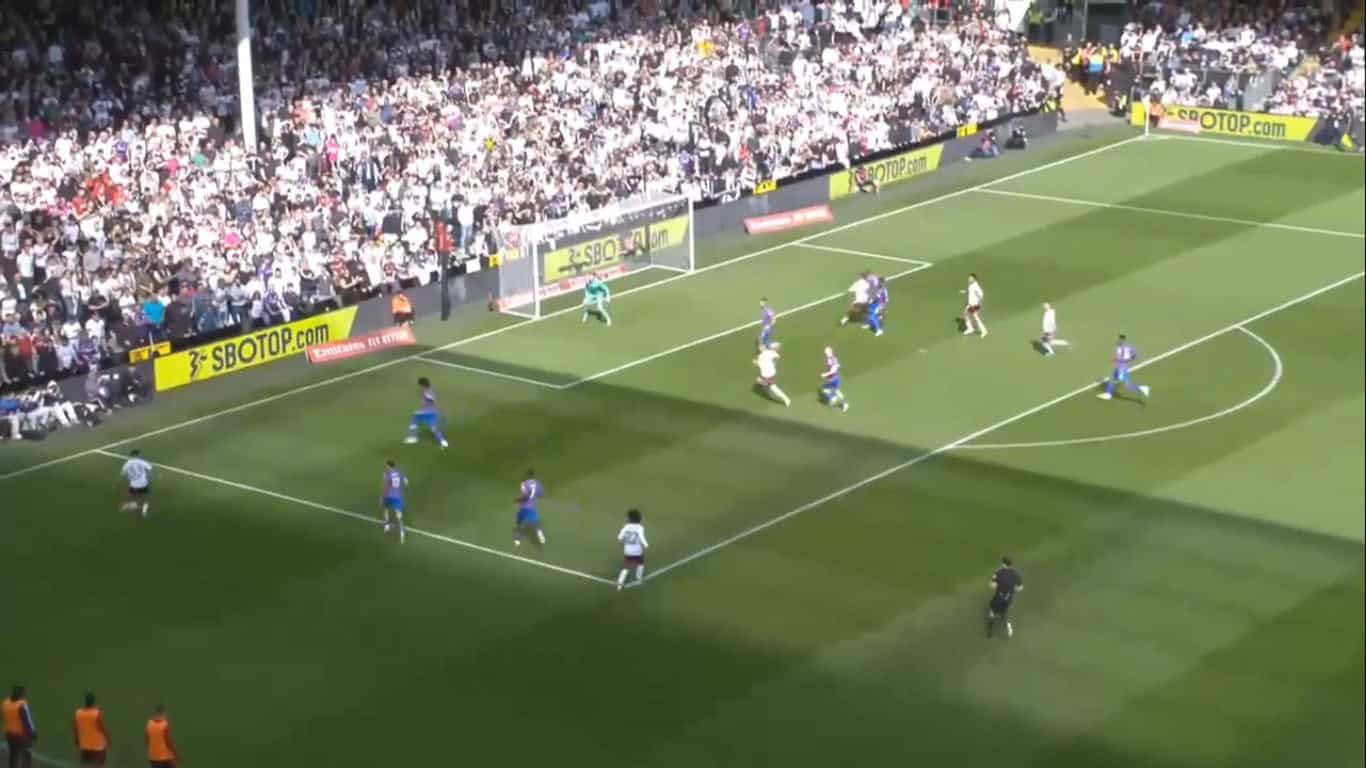
Then, Robinson reaches the ball and makes a cross.
Let's consider another case of overlaps, this time involving three players: the first player who passes the ball to the one who will then relay it to the overlapping player.
This player acts as a protection player, standing behind the other two (pre-overlap and overlap players) in case they need to play the ball back or recover it in counterattacks.
In the following image, the protection player is highlighted in red, and he passes the ball to the winger.
At the same time, Robinson runs very early (when the ball leaves the protection player's feet), and also from a deep point towards the final third with a long overlap.
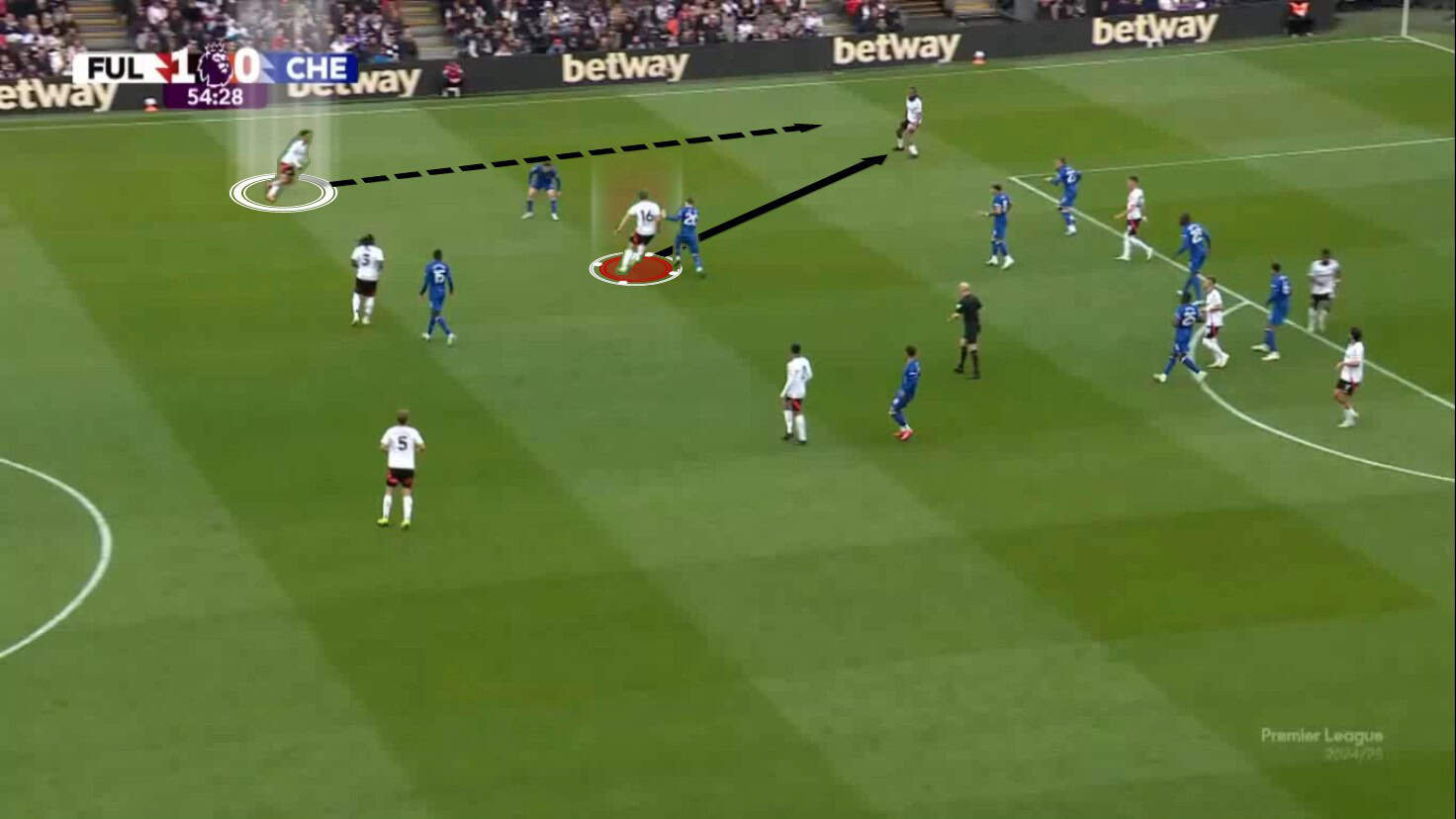
After the ball reaches the winger, the protection player moves to the side to get ready for the protection role, while Robinson continues his long vertical overlap run.
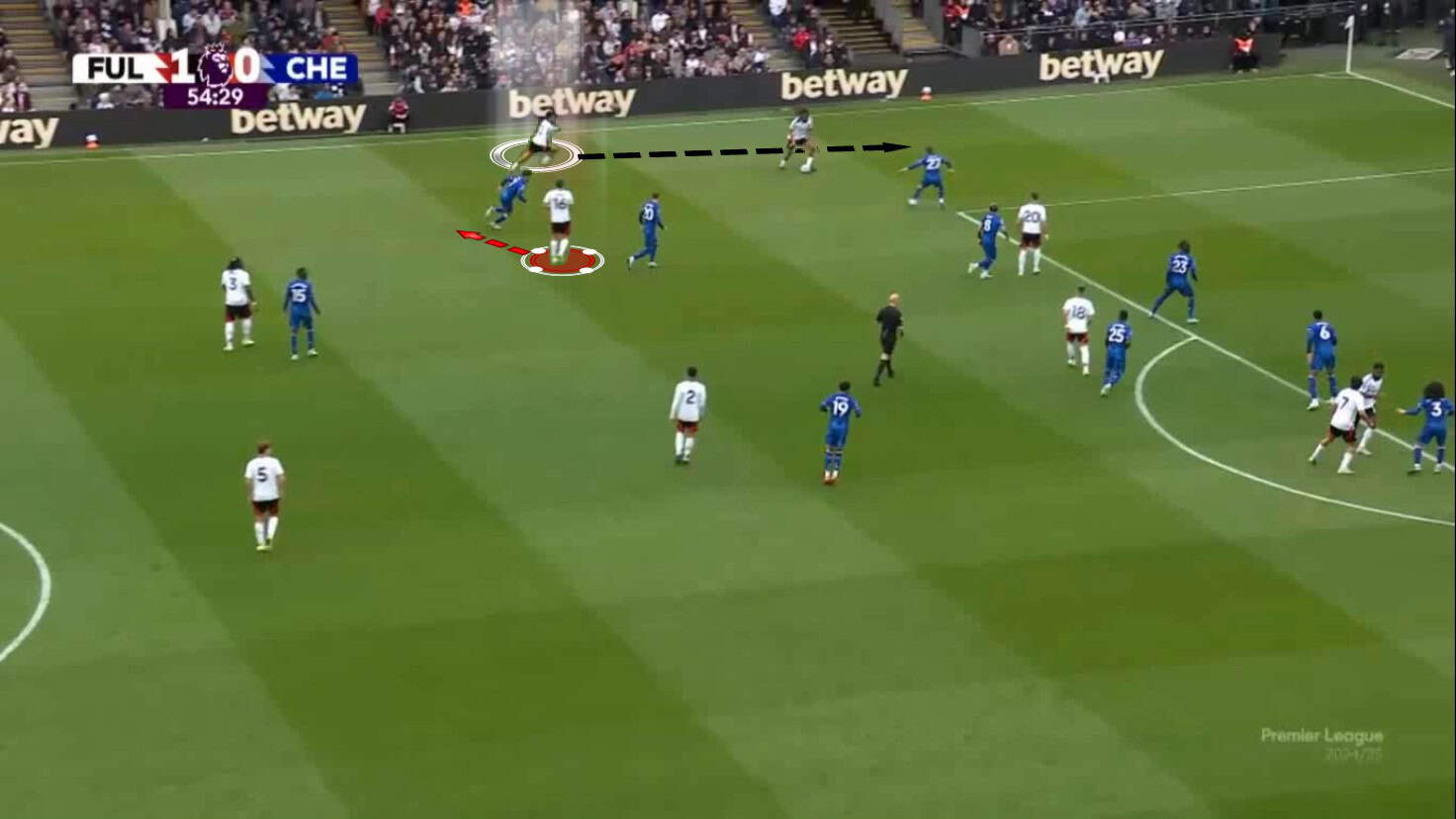
After that, the winger drove the ball a little bit inside to let Robinson move freely, then he passed the ball to him quickly before he went offside.
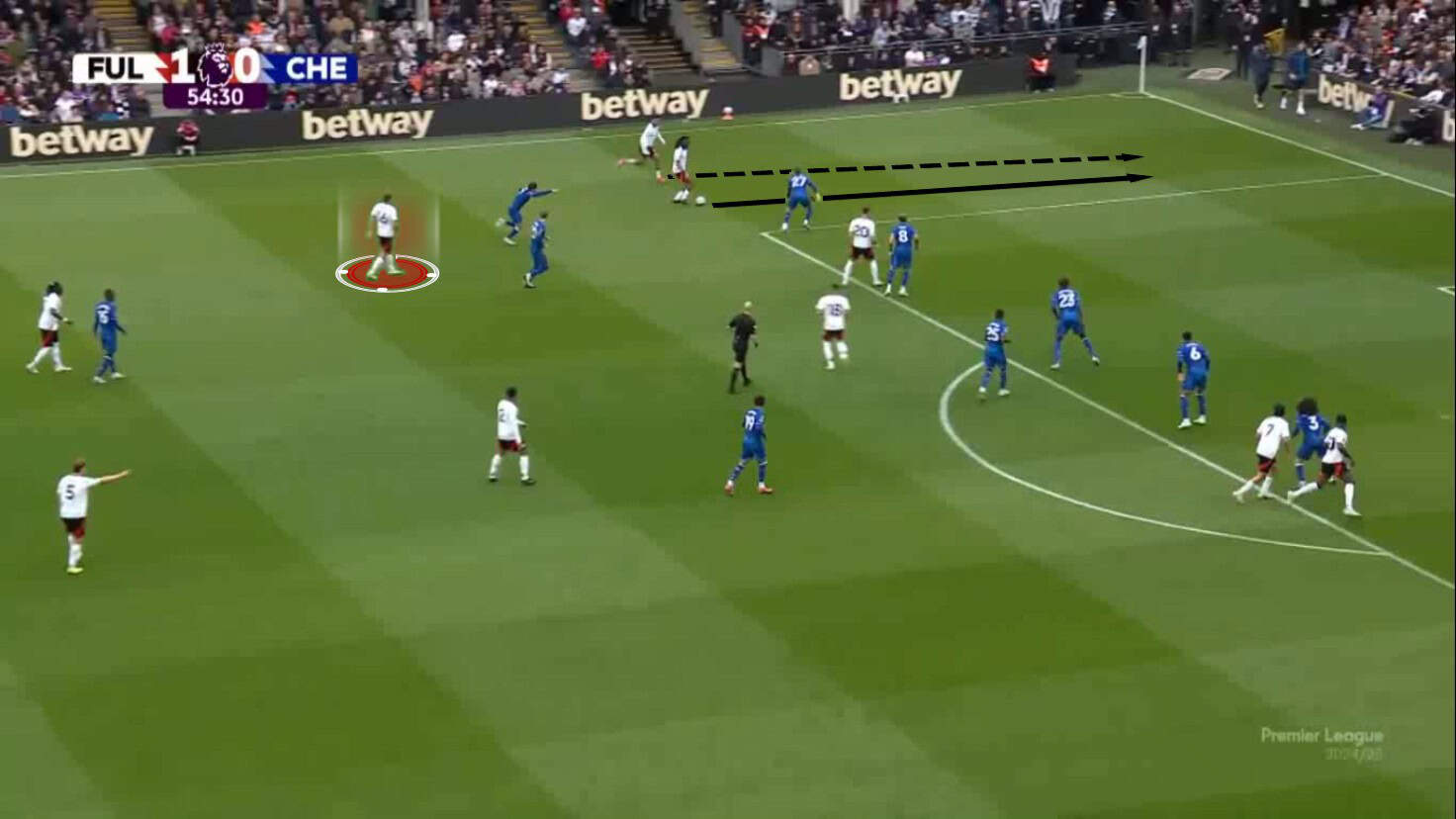
Then, Robinson made a cross.
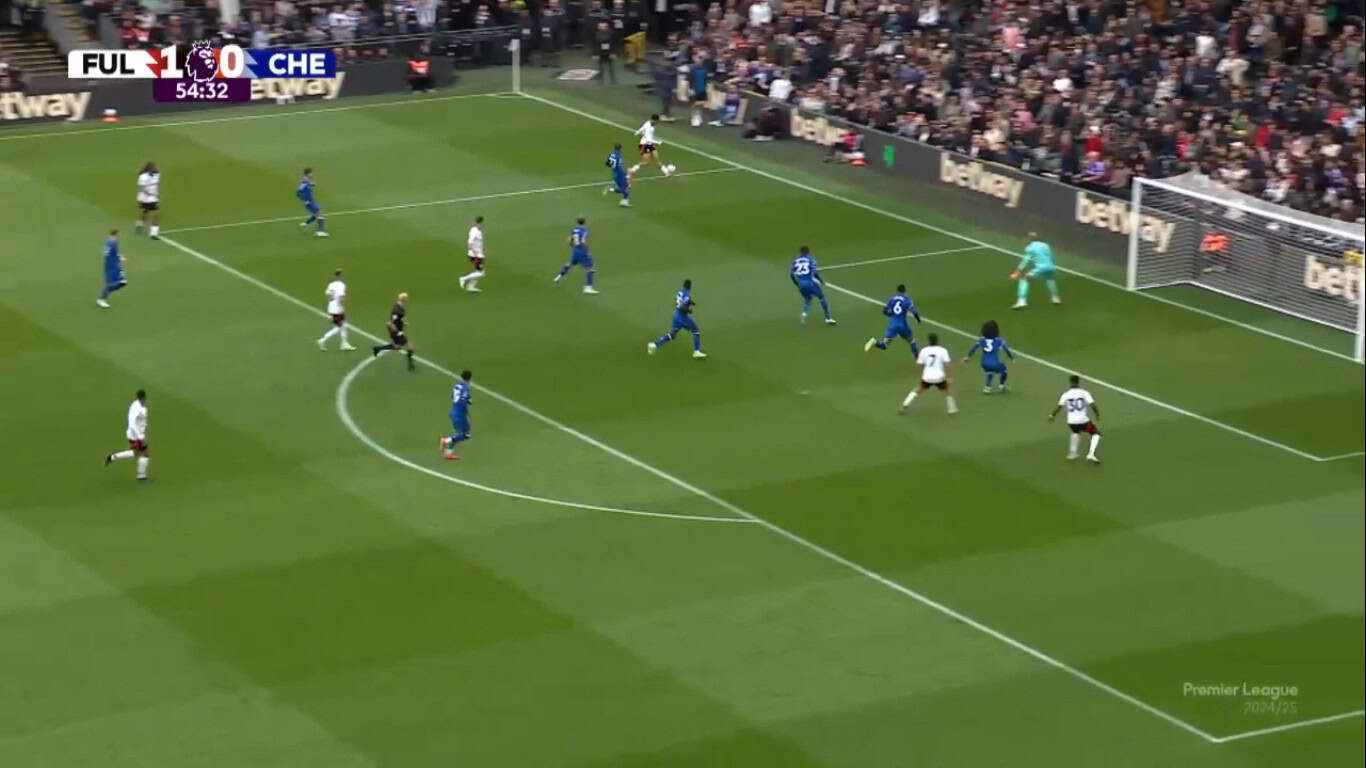
The final case for Robinson overlaps is another application of overlap.
One way to make the overlap more effective is for the winger to move inside without the ball and pull the opponent's full-back with him, which creates more space for the overlap player.
In the following image, there are three players from the Fulham team leading an attack.
The first player is the ball carrier, who guides it forward.
The second player is the winger, who cuts inside.
Robinson is the third player; he makes an overlapping run.
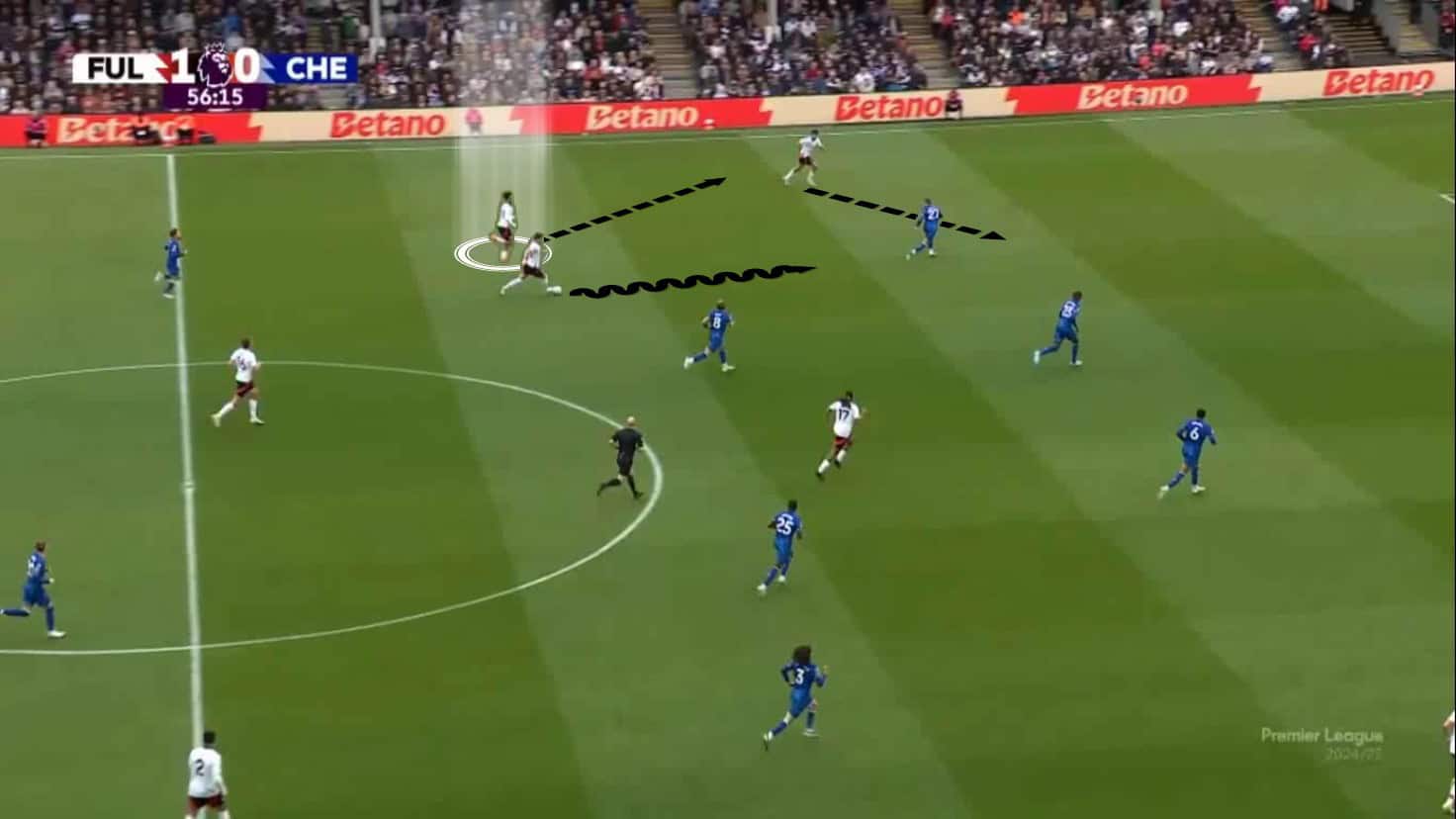
The winger cuts inside more to free the side space for Robinson, who makes the overlap, and the ball carrier waits for the right time to pass the ball to the side.
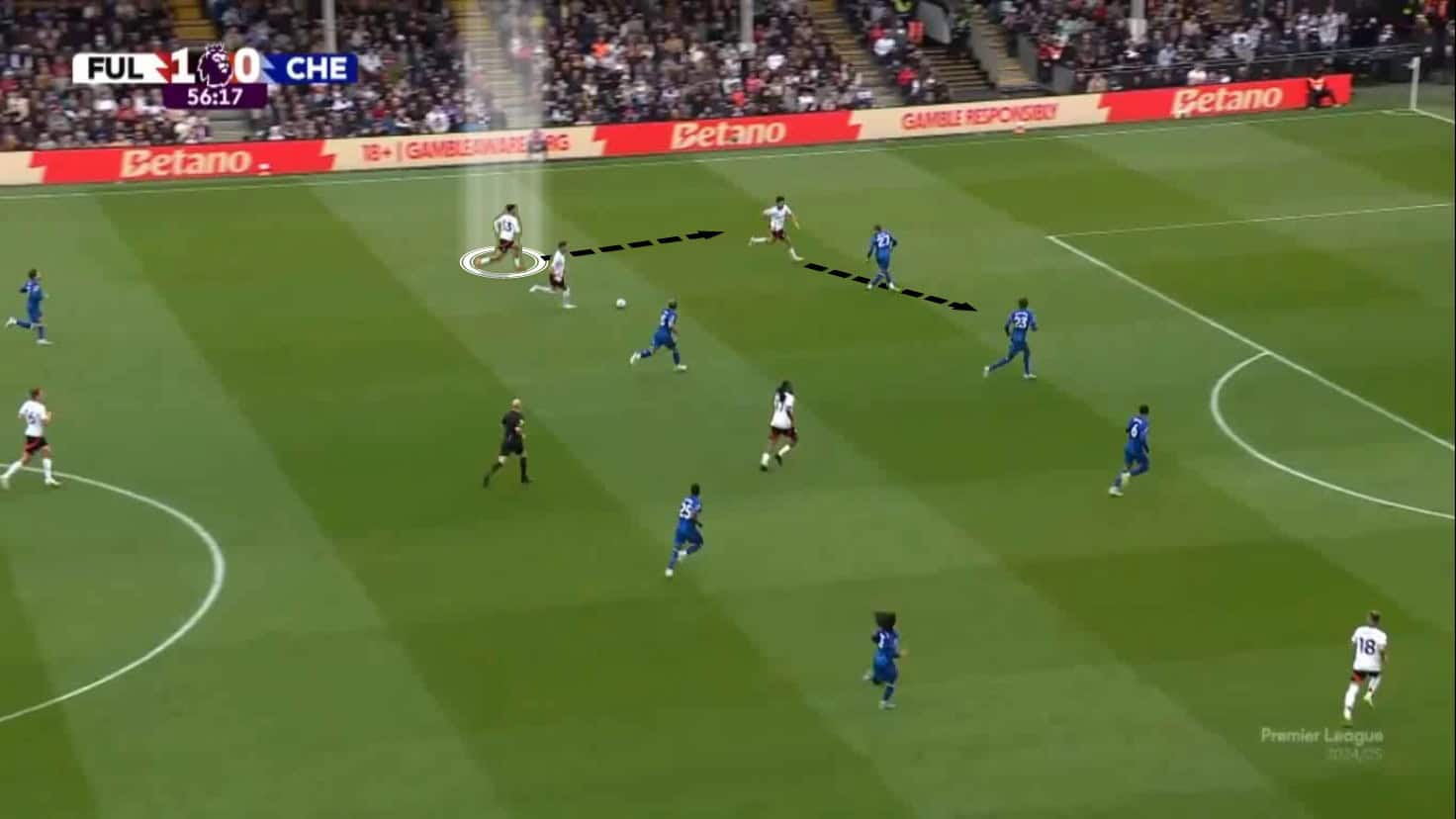
The ball carrier passes it when Robinson reaches the final third, and has enough space to receive due to the winger's cutting inside.
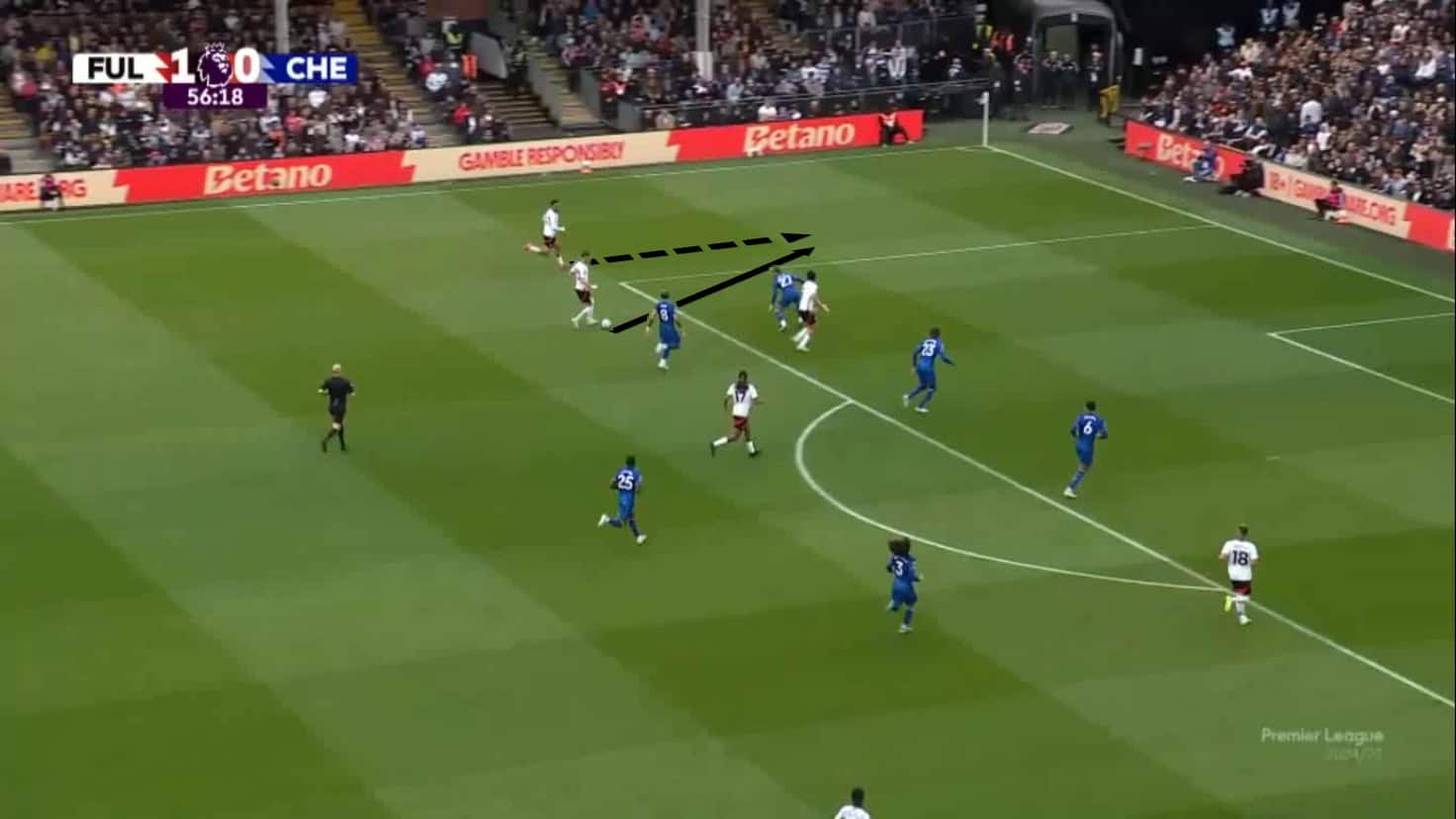
Finally, Robinson delivers a cross.
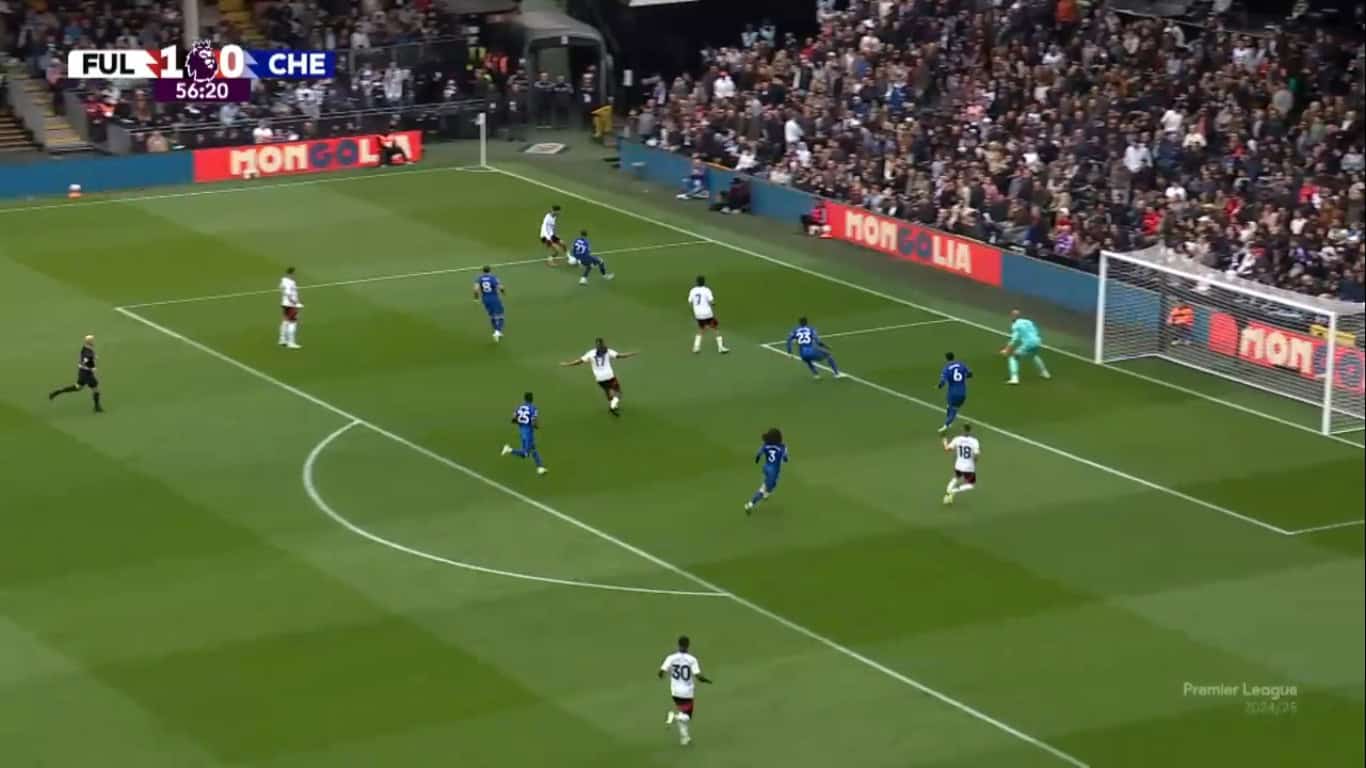
Right-Back Overlap And Underlap: Ben White
Let's move on to another example of an overlap with Arsenal right-back Ben White.
Arsenal's right flank is strengthened by Bukayo Saka's presence alongside White or Jurriën Timber, as the England winger provides great assistance to the full-back in overlapping runs.
I will examine three cases for White overlaps.
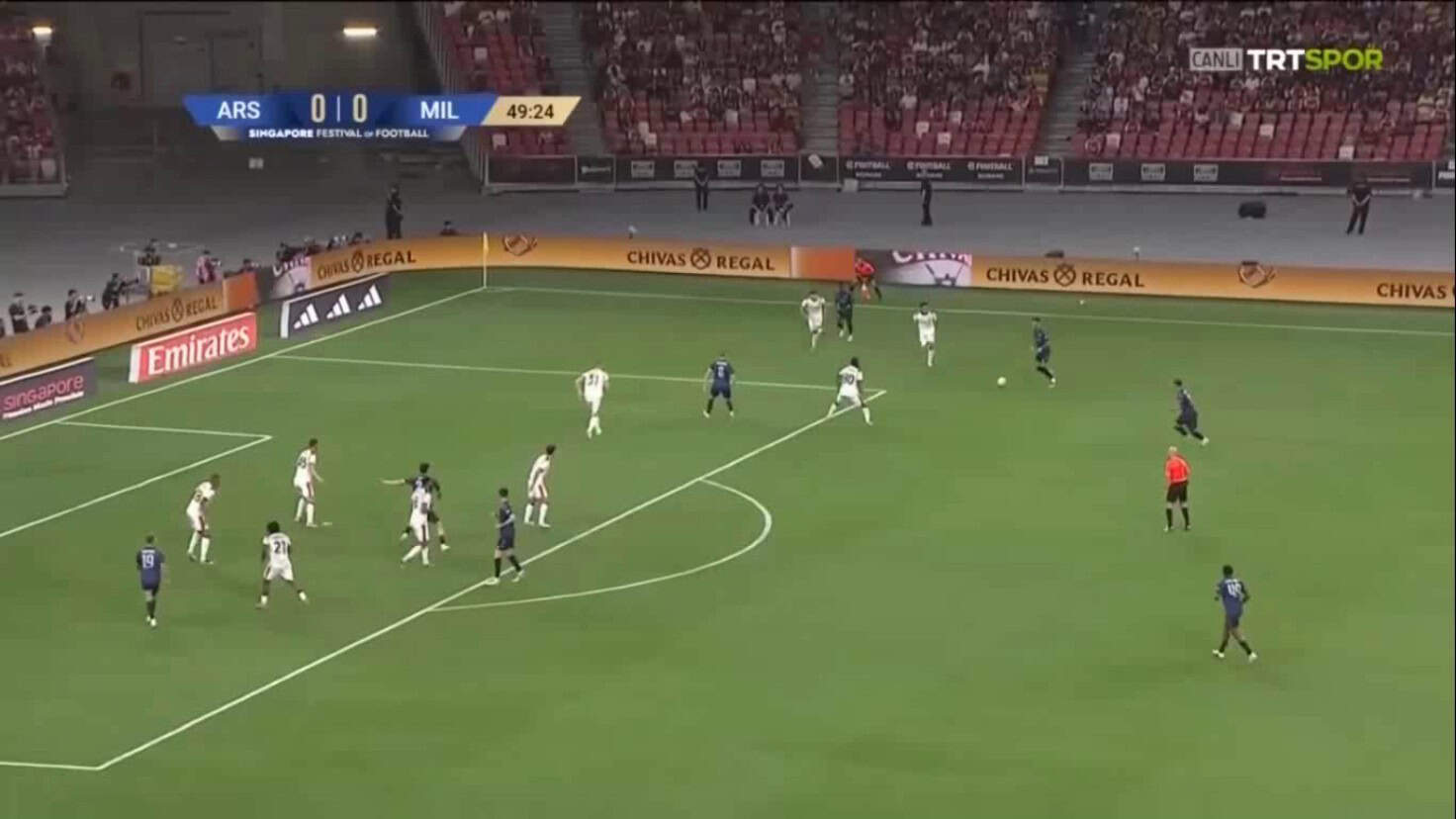
The first case shows us the short overlap from White, which means he runs from a near point from the ball carrier.
Mikel Arteta favours this as his whole team pushes forwards towards the opponents' first third, which places the players near each other.
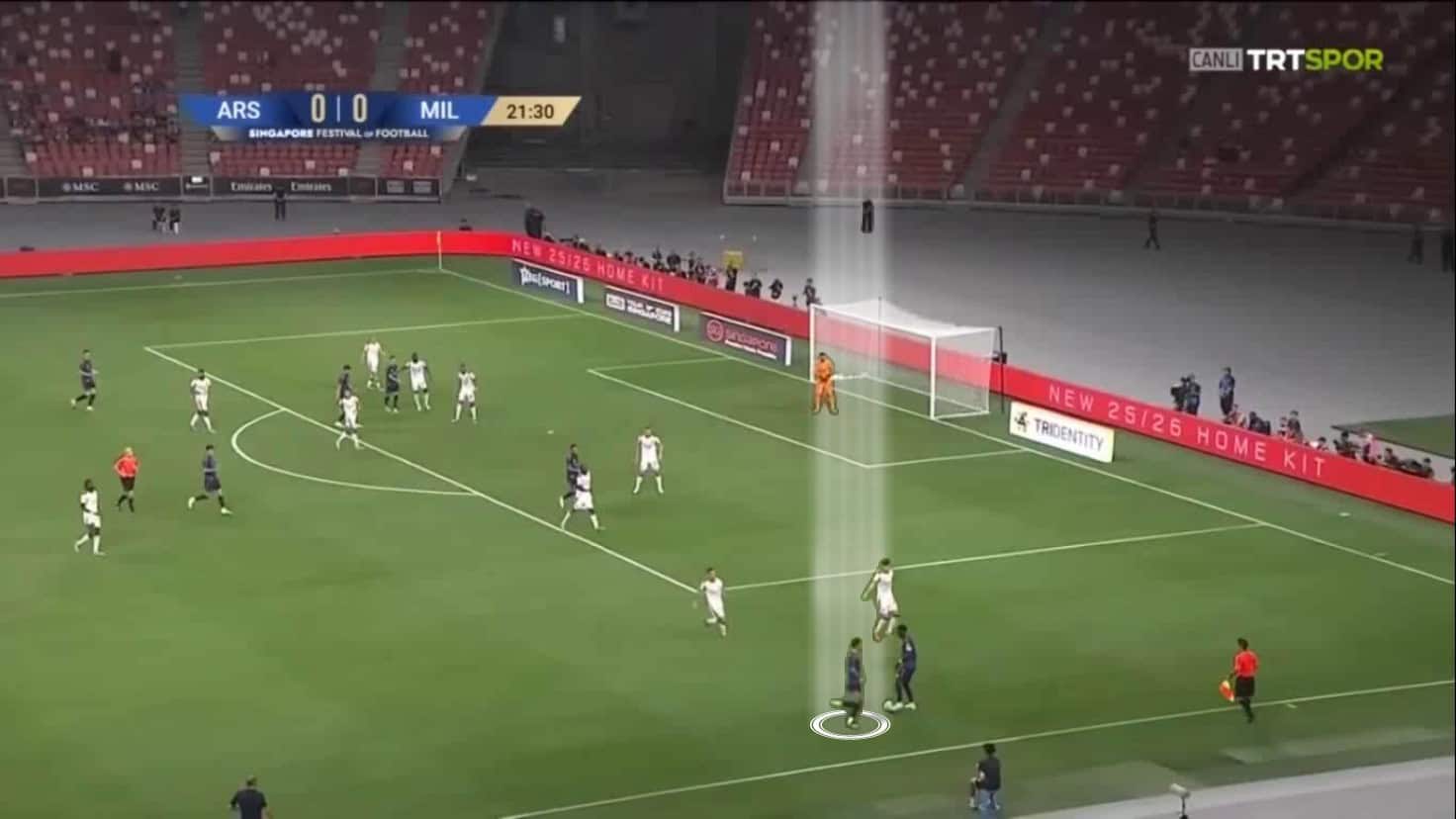
White moves behind Saka, the ball carrier, who faces the opponent's full-back to free White.
Also, in this image, we can see White slowing down to hide the intention of running forward, thus delaying the full-back, making the run unpredictable.
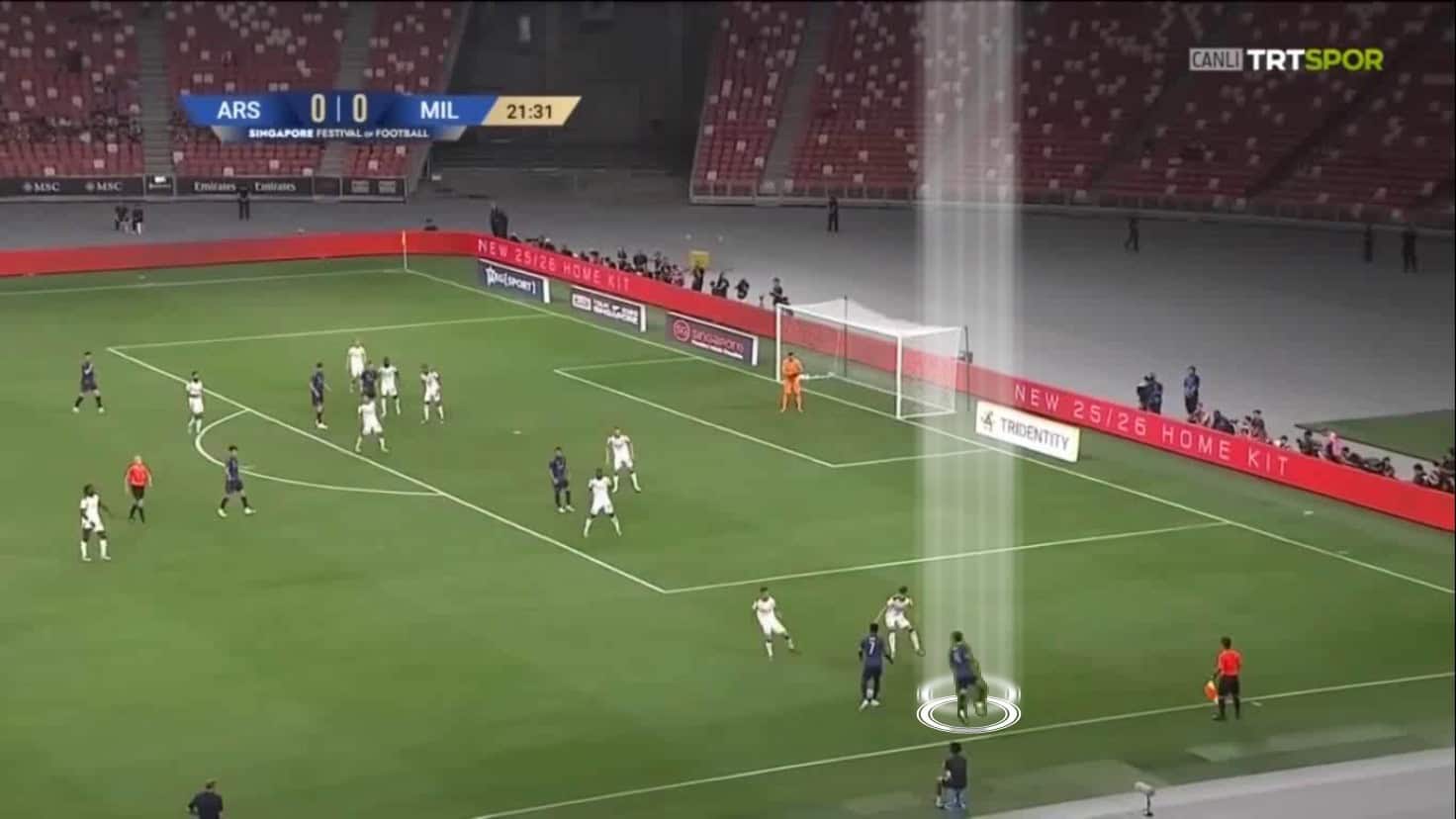
Then, White increases his pace to make the overlap.
He also always moves with an inside curved run to be closer to the goal, which allows him to choose whether he crosses the ball low or high.
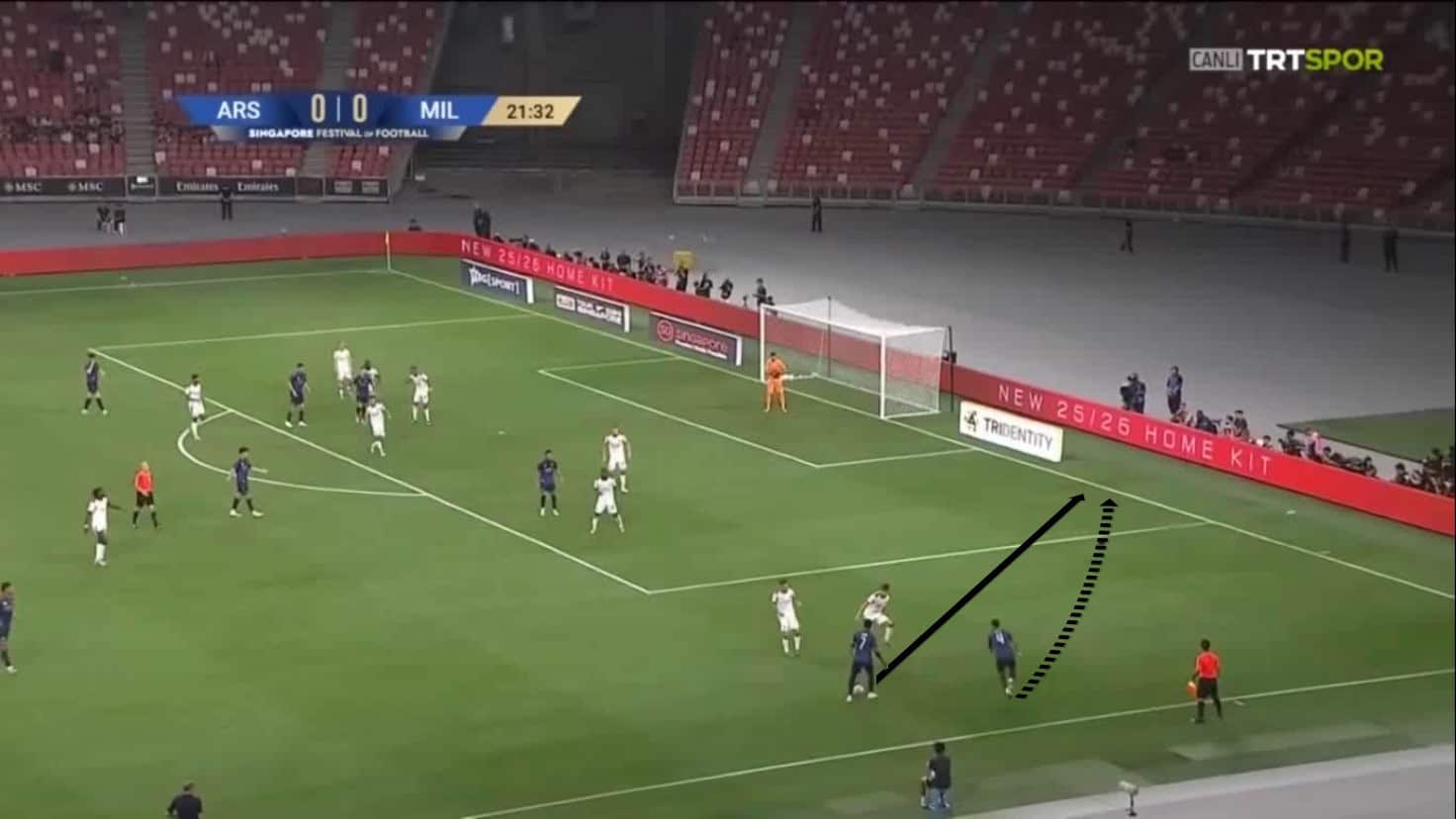
After he received the ball, he made a high cross.
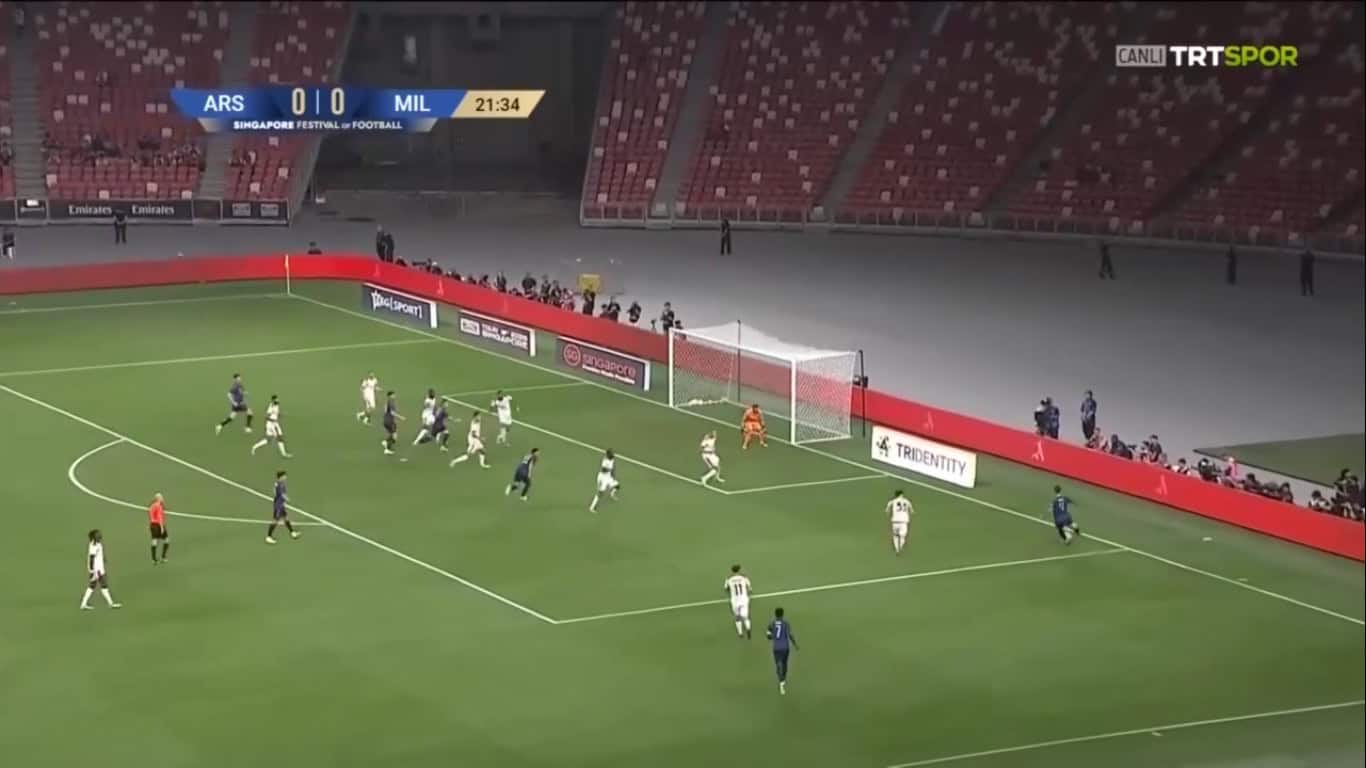
The second case that we will discuss is the overlap with using three players.
The protection player, highlighted in red, passes the ball to the winger, while White waits for the ball to reach the winger instead of running early.
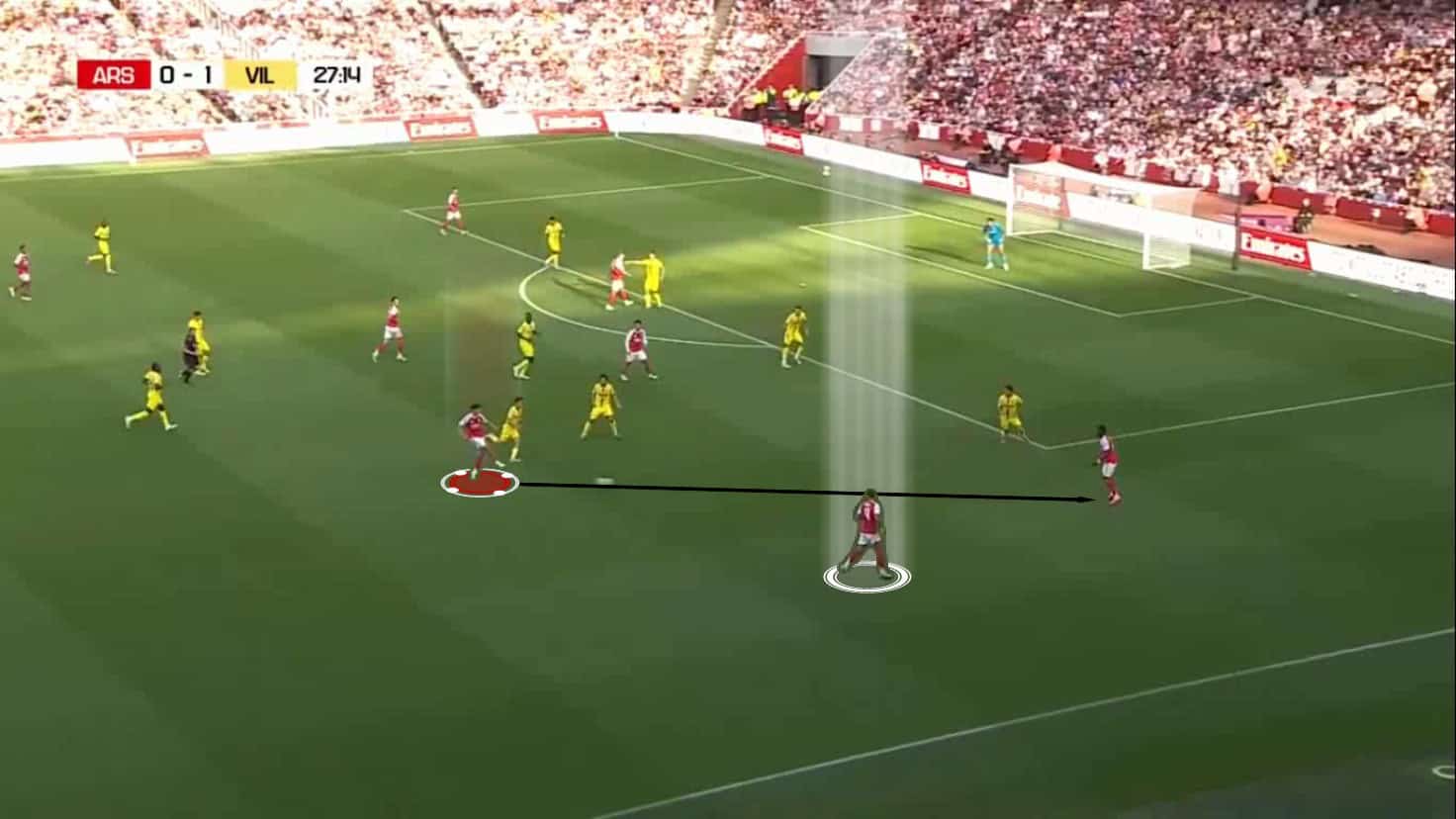
When the ball reaches the winger, he starts his short overlap run towards the final third, with an inside curved run.
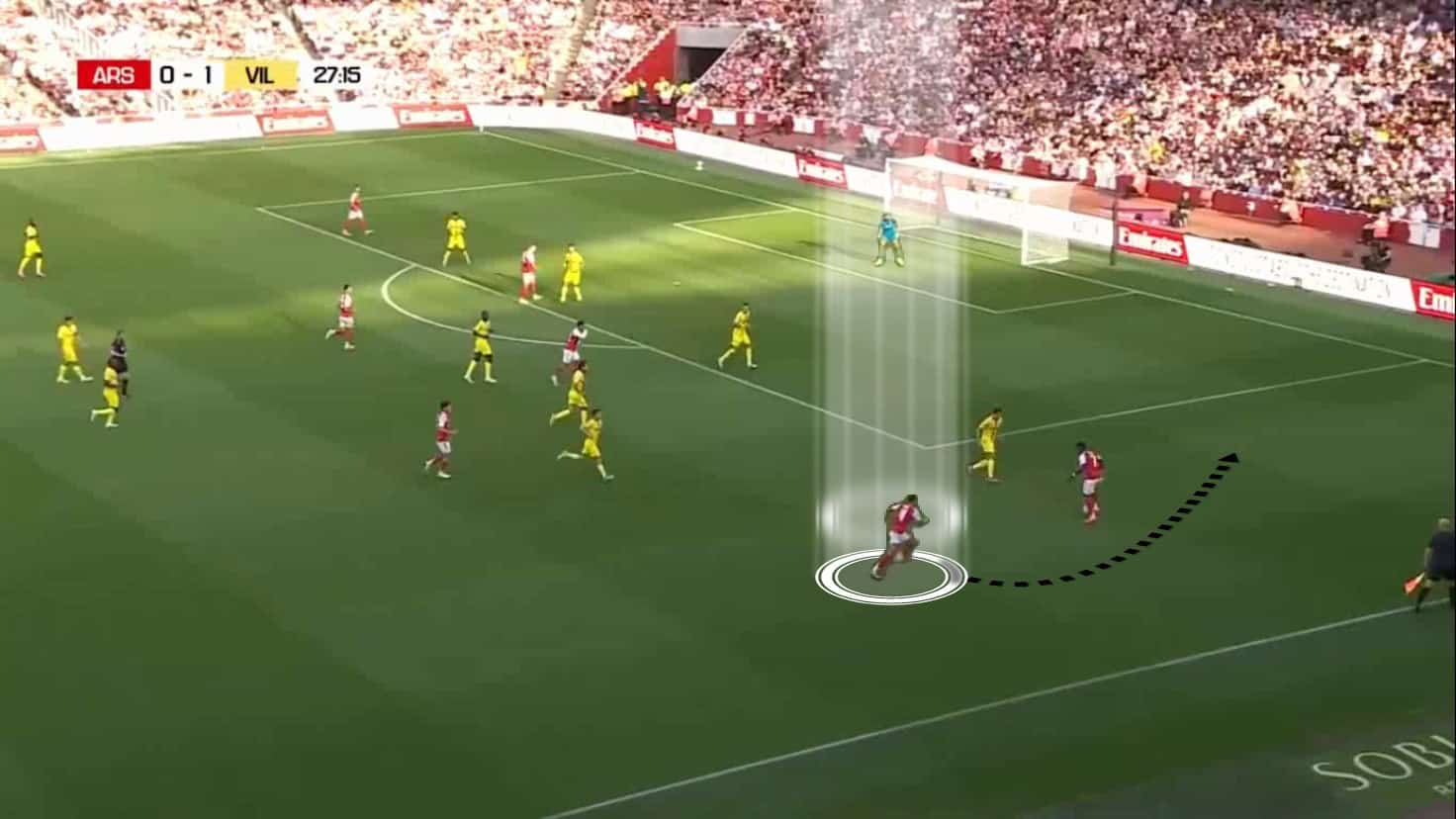
The Winger guides the ball inside, then passes it to White, who continues his curved run at high pace.
The curved run can also prevent the full-back from getting offside.
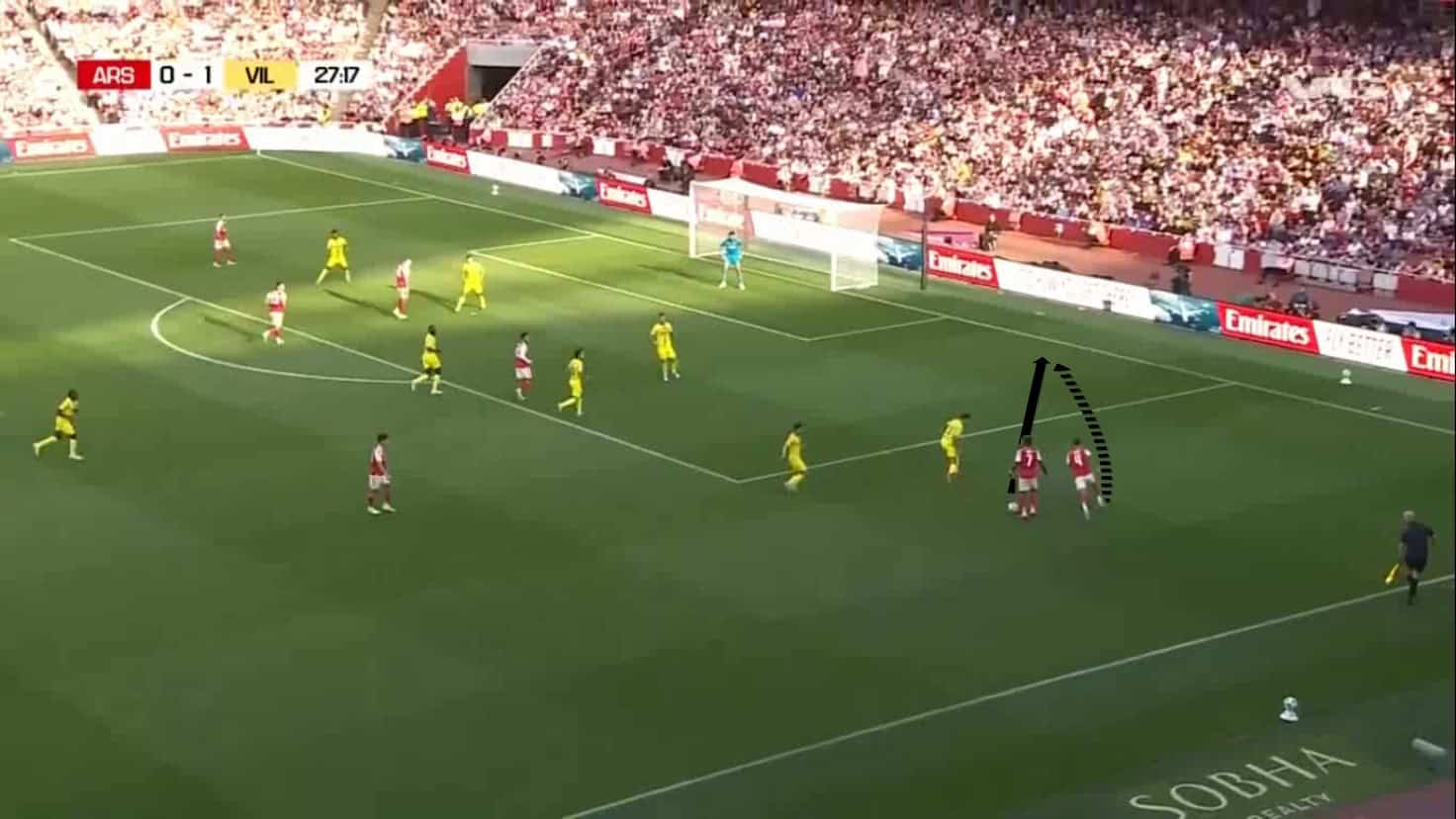
Then, White can send a cross from an advanced point inside the box.
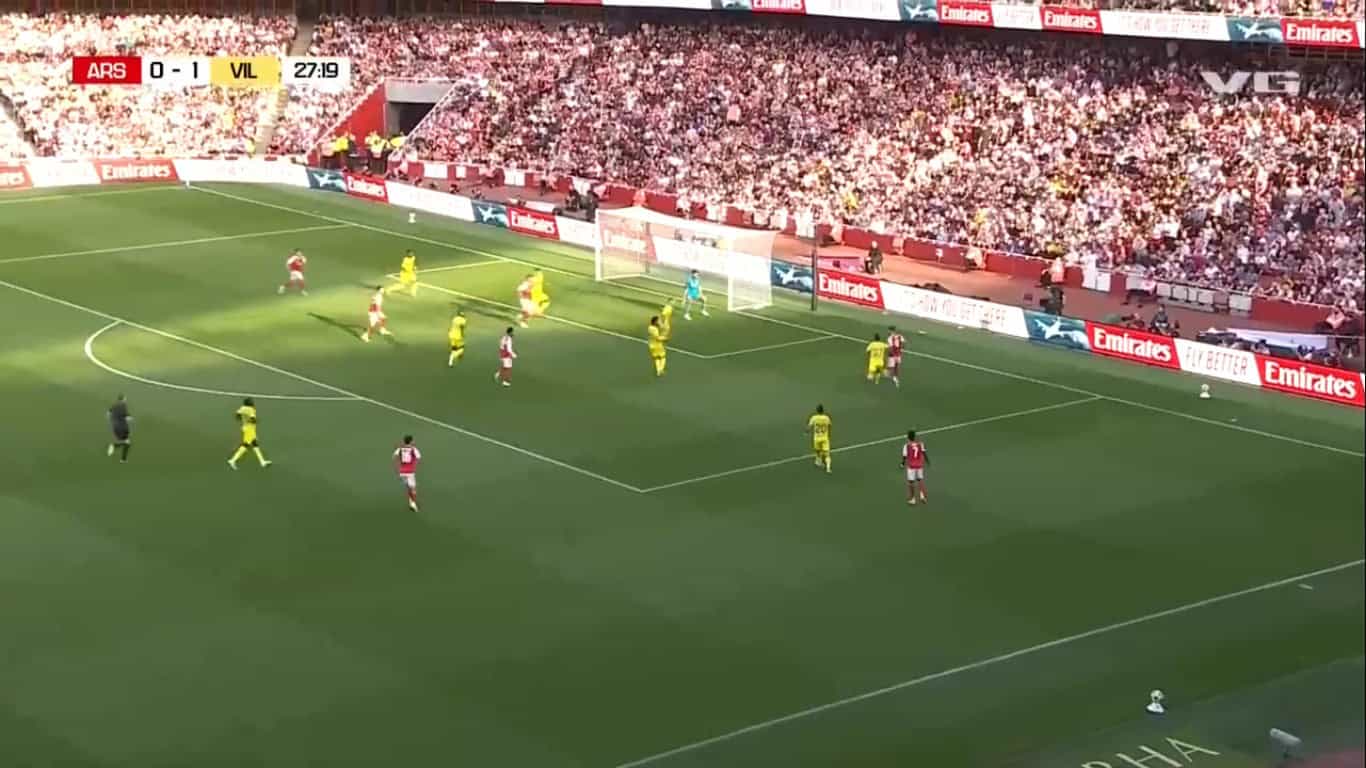
The full-back needs to know when to make an overlap or to stop and wait, which I will explain in the third case.
In the following image, the protection player passes the ball to the winger, while White waits to analyse the situation.
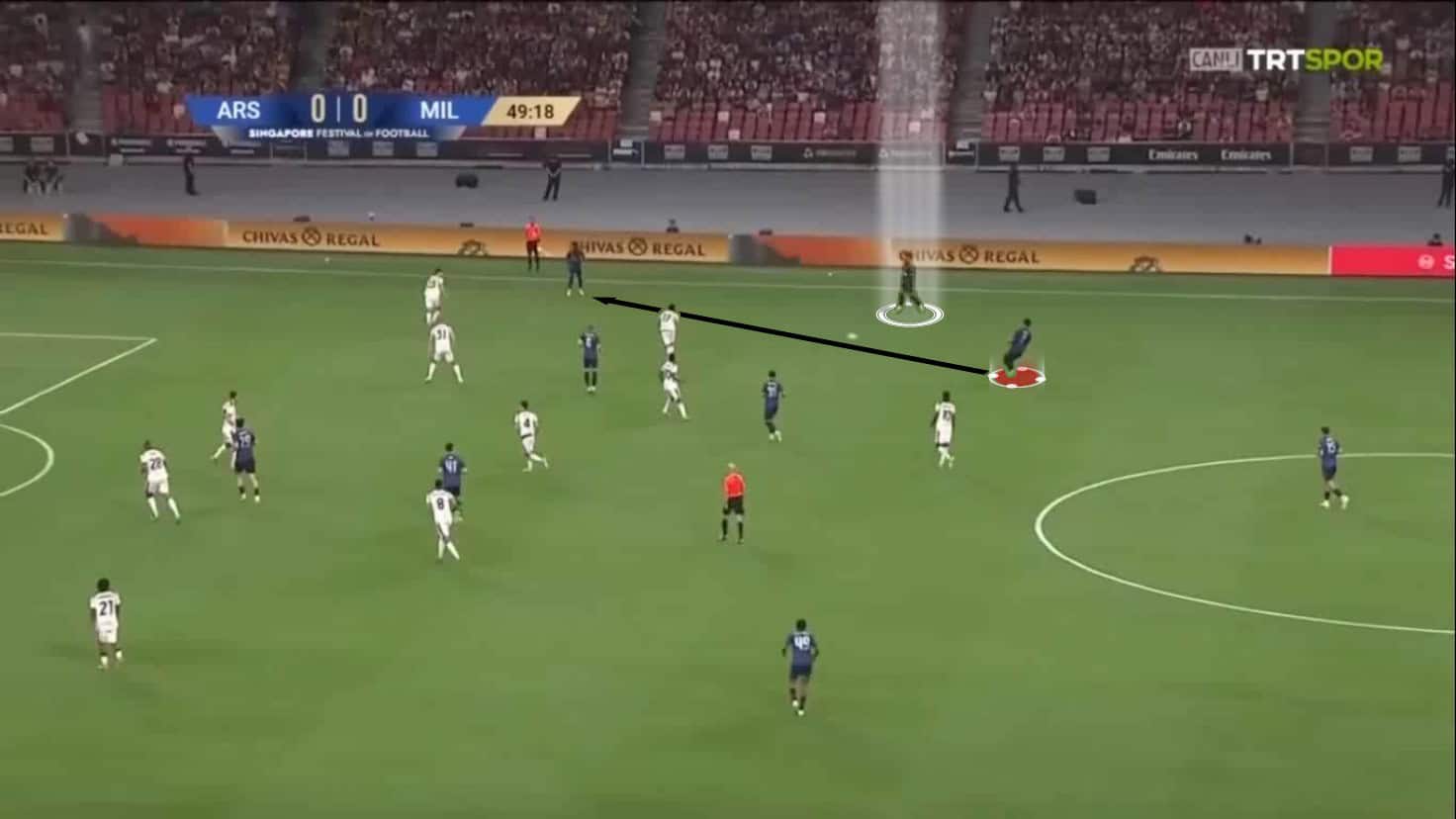
Instead of making an overlap behind Saka, White decided to move inside because when Saka received the ball, the opponent full-back pressed him early alongside his teammate, so there was no space to run for White.
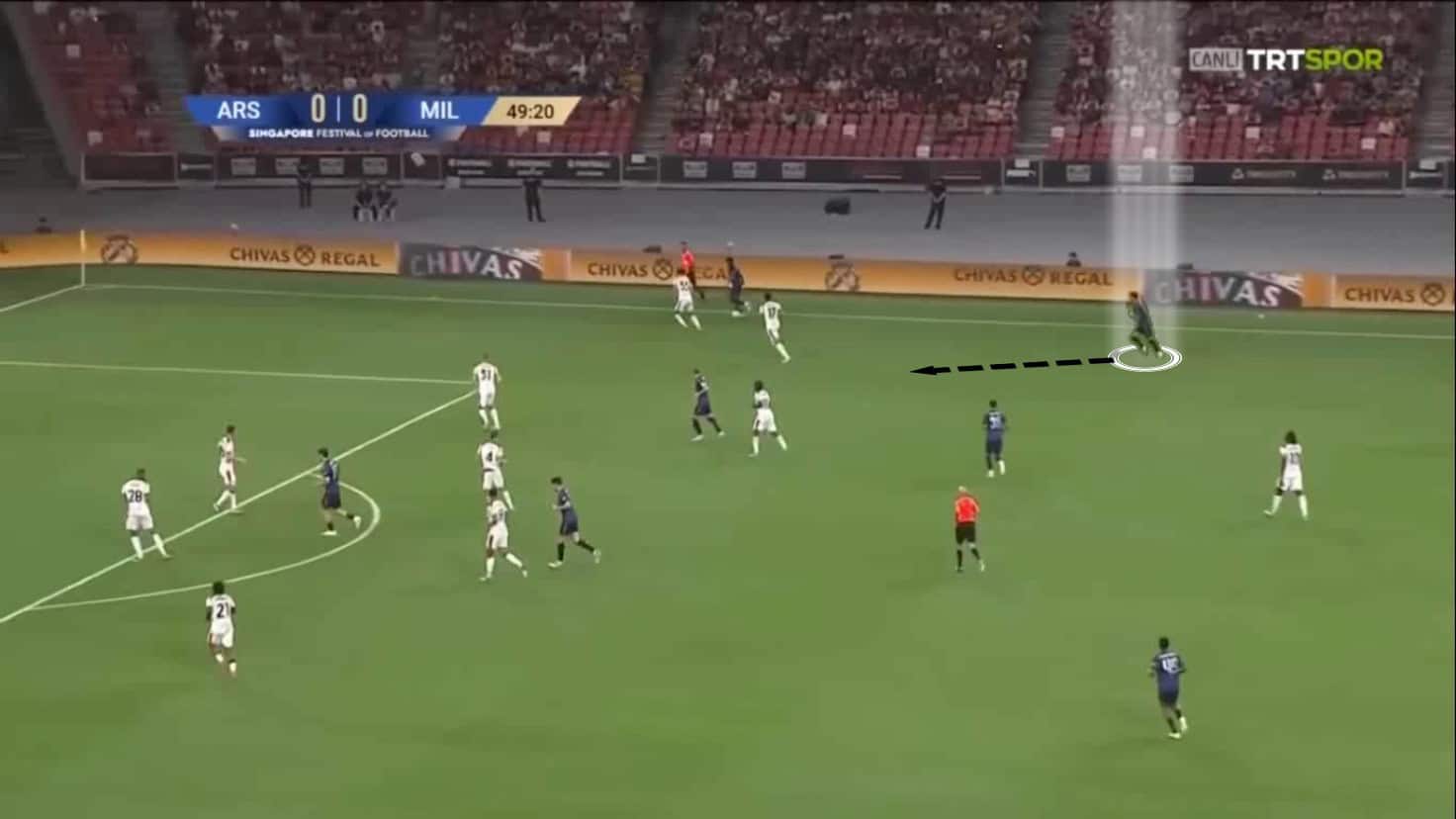
So, White could receive the ball freely inside and make an early cross towards the box.
Left Centre-Back Overlap And Undrlap: Sead Kolašinac
In the next section, we will discuss the overlap and underlap principles by taking players who are originally full-backs, but were used as third defenders in a back-three defensive system in Serie A last season.
The first player is Sead Kolašinac, the Atalanta BC defender, who was used as a left centre-back by his former coach, Gian Piero Gasperini.
The idea of letting the third defender go forward and make the overlap and underlap can make the team more unpredictable.
The overlap is not only limited to being executed on the side of the pitch; it can also be executed from the central areas of the pitch, as the central overlaps can let the player reach the box and make crosses from near the goal.
In the following case and image, we can see how Kolašinac makes the central overlap.
First, he passes the ball to his teammate, Ademola Lookman, then runs forward with a long overlap.
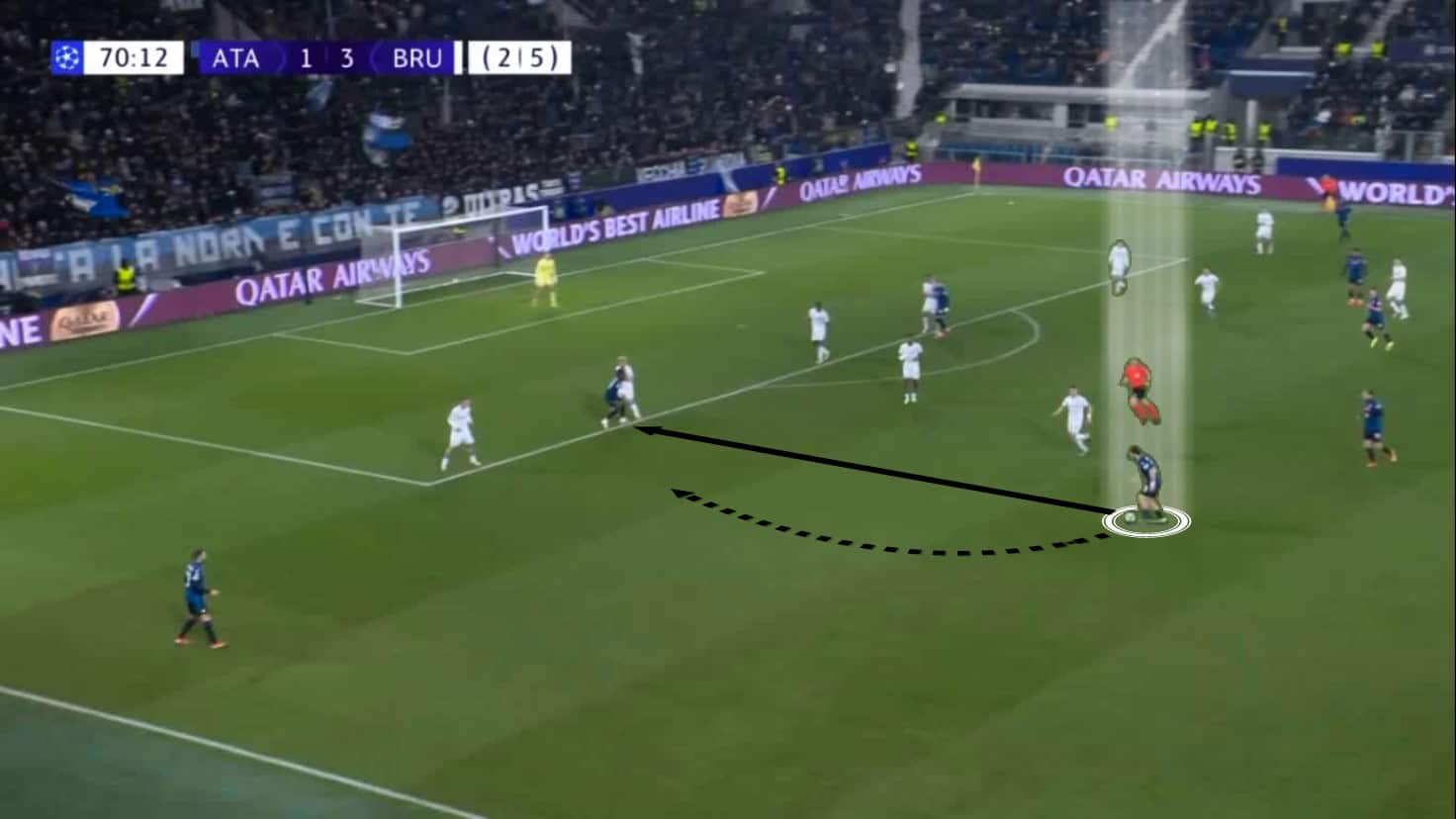
While Kolašinac is running forward, Lookman keeps the ball as a target man waiting for Kolašinac's reach.
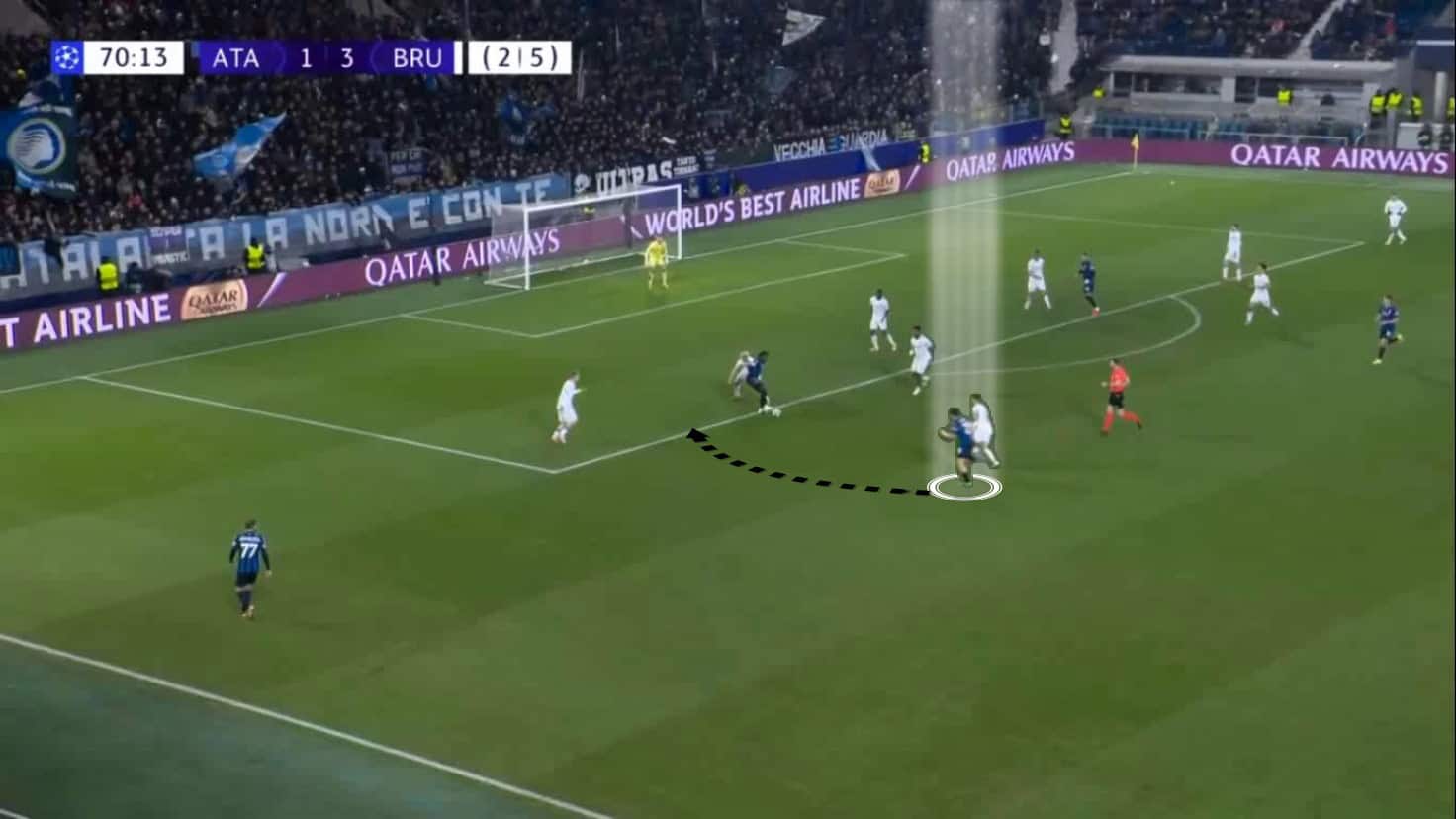
Then, when Kolašinac gets near Lookman, he passes the ball to him.
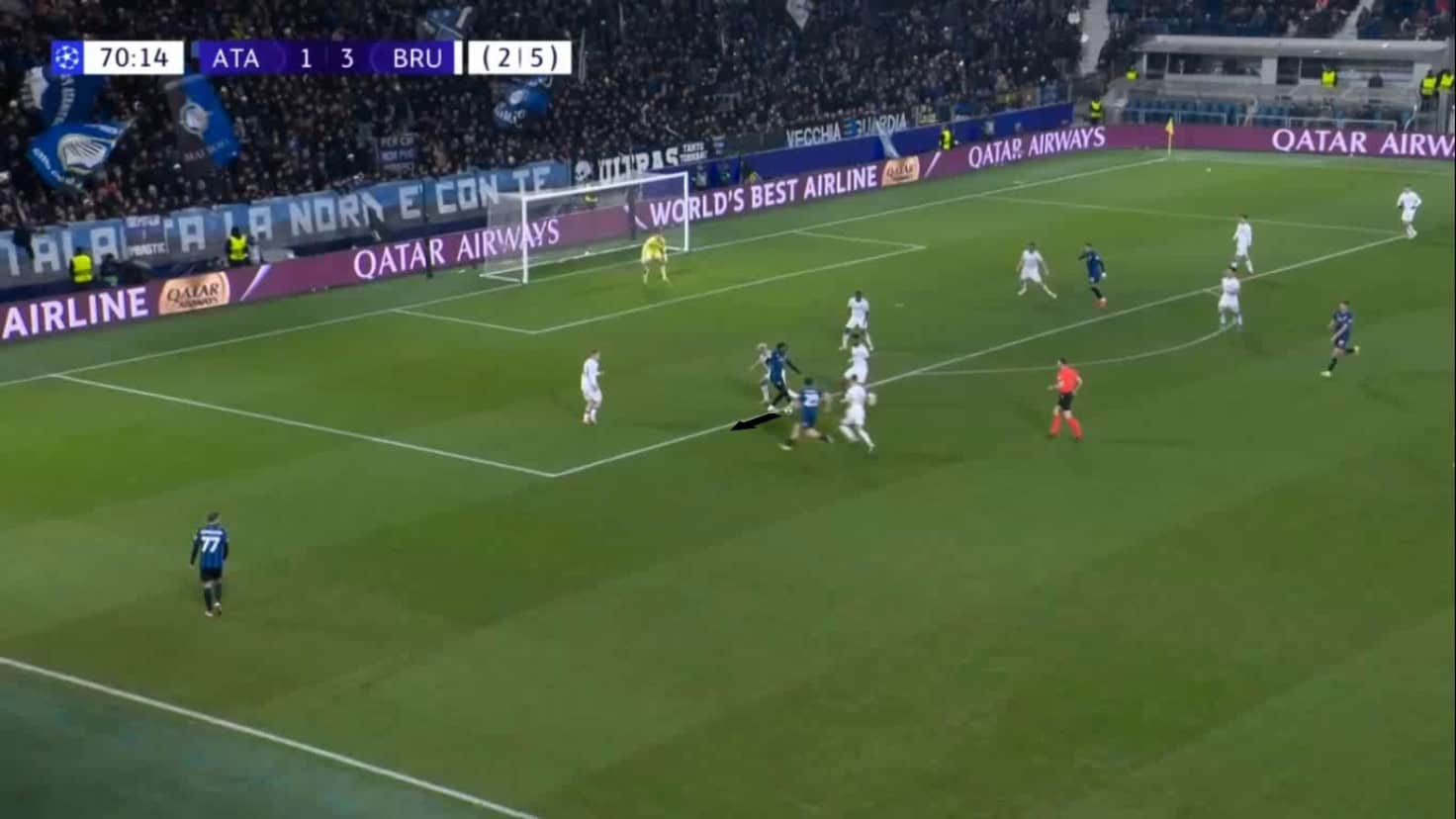
Kolašinac gets the ball and guides it forward at high pace.
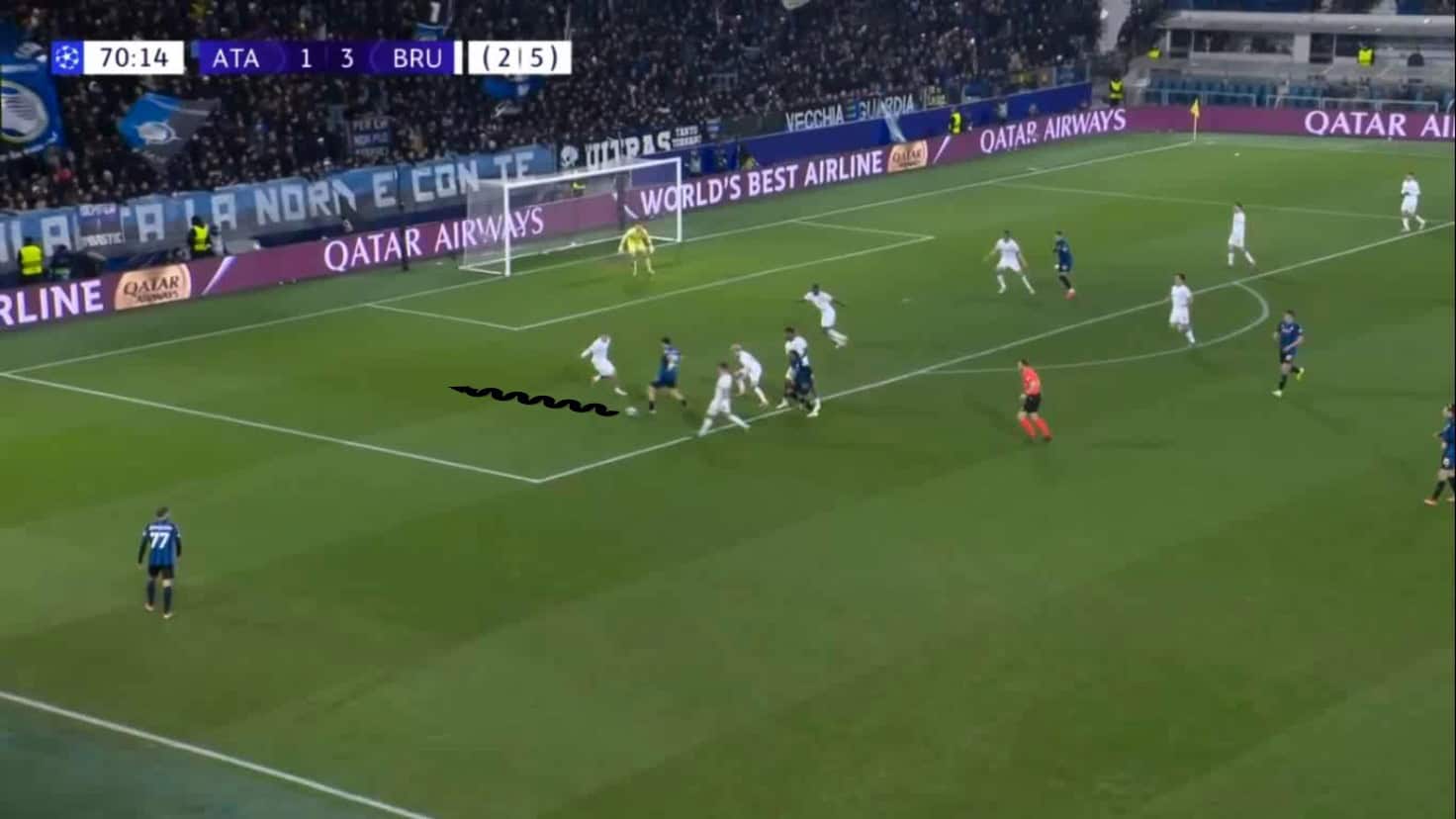
Finally, he made a low cross.
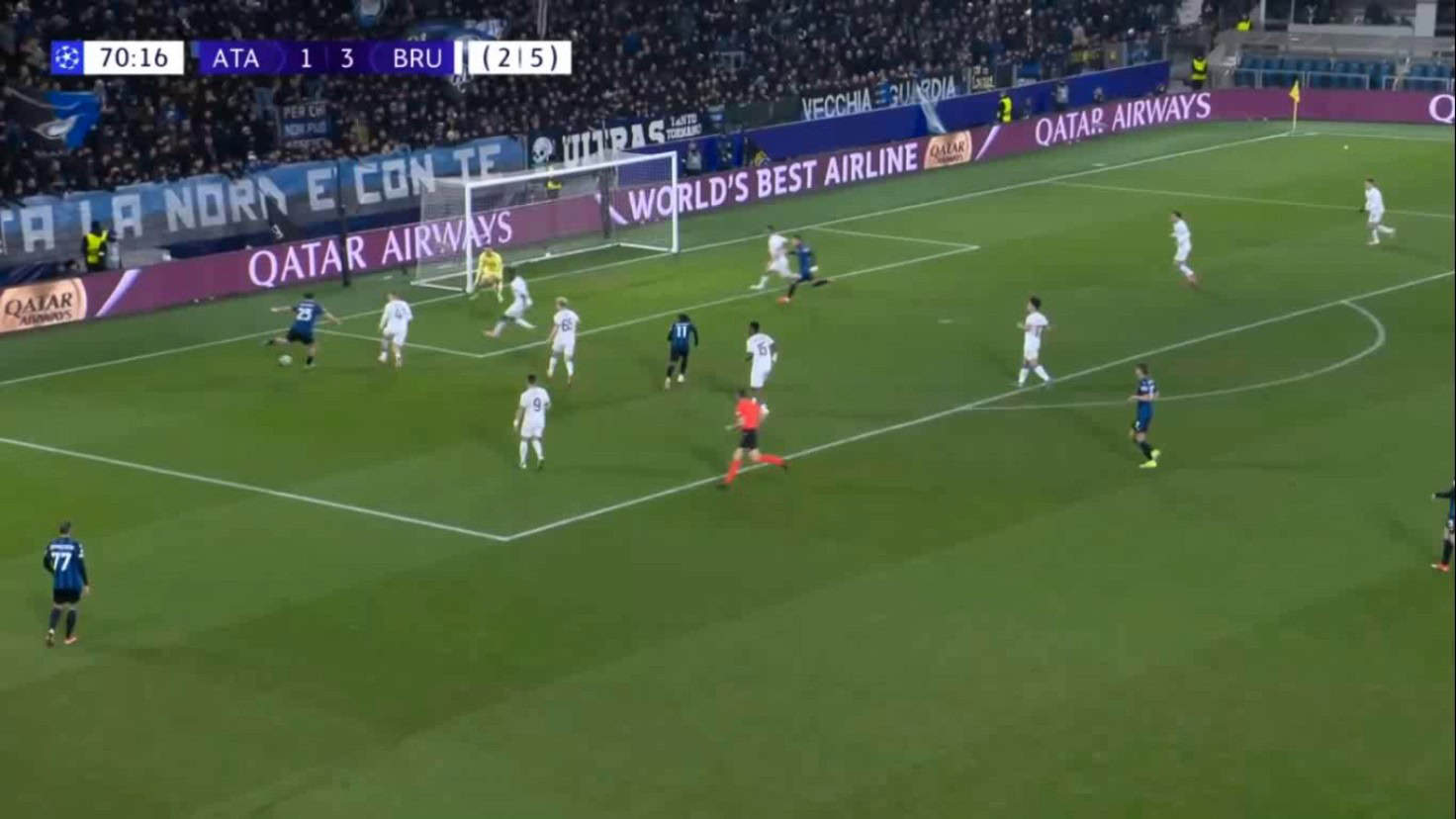
The second case will show us the usage of overlap by using three players.
In the following image, we can see an underlap situation firstly from Kolašinac, as he moved forward from a deeper position beside the ball carrier, who will pass it to his internal teammate.
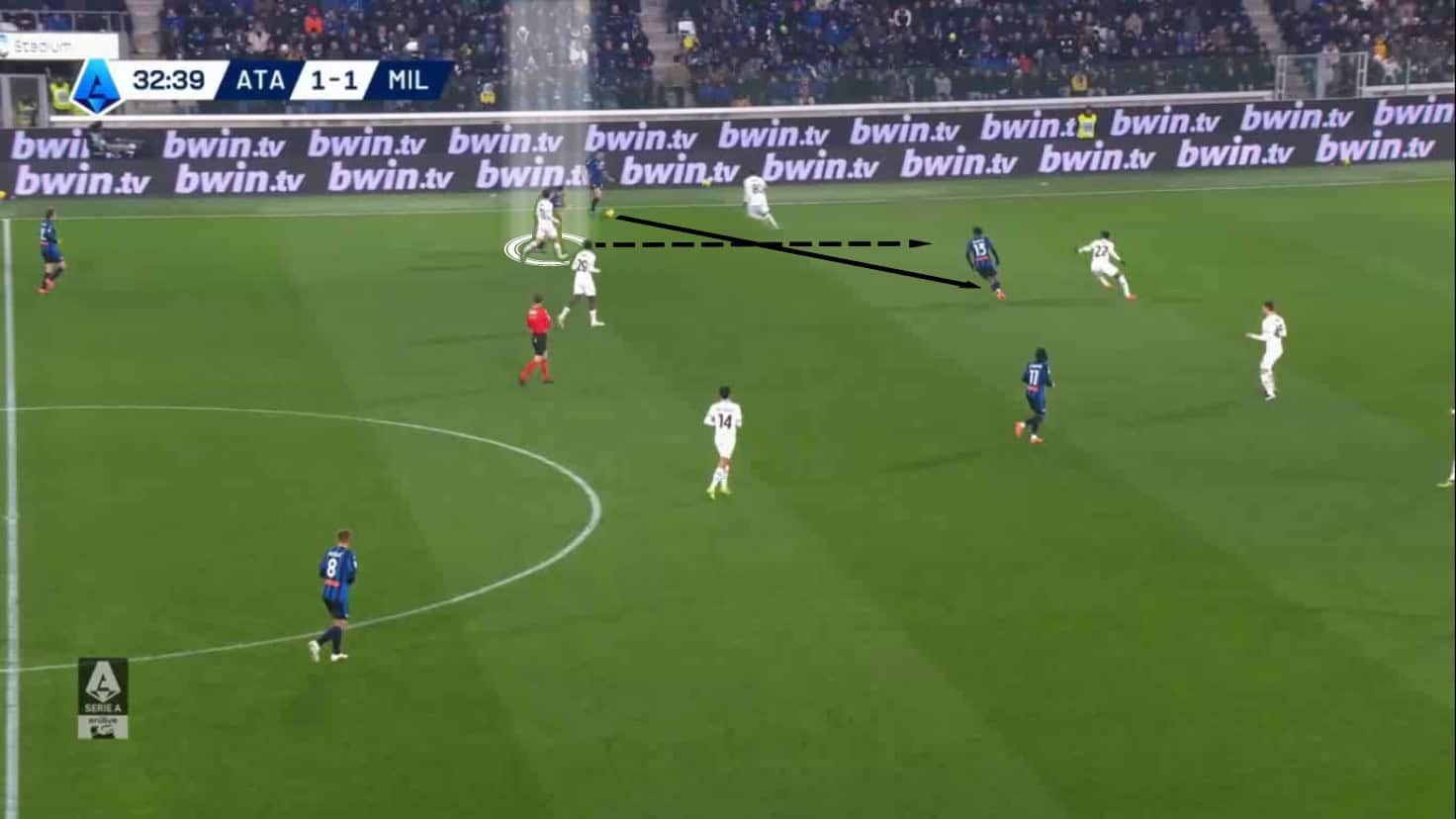
Then, it became an overlap situation, as Kolašinac ran down the side, waiting for a pass from his teammate.
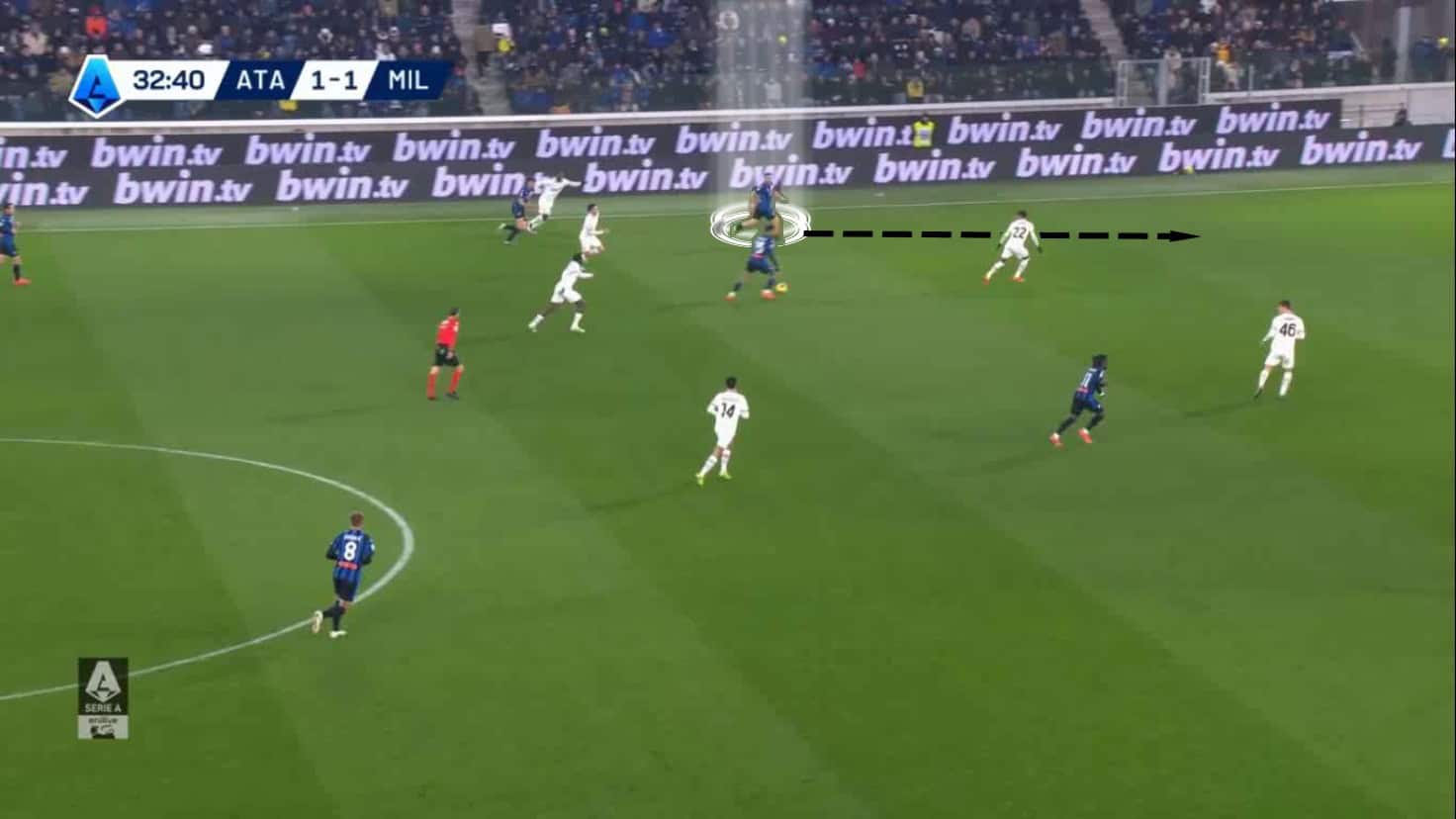
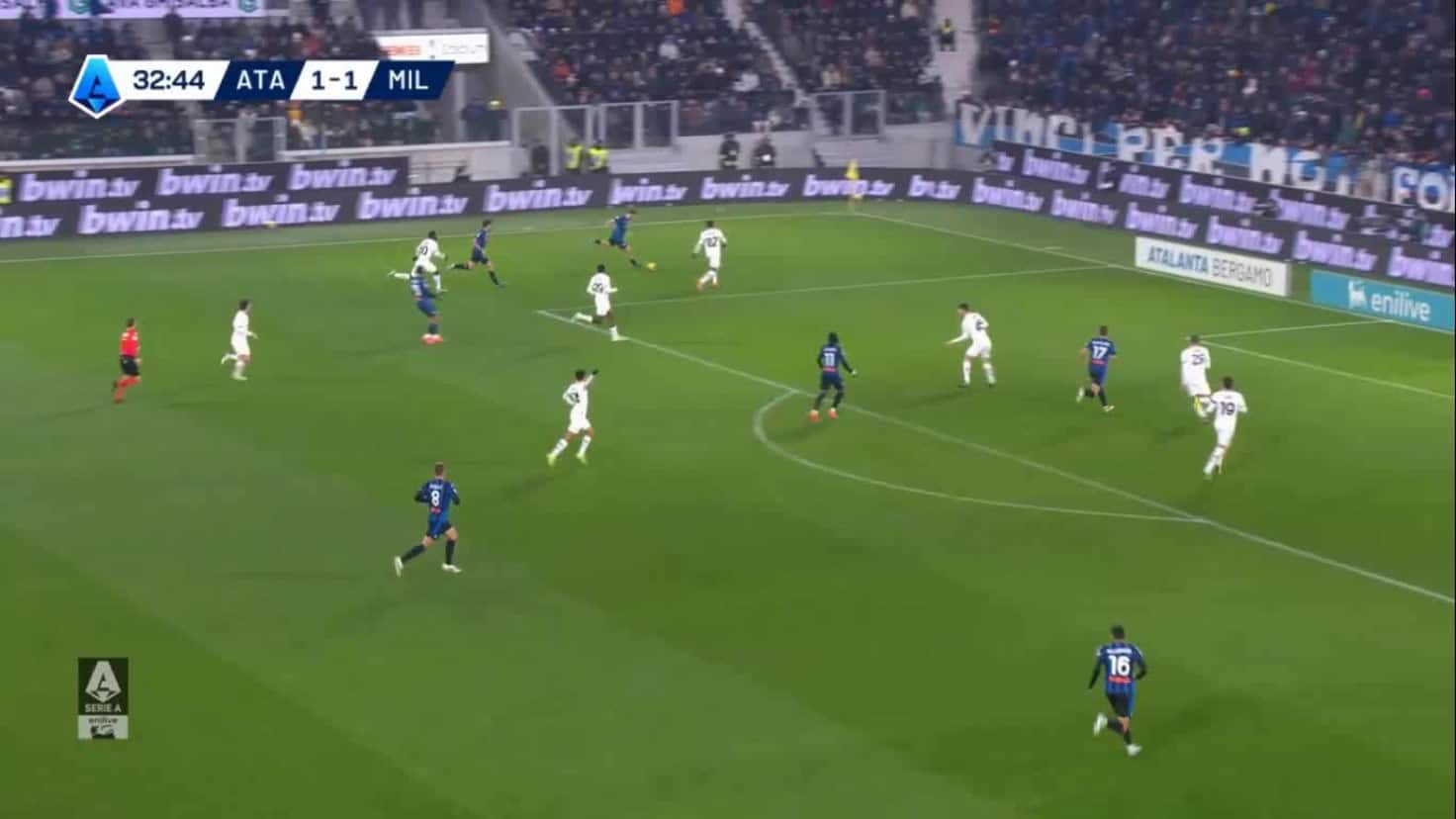
Then, Kolašinac got a pass from his teammate after a third-man run.
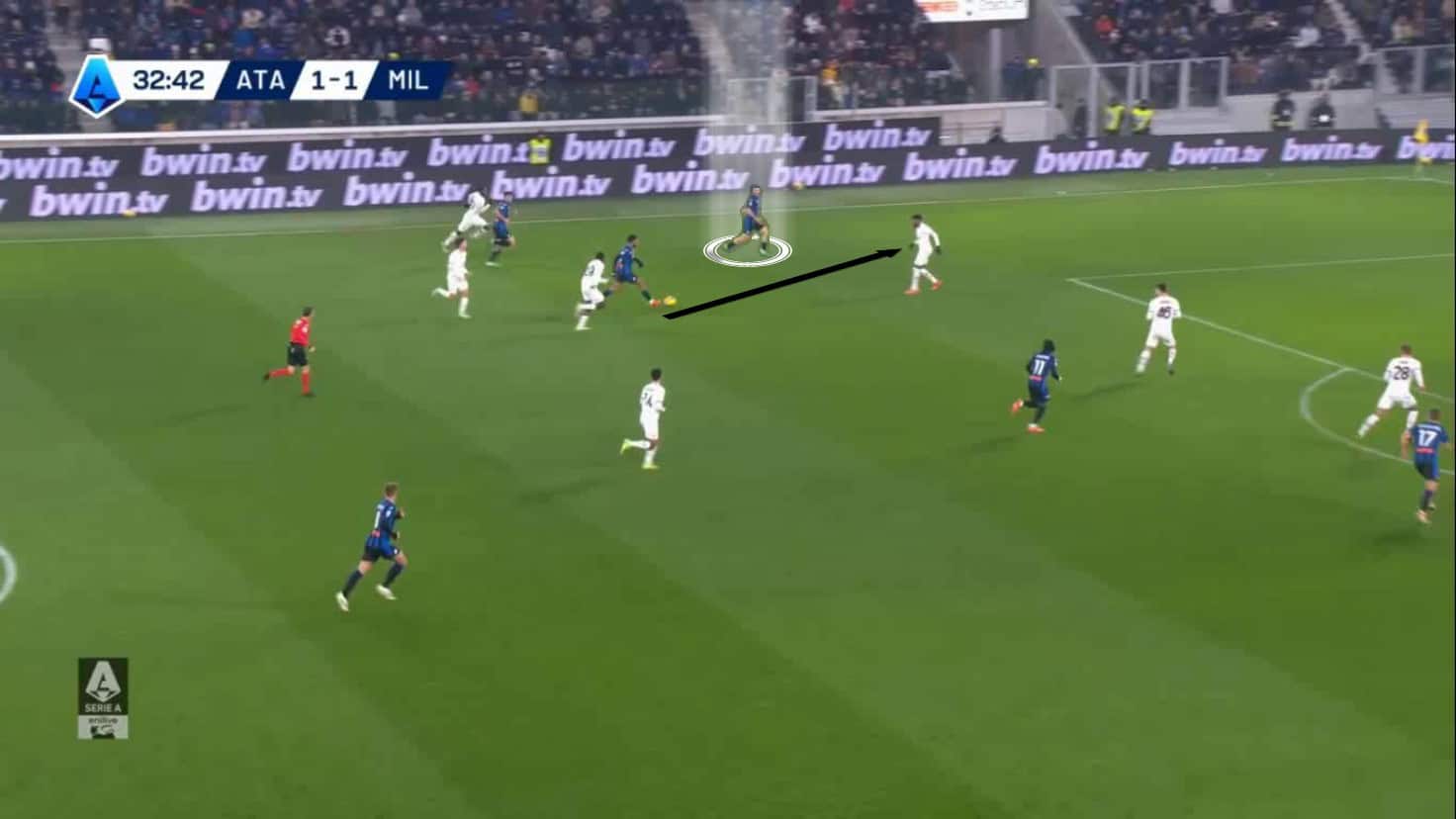
Finally, he delivered a cross.
The last case we have for Kolašinac is the underlap run.
In the next image, Kolašinac passes the ball to the left wing-back.
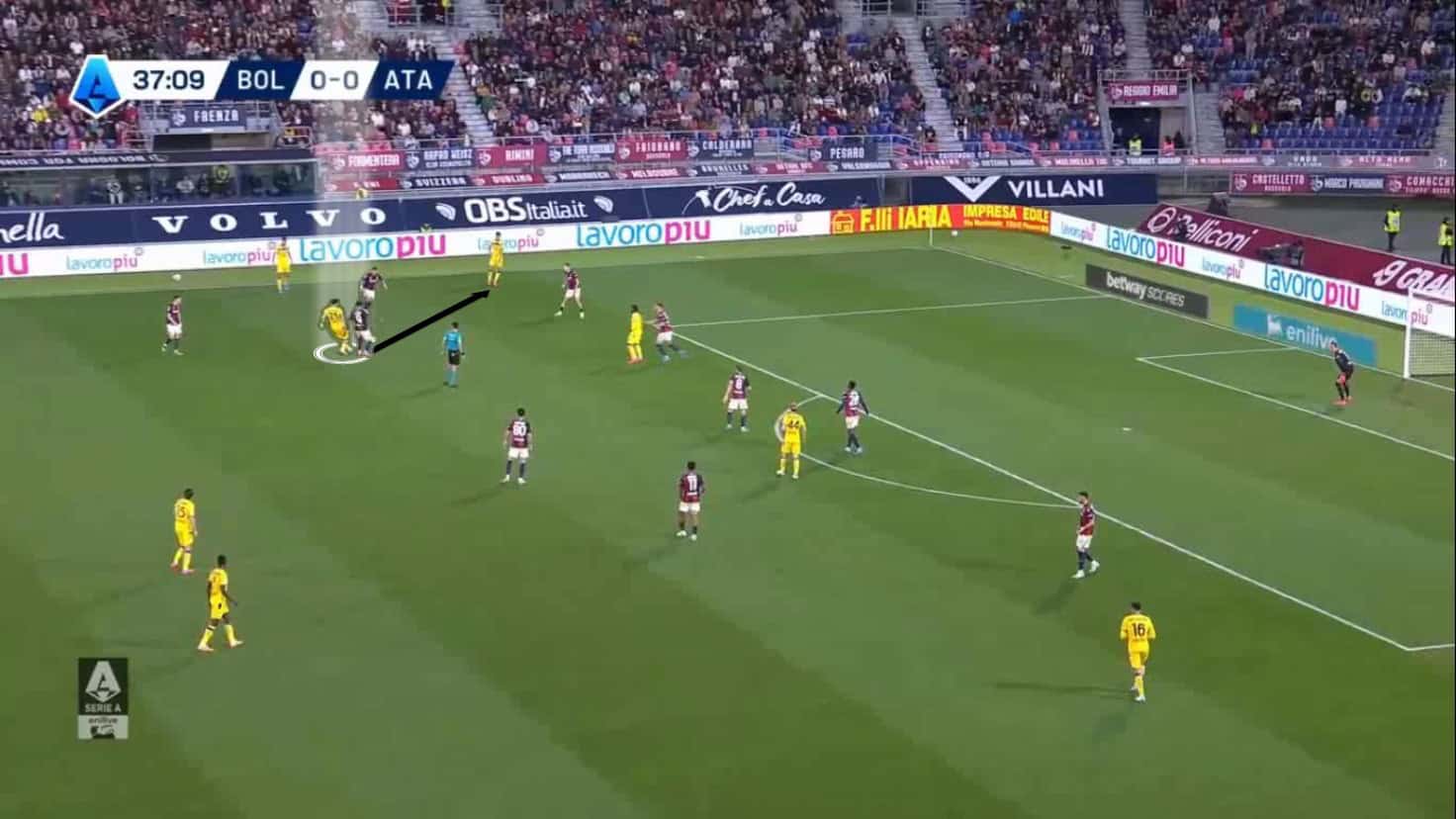
Then, he recognises the free space between the opponent's two players and moves towards it.
Have a look at his hand pointing to the free space he moves to; this is nonverbal communication, a type of communication between players.
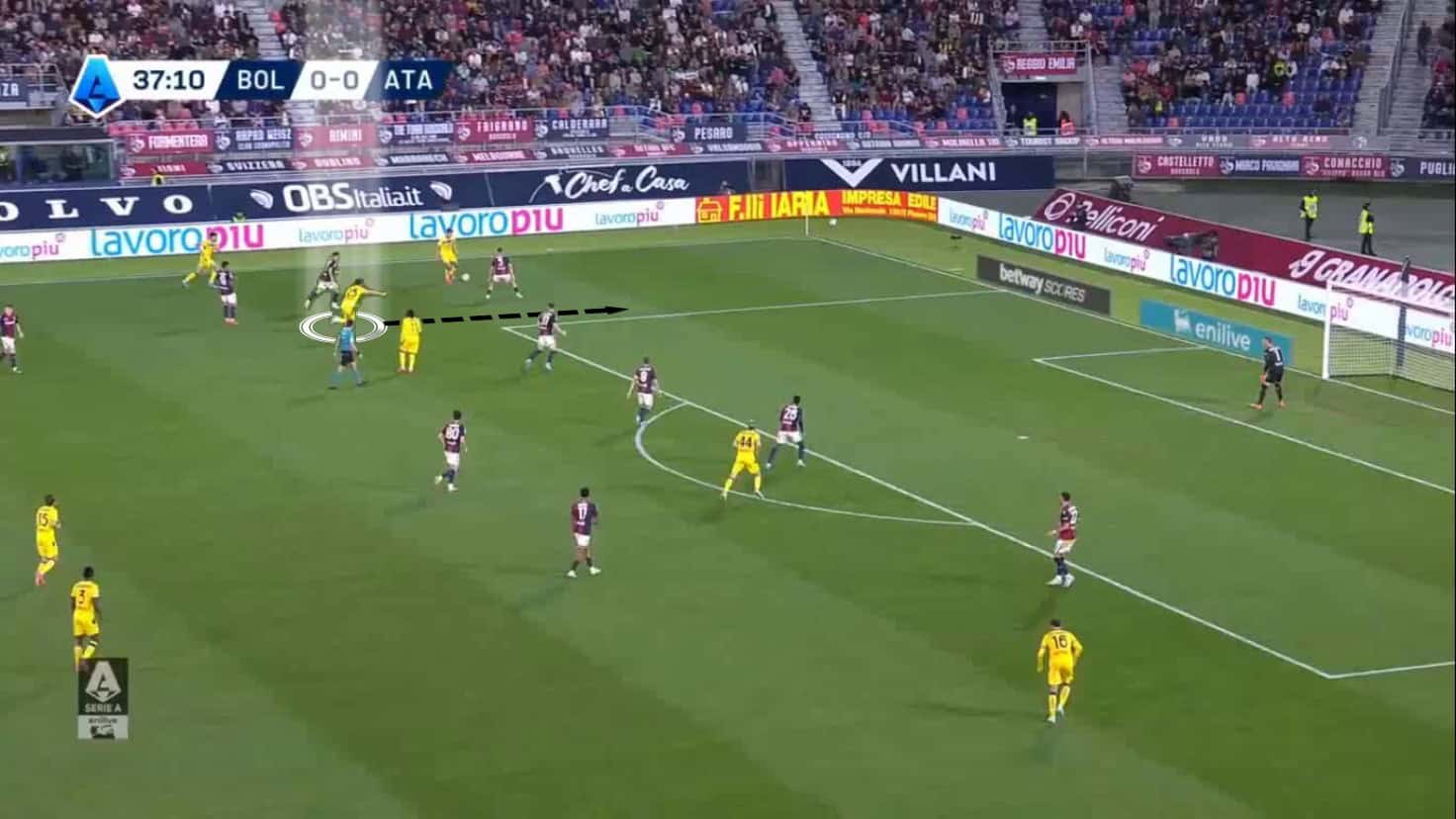
Kolašinac continues pointing and running towards the free space.
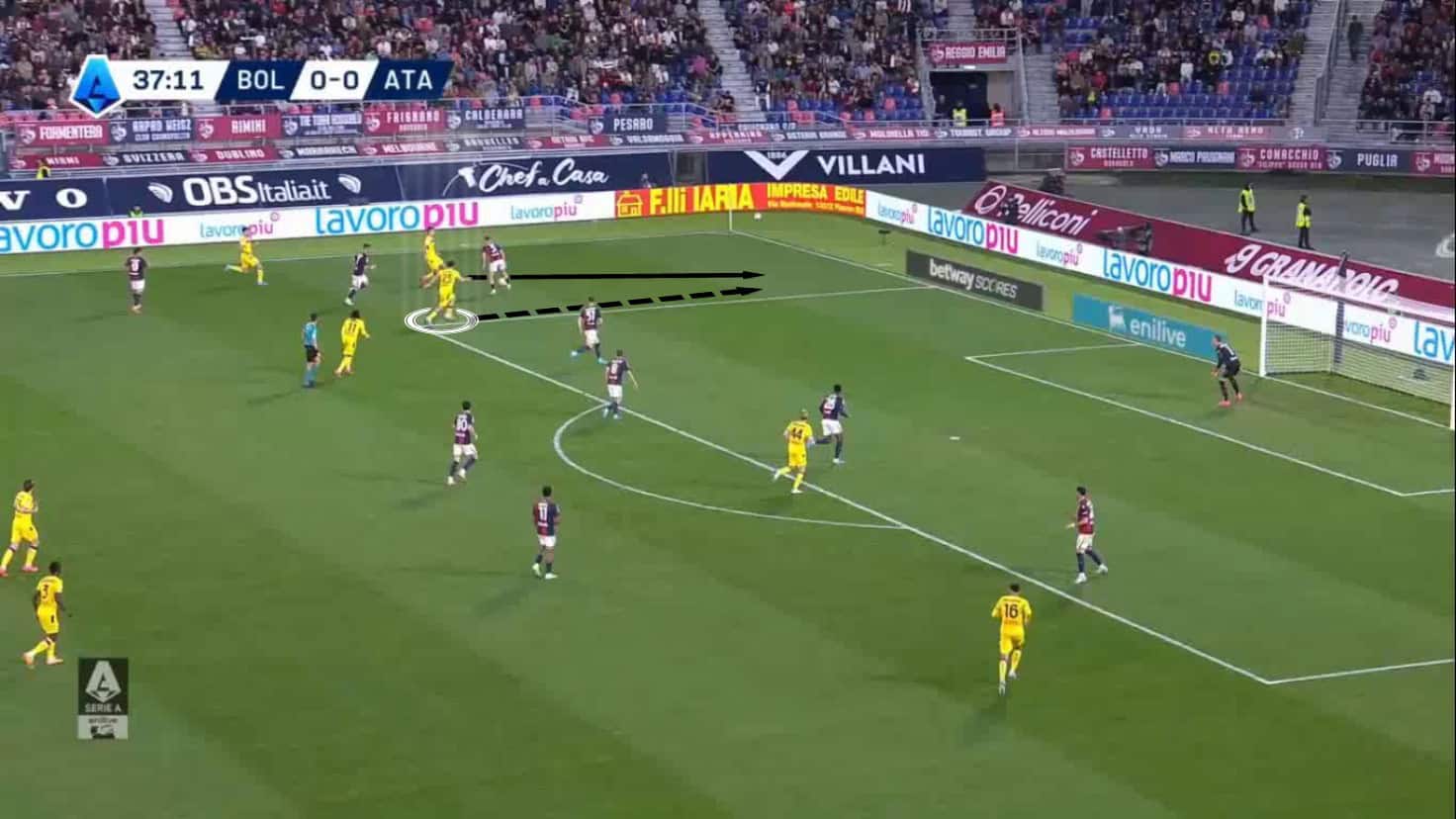
Then, he got the ball and made a low cross.
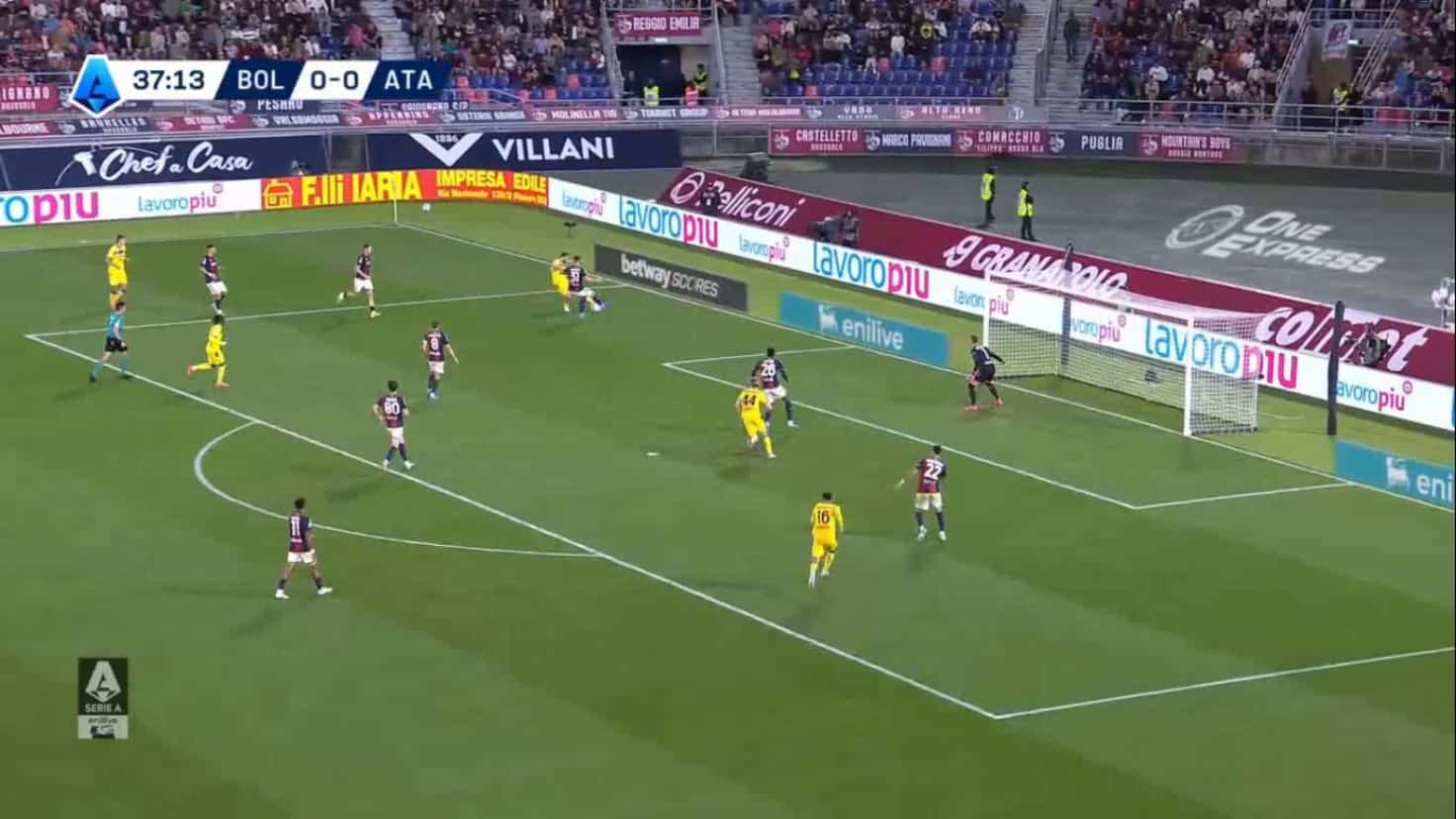
Right Centre-Back Overlap And Underlap: Giovanni Di Lorenzo
In the final part of this article, we will discuss another player used as a third defender in the back-three system: Giovanni Di Lorenzo, the full-back who coach Antonio Conte used as a third defender at SSC Napoli.
The duo of Di Lorenzo and Matteo Politano on the right flank was a great attacking combination last season against other teams, as Politano always receives the ball on the side and waits for Di Lorenzo to make an overlap or underlap based on his reading of the situation.
In the following case, we will start with Di Lorenzo's overlaps; he can make short and long overlaps, but we will examine an example of his long overlaps.
Di Lorenzo runs forward from a deep position with a long overlap, while Politano drives the ball.
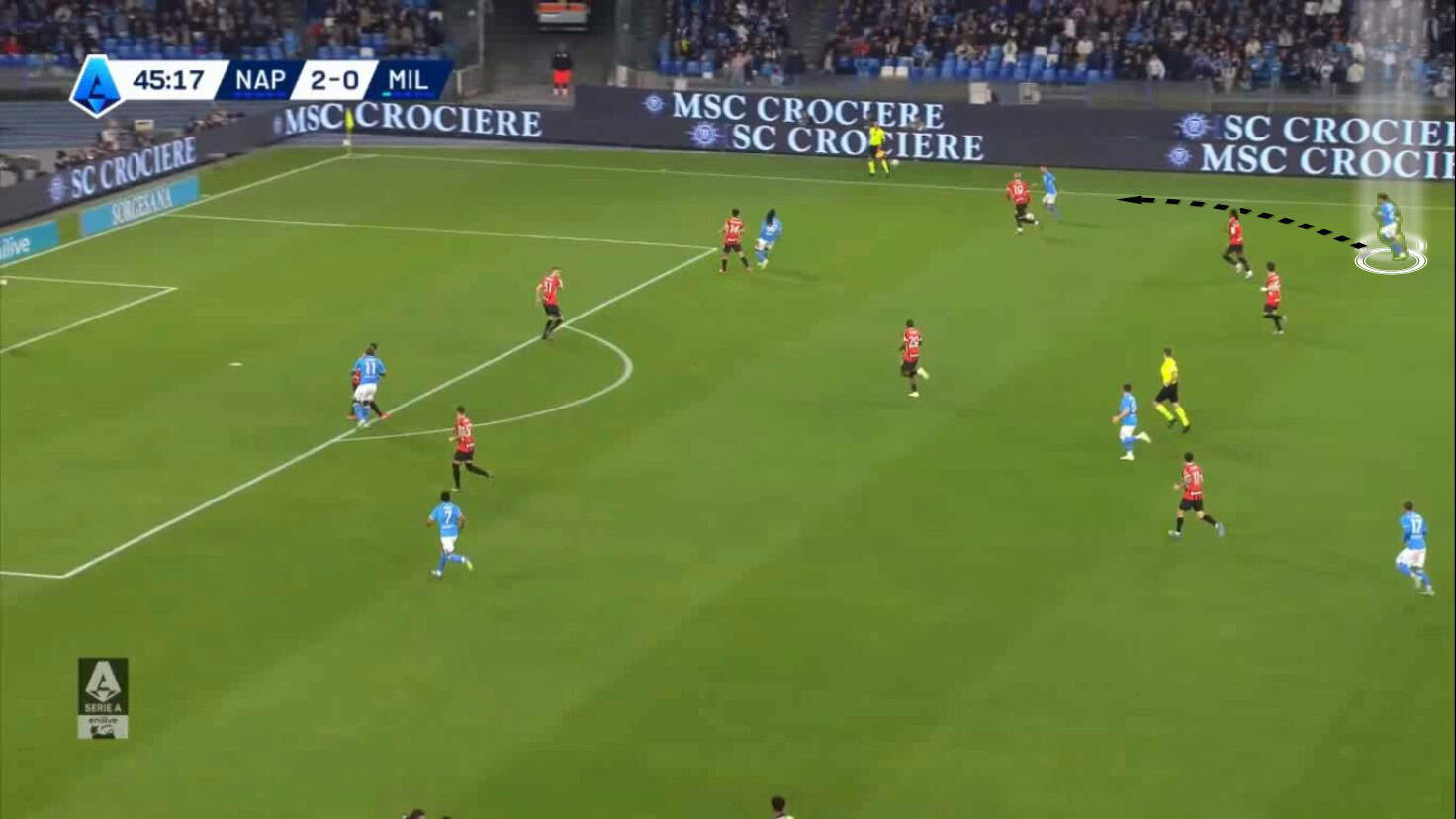
When Politano cut inside with the ball, Di Lorenzo increased his pace to attack the free space.
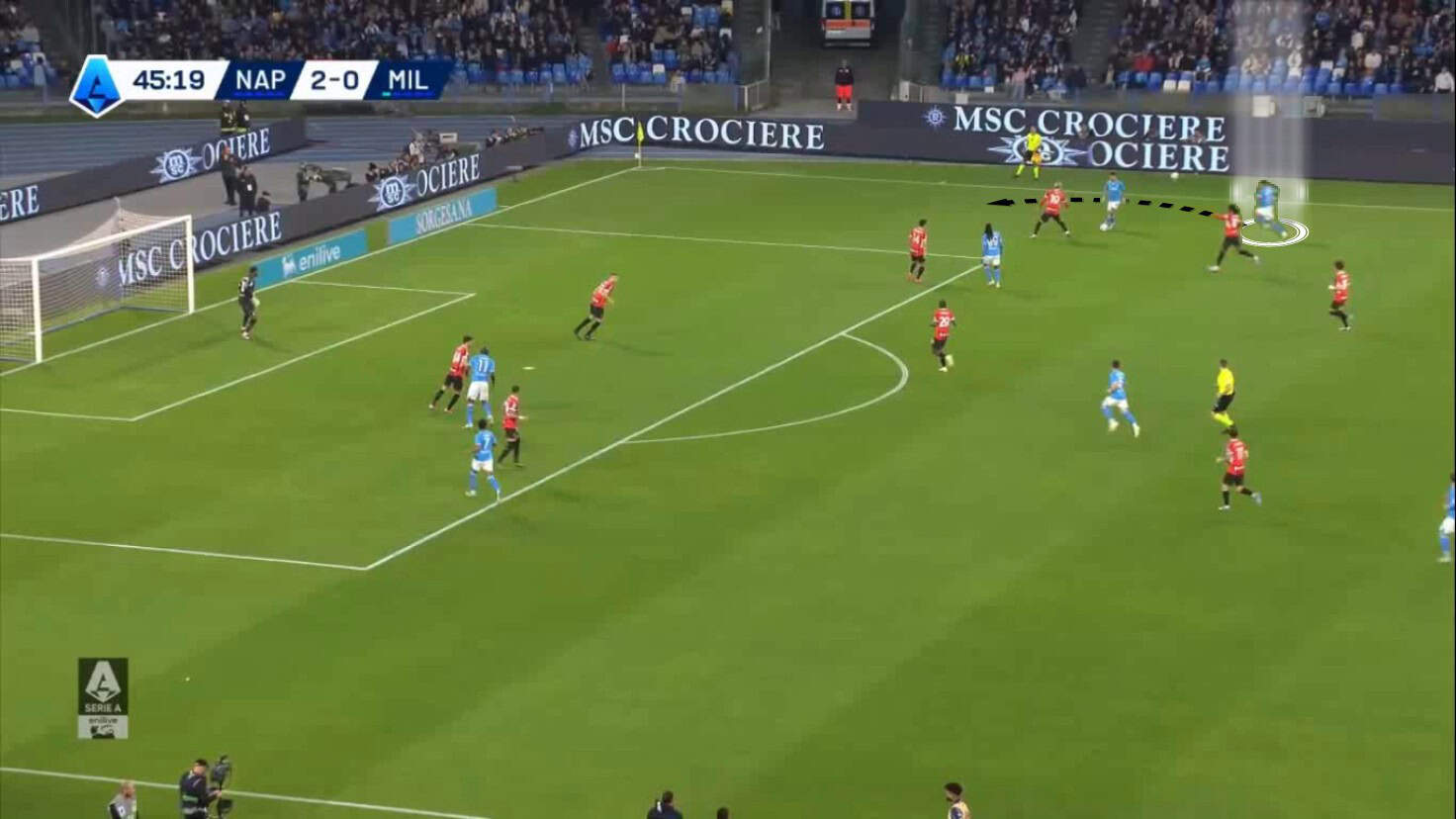
Politano passed the ball to Di Lorenzo in the final third.
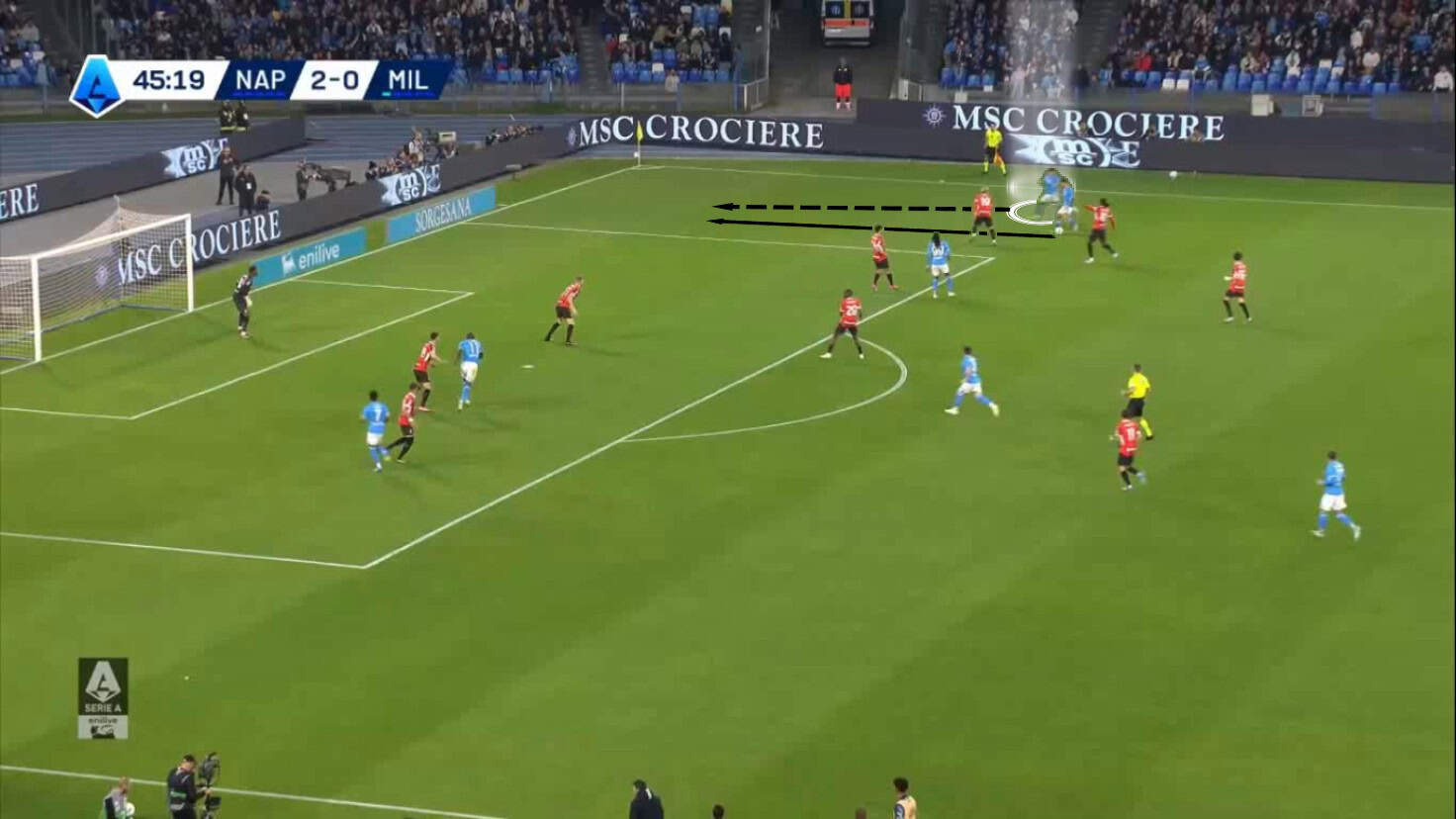
Then, he delivered a low cross.
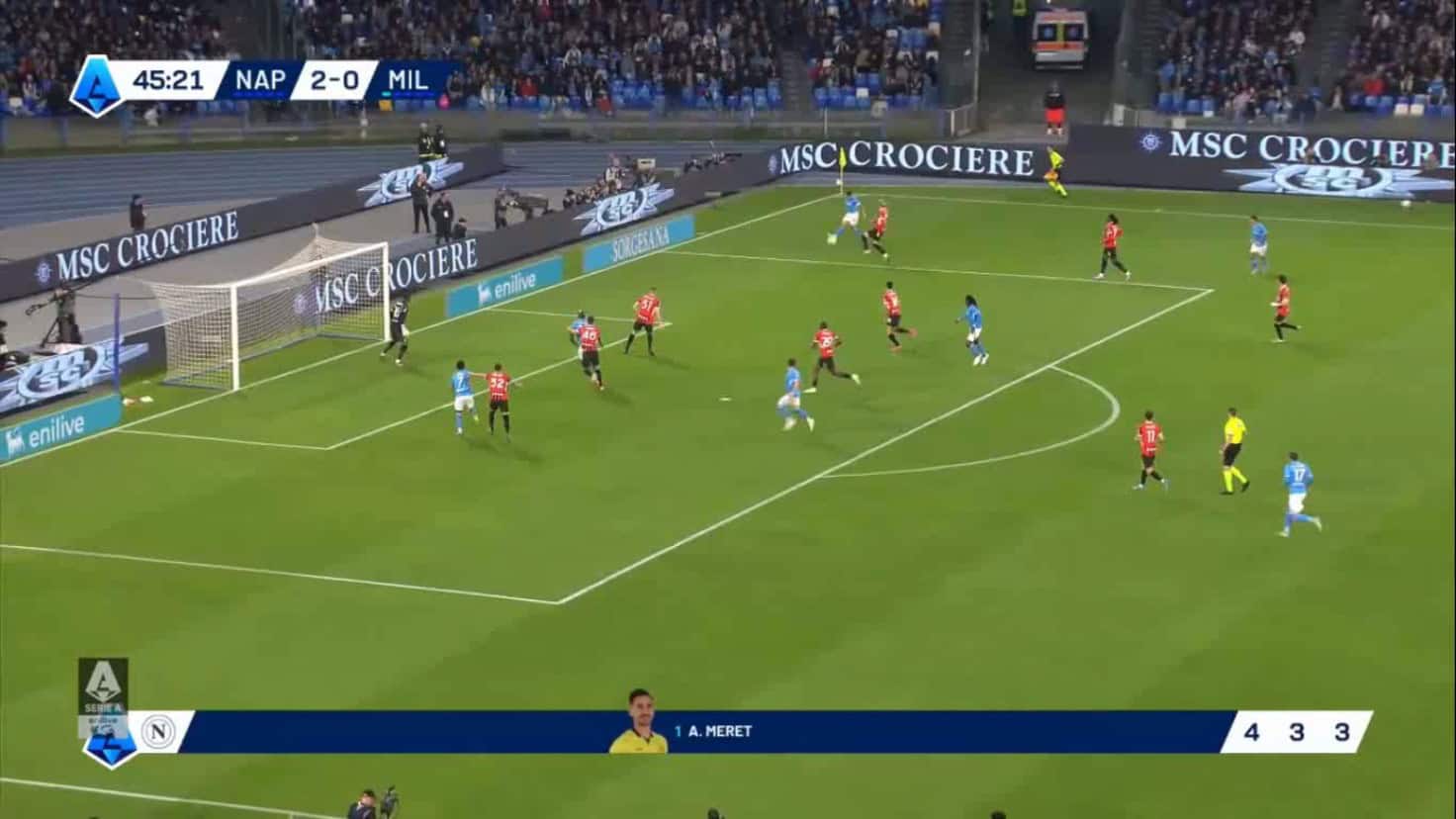
Let's move to Di Lorenzo's underlaps and take two examples of this principle.
The first example shows the full-back's ability to analyse the situation well and make the best decision.
First, Di Lorenzo was thinking of making an overlap due to the large space behind Politano.
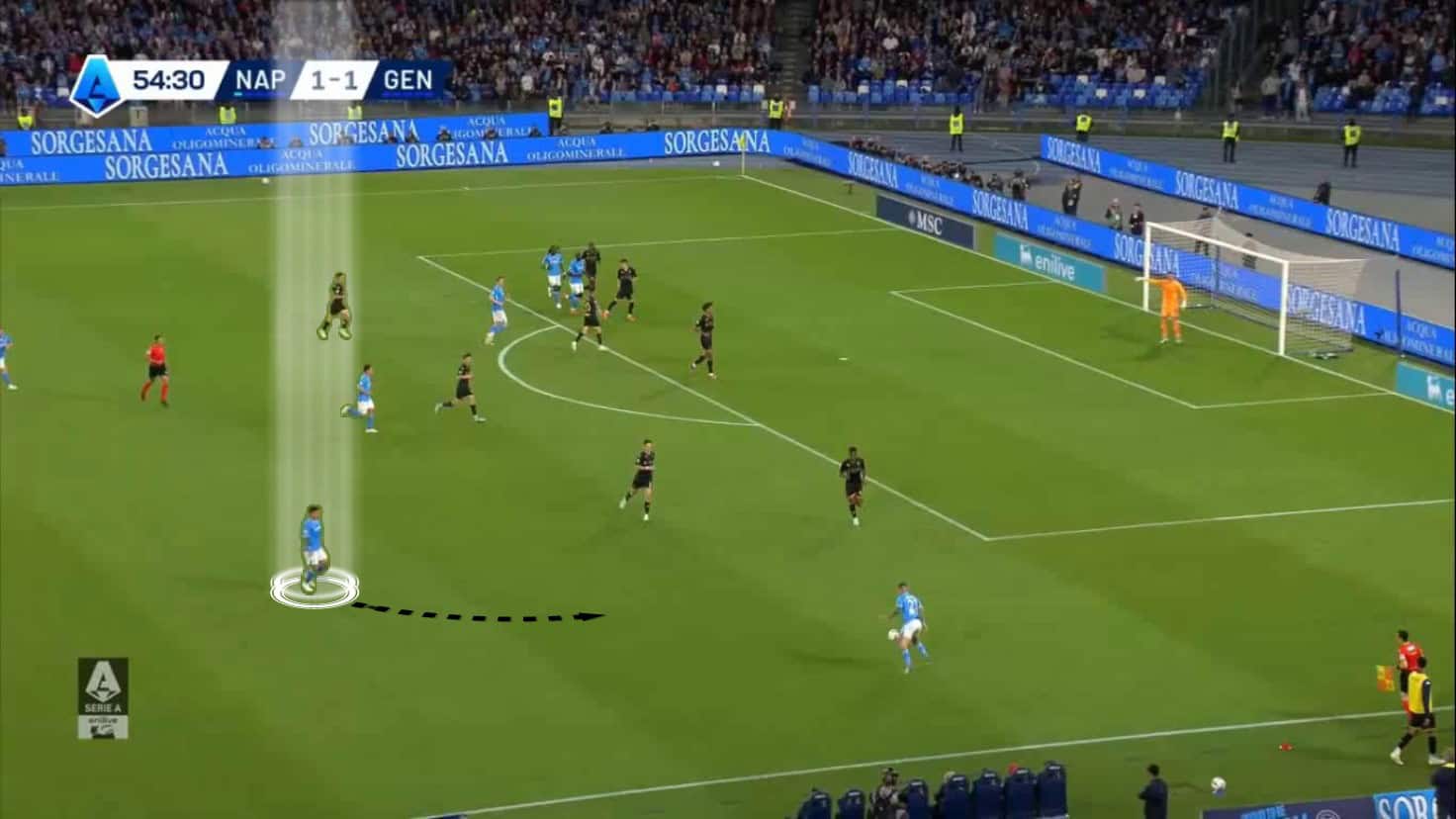
Then, he changed his decision after scanning and recognising the central free space behind the opponent's full-back.
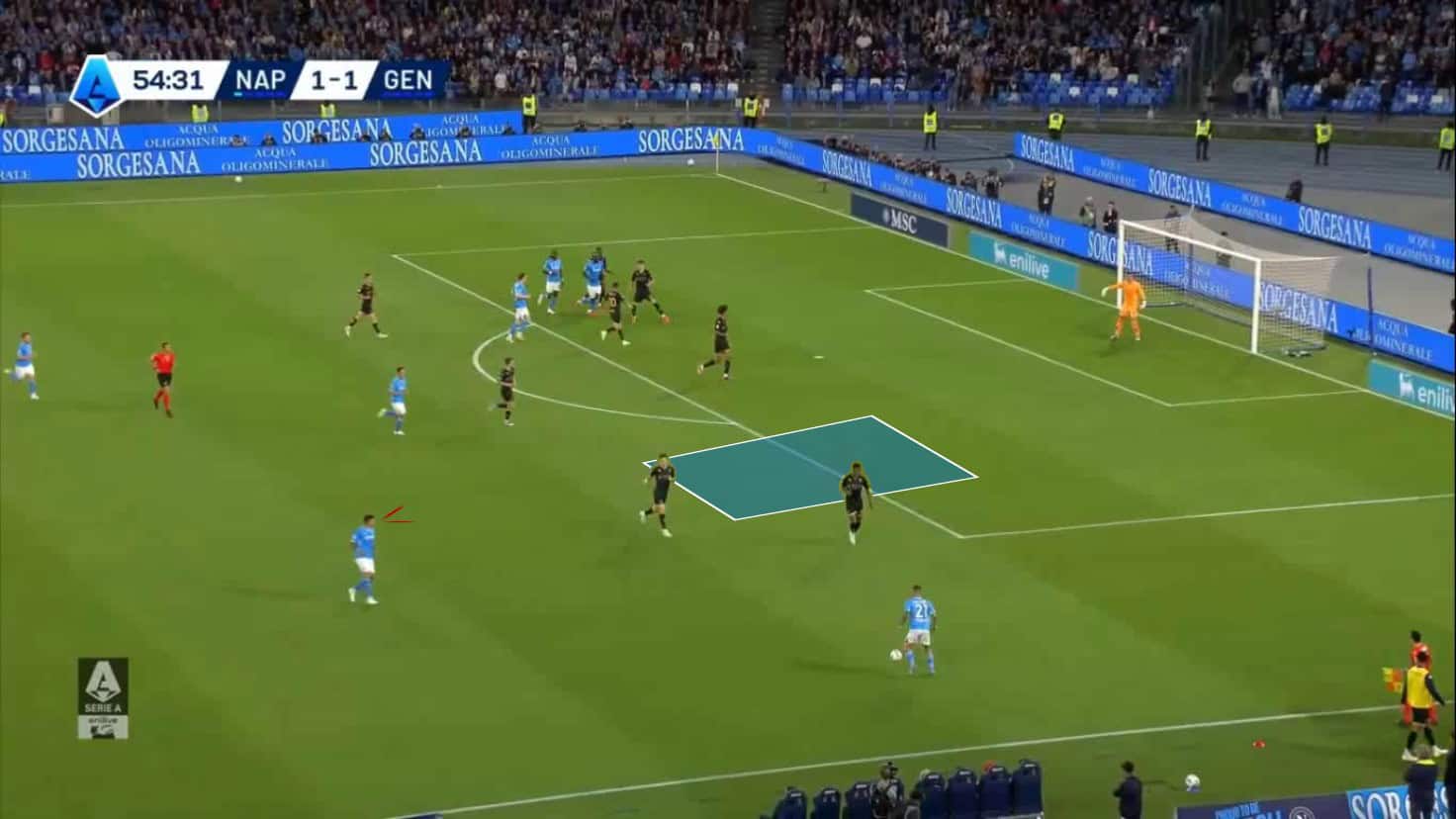
So, he started to run towards the free space.
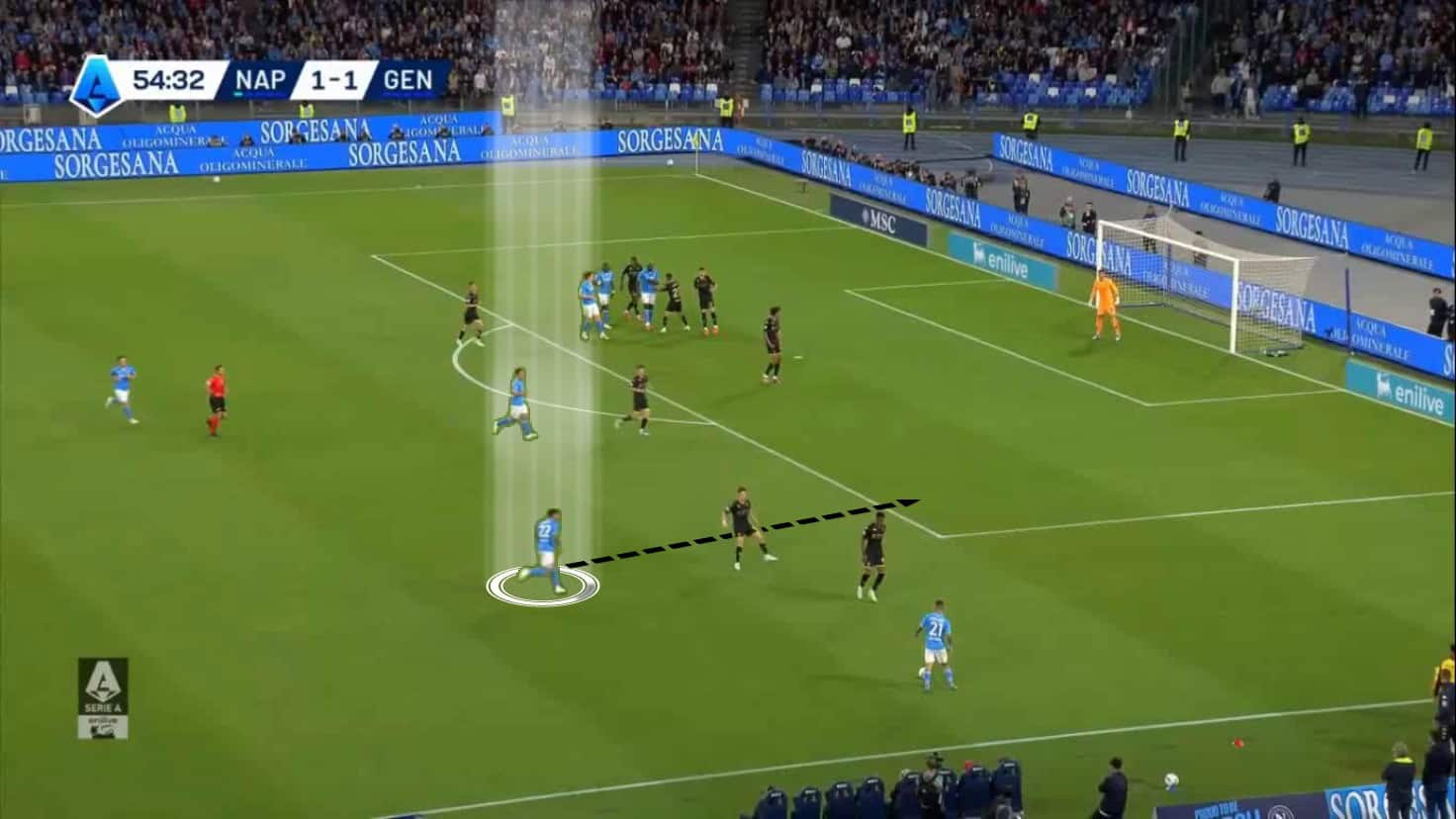
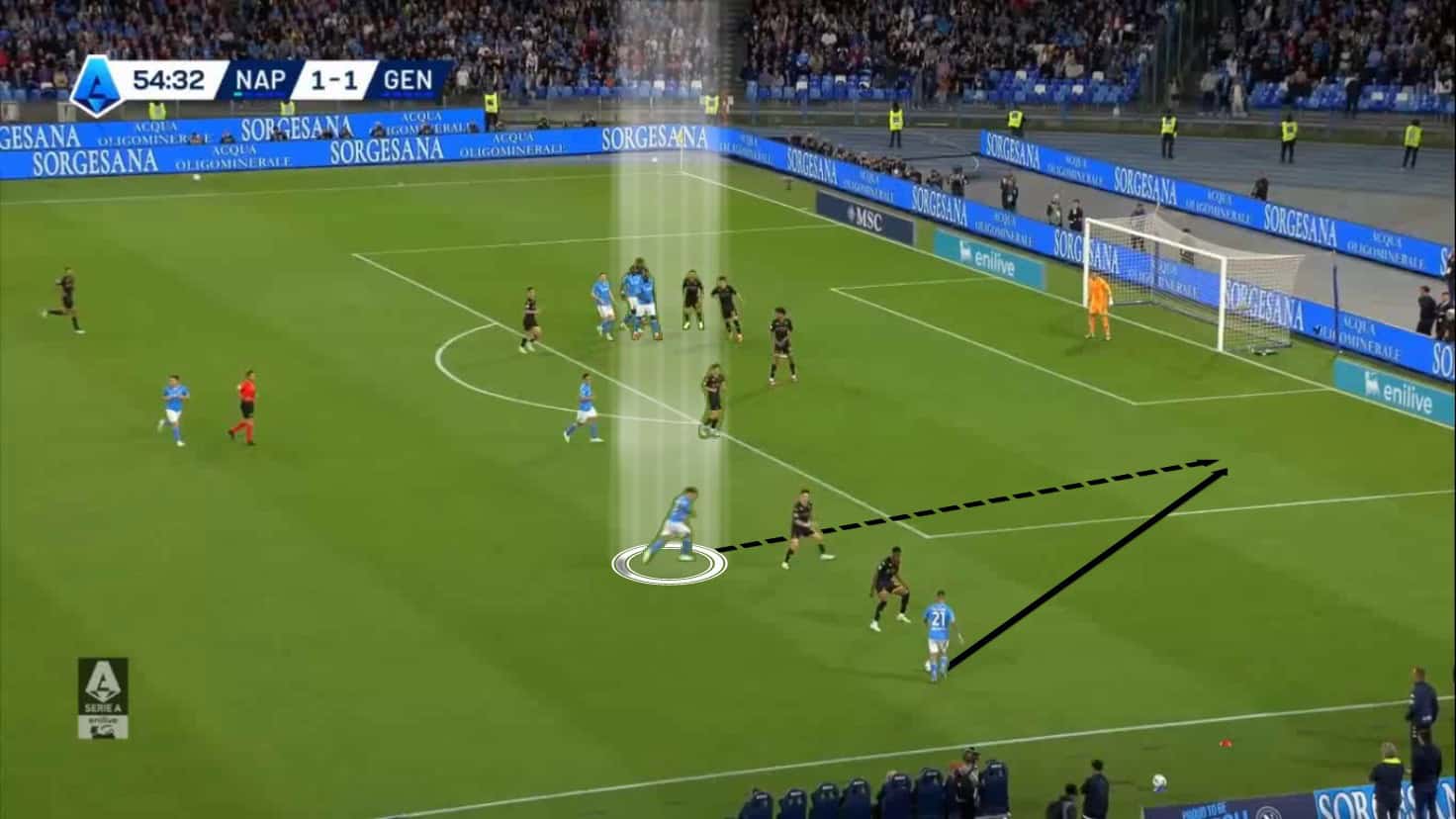
Di Lorenzo increased his pace to reach the space quickly and receive a pass from Politano.
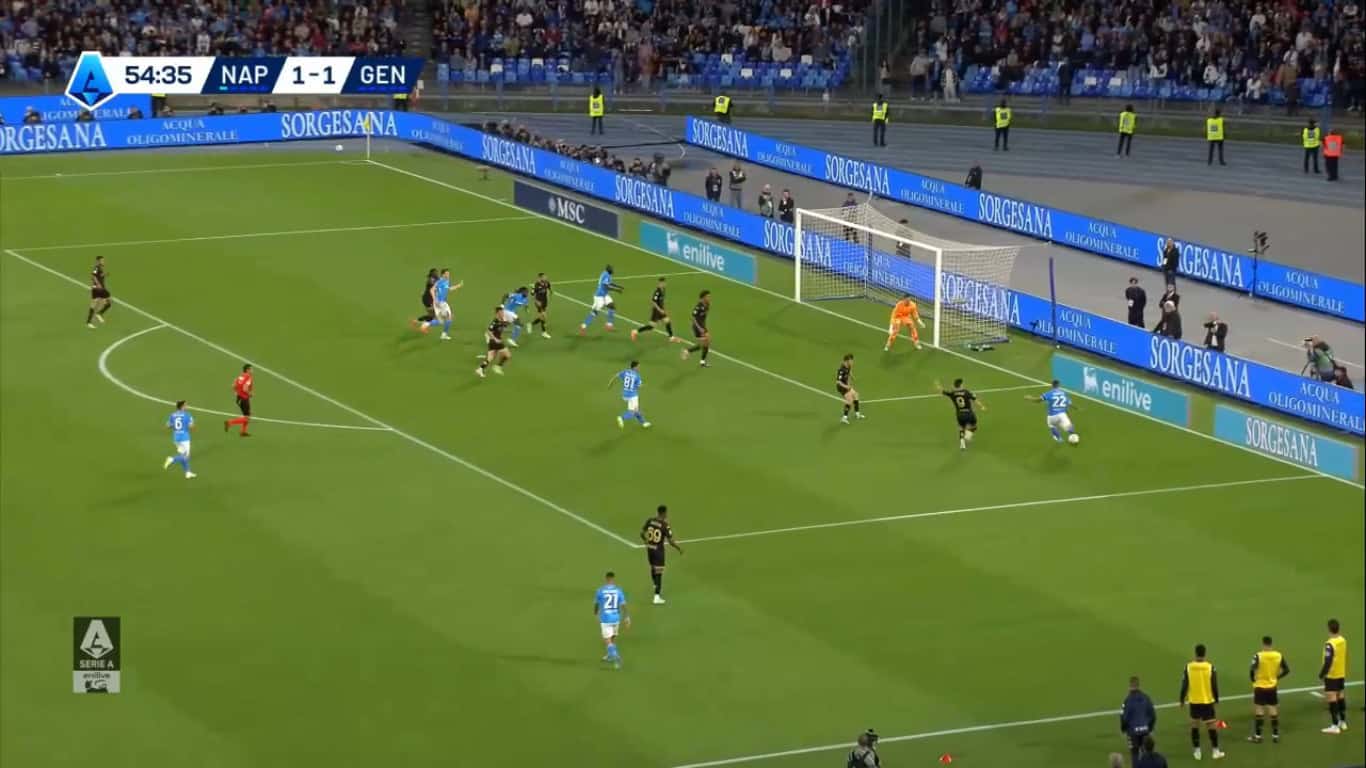
And he made a low cross.
The second example for underlaps shows us how to read the teammate's movement and then take the underlap decision.
In the following image, Scott McTominay, the highlighted player in blue, moves towards the space between the full-back and the centre-back, while Di Lorenzo moves forward at a little bit slow pace.
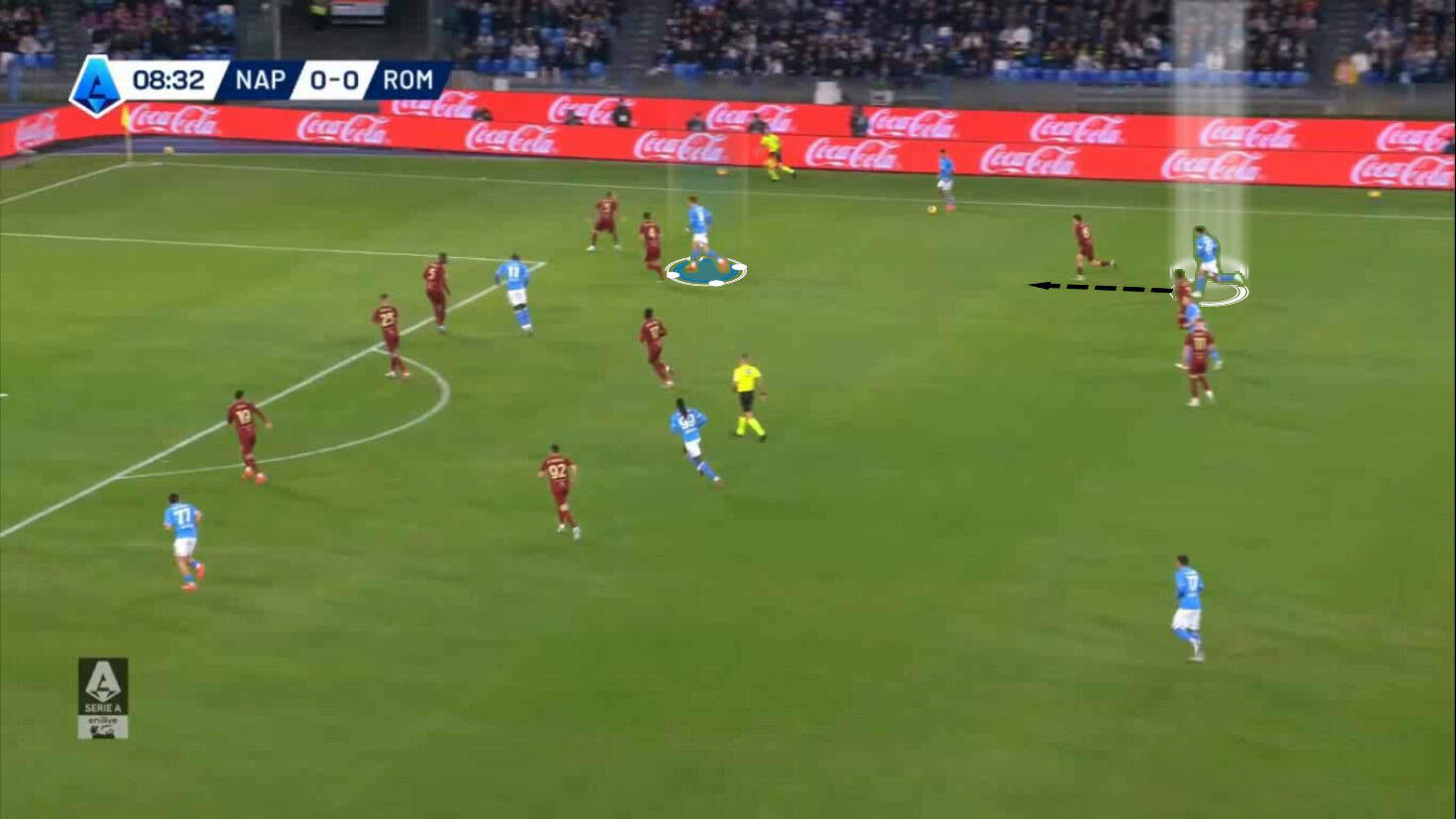
Di Lorenzo increased his pace when he saw McTominay cutting inside and pulling the opponent's player.
He then moved to the free space with an underlap run.
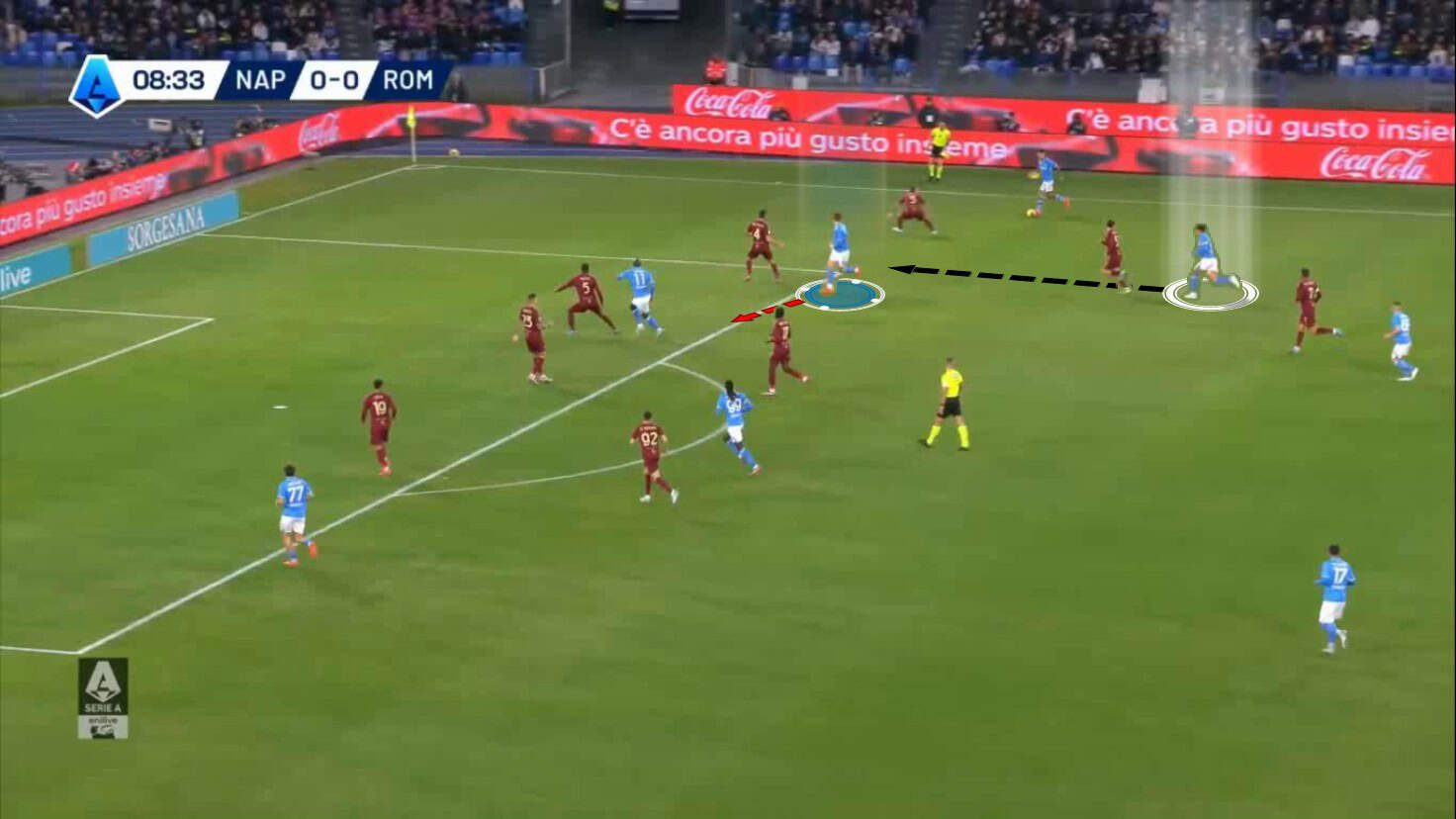
Then, he got a pass from Politano in the space behind the opponent's full-back.
![Olympique De Marseille Vs PSG [1-2] Ligue 1 2026/2027: How Bruno Génésio Transitions Troubled PSG - Tactical Analysis](https://cdn.mymidnight.blog/77f959f119f4fb2321e9ce801e2f5163/size/w600/2026/09/Marseille-Vs-PSG-2026_2027---Tactical-Analysis.png)
![Fulham Vs Manchester United [1-1] Premier League 2026/2027: How Álvaro Arbeloa Tactics Exposed The Red Devils' Problems - Tactical Analysis](https://cdn.mymidnight.blog/77f959f119f4fb2321e9ce801e2f5163/size/w600/2026/09/Fulham-FC-Vs-Man-United-2026_2027---Tactical-Analysis.png)
![AS Roma Vs Inter Milan [2-2] Serie A 2026/2027: When Undefeated Giallorossi Attack Met Nerazzurri Comeback Resilience - Tactical Analysis](https://cdn.mymidnight.blog/77f959f119f4fb2321e9ce801e2f5163/size/w600/2026/09/AS-Roma-Vs-Inter-Milan-2026_2027---Tactical-Analysis.png)

![Real Sociedad Vs Bournemouth [1-2] Europa League 2026/2027: How Do Marco Rose Pressing Tactics Work? - Tactical Analysis](https://cdn.mymidnight.blog/77f959f119f4fb2321e9ce801e2f5163/size/w600/2026/09/Real-Sociedad-Vs-Bournemouth-20262027---Tactical-Analysis-1.png)
![AC Milan Vs Benfica [0-2] Europa League 2026/2027: How Marco Silva Tactics Exposed Rúben Amorim Defensive Problems - Tactical Analysis](https://cdn.mymidnight.blog/77f959f119f4fb2321e9ce801e2f5163/size/w600/2026/09/AC-Milan-Vs-Benfica-20262027---Tactical-Analysis.png)