
![Arsenal Vs Sporting CP [0–0] – Champions League 2025/2026: Conservative Mikel Arteta Tactics Advance – Tactical Analysis](https://cdn.mymidnight.blog/77f959f119f4fb2321e9ce801e2f5163/size/w1000/2026/04/Arsenal-Vs-Sporting-CP-20252026.png)
Arsenal Vs Sporting CP [0–0] – Champions League 2025/2026: Conservative Mikel Arteta Tactics Advance – Tactical Analysis

Arsenal came into Wednesday’s Champions League match against Sporting CP with a one-goal advantage.
Mikel Areta leveraged that one-goal lead in a controlled, low-event match to book their spot in the Champions League semi-final against Atlético Madrid.
The Gunners have been in poor form recently, and even though they held Sporting scoreless, the attack was less than convincing.
With that said, Arsenal tactics showed why they are considered the best defensive team in the world, controlling the match both in and out of possession.
Even in a match with so few chances at either end, it was an interesting tactical battle between Mikel Arteta and Rui Borges.
In this Arsenal vs Sporting CP tactical analysis, we examine how Arsenal controlled this match to secure passage to the semi-finals.
Arsenal Vs Sporting CP Lineups & Formations
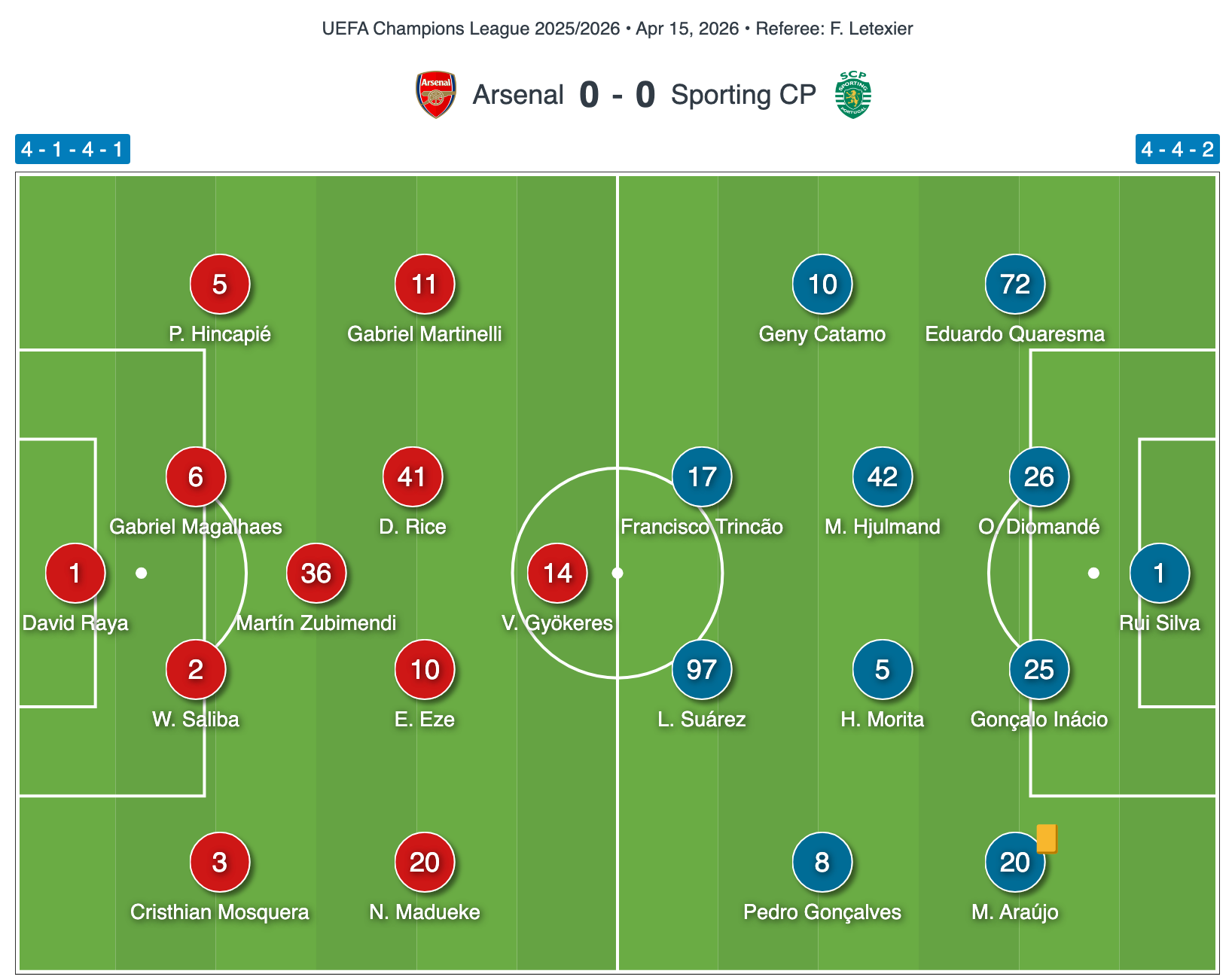
Arsenal Lineup Vs Sporting CP
Mikel Arteta lined his team up in a 4-2-3-1 formation.
David Raya started in the net behind the centre-back pairing of William Saliba and Gabriel Magalhães.
Piero Hincapié started at left-back, while Cristhian Mosquera got his first start at right-back.
Declan Rice and Martín Zubimendi started together once again as the two defensive midfielders.
Noni Madueke started at right wing, Eberechi Eze started as the ‘10’, while Gabriel Martinelli started at left wing.
Viktor Gyökeres occupied his usual spot up top.
Mikel Arteta made four substitutions in the match.
In the 56th minute, Kai Havertz came on for Gyökeres.
In the 63rd minute, Max Dowman came on for Madueke.
In the 79th minute, Arteta made his final two substitutions, bringing on Gabriel Jesus for Eze and Leandro Trossard for Martinelli.
Sporting CP Lineup Vs Arsenal
Rui Borges also lined Sporting up in a 4-2-3-1 formation.
Rui Silva started in goal behind centre-backs Ousmane Diomande and Gonçalo Inácio.
Maximiliano Araújo started at left-back, while Eduardo Quaresma started at right-back.
Morten Hjulmand and Hidemasa Morita started as the two defensive midfielders, with Geny Catamo at left wing, Francisco Trincão started as the number ‘10’, while Pedro Gonçalves started at right wing.
Luis Suárez started as the striker.
Rui Borges made five substitutions in the match.
In the 71st minute, Geovany Quenda came on for Catamo, and Daniel Bragança came on for Gonçalves.
In the 77th minute, João Simões came on for Morita.
In the 85th minute, Borges made his final two substitutions, bringing on Georgios Vagiannidis for Quaresma and Rafael Nel for Trincão.
Arsenal Tactics In Possession
Initially, Arsenal built up in a 4-1-2-3 with Zubimendi as the single pivot.
Rice and Eze dropped in a little deep to occupy the half-spaces and create a central passing triangle.
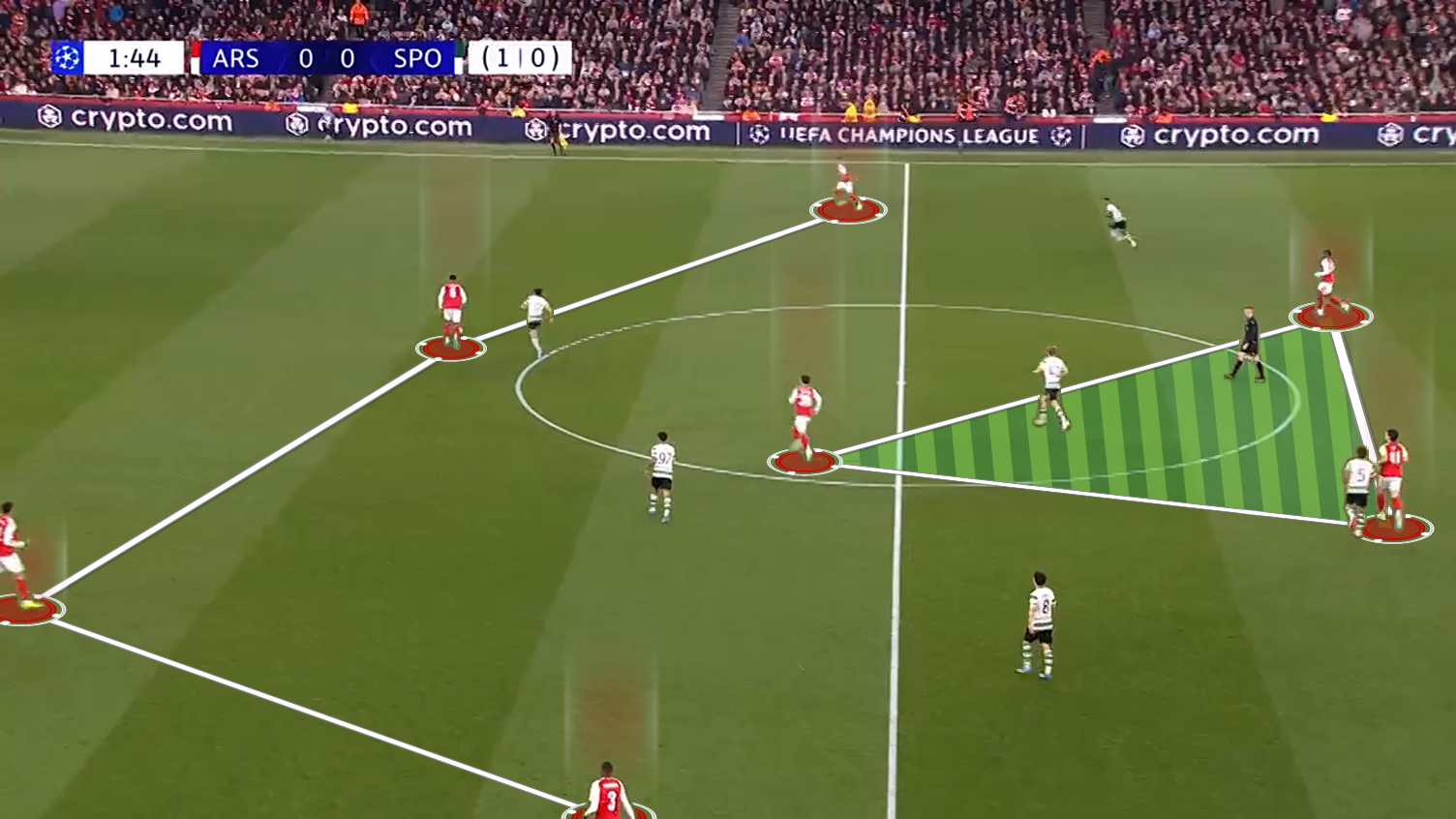
Throughout most of the match, Arsenal used positional rotations to try to pull Sporting out of position.
Here, Zubimendi drops into the backline, Rice becomes the single pivot, and Hincapié is inverted into the left half-space alongside Eze.
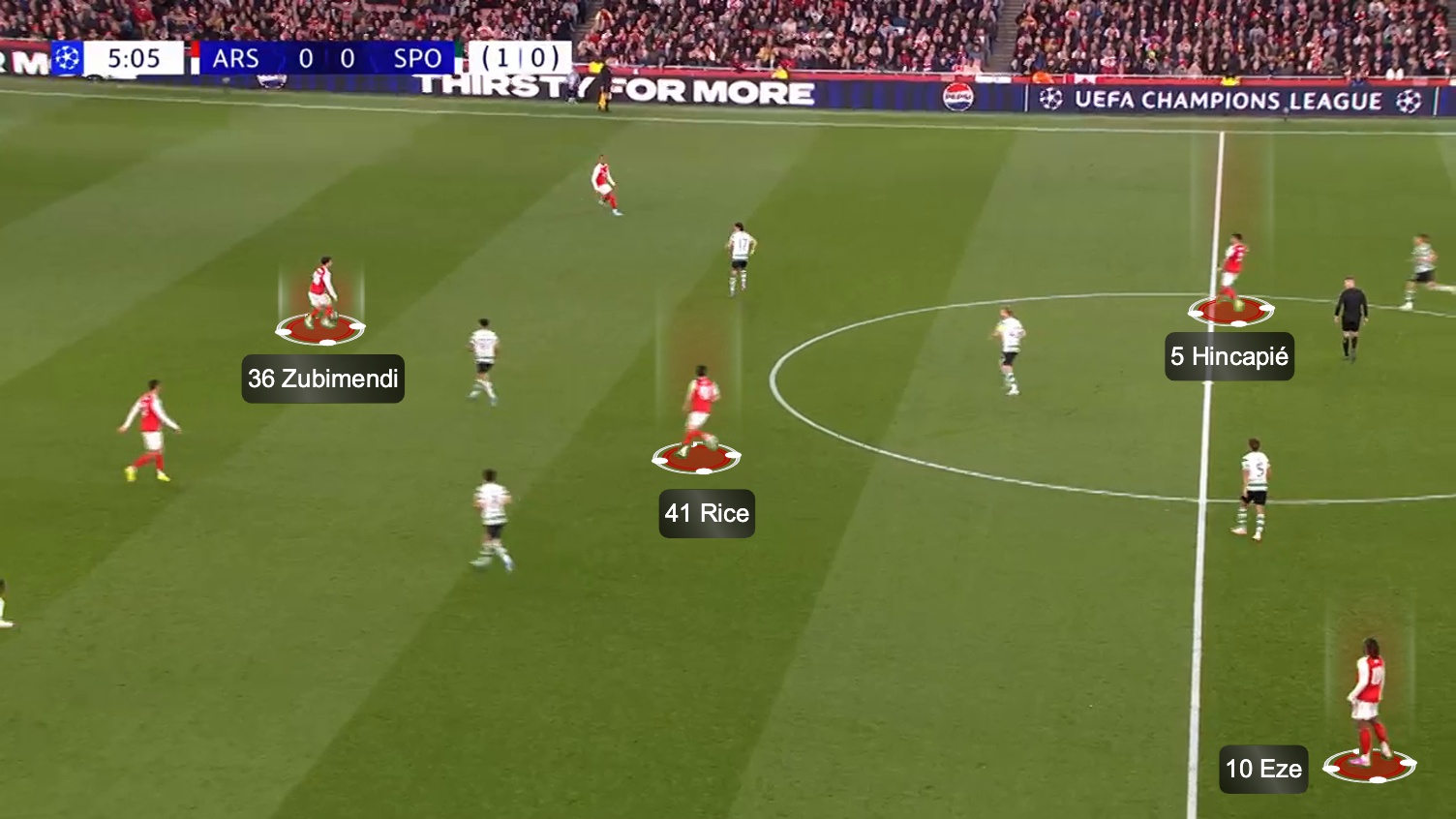
The main benefit of building up in a 4-1-2-3 is that Arsenal always maintained numerical superiority through the first two phases of build-up.
Because Sporting were sitting in a 5-2-3 mid-block, Arsenal were always able to have a 7v5 advantage and easily pass the ball around their defensive block.
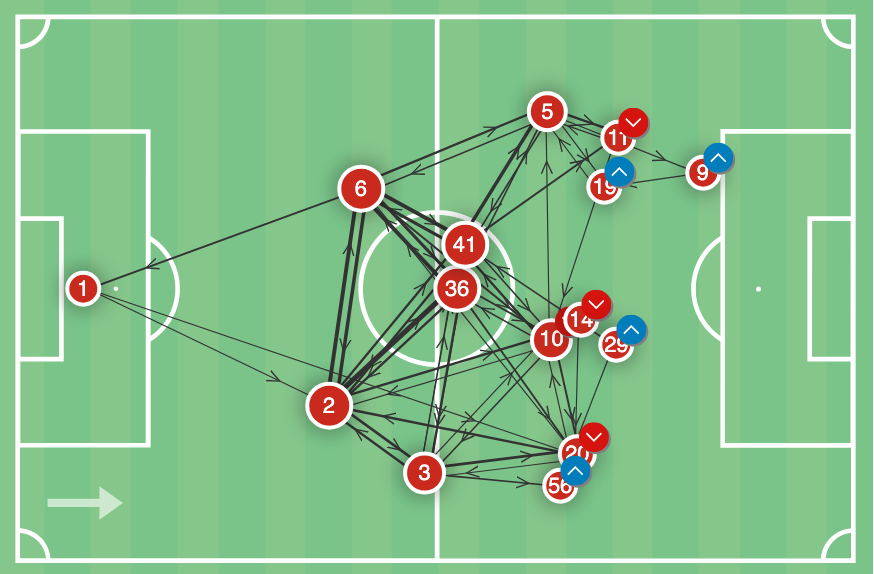
When you look at their pass map, you can see that the majority of Arsenal’s passes were made in the backline through Rice and Zubmendi.
Arsenal Pass Map Vs Sporting CP
Once Arsenal entered the final third, they used their positional rotations to overload specific areas of the pitch.
There were times when both Hincapié and Mosquera inverted into the middle of the pitch to try to create an overload, but also isolate both Madueke and Martinelli out wide.
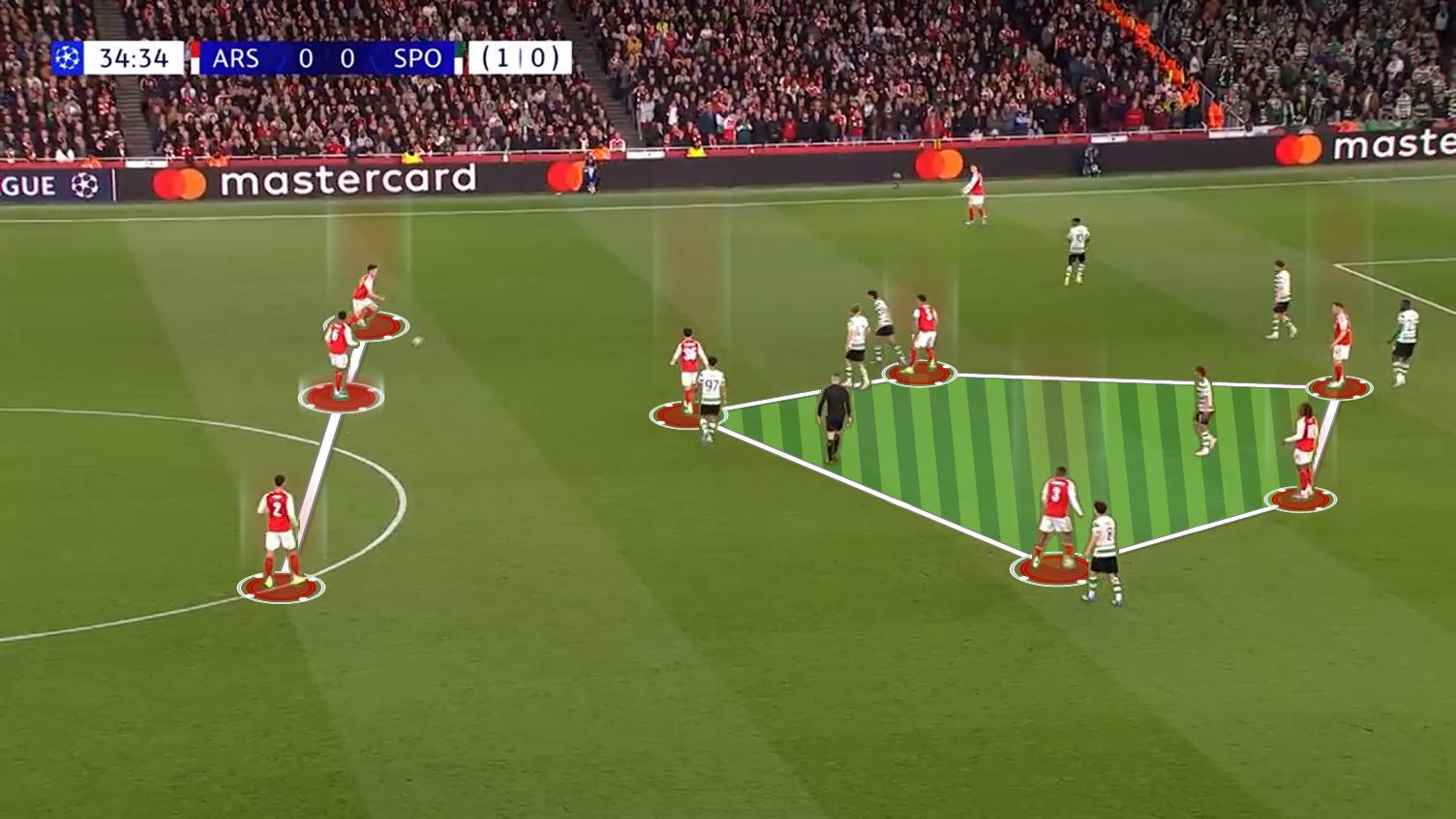
There were also times when the Gunners would try to create five or even six-man overloads out wide to try and create chances from there.
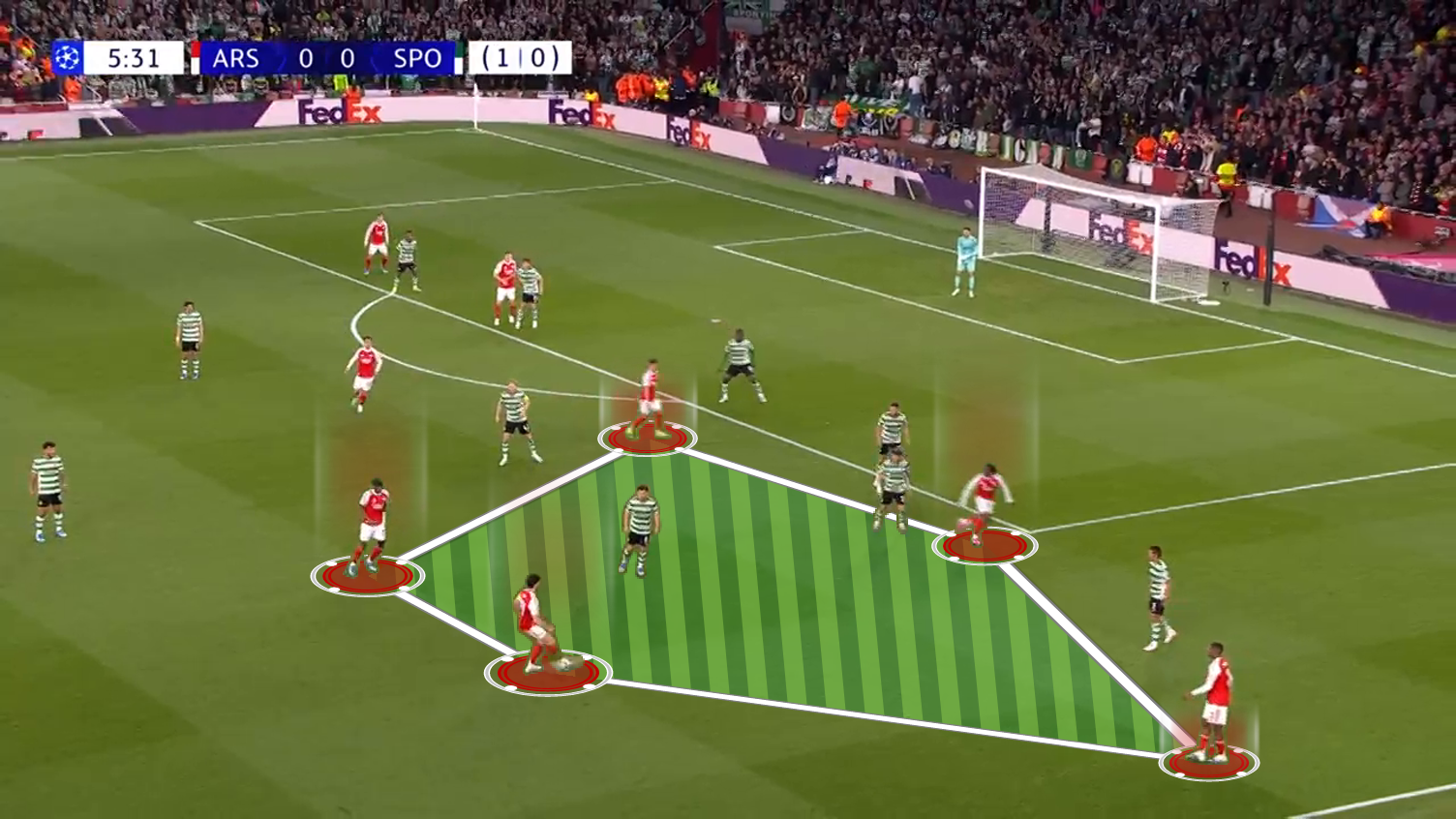
It was pretty clear that Arteta's plan was to have Arsenal be as conservative as possible.
Here, Saliba wins the ball and could have quickly played it forward, but instead passes it to Zubimendi, who passes it back to Gabriel to set everything up.
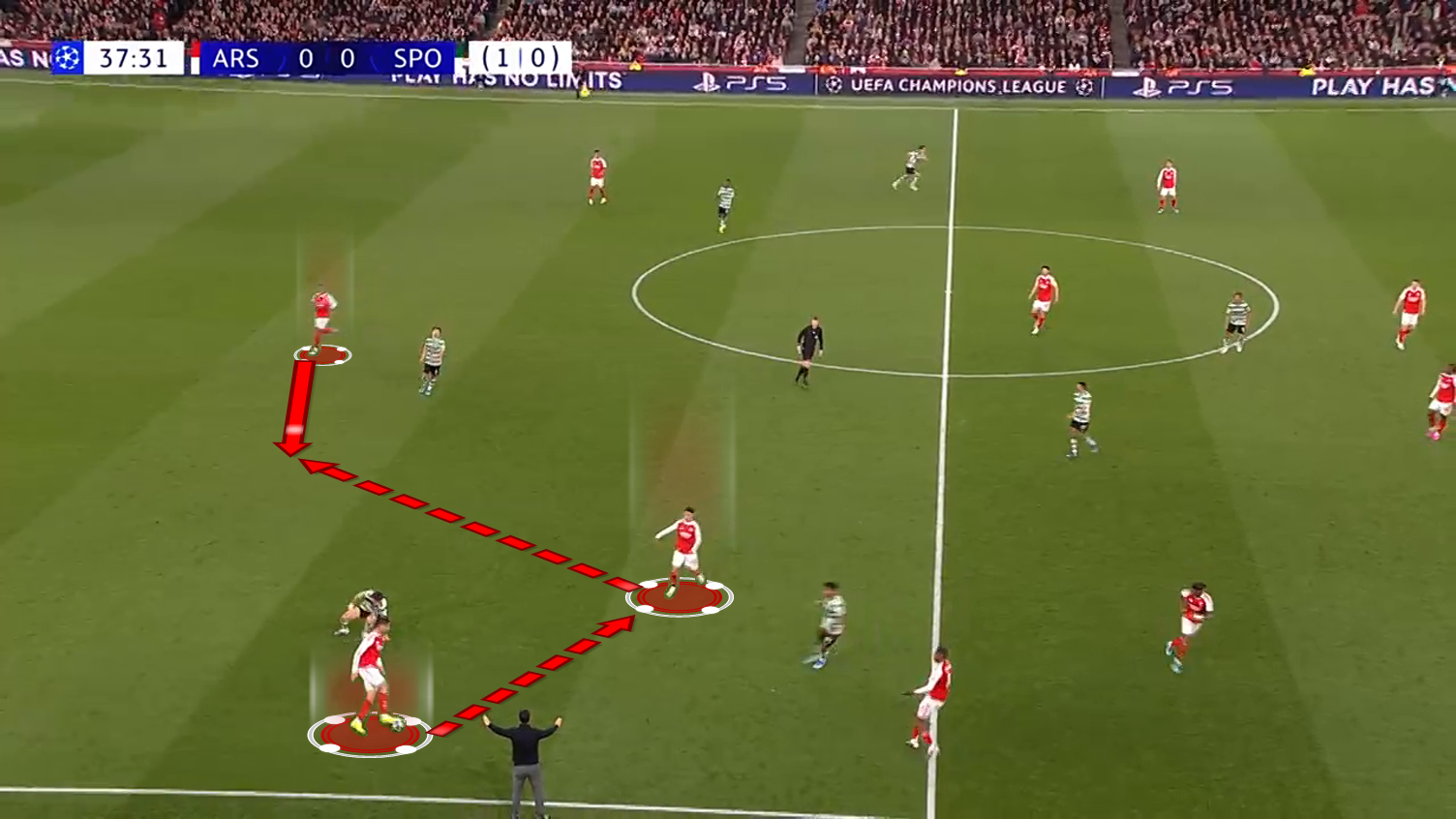
You can even see Arteta on the sidelines, arms raised, instructing his players to slow the ball down.
Even though possession ended at 50% for both sides, Arsenal were far more dangerous when they had the ball.
The Gunners ended the match with a 70.8% field tilt and completed 31 more passes in the final third than Sporting did.
With that being said, Arsenal was really inefficient, creating only 0.64 expected goals from 15 shots.
Only one of their 15 shots had an xG above 0.10, so it was a pretty dismal display once again from the Gunners from a chance creation perspective.
Arsenal Tactics Out Of Possession
Arsenal won this tie because of how good they were out of possession over the two legs.
The Gunners' high press consistently caused Sporting a ton of problems, forcing 39 danger-zone losses in this match, six of which led to shots.
There were times when Arsenal would jump into a man-to-man press, but more often than not, Arteta had the Gunners sitting in a mid-block.
Because Sporting was mainly building from a 4-2 base, Arteta seemed to take inspiration from Pep Guardiola, with Arsenal sitting in a 4-2-4 to cut off easy passes out wide.
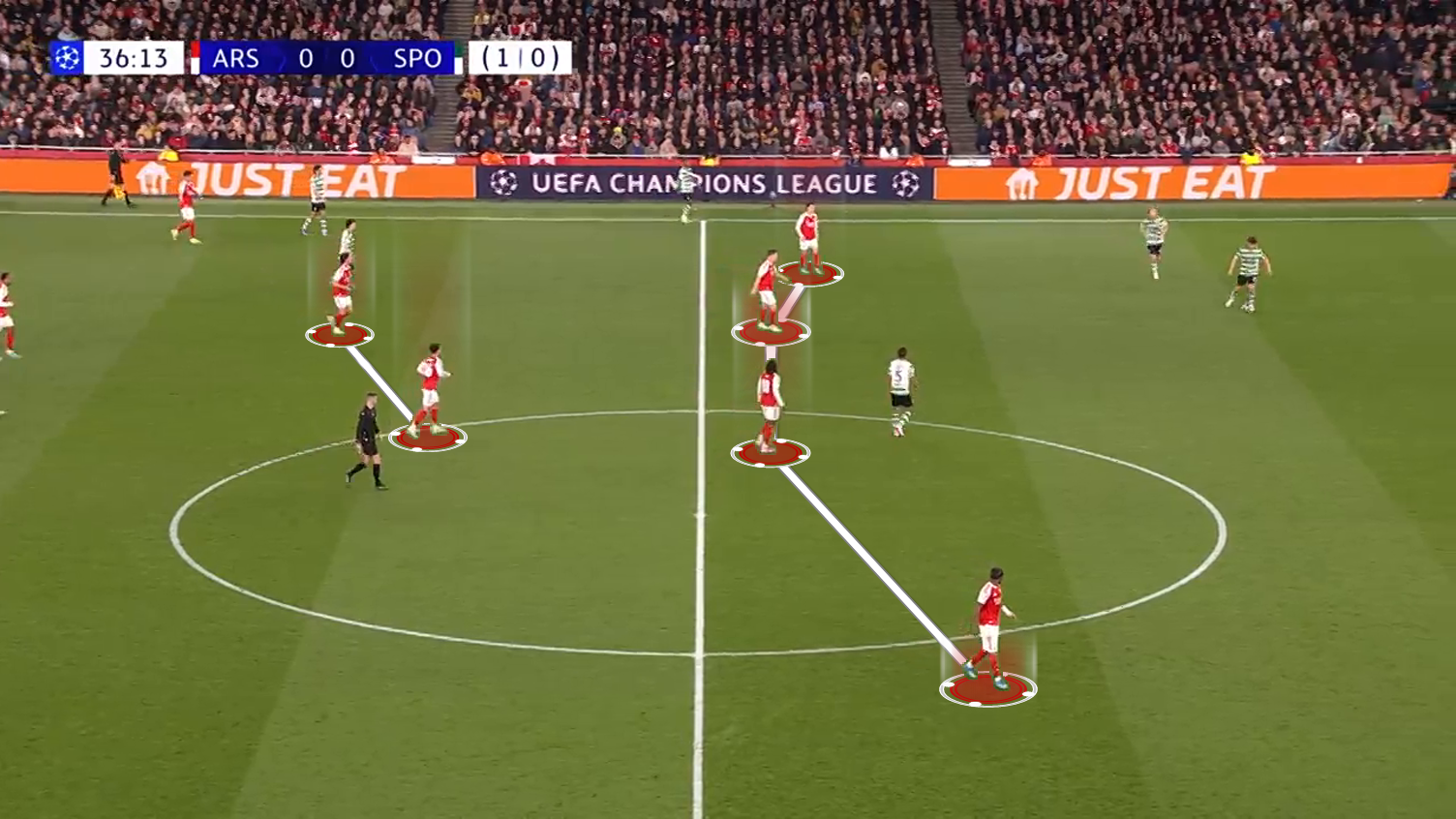
To counter this, Sporting dropped Hjulmand into the last line of defence and inverted one of their full-backs to try and create a 7v6 in the initial phase of build-up.
When Arsenal were pushed back into their own final third, Martinelli and Eze would drop from the first line to set up Arsenal in their standard 4-4-2 low block.
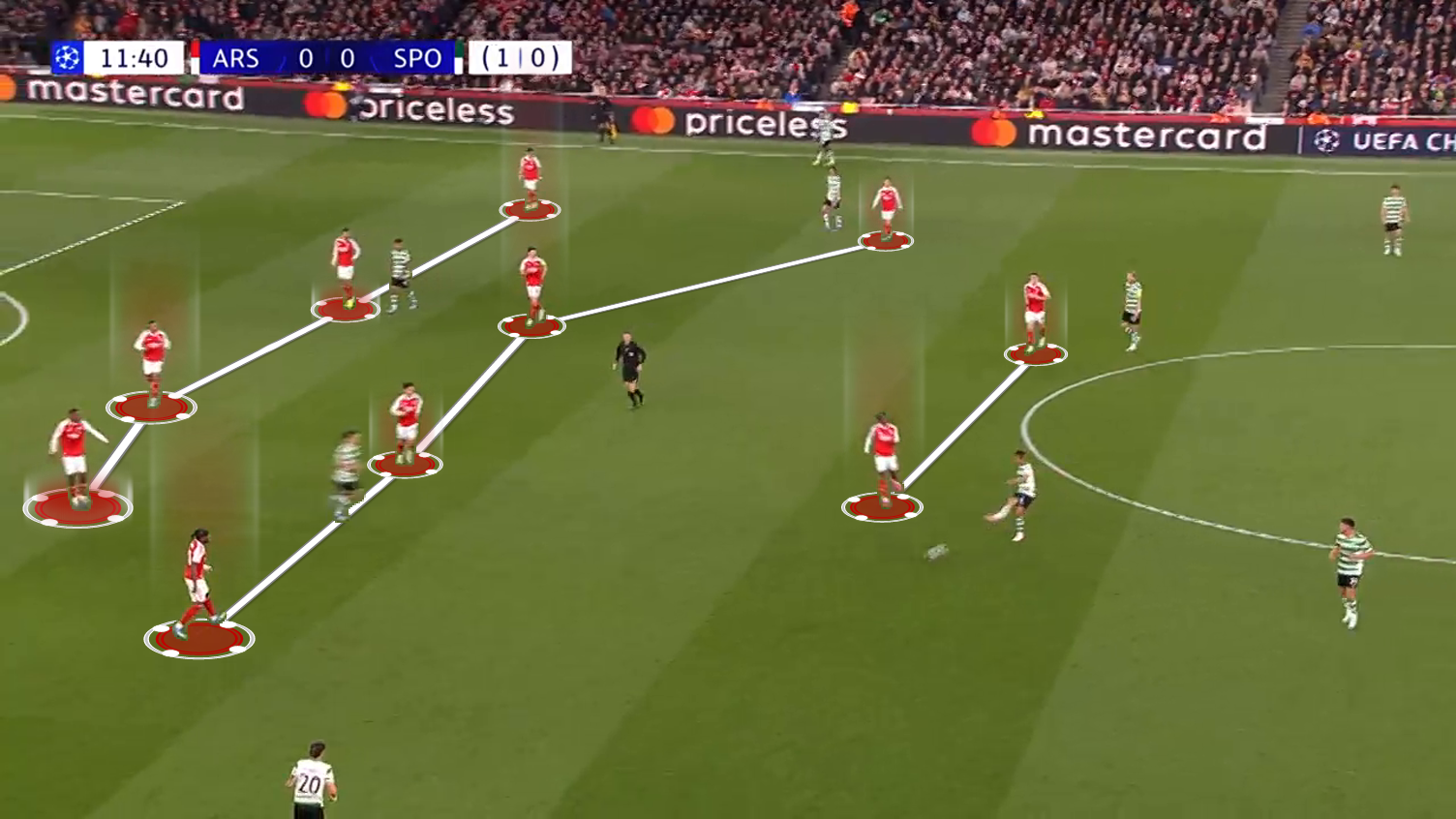
What was really impressive about Arsenal's performance was their defensive transition play.
The Gunners simply don’t allow many high-quality chances on the counter because they have great transition defenders and always hustle back to ensure the opposition doesn't gain a numerical advantage.
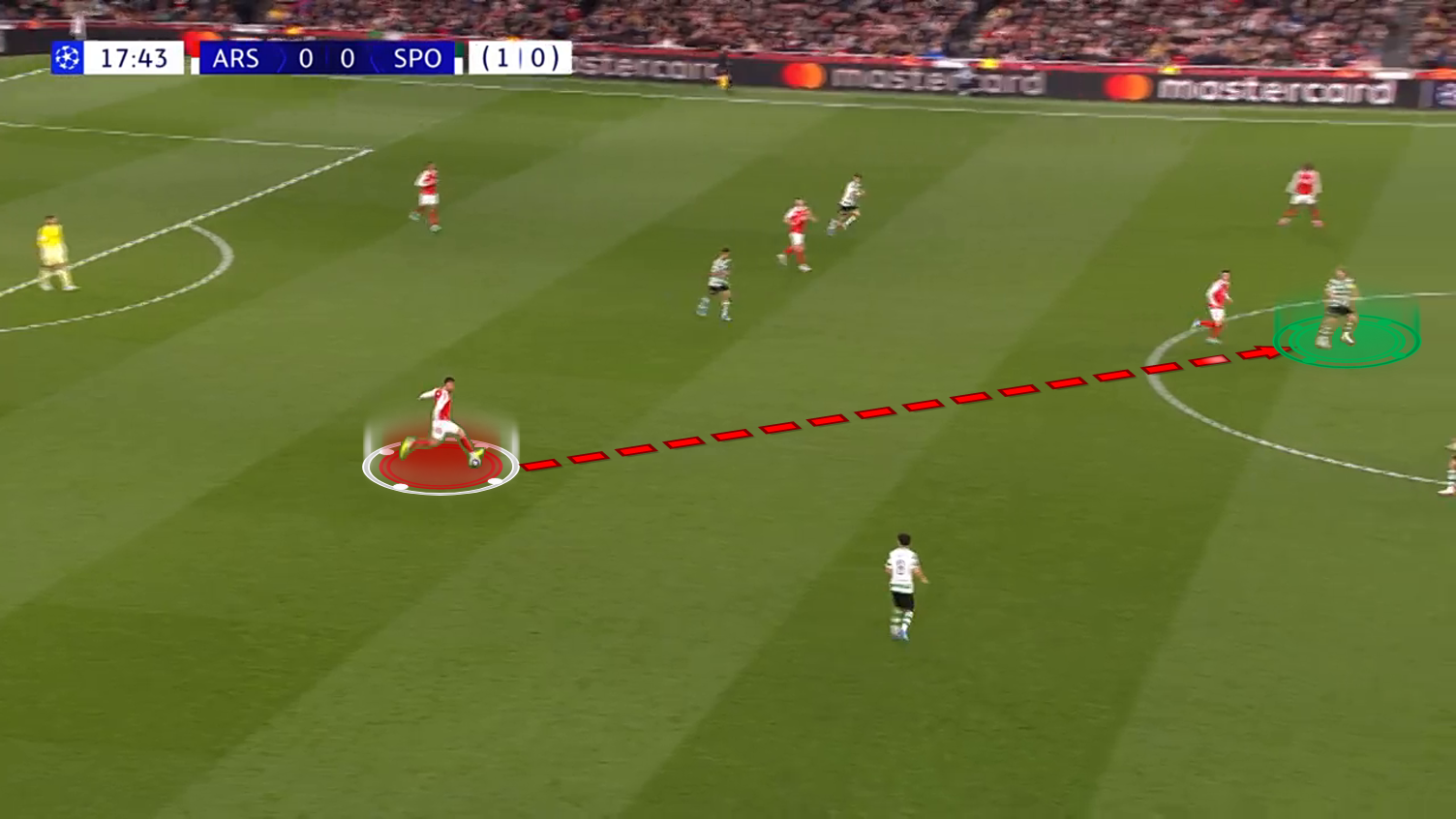
Here, Saliba committed a high turnover, and for a moment, it looked as though Sporting would have a 4v3 quick counterattack.
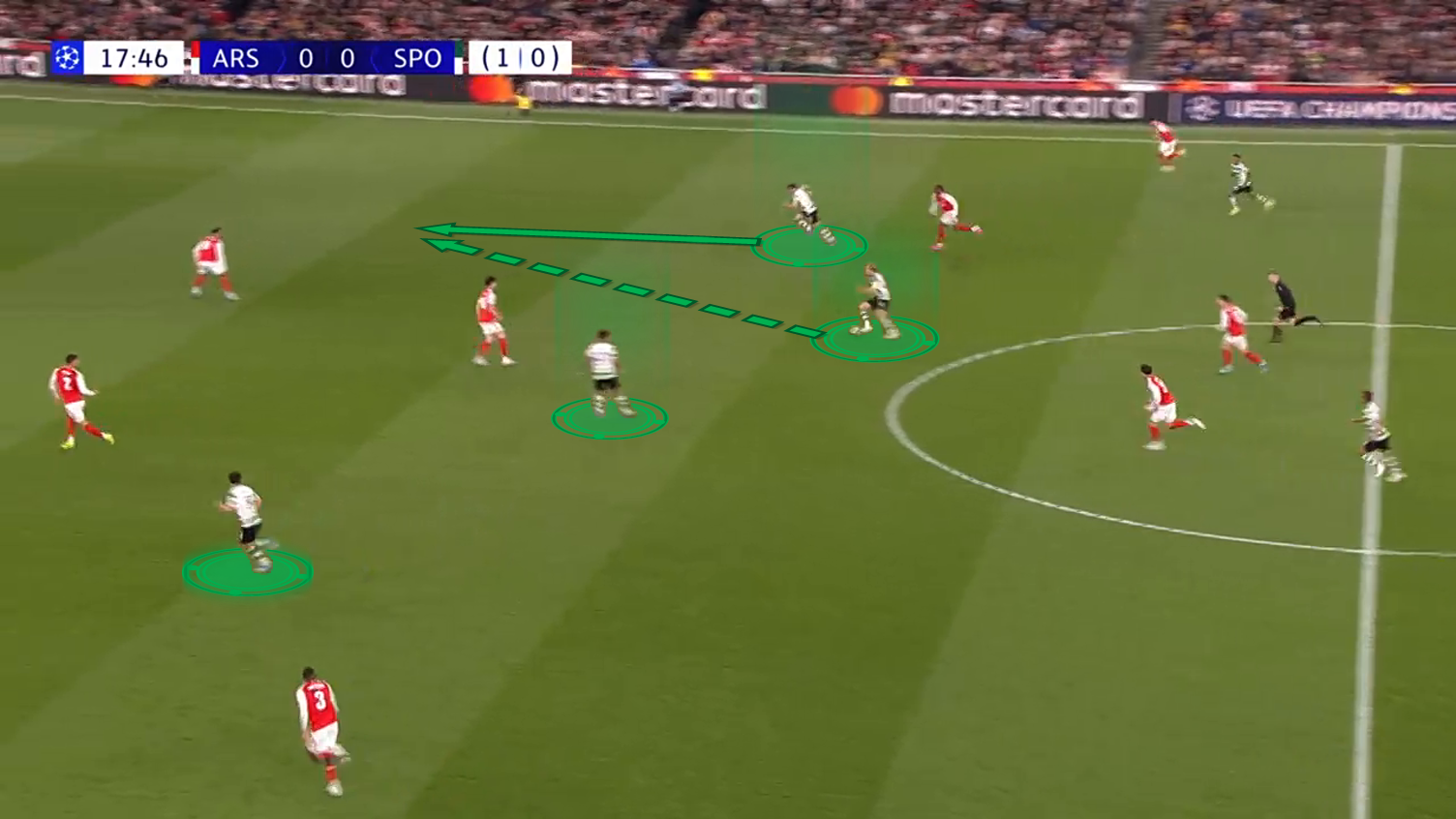
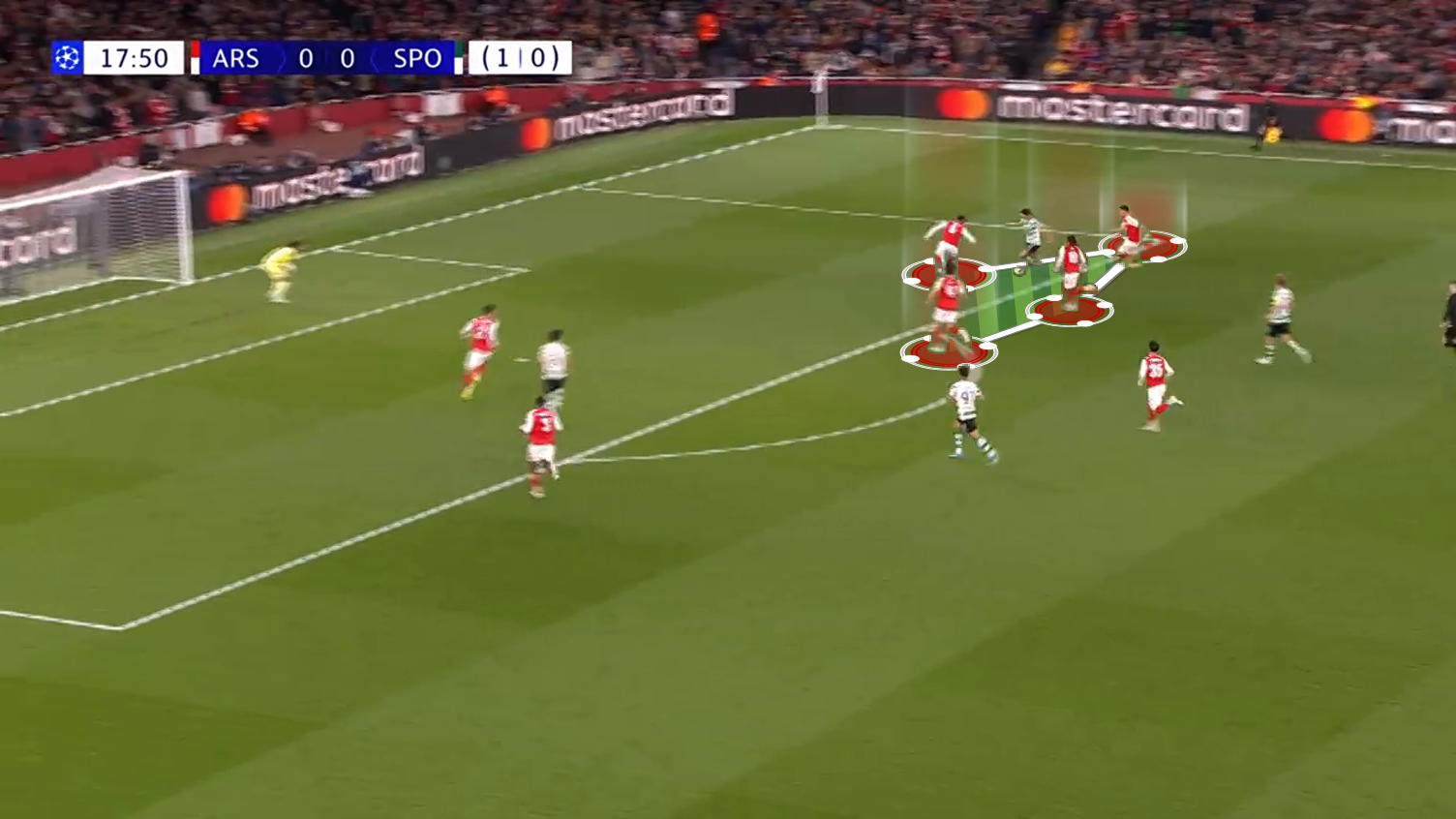
However, Arsenal hustled back, surrounded the ball, and forced Sporting into a low-quality shot at the top of the 18-yard box.
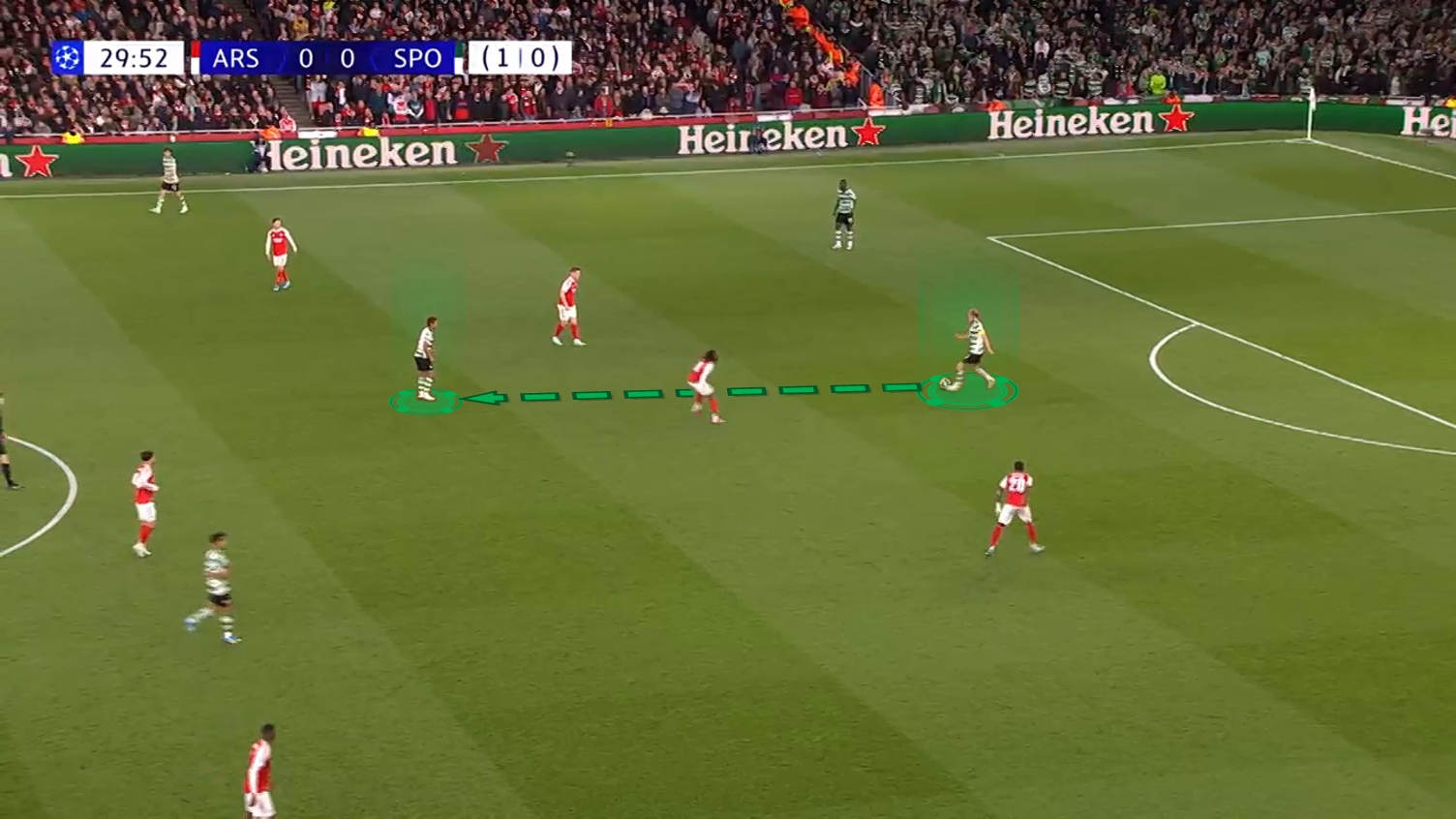
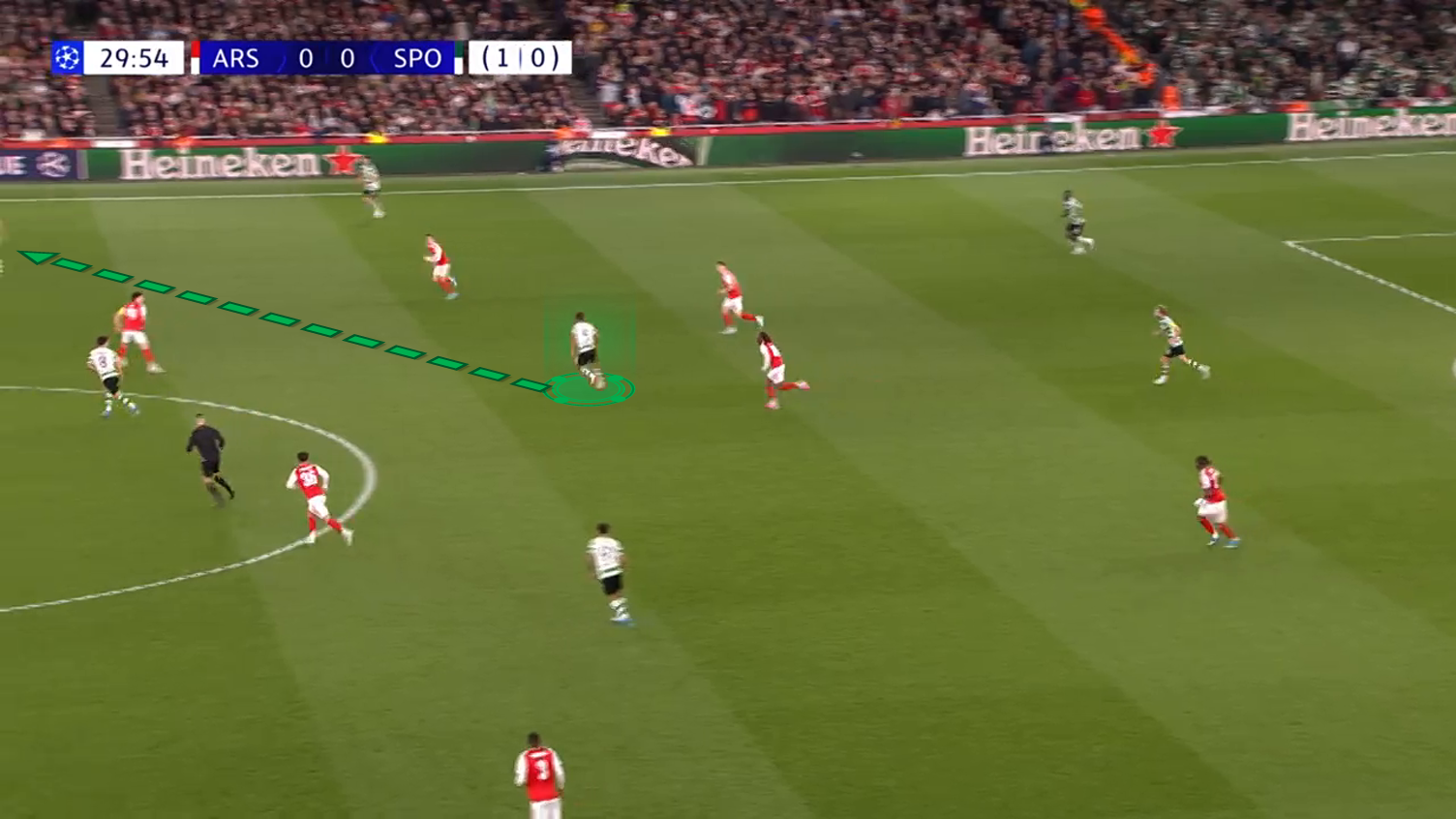
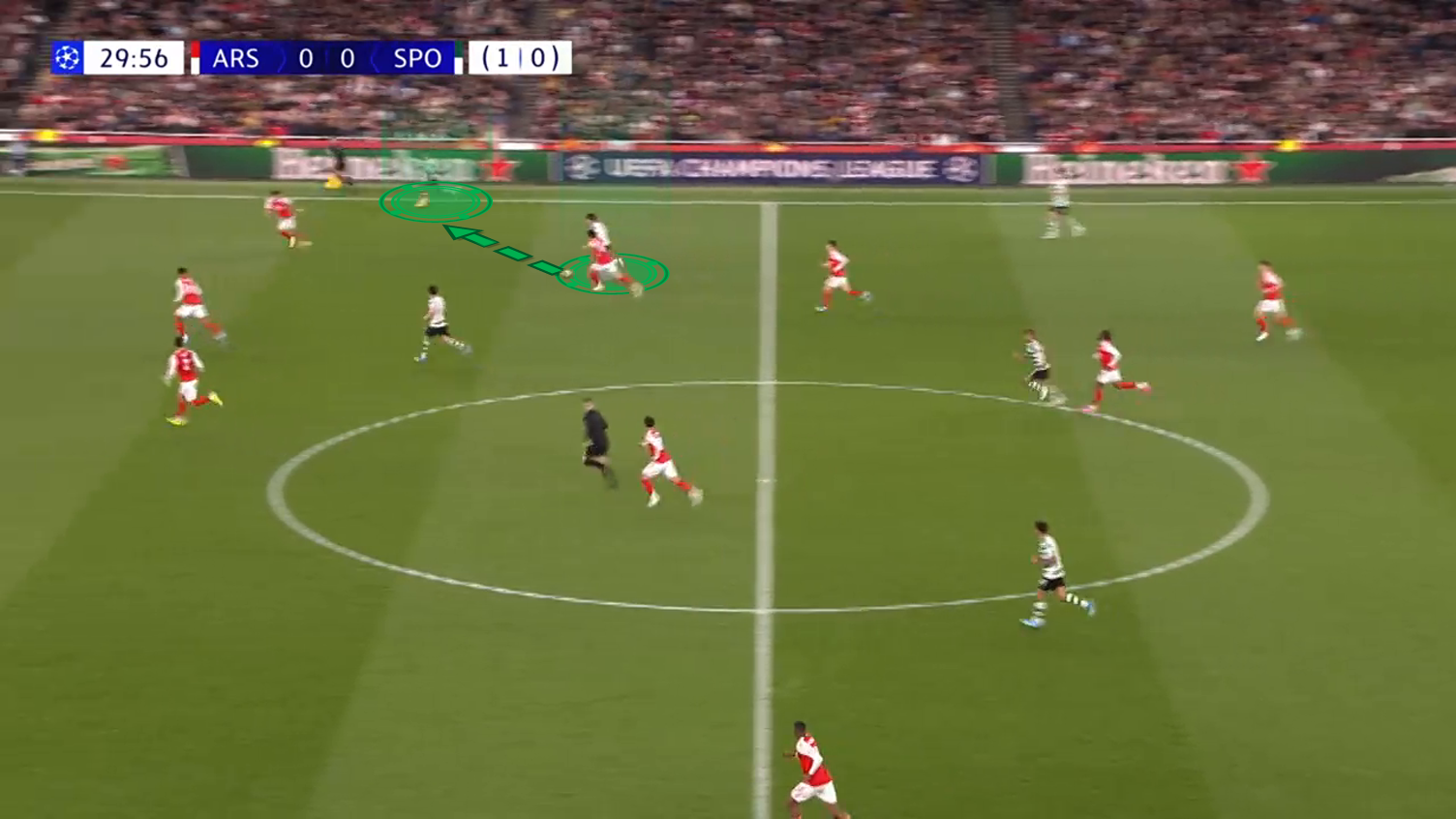
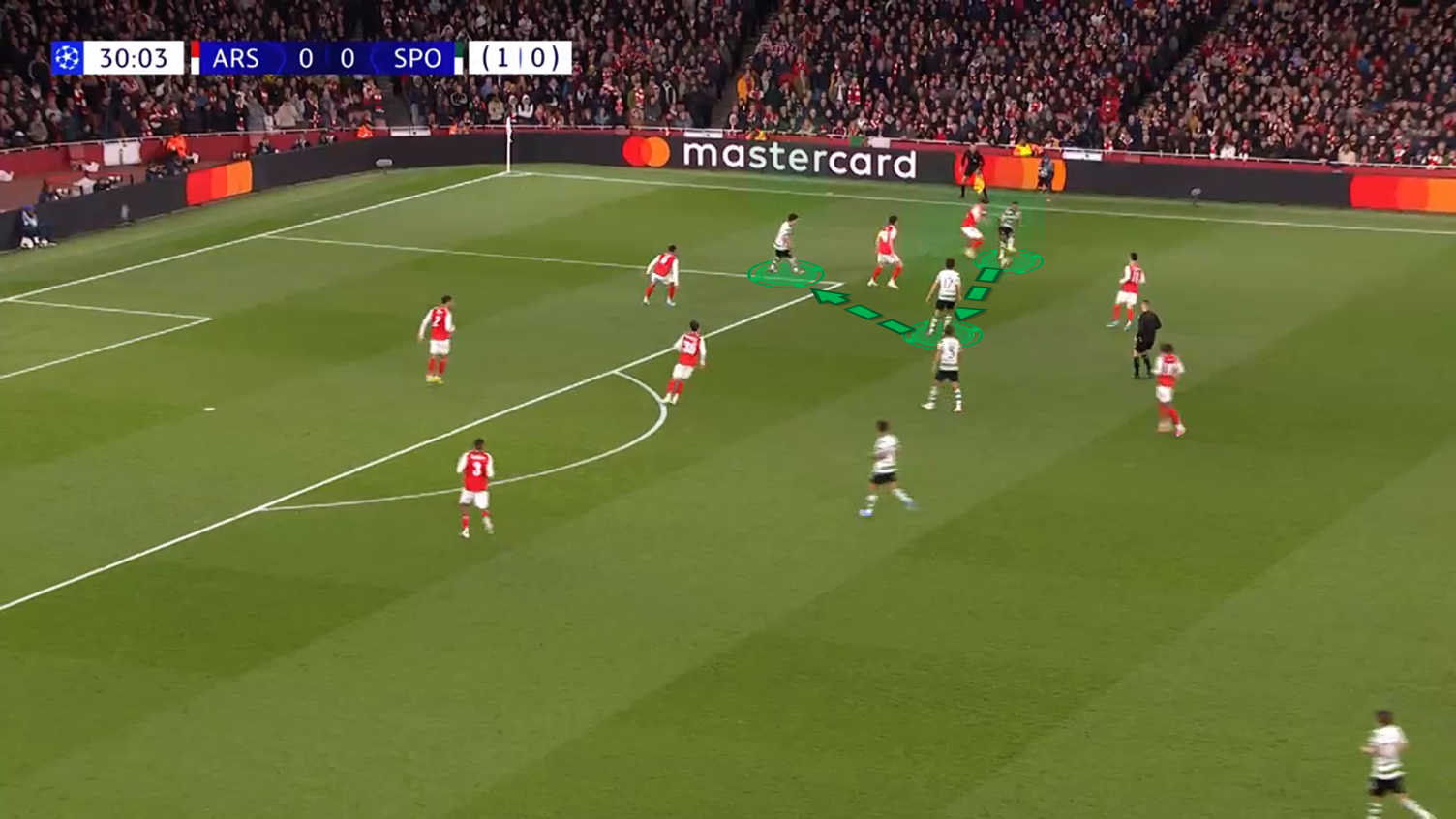
There were some concerns for Arsenal in this match, where Sporting didn’t take advantage of a couple of positive moments.
Here, Sporting was able to play right through the middle of Arsenal’s midfield, get the ball out wide, and eventually get the ball into the 18-yard box for a shot.
![Celta Vigo Vs Juventus [1-2] Europa League 2026/2027: How The Old Lady Escaped With A Late Comeback Despite Predictable Attacking Play - Tactical Analysis](https://cdn.mymidnight.blog/77f959f119f4fb2321e9ce801e2f5163/size/w600/2026/10/Celta-Vigo-Vs-Juventus---Tactical-Analysis.png)
![Villarreal Vs Napoli [3-1] Champions League 2026/2027: How Iñigo Pérez Tactics Exploited Massimiliano Allegri Mistakes - Tactical Analysis](https://cdn.mymidnight.blog/77f959f119f4fb2321e9ce801e2f5163/size/w600/2026/10/Villarreal-Vs-Napoli---Tactical-Analysis.png)
![Manchester City Vs PSG [2-4] Champions League 2026/2027: How Luis Enrique Tactics Controlled The Key Moments - Tactical Analysis](https://cdn.mymidnight.blog/77f959f119f4fb2321e9ce801e2f5163/size/w600/2026/10/Manchester-City-Vs-PSG---Tactical-Analysis.png)
![Borussia Dortmund Vs Werder Bremen [2-2] Bundesliga 2026/2027: How Daniel Thioune Tactics Earned A Late Comeback With 29% Possession - Tactical Analysis](https://cdn.mymidnight.blog/77f959f119f4fb2321e9ce801e2f5163/size/w600/2026/10/Borussia-Dortmund-vs-Werder-Bremen---Tactical-Analysis.png)
![Croatia Vs Spain [1-2] UEFA Nations League 2026/2027: How Slaven Bilić High Pressing Tactics Troubled Spain - Tactical Analysis](https://cdn.mymidnight.blog/77f959f119f4fb2321e9ce801e2f5163/size/w600/2026/10/Croatia-Vs-Spain--1-2--UEFA-Nations-League-20262027---Tactical-Analysis.png)

![Scotland Vs Switzerland [0-3] UEFA Nations League 2026/2027: How Aggressive Pressing Backfired & Murat Yakin Took Advantage - Tactical Analysis](https://cdn.mymidnight.blog/77f959f119f4fb2321e9ce801e2f5163/size/w600/2026/10/Scotland-Vs-Switzerland-20262027---Tactical-Analysis.png)
![Olympique De Marseille Vs PSG [1-2] Ligue 1 2026/2027: How Bruno Génésio Transitions Troubled PSG - Tactical Analysis](https://cdn.mymidnight.blog/77f959f119f4fb2321e9ce801e2f5163/size/w600/2026/09/Marseille-Vs-PSG-2026_2027---Tactical-Analysis.png)