
![Crystal Palace Vs Rayo Vallecano [1–0] – UEFA Conference League Final 2025/2026 – Tactical Analysis](https://cdn.mymidnight.blog/77f959f119f4fb2321e9ce801e2f5163/size/w1000/2026/05/UEFA-Conference-League-Final-20252026.png)
Crystal Palace Vs Rayo Vallecano [1–0] – UEFA Conference League Final 2025/2026 – Tactical Analysis

In his final match in charge of Crystal Palace, Oliver Glasner delivered the south London club their third major trophy with a 1-0 win over Rayo Vallecano in the UEFA Conference League final.
With the Premier League season over, this was a massive match for Crystal Palace, not only to win a trophy, but to potentially qualify for the UEFA Europa League next season.
The win in Leipzig on Wednesday capped off a dominant run through the knockout stage, with Crystal Palace outscoring their opponents 18-6.
Rayo Vallecano had been on a magical run to the final, but suffered heartbreak twice in one week.
They beat Samsunspor, AEK Athens, and RC Strasbourg to reach the final, but narrowly missed out on qualifying for the next UEFA Conference League via La Liga, finishing one point behind seventh-place Getafe.
Glasner had a brilliant tactical plan coming into the match, and Crystal Palace executed it perfectly.
In this tactical analysis, we examine the tactics in the final third that made Crystal Palace so successful, their effectiveness with set-pieces, and the struggles Rayo Vallecano had in possession.
Crystal Palace Vs Rayo Vallecano Lineups & Formations
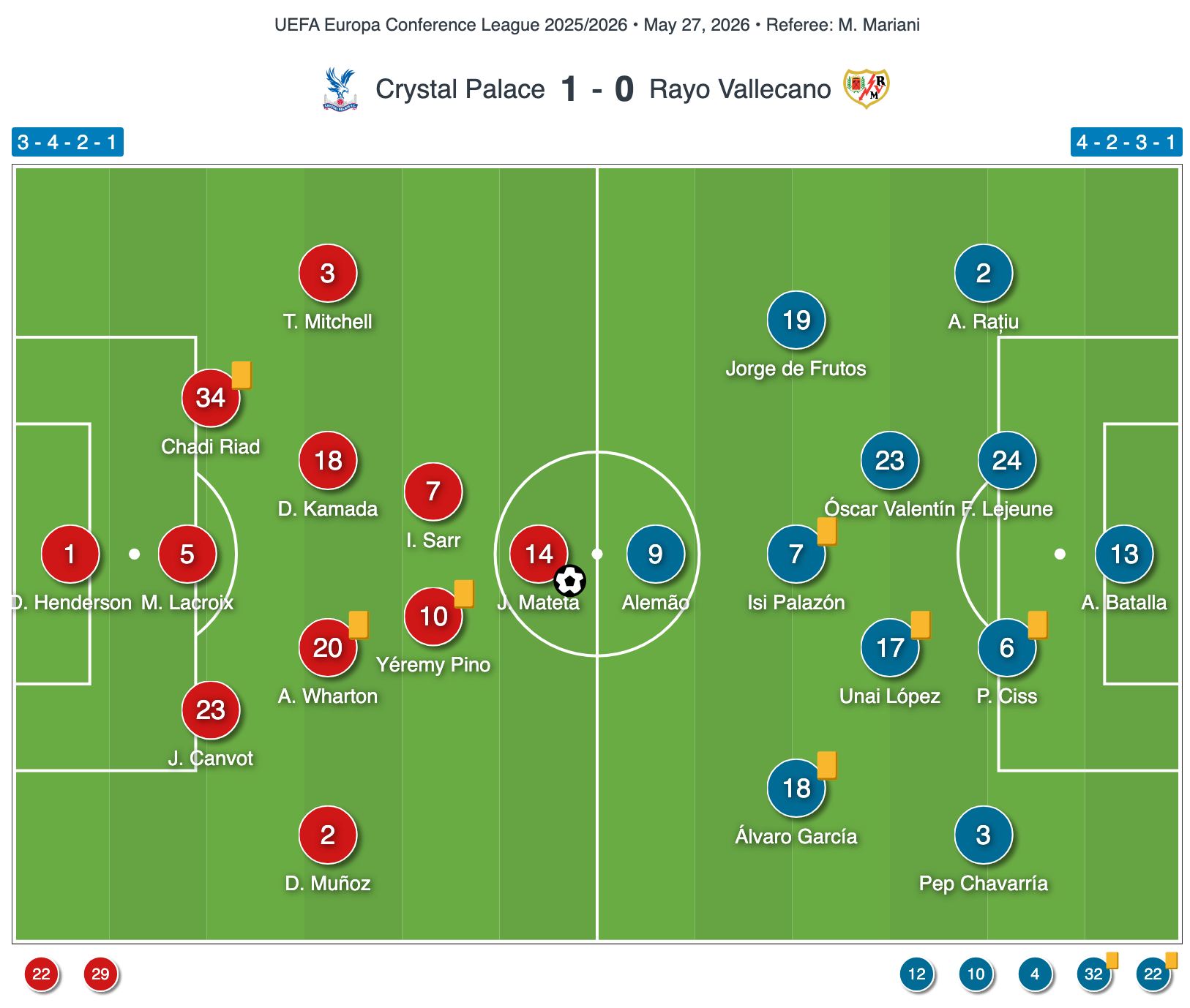
Crystal Palace Lineup Vs Rayo Vallecano
Oliver Glasner lined his team up in their usual 3-4-3 formation.
Dean Henderson started in the net behind the three centre-backs of Maxence Lacroix, Chadi Riad, and Jaydee Canvot.
Tyrick Mitchell started at left wingback, while Daniel Muñoz started at right wingback.
Adam Wharton and Daichi Kamada started together as the two central midfielders.
Yeremi Pino started on the left wing, Jean-Philippe Mateta started up top as striker, while Ismaïla Sarr started on the right wing.
Oliver Glasner made two substitutions in the match.
In the 76th minute, Jørgen Strand Larsen came on for Mateta.
In the 80th minute, Evann Guessand came on for Pino.
Rayo Vallecano Lineup Vs Crystal Palace
Iñigo Pérez lined Rayo Vallecano up in a 4-2-3-1 formation.
Augusto Batalla started in goal behind centre-backs Pathé Ciss and Florian Lejeune.
Pep Chavarría started at left-back, while Andrei Ratiu started at right-back.
Óscar Valentín and Unai López started as the two defensive midfielders, with Álvaro García at left wing, Isaac Palazón Camacho as the number ‘10’, and Jorge de Frutos at right wing.
Alexandre Alemão started as the striker.
Iñigo Pérez made five substitutions in the match.
In the 62nd minute, Pedro Díaz came on for López, and Nobel Mendy came on for Valentín.
In the 70th minute, Alfonso Espino came on for García, and Sergio Camello came on for de Frutos.
In the 77th minute, Ilias Akhomach came on for Palazón Camacho.
Crystal Palace Final Third Tactics
Crystal Palace finished the match with 2.58 expected goals from 11 shots despite only holding 42% of the possession.
They used quick transitions to catch Rayo Vallecano out of position, leading to a couple of really big chances that proved to be the difference in the match.
Oliver Glanser has favoured a 3-2-5 build-up throughout the season.
In the final, he used Wharton and Kamada as the double pivot, with both full-backs pushing up to Rayo Vallecano’s last line of defence to create an overload.
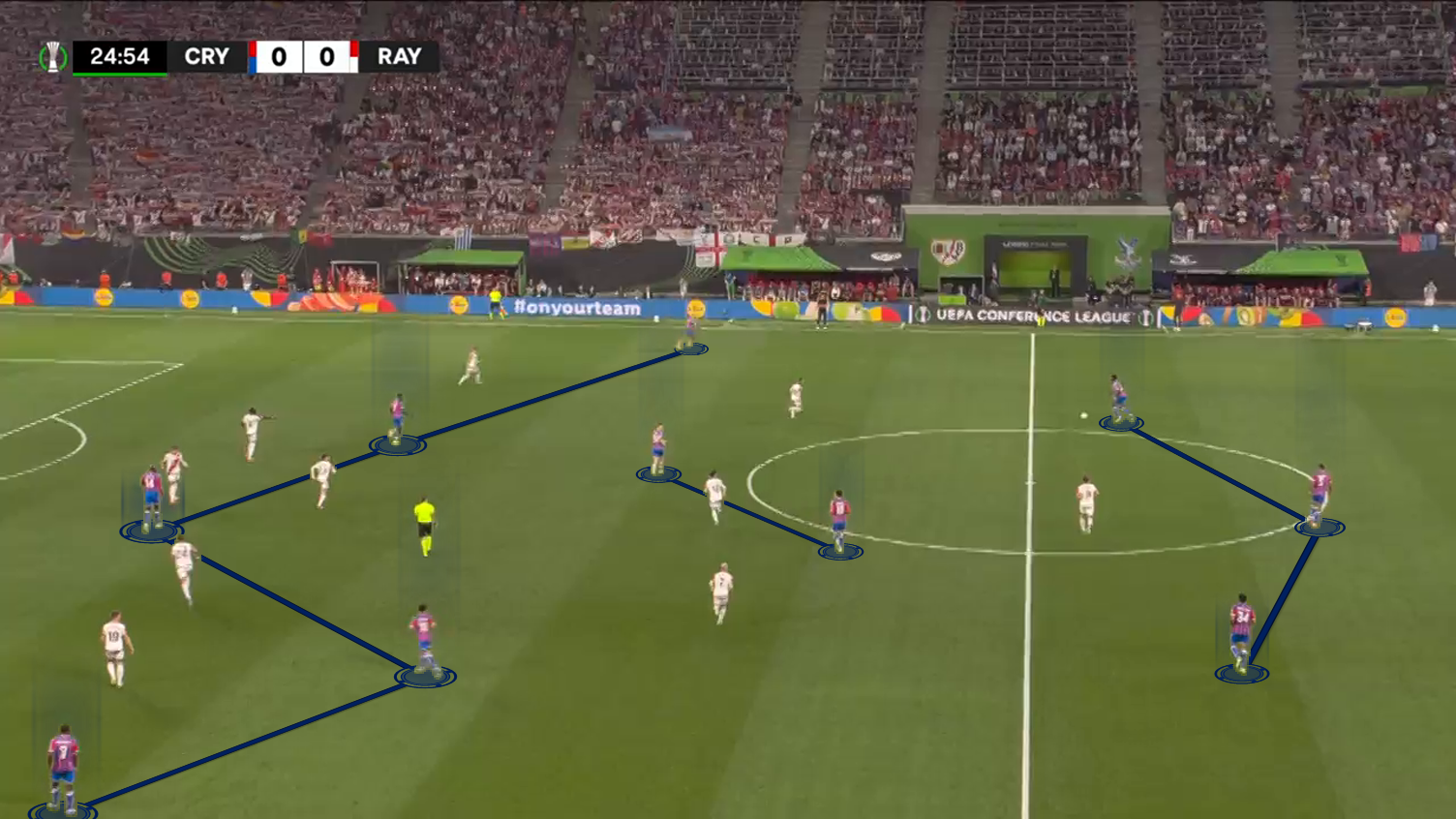
From this structure, Pino and Sarr would often drop into the half-space, trying to create space behind for Mateta to run into.
Crystal Palace showed throughout this match how quickly they can hit you in transition.
They led the Premier League this season in direct speed, and it’s because of situations like this.
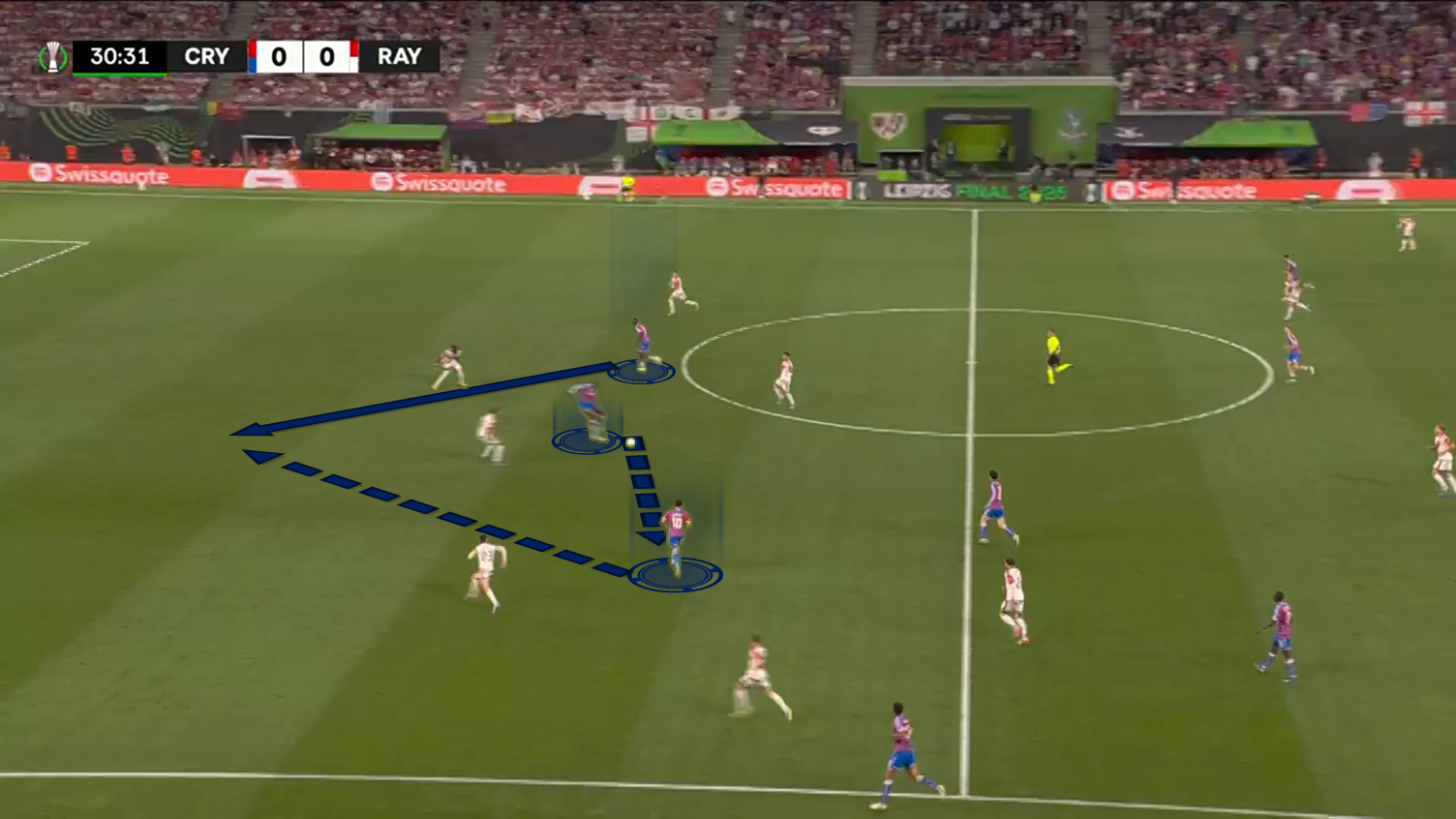
Once they win the ball, Riad immediately looks to get the ball to the centre of the pitch.
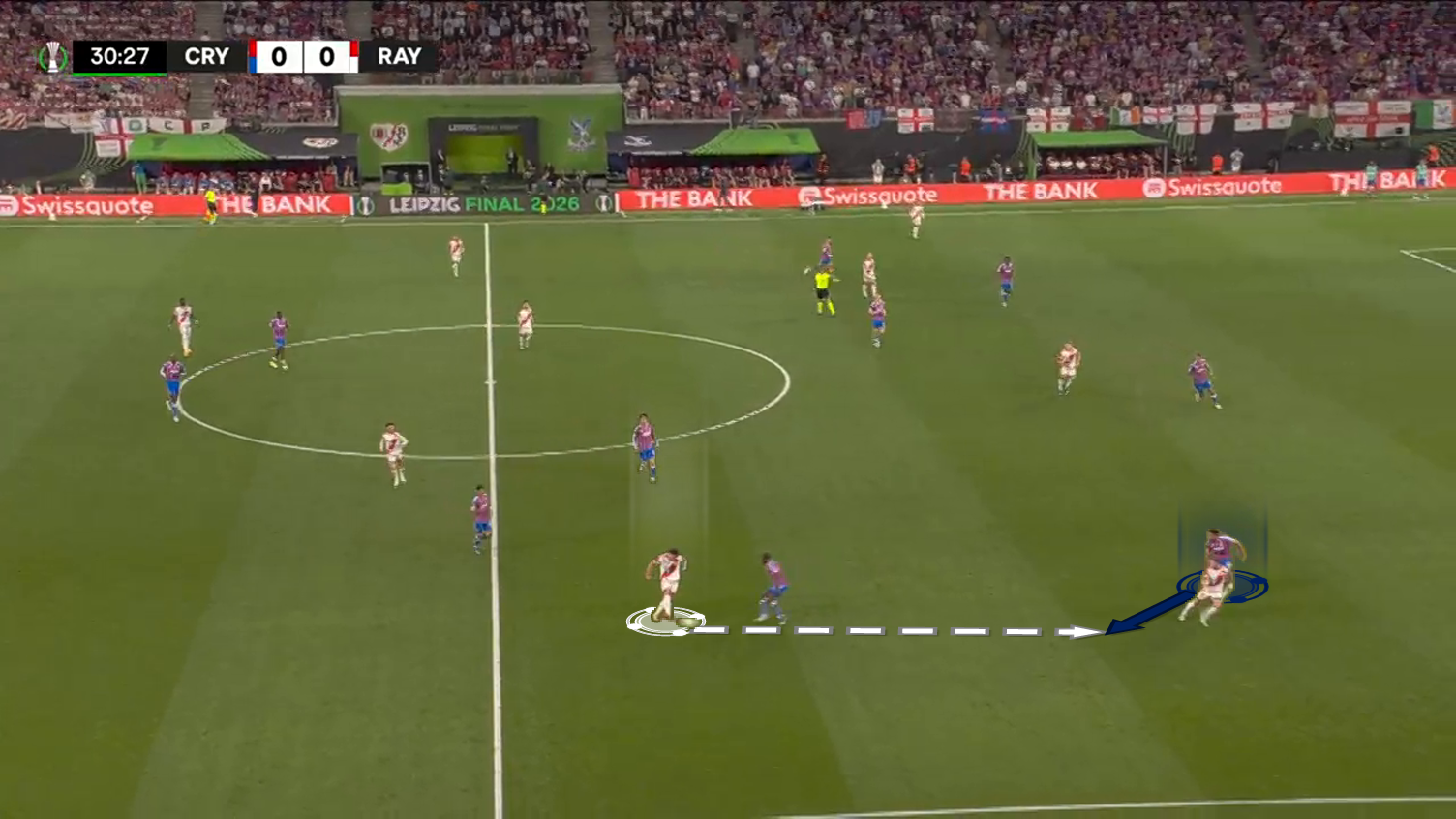
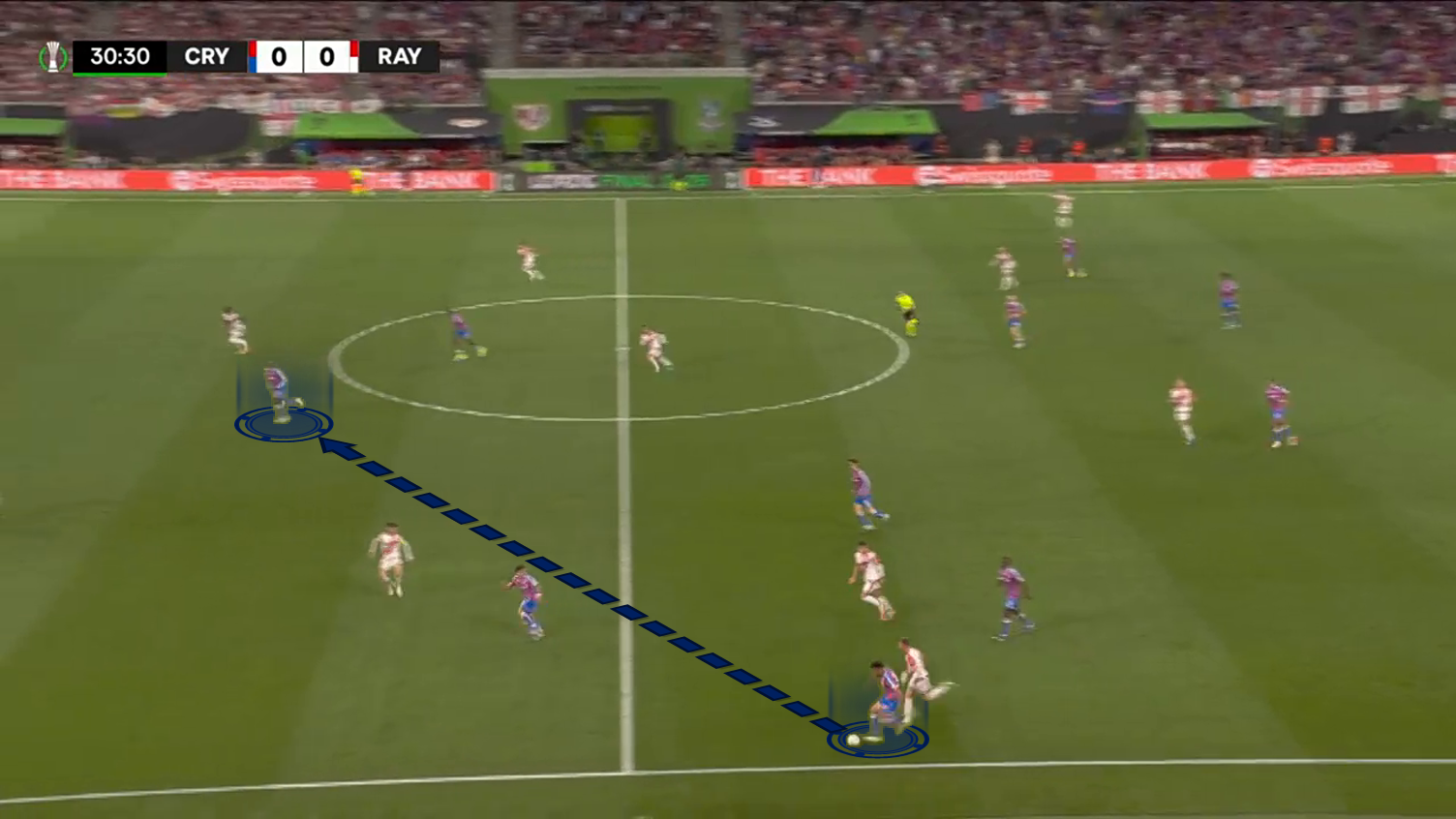
Nothing came of this, but the quick one-touch passing almost allowed Sarr to get in behind for a shot.
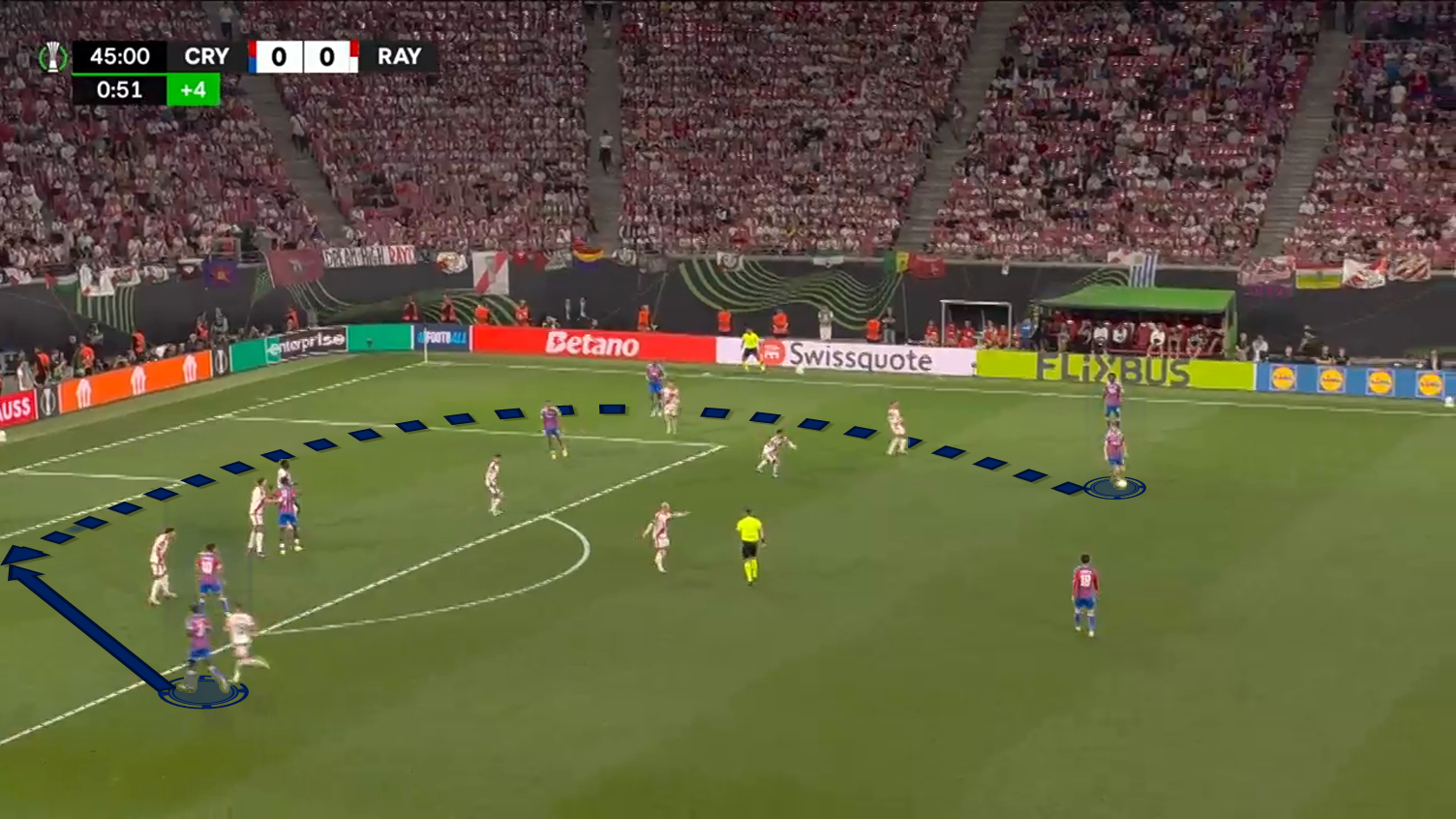
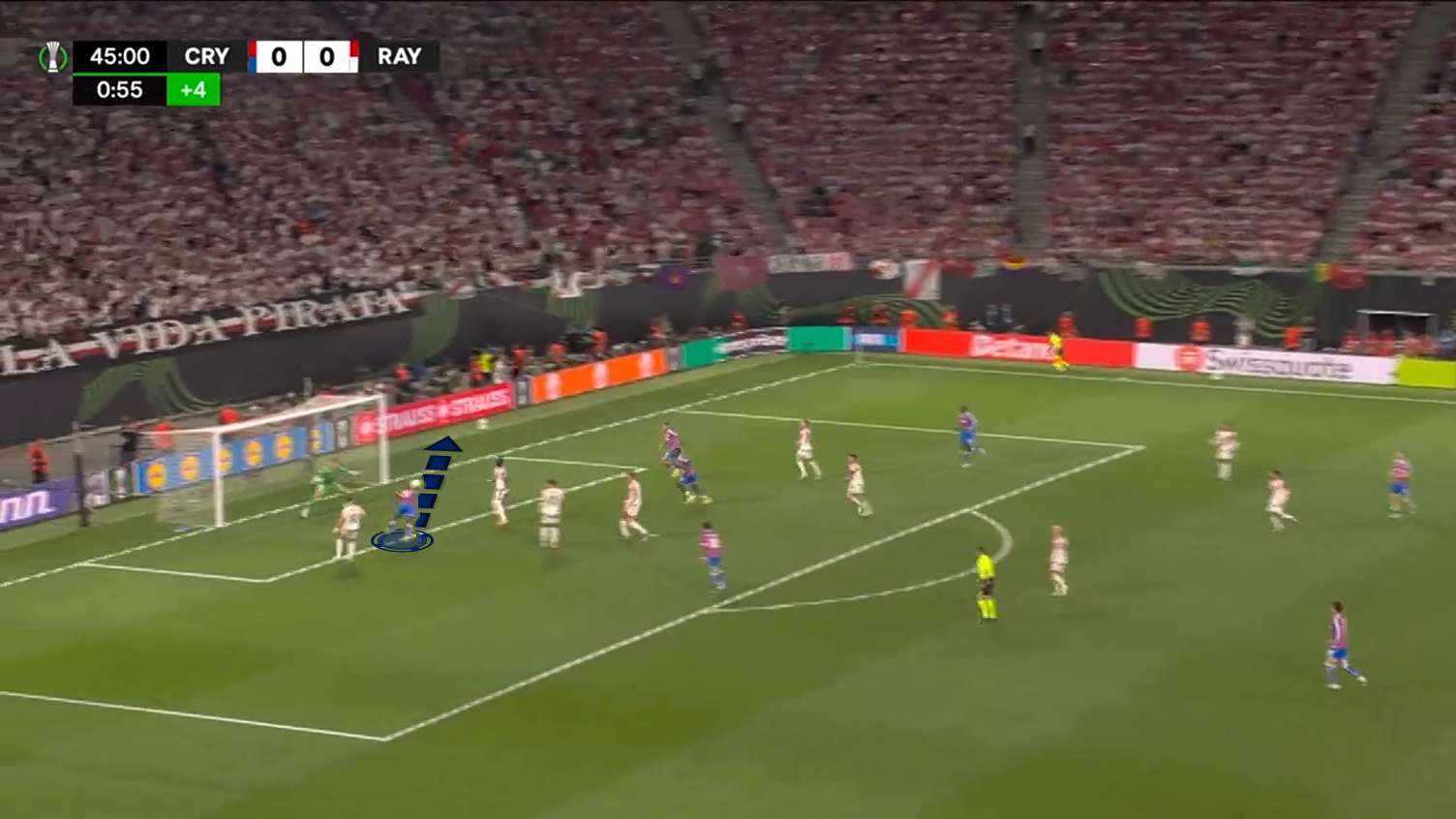
Mitchel and Munoz are also crucial to Glasner’s tactical system for their ability to push forward and support the attack.
Here, Adam Wharton is given time and space on the ball, while Mitchell recognises the space available for him to run into and gets a free header that he barely puts wide.
Here is another example where Wharton wins the ball centrally and immediately plays Riad in behind.
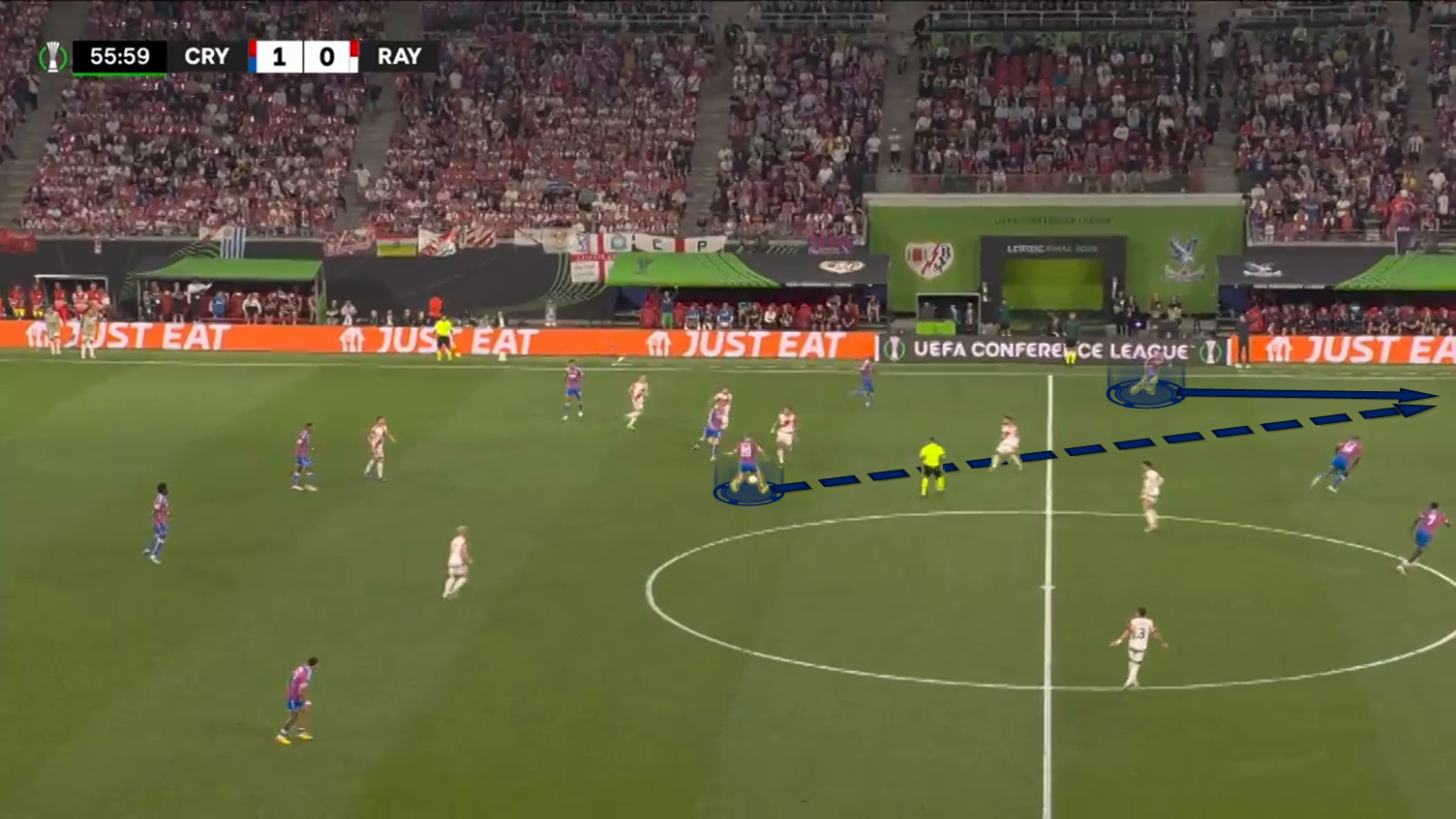
This created a 3v2 transition break with Riad finding Mateta with a cross, forcing a big save from Batalla.
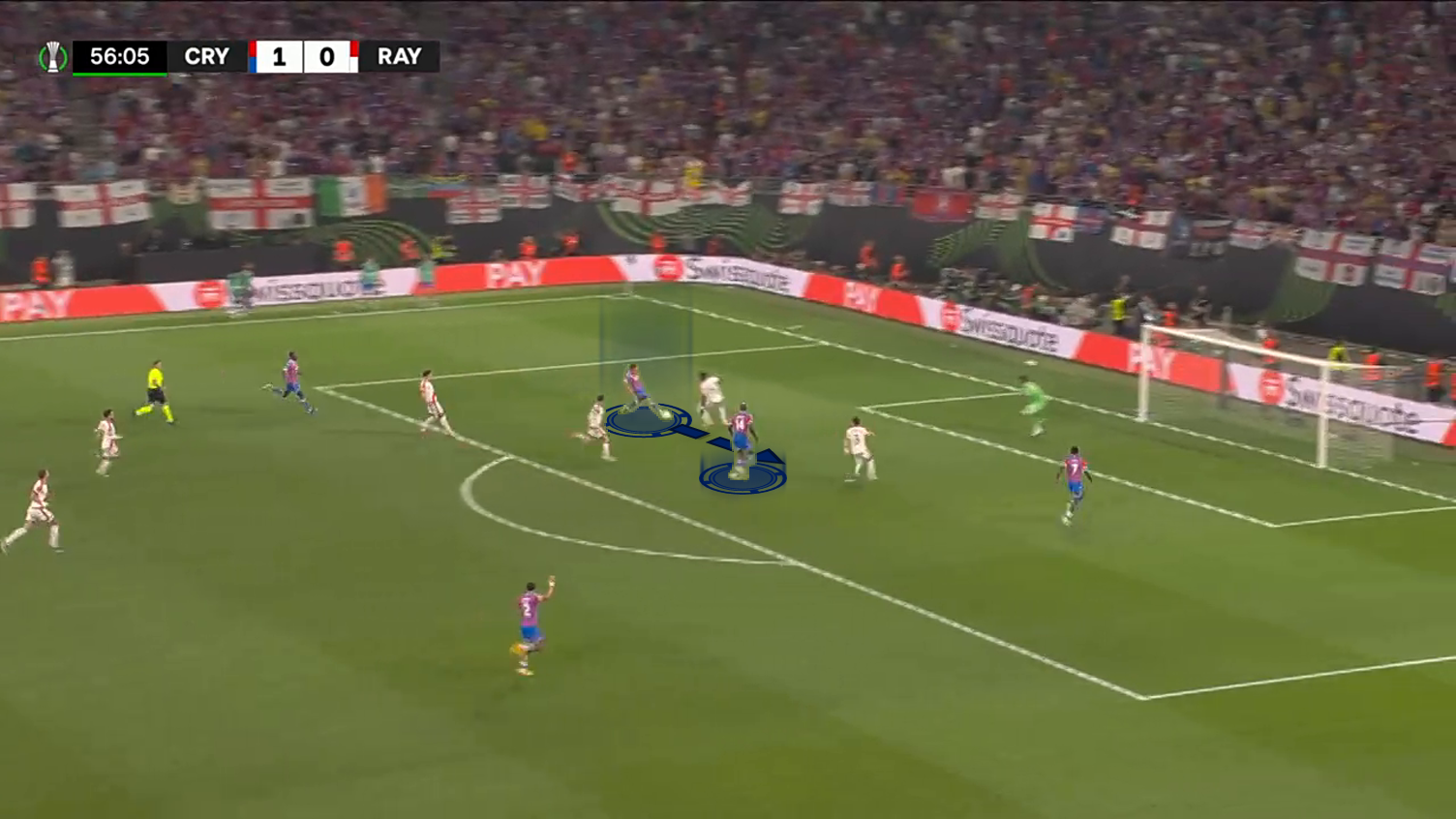
Crystal Palace Set-Piece Tactics
Crystal Palace were one of the more underrated set-piece teams in the Premier League this season.
They may have only scored 10 goals, but they created 17.1 expected goals, which was fourth-best behind only Arsenal, Newcastle, and Brentford.
In their 15 Conference League matches, they created 8.4 expected goals, the highest mark in the competition, but only scored five goals.
They used their set-piece prowess to their advantage in this match, creating 1.05 xG from them, which is more xG than Rayo Vallecano created in total for the match.
Crystal Palace was mainly putting three guys in the box with two near the penalty spot, with one trying to set a pick for the other to free them up for a header.
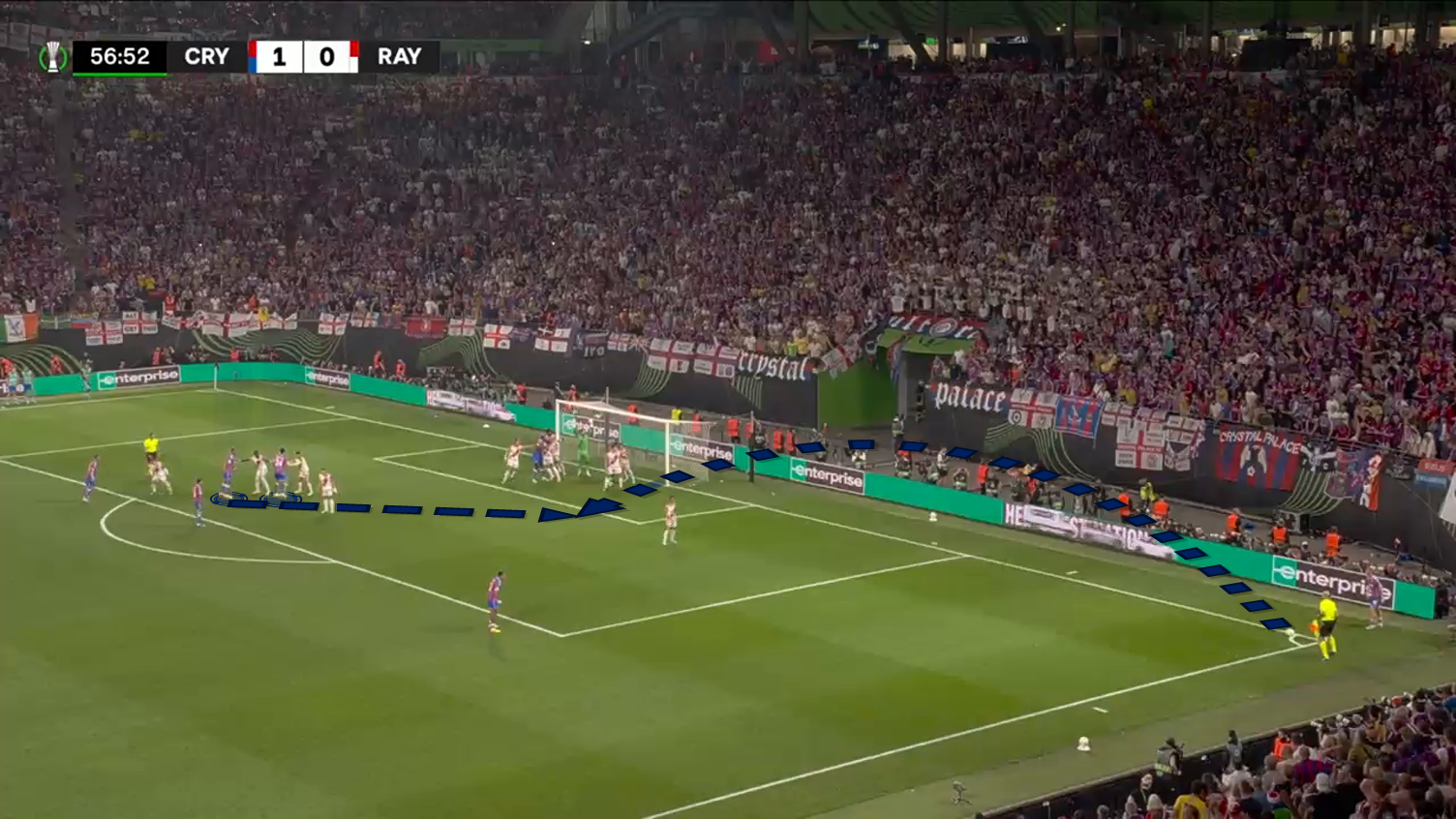
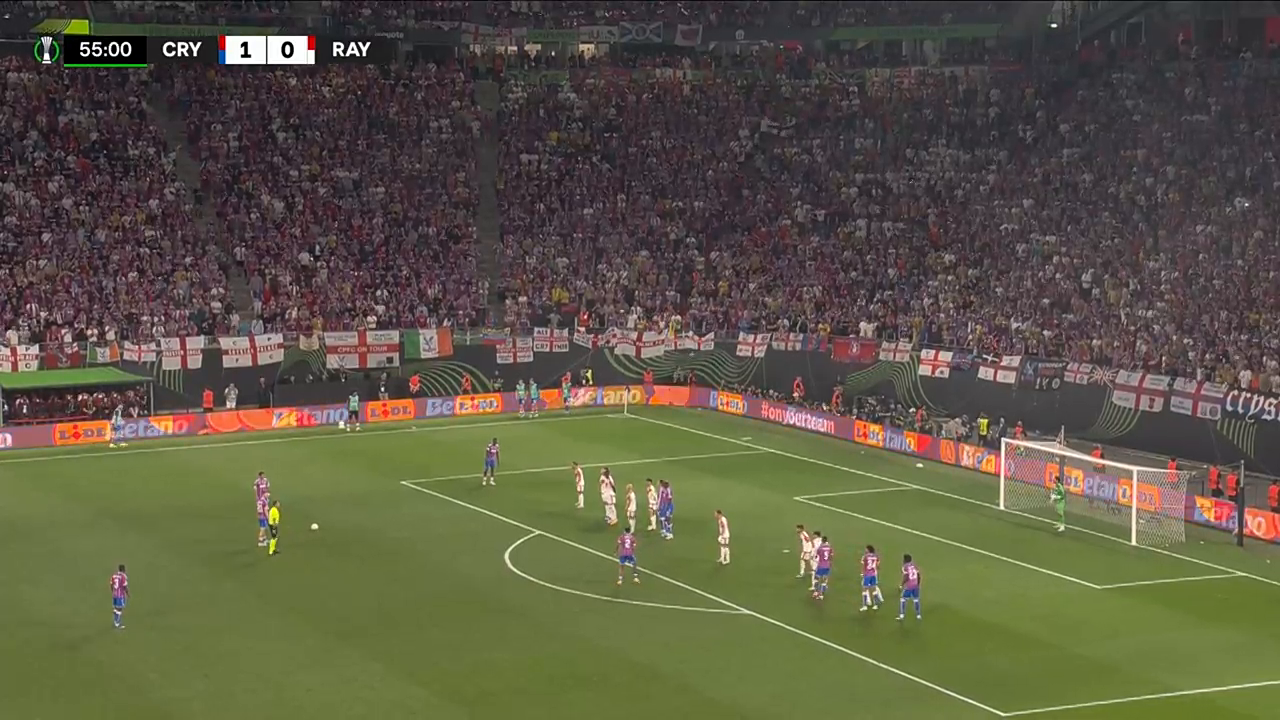
Glasner’s side had their highest xG chance of the match come from a free kick in the 56th minute.
Crystal Palace was trying to create a 3v2 overload on the back part of Rayo Vallecano’s defensive line.
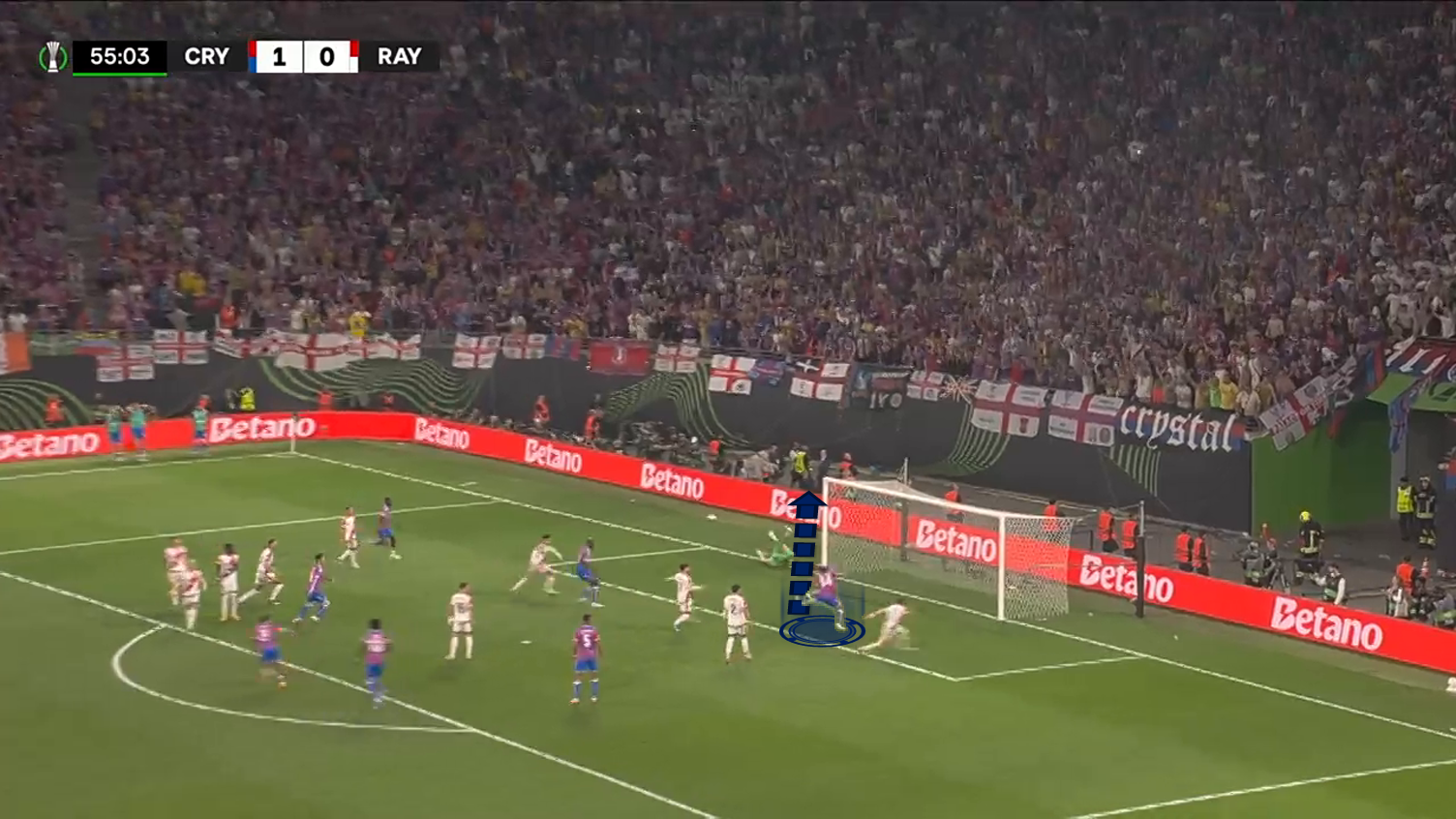
Pino hit both posts, and because Riad had beaten his man in behind, he was standing with a wide-open net and missed it wide.
![Borussia Dortmund Vs Werder Bremen [2-2] Bundesliga 2026/2027: How Daniel Thioune Tactics Earned A Late Comeback With 29% Possession - Tactical Analysis](https://cdn.mymidnight.blog/77f959f119f4fb2321e9ce801e2f5163/size/w600/2026/10/Borussia-Dortmund-vs-Werder-Bremen---Tactical-Analysis.png)
![Croatia Vs Spain [1-2] UEFA Nations League 2026/2027: How Slaven Bilić High Pressing Tactics Troubled Spain - Tactical Analysis](https://cdn.mymidnight.blog/77f959f119f4fb2321e9ce801e2f5163/size/w600/2026/10/Croatia-Vs-Spain--1-2--UEFA-Nations-League-20262027---Tactical-Analysis.png)

![Scotland Vs Switzerland [0-3] UEFA Nations League 2026/2027: How Aggressive Pressing Backfired & Murat Yakin Took Advantage - Tactical Analysis](https://cdn.mymidnight.blog/77f959f119f4fb2321e9ce801e2f5163/size/w600/2026/10/Scotland-Vs-Switzerland-20262027---Tactical-Analysis.png)
![Olympique De Marseille Vs PSG [1-2] Ligue 1 2026/2027: How Bruno Génésio Transitions Troubled PSG - Tactical Analysis](https://cdn.mymidnight.blog/77f959f119f4fb2321e9ce801e2f5163/size/w600/2026/09/Marseille-Vs-PSG-2026_2027---Tactical-Analysis.png)
![Fulham Vs Manchester United [1-1] Premier League 2026/2027: How Álvaro Arbeloa Tactics Exposed The Red Devils' Problems - Tactical Analysis](https://cdn.mymidnight.blog/77f959f119f4fb2321e9ce801e2f5163/size/w600/2026/09/Fulham-FC-Vs-Man-United-2026_2027---Tactical-Analysis.png)
![AS Roma Vs Inter Milan [2-2] Serie A 2026/2027: When Undefeated Giallorossi Attack Met Nerazzurri Comeback Resilience - Tactical Analysis](https://cdn.mymidnight.blog/77f959f119f4fb2321e9ce801e2f5163/size/w600/2026/09/AS-Roma-Vs-Inter-Milan-2026_2027---Tactical-Analysis.png)
![Real Sociedad Vs Bournemouth [1-2] Europa League 2026/2027: How Do Marco Rose Pressing Tactics Work? - Tactical Analysis](https://cdn.mymidnight.blog/77f959f119f4fb2321e9ce801e2f5163/size/w600/2026/09/Real-Sociedad-Vs-Bournemouth-20262027---Tactical-Analysis-1.png)