How To Unlock A Mid-Block Like Pep Guardiola, Mikel Arteta & Unai Emery – Tactical Theory

What Is Mid-Block In Football?
The mid-block is a well-established football tactic and will be seen at some point during most games at all levels.
A mid-block can be broadly defined as players being positioned zonally rather than in response to the opposition's positioning, and occupying the middle zone of the pitch.
Being positioned relative to one another, rather than in opposition, prevents overreacting to the opposing team's movements and keeps key areas of the pitch occupied.
Positioning is an important strength of playing in a block, as you are not exposed to the will of the opposition.
Even the most high-pressure teams, when faced with a side in comfortable possession, will drop to a midblock in certain phases of the game.
It can, however, provide the team on the ball with clear spaces to target, with the opposition's set-up and reactions being more predictable.
This tactical theory, using examples from Manchester City, Arsenal and Aston Villa, analyses the tactics used in breaking down a mid-block.
This tactical football analysis also includes practice exercises designed to help players in these situations.
Long Diagonals Against A Mid-Block
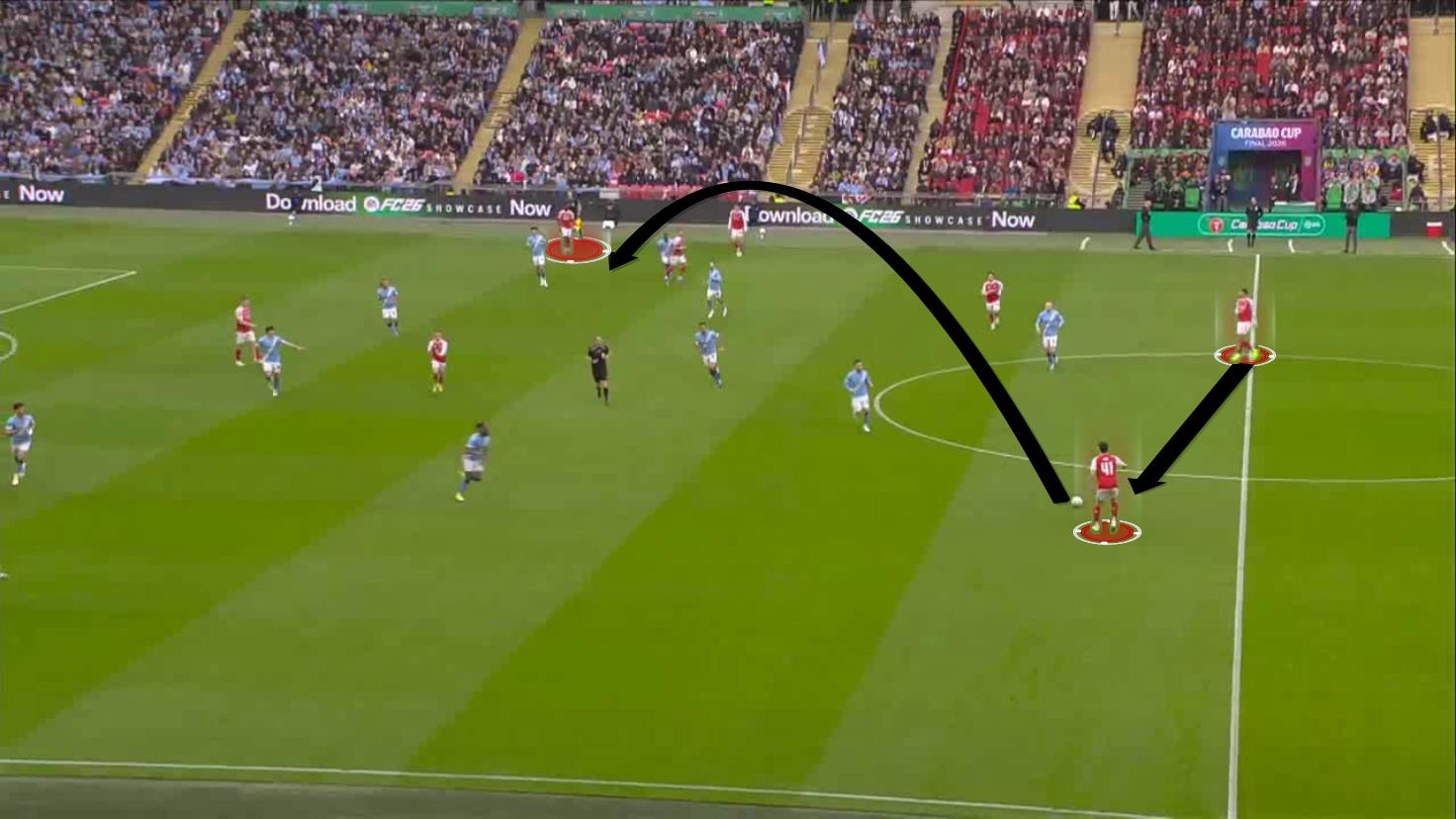
One option, and possibly the simplest to implement, is to bypass the block entirely with a long diagonal pass to a winger.
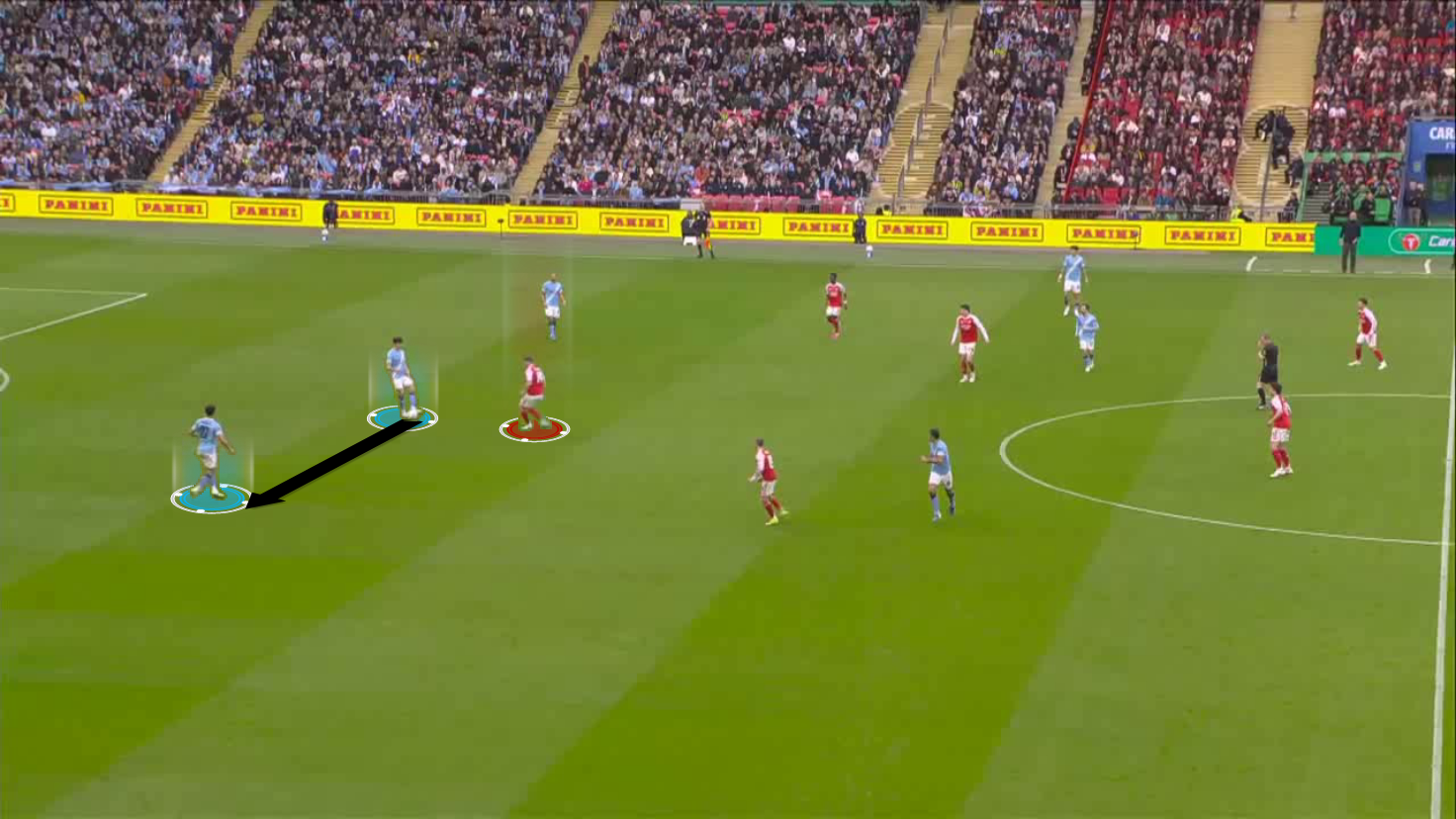
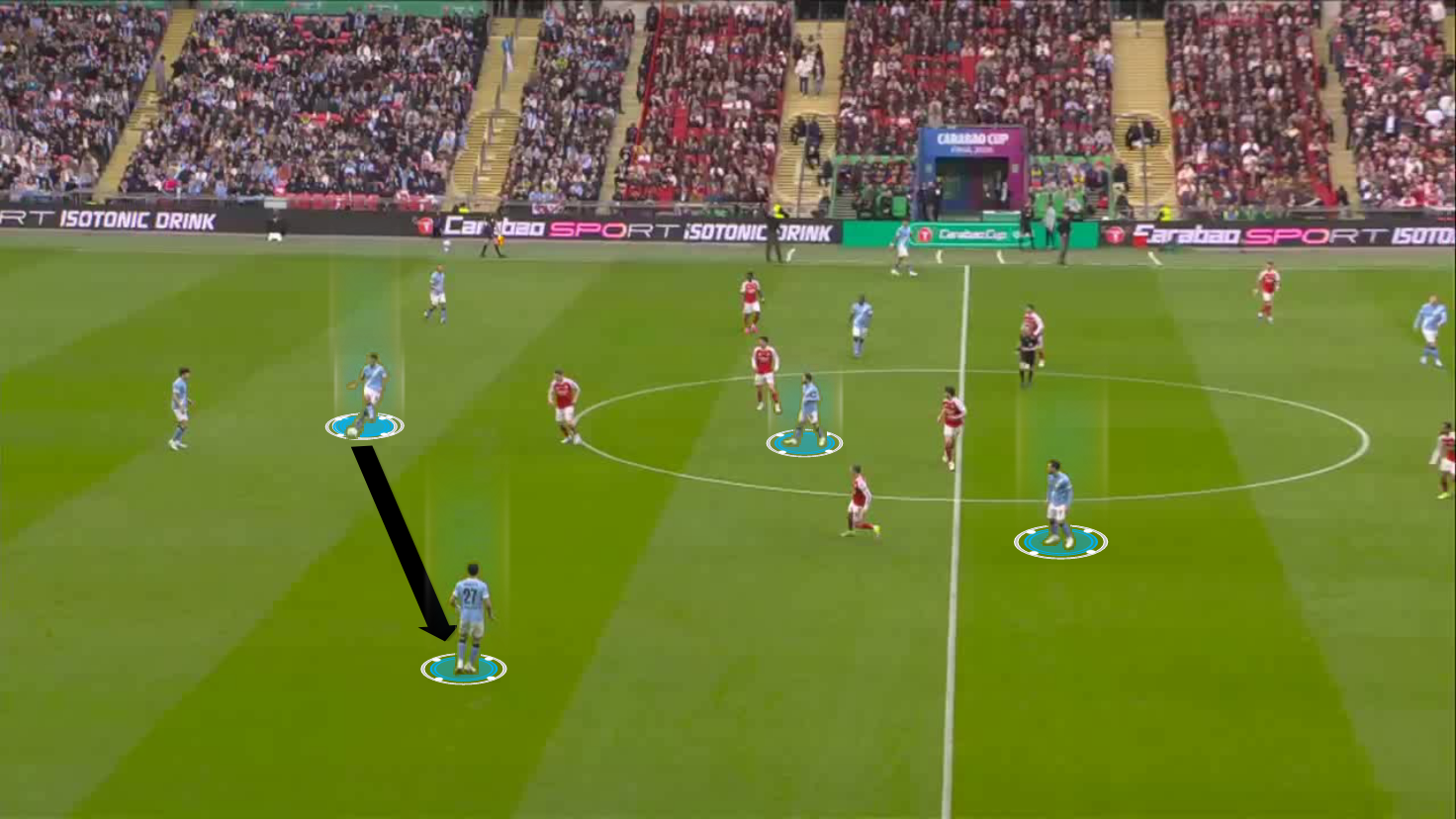
In the above image, from the EFL Cup Final between Man City and Arsenal, Arsenal had worked their way up the pitch through a series of long throws before being forced backwards by City’s compact shape.
Declan Rice dropped deep, past the City front line, to get on the ball before spraying a long diagonal out to Bukayo Saka on the right wing.
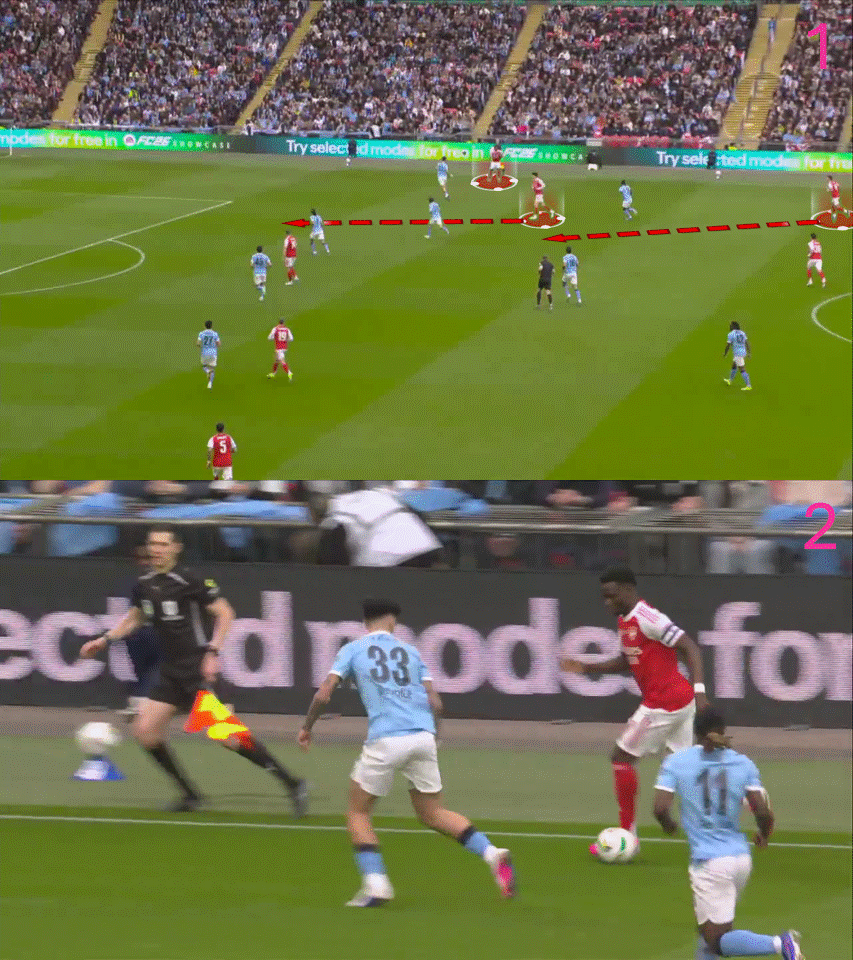
In this game, City defended against Arsenal's build-up in a high block and were patient in not pressing the ball.
This led to Mikel Arteta’s side playing far too many long vertical balls from deep positions, which were easily dealt with by the City backline and their two defensive midfielders, who could pick up second balls.
This kind of long ball at least stretches the opposition's back line and, in this instance, allows Saka to go at the full-back.
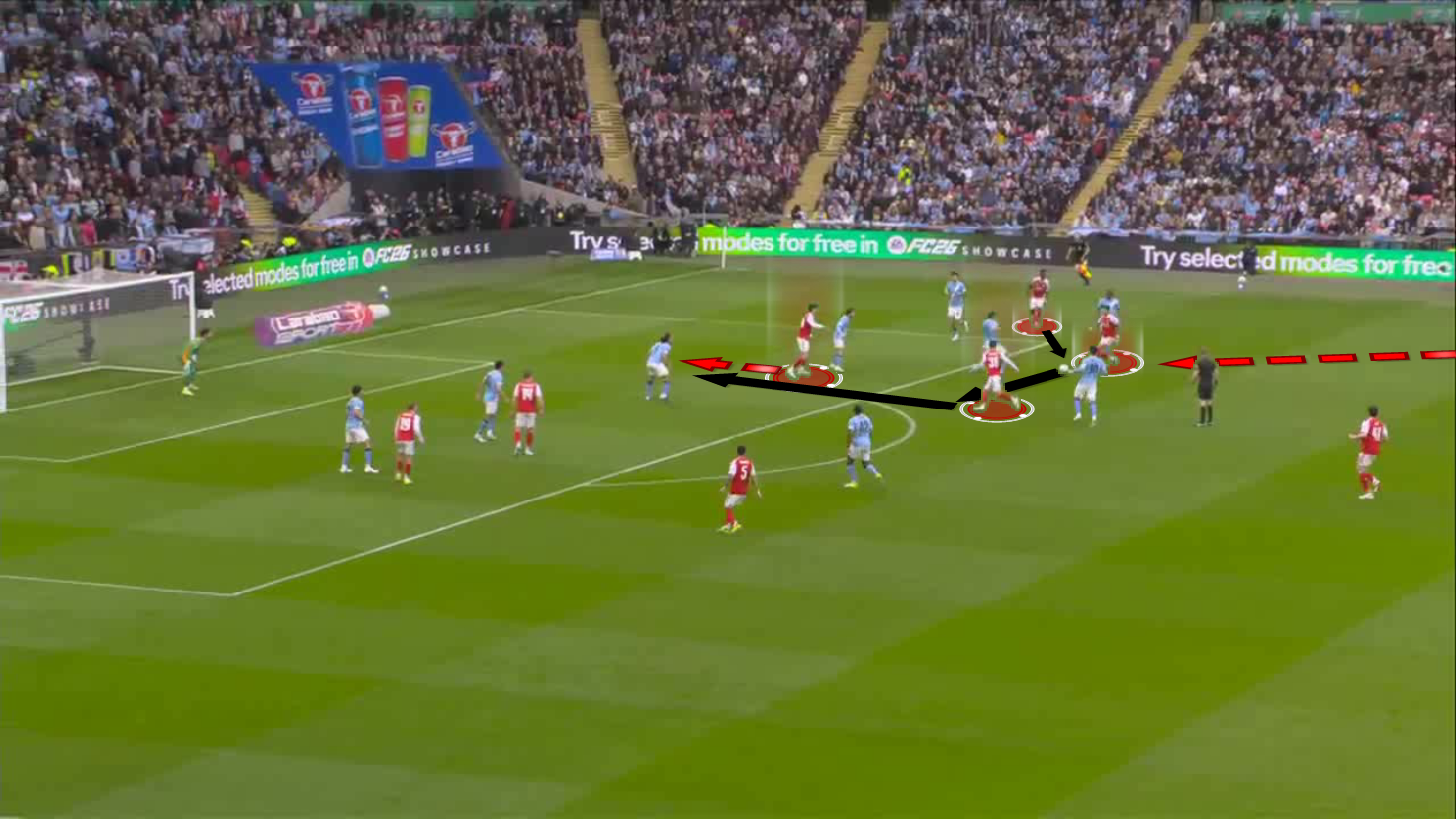
Due to Saka's individual qualities, City were forced to double up on him.
This left space elsewhere for Arsenal to combine, with Ben White making an underlapping run to create a good opportunity to score via Kai Havertz.
However, whilst it worked on this occasion, often this kind of pass does not disrupt the opposition's setup enough to be effective.
Unless the diagonal is perfectly struck and the winger is of Saka's quality, who can pluck the ball out of the air and go at their direct opponent very quickly and decisively, the opposition can typically shift their block and force a backwards pass.
How To Move The First Line Of Pressure
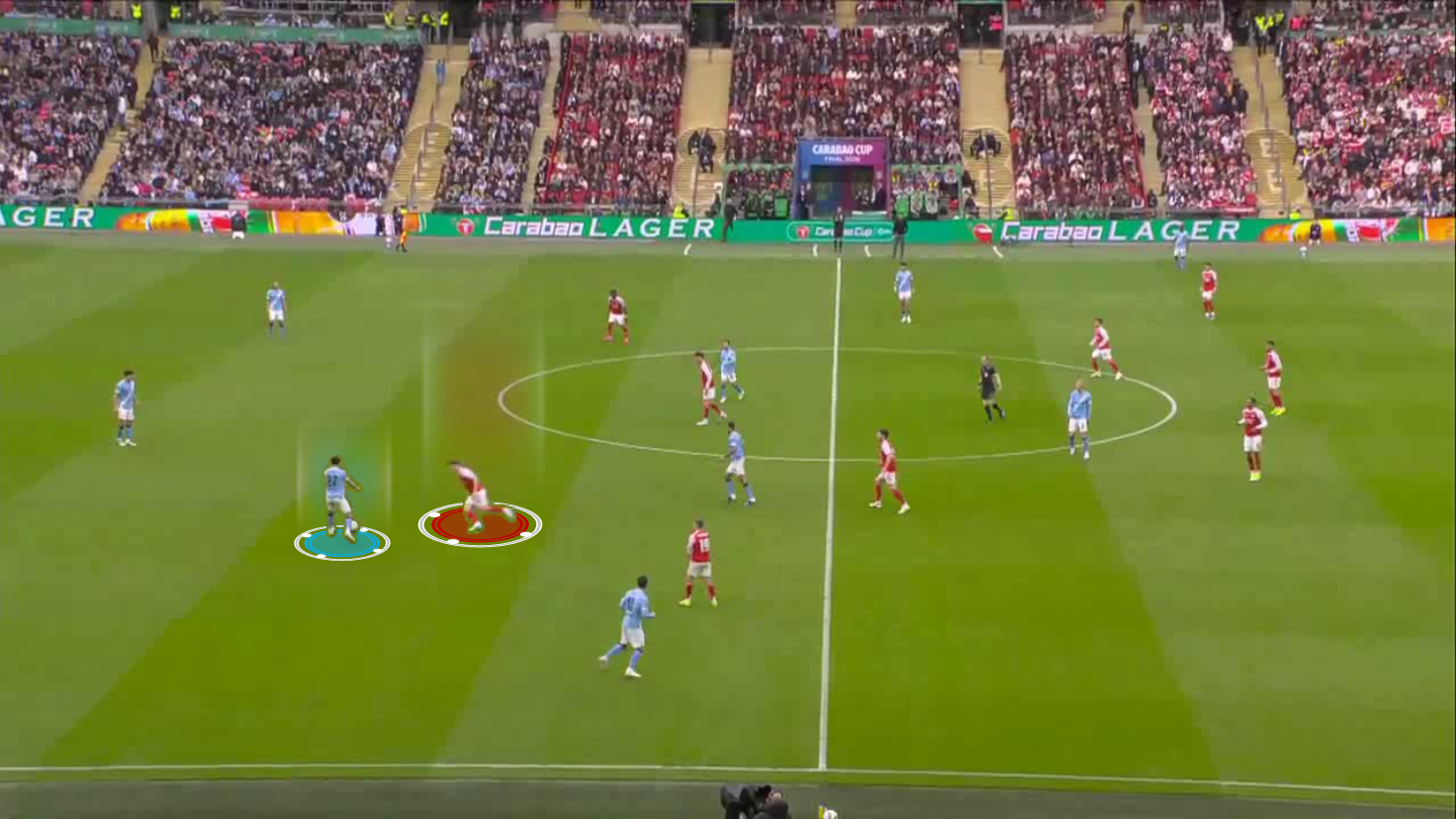
In general, when playing against a team in a mid-block that is not stepping forward to engage with the ball, it is important to have a backline that is willing to get close to the first line of opposition pressure.
This can achieve two things.
Firstly, it prevents forwards from simply shifting and blocking off passing lanes.
The further the distance from the ball, the easier it is for the out-of-possession team to cover areas and intercept passes.
It is very hard to put a ball between two players from a long distance.
If the ball is higher up the pitch, the defending team's players have to be much closer together to block passes, leaving more space elsewhere.
Another advantage of defenders being brave enough to step forward with the ball is that it can bait the opposition into pressing and then, as Pep Guardiola’s side are about to do here, allows them to drag players out of position.
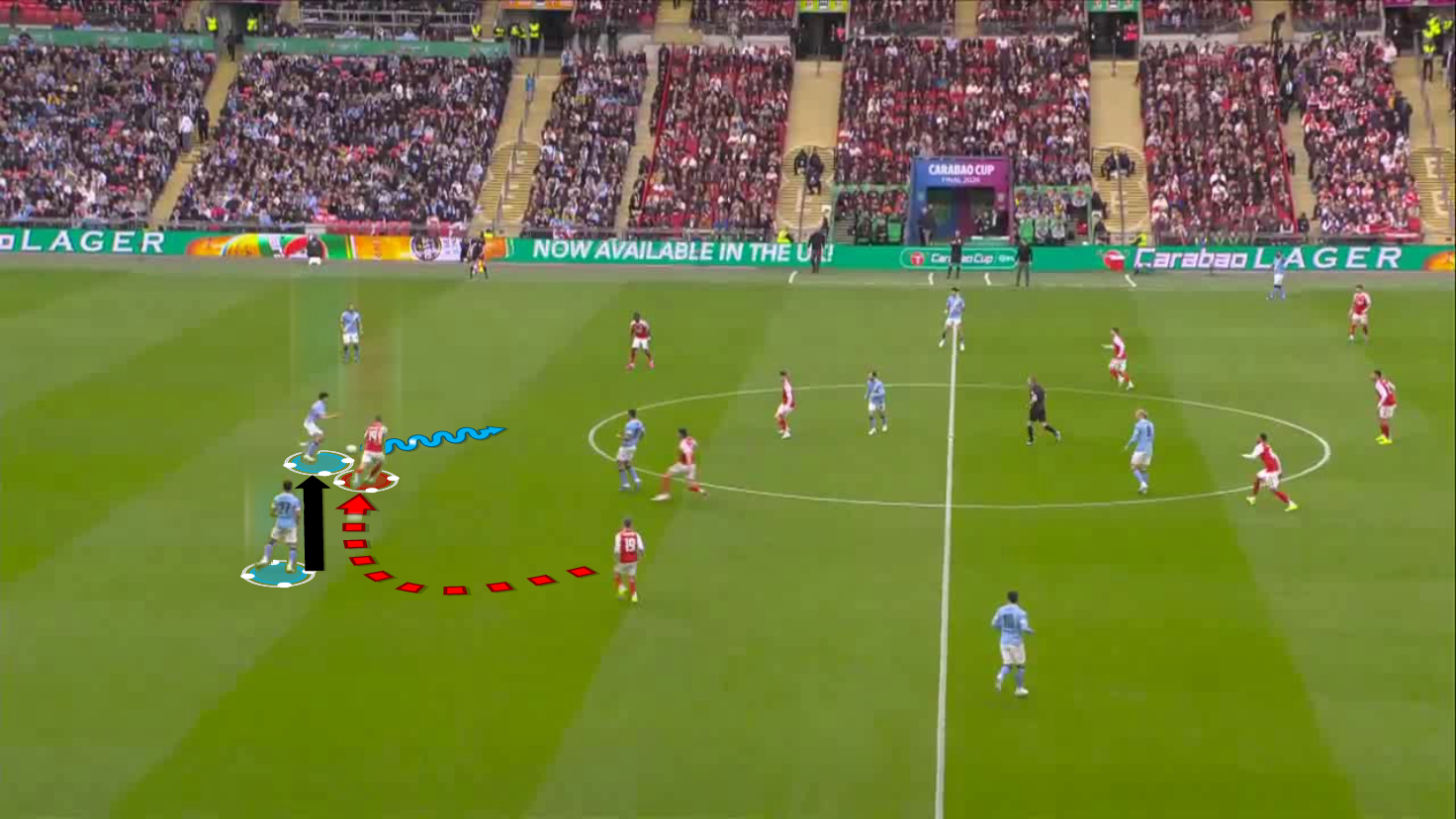
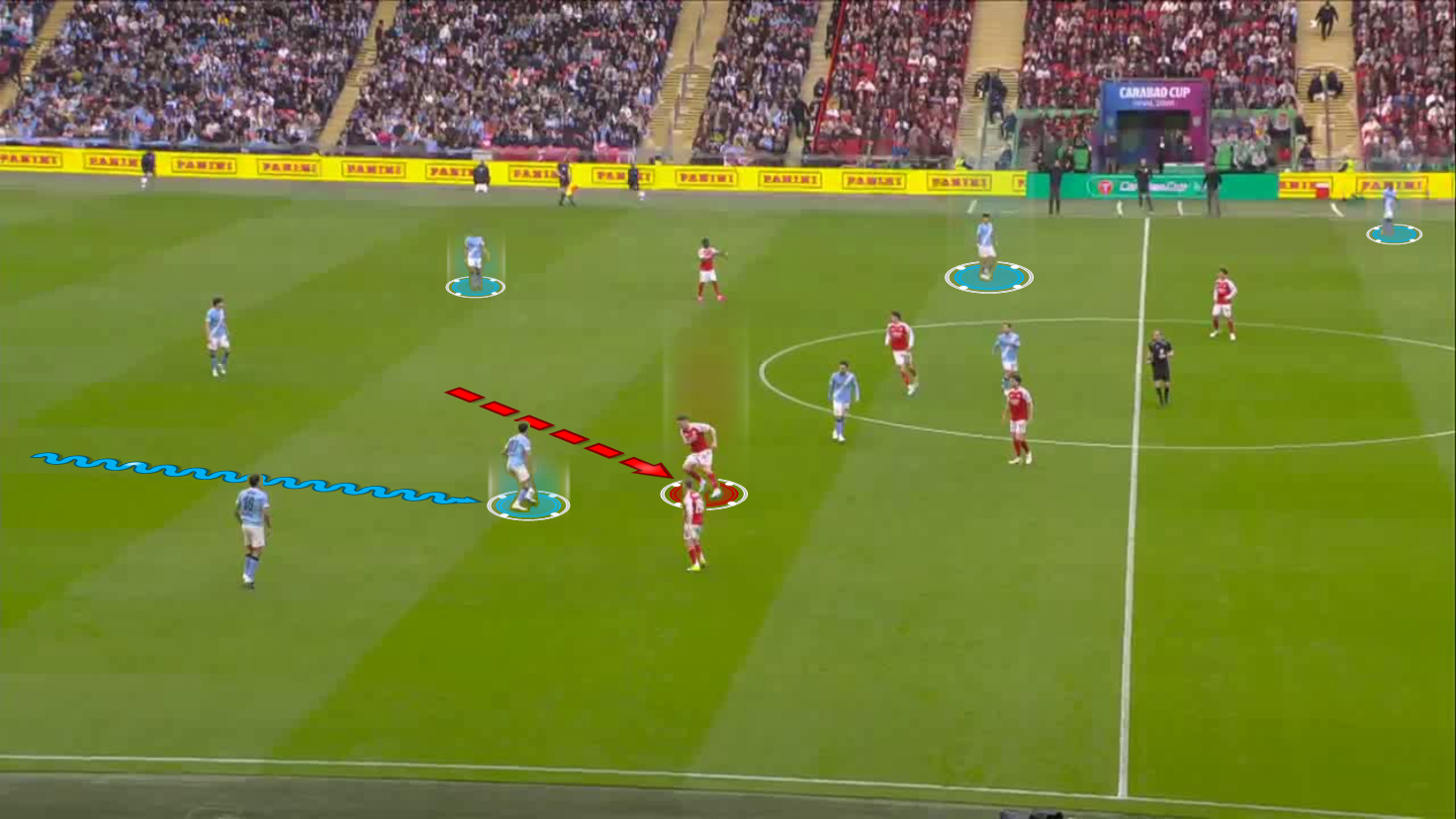
The above image shows the moments after City’s right-back, Matheus Nunes, has drawn central forward Viktor Gyökeres into pressing him.
Nunes then played a square pass to centre-back Abdukodir Khusanov, a pass which encouraged the Swedish forward to continue his pressing run.
Khusanov then dribbles with the ball.
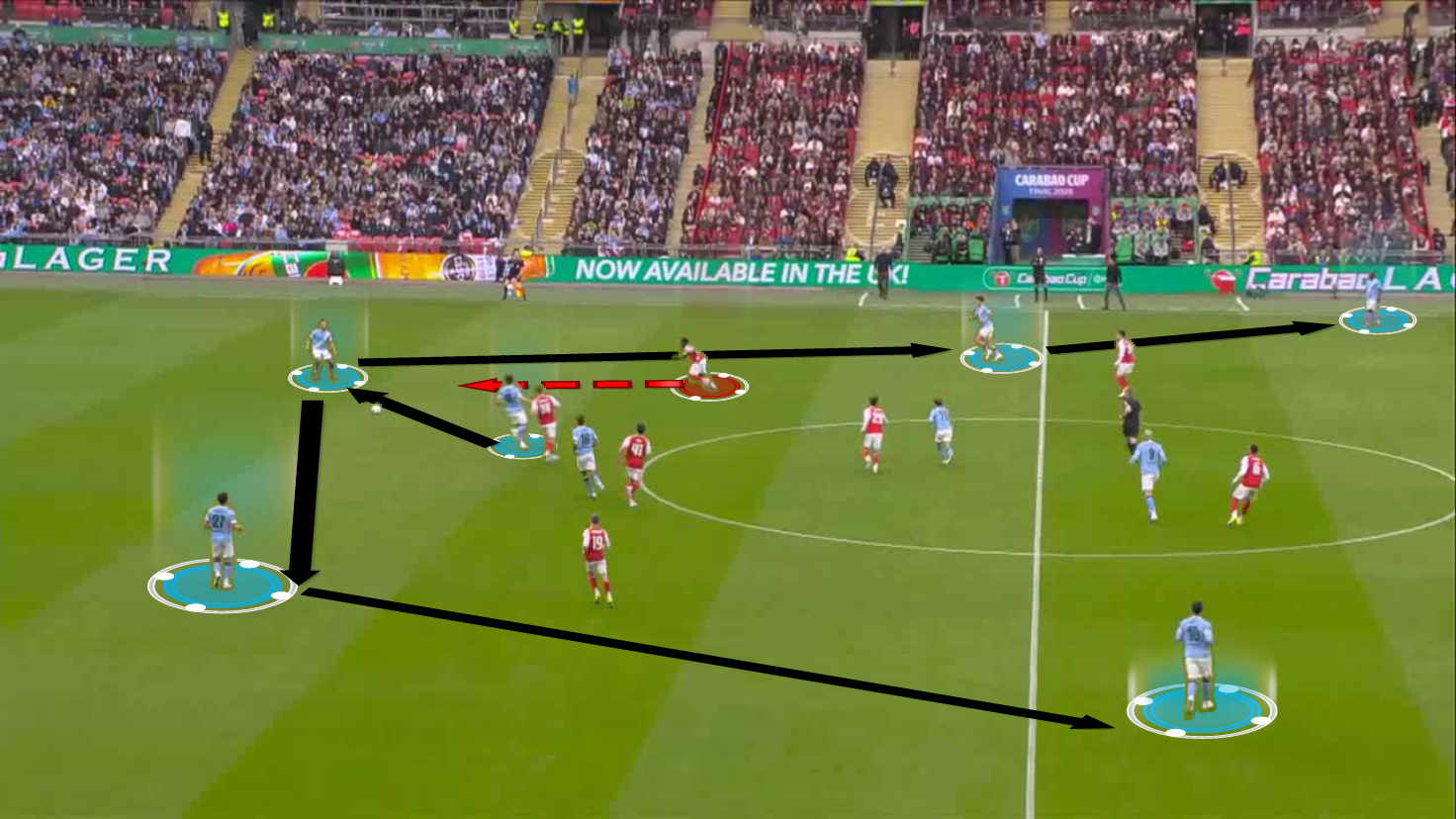
The chain reaction of Khusanov dribbling is for Saka, Arsenal's widest midfielder, to press the left centre-back when he passes the ball.
This could also have been used to open up right-back Nunes, who, due to the striker being lured away, would have had to have been pressed by Arsenal’s widest left-midfielder.
Both of these Arsenal reactions open the door for City to play into their wingers, who, by receiving, would have disrupted the backline by prompting full-backs to jump to close them down.
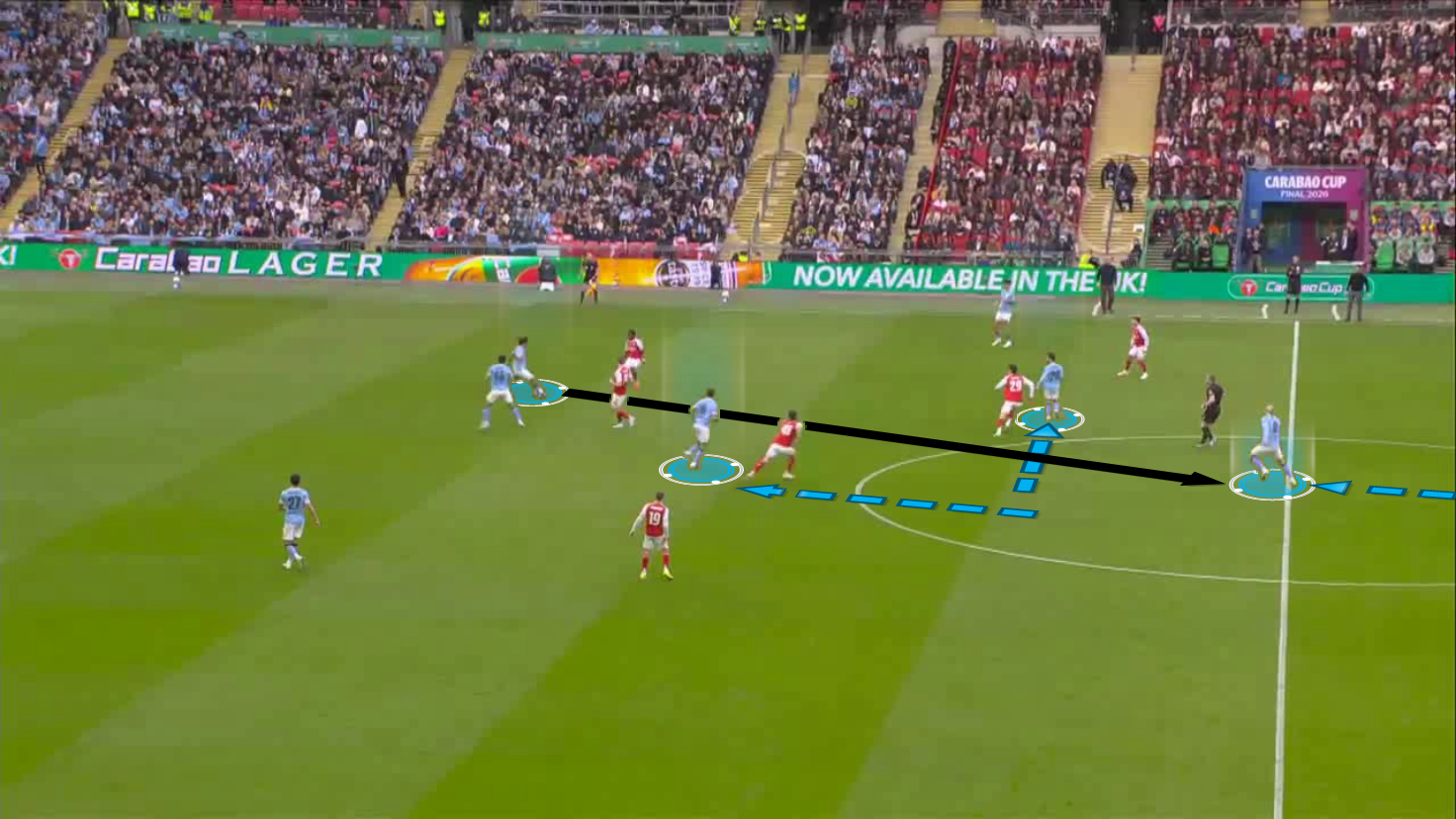
In this instance, City use it to progress centrally.
Rodri drops one way, towards the ball, and Bernardo Silva moves towards the wide area, dragging opposition midfielders apart from one another.
This disruption allows Erling Haaland to appear in the pocket and receive alone, too far from Arsenal's backline for their centre-backs to press.
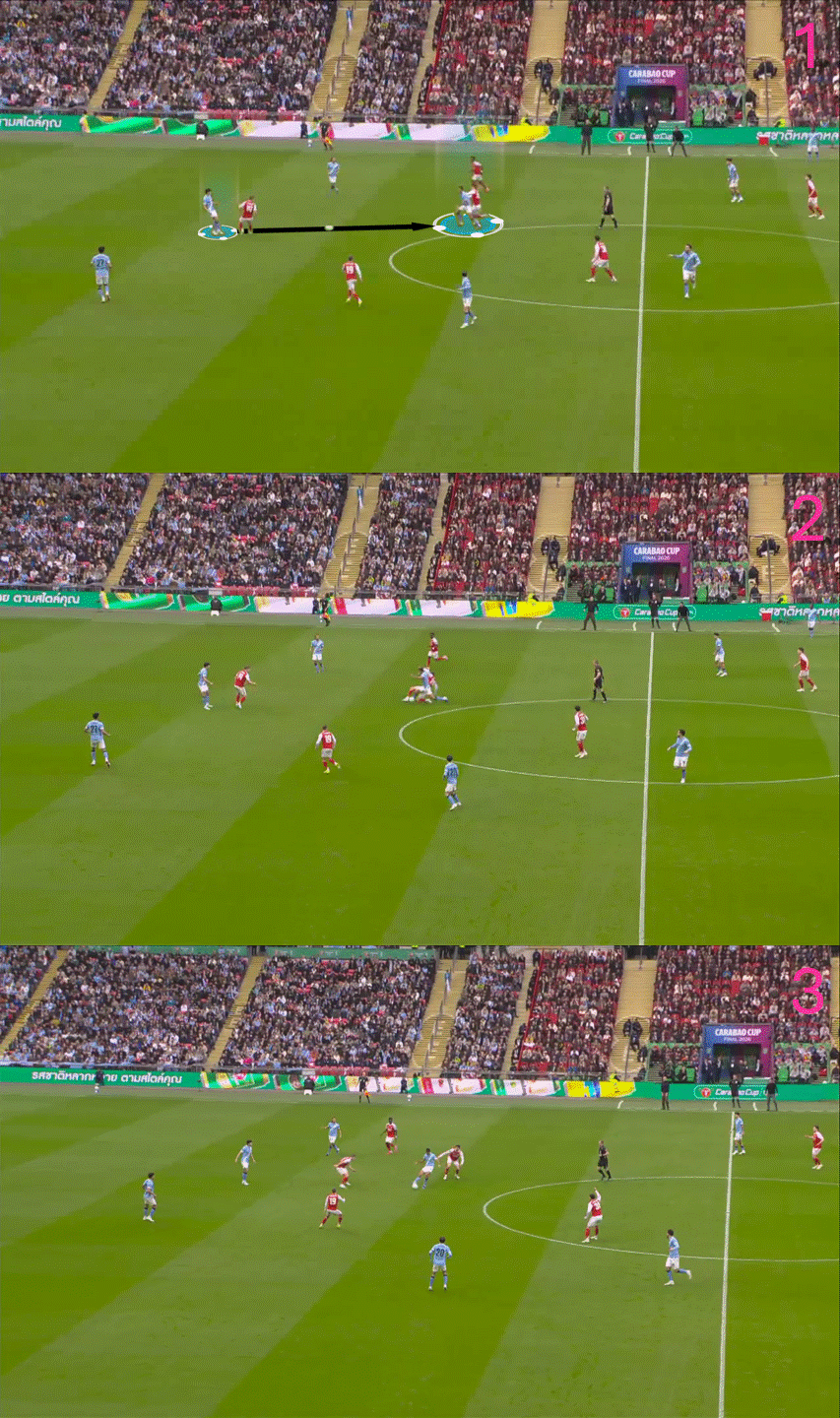
The above is another example from the same match of City drawing in the opposition by being patient and brave in the build-up.
Khusanov controlled the ball with the sole of his foot and waited until the pressing striker was just yards away before rolling it to his right-back, Nunes.
This allows Nunes to attack the space ahead of him by driving forcefully forward with the ball at his feet.
This can be used to bypass the first line of pressure entirely or, as happened here with the forward making a quick recovery run, draw the opposition's press to one side, leaving space to attack down the other.
Press-Resistant Midfielders
Manchester City’s midfielders, in particular Rodri, position themselves in front of the opposition's midfield, close to the opposition’s forward line
The advantage of receiving in front of the opposition's midfield is that it makes those players jump, leaving space behind them.
This, of course, takes courage and a very high level of press resistance on the part of these players, as Rodri demonstrates above.
Rodri, using his physical strength and making sure his body is positioned between his marker and the ball, keeps the ball safe.
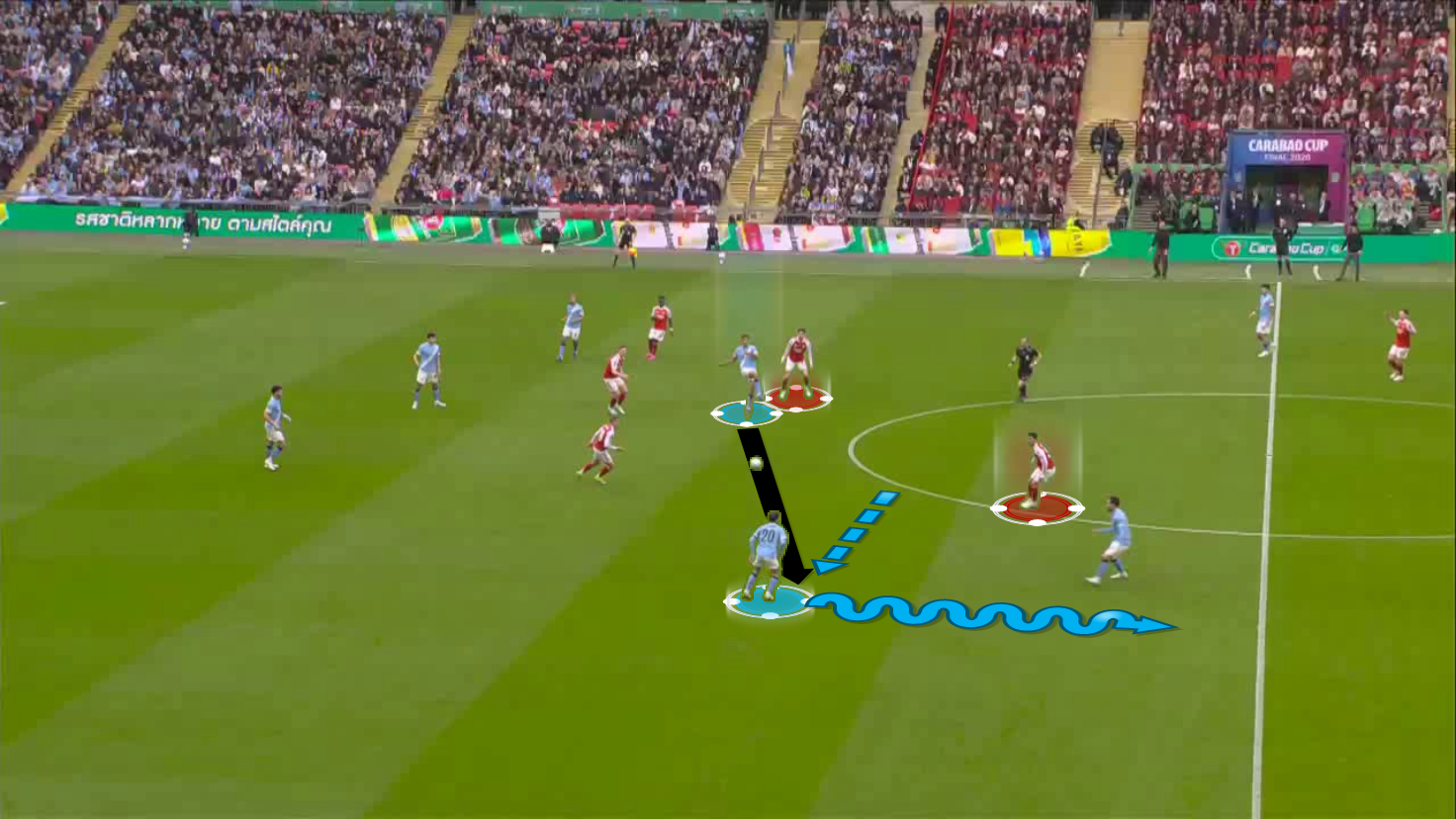
By drawing in Declan Rice, who thinks he can steal the ball, Rice’s midfield partner has to drop behind him to try to shield a pass into Haaland.
Seeing this, Silva pulls out wider to receive on the outside of Arsenal’s shape and progresses the ball forward.
Blind Side Runs
In contrast to his double-pivot teammates, Rayan Cherki positions himself behind the opposition's midfield, in an area where neither the midfield nor the defenders can pick him up.
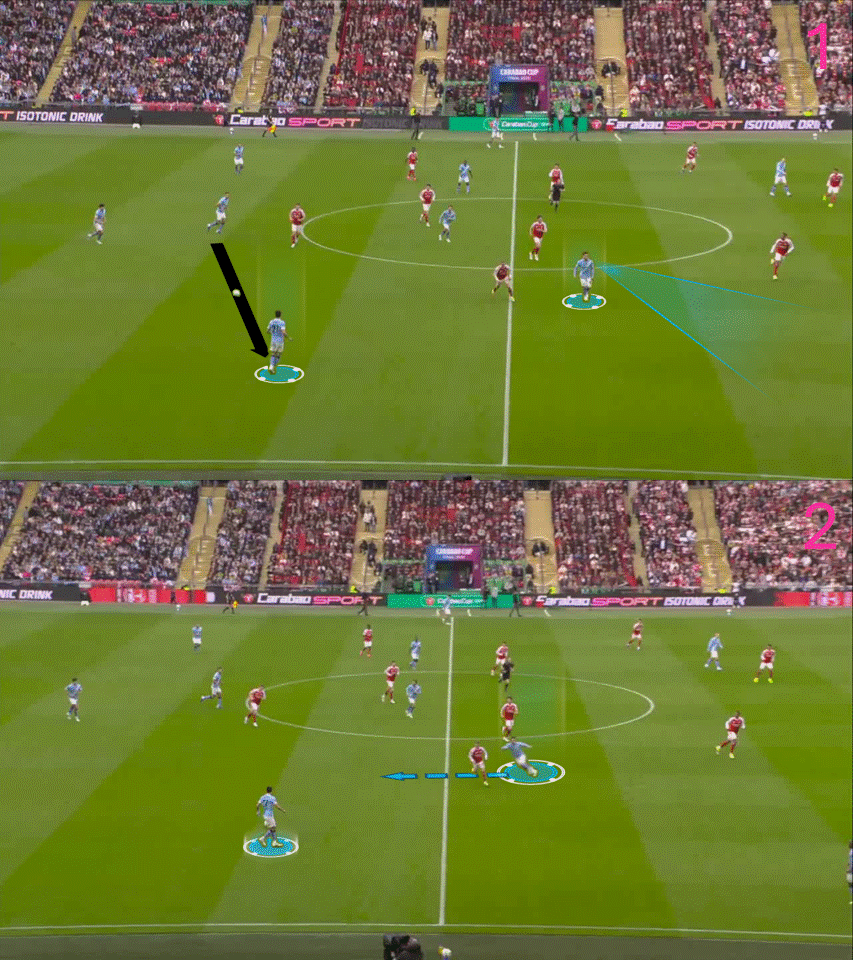
As the ball travels to full-back Nunes, Cherki darts into the space ahead of Arsenal's widest player.
The timing is the key with Cheki, moving just as his teammate is about to receive, and the nearest defending player’s eyes are fixed on the ball.
Just prior to moving, with the ball halfway to its intended target, Cherki made eye contact with his winger.
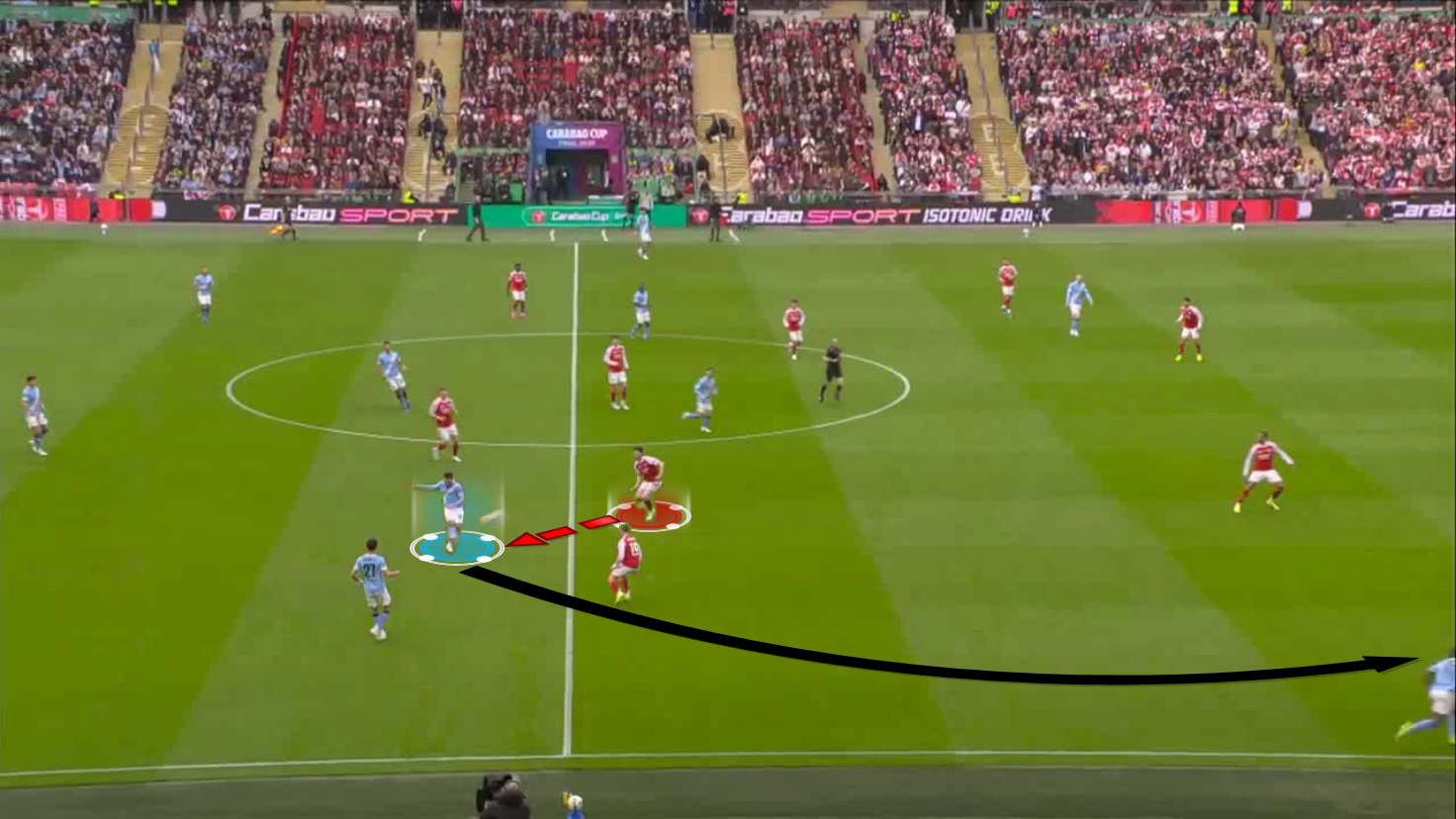
Cherki drops almost parallel to his full-back at a pace where Rice cannot get close to him.
With a side-on body shape that allows him to play the ball first time, Cherki then sends his winger in behind with a bending ball.
Receiving Between The Lines
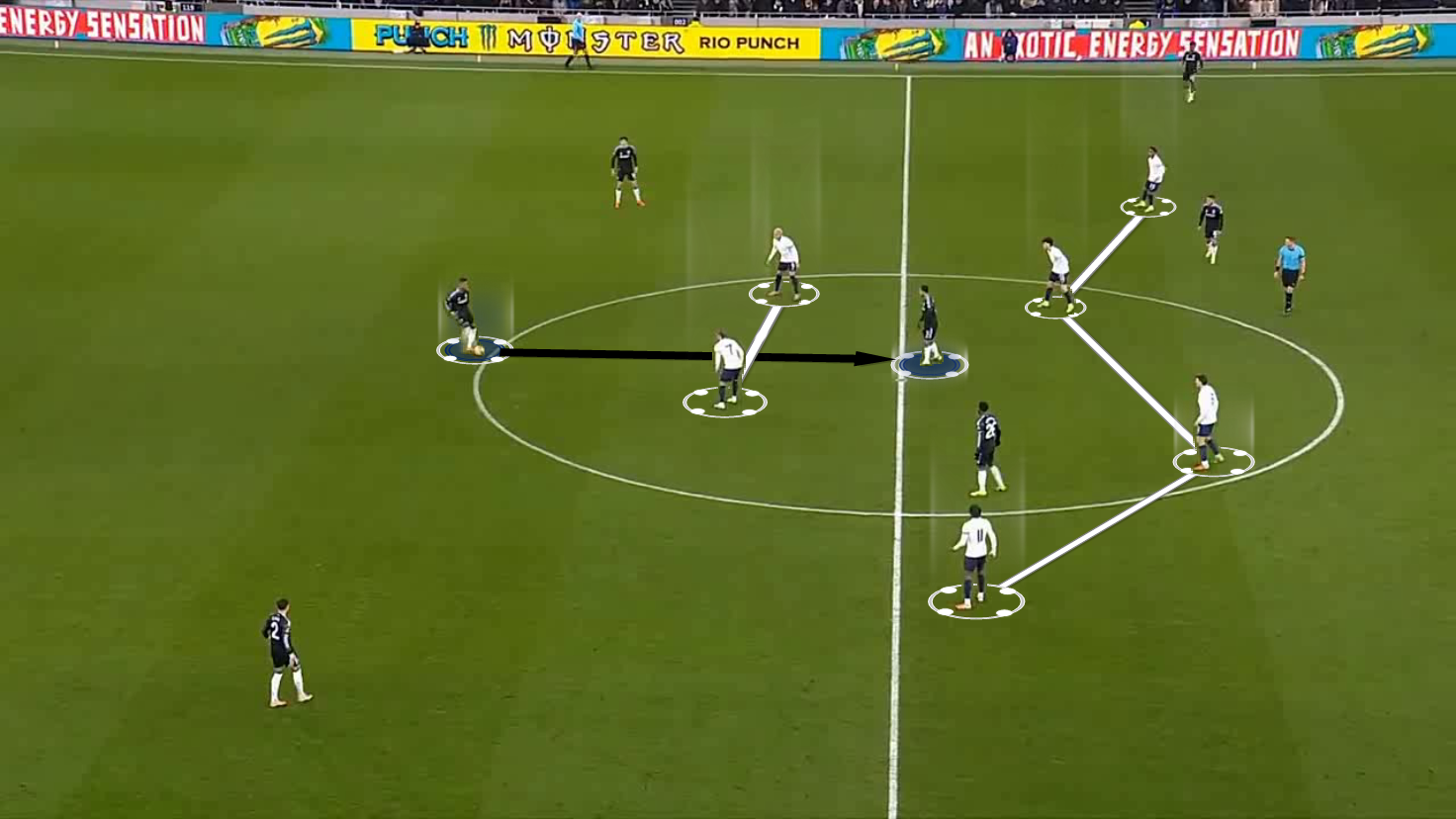
The above image is from the moments before Emiliano Buendía opened the scoring for Aston Villa against Tottenham Hotspur in their FA Cup tie.
Many similar traits analysed in Manchester City’s breaking down of Arsenal are on display in Unai Emery tactics as Villa sliced through Tottenham’s 4-4-2 mid-block.
Here, Villa also have a double pivot positioned between Tottenham's defensive lines, in an area that makes it difficult for the opposition to get tight to them.
Although not quite as close as in City’s example, Villa’s centre-backs bring the ball relatively near to the forwards of Tottenham.
With the Spurs forwards positioned square to one another, and neither in line with the ball, there is a clear passing lane into Boubacar Kamara.
The centre-back, Ezri Konsa, punches a sharp pass into Kamara that gives the Tottenham forwards no chance of intercepting.
With next to no backlift of his kicking leg, Konsa gives the opposition no warning that the pass is about to be made.
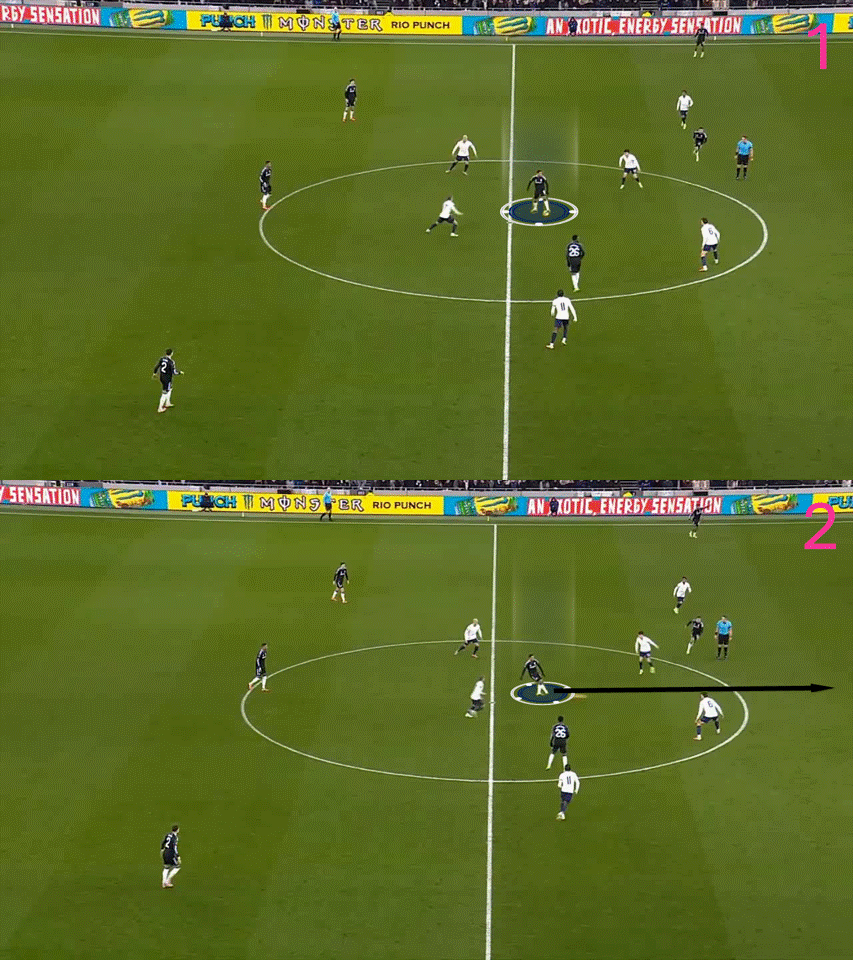
Rather than receiving up against midfielders, in the same manner as Rodri, Villa’s double pivot receives in a pocket of space (due to Tottenham's midfielders' reluctance to step with the player thanks to eventual goalscorer Buendía's positioning behind them) and very quickly progresses the ball.
The ball can be moved forward so quickly because Kamara controls it with his left foot, setting himself up to play it immediately with his right.
As seen in the first image, Kamara discusses his intentions with a completely flat body before turning while controlling the ball.
This speed, in part at least, is what prevents the Spurs midfield from closing him down.
Kamara looks up as he controls the ball to confirm the next receiving player is in position.
As with Silva, Lamare Bogarde, who has just scanned, looking over his right shoulder, to see the movement of his more advanced teammates, is now positioned on the outside of the two central midfielders.
Although it is not Bogarde who receives the next pass, he clearly anticipated that the reaction from the ball-far midfielder would be to narrow slightly to get behind the line of the midfielder closest to the ball.
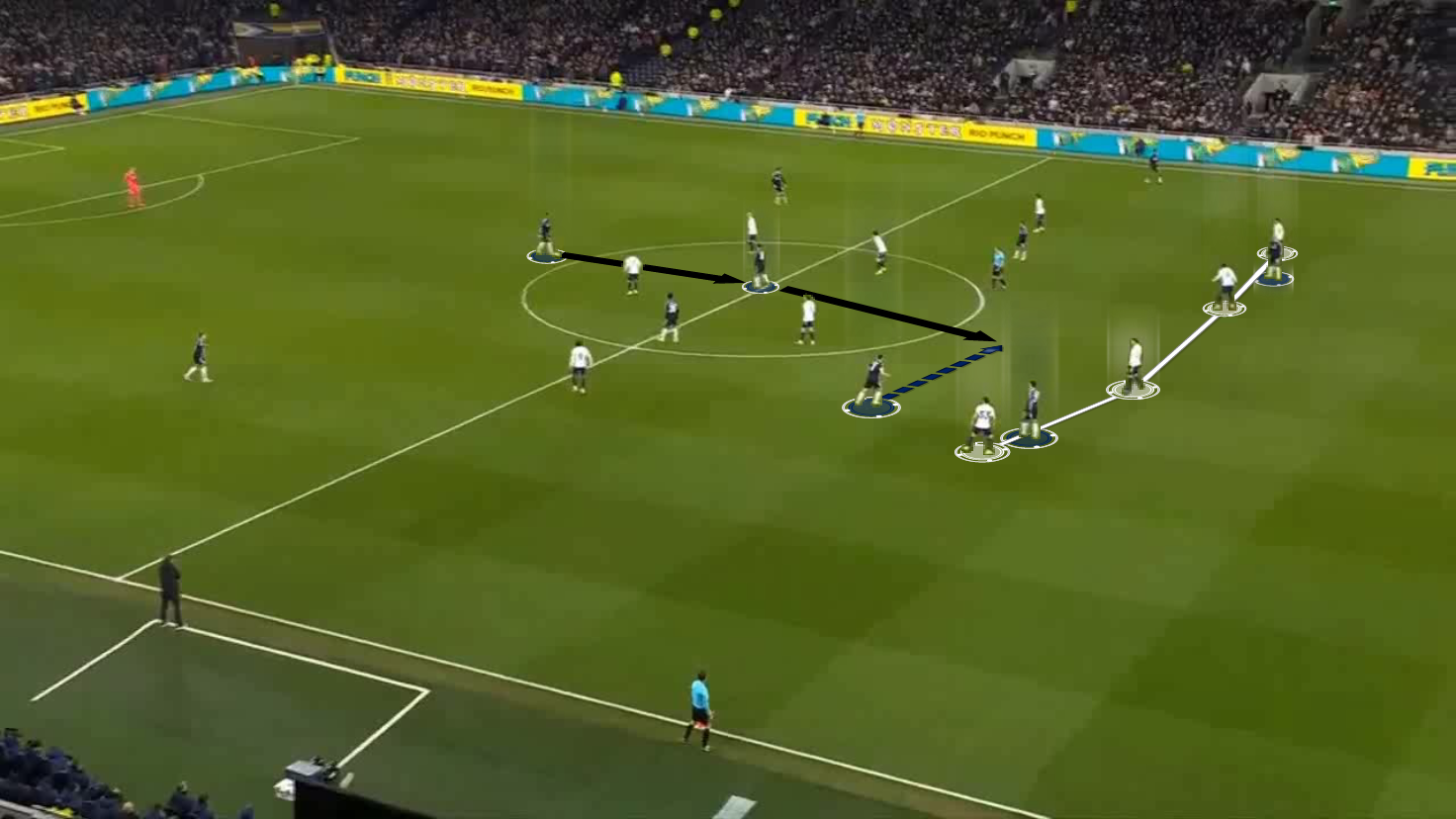
Further up the pitch, the positioning of Aston Villa's two forwards, both between centre-backs and full-backs, is vital.
Highlighted, in front of the Tottenham left-back, John McGinn is sneaking into a central position as the ball is about to be played into his defensive midfielder.
Tottenham's left-back is unable to track McGinn, as this would leave the Villa forward alone and able to receive a ball in behind.
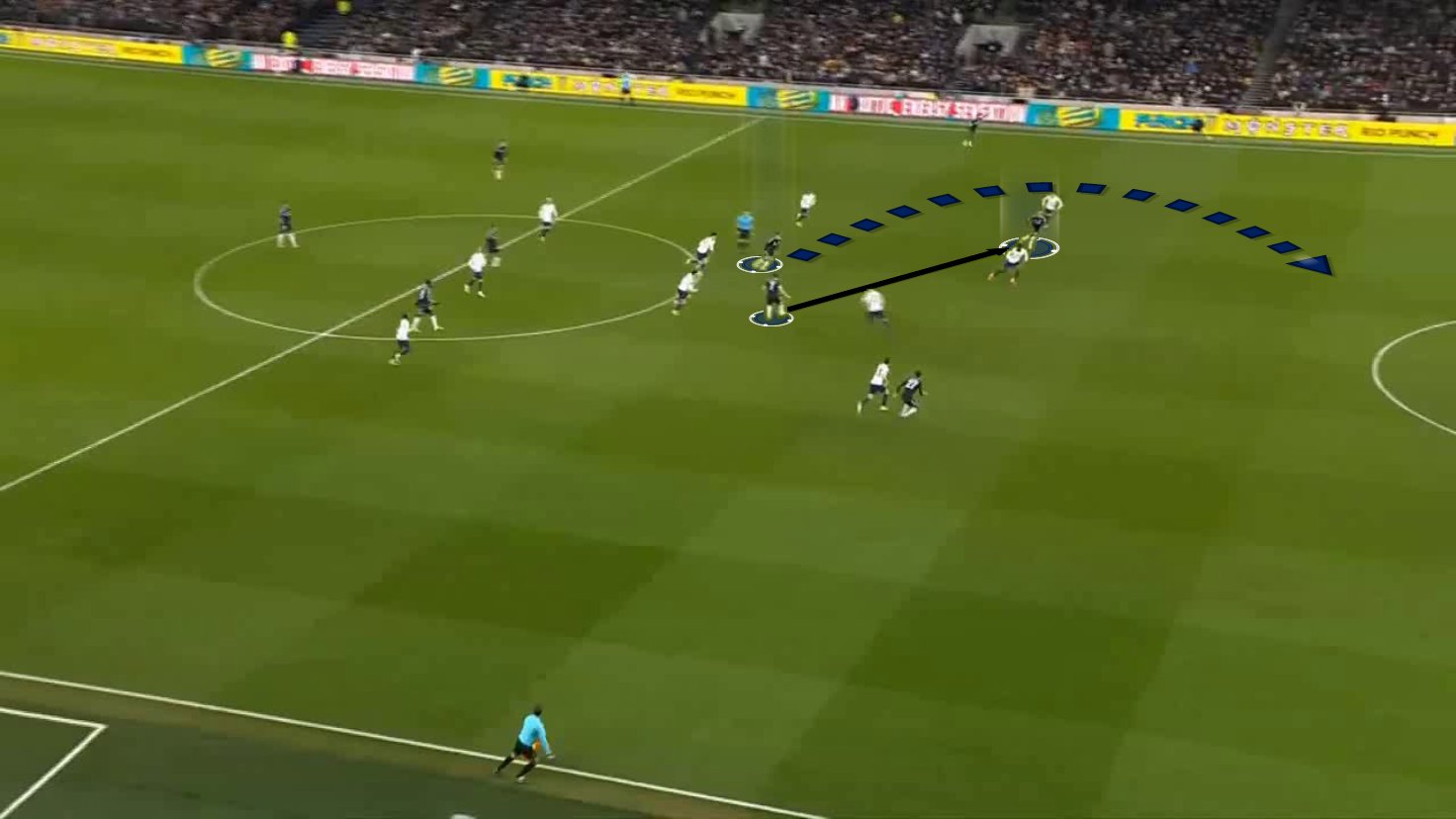
McGinn, receiving side-on with his back (right) foot, allows him to either set the ball back to his supporting midfielder (Buendía), or, as he does, control with his right and quickly play with his left into his forward's feet.
The forward pass was Buendía’s trigger to make an overlapping run around his forward, and he is fed into the box before smashing high into the net.
In this move, Villa were clearly aided by Tottenham's passivity.
However, it is also a very good play from Villa and a textbook example of how positioning, well-timed movements, and the speed of forward play can unlock a rigid mid-block structure.
How To Train Against A Mid-Block
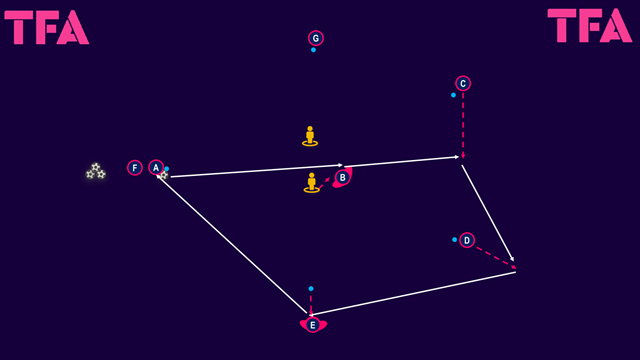
This mid-block training exercise is designed to mimic the actions on show in the analysis of top teams breaking down a mid-block above.