Austin MacPhee Tactics At Portugal 2026: Can The Aston Villa Tactician Elevate Cristiano Ronaldo's World Cup Bid? – Set-Piece Analysis

Ahead of the 2026 FIFA World Cup, all national teams are preparing thoroughly by exploiting every detail they can use as an edge over their opponents.
Set-pieces are a decisive part of the game, which can decide big tournaments.
They have become so important that the idea of having a set-piece specialist with the national team while continuing his club work has begun to gain traction, with Austin MacPhee joining Portugal manager Roberto Martínez while still working with Aston Villa.
Austin MacPhee is a big name in the set-piece field, with notable achievements at Aston Villa, Scotland and Midtjylland.
In this set-piece analysis, we will examine Portugal's tactics under Austin MacPhee ahead of the World Cup, aiming to predict his favoured approach and prepare for the tournament.
Targeting The Rebound Zone From Corners
In general, Austin MacPhee has many ideas to manipulate the opponent who stands on the edge of the box to protect the rebound zone, dragging him away to target the rebound area or freeing his rebound player to run freely into the box, as seen with Aston Villa.
Figure 1 below shows the first category of his ideas: putting just five attackers in the box, with another five as the taker, short options, and rebound players (white) to attract the rebound defender (green) to evacuate the edge of the box.
You can see the opponent defend with three zonal defenders (red), a short-option defender (yellow) and a rebound defender (green arrow).
The rest are man markers.
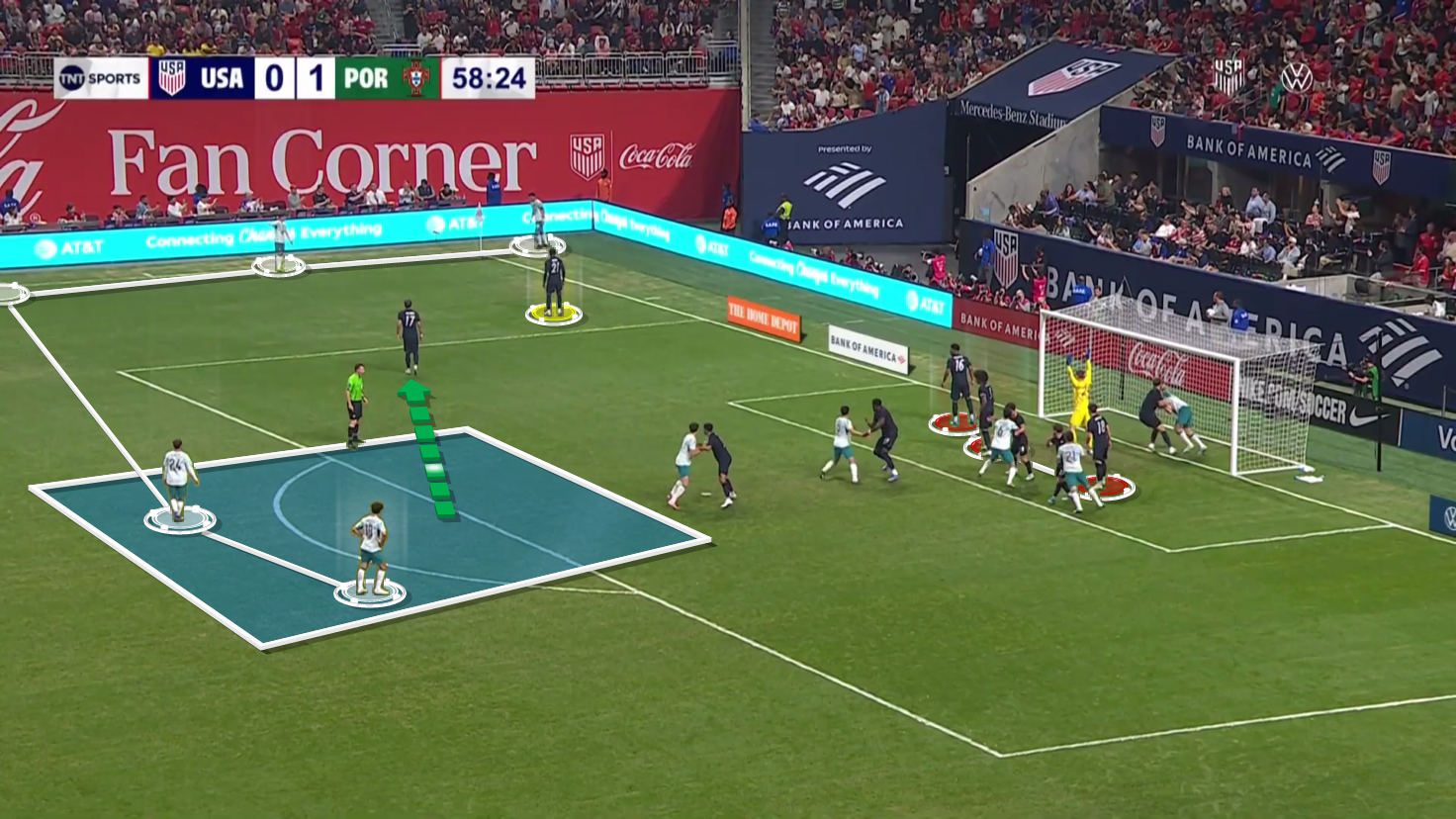
As shown in Figure 2 below, the edge of the box is free from defenders because the rebound defender moves to help against Portugal's overload near the taker, with two short options (one is out of shot).
The five attackers have a clear role to drag their man markers far away from the edge of the box.
Three players (white) go to the near post out of the goalmouth to open the goal for the shot from the edge of the box, while two players (yellow) move to the last two zonal defenders, blocking them to prevent them (or slow down them) from going out to the edge of the box after realising the idea when the ball is in the air.
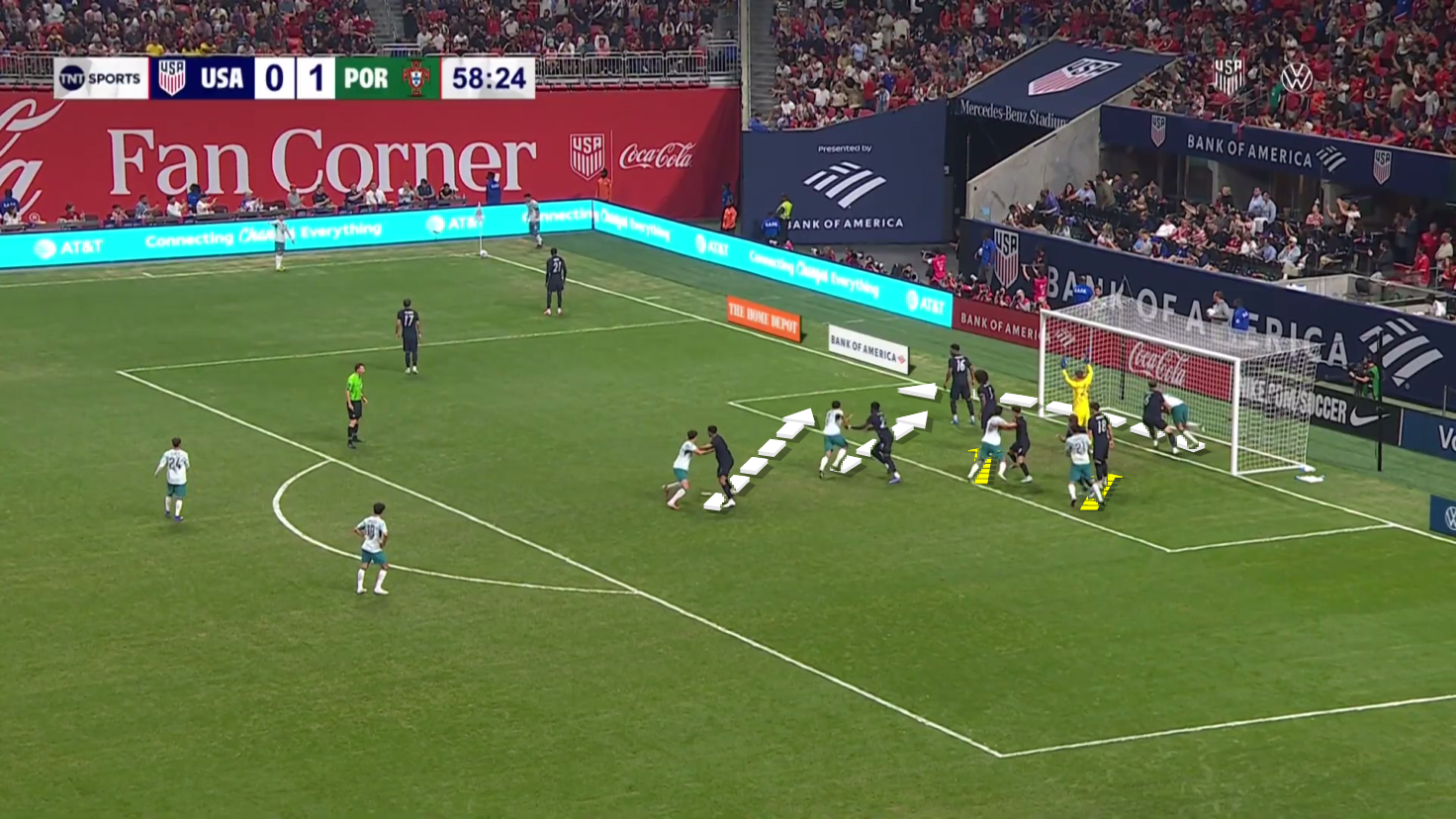
Figure three below shows the two blocks (yellow), and the decoy runs clearly, which totally frees the edge of the box.
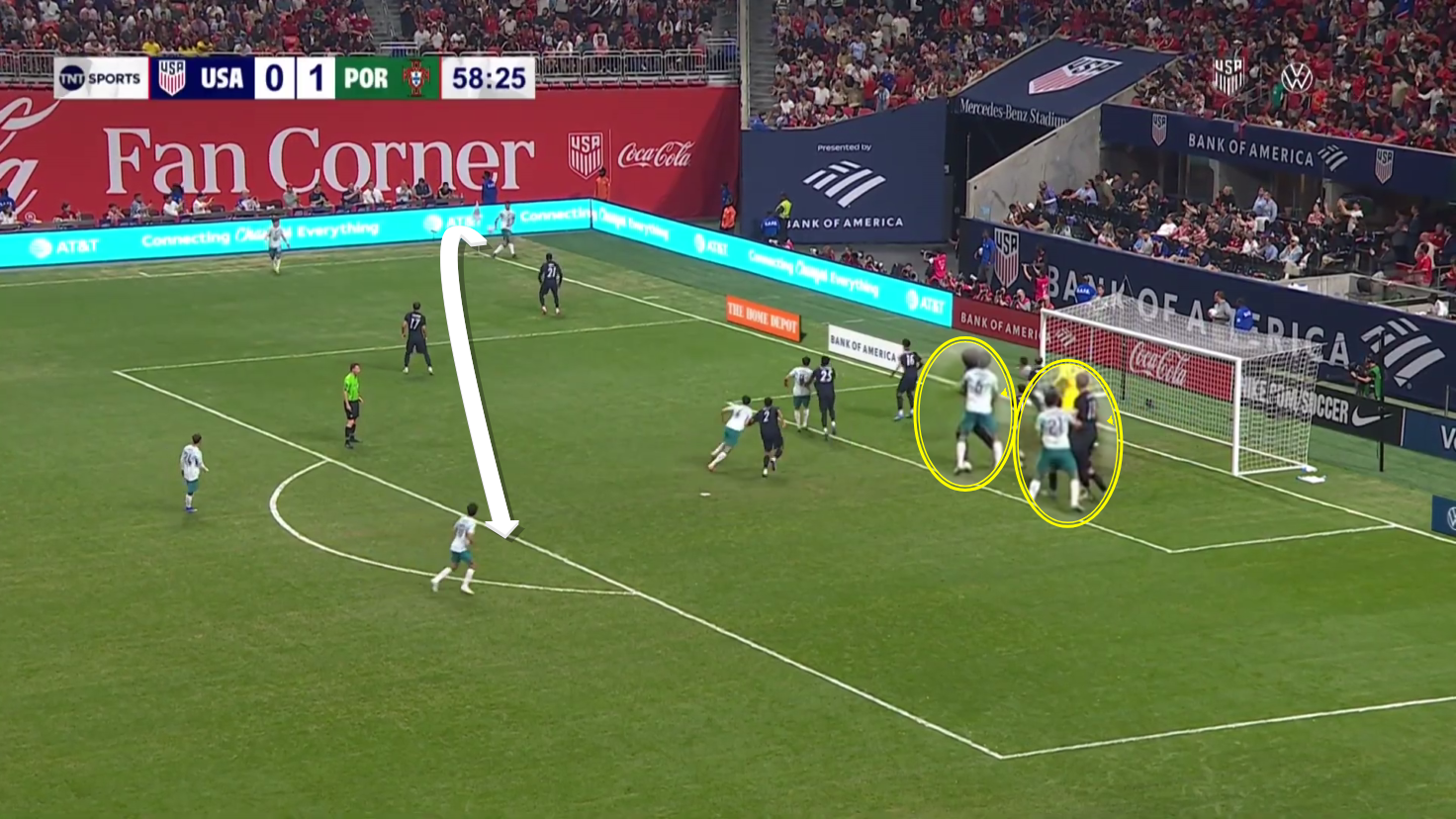
In Figure 4 below, João Félix can easily get the ball and shoot it into the net, scoring a goal against the USA.
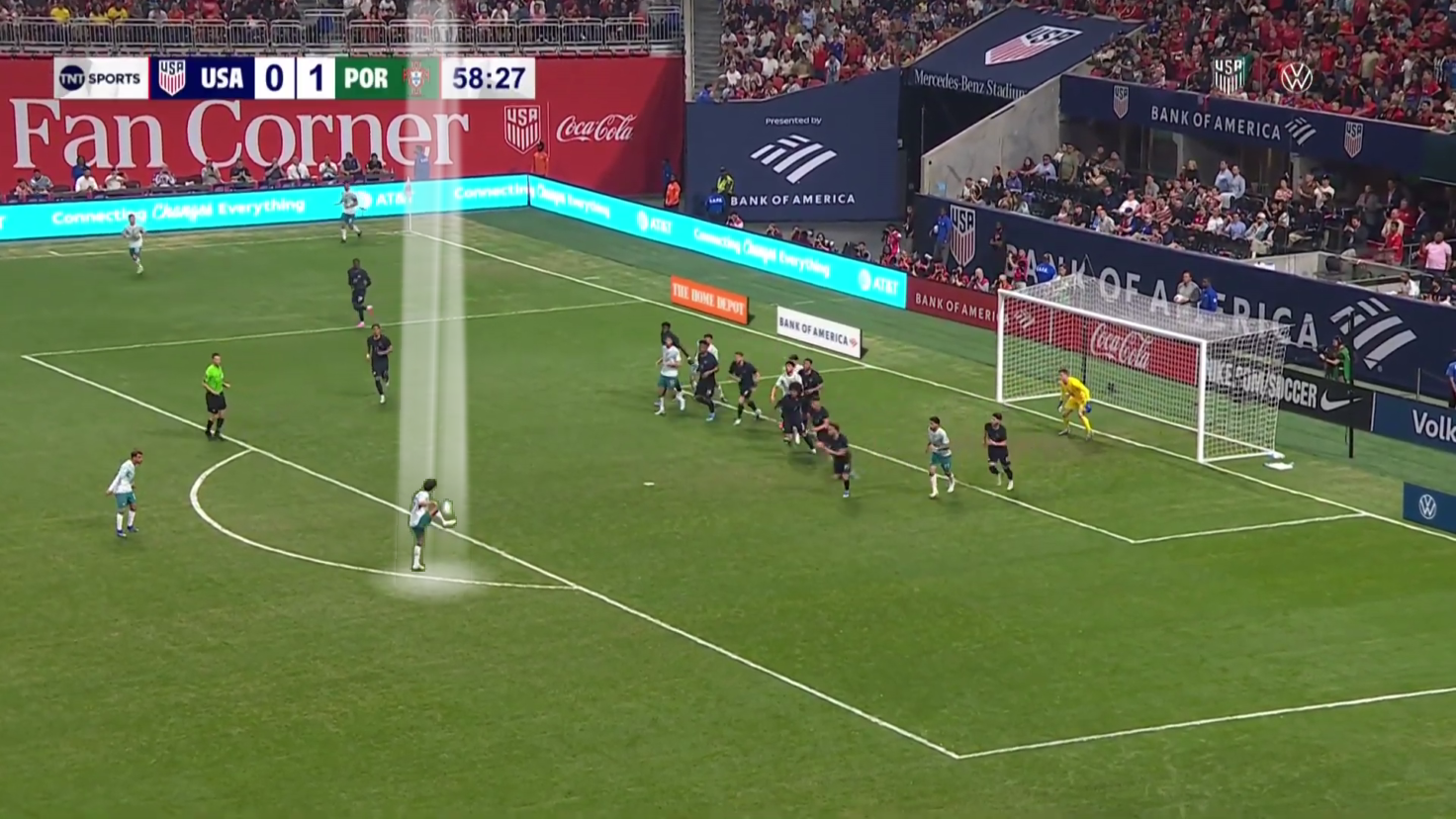
In this idea, they vary it by putting more players inside the box (usually seven), asking one of them to suddenly become the taker while the taker becomes the first-option defender, making them unpredictable by playing it short before sending the cross to the rebound player.
As shown in Figure 5, Spain defend with three zonal defenders (red), Nico Williams (yellow), who is ready to defend short corners, Lamine Yamal (green), who is ready to defend the edge of the box.
The rest are man-markers.
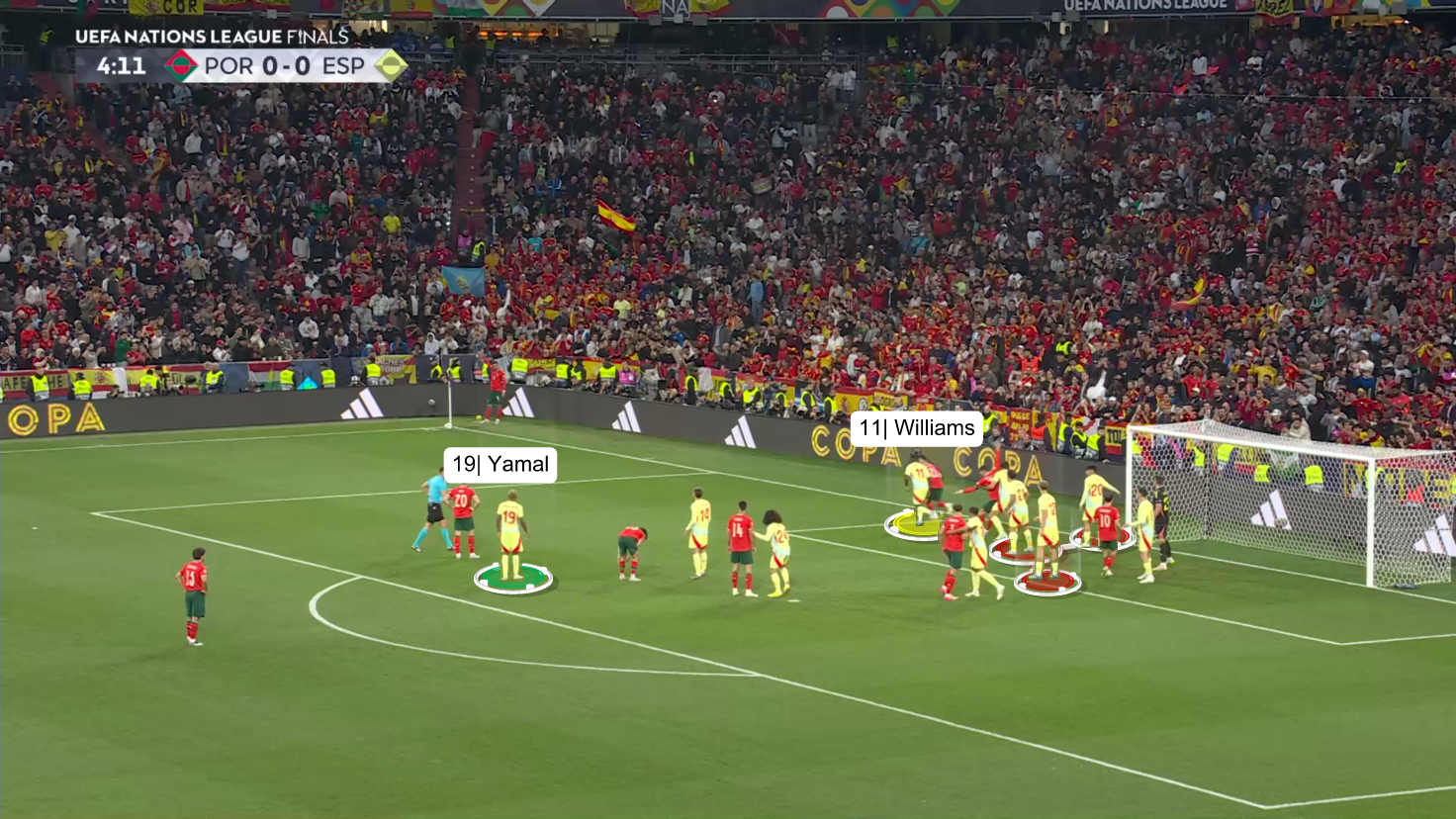
In Figure 6, this setup evacuates the short-corner area from the beginning, so a player can go toward the ball.
He doesn't receive the ball, but slows down, acting as if he will be the taker and then pass the ball to the first taker, who has become the short option now.
In this idea, Austin MacPhee usually puts a famous targeted player (Cristiano Ronaldo), who is great in aerial duels, on the near post to take the attention of the defence, preventing any of the zonal defenders (red) from going to help in short corners, which forces the rebound defender to be the one who goes to help, evacuating the rebound area.
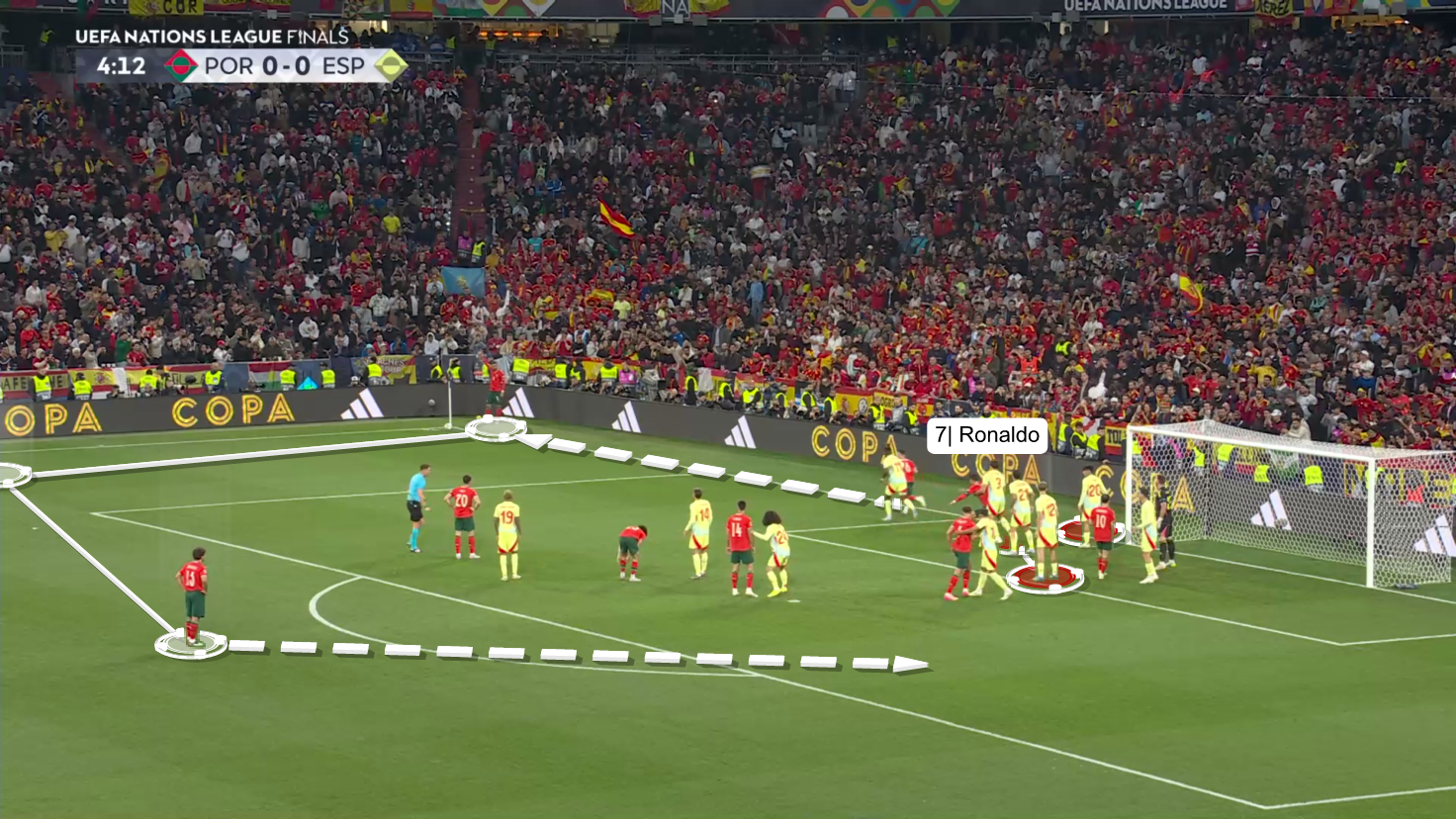
In Figure 7 below, Yamal is forced to leave the rebound area to help against short corners, leaving the real targeted player (white arrow) free on the edge of the box, while the first zonal defender is hesitant about whether to help or not because of Ronaldo.
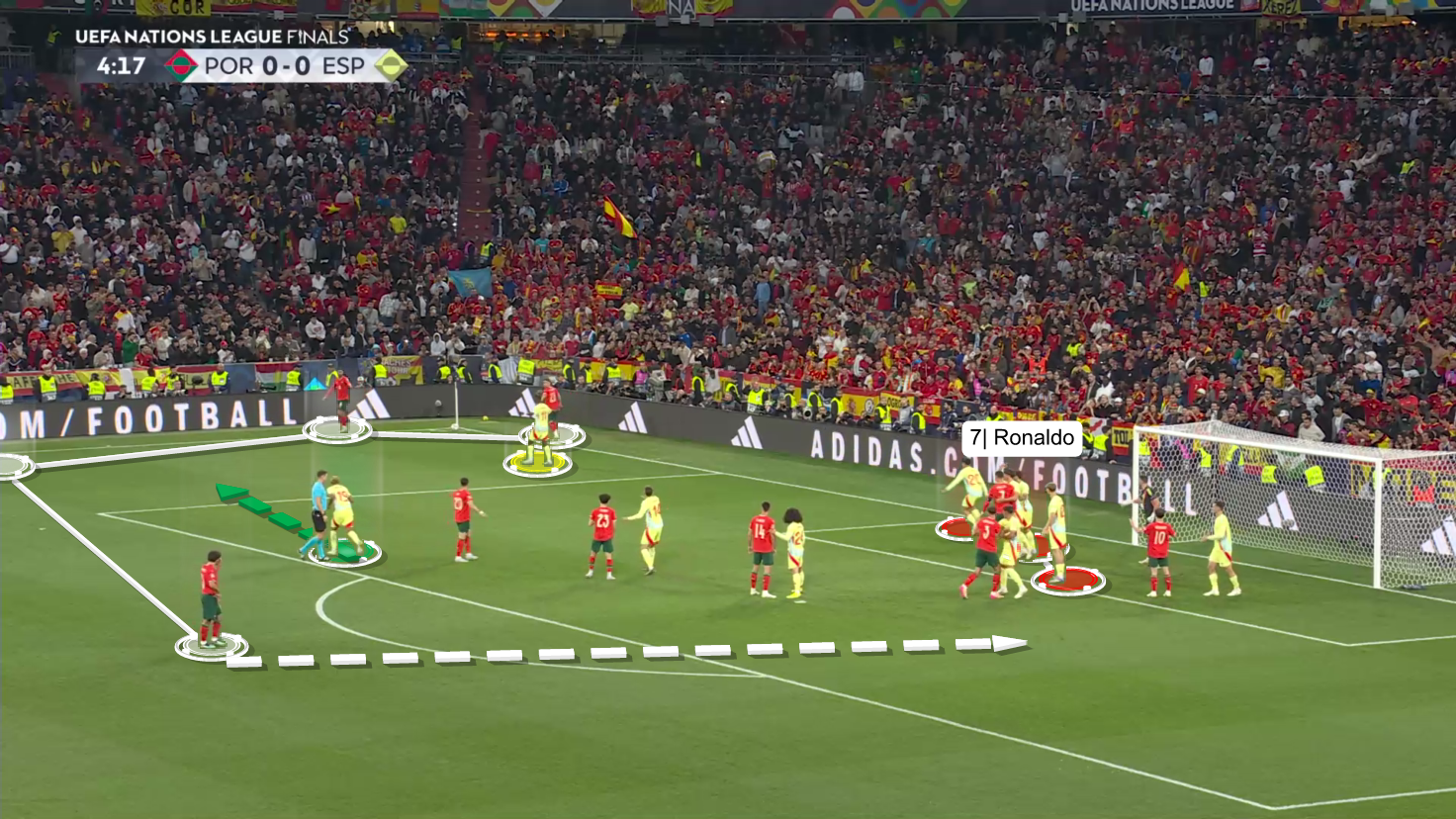
As shown in Figure 8, Portugal have a 3v2 (one out of shot) numerical superiority in the short-corner area.
They also have more time to send the cross by asking one of the attackers inside the box to come in as the new taker, which gives the first taker more time to receive the ball and send the cross to the edge-of-the-box player, who is now free to attack.
Obsessed with the details, Austin MacPhee asks two players from the box (green) to go back to the edge of the box to be the new rebound players who are ready for the rebound, preventing any counterattacks.
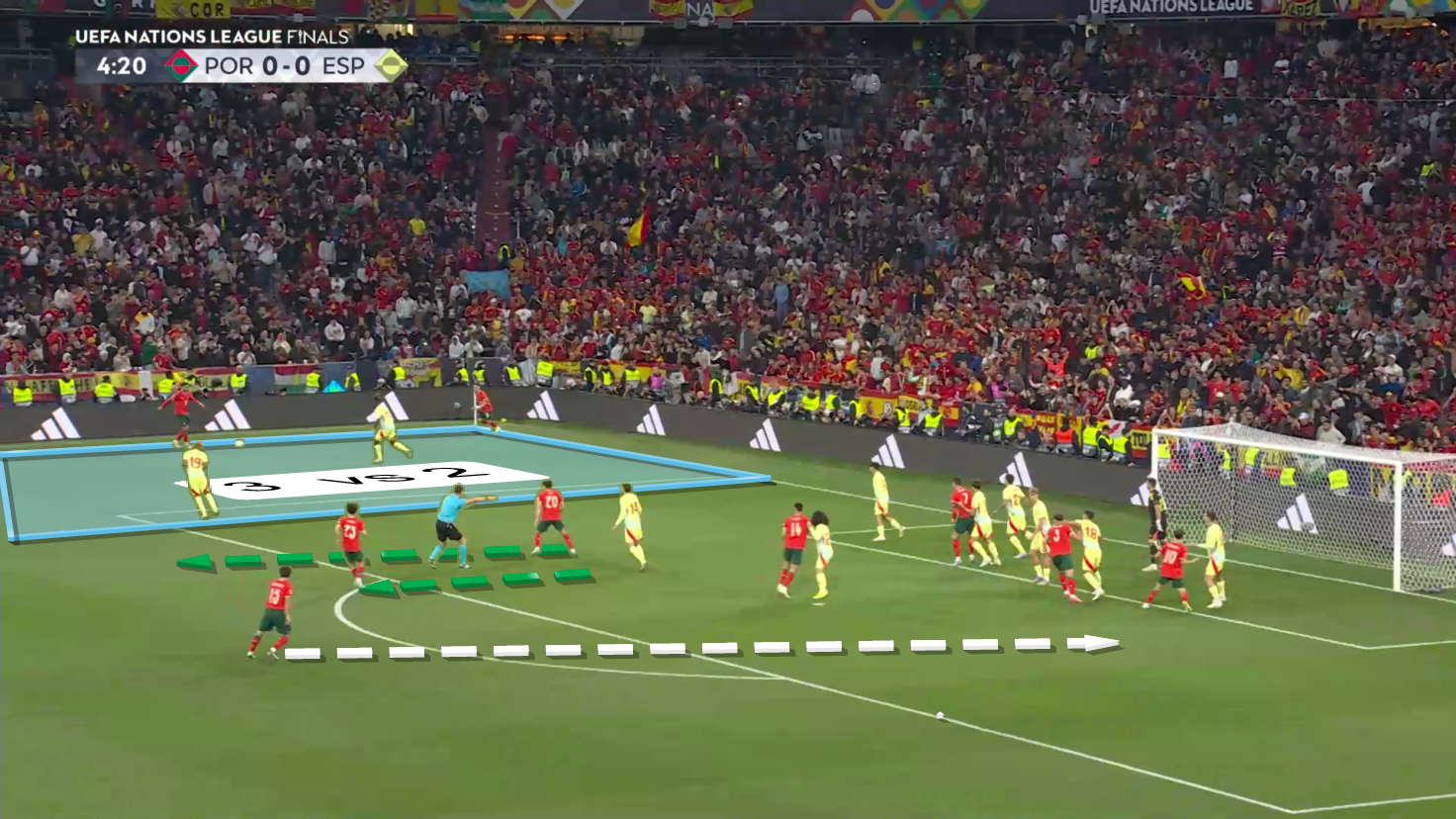
As shown in Figure 9 below, the rest of the plan looks like the previous example, asking the two last players to block the defenders in the middle and on the far post (yellow), preventing them from going out to the real targeted player (white) coming from the edge of the box.
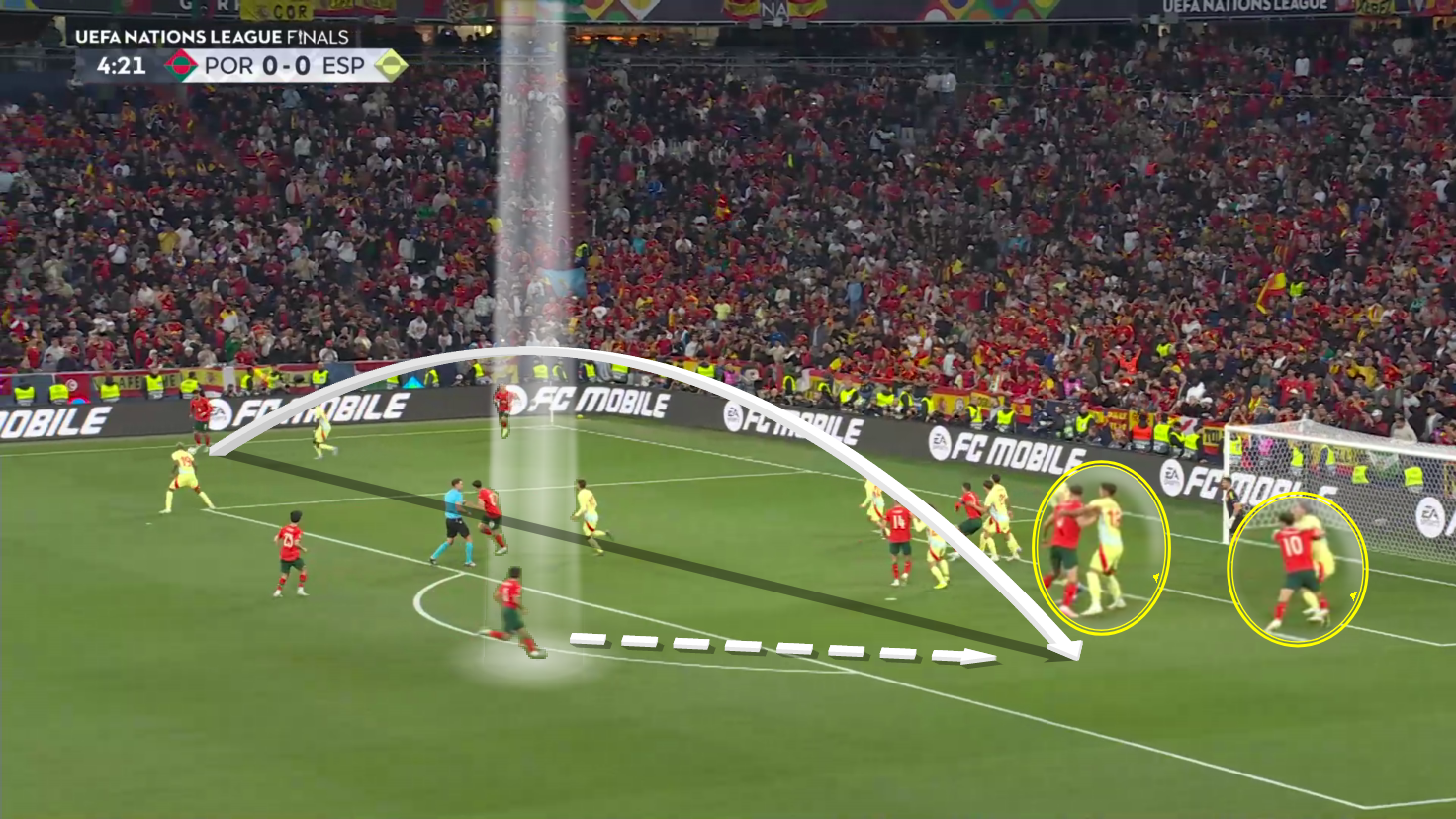
As shown in Figure 10 below, the cross isn't accurate, but the last blocker passes the ball back to the targeted player, ending with a dangerous shot near the post.
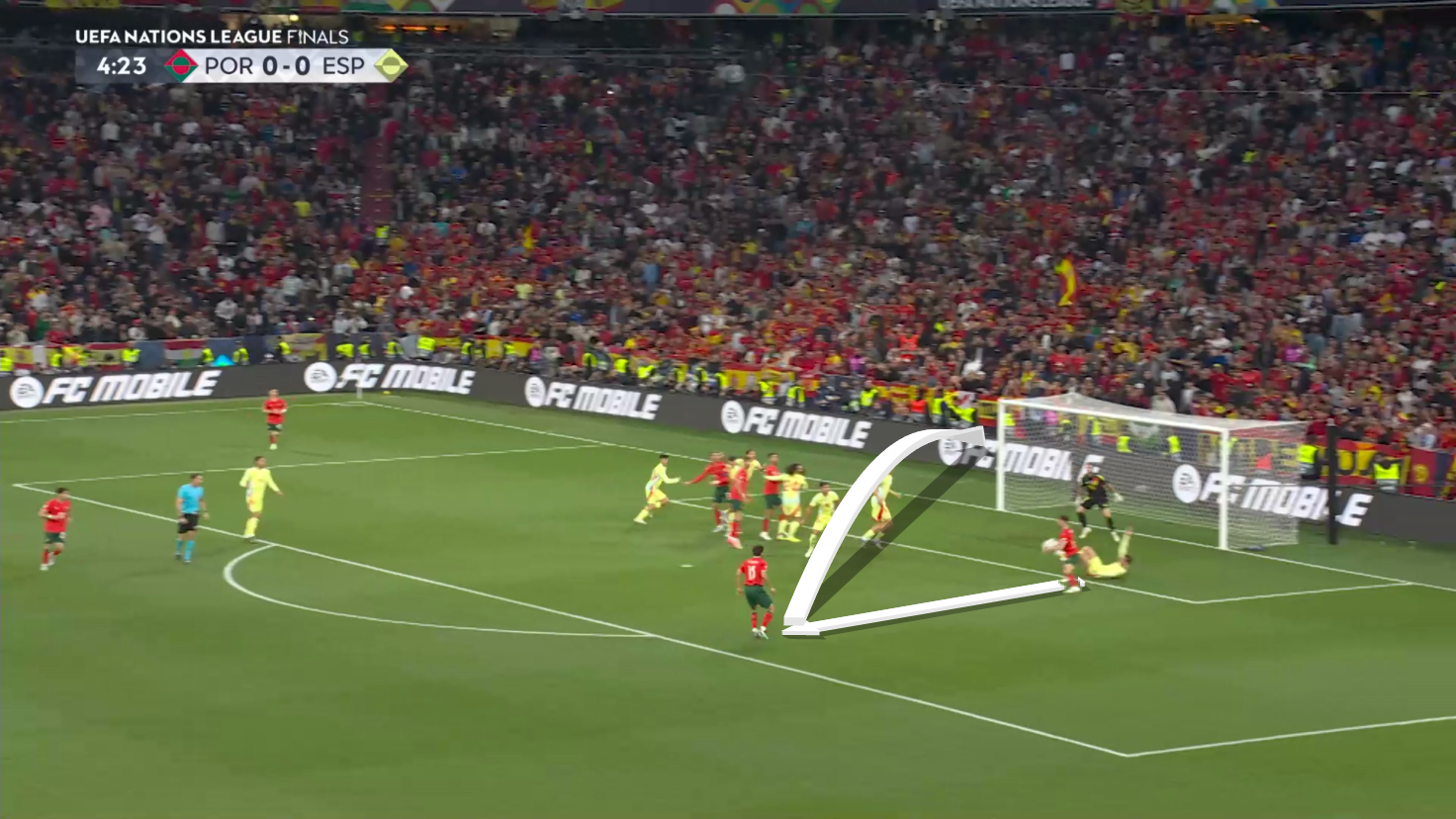
Austin MacPhee Short Corners Tactics
Having variations and counter-ideas has become the most important factor in a successful set-piece philosophy, because defending teams have become more aware of your previous ideas and analyse them extensively before the game.
Portugal are ready when the opponent is protecting the rebound zone well.
Using many short-corner routines poses a dilemma for the opponent: either defending the rebound zone, not leaving it, and allowing them to perform the short-corner tricks, or defending short corners well, leaving the rebound zone empty (as in the previous examples).
As in Figure 11 below, Mexico defend with two zonal defenders (red), a short-option defender (yellow), a rebound defender standing centrally to protect the edge of the box, and the rest are man-markers.
Portugal have a setup of five players in the box, two short-option players, and two rebound players.
When the opponent decides to protect the rebound area, Portugal can exploit the numerical superiority near the taker.
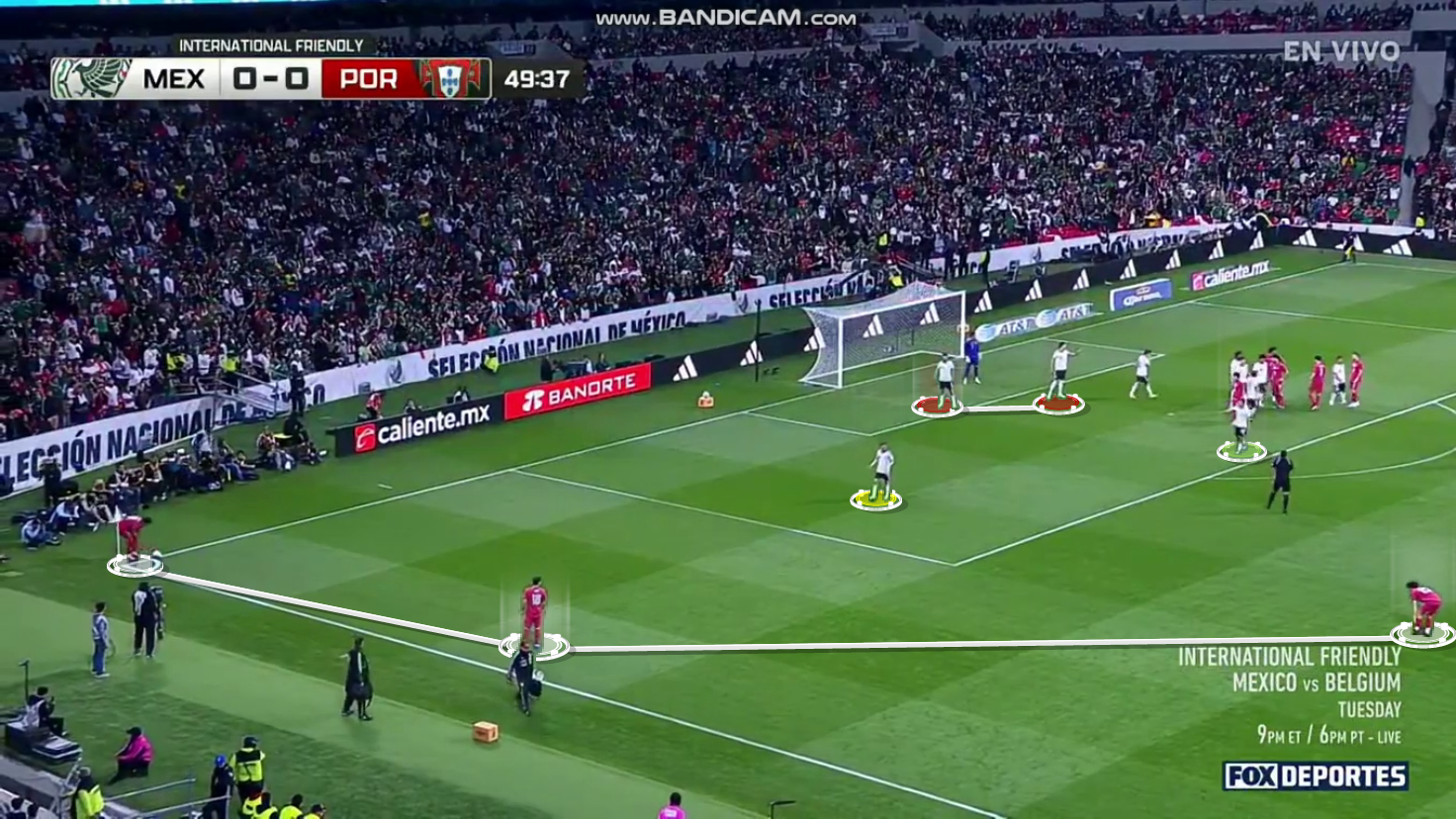
As shown in Figure 12 below, the taker decides to pass the ball, and then, the rebound defender decides to help, but he is late, and it will also be a 3v2 situation.
The taker passes the ball to the first short-option player, who passes it to the second one and runs inside to receive the ball or drag the defender with him, freeing the taker down the line, which happened.
Looking into the box, late runners like the highlighted player in yellow are so dangerous when the ball rolls because the two zonal defenders focus on pushing up and, on seeing the ball, don't see him at all.
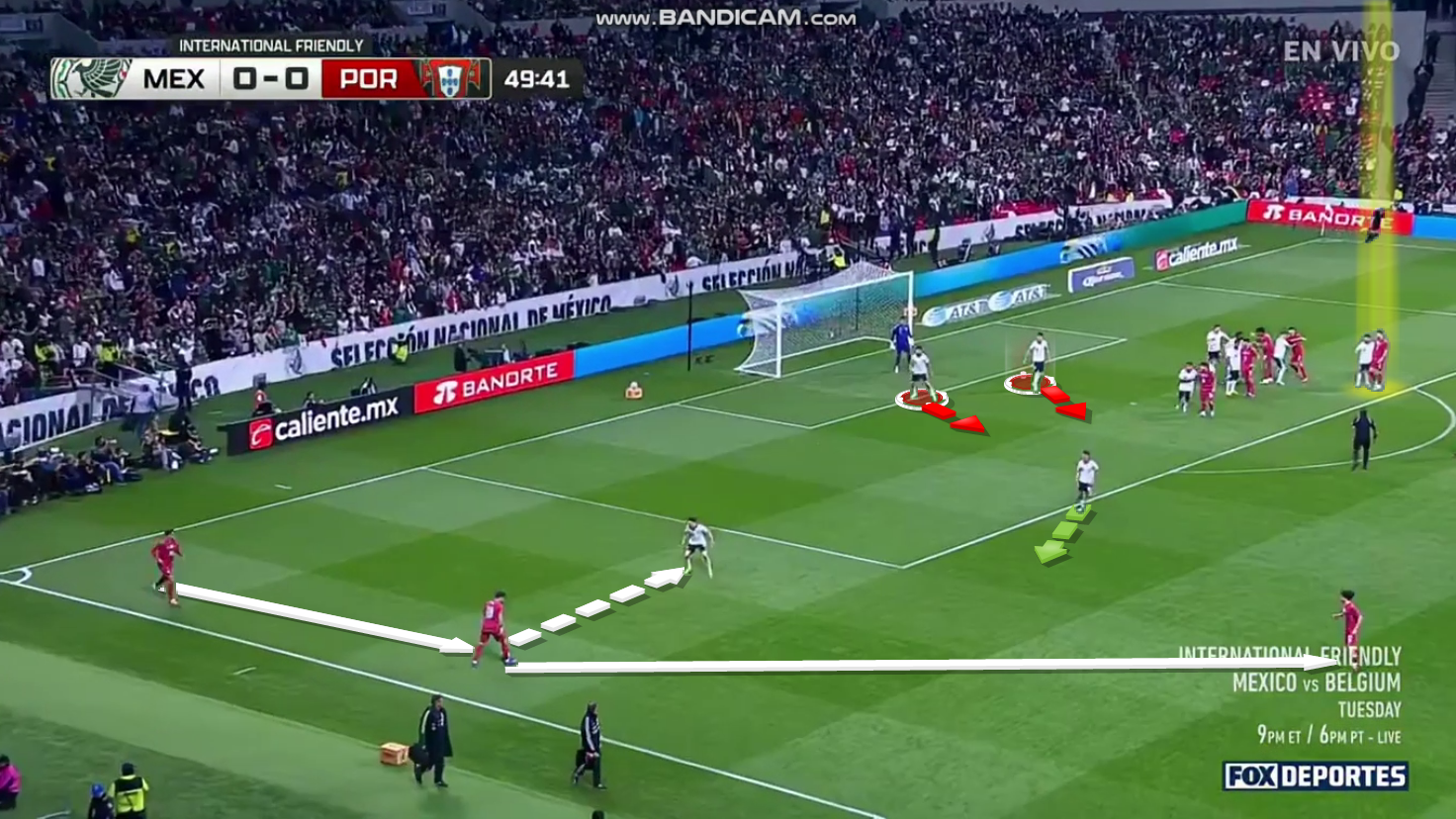
The 3v2 situation is clear in Figure 13, where Portugal can also use their rebound players on the right as an outlet when needed.
Still, the plan can be easily carried out by passing the ball back to the taker who has the time and pace to send a dangerous cross.
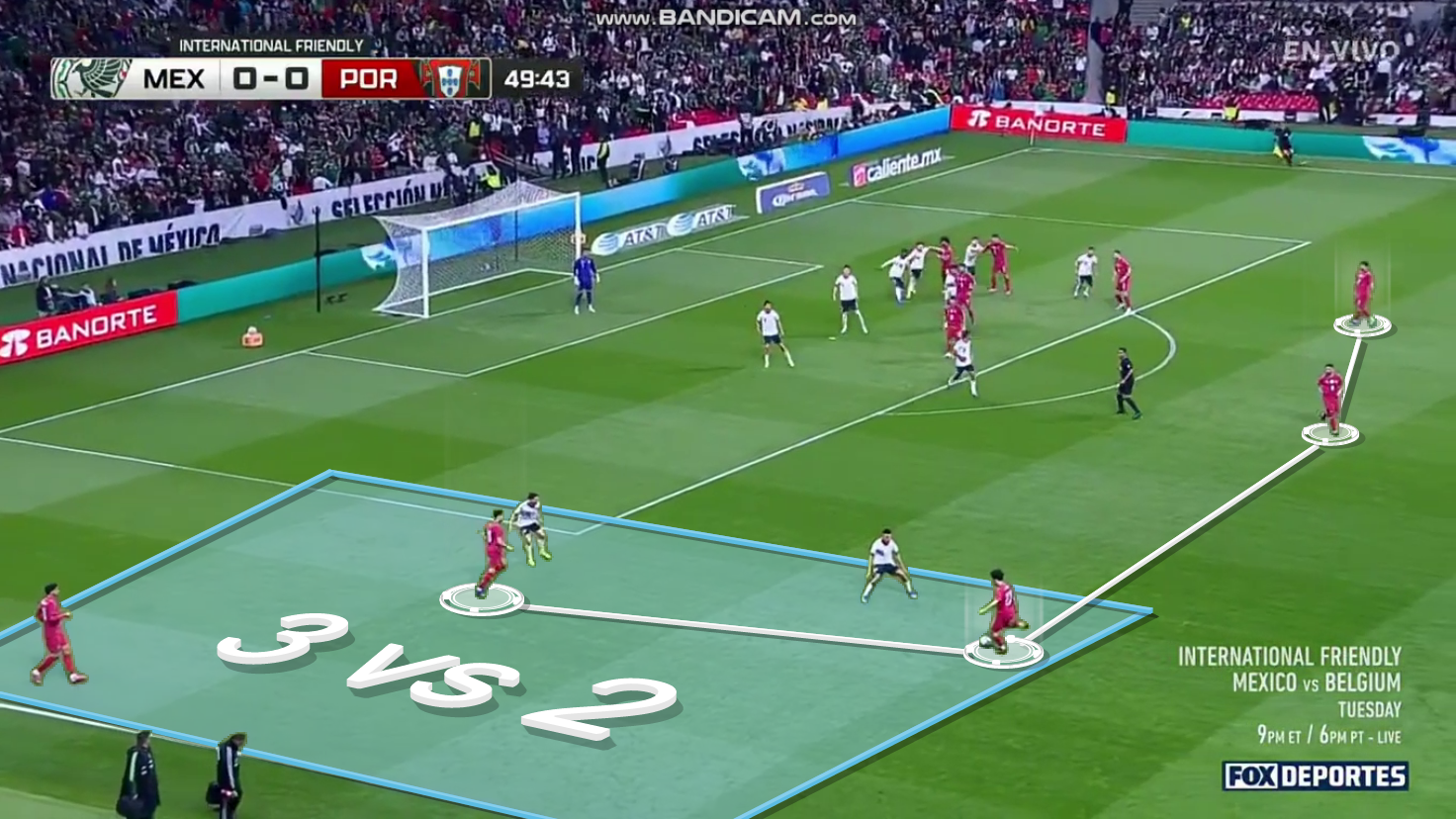
In Figure 14, the plan is clear: we can add another benefit for short corners by freeing some players because a man marker leaves his man to defend the rebound area.
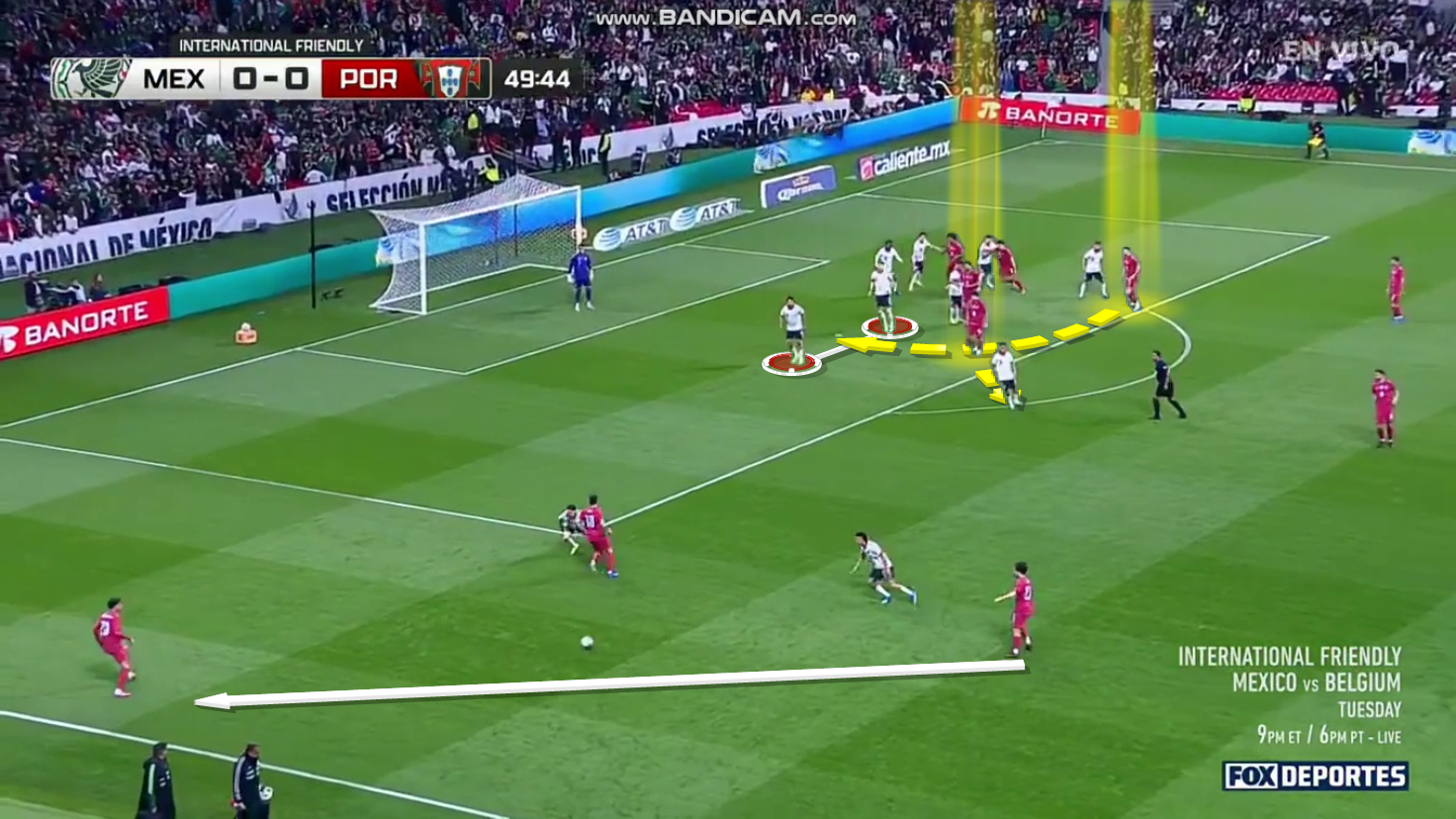
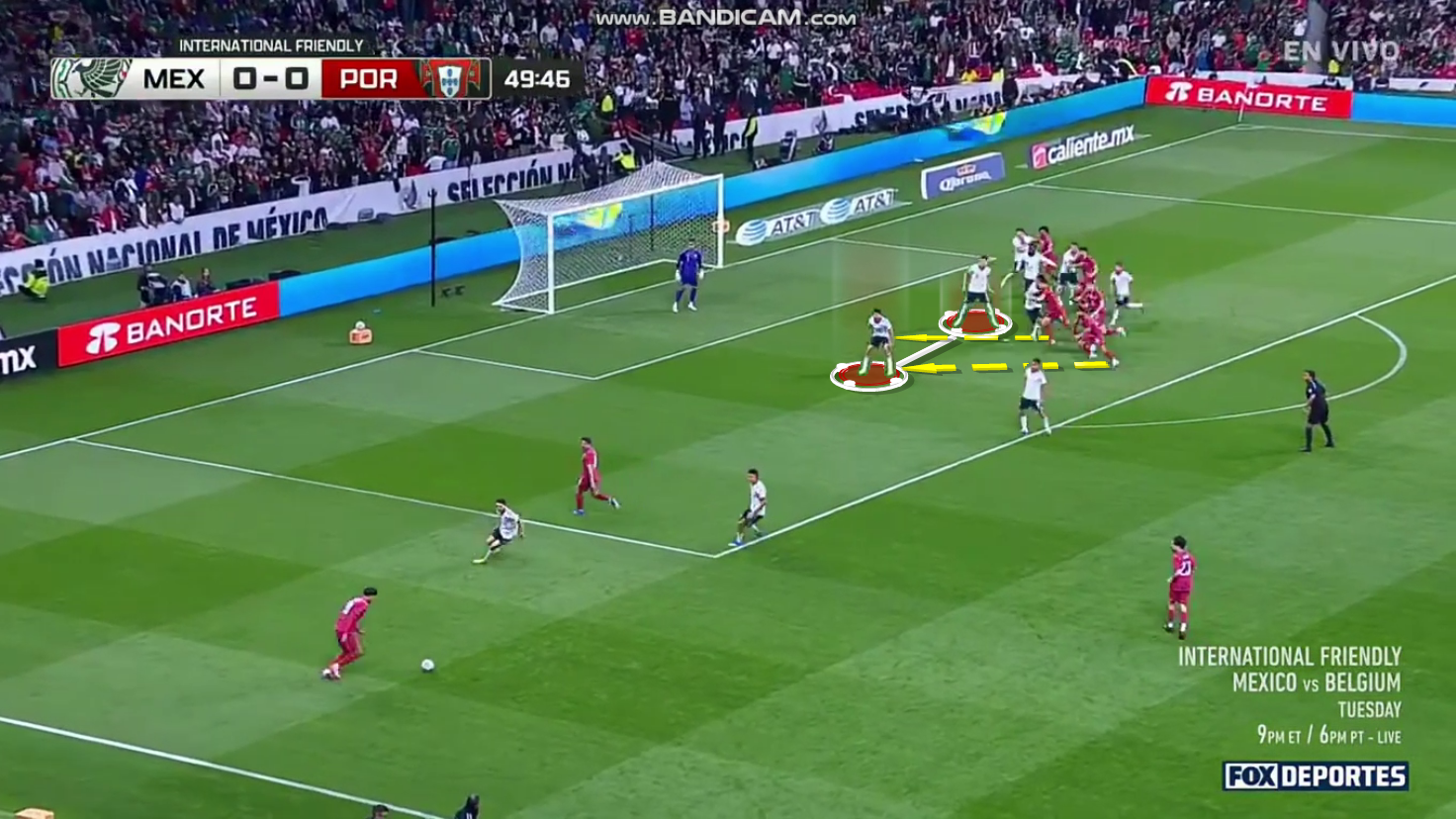
In Figure 15, we can see the late runner and the free runner take off between the two zonal defenders coming from their blind side to target the near post, while the far post is also empty of zonal defenders.
Austin MacPhee Direct Crossing Tactics
As a dangerous team, you should also have great ideas in direct crosses to free your normal targeted player.