
Luís Castro Tactics At Levante UD 2025/2026: Functional Football In La Liga Relegation Battle – Tactical Analysis

The recent trajectory of Levante UD in the 2025/2026 La Liga campaign suggests a team that has finally come to terms with the grim reality of a relegation battle.
After months of porous defensive displays and an identity crisis that saw them languishing in the bottom two, Granotas have managed to string together a decent sequence of results, most notably the 1-0 victory over Getafe and a vital 2-0 win over Sevilla.
This is not the football of a side destined for European contention, nor is it a display of elite tactical innovation.
Instead, it is the work of a group that has embraced the crude mechanics of survival.
Under the leadership of Luís Castro, who arrived mid-season to stabilise a sinking ship, Granotas have traded aesthetic fluidity for a rugged, low-risk approach designed to scrape points from the jaws of a catastrophic season.
What we are witnessing at the Ciutat de València is a deconstruction of the more expansive ideas that failed earlier in the term.
Luís Castro tactics have pivoted toward a brand of functional football that prioritises volume over variety.
There is no attempt here to outplay the opposition through intricate rotations or high-velocity verticality.
Rather, Levante tactics focus on winning the small, ugly battles that define the bottom of the table.
This tactical analysis and head coach analysis will examine the three pragmatic pillars that have fueled this recent surge: the implementation of a disciplined, safety-first midfield press, a renewed commitment to high-volume crossing as a primary offensive tool, and the opportunistic finishing of Carlos Espí.
This is a story of a team finding a way to stay afloat through sheer structural persistence and a refusal to be outworked in the dirty areas of the pitch.
Midfield Suffocation: The Low-Intensity Squeeze
The most significant shift in Levante’s recent form is the adoption of a much more disciplined midfield screen that prioritises horizontal compactness.
In the earlier parts of the season, Granotas were often caught in a tactical no man’s land, trying to press high without the recovery pace to handle the resulting space behind them.
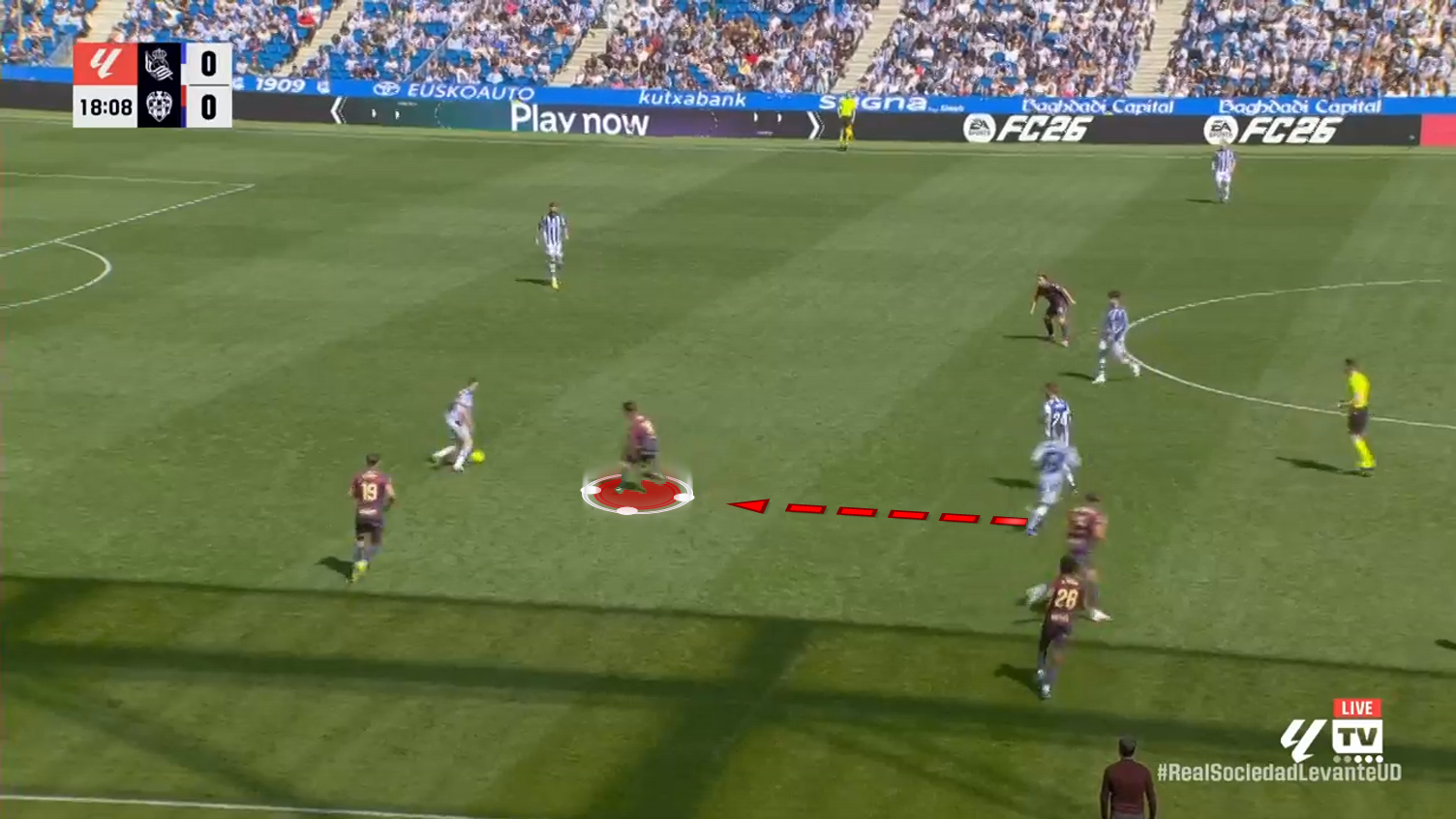
Luís Castro style of play has addressed this by dropping the engagement line into a mid-block that focuses on denying central passing lanes.
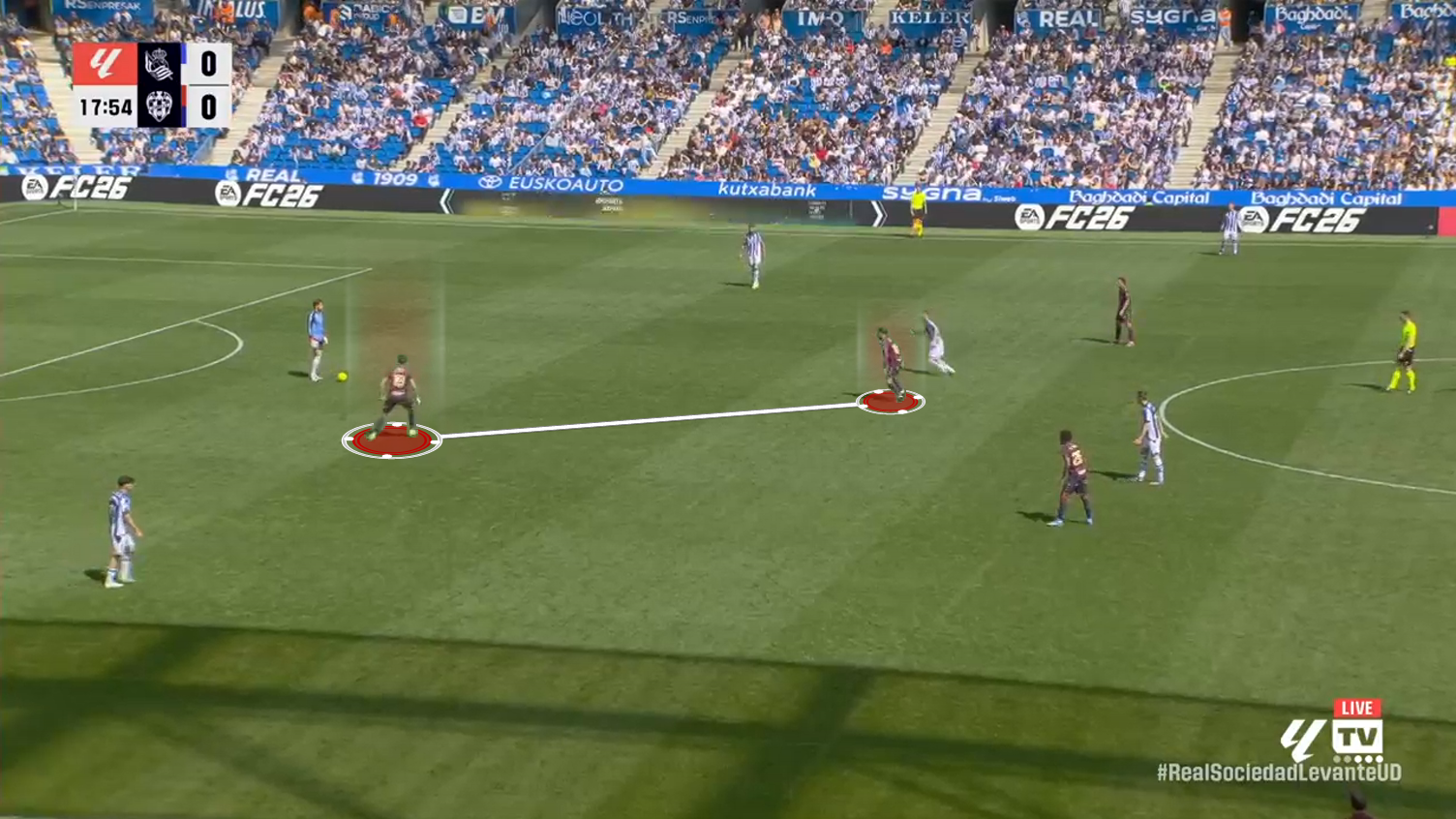
This is not an elite high press but rather a functional, reactive squeeze designed to force the opponent into wide areas where the touchline acts as an auxiliary defender.
Levante now operate in a 4-4-2 or 4-4-1-1 defensive shell that is remarkably narrow.
The two central midfielders are instructed to stay within the width of the penalty area, effectively daring the opposition to try and play through them.
When the ball enters the middle third, the nearest midfielder makes a conservative challenge, while the rest of the unit shifts to close off the immediate support options.
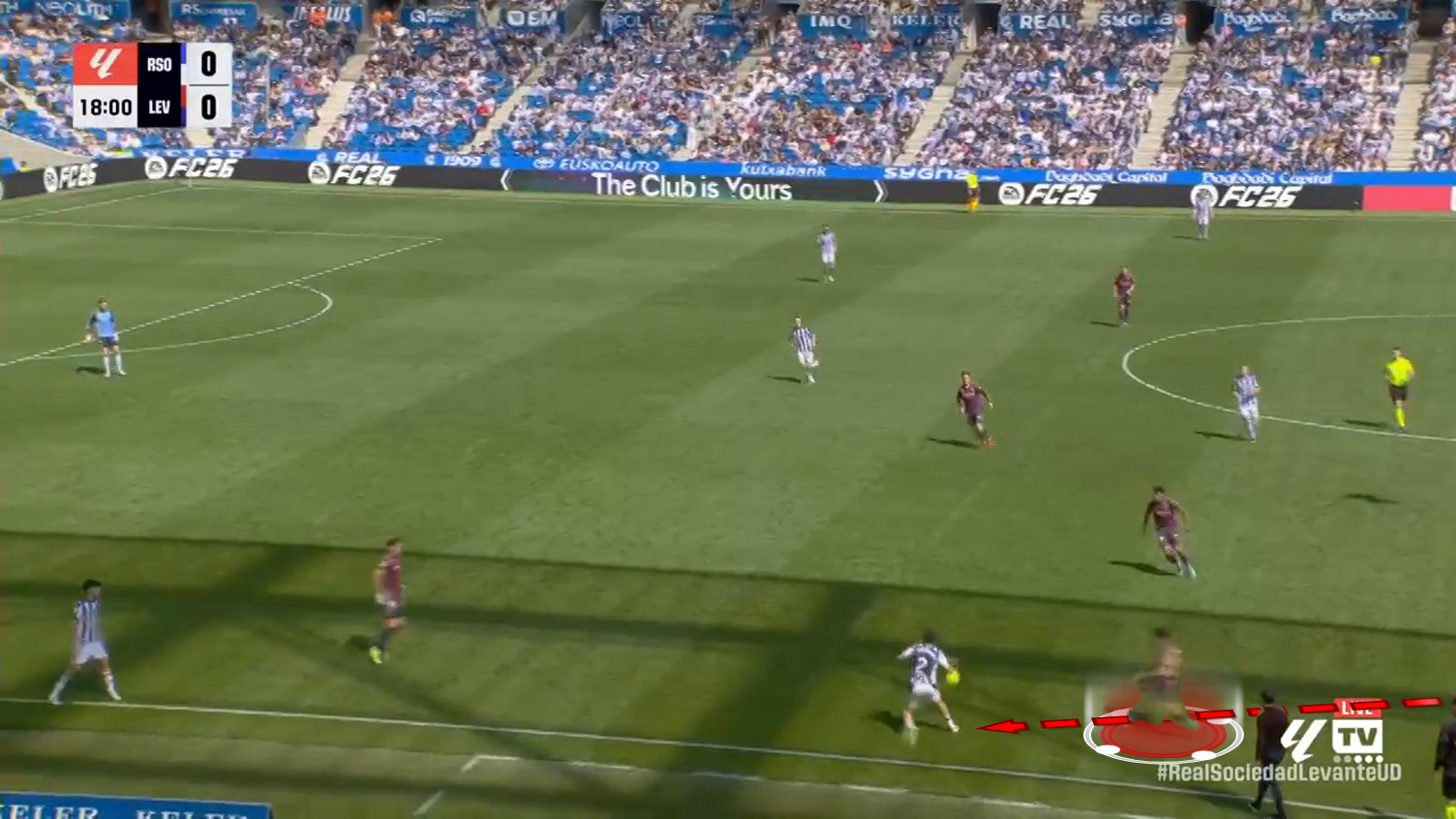
This approach was particularly effective in the 2-0 win over Sevilla, where the visitors were allowed to dominate possession in their own half but found the central corridors completely blocked whenever they tried to progress.
It is a frustrating way to play against, but for a team fighting for their lives, it is a necessary evil.
The success of this press relies on the physical labour of the wide players who must constantly track back to support the full-backs.
There is no room for creative luxury in this system.
Every player is tasked with maintaining the integrity of the block.
By funnelling the play wide, Levante reduce the frequency of high-probability central chances they concede.
While they still give up a significant number of shots, the quality of those shots has decreased as opponents are forced into low-percentage crosses from deep.
This is survivalism at its most basic: stop the bleeding in the centre and trust that the numbers in the box can handle the resulting debris.
It is not pretty, and it often results in long periods of territorial surrender, but for a side that was previously haemorrhaging goals, it is a tactical trade-off that is finally paying dividends.
Volume Over Variety: The Return To Aerial Bombardment
Offensively, Levante have abandoned the attempt to play through the lines in favour of a much more direct and predictable strategy.
There is a clear mandate to get the ball into the wide channels as quickly as possible and deliver crosses into the box with unrelenting frequency.
This is not a sophisticated strategy based on creating specific overloads; it is a volume-based approach that relies on the law of averages.
If you put enough balls into the mixer, the reasoning goes, the opposition will eventually make a mistake.