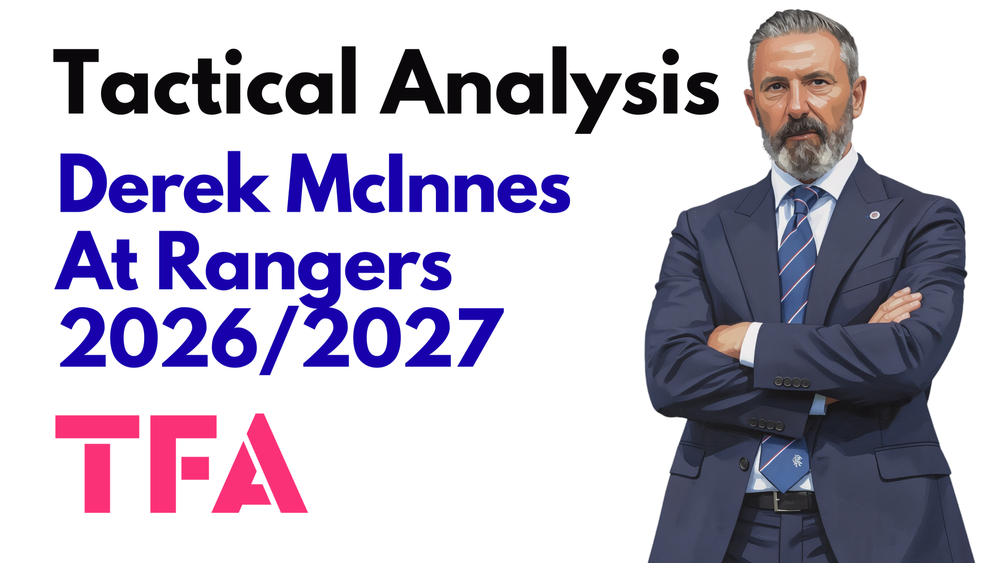
Scottish Premiership 2026/2027: How Rangers Found An Identity Under Derek McInnes Tactics While Celtic Lost Theirs - Tactical Analysis
Rangers beat Celtic twice in a week to seize Old Firm bragging rights. This tactical analysis examines Celtic’s structural and attacking problems under Martin O’Neill and how Derek McInnes has given Rangers a clear, direct and disciplined identity.

Celtic and Rangers form one of the fiercest rivalries in world football.
It's a game of football that goes beyond the game, with strong ties to religion and politics.
It's also a game of success.
These are Scotland's two most successful clubs.
Rangers were historically the much more successful side domestically, but have been surpassed by their neighbours to the east of the city in recent years, who also have a European Cup in 1967 to brag about.
While these teams play each other a minimum of four times a season (plus usually more in the League Cup and Scottish Cup), the impact of the game is never saturated.
The first one of the season is always especially anticipated as the two teams size each other up.
We've just had two Old Firm matches in the space of a week.
The first was at Ibrox in the League Cup.
The second was at Celtic Park in the Scottish Premiership.
Rangers, rather unexpectedly, came out winners in both.
Derek McInnes' side blew Celtic away at home, winning 3-0.
Martin O'Neill's side had the chance to take their revenge at home exactly a week later.
They were underwhelming again, and Rangers won 1-0.
This Old Firm tactical analysis examines the two games to see what we can learn from them, looking at a team growing into its identity, and another that struggles to have one.
Who Are Celtic Under Martin O'Neill Tactics 2026/2027?
The goal before an international break is almost always to never be the crisis club.
Going into an extended one, Celtic are exactly that.
Despite not qualifying for the UEFA Champions League in extraordinary circumstances, they had won every game so far going into the first derby fixture.
Coming out of it, they've lost three massive games in the space of seven days (the two versus Rangers and 3-1 at home to Ferencvárosi in their UEFA Europa League opener).
So what has gone wrong?
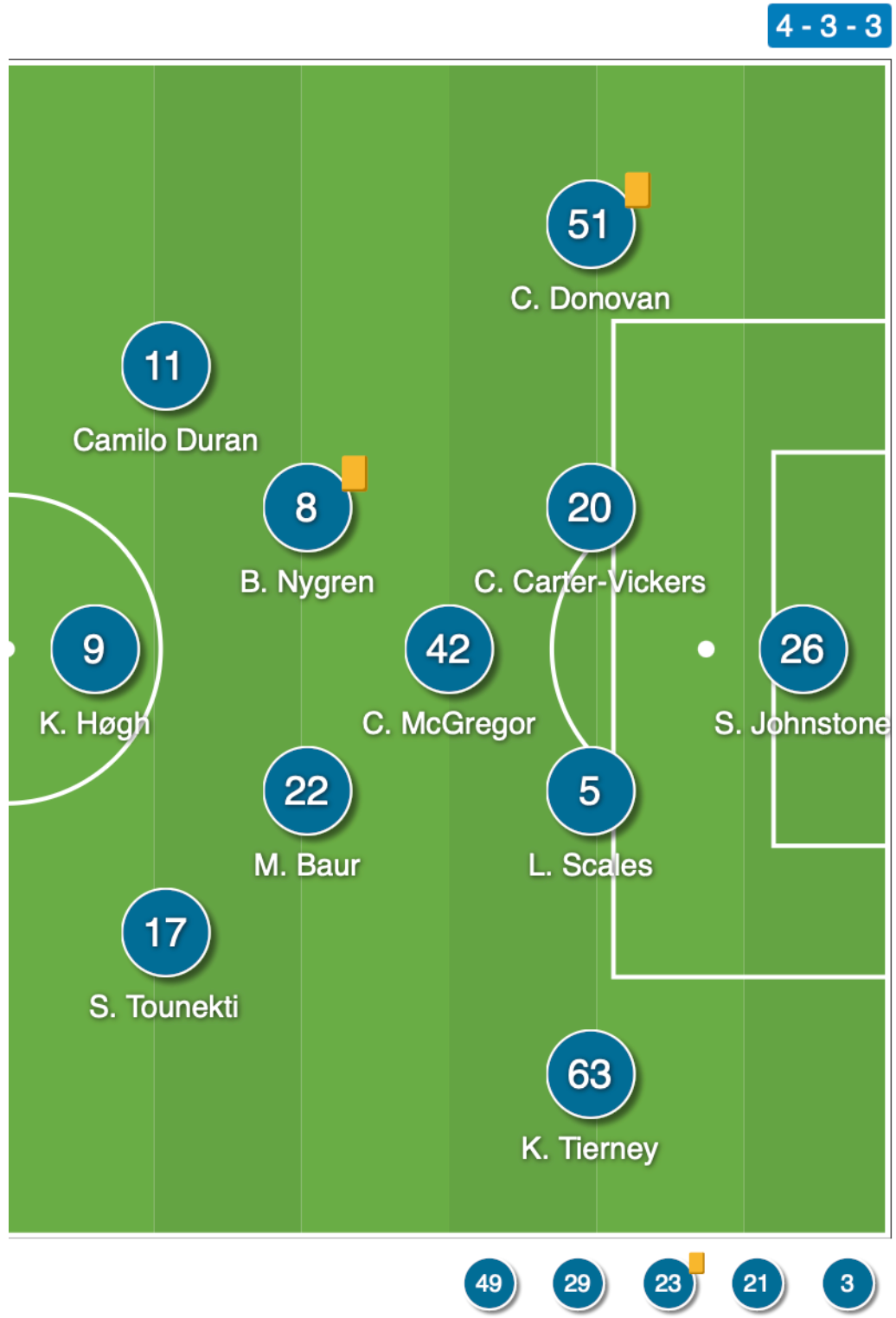
Celtic lined up in their usual shape in the first game, a 4-2-3-1/4-3-3.
It's the formation that they had used in every game so far this season.
Celtic Lineup Vs Rangers League Cup 2026/2027
The plan here is fairly simple.
You have your two central defenders and two natural full-backs who look to add width to the attacks and get up and down the pitch.
Mika Baur will drop next to Callum McGregor to form a double pivot, and Benjamin Nygren will look to join a four-man attack.
The attack's focal point is Kasper Høgh, with Camilo Durán playing off the left but in a free role.
Sebastian Tounetki, on the lef,t is a much more natural winger who will look to take on his man.
Celtic dominate possession in nearly every game they play (usually around 60%) and use their talent advantage to suppress their opponents.
That didn't work at all in the first game.
Celtic were unable to dominate possession and wear down their opponent.
A lot of this was poor individual performances; sloppy passing and poor decision-making gave easy turnovers to Rangers.
It also badly exposed the lack of a cohesive plan from the coaching staff.
Celtic had just 44% of the ball.
They had just four shots in the entire game, despite conceding fairly early on.
The freedom that they had been given didn't work.
When that doesn't work, their out-of-possession vulnerabilities are even more prevalent.
Take Rangers' first goal in the 3-0.
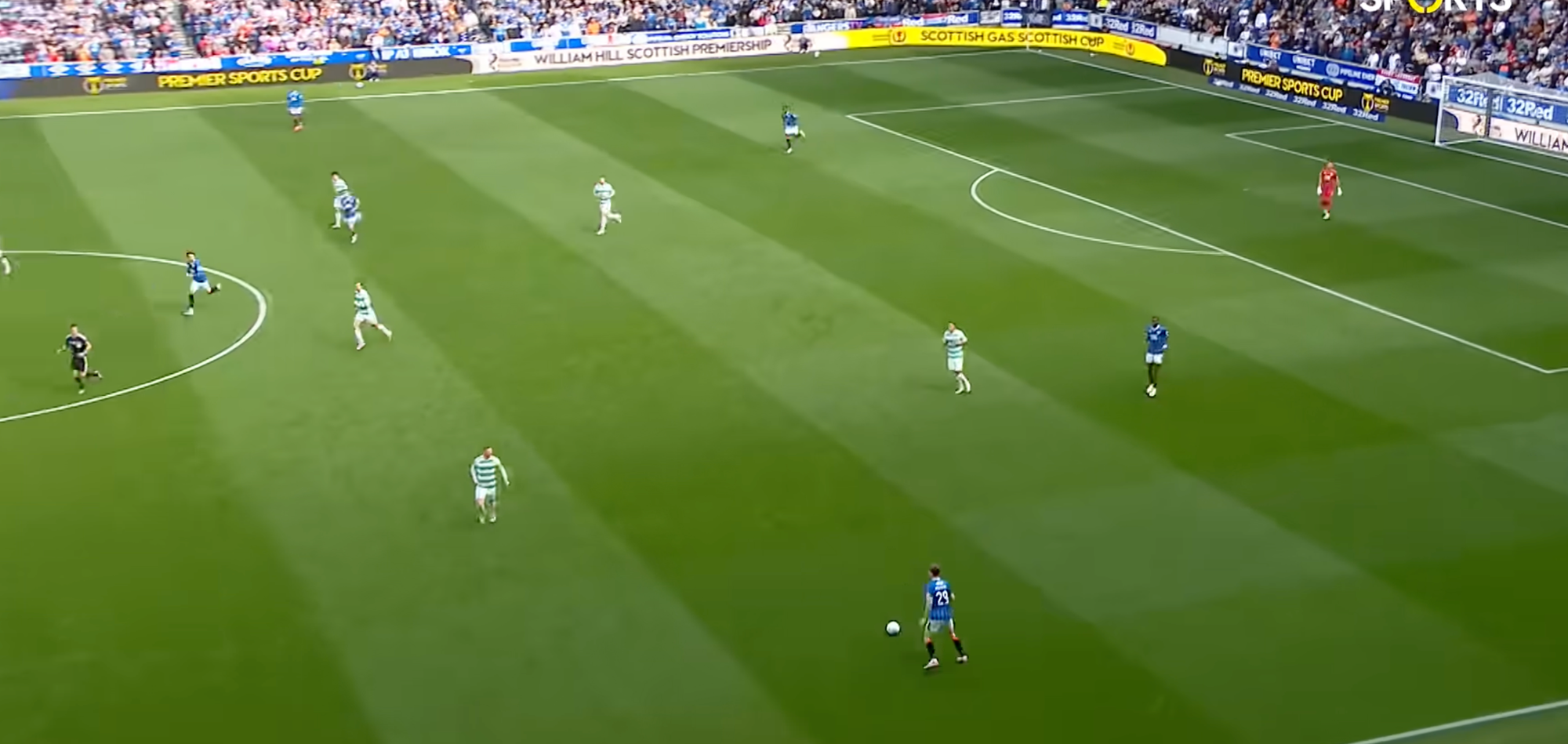
Celtic have attacked and turned the ball over.
Durán and Høgh are still pushed up, but McGregor, who is not very mobile, has been pulled out into a wide area.
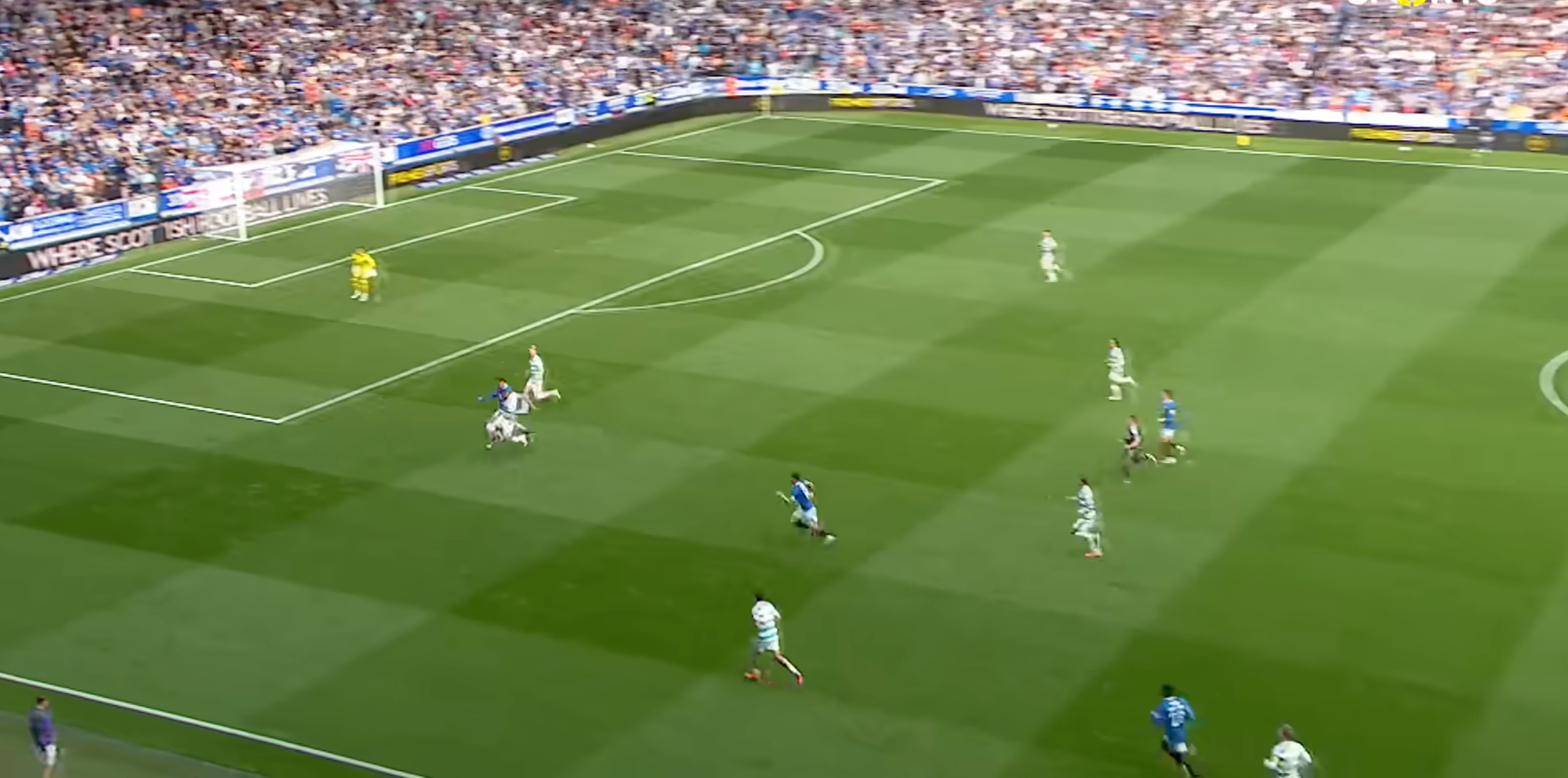
As a long ball is played up, both of Celtic's central defenders have been dragged out wide by one Rangers player, leaving a vast amount of space between Liam Scales and Kieran Tierney.
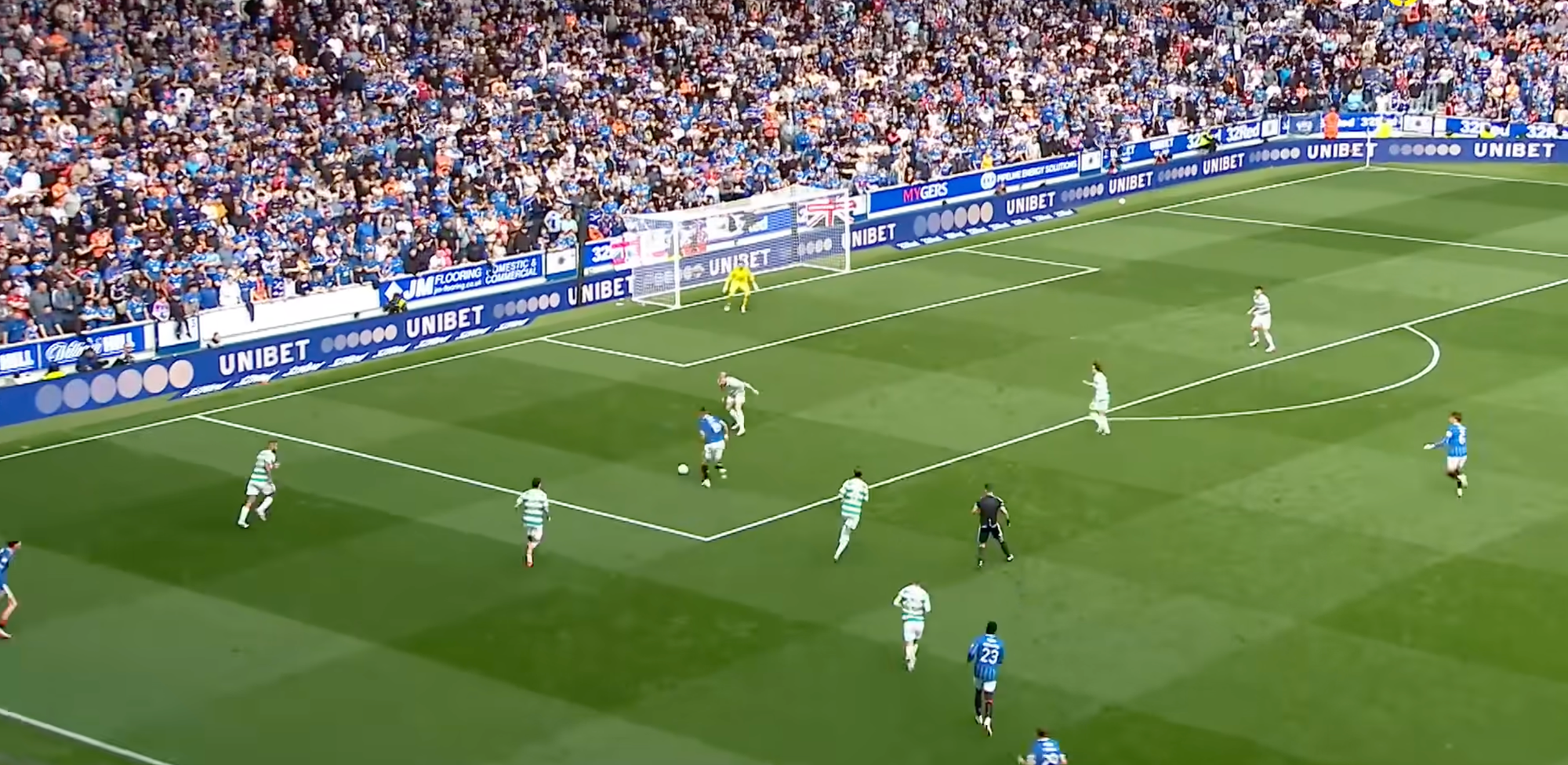
That leaves Rangers runners with space to exploit, and as Celtic scramble to get back, it opens up space on the edge of the D.
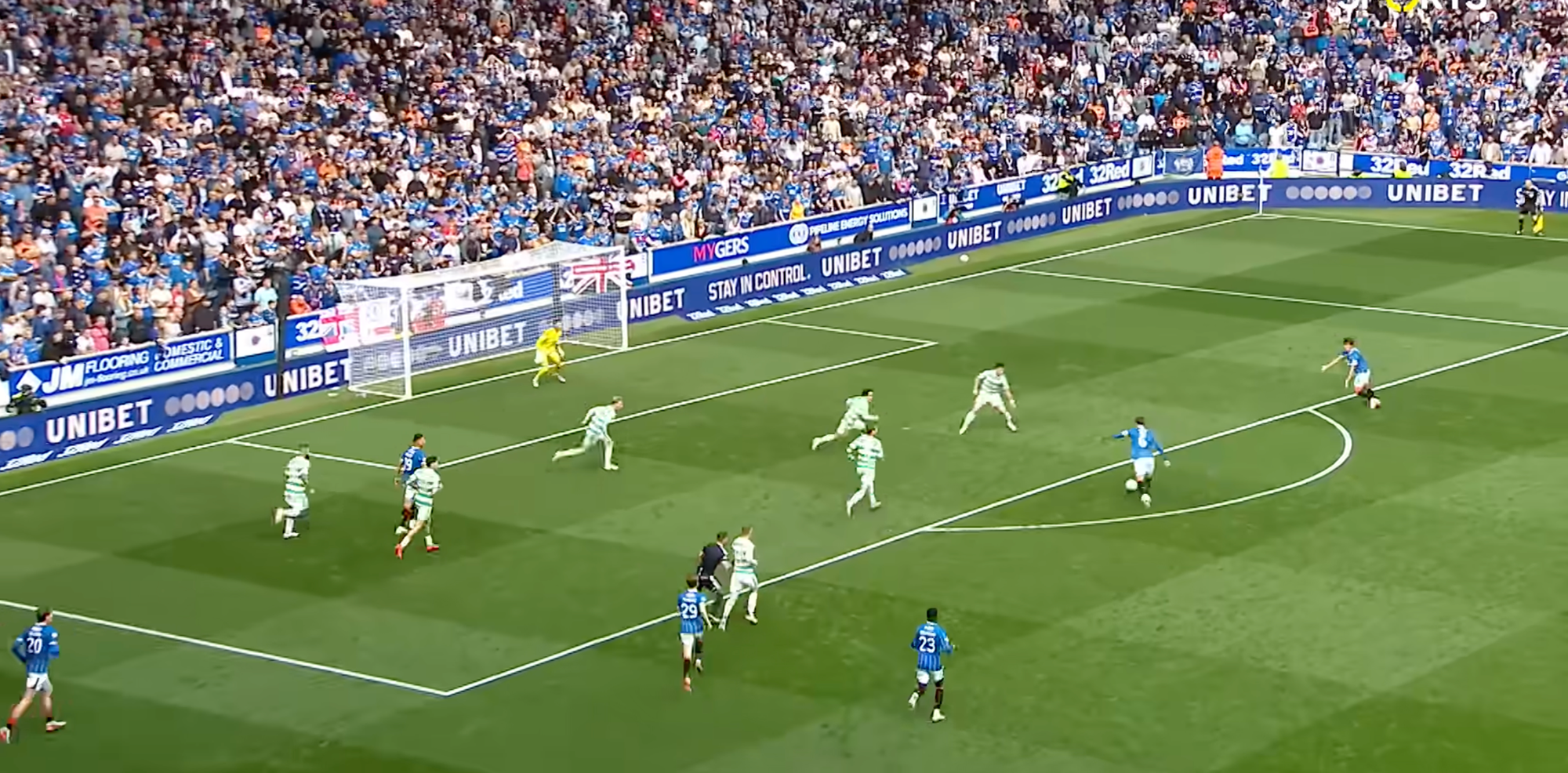
Dan Neil has all the time in the world to take a touch and put it in the bottom corner.
This is the space where McGregor should be covering.
O'Neill tried to change things in the second game, opting to go with a back three.