Massimiliano Alvini Tactics at Frosinone 2026/2027: How Are They Mounting A Surprise European Push? - Tactical Analysis

Frosinone are not a particularly successful football club.
From a city of just 44,000 people, their best ever league finish is 18th in Serie A, a relegation place.
If you include this current campaign, they have played in only four Serie A seasons.
Playing in a European competition for a club like theirs is beyond their wildest dreams, even the endless mid-table loop of a club like Torino or Udinese feels out of reach.
Massimiliano Alvini, like the team he now manages, has had a rather unremarkable career.
His playing one consisted of bouncing around amateur clubs in his native Tuscany, before retiring in 2000.
His coaching career has seen him manage twelve different teams, ranging from the amateur leagues to Serie B.
He took over Frosinone in 2025 while they were still in the second tier.
After a second-place finish, he was given the chance to lead them to Serie A.
Now, after 10 games, they sit in sixth place with 20 points, ahead of some of the country's biggest clubs.
This Frosinone tactical analysis looks at how they've managed to win six and draw two of their opening games.
Frosinone Attacking Principles
Alvini has opted to keep some consistency with how he sets his team up from their promotion campaign, rather than making drastic changes that can be so appealing to teams looking to survive.
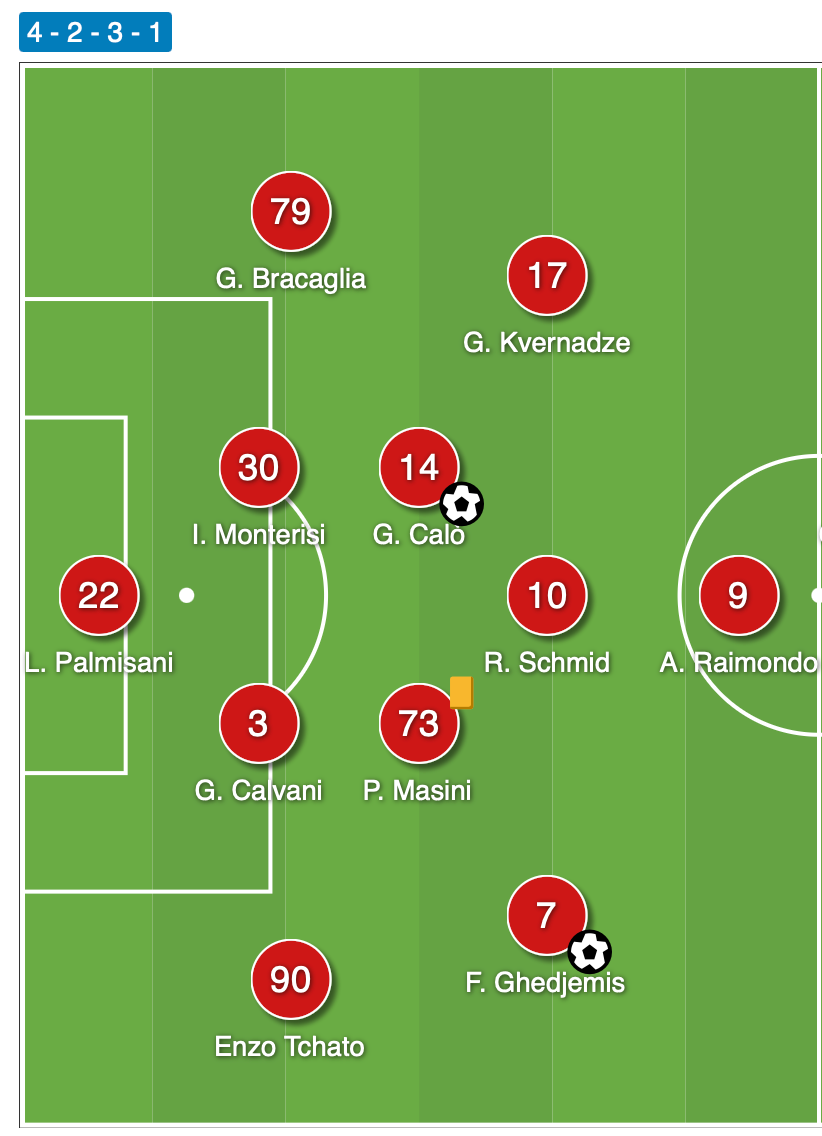
They start exclusively in a 4-2-3-1 formation.
Something like the below (taken from their most recent game at the time of writing, a 2-0 win at home to in-form Torino).
Frosinone Formation & Lineup Vs Torino
There's an emphasis on verticality, with Alvini's side looking to get the ball forward as quickly as possible and catch their opposition out of their defensive structure.
Frosinone Average Position Map Vs Torino (Via SofaScore)
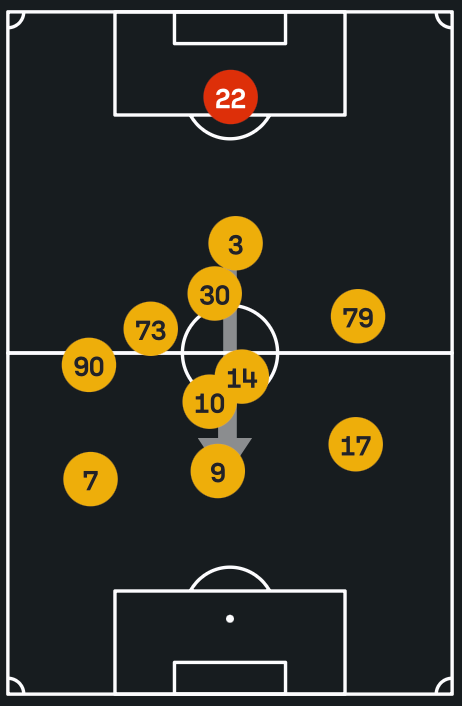
If we look at their average position map from their game against Torino, we can start to see where they want their players to be on the pitch.
What stands out here is just how high their wide players are.
They place huge emphasis on getting the ball to Giorgi Kvernadze and Farès Ghedjemis as often as possible, with Antonio Raimondo acting as the focal point through the middle.
Austria international Romano Schmid is the No. 10, and he plays like one, trying to receive the ball between the lines and link up with the forward line.
The double pivot has two very different roles, with Patrizio Masini more of the sitting midfielder and Giacomo Calò given more licence to roam.
At full-back, Enzo Tchato is more of a wide outlet, while Gabriele Bracaglia tucks in and sits a little more.
Let's have a look at their opening goal in a 5-1 win against Lecce.
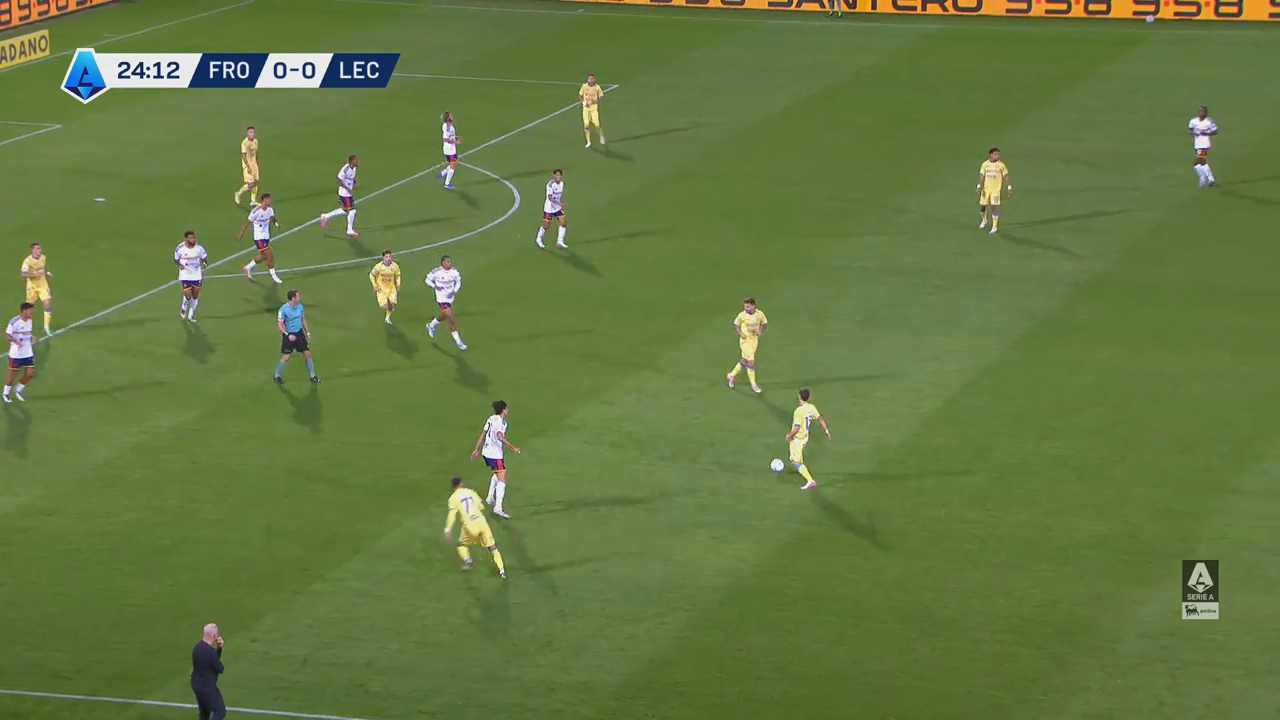
Frosinone have the ball in settled possession, and Lecce are set in their defensive structure.
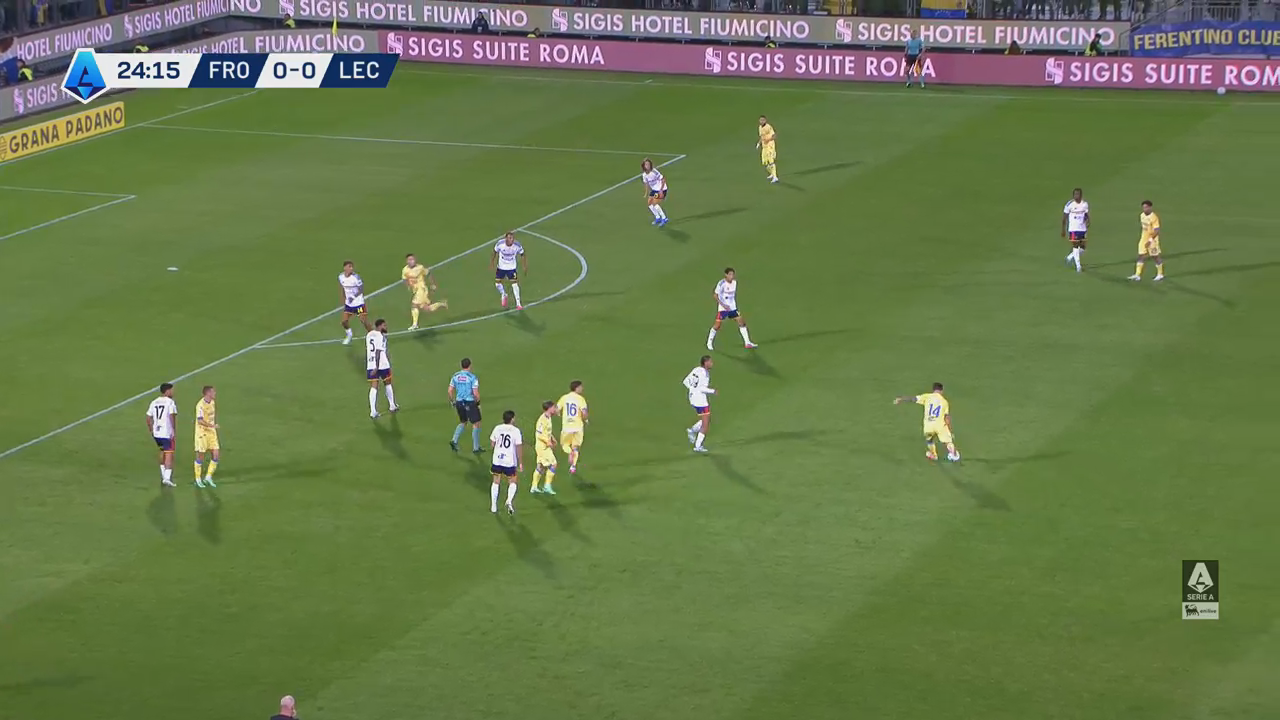
Calò, once he receives the ball, immediately looks to try and get it out wide to Ghedjemis.
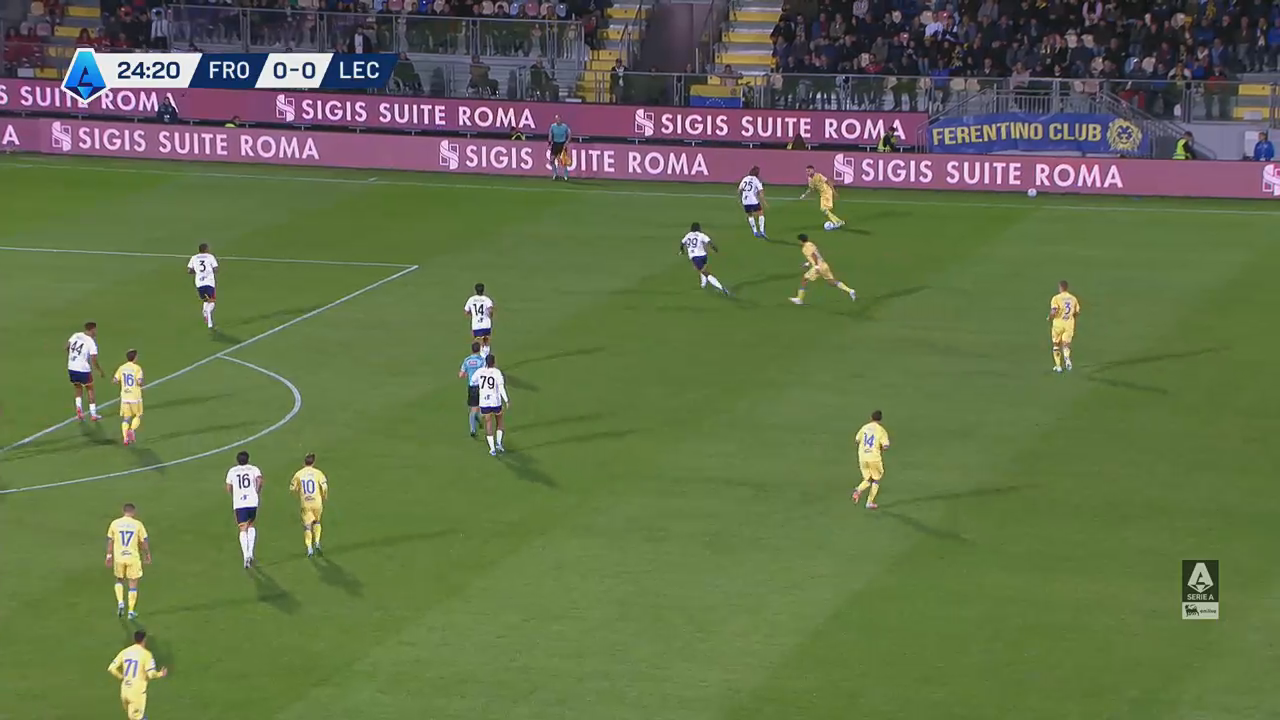
The Algerian winger faces up his man 1v1.
While his 37.5% dribble success rate doesn't leap off the page, his fearlessness in this situation has seen him try this again and again so far this season.
This time, it works.
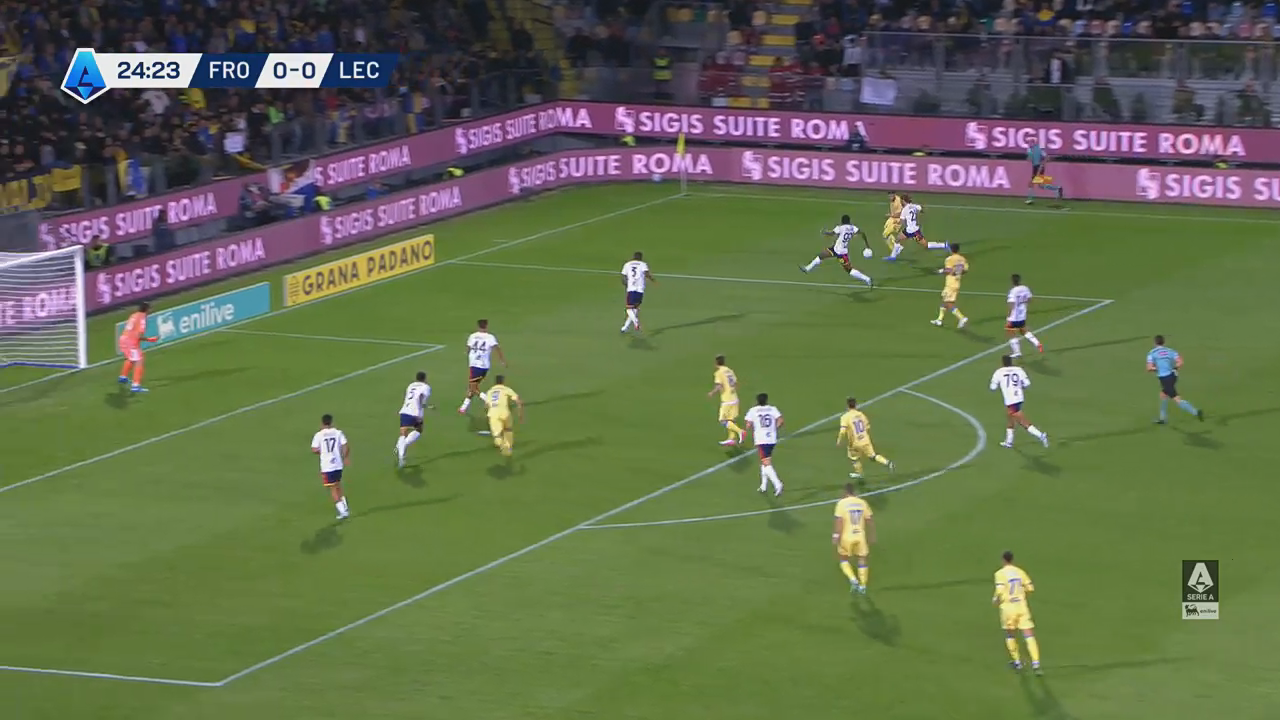
He shifts the ball past his man and immediately looks for the area between the edge of the box and the penalty spot.
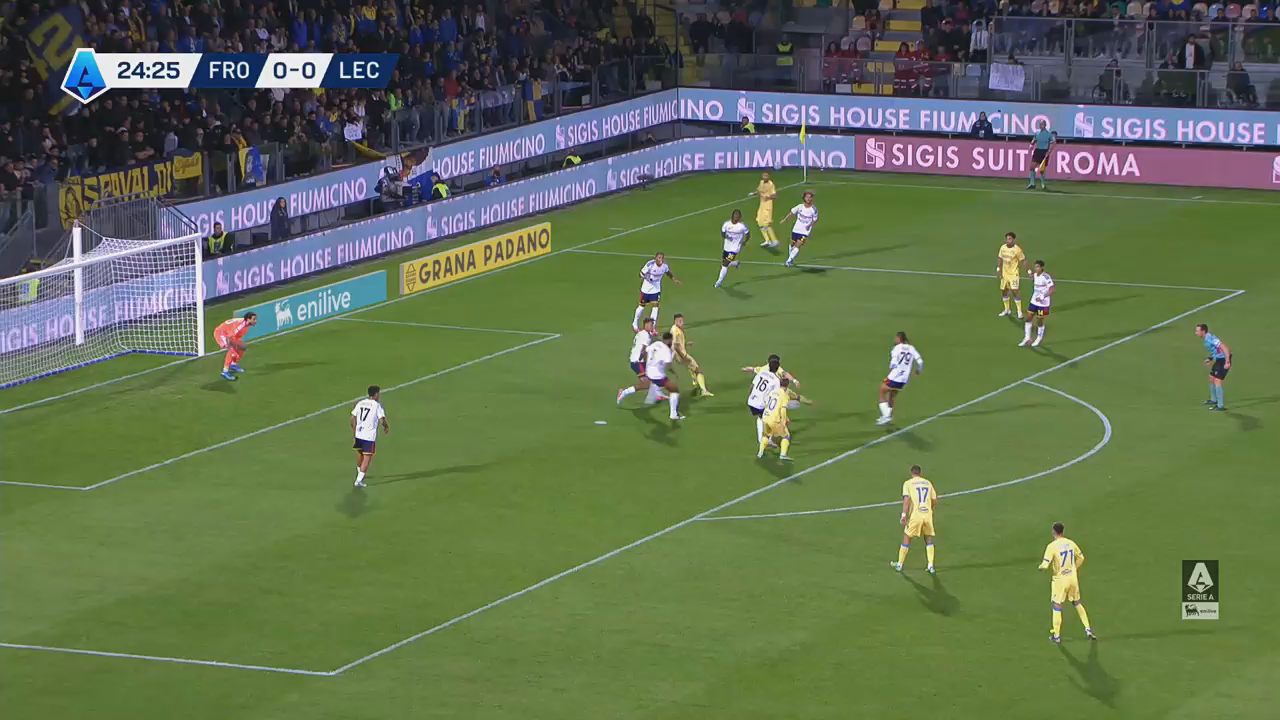
The onrushing Matteo Cichella meets the ball perfectly and scores.
This encompasses how Alvini wants his team to create chances.
Here's another example, this time of both wingers combining to confirm all three points against Torino.
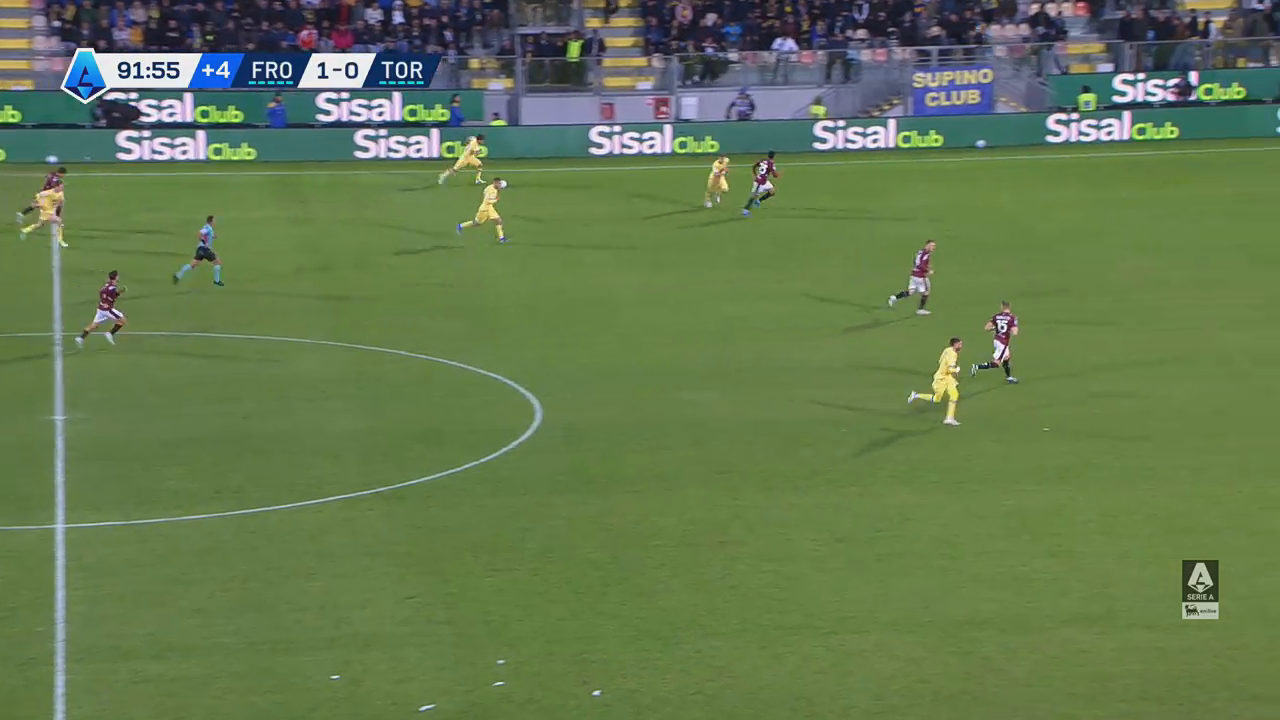
Alessio Zerbin gets the ball out wide, with space to run into.
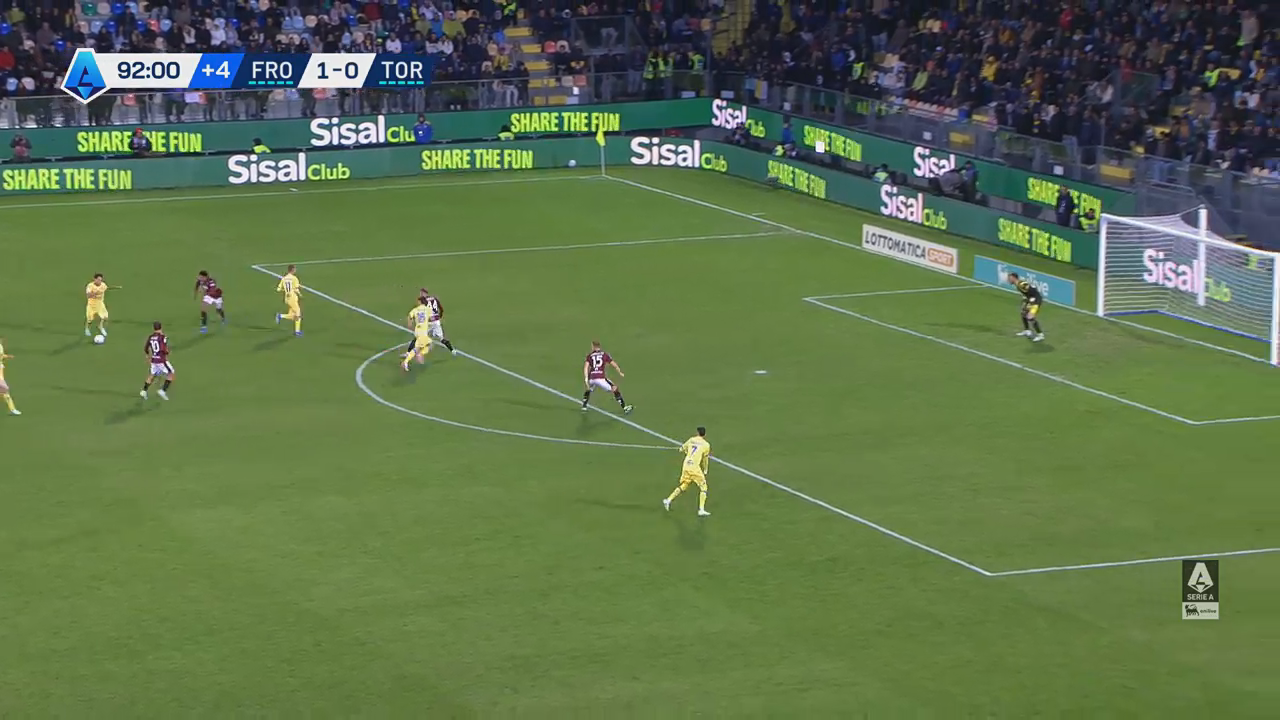
He comes all the way infield, and Ghedi finds himself in space on the right-hand side, with Torino pushed up in search of an equaliser.
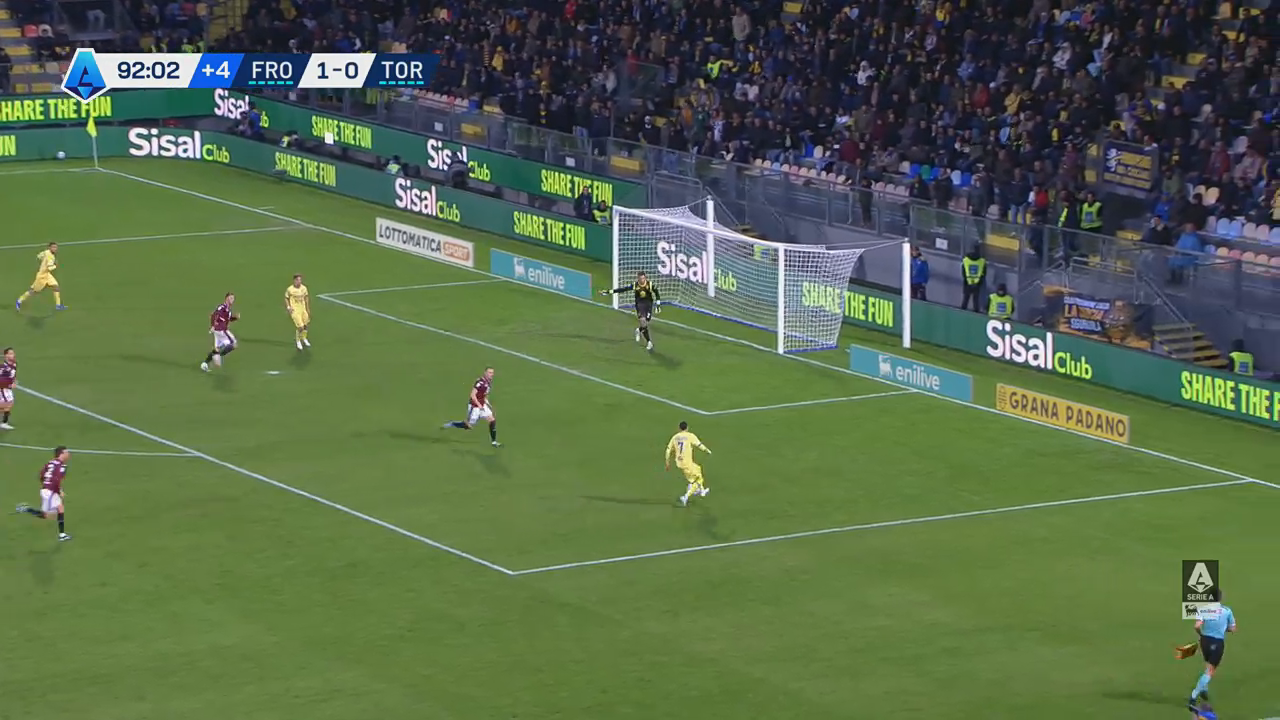
He has lots of space in the area, with options in the middle of the box.
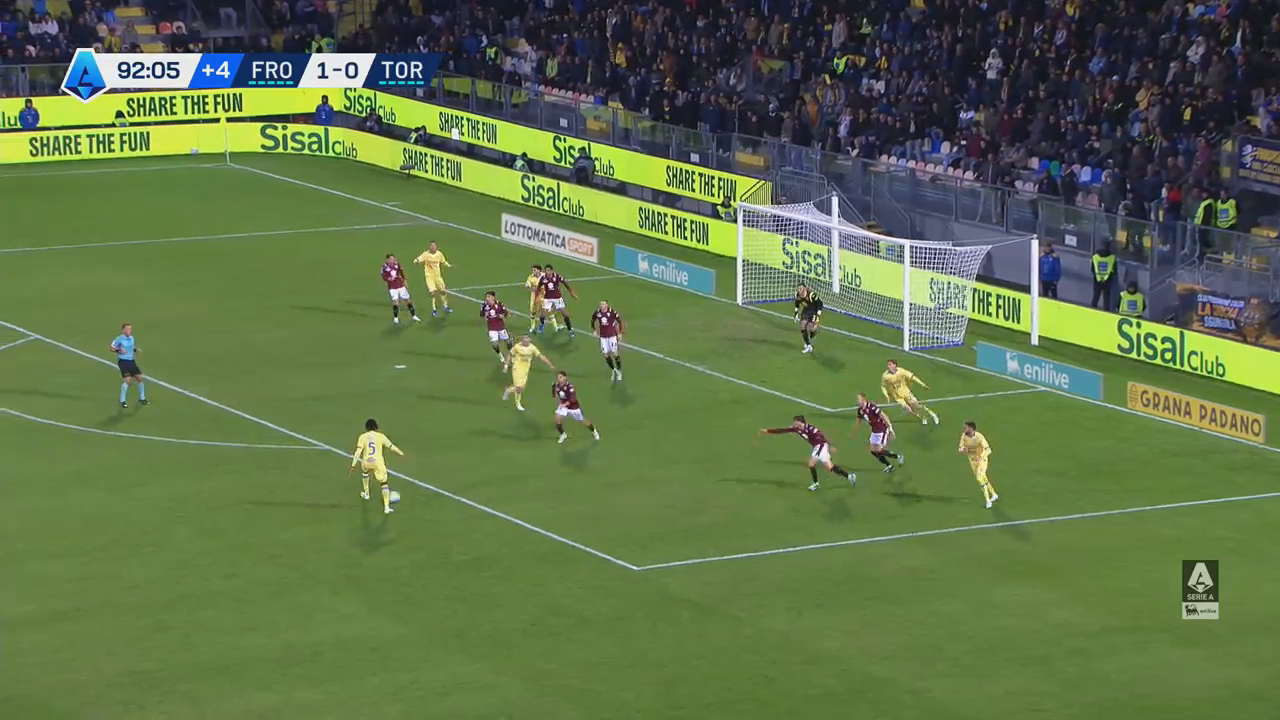
Instead, he cuts back and gets the ball to the edge of the area; Wisdom Amey takes one touch and then shifts it to an onrushing midfielder.
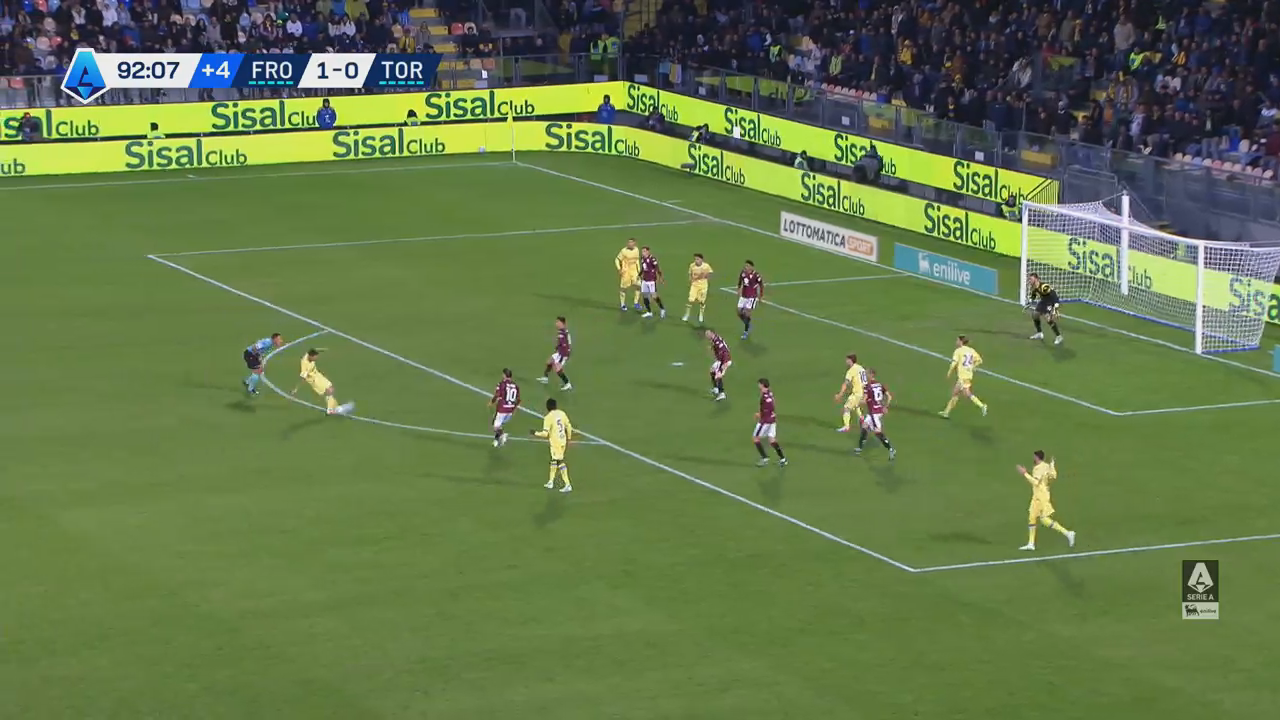
Calò then takes his shot first time and puts it past Lucas Perri in the Torino goal.
These are two goals from two different games against two very different kinds of opponents.
Yet there are similarities between them.
Spreading the ball as wide as possible, midfielders getting into goalscoring positions, and taking shots early before a goalkeeper can set themselves.
Those are just some of the reasons Frosinone ranks fourth in expected goals (18.22), behind Inter Milan, AS Roma, and Como.
They also take the third-most shots in the league (192) and are the fourth-best team in goals.
Despite this, there is a concern that there's a regression to the mean.
Behind Lazio, they have the biggest expected-goals overperformance in the league (5.78 goals more than expected).
Frosinone Out Of Possession
For Frosinone, though, what they do off the ball is just as good as what they're doing in attack.
The headline is that they are the most aggressive pressing team in Italy.
They rank top for PPDA using Opta's metrics (the ranking for high-press intensity) with 9.4 (Luciano Spalletti's Juventus rank second with 10.8).
They have the most pressing sequences in the league with 138.
Yet, despite the numbers, they aren't an exclusively high-pressing team.
Alvini adapts his approach depending on the team and situation they face.
Frosinone can also sit in a deeper block, which they tend to do against more ball-dominant possession teams.
While there is no real correlation between their defensive approach and results, it is interesting to look at the differences.
Games against Juventus (1-0 defeat), Venezia (3-2 win) and Como (2-0 win) saw I Canarini have under 40% possession.
Spalletti and Cesc Fàbregas, in particular, are known as possession-focused managers, so it's no surprise Frosinone decided to limit the spaces between the lines to stifle them.
Their most ball-dominant games this season came against Lecce (60% possession) and Genoa (56% possession), where they were able to let the handbrake off and aggressively press more counterattacking opposition.
When setting up in their defensive shape, they tend to drop an extra body into midfield, moving from their 4-2-3-1 shape into a 4-3-3.
Calò and Masini still operate as a double pivot, shielding the back four, with Schmid dropping back into the midfield and being the 'aggressor', the guy who is tasked with harrying the opposition and trying to turn the ball over or funnel it into a more favourable area.
Here are a couple of screenshots that show how they set up when the opposition are in possession.