
Sergej Jakirović Tactics At Hull City 2026/2027: Can You Succeed In The Premier League Without Building From The Back? - Data Analysis
Does playing out from the back really matter? This Premier League data analysis examines Hull City’s direct approach under Sergej Jakirović, exploring long passing, first-third activity, turnovers, defensive exposure and attacking output.

Playing out from the back has become a defining feature of modern football, with teams increasingly relying on structured build-up play to progress through the thirds, bypass opposition pressure and create goalscoring opportunities.
It remains an important tactical tool, helping sides control possession and establish attacking patterns.
However, is it the only route to success in the Premier League, or has its importance been overstated?
Hull City offer an intriguing case study: under Sergej Jakirović, the newly promoted side have adopted a considerably more direct approach, prioritising quick forward passes over lengthy build-up sequences.
Their early-season performances suggest alternative methods can also create attacking opportunities and deliver results.
In this Premier League data analysis, we examine Hull and other EPL sides to investigate whether building from the back is essential for success in England’s top flight.
Hull City Are Bypassing The Build-Up Phase
Under Sergej Jakirović, Hull City have adopted a direct approach that reflects their willingness to bypass the initial build-up phase and move the ball forward quickly.
Across their most recent matches, they have recorded just two build-up attacks, defined as open-play sequences involving at least 10 passes that end with a touch inside the opposition’s penalty area or a shot.
This figure highlights how rarely Hull progress through prolonged passing sequences before reaching advanced areas.
They have attempted 195 long passes across their first five matches, averaging 38.2 per game, using them to bypass opposition pressure and advance into the attacking half with fewer touches.
As the visual below shows, many of these passes originate inside their own penalty area, indicating this approach is embedded in their early build-up.
Hull City 2026/2027 Long Balls Highlight Their Direct Approach, With Most Passes Originating From Inside Their Own Penalty Area
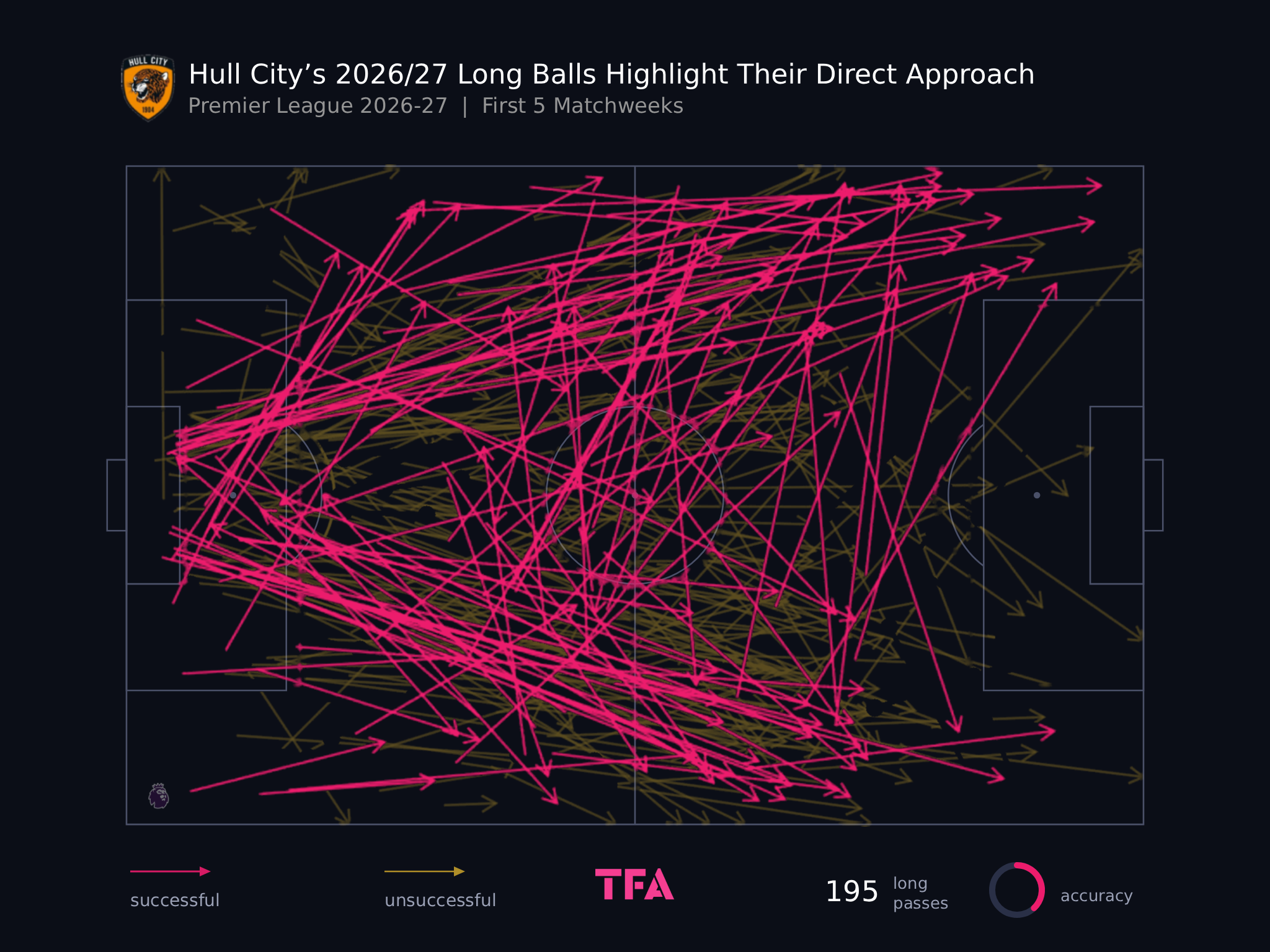
Hull frequently direct these longer deliveries towards the flanks, allowing them to exploit the width of the pitch and progress beyond the opposition’s first pressing line.
This approach reduces their reliance on short combinations in the defensive third, enabling them to reach advanced positions more directly.
Their low build-up attack volume, therefore, reflects a deliberate tactical preference for bypassing phases of possession.
Hull City Limited First-Third Activity Reflects Their Direct Tactical Approach
Hull City’s direct approach is also evident in their passing activity across the first third of the pitch, where they rank bottom of the Premier League for both successful passes into and out of this area.
They have completed just 222 passes into the first third, while recording only 234 successful passes originating from it.
Premier League 2026/2027 First Third Passing Activity
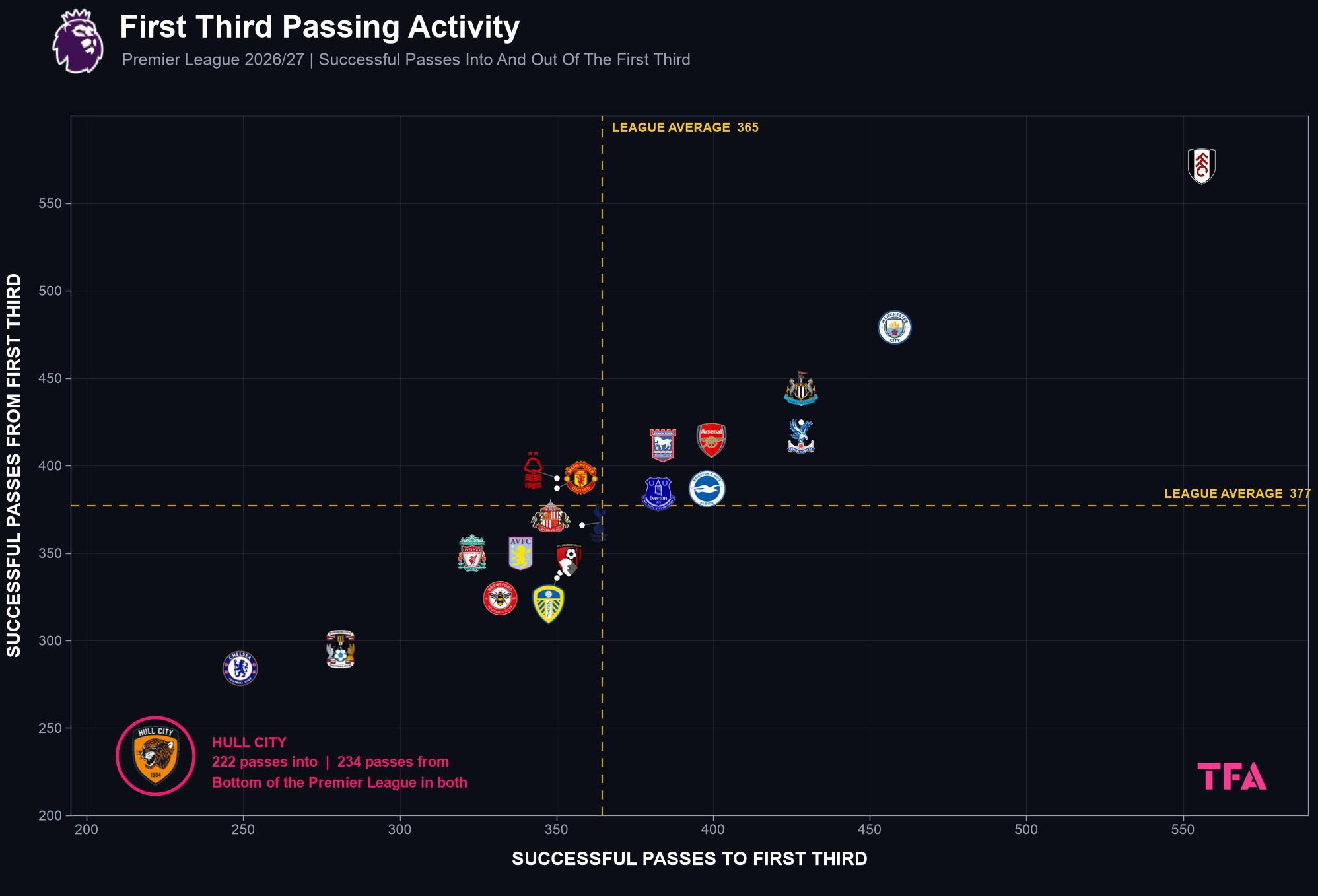
These figures highlight how infrequently they rely on circulating possession through the defensive phase to progress upfield.
Their preference is to move the ball forward early, using long deliveries to bypass the opposition’s first pressing line and reach advanced areas with fewer passing combinations.
This approach allows Hull to avoid spending extended periods playing through pressure near their own goal, while shifting the contest towards aerial duels, second balls and battles for possession in the middle and wide areas.
The same pattern emerges in Hull’s offensive actions in the first third.
They have recorded just 85 actions in this area, below Coventry City’s 87, and their 132 offensive actions from the first third are also the fewest in the division.
Premier League 2026/2027 Offensive Actions From & In The First Third
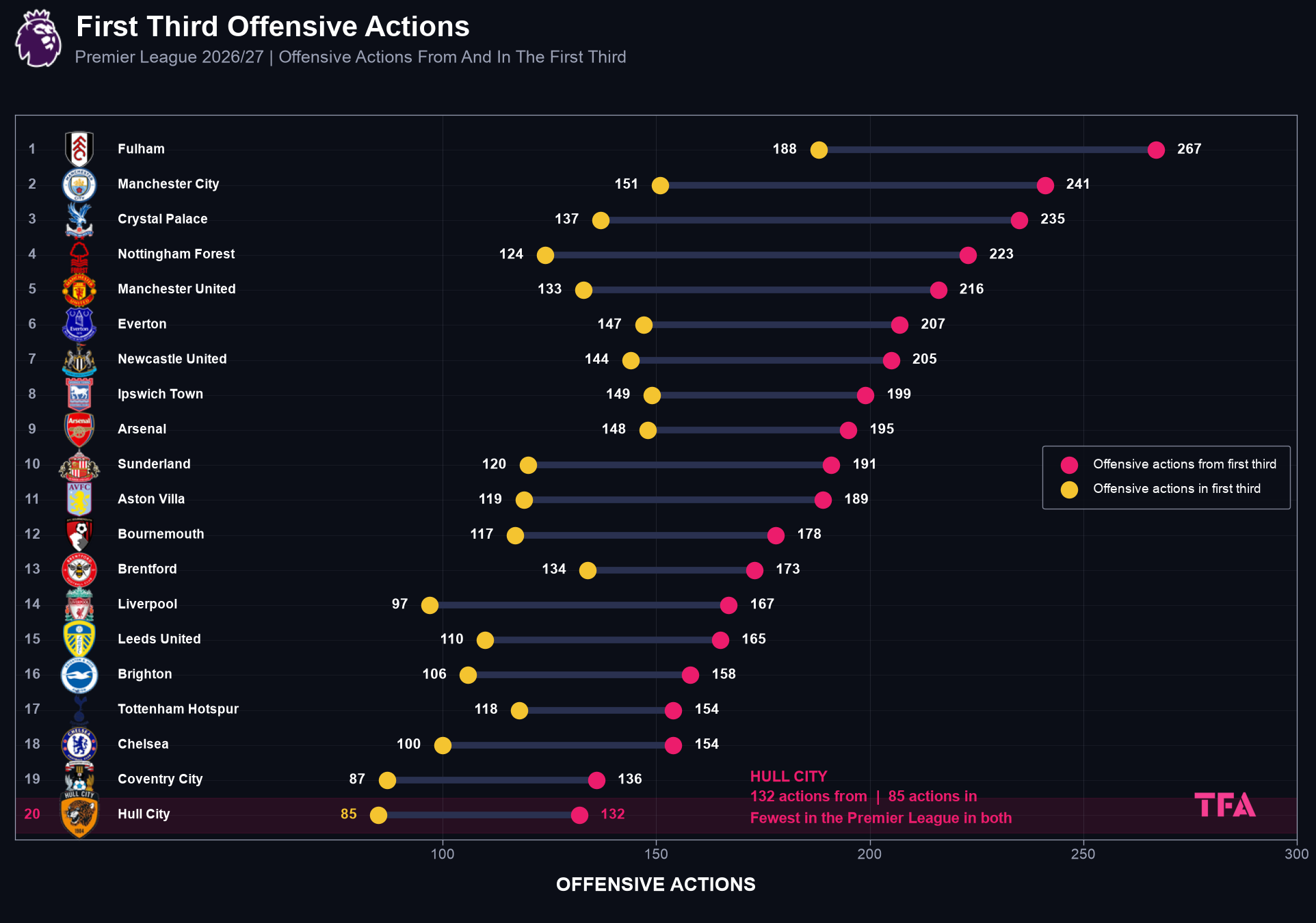
This separation suggests that Hull aren't simply completing fewer passes in their defensive phase; they are also engaging in fewer attacking actions there.
They attempt to bypass it and establish play further upfield.
Their approach prioritises territory and rapid progression, although its effectiveness ultimately depends on winning the initial aerial contest, recovering second balls and converting direct deliveries into sustained possession or chances.
Hull City Direct Approach Limits Dangerous Turnovers & Defensive Exposure
Hull City’s approach during possession further demonstrates how they prioritise direct progression over prolonged circulation.
They have recorded just 638 offensive touches during possession, the lowest total in the Premier League, considerably fewer than Brentford’s 943, the next-lowest team.
Premier League 2026/2027 Offensive Touches In Phase Of Ball Possession
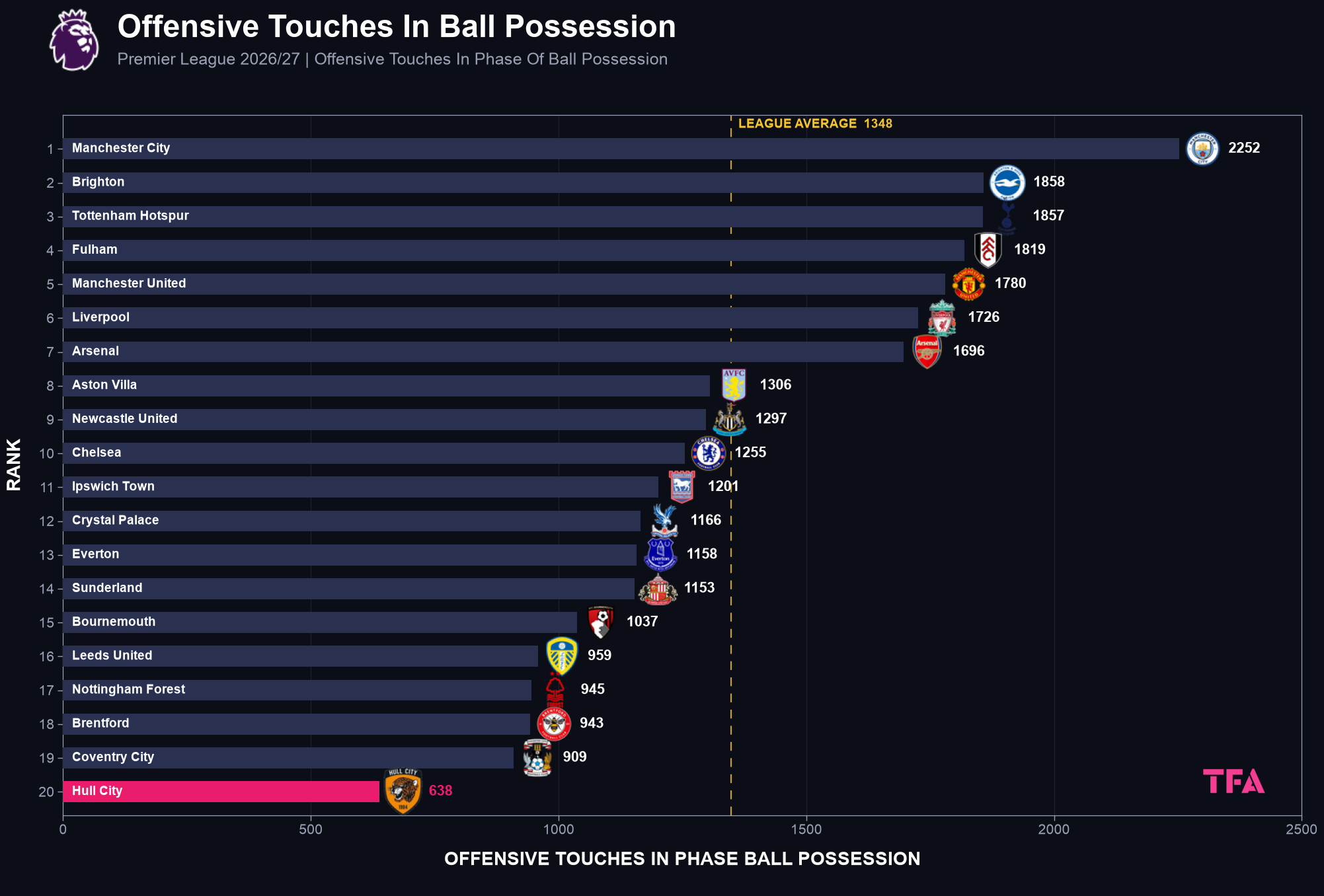
This reflects a deliberate tactical preference under Sergej Jakirović to bypass extended build-up sequences and move the ball forward vertically before the opposition can establish its pressing structure.
By limiting the time spent circulating possession in deeper areas, Hull attempt to prevent opponents from initiating sustained pressure and force them to defend against earlier forward deliveries.
The potential defensive benefit of this direct approach becomes clearer when examining critical ball losses.
Hull have recorded just 18 such losses, the lowest total in the Premier League and 12 fewer than Bournemouth, Coventry City and Brighton, who have each recorded 30.
Hull City Record The Fewest Critical Ball Losses In The Premier League
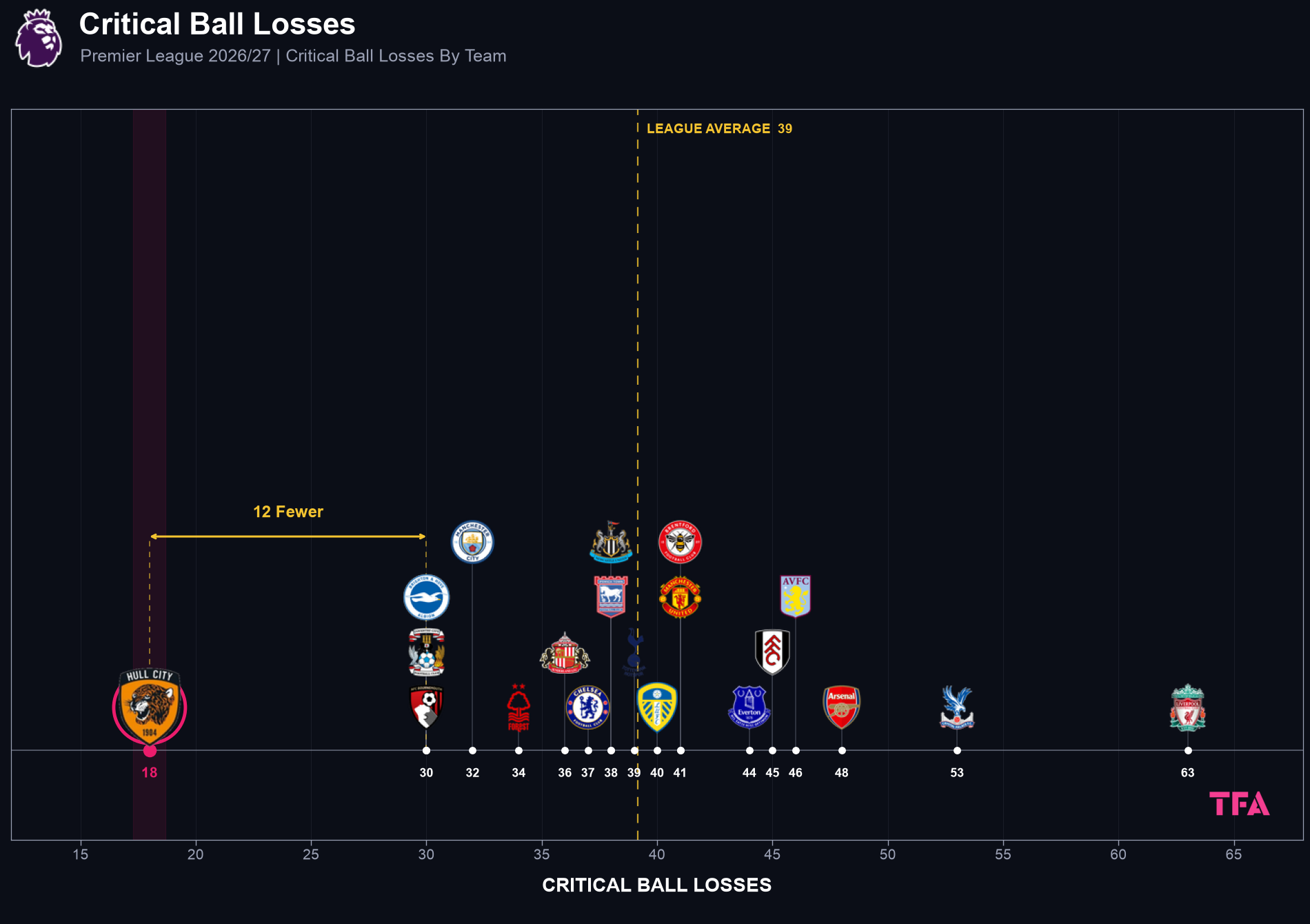
The gap suggests that Hull are particularly effective at avoiding possession losses in dangerous areas, where turnovers can expose a team to immediate counterattacks.
Their preference for bypassing the initial build-up may contribute to this outcome by reducing the number of passes attempted under pressure close to their own goal.
However, direct play doesn't eliminate turnover risk, as long passes can still be intercepted and second balls lost.
Hull’s defensive figures provide further context for the potential benefits of their direct possession strategy.
They have conceded four goals from an expected goals against (xGA) total of 7.79, below the Premier League average of 9.61.
Hull City Expected Goals Against Highlights Their Defensive Solidity
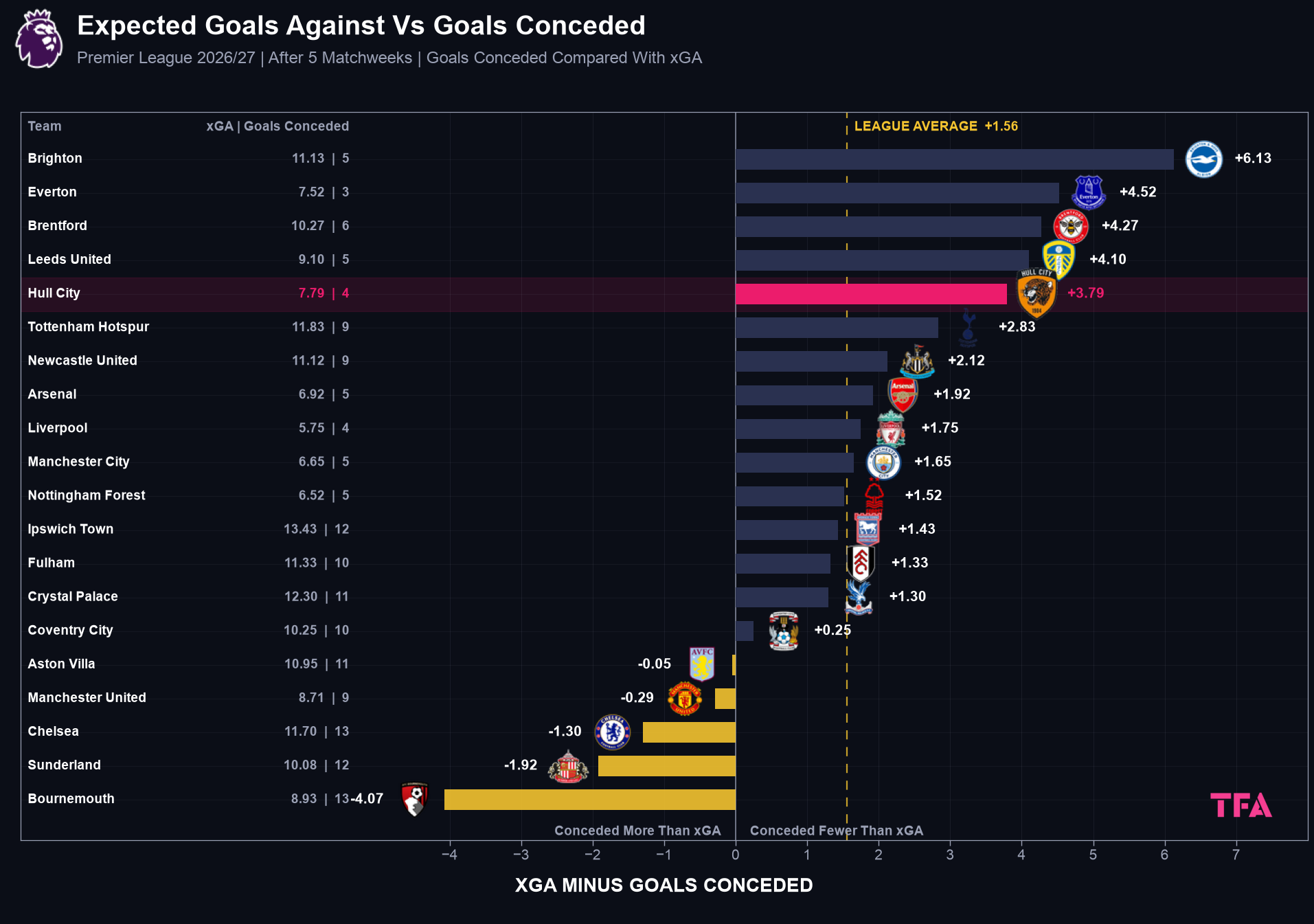
Hull’s xGA is the sixth-lowest in the division, indicating that opponents have generated a relatively low volume and quality of chances against them so far.
Their limited number of critical ball losses may be relevant, as losing possession less frequently in dangerous areas can reduce opportunities for opponents to launch attacks before the defence recovers its shape.
These early-season figures don’t establish a direct causal relationship between Hull’s possession style and defensive performance.
Does Bypassing The Build-Up Limit Hull City Attacking Threat?
Hull City’s direct approach raises an important question: Does a team need to build from the back to create a consistent attacking threat?
The early-season data suggest otherwise.